Tag: Critical Minerals

  • October’s Battery Pulse: Geopolitics, Innovation, and Supply Chain Reshaping

    October’s Battery Pulse: Geopolitics, Innovation, and Supply Chain Reshaping

    October 2025 proved to be a pivotal month for the global battery industry, characterized by a complex interplay of geopolitical strategy, technological innovation, and significant shifts in supply chain dynamics. From the unexpected collapse of a major battery component plant in Michigan to a landmark critical minerals deal between the United States and Australia, and General Motors' (NYSE: GM) ambitious strides in Lithium Manganese Rich (LMR) battery technology, the month underscored the rapid evolution and strategic importance of energy storage. These developments collectively highlight a global race for battery dominance, driven by the escalating demand for electric vehicles (EVs) and renewable energy solutions, while also revealing the intricate challenges of international collaboration and material sourcing.

    Strategic Shifts and Technical Frontiers in Battery Technology

    The month's battery news painted a vivid picture of an industry in flux, marked by both setbacks and breakthroughs. The highly anticipated $2.4 billion electric vehicle (EV) battery plant by Gotion Inc. (SHE: 002074) near Big Rapids, Michigan, officially became defunct on October 23, 2025. Michigan state officials announced Gotion was in default of its agreement, citing the company's failure to meet contractual milestones and lack of meaningful progress for over a year. This cancellation, stemming from years of controversy, lawsuits, local opposition, and intense scrutiny over Gotion's ties to China, represents a significant blow to Michigan's aspirations of localizing EV battery component manufacturing and creating 2,350 jobs. The state is now seeking to recoup $23.6 million used for land purchase and has halted a $125 million state grant, underscoring the geopolitical sensitivities impacting foreign direct investment in critical sectors.

    In stark contrast, a monumental critical minerals deal was formally signed between the United States and Australia on October 20, 2025. This agreement, a key outcome of a bilateral summit between US President Donald Trump and Australian Prime Minister Anthony Albanese, involves an $8.5 billion pipeline of "ready-to-go" projects. The initiative aims to significantly expand Australia's mining and processing capabilities for rare earths and other critical minerals essential for batteries, defense, and clean energy. Specific projects include a US-backed 100-tonne-per-year advanced gallium refinery in Western Australia and a $100 million equity commitment for Arafura Rare Earths Limited's (ASX: ARU) Nolans Rare Earths Development, targeting production by 2027. This strategic alliance is designed to reduce global reliance on Chinese-dominated supply chains, with both nations pledging at least $1 billion each within six months to unlock these projects. The framework also addresses price stabilization, stockpiling, tightened foreign investment screening, and accelerated permitting, signaling a comprehensive approach to securing a resilient supply chain.

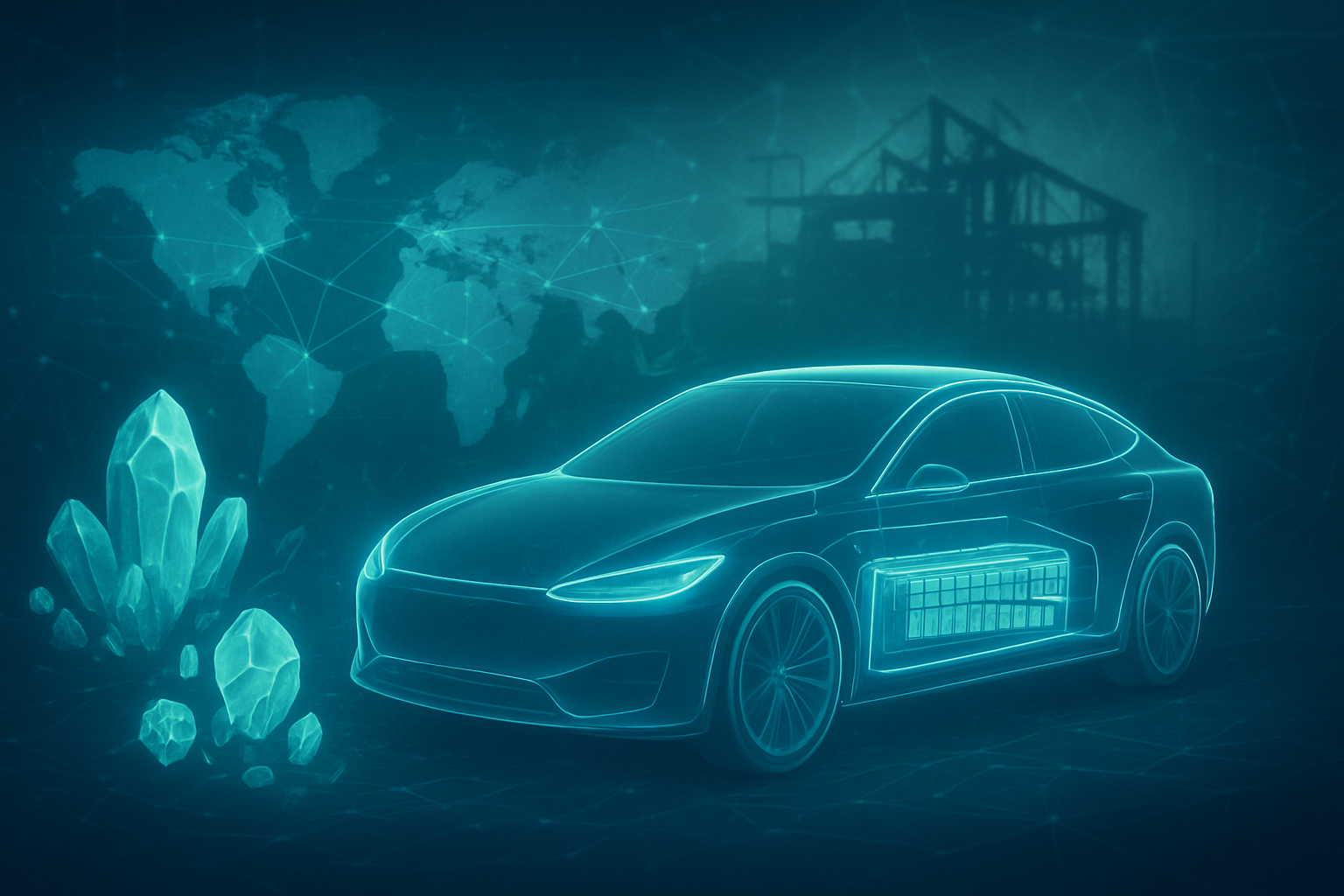
    Adding to the technological advancements, General Motors (NYSE: GM) provided an insightful update on its Lithium Manganese Rich (LMR) battery technology at The Battery Show in Detroit on October 10, 2025. Kurt Kelty, GM's Vice President of Batteries, highlighted LMR's potential to deliver a compelling combination of high energy density and lower costs by substantially reducing the need for expensive nickel and cobalt. Instead, LMR leverages more abundant manganese. GM aims for LMR chemistry to provide over 400 miles of range in vehicles like the Silverado EV, targeting an impressive energy density of 270-280 Wh/kg. The company plans to commence mass production of LMR batteries in partnership with LG Energy Solutions by early 2028, initially targeting large electric pickups and SUVs. This technology is positioned to bridge the performance and cost gap between high-nickel chemistries (like NMC) and Lithium Iron Phosphate (LFP) batteries, representing a crucial step in making EVs more accessible and profitable.

    Competitive Implications and Market Repositioning

    These October developments carry profound implications for AI companies, tech giants, and startups across the battery and EV ecosystems. Gotion's Michigan setback is a cautionary tale for foreign companies navigating complex geopolitical landscapes and local opposition. While Gotion loses a strategic US manufacturing foothold, other domestic or less controversial foreign battery manufacturers might see opportunities to fill the void, particularly those aligned with US supply chain localization efforts. For Michigan, it's a missed economic opportunity, potentially damaging its reputation for attracting large-scale foreign investment in critical industries.

    The US-Australia mineral deal, however, stands to significantly benefit Australian mining companies, particularly those involved in rare earths and critical minerals like Arafura Rare Earths Limited (ASX: ARU) and Iluka Resources (ASX: ILU), whose shares surged post-announcement. US battery manufacturers and defense contractors will also gain from a more secure and diversified supply of essential raw materials. This strategic partnership directly challenges China's long-standing dominance in critical mineral processing, fostering a more competitive global landscape and potentially spurring investment in Western processing capabilities. For tech giants heavily invested in EVs and renewable energy, this deal offers a pathway to de-risk their supply chains and reduce exposure to geopolitical tensions. Startups focusing on advanced mining, processing, and recycling technologies for critical minerals could also see increased investment and partnership opportunities.

    General Motors' (NYSE: GM) advancements in LMR battery technology are a strategic play to gain a competitive edge in the fiercely contested EV market. By reducing reliance on expensive and geopolitically sensitive materials like cobalt and nickel, GM aims to lower EV production costs and increase profitability, a crucial factor for mainstream EV adoption. This move could disrupt competitors heavily invested in traditional high-nickel chemistries, forcing them to accelerate their own research into alternative, more cost-effective battery chemistries. If successful, LMR technology could allow GM to offer more affordable, long-range EVs, potentially "winning back battery leadership" and strengthening its market positioning against both established automakers and emerging EV pure-plays. The partnership with LG Energy Solutions also underscores the importance of strategic alliances in battery development and manufacturing.

    Broader Significance and Global Trends

    October's battery news fits squarely into the broader AI landscape and trends, particularly concerning the foundational energy infrastructure required to power AI's exponential growth, from data centers to autonomous systems. The Gotion plant's cancellation highlights the increasing scrutiny on supply chain origins and national security concerns, influencing where critical manufacturing assets are located. This trend of "friend-shoring" or reshoring supply chains is a direct response to geopolitical tensions and the desire for greater economic resilience.

    The US-Australia critical minerals deal is a landmark event in the global effort to diversify supply chains away from single points of failure, particularly China. It signals a new era of resource nationalism and strategic alliances, where governments actively coordinate to secure access to essential materials. This initiative will not only impact the battery industry but also defense, advanced manufacturing, and other high-tech sectors reliant on rare earths and critical minerals. It represents a significant step towards creating a more robust and geographically diversified mineral supply chain, mitigating risks associated with trade disputes and geopolitical leverage. This compares to previous milestones where globalized supply chains were favored; now, resilience and security are paramount.

    GM's LMR battery work is a testament to the ongoing innovation within battery chemistry, driven by the dual imperatives of performance and cost reduction. As AI-powered design tools accelerate material discovery, advancements like LMR are crucial for democratizing EV access and reducing the environmental footprint associated with mining rare and controversial elements. The shift towards more abundant materials like manganese aligns with broader sustainability goals and could mitigate potential concerns over resource depletion and ethical sourcing. While LMR still faces challenges regarding long-term longevity and degradation, its potential to offer a compelling balance of range and affordability makes it a significant development for the future of transportation and energy storage.

    Future Developments and Expert Predictions

    Looking ahead, the fallout from the Gotion project's cancellation will likely see Michigan continuing its efforts to recoup funds and reassess its foreign investment strategies, potentially prioritizing partnerships with companies having stronger domestic ties or less geopolitical baggage. This event could also prompt other states and nations to review their critical industry investment policies, emphasizing supply chain security and local economic benefits.

    The US-Australia critical minerals deal is expected to accelerate investment in Australian mining and processing capabilities significantly. We can anticipate more announcements regarding specific projects, financing mechanisms, and regulatory streamlining in the coming months. This bilateral framework could serve as a blueprint for similar deals between the US and other mineral-rich nations, further reshaping global critical mineral supply chains. Experts predict a gradual but significant reduction in reliance on Chinese processing, fostering a more diversified and resilient global market for battery materials. The focus will also likely expand to include recycling technologies for critical minerals, creating a circular economy approach.

    For General Motors (NYSE: GM), the next few years will be critical for validating LMR battery technology. Expect continued rigorous testing for durability, cycle life, and safety, as well as further refinement of manufacturing processes in collaboration with LG Energy Solutions. The 2028 mass production target for LMR batteries for large electric pickups and SUVs suggests that GM is confident in overcoming current technical hurdles, but the industry will be closely watching for updates on performance and cost metrics. Experts predict that if GM successfully deploys LMR, other automakers will likely follow suit, accelerating the adoption of manganese-rich chemistries and further driving down EV costs, making electric mobility a more viable option for a broader consumer base. Challenges around scaling production and ensuring consistent quality will need to be addressed.

    A Month That Reshaped Battery Futures

    October 2025 will be remembered as a month of profound shifts in the battery landscape, underscoring the interconnectedness of geopolitics, technological innovation, and economic strategy. The termination of Gotion's Michigan plant serves as a stark reminder of the complexities and sensitivities involved in securing critical manufacturing capabilities, particularly in an era of heightened international competition. It highlights the imperative for robust due diligence and community engagement in large-scale industrial projects.

    Conversely, the US-Australia critical minerals deal represents a decisive move towards building resilient and diversified supply chains for the materials essential to the clean energy transition. This strategic alliance is a powerful statement about the future of global resource allocation, prioritizing security and stability over unchecked globalization. It marks a significant step in de-risking the supply of materials crucial for everything from EV batteries to advanced AI hardware.

    Finally, General Motors' (NYSE: GM) continued advancements in LMR battery technology showcase the relentless pursuit of innovation aimed at making electric vehicles more affordable and accessible. By targeting a balance of high energy density and lower costs through the use of more abundant materials, GM is pushing the boundaries of what's possible in battery chemistry. This could be a game-changer for EV adoption, ultimately accelerating the transition to a sustainable transportation future.

    In the coming weeks and months, the industry will be watching for further details on the implementation of the US-Australia mineral deal, the strategic realignment of battery manufacturing investments in the US, and critical updates on GM's LMR battery development and testing. These events collectively signify a dynamic and transformative period for the battery industry, with far-reaching implications for global economies, environmental sustainability, and technological progress.


    This content is intended for informational purposes only and represents analysis of current AI developments.

    TokenRing AI delivers enterprise-grade solutions for multi-agent AI workflow orchestration, AI-powered development tools, and seamless remote collaboration platforms.
    For more information, visit https://www.tokenring.ai/.
  • India’s Green Revolution: Meity Pushes Rare-Earth Magnet Recycling into PLI Scheme for Critical Mineral Security

    India’s Green Revolution: Meity Pushes Rare-Earth Magnet Recycling into PLI Scheme for Critical Mineral Security

    New Delhi, India – October 21, 2025 – In a landmark move poised to redefine India's strategic materials landscape, the Ministry of Electronics and Information Technology (Meity) has formally proposed the inclusion of rare-earth magnet recycling within India's ambitious Production-Linked Incentive (PLI) scheme. This pivotal suggestion underscores India's commitment to fortifying its critical mineral supply chains, fostering a robust circular economy, and diminishing its pronounced reliance on global imports, particularly from geopolitical rivals. The initiative aims to transform India's burgeoning electronic waste (e-waste) into a strategic national asset, securing essential components for the nation's rapidly expanding electric vehicle (EV), renewable energy, and defense sectors.

    The proposal comes at a critical juncture, as global supply chain vulnerabilities, exacerbated by geopolitical tensions and concentrated production hubs, highlight the urgent need for domestic resilience in critical minerals. Rare-earth magnets, indispensable for a myriad of high-tech applications, are currently almost entirely imported by India. By incentivizing their recycling, Meity seeks to establish a sustainable, indigenous source of these vital materials, mitigating economic and strategic risks while championing environmental stewardship.

    Catalyzing Domestic Critical Mineral Autonomy through Advanced Recycling

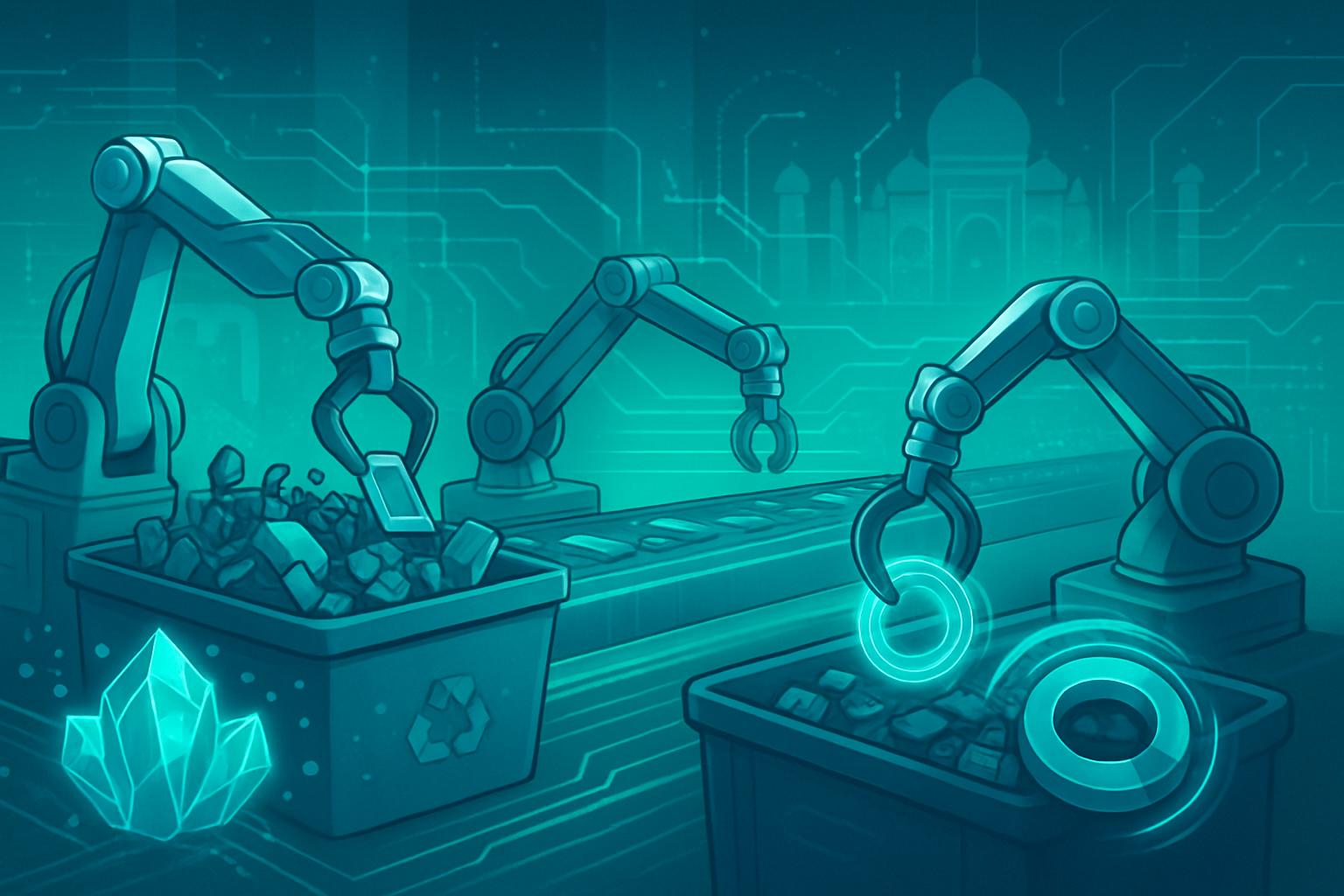
    Meity's suggestion is rooted in a comprehensive strategy to leverage India's vast e-waste generation as an "urban mine" for rare-earth elements. The PLI scheme, a proven mechanism for boosting domestic manufacturing across various sectors, will now extend its financial incentives to companies investing in the infrastructure and technology required for rare-earth magnet recycling. This includes processes like solvent-extraction technologies and advanced plasma furnaces, such as those developed by the Bhabha Atomic Research Centre (BARC), which can efficiently extract rare-earth elements from end-of-life products.

    This approach marks a significant departure from India's traditional reliance on primary extraction and imports. Instead of solely focusing on mining virgin rare-earth ores, the emphasis shifts to secondary resource recovery – a more environmentally friendly and economically sustainable pathway. The process involves collecting discarded electronics, wind turbine components, and EV motors, then employing sophisticated metallurgical and chemical processes to separate and purify the rare-earth elements. These recovered materials can then be re-manufactured into new magnets (short-loop recycling) or reprocessed into metals or metal oxides for new magnet production (long-loop recycling). Initial reactions from the AI research community and industry experts have been overwhelmingly positive, viewing this as a pragmatic and forward-thinking step towards technological sovereignty and environmental responsibility. The India Cellular and Electronics Association (ICEA) has notably welcomed the government's proactive stance, recognizing the long-term benefits for the electronics manufacturing ecosystem.

    Reshaping the Competitive Landscape for Indian Tech and Manufacturing

    The inclusion of rare-earth magnet recycling in the PLI scheme is set to create significant opportunities and competitive shifts within India's industrial landscape. Domestic recycling companies, such as BatX Energies, Attero India, Lohum, and Recyclekaro, stand to gain substantial benefits, receiving financial incentives to scale their operations and invest in cutting-edge recycling technologies. These firms are positioned to become key players in India's emerging critical mineral supply chain.

    Furthermore, Indian magnet manufacturers like Kumar Magnet Industries, Ashvini Magnets, Dura Magnets, and Magnetic Solutions will benefit from a more stable and domestically sourced supply of rare-earth materials, reducing their vulnerability to international price fluctuations and supply disruptions. This move is also expected to positively impact major players in strategic sectors, including electric vehicle manufacturers like Mahindra & Mahindra (NSE: M&M) and Tata Motors (NSE: TATAMOTORS), as well as wind turbine manufacturers, who rely heavily on rare-earth magnets for their motors and generators. By reducing dependence on overseas suppliers, particularly from China, the scheme aims to level the playing field and foster indigenous innovation. This strategic advantage could disrupt existing import-heavy supply chains, leading to increased domestic value addition and job creation across the manufacturing and recycling sectors.

    A Cornerstone of India's Circular Economy and Geopolitical Strategy

    This initiative extends far beyond mere economic incentives; it represents a foundational pillar in India's broader strategy for a circular economy and enhanced national security. Rare-earth elements are vital for modern technologies, from the powerful magnets in electric vehicle motors and wind turbines to those in smartphones, defense systems, and medical devices. Securing a domestic source through recycling directly addresses geopolitical vulnerabilities, particularly given China's dominant position in the global rare-earth supply chain and its recent tightening of export controls.

    By promoting recycling, India is not only mitigating environmental damage associated with primary rare-earth mining but also transforming its growing e-waste problem into an economic opportunity. The scheme aligns perfectly with global trends towards sustainable resource management and critical mineral independence, positioning India as a leader in urban mining. The environmental benefits are substantial, as recycling can reduce the carbon footprint by up to 80% compared to virgin production, preventing toxic waste and conserving natural resources. This move is comparable to similar efforts by nations and blocs like the European Union and the United States, which are also striving to build resilient critical mineral supply chains and embrace circular economy principles.

    The Road Ahead: Pilot Plants, Technology Transfer, and Strategic Growth

    The immediate future will see significant progress on several fronts. Pilot plants for rare-earth magnet recycling, such as the one being developed through a collaboration between BatX Energies and Rocklink GmbH, are expected to become operational within the next year. These pilot projects will be crucial for refining recycling processes and demonstrating commercial viability. Concurrently, the government plans to facilitate the transfer of advanced permanent magnet processing technology, developed by institutions like the Non-Ferrous Materials Technology Development Centre (NFTDC) and BARC's plasma furnace technology, to private factories, accelerating the indigenous manufacturing capability.

    Looking further ahead, a dedicated PLI scheme for rare-earth permanent magnets, potentially valued between ₹3,500 crore and ₹5,000 crore, is anticipated to be formally notified. This will provide long-term impetus for both manufacturing and recycling. The broader National Critical Mineral Mission (NCMM), active from 2024–25 to 2030–31, will also play a crucial role in integrating rare-earth recycling into a holistic strategy for critical mineral security. Challenges remain, including the need to develop more cost-effective and efficient recycling technologies at scale, establish robust e-waste collection mechanisms, and ensure a consistent supply of end-of-life products. However, experts predict that with sustained government support and private sector investment, India is poised to become a significant global player in secondary rare-earth production, enhancing its economic resilience and technological self-reliance.

    A Defining Moment for India's Sustainable Industrial Future

    Meity's suggestion to integrate rare-earth magnet recycling into the PLI scheme is a strategic masterstroke, marking a defining moment in India's journey towards sustainable industrialization and critical mineral security. This initiative is a clear testament to India's foresight in addressing global supply chain vulnerabilities, promoting environmental sustainability, and fostering domestic economic growth. By transforming waste into a valuable resource, India is not only securing its future access to essential materials but also establishing itself as a leader in the global circular economy transition.

    The coming weeks and months will be crucial as the proposed PLI scheme moves through inter-ministerial reviews and formal notification. The progress of pilot projects, the rate of technology transfer to the private sector, and the level of investment from both domestic and international players will be key indicators to watch. This development represents a pivotal step in India's pursuit of 'Atmanirbhar Bharat' (self-reliant India), promising a more secure, sustainable, and technologically advanced future for the nation.


    This content is intended for informational purposes only and represents analysis of current AI developments.

    TokenRing AI delivers enterprise-grade solutions for multi-agent AI workflow orchestration, AI-powered development tools, and seamless remote collaboration platforms.
    For more information, visit https://www.tokenring.ai/.
  • Securing the AI Frontier: JPMorgan’s $1.5 Trillion Gambit on Critical Minerals and Semiconductor Resilience

    Securing the AI Frontier: JPMorgan’s $1.5 Trillion Gambit on Critical Minerals and Semiconductor Resilience

    New York, NY – October 15, 2025 – In a move set to redefine the global landscape of technological supremacy, JPMorgan Chase (NYSE: JPM) has unveiled a monumental Security & Resiliency Initiative, a 10-year, $1.5 trillion commitment aimed at fortifying critical U.S. industries. Launched on October 13, 2025, this ambitious program directly addresses the increasingly fragile supply chains for essential raw materials, particularly those vital for advanced semiconductor manufacturing and the burgeoning artificial intelligence (AI) chip production. The initiative underscores a growing recognition that the future of AI innovation is inextricably linked to the secure and stable access to a handful of indispensable critical minerals.

    This massive investment signals a strategic shift from financial institutions towards national security and industrial resilience, acknowledging that the control over AI infrastructure, from data centers to the very chips that power them, is as crucial as geopolitical territorial control. For the rapidly expanding AI sector, which relies on ever-more powerful and specialized hardware, JPMorgan's initiative offers a potential lifeline against the persistent threats of supply disruptions and geopolitical leverage, promising to stabilize the bedrock upon which future AI breakthroughs will be built.

    JPMorgan's Strategic Play and the Unseen Foundations of AI

    JPMorgan's Security & Resiliency Initiative is a multifaceted undertaking designed to inject capital and strategic support into industries deemed critical for U.S. economic and national security. The $1.5 trillion plan includes up to $10 billion in direct equity and venture capital investments into select U.S. companies. Its scope is broad, encompassing four strategic areas: Supply Chain and Advanced Manufacturing (including critical minerals, pharmaceutical precursors, and robotics); Defense and Aerospace; Energy Independence and Resilience; and Frontier and Strategic Technologies (including AI, cybersecurity, quantum computing, and semiconductors). The explicit goal is to reduce U.S. reliance on "unreliable foreign sources of critical minerals, products and manufacturing," a sentiment echoed by CEO Jamie Dimon. This directly aligns with federal policies such as the CHIPS and Science Act, aiming to restore domestic industrial resilience and leadership.

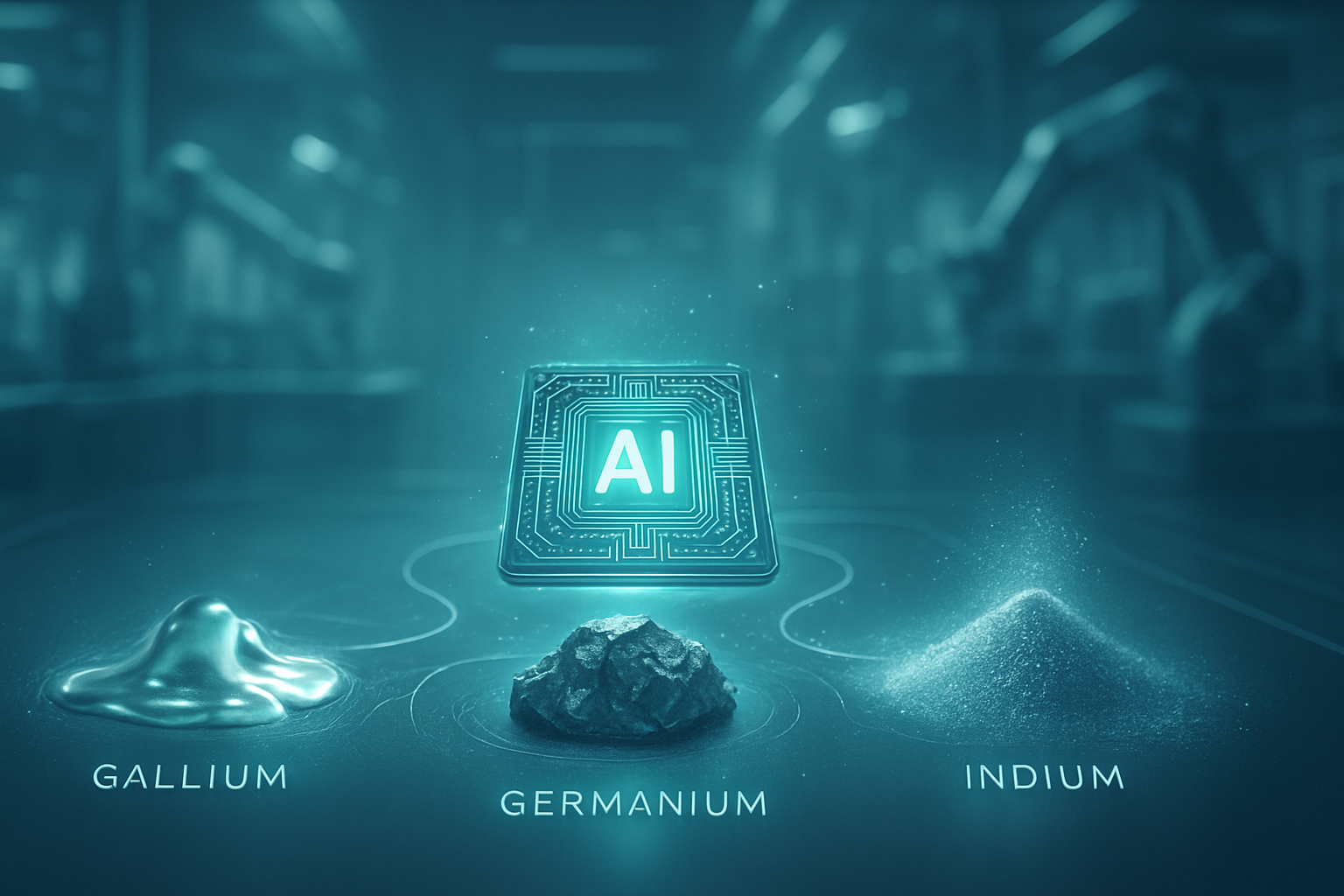
    At the heart of AI chip production lies a complex tapestry of critical minerals, each contributing unique properties that are currently irreplaceable. Silicon (Si) remains the foundational material, but advanced AI chips demand far more. Copper (Cu) provides essential conductivity, while Cobalt (Co) is crucial for metallization processes in logic and memory. Gallium (Ga) and Germanium (Ge) are vital for high-frequency compound semiconductors, offering superior performance over silicon in specialized AI applications. Rare Earth Elements (REEs) like Neodymium, Dysprosium, and Terbium are indispensable for the high-performance magnets used in AI hardware, robotics, and autonomous systems. Lithium (Li) powers the batteries in AI-powered devices and data centers, and elements like Phosphorus (P) and Arsenic (As) are critical dopants. Gold (Au), Palladium (Pd), High-Purity Alumina (HPA), Tungsten (W), Platinum (Pt), and Silver (Ag) all play specialized roles in ensuring the efficiency, durability, and connectivity of these complex microchips.

    The global supply chain for these minerals is characterized by extreme geographic concentration, creating significant vulnerabilities. China, for instance, holds a near-monopoly on the production and processing of many REEs, gallium, and germanium. The Democratic Republic of Congo (DRC) accounts for roughly 70% of global cobalt mining, with China dominating its refining. This concentrated sourcing creates "single points of failure" and allows for geopolitical leverage, as demonstrated by China's past export restrictions on gallium, germanium, and graphite, explicitly targeting parts for advanced AI chips. These actions directly threaten the ability to innovate and produce cutting-edge AI hardware, leading to manufacturing delays, increased costs, and a strategic vulnerability in the global AI race.

    Reshaping the AI Industry: Beneficiaries and Competitive Shifts

    JPMorgan's initiative is poised to significantly impact AI companies, tech giants, and startups by creating a more secure and resilient foundation for hardware development. Companies involved in domestic mining, processing, and advanced manufacturing of critical minerals and semiconductors stand to be primary beneficiaries. This includes firms specializing in rare earth extraction and refinement, gallium and germanium production outside of China, and advanced packaging and fabrication within the U.S. and allied nations. AI hardware startups, particularly those developing novel chip architectures or specialized AI accelerators, could find more stable access to essential materials, accelerating their R&D and time-to-market.

    The competitive implications are profound. U.S. and allied AI labs and tech companies that secure access to these diversified supply chains will gain a substantial strategic advantage. This could lead to a decoupling of certain segments of the AI hardware supply chain, with companies prioritizing resilience over sheer cost efficiency. Major tech giants like Alphabet (NASDAQ: GOOGL), Microsoft (NASDAQ: MSFT), Amazon (NASDAQ: AMZN), and Nvidia (NASDAQ: NVDA), which are heavily invested in AI development and operate vast data centers, will benefit from a more stable supply of chips and components, reducing the risk of production halts and escalating hardware costs.

    Conversely, companies heavily reliant on the existing, vulnerable supply chains may face increased disruption, higher costs, and slower innovation cycles if they do not adapt. The initiative could disrupt existing product roadmaps by incentivizing the use of domestically sourced or allied-sourced materials, potentially altering design choices and manufacturing processes. Market positioning will increasingly factor in supply chain resilience as a key differentiator, with companies demonstrating robust and diversified material sourcing gaining a competitive edge in the fiercely contested AI landscape.

    Broader Implications: AI's Geopolitical Chessboard

    This initiative fits into a broader global trend of nations prioritizing technological sovereignty and supply chain resilience, particularly in the wake of recent geopolitical tensions and the COVID-19 pandemic's disruptions. It elevates the discussion of critical minerals from a niche industrial concern to a central pillar of national security and economic competitiveness, especially in the context of the global AI race. The impacts are far-reaching: it could foster greater economic stability by reducing reliance on volatile foreign markets, enhance national security by securing foundational technologies, and accelerate the pace of AI development by ensuring a steady supply of crucial hardware components.

    However, potential concerns remain. The sheer scale of the investment highlights the severity of the underlying problem, and success is not guaranteed. Geopolitical tensions, particularly between the U.S. and China, could escalate further as nations vie for control over these strategic resources. The long lead times required to develop new mines and processing facilities (often 10-15 years) mean that immediate relief from supply concentration is unlikely, and short-term vulnerabilities will persist. While comparable to past technological arms races, this era places an unprecedented emphasis on raw materials, transforming them into the "new oil" of the digital age. This initiative represents a significant escalation in the efforts to secure the foundational elements of the AI revolution, making it a critical milestone in the broader AI landscape.

    The Road Ahead: Innovation, Investment, and Independence

    In the near term, we can expect to see JPMorgan's initial investments flow into domestic mining and processing companies, as well as ventures exploring advanced manufacturing techniques for semiconductors and critical components. There will likely be an increased focus on developing U.S. and allied capabilities in rare earth separation, gallium and germanium production, and other critical mineral supply chain segments. Experts predict a surge in R&D into alternative materials and advanced recycling technologies to reduce reliance on newly mined resources. The establishment of JPMorgan's external advisory council and specialized research through its Center for Geopolitics will provide strategic guidance and insights into navigating these complex challenges.

    Longer-term developments could include the successful establishment of new domestic mines and processing plants, leading to a more diversified and resilient global supply chain for critical minerals. This could foster significant innovation in material science, potentially leading to new generations of AI chips that are less reliant on the most geopolitically sensitive elements. However, significant challenges remain. The environmental impact of mining, the cost-effectiveness of domestic production compared to established foreign sources, and the need for a skilled workforce in these specialized fields will all need to be addressed. Experts predict that the strategic competition for critical minerals will intensify, potentially leading to new international alliances and trade agreements centered around resource security.

    A New Dawn for AI Hardware Resilience

    JPMorgan's $1.5 trillion Security & Resiliency Initiative marks a pivotal moment in the history of AI. It is a resounding acknowledgment that the future of artificial intelligence, often perceived as purely digital, is deeply rooted in the physical world of critical minerals and complex supply chains. The key takeaway is clear: secure access to essential raw materials is no longer just an industrial concern but a strategic imperative for national security and technological leadership in the AI era. This bold financial commitment by one of the world's largest banks underscores the severity of the current vulnerabilities and the urgency of addressing them.

    This development's significance in AI history cannot be overstated. It represents a proactive and substantial effort to de-risk the foundation of AI hardware innovation, moving beyond mere policy rhetoric to concrete financial action. The long-term impact could be transformative, potentially ushering in an era of greater supply chain stability, accelerated AI hardware development within secure ecosystems, and a rebalancing of global technological power. What to watch for in the coming weeks and months will be the specific projects and companies that receive funding, the progress made on domestic mineral extraction and processing, and the reactions from other global players as the battle for AI supremacy increasingly shifts to the raw material level.


    This content is intended for informational purposes only and represents analysis of current AI developments.

    TokenRing AI delivers enterprise-grade solutions for multi-agent AI workflow orchestration, AI-powered development tools, and seamless remote collaboration platforms.
    For more information, visit https://www.tokenring.ai/.