
Tag: Critical Thinking

  • Beyond the Algorithms: Why Human Intelligence Continues to Outpace AI in Critical Domains

    Beyond the Algorithms: Why Human Intelligence Continues to Outpace AI in Critical Domains

    In an era increasingly dominated by discussions of artificial intelligence's rapid advancements, recent developments from late 2024 to late 2025 offer a crucial counter-narrative: the enduring and often superior performance of human intelligence in critical domains. While AI systems (like those developed by Alphabet (NASDAQ: GOOGL) and Microsoft (NASDAQ: MSFT)) have achieved unprecedented feats in data processing, pattern recognition, and even certain creative tasks, a growing body of evidence and research underscores their inherent limitations when it comes to emotional intelligence, ethical reasoning, deep contextual understanding, and truly original thought. These instances are not merely isolated anomalies but rather a stark reminder of the unique cognitive strengths that define human intellect, reinforcing its indispensable role in navigating complex, unpredictable, and value-laden scenarios.

    The immediate significance of these findings is profound, shifting the conversation from AI replacing human capabilities to AI augmenting them. Experts are increasingly emphasizing the necessity of cultivating uniquely human skills such as critical thinking, ethical judgment, and emotional intelligence. This perspective advocates for a strategic integration of AI, where technology handles data-intensive, repetitive tasks, freeing human intellect to focus on complex problem-solving, innovation, and moral guidance. It highlights that the most promising path forward lies not in a competition between humans and machines, but in a synergistic collaboration that leverages the distinct strengths of both.

    The Unseen Edge: Where Human Intervention Remains Crucial

    Recent research and real-world scenarios have illuminated several key areas where human intelligence consistently outperforms even the most advanced technological solutions. One of the most prominent is emotional intelligence and ethical decision-making. AI systems, despite their ability to process vast amounts of data related to human behavior, fundamentally lack the capacity for genuine empathy, moral judgment, and the nuanced understanding of social dynamics. For example, studies in early 2024 indicated that while AI might generate responses to ethical dilemmas that are rated as "moral," humans could still discern the artificial nature of these responses and critically evaluate their underlying ethical framework. The human ability to draw upon values, culture, and personal experience to navigate complex moral landscapes remains beyond AI's current capabilities, which are confined to programmed rules and training data. This makes human oversight in roles requiring empathy, leadership, and ethical governance absolutely critical.

    Furthermore, nuanced problem-solving and contextual understanding present a significant hurdle for current AI. Humans exhibit a superior adaptability to unfamiliar circumstances and possess a greater ability to grasp the subtleties and intricacies of real-world contexts, especially in multidisciplinary tasks. A notable finding from Johns Hopkins University in April 2025 revealed that humans are far better than contemporary AI models at interpreting and describing social interactions in dynamic scenes. This skill is vital for applications like self-driving cars and assistive robots that need to understand human intentions and social dynamics to operate safely and effectively. AI often struggles with integrating contradictions and handling ambiguity, relying instead on predefined patterns, whereas humans flexibly process incomplete or conflicting information.

    Even in the realm of creativity and originality, where generative AI has made impressive strides (with companies like OpenAI (private) and Stability AI (private) pushing boundaries), humans maintain a critical edge, especially at the highest levels. While a March 2024 study showed GPT-4 providing more original and elaborate answers than average human participants in divergent thinking tests, subsequent research in June 2025 clarified that while AI can match or even surpass the average human in idea fluency, the top-performing human individuals still generate ideas that are more unique and semantically distinct. Human creativity is deeply interwoven with emotion, culture, and lived experience, enabling the generation of truly novel concepts that go beyond mere remixing of existing patterns—a limitation still observed in AI-generated content. Finally, critical thinking and abstract reasoning remain uniquely human strengths. This involves exercising judgment, understanding limitations, and engaging in deep analytical thought, which AI, despite its advanced data analysis, cannot fully replicate. Experts warn that over-reliance on AI can lead to "cognitive offloading," potentially diminishing human engagement in complex analytical thinking and eroding these vital skills.

    Navigating the AI Landscape: Implications for Companies

    The identified limitations of AI and the enduring importance of human insight carry significant implications for AI companies, tech giants, and startups alike. Companies that recognize and strategically address these gaps stand to benefit immensely. Instead of solely pursuing fully autonomous AI solutions, firms focusing on human-AI collaboration platforms and augmented intelligence tools are likely to gain a competitive edge. This includes companies developing interfaces that seamlessly integrate human judgment into AI workflows, or tools that empower human decision-makers with AI-driven insights without ceding critical oversight.

    Competitive implications are particularly salient for major AI labs and tech companies such as Google (NASDAQ: GOOGL), Meta Platforms (NASDAQ: META), and Amazon (NASDAQ: AMZN). Those that acknowledge AI's current shortcomings and invest in research to bridge the gap between AI's analytical power and human cognitive strengths—such as common sense reasoning or ethical frameworks—will distinguish themselves. This might involve developing AI models that are more interpretable, controllable, and align better with human values. Startups focusing on niche applications where human expertise is paramount, like AI-assisted therapy, ethical AI auditing, or highly creative design agencies, could see significant growth.

    Potential disruption to existing products or services could arise if companies fail to integrate human oversight effectively. Overly automated systems in critical sectors like healthcare, finance, or legal services, which neglect the need for human ethical review or nuanced interpretation, risk significant failures and public distrust. Conversely, companies that prioritize building "human-in-the-loop" systems will build more robust and trustworthy solutions, strengthening their market positioning and strategic advantages. The market will increasingly favor AI solutions that enhance human capabilities rather than attempting to replace them entirely, especially in high-stakes environments.

    The Broader Canvas: Significance in the AI Landscape

    These instances of human outperformance fit into a broader AI landscape that is increasingly acknowledging the complexity of true intelligence. While the early 2020s were characterized by a fervent belief in AI's inevitable march towards superintelligence across all domains, recent findings inject a dose of realism. They underscore that while AI excels in specific, narrow tasks, the holistic, nuanced, and value-driven aspects of cognition remain firmly in the human domain. This perspective contributes to a more balanced understanding of AI's role, shifting from a narrative of human vs. machine to one of intelligent symbiosis.

    The impacts are wide-ranging. Socially, a greater appreciation for human cognitive strengths can help mitigate concerns about job displacement, instead fostering a focus on upskilling workforces in uniquely human competencies. Economically, industries can strategize for greater efficiency by offloading repetitive tasks to AI while retaining human talent for innovation, strategic planning, and customer relations. However, potential concerns also emerge. An over-reliance on AI for tasks that require critical thinking could lead to a "use-it-or-lose-it" scenario for human cognitive abilities, a phenomenon experts refer to as "cognitive offloading." This necessitates careful design of human-AI interfaces and educational initiatives that promote continuous development of human critical thinking.

    Comparisons to previous AI milestones reveal a maturation of the field. Early AI breakthroughs, like Deep Blue defeating Garry Kasparov in chess or AlphaGo mastering Go, showcased AI's prowess in well-defined, rule-based systems. The current understanding, however, highlights that real-world problems are often ill-defined, ambiguous, and require common sense, ethical judgment, and emotional intelligence—areas where human intellect remains unparalleled. This marks a shift from celebrating AI's ability to solve specific problems to a deeper inquiry into what constitutes general intelligence and how humans and AI can best collaborate to achieve it.

    The Horizon of Collaboration: Future Developments

    Looking ahead, the future of AI development is poised for a significant shift towards deeper human-AI collaboration rather than pure automation. Near-term developments are expected to focus on creating more intuitive and adaptive AI interfaces that facilitate seamless integration of human feedback and judgment. This includes advancements in explainable AI (XAI), allowing humans to understand AI's reasoning, and more robust "human-in-the-loop" systems where critical decisions always require human approval. We can anticipate AI tools that act as sophisticated co-pilots, assisting humans in complex tasks like medical diagnostics, legal research, and creative design, providing data-driven insights without usurping the final, nuanced decision.

    Long-term, the focus will likely extend to developing AI that can better understand and simulate aspects of human common sense and ethical frameworks, though true replication of human consciousness or emotional depth remains a distant, perhaps unattainable, goal. Potential applications on the horizon include AI systems that can help humans navigate highly ambiguous social situations, assist in complex ethical deliberations by presenting diverse viewpoints, or even enhance human creativity by offering truly novel conceptual starting points, rather than just variations on existing themes.

    However, significant challenges need to be addressed. Research into "alignment"—ensuring AI systems act in accordance with human values and intentions—will intensify. Overcoming the "brittleness" of AI, where systems fail spectacularly outside their training data, will also be crucial. Experts predict a future where the most successful individuals and organizations will be those that master the art of human-AI teaming, recognizing that the combined intelligence of a skilled human and a powerful AI will consistently outperform either working in isolation. The emphasis will be on designing AI to amplify human strengths, rather than compensate for human weaknesses.

    A New Era of Human-AI Synergy: Concluding Thoughts

    The recent instances where human intelligence has demonstrably outperformed technological solutions mark a pivotal moment in the ongoing narrative of artificial intelligence. They serve as a powerful reminder that while AI excels in specific computational tasks, the unique human capacities for emotional intelligence, ethical reasoning, deep contextual understanding, critical thinking, and genuine originality remain indispensable. This is not a setback for AI, but rather a crucial recalibration of our expectations and a clearer definition of its most valuable applications.

    The key takeaway is that the future of intelligence lies not in AI replacing humanity, but in a sophisticated synergy where both contribute their distinct strengths. This development's significance in AI history lies in its shift from an unbridled pursuit of autonomous AI to a more mature understanding of augmented intelligence. It underscores the necessity of designing AI systems that are not just intelligent, but also ethical, transparent, and aligned with human values.

    In the coming weeks and months, watch for increased investment in human-centric AI design, a greater emphasis on ethical AI frameworks, and the emergence of more sophisticated human-AI collaboration tools. The conversation will continue to evolve, moving beyond the simplistic "AI vs. Human" dichotomy to embrace a future where human ingenuity, empowered by advanced AI, tackles the world's most complex challenges. The enduring power of human insight is not just a present reality, but the foundational element for a truly intelligent future.


    This content is intended for informational purposes only and represents analysis of current AI developments.

    TokenRing AI delivers enterprise-grade solutions for multi-agent AI workflow orchestration, AI-powered development tools, and seamless remote collaboration platforms.
    For more information, visit https://www.tokenring.ai/.
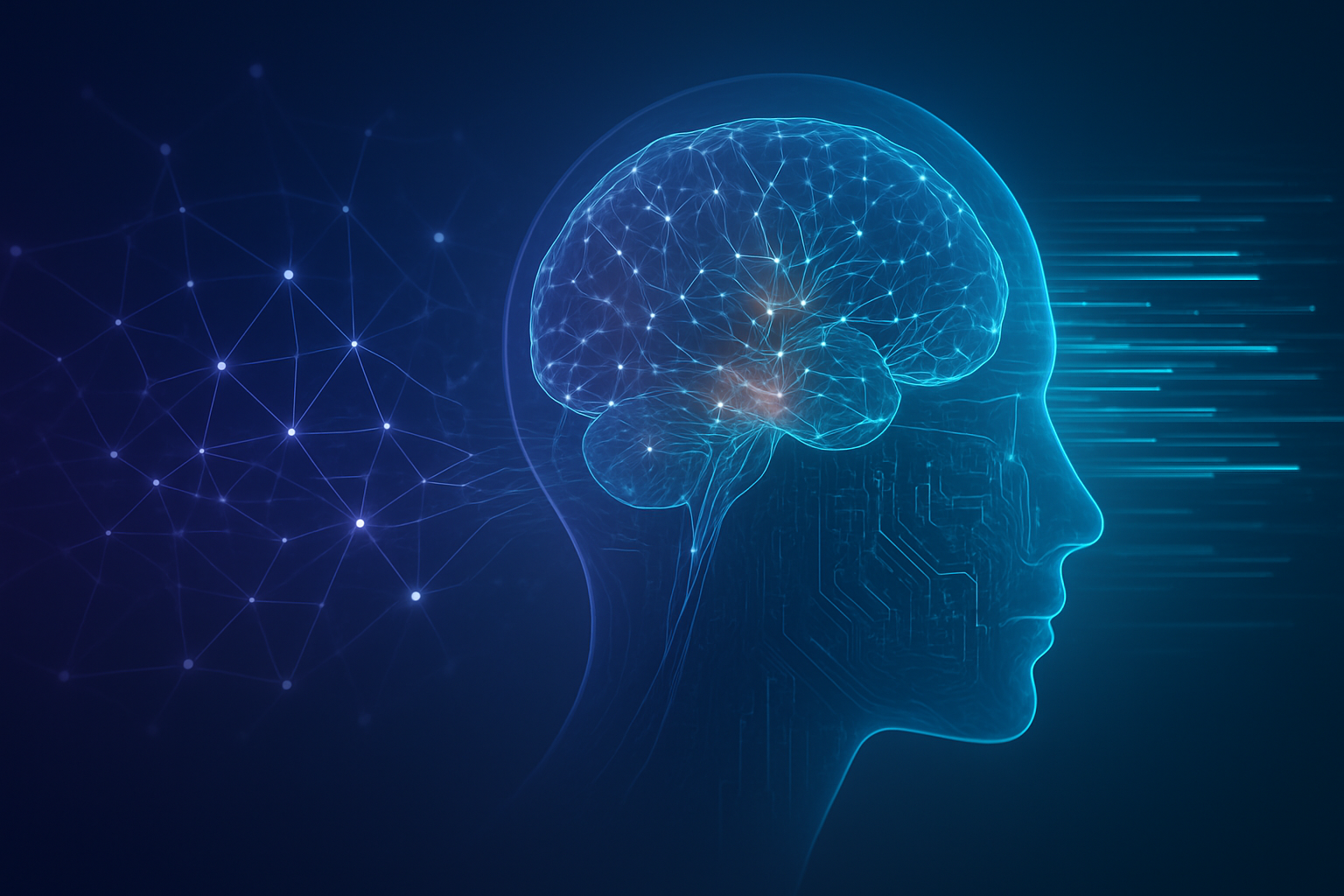
  • The Silent Erosion: Is Generative AI Blunting Human Thinking Skills?

    The Silent Erosion: Is Generative AI Blunting Human Thinking Skills?

    The rapid proliferation of generative artificial intelligence tools, from sophisticated large language models to advanced image generators, is revolutionizing industries and reshaping daily workflows. While lauded for unprecedented efficiency gains and creative augmentation, a growing chorus of researchers and experts is sounding an alarm: our increasing reliance on these powerful AI systems may be subtly eroding fundamental human thinking skills, including critical analysis, problem-solving, and even creativity. This emerging concern posits that as AI shoulders more cognitive burdens, humans risk a form of intellectual atrophy, with profound implications for education, professional development, and societal innovation.

    The Cognitive Cost of Convenience: Unpacking the Evidence

    The shift towards AI-assisted cognition represents a significant departure from previous technological advancements. Unlike earlier tools that augmented human effort, generative AI often replaces initial ideation, synthesis, and even complex problem decomposition. This fundamental difference is at the heart of the emerging evidence suggesting a blunting of human intellect.

    Specific details from recent studies paint a concerning picture. A collaborative study by Microsoft Research (MSFT) and Carnegie Mellon University, slated for presentation at the prestigious CHI Conference on Human Factors in Computing Systems, surveyed 319 knowledge workers. It revealed that while generative AI undeniably boosts efficiency, it can also "inhibits critical engagement with work and can potentially lead to long-term overreliance on the tool and diminished skill for independent problem solving." The study, analyzing nearly a thousand real-world AI-assisted tasks, found a clear correlation: workers highly confident in AI were less likely to critically scrutinize AI-generated outputs. Conversely, those more confident in their own abilities applied greater critical thinking to verify and refine AI suggestions.

    Further corroborating these findings, a study published in the journal Societies, led by Michael Gerlich of SBS Swiss Business School, identified a strong negative correlation between frequent AI tool usage and critical thinking, particularly among younger demographics (17-25 years old). Gerlich observed a tangible decline in the depth of classroom discussions, with students increasingly turning to laptops for answers rather than engaging in collaborative thought. Educational institutions are indeed a significant area of concern; a University of Pennsylvania report, "Generative AI Can Harm Learning," noted that students who relied on AI for practice problems performed worse on subsequent tests compared to those who completed assignments unaided. Psychiatrist Dr. Zishan Khan has warned that such over-reliance in developing brains could weaken neural connections crucial for memory, information access, and resilience.

    Experts like Gary Marcus, Professor Emeritus of Psychology and Neural Science at New York University, describe the pervasive nature of generative AI as a "fairly serious threat" to cognitive abilities, particularly given that "people seem to trust GenAI far more than they should." Anjali Singh, a postdoctoral fellow at the University of Texas, Austin, highlights the particular risk for "novices" or students who might offload a broader range of creative and analytical tasks to AI, thereby missing crucial learning opportunities. The core mechanism at play is often termed cognitive offloading, where individuals delegate mental tasks to external tools, leading to a reduction in the practice and refinement of those very skills. This can result in "cognitive atrophy" – a weakening of abilities through disuse. Other mechanisms include reduced cognitive effort, automation bias (where users uncritically accept AI outputs), and a lowering of metacognitive monitoring, leading to "metacognitive laziness." While AI can boost creative productivity, there are also concerns about its long-term impact on the authenticity and originality of human creativity, potentially leading to narrower outcomes and reduced "Visual Novelty" in creative fields.

    Shifting Strategies: How This Affects AI Companies and Tech Giants

    The growing evidence of generative AI's potential cognitive downsides presents a complex challenge and a nuanced opportunity for AI companies, tech giants, and startups alike. Companies that have heavily invested in and promoted generative AI as a panacea for productivity, such as Microsoft (MSFT) with Copilot, Alphabet's Google (GOOGL) with Gemini, and leading AI labs like OpenAI, face the imperative to address these concerns proactively.

    Initially, the competitive landscape has been defined by who can deliver the most powerful and seamless AI integration. However, as the discussion shifts from pure capability to cognitive impact, companies that prioritize "human-in-the-loop" design, explainable AI, and tools that genuinely augment rather than replace human thought processes may gain a strategic advantage. This could lead to a pivot in product development, focusing on features that encourage critical engagement, provide transparency into AI's reasoning, or even gamify the process of verifying and refining AI outputs. Startups specializing in AI literacy training, critical thinking enhancement tools, or platforms designed for collaborative human-AI problem-solving could see significant growth.

    The market positioning of major AI players might evolve. Instead of merely touting efficiency, future marketing campaigns could emphasize "intelligent augmentation" or "human-centric AI" that fosters skill development. This could disrupt existing products that encourage passive acceptance of AI outputs, forcing developers to re-evaluate user interfaces and interaction models. Companies that can demonstrate a commitment to mitigating cognitive blunting – perhaps through integrated educational modules or tools that prompt users for deeper analytical engagement – will likely build greater trust and long-term user loyalty. Conversely, companies perceived as fostering intellectual laziness could face backlash from educational institutions, professional bodies, and discerning consumers, potentially impacting adoption rates and brand reputation. The semiconductor industry, which underpins AI development, will continue to benefit from the overall growth of AI, but the focus might shift towards chips optimized for more interactive and critically engaging AI applications.

    A Broader Canvas: Societal Impacts and Ethical Imperatives

    The potential blunting of human thinking skills by generative AI tools extends far beyond individual cognitive decline; it poses significant societal implications that resonate across education, employment, innovation, and democratic discourse. This phenomenon fits into a broader AI landscape characterized by the accelerating automation of cognitive tasks, raising fundamental questions about the future of human intellect and our relationship with technology.

    Historically, major technological shifts, from the printing press to the internet, have reshaped how we acquire and process information. However, generative AI represents a unique milestone because it actively produces information and solutions, rather than merely organizing or transmitting them. This creates a new dynamic where the human role can transition from creator and analyst to editor and verifier, potentially reducing opportunities for deep learning and original thought. The impact on education is particularly acute, as current pedagogical methods may struggle to adapt to a generation of students accustomed to outsourcing complex thinking. This could lead to a workforce less equipped for novel problem-solving, critical analysis of complex situations, or truly innovative breakthroughs.

    Potential concerns include a homogenization of thought, as AI-generated content, if not critically engaged with, could lead to convergent thinking and a reduction in diverse perspectives. The risk of automation bias – uncritically accepting AI outputs – could amplify the spread of misinformation and erode independent judgment, with serious consequences for civic engagement and democratic processes. Furthermore, the ethical implications are vast: who is responsible when AI-assisted decisions lead to errors or biases that are overlooked due to human over-reliance? The comparison to previous AI milestones highlights this shift: early AI focused on specific tasks (e.g., chess, expert systems), while generative AI aims for broad, human-like creativity and communication, making its cognitive impact far more pervasive. Society must grapple with balancing the undeniable benefits of AI efficiency with the imperative to preserve and cultivate human intellectual capabilities.

    Charting the Future: Mitigating Cognitive Blunting

    The growing awareness of generative AI's potential to blunt human thinking skills necessitates a proactive approach to future development and implementation. Expected near-term developments will likely focus on designing AI tools that are not just efficient but also cognitively enriching. This means a shift towards "AI as a tutor" or "AI as a thinking partner" rather than "AI as an answer generator."

    On the horizon, we can anticipate the emergence of AI systems specifically designed with metacognitive scaffolds, prompting users to reflect, question, and critically evaluate AI outputs. For instance, future AI tools might intentionally introduce subtle challenges or ask probing questions to encourage deeper human engagement, rather than simply providing a direct solution. There will likely be an increased emphasis on explainable AI (XAI), allowing users to understand how an AI arrived at a conclusion, thereby fostering critical assessment rather than blind acceptance. Educational applications will undoubtedly explore adaptive AI tutors that tailor interactions to strengthen specific cognitive weaknesses, ensuring students learn with AI, not just from it.

    Challenges that need to be addressed include developing robust metrics to quantify cognitive skill development (or decline) in AI-rich environments, creating effective training programs for both students and professionals on responsible AI use, and establishing ethical guidelines for AI design that prioritize human intellectual growth. Experts predict a future where the most valuable skill will be the ability to effectively collaborate with AI, leveraging its strengths while maintaining and enhancing human critical faculties. This will require a new form of digital literacy that encompasses not just how to use AI, but how to think alongside it, challenging its assumptions and building upon its suggestions. The goal is to evolve from passive consumption to active co-creation, ensuring that AI serves as a catalyst for deeper human intelligence, not a substitute for it.

    The Human-AI Symbiosis: A Call for Conscious Integration

    The burgeoning evidence that reliance on generative AI tools may blunt human thinking skills marks a pivotal moment in the evolution of artificial intelligence. It underscores a critical takeaway: while AI offers unparalleled advantages in efficiency and access to information, its integration into our cognitive processes demands conscious, deliberate design and usage. The challenge is not to halt AI's progress, but to guide it in a direction that fosters a symbiotic relationship, where human intellect is augmented, not atrophied.

    This development's significance in AI history lies in shifting the conversation from merely what AI can do to what AI does to us. It forces a re-evaluation of design principles, educational methodologies, and societal norms surrounding technology adoption. The long-term impact hinges on our collective ability to cultivate "AI literacy" – the capacity to leverage AI effectively while actively preserving and enhancing our own critical thinking, problem-solving, and creative faculties. This means encouraging active engagement, fostering metacognitive awareness, and promoting critical verification of AI outputs.

    In the coming weeks and months, watch for increased research into human-AI collaboration models that prioritize cognitive development, the emergence of educational programs focused on responsible AI use, and potentially new regulatory frameworks aimed at ensuring AI tools contribute positively to human intellectual flourishing. Companies that champion ethical AI design and empower users to become more discerning, analytical thinkers will likely define the next era of AI innovation. The future of human intelligence, in an AI-pervasive world, will depend on our willingness to engage with these tools not as ultimate answer providers, but as powerful, yet fallible, thought partners.


    This content is intended for informational purposes only and represents analysis of current AI developments.

    TokenRing AI delivers enterprise-grade solutions for multi-agent AI workflow orchestration, AI-powered development tools, and seamless remote collaboration platforms.
    For more information, visit https://www.tokenring.ai/.