
Tag: CRM

  • Real Estate’s Next Frontier: Cloze and Courted Forge AI-Powered Talent Ecosystem

    Real Estate’s Next Frontier: Cloze and Courted Forge AI-Powered Talent Ecosystem

    In a significant stride for real estate technology, an innovative integration between Cloze CRM and Courted, a leading recruiting and retention platform, was unveiled on October 29, 2025. This strategic partnership is set to revolutionize how real estate brokerages identify, engage, and retain top talent, creating a "Connected Brokerage" ecosystem where data-driven insights meet sophisticated relationship management. The timing of this announcement, just yesterday, positions it as a critical development for an industry constantly seeking an edge in talent acquisition and retention.

    The collaboration represents a powerful synergy, merging Courted's unparalleled agent intelligence and predictive analytics with Cloze's (NYSE: CLOZ) AI-powered relationship management capabilities. For brokerage leaders, this means moving beyond fragmented data and manual processes to a unified, intelligent system. The immediate significance lies in the promise of smarter, more efficient recruitment strategies and a proactive approach to agent retention, directly addressing some of the most pressing challenges faced by real estate firms today.

    A Deep Dive into the Integrated Intelligence

    At its core, the Cloze and Courted integration is designed to eliminate data silos and streamline the talent lifecycle within real estate brokerages. The technical backbone involves the automated syncing of agent watchlists and over 50 unique data points from Courted into Cloze CRM. These data points include crucial insights such as production history and "likelihood to move," arriving in Cloze pre-tagged and ready for targeted engagement. This seamless flow of information ensures that brokerage leaders have a comprehensive, 360-degree view of each recruiting target, combining Courted's predictive statuses with all communication touchpoints—calls, texts, meetings, and notes—tracked within Cloze.

    This approach significantly differs from previous methods, which often involved manual data transfer, disparate systems, and a lack of real-time, unified insights. Historically, recruiters might use one platform for talent identification and another for communication, leading to inefficiencies and missed opportunities. The integrated system allows for precision engagement, enabling leaders to launch targeted drip campaigns and personalize outreach with unprecedented accuracy. Furthermore, Cloze's AI Ghostwriter feature empowers users to quickly generate branded, personalized recruiting messages, eliminating the need for tedious manual drafting and ensuring consistent, high-quality communication at scale. The initial reactions from industry experts highlight the potential for enhanced efficiency, data-driven decision-making, and a more strategic approach to talent management that could redefine competitive landscapes.

    Reshaping the Competitive Landscape for Real Estate Firms

    This integration stands to significantly benefit real estate brokerages and, by extension, both Cloze and Courted. Brokerages utilizing this combined solution will gain a substantial competitive advantage in the fierce battle for top-performing agents. By leveraging Courted's predictive analytics to identify prime candidates and Cloze's robust engagement tools, they can recruit more strategically and effectively, securing talent faster and with greater precision. This could lead to a noticeable shift in market share and agent loyalty.

    For Cloze (NYSE: CLOZ), this partnership strengthens its position as a critical CRM solution in the real estate sector, demonstrating its adaptability and commitment to deep industry-specific integrations. Similarly, Courted solidifies its role as an indispensable talent intelligence platform. The competitive implications for other real estate CRM providers and recruiting platforms are significant; they will likely face pressure to develop similar, equally robust integrations to remain competitive. This development could disrupt existing products or services that offer only partial solutions, pushing the industry towards more holistic, integrated platforms. Both companies enhance their market positioning by offering a combined solution that addresses a core industry pain point with advanced AI and data capabilities.

    A Milestone in AI-Driven Real Estate Evolution

    The Cloze and Courted integration fits squarely within the broader AI landscape and the accelerating trend of specialized AI applications. It exemplifies how artificial intelligence and advanced data analytics are moving beyond generic applications to solve specific, complex industry challenges. This partnership underscores the increasing reliance on AI for predictive insights, automation, and hyper-personalization in critical business functions like human resources and talent management. The impact on the real estate sector is profound, promising smarter talent acquisition, significantly improved agent retention rates, and more efficient brokerage operations.

    While the benefits are clear, potential concerns could arise around data privacy and the ethical implications of using predictive analytics for talent identification, particularly regarding the "likelihood to move" metric. Ensuring transparency and ethical data usage will be paramount. This integration can be compared to previous AI milestones that introduced automation and intelligence into sales and marketing, but it marks a distinct step forward by applying sophisticated AI to the nuanced and highly competitive domain of talent acquisition and retention within a specific industry. It signals a maturation of AI tools, moving from broad capabilities to finely tuned, industry-specific solutions that deliver tangible business outcomes.

    The Horizon: Smarter Talent Ecosystems and Hyper-Personalization

    Looking ahead, this integration is likely just the beginning of more sophisticated AI applications in real estate talent management. In the near term, we can expect deeper integration of communication channels within Cloze, perhaps incorporating more real-time engagement tools directly informed by Courted's insights. Long-term developments could include even more predictive analytics, potentially leveraging machine learning to identify not just who is likely to move, but also who is most likely to succeed within a specific brokerage culture, or what training programs would best benefit an agent based on their performance data.

    Potential applications on the horizon include AI-driven personalized training recommendations for agents, performance optimization insights, and even automated onboarding processes that are tailored to an agent's specific needs and background, all powered by the combined data from Cloze and Courted. However, challenges remain, particularly in ensuring seamless integration across a rapidly evolving tech stack, maintaining data accuracy, and achieving widespread user adoption across diverse brokerage sizes and tech savviness levels. Experts predict a future where real estate talent management becomes increasingly hyper-personalized and proactive, with integrated platforms becoming the norm, continually adapting to market shifts and agent needs.

    A New Era for Real Estate Talent Management

    The integration between Cloze and Courted represents a pivotal moment in the evolution of real estate technology, particularly in the critical areas of CRM and data integration. The key takeaway is the creation of a unified, AI-powered ecosystem that transforms agent recruiting and retention from a reactive, labor-intensive process into a proactive, data-driven strategic advantage. This development's significance in AI history lies in its demonstration of specialized AI's power to address complex industry-specific challenges, offering a blueprint for other sectors.

    As we move forward, the long-term impact will likely be a more stable, efficient, and ultimately more successful real estate industry, where top talent is not just attracted but actively nurtured and retained through intelligent systems. What to watch for in the coming weeks and months includes the initial adoption rates among brokerages, case studies demonstrating measurable ROI, and how competitors respond to this elevated standard in real estate talent technology. This partnership sets a new benchmark for how technology can empower real estate professionals to thrive in an increasingly competitive market.


    This content is intended for informational purposes only and represents analysis of current AI developments.

    TokenRing AI delivers enterprise-grade solutions for multi-agent AI workflow orchestration, AI-powered development tools, and seamless remote collaboration platforms.
    For more information, visit https://www.tokenring.ai/.
  • Salesforce Unveils Ambitious AI-Driven Roadmap and $60 Billion FY2030 Target at Dreamforce 2025, Ushering in the ‘Agentic Enterprise’ Era

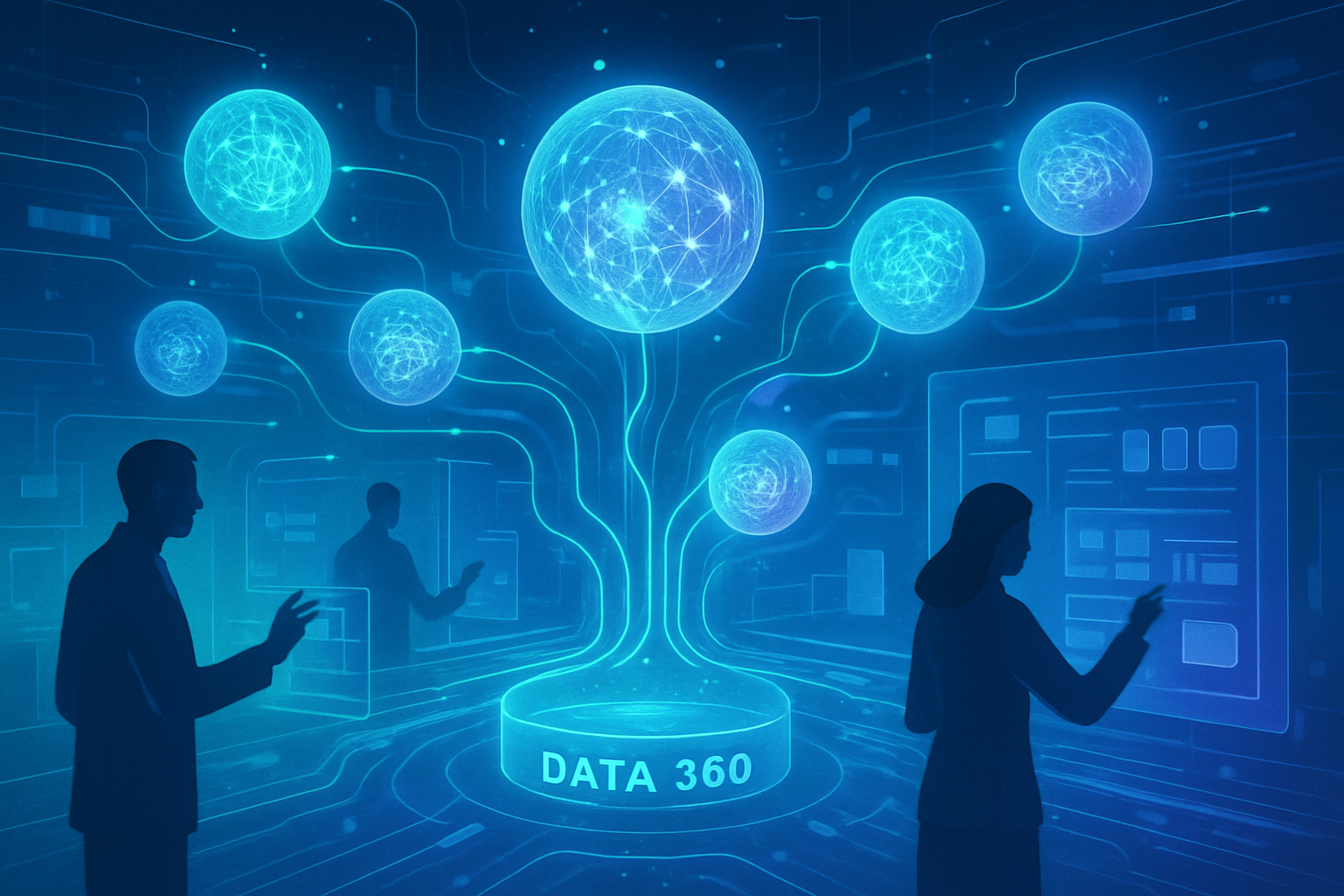
    Salesforce Unveils Ambitious AI-Driven Roadmap and $60 Billion FY2030 Target at Dreamforce 2025, Ushering in the ‘Agentic Enterprise’ Era

    SAN FRANCISCO – In a landmark declaration at Dreamforce 2025, held from October 14-16, 2025, Salesforce (NYSE: CRM) unveiled a transformative vision for its future, deeply embedding advanced artificial intelligence across its entire platform and setting an audacious new financial goal: over $60 billion in revenue by fiscal year 2030. This strategic pivot, centered around the concept of an "Agentic Enterprise," signifies a profound shift in how businesses will leverage AI, moving beyond simple copilots to autonomous, intelligent agents that act as true digital teammates. The announcements have sent ripples across the tech industry, signaling a new frontier in enterprise AI and cementing Salesforce's intent to dominate the burgeoning market for AI-powered business solutions.

    The core of Salesforce's announcement revolves around the evolution of its AI capabilities, transforming its widely recognized Einstein Copilot into "Agentforce," a comprehensive platform designed for building, deploying, and managing autonomous AI agents. This strategic evolution, coupled with the re-envisioning of Data Cloud as "Data 360" – the foundational intelligence layer for all AI operations – underscores Salesforce's commitment to delivering a unified, intelligent, and automated enterprise experience. The ambitious FY2030 revenue target, excluding the recently acquired Informatica, reinforces the company's confidence in its AI investments to drive sustained double-digit growth and profitability in the coming years.

    The Dawn of the Agentic Enterprise: Technical Deep Dive into Agentforce 360 and Data 360

    Salesforce's AI roadmap, meticulously detailed at Dreamforce 2025, paints a picture of an "Agentic Enterprise" where AI agents are not merely assistive tools but proactive collaborators, capable of executing multi-step workflows and integrating seamlessly with external systems. This vision is primarily realized through Agentforce 360, the successor to Einstein Copilot. Agentforce 360 represents a significant leap from one-step prompts to complex, multi-step reasoning and automation, allowing agents to act as digital collaborators across various business functions. Key technical advancements include a new conversational builder for intuitive agent creation, hybrid reasoning capabilities for enhanced control and accuracy, and integrated voice functionalities. Agentforce is powered by MuleSoft's new Agent Fabric, an orchestration layer designed to manage AI agents across diverse departments, ensuring coherence and efficiency. The company has also rebranded Service Cloud to "Agentforce Service" and introduced "Agentforce Sales," embedding native AI agents to optimize customer service operations and enhance sales team productivity.

    Central to this agentic revolution is Data Cloud, now rebranded as Data 360, which Salesforce has positioned as the indispensable intelligence layer for all AI operations. Data 360 provides the unified, governed, and real-time data context necessary for AI agents to make informed decisions. Its tighter integration with the Einstein 1 platform enables organizations to train and deploy AI models directly on consolidated datasets, ensuring that agents are grounded in trusted information. Innovations showcased at Dreamforce include real-time segmentation, improved data sharing, expanded AI-driven insights, and the groundbreaking ability to automatically map new data sources using generative AI, promising to reduce integration setup time by up to 80%. An "Einstein Copilot for Data Cloud" was also introduced, functioning as a conversational AI assistant that allows users to query, understand, and manipulate data using natural language, democratizing data access.

    This approach significantly differs from previous AI strategies that often focused on isolated AI tools or simpler "copilot" functionalities. Salesforce is now advocating for an integrated ecosystem where AI agents can autonomously perform tasks, learn from interactions, and collaborate with human counterparts, fundamentally altering business processes. Initial reactions from the AI research community and industry experts have been largely positive, with many recognizing the strategic foresight in pursuing an "agentic" model. Analysts highlight the potential for massive productivity gains and the creation of entirely new business models, although some express caution regarding the complexities of managing and governing such sophisticated AI systems at scale.

    Competitive Implications and Market Disruption in the AI Landscape

    Salesforce's aggressive AI-driven roadmap at Dreamforce 2025 carries significant competitive implications for major AI labs, tech giants, and startups alike. Companies like Microsoft (NASDAQ: MSFT) with their Copilot stack, Google (NASDAQ: GOOGL) with its Gemini integrations, and Adobe (NASDAQ: ADBE) with its Firefly-powered applications, are all vying for enterprise AI dominance. Salesforce's move to Agentforce positions it as a frontrunner in the autonomous agent space, potentially disrupting traditional enterprise software markets by offering a more comprehensive, end-to-end AI solution embedded directly into CRM workflows.

    The "Agentic Enterprise" vision stands to benefit Salesforce directly by solidifying its market leadership in CRM and expanding its reach into new areas of business automation. The ambitious FY2030 revenue target of over $60 billion underscores the company's belief that these AI advancements will drive substantial new revenue streams and increase customer stickiness. The deep integration of AI into industry-specific solutions, such as "Agentforce Life Sciences" and "Agentforce Financial Services," creates a significant competitive advantage by addressing vertical-specific pain points with tailored AI agents. A notable partnership with Anthropic, making its Claude AI models a preferred option for regulated industries building agents on Agentforce, further strengthens Salesforce's ecosystem and offers a trusted solution for sectors with stringent data security requirements.

    This strategic direction could pose a challenge to smaller AI startups focused on niche AI agent solutions, as Salesforce's integrated platform offers a more holistic approach. However, it also opens opportunities for partners to develop specialized agents and applications on the Agentforce platform, fostering a vibrant ecosystem. For tech giants, Salesforce's move escalates the AI arms race, forcing competitors to accelerate their own autonomous agent strategies and data integration efforts to keep pace. The "Agentic Enterprise License Agreement," offering unlimited consumption and licenses for Data Cloud, Agentforce, MuleSoft, Slack, and Tableau Next at a fixed cost, could also disrupt traditional licensing models, pushing competitors towards more value-based or consumption-based pricing for their AI offerings.

    Broader Significance: Shaping the Future of Enterprise AI

    Salesforce's Dreamforce 2025 announcements fit squarely into the broader AI landscape's accelerating trend towards more autonomous and context-aware AI systems. The shift from "copilot" to "agent" signifies a maturation of enterprise AI, moving beyond assistive functions to proactive execution. This development is a testament to the increasing sophistication of large language models (LLMs) and the growing ability to orchestrate complex AI workflows, marking a significant milestone in AI history, comparable to the advent of cloud computing in its potential to transform business operations.

    The impacts are wide-ranging. For businesses, it promises unprecedented levels of automation, personalized customer experiences, and enhanced decision-making capabilities. The embedding of AI agents directly into platforms like Slack, now positioned as the "conversational front end for human & AI collaboration," means that AI becomes an invisible yet omnipresent partner in daily work, accessible where conversations and data naturally flow. This integration is designed to bridge the "agentic divide" between consumer-grade AI and enterprise-level capabilities, empowering businesses with the same agility seen in consumer applications.

    However, the rapid deployment of autonomous agents also brings potential concerns. The concept of "agent sprawl"—an uncontrolled proliferation of AI agents—and the complexities of ensuring robust governance, ethical AI behavior, and data privacy will be critical challenges. Salesforce is addressing this with new "Agentforce Vibes" developer tools, enhanced builders, testing environments, and robust monitoring capabilities, along with an emphasis on context injection and observability to manage AI behavior and respect data boundaries. Comparisons to previous AI milestones, such as the initial breakthroughs in machine learning or the recent generative AI explosion, suggest that the "Agentic Enterprise" could represent the next major wave, fundamentally altering how work is done and how value is created in the digital economy.

    Charting the Course: Future Developments and Expert Predictions

    Looking ahead, Salesforce's AI roadmap suggests several expected near-term and long-term developments. In the near term, we can anticipate a rapid expansion of industry-specific Agentforce solutions, with more pre-built agents and templates for various sectors beyond the initial financial services partnership with Anthropic. The company will likely focus on refining the "Agentforce Vibes" developer experience, making it even easier for enterprises to build, customize, and deploy their own autonomous agents securely and efficiently. Further enhancements to Data 360, particularly in real-time data ingestion, governance, and AI model training capabilities, are also expected.

    Potential applications and use cases on the horizon are vast. Imagine AI agents autonomously managing complex supply chains, dynamically adjusting pricing strategies based on real-time market conditions, or even proactively resolving customer issues before they escalate. In healthcare, agents could streamline patient intake, assist with diagnosis support, and personalize treatment plans. The integration with Slack suggests a future where AI agents seamlessly participate in team discussions, providing insights, automating tasks, and summarizing information on demand, transforming collaborative workflows.

    Challenges that need to be addressed include the ongoing development of robust ethical AI frameworks, ensuring explainability and transparency in agent decision-making, and managing the cultural shift required for human-AI collaboration. The "agentic divide" between consumer and enterprise AI, while being addressed, will require continuous innovation to ensure enterprise-grade reliability and security. Experts predict that the next phase of AI will be defined by the ability of these autonomous agents to integrate, learn, and act across disparate systems, moving from isolated tasks to holistic business process automation. The success of Salesforce's vision will largely depend on its ability to deliver on the promise of seamless, trustworthy, and impactful AI agents at scale.

    A New Era for Enterprise AI: Comprehensive Wrap-Up

    Salesforce's Dreamforce 2025 announcements mark a pivotal moment in the evolution of enterprise artificial intelligence. The unveiling of Agentforce 360 and the strategic positioning of Data 360 as the foundational intelligence layer represent a bold step towards an "Agentic Enterprise"—a future where autonomous AI agents are not just tools but integral collaborators, driving multi-step workflows and transforming business operations. This comprehensive AI-driven roadmap, coupled with the ambitious FY2030 revenue target of over $60 billion, underscores Salesforce's unwavering commitment to leading the charge in the AI revolution.

    This development's significance in AI history cannot be overstated. It signals a move beyond the "copilot" era, pushing the boundaries of what enterprise AI can achieve by enabling more proactive, intelligent, and integrated automation. Salesforce (NYSE: CRM) is not just enhancing its existing products; it's redefining the very architecture of enterprise software around AI. The company's focus on industry-specific AI, robust developer tooling, and critical partnerships with LLM providers like Anthropic further solidifies its strategic advantage and ability to deliver trusted AI solutions for diverse sectors.

    In the coming weeks and months, the tech world will be watching closely to see how quickly enterprises adopt these new agentic capabilities and how competitors respond to Salesforce's aggressive push. Key areas to watch include the rollout of new Agentforce solutions, the continued evolution of Data 360's real-time capabilities, and the development of the broader ecosystem of partners and developers building on the Agentforce platform. The "Agentic Enterprise" is no longer a distant concept but a tangible reality, poised to reshape how businesses operate and innovate in the AI-first economy.


    This content is intended for informational purposes only and represents analysis of current AI developments.

    TokenRing AI delivers enterprise-grade solutions for multi-agent AI workflow orchestration, AI-powered development tools, and seamless remote collaboration platforms.
    For more information, visit https://www.tokenring.ai/.

  • Zillow Unveils ‘ZillowPro’: An AI Powerhouse to Revolutionize Real Estate Agent Workflows

    Zillow Unveils ‘ZillowPro’: An AI Powerhouse to Revolutionize Real Estate Agent Workflows

    SEATTLE, WA – October 16, 2025 – In a significant move poised to reshape the real estate industry, Zillow Group (NASDAQ: Z) officially launched its groundbreaking 'ZillowPro' AI product suite yesterday, October 15, 2025. Designed explicitly for real estate agents, this comprehensive platform aims to deeply integrate artificial intelligence into daily operations, offering a suite of tools engineered to enhance client connections, streamline complex workflows, and ultimately empower agents to close more transactions.

    The introduction of ZillowPro marks a strategic evolution for the real estate giant, signaling a future where AI-driven insights and automated efficiencies become central to agent success. With initial market launches anticipated in early 2026 and nationwide availability by mid-2026, ZillowPro is positioned as a transformative force, promising to deliver a more personalized, proactive, and productive experience for both agents and their clients across the United States.

    The Technical Core: Unpacking ZillowPro's AI-Driven Capabilities

    ZillowPro is not merely a collection of disparate tools but a unified, AI-powered ecosystem built to provide a competitive edge to real estate professionals. At its heart lies a sophisticated AI engine that meticulously combines Zillow's vast proprietary data with individual agent interactions—ranging from texts and calls to emails—to facilitate smart, personalized, and timely client outreach. This intelligent integration aims to move beyond generic communication, enabling agents to engage with clients based on their real-time interests and behaviors.

    A cornerstone of the ZillowPro suite is its deep integration with Follow Up Boss, a widely adopted customer relationship management (CRM) tool. This integration is supercharged by AI, providing agents with real-time consumer activity insights directly within their CRM. Agents receive AI-powered alerts notifying them when contacts re-engage with Zillow or exhibit readiness signals to buy or sell, allowing for highly targeted and relevant follow-ups. This proactive approach significantly differs from traditional CRMs that often rely on manual data entry and retrospective analysis, offering a dynamic, predictive layer to client management.

    Furthermore, ZillowPro introduces an expanded "My Agent" feature, allowing agents to extend their branded presence across the entire Zillow platform to their complete contact list, not just leads generated through the site. By inviting contacts from Follow Up Boss to establish a "My Agent" relationship, agents gain unparalleled real-time insights into what those connected contacts are viewing, saving, and searching for on Zillow. Coupled with upgraded, media-rich agent profiles that allow for extensive branding and showcasing of expertise, ZillowPro creates a persistent, branded experience that fosters trust and recognition throughout the consumer's journey, fundamentally changing how agents maintain visibility and relevance.

    Competitive Implications and Market Positioning

    The launch of ZillowPro carries significant competitive implications for the broader AI and real estate technology landscape. Zillow (NASDAQ: Z) itself stands to benefit immensely, solidifying its position as not just a listing portal but a comprehensive technology partner for real estate agents. By offering a sophisticated AI suite, Zillow aims to increase agent loyalty and engagement, potentially drawing agents away from competing platforms and standalone CRM solutions.

    For other real estate technology companies and AI labs, ZillowPro represents a new benchmark. Companies specializing in real estate CRMs, lead generation tools, and marketing automation will need to innovate rapidly to match or surpass Zillow's integrated AI capabilities. Startups focused on niche AI applications for real estate may find opportunities for partnerships or face increased pressure to differentiate. The move could also compel other major real estate platforms, such as CoStar Group (NASDAQ: CSGP) with its Homes.com, to accelerate their own AI development efforts to remain competitive in offering value-added services to agents.

    This development could disrupt existing products that offer fragmented solutions, as ZillowPro's strength lies in its unified approach. By consolidating CRM, lead insights, branding, and communication tools into one AI-driven platform, Zillow is creating a powerful ecosystem that could make standalone tools less appealing. This strategic advantage positions Zillow not just as a data provider, but as an indispensable operational partner for real estate professionals, potentially shifting market share and influencing investment trends in proptech AI.

    Wider Significance in the AI Landscape

    ZillowPro's launch fits squarely into the broader trend of AI democratizing advanced analytics and automation across specialized industries. It highlights how large language models and machine learning are moving beyond general-purpose applications to solve specific, complex problems in sectors like real estate. The suite's ability to analyze vast datasets of consumer behavior, combine it with agent interactions, and generate actionable insights demonstrates the growing maturity of AI in predictive analytics and personalized engagement.

    The impact of ZillowPro extends beyond real estate, offering a blueprint for other industries grappling with client relationship management and workflow optimization. It underscores the potential for AI to transform service-oriented professions by empowering human professionals with intelligent tools, rather than replacing them. Potential concerns might arise regarding data privacy and the ethical use of consumer behavior data, especially as Zillow leverages its extensive platform insights. However, the focus on enhancing agent-client relationships through informed communication suggests an emphasis on value creation.

    This milestone can be compared to previous AI breakthroughs that revolutionized specific sectors, such as AI-powered diagnostics in healthcare or predictive maintenance in manufacturing. ZillowPro represents a significant step in applying sophisticated AI to the inherently human-centric process of buying and selling homes, aiming to make it more efficient and personalized without losing the crucial human touch.

    Future Developments and Expert Predictions

    Looking ahead, ZillowPro is expected to evolve rapidly, with near-term developments likely focusing on expanding its AI capabilities to include more sophisticated predictive modeling for market trends, property valuations, and even personalized property recommendations for clients. Long-term, we could see ZillowPro integrating augmented reality (AR) for virtual showings, AI-driven contract analysis, and even intelligent assistants that can handle initial client queries or schedule appointments autonomously.

    Potential applications on the horizon include AI that can draft personalized marketing content based on client preferences, optimize listing descriptions for maximum engagement, or even provide agents with real-time coaching on client interactions. Challenges that need to be addressed include ensuring data accuracy, maintaining robust cybersecurity measures, and continually refining the AI algorithms to adapt to dynamic market conditions and evolving consumer behaviors.

    Experts predict that ZillowPro's success will largely depend on its ability to seamlessly integrate with agents' existing workflows and demonstrate a clear return on investment. The move is also likely to spur increased competition and innovation in the proptech AI space, pushing other companies to develop equally compelling or superior solutions. The industry will be watching closely to see how agents adopt these tools and the measurable impact on their productivity and client satisfaction.

    Comprehensive Wrap-Up: A New Era for Real Estate

    The launch of ZillowPro marks a pivotal moment in the intersection of artificial intelligence and real estate. Key takeaways include Zillow's commitment to empowering agents with advanced AI, the strategic integration of CRM and Zillow's proprietary data, and the focus on enhancing client connections through personalized insights. This development signifies a major step towards making the real estate process more efficient, transparent, and tailored to individual needs.

    Its significance in AI history lies in demonstrating the practical application of complex AI systems to a highly relationship-driven industry, proving that AI can augment, rather than diminish, human expertise. The long-term impact is likely to be a more data-driven and client-centric real estate market, where agents armed with intelligent tools can provide unparalleled service.

    In the coming weeks and months, the real estate community will be closely watching the initial rollout of ZillowPro, particularly the feedback from early access agents. The industry will also be observing how competing platforms respond and how Zillow's (NASDAQ: Z) stock performance reflects investor confidence in this ambitious AI venture. This is not just a new product; it's a vision for the future of real estate, powered by AI.


    This content is intended for informational purposes only and represents analysis of current AI developments.

    TokenRing AI delivers enterprise-grade solutions for multi-agent AI workflow orchestration, AI-powered development tools, and seamless remote collaboration platforms.
    For more information, visit https://www.tokenring.ai/.

  • Salesforce Eyes $60 Billion by 2030, Igniting Stock Surge with AI-Powered Vision

    Salesforce Eyes $60 Billion by 2030, Igniting Stock Surge with AI-Powered Vision

    San Francisco, CA – October 16, 2025 – Salesforce (NYSE: CRM) sent ripples through the tech industry yesterday, October 15, 2025, announcing an ambitious long-term revenue target exceeding $60 billion by fiscal year 2030. Unveiled during its Investor Day at Dreamforce 2025, this bold projection, which notably excludes the anticipated $8 billion Informatica acquisition, immediately ignited investor confidence, sending the company's shares soaring by as much as 7% in early trading. The driving force behind this renewed optimism is Salesforce's unwavering commitment to artificial intelligence, positioning its AI-powered "agentic enterprise" vision as the cornerstone of future growth.

    The announcement served as a powerful narrative shift for Salesforce, whose stock had faced a challenging year-to-date decline. Investors, grappling with concerns about potential demand erosion from burgeoning AI tools, found reassurance in Salesforce's proactive and deeply integrated AI strategy. The company's innovative Agentforce platform, designed to automate complex customer service and business workflows by seamlessly connecting large language models (LLMs) to proprietary company data, emerged as a key highlight. With over 12,000 customers already embracing Agentforce and a staggering 120% year-over-year growth in its Data and AI offerings, Salesforce is not just embracing AI; it's betting its future on it.

    The Agentic Enterprise: Salesforce's AI Blueprint for Unprecedented Growth

    Salesforce's journey towards its $60 billion revenue target is inextricably linked to its groundbreaking "agentic enterprise" vision, powered by its flagship AI platform, Agentforce. This isn't merely an incremental update to existing CRM functionalities; it represents a fundamental rethinking of how businesses interact with data and customers, leveraging advanced AI to create autonomous, intelligent workflows. Agentforce distinguishes itself by acting as a sophisticated orchestrator, intelligently connecting various large language models (LLMs) to a company's vast trove of internal and external data, enabling a level of automation and personalization previously unattainable.

    Technically, Agentforce operates on a robust architecture that facilitates secure and efficient data integration, allowing LLMs to access and process information from disparate sources within an enterprise. This secure data grounding ensures that AI outputs are not only accurate but also contextually relevant and aligned with specific business processes and customer needs. Unlike earlier, more siloed AI applications that often required extensive manual configuration or were limited to specific tasks, Agentforce aims for a holistic, enterprise-wide impact. It automates everything from intricate customer service inquiries to complex sales operations and marketing campaigns, significantly reducing manual effort and improving efficiency. The platform's ability to learn and adapt from ongoing interactions makes it a dynamic, evolving system that continuously refines its capabilities.

    Initial reactions from the AI research community and industry experts have been overwhelmingly positive. Many see Agentforce as a significant step towards realizing the full potential of generative AI within enterprise environments. Its emphasis on connecting LLMs to proprietary data addresses a critical challenge in enterprise AI adoption: ensuring data privacy, security, and relevance. Experts highlight that by providing a secure and governed framework for AI agents to operate, Salesforce is not only enhancing productivity but also building trust in AI applications at scale. This approach differs from previous generations of enterprise AI, which often focused on simpler automation or predictive analytics, by introducing truly autonomous, decision-making agents capable of complex reasoning and action within defined business parameters.

    Reshaping the AI Landscape: Competitive Implications and Market Dynamics

    Salesforce's aggressive push into AI with its Agentforce platform is poised to significantly reshape the competitive landscape for AI companies, tech giants, and startups alike. Companies that stand to benefit most are those that can effectively leverage Salesforce's ecosystem, particularly partners offering specialized AI models, data integration services, or industry-specific agentic solutions that can plug into the Agentforce framework. Salesforce's deepened strategic partnership with OpenAI, coupled with a substantial $15 billion investment in San Francisco over five years, underscores its commitment to fostering a robust AI innovation ecosystem.

    The competitive implications for major AI labs and tech companies are profound. Traditional enterprise software providers who have been slower to integrate advanced AI capabilities now face a formidable challenge. Salesforce's vision of an "agentic enterprise" sets a new benchmark for what businesses should expect from their software providers. Companies like Microsoft (NASDAQ: MSFT) with Copilot, Oracle (NYSE: ORCL) with its AI-infused cloud applications, and SAP (NYSE: SAP) with its Joule copilot, will undoubtedly intensify their own AI development and integration efforts to keep pace. The battle for enterprise AI dominance will increasingly hinge on the ability to deliver secure, scalable, and genuinely transformative AI agents that can seamlessly integrate into complex business workflows.

    This development could also disrupt existing products and services across various sectors. For instance, traditional business process outsourcing (BPO) services may see a shift in demand as Agentforce automates more customer service and back-office functions. Marketing and sales automation tools that lack sophisticated AI-driven personalization and autonomous capabilities could become less competitive. Salesforce's market positioning is significantly strengthened by this AI-centric strategy, as it not only enhances its core CRM offerings but also opens up vast new revenue streams in data and AI services. The company is strategically placing itself at the nexus of customer relationship management and cutting-edge artificial intelligence, creating a powerful strategic advantage.

    A Broader Canvas: AI's Evolving Role in Enterprise Transformation

    Salesforce's $60 billion revenue forecast, anchored by its AI-driven "agentic enterprise" vision, fits squarely into the broader AI landscape as a testament to the technology's accelerating shift from experimental novelty to indispensable business driver. This move highlights a pervasive trend: AI is no longer just about enhancing existing tools but about fundamentally transforming how businesses operate, creating entirely new paradigms for efficiency, customer engagement, and innovation. It signifies a maturation of enterprise AI, moving beyond simple automation to intelligent, autonomous systems capable of complex decision-making and dynamic adaptation.

    The impacts of this shift are multifaceted. On one hand, it promises unprecedented levels of productivity and personalized customer experiences. Businesses leveraging platforms like Agentforce can expect to see significant reductions in operational costs, faster response times, and more targeted marketing efforts. On the other hand, it raises potential concerns regarding job displacement in certain sectors, the ethical implications of autonomous AI agents, and the critical need for robust AI governance and explainability. These challenges are not unique to Salesforce but are inherent to the broader adoption of advanced AI across industries.

    Comparisons to previous AI milestones underscore the significance of this development. While earlier breakthroughs like the widespread adoption of machine learning for predictive analytics or the emergence of early chatbots marked important steps, the "agentic enterprise" represents a leap towards truly intelligent and proactive systems. It moves beyond simply processing data to actively understanding context, anticipating needs, and executing complex tasks autonomously. This evolution reflects a growing confidence in AI's ability to handle more intricate, high-stakes business functions, marking a pivotal moment in the enterprise AI journey.

    The Horizon of Innovation: Future Developments and AI's Next Chapter

    Looking ahead, Salesforce's AI-driven strategy points towards several expected near-term and long-term developments. In the near term, we can anticipate a rapid expansion of Agentforce's capabilities, with new industry-specific AI agents and deeper integrations with a wider array of enterprise applications. Salesforce will likely continue to invest heavily in R&D, focusing on enhancing the platform's ability to handle increasingly complex, multi-modal data and to support more sophisticated human-AI collaboration paradigms. The company's strategic partnership with OpenAI suggests a continuous influx of cutting-edge LLM advancements into the Agentforce ecosystem.

    On the horizon, potential applications and use cases are vast. We could see AI agents becoming truly proactive business partners, not just automating tasks but also identifying opportunities, predicting market shifts, and even generating strategic recommendations. Imagine an AI agent that not only manages customer support but also identifies potential churn risks, proactively offers solutions, and even designs personalized retention campaigns. In the long term, the "agentic enterprise" could evolve into a fully autonomous operational framework, where human oversight shifts from task execution to strategic direction and ethical governance.

    However, significant challenges need to be addressed. Ensuring the ethical deployment of AI agents, particularly concerning bias, transparency, and accountability, will be paramount. Data privacy and security, especially as AI agents access and process sensitive enterprise information, will remain a critical focus. Scalability and the seamless integration of AI across diverse IT infrastructures will also present ongoing technical hurdles. Experts predict that the next phase of AI development will heavily emphasize hybrid intelligence models, where human expertise and AI capabilities are synergistically combined, rather than purely autonomous systems. The focus will be on building AI that augments human potential, leading to more intelligent and efficient enterprises.

    A New Era for Enterprise AI: Salesforce's Vision and the Road Ahead

    Salesforce's forecast of $60 billion in revenue by 2030, propelled by its "agentic enterprise" vision and the Agentforce platform, marks a pivotal moment in the history of enterprise AI. The key takeaway is clear: artificial intelligence is no longer a peripheral enhancement but the central engine driving growth and innovation for leading tech companies. This development underscores the profound impact of generative AI and large language models on transforming core business operations, moving beyond mere automation to truly intelligent and autonomous workflows.

    The significance of this development in AI history cannot be overstated. It signals a new era where enterprise software is fundamentally redefined by AI's ability to understand, reason, and act across complex data landscapes. Salesforce is not just selling software; it's selling a future where businesses are inherently more intelligent, efficient, and responsive. This bold move validates the immense potential of AI to unlock unprecedented value, setting a high bar for the entire tech industry.

    In the coming weeks and months, the tech world will be watching closely for several key indicators. We'll be looking for further details on Agentforce's roadmap, new customer adoption figures, and the tangible ROI reported by early adopters. The competitive responses from other tech giants will also be crucial, as the race to build the most comprehensive and effective enterprise AI platforms intensifies. Salesforce's strategic investments and partnerships will continue to shape the narrative, signaling its long-term commitment to leading the AI revolution in the enterprise sector.


    This content is intended for informational purposes only and represents analysis of current AI developments.

    TokenRing AI delivers enterprise-grade solutions for multi-agent AI workflow orchestration, AI-powered development tools, and seamless remote collaboration platforms.
    For more information, visit https://www.tokenring.ai/.