Tag: Cursor

  • The Rise of the Agentic IDE: How AI-First Editors Like Cursor and Windsurf Are Redefining the Codebase

    The Rise of the Agentic IDE: How AI-First Editors Like Cursor and Windsurf Are Redefining the Codebase

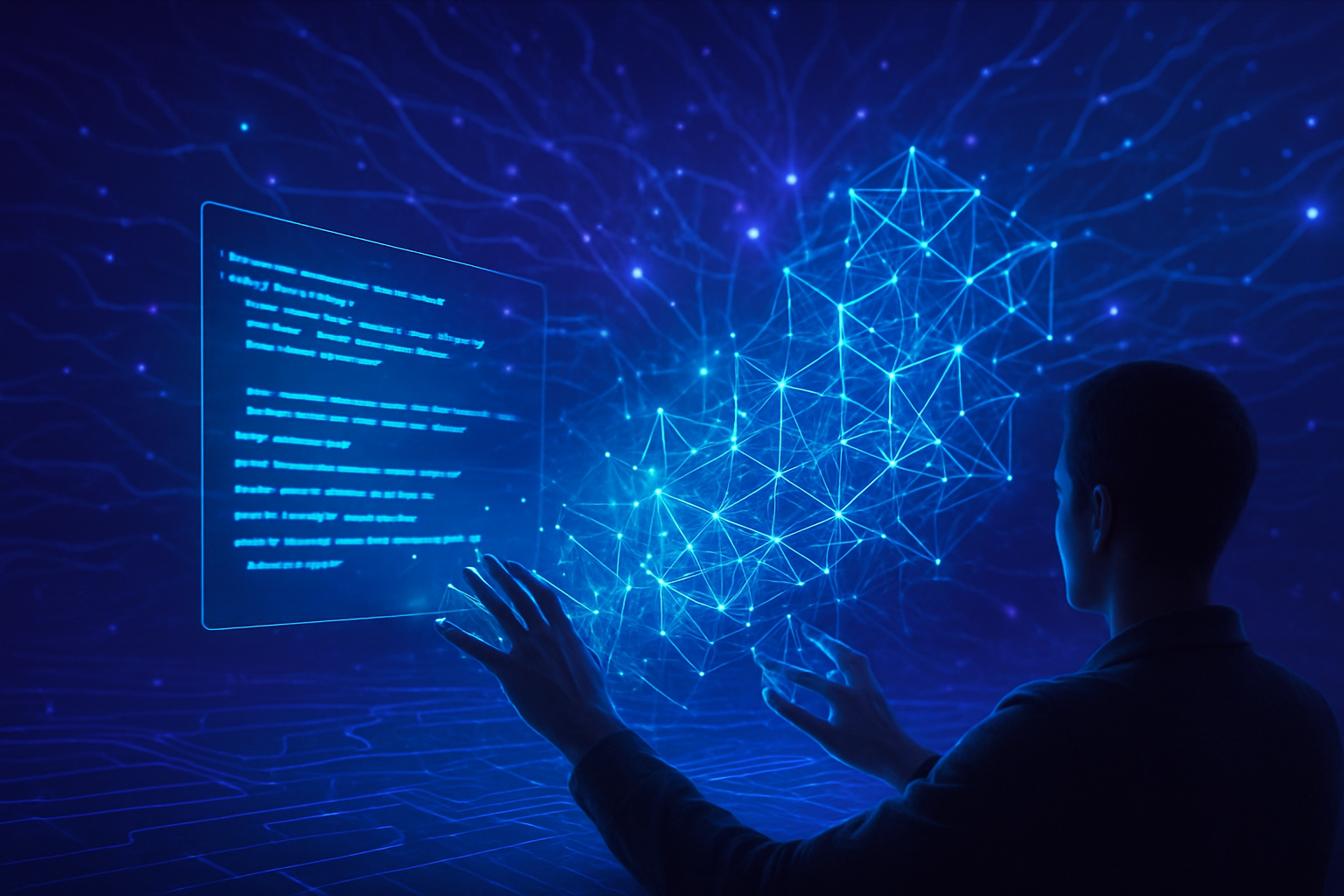
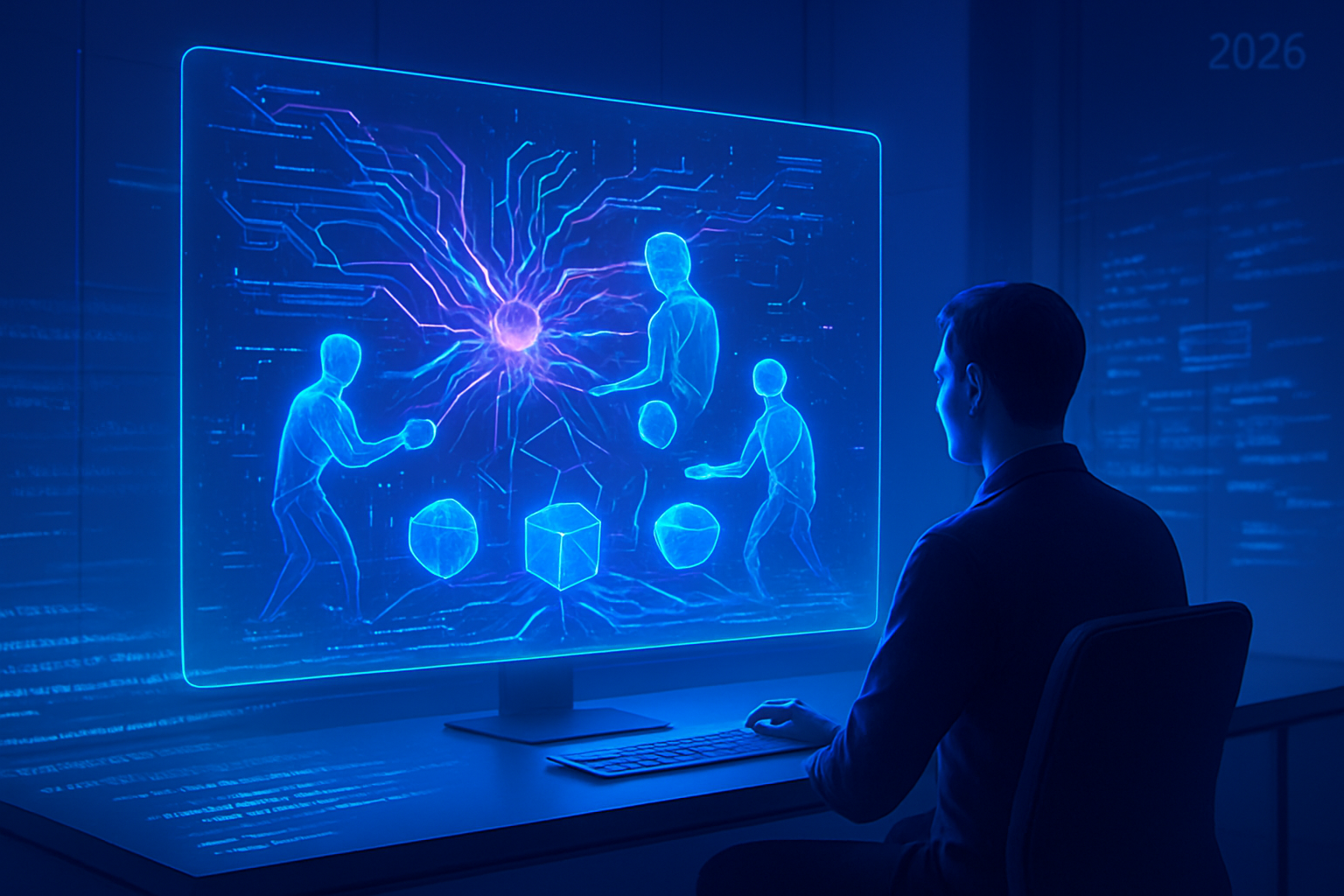
    As of late January 2026, the landscape of software development has undergone a tectonic shift. For years, developers viewed Artificial Intelligence as a helpful "copilot"—a sidebar chat or a sophisticated autocomplete tool. Today, that paradigm is dead. A new generation of "AI-first" code editors, led by Cursor (developed by Anysphere) and Windsurf (developed by Codeium), has effectively replaced the passive assistant with an active agent. These tools don't just suggest lines of code; they "see" entire codebases, orchestrate multi-file refactors, and operate as digital employees that can reason through complex architectural requirements.

    The significance of this development cannot be overstated. By moving AI from an add-on plugin to the core architecture of the Integrated Development Environment (IDE), these platforms have unlocked "codebase-wide awareness." This allows developers to engage in what has been termed "Vibe Coding"—the ability to describe a high-level feature or a bug fix in natural language and watch as the editor scans thousands of files, identifies dependencies, and applies the necessary changes across the entire repository. In this new era, the role of the software engineer is rapidly evolving from a manual builder of syntax to a strategic architect of systems.

    The Technical Leap: Beyond Autocomplete to Contextual Reasoning

    Traditional coding tools, even those equipped with early AI plugins, were fundamentally limited by their "aperture." A plugin in a standard editor like Visual Studio Code, maintained by Microsoft (NASDAQ:MSFT), typically only had access to the file currently open on the screen. In contrast, AI-first editors like Cursor and Windsurf are built on hard-forked versions of the VS Code core, allowing them to deeply integrate AI into every layer of the editor’s memory.

    Technically, these editors solve the "context problem" through two primary methods: Advanced Retrieval-Augmented Generation (RAG) and ultra-long context windows. Cursor utilizes a sophisticated hybrid indexing system that maintains a local vector database of the entire project. When a developer asks a question or issues a command, Cursor’s "Composer" mode uses semantic search to pull in relevant snippets from distant files—configuration files, API definitions, and legacy modules—to provide a comprehensive answer. Meanwhile, Windsurf has introduced "Fast Context" using proprietary SWE-grep models. These models don't just search for keywords; they "browse" the codebase 20 times faster than traditional RAG, allowing the AI to understand the "why" behind a specific code structure by tracing its dependencies in real-time.

    The industry has also seen the widespread adoption of the Model Context Protocol (MCP). This allows these AI-first editors to reach outside the codebase and connect directly to live databases, Jira boards, and Slack channels. For example, a developer can now ask Windsurf’s "Cascade" agent to "fix the bug reported in Jira ticket #402," and the editor will autonomously read the ticket, find the offending code, run the local build to reproduce the error, and submit a pull request with the fix. This level of autonomy, known as the "Ralph Wiggum Loop" or "Turbo Mode," represents a fundamental departure from the line-by-line suggestions of 2023.

    A High-Stakes Battle for the Developer Desktop

    The rise of these specialized editors has forced a massive reaction from the industry's titans. Microsoft, once the undisputed king of the developer environment with VS Code and GitHub Copilot, has had to accelerate its roadmap. In late 2025, Microsoft launched Visual Studio 2026, which attempts to bake AI into the core C++ and .NET toolchains rather than relying on the extension model. By deeply integrating AI into the compiler and profiler, Microsoft is betting that enterprise developers will prefer "Ambient AI" that helps with performance and security over the more radical "Agentic" workflows seen in Cursor.

    Meanwhile, Alphabet Inc. (NASDAQ:GOOGL) has entered the fray with its Antigravity IDE, launched in November 2025. Antigravity leverages the massive 10-million-token context window of Gemini 3 Pro, theoretically allowing a developer to fit an entire million-line codebase into the model's active memory at once. This competition has created a fragmented but highly innovative market. While startups like Codeium (Windsurf) and Anysphere (Cursor) lead in agility and "cool factor" among individual developers and startups, the tech giants are leveraging their cloud dominance to offer integrated "Manager Surfaces" where a lead architect can oversee a swarm of AI agents working in parallel.

    This disruption is also impacting the broader SaaS ecosystem. Traditional code review tools, documentation platforms, and even testing frameworks are being subsumed into the AI-first IDE. If the editor can write the code, the tests, and the documentation simultaneously, the need for third-party tools that handle these tasks in isolation begins to evaporate.

    The Broader Significance: From Syntax to Strategy

    The shift to AI-first development is more than just a productivity boost; it is a fundamental change in the "unit of work" for a human programmer. For decades, a developer’s value was tied to their mastery of language syntax and their ability to keep a complex system's map in their head. AI-first editors have effectively commoditized syntax. As a result, the barrier to entry for software creation has collapsed, leading to a surge in "shadow coding"—where product managers and designers create functional prototypes or even production-grade tools without deep traditional training.

    However, this transition is not without concerns. The research community has raised alarms regarding "hallucination-induced technical debt." When an AI editor writes 50 files at once, the sheer volume of code generated can exceed a human's ability to thoroughly review it, leading to subtle logic errors that might not appear until the system is under heavy load. Furthermore, there are growing security concerns about "context leakage," where sensitive credentials or proprietary logic might be inadvertently fed into large language models during the RAG indexing process.

    Comparatively, this milestone is often equated to the transition from assembly language to high-level languages like C or Python. Just as developers no longer need to worry about manual memory management in many modern languages, they are now being abstracted away from the "boilerplate" of software development. We are moving toward a future of "Intent-Based Engineering," where the quality of a developer is measured by their ability to define clear constraints and high-level logic rather than their speed at a keyboard.

    The Road Ahead: Autonomous Repositories and Self-Healing Code

    Looking toward the second half of 2026 and beyond, we expect to see the emergence of "Self-Healing Repositories." In this scenario, the IDE doesn't just wait for a developer's command; it continuously monitors the codebase and production telemetry. If a performance bottleneck is detected in the cloud, the AI editor could autonomously branch the code, develop a more efficient algorithm, run a suite of regression tests, and present a finished optimization to the human lead for approval.

    Furthermore, we are seeing the beginning of "Multi-Agent Collaboration." Future versions of Cursor and Windsurf are expected to support team-wide AI contexts, where your personal AI agent "talks" to your teammate's AI agent to ensure that two different feature branches don't create a merge conflict. The challenges remain significant—particularly in the realm of "agentic drift," where AI-generated code slowly diverges from human-readable patterns—but the trajectory is clear: the IDE is becoming a collaborative workspace for a mixed team of humans and digital entities.

    Wrapping Up: The New Standard of Software Creation

    The evolution of Cursor and Windsurf from niche tools to industry-standard platforms marks the end of the "Copilot era" and the beginning of the "Agentic era." These AI-first editors have demonstrated that codebase-wide awareness is not just a luxury, but a necessity for modern software engineering. By treating the entire repository as a single, coherent entity rather than a collection of disparate files, they have redefined what it means to write code.

    As we look forward, the key takeaway is that the "AI-first" label will soon become redundant—any tool that doesn't "see" the whole codebase will simply be considered broken. For developers, the message is clear: the competitive advantage has shifted from those who can write code to those who can direct it. In the coming months, we should watch closely for how these tools handle increasingly large and complex "monorepos" and whether the incumbents like Microsoft and Google can successfully integrate these radical agentic workflows into their more conservative enterprise offerings.


    This content is intended for informational purposes only and represents analysis of current AI developments.

    TokenRing AI delivers enterprise-grade solutions for multi-agent AI workflow orchestration, AI-powered development tools, and seamless remote collaboration platforms.
    For more information, visit https://www.tokenring.ai/.
  • The Rise of the Agentic IDE: How Cursor and Windsurf Are Automating the Art of Software Engineering

    The Rise of the Agentic IDE: How Cursor and Windsurf Are Automating the Art of Software Engineering

    As we move into early 2026, the software development landscape has reached a historic inflection point. The era of the "Copilot"—AI that acts as a sophisticated version of autocomplete—is rapidly being eclipsed by the era of the "Agentic IDE." Leading this charge are Cursor, developed by Anysphere, and Windsurf, a platform recently acquired and supercharged by Cognition AI. These tools are no longer just suggesting snippets of code; they are functioning as autonomous engineering partners capable of managing entire repositories, refactoring complex architectures, and building production-ready features from simple natural language descriptions.

    This shift represents a fundamental change in the "unit of work" for developers. Instead of writing and debugging individual lines of code, engineers are increasingly acting as architects and product managers, orchestrating AI agents that handle the heavy lifting of implementation. For the tech industry, the implications are profound: development cycles that once took months are being compressed into days, and a new generation of "vibe coders" is emerging—individuals who build sophisticated software by focusing on intent and high-level design rather than syntax.

    Technical Orchestration: Shadow Workspaces and Agentic Loops

    The leap from traditional AI coding assistants to tools like Cursor and Windsurf lies in their transition from reactive text generation to proactive execution loops. Cursor’s breakthrough technology, the Shadow Workspace, has become the gold standard for AI-led development. This feature allows the IDE to spin up a hidden, parallel version of the project in the background where the AI can test its own code. Before a user ever sees a proposed change, Cursor runs Language Servers (LSPs), linters, and even unit tests within this shadow environment. If the code breaks the build or introduces a syntax error, the agent detects the failure and self-corrects in a recursive loop, ensuring that only functional, verified code is presented to the human developer.

    Windsurf, now part of the Cognition AI ecosystem, has introduced its own revolutionary architecture known as the Cascade Engine. Unlike standard Large Language Model (LLM) implementations that treat code as static text, Cascade utilizes a graph-based reasoning system to map out the entire codebase's logic and dependencies. This allows Windsurf to maintain "Flow"—a state of persistent context where the AI understands not just the current file, but the architectural intent of the entire project. In late 2025, Windsurf introduced "Memories," a feature that allows the agent to remember specific project-specific rules, such as custom styling guides or legacy technical debt constraints, across different sessions.

    These agentic IDEs differ from previous iterations primarily in their degree of autonomy. While early versions of Microsoft (NASDAQ: MSFT) GitHub Copilot were limited to single-file suggestions, modern agents can edit dozens of files simultaneously to implement a single feature. They can execute terminal commands, install new dependencies, and even launch browser instances to visually verify frontend changes. This multi-step planning—often referred to as an "agentic loop"—enables the AI to reason through complex problems, such as migrating a database schema or implementing an end-to-end authentication flow, with minimal human intervention.

    The Market Battle for the Developer's Desktop

    The success of these AI-first IDEs has sparked a massive realignment in the tech industry. Anysphere, the startup behind Cursor, reached a staggering $29.3 billion valuation in late 2025, reflecting its position as the premier tool for the "AI Engineer" movement. With over 2.1 million users and a reported $1 billion in annualized recurring revenue (ARR), Cursor has successfully challenged the dominance of established players. Major tech giants have taken notice; NVIDIA (NASDAQ: NVDA) has reportedly moved over 40,000 engineers onto Cursor-based workflows to accelerate their internal tooling development.

    The competitive pressure has forced traditional leaders to pivot. Microsoft’s GitHub Copilot has responded by moving away from its exclusive reliance on OpenAI and now allows users to toggle between multiple state-of-the-art models, including Alphabet (NASDAQ: GOOGL) Gemini 3 Pro and Claude 4.5. However, many developers argue that being "bolted on" to existing editors like VS Code limits these tools compared to AI-native environments like Cursor or Windsurf, which are rebuilt from the ground up to support agentic interactions.

    Meanwhile, the acquisition of Windsurf by Cognition AI has positioned it as the "enterprise-first" choice. By achieving FedRAMP High and HIPAA compliance, Windsurf has made significant inroads into regulated industries like finance and healthcare. Companies like Uber (NYSE: UBER) and Coinbase (NASDAQ: COIN) have begun piloting agentic workflows to handle the maintenance of massive legacy codebases, leveraging the AI’s ability to "reason" through millions of lines of code to identify security vulnerabilities and performance bottlenecks that human reviewers might miss.

    The Significance of "Vibe Coding" and the Quality Dilemma

    The broader impact of these tools is the democratization of software creation, a trend often called "vibe coding." This refers to a style of development where the user describes the "vibe" or functional goal of an application, and the AI handles the technical execution. This has lowered the barrier to entry for founders and product managers, enabling them to build functional prototypes and even full-scale applications without deep expertise in specific programming languages. While this has led to a 50% to 200% increase in productivity for greenfield projects, it has also sparked concerns within the computer science community.

    Analysts at firms like Gartner have warned about the risk of "architecture drift." Because agentic IDEs often build features incrementally based on immediate prompts, there is a risk that the long-term structural integrity of a software system could degrade. Unlike human architects who plan for scalability and maintainability years in advance, AI agents may prioritize immediate functionality, leading to a new form of "AI-generated technical debt." There are also concerns about the "seniority gap," where junior developers may become overly reliant on agents, potentially hindering their ability to understand the underlying principles of the code they are "managing."

    Despite these concerns, the transition to agentic coding is viewed by many as the most significant milestone in software engineering since the move from assembly language to high-level programming. It represents a shift in human labor from "how to build" to "what to build." In this new landscape, the value of a developer is increasingly measured by their ability to define system requirements, audit AI-generated logic, and ensure that the software aligns with complex business objectives.

    Future Horizons: Natural Language as Source Code

    Looking ahead to late 2026 and 2027, experts predict that the line between "code" and "description" will continue to blur. We are approaching a point where natural language may become the primary source code for many applications. Future updates to Cursor and Windsurf are expected to include even deeper integrations with DevOps pipelines, allowing AI agents to not only write code but also manage deployment, monitor real-time production errors, and automatically roll out patches without human triggers.

    The next major challenge will be the "Context Wall." As codebases grow into the millions of lines, even the most advanced agents can struggle with total system comprehension. Researchers are currently working on "Long-Context RAG" (Retrieval-Augmented Generation) and specialized "Code-LLMs" that can hold an entire enterprise's documentation and history in active memory. If successful, these developments could lead to "Self-Healing Software," where the IDE monitors the application in production and proactively fixes bugs before they are even reported by users.

    Conclusion: A New Chapter in Human-AI Collaboration

    The rise of Cursor and Windsurf marks the end of the AI-as-a-tool era and the beginning of the AI-as-a-teammate era. These platforms have proven that with the right orchestration—using shadow workspaces, graph-based reasoning, and agentic loops—AI can handle the complexities of modern software engineering. The significance of this development in AI history cannot be overstated; it is the first real-world application where AI agents are consistently performing high-level, multi-step professional labor at scale.

    As we move forward, the focus will likely shift from the capabilities of the AI to the governance of its output. The long-term impact will be a world where software is more abundant, more personalized, and faster to iterate than ever before. For developers, the message is clear: the future of coding is not just about writing syntax, but about mastering the art of the "agentic mission." In the coming months, watch for deeper integrations between these IDEs and cloud infrastructure providers as the industry moves toward a fully automated "Prompt-to-Production" pipeline.


    This content is intended for informational purposes only and represents analysis of current AI developments.

    TokenRing AI delivers enterprise-grade solutions for multi-agent AI workflow orchestration, AI-powered development tools, and seamless remote collaboration platforms.
    For more information, visit https://www.tokenring.ai/.
  • The End of the Copilot Era: How Autonomous AI Agents Are Rewriting the Rules of Software Engineering

    The End of the Copilot Era: How Autonomous AI Agents Are Rewriting the Rules of Software Engineering

    January 14, 2026 — The software development landscape has undergone a tectonic shift over the last 24 months, moving rapidly from simple code completion to full-scale autonomous engineering. What began as "Copilots" that suggested the next line of code has evolved into a sophisticated ecosystem of AI agents capable of navigating complex codebases, managing terminal environments, and resolving high-level tickets with minimal human intervention. This transition, often referred to as the shift from "auto-complete" to "auto-engineer," is fundamentally altering how software is built, maintained, and scaled in the enterprise.

    At the heart of this revolution are tools like Cursor and Devin, which have transcended their status as mere plugins to become central hubs of productivity. These platforms no longer just assist; they take agency. Whether it is Anysphere’s Cursor achieving record-breaking adoption or Cognition’s Devin 2.0 operating as a virtual teammate, the industry is witnessing the birth of "vibe coding"—a paradigm where developers focus on high-level architectural intent and system "vibes" while AI agents handle the grueling minutiae of implementation and debugging.

    From Suggestions to Solutions: The Technical Leap to Agency

    The technical advancements powering today’s AI engineers are rooted in three major breakthroughs: agentic planning, dynamic context discovery, and tool-use mastery. Early iterations of AI coding tools relied on "brute force" long-context windows that often suffered from information overload. However, as of early 2026, tools like Cursor (developed by Anysphere) have implemented Dynamic Context Discovery. This system intelligently fetches only the relevant segments of a repository and external documentation, reducing token waste by nearly 50% while increasing the accuracy of multi-file edits. In Cursor’s "Composer Mode," developers can now describe a complex feature—such as integrating a new payment gateway—and the AI will simultaneously modify dozens of files, from backend schemas to frontend UI components.

    The benchmarks for these capabilities have reached unprecedented heights. On the SWE-Bench Verified leaderboard—a human-vetted subset of real-world GitHub issues—the top-performing models have finally broken the 80% resolution barrier. Specifically, Claude 4.5 Opus and GPT-5.2 Codex have achieved scores of 80.9% and 80.0%, respectively. This is a staggering leap from late 2024, when the best agents struggled to clear 20%. These agents are no longer just guessing; they are iterating. They use "computer use" capabilities to open browsers, read documentation for obscure APIs, execute terminal commands, and interpret error logs to self-correct their logic before the human engineer even sees the first draft.

    However, the "realism gap" remains a topic of intense discussion. While performance on verified benchmarks is high, the introduction of SWE-Bench Pro—which utilizes private, messy, and legacy-heavy repositories—shows that AI agents still face significant hurdles. Resolution rates on "Pro" benchmarks currently hover around 25%, highlighting that while AI can handle modern, well-documented frameworks with ease, the "spaghetti code" of legacy enterprise systems still requires deep human intuition and historical context.

    The Trillion-Dollar IDE War: Market Implications and Disruption

    The rise of autonomous engineering has triggered a massive realignment among tech giants and specialized startups. Microsoft (NASDAQ: MSFT) remains the heavyweight champion through GitHub Copilot Workspace, which has now integrated "Agent Mode" powered by GPT-5. Microsoft’s strategic advantage lies in its deep integration with the Azure ecosystem and the GitHub CI/CD pipeline, allowing for "Self-Healing CI/CD" where AI agents automatically fix failing builds. Meanwhile, Google (NASDAQ: GOOGL) has entered the fray with "Antigravity," an agent-first IDE designed for orchestrating fleets of AI workers using the Gemini 3 family of models.

    The startup scene is equally explosive. Anysphere, the creator of Cursor, reached a staggering $29.3 billion valuation in late 2025 following a strategic investment round led by Nvidia (NASDAQ: NVDA) and Google. Their dominance in the "agentic editor" space has put traditional IDEs like VS Code on notice, as Cursor offers a more seamless integration of chat and code execution. Cognition, the maker of Devin, has pivoted toward the enterprise "virtual teammate" model, boasting a $10.2 billion valuation and a major partnership with Infosys to deploy AI engineering fleets across global consulting projects.

    This shift is creating a "winner-takes-most" dynamic in the developer tool market. Startups that fail to integrate agentic workflows are being rapidly commoditized. Even Amazon (NASDAQ: AMZN) has doubled down on its AWS Toolkit, integrating "Amazon Q Developer" to provide specialized agents for cloud architecture optimization. The competitive edge has shifted from who provides the most accurate code snippet to who provides the most reliable autonomous workflow.

    The Architect of Agents: Rethinking the Human Role

    As AI moves from a tool to a teammate, the broader significance for the software engineering profession cannot be overstated. We are witnessing the democratization of high-level software creation. Non-technical founders are now using "vibe coding" to build functional MVPs in days that previously took months. However, this has also raised concerns regarding code quality, security, and the future of entry-level engineering roles. While tools like GitHub’s "CVE Remediator" can automatically patch known vulnerabilities, the risk of AI-generated "hallucinated" security flaws remains a persistent threat.

    The role of the software engineer is evolving into that of an "Agent Architect." Instead of writing syntax, senior engineers are now spending their time designing system prompts, auditing agentic plans, and managing the orchestration of multiple AI agents working in parallel. This is reminiscent of the shift from assembly language to high-level programming languages; the abstraction layer has simply moved up again. The primary concern among industry experts is "skill atrophy"—the fear that the next generation of developers may lack the fundamental understanding of how systems work if they rely entirely on agents to do the heavy lifting.

    Furthermore, the environmental and economic costs of running these massive models are significant. The shift to agentic workflows requires constant, high-compute cycles as agents "think," "test," and "retry" in the background. This has led to a surge in demand for specialized AI silicon, further cementing the market positions of companies like Nvidia (NASDAQ: NVDA) and Advanced Micro Devices (NASDAQ: AMD).

    The Road to AGI: What Happens Next?

    Looking toward the near future, the next frontier for AI engineering is "Multi-Agent Orchestration." We expect to see systems where a "Manager Agent" coordinates a "UI Agent," a "Database Agent," and a "Security Agent" to build entire applications from a single product requirement document. These systems will likely feature "Long-Term Memory," allowing the AI to remember architectural decisions made months ago, reducing the need for repetitive prompting.

    Predicting the next 12 to 18 months, experts suggest that the "SWE-Bench Pro" gap will be the primary target for research. Models that can reason through 20-year-old COBOL or Java monoliths will be the "Holy Grail" for enterprise digital transformation. Additionally, we may see the first "Self-Improving Codebases," where software systems autonomously monitor their own performance metrics and refactor their own source code to optimize for speed and cost without any human trigger.

    A New Era of Creation

    The transition from AI as a reactive assistant to AI as an autonomous engineer marks one of the most significant milestones in the history of computing. By early 2026, the question is no longer whether AI can write code, but how many AI agents a single human can effectively manage. The benchmarks prove that for modern development, the AI has arrived; the focus now shifts to the reliability of these agents in the chaotic, real-world environments of legacy enterprise software.

    As we move forward, the success of companies will be defined by their "agentic density"—the ratio of AI agents to human engineers and their ability to harness this new workforce effectively. While the fear of displacement remains, the immediate reality is a massive explosion in human creativity, as the barriers between an idea and a functioning application continue to crumble.


    This content is intended for informational purposes only and represents analysis of current AI developments.

    TokenRing AI delivers enterprise-grade solutions for multi-agent AI workflow orchestration, AI-powered development tools, and seamless remote collaboration platforms.
    For more information, visit https://www.tokenring.ai/.
  • The $1 Billion Solopreneur: How AI Agents Are Engineering the Era of the One-Person Unicorn

    The $1 Billion Solopreneur: How AI Agents Are Engineering the Era of the One-Person Unicorn

    The dream of the "one-person unicorn"—a company reaching a $1 billion valuation with a single employee—has transitioned from a Silicon Valley thought experiment to a tangible reality. As of January 14, 2026, the tech industry is witnessing a structural shift where the traditional requirement of massive human capital is being replaced by "agentic leverage." Powered by the reasoning capabilities of the recently refined GPT-5.2 and specialized coding agents, solo founders are now orchestrating sophisticated digital workforces that handle everything from full-stack development to complex legal compliance and global marketing.

    This evolution marks the end of the "lean startup" era and the beginning of the "invisible enterprise." Recent data from the Scalable.news Solo Founders Report, released on January 7, 2026, reveals that a staggering 36.3% of all new global startups are now solo-founded. These founders are leveraging a new generation of autonomous tools, such as Cursor and Devin, to achieve revenue-per-employee metrics that were once considered impossible. With the barrier to entry for building complex software nearly dissolved, the focus has shifted from managing people to managing agentic workflows.

    The Technical Backbone: From "Vibe Coding" to Autonomous Engineering

    The current surge in solo-founded success is underpinned by radical advancements in AI-native development environments. Cursor, developed by Anysphere, recently hit a milestone valuation of $29.3 billion following a Series D funding round in late 2025. On January 14, 2026, the company introduced "Dynamic Context Discovery," a breakthrough that allows its AI to navigate massive codebases with 50% less token usage, making it possible for a single person to manage enterprise-level systems that previously required dozens of engineers.

    Simultaneously, Cognition AI’s autonomous engineer, Devin, has reached a level of maturity where it is now producing 25% of its own company’s internal pull requests. Unlike the "co-pilots" of 2024, the 2026 version of Devin functions as a proactive agent capable of executing complex migrations, debugging legacy systems, and even collaborating with other AI agents via the Model Context Protocol (MCP). This shift is part of the "Vibe Coding" movement, where platforms like Lovable and Bolt.new allow non-technical founders to "prompt" entire SaaS platforms into existence, effectively democratizing the role of the CTO.

    Initial reactions from the AI research community suggest that we have moved past the era of "hallucination-prone" assistance. The introduction of "Agent Script" by Salesforce (NYSE: CRM) on January 7, 2026, has provided the deterministic guardrails necessary for these agents to operate in high-stakes environments. Experts note that the integration of reasoning-heavy backbones like GPT-5.2 has provided the "cognitive consistency" required for agents to handle multi-step business logic without human intervention, a feat that was the primary bottleneck just eighteen months ago.

    Market Disruption: Tech Giants Pivot to the Agentic Economy

    The rise of the one-person unicorn is forcing a massive strategic realignment among tech's biggest players. Microsoft (NASDAQ: MSFT) recently rebranded its development suite to "Microsoft Agent 365," a centralized control plane that allows solo operators to manage "digital labor" with the same level of oversight once reserved for HR departments. By integrating its "AI Shell" across Windows and Teams, Microsoft is positioning itself as the primary operating system for this new class of lean startups.

    NVIDIA (NASDAQ: NVDA) continues to be the foundational beneficiary of this trend, as the compute requirements for running millions of autonomous agents around the clock have skyrocketed. Meanwhile, Alphabet (NASDAQ: GOOGL) has introduced "Agent Mode" into its core search and workspace products, allowing solo founders to automate deep market research and competitive analysis. Even Oracle (NYSE: ORCL) has entered the fray, partnering in the $500 billion "Stargate Project" to build the massive compute clusters required to train the next generation of agentic models.

    Traditional SaaS companies and agencies are facing significant disruption. As solo founders use AI-native marketing tools like Icon.com (which functions as an autonomous CMO) and legal platforms like Arcline to handle fundraising and compliance, the need for third-party service providers is plummeting. VCs are following the money; firms like Sequoia and Andreessen Horowitz have adjusted their underwriting models to prioritize "agentic leverage" over team size, with 65% of all U.S. deal value in January 2026 flowing into AI-centric ventures.

    The Wider Significance: RPE as the New North Star

    The broader economic implications of the one-person unicorn era are profound. We are seeing a transition where Revenue-per-Employee (RPE) has replaced headcount as the primary status symbol in tech. This productivity boom allows for unprecedented capital efficiency, but it also raises pressing concerns regarding the future of work. If a single founder can build a billion-dollar company, the traditional ladder of junior-level roles in engineering, marketing, and legal may vanish, leading to a "skills gap" for the next generation of talent.

    Ethical concerns are also coming to the forefront. The "Invisible Enterprise" model makes it difficult for regulators to monitor corporate activity, as much of the company's internal operations are handled within private agentic loops. Comparison to previous milestones, like the mobile revolution of 2010, suggests that while the current AI boom is creating immense wealth, it is doing so with a significantly smaller "wealth-sharing" footprint, potentially exacerbating economic inequality within the tech sector.

    Despite these concerns, the benefits to innovation are undeniable. The "Great Acceleration" report by Antler, published on January 7, 2026, found that AI startups now reach unicorn status nearly two years faster than any other sector in history. By removing the friction of hiring and management, founders are free to focus entirely on product-market fit and creative problem-solving, leading to a surge in specialized, high-value services that were previously too expensive to build.

    The Horizon: Fully Autonomous Entities and GPT-6

    Looking forward, the next logical step is the emergence of "Fully Autonomous Entities"—companies that are not just run by one person, but are legally and operationally designed to function with near-zero human oversight. Industry insiders predict that by late 2026, we will see the first "DAO-Agent hybrid" unicorns, where an AI agent acts as the primary executive, governed by a board of human stakeholders via smart contracts.

    The "Stargate Project," which broke ground on a new Michigan site in early January 2026, is expected to produce the first "Stargate-trained" models (GPT-6 prototypes) by the end of the year. These models are rumored to possess "system 2" thinking capabilities—the ability to deliberate and self-correct over long time horizons—which would allow AI agents to handle even more complex tasks, such as long-term strategic planning and independent R&D.

    Challenges remain, particularly in the realm of energy and security. The integration of the Crane Clean Energy Center (formerly Three Mile Island) to provide nuclear power for AI clusters highlights the massive physical infrastructure required to sustain the "agentic cloud." Furthermore, the partnership between Cursor and 1Password to prevent agents from exposing raw credentials underscores the ongoing security risks of delegating autonomous power to digital entities.

    Closing Thoughts: A Landmark in Computational Capitalism

    The rise of the one-person unicorn is more than a trend; it is a fundamental rewriting of the rules of business. We are moving toward a world where the power of an organization is determined by the quality of its "agentic orchestration" rather than the size of its payroll. The milestone reached in early 2026 marks a turning point in history where human creativity, augmented by near-infinite digital labor, has reached its highest level of leverage.

    As we watch the first true solo unicorns emerge in the coming months, the industry will be forced to grapple with the societal shifts this efficiency creates. For now, the "invisible enterprise" is here to stay, and the tools being forged today by companies like Cursor, Cognition AI, and the "Stargate" partners are the blueprints for the next century of industry.


    This content is intended for informational purposes only and represents analysis of current AI developments.

    TokenRing AI delivers enterprise-grade solutions for multi-agent AI workflow orchestration, AI-powered development tools, and seamless remote collaboration platforms.
    For more information, visit https://www.tokenring.ai/.

  • The Year of the Vibe: How ‘Vibe Coding’ Redefined Software Development in 2025

    The Year of the Vibe: How ‘Vibe Coding’ Redefined Software Development in 2025

    As 2025 draws to a close, the landscape of software engineering looks unrecognizable compared to just eighteen months ago. The industry has been swept by "Vibe Coding," a movement where the primary interface for creating software is no longer a programming language like Python or Rust, but natural language and aesthetic intent. This shift has empowered a new generation of "citizen developers" to build complex, full-stack applications by simply describing a "vibe" to AI agents, effectively moving the bottleneck of creation from technical syntax to human imagination.

    The significance of this transition cannot be overstated. Throughout 2025, tools that were once seen as mere autocomplete helpers evolved into autonomous architects. This has led to a fundamental decoupling of software creation from the traditional requirement of a Computer Science degree. As Andrej Karpathy, the former Tesla AI lead who helped popularize the term, famously noted, the "hottest new programming language is English," and the market has responded with a valuation explosion for the startups leading this charge.

    From Syntax to Sentiment: The Technical Architecture of the Vibe

    The technical foundation of Vibe Coding rests on the evolution from "Copilots" to "Agents." In late 2024 and early 2025, the release of Cursor’s "Composer" mode and the Replit Agent marked a turning point. Unlike traditional IDEs that required developers to review every line of a code "diff," these tools allowed users to prompt for high-level changes—such as "make the dashboard look like a futuristic control center and add real-time crypto tracking"—and watch as the AI edited dozens of files simultaneously. By mid-2025, Replit (private) released Agent 3, which introduced "Max Autonomy Mode," enabling the AI to browse its own user interface, identify visual bugs, and fix them without human intervention for hours at a time.

    This technical leap was powered by the massive context windows and improved reasoning of models like Claude 3.5 Sonnet and GPT-4o. These models allowed the AI to maintain a "mental map" of an entire codebase, rather than just the file currently open. The "vibe" part of the equation comes from the iterative feedback loop: when the code breaks, the user doesn't debug the logic; they simply copy the error message back into the prompt or tell the AI, "it doesn't feel right yet." The AI then re-architects the solution based on the desired outcome. This "outcome-first" methodology has been hailed by the AI research community as the first true realization of "Natural Language Programming."

    The Market Disruption: Startups vs. The Giants

    The rise of Vibe Coding has created a seismic shift in the tech sector's valuation and strategic positioning. Anysphere, the parent company of Cursor, saw its valuation skyrocket from $2.6 billion in late 2024 to an estimated $29.3 billion by December 2025. This meteoric rise has put immense pressure on established players. Microsoft (NASDAQ: MSFT), despite its early lead with GitHub Copilot, found itself in a defensive position as developers flocked to "AI-native" IDEs that offered deeper agentic integration than the traditional VS Code environment. In response, Microsoft spent much of 2025 aggressively retrofitting its developer tools to match the "agentic" capabilities of its smaller rivals.

    Alphabet (NASDAQ: GOOGL) and Amazon (NASDAQ: AMZN) have also pivoted their cloud strategies to accommodate the Vibe Coding trend. Google’s "Project IDX" and Amazon’s "Q" developer assistant have transitioned from simple code generation to providing "full-stack intent" environments, where the AI manages the underlying AWS or Google Cloud infrastructure automatically. This has led to a commoditization of the "coding" layer, shifting the competitive advantage toward companies that can provide the most intuitive orchestration and the most reliable "agentic reasoning" models.

    Democratization, Debt, and the 'Vibe Coding Hangover'

    The broader significance of Vibe Coding lies in the radical democratization of technology. In 2025, the barrier to entry for starting a software company fell to an all-time low. Y Combinator reported that nearly 25% of its Spring 2025 batch consisted of companies with codebases that were over 95% AI-generated. This has allowed founders with backgrounds in design, sales, or philosophy to build "Weekend MVPs" that are as functional as products that previously required a team of five engineers. The trend was so pervasive that "Vibe Coding" was named the Collins Dictionary Word of the Year for 2025.

    However, this rapid expansion has not come without costs. By the fourth quarter of 2025, the industry began experiencing what experts call the "Vibe Coding Hangover." A study by METR found that applications built purely through "vibes" were 40% more likely to contain critical security vulnerabilities, such as unencrypted databases. Furthermore, the lack of human understanding of the underlying code has created a new form of "technical debt" where, if the AI makes a fundamental architectural error, the non-technical creator is unable to fix it, leading to "zombie apps" that are functional but unmaintainable.

    The Future of Intent-Based Creation

    Looking toward 2026, the next frontier for Vibe Coding is "Self-Healing Software." Experts predict that the next generation of tools will not just build apps but actively monitor them in production, fixing bugs and optimizing performance in real-time without any human prompting. We are moving toward a world of "Disposable Software," where an app might be generated for a single use case—such as a specific data visualization for a one-off meeting—and then discarded, because the cost of creation has dropped to near zero.

    The challenge for the coming year will be the integration of "Vibe" with "Verification." As AI agents become more autonomous, the industry is calling for "Guardrail Agents"—secondary AIs whose only job is to audit the "vibe-coded" output for security and efficiency. The goal is to move from "blindly accepting" the AI's work to a "trust but verify" model where the human acts as a high-level creative director and security auditor.

    A New Era for the Human-Computer Relationship

    The Vibe Coding trend of 2025 marks a definitive end to the era where humans had to learn the language of machines to be productive. Instead, we have successfully taught machines to understand the language of humans. This development is as significant to software as the transition from assembly language to high-level languages like C was in the 20th century. It represents the ultimate abstraction layer, where the focus of the "programmer" has finally shifted from "how" a system works to "what" it should achieve.

    As we move into 2026, the industry will be watching to see if the "Vibe Coding Hangover" leads to a return to traditional engineering rigors or if a new hybrid discipline—the "Product Architect"—becomes the standard for the next decade. For now, one thing is certain: the era of the "syntax-obsessed" developer is fading, replaced by a world where the best code is the code you never even had to see.


    This content is intended for informational purposes only and represents analysis of current AI developments.

    TokenRing AI delivers enterprise-grade solutions for multi-agent AI workflow orchestration, AI-powered development tools, and seamless remote collaboration platforms.
    For more information, visit https://www.tokenring.ai/.