Tag: Custom Silicon

  • NVIDIA Blackwell Ships Amid the Rise of Custom Hyperscale Silicon

    NVIDIA Blackwell Ships Amid the Rise of Custom Hyperscale Silicon

    As of December 24, 2025, the artificial intelligence landscape has reached a pivotal juncture marked by the massive global rollout of NVIDIA’s (NASDAQ: NVDA) Blackwell B200 GPUs. While NVIDIA continues to post record-breaking quarterly revenues—recently hitting a staggering $57 billion—the architecture’s arrival coincides with a strategic rebellion from its largest customers. Cloud hyperscalers like Google (NASDAQ: GOOGL), Amazon (NASDAQ: AMZN), and Microsoft (NASDAQ: MSFT) are no longer content with being mere distributors of NVIDIA hardware; they are now aggressively deploying their own custom AI ASICs to reclaim control over their soaring operational costs.

    The shipment of Blackwell represents the culmination of a year-long effort to overcome initial design hurdles and supply chain bottlenecks. However, the market NVIDIA enters in late 2025 is far more fragmented than the one dominated by its predecessor, the H100. As inference demand begins to outpace training requirements, the industry is witnessing a "Great Decoupling," where the raw, unbridled power of NVIDIA’s silicon is being weighed against the specialized efficiency and lower total cost of ownership (TCO) offered by custom-built hyperscale silicon.

    The Technical Powerhouse: Blackwell’s Dual-Die Dominance

    The Blackwell B200 is a technical marvel that redefines the limits of semiconductor engineering. Moving away from the single-die approach of the Hopper architecture, Blackwell utilizes a dual-die chiplet design fused by a blistering 10 TB/s interconnect. This configuration packs 208 billion transistors and provides 192GB of HBM3e memory, manufactured on TSMC’s (NYSE: TSM) advanced 4NP process. The most significant technical leap, however, is the introduction of the Second-Gen Transformer Engine and FP4 precision. This allows the B200 to deliver up to 18 PetaFLOPS of inference performance—a nearly 30x increase in throughput for trillion-parameter models compared to the H100 when deployed in liquid-cooled NVL72 rack configurations.

    Initial reactions from the AI research community have been a mix of awe and logistical concern. While labs like OpenAI and Anthropic have praised the B200’s ability to handle the massive memory requirements of "reasoning" models (such as the o1 series), data center operators are grappling with the immense power demands. A single Blackwell rack can consume over 120kW, requiring a wholesale transition to liquid-cooling infrastructure. This thermal density has created a high barrier to entry, effectively favoring large-scale providers who can afford the specialized facilities needed to run Blackwell at peak performance. Despite these challenges, NVIDIA’s software ecosystem, centered around CUDA, remains a formidable moat that continues to make Blackwell the "gold standard" for frontier model training.

    The Hyperscale Counter-Offensive: Custom Silicon Ascendant

    While NVIDIA’s hardware is shipping in record volumes—estimated at 1,000 racks per week—the tech giants are increasingly pivoting to their own internal solutions. Google has recently unveiled its TPU v7 (Ironwood), built on a 3nm process, which aims to match Blackwell’s raw compute while offering superior energy efficiency for Google’s internal services like Search and Gemini. Similarly, Amazon Web Services (AWS) launched Trainium 3 at its recent re:Invent conference, claiming a 4.4x performance boost over its predecessor. These custom chips are not just for internal use; AWS and Google are offering deep discounts—up to 70%—to startups that choose their proprietary silicon over NVIDIA instances, a move designed to erode NVIDIA’s market share in the high-volume inference sector.

    This shift has profound implications for the competitive landscape. Microsoft, despite facing delays with its Maia 200 (Braga) chip, has pivoted toward a "system-level" optimization strategy, integrating its Azure Cobalt 200 CPUs to maximize the efficiency of its existing hardware clusters. For AI startups, this diversification is a boon. By becoming platform-agnostic, companies like Anthropic are now training and deploying models across a heterogeneous mix of NVIDIA GPUs, Google TPUs, and AWS Trainium. This strategy mitigates the "NVIDIA Tax" and shields these companies from the supply chain volatility that characterized the 2023-2024 AI boom.

    A Shifting Global Landscape: Sovereign AI and the Inference Pivot

    Beyond the battle between NVIDIA and the hyperscalers, a new demand engine has emerged: Sovereign AI. Nations such as Japan, Saudi Arabia, and the United Arab Emirates are investing billions to build domestic compute stacks. In Japan, the government-backed Rapidus is racing to produce 2nm logic chips, while Saudi Arabia’s Vision 2030 initiative is leveraging subsidized energy to undercut Western data center costs by 30%. These nations are increasingly looking for alternatives to the U.S.-centric supply chain, creating a permanent new class of buyers that are just as likely to invest in custom local silicon as they are in NVIDIA’s flagship products.

    This geopolitical shift is occurring alongside a fundamental change in the AI workload mix. In late 2025, the industry is moving from a "training-heavy" phase to an "inference-heavy" phase. While training a frontier model still requires the massive parallel processing power of a Blackwell cluster, running those models at scale for millions of users demands cost-efficiency above all else. This is where custom ASICs (Application-Specific Integrated Circuits) shine. By stripping away the general-purpose features of a GPU that aren't needed for inference, hyperscalers can deliver AI services at a fraction of the power and cost, challenging NVIDIA’s dominance in the most profitable segment of the market.

    The Road to Rubin: NVIDIA’s Next Leap

    NVIDIA is not standing still in the face of this rising competition. To maintain its lead, the company has accelerated its roadmap to a one-year cadence, recently teasing the "Rubin" architecture slated for 2026. Rubin is expected to leapfrog current custom silicon by moving to a 3nm process and incorporating HBM4 memory, which will double memory channels and address the primary bottleneck for next-generation reasoning models. The Rubin platform will also feature the new Vera CPU, creating a tightly integrated "Vera Rubin" ecosystem that will be difficult for competitors to unbundle.

    Experts predict that the next two years will see a bifurcated market. NVIDIA will likely retain a 90% share of the "Frontier Training" market, where the most advanced models are built. However, the "Commodity Inference" market—where models are actually put to work—will become a battlefield for custom silicon. The challenge for NVIDIA will be to prove that its system-level integration (including NVLink and InfiniBand networking) provides enough value to justify its premium price tag over the "good enough" performance of custom hyperscale chips.

    Summary of a New Era in AI Compute

    The shipping of NVIDIA Blackwell marks the end of the "GPU shortage" era and the beginning of the "Silicon Diversity" era. Key takeaways from this development include the successful deployment of chiplet-based AI hardware at scale, the rise of 3nm custom ASICs as legitimate competitors for inference workloads, and the emergence of Sovereign AI as a major market force. While NVIDIA remains the undisputed king of performance, the aggressive moves by Google, Amazon, and Microsoft suggest that the era of a single-vendor monoculture is coming to an end.

    In the coming months, the industry will be watching the real-world performance of Trainium 3 and the eventual launch of Microsoft’s Maia 200. As these custom chips reach parity with NVIDIA for specific tasks, the focus will shift from raw FLOPS to energy efficiency and software accessibility. For now, Blackwell is the most powerful tool ever built for AI, but for the first time, it is no longer the only game in town. The "Great Decoupling" has begun, and the winners will be those who can most effectively balance the peak performance of NVIDIA with the specialized efficiency of custom silicon.


    This content is intended for informational purposes only and represents analysis of current AI developments.

    TokenRing AI delivers enterprise-grade solutions for multi-agent AI workflow orchestration, AI-powered development tools, and seamless remote collaboration platforms.
    For more information, visit https://www.tokenring.ai/.

  • The Backbone of AI: Broadcom Projects 150% AI Revenue Surge for FY2026 as Networking Dominance Solidifies

    The Backbone of AI: Broadcom Projects 150% AI Revenue Surge for FY2026 as Networking Dominance Solidifies

    In a move that has sent shockwaves through the semiconductor industry, Broadcom (NASDAQ: AVGO) has officially projected a staggering 150% year-over-year growth in AI-related revenue for fiscal year 2026. Following its December 2025 earnings update, the company revealed a massive $73 billion AI-specific backlog, positioning itself not merely as a component supplier, but as the indispensable architect of the global AI infrastructure. As hyperscalers race to build "mega-clusters" of unprecedented scale, Broadcom’s role in providing the high-speed networking and custom silicon required to glue these systems together has become the industry's most critical bottleneck.

    The significance of this announcement cannot be overstated. While much of the public's attention remains fixed on the GPUs that process AI data, Broadcom has quietly captured the market for the "fabric" that allows those GPUs to communicate. By guiding for AI semiconductor revenue to reach nearly $50 billion in FY2026—up from approximately $20 billion in 2025—Broadcom is signaling that the next phase of the AI revolution will be defined by connectivity and custom efficiency rather than raw compute alone.

    The Architecture of a Million-XPU Future

    At the heart of Broadcom’s growth is a suite of technical breakthroughs that address the most pressing challenge in AI today: scaling. As of late 2025, the company has begun shipping its Tomahawk 6 (codenamed "Davisson") and Jericho 4 platforms, which represent a generational leap in networking performance. The Tomahawk 6 is the world’s first 102.4 Tbps single-chip Ethernet switch, doubling the bandwidth of its predecessor and enabling the construction of clusters containing up to one million AI accelerators (XPUs). This "one million XPU" architecture is made possible by a two-tier "flat" network topology that eliminates the need for multiple layers of switches, reducing latency and complexity simultaneously.

    Technically, Broadcom is winning the war for the data center through Co-Packaged Optics (CPO). Traditionally, optical transceivers are separate modules that plug into the front of a switch, consuming massive amounts of power to move data across the circuit board. Broadcom’s CPO technology integrates the optical engines directly into the switch package. This shift reduces interconnect power consumption by as much as 70%, a critical factor as data centers hit the "power wall" where electricity availability, rather than chip availability, becomes the primary constraint on growth. Industry experts have noted that Broadcom’s move to a 3nm chiplet-based architecture for these switches allows for higher yields and better thermal management, further distancing them from competitors.

    The Custom Silicon Kingmaker

    Broadcom’s success is equally driven by its dominance in the custom ASIC (Application-Specific Integrated Circuit) market, which it refers to as its XPU business. The company has successfully transitioned from being a component vendor to a strategic partner for the world’s largest tech giants. Broadcom is the primary designer for Google’s (NASDAQ: GOOGL) TPU v5 and v6 chips and Meta’s (NASDAQ: META) MTIA accelerators. In late 2025, Broadcom confirmed that Anthropic has become its "fourth major customer," placing orders totaling $21 billion for custom AI racks.

    Speculation is also mounting regarding a fifth hyperscale customer, widely believed to be OpenAI or Microsoft (NASDAQ: MSFT), following reports of a $1 billion preliminary order for a custom AI silicon project. This shift toward custom silicon represents a direct challenge to the dominance of NVIDIA (NASDAQ: NVDA). While NVIDIA’s H100 and B200 chips are versatile, hyperscalers are increasingly turning to Broadcom to build chips tailored specifically for their own internal AI models, which can offer 3x to 5x better performance-per-watt for specific workloads. This strategic advantage allows tech giants to reduce their reliance on expensive, off-the-shelf GPUs while maintaining a competitive edge in model training speed.

    Solving the AI Power Crisis

    Beyond the raw performance metrics, Broadcom’s 2026 outlook is underpinned by its role in AI sustainability. As AI clusters scale toward 10-gigawatt power requirements, the inefficiency of traditional networking has become a liability. Broadcom’s Jericho 4 fabric router introduces "Geographic Load Balancing," allowing AI training jobs to be distributed across multiple data centers located hundreds of miles apart. This enables hyperscalers to utilize surplus renewable energy in different regions without the latency penalties that typically plague distributed computing.

    This development is a significant milestone in AI history, comparable to the transition from mainframe to cloud computing. By championing Scale-Up Ethernet (SUE), Broadcom is effectively democratizing high-performance AI networking. Unlike NVIDIA’s proprietary InfiniBand, which is a closed ecosystem, Broadcom’s Ethernet-based approach is open-source and interoperable. This has garnered strong support from the Open Compute Project (OCP) and has forced a shift in the market where Ethernet is now seen as a viable, and often superior, alternative for the largest AI training clusters in the world.

    The Road to 2027 and Beyond

    Looking ahead, Broadcom is already laying the groundwork for the next era of infrastructure. The company’s roadmap includes the transition to 1.6T and 3.2T networking ports by late 2026, alongside the first wave of 2nm custom AI accelerators. Analysts predict that as AI models continue to grow in size, the demand for Broadcom’s specialized SerDes (serializer/deserializer) technology will only intensify. The primary challenge remains the supply chain; while Broadcom has secured significant capacity at TSMC, the sheer volume of the $162 billion total consolidated backlog will require flawless execution to meet delivery timelines.

    Furthermore, the integration of VMware, which Broadcom acquired in late 2023, is beginning to pay dividends in the AI space. By layering VMware’s software-defined data center capabilities on top of its high-performance silicon, Broadcom is creating a full-stack "Private AI" offering. This allows enterprises to run sensitive AI workloads on-premises with the same efficiency as a hyperscale cloud, opening up a new multi-billion dollar market segment that has yet to be fully tapped.

    A New Era of Infrastructure Dominance

    Broadcom’s projected 150% AI revenue surge is a testament to the company's foresight in betting on Ethernet and custom silicon long before the current AI boom began. By positioning itself as the "backbone" of the industry, Broadcom has created a defensive moat that is difficult for any competitor to breach. While NVIDIA remains the face of the AI era, Broadcom has become its essential foundation, providing the plumbing that keeps the digital world's most advanced brains connected.

    As we move into 2026, investors and industry watchers should keep a close eye on the ramp-up of the fifth hyperscale customer and the first real-world deployments of Tomahawk 6. If Broadcom can successfully navigate the power and supply challenges ahead, it may well become the first networking-first company to join the multi-trillion dollar valuation club. For now, one thing is certain: the future of AI is being built on Broadcom silicon.


    This content is intended for informational purposes only and represents analysis of current AI developments.

    TokenRing AI delivers enterprise-grade solutions for multi-agent AI workflow orchestration, AI-powered development tools, and seamless remote collaboration platforms.
    For more information, visit https://www.tokenring.ai/.
  • Beyond the Green Giant: The Architects Building the AI Infrastructure Frontier

    Beyond the Green Giant: The Architects Building the AI Infrastructure Frontier

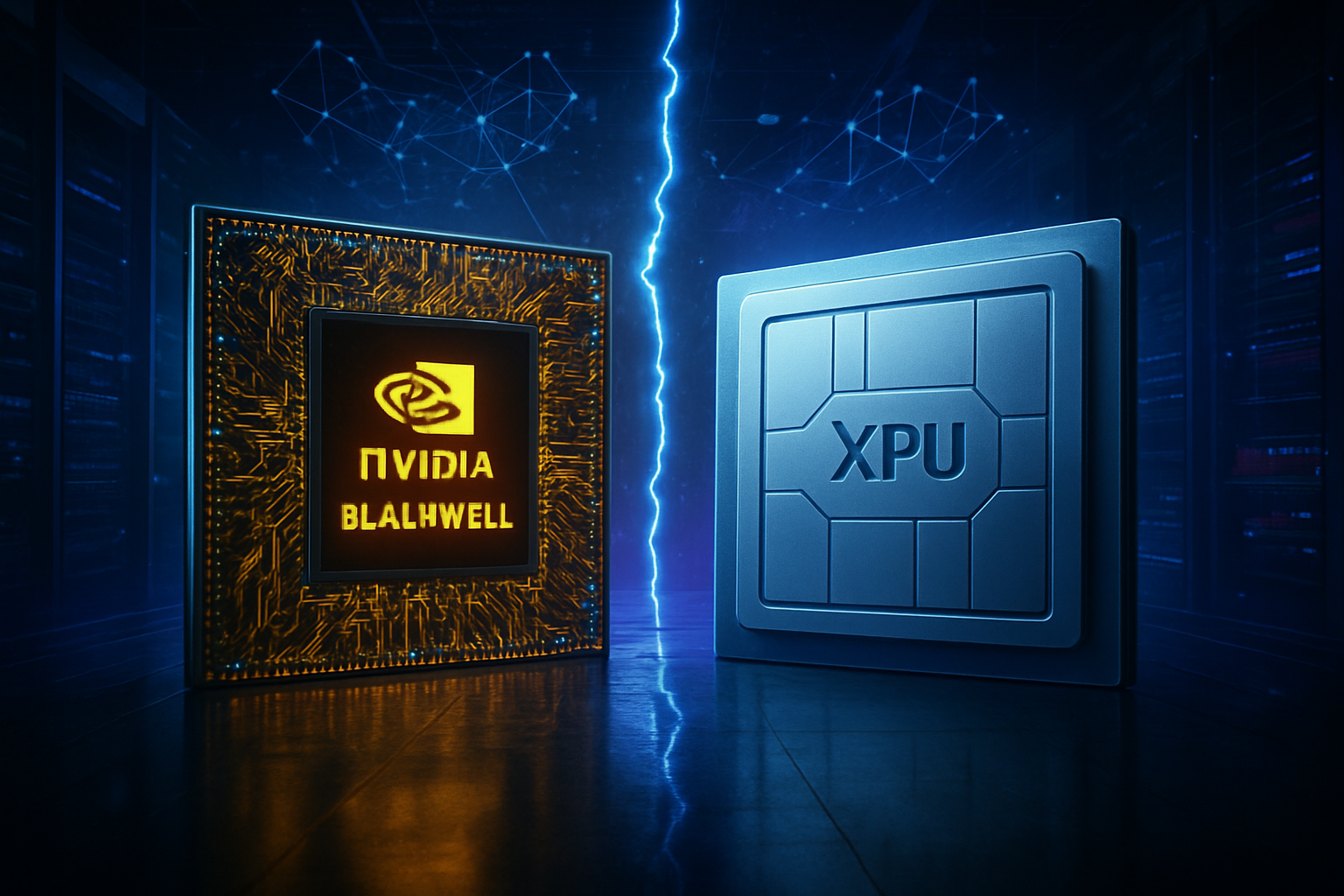
    The artificial intelligence revolution has long been synonymous with a single name, but as of December 19, 2025, the narrative of a "one-company monopoly" has officially fractured. While Nvidia remains a titan of the industry, the bedrock of the AI era is being reinforced by a diverse coalition of hardware and software innovators. From custom silicon designed in-house by hyperscalers to the rapid maturation of open-source software stacks, the infrastructure layer is undergoing its most significant transformation since the dawn of deep learning.

    This shift represents a strategic pivot for the entire tech sector. As the demand for massive-scale inference and training continues to outpace supply, the industry has moved toward a multi-vendor ecosystem. This diversification is not just about cost—it is about architectural sovereignty, energy efficiency, and breaking the "software moat" that once locked developers into a single proprietary ecosystem.

    The Technical Vanguard: AMD and Intel’s High-Stakes Counteroffensive

    The technical battleground in late 2025 is defined by memory density and compute efficiency. Advanced Micro Devices (NASDAQ:AMD) has successfully executed its aggressive annual roadmap, culminating in the volume production of the Instinct MI355X. Built on a cutting-edge 3nm process, the MI355X features a staggering 288GB of HBM3E memory. This capacity allows for the local hosting of increasingly massive large language models (LLMs) that previously required complex splitting across multiple nodes. By introducing support for FP4 and FP6 data types, AMD has claimed a 35-fold increase in inference performance over its previous generations, directly challenging the dominance of Nvidia’s Blackwell architecture in the enterprise data center.

    Intel Corporation (NASDAQ:INTC) has similarly pivoted its strategy, moving beyond the standalone Gaudi 3 accelerator to its unified "Falcon Shores" architecture. Falcon Shores represents a technical milestone for Intel, merging the high-performance AI capabilities of the Gaudi line with the versatile Xe-HPC graphics technology. This "XPU" approach is designed to provide a 5x improvement in performance-per-watt, addressing the critical energy constraints facing modern data centers. Furthermore, Intel’s oneAPI 2025.1 toolkit has become a vital bridge for developers, offering a streamlined path for migrating legacy CUDA code to open standards, effectively lowering the barrier to entry for non-Nvidia hardware.

    The technical evolution extends into the very fabric of the data center. The Ultra Ethernet Consortium (UEC), which released its 1.0 Specification in June 2025, has introduced a standardized alternative to proprietary interconnects like InfiniBand. By optimizing Ethernet for AI workloads through advanced congestion control and packet-spraying techniques, the UEC has enabled companies like Arista Networks, Inc. (NYSE:ANET) and Cisco Systems, Inc. (NASDAQ:CSCO) to deploy massive "AI back-end" fabrics. These networks support the 800G and 1.6T speeds necessary for the next generation of multi-trillion parameter models, ensuring that the network is no longer a bottleneck for distributed training.

    The Hyperscaler Rebellion: Custom Silicon and the ASIC Boom

    The most profound shift in the market positioning of AI infrastructure comes from the "Hyperscaler Rebellion." Alphabet Inc. (NASDAQ:GOOGL), Amazon.com, Inc. (NASDAQ:AMZN), and Meta have increasingly bypassed general-purpose GPUs in favor of custom Application-Specific Integrated Circuits (ASICs). Broadcom Inc. (NASDAQ:AVGO) has emerged as the primary architect of this movement, co-developing Google’s TPU v6 (Trillium) and Meta’s Training and Inference Accelerator (MTIA). These custom chips are hyper-optimized for specific workloads, such as recommendation engines and transformer-based inference, providing a performance-per-dollar ratio that general-purpose silicon struggle to match.

    This move toward custom silicon has created a lucrative niche for Marvell Technology, Inc. (NASDAQ:MRVL), which has partnered with Microsoft Corporation (NASDAQ:MSFT) on the Maia chip series and Amazon on the Trainium 2 and 3 programs. For these tech giants, the strategic advantage is two-fold: it reduces their multi-billion dollar dependency on external vendors and allows them to tailor their hardware to the specific nuances of their proprietary models. As of late 2025, custom ASICs now account for nearly 30% of the total AI compute deployed in the world's largest data centers, a significant jump from just two years ago.

    The competitive implications are stark. For startups and mid-tier AI labs, the availability of diverse hardware means lower cloud compute costs and more options for scaling. The "software moat" once provided by Nvidia’s CUDA has been eroded by the maturation of open-source projects like PyTorch and AMD’s ROCm 7.0. These software layers now provide "day-zero" support for new hardware, allowing researchers to switch between different GPU and TPU clusters with minimal code changes. This interoperability has leveled the playing field, fostering a more competitive and resilient market.

    A Multi-Polar AI Landscape: Resilience and Standardization

    The wider significance of this diversification cannot be overstated. In the early 2020s, the AI industry faced a "compute crunch" that threatened to stall innovation. By 12/19/2025, the rise of a multi-polar infrastructure landscape has mitigated these supply chain risks. The reliance on a single vendor’s production cycle has been replaced by a distributed supply chain involving multiple foundries and assembly partners. This resilience is critical as AI becomes integrated into essential global infrastructure, from healthcare diagnostics to autonomous energy grids.

    Standardization has become the watchword of 2025. The success of the Ultra Ethernet Consortium and the widespread adoption of the OCP (Open Compute Project) standards for server design have turned AI infrastructure into a modular ecosystem. This mirrors the evolution of the early internet, where proprietary protocols eventually gave way to the open standards that enabled global scale. By decoupling the hardware from the software, the industry has ensured that the "AI boom" is not a bubble tied to the fortunes of a single firm, but a sustainable technological era.

    However, this transition is not without its concerns. The rapid proliferation of high-power chips from multiple vendors has placed an unprecedented strain on the global power grid. Companies are now competing not just for chips, but for access to "power-dense" data center sites. This has led to a surge in investment in modular nuclear reactors and advanced liquid cooling technologies. The comparison to previous milestones, such as the transition from mainframes to client-server architecture, is apt: we are seeing the birth of a new utility-grade compute layer that will define the next century of economic activity.

    The Horizon: 1.6T Networking and the Road to 2nm

    Looking ahead to 2026 and beyond, the focus will shift toward even tighter integration between compute and memory. Industry leaders are already testing "3D-stacked" logic and memory configurations, with Micron Technology, Inc. (NASDAQ:MU) playing a pivotal role in delivering the next generation of HBM4 memory. These advancements will be necessary to support the "Agentic AI" revolution, where thousands of autonomous agents operate simultaneously, requiring massive, low-latency inference capabilities.

    Furthermore, the transition to 2nm process nodes is expected to begin in late 2026, promising another leap in efficiency. Experts predict that the next major challenge will be "optical interconnects"—using light instead of electricity to move data between chips. This would virtually eliminate the latency and heat issues that currently plague large-scale AI clusters. As these technologies move from the lab to the data center, we can expect a new wave of applications, including real-time, high-fidelity holographic communication and truly global, decentralized AI networks.

    Conclusion: A New Era of Infrastructure

    The AI infrastructure landscape of late 2025 is a testament to the industry's ability to adapt and scale. The emergence of AMD, Intel, Broadcom, and Marvell as critical pillars alongside Nvidia has created a robust, competitive environment that benefits the entire ecosystem. From the custom silicon powering the world's largest clouds to the open-source software stacks that democratize access to compute, the "shovels" of the AI gold rush are more diverse and powerful than ever before.

    As we look toward the coming months, the key metric to watch will be the "utilization-to-cost" ratio of these new platforms. The success of the multi-vendor era will be measured by how effectively it can lower the cost of intelligence, making advanced AI accessible not just to tech giants, but to every enterprise and developer on the planet. The foundation has been laid; the era of multi-polar AI infrastructure has arrived.


    This content is intended for informational purposes only and represents analysis of current AI developments.

    TokenRing AI delivers enterprise-grade solutions for multi-agent AI workflow orchestration, AI-powered development tools, and seamless remote collaboration platforms.
    For more information, visit https://www.tokenring.ai/.
  • The Rise of Sovereign AI: Why Nations are Racing to Build Their Own Silicon Ecosystems

    The Rise of Sovereign AI: Why Nations are Racing to Build Their Own Silicon Ecosystems

    As of late 2025, the global technology landscape has shifted from a race for software dominance to a high-stakes battle for "Sovereign AI." No longer content with renting compute power from a handful of Silicon Valley giants, nations are aggressively building their own end-to-end AI stacks—encompassing domestic data, indigenous models, and, most critically, homegrown semiconductor ecosystems. This movement represents a fundamental pivot in geopolitics, where digital autonomy is now viewed as the ultimate prerequisite for national security and economic survival.

    The urgency behind this trend is driven by a desire to escape the "compute monopoly" held by a few major players. By investing billions into custom silicon and domestic fabrication, countries like Japan, India, France, and the UAE are attempting to insulate themselves from supply chain shocks and foreign export controls. The result is a fragmented but rapidly innovating global market where "AI nationalism" is the new status quo, fueling an unprecedented demand for specialized hardware tailored to local languages, cultural norms, and specific industrial needs.

    The Technical Frontier: From General GPUs to Custom ASICs

    The technical backbone of the Sovereign AI movement is a shift away from general-purpose hardware toward Application-Specific Integrated Circuits (ASICs) and advanced fabrication nodes. In Japan, the government-backed venture Rapidus, in collaboration with IBM (NYSE: IBM), has accelerated its timeline to achieve mass production of 2nm logic chips by 2027. This leap is designed to power a new generation of domestic AI supercomputers that prioritize energy efficiency—a critical factor as AI power consumption threatens national grids. Japan’s Sakura Internet (TYO: 3778) has already deployed massive clusters utilizing NVIDIA (NASDAQ: NVDA) Blackwell architecture, but the long-term goal remains a transition to Japanese-designed silicon.

    In India, the technical focus has landed on the "IndiaAI Mission," which recently saw the deployment of the PARAM Rudra supercomputer series across major academic hubs. Unlike previous iterations, these systems are being integrated with India’s first indigenously designed 3nm chips, aimed at processing "Vikas" (developmental) data. Meanwhile, in France, the Jean Zay supercomputer is being augmented with wafer-scale engines from companies like Cerebras, allowing for the training of massive foundation models like those from Mistral AI without the latency overhead of traditional GPU clusters.

    This shift differs from previous approaches because it prioritizes "data residency" at the hardware level. Sovereign systems are being designed with hardware-level encryption and "clean room" environments that ensure sensitive state data never leaves domestic soil. Industry experts note that this is a departure from the "cloud-first" era, where data was often processed in whichever jurisdiction offered the cheapest compute. Now, the priority is "trusted silicon"—hardware whose entire provenance, from design to fabrication, can be verified by the state.

    Market Disruptions and the Rise of the "National Stack"

    The push for Sovereign AI is creating a complex web of winners and losers in the corporate world. While NVIDIA (NASDAQ: NVDA) remains the dominant provider of AI training hardware, the rise of national initiatives is forcing the company to adapt its business model. NVIDIA has increasingly moved toward "Sovereign AI as a Service," helping nations build local data centers while navigating complex export regulations. However, the move toward custom silicon presents a long-term threat to NVIDIA’s dominance, as nations look to AMD (NASDAQ: AMD), Broadcom (NASDAQ: AVGO), and Marvell Technology (NASDAQ: MRVL) for custom ASIC design services.

    Cloud giants like Oracle (NYSE: ORCL) and Microsoft (NASDAQ: MSFT) are also pivoting. Oracle has been particularly aggressive in the Middle East, partnering with the UAE’s G42 to build the "Stargate UAE" cluster—a 1-gigawatt facility that functions as a sovereign cloud. This strategic positioning allows these tech giants to remain relevant by acting as the infrastructure partners for national projects, even as those nations move toward hardware independence. Conversely, startups specializing in AI inferencing, such as Groq, are seeing massive inflows of sovereign wealth, with Saudi Arabia’s Alat investing heavily to build the world’s largest inferencing hub in the Kingdom.

    The competitive landscape is also seeing the emergence of "Regional Champions." Companies like Samsung Electronics (KRX: 005930) and TSMC (NYSE: TSM) are being courted by nations with hundred-billion-dollar incentives to build domestic mega-fabs. The UAE, for instance, is currently in advanced negotiations to bring TSMC production to the Gulf, a move that would fundamentally alter the semiconductor supply chain and reduce the world's reliance on the Taiwan Strait.

    Geopolitical Significance and the New "Oil"

    The broader significance of Sovereign AI cannot be overstated; it is the "space race" of the 21st century. In 2025, data is no longer just "the new oil"—it is the refined fuel that powers national intelligence. By building domestic AI ecosystems, nations are ensuring that the economic "rent" generated by AI stays within their borders. France’s President Macron recently highlighted this, noting that a nation that exports its raw data to buy back "foreign intelligence" is effectively a digital colony.

    However, this trend brings significant concerns regarding fragmentation. As nations build AI models aligned with their own cultural and legal frameworks, the "splinternet" is evolving into the "split-intelligence" era. A model trained on Saudi values may behave fundamentally differently from one trained on French or Indian data. This raises questions about global safety standards and the ability to regulate AI on an international scale. If every nation has its own "sovereign" black box, finding common ground on AI alignment and existential risk becomes exponentially more difficult.

    Comparatively, this milestone mirrors the development of national nuclear programs in the mid-20th century. Just as nuclear energy and weaponry became the hallmarks of a superpower, AI compute capacity is now the metric of a nation's "hard power." The "Pax Silica" alliance—a group including the U.S., Japan, and South Korea—is an attempt to create a "trusted" supply chain, effectively creating a technological bloc that stands in opposition to the AI development tracks of China and its partners.

    The Horizon: 2nm Production and Beyond

    Looking ahead, the next 24 to 36 months will be defined by the "Tapeout Race." Saudi Arabia is expected to see its first domestically designed AI chips hit the market by mid-2026, while Japan’s Rapidus aims to have its 2nm pilot line operational by late 2025. These developments will likely lead to a surge in edge-AI applications, where custom silicon allows for high-performance AI to be embedded in everything from national power grids to autonomous defense systems without needing a constant connection to a centralized cloud.

    The long-term challenge remains the talent war. While a nation can buy GPUs and build fabs, the specialized engineering talent required to design world-class silicon is still concentrated in a few global hubs. Experts predict that we will see a massive increase in "educational sovereignism," with countries like India and the UAE launching aggressive programs to train hundreds of thousands of semiconductor engineers. The ultimate goal is a "closed-loop" ecosystem where a nation can design, manufacture, and train AI entirely within its own borders.

    A New Era of Digital Autonomy

    The rise of Sovereign AI marks the end of the era of globalized, borderless technology. As of December 2025, the "National Stack" has become the standard for any country with the capital and ambition to compete on the world stage. The race to build domestic semiconductor ecosystems is not just about chips; it is about the preservation of national identity and the securing of economic futures in an age where intelligence is the primary currency.

    In the coming months, watchers should keep a close eye on the "Stargate" projects in the Middle East and the progress of the Rapidus 2nm facility in Japan. These projects will serve as the litmus test for whether a nation can truly break free from the gravity of Silicon Valley. While the challenges are immense—ranging from energy constraints to talent shortages—the momentum behind Sovereign AI is now irreversible. The map of the world is being redrawn, one transistor at a time.


    This content is intended for informational purposes only and represents analysis of current AI developments.

    TokenRing AI delivers enterprise-grade solutions for multi-agent AI workflow orchestration, AI-powered development tools, and seamless remote collaboration platforms.
    For more information, visit https://www.tokenring.ai/.

  • The Great Decoupling: How Hyperscaler Custom ASICs are Dismantling the NVIDIA Monopoly

    The Great Decoupling: How Hyperscaler Custom ASICs are Dismantling the NVIDIA Monopoly

    As of December 2025, the artificial intelligence industry has reached a pivotal turning point. For years, the narrative of the AI boom was synonymous with the meteoric rise of merchant silicon providers, but a new era of "DIY" hardware has officially arrived. Major hyperscalers, including Alphabet Inc. (NASDAQ: GOOGL), Amazon.com, Inc. (NASDAQ: AMZN), and Meta Platforms, Inc. (NASDAQ: META), have successfully transitioned from being NVIDIA’s largest customers to its most formidable competitors. By designing their own custom AI Application-Specific Integrated Circuits (ASICs), these tech giants are fundamentally reshaping the economics of the data center.

    This shift, often referred to by industry analysts as "The Great Decoupling," represents a strategic move to escape the high margins and supply chain constraints of general-purpose GPUs. With the recent general availability of Google’s TPU v7 and the launch of Amazon’s Trainium 3 at re:Invent 2025, the performance gap between custom silicon and merchant hardware has narrowed to the point of parity in many critical workloads. This transition is not merely about cost-cutting; it is about vertical integration and optimizing hardware for the specific architectures of the world’s most advanced large language models (LLMs).

    The 3nm Frontier: Technical Specs and Specialized Silicon

    The technical landscape of late 2025 is dominated by the move to 3nm process nodes. Google’s TPU v7 (Ironwood) has set a new benchmark for cluster-level scaling. Built on Taiwan Semiconductor Manufacturing Company (NYSE: TSM) 3nm technology, Ironwood delivers a staggering 4.6 PetaFLOPS of FP8 compute per chip, supported by 192 GB of HBM3e memory. What sets the TPU v7 apart is its Optical Circuit Switching (OCS) fabric, which allows Google to link 9,216 chips into a single "Superpod." This optical interconnect bypasses the electrical bottlenecks that plague traditional copper-based systems, offering 9.6 Tb/s of bandwidth and enabling nearly linear scaling for massive training runs.

    Amazon’s Trainium 3, unveiled earlier this month, mirrors this aggressive push into 3nm silicon. Developed by Amazon’s Annapurna Labs, Trainium 3 provides 2.52 PetaFLOPS of compute and 144 GB of HBM3e. While its raw peak performance may trail the NVIDIA Corporation (NASDAQ: NVDA) Blackwell Ultra in certain precision formats, Amazon’s Trn3 UltraServer architecture packs 144 chips per rack, achieving a density that rivals NVIDIA’s NVL72. Meanwhile, Meta has scaled its MTIA v2 (Artemis) into high-volume production, specifically tuning the silicon for the ranking and recommendation algorithms that power its social platforms. Reports indicate that Meta is already securing capacity for MTIA v3, which will transition to HBM3e to handle the increasing inference demands of the Llama 4 family of models.

    These custom designs differ from previous approaches by prioritizing energy efficiency and specific data-flow architectures over general-purpose flexibility. While an NVIDIA GPU must be capable of handling everything from scientific simulations to crypto mining, a TPU or Trainium chip is stripped of unnecessary logic, focusing entirely on tensor operations. This specialization allows Google’s TPU v6e, for instance, to deliver up to 4x better performance-per-dollar for inference compared to the aging H100, while operating at a significantly lower thermal design power (TDP).

    The Strategic Pivot: Cost, Control, and Competitive Advantage

    The primary driver behind the DIY chip trend is the massive Total Cost of Ownership (TCO) advantage. Current market analysis suggests that hyperscaler ASICs offer a 40% to 65% TCO benefit over merchant silicon. By bypassing the "NVIDIA tax"—the high margins associated with purchasing third-party GPUs—hyperscalers can offer AI cloud services at lower prices while maintaining higher profitability. This has immediate implications for startups and AI labs; those building on AWS or Google Cloud can now choose between premium NVIDIA instances for research and lower-cost custom silicon for production-scale inference.

    For merchant silicon providers, the implications are profound. While NVIDIA remains the market leader thanks to its software moat (CUDA) and the sheer power of its upcoming Vera Rubin architecture, its market share within the hyperscaler tier has begun to erode. In late 2025, NVIDIA’s share of data center compute has slipped from nearly 90% to roughly 75%. The most significant impact is felt in the inference market, where over 50% of hyperscaler internal workloads are now processed on custom ASICs.

    Other players are also feeling the heat. Advanced Micro Devices, Inc. (NASDAQ: AMD) has positioned its MI350X and MI400 series as the primary merchant alternative for companies like Microsoft Corporation (NASDAQ: MSFT) that want to hedge against NVIDIA’s dominance. Meanwhile, Intel Corporation (NASDAQ: INTC) has found a niche with its Gaudi 3 accelerator, marketing it as a high-value training solution. However, Intel’s most significant strategic play may not be its own chips, but its 18A foundry service, which aims to manufacture the very custom ASICs that compete with its merchant products.

    Redefining the AI Landscape: Beyond the GPU

    The rise of custom silicon marks a transition in the broader AI landscape from an "experimentation phase" to an "industrialization phase." In the early years of the generative AI boom, speed to market was the only metric that mattered, making general-purpose GPUs the logical choice. Today, as AI models become integrated into the core infrastructure of the global economy, efficiency and scale are the new priorities. The trend toward ASICs reflects a maturing industry that is no longer content with "one size fits all" hardware.

    This shift also addresses critical concerns regarding energy consumption and supply chain resilience. Custom chips are inherently more power-efficient because they are designed for specific mathematical operations. As data centers face increasing scrutiny over their carbon footprints, the energy savings of a TPU v6 (operating at ~300W per chip) versus a Blackwell GPU (operating at 700W-1000W) become a decisive factor. Furthermore, by designing their own silicon, hyperscalers gain greater control over their supply chains, reducing their vulnerability to the "GPU shortages" that defined 2023 and 2024.

    Comparatively, this milestone is reminiscent of the shift in the early 2000s when tech giants moved away from proprietary mainframe hardware toward commodity x86 servers—only this time, the giants are building the proprietary hardware themselves. The "DIY" trend represents a reversal of outsourcing, as the world’s largest software companies become the world’s most sophisticated hardware designers.

    The Road Ahead: 1.8A Foundries and the Future of Silicon

    Looking toward 2026 and beyond, the competition is expected to intensify as the industry moves toward even more advanced manufacturing processes. NVIDIA is already sampling its Vera Rubin architecture, which promises a revolutionary leap in unified memory and FP4 precision training. However, the hyperscalers are not standing still. Meta’s MTIA v3 and Microsoft’s next-generation Maia chips are expected to leverage Intel’s 18A and TSMC’s 2nm nodes to push the boundaries of what is possible in silicon.

    One of the most anticipated developments is the integration of AI-driven chip design. Companies are now using AI agents to optimize the floorplans and power routing of their next-generation ASICs, a move that could shorten the design cycle from years to months. The challenge remains the software ecosystem; while Google has a mature stack with XLA and JAX, and Amazon has made strides with Neuron, NVIDIA’s CUDA remains the gold standard for developer ease-of-use. Closing this software gap will be the primary hurdle for custom silicon in the near term.

    Experts predict that the market will bifurcate: NVIDIA will continue to dominate the high-end "frontier model" training market, where flexibility and raw power are paramount, while custom ASICs will take over the high-volume inference market. This "hybrid" data center model—where training happens on GPUs and deployment happens on ASICs—is likely to become the standard architecture for the next decade of AI development.

    A New Era of Vertical Integration

    The trend of hyperscalers designing custom AI ASICs is more than a technical footnote; it is a fundamental realignment of the technology industry. By taking control of the silicon, companies like Google, Amazon, and Meta are ensuring that their hardware is as specialized as the algorithms they run. This "DIY" movement has effectively broken the monopoly on high-end AI compute, introducing a level of competition that will drive down costs and accelerate the deployment of AI services globally.

    As we look toward the final weeks of 2025 and into 2026, the key metric to watch will be the "inference-to-training" ratio. As more models move out of the lab and into the hands of billions of users, the demand for cost-effective inference silicon will only grow, further tilting the scales in favor of custom ASICs. The era of the general-purpose GPU as the sole engine of AI is ending, replaced by a diverse ecosystem of specialized silicon that is faster, cheaper, and more efficient.

    The "Great Decoupling" is complete. The hyperscalers are no longer just building the software of the future; they are forging the very atoms that make it possible.


    This content is intended for informational purposes only and represents analysis of current AI developments.

    TokenRing AI delivers enterprise-grade solutions for multi-agent AI workflow orchestration, AI-powered development tools, and seamless remote collaboration platforms.
    For more information, visit https://www.tokenring.ai/.

  • Beyond Moore’s Law: AI, 5G, and Custom Silicon Ignite a New Era of Technological Advancement

    Beyond Moore’s Law: AI, 5G, and Custom Silicon Ignite a New Era of Technological Advancement

    As of December 2025, the technological world stands on the precipice of a profound transformation, driven by the powerful convergence of Artificial Intelligence (AI), the ubiquitous reach of 5G connectivity, and the specialized prowess of custom silicon. This formidable trifecta is not merely enhancing existing capabilities; it is fundamentally redefining the very fabric of semiconductor innovation, revolutionizing global data infrastructure, and unlocking an unprecedented generation of technological possibilities. This synergy is creating an accelerated path to more powerful, energy-efficient, and intelligent devices across virtually every sector, from autonomous vehicles to personalized healthcare.

    This architectural shift moves beyond incremental improvements, signaling a foundational change in how technology is conceived, designed, and deployed. The semiconductor industry, in particular, is witnessing a "Hyper Moore's Law" where AI itself is becoming an active participant in chip design, drastically shortening cycles and optimizing performance. Simultaneously, 5G's low-latency, high-bandwidth backbone is enabling the proliferation of intelligent edge computing, moving AI processing closer to the data source. Custom silicon, tailored for specific AI workloads, provides the essential power and efficiency, making real-time, sophisticated AI applications a widespread reality.

    Engineering the Future: The Technical Tapestry of Convergence

    The technical underpinnings of this convergence reveal a sophisticated dance between hardware and software, pushing the boundaries of what was once considered feasible. At the heart of this revolution is a radical transformation in semiconductor design and manufacturing. The industry is rapidly moving beyond traditional scaling, with the maturation of Extreme Ultraviolet (EUV) lithography for sub-7 nanometer (nm) nodes and a swift progression towards High-Numerical Aperture (High-NA) EUV lithography for sub-2nm process nodes. Innovations such as 3D stacking, advanced chiplet designs, and Gate-All-Around (GAA) transistors are redefining chip integration, drastically reducing physical footprint while significantly boosting performance. Furthermore, advanced materials like Gallium Nitride (GaN) and Silicon Carbide (SiC) are becoming standard for high-power, high-frequency applications crucial for 5G/6G base stations and electric vehicles.

    A critical differentiator from previous approaches is the emergence of AI-driven chip design. AI is no longer just a consumer of advanced chips; it is actively designing them. AI-powered Electronic Design Automation (EDA) tools, leveraging machine learning and generative AI, are automating intricate chip design processes—from logic synthesis to routing—and dramatically shortening design cycles from months to mere hours. This enables the creation of chips with superior Power, Performance, and Area (PPA) characteristics, essential for managing the escalating complexity of modern semiconductors. This symbiotic relationship, where AI designs more powerful AI chips, is leading to a "Hyper Moore's Law," with some AI chipmakers expecting performance to double or triple annually.

    The unprecedented demand for custom AI Application-Specific Integrated Circuits (ASICs) underscores the limitations of general-purpose chips for the rapid growth and specialized needs of AI workloads. Tech giants are increasingly pursuing vertical integration by designing their own custom silicon, gaining greater control over performance, cost, and supply chain. This move towards heterogeneous computing, integrating CPUs, GPUs, FPGAs, and specialized AI accelerators into unified architectures, optimizes diverse workloads and marks a significant departure from homogeneous processing. Initial reactions from the AI research community and industry experts highlight excitement over the potential for specialized hardware to unlock new AI capabilities that were previously computationally prohibitive, alongside a recognition of the immense engineering challenges involved in this complex integration.

    Corporate Chessboard: Beneficiaries and Disruptors in the AI Landscape

    The convergence of AI, 5G, and custom silicon is creating a new competitive landscape, profoundly impacting established tech giants, semiconductor manufacturers, and a new wave of innovative startups. Companies deeply invested in vertical integration and custom silicon design stand to benefit immensely. Hyperscale cloud providers like Google (NASDAQ: GOOGL), Meta Platforms (NASDAQ: META), and Amazon (NASDAQ: AMZN), alongside AI powerhouses such as OpenAI, are at the forefront, leveraging custom ASICs to optimize their massive AI workloads, particularly for large language models (LLMs). This strategic move allows them to gain greater control over performance, cost, and energy efficiency, reducing reliance on third-party general-purpose silicon.

    The semiconductor industry itself is undergoing a significant reshuffle. Companies like Broadcom (NASDAQ: AVGO) are leading in the custom AI ASIC market, controlling an estimated 70% of this segment and forging critical partnerships with the aforementioned hyperscalers. Other major players like NVIDIA (NASDAQ: NVDA), while dominant in general-purpose GPUs, are adapting by offering highly specialized AI platforms and potentially exploring more custom solutions. Intel (NASDAQ: INTC) is also making significant strides in its foundry services and AI accelerator offerings, aiming to recapture market share in this burgeoning custom silicon era. The competitive implications are clear: companies that can design, manufacture, or facilitate the creation of highly optimized, custom silicon for AI will command significant market power.

    This development poses a potential disruption to existing products and services that rely heavily on less optimized, off-the-shelf hardware for AI inference and training. Companies that fail to adapt to the demand for specialized, energy-efficient AI processing at the edge or within their core infrastructure risk falling behind. Startups focusing on niche AI hardware acceleration, specialized EDA tools, or novel neuromorphic computing architectures are finding fertile ground for innovation and investment. The market positioning for many companies will increasingly depend on their ability to integrate custom silicon strategies with robust 5G connectivity solutions, creating a seamless, intelligent ecosystem from the cloud to the edge.

    Broader Horizons: Societal Impacts and Ethical Considerations

    The convergence of AI, 5G, and custom silicon extends far beyond corporate balance sheets, weaving itself into the broader AI landscape and promising transformative, yet complex, societal impacts. This development fits squarely into the trend of pervasive AI integration, pushing intelligent systems into nearly every facet of daily life and industry. The ability to process data locally with custom AI silicon and low-latency 5G enables instantaneous responses for mission-critical applications, from advanced autonomous vehicles requiring real-time sensor processing and decision-making to predictive maintenance in smart factories and real-time diagnostics in healthcare. By 2025, AI adoption is expected to reach full integration across multiple sectors, with AI systems making decisions and adapting in real-time.

    The impacts are wide-ranging. Economically, it promises new industries, enhanced productivity, and the creation of highly specialized jobs in AI engineering, chip design, and network infrastructure. Environmentally, the drive for energy-efficient custom silicon is crucial, as the computational appetite of modern AI, especially for large language models (LLMs), is immense. While custom chips offer better performance-per-watt, the sheer scale of deployment necessitates continued innovation in sustainable computing and cooling technologies. Socially, the enhanced capabilities promise advancements in smart cities, personalized education, and more responsive public services, enabled by intelligent IoT ecosystems powered by 5G and edge AI.

    However, potential concerns loom large. The increasing sophistication and autonomy of AI systems, coupled with their ubiquitous deployment, raise significant ethical questions regarding data privacy, algorithmic bias, and accountability. The reliance on custom silicon could also lead to further concentration of power among a few tech giants capable of designing and producing such specialized hardware, potentially stifling competition and innovation from smaller players. Comparisons to previous AI milestones, such as the rise of deep learning or the early days of cloud computing, highlight a similar pattern of rapid advancement coupled with the need for thoughtful governance and robust ethical frameworks. This era demands proactive engagement from policymakers, researchers, and industry leaders to ensure equitable and responsible deployment.

    The Road Ahead: Future Developments and Uncharted Territories

    Looking forward, the convergence of AI, 5G, and custom silicon promises a cascade of near-term and long-term developments that will continue to reshape our technological reality. In the near term, we can expect to see further refinement and miniaturization of custom AI ASICs, with an increasing focus on specialized architectures for specific AI tasks, such as vision processing, natural language understanding, and generative AI. The widespread rollout of 5G, largely completed in urban areas by 2025, will continue to expand into rural and remote regions, solidifying its role as the essential connectivity backbone for edge AI and the Internet of Things (IoT). Enterprises, telecom providers, and hyperscalers will continue their significant investments in smarter, distributed colocation environments, pushing edge data centers along highways, in urban cores, and near industrial zones.

    On the horizon, potential applications and use cases are breathtaking. The technology is expected to enable real-time large language models (LLMs) to operate directly at the user's fingertips, delivering localized, instantaneous AI assistance without constant cloud reliance. Enhanced immersive experiences in augmented reality (AR) and virtual reality (VR) will become more seamless and interactive, blurring the lines between the physical and digital worlds. The groundwork laid by this convergence is also critical for the development of 6G, where AI is expected to play an even more central role in delivering massive improvements in spectral efficiency and potentially enabling 6G functionalities through software upgrades to existing 5G hardware. Experts predict a future where AI is not just integrated but becomes an invisible, ambient intelligence, anticipating needs and proactively assisting across all aspects of life.

    However, significant challenges remain. The escalating energy consumption of AI, despite custom silicon's efficiencies, demands continuous innovation in sustainable computing and cooling technologies, particularly for high-density edge deployments. Security concerns around distributed AI systems and 5G networks will require robust, multi-layered defenses against sophisticated cyber threats. The complexity of designing and integrating these disparate technologies also necessitates a highly skilled workforce, highlighting the need for ongoing education and talent development. What experts predict will happen next is a relentless pursuit of greater autonomy, intelligence, and seamless integration, pushing the boundaries of what machines can perceive, understand, and accomplish in real-time.

    A New Technological Epoch: Concluding Thoughts on the Convergence

    The convergence of AI, 5G, and custom silicon represents far more than a mere technological upgrade; it signifies the dawn of a new technological epoch. The key takeaways from this profound shift are multifold: a "Hyper Moore's Law" driven by AI designing AI chips, the indispensable role of 5G as the low-latency conduit for distributed intelligence, and the critical performance and efficiency gains offered by specialized custom silicon. Together, these elements are dismantling traditional computing paradigms and ushering in an era of ubiquitous, real-time, and highly intelligent systems.

    This development's significance in AI history cannot be overstated. It marks a pivotal moment where AI transitions from primarily cloud-centric processing to a deeply embedded, pervasive force across the entire technological stack, from the core data center to the furthest edge devices. It enables the practical realization of previously theoretical AI applications and accelerates the timeline for many futuristic visions. The long-term impact will be a fundamentally rewired world, where intelligent agents augment human capabilities across every industry and personal domain, driving unprecedented levels of automation, personalization, and responsiveness.

    In the coming weeks and months, industry watchers should closely observe several key indicators. Look for further announcements from hyperscalers regarding their next-generation custom AI chips, the expansion of 5G Standalone (SA) networks enabling more sophisticated edge computing capabilities, and partnerships between semiconductor companies and AI developers aimed at co-optimizing hardware and software. The ongoing evolution of AI-driven EDA tools and the emergence of new neuromorphic or quantum-inspired computing architectures will also be critical signposts in this rapidly advancing landscape. The future of technology is not just being built; it is being intelligently designed and seamlessly connected.


    This content is intended for informational purposes only and represents analysis of current AI developments.

    TokenRing AI delivers enterprise-grade solutions for multi-agent AI workflow orchestration, AI-powered development tools, and seamless remote collaboration platforms.
    For more information, visit https://www.tokenring.ai/.

  • The Dawn of a New Era: Hyperscalers Forge Their Own AI Silicon Revolution

    The Dawn of a New Era: Hyperscalers Forge Their Own AI Silicon Revolution

    The landscape of artificial intelligence is undergoing a profound and irreversible transformation as hyperscale cloud providers and major technology companies increasingly pivot to designing their own custom AI silicon. This strategic shift, driven by an insatiable demand for specialized compute power, cost optimization, and a quest for technological independence, is fundamentally reshaping the AI hardware industry and accelerating the pace of innovation. As of November 2025, this trend is not merely a technical curiosity but a defining characteristic of the AI Supercycle, challenging established market dynamics and setting the stage for a new era of vertically integrated AI development.

    The Engineering Behind the AI Brain: A Technical Deep Dive into Custom Silicon

    The custom AI silicon movement is characterized by highly specialized architectures meticulously crafted for the unique demands of machine learning workloads. Unlike general-purpose Graphics Processing Units (GPUs), these Application-Specific Integrated Circuits (ASICs) sacrifice broad flexibility for unparalleled efficiency and performance in targeted AI tasks.

    Google's (NASDAQ: GOOGL) Tensor Processing Units (TPUs) have been pioneers in this domain, leveraging a systolic array architecture optimized for matrix multiplication – the bedrock of neural network computations. The latest iterations, such as TPU v6 (codename "Axion") and the inference-focused Ironwood TPUs, showcase remarkable advancements. Ironwood TPUs support 4,614 TFLOPS per chip with 192 GB of memory and 7.2 TB/s bandwidth, designed for massive-scale inference with low latency. Google's Trillium TPUs, expected in early 2025, are projected to deliver 2.8x better performance and 2.1x improved performance per watt compared to prior generations, assisted by Broadcom (NASDAQ: AVGO) in their design. These chips are tightly integrated with Google's custom Inter-Chip Interconnect (ICI) for massive scalability across pods of thousands of TPUs, offering significant performance per watt advantages over traditional GPUs.

    Amazon Web Services (AWS) (NASDAQ: AMZN) has developed its own dual-pronged approach with Inferentia for AI inference and Trainium for AI model training. Inferentia2 offers up to four times higher throughput and ten times lower latency than its predecessor, supporting complex models like large language models (LLMs) and vision transformers. Trainium 2, generally available in November 2024, delivers up to four times the performance of the first generation, offering 30-40% better price-performance than current-generation GPU-based EC2 instances for certain training workloads. Each Trainium2 chip boasts 96 GB of memory, and scaled setups can provide 6 TB of RAM and 185 TBps of memory bandwidth, often exceeding NVIDIA (NASDAQ: NVDA) H100 GPU setups in memory bandwidth.

    Microsoft (NASDAQ: MSFT) unveiled its Azure Maia 100 AI Accelerator and Azure Cobalt 100 CPU in November 2023. Built on TSMC's (NYSE: TSM) 5nm process, the Maia 100 features 105 billion transistors, optimized for generative AI and LLMs, supporting sub-8-bit data types for swift training and inference. Notably, it's Microsoft's first liquid-cooled server processor, housed in custom "sidekick" server racks for higher density and efficient cooling. The Cobalt 100, an Arm-based CPU with 128 cores, delivers up to a 40% performance increase and a 40% reduction in power consumption compared to previous Arm processors in Azure.

    Meta Platforms (NASDAQ: META) has also invested in its Meta Training and Inference Accelerator (MTIA) chips. The MTIA 2i, an inference-focused chip presented in June 2025, reportedly offers 44% lower Total Cost of Ownership (TCO) than NVIDIA GPUs for deep learning recommendation models (DLRMs), which are crucial for Meta's ad servers. Further solidifying its commitment, Meta acquired the AI chip startup Rivos in late September 2025, gaining expertise in RISC-V-based AI inferencing chips, with commercial releases targeted for 2026.

    These custom chips differ fundamentally from traditional GPUs like NVIDIA's H100 or the upcoming H200 and Blackwell series. While NVIDIA's GPUs are general-purpose parallel processors renowned for their versatility and robust CUDA software ecosystem, custom silicon is purpose-built for specific AI algorithms, offering superior performance per watt and cost efficiency for targeted workloads. For instance, TPUs can show 2–3x better performance per watt, with Ironwood TPUs being nearly 30x more efficient than the first generation. This specialization allows hyperscalers to "bend the AI economics cost curve," making large-scale AI operations more economically viable within their cloud environments.

    Reshaping the AI Battleground: Competitive Dynamics and Strategic Advantages

    The proliferation of custom AI silicon is creating a seismic shift in the competitive landscape, fundamentally altering the dynamics between tech giants, NVIDIA, and AI startups.

    Major tech companies like Google, Amazon, Microsoft, and Meta stand to reap immense benefits. By designing their own chips, they gain unparalleled control over their entire AI stack, from hardware to software. This vertical integration allows for meticulous optimization of performance, significant reductions in operational costs (potentially cutting internal cloud costs by 20-30%), and a substantial decrease in reliance on external chip suppliers. This strategic independence mitigates supply chain risks, offers a distinct competitive edge in cloud services, and enables these companies to offer more advanced AI solutions tailored to their vast internal and external customer bases. The commitment of major AI players like Anthropic to utilize Google's TPUs and Amazon's Trainium chips underscores the growing trust and performance advantages perceived in these custom solutions.

    NVIDIA, historically the undisputed monarch of the AI chip market with an estimated 70% to 95% market share, faces increasing pressure. While NVIDIA's powerful GPUs (e.g., H100, Blackwell, and the upcoming Rubin series by late 2026) and the pervasive CUDA software platform continue to dominate bleeding-edge AI model training, hyperscalers are actively eroding NVIDIA's dominance in the AI inference segment. The "NVIDIA tax"—the high cost associated with procuring their top-tier GPUs—is a primary motivator for hyperscalers to develop their own, more cost-efficient alternatives. This creates immense negotiating leverage for hyperscalers and puts downward pressure on NVIDIA's pricing power. The market is bifurcating: one segment served by NVIDIA's flexible GPUs for broad applications, and another, hyperscaler-focused segment leveraging custom ASICs for specific, large-scale deployments. NVIDIA is responding by innovating continuously and expanding into areas like software licensing and "AI factories," but the competitive landscape is undeniably intensifying.

    For AI startups, the impact is mixed. On one hand, the high development costs and long lead times for custom silicon create significant barriers to entry, potentially centralizing AI power among a few well-resourced tech giants. This could lead to an "Elite AI Tier" where access to cutting-edge compute is restricted, potentially stifling innovation from smaller players. On the other hand, opportunities exist for startups specializing in niche hardware for ultra-efficient edge AI (e.g., Hailo, Mythic), or by developing optimized AI software that can run effectively across various hardware architectures, including the proprietary cloud silicon offered by hyperscalers. Strategic partnerships and substantial funding will be crucial for startups to navigate this evolving hardware-centric AI environment.

    The Broader Canvas: Wider Significance and Societal Implications

    The rise of custom AI silicon is more than just a hardware trend; it's a fundamental re-architecture of AI infrastructure with profound wider significance for the entire AI landscape and society. This development fits squarely into the "AI Supercycle," where the escalating computational demands of generative AI and large language models are driving an unprecedented push for specialized, efficient hardware.

    This shift represents a critical move towards specialization and heterogeneous architectures, where systems combine CPUs, GPUs, and custom accelerators to handle diverse AI tasks more efficiently. It's also a key enabler for the expansion of Edge AI, pushing processing power closer to data sources in devices like autonomous vehicles and IoT sensors, enhancing real-time capabilities, privacy, and reducing cloud dependency. Crucially, it signifies a concerted effort by tech giants to reduce their reliance on third-party vendors, gaining greater control over their supply chains and managing escalating costs. With AI workloads consuming immense energy, the focus on sustainability-first design in custom silicon is paramount for managing the environmental footprint of AI.

    The impacts on AI development and deployment are transformative: custom chips offer unparalleled performance optimization, dramatically reducing training times and inference latency. This translates to significant cost reductions in the long run, making high-volume AI use cases economically viable. Ownership of the hardware-software stack fosters enhanced innovation and differentiation, allowing companies to tailor technology precisely to their needs. Furthermore, custom silicon is foundational for future AI breakthroughs, particularly in AI reasoning—the ability for models to analyze, plan, and solve complex problems beyond mere pattern matching.

    However, this trend is not without its concerns. The astronomical development costs of custom chips could lead to centralization and monopoly power, concentrating cutting-edge AI development among a few organizations and creating an accessibility gap for smaller players. While reducing reliance on specific GPU vendors, the dependence on a few advanced foundries like TSMC for fabrication creates new supply chain vulnerabilities. The proprietary nature of some custom silicon could lead to vendor lock-in and opaque AI systems, raising ethical questions around bias, privacy, and accountability. A diverse ecosystem of specialized chips could also lead to hardware fragmentation, complicating interoperability.

    Historically, this shift is as significant as the advent of deep learning or the development of powerful GPUs for parallel processing. It marks a transition where AI is not just facilitated by hardware but actively co-creates its own foundational infrastructure, with AI-driven tools increasingly assisting in chip design. This moves beyond traditional scaling limits, leveraging AI-driven innovation, advanced packaging, and heterogeneous computing to achieve continued performance gains, distinguishing the current boom from past "AI Winters."

    The Horizon Beckons: Future Developments and Expert Predictions

    The trajectory of custom AI silicon points towards a future of hyper-specialized, incredibly efficient, and AI-designed hardware.

    In the near-term (2025-2026), expect an intensified focus on edge computing chips, enabling AI to run efficiently on devices with limited power. The strengthening of open-source software stacks and hardware platforms like RISC-V is anticipated, democratizing access to specialized chips. Advancements in memory technologies, particularly HBM4, are crucial for handling ever-growing datasets. AI itself will play a greater role in chip design, with "ChipGPT"-like tools automating complex tasks from layout generation to simulation.

    Long-term (3+ years), radical architectural shifts are expected. Neuromorphic computing, mimicking the human brain, promises dramatically lower power consumption for AI tasks, potentially powering 30% of edge AI devices by 2030. Quantum computing, though nascent, could revolutionize AI processing by drastically reducing training times. Silicon photonics will enhance speed and energy efficiency by using light for data transmission. Advanced packaging techniques like 3D chip stacking and chiplet architectures will become standard, boosting density and power efficiency. Ultimately, experts predict a pervasive integration of AI hardware into daily life, with computing becoming inherently intelligent at every level.

    These developments will unlock a vast array of applications: from real-time processing in autonomous systems and edge AI devices to powering the next generation of large language models in data centers. Custom silicon will accelerate scientific discovery, drug development, and complex simulations, alongside enabling more sophisticated forms of Artificial General Intelligence (AGI) and entirely new computing paradigms.

    However, significant challenges remain. The high development costs and long design lifecycles for custom chips pose substantial barriers. Energy consumption and heat dissipation require more efficient hardware and advanced cooling solutions. Hardware fragmentation demands robust software ecosystems for interoperability. The scarcity of skilled talent in both AI and semiconductor design is a pressing concern. Chips are also approaching their physical limits, necessitating a "materials-driven shift" to novel materials. Finally, supply chain dependencies and geopolitical risks continue to be critical considerations.

    Experts predict a sustained "AI Supercycle," with hardware innovation as critical as algorithmic breakthroughs. A more diverse and specialized AI hardware landscape is inevitable, moving beyond general-purpose GPUs to custom silicon for specific domains. The intense push by major tech giants towards in-house custom silicon will continue, aiming to reduce reliance on third-party suppliers and optimize their unique cloud services. Hardware-software co-design will be paramount, and AI will increasingly be used to design the next generation of AI chips. The global AI hardware market is projected for substantial growth, with a strong focus on energy efficiency and governments viewing compute as strategic infrastructure.

    The Unfolding Narrative: A Comprehensive Wrap-up

    The rise of custom AI silicon by hyperscalers and major tech companies represents a pivotal moment in AI history. It signifies a fundamental re-architecture of AI infrastructure, driven by an insatiable demand for specialized compute power, cost efficiency, and strategic independence. This shift has propelled AI from merely a computational tool to an active architect of its own foundational technology.

    The key takeaways underscore increased specialization, the dominance of hyperscalers in chip design, the strategic importance of hardware, and a relentless pursuit of energy efficiency. This movement is not just pushing the boundaries of Moore's Law but is creating an "AI Supercycle" where AI's demands fuel chip innovation, which in turn enables more sophisticated AI. The long-term impact points towards ubiquitous AI, with AI itself designing future hardware, advanced architectures, and potentially a "split internet" scenario where an "Elite AI Tier" operates on proprietary custom silicon.

    In the coming weeks and months (as of November 2025), watch closely for further announcements from major hyperscalers regarding their latest custom silicon rollouts. Google is launching its seventh-generation Ironwood TPUs and new instances for its Arm-based Axion CPUs. Amazon's CEO Andy Jassy has hinted at significant announcements regarding the enhanced Trainium3 chip at AWS re:Invent 2025, focusing on secure AI agents and inference capabilities. Monitor NVIDIA's strategic responses, including developments in its Blackwell architecture and Project Digits, as well as the continued, albeit diversified, orders from hyperscalers. Keep an eye on advancements in high-bandwidth memory (HBM4) and the increasing focus on inference-optimized hardware. Observe the aggressive capital expenditure commitments from tech giants like Alphabet (NASDAQ: GOOGL) and Amazon (NASDAQ: AMZN), signaling massive ongoing investments in AI infrastructure. Track new partnerships, such as Broadcom's (NASDAQ: AVGO) collaboration with OpenAI for custom AI chips by 2026, and the geopolitical dynamics affecting the global semiconductor supply chain. The unfolding narrative of custom AI silicon will undoubtedly define the next chapter of AI innovation.


    This content is intended for informational purposes only and represents analysis of current AI developments.

    TokenRing AI delivers enterprise-grade solutions for multi-agent AI workflow orchestration, AI-powered development tools, and seamless remote collaboration platforms.
    For more information, visit https://www.tokenring.ai/.

  • SoftBank’s AI Ambitions and the Unseen Hand: The Marvell Technology Inc. Takeover That Wasn’t

    SoftBank’s AI Ambitions and the Unseen Hand: The Marvell Technology Inc. Takeover That Wasn’t

    November 6, 2025 – In a development that sent ripples through the semiconductor and artificial intelligence (AI) industries earlier this year, SoftBank Group (TYO: 9984) reportedly explored a monumental takeover of U.S. chipmaker Marvell Technology Inc. (NASDAQ: MRVL). While these discussions ultimately did not culminate in a deal, the very exploration of such a merger highlights SoftBank's aggressive strategy to industrialize AI and underscores the accelerating trend of consolidation in the fiercely competitive AI chip sector. Had it materialized, this acquisition would have been one of the largest in semiconductor history, profoundly reshaping the competitive landscape and accelerating future technological developments in AI hardware.

    The rumors, which primarily surfaced around November 5th and 6th, 2025, indicated that SoftBank had made overtures to Marvell several months prior, driven by a strategic imperative to bolster its presence in the burgeoning AI market. SoftBank founder Masayoshi Son's long-standing interest in Marvell, "on and off for years," points to a calculated move aimed at leveraging Marvell's specialized silicon to complement SoftBank's existing control of Arm Holdings Plc. Although both companies declined to comment on the speculation, the market reacted swiftly, with Marvell's shares surging over 9% in premarket trading following the initial reports. Ultimately, SoftBank opted not to proceed, reportedly due to misalignment with current strategic focus, possibly influenced by anticipated regulatory scrutiny and market stability considerations.

    Marvell's AI Prowess and the Vision of a Unified AI Stack

    Marvell Technology Inc. has carved out a critical niche in the advanced semiconductor landscape, distinguishing itself through specialized technical capabilities in AI chips, custom Application-Specific Integrated Circuits (ASICs), and robust data center solutions. These offerings represent a significant departure from generalized chip designs, emphasizing tailored optimization for the demanding workloads of modern AI. At the heart of Marvell's AI strategy is its custom High-Bandwidth Memory (HBM) compute architecture, developed in collaboration with leading memory providers like Micron, Samsung, and SK Hynix, designed to optimize XPU (accelerated processing unit) performance and total cost of ownership (TCO).

    The company's custom AI chips incorporate advanced features such as co-packaged optics and low-power optics, facilitating faster and more energy-efficient data movement within data centers. Marvell is a pivotal partner for hyperscale cloud providers, designing custom AI chips for giants like Amazon (including their Trainium processors) and potentially contributing intellectual property (IP) to Microsoft's Maia chips. Furthermore, Marvell's proprietary Ultra Accelerator Link (UALink) interconnects are engineered to boost memory bandwidth and reduce latency, which are crucial for high-performance AI architectures. This specialization allows Marvell to act as a "custom chip design team for hire," integrating its vast IP portfolio with customer-specific requirements to produce highly optimized silicon at cutting-edge process nodes like 5nm and 3nm.

    In data center solutions, Marvell's Teralynx Ethernet Switches boast a "clean-sheet architecture" delivering ultra-low, predictable latency and high bandwidth (up to 51.2 Tbps), essential for AI and cloud fabrics. Their high-radix design significantly reduces the number of switches and networking layers in large clusters, leading to reduced costs and energy consumption. Marvell's leadership in high-speed interconnects (SerDes, optical, and active electrical cables) directly addresses the "data-hungry" nature of AI workloads. Moreover, its Structera CXL devices tackle critical memory bottlenecks through disaggregation and innovative memory recycling, optimizing resource utilization in a way standard memory architectures do not.

    A hypothetical integration with SoftBank-owned Arm Holdings Plc would have created profound technical synergies. Marvell already leverages Arm-based processors in its custom ASIC offerings and 3nm IP portfolio. Such a merger would have deepened this collaboration, providing Marvell direct access to Arm's cutting-edge CPU IP and design expertise, accelerating the development of highly optimized, application-specific compute solutions. This would have enabled the creation of a more vertically integrated, end-to-end AI infrastructure solution provider, unifying Arm's foundational processor IP with Marvell's specialized AI and data center acceleration capabilities for a powerful edge-to-cloud AI ecosystem.

    Reshaping the AI Chip Battleground: Competitive Implications

    Had SoftBank successfully acquired Marvell Technology Inc. (NASDAQ: MRVL), the AI chip market would have witnessed the emergence of a formidable new entity, intensifying competition and potentially disrupting the existing hierarchy. SoftBank's strategic vision, driven by Masayoshi Son, aims to industrialize AI by controlling the entire AI stack, from foundational silicon to the systems that power it. With its nearly 90% ownership of Arm Holdings, integrating Marvell's custom AI chips and data center infrastructure would have allowed SoftBank to offer a more complete, vertically integrated solution for AI hardware.

    This move would have directly bolstered SoftBank's ambitious "Stargate" project, a multi-billion-dollar initiative to build global AI data centers in partnership with Oracle (NYSE: ORCL) and OpenAI. Marvell's portfolio of accelerated infrastructure solutions, custom cloud capabilities, and advanced interconnects are crucial for hyperscalers building these advanced AI data centers. By controlling these key components, SoftBank could have powered its own infrastructure projects and offered these capabilities to other hyperscale clients, creating a powerful alternative to existing vendors. For major AI labs and tech companies, a combined Arm-Marvell offering would have presented a robust new option for custom ASIC development and advanced networking solutions, enhancing performance and efficiency for large-scale AI workloads.

    The acquisition would have posed a significant challenge to dominant players like Nvidia (NASDAQ: NVDA) and Broadcom (NASDAQ: AVGO). Nvidia, which currently holds a commanding lead in the AI chip market, particularly for training large language models, would have faced stronger competition in the custom ASIC segment. Marvell's expertise in custom silicon, backed by SoftBank's capital and Arm's IP, would have directly challenged Nvidia's broader GPU-centric approach, especially in inference, where custom chips are gaining traction. Furthermore, Marvell's strengths in networking, interconnects, and electro-optics would have put direct pressure on Nvidia's high-performance networking offerings, creating a more competitive landscape for overall AI infrastructure.

    For Broadcom, a key player in custom ASICs and advanced networking for hyperscalers, a SoftBank-backed Marvell would have become an even more formidable competitor. Both companies vie for major cloud provider contracts in custom AI chips and networking infrastructure. The merged entity would have intensified this rivalry, potentially leading to aggressive bidding and accelerating innovation. Overall, the acquisition would have fostered new competition by accelerating custom chip development, potentially decentralizing AI hardware beyond a single vendor, and increasing investment in the Arm ecosystem, thereby offering more diverse and tailored solutions for the evolving demands of AI.

    The Broader AI Canvas: Consolidation, Customization, and Scrutiny

    SoftBank's rumored pursuit of Marvell Technology Inc. (NASDAQ: MRVL) fits squarely within several overarching trends shaping the broader AI landscape. The AI chip industry is currently experiencing a period of intense consolidation, driven by the escalating computational demands of advanced AI models and the strategic imperative to control the underlying hardware. Since 2020, the semiconductor sector has seen increased merger and acquisition (M&A) activity, projected to grow by 20% year-over-year in 2024, as companies race to scale R&D and secure market share in the rapidly expanding AI arena.

    Parallel to this consolidation is an unprecedented surge in demand for custom AI silicon. Industry leaders are hailing the current era, beginning in 2025, as a "golden decade" for custom-designed AI chips. Major cloud providers and tech giants—including Google (NASDAQ: GOOGL), Amazon (NASDAQ: AMZN), Microsoft (NASDAQ: MSFT), and Meta (NASDAQ: META)—are actively designing their own tailored hardware solutions (e.g., Google's TPUs, Amazon's Trainium, Microsoft's Azure Maia, Meta's MTIA) to optimize AI workloads, reduce reliance on third-party suppliers, and improve efficiency. Marvell Technology, with its specialization in ASICs for AI and high-speed solutions for cloud data centers, is a key beneficiary of this movement, having established strategic partnerships with major cloud computing clients.

    Had the Marvell acquisition, potentially valued between $80 billion and $100 billion, materialized, it would have been one of the largest semiconductor deals in history. The strategic rationale was clear: combine Marvell's advanced data infrastructure silicon with Arm's energy-efficient processor architecture to create a vertically integrated entity capable of offering comprehensive, end-to-end hardware platforms optimized for diverse AI workloads. This would have significantly accelerated the creation of custom AI chips for large data centers, furthering SoftBank's vision of controlling critical nodes in the burgeoning AI value chain.

    However, such a deal would have undoubtedly faced intense regulatory scrutiny globally. The failed $40 billion acquisition of Arm by Nvidia (NASDAQ: NVDA) in 2020 serves as a potent reminder of the antitrust challenges facing large-scale vertical integration in the semiconductor space. Regulators are increasingly concerned about market concentration in the AI chip sector, fearing that dominant players could leverage their power to restrict competition. The US government's focus on bolstering its domestic semiconductor industry would also have created hurdles for foreign acquisitions of key American chipmakers. Regulatory bodies are actively investigating the business practices of leading AI companies for potential anti-competitive behaviors, extending to non-traditional deal structures, indicating a broader push to ensure fair competition. The SoftBank-Marvell rumor, therefore, underscores both the strategic imperatives driving AI M&A and the significant regulatory barriers that now accompany such ambitious endeavors.

    The Unfolding Future: Marvell's Trajectory, SoftBank's AI Gambit, and the Custom Silicon Revolution

    Even without the SoftBank acquisition, Marvell Technology Inc. (NASDAQ: MRVL) is strategically positioned for significant growth in the AI chip market. The company's near-term developments include the expected debut of its initial custom AI accelerators and Arm CPUs in 2024, with an AI inference chip following in 2025, built on advanced 5nm process technology. Marvell's custom business has already doubled to approximately $1.5 billion and is projected for continued expansion, with the company aiming for a substantial 20% share of the custom AI chip market, which is projected to reach $55 billion by 2028. Long-term, Marvell is making significant R&D investments, securing 3nm wafer capacity for next-generation custom AI silicon (XPU) with AWS, with delivery expected to begin in 2026.

    SoftBank Group (TYO: 9984), meanwhile, continues its aggressive pivot towards AI, with its Vision Fund actively targeting investments across the entire AI stack, including chips, robots, data centers, and the necessary energy infrastructure. A cornerstone of this strategy is the "Stargate Project," a collaborative venture with OpenAI, Oracle (NYSE: ORCL), and Abu Dhabi's MGX, aimed at building a global network of AI data centers with an initial commitment of $100 billion, potentially expanding to $500 billion by 2029. SoftBank also plans to acquire US chipmaker Ampere Computing for $6.5 billion in H2 2025, further solidifying its presence in the AI chip vertical and control over the compute stack.

    The future trajectory of custom AI silicon and data center infrastructure points towards continued hyperscaler-led development, with major cloud providers increasingly designing their own custom AI chips to optimize workloads and reduce reliance on third-party suppliers. This trend is shifting the market towards ASICs, which are expected to constitute 40% of the overall AI chip market by 2025 and reach $104 billion by 2030. Data centers are evolving into "accelerated infrastructure," demanding custom XPUs, CPUs, DPUs, high-capacity network switches, and advanced interconnects. Massive investments are pouring into expanding data center capacity, with total computing power projected to almost double by 2030, driving innovations in cooling technologies and power delivery systems to manage the exponential increase in power consumption by AI chips.

    Despite these advancements, significant challenges persist. The industry faces talent shortages, geopolitical tensions impacting supply chains, and the immense design complexity and manufacturing costs of advanced AI chips. The insatiable power demands of AI chips pose a critical sustainability challenge, with global electricity consumption for AI chipmaking increasing dramatically. Addressing processor-to-memory bottlenecks, managing intense competition, and navigating market volatility due to concentrated exposure to a few large hyperscale customers remain key hurdles that will shape the AI chip landscape in the coming years.

    A Glimpse into AI's Industrial Future: Key Takeaways and What's Next

    SoftBank's rumored exploration of acquiring Marvell Technology Inc. (NASDAQ: MRVL), despite its non-materialization, serves as a powerful testament to the strategic importance of controlling foundational AI hardware in the current technological epoch. The episode underscores several key takeaways: the relentless drive towards vertical integration in the AI value chain, the burgeoning demand for specialized, custom AI silicon to power hyperscale data centers, and the intensifying competitive dynamics that pit established giants against ambitious new entrants and strategic consolidators. This strategic maneuver by SoftBank (TYO: 9984) reveals a calculated effort to weave together chip design (Arm), specialized silicon (Marvell), and massive AI infrastructure (Stargate Project) into a cohesive, vertically integrated ecosystem.

    The significance of this development in AI history lies not just in the potential deal itself, but in what it reveals about the industry's direction. It reinforces the idea that the future of AI is deeply intertwined with advancements in custom hardware, moving beyond general-purpose solutions to highly optimized, application-specific architectures. The pursuit also highlights the increasing trend of major tech players and investment groups seeking to own and control the entire AI hardware-software stack, aiming for greater efficiency, performance, and strategic independence. This era is characterized by a fierce race to build the underlying computational backbone for the AI revolution, a race where control over chip design and manufacturing is paramount.

    Looking ahead, the coming weeks and months will likely see continued aggressive investment in AI infrastructure, particularly in custom silicon and advanced data center technologies. Marvell Technology Inc. will continue to be a critical player, leveraging its partnerships with hyperscalers and its expertise in ASICs and high-speed interconnects. SoftBank will undoubtedly press forward with its "Stargate Project" and other strategic acquisitions like Ampere Computing, solidifying its position as a major force in AI industrialization. What to watch for is not just the next big acquisition, but how regulatory bodies around the world will respond to this accelerating consolidation, and how the relentless demand for AI compute will drive innovation in energy efficiency, cooling, and novel chip architectures to overcome persistent technical and environmental challenges. The AI chip battleground remains dynamic, with the stakes higher than ever.


    This content is intended for informational purposes only and represents analysis of current AI developments.

    TokenRing AI delivers enterprise-grade solutions for multi-agent AI workflow orchestration, AI-powered development tools, and seamless remote collaboration platforms.
    For more information, visit https://www.tokenring.ai/.

  • The Silicon Supercycle: How Big Tech and Nvidia are Redefining Semiconductor Innovation

    The Silicon Supercycle: How Big Tech and Nvidia are Redefining Semiconductor Innovation

    The relentless pursuit of artificial intelligence (AI) and high-performance computing (HPC) by Big Tech giants has ignited an unprecedented demand for advanced semiconductors, ushering in what many are calling the "AI Supercycle." At the forefront of this revolution stands Nvidia (NASDAQ: NVDA), whose specialized Graphics Processing Units (GPUs) have become the indispensable backbone for training and deploying the most sophisticated AI models. This insatiable appetite for computational power is not only straining global manufacturing capacities but is also dramatically accelerating innovation in chip design, packaging, and fabrication, fundamentally reshaping the entire semiconductor industry.

    As of late 2025, the impact of these tech titans is palpable across the global economy. Companies like Amazon (NASDAQ: AMZN), Microsoft (NASDAQ: MSFT), Google (NASDAQ: GOOGL), Apple (NASDAQ: AAPL), and Meta (NASDAQ: META) are collectively pouring hundreds of billions into AI and cloud infrastructure, translating directly into soaring orders for cutting-edge chips. Nvidia, with its dominant market share in AI GPUs, finds itself at the epicenter of this surge, with its architectural advancements and strategic partnerships dictating the pace of innovation and setting new benchmarks for what's possible in the age of intelligent machines.

    The Engineering Frontier: Pushing the Limits of Silicon

    The technical underpinnings of this AI-driven semiconductor boom are multifaceted, extending from novel chip architectures to revolutionary manufacturing processes. Big Tech's demand for specialized AI workloads has spurred a significant trend towards in-house custom silicon, a direct challenge to traditional chip design paradigms.

    Google (NASDAQ: GOOGL), for instance, has unveiled its custom Arm-based CPU, Axion, for data centers, claiming substantial energy efficiency gains over conventional CPUs, alongside its established Tensor Processing Units (TPUs). Similarly, Amazon Web Services (AWS) (NASDAQ: AMZN) continues to advance its Graviton processors and specialized AI/Machine Learning chips like Trainium and Inferentia. Microsoft (NASDAQ: MSFT) has also entered the fray with its custom AI chips (Azure Maia 100) and cloud processors (Azure Cobalt 100) to optimize its Azure cloud infrastructure. Even OpenAI, a leading AI research lab, is reportedly developing its own custom AI chips to reduce dependency on external suppliers and gain greater control over its hardware stack. This shift highlights a desire for vertical integration, allowing these companies to tailor hardware precisely to their unique software and AI model requirements, thereby maximizing performance and efficiency.

    Nvidia, however, remains the undisputed leader in general-purpose AI acceleration. Its continuous architectural advancements, such as the Blackwell architecture, which underpins the new GB10 Grace Blackwell Superchip, integrate Arm (NASDAQ: ARM) CPUs and are meticulously engineered for unprecedented performance in AI workloads. Looking ahead, the anticipated Vera Rubin chip family, expected in late 2026, promises to feature Nvidia's first custom CPU design, Vera, alongside a new Rubin GPU, projecting double the speed and significantly higher AI inference capabilities. This aggressive roadmap, marked by a shift to a yearly release cycle for new chip families, rather than the traditional biennial cycle, underscores the accelerated pace of innovation directly driven by the demands of AI. Initial reactions from the AI research community and industry experts indicate a mixture of awe and apprehension; awe at the sheer computational power being unleashed, and apprehension regarding the escalating costs and power consumption associated with these advanced systems.

    Beyond raw processing power, the intense demand for AI chips is driving breakthroughs in manufacturing. Advanced packaging technologies like Chip-on-Wafer-on-Substrate (CoWoS) are experiencing explosive growth, with TSMC (NYSE: TSM) reportedly doubling its CoWoS capacity in 2025 to meet AI/HPC demand. This is crucial as the industry approaches the physical limits of Moore's Law, making advanced packaging the "next stage for chip innovation." Furthermore, AI's computational intensity fuels the demand for smaller process nodes such as 3nm and 2nm, enabling quicker, smaller, and more energy-efficient processors. TSMC (NYSE: TSM) is reportedly raising wafer prices for 2nm nodes, signaling their critical importance for next-generation AI chips. The very process of chip design and manufacturing is also being revolutionized by AI, with AI-powered Electronic Design Automation (EDA) tools drastically cutting design timelines and optimizing layouts. Finally, the insatiable hunger of large language models (LLMs) for data has led to skyrocketing demand for High-Bandwidth Memory (HBM), with HBM3E and HBM4 adoption accelerating and production capacity fully booked, further emphasizing the specialized hardware requirements of modern AI.

    Reshaping the Competitive Landscape

    The profound influence of Big Tech and Nvidia on semiconductor demand and innovation is dramatically reshaping the competitive landscape, creating clear beneficiaries, intensifying rivalries, and posing potential disruptions across the tech industry.

    Companies like TSMC (NYSE: TSM) and Samsung Electronics (KRX: 005930), leading foundries specializing in advanced process nodes and packaging, stand to benefit immensely. Their expertise in manufacturing the cutting-edge chips required for AI workloads positions them as indispensable partners. Similarly, providers of specialized components, such as SK Hynix (KRX: 000660) and Micron Technology (NASDAQ: MU) for High-Bandwidth Memory (HBM), are experiencing unprecedented demand and growth. AI software and platform companies that can effectively leverage Nvidia's powerful hardware or develop highly optimized solutions for custom silicon also stand to gain a significant competitive edge.

    The competitive implications for major AI labs and tech companies are profound. While Nvidia's dominance in AI GPUs provides a strategic advantage, it also creates a single point of dependency. This explains the push by Google (NASDAQ: GOOGL), Amazon (NASDAQ: AMZN), and Microsoft (NASDAQ: MSFT) to develop their own custom AI silicon, aiming to reduce costs, optimize performance for their specific cloud services, and diversify their supply chains. This strategy could potentially disrupt Nvidia's long-term market share if custom chips prove sufficiently performant and cost-effective for internal workloads. For startups, access to advanced AI hardware remains a critical bottleneck. While cloud providers offer access to powerful GPUs, the cost can be prohibitive, potentially widening the gap between well-funded incumbents and nascent innovators.

    Market positioning and strategic advantages are increasingly defined by access to and expertise in AI hardware. Companies that can design, procure, or manufacture highly efficient and powerful AI accelerators will dictate the pace of AI development. Nvidia's proactive approach, including its shift to a yearly release cycle and deepening partnerships with major players like SK Group (KRX: 034730) to build "AI factories," solidifies its market leadership. These "AI factories," like the one SK Group (KRX: 034730) is constructing with over 50,000 Nvidia GPUs for semiconductor R&D, demonstrate a strategic vision to integrate hardware and AI development at an unprecedented scale. This concentration of computational power and expertise could lead to further consolidation in the AI industry, favoring those with the resources to invest heavily in advanced silicon.

    A New Era of AI and Its Global Implications

    This silicon supercycle, fueled by Big Tech and Nvidia, is not merely a technical phenomenon; it represents a fundamental shift in the broader AI landscape, carrying significant implications for technology, society, and geopolitics.

    The current trend fits squarely into the broader narrative of an accelerating AI race, where hardware innovation is becoming as critical as algorithmic breakthroughs. The tight integration of hardware and software, often termed hardware-software co-design, is now paramount for achieving optimal performance in AI workloads. This holistic approach ensures that every aspect of the system, from the transistor level to the application layer, is optimized for AI, leading to efficiencies and capabilities previously unimaginable. This era is characterized by a positive feedback loop: AI's demands drive chip innovation, while advanced chips enable more powerful AI, leading to a rapid acceleration of new architectures and specialized hardware, pushing the boundaries of what AI can achieve.

    However, this rapid advancement also brings potential concerns. The immense power consumption of AI data centers is a growing environmental issue, making energy efficiency a critical design consideration for future chips. There are also concerns about the concentration of power and resources within a few dominant tech companies and chip manufacturers, potentially leading to reduced competition and accessibility for smaller players. Geopolitical factors also play a significant role, with nations increasingly viewing semiconductor manufacturing capabilities as a matter of national security and economic sovereignty. Initiatives like the U.S. CHIPS and Science Act aim to boost domestic manufacturing capacity, with the U.S. projected to triple its domestic chip manufacturing capacity by 2032, highlighting the strategic importance of this industry. Comparisons to previous AI milestones, such as the rise of deep learning, reveal that while algorithmic breakthroughs were once the primary drivers, the current phase is uniquely defined by the symbiotic relationship between advanced AI models and the specialized hardware required to run them.

    The Horizon: What's Next for Silicon and AI

    Looking ahead, the trajectory set by Big Tech and Nvidia points towards an exciting yet challenging future for semiconductors and AI. Expected near-term developments include further advancements in advanced packaging, with technologies like 3D stacking becoming more prevalent to overcome the physical limitations of 2D scaling. The push for even smaller process nodes (e.g., 1.4nm and beyond) will continue, albeit with increasing technical and economic hurdles.

    On the horizon, potential applications and use cases are vast. Beyond current generative AI models, advanced silicon will enable more sophisticated forms of Artificial General Intelligence (AGI), pervasive edge AI in everyday devices, and entirely new computing paradigms. Neuromorphic chips, inspired by the human brain's energy efficiency, represent a significant long-term development, offering the promise of dramatically lower power consumption for AI workloads. AI is also expected to play an even greater role in accelerating scientific discovery, drug development, and complex simulations, powered by increasingly potent hardware.

    However, significant challenges need to be addressed. The escalating costs of designing and manufacturing advanced chips could create a barrier to entry, potentially limiting innovation to a few well-resourced entities. Overcoming the physical limits of Moore's Law will require fundamental breakthroughs in materials science and quantum computing. The immense power consumption of AI data centers necessitates a focus on sustainable computing solutions, including renewable energy sources and more efficient cooling technologies. Experts predict that the next decade will see a diversification of AI hardware, with a greater emphasis on specialized accelerators tailored for specific AI tasks, moving beyond the general-purpose GPU paradigm. The race for quantum computing supremacy, though still nascent, will also intensify as a potential long-term solution for intractable computational problems.

    The Unfolding Narrative of AI's Hardware Revolution

    The current era, spearheaded by the colossal investments of Big Tech and the relentless innovation of Nvidia (NASDAQ: NVDA), marks a pivotal moment in the history of artificial intelligence. The key takeaway is clear: hardware is no longer merely an enabler for software; it is an active, co-equal partner in the advancement of AI. The "AI Supercycle" underscores the critical interdependence between cutting-edge AI models and the specialized, powerful, and increasingly complex semiconductors required to bring them to life.

    This development's significance in AI history cannot be overstated. It represents a shift from purely algorithmic breakthroughs to a hardware-software synergy that is pushing the boundaries of what AI can achieve. The drive for custom silicon, advanced packaging, and novel architectures signifies a maturing industry where optimization at every layer is paramount. The long-term impact will likely see a proliferation of AI into every facet of society, from autonomous systems to personalized medicine, all underpinned by an increasingly sophisticated and diverse array of silicon.

    In the coming weeks and months, industry watchers should keenly observe several key indicators. The financial reports of major semiconductor manufacturers and Big Tech companies will provide insights into sustained investment and demand. Announcements regarding new chip architectures, particularly from Nvidia (NASDAQ: NVDA) and the custom silicon efforts of Google (NASDAQ: GOOGL), Amazon (NASDAQ: AMZN), and Microsoft (NASDAQ: MSFT), will signal the next wave of innovation. Furthermore, the progress in advanced packaging technologies and the development of more energy-efficient AI hardware will be crucial metrics for the industry's sustainable growth. The silicon supercycle is not just a temporary surge; it is a fundamental reorientation of the technology landscape, with profound implications for how we design, build, and interact with artificial intelligence for decades to come.


    This content is intended for informational purposes only and represents analysis of current AI developments.

    TokenRing AI delivers enterprise-grade solutions for multi-agent AI workflow orchestration, AI-powered development tools, and seamless remote collaboration platforms.
    For more information, visit https://www.tokenring.ai/.

  • Broadcom Solidifies AI Dominance with Continued Google TPU Partnership, Shaping the Future of Custom Silicon

    Broadcom Solidifies AI Dominance with Continued Google TPU Partnership, Shaping the Future of Custom Silicon

    Mountain View, CA & San Jose, CA – October 24, 2025 – In a significant reaffirmation of their enduring collaboration, Broadcom (NASDAQ: AVGO) has further entrenched its position as a pivotal player in the custom AI chip market by continuing its long-standing partnership with Google (NASDAQ: GOOGL) for the development of its next-generation Tensor Processing Units (TPUs). While not a new announcement in the traditional sense, reports from June 2024 confirming Broadcom's role in designing Google's TPU v7 underscored the critical and continuous nature of this alliance, which has now spanned over a decade and seven generations of AI processor chip families.

    This sustained collaboration is a powerful testament to the growing trend of hyperscalers investing heavily in proprietary AI silicon. For Broadcom, it guarantees a substantial and consistent revenue stream, projected to exceed $10 billion in 2025 from Google's TPU program alone, solidifying its estimated 75% market share in custom ASIC AI accelerators. For Google, it ensures a bespoke, highly optimized hardware foundation for its cutting-edge AI models, offering unparalleled efficiency and a strategic advantage in the fiercely competitive cloud AI landscape. The partnership's longevity and recent reaffirmation signal a profound shift in the AI hardware market, emphasizing specialized, workload-specific chips over general-purpose solutions.

    The Engineering Backbone of Google's AI: Diving into TPU v7 and Custom Silicon

    The continued engagement between Broadcom and Google centers on the co-development of Google's Tensor Processing Units (TPUs), custom Application-Specific Integrated Circuits (ASICs) meticulously engineered to accelerate machine learning workloads. The most recent iteration, the TPU v7, represents the latest stride in this advanced silicon journey. Unlike general-purpose GPUs, which offer flexibility across a wide array of computational tasks, TPUs are specifically optimized for the matrix multiplications and convolutions that form the bedrock of neural network training and inference. This specialization allows for superior performance-per-watt and cost efficiency when deployed at Google's scale.

    Broadcom's role extends beyond mere manufacturing; it encompasses the intricate design and engineering of these complex chips, leveraging its deep expertise in custom silicon. This includes pushing the boundaries of semiconductor technology, with expectations for the upcoming Google TPU v7 roadmap to incorporate next-generation 3-nanometer XPUs (custom processors) rolling out in late fiscal 2025. This contrasts sharply with previous approaches that might have relied more heavily on off-the-shelf GPU solutions, which, while powerful, cannot match the granular optimization possible with custom silicon tailored precisely to Google's specific software stack and AI model architectures. Initial reactions from the AI research community and industry experts highlight the increasing importance of this hardware-software co-design, noting that such bespoke solutions are crucial for achieving the unprecedented scale and efficiency required by frontier AI models. The ability to embed insights from Google's advanced AI research directly into the hardware design unlocks capabilities that generic hardware simply cannot provide.

    Reshaping the AI Hardware Battleground: Competitive Implications and Strategic Advantages

    The enduring Broadcom-Google partnership carries profound implications for AI companies, tech giants, and startups alike, fundamentally reshaping the competitive landscape of AI hardware.

    Companies that stand to benefit are primarily Broadcom (NASDAQ: AVGO) itself, which secures a massive and consistent revenue stream, cementing its leadership in the custom ASIC market. This also indirectly benefits semiconductor foundries like TSMC (NYSE: TSM), which manufactures these advanced chips. Google (NASDAQ: GOOGL) is the primary beneficiary on the consumer side, gaining an unparalleled hardware advantage that underpins its entire AI strategy, from search algorithms to Google Cloud offerings and advanced research initiatives like DeepMind. Companies like Anthropic, which leverage Google Cloud's TPU infrastructure for training their large language models, also indirectly benefit from the continuous advancement of this powerful hardware.

    Competitive implications for major AI labs and tech companies are significant. This partnership intensifies the "infrastructure arms race" among hyperscalers. While NVIDIA (NASDAQ: NVDA) remains the dominant force in general-purpose GPUs, particularly for initial AI training and diverse research, the Broadcom-Google model demonstrates the power of specialized ASICs for large-scale inference and specific training workloads. This puts pressure on other tech giants like Microsoft (NASDAQ: MSFT), Amazon (NASDAQ: AMZN), and Meta Platforms (NASDAQ: META) to either redouble their efforts in custom silicon development (as Amazon has with Inferentia and Trainium, and Meta with MTIA) or secure similar high-value partnerships. The ability to control their hardware roadmap gives Google a strategic advantage in terms of cost-efficiency, performance, and the ability to rapidly innovate on both hardware and software fronts.

    Potential disruption to existing products or services primarily affects general-purpose GPU providers if the trend towards custom ASICs continues to accelerate for specific, high-volume AI tasks. While GPUs will remain indispensable, the Broadcom-Google success story validates a model where hyperscalers increasingly move towards tailored silicon for their core AI infrastructure, potentially reducing the total addressable market for off-the-shelf solutions in certain segments. This strategic advantage allows Google to offer highly competitive AI services through Google Cloud, potentially attracting more enterprise clients seeking optimized, cost-effective AI compute. The market positioning of Broadcom as the go-to partner for custom AI silicon is significantly strengthened, making it a critical enabler for any major tech company looking to build out its proprietary AI infrastructure.

    The Broader Canvas: AI Landscape, Impacts, and Milestones

    The sustained Broadcom-Google partnership on custom AI chips is not merely a corporate deal; it's a foundational element within the broader AI landscape, signaling a crucial maturation and diversification of the industry's hardware backbone. This collaboration exemplifies a macro trend where leading AI developers are moving beyond reliance on general-purpose processors towards highly specialized, domain-specific architectures. This fits into the broader AI landscape as a clear indication that the pursuit of ultimate efficiency and performance in AI requires hardware-software co-design at the deepest levels. It underscores the understanding that as AI models grow exponentially in size and complexity, generic compute solutions become increasingly inefficient and costly.

    The impacts are far-reaching. Environmentally, custom chips optimized for specific workloads contribute significantly to reducing the immense energy consumption of AI data centers, a critical concern given the escalating power demands of generative AI. Economically, it fuels an intense "infrastructure arms race," driving innovation and investment across the entire semiconductor supply chain, from design houses like Broadcom to foundries like TSMC. Technologically, it pushes the boundaries of chip design, accelerating the development of advanced process nodes (like 3nm and beyond) and innovative packaging technologies. Potential concerns revolve around market concentration and the potential for an oligopoly in custom ASIC design, though the entry of other players and internal development efforts by tech giants provide some counter-balance.

    Comparing this to previous AI milestones, the shift towards custom silicon is as significant as the advent of GPUs for deep learning. Early AI breakthroughs were often limited by available compute. The widespread adoption of GPUs dramatically accelerated research and practical applications. Now, custom ASICs like Google's TPUs represent the next evolutionary step, enabling hyperscale AI with unprecedented efficiency and performance. This partnership, therefore, isn't just about a single chip; it's about defining the architectural paradigm for the next era of AI, where specialized hardware is paramount to unlocking the full potential of advanced algorithms and models. It solidifies the idea that the future of AI isn't just in algorithms, but equally in the silicon that powers them.

    The Road Ahead: Anticipating Future AI Hardware Innovations

    Looking ahead, the continued collaboration between Broadcom and Google, particularly on advanced TPUs, sets a clear trajectory for future developments in AI hardware. In the near-term, we can expect to see further refinements and performance enhancements in the TPU v7 and subsequent iterations, likely focusing on even greater energy efficiency, higher computational density, and improved capabilities for emerging AI paradigms like multimodal models and sparse expert systems. Broadcom's commitment to rolling out 3-nanometer XPUs in late fiscal 2025 indicates a relentless pursuit of leading-edge process technology, which will directly translate into more powerful and compact AI accelerators. We can also anticipate tighter integration between the hardware and Google's evolving AI software stack, with new instructions and architectural features designed to optimize specific operations in their proprietary models.

    Long-term developments will likely involve a continued push towards even more specialized and heterogeneous compute architectures. Experts predict a future where AI accelerators are not monolithic but rather composed of highly optimized sub-units, each tailored for different parts of an AI workload (e.g., memory access, specific neural network layers, inter-chip communication). This could include advanced 2.5D and 3D packaging technologies, optical interconnects, and potentially even novel computing paradigms like analog AI or in-memory computing, though these are further on the horizon. The partnership could also explore new application-specific processors for niche AI tasks beyond general-purpose large language models, such as robotics, advanced sensory processing, or edge AI deployments.

    Potential applications and use cases on the horizon are vast. More powerful and efficient TPUs will enable the training of even larger and more complex AI models, pushing the boundaries of what's possible in generative AI, scientific discovery, and autonomous systems. This could lead to breakthroughs in drug discovery, climate modeling, personalized medicine, and truly intelligent assistants. Challenges that need to be addressed include the escalating costs of chip design and manufacturing at advanced nodes, the increasing complexity of integrating diverse hardware components, and the ongoing need to manage the heat and power consumption of these super-dense processors. Supply chain resilience also remains a critical concern.

    What experts predict will happen next is a continued arms race in custom silicon. Other tech giants will likely intensify their own internal chip design efforts or seek similar high-value partnerships to avoid being left behind. The line between hardware and software will continue to blur, with greater co-design becoming the norm. The emphasis will shift from raw FLOPS to "useful FLOPS" – computations that directly contribute to AI model performance with maximum efficiency. This will drive further innovation in chip architecture, materials science, and cooling technologies, ensuring that the AI revolution continues to be powered by ever more sophisticated and specialized hardware.

    A New Era of AI Hardware: The Enduring Significance of Custom Silicon

    The sustained partnership between Broadcom and Google on custom AI chips represents far more than a typical business deal; it is a profound testament to the evolving demands of artificial intelligence and a harbinger of the industry's future direction. The key takeaway is that for hyperscale AI, general-purpose hardware, while foundational, is increasingly giving way to specialized, custom-designed silicon. This strategic alliance underscores the critical importance of hardware-software co-design in unlocking unprecedented levels of efficiency, performance, and innovation in AI.

    This development's significance in AI history cannot be overstated. Just as the GPU revolutionized deep learning, custom ASICs like Google's TPUs are defining the next frontier of AI compute. They enable tech giants to tailor their hardware precisely to their unique software stacks and AI model architectures, providing a distinct competitive edge in the global AI race. This model of deep collaboration between a leading chip designer and a pioneering AI developer serves as a blueprint for how future AI infrastructure will be built.

    Final thoughts on the long-term impact point towards a diversified and highly specialized AI hardware ecosystem. While NVIDIA will continue to dominate certain segments, custom silicon solutions will increasingly power the core AI infrastructure of major cloud providers and AI research labs. This will foster greater innovation, drive down the cost of AI compute at scale, and accelerate the development of increasingly sophisticated and capable AI models. The emphasis on efficiency and specialization will also have positive implications for the environmental footprint of AI.

    What to watch for in the coming weeks and months includes further details on the technical specifications and deployment of the TPU v7, as well as announcements from other tech giants regarding their own custom silicon initiatives. The performance benchmarks of these new chips, particularly in real-world AI workloads, will be closely scrutinized. Furthermore, observe how this trend influences the strategies of traditional semiconductor companies and the emergence of new players in the custom ASIC design space. The Broadcom-Google partnership is not just a story of two companies; it's a narrative of the future of AI itself, etched in silicon.


    This content is intended for informational purposes only and represents analysis of current AI developments.

    TokenRing AI delivers enterprise-grade solutions for multi-agent AI workflow orchestration, AI-powered development tools, and seamless remote collaboration platforms.
    For more information, visit https://www.tokenring.ai/.