
Tag: Data Centers

  • The Light-Speed Revolution: Co-Packaged Optics and the Future of AI Clusters

    The Light-Speed Revolution: Co-Packaged Optics and the Future of AI Clusters

    As of December 18, 2025, the artificial intelligence industry has reached a critical inflection point where the physical limits of electricity are no longer sufficient to sustain the exponential growth of large language models. For years, AI clusters relied on traditional copper wiring and pluggable optical modules to move data between processors. However, as clusters scale toward the "mega-datacenter" level—housing upwards of one million accelerators—the "power wall" of electrical interconnects has become a primary bottleneck. The solution that has officially moved from the laboratory to the production line this year is Co-Packaged Optics (CPO) and Photonic Interconnects, a paradigm shift that replaces electrical signaling with light directly at the chip level.

    This transition marks the most significant architectural change in data center networking in over a decade. By integrating optical engines directly onto the same package as the AI accelerator or switch silicon, CPO eliminates the energy-intensive process of driving electrical signals across printed circuit boards. The immediate significance is staggering: a massive reduction in the "optics tax"—the percentage of a data center's power budget consumed purely by moving data rather than processing it. In 2025, the industry has witnessed the first large-scale deployments of these technologies, enabling AI clusters to maintain the scaling laws that have defined the generative AI era.

    The Technical Shift: From Pluggable Modules to Photonic Chiplets

    The technical leap from traditional pluggable optics to CPO is defined by two critical metrics: bandwidth density and energy efficiency. Traditional pluggable modules, while convenient, require power-hungry Digital Signal Processors (DSPs) to maintain signal integrity over the distance from the chip to the edge of the rack. In contrast, 2025-era CPO solutions, such as those standardized by the Optical Internetworking Forum (OIF), achieve a "shoreline" bandwidth density of 1.0 to 2.0 Terabits per second per millimeter (Tbps/mm). This is a nearly tenfold improvement over the 0.1 Tbps/mm limit of copper-based SerDes, allowing for vastly more data to enter and exit a single chip package.

    Furthermore, the energy efficiency of these photonic interconnects has finally broken the 5 picojoules per bit (pJ/bit) barrier, with some specialized "optical chiplets" approaching sub-1 pJ/bit performance. This is a radical departure from the 15-20 pJ/bit required by 800G or 1.6T pluggable optics. To address the historical concern of laser reliability—where a single laser failure could take down an entire $40,000 GPU—the industry has moved toward the External Laser Small Form Factor Pluggable (ELSFP) standard. This architecture keeps the laser source as a field-replaceable unit on the front panel, while the photonic engine remains co-packaged with the ASIC, ensuring high uptime and serviceability for massive AI fabrics.

    Initial reactions from the AI research community have been overwhelmingly positive, particularly among those working on "scale-out" architectures. Experts at the 2025 Optical Fiber Communication (OFC) conference noted that without CPO, the latency introduced by traditional networking would have eventually collapsed the training efficiency of models with tens of trillions of parameters. By utilizing "Linear Drive" architectures and eliminating the latency of complex error correction and DSPs, CPO provides the ultra-low latency required for the next generation of synchronous AI training.

    The Market Landscape: Silicon Giants and Photonic Disruptors

    The shift to light-based data movement has created a new hierarchy among tech giants and hardware manufacturers. Broadcom (NASDAQ: AVGO) has solidified its lead in this space with the wide-scale sampling of its third-generation Bailly-series CPO-integrated switches. These 102.4T switches are the first to demonstrate that CPO can be manufactured at scale with high yields. Similarly, NVIDIA (NASDAQ: NVDA) has integrated CPO into its Spectrum-X800 and Quantum-X800 platforms, confirming that its upcoming "Rubin" architecture will rely on optical chiplets to extend the reach of NVLink across entire data centers, effectively turning thousands of GPUs into a single, giant "Virtual GPU."

    Marvell Technology (NASDAQ: MRVL) has also emerged as a powerhouse, integrating its 6.4 Tbps silicon-photonic engines into custom AI ASICs for hyperscalers. The market positioning of these companies has shifted from selling "chips" to selling "integrated photonic platforms." Meanwhile, Intel (NASDAQ: INTC) has pivoted its strategy toward providing the foundational glass substrates and "Through-Glass Via" (TGV) technology necessary for the high-precision packaging that CPO demands. This strategic move allows Intel to benefit from the growth of the entire CPO ecosystem, even as competitors lead in the design of the optical engines themselves.

    The competitive implications are profound for AI labs like those at Meta (NASDAQ: META) and Microsoft (NASDAQ: MSFT). These companies are no longer just customers of hardware; they are increasingly co-designing the photonic fabrics that connect their proprietary AI accelerators. The disruption to existing services is most visible in the traditional pluggable module market, where vendors who failed to transition to silicon photonics are finding themselves sidelined in the high-end AI market. The strategic advantage now lies with those who control the "optical I/O," as this has become the primary constraint on AI training speed.

    Wider Significance: Sustaining the AI Scaling Laws

    Beyond the immediate technical and corporate gains, the rise of CPO is essential for the broader AI landscape's sustainability. The energy consumption of AI data centers has become a global concern, and the "optics tax" was on a trajectory to consume nearly half of a cluster's power by 2026. By slashing the energy required for data movement by 70% or more, CPO provides a temporary reprieve from the energy crisis facing the industry. This fits into the broader trend of "efficiency-led scaling," where breakthroughs are no longer just about more transistors, but about more efficient communication between them.

    However, this transition is not without concerns. The complexity of manufacturing co-packaged optics is significantly higher than traditional electronic packaging. There are also geopolitical implications, as the supply chain for silicon photonics is highly specialized. While Western firms like Broadcom and NVIDIA lead in design, Chinese manufacturers like InnoLight have made massive strides in high-volume CPO assembly, creating a bifurcated market. Comparisons are already being made to the "EUV moment" in lithography—a critical, high-barrier technology that separates the leaders from the laggards in the global tech race.

    This milestone is comparable to the introduction of High Bandwidth Memory (HBM) in the mid-2010s. Just as HBM solved the "memory wall" by bringing memory closer to the processor, CPO is solving the "interconnect wall" by bringing the network directly onto the chip package. It represents a fundamental shift in how we think about computers: no longer as a collection of separate boxes connected by wires, but as a unified, light-speed fabric of compute and memory.

    The Horizon: Optical Computing and Memory Disaggregation

    Looking toward 2026 and beyond, the integration of CPO is expected to enable even more radical architectures. One of the most anticipated developments is "Memory Disaggregation," where pools of HBM are no longer tied to a specific GPU but are accessible via a photonic fabric to any processor in the cluster. This would allow for much more flexible resource allocation and could drastically reduce the cost of running large-scale inference workloads. Startups like Celestial AI are already demonstrating "Photonic Fabric" architectures that treat memory and compute as a single, fluid pool connected by light.

    Challenges remain, particularly in the standardization of the software stack required to manage these optical networks. Experts predict that the next two years will see a "software-defined optics" revolution, where the network topology can be reconfigured in real-time using Optical Circuit Switching (OCS), similar to the Apollo system pioneered by Alphabet (NASDAQ: GOOGL). This would allow AI clusters to physically change their wiring to match the specific requirements of a training algorithm, further optimizing performance.

    In the long term, the lessons learned from CPO may pave the way for true optical computing, where light is used not just to move data, but to perform calculations. While this remains a distant goal, the successful commercialization of photonic interconnects in 2025 has proven that silicon photonics can be manufactured at the scale and reliability required by the world's most demanding applications.

    Summary and Final Thoughts

    The emergence of Co-Packaged Optics and Photonic Interconnects as a mainstream technology in late 2025 marks the end of the "Copper Era" for high-performance AI. By integrating light-speed communication directly into the heart of the silicon package, the industry has overcome a major physical barrier to scaling AI clusters. The key takeaways are clear: CPO is no longer a luxury but a necessity for the 1.6T and 3.2T networking eras, offering massive improvements in energy efficiency, bandwidth density, and latency.

    This development will likely be remembered as the moment when the "physicality" of the internet finally caught up with the "virtuality" of AI. As we move into 2026, the industry will be watching for the first "all-optical" AI data centers and the continued evolution of the ELSFP standards. For now, the transition to light-based data movement has ensured that the scaling laws of AI can continue, at least for a few more generations, as we continue the quest for ever-more powerful and efficient artificial intelligence.


    This content is intended for informational purposes only and represents analysis of current AI developments.

    TokenRing AI delivers enterprise-grade solutions for multi-agent AI workflow orchestration, AI-powered development tools, and seamless remote collaboration platforms.
    For more information, visit https://www.tokenring.ai/.

  • AI’s Insatiable Appetite Fuels Unprecedented Memory Price Surge, Shaking Industries and Consumers

    AI’s Insatiable Appetite Fuels Unprecedented Memory Price Surge, Shaking Industries and Consumers

    The global semiconductor memory market, a foundational pillar of modern technology, is currently experiencing an unprecedented surge in pricing, dramatically contrasting with earlier expectations of stabilization. Far from a calm period, the market is grappling with an "explosive demand" primarily from the artificial intelligence (AI) sector and burgeoning data centers. This voracious appetite for high-performance memory, especially high-bandwidth memory (HBM) and high-density NAND flash, is reshaping market dynamics, leading to significant cost increases that are rippling through industries and directly impacting consumers.

    This dramatic shift, particularly evident in late 2025, signifies a departure from traditional market cycles. The immediate significance lies in the escalating bill of materials for virtually all electronic devices, from smartphones and laptops to advanced AI servers, forcing manufacturers to adjust pricing and potentially impacting innovation timelines. Consumers are already feeling the pinch, with retail memory prices soaring, while industries are strategizing to secure critical supplies amidst fierce competition.

    The Technical Tsunami: AI's Demand Reshapes Memory Landscape

    The current memory market dynamics are overwhelmingly driven by the insatiable requirements of AI, machine learning, and hyperscale data centers. This has led to specific and dramatic price increases across various memory types. Contract prices for both NAND flash and DRAM have surged by as much as 20% in recent months, marking one of the strongest quarters for memory pricing since 2020-2021. More strikingly, DRAM spot and contract prices have seen unprecedented jumps, with 16Gb DDR5 chips rising from approximately $6.84 in September 2025 to $27.20 in December 2025 – a nearly 300% increase in just three months. Year-over-year, DRAM prices surged by 171.8% as of Q3 2025, even outpacing gold price increases, while NAND flash prices have seen approximately 100% hikes.

    This phenomenon is distinct from previous market cycles. Historically, memory pricing has been characterized by periods of oversupply and undersupply, often driven by inventory adjustments and general economic conditions. However, the current surge is fundamentally demand-driven, with AI workloads requiring specialized memory like HBM3 and high-density DDR5. These advanced memory solutions are critical for handling the massive datasets and complex computational demands of large language models (LLMs) and other AI applications. Memory can constitute up to half the total bill of materials for an AI server, making these price increases particularly impactful. Manufacturers are prioritizing the production of these higher-margin, AI-centric components, diverting wafer starts and capacity away from conventional memory modules used in consumer devices. Initial reactions from the AI research community and industry experts confirm this "voracious" demand, acknowledging it as a new, powerful force fundamentally altering the semiconductor memory market.

    Corporate Crossroads: Winners, Losers, and Strategic Shifts

    The current memory price surge creates a clear dichotomy of beneficiaries and those facing significant headwinds within the tech industry. Memory manufacturers like Samsung Electronics Co. Ltd. (KRX: 005930), SK Hynix Inc. (KRX: 000660), and Micron Technology, Inc. (NASDAQ: MU) stand to benefit substantially. With soaring contract prices and high demand, their profit margins on memory components are expected to improve significantly. These companies are investing heavily in expanding production capacity, with over $35 billion annually projected to increase capacity by nearly 20% by 2026, aiming to capitalize on the sustained demand.

    Conversely, companies heavily reliant on memory components for their end products are facing escalating costs. Consumer electronics manufacturers, PC builders, smartphone makers, and smaller Original Equipment Manufacturers (OEMs) are absorbing higher bill of materials (BOM) expenses, which will likely be passed on to consumers. Forecasts suggest smartphone manufacturing costs could increase by 5-7% and laptop costs by 10-12% in 2026. AI data center operators and hyperscalers, while driving much of the demand, are also grappling with significantly higher infrastructure costs. Access to high-performance and affordable memory is increasingly becoming a strategic competitive advantage, influencing technology roadmaps and financial planning for companies across the board. Smaller OEMs and channel distributors are particularly vulnerable, experiencing fulfillment rates as low as 35-40% and facing the difficult choice of purchasing from volatile spot markets or idling production lines.

    AI's Economic Footprint: Broader Implications and Concerns

    The dramatic rise in semiconductor memory pricing underscores a critical and evolving aspect of the broader AI landscape: the economic footprint of advanced AI. As AI models grow in complexity and scale, their computational and memory demands are becoming a significant bottleneck and cost driver. This surge highlights that the physical infrastructure underpinning AI, particularly memory, is now a major factor in the pace and accessibility of AI development and deployment.

    The impacts extend beyond direct hardware costs. Higher memory prices will inevitably lead to increased retail prices for a wide array of consumer electronics, potentially causing a contraction in consumer markets, especially in price-sensitive budget segments. This could exacerbate the digital divide, making cutting-edge technology less accessible to broader populations. Furthermore, the increased component costs can squeeze manufacturers' profit margins, potentially impacting their ability to invest in R&D for non-AI related innovations. While improved supply scenarios could foster innovation and market growth in the long term, the immediate challenge is managing cost pressures and securing supply. This current surge can be compared to previous periods of high demand in the tech industry, but it is uniquely defined by the unprecedented and specialized requirements of AI, making it a distinct milestone in the ongoing evolution of AI's societal and economic influence.

    The Road Ahead: Navigating Continued Scarcity and Innovation

    Looking ahead, experts largely predict that the current high memory prices and tight supply will persist. While some industry analysts suggest the market might begin to stabilize in 6-8 months, they caution that these "stabilized" prices will likely be significantly higher than previous levels. More pessimistic projections indicate that the current shortages and elevated prices for DRAM could persist through 2027-2028, and even longer for NAND flash. This suggests that the immediate future will be characterized by continued competition for memory resources.

    Expected near-term developments include sustained investment by major memory manufacturers in new fabrication plants and advanced packaging technologies, particularly for HBM. However, the lengthy lead times for bringing new fabs online mean that significant relief in supply is not expected in the immediate future. Potential applications and use cases will continue to expand across AI, edge computing, and high-performance computing, but cost considerations will increasingly factor into design and deployment decisions. Challenges that need to be addressed include developing more efficient memory architectures, optimizing AI algorithms to reduce memory footprint, and diversifying supply chains to mitigate geopolitical risks. Experts predict that securing a stable and cost-effective memory supply will become a paramount strategic objective for any company deeply invested in AI.

    A New Era of AI-Driven Market Dynamics

    In summary, the semiconductor memory market is currently undergoing a transformative period, largely dictated by the "voracious" demand from the AI sector. The expectation of price stabilization has given way to a reality of significant price surges, impacting everything from consumer electronics to the most advanced AI data centers. Key takeaways include the unprecedented nature of AI-driven demand, the resulting price hikes for DRAM and NAND, and the strategic prioritization of high-margin HBM production by manufacturers.

    This development marks a significant moment in AI history, highlighting how the physical infrastructure required for advanced AI is now a dominant economic force. It underscores that the growth of AI is not just about algorithms and software, but also about the fundamental hardware capabilities and their associated costs. What to watch for in the coming weeks and months includes further price adjustments, the progress of new fab constructions, and how companies adapt their product strategies and supply chain management to navigate this new era of AI-driven memory scarcity. The long-term impact will likely be a re-evaluation of memory's role as a strategic resource, with implications for innovation, accessibility, and the overall trajectory of technological progress.


    This content is intended for informational purposes only and represents analysis of current AI developments.

    TokenRing AI delivers enterprise-grade solutions for multi-agent AI workflow orchestration, AI-powered development tools, and seamless remote collaboration platforms.
    For more information, visit https://www.tokenring.ai/.
  • The Gigawatt Gamble: AI’s Soaring Energy Demands Ignite Regulatory Firestorm

    The Gigawatt Gamble: AI’s Soaring Energy Demands Ignite Regulatory Firestorm

    The relentless ascent of artificial intelligence is reshaping industries, but its voracious appetite for electricity is now drawing unprecedented scrutiny. As of December 2025, AI data centers are consuming energy at an alarming rate, threatening to overwhelm power grids, exacerbate climate change, and drive up electricity costs for consumers. This escalating demand has triggered a robust response from U.S. senators and regulators, who are now calling for immediate action to curb the environmental and economic fallout.

    The burgeoning energy crisis stems directly from the computational intensity required to train and operate sophisticated AI models. This rapid expansion is not merely a technical challenge but a profound societal concern, forcing a reevaluation of how AI infrastructure is developed, powered, and regulated. The debate has shifted from the theoretical potential of AI to the tangible impact of its physical footprint, setting the stage for a potential overhaul of energy policies and a renewed focus on sustainable AI development.

    The Power Behind the Algorithms: Unpacking AI's Energy Footprint

    The technical specifications of modern AI models necessitate an immense power draw, fundamentally altering the landscape of global electricity consumption. In 2024, global data centers consumed an estimated 415 terawatt-hours (TWh), with AI workloads accounting for up to 20% of this figure. Projections for 2025 are even more stark, with AI systems alone potentially consuming 23 gigawatts (GW)—nearly half of the total data center power consumption and an amount equivalent to twice the total energy consumption of the Netherlands. Looking further ahead, global data center electricity consumption is forecast to more than double to approximately 945 TWh by 2030, with AI identified as the primary driver. In the United States, data center energy use is expected to surge by 133% to 426 TWh by 2030, potentially comprising 12% of the nation's electricity.

    This astronomical energy demand is driven by specialized hardware, particularly advanced Graphics Processing Units (GPUs), essential for the parallel processing required by large language models (LLMs) and other complex AI algorithms. Training a single model like GPT-4, for instance, consumed an estimated 51,772,500-62,318,750 kWh—comparable to the annual electricity usage of roughly 3,600 U.S. homes. Each interaction with an AI model can consume up to ten times more electricity than a standard Google search. A typical AI-focused hyperscale data center consumes as much electricity as 100,000 households, with new facilities under construction expected to dwarf even these figures. This differs significantly from previous computing paradigms, where general-purpose CPUs and less intensive software applications dominated, leading to a much lower energy footprint per computational task. The sheer scale and specialized nature of AI computation demand a fundamental rethinking of power infrastructure.

    Initial reactions from the AI research community and industry experts are mixed. While many acknowledge the energy challenge, some emphasize the transformative benefits of AI that necessitate this power. Others are actively researching more energy-efficient algorithms and hardware, alongside exploring sustainable cooling solutions. However, the consensus is that the current trajectory is unsustainable without significant intervention, prompting calls for greater transparency and innovation in energy-saving AI.

    Corporate Giants Face the Heat: Implications for Tech Companies

    The rising energy consumption and subsequent regulatory scrutiny have profound implications for AI companies, tech giants, and startups alike. Major tech companies like Microsoft (NASDAQ: MSFT), Amazon (NASDAQ: AMZN), and Alphabet (NASDAQ: GOOGL), which operate vast cloud infrastructures and are at the forefront of AI development, stand to be most directly impacted. These companies have reported substantial increases in their carbon emissions directly attributable to the expansion of their AI infrastructure, despite public commitments to net-zero targets.

    The competitive landscape is shifting as energy costs become a significant operational expense. Companies that can develop more energy-efficient AI models, optimize data center operations, or secure reliable, renewable energy sources will gain a strategic advantage. This could disrupt existing products or services by increasing their operational costs, potentially leading to higher prices for AI services or slower adoption in cost-sensitive sectors. Furthermore, the need for massive infrastructure upgrades to handle increased power demands places significant financial burdens on these tech giants and their utility partners.

    For smaller AI labs and startups, access to affordable, sustainable computing resources could become a bottleneck, potentially widening the gap between well-funded incumbents and emerging innovators. Market positioning will increasingly depend not just on AI capabilities but also on a company's environmental footprint and its ability to navigate a tightening regulatory environment. Those who proactively invest in green AI solutions and transparent reporting may find themselves in a stronger position, while others might face public backlash and regulatory penalties.

    The Wider Significance: Environmental Strain and Economic Burden

    The escalating energy demands of AI data centers extend far beyond corporate balance sheets, posing significant wider challenges for the environment and the economy. Environmentally, the primary concern is the contribution to greenhouse gas emissions. As data centers predominantly rely on electricity generated from fossil fuels, the current rate of AI growth could add 24 to 44 million metric tons of carbon dioxide annually to the atmosphere by 2030, equivalent to the emissions of 5 to 10 million additional cars on U.S. roads. This directly undermines global efforts to combat climate change.

    Beyond emissions, water usage is another critical environmental impact. Data centers require vast quantities of water for cooling, particularly for high-performance AI systems. Global AI demand is projected to necessitate 4.2-6.6 billion cubic meters of water withdrawal per year by 2027, exceeding Denmark's total annual water usage. This extensive water consumption strains local resources, especially in drought-prone regions, leading to potential conflicts over water rights and ecological damage. Furthermore, the hardware-intensive nature of AI infrastructure contributes to electronic waste and demands significant amounts of specialized mined metals, often extracted through environmentally damaging processes.

    Economically, the substantial energy draw of AI data centers translates into increased electricity prices for consumers. The costs of grid upgrades and new power plant construction, necessary to meet AI's insatiable demand, are frequently passed on to households and smaller businesses. In the PJM electricity market, data centers contributed an estimated $9.3 billion price increase in the 2025-26 "capacity market," potentially resulting in an average residential bill increase of $16-18 per month in certain areas. This burden on ratepayers is a key driver of the current regulatory scrutiny and highlights the need for a balanced approach to technological advancement and public welfare.

    Charting a Sustainable Course: Future Developments and Policy Shifts

    Looking ahead, the rising energy consumption of AI data centers is poised to drive significant developments in policy, technology, and industry practices. Experts predict a dual focus on increasing energy efficiency within AI systems and transitioning data center power sources to renewables. Near-term developments are likely to include more stringent regulatory frameworks. Senators Elizabeth Warren (D-MA), Chris Van Hollen (D-MD), and Richard Blumenthal (D-CT) have already voiced alarms over AI-driven energy demand burdening ratepayers and formally requested information from major tech companies. In November 2025, a group of senators criticized the White House for "sweetheart deals" with Big Tech, demanding details on how the administration measures the impact of AI data centers on consumer electricity costs and water supplies.

    Potential new policies include mandating energy audits for data centers, setting strict performance standards for AI hardware and software, integrating "renewable energy additionality" clauses to ensure data centers contribute to new renewable capacity, and demanding greater transparency in energy usage reporting. State-level policies are also evolving, with some states offering incentives while others consider stricter environmental controls. The European Union's revised Energy Efficiency Directive, which mandates monitoring and reporting of data center energy performance and increasingly requires the reuse of waste heat, serves as a significant international precedent that could influence U.S. policy.

    Challenges that need to be addressed include the sheer scale of investment required for grid modernization and renewable energy infrastructure, the technical hurdles in making AI models significantly more efficient without compromising performance, and balancing economic growth with environmental sustainability. Experts predict a future where AI development is inextricably linked to green computing principles, with a premium placed on innovations that reduce energy and water footprints. The push for nuclear, geothermal, and other reliable energy sources for data centers, as highlighted by Senator Mike Lee (R-UT) in July 2025, will also intensify.

    A Critical Juncture for AI: Balancing Innovation with Responsibility

    The current surge in AI data center energy consumption represents a critical juncture in the history of artificial intelligence. It underscores the profound physical impact of digital technologies and necessitates a global conversation about responsible innovation. The key takeaways are clear: AI's energy demands are escalating at an unsustainable rate, leading to significant environmental burdens and economic costs for consumers, and prompting an urgent call for regulatory intervention from U.S. senators and other policymakers.

    This development is significant in AI history because it shifts the narrative from purely technological advancement to one that encompasses sustainability and public welfare. It highlights that the "intelligence" of AI must extend to its operational footprint. The long-term impact will likely see a transformation in how AI is developed and deployed, with a greater emphasis on efficiency, renewable energy integration, and transparent reporting. Companies that proactively embrace these principles will likely lead the next wave of AI innovation.

    In the coming weeks and months, watch for legislative proposals at both federal and state levels aimed at regulating data center energy and water usage. Pay close attention to how major tech companies respond to senatorial inquiries and whether they accelerate their investments in green AI technologies and renewable energy procurement. The interplay between technological progress, environmental stewardship, and economic equity will define the future trajectory of AI.


    This content is intended for informational purposes only and represents analysis of current AI developments.

    TokenRing AI delivers enterprise-grade solutions for multi-agent AI workflow orchestration, AI-powered development tools, and seamless remote collaboration platforms.
    For more information, visit https://www.tokenring.ai/.

  • AI Titans Nvidia and Broadcom: Powering the Future of Intelligence

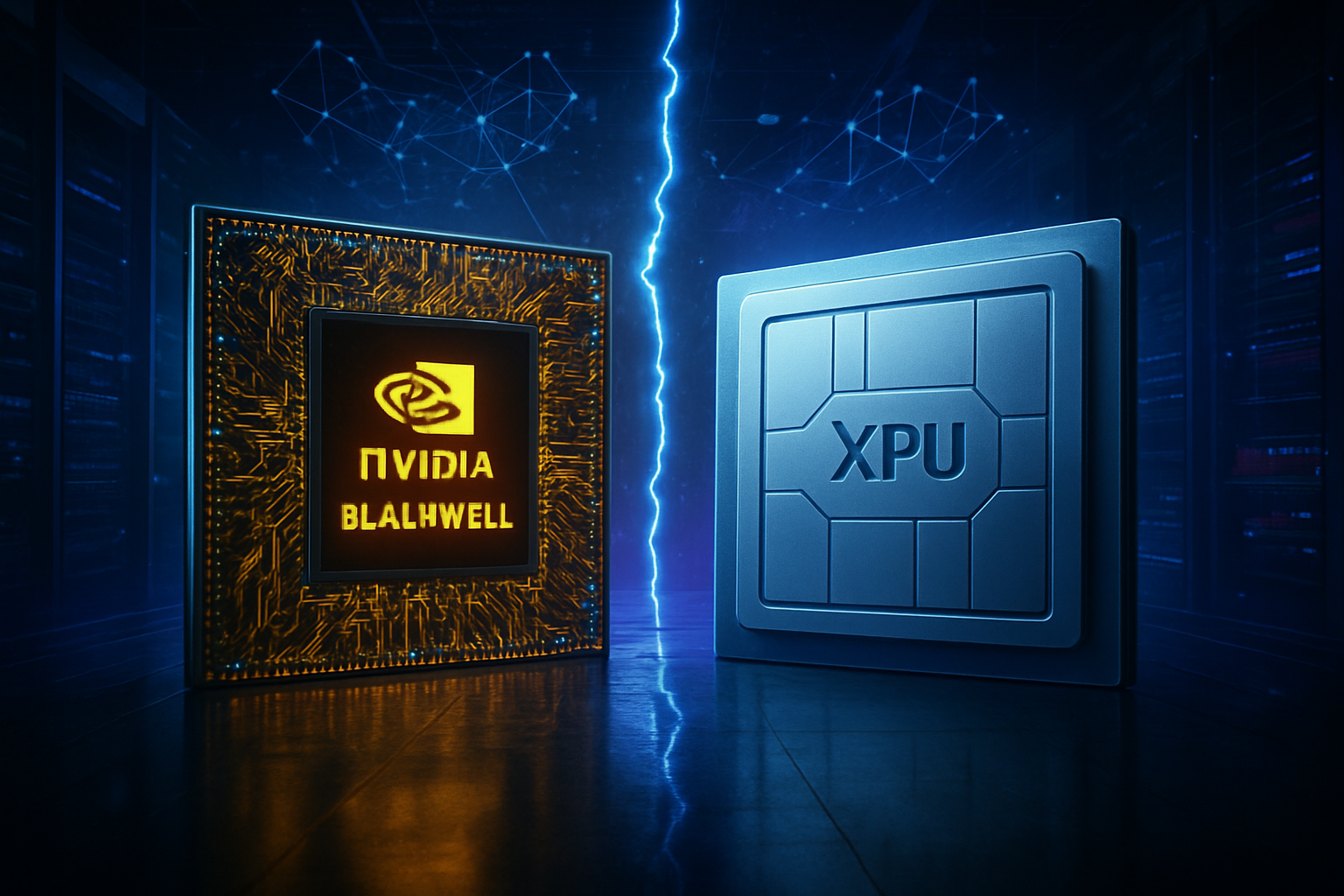
    As of late 2025, the artificial intelligence landscape continues its unprecedented expansion, with semiconductor giants Nvidia (NASDAQ: NVDA) and Broadcom (NASDAQ: AVGO) firmly established as the "AI favorites." These companies, through distinct yet complementary strategies, are not merely supplying components; they are architecting the very infrastructure upon which the global AI revolution is being built. Nvidia dominates the general-purpose AI accelerator market with its comprehensive full-stack ecosystem, while Broadcom excels in custom AI silicon and high-speed networking solutions critical for hyperscale data centers. Their innovations are driving the rapid advancements in AI, from the largest language models to sophisticated autonomous systems, solidifying their indispensable roles in shaping the future of technology.

    The Technical Backbone: Nvidia's Full Stack vs. Broadcom's Specialized Infrastructure

    Both Nvidia and Broadcom are pushing the boundaries of what's technically possible in AI, albeit through different avenues. Their latest offerings showcase significant leaps from previous generations and carve out unique competitive advantages.

    Nvidia's approach is a full-stack ecosystem, integrating cutting-edge hardware with a robust software platform. At the heart of its hardware innovation is the Blackwell architecture, exemplified by the GB200. Unveiled at GTC 2024, Blackwell represents a revolutionary leap for generative AI, featuring 208 billion transistors and combining two large dies into a unified GPU via a 10 terabit-per-second (TB/s) NVIDIA High-Bandwidth Interface (NV-HBI). It introduces a Second-Generation Transformer Engine with FP4 support, delivering up to 30 times faster real-time trillion-parameter LLM inference and 25 times more energy efficiency than its Hopper predecessor. The Nvidia H200 GPU, an upgrade to the Hopper-architecture H100, focuses on memory and bandwidth, offering 141GB of HBM3e memory and 4.8 TB/s bandwidth, making it ideal for memory-bound AI and HPC workloads. These advancements significantly outpace previous GPU generations by integrating more transistors, higher bandwidth interconnects, and specialized AI processing units.

    Crucially, Nvidia's hardware is underpinned by its CUDA platform. The recent CUDA 13.1 release introduces the "CUDA Tile" programming model, a fundamental shift that abstracts low-level hardware details, simplifying GPU programming and potentially making future CUDA code more portable. This continuous evolution of CUDA, along with libraries like cuDNN and TensorRT, maintains Nvidia's formidable software moat, which competitors like AMD (NASDAQ: AMD) with ROCm and Intel (NASDAQ: INTC) with OpenVINO are striving to bridge. Nvidia's specialized AI software, such as NeMo for generative AI, Omniverse for industrial digital twins, BioNeMo for drug discovery, and the open-source Nemotron 3 family of models, further extends its ecosystem, offering end-to-end solutions that are often lacking in competitor offerings. Initial reactions from the AI community highlight Blackwell as revolutionary and CUDA Tile as the "most substantial advancement" to the platform in two decades, solidifying Nvidia's dominance.

    Broadcom, on the other hand, specializes in highly customized solutions and the critical networking infrastructure for AI. Its custom AI chips (XPUs), such as those co-developed with Google (NASDAQ: GOOGL) for its Tensor Processing Units (TPUs) and Meta (NASDAQ: META) for its MTIA chips, are Application-Specific Integrated Circuits (ASICs) tailored for high-efficiency, low-power AI inference and training. Broadcom's innovative 3.5D eXtreme Dimension System in Package (XDSiP™) platform integrates over 6000 mm² of silicon and up to 12 HBM stacks into a single package, utilizing Face-to-Face (F2F) 3.5D stacking for 7x signal density and 10x power reduction compared to Face-to-Back approaches. This custom silicon offers optimized performance-per-watt and lower Total Cost of Ownership (TCO) for hyperscalers, providing a compelling alternative to general-purpose GPUs for specific workloads.

    Broadcom's high-speed networking solutions are equally vital. The Tomahawk series (e.g., Tomahawk 6, the industry's first 102.4 Tbps Ethernet switch) and Jericho series (e.g., Jericho 4, offering 51.2 Tbps capacity and 3.2 Tbps HyperPort technology) provide the ultra-low-latency, high-throughput interconnects necessary for massive AI compute clusters. The Trident 5-X12 chip even incorporates an on-chip neural-network inference engine, NetGNT, for real-time traffic pattern detection and congestion control. Broadcom's leadership in optical interconnects, including VCSEL, EML, and Co-Packaged Optics (CPO) like the 51.2T Bailly, addresses the need for higher bandwidth and power efficiency over longer distances. These networking advancements are crucial for knitting together thousands of AI accelerators, often providing superior latency and scalability compared to proprietary interconnects like Nvidia's NVLink for large-scale, open Ethernet environments. The AI community recognizes Broadcom as a "foundational enabler" of AI infrastructure, with its custom solutions eroding Nvidia's pricing power and fostering a more competitive market.

    Reshaping the AI Landscape: Impact on Companies and Competitive Dynamics

    The innovations from Nvidia and Broadcom are profoundly reshaping the competitive landscape for AI companies, tech giants, and startups, creating both immense opportunities and significant strategic challenges.

    Nvidia's full-stack AI ecosystem provides a powerful strategic advantage, creating a strong ecosystem lock-in. For AI companies (general), access to Nvidia's powerful GPUs (Blackwell, H200) and comprehensive software (CUDA, NeMo, Omniverse, BioNeMo, Nemotron 3) accelerates development and deployment, lowering the initial barrier to entry for AI innovation. However, the high cost of top-tier Nvidia hardware and potential vendor lock-in remain significant challenges, especially for startups looking to scale rapidly.

    Tech giants like Google (NASDAQ: GOOGL), Microsoft (NASDAQ: MSFT), Meta (NASDAQ: META), and Amazon (NASDAQ: AMZN) are engaged in complex "build vs. buy" decisions. While they continue to rely on Nvidia's GPUs for demanding AI training due to their unmatched performance and mature ecosystem, many are increasingly pursuing a "build" strategy by developing custom AI chips (ASICs/XPUs) to optimize performance, power efficiency, and cost for their specific workloads. This is where Broadcom (NASDAQ: AVGO) becomes a critical partner, supplying components and expertise for these custom solutions, such as Google's TPUs and Meta's MTIA chips. Broadcom's estimated 70% share of the custom AI ASIC market positions it as the clear number two AI compute provider behind Nvidia. This diversification away from general-purpose GPUs can temper Nvidia's long-term pricing power and foster a more competitive market for large-scale, specialized AI deployments.

    Startups benefit from Nvidia's accessible software tools and cloud-based offerings, which can lower the initial barrier to entry for AI development. However, they face intense competition from well-funded tech giants that can afford to invest heavily in both Nvidia's and Broadcom's advanced technologies, or develop their own custom silicon. Broadcom's custom solutions could open niche opportunities for startups specializing in highly optimized, energy-efficient AI applications if they can secure partnerships with hyperscalers or leverage tailored hardware.

    The competitive implications are significant. Nvidia's (NASDAQ: NVDA) market share in AI accelerators (estimated over 80%) remains formidable, driven by its full-stack innovation and ecosystem lock-in. Its integrated platform is positioned as the essential infrastructure for "AI factories." However, Broadcom's (NASDAQ: AVGO) custom silicon offerings enable hyperscalers to reduce reliance on a single vendor and achieve greater control over their AI hardware destiny, leading to potential cost savings and performance optimization for their unique needs. The rapid expansion of the custom silicon market, propelled by Broadcom's collaborations, could challenge Nvidia's traditional GPU sales by 2026, with Broadcom's ASICs offering up to 75% cost savings and 50% lower power consumption for certain workloads. Broadcom's dominance in high-speed Ethernet switches and optical interconnects also makes it indispensable for building the underlying infrastructure of large AI data centers, enabling scalable and efficient AI operations, and benefiting from the shift towards open Ethernet standards over Nvidia's InfiniBand. This dynamic interplay fosters innovation, offers diversified solutions, and signals a future where specialized hardware and integrated, efficient systems will increasingly define success in the AI landscape.

    Broader Significance: AI as the New Industrial Revolution

    The strategies and products of Nvidia and Broadcom signify more than just technological advancements; they represent the foundational pillars of what many are calling the new industrial revolution driven by AI. Their contributions fit into a broader AI landscape characterized by unprecedented scale, specialization, and the pervasive integration of intelligent systems.

    Nvidia's (NASDAQ: NVDA) vision of AI as an "industrial infrastructure," akin to electricity or cloud computing, underscores its foundational role. By pioneering GPU-accelerated computing and establishing the CUDA platform as the industry standard, Nvidia transformed the GPU from a mere graphics processor into the indispensable engine for AI training and complex simulations. This has had a monumental impact on AI development, drastically reducing the time needed to train neural networks and process vast datasets, thereby enabling the development of larger and more complex AI models. Nvidia's full-stack approach, from hardware to software (NeMo, Omniverse), fosters an ecosystem where developers can push the boundaries of AI, leading to breakthroughs in autonomous vehicles, robotics, and medical diagnostics. This echoes the impact of early computing milestones, where foundational hardware and software platforms unlocked entirely new fields of scientific and industrial endeavor.

    Broadcom's (NASDAQ: AVGO) significance lies in enabling the hyperscale deployment and optimization of AI. Its custom ASICs allow major cloud providers to achieve superior efficiency and cost-effectiveness for their massive AI operations, particularly for inference. This specialization is a key trend in the broader AI landscape, moving beyond a "one-size-fits-all" approach with general-purpose GPUs towards workload-specific hardware. Broadcom's high-speed networking solutions are the critical "plumbing" that connect tens of thousands to millions of AI accelerators into unified, efficient computing clusters. This ensures the necessary speed and bandwidth for distributed AI workloads, a scale previously unimaginable. The shift towards specialized hardware, partly driven by Broadcom's success with custom ASICs, parallels historical shifts in computing, such as the move from general-purpose CPUs to GPUs for specific compute-intensive tasks, and even the evolution seen in cryptocurrency mining from GPUs to purpose-built ASICs.

    However, this rapid growth and dominance also raise potential concerns. The significant market concentration, with Nvidia holding an estimated 80-95% market share in AI chips, has led to antitrust investigations and raises questions about vendor lock-in and pricing power. While Broadcom provides a crucial alternative in custom silicon, the overall reliance on a few key suppliers creates supply chain vulnerabilities, exacerbated by intense demand, geopolitical tensions, and export restrictions. Furthermore, the immense energy consumption of AI clusters, powered by these advanced chips, presents a growing environmental and operational challenge. While both companies are working on more energy-efficient designs (e.g., Nvidia's Blackwell platform, Broadcom's co-packaged optics), the sheer scale of AI infrastructure means that overall energy consumption remains a significant concern for sustainability. These concerns necessitate careful consideration as AI continues its exponential growth, ensuring that the benefits of this technological revolution are realized responsibly and equitably.

    The Road Ahead: Future Developments and Expert Predictions

    The future of AI semiconductors, largely charted by Nvidia and Broadcom, promises continued rapid innovation, expanding applications, and evolving market dynamics.

    Nvidia's (NASDAQ: NVDA) near-term developments include the continued rollout of its Blackwell generation GPUs and further enhancements to its CUDA platform. The company is actively launching new AI microservices, particularly targeting vertical markets like healthcare to improve productivity workflows in diagnostics, drug discovery, and digital surgery. Long-term, Nvidia is already developing the next-generation Rubin architecture beyond Blackwell. Its strategy involves evolving beyond just chip design to a more sophisticated business, emphasizing physical AI through robotics and autonomous systems, and agentic AI capable of perceiving, reasoning, planning, and acting autonomously. Nvidia is also exploring deeper integration with advanced memory technologies and engaging in strategic partnerships for next-generation personal computing and 6G development. Experts largely predict Nvidia will remain the dominant force in AI accelerators, with Bank of America projecting significant growth in AI semiconductor sales through 2026, driven by its full-stack approach and deep ecosystem lock-in. However, challenges include potential market saturation by mid-2025 leading to cyclical downturns, intensifying competition in inference, and navigating geopolitical trade policies.

    Broadcom's (NASDAQ: AVGO) near-term focus remains on its custom AI chips (XPUs) and high-speed networking solutions for hyperscale cloud providers. It is transitioning to offering full "system sales," providing integrated racks with multiple components, and leveraging acquisitions like VMware to offer virtualization and cloud infrastructure software with new AI features. Broadcom's significant multi-billion dollar orders for custom ASICs and networking components, including a substantial collaboration with OpenAI for custom AI accelerators and networking systems (deploying from late 2026 to 2029), imply substantial future revenue visibility. Long-term, Broadcom will continue to advance its custom ASIC offerings and optical interconnect solutions (e.g., 1.6-terabit-per-second components) to meet the escalating demands of AI infrastructure. The company aims to strengthen its position as hyperscalers increasingly seek tailored solutions, and to capture a growing share of custom silicon budgets as customers diversify beyond general-purpose GPUs. J.P. Morgan anticipates explosive growth in Broadcom's AI-related semiconductor revenue, projecting it could reach $55-60 billion by fiscal year 2026 and potentially surpass $100 billion by fiscal year 2027. Some experts even predict Broadcom could outperform Nvidia by 2030, particularly as the AI market shifts more towards inference, where custom ASICs can offer greater efficiency.

    Potential applications and use cases on the horizon for both companies are vast. Nvidia's advancements will continue to power breakthroughs in generative AI, autonomous vehicles (NVIDIA DRIVE Hyperion), robotics (Isaac GR00T Blueprint), and scientific computing. Broadcom's infrastructure will be fundamental to scaling these applications in hyperscale data centers, enabling the massive LLMs and proprietary AI stacks of tech giants. The overarching challenges for both companies and the broader industry include ensuring sufficient power availability for data centers, maintaining supply chain resilience amidst geopolitical tensions, and managing the rapid pace of technological innovation. Experts predict a long "AI build-out" phase, spanning 8-10 years, as traditional IT infrastructure is upgraded for accelerated and AI workloads, with a significant shift from AI model training to broader inference becoming a key trend.

    A New Era of Intelligence: Comprehensive Wrap-up

    Nvidia (NASDAQ: NVDA) and Broadcom (NASDAQ: AVGO) stand as the twin titans of the AI semiconductor era, each indispensable in their respective domains, collectively propelling artificial intelligence into its next phase of evolution. Nvidia, with its dominant GPU architectures like Blackwell and its foundational CUDA software platform, has cemented its position as the full-stack leader for AI training and general-purpose acceleration. Its ecosystem, from specialized software like NeMo and Omniverse to open models like Nemotron 3, ensures that it remains the go-to platform for developers pushing the boundaries of AI.

    Broadcom, on the other hand, has strategically carved out a crucial niche as the backbone of hyperscale AI infrastructure. Through its highly customized AI chips (XPUs/ASICs) co-developed with tech giants and its market-leading high-speed networking solutions (Tomahawk, Jericho, optical interconnects), Broadcom enables the efficient and scalable deployment of massive AI clusters. It addresses the critical need for optimized, cost-effective, and power-efficient silicon for inference and the robust "plumbing" that connects millions of accelerators.

    The significance of their contributions cannot be overstated. They are not merely components suppliers but architects of the "AI factory," driving innovation, accelerating development, and reshaping competitive dynamics across the tech industry. While Nvidia's dominance in general-purpose AI is undeniable, Broadcom's rise signifies a crucial trend towards specialization and diversification in AI hardware, offering alternatives that mitigate vendor lock-in and optimize for specific workloads. Challenges remain, including market concentration, supply chain vulnerabilities, and the immense energy consumption of AI infrastructure.

    As we look ahead to the coming weeks and months, watch for continued rapid iteration in GPU architectures and software platforms from Nvidia, further solidifying its ecosystem. For Broadcom, anticipate more significant design wins for custom ASICs with hyperscalers and ongoing advancements in high-speed, power-efficient networking solutions that will underpin the next generation of AI data centers. The complementary strategies of these two giants will continue to define the trajectory of AI, making them essential players to watch in this transformative era.


    This content is intended for informational purposes only and represents analysis of current AI developments.

    TokenRing AI delivers enterprise-grade solutions for multi-agent AI workflow orchestration, AI-powered development tools, and seamless remote collaboration platforms.
    For more information, visit https://www.tokenring.ai/.

  • Trump’s AI Energy Vision: A Deregulated Future Powered by Fossil Fuels

    Trump’s AI Energy Vision: A Deregulated Future Powered by Fossil Fuels

    Washington D.C., December 12, 2025 – Former President Donald Trump's administration is rapidly shaping a new landscape for artificial intelligence and energy, characterized by an aggressive push for deregulation, a strong emphasis on fossil fuels, and a streamlined approach to building the vast energy infrastructure required by modern AI. With recent executive orders issued in January, July, and a pivotal one in December 2025, the administration is moving to establish a unified national AI framework while simultaneously accelerating the development of data centers and their power sources, largely through conventional energy means. This dual focus aims to cement American leadership in AI, but it also signals a significant departure from previous clean energy trajectories, setting the stage for potential clashes over environmental policy and federal versus state authority.

    The immediate significance of these integrated policies is profound, suggesting a future where the prodigious energy demands of AI are met with a "drill, baby, drill" mentality, rather than a "green" one. The administration's "America's AI Action Plan" and its accompanying executive orders are designed to remove perceived bureaucratic hurdles, allowing for the rapid expansion of AI infrastructure. However, critics are quick to point out that this acceleration comes at a potential cost to environmental sustainability and could ignite constitutional battles over the preemption of state-level AI regulations, creating a complex and potentially contentious path forward for the nation's technological and energy future.

    Policy Frameworks and Technical Implications

    The cornerstone of the Trump administration's strategy for AI and energy is a series of interconnected policy initiatives designed to foster rapid innovation and infrastructure development. The "America's AI Action Plan" serves as a comprehensive strategic framework, explicitly identifying AI as a transformative technology that necessitates significant expansion of energy generation and grid capacity. This plan is not merely theoretical; it is being actively implemented through executive actions that directly impact the technical and operational environment for AI.

    Key among these is Executive Order 14179, "Removing Barriers to American Leadership in Artificial Intelligence," issued in January 2025, which laid the groundwork for the National AI Action Plan. This was followed by Executive Order 14318, "Accelerating Federal Permitting of Data Center Infrastructure," in July 2025, a critical directive aimed at streamlining the notoriously slow permitting process for the massive data centers that are the physical backbone of AI. This order directly addresses the technical bottleneck of infrastructure build-out, recognizing that the sheer computational power required by advanced AI models translates into colossal energy demands. The most recent and arguably most impactful is the Executive Order "Ensuring a National Policy Framework for Artificial Intelligence," issued in December 2025. This order seeks to establish a single national regulatory framework for AI, explicitly preempting potentially "cumbersome" state-level AI laws. Technically, this aims to prevent a fragmented regulatory landscape that could stifle the development and deployment of AI technologies, ensuring a consistent environment for innovation.

    These policies diverge sharply from previous approaches that often sought to balance technological advancement with environmental regulations and decentralized governance. The "Genesis Mission" by the Department of Energy (DOE), allocating $320 million for AI for science projects, further underscores a national commitment to leveraging AI for scientific discovery, particularly in energy dominance and national security, by integrating an AI platform to harness federal scientific datasets. Furthermore, the "Speed to Power" initiative directly addresses the technical challenge of grid capacity, encouraging federal lands to host more AI-ready data centers with on-site generation and storage. This aggressive stance, prioritizing speed and deregulation, aims to outpace global competitors, particularly China, by removing what the administration views as unnecessary obstacles to technological and energy expansion. Initial reactions from the AI research community are mixed, with some welcoming the push for accelerated development and infrastructure, while others express concern over the potential for unchecked growth and the preemption of ethical and safety regulations at the state level.

    Impact on AI Companies, Tech Giants, and Startups

    The Trump administration's AI energy plans are poised to create significant ripple effects across the technology and energy sectors, presenting both unprecedented opportunities and substantial challenges for companies of all sizes. The explicit prioritization of fossil fuels and the streamlining of permitting processes for energy infrastructure and data centers suggest a clear set of beneficiaries.

    Companies involved in traditional energy production, such as major oil and gas corporations like ExxonMobil (NYSE: XOM) and Chevron (NYSE: CVX), stand to gain significantly from reduced regulations and increased drilling permits. Their resources will be crucial in meeting the expanded energy demands of a rapidly growing AI infrastructure. Similarly, firms specializing in power grid development and data center construction will likely see a boom in contracts, benefiting from the "Speed to Power" initiative and accelerated federal permitting. This could include construction giants and specialized data center developers.

    For major AI labs and tech giants, the competitive implications are complex. Companies like Google (NASDAQ: GOOGL), Microsoft (NASDAQ: MSFT), and Amazon (NASDAQ: AMZN), which are heavily invested in AI development and operate massive data centers, could benefit from the expedited infrastructure build-out and a unified national AI regulatory framework. This could reduce their operational overhead and accelerate deployment timelines. However, these companies also have significant public commitments to sustainability and renewable energy. A federal policy heavily favoring fossil fuels could create tension between their corporate environmental goals and the national energy strategy, potentially impacting their public image and investor relations.

    Startups in the AI sector might find it easier to scale their operations due to the increased availability of data center capacity and potentially lower energy costs, assuming fossil fuel prices remain competitive. However, startups focused on green AI or AI-driven energy efficiency solutions might face a less favorable policy environment compared to an administration prioritizing clean energy. The potential for a federal preemption of state AI laws could also create a more predictable, albeit potentially less nuanced, regulatory landscape for all AI companies, reducing the complexity of compliance across different jurisdictions. This could disrupt existing products or services that were designed with specific state regulations in mind, requiring adjustments to their operational and ethical frameworks.

    Wider Significance and Broader Implications

    The Trump administration's integrated AI and energy strategy marks a pivotal moment in the broader AI landscape, signaling a clear shift towards prioritizing rapid technological advancement and economic competitiveness, even at the potential expense of environmental considerations. This approach fits into a global trend of nations vying for AI supremacy, but it carves out a distinct path by explicitly linking AI's insatiable energy appetite to a deregulated, fossil-fuel-centric energy policy.

    The economic impacts are likely to be substantial. Proponents argue that streamlining regulations and boosting traditional energy production will lead to lower energy costs, fueling a domestic AI boom and creating jobs in both the energy and technology sectors. However, critics raise concerns about the potential for increased household energy costs if the clean energy transition is stalled, and the risk to existing private investments in renewable energy, which could see their incentives curtailed or eliminated. The withdrawal from the Paris Climate Accord, a stated goal, would also isolate the U.S. from international climate efforts, potentially leading to trade disputes and diplomatic tensions.

    Environmental concerns are paramount. A robust emphasis on fossil fuels, coupled with regulatory rollbacks on emissions and drilling, could significantly increase greenhouse gas emissions and exacerbate climate change. This contrasts sharply with previous AI milestones that often emphasized sustainable development and ethical AI. The rapid build-out of data centers, powered by conventional energy, could lock in carbon-intensive infrastructure for decades. Societal impacts could include increased air and water pollution in communities near expanded drilling sites and power plants, raising questions about environmental justice. Furthermore, the executive order to preempt state AI laws, while aiming for national consistency, raises significant concerns about democratic processes and the ability of states to address local ethical and safety concerns related to AI. This could lead to a less diverse and potentially less robust regulatory ecosystem for AI governance.

    Future Developments and Expert Predictions

    Looking ahead, the Trump administration's AI energy plans are expected to drive several significant near-term and long-term developments. In the immediate future, we can anticipate accelerated approval processes for new data centers and associated energy infrastructure, particularly in regions with abundant fossil fuel resources. The "Speed to Power" initiative will likely see a rapid deployment of new power generation capacity, potentially including natural gas plants and even a renewed focus on nuclear energy, to meet the burgeoning demands of AI.

    In the long term, this strategy could solidify the U.S. as a leader in AI development, albeit one with a distinct energy profile. Potential applications and use cases on the horizon include AI-driven optimization of traditional energy grids, enhanced oil and gas exploration, and AI for national security applications, particularly in defense and intelligence, where a less risk-averse approach is anticipated. The "Genesis Mission" suggests a future where AI accelerates scientific discovery across various fields, leveraging massive federal datasets.

    However, significant challenges need to be addressed. The legal battle over federal preemption of state AI laws is almost certainly going to escalate, creating regulatory uncertainty until resolved. Environmental groups and states committed to clean energy are expected to mount strong opposition to the administration's energy policies. Technically, ensuring the stability and resilience of an energy grid rapidly expanding to meet AI demands, especially with a reliance on traditional sources, will be a critical engineering challenge. Experts predict that while the immediate acceleration of AI infrastructure will be palpable, the long-term sustainability and global competitiveness of a fossil-fuel-dependent AI ecosystem will face increasing scrutiny and potential headwinds from international climate policies and evolving market preferences for green technologies.

    Comprehensive Wrap-up and Outlook

    Former President Trump's AI energy plans represent a bold and potentially transformative direction for American technology and industry. The key takeaways include a fervent commitment to AI leadership through deregulation, a pronounced pivot back to fossil fuels, and an aggressive strategy to rapidly expand the energy infrastructure necessary for advanced AI. The recent executive orders in January, July, and December 2025 underscore the administration's resolve to implement this vision swiftly, fundamentally reshaping both the regulatory and physical landscapes of AI and energy.

    This development holds significant historical weight in the context of AI's evolution. It positions the U.S. to potentially outpace competitors in raw AI compute power and deployment speed, but it also marks a critical divergence from the global trend towards sustainable and ethically governed AI. The decision to prioritize speed and energy dominance via traditional sources over environmental sustainability sets a precedent that will be debated and analyzed for years to come.

    In the coming weeks and months, observers should closely watch several key areas. The legal challenges to federal AI preemption will be paramount, as will the pace of new data center and energy infrastructure approvals. The response from clean energy industries and international partners to the U.S.'s energy policy shifts will also be crucial indicators of the long-term viability and global acceptance of this strategy. The interplay between rapid AI innovation and its environmental footprint will remain a central theme, defining the trajectory of AI development under this administration.


    This content is intended for informational purposes only and represents analysis of current AI developments.

    TokenRing AI delivers enterprise-grade solutions for multi-agent AI workflow orchestration, AI-powered development tools, and seamless remote collaboration platforms.
    For more information, visit https://www.tokenring.ai/.

  • The AI-Driven Data Center Boom: Igniting a Domestic Semiconductor Manufacturing Revolution

    The AI-Driven Data Center Boom: Igniting a Domestic Semiconductor Manufacturing Revolution

    The global technology landscape is undergoing a profound transformation, with the relentless expansion of the data center industry, fueled primarily by the insatiable demands of artificial intelligence (AI) and machine learning (ML), creating an unprecedented surge in demand for advanced semiconductors. This critical synergy is not merely an economic phenomenon but a strategic imperative, driving nations worldwide to prioritize and heavily invest in domestic semiconductor manufacturing, aiming for self-sufficiency and robust supply chain resilience. As of late 2025, this interplay is reshaping industrial policies, fostering massive investments, and accelerating innovation at a scale unseen in decades.

    The exponential growth of cloud computing, digital transformation initiatives across all sectors, and the rapid deployment of generative AI applications are collectively propelling the data center market to new heights. Valued at approximately $215 billion in 2023, the market is projected to reach $450 billion by 2030, with some estimates suggesting it could nearly triple to $776 billion by 2034. This expansion, particularly in hyperscale data centers, which have seen their capacity double since 2020, necessitates a foundational shift in how critical components, especially advanced chips, are sourced and produced. The implications are clear: the future of AI and digital infrastructure hinges on a secure and robust supply of cutting-edge semiconductors, sparking a global race to onshore manufacturing capabilities.

    The Technical Core: AI's Insatiable Appetite for Advanced Silicon

    The current data center boom is fundamentally distinct from previous cycles due to the unique and demanding nature of AI workloads. Unlike traditional computing, AI, especially generative AI, requires immense computational power, high-speed data processing, and specialized memory solutions. This translates into an unprecedented demand for a specific class of advanced semiconductors:

    Graphics Processing Units (GPUs) and AI Application-Specific Integrated Circuits (ASICs): GPUs remain the cornerstone of AI infrastructure, with one leading manufacturer capturing an astounding 93% of the server GPU revenue in 2024. GPU revenue is forecasted to soar from $100 billion in 2024 to $215 billion by 2030. Concurrently, AI ASICs are rapidly gaining traction, particularly as hyperscalers like Alphabet (NASDAQ: GOOGL), Amazon (NASDAQ: AMZN), and Microsoft (NASDAQ: MSFT) develop custom silicon to optimize performance, reduce latency, and lessen their reliance on third-party manufacturers. Revenue from AI ASICs is expected to reach almost $85 billion by 2030, marking a significant shift towards proprietary hardware solutions.

    Advanced Memory Solutions: To handle the vast datasets and complex models of AI, High Bandwidth Memory (HBM) and Graphics Double Data Rate (GDDR) are crucial. HBM, in particular, is experiencing explosive growth, with revenue projected to surge by up to 70% in 2025, reaching an impressive $21 billion. These memory technologies are vital for providing the necessary throughput to keep AI accelerators fed with data.

    Networking Semiconductors: The sheer volume of data moving within and between AI-powered data centers necessitates highly advanced networking components. Ethernet switches, optical interconnects, SmartNICs, and Data Processing Units (DPUs) are all seeing accelerated development and deployment, with networking semiconductor growth projected at 13% in 2025 to overcome latency and throughput bottlenecks. Furthermore, Wide Bandgap (WBG) materials like Silicon Carbide (SiC) and Gallium Nitride (GaN) are increasingly being adopted in data center power supplies. These materials offer superior efficiency, operate at higher temperatures and voltages, and significantly reduce power loss, contributing to more energy-efficient and sustainable data center operations.

    The initial reaction from the AI research community and industry experts has been one of intense focus on hardware innovation. The limitations of current silicon architectures for increasingly complex AI models are pushing the boundaries of chip design, packaging technologies, and cooling solutions. This drive for specialized, high-performance, and energy-efficient hardware represents a significant departure from the more generalized computing needs of the past, signaling a new era of hardware-software co-design tailored specifically for AI.

    Competitive Implications and Market Dynamics

    This profound synergy between data center expansion and semiconductor demand is creating significant shifts in the competitive landscape, benefiting certain companies while posing challenges for others.

    Companies Standing to Benefit: Semiconductor manufacturing giants like NVIDIA (NASDAQ: NVDA), a dominant player in the GPU market, and Intel (NASDAQ: INTC), with its aggressive foundry expansion plans, are direct beneficiaries. Similarly, contract manufacturers like Taiwan Semiconductor Manufacturing Company (TSMC) (NYSE: TSM), though facing pressure for geographical diversification, remain critical. Hyperscale cloud providers such as Alphabet, Amazon, Microsoft, and Meta (NASDAQ: META) are investing hundreds of billions in capital expenditure (CapEx) to build out their AI infrastructure, directly fueling chip demand. These tech giants are also strategically developing their custom AI ASICs, a move that grants them greater control over performance, cost, and supply chain, potentially disrupting the market for off-the-shelf AI accelerators.

    Competitive Implications: The race to develop and deploy advanced AI chips is intensifying competition among major AI labs and tech companies. Companies with strong in-house chip design capabilities or strategic partnerships with leading foundries gain a significant competitive advantage. This push for domestic manufacturing also introduces new players and expands existing facilities, leading to increased competition in fabrication. The market positioning is increasingly defined by access to advanced fabrication capabilities and a resilient supply chain, making geopolitical stability and national industrial policies critical factors.

    Potential Disruption: The trend towards custom silicon by hyperscalers could disrupt traditional semiconductor vendors who primarily offer standard products. While demand remains high for now, a long-term shift could alter market dynamics. Furthermore, the immense capital required for advanced fabrication plants (fabs) and the complexity of these operations mean that only a few nations and a handful of companies can realistically compete at the leading edge. This could lead to a consolidation of advanced chip manufacturing capabilities globally, albeit with a stronger emphasis on regional diversification than before.

    Wider Significance in the AI Landscape

    The interplay between data center growth and domestic semiconductor manufacturing is not merely an industry trend; it is a foundational pillar supporting the broader AI landscape and global technological sovereignty. This development fits squarely into the overarching trend of AI becoming the central nervous system of the digital economy, demanding purpose-built infrastructure from the ground up.

    Impacts: Economically, this synergy is driving unprecedented investment. Private sector commitments in the US alone to revitalize the chipmaking ecosystem have exceeded $500 billion by July 2025, catalyzed by the CHIPS and Science Act enacted in August 2022, which allocated $280 billion to boost domestic semiconductor R&D and manufacturing. This initiative aims to triple domestic chipmaking capacity by 2032. Similarly, China, through its "Made in China 2025" initiative and mandates requiring publicly owned data centers to source at least 50% of chips domestically, is investing tens of billions to secure its AI future and reduce reliance on foreign technology. This creates jobs, stimulates innovation, and strengthens national economies.

    Potential Concerns: While beneficial, this push also raises concerns. The enormous energy consumption of both data centers and advanced chip manufacturing facilities presents significant environmental challenges, necessitating innovation in green technologies and renewable energy integration. Geopolitical tensions exacerbate the urgency for domestic production, but also highlight the risks of fragmentation in global technology standards and supply chains. Comparisons to previous AI milestones, such as the development of deep learning or large language models, reveal that while those were breakthroughs in software and algorithms, the current phase is fundamentally about the hardware infrastructure that enables these advancements to scale and become pervasive.

    Future Developments and Expert Predictions

    Looking ahead, the synergy between data centers and domestic semiconductor manufacturing is poised for continued rapid evolution, driven by relentless innovation and strategic investments.

    Expected Near-term and Long-term Developments: In the near term, we can expect to see a continued surge in data center construction, particularly for AI-optimized facilities featuring advanced cooling systems and high-density server racks. Investment in new fabrication plants will accelerate, supported by government subsidies globally. For instance, OpenAI and Oracle (NYSE: ORCL) announced plans in July 2025 to add 4.5 gigawatts of US data center capacity, underscoring the scale of expansion. Long-term, the focus will shift towards even more specialized AI accelerators, potentially integrating optical computing or quantum computing elements, and greater emphasis on sustainable manufacturing practices and energy-efficient data center operations. The development of advanced packaging technologies, such as 3D stacking, will become critical to overcome the physical limitations of 2D chip designs.

    Potential Applications and Use Cases: The horizon promises even more powerful and pervasive AI applications, from hyper-personalized services and autonomous systems to advanced scientific research and drug discovery. Edge AI, powered by increasingly sophisticated but power-efficient chips, will bring AI capabilities closer to the data source, enabling real-time decision-making in diverse environments, from smart factories to autonomous vehicles.

    Challenges: Addressing the skilled workforce shortage in both semiconductor manufacturing and data center operations will be paramount. The immense capital expenditure required for leading-edge fabs, coupled with the long lead times for construction and ramp-up, presents a significant barrier to entry. Furthermore, the escalating energy consumption of these facilities demands innovative solutions for sustainability and renewable energy integration. Experts predict that the current trajectory will continue, with a strong emphasis on national self-reliance in critical technologies, leading to a more diversified but potentially more complex global semiconductor supply chain. The competition for talent and technological leadership will intensify, making strategic partnerships and international collaborations crucial for sustained progress.

    A New Era of Technological Sovereignty

    The burgeoning data center industry, powered by the transformative capabilities of artificial intelligence, is unequivocally driving a new era of domestic semiconductor manufacturing. This intricate interplay represents one of the most significant technological and economic shifts of our time, moving beyond mere supply and demand to encompass national security, economic resilience, and global leadership in the digital age.

    The key takeaway is that AI is not just a software revolution; it is fundamentally a hardware revolution that demands an entirely new level of investment and strategic planning in semiconductor production. The past few years, particularly since the enactment of initiatives like the US CHIPS Act and China's aggressive investment strategies, have set the stage for a prolonged period of growth and competition in chipmaking. This development's significance in AI history cannot be overstated; it marks the point where the abstract advancements of AI algorithms are concretely tied to the physical infrastructure that underpins them.

    In the coming weeks and months, observers should watch for further announcements regarding new fabrication plant investments, particularly in regions receiving government incentives. Keep an eye on the progress of custom silicon development by hyperscalers, as this will indicate the evolving competitive landscape. Finally, monitoring the ongoing geopolitical discussions around technology trade and supply chain resilience will provide crucial insights into the long-term trajectory of this domestic manufacturing push. This is not just about making chips; it's about building the foundation for the next generation of global innovation and power.


    This content is intended for informational purposes only and represents analysis of current AI developments.

    TokenRing AI delivers enterprise-grade solutions for multi-agent AI workflow orchestration, AI-powered development tools, and seamless remote collaboration platforms.
    For more information, visit https://www.tokenring.ai/.

  • The Wide-Bandgap Revolution: GaN and SiC Power Devices Reshape the Future of Electronics

    The Wide-Bandgap Revolution: GaN and SiC Power Devices Reshape the Future of Electronics

    The semiconductor industry is on the cusp of a profound transformation, driven by the escalating adoption and strategic alliances surrounding next-generation power devices built with Gallium Nitride (GaN) and Silicon Carbide (SiC). These wide-bandgap (WBG) materials are rapidly displacing traditional silicon in high-performance applications, promising unprecedented levels of efficiency, power density, and thermal management. As of December 2025, the convergence of advanced manufacturing techniques, significant cost reductions, and a surge in demand from critical sectors like electric vehicles (EVs), AI data centers, and renewable energy is cementing GaN and SiC's role as foundational technologies for the coming decades.

    This paradigm shift is not merely an incremental improvement; it represents a fundamental rethinking of power electronics design. With their superior inherent properties, GaN and SiC enable devices that can switch faster, operate at higher temperatures, and handle greater power with significantly less energy loss than their silicon counterparts. This immediate significance translates into smaller, lighter, and more energy-efficient systems across a vast array of applications, propelling innovation and addressing pressing global challenges related to energy consumption and sustainability.

    Unpacking the Technical Edge: How GaN and SiC Redefine Power

    The technical advancements in GaN and SiC power devices are multifaceted, focusing on optimizing their intrinsic material properties to push the boundaries of power conversion. Unlike silicon, GaN and SiC possess a wider bandgap, higher electron mobility, and superior thermal conductivity. These characteristics allow them to operate at much higher voltages, frequencies, and temperatures without compromising efficiency or reliability.

    Recent breakthroughs include the mass production of 300mm GaN wafers, a critical step towards cost reduction and broader market penetration in high-power consumer and automotive applications. Similarly, the transition to 8-inch SiC wafers is improving yields and lowering per-device costs. In device architecture, innovations like monolithic bidirectional GaN switches are enabling highly efficient EV onboard chargers that are up to 40% smaller and achieve over 97.5% efficiency. New generations of 1200V SiC MOSFETs boast up to 30% lower switching losses, directly impacting the performance of EV traction inverters and industrial drives. Furthermore, hybrid GaN/SiC integration is supporting ultra-high-voltage and high-frequency power conversion vital for cutting-edge AI data centers and 800V EV drivetrains.

    These advancements fundamentally differ from previous silicon-based approaches by offering a step-change in performance. Silicon's physical limits for high-frequency and high-power applications have been largely reached. GaN and SiC, by contrast, offer lower conduction and switching losses, higher power density, and better thermal performance, which translates directly into smaller form factors, reduced cooling requirements, and significantly higher energy efficiency. The initial reaction from the AI research community and industry experts has been overwhelmingly positive, with many recognizing these materials as essential enablers for next-generation computing and energy infrastructure. The ability to manage power more efficiently at higher frequencies is particularly crucial for AI accelerators and data centers, where power consumption and heat dissipation are enormous challenges.

    Corporate Chessboard: Companies Vying for Wide-Bandgap Dominance

    The rise of GaN and SiC has ignited a fierce competitive landscape and fostered a wave of strategic alliances among semiconductor giants, tech titans, and innovative startups. Companies like Infineon Technologies AG (ETR: IFX), STMicroelectronics (NYSE: STM), Wolfspeed (NYSE: WOLF), ROHM Semiconductor (TYO: 6767), onsemi (NASDAQ: ON), and Navitas Semiconductor (NASDAQ: NVTS) are at the forefront, investing heavily in R&D, manufacturing capacity, and market development.

    These companies stand to benefit immensely from the growing adoption of WBG materials. For instance, Infineon Technologies AG (ETR: IFX) is pioneering 300mm GaN wafers and expanding its SiC production to meet surging demand, particularly from the automotive sector. GlobalFoundries (NASDAQ: GFS) and Navitas Semiconductor (NASDAQ: NVTS) have formed a long-term strategic alliance to bolster U.S.-focused GaN technology and manufacturing for critical high-power applications. Similarly, onsemi (NASDAQ: ON) and Innoscience have entered a deep cooperation to jointly develop high-efficiency GaN power devices, leveraging Innoscience's 8-inch silicon-based GaN process platform. These alliances are crucial for accelerating innovation, scaling production, and securing supply chains in a rapidly expanding market.

    The competitive implications for major AI labs and tech companies are significant. As AI workloads demand ever-increasing computational power, the energy efficiency offered by GaN and SiC in power supply units (PSUs) becomes critical. Companies like NVIDIA Corporation (NASDAQ: NVDA), heavily invested in AI infrastructure, are already partnering with GaN leaders like Innoscience for their 800V DC power supply architectures for AI data centers. This development has the potential to disrupt existing power management solutions, making traditional silicon-based PSUs less competitive in terms of efficiency and form factor. Companies that successfully integrate GaN and SiC into their products will gain a strategic advantage through superior performance, smaller footprints, and reduced operating costs for their customers.

    A Broader Horizon: Impact on AI, Energy, and Global Trends

    The widespread adoption of GaN and SiC power devices extends far beyond individual company balance sheets, fitting seamlessly into broader AI, energy, and global technological trends. These materials are indispensable enablers for the global transition towards a more energy-efficient and sustainable future. Their ability to minimize energy losses is directly contributing to carbon neutrality goals, particularly in energy-intensive sectors.

    In the context of AI, the impact is profound. AI data centers are notorious for their massive energy consumption and heat generation. GaN and SiC-based power supplies and converters dramatically improve the efficiency of power delivery within these centers, reducing rack power loss and cutting facility energy costs. This allows for denser server racks and more powerful AI accelerators, pushing the boundaries of what is computationally feasible. Beyond data centers, these materials are crucial for the rapid expansion of electric vehicles, enabling faster charging, longer ranges, and more compact power electronics. They are also integral to renewable energy systems, enhancing the efficiency of solar inverters, wind turbines, and energy storage solutions, thereby facilitating better grid integration and management.

    Potential concerns, however, include the initial higher cost compared to silicon, the need for specialized manufacturing facilities, and the complexity of designing with these high-frequency devices (e.g., managing EMI and parasitic inductance). Nevertheless, the industry is actively addressing these challenges, with costs reaching near-parity with silicon in 2025 for many applications, and design tools becoming more sophisticated. This shift can be compared to previous semiconductor milestones, such as the transition from germanium to silicon, marking a similar fundamental leap in material science that unlocked new levels of performance and application possibilities.

    The Road Ahead: Charting Future Developments and Applications

    The trajectory for GaN and SiC power devices points towards continued innovation and expanding applications. In the near term, experts predict further advancements in packaging technologies, leading to more integrated power modules that simplify design and improve thermal performance. The development of higher voltage GaN devices, potentially challenging SiC in some 900-1200V segments, is also on the horizon, with research into vertical GaN and new material platforms like GaN-on-Sapphire gaining momentum.

    Looking further out, the potential applications and use cases are vast. Beyond current applications in EVs, data centers, and consumer electronics, GaN and SiC are expected to play a critical role in advanced robotics, aerospace power systems, smart grids, and even medical devices where miniaturization and efficiency are paramount. The continuous drive for higher power density and efficiency will push these materials into new frontiers, enabling devices that are currently impractical with silicon.

    However, challenges remain. Further cost reduction through improved manufacturing processes and economies of scale is crucial for widespread adoption in more cost-sensitive markets. Ensuring long-term reliability and robustness in extreme operating conditions is also a key focus for research and development. Experts predict that the market will see increasing specialization, with GaN dominating high-frequency, mid-to-low voltage applications and SiC retaining its lead in very high-power, high-voltage domains. The coming years will likely witness a consolidation of design best practices and the emergence of standardized modules, making it easier for engineers to integrate these powerful new semiconductors into their designs.

    A New Era of Power: Summarizing the Wide-Bandgap Impact

    In summary, the advancements in GaN and SiC power devices represent a pivotal moment in the history of electronics. These wide-bandgap semiconductors are not just an alternative to silicon; they are a fundamental upgrade, enabling unprecedented levels of efficiency, power density, and thermal performance across a spectrum of industries. From significantly extending the range and reducing the charging time of electric vehicles to dramatically improving the energy efficiency of AI data centers and bolstering renewable energy infrastructure, their impact is pervasive and transformative.

    This development's significance in AI history cannot be overstated. As AI models grow in complexity and computational demand, the ability to power them efficiently and reliably becomes a bottleneck. GaN and SiC provide a critical solution, allowing for the continued scaling of AI technologies without commensurate increases in energy consumption and physical footprint. The ongoing strategic alliances and massive investments from industry leaders underscore the long-term commitment to these materials.

    What to watch for in the coming weeks and months includes further announcements of new product lines, expanded manufacturing capacities, and deeper collaborations between semiconductor manufacturers and end-user industries. The continued downward trend in pricing, coupled with increasing performance benchmarks, will dictate the pace of market penetration. The evolution of design tools and best practices for GaN and SiC integration will also be a key factor in accelerating their adoption. The wide-bandgap revolution is here, and its ripples will be felt across every facet of the tech industry for decades to come.


    This content is intended for informational purposes only and represents analysis of current AI developments.

    TokenRing AI delivers enterprise-grade solutions for multi-agent AI workflow orchestration, AI-powered development tools, and seamless remote collaboration platforms.
    For more information, visit https://www.tokenring.ai/.

  • The AI Infrastructure Arms Race: Specialized Data Centers Become the New Frontier

    The AI Infrastructure Arms Race: Specialized Data Centers Become the New Frontier

    The relentless pursuit of artificial intelligence (AI) advancements is igniting an unprecedented demand for a new breed of digital infrastructure: specialized AI data centers. These facilities, purpose-built to handle the immense computational and energy requirements of modern AI workloads, are rapidly becoming the bedrock of the AI revolution. From training colossal language models to powering real-time analytics, traditional data centers are proving increasingly inadequate, paving the way for a global surge in investment and development. A prime example of this critical infrastructure shift is the proposed $300 million AI data center in Lewiston, Maine, a project emblematic of the industry's pivot towards dedicated AI compute power.

    This monumental investment in Lewiston, set to redevelop the historic Bates Mill No. 3, underscores a broader trend where cities and regions are vying to become hubs for the next generation of industrial powerhouses – those fueled by artificial intelligence. The project, spearheaded by MillCompute, aims to transform the vacant mill into a Tier III AI data center, signifying a commitment to high availability and continuous operation crucial for demanding AI tasks. As AI continues to permeate every facet of technology and business, the race to build and operate these specialized computational fortresses is intensifying, signaling a fundamental reshaping of the digital landscape.

    Engineering the Future: The Technical Demands of AI Data Centers

    The technical specifications and capabilities of specialized AI data centers mark a significant departure from their conventional predecessors. The core difference lies in the sheer computational intensity and the unique hardware required for AI workloads, particularly for deep learning and machine learning model training. Unlike general-purpose servers, AI systems heavily rely on specialized accelerators such as Graphics Processing Units (GPUs) and Tensor Processing Units (TPUs), which are optimized for parallel processing and capable of performing millions of computations per second. This demand for powerful hardware is pushing rack densities from a typical 5-15kW to an astonishing 50-100kW+, with some cutting-edge designs even reaching 250kW per rack.

    Such extreme power densities bring with them unprecedented challenges, primarily in energy consumption and thermal management. Traditional air-cooling systems, once the standard, are often insufficient to dissipate the immense heat generated by these high-performance components. Consequently, AI data centers are rapidly adopting advanced liquid cooling solutions, including direct-to-chip and immersion cooling, which can reduce energy requirements for cooling by up to 95% while simultaneously enhancing performance and extending hardware lifespan. Furthermore, the rapid exchange of vast datasets inherent in AI operations necessitates robust network infrastructure, featuring high-speed, low-latency, and high-bandwidth fiber optic connectivity to ensure seamless communication between thousands of processors.

    The global AI data center market reflects this technical imperative, projected to explode from $236.44 billion in 2025 to $933.76 billion by 2030, at a compound annual growth rate (CAGR) of 31.6%. This exponential growth highlights how current infrastructure is simply not designed to efficiently handle the petabytes of data and complex algorithms that define modern AI. The shift is not merely an upgrade but a fundamental redesign, prioritizing power availability, advanced cooling, and optimized network architectures to unlock the full potential of AI.

    Reshaping the AI Ecosystem: Impact on Companies and Competitive Dynamics

    The proliferation of specialized AI data centers has profound implications for AI companies, tech giants, and startups alike, fundamentally reshaping the competitive landscape. Hyperscalers and cloud computing providers, such as Amazon (NASDAQ: AMZN), Microsoft (NASDAQ: MSFT), Google (NASDAQ: GOOGL), and Meta (NASDAQ: META), are at the forefront of this investment wave, pouring billions into building next-generation AI-optimized infrastructure. These companies stand to benefit immensely by offering scalable, high-performance AI compute resources to a vast customer base, cementing their market positioning as essential enablers of AI innovation.

    For major AI labs and tech companies, access to these specialized data centers is not merely an advantage but a necessity for staying competitive. The ability to quickly train larger, more complex models, conduct extensive research, and deploy sophisticated AI services hinges on having robust, dedicated infrastructure. Companies without direct access or significant investment in such facilities may find themselves at a disadvantage in the race to develop and deploy cutting-edge AI. This development could lead to a further consolidation of power among those with the capital and foresight to invest heavily in AI infrastructure, potentially creating barriers to entry for smaller startups.

    However, specialized AI data centers also create new opportunities. Companies like MillCompute, focusing on developing and operating these facilities, are emerging as critical players in the AI supply chain. Furthermore, the demand for specialized hardware, advanced cooling systems, and energy solutions fuels innovation and growth for manufacturers and service providers in these niche areas. The market is witnessing a strategic realignment where the physical infrastructure supporting AI is becoming as critical as the algorithms themselves, driving new partnerships, acquisitions, and a renewed focus on strategic geographical placement for optimal power and cooling.

    The Broader AI Landscape: Impacts, Concerns, and Milestones

    The increasing demand for specialized AI data centers fits squarely into the broader AI landscape as a critical trend shaping the future of technology. It underscores that the AI revolution is not just about algorithms and software, but equally about the underlying physical infrastructure that makes it possible. This infrastructure boom is driving a projected 165% increase in global data center power demand by 2030, primarily fueled by AI workloads, necessitating a complete rethinking of how digital infrastructure is designed, powered, and operated.

    The impacts are wide-ranging, from economic development in regions hosting these facilities, like Lewiston, to significant environmental concerns. The immense energy consumption of AI data centers raises questions about sustainability and carbon footprint. This has spurred a strong push towards renewable energy integration, including on-site generation, battery storage, and hybrid power systems, as companies strive to meet corporate sustainability commitments and mitigate environmental impact. Site selection is increasingly prioritizing energy availability and access to green power sources over traditional factors.

    This era of AI infrastructure build-out can be compared to previous technological milestones, such as the dot-com boom that drove the construction of early internet data centers or the expansion of cloud infrastructure in the 2010s. However, the current scale and intensity of demand, driven by the unique computational requirements of AI, are arguably unprecedented. Potential concerns beyond energy consumption include the concentration of AI power in the hands of a few major players, the security of these critical facilities, and the ethical implications of the AI systems they support. Nevertheless, the investment in specialized AI data centers is a clear signal that the world is gearing up for a future where AI is not just an application, but the very fabric of our digital existence.

    The Road Ahead: Future Developments and Expert Predictions

    Looking ahead, the trajectory of specialized AI data centers points towards several key developments. Near-term, we can expect a continued acceleration in the adoption of advanced liquid cooling technologies, moving from niche solutions to industry standards as rack densities continue to climb. There will also be an increased focus on AI-optimized facility design, with data centers being built from the ground up to accommodate high-performance GPUs, NVMe SSDs for ultra-fast storage, and high-speed networking like InfiniBand. Experts predict that the global data center infrastructure market, fueled by the AI arms race, will surpass $1 trillion in annual spending by 2030.

    Long-term, the integration of edge computing with AI is poised to gain significant traction. As AI applications demand lower latency and real-time processing, compute resources will increasingly be pushed closer to end-users and data sources. This will likely lead to the development of smaller, distributed AI-specific data centers at the edge, complementing the hyperscale facilities. Furthermore, research into more energy-efficient AI hardware and algorithms will become paramount, alongside innovations in heat reuse technologies, where waste heat from data centers could be repurposed for district heating or other industrial processes.

    Challenges that need to be addressed include securing reliable and abundant clean energy sources, managing the complex supply chains for specialized hardware, and developing skilled workforces to operate and maintain these advanced facilities. Experts predict a continued strategic global land grab for sites with robust power grids, access to renewable energy, and favorable climates for natural cooling. The evolution of specialized AI data centers will not only shape the capabilities of AI itself but also influence energy policy, urban planning, and environmental sustainability for decades to come.

    A New Foundation for the AI Age

    The emergence and rapid expansion of specialized data centers to support AI computations represent a pivotal moment in the history of artificial intelligence. Projects like the $300 million AI data center in Lewiston are not merely construction endeavors; they are the foundational keystones for the next era of technological advancement. The key takeaway is clear: the future of AI is inextricably linked to the development of purpose-built, highly efficient, and incredibly powerful infrastructure designed to meet its unique demands.

    This development signifies AI's transition from a nascent technology to a mature, infrastructure-intensive industry. Its significance in AI history is comparable to the invention of the microchip or the widespread adoption of the internet, as it provides the essential physical layer upon which all future AI breakthroughs will be built. The long-term impact will be a world increasingly powered by intelligent systems, with access to unprecedented computational power enabling solutions to some of humanity's most complex challenges.

    In the coming weeks and months, watch for continued announcements of new AI data center projects, further advancements in cooling and power management technologies, and intensified competition among cloud providers to offer the most robust AI compute services. The race to build the ultimate AI infrastructure is on, and its outcome will define the capabilities and trajectory of artificial intelligence for generations.


    This content is intended for informational purposes only and represents analysis of current AI developments.

    TokenRing AI delivers enterprise-grade solutions for multi-agent AI workflow orchestration, AI-powered development tools, and seamless remote collaboration platforms.
    For more information, visit https://www.tokenring.ai/.

  • Navitas and Avnet Forge Global Alliance to Power the AI Revolution with Advanced GaN and SiC

    Navitas and Avnet Forge Global Alliance to Power the AI Revolution with Advanced GaN and SiC

    San Jose, CA & Phoenix, AZ – December 11, 2025 – Navitas Semiconductor (NASDAQ: NVTS), a leader in next-generation power semiconductors, and Avnet (NASDAQ: AVT), a global technology distributor, today announced a significant expansion of their distribution agreement. This strategic move elevates Avnet to a globally franchised strategic distribution partner for Navitas, a pivotal development aimed at accelerating the adoption of Navitas' cutting-edge gallium nitride (GaN) and silicon carbide (SiC) power devices across high-growth markets, most notably the burgeoning AI data center sector.

    The enhanced partnership comes at a critical juncture, as the artificial intelligence industry grapples with an unprecedented surge in power consumption, often termed a "dramatic and unexpected power challenge." By leveraging Avnet's extensive global reach, technical expertise, and established customer relationships, Navitas is poised to deliver its energy-efficient GaNFast™ power ICs and GeneSiC™ silicon carbide power MOSFETs and Schottky MPS diodes to a wider array of customers worldwide, directly addressing the urgent need for more efficient and compact power solutions in AI infrastructure.

    Technical Prowess to Meet AI's Insatiable Demand

    This expanded agreement solidifies the global distribution of Navitas' advanced wide bandgap (WBG) semiconductors, which are engineered to deliver superior performance compared to traditional silicon-based power devices. Navitas' GaNFast™ power ICs integrate GaN power and drive with control, sensing, and protection functionalities, enabling significant reductions in component count and system size. Concurrently, their GeneSiC™ silicon carbide devices are meticulously optimized for high-power, high-voltage, and high-reliability applications, making them ideal for the demanding environments of modern data centers.

    The technical advantages of GaN and SiC are profound in the context of AI. These materials allow for much faster switching speeds, higher power densities, and significantly greater energy efficiency. For AI data centers, this translates directly into reduced power conversion losses, potentially improving overall system efficiency by up to 5%. Such improvements are critical as AI accelerators and servers consume enormous amounts of power. By deploying GaN and SiC, data centers can not only lower operational costs but also mitigate their environmental footprint, including CO2 emissions and water consumption, which are increasingly under scrutiny. This differs sharply from previous approaches that relied heavily on less efficient silicon, which struggles to keep pace with the power and density requirements of next-generation AI hardware. While specific initial reactions from the broader AI research community are still emerging, the industry has long recognized the imperative for more efficient power delivery, making this partnership a welcome development for those pushing the boundaries of AI computation.

    Reshaping the AI Power Landscape

    The ramifications of this global distribution agreement are significant for AI companies, tech giants, and startups alike. Companies heavily invested in AI infrastructure, such as NVIDIA (NASDAQ: NVDA) with its advanced GPUs, and cloud service providers like Google (NASDAQ: GOOGL), Microsoft (NASDAQ: MSFT), and Amazon (NASDAQ: AMZN) that operate massive AI data centers, stand to benefit immensely. Enhanced access to Navitas' GaN and SiC solutions through Avnet means these companies can more readily integrate power-efficient components into their next-generation AI servers and power delivery units. This can lead to more compact designs, reduced cooling requirements, and ultimately, lower total cost of ownership for their AI operations.

    From a competitive standpoint, this partnership strengthens Navitas' position as a key enabler in the power semiconductor market, particularly against traditional silicon power device manufacturers. It also provides a strategic advantage to Avnet, allowing them to offer a more comprehensive and technologically advanced portfolio to their global customer base, solidifying their role in the AI supply chain. For startups developing innovative AI hardware, easier access to these advanced power components can lower barriers to entry and accelerate product development cycles. The potential disruption to existing power supply architectures, which are often constrained by the limitations of silicon, is considerable, pushing the entire industry towards more efficient and sustainable power management solutions.

    Broader Implications for AI's Sustainable Future

    This expanded partnership fits squarely into the broader AI landscape's urgent drive for sustainability and efficiency. As AI models grow exponentially in complexity and size, their energy demands escalate, posing significant challenges to global energy grids and environmental goals. The deployment of advanced power semiconductors like GaN and SiC is not just about incremental improvements; it represents a fundamental shift towards more sustainable computing infrastructure. This development underscores a critical trend where hardware innovation, particularly in power delivery, is becoming as vital as algorithmic breakthroughs in advancing AI.

    The impacts extend beyond mere cost savings. By enabling higher power densities, GaN and SiC facilitate the creation of smaller, more compact AI systems, freeing up valuable real estate in data centers and potentially allowing for more computing power within existing footprints. While the benefits are clear, potential concerns might arise around the supply chain's ability to scale rapidly enough to meet the explosive demand from the AI sector, as well as the initial cost premium associated with these newer technologies compared to mature silicon. However, the long-term operational savings and performance gains typically outweigh these initial considerations. This milestone can be compared to previous shifts in computing, where advancements in fundamental components like microprocessors or memory unlocked entirely new capabilities and efficiencies for the entire tech ecosystem.

    The Road Ahead: Powering the Next Generation of AI

    Looking to the future, the expanded collaboration between Navitas and Avnet is expected to catalyze several key developments. In the near term, we can anticipate a faster integration of GaN and SiC into a wider range of AI power supply units, server power systems, and specialized AI accelerator cards. The immediate focus will likely remain on enhancing efficiency and power density in AI data centers, but the long-term potential extends to other high-power AI applications, such as autonomous vehicles, robotics, and edge AI devices where compact, efficient power is paramount.

    Challenges that need to be addressed include further cost optimization of GaN and SiC manufacturing to achieve broader market penetration, as well as continued education and training for engineers to fully leverage the unique properties of these materials. Experts predict that the relentless pursuit of AI performance will continue to drive innovation in power semiconductors, pushing the boundaries of what's possible in terms of efficiency and integration. We can expect to see further advancements in GaN and SiC integration, potentially leading to 'power-on-chip' solutions that combine power conversion with AI processing in even more compact forms, paving the way for truly self-sufficient and hyper-efficient AI systems.

    A Decisive Step Towards Sustainable AI

    In summary, Navitas Semiconductor's expanded global distribution agreement with Avnet marks a decisive step in addressing the critical power challenges facing the AI industry. By significantly broadening the reach of Navitas' high-performance GaN and SiC power semiconductors, the partnership is poised to accelerate the adoption of these energy-efficient technologies in AI data centers and other high-growth markets. This collaboration is not merely a business agreement; it represents a crucial enabler for the next generation of AI infrastructure, promising greater efficiency, reduced environmental impact, and enhanced performance.

    The significance of this development in AI history lies in its direct attack on one of the most pressing bottlenecks for AI's continued growth: power consumption. It highlights the growing importance of underlying hardware innovations in supporting the rapid advancements in AI software and algorithms. In the coming weeks and months, industry observers will be watching closely for the tangible impact of this expanded distribution, particularly how quickly it translates into more efficient and sustainable AI deployments across the globe. This partnership sets a precedent for how specialized component manufacturers and global distributors can collaboratively drive the technological shifts necessary for AI's sustainable future.


    This content is intended for informational purposes only and represents analysis of current AI developments.

    TokenRing AI delivers enterprise-grade solutions for multi-agent AI workflow orchestration, AI-powered development tools, and seamless remote collaboration platforms.
    For more information, visit https://www.tokenring.ai/.

  • Sustainable Silicon: HCLTech and Dolphin Semiconductors Partner for Eco-Conscious Chip Design

    Sustainable Silicon: HCLTech and Dolphin Semiconductors Partner for Eco-Conscious Chip Design

    In a pivotal move set to redefine the landscape of semiconductor manufacturing, HCLTech (NSE: HCLTECH) and Dolphin Semiconductors have announced a strategic partnership aimed at co-developing the next generation of energy-efficient chips. Unveiled on Monday, December 8, 2025, this collaboration marks a significant stride towards addressing the escalating demand for sustainable computing solutions amidst a global push for environmental responsibility. The alliance is poised to deliver high-performance, low-power System-on-Chips (SoCs) that promise to dramatically reduce the energy footprint of advanced technological infrastructure, from sprawling data centers to ubiquitous Internet of Things (IoT) devices.

    This partnership arrives at a critical juncture where the exponential growth of AI workloads and data generation is placing unprecedented strain on energy resources and contributing to a burgeoning carbon footprint. By integrating Dolphin Semiconductor's specialized low-power intellectual property (IP) with HCLTech's extensive expertise in silicon design, the companies are directly tackling the environmental impact of chip production and operation. The immediate significance lies in establishing a new benchmark for sustainable chip design, offering enterprises the dual advantage of superior computational performance and a tangible commitment to ecological stewardship.

    Engineering a Greener Tomorrow: The Technical Core of the Partnership

    The technical foundation of this strategic alliance rests on the sophisticated integration of Dolphin Semiconductor's cutting-edge low-power IP into HCLTech's established silicon design workflows. This synergy is engineered to produce scalable, high-efficiency SoCs that are inherently designed for minimal energy consumption without compromising on robust computational capabilities. These advanced chips are specifically targeted at power-hungry applications in critical sectors such as IoT devices, edge computing, and large-scale data center ecosystems, where energy efficiency translates directly into operational cost savings and reduced environmental impact.

    Unlike previous approaches that often prioritized raw processing power over energy conservation, this partnership emphasizes a holistic design philosophy where sustainability is a core architectural principle from conception. Dolphin Semiconductor's IP brings specialized techniques for power management at the transistor level, enabling significant reductions in leakage current and dynamic power consumption. When combined with HCLTech's deep engineering acumen in SoC architecture, design, and development, the resulting chips are expected to set new industry standards for performance per watt. Pierre-Marie Dell'Accio, Executive VP Engineering of Dolphin Semiconductor, highlighted that this collaboration will expand the reach of their low-power IP to a broader spectrum of applications and customers, pushing the very boundaries of what is achievable in energy-efficient computing. This proactive stance contrasts sharply with reactive power optimization strategies, positioning the co-developed chips as inherently sustainable solutions.

    Initial reactions from the AI research community and industry experts have been overwhelmingly positive, with many recognizing the partnership as a timely and necessary response to the environmental challenges posed by rapid technological advancement. Experts commend the focus on foundational chip design as a crucial step, arguing that software-level optimizations alone are insufficient to mitigate the growing energy demands of AI. The alliance is seen as a blueprint for future collaborations, emphasizing that hardware innovation is paramount to achieving true sustainability in the digital age.

    Reshaping the Competitive Landscape: Implications for the Tech Industry

    The strategic partnership between HCLTech and Dolphin Semiconductors is poised to send ripples across the tech industry, creating distinct beneficiaries and posing competitive implications for major players. Companies deeply invested in the Internet of Things (IoT) and data center infrastructure stand to benefit immensely. IoT device manufacturers, striving for longer battery life and reduced operating costs, will find the energy-efficient SoCs particularly appealing. Similarly, data center operators, grappling with soaring electricity bills and carbon emission targets, will gain a critical advantage through the deployment of these sustainable chips.

    This collaboration could significantly disrupt existing products and services offered by competitors who have not yet prioritized energy efficiency at the chip design level. Major AI labs and tech giants, many of whom rely on general-purpose processors, may find themselves at a disadvantage if they don't pivot towards more specialized, power-optimized hardware. The partnership offers HCLTech (NSE: HCLTECH) and Dolphin Semiconductors a strong market positioning and strategic advantage, allowing them to capture a growing segment of the market that values both performance and environmental responsibility. By being early movers in this highly specialized niche, they can establish themselves as leaders in sustainable silicon solutions, potentially influencing future industry standards.

    The competitive landscape will likely see other semiconductor companies and design houses scrambling to develop similar low-power IP and design methodologies. This could spur a new wave of innovation focused on sustainability, but those who lag could face challenges in attracting clients keen on reducing their carbon footprint and operational expenditures. The partnership essentially raises the bar for what constitutes competitive chip design, moving beyond raw processing power to encompass energy efficiency as a core differentiator.

    Broader Horizons: Sustainability as a Cornerstone of AI Development

    This partnership between HCLTech and Dolphin Semiconductors fits squarely into the broader AI landscape as a critical response to one of the industry's most pressing challenges: sustainability. As AI models grow in complexity and computational demands, their energy consumption escalates, contributing significantly to global carbon emissions. The initiative directly addresses this by focusing on reducing energy consumption at the foundational chip level, thereby mitigating the overall environmental impact of advanced computing. It signals a crucial shift in industry priorities, moving from a sole focus on performance to a balanced approach that integrates environmental responsibility.

    The impacts of this development are far-reaching. Environmentally, it offers a tangible pathway to reducing the carbon footprint of digital infrastructure. Economically, it provides companies with solutions to lower operational costs associated with energy consumption. Socially, it aligns technological progress with increasing public and regulatory demand for sustainable practices. Potential concerns, however, include the initial cost of adopting these new technologies and the speed at which the industry can transition away from less efficient legacy systems. Comparisons to previous AI milestones, such as breakthroughs in neural network architectures, often focused solely on performance gains. This partnership, however, represents a new kind of milestone—one that prioritizes the how of computing as much as the what, emphasizing efficient execution over brute-force processing.

    Hari Sadarahalli, CVP and Head of Engineering and R&D Services at HCLTech, underscored this sentiment, stating that "sustainability becomes a top priority" in the current technological climate. This collaboration reflects a broader industry recognition that achieving technological progress must go hand-in-hand with environmental responsibility. It sets a precedent for future AI developments, suggesting that sustainability will increasingly become a non-negotiable aspect of innovation.

    The Road Ahead: Future Developments in Sustainable Chip Design

    Looking ahead, the strategic partnership between HCLTech and Dolphin Semiconductors is expected to catalyze a wave of near-term and long-term developments in energy-efficient chip design. In the near term, we can anticipate the accelerated development and rollout of initial SoC products tailored for specific high-growth markets like smart home devices, industrial IoT, and specialized AI accelerators. These initial offerings will serve as crucial testaments to the partnership's effectiveness and provide real-world data on energy savings and performance improvements.

    Longer-term, the collaboration could lead to the establishment of industry-wide benchmarks for sustainable silicon, potentially influencing regulatory standards and procurement policies across various sectors. The modular nature of Dolphin Semiconductor's low-power IP, combined with HCLTech's robust design capabilities, suggests potential applications in an even wider array of use cases, including next-generation autonomous systems, advanced robotics, and even future quantum computing architectures that demand ultra-low power operation. Experts predict a future where "green chips" become a standard rather than a niche, driven by both environmental necessity and economic incentives.

    Challenges that need to be addressed include the continuous evolution of semiconductor manufacturing processes, the need for broader industry adoption of sustainable design principles, and the ongoing research into novel materials and architectures that can further push the boundaries of energy efficiency. What experts predict will happen next is a growing emphasis on "design for sustainability" across the entire hardware development lifecycle, from raw material sourcing to end-of-life recycling. This partnership is a significant step in that direction, paving the way for a more environmentally conscious technological future.

    A New Era of Eco-Conscious Computing

    The strategic alliance between HCLTech and Dolphin Semiconductors to co-develop energy-efficient chips marks a pivotal moment in the evolution of the technology industry. The key takeaway is a clear and unequivocal commitment to integrating sustainability at the very core of chip design, moving beyond mere performance metrics to embrace environmental responsibility as a paramount objective. This development's significance in AI history cannot be overstated; it represents a proactive and tangible effort to mitigate the growing carbon footprint of artificial intelligence and digital infrastructure, setting a new standard for eco-conscious computing.

    The long-term impact of this partnership is likely to be profound, fostering a paradigm shift where energy efficiency is not just a desirable feature but a fundamental requirement for advanced technological solutions. It signals a future where innovation is inextricably linked with sustainability, driving both economic value and environmental stewardship. As the world grapples with climate change and resource scarcity, collaborations like this will be crucial in shaping a more sustainable digital future.

    In the coming weeks and months, industry observers will be watching closely for the first tangible products emerging from this partnership. The success of these initial offerings will not only validate the strategic vision of HCLTech (NSE: HCLTECH) and Dolphin Semiconductors but also serve as a powerful catalyst for other companies to accelerate their own efforts in sustainable chip design. This is more than just a business deal; it's a declaration that the future of technology must be green, efficient, and responsible.


    This content is intended for informational purposes only and represents analysis of current AI developments.

    TokenRing AI delivers enterprise-grade solutions for multi-agent AI workflow orchestration, AI-powered development tools, and seamless remote collaboration platforms.
    For more information, visit https://www.tokenring.ai/.