Tag: Data Science

  • UW-Madison Forges New Frontier: Proposal to Establish Dedicated AI and Computing College Signals Academic Revolution

    UW-Madison Forges New Frontier: Proposal to Establish Dedicated AI and Computing College Signals Academic Revolution

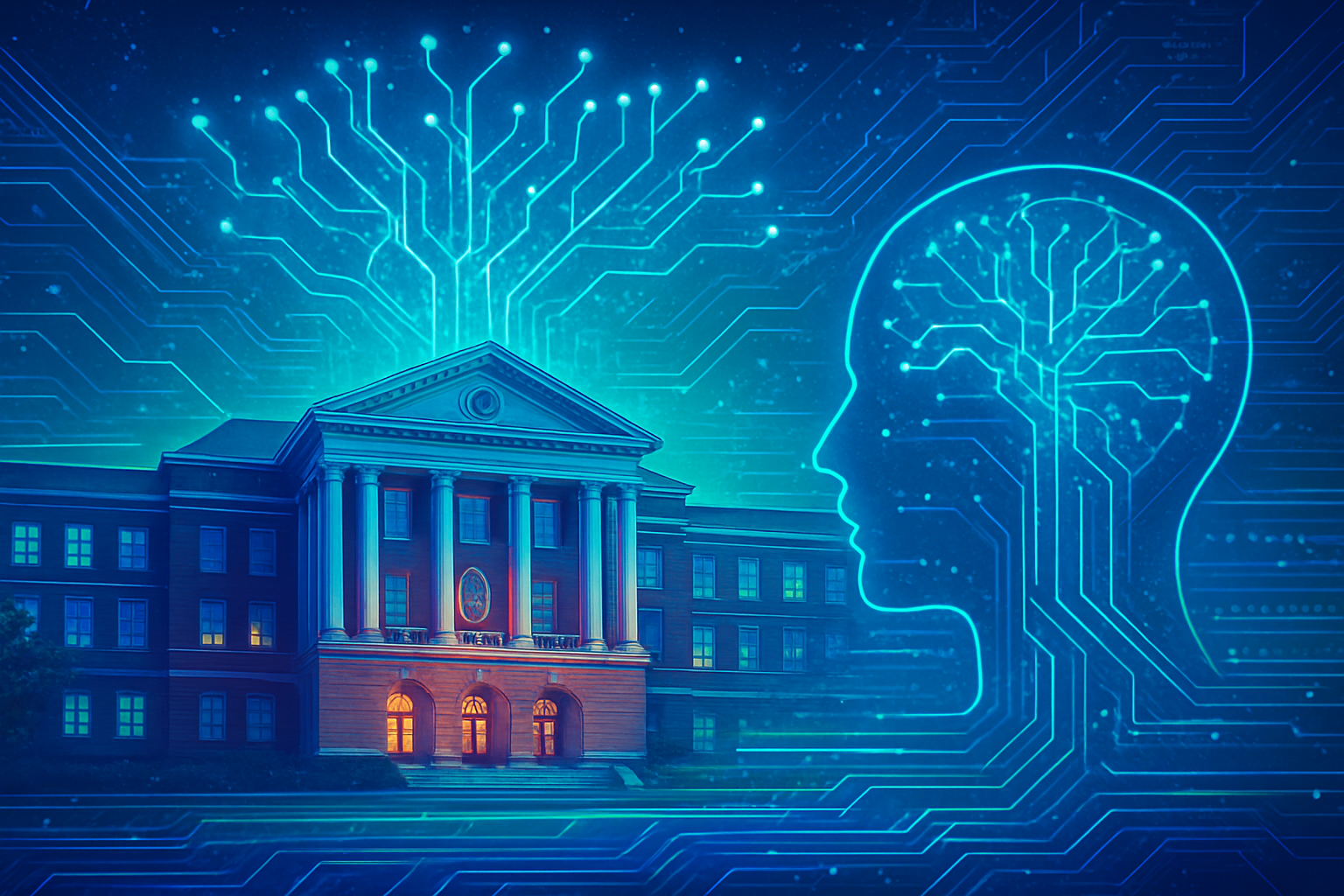
    Madison, WI – December 1, 2025 – The University of Wisconsin-Madison is on the cusp of a historic academic restructuring, proposing to elevate its current School of Computer, Data & Information Sciences (CDIS) into a standalone college dedicated to Artificial Intelligence and computing. This ambitious move, currently under strong consideration by university leadership, is not merely an organizational shift but a strategic declaration, positioning UW-Madison at the forefront of the global AI revolution. If approved, it would mark the first time the university has created a new college since 1979, underscoring the profound and transformative impact of AI on education, research, and industry.

    This organizational pivot is driven by an urgent need to meet escalating demands in the rapidly evolving tech landscape, address unprecedented student growth in computing and data science programs, and amplify UW-Madison's influence in shaping the future of AI. The establishment of a dedicated college with its own dean would ensure that these critical fields have a prominent voice in top-level university decision-making, enhance fundraising capabilities to support innovation, and foster deeper interdisciplinary integration of AI across all academic disciplines. The decision reflects a clear recognition that AI is no longer a niche field but a foundational technology permeating every aspect of modern society.

    A New Era of Academic and Research Specialization

    The proposed College of AI and Computing is poised to fundamentally reshape academic programs, curriculum development, and research focus at UW-Madison. The university is already proactively integrating AI into its educational framework, developing strategies and offering workshops for educators on leveraging AI tools for course preparation, activity creation, and personalized student feedback. A core tenet of the new curriculum will be to equip students with critical AI literacy, problem-solving abilities, and robust bias detection skills, preparing them for an AI-driven professional world.

    While specific new degree programs are still under development, the elevation of CDIS, which already houses the university's largest majors in Computer Science and Data Science, signals a robust foundation for expansion. The College of Engineering (NASDAQ: MSFT) currently offers a capstone certificate in Artificial Intelligence for Engineering Data Analytics, demonstrating an existing model for specialized, industry-relevant education. The broader trend across the UW System, with other campuses launching new AI-related majors, minors, and certificates, suggests that UW-Madison's new college will likely follow suit with a comprehensive suite of new academic credentials designed to meet diverse student and industry needs.

    A core objective is to deeply embed AI and related disciplines across the entire university. This interdisciplinary approach is expected to influence diverse sectors, including engineering, nursing, business, law, education, and manufacturing. The Wisconsin Research, Innovation and Scholarly Excellence (RISE) Initiative, with AI as its inaugural focus (RISE-AI), explicitly aims to foster multidisciplinary collaborations, applying AI across various traditional disciplines while emphasizing both its technical aspects and human-centered implications. Existing interdisciplinary groups like the "Uncertainty and AI Group" (Un-AI) already explore AI through the lenses of humanities and social sciences, setting a precedent for this expansive vision.

    The Computer Sciences Department at UW-Madison already boasts world-renowned research groups covering a broad spectrum of computing and AI. The new college will further advance specialized research in areas such as deep learning, foundation models, natural language processing, signal processing, learning theory, and optimization. Crucially, it will also focus on the human-centered dimensions of AI, ensuring trustworthiness, mitigating biases, preserving privacy, enhancing fairness, and developing appropriate AI policies and legal frameworks. To bolster these efforts, the university plans to recruit up to 50 new faculty positions across various departments through the RISE initiative, specifically focused on AI and related fields, ensuring a continuous pipeline of cutting-edge research and innovation.

    Industry Ripe for Talent: Benefits for Tech Giants and Startups

    The establishment of a dedicated AI and computing college at UW-Madison is poised to have significant positive implications across the AI industry, benefiting tech giants, established AI companies, and burgeoning startups alike. This strategic move is a direct response to the "gargantuan demand" for AI-oriented skillsets across all industries.

    For tech giants like Google (NASDAQ: GOOGL) and Microsoft (NASDAQ: MSFT), the new college promises an enhanced talent pipeline. The significant expansion in graduates with specialized AI and computing skills will directly address the industry's critical talent shortage. UW-Madison's computer science major has seen an 800% growth in the past decade, becoming the largest on campus, with data science rapidly expanding to the second largest. This surge in AI-equipped graduates—proficient in machine learning, data mining, reinforcement learning, and neural networks—will be invaluable for companies seeking to fill roles such as machine learning engineers, data scientists, and cloud architects. Furthermore, a dedicated college would foster deeper interdisciplinary research, enabling breakthroughs in various sectors and streamlining collaborations, intellectual property analysis, and technology transfer, generating new revenue streams and accelerating technological progress.

    Startups also stand to gain considerably. Access to a larger pool of skilled AI-savvy graduates from UW-Madison will make it easier for nascent companies to recruit individuals with the necessary technical acumen, helping them compete with larger corporations for talent. The new college is expected to foster entrepreneurship and create a focal point for recruiting in the region, strengthening the university's entrepreneurship ecosystem. Startups can directly benefit from the research and intellectual property generated by the college, potentially licensing university technologies and leveraging cutting-edge discoveries for their products and services. The Madison region already boasts a history of AI excellence and a thriving tech ecosystem, fueled by UW-Madison's innovation.

    The competitive landscape will also be affected. While increasing the overall talent pool, the move will likely intensify competition for the most sought-after graduates, as more companies vie for individuals with highly specialized AI skills. Starting salaries for AI graduates often exceed those for traditional computer science majors, reflecting this demand. Moreover, this initiative strengthens Madison's position as a regional tech hub, potentially attracting more companies and investment to the area. Universities, through such colleges, become crucial centers for foundational and applied AI research, giving companies that effectively partner with or recruit from these institutions a significant competitive edge in developing next-generation AI technologies and applications.

    A Broader Trend: AI's Place in Higher Education

    UW-Madison's proposed AI and computing college is a powerful statement, reflecting a broader, global trend in higher education to formalize and elevate the study of artificial intelligence. It underscores the central and interdisciplinary role AI plays in modern academia and industry, positioning the institution to become a leader in this rapidly evolving landscape. This institutional commitment aligns with a global recognition of AI's transformative potential.

    Across higher education, AI is viewed as both an immense opportunity and a significant challenge. Students have widely embraced AI tools, with surveys indicating that 80-90% use AI in their studies regularly. This high adoption rate by students contrasts with a more cautious approach from faculty, many of whom are still experimenting with AI or integrating it minimally. This disparity highlights a critical need for greater AI literacy and skills development for both students and educators, which the new college aims to address comprehensively. Universities are actively exploring AI's role in personalized learning, streamlining administration, enhancing research, and, critically, preparing the workforce for an AI-driven future.

    The establishment of a dedicated AI college is expected to cement UW-Madison's position as a national leader in AI research and education, fostering innovation and attracting top talent. By design, the new college aims to integrate AI across diverse disciplines, promoting a broad application and understanding of AI's societal impact. Students will benefit from specialized curricula, personalized learning pathways, and access to cutting-edge research opportunities. Economically, stronger ties with industry, improved fundraising capabilities, and the fostering of entrepreneurship in AI are anticipated, potentially leading to the creation of new companies and job growth in the region. Furthermore, the focus on human-centered AI, ethics, and policy within the curriculum will prepare graduates to address the societal implications of AI responsibly.

    However, potential concerns include academic integrity challenges due to widespread generative AI use, equity and access disparities if AI tools are not carefully designed, and data privacy and security risks necessitating robust governance. Faculty adaptation remains a hurdle, requiring significant institutional investment in professional development to effectively integrate AI into teaching. This move by UW-Madison parallels historical academic restructuring in response to emerging scientific and technological fields. While early AI efforts often formed within existing departments, more recent examples like Carnegie Mellon University's pioneering College of Computer Science in 1988, or the University of South Florida's Bellini College of Artificial Intelligence, Cybersecurity, and Computing in 2024, show a clear trend towards dedicated academic units. UW-Madison's proposal distinguishes itself by explicitly recognizing AI's transversal nature and the need for a dedicated college to integrate it across all disciplines, aiming to not only adapt to but also significantly influence the future trajectory of AI in higher education and society at large.

    Charting the Future: Innovations and Challenges Ahead

    The proposed AI and computing college at UW-Madison is set to catalyze a wave of near-term and long-term developments in academic offerings, research directions, and industry collaborations. In the immediate future, the university plans to roll out new degrees and certificates to meet the soaring demand in computing and AI fields. The new CDIS building, Morgridge Hall, which opened in early July 2025, will provide a state-of-the-art facility for these burgeoning programs, enhancing the student experience and fostering collaboration. The Wisconsin RISE-AI initiative will continue to drive research in core technical dimensions of AI, including deep learning, foundation models, natural language processing, and optimization, while the N+1 Institute focuses on next-generation computing systems.

    Long-term, the vision is to deeply integrate AI and related disciplines into education and research across all university departments, ensuring that students campus-wide understand AI's relevance to their future careers. Beyond technical advancements, a crucial long-term focus will be on the human-centered implications of AI, working to ensure trustworthiness, mitigate biases, preserve privacy, enhance fairness, and establish robust AI policy and legal frameworks. The ambitious plan to add up to 50 new AI-focused faculty positions across various departments over the next three to five years underscores this expanded research agenda. The new college structure is expected to significantly enhance UW-Madison's ability to build business relationships and secure funding, fostering even deeper and more extensive partnerships with the private sector to facilitate the "technology transfer" of academic research into real-world applications and market innovations.

    The work emerging from UW-Madison's AI and computing initiatives is expected to have broad societal impact. Potential applications span healthcare, such as improving genetic disorder diagnosis and advancing precision medicine; agriculture, by helping farmers detect crop diseases; and materials science, through predicting new materials. In business and industry, AI will continue to revolutionize sectors like finance, insurance, marketing, manufacturing, and transportation by streamlining operations and enabling data-driven decisions. Research into human-computer interaction with nascent technologies like AR/VR and robotics will also be a key area.

    However, several challenges accompany these ambitious plans. Continued fundraising will be crucial, as the new Morgridge Hall faced a budget shortage. Recruiting 120-150 new faculty members across campus over the next 3-5 years is a significant undertaking. Universities must also carefully navigate the rapid progress in AI, much of which is driven by large tech companies, to ensure higher education continues to lead in innovation and foundational research. Ethical considerations, including AI trustworthiness, mitigating biases, preserving privacy, and establishing sound AI policy, remain paramount. While AI creates new opportunities, concerns about its potential to disrupt and even replace entry-level jobs necessitate a focus on specialized AI skillsets.

    Experts at UW-Madison anticipate that elevating CDIS to a college will give computing, data, and AI a more prominent voice in campus leadership, crucial given their central role across disciplines. Remzi Arpaci-Dusseau, Director of CDIS, believes this move will help the university keep up with changing demands, improve fundraising, and integrate AI more effectively across the university, asserting that Wisconsin is "very well-positioned to be a leader" in AI development. Professor Patrick McDaniel foresees AI advancement leading to "sweeping disruption" in the "social fabric" globally, comparable to the industrial revolution, potentially ushering in a "renaissance" where human efforts shift towards more creative endeavors. While AI tools will accelerate programming, they are not expected to entirely replace computer science jobs, instead creating new, specialized opportunities for those willing to learn and master AI. The emergence of numerous new companies capitalizing on novel AI capabilities, previously considered science fiction, is also widely predicted.

    A Defining Moment for UW-Madison and AI Education

    UW-Madison's proposal to establish a dedicated College of AI and Computing marks a defining moment, not only for the university but for the broader landscape of artificial intelligence education and research. This strategic organizational restructuring is a clear acknowledgment of AI's pervasive influence and its critical role in shaping the future. The university's proactive stance in creating a standalone college reflects an understanding that traditional departmental structures may no longer suffice to harness the full potential of AI's interdisciplinary nature and rapid advancements.

    The key takeaways from this development are manifold: a strengthened commitment to academic leadership in AI, a significantly enhanced talent pipeline for a hungry industry, deeper integration of AI across diverse academic fields, and a robust framework for ethical AI development. By elevating AI and computing to the college level, UW-Madison is not just adapting to current trends but actively positioning itself as an architect of future AI innovation. This move will undoubtedly attract top-tier faculty and students, foster groundbreaking research, and forge stronger, more impactful partnerships with the private sector, ranging from tech giants to emerging startups.

    In the long term, this development is poised to profoundly impact how AI is taught, researched, and applied, influencing everything from healthcare and agriculture to business and human-computer interaction. The focus on human-centered AI, ethics, and policy within the curriculum is particularly significant, aiming to cultivate a generation of AI professionals who are not only technically proficient but also socially responsible. As we move into the coming weeks and months, all eyes will be on UW-Madison as it navigates the final stages of this proposal. The successful implementation of this new college, coupled with the ongoing Wisconsin RISE initiative and the opening of Morgridge Hall, will solidify the university's standing as a pivotal institution in the global AI ecosystem. This bold step promises to shape the trajectory of AI for decades to come, serving as a model for other academic institutions grappling with the transformative power of artificial intelligence.


    This content is intended for informational purposes only and represents analysis of current AI developments.

    TokenRing AI delivers enterprise-grade solutions for multi-agent AI workflow orchestration, AI-powered development tools, and seamless remote collaboration platforms.
    For more information, visit https://www.tokenring.ai/.

  • The Digital Drill Sergeant: Modernized Military Training for an AI-Driven Battlefield

    The Digital Drill Sergeant: Modernized Military Training for an AI-Driven Battlefield

    The global military landscape is undergoing a profound and rapid transformation, driven by an unprecedented surge in technological advancements. From artificial intelligence (AI) and cyber warfare to advanced robotics and immersive realities, the tools and tactics of conflict are evolving at an astonishing pace. This necessitates an urgent and comprehensive overhaul of traditional military training, with a critical focus on equipping personnel with essential tech skills for future warfare and operations. The immediate significance of this shift is undeniable: to maintain strategic advantage, enhance decision-making, and ensure national security in an era where software and human-machine interfaces are as crucial as physical combat prowess.

    The call for modernized military training is not merely an upgrade but a fundamental requirement for survival and success. The evolving nature of warfare, characterized by complex, multi-domain operations and hybrid threats, demands a workforce fluent in "techcraft"—the skills, techniques, and knowledge to effectively integrate, use, understand, and maintain modern technological equipment and systems. As of 11/19/2025, militaries worldwide are racing to adapt, recognizing that failure to embrace this technological imperative risks irrelevance on the future battlefield.

    The Tech-Infused Battlefield: A New Era of Training

    Military training is witnessing a seismic shift, moving away from static, resource-intensive methods towards highly immersive, adaptive, and data-driven approaches. This modernization is powered by cutting-edge advancements in AI, Virtual Reality (VR), Augmented Reality (AR), data science, and specialized cyber warfare training systems, designed to prepare personnel for an increasingly unpredictable and technologically saturated combat environment.

    AI is at the forefront, enabling simulations that are more dynamic and personalized than ever before. AI-driven adaptive training creates intelligent, virtual adversaries that learn and adjust their behavior based on a soldier's actions, ensuring each session is unique and challenging. Generative AI rapidly creates new and complex scenarios, including detailed 3D terrain maps, allowing planners to quickly integrate elements like cyber, space, and information warfare. Unlike previous simulations with predictable adversaries, AI introduces a new level of realism and responsiveness. Initial reactions from the AI research community are a mix of optimism for its transformative potential and caution regarding ethical deployment, particularly concerning algorithmic opacity and potential biases.

    Immersive technologies like VR and AR provide unparalleled realism. VR transports soldiers into highly detailed digital terrains replicating urban battlegrounds or specific enemy installations for combat simulations, pilot training, and even medical scenarios. AR overlays digital information, such as enemy positions or navigation routes, directly onto a soldier's real-world view during live exercises, enhancing situational awareness. The integration of haptic feedback further enhances immersion, allowing for realistic physical sensations. These technologies significantly reduce the cost, logistical constraints, and risks associated with traditional field exercises, enabling more frequent, repeatable, and on-demand practice, leading to higher skill retention rates.

    Data science is crucial for transforming raw data into actionable intelligence, improving military decision-making and logistics. Techniques like machine learning and predictive modeling process vast amounts of data from diverse sources—satellite imagery, sensor data, communication intercepts—to rapidly identify patterns, anomalies, and threats. This provides comprehensive situational awareness and helps optimize resource allocation and mission planning. Historically, military intelligence relied on slower, less integrated information processing. Data science now allows for real-time, data-driven decisions previously unimaginable, with the U.S. Army actively developing a specialized data science discipline to overcome "industrial age information management practices."

    Finally, advanced cyber warfare training is paramount given the sophistication of digital threats. Cyber ranges, simulated risk-free environments mirroring real-world networks, allow personnel to practice offensive and defensive cyber operations, hone incident response, and test new technologies. These systems simulate a range of attacks, from espionage to AI/Machine Learning attacks. Specialized curricula cover cyberspace operations, protocol analysis, and intel integration, often culminating in immersive capstone events. This dedicated infrastructure and specialized training address the unique challenges of the digital battlefield, a domain largely absent from traditional military training.

    Corporate Frontlines: How Tech Giants and Startups Are Adapting

    The modernization of military training, with its increasing demand for essential tech skills, is creating a dynamic ecosystem that significantly impacts AI companies, tech giants, and startups alike. This push addresses the growing need for tech-savvy professionals, with veterans often possessing highly transferable skills like leadership, problem-solving, and experience with advanced systems.

    Several companies are poised to benefit immensely. In AI for defense, Palantir Technologies (NYSE: PLTR) is a significant player with its Gotham and Apollo software for intelligence integration and mission planning. Lockheed Martin (NYSE: LMT) integrates AI into platforms like the F-35 and develops AI tools through its Astris AI division. Anduril Industries (Private) focuses on autonomous battlefield systems with its Lattice AI platform. BigBear.ai (NYSE: BBAI) specializes in predictive military intelligence. Other key players include Northrop Grumman (NYSE: NOC), Raytheon Technologies (NYSE: RTX), and Shield AI.

    For VR/AR/Simulation, InVeris (Firearms Training Systems – fats®) is a global leader, providing small-arms simulation and live-fire range solutions. Operator XR offers integrated, secure, and immersive VR systems for military training. Intellisense Systems develops VR/AR solutions for situational awareness, while BAE Systems (LSE: BAE) and VRAI collaborate on harnessing VR and AI for next-generation training. In data analytics, companies like DataWalk and GraphAware (Hume) provide specialized software for military intelligence. Tech giants such as Accenture (NYSE: ACN), IBM (NYSE: IBM), Microsoft (NASDAQ: MSFT), and Amazon Web Services (AWS) (NASDAQ: AMZN) also offer big data analytics solutions relevant to defense. The cybersecurity sector sees major players like Airbus (EURONEXT: AIR), Cisco (NASDAQ: CSCO), CrowdStrike (NASDAQ: CRWD), General Dynamics (NYSE: GD), and Palo Alto Networks (NASDAQ: PANW) implementing advanced security measures.

    The competitive landscape is intensifying. While military tech training expands the talent pool, competition for skilled veterans, especially those with security clearances, is fierce. The defense sector is no longer a niche but a focal point for innovation, attracting significant venture capital. This pushes major AI labs and tech companies to align R&D with defense needs, focusing on robust AI solutions for mission-critical workflows. The development of "dual-use technologies"—innovations with both military and civilian applications—is becoming more prevalent, creating significant commercial spin-offs. This shift also accelerates the obsolescence of legacy systems, forcing traditional defense contractors to modernize their offerings, often by partnering with agile tech innovators.

    Companies are gaining strategic advantages by actively recruiting military veterans, leveraging AI-driven skills-based hiring platforms, and focusing on dual-use technologies. Strategic partnerships with defense agencies and academic institutions are crucial for accelerating AI solution development. Emphasizing AI at the top of the tech stack, building custom AI systems for mission-critical areas, and establishing thought leadership in AI ethics and national security are also key. The Department of Defense's push for rapid prototyping and open architectures favors companies that can adapt quickly and integrate seamlessly.

    Geopolitical Ramifications: AI, Ethics, and the Future of Conflict

    The integration of AI into military training and operations carries profound societal and geopolitical consequences, reshaping global power dynamics and the very nature of warfare. AI is redefining geopolitical influence, with control over data, technology, and innovation becoming paramount, fueling a global AI arms race among major powers like the United States and China. This uneven adoption of AI technologies could significantly alter the global security landscape, potentially exacerbating existing asymmetries between nations.

    A growing concern is the "civilianization" of warfare, where AI-controlled weapon systems developed outside conventional military procurement could become widely accessible, raising substantial ethical questions and potentially inducing a warlike bias within populations. Civilian tech firms are increasingly pivotal in military operations, providing AI tools for data analytics, drone strikes, and surveillance, blurring the lines between civilian and military tech and raising questions about their ethical and legal responsibilities during conflicts.

    The most prominent ethical dilemma revolves around Lethal Autonomous Weapons Systems (LAWS) that can independently assess threats and make life-and-death decisions. Concerns include accountability for malfunctions, potential war crimes, algorithmic bias leading to disproportionate targeting, and the erosion of human judgment. The delegation of critical decisions to machines raises profound questions about human oversight and accountability, risking a "responsibility gap" where no human can be held accountable for the actions of autonomous systems. There's also a risk of over-reliance on AI, leading to a deskilling of human operators, and the "black box" nature of some AI systems, which lacks transparency for trust and risk analysis.

    These advancements are viewed as a "seismic shift" in modeling and simulation, building upon past virtual trainers but making them far more robust and realistic. The global race to dominate AI is likened to past arms races, but broader, encompassing scientific, economic, and ideological influence. The potential impact of AI-enabled weapons is compared to the "Oppenheimer moment" of the 20th century, suggesting a fundamental redefinition of warfare akin to the introduction of nuclear weapons. This highlights that AI's integration is not merely an incremental technological improvement but a transformative breakthrough.

    The absence of a comprehensive global governance framework for military AI is a critical regulatory gap, heightening risks to international peace and security and accelerating arms proliferation. AI acts as a "force multiplier," enhancing human capabilities in surveillance, logistics, targeting, and decision support, potentially leading to military operations with fewer human soldiers in high-risk environments. The civilian tech sector, as the primary driver of AI innovation, is intrinsically linked to military advancements, creating a complex relationship where private companies become pivotal actors in military operations. This intertwining underscores the urgent need for robust ethical frameworks and governance mechanisms that consider the dual-use nature of AI and the responsibilities of all stakeholders.

    The Horizon of War: What Comes Next in Military Tech Training

    The future of military training is set to be even more sophisticated, deeply integrated, and adaptive, driven by continuous technological advancements and the evolving demands of warfare. The overarching theme will be the creation of personalized, hyper-realistic, and multi-domain training environments, powered by next-generation AI and immersive technologies.

    In the near term (next 1-5 years), AI will personalize training programs, adapting to individual learning styles and performance. Generative AI will revolutionize scenario development, automating resource-intensive processes and enabling the rapid creation of complex, dynamic scenarios for multi-domain and cyber warfare. Enhanced immersive simulations using VR, AR, and Extended Reality (XR) will become more prevalent, offering highly realistic and interconnected training environments for combat, tactical maneuvers, and decision-making. Initial training for human-machine teaming (HMT) will focus on fundamental interaction skills, teaching personnel to leverage the complementary strengths of humans and AI/autonomous machines. Cybersecurity and data management skills will become essential as reliance on interconnected systems grows.

    Looking further ahead (beyond 5 years), next-generation AI, potentially including quantum computing, will lead to unprecedented training depth and efficiency. AI will process extensive datasets from multiple exercises, supporting the entire training spectrum from design to validation and accelerating soldier certification. Biometric data integration will monitor physical and mental states during training, further personalizing programs. Hyper-realistic and multi-domain Synthetic Training Environments (STEs) will seamlessly blend physical and virtual realities, incorporating haptic feedback and advanced sensory inputs to create simulations indistinguishable from real combat. Cross-branch and remote learning will be standard. Advanced HMT integration will focus on optimizing human-machine teaming at a cognitive level, fostering intuitive interaction and robust mental models between humans and AI. Training in quantum information sciences will also become vital.

    Potential applications on the horizon include fully immersive combat simulations for urban warfare and counterterrorism, medical and trauma training with realistic emergency scenarios, advanced pilot and vehicle operator training, AR-guided maintenance and repair, and collaborative mission planning and rehearsal in 3D environments. Immersive simulations will also play a role in recruitment and retention by providing potential recruits with firsthand experiences.

    However, significant challenges remain. The unprecedented pace of technological change demands continuous adaptation of training methodologies. Skill retention, especially for technical specialties, is a constant battle. The military will also have to compete with private industry for premier AI, machine learning, and robotics talent. Developing new doctrinal frameworks for emerging technologies like AI and HMT is critical, as there is currently no unified operational framework. Ensuring realism and concurrency in simulations, addressing the high cost of advanced facilities, and navigating the profound ethical dilemmas of AI, particularly autonomous weapon systems, are ongoing hurdles. Experts predict that mastering human-machine teaming will provide a critical advantage in future warfare, with the next two decades being more revolutionary in technological change than the last two. There will be an increased emphasis on using AI for strategic decision-making, challenging human biases, and recognizing patterns that humans might miss, while maintaining "meaningful human control" over lethal decisions.

    The Unfolding Revolution: A Concluding Assessment

    The ongoing convergence of military training and advanced technology signals a profound and irreversible shift in global defense paradigms. This era is defined by a relentless technological imperative, demanding that nations continuously invest in and integrate cutting-edge capabilities to secure national interests and maintain military superiority. The key takeaway is clear: future military strength will be intrinsically linked to technological prowess, with AI, immersive realities, and data science forming the bedrock of preparedness.

    This development marks a critical juncture in AI history, showcasing its transition from theoretical exploration to practical, high-consequence application within the defense sector. The rigorous demands of military AI are pushing the boundaries of autonomous systems, advanced data processing, and human-AI teaming, setting precedents for ethical frameworks and responsible deployment that will likely influence other high-stakes industries globally. The defense sector's role as a significant driver of AI innovation will continue to shape the broader AI landscape.

    The long-term impact will resonate across geopolitical dynamics and the very nature of warfare. Battlefields will be characterized by hybrid strategies, featuring advanced autonomous systems, swarm intelligence, and data-driven operations, often targeting critical infrastructure. This necessitates not only technologically proficient military personnel but also leaders capable of strategic thinking in highly dynamic, technologically saturated environments. Crucially, this technological imperative must be balanced with profound ethical considerations. The ethical and legal implications of AI in defense, particularly concerning lethal weapon systems, will remain central to international discourse, demanding principles of "meaningful human control," transparency, and accountability. The risk of automation bias and the dehumanization of warfare are serious concerns that require ongoing scrutiny.

    In the coming weeks and months, watch for the accelerating adoption of generative AI for mission planning and predictive modeling. Keep an eye on new policy statements, international agreements, and national legislation addressing the responsible development and deployment of military AI. Continued investments and innovations in VR, AR, and synthetic training environments will be significant, as will advancements in cyber warfare capabilities and the integration of quantum encryption. Finally, track the growing trend of defense leveraging commercial technological innovations, particularly in robotics and autonomous systems, as startups and dual-use technologies drive rapid iteration and deployment. Successfully navigating this era will require not only technological prowess but also a steadfast commitment to ethical principles and a deep understanding of the human element in an increasingly automated world.


    This content is intended for informational purposes only and represents analysis of current AI developments.

    TokenRing AI delivers enterprise-grade solutions for multi-agent AI workflow orchestration, AI-powered development tools, and seamless remote collaboration platforms.
    For more information, visit https://www.tokenring.ai/.

  • Spotify Wrapped 2025: A Cultural Phenomenon Deepens Its AI-Powered Embrace

    Spotify Wrapped 2025: A Cultural Phenomenon Deepens Its AI-Powered Embrace

    As the final weeks of 2025 unfold, a familiar buzz reverberates across social media platforms and within digital communities: the imminent arrival of Spotify Wrapped. Far more than a mere year-end music recap, Spotify Wrapped has cemented its status as an annual cultural touchstone, eagerly anticipated by millions who are poised to delve into the personalized soundtrack of their year. With its blend of nostalgic reflection, data-driven insights, and highly shareable content, Wrapped 2025 is expected to further solidify its role as a global phenomenon, showcasing Spotify's (NYSE: SPOT) prowess in leveraging advanced AI and data science to create deeply personal user experiences.

    The anticipation for Spotify Wrapped 2025 is already reaching a fever pitch, with users speculating on its release date, features, and the unique insights it will reveal about their listening habits. Historically launching in early December, the 2025 edition is predicted to drop between December 2nd and 5th, following a data collection period that typically spans from January 1st through mid-November. This annual event has transcended a simple marketing campaign to become an integral part of end-of-year traditions, fostering a communal sense of self-discovery and shared musical identity that resonates deeply within popular culture.

    The Evolution of Personalization: AI at the Core of Wrapped 2025

    Spotify Wrapped 2025 is set to continue its tradition of delivering highly personalized, data-driven annual summaries, built upon a sophisticated framework of data science and machine learning. Users can expect the return of core listening metrics, including their top five most-listened artists, songs, and genres, along with total minutes streamed and most-played podcasts. A confirmed feature for this year is the return of personalized video messages from top artists, collected by Spotify in mid-November, adding a direct, human touch to the automated recap.

    Building on the experimental AI podcast-style recaps of 2024, speculation suggests a deeper integration of Spotify's AI DJ, potentially offering more nuanced, automated storytelling with improved voice customization. Interactive "Listening Personality" stats, which categorize user habits, and deeper genre insights, possibly revealing micro-genres or emerging artist statistics, are also highly anticipated. Spotify has also been enhancing its social sharing features to maximize the viral spread of Wrapped results. A significant new development leading into Wrapped 2025 is the introduction of "Listening Stats," a weekly "mini-Wrapped" launched in November 2025. This feature provides real-time snapshots of top artists and songs from the past four weeks, curated playlists, and highlights like new artist discoveries, offering a more continuous stream of personalized insights throughout the year, intensifying competition with similar offerings from other platforms.

    Spotify Wrapped is a prime demonstration of advanced data science and machine learning in action. The platform collects vast amounts of behavioral data, from every song played and skipped to user preferences and engagement metrics. Machine learning algorithms play a critical role, with clustering algorithms grouping songs into genres, collaborative filtering identifying top artists and songs by comparing user habits, and Natural Language Processing (NLP) models analyzing lyrics for themes and emotional tones. Predictive analytics helps determine "Top Songs" based on factors like repeat listens and session duration. Furthermore, AI-powered generative design algorithms are increasingly used to craft the visually appealing, interactive graphics that make Wrapped so shareable. Each year, Spotify introduces new elements to keep Wrapped fresh, such as "Sound Town" in 2023, which matched listening habits to a city, and "Your Music Evolution" in 2024, detailing musical phases. While some users expressed a desire for less AI and more diverse personal insights in 2025, Spotify has acknowledged past data inaccuracies and promised improvements for this year's iteration. Compared to competitors like Apple Music Replay, which introduced "Replay All Time" in June 2025 for ten years of listening history, Spotify Wrapped consistently stands out for its strong social virality and engaging, narrative-driven presentation.

    Wrapped's Ripple Effect: Shaping the Streaming Landscape

    Spotify Wrapped has fundamentally reshaped the competitive landscape of the music streaming industry, solidifying Spotify's market dominance and forcing competitors to innovate their own personalized offerings. It acts as an annual cultural event, fostering deep brand loyalty and transforming raw user data into a celebrated, personalized experience. This consistent engagement is crucial in a market prone to high churn rates, as Wrapped makes users feel "seen" and "celebrated."

    The campaign is a masterclass in organic marketing, generating massive, free advertising through extensive social sharing on platforms like Instagram, X (formerly Twitter), and TikTok. This user-generated content not only showcases Spotify's brand but also creates a powerful "Fear Of Missing Out" (FOMO) effect, compelling non-Spotify users to sign up to participate in future Wrapped cycles. Beyond marketing, the aggregated data provides invaluable insights for Spotify's internal teams, optimizing recommendation algorithms, curating playlists, and informing strategic decisions.

    Competitors have been compelled to follow suit, though often with varying degrees of success. Apple Music Replay, while offering similar data points and improving its visual presentation in 2024, has historically been perceived as less "gamified" and visually engaging than Wrapped. However, Apple Music's year-round updates to Replay offer a different value proposition. YouTube Music Recap and Tidal Rewind also provide year-end summaries, but none have achieved the same level of viral social media buzz as Spotify Wrapped. The pressure to offer a comparable personalized experience has become an industry standard, benefiting users with more data-driven insights across platforms. Beyond streaming services, the "Wrapped" trend has influenced companies across various sectors, from Duolingo and Reddit to Hulu, demonstrating how data storytelling can boost user engagement and brand visibility, positioning Spotify as a pioneer in this form of digital engagement.

    Wider Significance: Data, Identity, and Digital Culture

    Spotify Wrapped stands as a pivotal example of how AI and data science are shaping digital culture, user perception of data, and the broader tech landscape. At its core, Wrapped is a sophisticated application of hyper-personalization, leveraging AI-powered systems to create deeply individualized experiences. This trend, visible in Amazon's product recommendations and Netflix's content suggestions, is elevated by Wrapped's narrative-driven approach, transforming complex data into an engaging story that evokes nostalgia and emotion.

    The campaign has significantly altered user perception of data. Users not only accept but eagerly anticipate the display of their intimate listening habits, challenging traditional notions of data collection as inherently negative. Wrapped allows users to reflect on their musical evolution, fostering a sense of self-discovery and framing music as a reflection of identity. This emotional connection deepens user loyalty and satisfaction. However, Wrapped also brings forth critical concerns regarding data privacy and algorithmic bias. Spotify collects extensive personal data, including geolocation and payment details, which can be shared with third parties. Instances like the €5 million fine by the Swedish Authority for Privacy Protection (IMY) for GDPR violations highlight the ongoing challenges in transparent data handling. Furthermore, algorithmic biases can inadvertently favor popular artists or lead to skewed recommendations, potentially presenting an incomplete or even inaccurate picture of a user's true musical preferences, especially for shared accounts.

    Wrapped’s influence on digital culture is profound. It has become a global cultural moment, consistently sparking organic conversations and trending topics on social media. Sharing Wrapped results has evolved into a social badge of identity, allowing users to express their tastes and connect with like-minded individuals. This viral marketing strategy generates massive free advertising for Spotify, driving app downloads and user reactivation. By making personal data fun and reflective, Wrapped contributes to a cultural normalization of sharing personal information with platforms, even as privacy concerns persist. It serves as a benchmark for how companies can leverage AI and data to create emotionally resonant, culturally impactful user experiences.

    The Future of Wrapped: Continuous Personalization and Ethical AI

    The future of Spotify Wrapped points towards an increasingly integrated and continuous personalization experience, driven by advancements in AI. Near-term developments are expected to build on features like the weekly "Listening Stats," moving towards real-time, dynamic insights rather than a single annual drop. Experts predict that AI will further refine personalized data summaries, making them more contextual—considering factors like a user's mood, location, or time of day for recommendations. Advancements in NLP could lead to more conversational interfaces, making interaction with music platforms more intuitive.

    Long-term visions include deeper integration with wearable technology, allowing for real-time adjustments to recommendations based on biometric data. The most transformative potential lies in generative AI, which could eventually create entirely new music tailored to individual user preferences, blurring the lines between consumption and creation. For content creators, the "Wrapped for Artists" feature could expand to offer even deeper analytics and tools for audience engagement.

    However, several challenges loom large. Data privacy remains a paramount concern, as users grapple with the extent of data collection and its implications. Algorithmic accuracy and depth of insights have also been points of criticism, with some users finding past Wrapped iterations "underwhelming" or "inaccurate," particularly for shared accounts. Addressing these issues will be crucial for maintaining user trust and engagement. There's also the risk of user fatigue as hyper-personalization becomes ubiquitous, leading to a yearning for "less AI, more innovation." Experts emphasize that while AI will enhance user satisfaction, platforms like Spotify must innovate meaningfully while upholding ethical data practices and ensuring that algorithms don't stifle genuine musical discovery.

    Wrapped's Enduring Legacy: A Symphony of Data and Culture

    Spotify Wrapped 2025 marks another chapter in the evolving narrative of how technology, data, and culture intertwine. It stands as a testament to the power of AI and data science to transform raw user data into a deeply personal, emotionally resonant, and globally shared cultural event. The annual recap not only reinforces Spotify's market leadership but also sets a high bar for personalized digital experiences across industries.

    The key takeaways from Wrapped's ongoing success include the immense value of data storytelling, the power of user-generated content in marketing, and the delicate balance between hyper-personalization and data privacy. Its significance in AI history lies not in a single technological breakthrough, but in its consistent and innovative application of existing AI and data science to create a consumer product that users genuinely love and anticipate. As AI continues to advance, we can expect future iterations of Wrapped to become even more sophisticated, offering richer insights and more interactive experiences. The challenge for Spotify and the wider tech industry will be to navigate the ethical considerations of data usage while continuing to innovate in ways that genuinely enhance user connection and self-discovery. What to watch for in the coming weeks and months will be the initial reactions to Wrapped 2025, any new features that surprise users, and how competitors respond to Spotify's continued dominance in the personalized recap space.


    This content is intended for informational purposes only and represents analysis of current AI developments.

    TokenRing AI delivers enterprise-grade solutions for multi-agent AI workflow orchestration, AI-powered development tools, and seamless remote collaboration platforms.
    For more information, visit https://www.tokenring.ai/.
  • AI Revolutionizes Drug Shelf-Life: Optimized Stability Models Promise Safer, More Effective Medicines

    AI Revolutionizes Drug Shelf-Life: Optimized Stability Models Promise Safer, More Effective Medicines

    The pharmaceutical industry is on the cusp of a profound transformation, driven by the integration of data science and Artificial Intelligence (AI) into drug formulation stability models. This burgeoning field is set to dramatically enhance the shelf-life and effectiveness of medications, addressing long-standing inefficiencies in traditional drug development. By moving beyond time-consuming, empirical trial-and-error methods, AI offers a faster, more accurate, and cost-effective approach to predicting drug stability, solubility, and overall performance. This shift holds immense immediate significance, promising to accelerate the availability of life-saving drugs, reduce development costs, and ultimately lead to improved patient outcomes by ensuring the consistent quality and potency of medicines throughout their lifecycle.

    Technical Deep Dive: AI's Precision in Predicting Drug Stability

    AI advancements are fundamentally reshaping how drug shelf-life and formulation stability are understood and managed. Traditionally, determining drug stability has been a laborious and prolonged process, often requiring months or even years of real-time and accelerated stability studies. These methods, while critical, are resource-intensive, provide limited environmental scope, and rely heavily on empirical data and extrapolations like the Arrhenius equation, which can miss complex, non-linear degradation patterns, especially prevalent in modern biologics.

    Enter AI, particularly machine learning (ML), deep learning (DL), and generative AI, which are revolutionizing this landscape. ML algorithms like Random Forest, Support Vector Regression (SVR), Gradient Boosting, and XGBoost are trained on vast historical stability datasets—encompassing chemical structures, excipient interactions, and storage conditions—to predict future stability outcomes. For instance, tree ensemble regression models have successfully predicted Beyond Use Dates (BUDs) with high accuracy (R² = 0.9761). These models excel at identifying optimal API-excipient combinations and predicting degradation rates under various environmental stressors.

    Deep learning, with its multi-layered neural networks, tackles even more complex, non-linear relationships. Artificial Neural Networks (ANNs) model physicochemical properties impacting solubility and stability, while Convolutional Neural Networks (CNNs) analyze image-based or spectroscopic data to monitor changes over time. Recurrent Neural Networks (RNNs) and Long Short-Term Memory (LSTMs) are particularly adept at processing time-series data, making them invaluable for modeling degradation profiles over extended periods. A multilayer perceptron (MLP) has demonstrated the ability to predict the stability profile of drugs like Esomeprazole, precisely determining pH limits for maintaining quality. These deep learning models capture intricate degradation patterns often overlooked by traditional methods, especially for complex biologics.

    The overarching capability of predictive modeling, powered by ML/DL, allows for enhanced Accelerated Stability Testing (AST). AI models analyze stress data to simulate real-time, long-term stability curves with superior accuracy, even for complex biologics that do not follow simple kinetics. Generative AI is pushing boundaries further, not just predicting but also designing. It can simulate unknown degradation pathways, generate novel drug molecules with desired stability properties, and optimize formulation profiles for enhanced bioavailability. This differs profoundly from traditional approaches by moving from reactive, empirical testing to proactive, in silico exploration and optimization of vast formulation spaces, ranking thousands of hypothetical formulations before any physical experiment is conducted. Initial reactions from the AI research community and industry experts are overwhelmingly positive, recognizing the transformative potential to accelerate development, enhance accuracy, and foster innovation, while also acknowledging challenges related to data quality, model interpretability, and regulatory acceptance.

    Corporate Impact: A New Frontier for Pharma and Tech

    The emergence of optimized formulation stability models powered by AI is creating a dynamic competitive landscape, significantly impacting AI companies, tech giants, and innovative startups. Companies that successfully leverage this technology stand to gain substantial strategic advantages.

    Specialized AI companies are at the forefront, developing proprietary platforms and offering services that streamline drug development. Firms like Exscientia, Insilico Medicine, Atomwise, Schrödinger, BenevolentAI, and XtalPi are pioneering AI-driven drug design and formulation, creating new revenue streams through platform licensing, consultation, and accelerated drug discovery partnerships. For example, Merck & Co., Inc. (NYSE: MRK) utilizes an AI-powered predictive formulation tool to tackle solubility and stability challenges, shortening its formulation process.

    Tech giants, with their vast AI research capabilities and cloud infrastructure, are also making significant inroads. Companies like IBM (NYSE: IBM) with its Watson Health initiative and Microsoft (NASDAQ: MSFT) with Azure AI for Life Sciences, offer scalable cloud-based AI solutions for complex stability modeling and large-scale data management. These giants are forming strategic partnerships with pharmaceutical companies, combining their AI expertise with the pharma sector's extensive datasets and domain knowledge. This allows them to expand into healthcare analytics, personalized medicine, and digital therapeutics, offering comprehensive solutions from discovery to patient care.

    Startups are playing a crucial role by bringing agile innovation to specific niches. Companies like Cyclica, DeepMatter, Healx, Unlearn.AI, and NetraMark are developing specialized AI platforms for drug repurposing, real-time stability monitoring, or integrating AI with advanced manufacturing. These agile players can compete with established giants by leveraging advanced computational tools without needing extensive traditional laboratory infrastructure, leveling the playing field.

    Major pharmaceutical companies are rapidly adopting AI. Novartis AG (SWX: NOVN) and AstraZeneca plc (LSE: AZN) are exploring AI-enabled digital twin models for process optimization. Roche Holding AG (SWX: ROG) focuses on AI-driven formulation for biologics, while GlaxoSmithKline plc (LSE: GSK) utilizes AI to enhance stability, solubility, and bioavailability. Pfizer (NYSE: PFE) and Sanofi (NYSE: SNY) have partnered with AI firms like Exscientia to integrate AI platforms into their discovery and formulation workflows. This shift disrupts traditional stability testing, significantly reducing development timelines and R&D costs, potentially cutting months or years off the drug development process. Companies that become early adopters and innovation leaders, emphasizing cost-effectiveness, enhanced drug quality, and regulatory compliance through AI, will secure strong market positioning and strategic advantages in this evolving landscape.

    Broader Significance: AI's Footprint Across Science and Society

    The application of AI in optimizing drug formulation stability models transcends a mere technical upgrade; it represents a significant milestone within the broader AI landscape and holds profound implications for healthcare and society. This development aligns perfectly with the overarching trend of AI becoming a transformative general-purpose technology across scientific research, enabling data-driven decision-making and accelerating discovery in myriad fields.

    It fits into the broader trend of machine learning in scientific discovery, where AI analyzes complex datasets to derive insights previously beyond human grasp. This mirrors the shift towards predictive analytics that is permeating drug discovery, clinical trials, and patient response prediction. Furthermore, AI-driven stability models are integral to Industry 4.0 and smart manufacturing initiatives, enabling real-time process monitoring, optimization, and predictive maintenance in pharmaceutical production and supply chains. The emergence of generative AI also hints at a future where AI not only predicts but actively designs optimal formulations and simulates unknown degradation pathways.

    The broader impacts are substantial. Economically, AI is projected to generate hundreds of billions of dollars annually for the pharmaceutical sector by reducing development costs, accelerating market entry, and minimizing costly product recalls. For healthcare, this translates to faster access to safer and more effective medications, improved patient outcomes, and enhanced therapeutic efficacy. Scientifically, AI elevates the accuracy and reliability of stability predictions, streamlining development and fostering continuous innovation in drug delivery systems.

    However, this transformative power comes with inherent concerns. The success of AI models hinges on the availability of high-quality, extensive datasets, which remains a significant challenge. The "black box" nature of some advanced AI algorithms poses issues for interpretability, complicating regulatory approval and stakeholder trust. Regulatory frameworks are still evolving to accommodate AI/ML tools, necessitating clear guidelines for validation and transparency. Algorithmic bias, if training data reflects historical health inequities, could inadvertently perpetuate disparities. Data privacy and security, given the reliance on sensitive patient information, also raise critical ethical questions.

    This breakthrough draws parallels to other celebrated AI milestones. Google DeepMind’s AlphaFold, which revolutionized protein structure prediction, demonstrates AI's capacity to solve complex molecular puzzles. Similarly, AI's application in materials science for designing new materials, in genomics for personalized medicine, and in astronomy for identifying trends in vast datasets, all highlight its unifying power across scientific disciplines. The "hockey-stick-like takeoff" in AI's influence across science, starting around 2015, underscores that AI in drug stability is not an isolated event but part of a larger, systemic shift towards augmenting human discovery and revealing non-obvious solutions across all scientific frontiers.

    The Road Ahead: Future Developments and Expert Outlook

    The journey of optimized formulation stability models powered by AI is just beginning, with a horizon filled with exciting near-term and long-term developments poised to reshape the pharmaceutical landscape.

    In the near term, we can anticipate a significant refinement of Accelerated Stability Testing (AST), where AI models will provide increasingly accurate long-term stability predictions based on minimal experimental data. This will drastically cut down the time and resources needed to determine drug shelf-life and Beyond Use Dates (BUDs). AI will also become more adept at optimizing excipient and API combinations, leading to more stable, soluble, and effective drug formulations from the outset. Early-stage "go/no-go" decisions in formulation and packaging will be made with greater confidence, thanks to AI's predictive power.

    Looking further ahead, long-term developments promise even more profound changes. Generative AI is expected to move beyond prediction to proactive design, simulating unknown degradation pathways and impurities before they physically manifest, offering unprecedented foresight. The advent of "digital twins" for drugs and packaging will enable comprehensive, dynamic modeling of storage conditions across diverse geographies and supply chains, ensuring product integrity globally. The integration of Internet of Things (IoT) sensors with Edge AI will facilitate continuous, real-time stability monitoring throughout the supply chain and even during patient use, transforming reactive quality control into a proactive, predictive system. Furthermore, AI's ability to analyze vast datasets, including individual genetic profiles, will be crucial for the advancement of personalized medicine, tailoring drug formulations and delivery systems to individual patient needs for optimal efficacy and safety.

    Potential applications on the horizon are vast, ranging from streamlined formulation design and robust risk mitigation to the revitalization of challenging drug candidates that were previously shelved due to stability issues. AI will be instrumental in designing advanced drug delivery systems, such as controlled-release formulations and nanoparticles, by accurately predicting their release profiles and interactions within the body. Crucially, AI-driven models will generate robust predictive data to support regulatory submissions, potentially accelerating drug approvals and aligning with modern Quality-by-Design (QbD) principles.

    Despite this immense promise, several challenges remain. The need for high-quality, comprehensive datasets is paramount, as is addressing the "black box" nature of some AI models to ensure interpretability for regulatory bodies. Evolving regulatory frameworks must adapt to accommodate AI/ML tools, requiring clear standards for model validation and transparency. Seamless integration with existing pharmaceutical workflows and addressing ethical considerations like algorithmic bias and data privacy are also critical.

    Experts widely predict that AI will transform stability testing from a slow, reactive process into a smart, proactive, and predictive discipline. This will lead to faster product launches, reduced costs, and smarter quality assurance operations. Regulatory bodies are already encouraging the use of AI, signaling a positive outlook for its acceptance. Ultimately, AI is expected to become an indispensable tool for optimizing drug composition and dosage forms, significantly enhancing drug product quality and patient safety.

    A New Era for Pharmaceuticals: The AI-Driven Future

    The convergence of optimized formulation stability models and Artificial Intelligence marks a pivotal moment in both AI history and pharmaceutical innovation. This is not merely an incremental technological upgrade but a fundamental re-engineering of how pharmaceuticals are developed, manufactured, and maintained, promising a future of safer, more efficient, and universally accessible medicines.

    Key takeaways from this transformative shift include AI's unparalleled ability to predict drug degradation, optimize complex formulations, and accelerate stability testing with unprecedented accuracy and speed. This capability, driven by advanced machine learning, deep learning, and generative AI, moves the industry from a laborious, empirical past to a data-driven, proactive future. It signifies AI's growing maturity in tackling highly complex, regulated scientific challenges, mirroring its impact across other scientific disciplines like protein folding and materials science.

    The long-term impact is profound: faster access to novel therapies, enhanced drug accessibility and affordability, improved patient outcomes through more stable and effective formulations, and the realization of personalized medicine. AI will fortify global supply chains, ensuring the integrity of drug products and fostering continuous innovation in drug delivery systems. The economic benefits are immense, with projections of hundreds of billions in value for the pharmaceutical sector by reducing costs and accelerating market entry.

    In the coming weeks and months, industry watchers should keep a close eye on several critical developments. Expect continued advancements in generative AI, particularly its ability to simulate unknown degradation pathways, offering even greater foresight. The wider implementation of "digital twins" for drugs and packaging, enabling virtual modeling of storage conditions, will become more prevalent. Increased deployment of edge AI combined with IoT sensors for real-time stability monitoring across manufacturing, warehousing, and cold chain logistics will further solidify AI's role in quality assurance. Crucially, watch for evolving guidance and clarification from regulatory bodies on the validation and acceptance of AI-driven stability models, as frameworks adapt to these groundbreaking technologies. Finally, anticipate a growing number of published case studies from pharmaceutical companies, showcasing tangible benefits in terms of reduced development cycles, significant cost savings, and enhanced product quality through strategic AI integration.

    The fusion of AI with drug formulation stability is more than just a technological advancement; it is a catalyst for a healthier, more innovative future.


    This content is intended for informational purposes only and represents analysis of current AI developments.

    TokenRing AI delivers enterprise-grade solutions for multi-agent AI workflow orchestration, AI-powered development tools, and seamless remote collaboration platforms.
    For more information, visit https://www.tokenring.ai/.

  • Johns Hopkins University Forges New Path for Research Excellence with Core Strategy Committee

    Johns Hopkins University Forges New Path for Research Excellence with Core Strategy Committee

    Baltimore, MD – October 20, 2025 – Johns Hopkins University (JHU) has taken a significant step towards solidifying its position as a global research powerhouse with the recent formation of the Research Core Facilities Assessment and Planning Committee. Convened by Provost Ray Jayawardhana, this new committee is tasked with developing a comprehensive, university-wide strategy for the oversight and support of JHU's more than 120 diverse research core facilities. This initiative marks a pivotal moment for JHU's research ecosystem, promising enhanced efficiency, expanded access to cutting-edge technologies, and a more cohesive approach to scientific discovery across its numerous schools and departments.

    The committee's establishment underscores JHU's commitment to its "Ten for One" strategic vision, which aims to foster intellectual renewal and strengthen its leadership in research and innovation. By addressing the previous lack of a unified strategy across divisions, this new body is poised to streamline operations, optimize investments, and ultimately elevate the quality and impact of research conducted at the institution. The move is particularly pertinent in an era where interdisciplinary collaboration and access to advanced technological infrastructure, including those vital for Artificial Intelligence (AI) research, are paramount.

    Strategic Realignment for a Unified Research Front

    The newly formed Research Core Facilities Assessment and Planning Committee embarks on a critical mission: to assess the current capacity, operations, and needs of JHU's extensive network of research core facilities. These facilities, predominantly concentrated in the life sciences, are vital hubs providing specialized equipment, services, and expertise to researchers. The committee's mandate extends to identifying opportunities for optimization and alignment across these varied operations, guiding future investment and procurement strategies for research infrastructure, and ultimately bolstering the university's global standing.

    This strategic realignment represents a significant departure from previous approaches, where high-level strategy, coordination, and oversight for core facilities were often decentralized across JHU's numerous divisions. The committee aims to rectify this by recommending a unified approach, thereby lowering barriers to collaboration and ensuring that faculty members have seamless access to state-of-the-art technology and research spaces. This effort complements the existing Research Oversight Committee, which focuses on broader scientific infrastructure and administrative processes. By drilling down into the specifics of core facilities, the new committee will directly contribute to maximizing discovery and minimizing administrative burdens, aligning with JHU's overarching research objectives. Initial reactions within the university community are largely positive, with expectations that this initiative will foster greater intellectual renewal and facilitate more ambitious, interdisciplinary projects.

    Bolstering the Foundation for AI Innovation

    While the committee's direct focus is on general research core facilities, its implications for the burgeoning fields of Artificial Intelligence and data science are profound. Johns Hopkins University has explicitly declared its intention to become a leading academic hub for data science and AI, integrating these fields across all disciplines. This commitment is evidenced by substantial investments in a new Data Science and AI Institute, designed to serve as a nexus for interdisciplinary collaborations and advanced computational infrastructure. The Institute is crucial for supporting researchers applying data science and AI in diverse areas, from neuroscience and precision medicine to the social sciences.

    The committee's work in optimizing and investing in core infrastructure will directly underpin these university-wide AI initiatives. By ensuring that the necessary technological platforms – including high-performance computing, advanced data storage, and specialized AI hardware and software – are robust, efficient, and accessible, JHU strengthens its ability to attract and retain top AI talent. This enhanced infrastructure could lead to more impactful research outcomes, potentially fostering collaborations with AI companies, tech giants, and startups seeking to leverage cutting-edge academic research. For major AI labs and technology companies, a more strategically organized and well-equipped JHU could become an even more attractive partner for joint ventures, talent acquisition, and foundational research that feeds into commercial innovation, potentially shaping the future of AI products and services.

    A Wider Lens on Academic Research and AI Trends

    The formation of JHU's Research Core Facilities Assessment and Planning Committee is not an isolated event but rather a reflection of broader trends within the academic research landscape. Universities globally are increasingly recognizing the need for centralized, strategic oversight of their research infrastructure to remain competitive and facilitate complex, interdisciplinary projects. This initiative positions JHU at the forefront of institutions actively adapting their operational models to support the demands of modern scientific inquiry, particularly in data-intensive fields like AI.

    The impact of this committee's work extends beyond mere operational efficiency; it underpins JHU's comprehensive strategy for responsible AI development. Multiple groups within the university, including the Data Trust, the Responsible AI Task Force, and the Provost's Office, are actively collaborating to establish ethical frameworks, governance, and oversight plans for AI integration across clinical and non-clinical applications. By ensuring that the foundational research infrastructure is robust and capable of supporting complex AI research, the committee indirectly contributes to JHU's ability to develop and implement AI responsibly. This proactive approach sets a precedent, drawing comparisons to other leading institutions that have made significant investments in interdisciplinary research centers and ethical AI guidelines, highlighting a collective push towards more integrated and ethically sound technological advancement.

    The Horizon: Enhanced Capabilities and Ethical AI Frontiers

    Looking ahead, the work of the Research Core Facilities Assessment and Planning Committee is expected to yield significant near-term and long-term developments. The committee's recommendations, anticipated in the coming months, will likely lead to a more streamlined and strategically managed network of research cores. This will translate into stronger university-wide research facilities, optimized infrastructure, and expanded, more equitable access for researchers to cutting-edge technologies crucial for AI and data science. Potential applications and use cases on the horizon include accelerated discoveries in areas like precision medicine, neuroscience, and public health, all powered by enhanced AI capabilities and robust computational support.

    However, challenges remain. Ensuring equitable access to these advanced facilities across all departments, securing sustained funding in a competitive landscape, and adapting to the rapidly evolving technological needs of AI research will be critical. Experts predict that a successful implementation of the committee's strategy will not only cement JHU's reputation as a leader in fundamental and applied research but also create a fertile ground for groundbreaking AI innovations that adhere to the highest ethical standards. The ongoing feedback sessions with core users, directors, and staff are vital to ensure that the strategic plan is practical, inclusive, and responsive to the real needs of the research community.

    A New Chapter for JHU's Research Legacy

    In summary, the formation of Johns Hopkins University's Research Core Facilities Assessment and Planning Committee represents a strategic and forward-thinking move to consolidate and elevate its vast research enterprise. This initiative is a clear signal of JHU's dedication to optimizing its infrastructure, fostering interdisciplinary collaboration, and particularly, strengthening its foundation for leadership in data science and Artificial Intelligence. The strategic shift from fragmented oversight to a unified, university-wide approach promises to unlock new potentials for discovery and innovation.

    The significance of this development in the broader AI history lies in its contribution to creating an academic environment where advanced AI research can flourish responsibly and effectively. By investing in the foundational elements of research – the core facilities – JHU is not just upgrading equipment but building a more integrated ecosystem for future breakthroughs. In the coming weeks and months, the academic and tech communities will be closely watching for the committee's recommendations and the subsequent implementation steps, as these will undoubtedly shape JHU's trajectory as a premier research institution and a key player in the global AI landscape for years to come.


    This content is intended for informational purposes only and represents analysis of current AI developments.

    TokenRing AI delivers enterprise-grade solutions for multi-agent AI workflow orchestration, AI-powered development tools, and seamless remote collaboration platforms.
    For more information, visit https://www.tokenring.ai/.