Tag: David Baker

  • The Atomic Architect: How University of Washington’s Generative AI Just Rewrote the Rules of Medicine

    The Atomic Architect: How University of Washington’s Generative AI Just Rewrote the Rules of Medicine

    In a milestone that many scientists once considered a "pipe dream" for the next decade, researchers at the University of Washington’s (UW) Institute for Protein Design (IPD) announced in late 2025 the first successful de novo design of functional antibodies using generative artificial intelligence. The breakthrough, published in Nature on November 5, 2025, marks the transition from discovering medicines by chance to engineering them by design. By using AI to "dream up" molecular structures that do not exist in nature, the team has effectively bypassed decades of traditional, animal-based laboratory work, potentially shortening the timeline for new drug development from years to mere weeks.

    This development is not merely a technical curiosity; it is a fundamental shift in the $200 billion antibody drug industry. For the first time, scientists have demonstrated that a generative model can create "atomically accurate" antibodies—the immune system's primary defense—tailored to bind to specific, high-value targets like the influenza virus or cancer-causing proteins. As the world moves into 2026, the implications for pandemic preparedness and the treatment of chronic diseases are profound, signaling a future where the next global health crisis could be met with a designer cure within days of a pathogen's identification.

    The Rise of RFantibody: From "Dreaming" to Atomic Reality

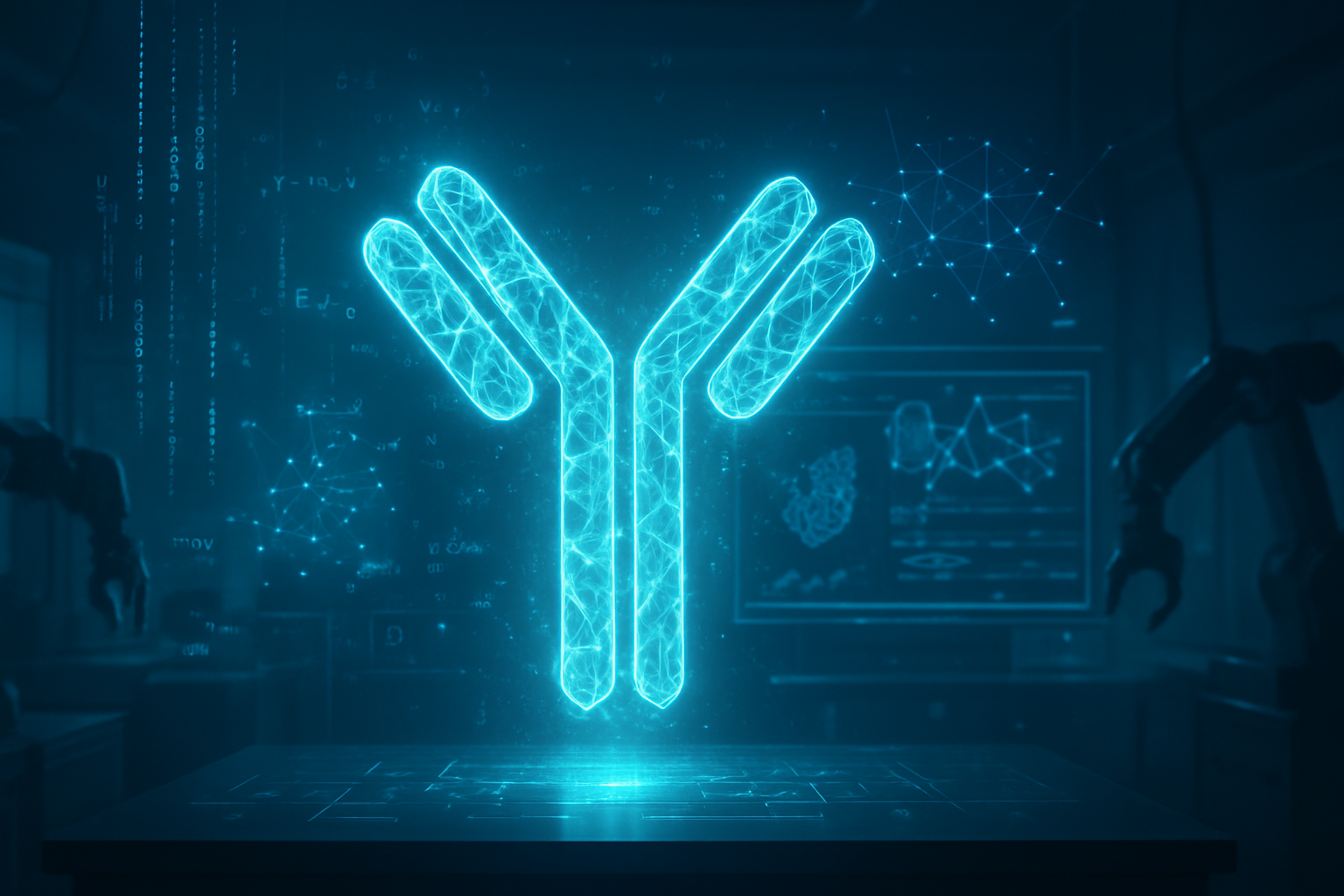
    The technical foundation of this breakthrough lies in a specialized suite of generative AI models, most notably RFdiffusion and its antibody-specific iteration, RFantibody. Developed by the lab of Nobel Laureate David Baker, these models operate similarly to generative image tools like DALL-E, but instead of pixels, they manipulate the 3D coordinates of atoms. While previous AI attempts could only modify existing antibodies found in nature, RFantibody allows researchers to design the crucial "complementarity-determining regions" (CDRs)—the finger-like loops that grab onto a pathogen—entirely from scratch.

    To ensure these "hallucinated" proteins would function in the real world, the UW team employed a rigorous computational pipeline. Once RFdiffusion generated a 3D shape, ProteinMPNN determined the exact sequence of amino acids required to maintain that structure. The designs were then "vetted" by AlphaFold3, developed by Google DeepMind—a subsidiary of Alphabet Inc. (NASDAQ: GOOGL)—and RoseTTAFold2 to predict their binding success. In a stunning display of precision, cryo-electron microscopy confirmed that four out of five of the top AI-designed antibodies matched their computer-predicted structures with a deviation of less than 1.5 angstroms, roughly the width of a single atom.

    This approach differs radically from the traditional "screening" method. Historically, pharmaceutical companies would inject a target protein into an animal (like a mouse or llama) and wait for its immune system to produce antibodies, which were then harvested and refined. This "black box" process was slow, expensive, and often failed to target the most effective sites on a virus. The UW breakthrough replaces this trial-and-error approach with "rational design," allowing scientists to target the "Achilles' heel" of a virus—such as the highly conserved stem of the influenza virus—with mathematical certainty.

    The reaction from the scientific community has been one of collective awe. Dr. David Baker described the achievement as a "grand challenge" finally met, while lead authors of the study noted that this represents a "landmark moment" that will define how antibodies are designed for the next decade. Industry experts have noted that the success rate of these AI-designed molecules, while still being refined, already rivals or exceeds the efficiency of traditional discovery platforms when accounting for the speed of iteration.

    A Seismic Shift in the Pharmaceutical Landscape

    The commercial impact of the UW breakthrough was felt immediately across the biotechnology sector. Xaira Therapeutics, a startup co-founded by David Baker that launched with a staggering $1 billion in funding from ARCH Venture Partners, has already moved to exclusively license the RFantibody technology. Xaira’s emergence as an "end-to-end" AI biotech poses a direct challenge to traditional Contract Research Organizations (CROs) that rely on massive animal-rearing infrastructures. By moving the discovery process to the cloud, Xaira aims to outpace legacy competitors in both speed and cost-efficiency.

    Major pharmaceutical giants are also racing to integrate these generative capabilities. Eli Lilly and Company (NYSE: LLY) recently announced a shift toward "AI-powered factories" to automate the design-to-production cycle, while Pfizer Inc. (NYSE: PFE) has leveraged similar de novo design techniques to hit preclinical milestones 40% faster than previous years. Amgen Inc. (NASDAQ: AMGN) has reinforced its "Biologics First" strategy by using generative design to tackle "undruggable" targets—complex proteins that have historically resisted traditional antibody binding.

    Meanwhile, Regeneron Pharmaceuticals, Inc. (NASDAQ: REGN), which built its empire on the "VelociSuite" humanized mouse platform, is increasingly integrating AI to guide the design of multi-specific antibodies. The competitive advantage is no longer about who has the largest library of natural molecules, but who has the most sophisticated generative models and the highest-quality data to train them. This democratization of drug discovery means that smaller biotech firms can now design complex biologics that were previously the exclusive domain of "Big Pharma," potentially leading to a surge in specialized treatments for rare diseases.

    Global Security and the "100 Days Mission"

    Beyond the balance sheets of Wall Street, the UW breakthrough carries immense weight for global health security. The Coalition for Epidemic Preparedness Innovations (CEPI) has identified AI-driven de novo design as a cornerstone of its "100 Days Mission"—an ambitious global goal to develop vaccines or therapeutics within 100 days of a new viral outbreak. In late 2025, CEPI integrated the IPD’s generative models into its "Pandemic Preparedness Engine," a system designed to computationally "pre-solve" antibodies for viral families like coronaviruses and avian flu (H5N1) before they even cross the species barrier.

    This milestone is being compared to the "AlphaFold moment" of 2020, but with a more direct path to clinical application. While AlphaFold solved the problem of how proteins fold, RFantibody solves the problem of how proteins interact and function. This is the difference between having a map of a city and being able to build a key that unlocks any door in that city. The ability to design "universal" antibodies—those that can neutralize multiple strains of a rapidly mutating virus—could end the annual "guessing game" associated with seasonal flu vaccines and provide a permanent shield against future pandemics.

    However, the breakthrough also raises ethical and safety concerns. The same technology that can design a life-saving antibody could, in theory, be used to design novel toxins or enhance the virulence of pathogens. This has prompted calls for "biosecurity guardrails" within generative AI models. Leading researchers, including Baker, have been proactive in advocating for international standards that screen AI-generated protein sequences against known biothreat databases, ensuring that the democratization of biology does not come at the cost of global safety.

    The Road to the Clinic: What’s Next for AI Biologics?

    The immediate focus for the UW team and their commercial partners is moving these AI-designed antibodies into human clinical trials. While the computational results are flawless, the complexity of the human immune system remains the ultimate test. In the near term, we can expect to see the first "AI-only" antibody candidates for Influenza and C. difficile enter Phase I trials by mid-2026. These trials will be scrutinized for "developability"—ensuring that the synthetic molecules are stable, non-toxic, and can be manufactured at scale.

    Looking further ahead, the next frontier is the design of "multispecific" antibodies—single molecules that can bind to two or three different targets simultaneously. This is particularly promising for cancer immunotherapy, where an antibody could be designed to grab a cancer cell with one "arm" and an immune T-cell with the other, forcing an immune response. Experts predict that by 2030, the majority of new biologics entering the market will have been designed, or at least heavily optimized, by generative AI.

    The challenge remains in the "wet lab" validation. While AI can design a molecule in seconds, testing it in a physical environment still takes time. The integration of "self-driving labs"—robotic systems that can synthesize and test AI designs without human intervention—will be the next major hurdle to overcome. As these robotic platforms catch up to the speed of generative AI, the cycle of drug discovery will accelerate even further, potentially bringing us into an era of personalized, "on-demand" medicine.

    A New Era for Molecular Engineering

    The University of Washington’s achievement in late 2025 will likely be remembered as the moment the biological sciences became a true engineering discipline. By proving that AI can design functional, complex proteins with atomic precision, the IPD has opened a door that can never be closed. The transition from discovery to design is not just a technological upgrade; it is a fundamental change in our relationship with the molecular world.

    The key takeaway for the industry is clear: the "digital twin" of biology is now accurate enough to drive real-world clinical outcomes. In the coming weeks and months, all eyes will be on the regulatory response from the FDA and other global bodies as they grapple with how to approve medicines designed by an algorithm. If the clinical trials prove successful, the legacy of this 2025 breakthrough will be a world where disease is no longer an insurmountable mystery, but a series of engineering problems waiting for an AI-generated solution.


    This content is intended for informational purposes only and represents analysis of current AI developments.

    TokenRing AI delivers enterprise-grade solutions for multi-agent AI workflow orchestration, AI-powered development tools, and seamless remote collaboration platforms.
    For more information, visit https://www.tokenring.ai/.
  • AI Achieves Atomic Precision in Antibody Design: A New Era for Drug Discovery Dawns

    AI Achieves Atomic Precision in Antibody Design: A New Era for Drug Discovery Dawns

    Seattle, WA – November 5, 2025 – In a monumental leap for biotechnology and artificial intelligence, Nobel Laureate David Baker’s lab at the University of Washington’s Institute for Protein Design (IPD) has successfully leveraged AI to design antibodies from scratch, achieving unprecedented atomic precision. This groundbreaking development, primarily driven by a sophisticated generative AI model called RFdiffusion, promises to revolutionize drug discovery and therapeutic design, dramatically accelerating the creation of novel treatments for a myriad of diseases.

    The ability to computationally design antibodies de novo – meaning entirely new, without relying on existing natural templates – represents a paradigm shift from traditional, often laborious, and time-consuming methods. Researchers can now precisely engineer antibodies to target specific disease-relevant molecules with atomic-level accuracy, opening vast new possibilities for developing highly effective and safer therapeutics.

    The Dawn of De Novo Design: AI's Precision Engineering in Biology

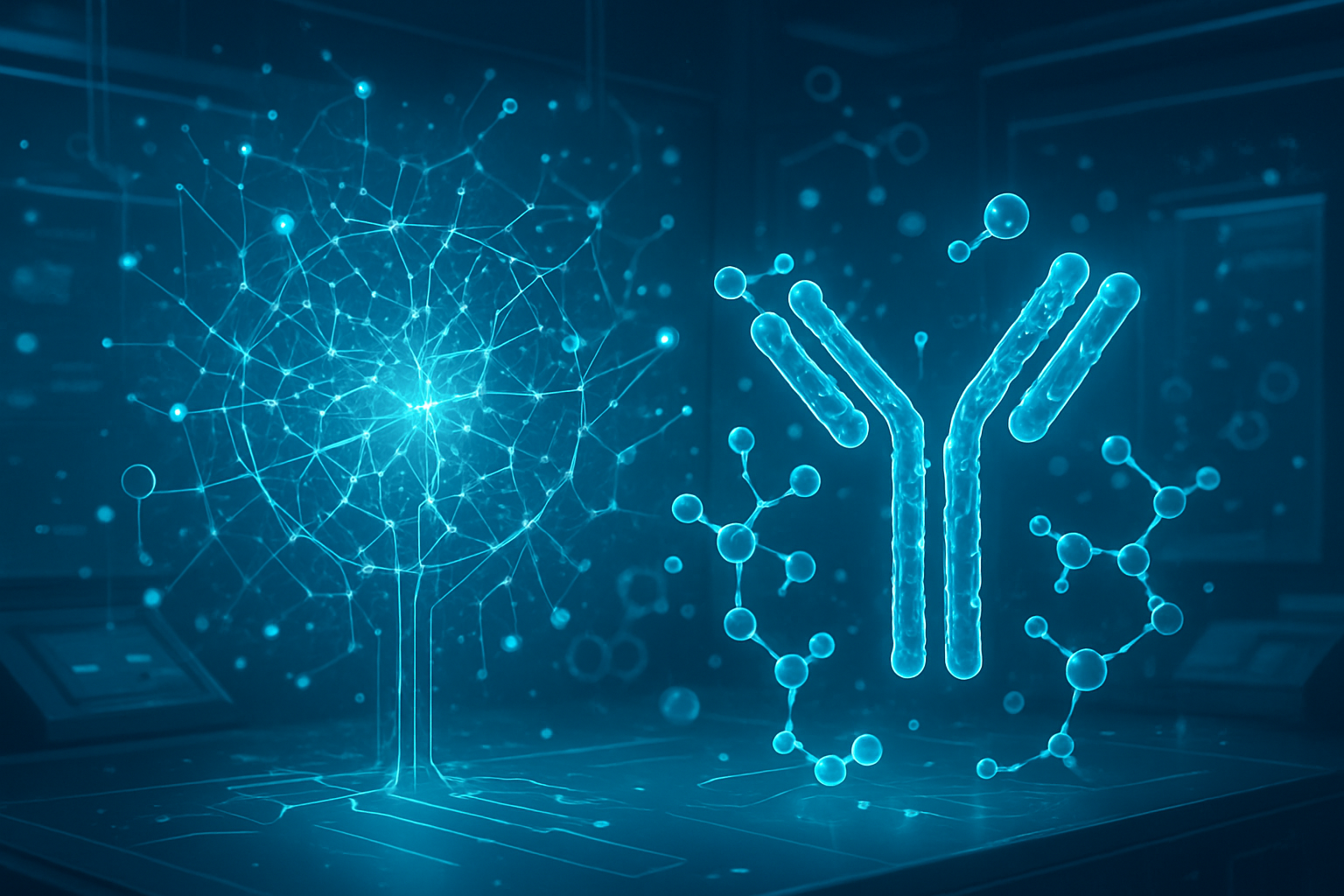
    The core of this transformative breakthrough lies in the application of a specialized version of RFdiffusion, a generative AI model fine-tuned for protein and antibody design. Unlike previous approaches that might only tweak one of an antibody's six binding loops, this advanced AI can design all six complementarity-determining regions (CDRs) – the intricate and flexible areas responsible for antigen binding – completely from scratch, while maintaining the overall antibody framework. This level of control allows for the creation of antibody blueprints unlike any seen in nature or in the training data, paving the way for truly novel therapeutic agents.

    Technical validation has been rigorous, with experimental confirmation through cryo-electron microscopy (cryo-EM). Structures of the AI-designed single-chain variable fragments (scFvs) bound to their targets, such as Clostridium difficile toxin B and influenza hemagglutinin, demonstrated exceptional agreement with the computational models. Root-mean-square deviation (RMSD) values as low as 0.3 Å for individual CDRs underscore the atomic-level precision achieved, confirming that the designed structures are nearly identical to the observed binding poses. Initially, computational designs exhibited modest affinity, but subsequent affinity maturation techniques, like OrthoRep, successfully improved binding strength to single-digit nanomolar levels while preserving epitope selectivity.

    This AI-driven methodology starkly contrasts with traditional antibody discovery, which typically involves immunizing animals or screening vast libraries of randomly generated molecules. These conventional methods are often years-long, expensive, and prone to experimental challenges. By shifting antibody design from a trial-and-error wet lab process to a rational, computational one, Baker’s lab has compressed discovery timelines from years to weeks, significantly enhancing efficiency and cost-effectiveness. The initial work on nanobodies was presented in a preprint in March 2024, with a significant update detailing human-like scFvs and the open-source software release occurring on February 28, 2025. The full, peer-reviewed study, "Atomically accurate de novo design of antibodies with RFdiffusion," has since been published in Nature.

    The AI research community and industry experts have met this breakthrough with widespread enthusiasm. Nathaniel Bennett, a co-author of the study, boldly predicts, "Ten years from now, this is how we're going to be designing antibodies." Charlotte Deane, an immuno-informatician at the University of Oxford, hailed it as a "really promising piece of research." The ability to bypass costly traditional efforts is seen as democratizing antibody design, opening doors for smaller entities and accelerating global research, particularly with the Baker lab's decision to make its software freely available for both non-profit and for-profit research.

    Reshaping the Biopharma Landscape: Winners, Disruptors, and Strategic Shifts

    The implications of AI-designed antibodies reverberate across the entire biopharmaceutical industry, creating new opportunities and competitive pressures for AI companies, tech giants, and startups alike. Specialized AI drug discovery companies are poised to be major beneficiaries. Firms like Generate:Biomedicines, Absci, BigHat Biosciences, and AI Proteins, already focused on AI-driven protein design, can integrate this advanced capability to accelerate their pipelines. Notably, Xaira Therapeutics, a startup co-founded by David Baker, has exclusively licensed the RFantibody training code, positioning itself as a key player in commercializing this specific breakthrough with significant venture capital backing.

    For established pharmaceutical and biotechnology companies such as Eli Lilly (NYSE: LLY), Bristol Myers Squibb (NYSE: BMY), AstraZeneca (NASDAQ: AZN), Merck (NYSE: MRK), Pfizer (NYSE: PFE), Amgen (NASDAQ: AMGN), Novartis (NYSE: NVS), Johnson & Johnson (NYSE: JNJ), Sanofi (NASDAQ: SNY), Roche (OTCMKTS: RHHBY), and Moderna (NASDAQ: MRNA), this development necessitates strategic adjustments. They stand to benefit immensely by forming partnerships with AI-focused startups or by building robust internal AI platforms to accelerate drug discovery, reduce costs, and improve the success rates of new therapies. Tech giants like Google (NASDAQ: GOOGL) (through DeepMind and Isomorphic Labs), Microsoft (NASDAQ: MSFT), Amazon (NASDAQ: AMZN) (via AWS),, and IBM (NYSE: IBM) will continue to play crucial roles as foundational AI model providers, computational infrastructure enablers, and data analytics experts.

    This breakthrough will be highly disruptive to traditional antibody discovery services and products. The laborious, animal-based immunization processes and extensive library screening methods are likely to diminish in prominence as AI streamlines the generation of thousands of potential candidates in silico. This shift will compel Contract Research Organizations (CROs) specializing in early-stage antibody discovery to rapidly integrate AI capabilities or risk losing competitiveness. AI's ability to optimize drug-like properties such as developability, low immunogenicity, high stability, and ease of manufacture from the design stage will also reduce late-stage failures and development costs, potentially disrupting existing services focused solely on post-discovery optimization.

    The competitive landscape will increasingly favor companies that can implement AI-designed antibodies effectively, gaining a substantial advantage by bringing new therapies to market years faster. This speed translates directly into market share and maximized patent life. The emphasis will shift towards developing robust AI platforms capable of de novo protein and antibody design, creating a "platform-based drug design" paradigm. Companies focusing on "hard-to-treat" diseases and those building end-to-end AI drug discovery platforms that span target identification, design, optimization, and even clinical trial prediction will possess significant strategic advantages, driving the future of personalized medicine.

    A Broader Canvas: AI's Creative Leap in Science

    This breakthrough in AI-designed antibodies is a powerful testament to the expanding capabilities of generative AI and deep learning within scientific research. It signifies a profound shift from AI as a tool for analysis and prediction to AI as an active creator of novel biological entities. This mirrors advancements in other domains where generative AI creates images, text, and music, cementing AI's role as a central, transformative player in drug discovery. The market for AI-based drug discovery tools, already robust with over 200 companies, is projected for substantial growth, driven by such innovations.

    The broader impacts are immense, promising to revolutionize therapeutic development, accelerate vaccine creation, and enhance immunotherapies for cancer and autoimmune diseases. By streamlining discovery and development, AI could potentially reduce the costs associated with new drugs, making treatments more affordable and globally accessible. Furthermore, the rapid design of new antibodies significantly improves preparedness for emerging pathogens and future pandemics. Beyond medicine, the principles of AI-driven protein design extend to other proteins like enzymes, which could have applications in sustainable energy, breaking down microplastics, and advanced pharmaceutical manufacturing.

    However, this advancement also brings potential concerns, most notably the dual-use dilemma and biosecurity risks. The ability to design novel biological agents raises questions about potential misuse for harmful purposes. Scientists, including David Baker, are actively advocating for responsible AI development and stringent biosecurity screening practices for synthetic DNA. Other concerns include ethical considerations regarding accessibility and equity, particularly if highly personalized AI-designed therapeutics become prohibitively expensive. The "black box" problem of many advanced AI models, where the reasoning behind design decisions is opaque, also poses challenges for validation, optimization, and regulatory approval, necessitating evolving intellectual property and regulatory frameworks.

    This achievement stands on the shoulders of previous AI milestones, most notably Google DeepMind's AlphaFold. While AlphaFold largely solved the "protein folding problem" by accurately predicting a protein's 3D structure from its amino acid sequence, Baker's lab addresses the "inverse protein folding problem" – designing new protein sequences that will fold into a desired structure and perform a specific function. AlphaFold provided the blueprint for understanding natural proteins; Baker's lab is using AI to write new blueprints, enabling the creation of proteins never before seen in nature with tailored functions. This transition from understanding to active creation marks a significant evolution in AI's capability within the life sciences.

    The Horizon of Innovation: What Comes Next for AI-Designed Therapies

    Looking ahead, the trajectory of AI-designed antibodies points towards increasingly sophisticated and impactful applications. In the near term, the focus will remain on refining and expanding the capabilities of generative AI models like RFdiffusion. The free availability of these advanced tools is expected to democratize antibody design, fostering widespread innovation and accelerating the development of human-like scFvs and specific antibody loops globally. Experts anticipate significant improvements in binding affinity and specificity, alongside the creation of proteins with exceptionally high binding to challenging biomarkers. Novel AI methods are also being developed to optimize existing antibodies, with one approach already demonstrating a 25-fold improvement against SARS-CoV-2.

    Long-term developments envision a future where AI transforms immunotherapy by designing precise binders for antigen-MHC complexes, making these treatments more successful and accessible. The ultimate goal is de novo antibody design purely from a target, eliminating the need for immunization or complex library screening, drastically increasing speed and enabling multi-objective optimization for desired properties. David Baker envisions a future with highly customized protein-based solutions for a wide range of diseases, tackling "undruggable" targets like intrinsically disordered proteins and predicting treatment responses for complex therapies like antibody-drug conjugates (ADCs) in oncology. Companies like Archon Biosciences, a spin-off from Baker's lab, are already exploring "antibody cages" using AI-generated proteins to precisely control therapeutic distribution within the body.

    Potential applications on the horizon are vast, encompassing therapeutics for infectious diseases (neutralizing Covid-19, RSV, influenza), cancer (precise immunotherapies, ADCs), autoimmune and neurodegenerative diseases, and metabolic disorders. Diagnostics will benefit from highly sensitive biosensors, while targeted drug delivery will be revolutionized by AI-designed nanostructures. Beyond medicine, the broader protein design capabilities could yield novel enzymes for industrial applications, such as sustainable energy and environmental remediation.

    Despite the immense promise, challenges remain. Ensuring AI-designed antibodies are not only functional in vitro but also therapeutically effective, safe, stable, and manufacturable for human use is paramount. The complexity of modeling intricate protein functions, the reliance on high-quality and unbiased training data, and the need for substantial computational resources and specialized expertise are ongoing hurdles. Regulatory and ethical concerns, particularly regarding biosecurity and equitable access, will also require continuous attention and evolving frameworks. Experts, however, remain overwhelmingly optimistic. Andrew Borst of IPD believes the research "can go on and it can grow to heights that you can't imagine right now," while Bingxu Liu, a co-first author, states, "the technology is ready to develop therapies."

    A New Chapter in AI and Medicine: The Road Ahead

    The breakthrough from David Baker's lab represents a defining moment in the convergence of AI and biology, marking a profound shift from protein structure prediction to the de novo generation of functional proteins with atomic precision. This capability is not merely an incremental improvement but a fundamental re-imagining of how we discover and develop life-saving therapeutics. It heralds an era of accelerated, more cost-effective, and highly precise drug development, promising to unlock treatments for previously intractable diseases and significantly enhance our preparedness for future health crises.

    The significance of this development in AI history cannot be overstated; it places generative AI squarely at the heart of scientific creation, moving beyond analytical tasks to actively designing and engineering biological solutions. The long-term impact will likely reshape the pharmaceutical industry, foster personalized medicine on an unprecedented scale, and extend AI's influence into diverse fields like materials science and environmental remediation through novel enzyme design.

    As of November 5, 2025, the scientific and industrial communities are eagerly watching for several key developments. The widespread adoption of the freely available RFdiffusion software will be a crucial indicator of its immediate impact, as other labs begin to leverage its capabilities for novel antibody design. Close attention will also be paid to the progress of spin-off companies like Xaira Therapeutics and Archon Biosciences as they translate these AI-driven designs from research into preclinical and clinical development. Furthermore, continued advancements from Baker's lab and others in expanding de novo design to other protein types, alongside improvements in antibody affinity and specificity, will signal the ongoing evolution of this transformative technology. The integration of design tools like RFdiffusion with predictive models and simulation platforms will create increasingly powerful and comprehensive drug discovery pipelines, solidifying AI's role as an indispensable engine of biomedical innovation.


    This content is intended for informational purposes only and represents analysis of current AI developments.

    TokenRing AI delivers enterprise-grade solutions for multi-agent AI workflow orchestration, AI-powered development tools, and seamless remote collaboration platforms.
    For more information, visit https://www.tokenring.ai/.