Tag: Davos 2026

  • The Death of the Entry-Level Labor Model: Alex Karp Declares AI Will Make Mass Low-Skill Immigration Obsolete

    The Death of the Entry-Level Labor Model: Alex Karp Declares AI Will Make Mass Low-Skill Immigration Obsolete

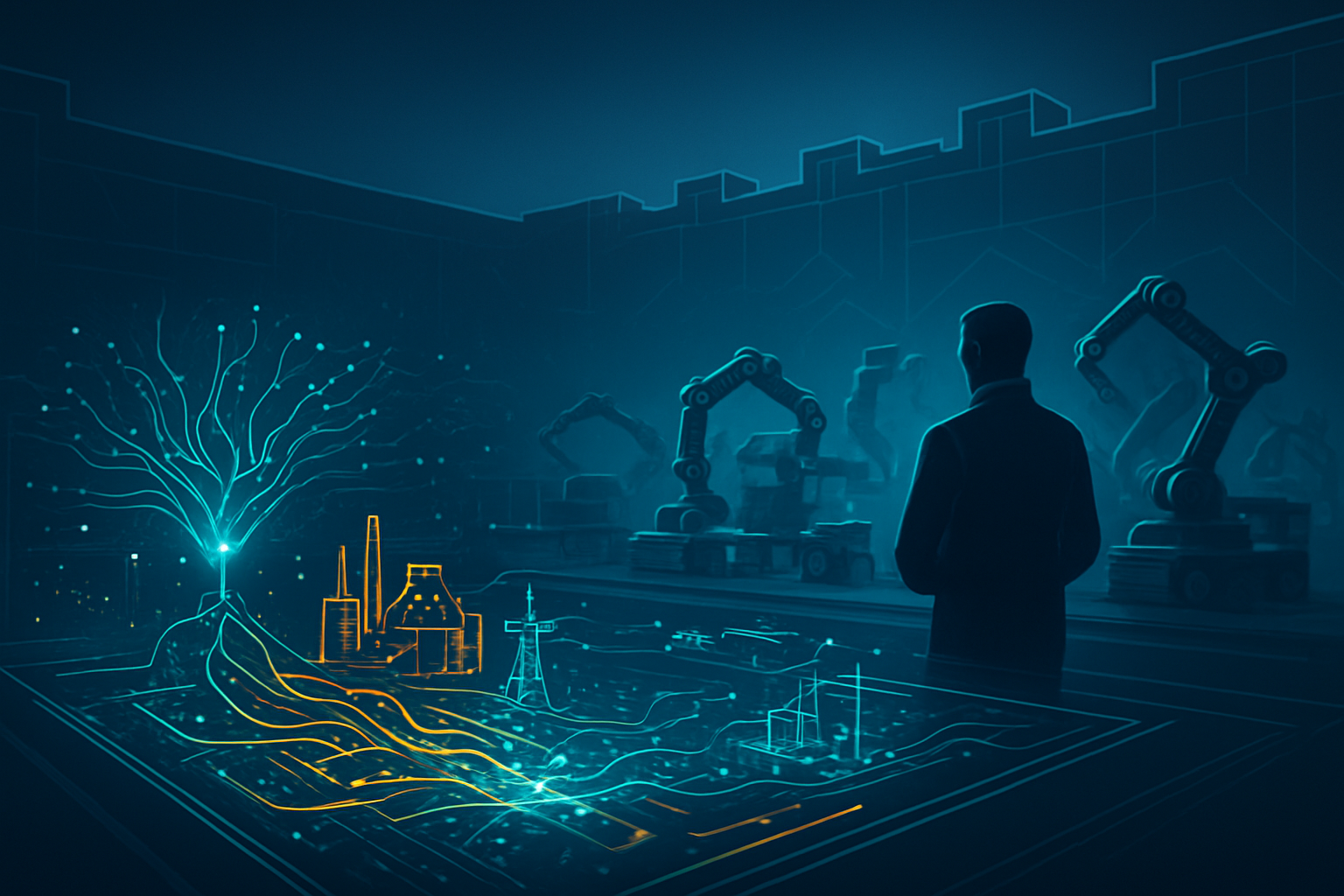
    In a provocative series of statements delivered at the World Economic Forum in Davos this January 2026, Alex Karp, the CEO of Palantir Technologies (NYSE: PLTR), has laid out a radical vision for the future of global labor. Karp argues that the rapid maturation of "Elite AI" will fundamentally dismantle the economic justifications for mass low-skill immigration, a cornerstone of Western economic policy for the last half-century. According to Karp, the ability of high-level AI systems to manage logistics, automate service sectors, and oversee robotic labor will soon make the importation of low-wage human labor not just politically contentious, but economically unnecessary.

    The implications of Karp’s stance are profound, signaling a departure from the traditional Silicon Valley consensus that has long favored open borders to fuel growth. By positioning artificial intelligence as a replacement for the "labor arbitrage" model—where companies move to or import low-cost workers—Karp is framing AI as a tool for national self-sufficiency. This analysis suggests that the winners of the next decade will not be the nations with the largest populations, but those with the most "elite AI technicians" capable of orchestrating autonomous systems to maintain domestic infrastructure.

    From Rote Automation to Cognitive Displacement

    Karp’s argument rests on a specific technical evolution in AI capabilities that reached a tipping point in late 2025. Unlike the first wave of generative AI, which focused on creative assistance, the current "Elite AI" models are designed for "autonomous orchestration." These systems do not just write text; they manage complex, real-world supply chains and physical workflows with minimal human oversight. Karp highlights that while early AI was a "productivity tool" for workers, the newest iterations are "agentic replacements" for entire administrative and low-skill service layers. This technical leap allows a single technician to oversee a fleet of AI agents that perform the work once requiring hundreds of entry-level employees.

    Furthermore, Karp makes a startling technical distinction regarding the "blast radius" of AI displacement. He asserts that the most vulnerable workers are not those in vocational trades, but rather the university-educated "elite" whose work involves processing information, legal discovery, or basic software engineering. Because AI can now navigate chaotic digital environments better than a mid-level manager, the economic premium on traditional white-collar "knowledge work" is collapsing. In contrast, Karp notes that AI still struggles with "unstructured physical chaos," meaning a domestic plumber or electrician is technically harder to automate than a junior data analyst or a visa-dependent administrative assistant.

    This shift represents a reversal of the "Moravec’s Paradox," which previously suggested that high-level reasoning required little computation but low-level sensorimotor skills required enormous resources. By 2026, the cost of deploying a sophisticated LLM-based agent to handle logistics has dropped significantly below the cost of supporting and housing a human worker. The industry response to Karp's technical assessment has been polarized; while some researchers at OpenAI and Google (NASDAQ: GOOGL) argue that AI will create new categories of low-skill "human-in-the-loop" jobs, Karp maintains that these roles are merely a "transitional friction" that will vanish as model reliability hits 99.9%.

    Palantir’s Strategic Pivot and the Industry Fallout

    For Palantir, this philosophy is directly baked into their product roadmap. The company has moved aggressively beyond data analytics into "AI Warrooms" and autonomous border management systems. By providing the digital backbone for agencies like Immigration and Customs Enforcement (ICE), Palantir is positioning itself as the essential utility for a world where nations are looking to "harden" their borders while maintaining economic output. This stance has given Palantir a distinct competitive advantage in government contracting, particularly within the current U.S. administration, which has prioritized "technological sovereignty" over globalist labor models.

    Other tech giants are now forced to reckon with this "nationalist AI" framework. While Microsoft (NASDAQ: MSFT) and Amazon (NASDAQ: AMZN) have historically benefited from a large, mobile global workforce, the rising cost of social infrastructure and the increasing efficiency of AI are changing the calculus. If Karp is correct, the strategic advantage shifts away from companies that manage massive human workforces toward those that own the "compute" and the proprietary models. We are seeing a shift where NVIDIA (NASDAQ: NVDA) hardware is increasingly viewed as a substitute for human migration, as "sovereign AI" clusters allow countries to automate their internal economies without demographic expansion.

    The disruption extends to the startup ecosystem as well. A new wave of "Lean Industrial" startups is emerging, aiming to use Palantir’s logic to build fully autonomous factories and farms. These ventures are specifically designed to operate in regions with shrinking populations or restrictive immigration laws. The market positioning for these companies is no longer about "disrupting" an industry, but about providing "labor insurance" against the volatility of global migration patterns and geopolitical shifts.

    Political Realignment and the "Anti-Woke" Tech Movement

    Karp’s comments signify a broader political and cultural realignment within the technology sector. By labeling Palantir’s technology as "anti-woke" and leaning into border security, Karp is breaking the long-standing alliance between Big Tech and progressive social policies. This "techno-realism" argues that the primary responsibility of an AI company is to strengthen the nation-state, even if that means facilitating deportations or restricting labor flows. It marks a transition from AI as a "global equalizer" to AI as a "national fortress."

    This trend reflects a growing concern among policymakers about the "social cost" of immigration versus the "capital cost" of AI. As housing crises and infrastructure strain affect Western nations, the promise of maintaining GDP growth through AI-driven productivity rather than population growth is becoming an irresistible political narrative. Karp has tapped into a burgeoning sentiment that the "elite" have used immigration to suppress domestic wages while ignoring the transformative power of the very technology they were building.

    However, this "fortress" approach is not without its detractors. Critics argue that Karp’s vision could lead to a "deglobalization spiral," where the lack of human movement stifles cultural exchange and creates a rigid, automated society. There are also concerns that this model assumes AI will work perfectly in all scenarios; a failure in an automated logistics chain or an autonomous farm could lead to catastrophic shortages if the human "safety net" of labor has been systematically removed or disincentivized.

    The Rise of the "Hyper-Specialist" Visa

    Looking ahead to 2027 and beyond, the focus of immigration policy is expected to shift toward what Karp calls "hyper-specialized talent." We are likely to see the end of general-purpose H-1B visas in favor of highly targeted "O-1" style visas for individuals with "outlier" technical aptitude in fields like quantum error correction or bio-digital synthesis. Governments will likely implement "AI-readiness" tests for immigrants, ensuring that anyone entering the country possesses skills that the domestic AI infrastructure cannot yet replicate.

    In the near term, we can expect Palantir and its peers to release "Sovereign OS" platforms—software suites designed to help mid-sized nations manage their entire civil service and infrastructure through AI agents. The challenge will be the "transition period." As AI begins to displace low-skill roles faster than the political system can adjust, we may see a period of intense social friction. Experts predict that the next eighteen months will be defined by "labor-substitution audits," where corporations are pressured to prove why they are hiring foreign labor instead of deploying available AI solutions.

    Summary of Key Takeaways

    Alex Karp’s Davos 2026 proclamation marks a watershed moment in the intersection of technology and geopolitics. By arguing that "elite AI technicians" are the only essential labor imports for a modern economy, he has effectively declared the end of the 20th-century economic model. The key takeaway is that AI is no longer just an industry; it is becoming the primary mechanism for national survival and economic strategy.

    In the coming months, keep a close watch on the "Sovereign AI" initiatives being launched in Europe and the United States. If these programs successfully demonstrate that they can offset labor shortages without increasing migration, Karp’s "economic obsolescence" theory will move from a provocative stance to an established global policy. The long-term impact may be a world that is more automated and more bordered, where the "wealth of nations" is measured in FLOPS and the brilliance of a few thousand elite technicians, rather than the size of the working class.


    This content is intended for informational purposes only and represents analysis of current AI developments.

    TokenRing AI delivers enterprise-grade solutions for multi-agent AI workflow orchestration, AI-powered development tools, and seamless remote collaboration platforms.
    For more information, visit https://www.tokenring.ai/.
  • The $25 Trillion Machine: Tesla’s Optimus Reaches Critical Mass in Davos 2026 Debut

    The $25 Trillion Machine: Tesla’s Optimus Reaches Critical Mass in Davos 2026 Debut

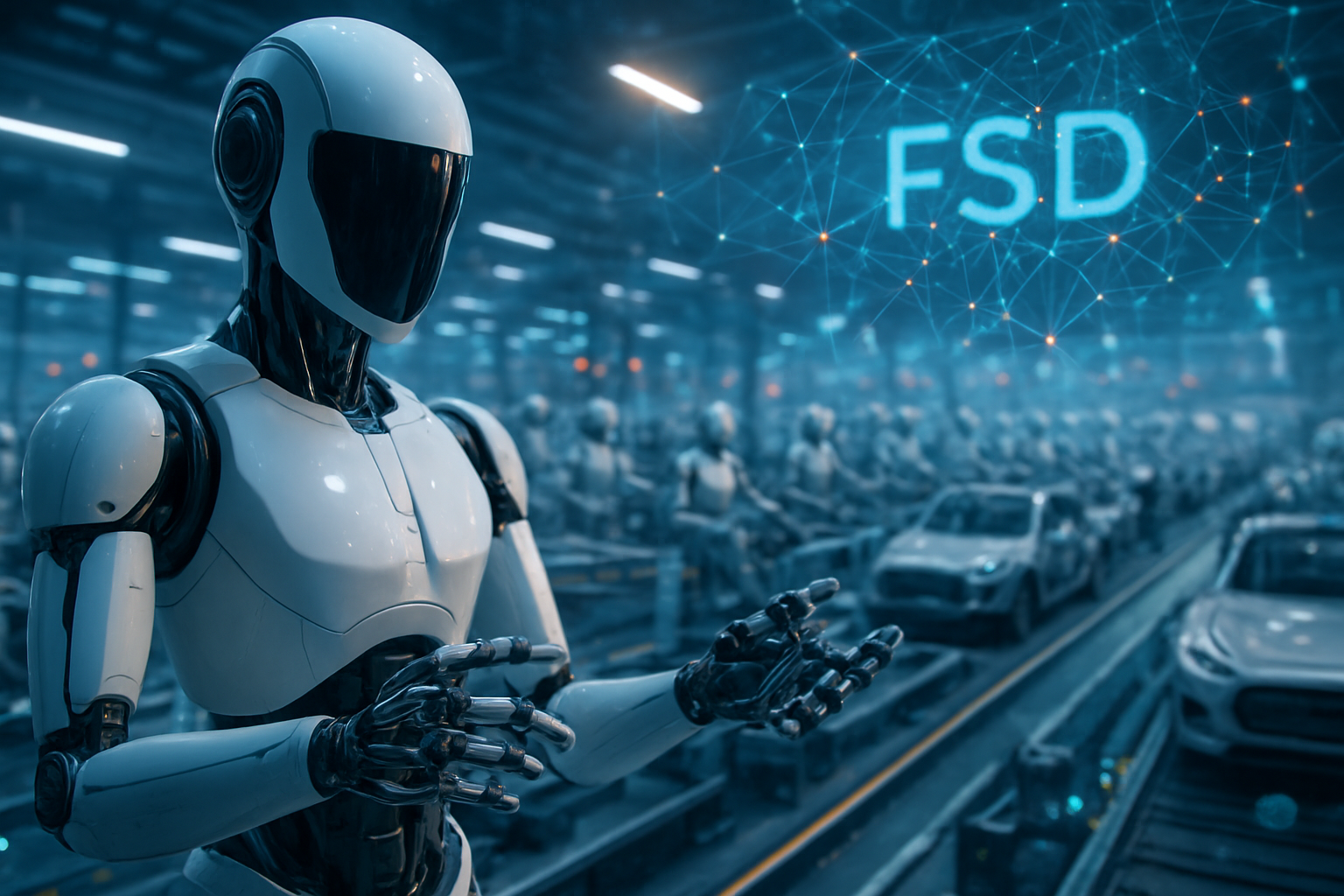
    In a landmark appearance at the 2026 World Economic Forum in Davos, Elon Musk has fundamentally redefined the future of Tesla (NASDAQ: TSLA), shifting the narrative from a pioneer of electric vehicles to a titan of the burgeoning robotics era. Musk’s presence at the forum, which he has historically critiqued, served as the stage for his most audacious claim yet: a prediction that the humanoid robotics business will eventually propel Tesla to a staggering $25 trillion valuation. This figure, which dwarfs the current GDP of the United States, is predicated on the successful commercialization of Optimus, the humanoid robot that has moved from a prototype "person in a suit" to a sophisticated laborer currently operating within Tesla's own Gigafactories.

    The immediate significance of this announcement lies in the firm timelines provided by Musk. For the first time, Tesla has set a deadline for the general public, aiming to begin consumer sales by late 2027. This follows a planned rollout to external industrial customers in late 2026. With over 1,000 Optimus units already deployed in Tesla's Austin and Fremont facilities, the era of "Physical AI" is no longer a distant vision; it is an active industrial pilot that signals a seismic shift in how labor, manufacturing, and eventually domestic life, will be structured in the late 2020s.

    The Evolution of Gen 3: Sublimity in Silicon and Sinew

    The transition from the clunky "Bumblebee" prototype of 2022 to the current Optimus Gen 3 (V3) represents one of the fastest hardware-software evolution cycles in industrial history. Technical specifications unveiled this month show a robot that has achieved a "sublime" level of movement, as Musk described it to world leaders. The most significant leap in the Gen 3 model is the introduction of a tendon-driven hand system with 22 degrees of freedom (DOF). This is a 100% increase in dexterity over the Gen 2 model, allowing the robot to perform tasks requiring delicate motor skills, such as manipulating individual 4680 battery cells or handling fragile components with a level of grace that nears human capability.

    Unlike previous robotics approaches that relied on rigid, pre-programmed scripts, the Gen 3 Optimus operates on a "Vision-Only" end-to-end neural network, likely powered by Tesla’s newest FSD v15 architecture integrated with Grok 5. This allows the robot to learn by observation and correct its own mistakes in real-time. In Tesla’s factories, Optimus units are currently performing "kitting" tasks—gathering specific parts for assembly—and autonomously navigating unscripted, crowded environments. The integration of 4680 battery cells into the robot’s own torso has also boosted operational life to a full 8-to-12-hour shift, solving the power-density hurdle that has plagued humanoid robotics for decades.

    Initial reactions from the AI research community are a mix of awe and skepticism. While experts at NVIDIA (NASDAQ: NVDA) have praised the "physical grounding" of Tesla’s AI, others point to the recent departure of key talent, such as Milan Kovac, to competitors like Boston Dynamics—owned by Hyundai (KRX: 005380). This "talent war" underscores the high stakes of the industry; while Tesla possesses a massive advantage in real-world data collection from its vehicle fleet and factory floors, traditional robotics firms are fighting back with highly specialized mechanical engineering that challenges Tesla’s "AI-first" philosophy.

    A $25 Trillion Disruption: The Competitive Landscape of 2026

    Musk’s vision of a $25 trillion valuation assumes that Optimus will eventually account for 80% of Tesla’s total value. This valuation is built on the premise that a general-purpose robot, costing roughly $20,000 to produce, provides economic utility that is virtually limitless. This has sent shockwaves through the tech sector, forcing giants like Microsoft (NASDAQ: MSFT) and Amazon (NASDAQ: AMZN) to accelerate their own robotics investments. Microsoft, in particular, has leaned heavily into its partnership with Figure AI, whose robots are also seeing pilot deployments in BMW manufacturing plants.

    The competitive landscape is no longer about who can make a robot walk; it is about who can manufacture them at scale. Tesla’s strategic advantage lies in its existing automotive supply chain and its mastery of "the machine that builds the machine." By using Optimus to build its own cars and, eventually, other Optimus units, Tesla aims to create a closed-loop manufacturing system that significantly reduces labor costs. This puts immense pressure on legacy industrial robotics firms and other AI labs that lack Tesla's massive, real-world data pipeline.

    The Path to Abundance or Economic Upheaval?

    The wider significance of the Optimus progress cannot be overstated. Musk frames the development as a "path to abundance," where the cost of goods and services collapses because labor is no longer a limiting factor. In his Davos 2026 discussions, he envisioned a world with 10 billion humanoid robots by 2040—outnumbering the human population. This fits into the broader AI trend of "Agentic AI," where software no longer stays behind a screen but actively interacts with the physical world to solve complex problems.

    However, this transition brings profound concerns. The potential for mass labor displacement in manufacturing and logistics is the most immediate worry for policymakers. While Musk argues that this will lead to a Universal High Income and a "post-scarcity" society, the transition period could be volatile. Comparisons are being made to the Industrial Revolution, but with a crucial difference: the speed of the AI revolution is orders of magnitude faster. Ethical concerns regarding the safety of having high-powered, autonomous machines in domestic settings—envisioned for the 2027 public release—remain a central point of debate among safety advocates.

    The 2027 Horizon: From Factory to Front Door

    Looking ahead, the next 24 months will be a period of "agonizingly slow" production followed by an "insanely fast" ramp-up, according to Musk. The near-term focus remains on refining the "very high reliability" needed for consumer sales. Potential applications on the horizon go far beyond factory work; Tesla is already teasing use cases in elder care, where Optimus could provide mobility assistance and monitoring, and basic household chores like laundry and cleaning.

    The primary challenge remains the "corner cases" of human interaction—the unpredictable nature of a household environment compared to a controlled factory floor. Experts predict that while the 2027 public release will happen, the initial units may be limited to specific, supervised tasks. As the AI "brains" of these robots continue to ingest petabytes of video data from Tesla’s global fleet, their ability to understand and navigate the human world will likely grow exponentially, leading to a decade where the humanoid robot becomes as common as the smartphone.

    Conclusion: The Unboxing of a New Era

    The progress of Tesla’s Optimus as of January 2026 marks a definitive turning point in the history of artificial intelligence. By moving the robot from the lab to the factory and setting a firm date for public availability, Tesla has signaled that the era of humanoid labor is here. Elon Musk’s $25 trillion vision is a gamble of historic proportions, but the physical reality of Gen 3 units sorting battery cells in Texas suggests that the "robotics pivot" is more than just corporate theater.

    In the coming months, the world will be watching for the results of Tesla's first external industrial sales and the continued evolution of the FSD-Optimus integration. Whether Optimus becomes the "path to abundance" or a catalyst for unprecedented economic disruption, one thing is clear: the line between silicon and sinew has never been thinner. The world is about to be "unboxed," and the results will redefine what it means to work, produce, and live in the 21st century.


    This content is intended for informational purposes only and represents analysis of current AI developments.

    TokenRing AI delivers enterprise-grade solutions for multi-agent AI workflow orchestration, AI-powered development tools, and seamless remote collaboration platforms.
    For more information, visit https://www.tokenring.ai/.
  • NVIDIA CEO Jensen Huang Champions “Sovereign AI” at WEF Davos 2026

    NVIDIA CEO Jensen Huang Champions “Sovereign AI” at WEF Davos 2026

    DAVOS, Switzerland — Speaking from the snow-capped heights of the World Economic Forum, NVIDIA Corporation (NASDAQ: NVDA) CEO Jensen Huang delivered a definitive mandate to global leaders: treat artificial intelligence not as a luxury service, but as a sovereign right. Huang’s keynote at Davos 2026 has officially solidified "Sovereign AI" as the year's primary economic and geopolitical directive, marking a pivot from global cloud dependency toward national self-reliance.

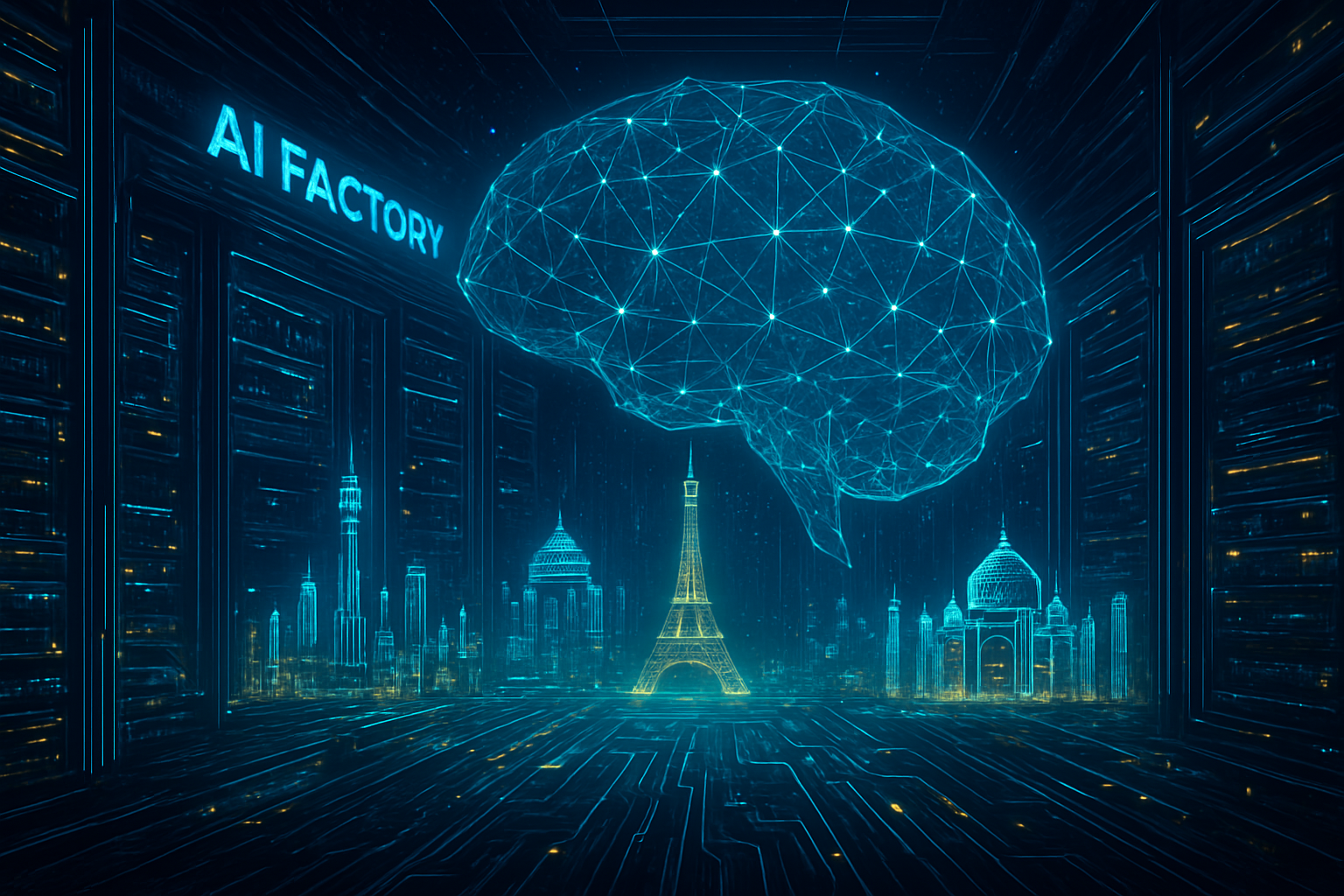
    The announcement comes at a critical inflection point in the AI race. As the world moves beyond simple chatbots into autonomous agentic systems, Huang argued that a nation’s data—its language, culture, and industry-specific expertise—is a natural resource that must be refined locally. The vision of "AI Factories" owned and operated by individual nations is no longer a theoretical framework but a multi-billion-dollar reality, with Japan, France, and India leading a global charge to build domestic GPU clusters that ensure no country is left "digitally colonized" by a handful of offshore providers.

    The Technical Blueprint of National Intelligence

    At the heart of the Sovereign AI movement is a radical shift in infrastructure architecture. During his address, Huang introduced the "Five-Layer AI Cake," a technical roadmap for nations to build domestic intelligence. This stack begins with local energy production and culminates in a sovereign application layer. Central to this is the massive deployment of the NVIDIA Blackwell Ultra (B300) platform, which has become the workhorse of 2026 infrastructure. Huang also teased the upcoming Rubin architecture, featuring the Vera CPU and HBM4 memory, which is projected to reduce inference costs by 10x compared to 2024 standards. This leap in efficiency is what makes sovereign clusters economically viable for mid-sized nations.

    In Japan, the technical implementation has taken the form of a revolutionary "AI Grid." SoftBank Group Corp. (TSE: 9984) is currently deploying a cluster of over 10,000 Blackwell GPUs, aiming for a staggering 25.7 exaflops of compute capability. Unlike traditional data centers, this infrastructure utilizes AI-RAN (Radio Access Network) technology, which integrates AI processing directly into the 5G cellular network. This allows for low-latency, "sovereign at the edge" processing, enabling Japanese robotics and autonomous vehicles to operate on domestic intelligence without ever sending data to foreign servers.

    France has adopted a similarly rigorous technical path, focusing on "Strategic Autonomy." Through a partnership with Mistral AI and domestic providers, the French government has commissioned a dedicated platform featuring 18,000 NVIDIA Grace Blackwell systems. This cluster is specifically designed to run high-parameter, European-tuned models that adhere to strict EU data privacy laws. By using the Grace Blackwell architecture—which integrates the CPU and GPU on a single high-speed bus—France is achieving the energy efficiency required to power these "AI Factories" using its domestic nuclear energy surplus, a key differentiator from the energy-hungry clusters in the United States.

    Industry experts have reacted to this "sovereign shift" with a mixture of awe and caution. Dr. Arati Prabhakar, Director of the White House Office of Science and Technology Policy, noted that while the technical feasibility of sovereign clusters is now proven, the real challenge lies in the "data refining" process. The AI community is closely watching how these nations will balance the open-source nature of AI research with the closed-loop requirements of national security, especially as India begins to offer its 50,000-GPU public-private compute pool to local startups at subsidized rates.

    A New Power Dynamic for Tech Giants

    This shift toward Sovereign AI creates a complex competitive landscape for traditional hyperscalers. For years, Microsoft Corporation (NASDAQ: MSFT), Alphabet Inc. (NASDAQ: GOOGL), and Amazon.com, Inc. (NASDAQ: AMZN) have dominated the AI landscape through their massive, centralized clouds. However, the rise of national clusters forces these giants to pivot. We are already seeing Microsoft and Amazon "sovereignize" their offerings, building region-specific data centers that offer local control over encryption keys and data residency to appease nationalistic mandates.

    NVIDIA, however, stands as the primary beneficiary of this decentralized world. By selling the "picks and shovels" directly to governments and national telcos, NVIDIA has diversified its revenue stream away from a small group of US tech titans. This "Sovereign AI" revenue stream is expected to account for nearly 25% of NVIDIA’s data center business by the end of 2026. Furthermore, regional players like Reliance Industries (NSE: RELIANCE) in India are emerging as new "sovereign hyperscalers," leveraging NVIDIA hardware to provide localized AI services that are more culturally and linguistically relevant than those offered by Western competitors.

    The disruption is equally felt in the startup ecosystem. Domestic clusters in France and India provide a "home court advantage" for local AI labs. These startups no longer have to compete for expensive compute on global platforms; instead, they can access government-subsidized "national intelligence" grids. This is leading to a fragmentation of the AI market, where niche, high-performance models specialized in Japanese manufacturing or Indian fintech are outperforming the "one-size-fits-all" models of the past.

    Strategic positioning has also shifted toward "AI Hardware Diplomacy." Governments are now negotiating GPU allocations with the same intensity they once negotiated oil or grain shipments. NVIDIA has effectively become a geopolitical entity, with its supply chain decisions influencing the economic trajectories of entire regions. For tech giants, the challenge is now one of partnership rather than dominance—they must learn to coexist with, or power, the sovereign infrastructures of the nations they serve.

    Cultural Preservation and the End of Digital Colonialism

    The wider significance of Sovereign AI lies in its potential to prevent what many sociologists call "digital colonialism." In the early years of the AI boom, there was a growing concern that global models, trained primarily on English-language data and Western values, would effectively erase the cultural nuances of smaller nations. Huang’s Davos message explicitly addressed this, stating, "India should not export flour to import bread." By owning the "flour" (data) and the "bakery" (GPU clusters), nations can ensure their AI reflects their unique societal values and linguistic heritage.

    This movement also addresses critical economic security concerns. In a world of increasing geopolitical tension, reliance on a foreign cloud provider for foundational national services—from healthcare diagnostics to power grid management—is seen as a strategic vulnerability. The sovereign AI model provides a "kill switch" and data isolation that ensures national continuity even in the event of global trade disruptions or diplomatic fallout.

    However, this trend toward balkanization also raises concerns. Critics argue that Sovereign AI could lead to a fragmented internet, where "AI borders" prevent the global collaboration that led to the technology's rapid development. There is also the risk of "AI Nationalism" being used to fuel surveillance or propaganda, as sovereign clusters allow governments to exert total control over the information ecosystems within their borders.

    Despite these concerns, the Davos 2026 summit has framed Sovereign AI as a net positive for global stability. By democratizing access to high-end compute, NVIDIA is lowering the barrier for developing nations to participate in the fourth industrial revolution. Comparing this to the birth of the internet, historians may see 2026 as the year the "World Wide Web" began to transform into a network of "National Intelligence Grids," each distinct yet interconnected.

    The Road Ahead: From Clusters to Agents

    Looking toward the latter half of 2026 and into 2027, the focus is expected to shift from building hardware clusters to deploying "Sovereign Agents." These are specialized AI systems that handle specific national functions—such as a Japanese "Aging Population Support Agent" or an Indian "Agriculture Optimization Agent"—that are deeply integrated into local government services. The near-term challenge will be the "last mile" of AI integration: moving these massive models out of the data center and into the hands of citizens via edge computing and mobile devices.

    NVIDIA’s upcoming Rubin platform will be a key enabler here. With its Vera CPU, it is designed to handle the complex reasoning required for autonomous agents at a fraction of the energy cost. We expect to see the first "National Agentic Operating Systems" debut by late 2026, providing a unified AI interface for citizens to interact with their government's sovereign intelligence.

    The long-term challenge remains the talent gap. While countries like France and India have the hardware, they must continue to invest in the human capital required to maintain and innovate on top of these clusters. Experts predict that the next two years will see a "reverse brain drain," as researchers return to their home countries to work on sovereign projects that offer the same compute resources as Silicon Valley but with the added mission of national development.

    A Decisive Moment in the History of Computing

    The WEF Davos 2026 summit will likely be remembered as the moment the global community accepted AI as a fundamental pillar of statehood. Jensen Huang’s vision of Sovereign AI has successfully reframed the technology from a corporate product into a national necessity. The key takeaway is clear: the most successful nations of the next decade will be those that own their own "intelligence factories" and refine their own "digital oil."

    The scale of investment seen in Japan, France, and India is just the beginning. As the Rubin architecture begins its rollout and AI-RAN transforms our telecommunications networks, the boundary between the physical and digital world will continue to blur. This development is as significant to AI history as the transition from mainframes to the personal computer—it is the era of the personal, sovereign supercloud.

    In the coming months, watch for the "Sovereign AI" wave to spread to the Middle East and Southeast Asia, as nations like Saudi Arabia and Indonesia accelerate their own infrastructure plans. The race for national intelligence is no longer just about who has the best researchers; it’s about who has the best-defined borders in the world of silicon.


    This content is intended for informational purposes only and represents analysis of current AI developments.

    TokenRing AI delivers enterprise-grade solutions for multi-agent AI workflow orchestration, AI-powered development tools, and seamless remote collaboration platforms.
    For more information, visit https://www.tokenring.ai/.