Tag: Deep-Tech

  • IIT Madras Incubation Cell Surpasses 500 Deep-Tech Startups, Catalyzing India’s Innovation Ecosystem

    IIT Madras Incubation Cell Surpasses 500 Deep-Tech Startups, Catalyzing India’s Innovation Ecosystem

    Chennai, India – December 3, 2025 – The Indian Institute of Technology Madras (IIT Madras) Incubation Cell (IITMIC) today announced a monumental achievement, having successfully incubated over 500 deep-tech startups since its inception 12 years ago. This landmark milestone, with a total of 511 startups fostered to date, firmly establishes IITMIC as a preeminent force in India's drive for technological innovation and entrepreneurial growth. The announcement underscores a significant acceleration in the nation's capacity to nurture groundbreaking ventures, particularly in critical and complex engineering domains.

    This unprecedented growth in deep-tech incubation is not merely a number; it represents a powerful engine for economic development and self-reliance. The startups emerging from IITMIC boast a combined valuation exceeding ₹53,000 crore (approximately US $6 billion) based on their latest venture capital funding rounds, and have collectively generated over 11,000 direct jobs. This robust contribution to the economy and the creation of high-value employment opportunities are pivotal in India's journey towards becoming a global technology leader and realizing the vision of "Viksit Bharat@2047" (Developed India @2047).

    Pioneering Deep-Tech Innovation and Impact

    The IIT Madras Incubation Cell's success is rooted in its dedicated focus on "deep-tech" startups – ventures that build profound intellectual property and address complex challenges through significant scientific or engineering breakthroughs. Unlike many traditional incubators, IITMIC targets startups operating in "hard sectors" that demand extensive research and development, long gestation periods, and substantial capital investment. These sectors are at the forefront of global innovation, encompassing areas such as orbital launch vehicles with reusable propulsion systems, advanced organ-on-chip platforms, cutting-edge electric mobility solutions (from e-scooters to future flying taxis), sophisticated underwater robotics, quantum security and computing, semiconductor design and manufacturing, climate-tech solutions, advanced Artificial Intelligence (AI) products and machine learning, health tech, manufacturing, defense, aerospace, and biotechnology.

    This strategic emphasis on foundational technologies distinguishes IITMIC's approach. It fosters an environment where innovation is not incremental but transformative, leading to the creation of products and services that can disrupt industries and solve pressing societal problems. The incubator provides comprehensive, end-to-end lifecycle support, guiding startups from the initial validation of core science and technology through rapid Minimum Viable Product (MVP) development, early industry pilots, robust governance structuring, and crucial access to smart capital and strategic partners. This holistic support system, bolstered by IIT Madras's strong institutional backbone and global network, is critical for deep-tech ventures that often face higher barriers to entry and longer development cycles.

    Initial reactions from the AI research community and industry experts have been overwhelmingly positive, hailing IITMIC's milestone as a testament to India's growing prowess in creating a vibrant deep-tech ecosystem. Prof. V. Kamakoti, Director, IIT Madras, and Chairman for IITMIC's Board of Directors, underscored the national significance, stating, "Viksit Bharat@2047 as envisaged by our Hon'ble Prime Minister will be a matured Startup Nation driving all Atmanirbhar critical technologies. Every journey has its first step, and I strongly believe that IIT Madras Incubation Cell has taken that firm progressive step." Dr. Tamaswati Ghosh, CEO of IITMIC, further highlighted the quality of the incubated ventures, noting, "As we mark this 500-startup milestone in our 13th year, IITMIC has already produced two unicorns, one IPO, and several companies poised to cross the billion-dollar valuation threshold or prepare for public listings in the near future." These successes, emerging from some of the hardest sectors, reinforce the depth of IITMIC's innovation model. The Cell has also seen a remarkable acceleration in its activities, incubating over 100 new deep-tech startups in the financial year 2024-25 alone under its "Startup Shatam" mission, a significant increase from its previous annual average of 60. While 39% of the founders are from IIT Madras, a substantial 61% come from across India, demonstrating the incubator's national reach and commitment to diverse talent.

    Reshaping the Tech Landscape: Implications for AI Companies, Giants, and Startups

    The proliferation of over 500 deep-tech startups from IIT Madras (IITM) Incubation Cell (IITMIC) is poised to significantly reshape the competitive dynamics across the global technology landscape, with profound implications for established AI companies, tech giants, and emerging startups alike. This vibrant ecosystem is creating a continuous pipeline of innovation that promises both opportunities and challenges for industry players.

    The primary beneficiaries are, of course, the incubated startups themselves. Companies like Ather Energy (Private), a pioneer in electric vehicles, Uniphore (Private), a leader in conversational AI, Agnikul Cosmos (Private), advancing space tech with reusable propulsion systems, and Mindgrove Technologies (Private), which designed India's first microprocessor chip, represent the vanguard of this deep-tech revolution. IITMIC's comprehensive support system, from validating core science to facilitating access to smart capital and strategic partners, provides these ventures with a crucial runway for success in inherently complex domains. Beyond the direct incubatees, the broader AI industry stands to gain from the consistent influx of novel AI-driven innovations and specialized talent, expanding the overall capabilities and applications of artificial intelligence.

    For major tech giants and established AI labs, IITMIC's success presents a dual scenario of intensified competition and strategic opportunity. The emergence of highly specialized deep-tech competitors, particularly in frontier AI, quantum security, and semiconductor solutions, forces these larger entities to accelerate their own R&D cycles and innovation efforts to maintain market leadership. This "disruption from below" can erode market share if incumbents are slow to adapt. Furthermore, the nurturing of a strong pool of deep-tech talent from IIT Madras and across India creates a more competitive landscape for attracting skilled AI engineers and researchers. Conversely, this robust ecosystem positions IIT Madras as a strategic deep-tech investment destination, offering major players prime opportunities for talent acquisition, strategic partnerships, and even outright acquisitions to integrate cutting-edge technologies and expand into new, high-growth markets.

    The disruptive potential extends across numerous sectors. In space technology, startups like Agnikul Cosmos and GalaxEye Space (Private) are challenging traditional aerospace and satellite services by making space access more affordable and efficient, while The ePlane Company (Private) aims to revolutionize urban transport with electric flying taxis. Healthcare and biotechnology are seeing transformations through innovations like "organ-on-chip platforms" and advanced medical devices, potentially rendering existing diagnostic and drug discovery methods obsolete. The electric mobility sector, already impacted by companies like Ather Energy, is set for further shifts. In semiconductors, Mindgrove Technologies directly challenges the global supply chain, while advancements in quantum security promise to disrupt current encryption and cybersecurity paradigms. Finally, specialized AI applications from these startups, focusing on real-time analysis and tailored industry solutions, are poised to disrupt conventional software, automation, and data analytics services by offering more intelligent and efficient alternatives. The strategic advantages for these startups lie in their deep intellectual property, unparalleled access to IIT Madras's research infrastructure and talent, institutional credibility, and a clear ambition for global market penetration, positioning them to compete on an international stage and enhance India's standing as a "Product Nation."

    A Blueprint for a Developed India: Wider Significance and Global Positioning

    The IIT Madras Incubation Cell's achievement of crossing 500 deep-tech incubations is not merely an institutional triumph, but a pivotal moment in India's journey towards becoming a global technological powerhouse. This milestone profoundly impacts the broader AI landscape, aligns with critical global tech trends, and solidifies India's position as a burgeoning tech hub, while also bringing into focus the inherent challenges of deep-tech growth.

    This monumental success fits seamlessly into the broader global AI landscape, where deep technology is increasingly recognized as the engine of future innovation. AI is the undisputed "star" within India's deep-tech sector, with an astonishing 74% of new deep-tech startups in 2023 focusing on AI, and 86% of funded ventures having an AI core. The Indian AI market is projected to reach a staggering $7.8 billion by 2025, with deep-tech innovations, including the burgeoning field of Generative AI, expected to contribute an astounding $1 trillion to India's GDP by 2030. IITMIC's strategic goals—to elevate Indian technologists into the top 2% globally in specific fields and position India among the top five countries in five critical technology sectors—underscore a national commitment to not just participate but lead in the Fourth Industrial Revolution. The IITs, particularly IIT Madras, are proving instrumental in translating cutting-edge academic research into practical AI solutions, fostering invaluable industry-academia collaborations that are critical for such an ambitious vision.

    The impact on India's position as a global tech hub is undeniable. This achievement significantly bolsters IIT Madras's reputation as India's premier center for technology-driven innovation, with IITMIC actively "rewriting India's deep-tech playbook" and building "India's deep-tech Engine." India is already recognized as the world's third-largest deep-tech hub, with 480 new ventures established in 2023 alone. The success of IITMIC is positioning IIT Madras as an attractive deep-tech investment destination for global capital and industry partnerships, accelerating India's national vision of becoming a "Product Nation" and a "Startup Nation" on its path to "Viksit Bharat 2047." Tamil Nadu, spearheaded by institutions like IIT Madras, is rapidly emerging as the deep-tech capital of India, with its incubation model serving as a potential blueprint for replication across the country to further catalyze national innovation. The remarkable 80% survival rate of IITMIC-incubated startups, significantly higher than the typical 4-6% outside structured environments, serves as a powerful testament to the efficacy of this model.

    However, the rapid growth in deep-tech also brings potential concerns and challenges that require strategic attention. A significant funding crunch saw deep-tech investments decline by 77% in 2023, totaling $850 million, as venture capitalists often shy away from the long development timelines and higher risks associated with deep-tech. The sector also grapples with a notable shortage of highly skilled professionals, as startups struggle to compete with the lucrative offers from established tech giants. Long gestation periods, complex regulatory hurdles in sectors like biotech and health tech, challenges in market adoption for unproven solutions, and the intricacies of intellectual property (IP) protection all pose significant barriers. Furthermore, the compute-intensive nature of deep-tech, especially in AI, highlights the need for sustainable and democratized access to high-performance computing infrastructure. India's relatively low R&D expenditure—less than 1% of its GDP—compared to global leaders, also points to a broader systemic challenge in fostering foundational breakthroughs. While IITMIC's achievement is a milestone in itself, its significance can be likened to historical breakthroughs that catalyzed entire industrial revolutions, with deep-tech poised to add $1 trillion to India's GDP by 2030 and usher in Industrial Revolution 4.0. The "Startup Shatam" mission, incubating over 100 deep-tech startups in a single financial year, is a historic feat, setting a new benchmark for deep-tech entrepreneurship.

    The Road Ahead: Future Developments and India's Deep-Tech Horizon

    The remarkable milestone of IIT Madras Incubation Cell (IITMIC) incubating over 500 deep-tech startups is not an endpoint, but a powerful launchpad for India's technological future. With strategic plans for aggressive expansion and a clear vision for global impact, IITMIC is set to play an even more pivotal role in shaping the landscape of deep technology and AI in the coming years.

    In the near term, IITMIC is focused on solidifying its foundational strengths and accelerating the commercial success of its ventures. Having successfully completed its "Startup Shatam" mission by incubating 104 deep-tech startups in FY 2024-25, the Cell is committed to continuously screening over 100 new startup applications each month, ensuring a robust pipeline of emerging innovations. A key near-term objective is to facilitate global market access for these startups through strategic international collaborations, enhancing mentoring frameworks, and refining go-to-market strategies to cultivate globally competitive multinational companies. Furthermore, IIT Madras's aim to file 366 patents in 2024 underscores a strong emphasis on generating and protecting intellectual property, a critical component for deep-tech success.

    Looking towards 2030, IITMIC has unveiled an "Audacious 10x Plan," envisioning a massive scale-up of its deep-tech incubation efforts. This ambitious plan includes ramping up the annual intake of incubatees from approximately 45 to an astounding 1,000 per year, a twenty-fold increase designed to create an unparalleled ecosystem of deep-tech ventures. A crucial element of this long-term strategy is the establishment of a decentralized incubation network, partnering with 50-100 incubators in tier-2, tier-3, and tier-4 institutions across India. This will foster regional innovation, mentor local talent, and standardize incubation processes nationwide. The ultimate goal is to nurture approximately fifty Indian-origin products, each projected to achieve over ₹1,000 crore in annual revenue, thereby creating industry-scale champions and solidifying India's position among the top five countries in five critical technology sectors, aligning perfectly with the "Product Nation," "Startup Nation," and "Viksit Bharat 2047" national visions.

    The potential applications and use cases emerging from these deep-tech incubations are vast and transformative. On the horizon are continued advancements in space exploration and defense, with reusable propulsion systems and sophisticated UAV technologies. Health tech and biotechnology will see breakthroughs in organ-on-chip platforms and advanced medical solutions. The mobility sector will evolve further with electric mobility solutions, including electric flying taxis and advanced battery innovations. Artificial Intelligence and quantum computing will drive new frontiers in AI-based products, machine learning, AR/VR, blockchain, quantum security, and fintech, including advanced AI models optimized for low-bandwidth environments. Additionally, innovations in advanced manufacturing, robotics, sustainable technologies (climate-tech, green energy), semiconductor systems, IoT, and cyber-physical systems are poised to address complex global challenges.

    However, sustaining this rapid growth necessitates addressing several critical challenges. The inherent long gestation periods of deep-tech ventures, often requiring a decade to yield significant financial returns, clash with the shorter investment horizons of many Indian investors. Consistent access to capital remains a concern, with IIT Madras advocating for a dedicated ₹200 crore venture capital fund and emphasizing the need for government support and risk funds for early-stage investments. Furthermore, the transition from successful prototypes to scalable commercial products and global market penetration requires ongoing strategic partnerships and robust go-to-market strategies. Experts predict a robust future for deep-tech in India, with the market projected to reach $30 billion by 2030, driven by defense innovation and robotics. India is emerging as a trusted, low-cost global hub for deep-tech, serving as the backbone for the next phase of digital growth. Initiatives like the India Quantum Mission, with a budget of over ₹6,000 crores to develop quantum computers and related technologies, underscore a national commitment to leading the quantum revolution, an industry expected to exceed $2 trillion by 2035. These deep-tech startups are not just building businesses; they are solving national imperatives in health access, defense resilience, education parity, and sustainable energy, promising a future where India's technological prowess addresses both local and global challenges.

    A New Era for Indian Innovation: Comprehensive Wrap-up and Future Outlook

    The milestone of IIT Madras Incubation Cell (IITMIC) surpassing 500 deep-tech incubations marks a pivotal moment in India's journey towards becoming a global leader in technology and innovation. This achievement, culminating in 511 startups over 12 years, is far more than a numerical triumph; it signifies the maturation of a robust ecosystem dedicated to fostering groundbreaking, intellectual property-driven ventures that are reshaping industries and addressing critical societal challenges.

    Key Takeaways: The IITMIC portfolio, with a combined valuation exceeding ₹53,000 crore (US $6 billion), has generated over 11,000 direct jobs, underscoring its significant economic impact. These startups are at the forefront of deep technology, developing solutions in complex sectors ranging from reusable propulsion systems for orbital launch vehicles and organ-on-chip platforms to advanced electric mobility, quantum security, semiconductors, climate-tech, and cutting-edge AI products. The Cell boasts an impressive track record, including two "unicorns," one successful IPO (from Ather Energy [NSE: ATHER]), and over 700 patents filed, demonstrating a strong commitment to foundational innovation. The "Startup Shatam" mission, which saw over 100 new deep-tech startups incubated in FY 2024-25, highlights an accelerating pace of innovation, supported by IITMIC's comprehensive lifecycle assistance and a diverse founder base, with 61% of startups originating from outside the IIT Madras community.

    Significance in AI History and the Broader Tech Landscape: This development firmly establishes IIT Madras as a leading hub for technology-driven innovation, profoundly contributing to India's deep-tech ecosystem and its aspirations for technological self-reliance. In the context of AI history, IITMIC's focus on advanced AI products and machine learning is particularly crucial, positioning India to capture a significant share of the projected $7.8 billion Indian AI market by 2025. The Cell's success is a tangible manifestation of the "Viksit Bharat@2047" vision, demonstrating how academic institutions can drive the creation of a "matured Startup Nation" powered by "Atmanirbhar" (self-reliant) critical technologies. By translating cutting-edge academic research into viable, industry-ready solutions, IITMIC is not just fostering startups but building the very infrastructure for India's future technological leadership.

    Final Thoughts on Long-Term Impact: The long-term impact of IITMIC's sustained efforts promises to be transformative. The ambitious "Audacious 10x Plan" to scale incubation to 1,000 startups annually and establish a decentralized network across India's smaller cities will democratize deep-tech entrepreneurship and unleash a new wave of innovation nationwide. This will lead to the creation of globally competitive "multinational" startups, significantly strengthen India's intellectual property landscape, and drive diverse technological advancements across an array of critical domains. The vision articulated by IIT Madras Director Prof. V. Kamakoti, of potentially witnessing "an IPO every week" from this ecosystem, encapsulates the profound economic and societal shift anticipated. This sustained focus on deep-tech is cultivating a vibrant entrepreneurial culture that will continue to translate scientific research into commercial success, ensuring India's prominent role in the global innovation arena for decades to come.

    What to Watch For in the Coming Weeks and Months: As IITMIC continues its trajectory, several key indicators will be crucial to observe. The sustained growth of its startup pipeline, with over 100 new applications screened monthly, will signal the ongoing vitality of the ecosystem. Keep an eye on the accelerated commercial success of existing ventures and any announcements regarding new unicorns or successful IPOs, which will validate the economic potential of deep-tech. Furthermore, IITMIC's intensified focus on strategic sectors such as climate-tech, agriculture, rural-tech, water, sustainability, future factory, and supply chain management could yield significant breakthroughs. Lastly, the expansion of global partnerships and international collaborations will be vital for IITMIC startups to access broader markets and resources, solidifying India's position on the global innovation stage. The journey of IIT Madras Incubation Cell is a testament to the power of strategic incubation in building a technologically advanced and self-reliant nation.


    This content is intended for informational purposes only and represents analysis of current AI developments.

    TokenRing AI delivers enterprise-grade solutions for multi-agent AI workflow orchestration, AI-powered development tools, and seamless remote collaboration platforms.
    For more information, visit https://www.tokenring.ai/.
  • Israel Breaks Ground on Ashkelon Chip Plant: A New Era for Deep-Tech and National Security

    Israel Breaks Ground on Ashkelon Chip Plant: A New Era for Deep-Tech and National Security

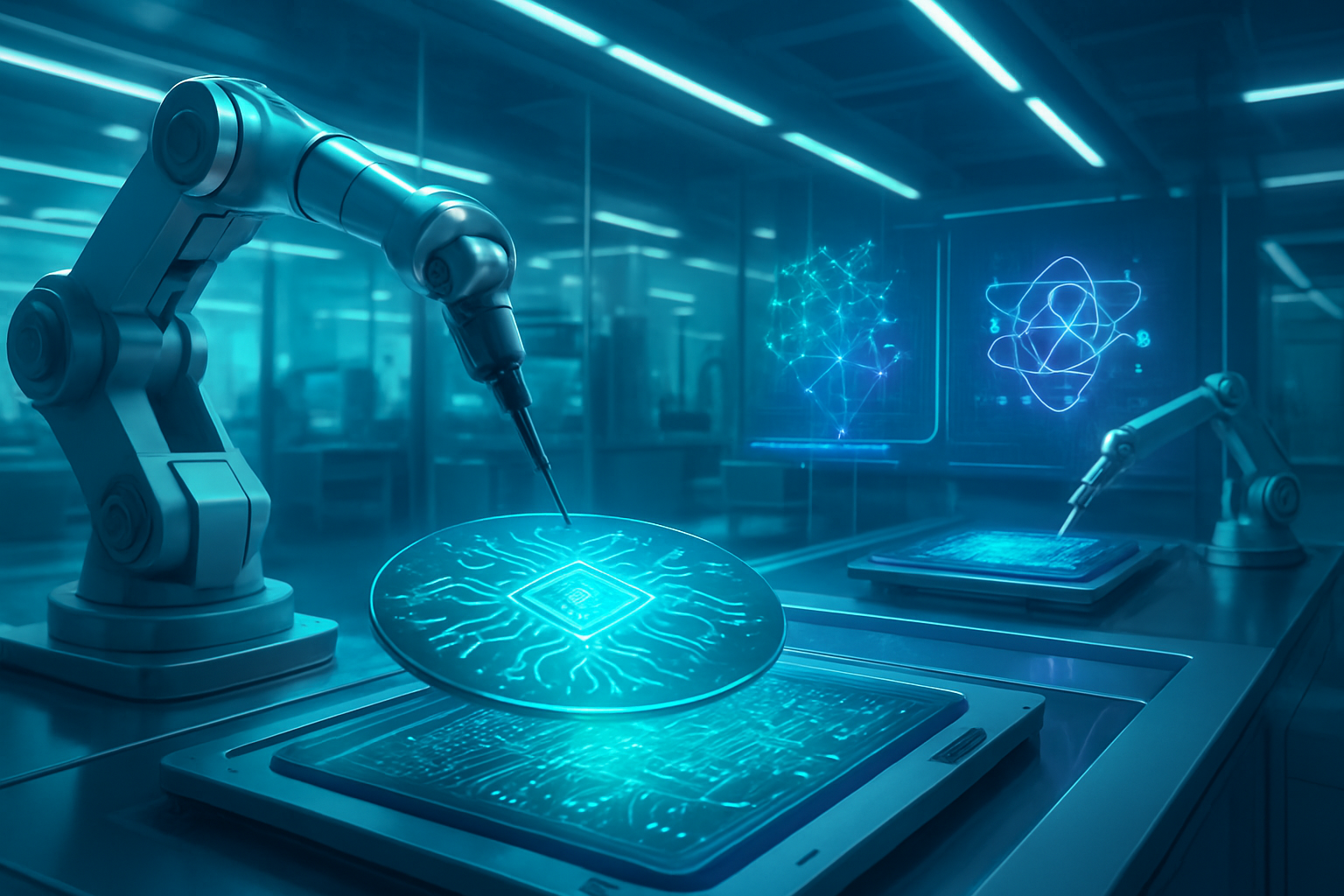
    In a landmark move poised to reshape the global deep-tech landscape, an Israeli-Canadian investment group, Awz (Awz Ventures Inc.), today announced and broke ground on a new, state-of-the-art specialized chip manufacturing plant in Ashkelon, Israel. This ambitious project, part of Awz's new national deep-tech center dubbed "The RISE," represents a significant stride towards technological independence and a bolstering of strategic capabilities for both defense and civilian applications. With an initial investment of NIS 5 billion (approximately $1.3-$1.6 billion USD), this facility is set to become a cornerstone of advanced semiconductor production, focusing on next-generation III-V compound semiconductors.

    The announcement, made on Thursday, November 13, 2025, signals a pivotal moment for Israel's burgeoning technology sector and its national security interests. The Ashkelon plant is not merely another fabrication facility; it is a strategic national project designed to cultivate cutting-edge innovation in areas critical to the future of artificial intelligence, quantum computing, and advanced communications. Its establishment underscores a global trend towards securing domestic supply chains for essential technological components, particularly in an increasingly complex geopolitical environment.

    Pioneering Next-Generation Semiconductors for Critical Applications

    The Ashkelon facility will distinguish itself by specializing in the production of III-V compound semiconductors on silicon and other substrates, a significant departure from the more common silicon-based chip manufacturing. These specialized semiconductors are lauded for their superior properties, including higher electron mobility, enhanced power efficiency, and exceptional light emission capabilities, which far surpass those of traditional silicon. This technological edge makes them indispensable for the most demanding and forward-looking applications.

    The chips produced here will power the backbone of future AI infrastructure, enabling faster and more efficient processing for complex algorithms and machine learning models. Beyond AI, these advanced semiconductors are crucial for the development of quantum computing, offering the foundational components for building stable and scalable quantum systems. Furthermore, their superior performance characteristics are vital for the next generation of wireless communications, specifically 5G and 6G networks, promising unprecedented speeds and reliability. This focus on III-V compounds positions the Ashkelon plant at the forefront of innovation, addressing the limitations of existing silicon technology in these highly specialized and critical domains. The initial reactions from the AI research community and industry experts are overwhelmingly positive, highlighting the strategic foresight in investing in such advanced materials and manufacturing capabilities, which are essential for unlocking the full potential of future technologies.

    Reshaping the AI and Tech Ecosystem

    The establishment of The RISE and its specialized chip plant in Ashkelon will undoubtedly send ripples across the AI and tech industry, creating both beneficiaries and competitive shifts. Companies heavily invested in advanced AI research, quantum computing, and next-generation telecommunications stand to gain immensely from a reliable, high-performance domestic source of III-V compound semiconductors. Israeli AI startups and research institutions, in particular, will benefit from direct access to cutting-edge fabrication capabilities, fostering rapid prototyping and innovation cycles that were previously constrained by reliance on foreign foundries.

    For major AI labs and tech giants globally, this development offers a diversified supply chain option for critical components, potentially reducing geopolitical risks and lead times. The "open fab" model, allowing access for startups, research institutes, and global corporations, will foster an ecosystem of collaboration, potentially accelerating breakthroughs across various sectors. While it may not directly disrupt existing mass-market silicon chip production, it will certainly challenge the dominance of current specialized chip manufacturers and could lead to new partnerships and competitive pressures in niche, high-value markets. Companies focused on specialized hardware for AI accelerators, quantum processors, and advanced RF components will find a new strategic advantage in leveraging the capabilities offered by this facility, potentially shifting market positioning and enabling the development of entirely new product lines.

    A Strategic Pillar in the Broader AI Landscape

    This investment in Ashkelon fits perfectly into the broader global trend of nations prioritizing technological sovereignty and robust domestic supply chains, especially for critical AI components. In an era where geopolitical tensions can disrupt essential trade routes and access to advanced manufacturing, establishing local production capabilities for specialized chips is not just an economic decision but a national security imperative. The plant's dual-use potential, serving both Israel's defense sector and civilian industries, highlights its profound strategic importance. It aims to reduce reliance on foreign supply chains, thereby enhancing Israel's security and technological independence.

    Comparisons can be drawn to similar national initiatives seen in the US, Europe, and Asia, where governments are pouring billions into semiconductor manufacturing to ensure future competitiveness and resilience. However, Israel's focus on III-V compound semiconductors differentiates this effort, positioning it as a leader in a crucial, high-growth niche rather than directly competing with mass-market silicon foundries. The potential concerns revolve around the significant initial investment and the long ramp-up time for such complex facilities, as well as the need to attract and retain highly specialized talent. Nevertheless, this milestone is seen as a crucial step in cementing Israel's reputation as a global deep-tech powerhouse, capable of not only innovating but also manufacturing the foundational technologies of tomorrow.

    The Horizon: Applications and Anticipated Challenges

    Looking ahead, the Ashkelon plant is expected to catalyze a wave of innovation across multiple sectors. In the near term, we can anticipate accelerated development in secure communication systems for defense, more powerful and energy-efficient AI processors for data centers, and advanced sensor technologies. Long-term developments could see these III-V chips becoming integral to practical quantum computers, revolutionizing drug discovery, material science, and cryptography. The "open fab" model is particularly promising, as it could foster a vibrant ecosystem where startups and academic institutions can rapidly experiment with novel chip designs and applications, significantly shortening the innovation cycle.

    However, challenges remain. The intricate manufacturing processes for III-V compound semiconductors require highly specialized expertise and equipment, necessitating significant investment in talent development and infrastructure. Scaling production while maintaining stringent quality control will be paramount. Experts predict that this facility will attract further foreign investment into Israel's deep-tech sector and solidify its position as a hub for advanced R&D and manufacturing. The success of this venture could inspire similar specialized manufacturing initiatives globally, as nations seek to gain an edge in critical emerging technologies.

    A New Chapter for Israel's Tech Ambition

    The groundbreaking of the specialized chip manufacturing plant in Ashkelon marks a momentous occasion, representing a strategic pivot towards greater technological self-reliance and leadership in advanced semiconductor production. Key takeaways include the significant investment by Awz Ventures Inc., the focus on high-performance III-V compound semiconductors for AI, quantum computing, and 5G/6G, and the profound strategic importance for both defense and civilian applications. This development is not just about building a factory; it's about constructing a future where Israel plays a more central role in manufacturing the foundational technologies that will define the 21st century.

    This investment is a testament to Israel's enduring commitment to innovation and its proactive approach to securing its technological future. Its significance in AI history will be measured by its ability to accelerate breakthroughs in critical AI hardware, foster a new generation of deep-tech companies, and enhance national security through domestic manufacturing. In the coming weeks and months, industry watchers will be keenly observing the progress of the plant's construction, the partnerships it forms, and the initial research and development projects it enables. This is a bold step forward, promising to unlock new frontiers in artificial intelligence and beyond.


    This content is intended for informational purposes only and represents analysis of current AI developments.

    TokenRing AI delivers enterprise-grade solutions for multi-agent AI workflow orchestration, AI-powered development tools, and seamless remote collaboration platforms.
    For more information, visit https://www.tokenring.ai/.
  • India’s Deep-Tech Ascent: Unicorn India Ventures’ Fund III Ignites Semiconductor and AI Innovation

    India’s Deep-Tech Ascent: Unicorn India Ventures’ Fund III Ignites Semiconductor and AI Innovation

    Unicorn India Ventures, a prominent early-stage venture capital firm, is making significant waves in the Indian tech ecosystem with its third fund, Fund III, strategically targeting the burgeoning deep-tech and semiconductor sectors. Launched with an ambitious vision to bolster indigenous innovation, Fund III has emerged as a crucial financial conduit for cutting-edge startups, signaling India's deepening commitment to becoming a global hub for advanced technological development. This move is not merely about capital deployment; it represents a foundational shift in investment philosophy, emphasizing intellectual property-driven enterprises that are poised to redefine the global tech landscape, particularly within AI, robotics, and advanced computing.

    The firm's steadfast focus on deep-tech, including artificial intelligence, quantum computing, and the critical semiconductor value chain, underscores a broader national initiative to foster self-reliance and technological leadership. As of late 2024 and heading into 2025, Fund III has been actively deploying capital, aiming to cultivate a robust portfolio of companies that can compete on an international scale. This strategic pivot by Unicorn India Ventures reflects a growing recognition of India's engineering talent and entrepreneurial spirit, positioning the nation not just as a consumer of technology, but as a significant producer and innovator, capable of shaping the next generation of AI and hardware breakthroughs.

    Strategic Investments Fueling India's Technological Sovereignty

    Unicorn India Ventures' Fund III, which announced its first close on September 5, 2023, is targeting a substantial corpus of Rs 1,000 crore, with a greenshoe option potentially expanding it to Rs 1,200 crore (approximately $144 million USD). As of March 2025, the fund had already secured around Rs 750 crore and is on track for a full close by December 2025, demonstrating strong investor confidence in its deep-tech thesis. A significant 75-80% of the fund is explicitly earmarked for deep-tech sectors, including semiconductors, spacetech, climate tech, agritech, robotics, hardware, medical diagnostics, biotech, artificial intelligence, and quantum computing. The remaining 20-25% is allocated to global Software-as-a-Service (SaaS) and digital platform companies, alongside 'Digital India' initiatives.

    The fund's investment strategy is meticulously designed to identify and nurture early-stage startups that possess defensible intellectual property and a clear path to profitability. Unicorn India Ventures typically acts as the first institutional investor, writing initial cheques of Rs 10 crore ($1-2 million) and reserving substantial follow-on capital—up to $10-15 million—for its most promising portfolio companies. This approach contrasts sharply with the high cash-burn models often seen in consumer internet or D2C businesses, instead prioritizing technology-enabled solutions for critical, often underserved, 'analog industries.' A notable early investment from Fund III is Netrasami, a semiconductor production company, which received funding on December 10, 2024, highlighting the fund's commitment to the core hardware infrastructure. Other early investments include EyeRov, Orbitaid, Exsure, Aurassure, Qubehealth, and BonV, showcasing a diverse yet focused portfolio.

    This strategic emphasis on deep-tech and semiconductors is a departure from previous venture capital trends that often favored consumer-facing digital platforms. It signifies a maturation of the Indian startup ecosystem, moving beyond services and aggregation to fundamental innovation. The firm's pan-India investment approach, with over 60% of its portfolio originating from tier 2 and tier 3 cities, further differentiates it, tapping into a broader pool of talent and innovation beyond traditional tech hubs. This distributed investment model is crucial for fostering a truly national deep-tech revolution, ensuring that groundbreaking ideas from across the country receive the necessary capital and mentorship to scale.

    The initial reactions from the AI research community and industry experts have been largely positive, viewing this as a critical step towards building a resilient and self-sufficient technology base in India. Experts note that a strong domestic semiconductor industry is foundational for advancements in AI, machine learning, and quantum computing, as these fields are heavily reliant on advanced processing capabilities. Unicorn India Ventures' proactive stance is seen as instrumental in bridging the funding gap for hardware and deep-tech startups, which historically have found it challenging to attract early-stage capital compared to their software counterparts.

    Reshaping the AI and Tech Landscape: Competitive Implications and Market Positioning

    Unicorn India Ventures' Fund III's strategic focus is poised to significantly impact AI companies, established tech giants, and emerging startups, both within India and globally. By backing deep-tech and semiconductor ventures, the fund is directly investing in the foundational layers of future AI innovation. Companies developing specialized AI chips, advanced sensors, quantum computing hardware, and sophisticated AI algorithms embedded in physical systems (robotics, autonomous vehicles) stand to benefit immensely. This funding provides these nascent companies with the runway to develop complex, long-cycle technologies that are often capital-intensive and require significant R&D.

    For major AI labs and tech companies, this development presents a dual scenario. On one hand, it could foster a new wave of potential acquisition targets or strategic partners in India, offering access to novel IP and specialized talent. Companies like Nvidia (NASDAQ: NVDA), Intel (NASDAQ: INTC), and Google (NASDAQ: GOOGL), which are heavily invested in AI hardware and software, might find a fertile ground for collaboration or talent acquisition. On the other hand, a strengthened Indian deep-tech ecosystem could eventually lead to increased competition, as indigenous companies mature and offer alternatives to global incumbents, particularly in niche but critical areas of AI infrastructure and application.

    The potential disruption to existing products or services is substantial. As Indian deep-tech startups, fueled by funds like Unicorn India Ventures' Fund III, bring advanced semiconductor designs and AI-powered hardware to market, they could offer more cost-effective, customized, or regionally optimized solutions. This could challenge the dominance of existing global suppliers and accelerate the adoption of new AI paradigms that are less reliant on imported technology. For instance, advancements in local semiconductor manufacturing could lead to more energy-efficient AI inference engines or specialized chips for edge AI applications tailored for Indian market conditions.

    From a market positioning standpoint, this initiative strengthens India's strategic advantage in the global tech race. By cultivating strong intellectual property in deep-tech, India moves beyond its role as a software services powerhouse to a hub for fundamental technological creation. This shift is critical for national security, economic resilience, and for securing a leadership position in emerging technologies. It signals to the world that India is not just a market for technology, but a significant contributor to its advancement, attracting further foreign investment and fostering a virtuous cycle of innovation and growth.

    Broader Significance: India's Role in the Global AI Narrative

    Unicorn India Ventures' Fund III fits squarely into the broader global AI landscape, reflecting a worldwide trend towards national self-sufficiency in critical technologies and a renewed focus on hardware innovation. As geopolitical tensions rise and supply chain vulnerabilities become apparent, nations are increasingly prioritizing domestic capabilities in semiconductors and advanced computing. India, with its vast talent pool and growing economy, is uniquely positioned to capitalize on this trend, and Fund III is a testament to this strategic imperative. This investment push is not just about economic growth; it's about technological sovereignty and securing a place at the forefront of the AI revolution.

    The impacts of this fund extend beyond mere financial metrics. It will undoubtedly accelerate the development of cutting-edge AI applications in sectors crucial to India, such as healthcare (AI-powered diagnostics), agriculture (precision farming with AI), defense (autonomous systems), and manufacturing (robotics and industrial AI). The emphasis on deep-tech inherently encourages research-intensive startups, fostering a culture of scientific inquiry and engineering excellence that is essential for sustainable innovation. This could lead to breakthroughs that address unique challenges faced by emerging economies, potentially creating scalable solutions applicable globally.

    However, potential concerns include the long gestation periods and high capital requirements typical of deep-tech and semiconductor ventures. While Unicorn India Ventures has a strategic approach to follow-on investments, sustaining these companies through multiple funding rounds until they achieve profitability or significant market share will be critical. Additionally, attracting and retaining top-tier talent in highly specialized fields like semiconductor design and quantum computing remains a challenge, despite India's strong STEM graduates. The global competition for such talent is fierce, and India will need to continuously invest in its educational and research infrastructure to maintain a competitive edge.

    Comparing this to previous AI milestones, this initiative marks a shift from the software-centric AI boom of the last decade to a more integrated, hardware-aware approach. While breakthroughs in large language models and machine learning algorithms have dominated headlines, the underlying hardware infrastructure that powers these advancements is equally vital. Unicorn India Ventures' focus acknowledges that the next wave of AI innovation will require synergistic advancements in both software and specialized hardware, echoing the foundational role of semiconductor breakthroughs in every previous technological revolution. It’s a strategic move to build the very bedrock upon which future AI will thrive.

    Future Developments: The Road Ahead for Indian Deep-Tech

    The expected near-term developments from Unicorn India Ventures' Fund III include a continued aggressive deployment of capital into promising deep-tech and semiconductor startups, with a keen eye on achieving its full fund closure by December 2025. We can anticipate more announcements of strategic investments, particularly in areas like specialized AI accelerators, advanced materials for electronics, and embedded systems for various industrial applications. The fund's existing portfolio companies will likely embark on their next growth phases, potentially seeking larger Series A or B rounds, fueled by the initial backing and strategic guidance from Unicorn India Ventures.

    In the long term, the impact could be transformative. We might see the emergence of several 'unicorn' companies from India, not just in software, but in hard-tech sectors, challenging global incumbents. Potential applications and use cases on the horizon are vast, ranging from indigenous AI-powered drones for surveillance and logistics, advanced medical imaging devices utilizing Indian-designed chips, to climate-tech solutions leveraging novel sensor technologies. The synergy between AI software and custom hardware could lead to highly efficient and specialized solutions tailored for India's unique market needs and eventually exported worldwide.

    However, several challenges need to be addressed. The primary one is scaling production and establishing robust supply chains for semiconductor and hardware companies within India. This requires significant government support, investment in infrastructure, and fostering an ecosystem of ancillary industries. Regulatory frameworks also need to evolve rapidly to support the fast-paced innovation in deep-tech, particularly concerning IP protection and ease of doing business for complex manufacturing. Furthermore, continuous investment in R&D and academic-industry collaboration is crucial to maintain a pipeline of innovation and skilled workforce.

    Experts predict that the success of funds like Unicorn India Ventures' Fund III will be a critical determinant of India's stature in the global technology arena over the next decade. They foresee a future where India not only consumes advanced technology but also designs, manufactures, and exports it, particularly in the deep-tech and AI domains. The coming years will be crucial in demonstrating the scalability and global competitiveness of these Indian deep-tech ventures, potentially inspiring more domestic and international capital to flow into these foundational sectors.

    Comprehensive Wrap-up: A New Dawn for Indian Innovation

    Unicorn India Ventures' Fund III represents a pivotal moment for India's technological ambitions, marking a strategic shift towards fostering indigenous innovation in deep-tech and semiconductors. The fund's substantial corpus, focused investment thesis on IP-driven companies, and pan-India approach are key takeaways, highlighting a comprehensive strategy to build a robust, self-reliant tech ecosystem. By prioritizing foundational technologies like AI hardware and advanced computing, Unicorn India Ventures is not just investing in startups; it is investing in the future capacity of India to lead in the global technology race.

    This development holds significant importance in AI history, as it underscores the growing decentralization of technological innovation. While Silicon Valley has long been the undisputed epicenter, initiatives like Fund III demonstrate that emerging economies are increasingly capable of generating and scaling cutting-edge technologies. It's a testament to the global distribution of talent and the potential for new innovation hubs to emerge and challenge established norms. The long-term impact will likely be a more diversified and resilient global tech supply chain, with India playing an increasingly vital role in both hardware and software AI advancements.

    What to watch for in the coming weeks and months includes further announcements of Fund III's investments, particularly in high-impact deep-tech areas. Observing the growth trajectories of their early portfolio companies, such as Netrasami, will provide valuable insights into the efficacy of this investment strategy. Additionally, keeping an eye on government policies related to semiconductor manufacturing and AI research in India will be crucial, as these will significantly influence the environment in which these startups operate and scale. The success of Fund III will be a strong indicator of India's deep-tech potential and its ability to become a true powerhouse in the global AI landscape.


    This content is intended for informational purposes only and represents analysis of current AI developments.

    TokenRing AI delivers enterprise-grade solutions for multi-agent AI workflow orchestration, AI-powered development tools, and seamless remote collaboration platforms.
    For more information, visit https://www.tokenring.ai/.