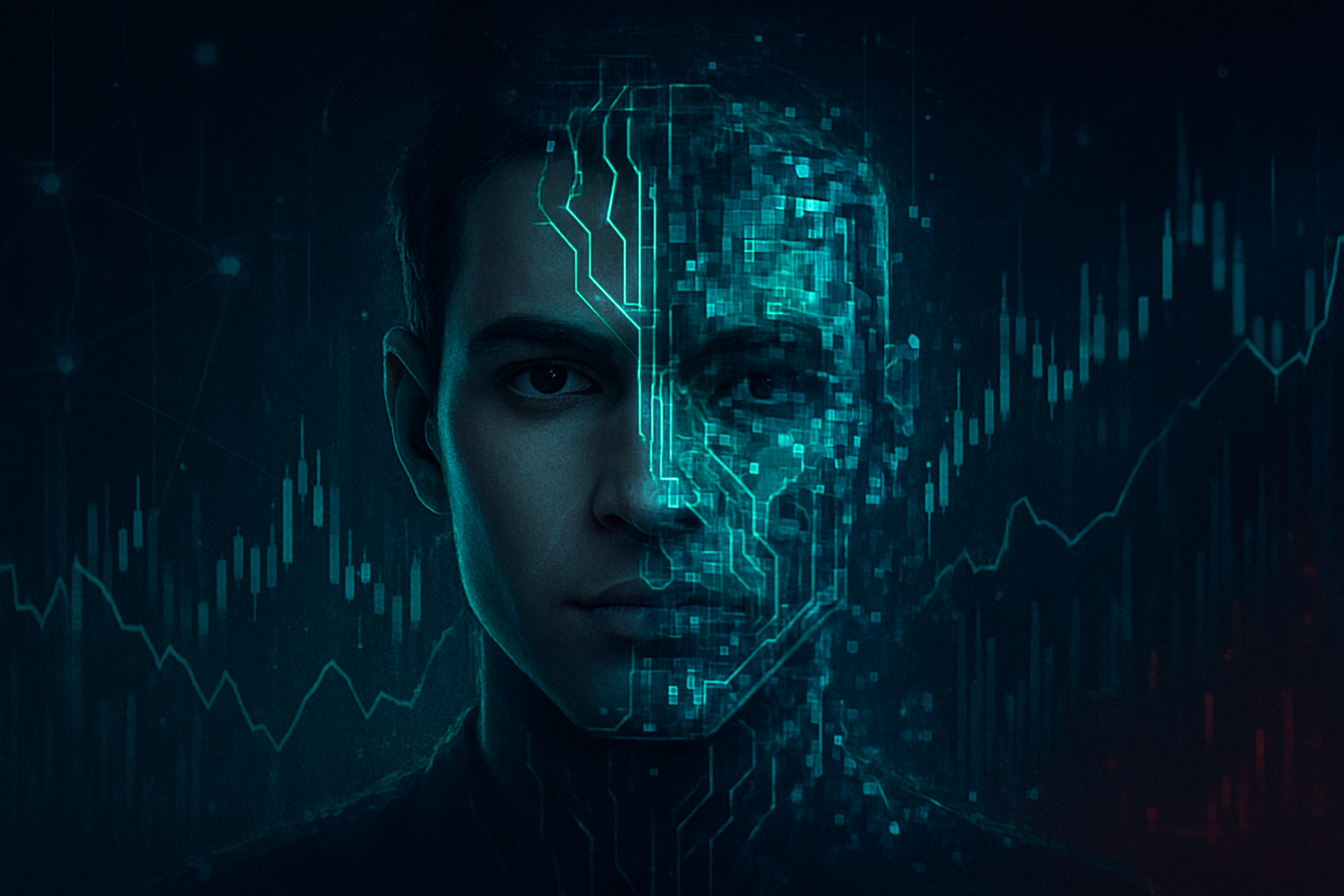
The rise of sophisticated AI-generated deepfake videos has cast a long shadow over the integrity of financial markets, particularly in the realm of stock trading. As of November 2025, these highly convincing, yet entirely fabricated, audio and visual deceptions are being increasingly weaponized for misinformation and fraudulent promotions, leading to substantial financial losses and prompting urgent global police and regulatory interventions. The alarming surge in deepfake-related financial crimes threatens to erode fundamental trust in digital media and the very systems underpinning global finance.
Recent data paints a stark picture: deepfake-related incidents have seen an exponential increase, with reported cases nearly quadrupling in the first half of 2025 alone compared to the entirety of 2024. This surge has translated into cumulative losses nearing $900 million by mid-2025, with individual companies facing average losses close to half a million dollars per incident. From impersonating top executives to endorse fake investment schemes to fabricating market-moving announcements, deepfakes are introducing a dangerous new dimension to financial crime, necessitating a rapid and robust response from authorities and the tech industry alike.
The Technical Underbelly: How AI Fuels Financial Deception
The creation of deepfakes, a portmanteau of "deep learning" and "fake," relies on advanced artificial intelligence techniques, primarily deep learning and sophisticated neural network architectures. Generative Adversarial Networks (GANs), introduced in 2014, are at the forefront, pitting a "generator" network against a "discriminator" network. The generator creates synthetic content—be it images, videos, or audio—while the discriminator attempts to identify if the content is real or fake. This adversarial process continuously refines the generator's ability to produce increasingly convincing, indistinguishable fakes. Autoencoders (VAEs) and specialized neural networks like Convolutional Neural Networks (CNNs) for visual data and Recurrent Neural Networks (RNNs) for audio, alongside advancements like Wav2Lip for realistic lip-syncing, further enhance the believability of these synthetic media.
In the context of stock trading fraud, these technical capabilities are deployed through multi-channel campaigns. Fraudsters create deepfake videos of public figures, from politicians to financial gurus like Elon Musk (NASDAQ: TSLA) or prominent Indian stock market experts, endorsing bogus trading platforms or specific stocks. These videos are often designed to mimic legitimate news broadcasts, complete with cloned voices and a manufactured sense of urgency. Victims are then directed to fabricated news articles, review sites, and fake trading platforms or social media groups (e.g., WhatsApp, Telegram) populated by AI-generated profiles sharing success stories, all designed to build a false sense of trust and legitimacy.
This sophisticated approach marks a significant departure from older fraud methods. While traditional scams relied on forged documents or simple phishing, deepfakes offer hyper-realistic, dynamic deception that is far more convincing and scalable. They can bypass conventional security measures, including some biometric and liveness detection systems, by injecting synthetic videos into authentication streams. The ease and low cost of creating deepfakes allow low-skill threat actors to perpetrate fraud at an unprecedented scale, making personalized attacks against multiple victims simultaneously achievable.
The AI research community and industry experts have reacted with urgent concern. There's a consensus that traditional detection methods are woefully inadequate, necessitating robust, AI-driven fraud detection mechanisms capable of analyzing vast datasets, recognizing deepfake patterns, and continuously adapting. Experts emphasize the need for advanced identity verification, proactive employee training, and robust collaboration among financial institutions, regulators, and cybersecurity firms to share threat intelligence and develop collective defenses against this rapidly evolving threat.
Corporate Crossroads: Impact on AI Companies, Tech Giants, and Startups
The proliferation of deepfake financial fraud presents a complex landscape of challenges and opportunities for AI companies, tech giants, and startups. On one hand, companies whose core business relies on digital identity verification, content moderation, and cybersecurity are seeing an unprecedented demand for their services. This includes established cybersecurity firms like Palo Alto Networks (NASDAQ: PANW) and CrowdStrike (NASDAQ: CRWD), as well as specialized AI security startups focusing on deepfake detection and authentication. These entities stand to benefit significantly from the urgent need for advanced AI-driven detection tools, behavioral analysis platforms, and anomaly monitoring systems for high-value transactions.
Conversely, major tech giants that host user-generated content, such as Meta Platforms (NASDAQ: META), Alphabet (NASDAQ: GOOGL), and X (formerly Twitter), face immense pressure and scrutiny. Their platforms are often the primary vectors for the dissemination of deepfake misinformation and fraudulent promotions. These companies are compelled to invest heavily in AI-powered content moderation, deepfake detection algorithms, and proactive takedown protocols to combat the spread of illicit content, which can be a significant operational and reputational cost. The competitive implication is clear: companies that fail to adequately address deepfake proliferation risk regulatory fines, user distrust, and potential legal liabilities.
Startups specializing in areas like synthetic media detection, blockchain-based identity verification, and real-time authentication solutions are poised for significant growth. Companies developing "digital watermarking" technologies or provenance tracking for digital content could see their solutions become industry standards. However, the rapid advancement of deepfake generation also means that detection technologies must constantly evolve, creating an ongoing arms race. This dynamic environment favors agile startups with cutting-edge research capabilities and established tech giants with vast R&D budgets.
The development also disrupts existing products and services that rely on traditional forms of identity verification or content authenticity. Biometric systems that are vulnerable to deepfake spoofing will need to be re-engineered, and financial institutions will be forced to overhaul their fraud prevention strategies, moving towards more dynamic, multi-factor authentication that incorporates liveness detection and behavioral biometrics resistant to synthetic media. This shift creates a strategic advantage for companies that can deliver resilient, AI-proof security solutions.
A Broader Canvas: Erosion of Trust and Regulatory Lag
The widespread misuse of deepfake videos for financial fraud fits into a broader, unsettling trend within the AI landscape: the erosion of trust in digital media and, by extension, in the information ecosystem itself. This phenomenon, sometimes termed the "liar's dividend," means that even genuine content can be dismissed as fake, creating a pervasive skepticism that undermines public discourse, democratic processes, and financial stability. The ability of deepfakes to manipulate perceptions of reality at scale represents a significant challenge to the very foundation of digital communication.
The impacts extend far beyond individual financial losses. The integrity of stock markets, which rely on accurate information and investor confidence, is directly threatened. A deepfake announcing a false acquisition or a fabricated earnings report could trigger flash crashes or pump-and-dump schemes, wiping out billions in market value as seen with the May 2023 fake Pentagon explosion image. This highlights the immediate and volatile impact of synthetic media on financial markets and underscores the critical need for rapid, reliable fact-checking and authentication.
This challenge draws comparisons to previous AI milestones and breakthroughs, particularly the rise of sophisticated phishing and ransomware, but with a crucial difference: deepfakes weaponize human perception itself. Unlike text-based scams, deepfakes leverage our innate trust in visual and auditory evidence, making them exceptionally potent tools for deception. The potential concerns are profound, ranging from widespread financial instability to the manipulation of public opinion and the undermining of democratic institutions.
Regulatory bodies globally are struggling to keep pace. While the U.S. Financial Crimes Enforcement Network (FinCEN) issued an alert in November 2024 on deepfake fraud, and California enacted the AI Transparency Act on October 13, 2025, mandating tools for identifying AI-generated content, a comprehensive global framework for deepfake regulation is still nascent. The international nature of these crimes further complicates enforcement, requiring unprecedented cross-border cooperation and the establishment of new legal categories for digital impersonation and synthetic media-driven fraud.
The Horizon: Future Developments and Looming Challenges
The financial sector is currently grappling with an unprecedented and rapidly escalating threat from deepfake technology as of November 2025. Deepfake scams have surged dramatically, with reports indicating a 500% increase in 2025 compared to the previous year, and deepfake fraud attempts in the U.S. alone rising over 1,100% in the first quarter of 2025. The widespread accessibility of sophisticated AI tools for generating highly convincing fake images, videos, and audio has significantly lowered the barrier for fraudsters, posing a critical challenge to traditional fraud detection and prevention mechanisms.
In the immediate future (2025-2028), financial institutions will intensify their efforts in bolstering deepfake defenses. This includes the enhanced deployment of AI and machine learning (ML) systems for real-time, adaptive detection, multi-layered verification processes combining device fingerprinting and behavioral anomaly detection, and sophisticated liveness detection with advanced biometrics. Multimodal detection frameworks, fusing information from various sources like natural language models and deepfake audio analysis, will become crucial. Increased data sharing and collaboration among financial organizations will also be vital to create global threat intelligence.
Looking further ahead (2028-2035), the deepfake defense landscape is anticipated to evolve towards more integrated and proactive solutions. This will involve holistic "trust ecosystems" for continuous identity verification, the deployment of agentic AI for automating complex KYC and AML workflows, and the development of adaptive regulatory frameworks. Ubiquitous digital IDs and wallets are expected to transform authentication processes. Potential applications include fortified onboarding, real-time transaction security, mitigating executive impersonation, enhancing call center security, and verifying supply chain communications.
However, significant challenges persist. The "asymmetric arms race" where deepfake generation outpaces detection remains a major hurdle, compounded by difficulties in real-time detection, a lack of sufficient training data, and the alarming inability of humans to reliably detect deepfakes. The rise of "Fraud-as-a-Service" (FaaS) ecosystems further democratizes cybercrime, while regulatory ambiguities and the pervasive erosion of trust continue to complicate effective countermeasures. Experts predict an escalation of AI-driven fraud, increased financial losses, and a convergence of cybersecurity and fraud prevention, emphasizing the need for proactive, multi-layered security and a synergy of AI and human expertise.
Comprehensive Wrap-up: A Defining Moment for AI and Trust
The escalating threat of deepfake videos in financial fraud represents a defining moment in the history of artificial intelligence. It underscores the dual nature of powerful AI technologies – their immense potential for innovation alongside their capacity for unprecedented harm when misused. The key takeaway is clear: the integrity of our digital financial systems and the public's trust in online information are under severe assault from sophisticated, AI-generated deception.
This development signifies a critical turning point where the digital world's authenticity can no longer be taken for granted. The immediate and significant financial losses, coupled with the erosion of public trust, necessitate a multifaceted and collaborative response. This includes rapid advancements in AI-driven detection, robust regulatory frameworks that keep pace with technological evolution, and widespread public education on identifying and reporting synthetic media.
In the coming weeks and months, watch for increased international cooperation among law enforcement agencies, further legislative efforts to regulate AI-generated content, and a surge in investment in advanced cybersecurity and authentication solutions. The ongoing battle against deepfakes will shape the future of digital security, financial integrity, and our collective ability to discern truth from sophisticated fabrication in an increasingly AI-driven world.
This content is intended for informational purposes only and represents analysis of current AI developments.
TokenRing AI delivers enterprise-grade solutions for multi-agent AI workflow orchestration, AI-powered development tools, and seamless remote collaboration platforms.
For more information, visit https://www.tokenring.ai/.