Tag: Deepfake Detection

  • The End of the Uncanny Valley: Universal Detectors Achieve 98% Accuracy in the War on Deepfakes

    The End of the Uncanny Valley: Universal Detectors Achieve 98% Accuracy in the War on Deepfakes

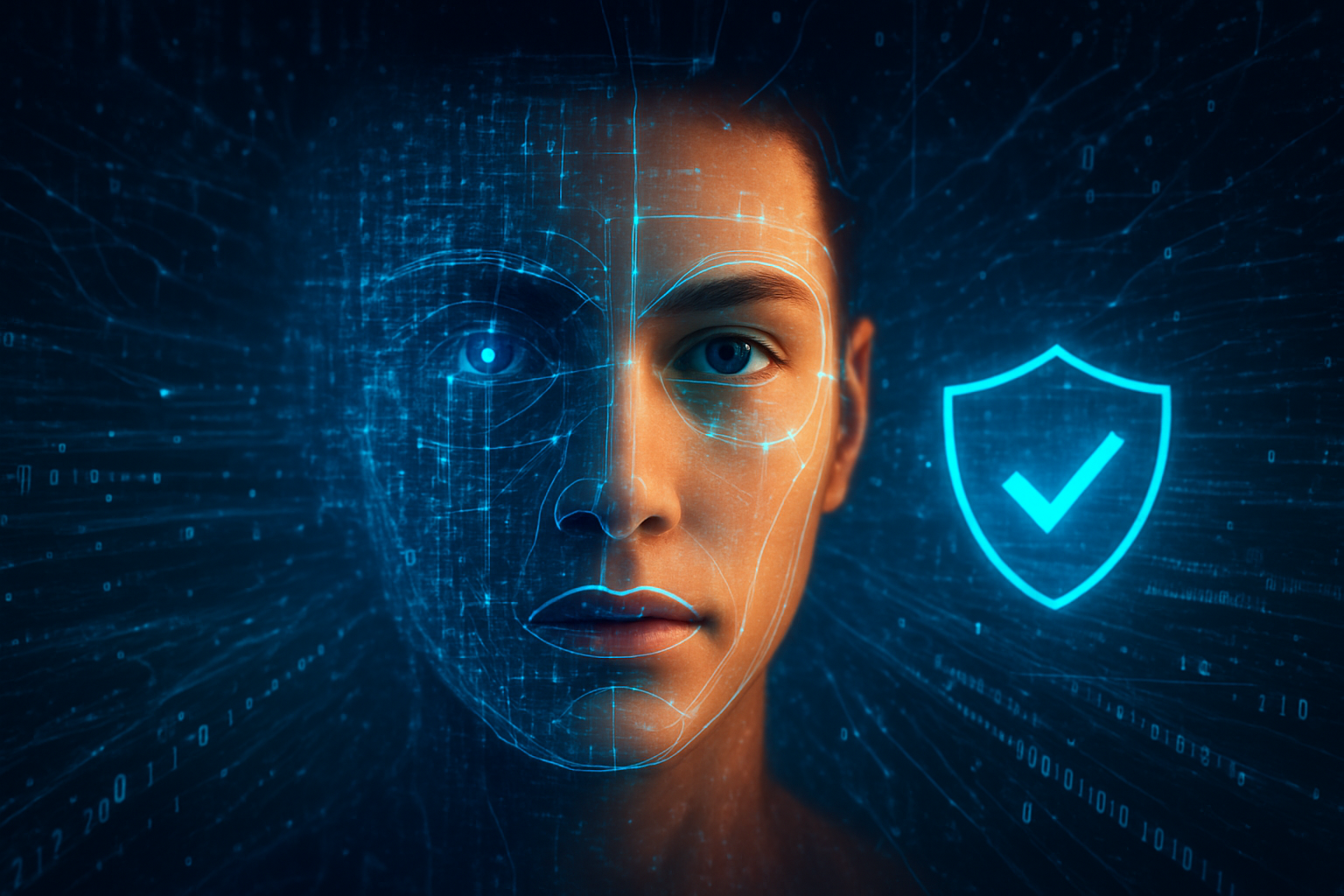
    As of January 26, 2026, the global fight against digital disinformation has reached a decisive turning point. A consortium of researchers from top-tier academic institutions and Silicon Valley giants has unveiled a new generation of "Universal Detectors" capable of identifying AI-generated video and audio with a staggering 98% accuracy. This breakthrough represents a monumental shift in the "deepfake arms race," providing a robust defense mechanism just as the world prepares for the 2026 U.S. midterm elections and a series of high-stakes global democratic processes.

    Unlike previous detection tools that were often optimized for specific generative models, these new universal systems are model-agnostic. They are designed to identify synthetic media regardless of whether it was created by OpenAI’s Sora, Runway’s latest Gen-series, or clandestine proprietary models. By focusing on fundamental physical and biological inconsistencies rather than just pixel-level artifacts, these detectors offer a reliable "truth layer" for the internet, promising to restore a measure of trust in digital media that many experts feared was lost forever.

    The Science of Biological Liveness: How 98% Was Won

    The leap to 98% accuracy is driven by a transition from "artifact-based" detection to "physics-based" verification. Historically, deepfake detectors looked for visual glitches, such as mismatched earrings or blurred hair edges—flaws that generative AI quickly learned to correct. The new "Universal Detectors," such as the recently announced Detect-3B Omni and the UNITE (Universal Network for Identifying Tampered and synthEtic videos) framework developed by researchers at UC Riverside and Alphabet Inc. (NASDAQ:GOOGL), take a more sophisticated approach. They analyze biological "liveness" indicators that remain nearly impossible for current AI to replicate perfectly.

    One of the most significant technical advancements is the refinement of Remote Photoplethysmography (rPPG). This technology, championed by Intel Corporation (NASDAQ:INTC) through its FakeCatcher project, detects the subtle change in skin color caused by human blood flow. While modern generative models can simulate a heartbeat, they struggle to replicate the precise spatial distribution of blood flow across a human face—the way blood moves from the forehead to the jaw in micro-sync with a pulse. Universal Detectors now track these "biological signals" with sub-millisecond precision, flagging any video where the "blood flow" doesn't match human physiology.

    Furthermore, the breakthrough relies on multi-modal synchronization—specifically the "physics of speech." These systems analyze the phonetic-visual mismatch, checking if the sound of a "P" or "B" (labial consonants) aligns perfectly with the pressure and timing of the speaker's lips. By cross-referencing synthetic speech patterns with corresponding facial muscle movements, models like those developed at UC San Diego can catch fakes that look perfect but feel "off" to a high-fidelity algorithm. The AI research community has hailed this as the "ImageNet moment" for digital safety, shifting the industry from reactive patching to proactive, generalized defense.

    Industry Impact: Tech Giants and the Verification Economy

    This breakthrough is fundamentally reshaping the competitive landscape for major AI labs and social media platforms. Meta Platforms, Inc. (NASDAQ:META) and Microsoft Corp. (NASDAQ:MSFT) have already begun integrating these universal detection APIs directly into their content moderation pipelines. For Meta, this means the "AI Label" system on Instagram and Threads will now be automated by a system that rarely misses, significantly reducing the burden on human fact-checkers. For Microsoft, the technology is being rolled out as part of a "Video Authenticator" service within Azure, targeting enterprise clients who are increasingly targeted by "CEO fraud" via deepfake audio.

    Specialized startups are also seeing a massive surge in market positioning. Reality Defender, recently named a category leader by industry analysts, has launched a real-time "Real Suite" API that protects live video calls from being hijacked by synthetic overlays. This creates a new "Verification Economy," where the ability to prove "humanity" is becoming as valuable as the AI models themselves. Companies that provide "Deepfake-as-a-Service" for the entertainment industry are now forced to include cryptographic watermarks, as the universal detectors are becoming so effective that "unlabeled" synthetic content is increasingly likely to be blocked by default across major platforms.

    The strategic advantage has shifted toward companies that control the "distribution" points of the internet. By integrating detection at the browser level, Google’s Chrome and Apple’s Safari could theoretically alert users the moment a video on any website is flagged as synthetic. This move positions the platform holders as the ultimate arbiters of digital reality, a role that brings both immense power and significant regulatory scrutiny.

    Global Stability and the 2026 Election Landscape

    The timing of this breakthrough is no coincidence. The lessons of the 2024 elections, which saw high-profile incidents like the AI-generated Joe Biden robocall, have spurred a global demand for "election-grade" detection. The ability to verify audio and video with 98% accuracy is seen as a vital safeguard for the 2026 U.S. midterms. Election officials are already planning to use these universal detectors to quickly debunk "leaked" videos designed to suppress voter turnout or smear candidates in the final hours of a campaign.

    However, the wider significance of this technology goes beyond politics. It represents a potential solution to the "Epistemic Crisis"—the societal loss of a shared reality. By providing a reliable tool for verification, the technology may prevent the "Liar's Dividend," a phenomenon where public figures can dismiss real, incriminating footage as "just a deepfake." With a 98% accurate detector, such claims become much harder to sustain, as the absence of a "fake" flag from a trusted universal detector would serve as a powerful endorsement of authenticity.

    Despite the optimism, concerns remain regarding the "2% Problem." With billions of videos uploaded daily, a 2% error rate could still result in millions of legitimate videos being wrongly flagged. Experts warn that this could lead to a new form of "censorship by algorithm," where marginalized voices or those with unique speech patterns are disproportionately silenced by over-eager detection systems. This has led to calls for a "Right to Appeal" in AI-driven moderation, ensuring that the 2% of false positives do not become victims of the war on fakes.

    The Future: Adversarial Evolution and On-Device Detection

    Looking ahead, the next frontier in this battle is moving detection from the cloud to the edge. Apple Inc. (NASDAQ:AAPL) and Google are both reportedly working on hardware-accelerated detection that runs locally on smartphone chips. This would allow users to see a "Verified Human" badge in real-time during FaceTime calls or while recording video, effectively "signing" the footage at the moment of creation. This integration with the C2PA (Coalition for Content Provenance and Authenticity) standard will likely become the industry norm by late 2026.

    However, the challenge of adversarial evolution persists. As detection improves, the creators of deepfakes will inevitably use these very detectors to "train" their models to be even more realistic—a process known as "adversarial training." Experts predict that while the 98% accuracy rate is a massive win for today, the "cat-and-mouse" game will continue. The next generation of fakes may attempt to simulate blood flow or lip pressure even more accurately, requiring detectors to look even deeper into the physics of light reflection and skin elasticity.

    The near-term focus will be on standardizing these detectors across international borders. A "Global Registry of Authentic Media" is already being discussed at the UN level, which would use the 98% accuracy threshold as a benchmark for what constitutes "reliable" verification technology. The goal is to create a world where synthetic media is treated like any other tool—useful for creativity, but always clearly distinguished from the biological reality of human presence.

    A New Era of Digital Trust

    The arrival of Universal Detectors with 98% accuracy marks a historic milestone in the evolution of artificial intelligence. For the first time since the "deepfake" was coined, the tools of verification have caught up—and arguably surpassed—the tools of generation. This development is not merely a technical achievement; it is a necessary infrastructure for the maintenance of a functioning digital society and the preservation of democratic integrity.

    While the "battle for the truth" is far from over, the current developments provide a much-needed reprieve from the chaos of the early 2020s. As we move into the middle of the decade, the significance of this breakthrough will be measured by its ability to restore the confidence of the average user in the images and sounds they encounter every day. In the coming weeks and months, the primary focus for the industry will be the deployment of these tools across social media and news platforms, a rollout that will be watched closely by governments and citizens alike.


    This content is intended for informational purposes only and represents analysis of current AI developments.

    TokenRing AI delivers enterprise-grade solutions for multi-agent AI workflow orchestration, AI-powered development tools, and seamless remote collaboration platforms.
    For more information, visit https://www.tokenring.ai/.
  • Beyond the Face: How Google and UC Riverside’s UNITE System is Redefining the War on Deepfakes

    Beyond the Face: How Google and UC Riverside’s UNITE System is Redefining the War on Deepfakes

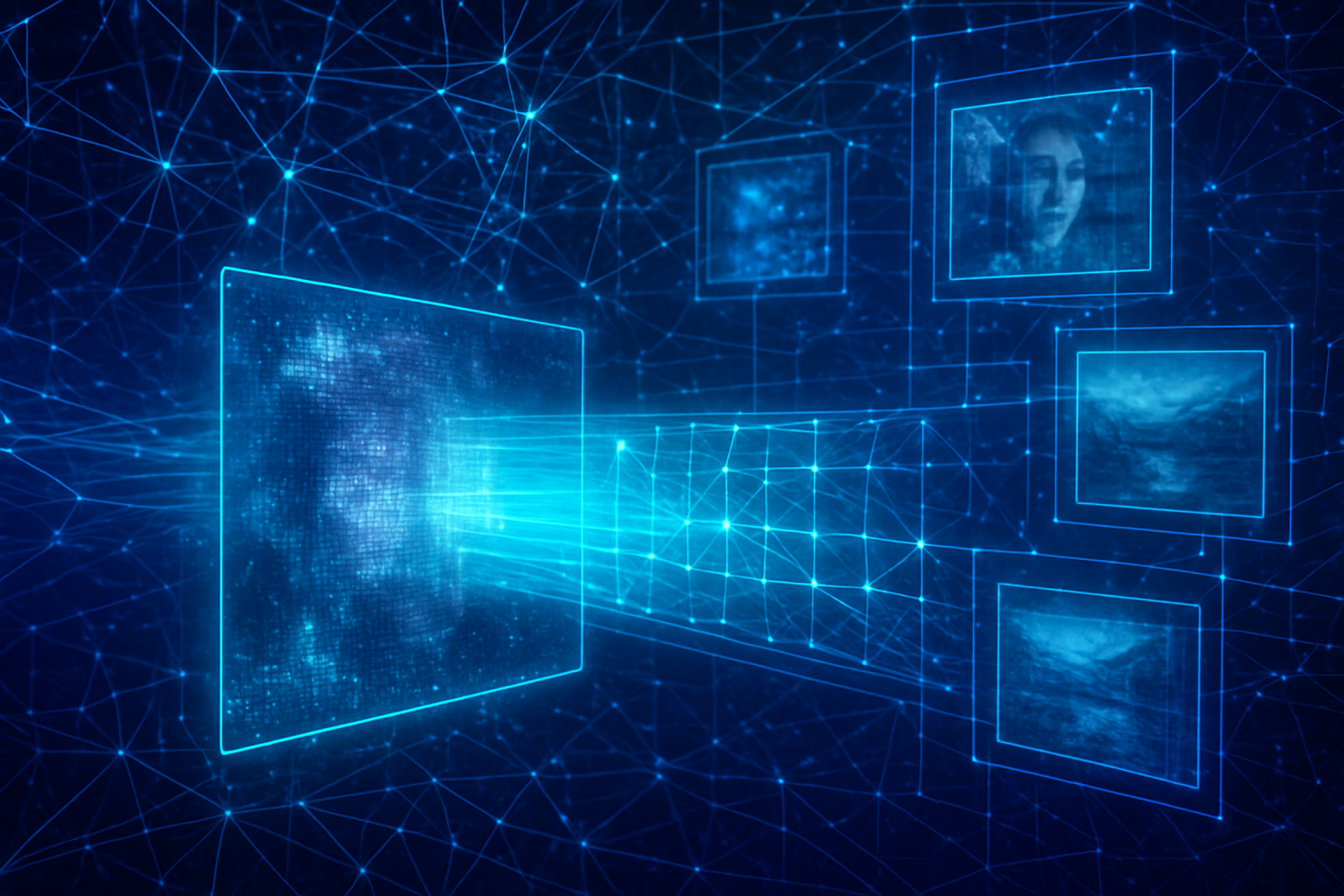
    In a decisive move against the rising tide of sophisticated digital deception, researchers from the University of California, Riverside, and Alphabet Inc. (NASDAQ: GOOGL) have unveiled UNITE, a revolutionary deepfake detection system designed to identify AI-generated content where traditional tools fail. Unlike previous generations of detectors that relied almost exclusively on spotting anomalies in human faces, UNITE—short for Universal Network for Identifying Tampered and synthEtic videos—shifts the focus to the entire video frame. This advancement allows it to flag synthetic media even when the subjects are partially obscured, rendered in low resolution, or completely absent from the scene.

    The announcement comes at a critical juncture for the technology industry, as the proliferation of text-to-video (T2V) generators has made it increasingly difficult to distinguish between authentic footage and AI-manufactured "hallucinations." By moving beyond a "face-centric" approach, UNITE provides a robust defense against a new class of misinformation that targets backgrounds, lighting patterns, and environmental textures to deceive viewers. Its immediate significance lies in its "universal" applicability, offering a standardized immune system for digital platforms struggling to police the next generation of generative AI outputs.

    A Technical Paradigm Shift: The Architecture of UNITE

    The technical foundation of UNITE represents a departure from the Convolutional Neural Networks (CNNs) that have dominated the field for years. Traditional CNN-based detectors were often "overfitted" to specific facial cues, such as unnatural blinking or lip-sync errors. UNITE, however, utilizes a transformer-based architecture powered by the SigLIP-So400M (Sigmoid Loss for Language Image Pre-Training) foundation model. Because SigLIP was trained on nearly three billion image-text pairs, it possesses an inherent understanding of "domain-agnostic" features, allowing the system to recognize the subtle "texture of syntheticness" that permeates an entire AI-generated frame, rather than just the pixels of a human face.

    A key innovation introduced by the UC Riverside and Google team is a novel training methodology known as Attention-Diversity (AD) Loss. In most AI models, "attention heads" tend to converge on the most prominent feature—usually a face. AD Loss forces these attention heads to focus on diverse regions of the frame simultaneously. This ensures that even if a face is heavily pixelated or hidden behind an object, the system can still identify a deepfake by analyzing the background lighting, the consistency of shadows, or the temporal motion of the environment. The system processes segments of 64 consecutive frames, allowing it to detect "temporal flickers" that are invisible to the human eye but characteristic of AI video generators.

    Initial reactions from the AI research community have been overwhelmingly positive, particularly regarding UNITE’s "cross-dataset generalization." In peer-reviewed tests presented at the 2025 Conference on Computer Vision and Pattern Recognition (CVPR), the system maintained an unprecedented accuracy rate of 95-99% on datasets it had never encountered during training. This is a significant leap over previous models, which often saw their performance plummet when tested against new, "unseen" AI generators. Experts have hailed the system as a milestone in creating a truly universal detection standard that can keep pace with rapidly evolving generative models like OpenAI’s Sora or Google’s own Veo.

    Strategic Moats and the Industry Arms Race

    The development of UNITE has profound implications for the competitive landscape of Big Tech. For Alphabet Inc., the system serves as a powerful "defensive moat." By late 2025, Google began integrating UNITE-derived algorithms into its YouTube Likeness Detection suite. This allows the platform to offer creators a proactive shield, automatically flagging unauthorized AI versions of themselves or their proprietary environments. By owning both the generation tools (Veo) and the detection tools (UNITE), Google is positioning itself as the "responsible leader" in the AI space, a strategic move aimed at winning the trust of advertisers and enterprise clients.

    The pressure is now on other tech giants, most notably Meta Platforms, Inc. (NASDAQ: META), to evolve their detection strategies. Historically, Meta’s efforts have focused on real-time API mitigation and facial artifacts. However, UNITE’s success in full-scene analysis suggests that facial-only detection is becoming obsolete. As generative AI moves toward "world-building"—where entire landscapes and events are manufactured without human subjects—platforms that cannot analyze the "DNA" of a whole frame will find themselves vulnerable to sophisticated disinformation campaigns.

    For startups and private labs like OpenAI, UNITE represents both a challenge and a benchmark. While OpenAI has integrated watermarking and metadata (such as C2PA) into its products, these protections can often be stripped away by malicious actors. UNITE provides a third-party, "zero-trust" verification layer that does not rely on metadata. This creates a new industry standard where the quality of a lab’s detector is considered just as important as the visual fidelity of its generator. Labs that fail to provide UNITE-level transparency for their models may face increased regulatory hurdles under emerging frameworks like the EU AI Act.

    Safeguarding the Information Ecosystem

    The wider significance of UNITE extends far beyond corporate competition; it is a vital tool in the defense of digital reality. As we move into the 2026 midterm election cycle, the threat of "identity-driven attacks" has reached an all-time high. Unlike the crude face-swaps of the past, modern misinformation often involves creating entirely manufactured personas—synthetic whistleblowers or "average voters"—who do not exist in the real world. UNITE’s ability to flag fully synthetic videos without requiring a known human face makes it the frontline defense against these manufactured identities.

    Furthermore, UNITE addresses the growing concern of "scene-swap" misinformation, where a real person is digitally placed into a controversial or compromising location. By scrutinizing the relationship between the subject and the background, UNITE can identify when the lighting on a person does not match the environmental light source of the setting. This level of forensic detail is essential for newsrooms and fact-checking organizations that must verify the authenticity of "leaked" footage in real-time.

    However, the emergence of UNITE also signals an escalation in the "AI arms race." Critics and some researchers warn of a "cat-and-mouse" game where generative AI developers might use UNITE-style detectors as "discriminators" in their training loops. By training a generator specifically to fool a universal detector like UNITE, bad actors could eventually produce fakes that are even more difficult to catch. This highlights a potential concern: while UNITE is a massive leap forward, it is not a final solution, but rather a sophisticated new weapon in an ongoing technological conflict.

    The Horizon: Real-Time Detection and Hardware Integration

    Looking ahead, the next frontier for the UNITE system is the transition from cloud-based analysis to real-time, "on-device" detection. Researchers are currently working on optimizing the UNITE architecture for hardware acceleration. Future Neural Processing Units (NPUs) in mobile chipsets—such as Google’s Tensor or Apple’s A-series—could potentially run "lite" versions of UNITE locally. This would allow for real-time flagging of deepfakes during live video calls or while browsing social media feeds, providing users with a "truth score" directly on their devices.

    Another expected development is the integration of UNITE into browser extensions and third-party verification services. This would effectively create a "nutrition label" for digital content, informing viewers of the likelihood that a video has been synthetically altered before they even press play. The challenge remains the "2% problem"—the risk of false positives. On platforms like YouTube, where billions of minutes of video are uploaded daily, even a 98% accuracy rate could lead to millions of legitimate creative videos being incorrectly flagged. Refining the system to minimize these "algorithmic shadowbans" will be a primary focus for engineers in the coming months.

    A New Standard for Digital Integrity

    The UNITE system marks a pivotal moment in AI history, shifting the focus of deepfake detection from specific human features to a holistic understanding of digital "syntheticness." By successfully identifying AI-generated content in low-resolution and obscured environments, UC Riverside and Google have provided the industry with its most versatile shield to date. It is a testament to the power of academic-industry collaboration in addressing the most pressing societal challenges of the AI era.

    As we move deeper into 2026, the success of UNITE will be measured by its integration into the daily workflows of social media platforms and its ability to withstand the next generation of generative models. While the arms race between those who create fakes and those who detect them is far from over, UNITE has significantly raised the bar, making it harder than ever for digital deception to go unnoticed. For now, the "invisible" is becoming visible, and the war for digital truth has a powerful new ally.


    This content is intended for informational purposes only and represents analysis of current AI developments.

    TokenRing AI delivers enterprise-grade solutions for multi-agent AI workflow orchestration, AI-powered development tools, and seamless remote collaboration platforms.
    For more information, visit https://www.tokenring.ai/.
  • The Unseen Enemy: Navigating the Deepfake Deluge and the Fight for Digital Truth

    The Unseen Enemy: Navigating the Deepfake Deluge and the Fight for Digital Truth

    The digital landscape is increasingly under siege from a new, insidious threat: hyper-realistic AI-generated content, commonly known as deepfakes. These sophisticated synthetic videos, photos, and audio recordings are becoming virtually indistinguishable from authentic media, posing an escalating challenge that threatens to unravel public trust, compromise security, and undermine the very fabric of truth in our interconnected world. As of November 11, 2025, the proliferation of deepfakes has reached unprecedented levels, creating a complex "arms race" between those who wield this powerful AI for deception and those desperately striving to build a defense.

    The immediate significance of this challenge cannot be overstated. Deepfakes are no longer theoretical threats; they are actively being deployed in disinformation campaigns, sophisticated financial fraud schemes, and privacy violations, with real-world consequences already costing individuals and corporations millions. The ease of access to deepfake creation tools, coupled with the sheer volume of synthetic content, is pushing detection capabilities to their limits and leaving humans alarmingly vulnerable to deception.

    The Technical Trenches: Unpacking Deepfake Detection

    The battle against deepfakes is being fought in the technical trenches, where advanced AI and machine learning algorithms are pitted against ever-evolving generative models. Unlike previous approaches that relied on simpler image forensics or metadata analysis, modern deepfake detection delves deep into the intrinsic content of media, searching for subtle, software-induced artifacts imperceptible to the human eye.

    Specific technical details for recognizing AI-generated content include scrutinizing facial inconsistencies, such as unnatural blinking patterns, inconsistent eye movements, lip-sync mismatches, and irregularities in skin texture or micro-expressions. Deepfakes often struggle with maintaining consistent lighting and shadows that align with the environment, leading to unnatural highlights or mismatched shadows. In videos, temporal incoherence—flickering or jitter between frames—can betray manipulation. Furthermore, algorithms look for repeated patterns, pixel anomalies, edge distortions, and unique algorithmic fingerprints left by the generative AI models themselves. For instance, detecting impossible pitch transitions in voices or subtle discrepancies in noise patterns can be key indicators.

    These sophisticated techniques represent a significant departure from traditional methods. Where old forensics might examine metadata (often stripped by social media) or obvious signs of editing, AI-based detection focuses on microscopic inconsistencies and statistical patterns inherent in machine-generated content. The adversarial nature of this field means detection methods must constantly adapt, as deepfake creators rapidly update their techniques to circumvent identified weaknesses. Initial reactions from the AI research community and industry experts acknowledge this as a critical and ongoing "arms race." There is widespread recognition of the growing threat and an urgent call for collaborative research, as evidenced by initiatives like Meta's (NASDAQ: META) Deepfake Detection Challenge. Experts, however, caution about detector limitations, including susceptibility to adversarial attacks, challenges with low-quality or compressed video, and the need for extensive, diverse training datasets to prevent bias and improve generalization.

    Corporate Crossroads: Deepfakes and the Tech Industry

    The escalating challenge of deepfakes has created both immense risks and significant opportunities across the tech industry, reshaping competitive landscapes and forcing companies to rethink their strategic positioning.

    A burgeoning market for deepfake detection and content authentication solutions is rapidly expanding, projected to grow at a Compound Annual Growth Rate (CAGR) of 37.45% from 2023 to 2033. This growth is primarily benefiting startups and specialized AI companies that are developing cutting-edge detection capabilities. Companies like Quantum Integrity, Sensity, OARO, pi-labs, Kroop AI, Zero Defend Security (Vastav AI), Resemble AI, OpenOrigins, Breacher.ai, DuckDuckGoose AI, Clarity, Reality Defender, Paravision, Sentinel AI, Datambit, and HyperVerge are carving out strategic advantages by offering robust solutions for real-time analysis, visual threat intelligence, and digital identity verification. Tech giants like Intel (NASDAQ: INTC) with its "FakeCatcher" tool, and Pindrop (for call center fraud protection), are also significant players. These firms stand to gain by helping organizations mitigate financial fraud, protect assets, ensure compliance, and maintain operational resilience.

    Major AI labs and tech giants, including Microsoft (NASDAQ: MSFT), Google (NASDAQ: GOOGL), and Amazon Web Services (AWS) (NASDAQ: AMZN), face a dual challenge. As developers of foundational generative AI technologies, they must also invest heavily in ethical AI, transparency, and robust countermeasures. Their brand reputation and user trust are directly tied to their ability to effectively detect and label AI-generated content. Platforms like Meta (NASDAQ: META) and TikTok are implementing internal systems to flag AI content and encourage creator labeling, often under increasing regulatory pressure from bodies like the EU with its AI Act. The constant innovation in deepfake creation forces these companies into an ongoing "arms race," driving up research and development costs. Strategic partnerships with specialized startups and academic institutions are becoming crucial for strengthening their detection capabilities and combating misinformation effectively.

    Deepfakes pose significant disruption to existing products and services. Social media platforms are highly vulnerable to the spread of misinformation, risking erosion of user trust. Banking and financial services face escalating identity theft, document fraud, and "vishing" scams where deepfake voices impersonate executives to authorize fraudulent transactions, leading to millions in losses. The news and media industry struggles with credibility as deepfakes blur the lines of truth. Even corporate communications and e-commerce are at risk from impersonation and deceptive content. Companies that can credibly demonstrate their commitment to "Trusted AI," integrate comprehensive security solutions, develop content authenticity systems (e.g., watermarks, blockchain), and offer compliance advisory services will gain a significant competitive advantage in this evolving landscape.

    The Broader Canvas: Societal Implications and the 'Perception Gap'

    The deepfake phenomenon is more than a technical challenge; it is a profound societal disruption that fits into the broader AI landscape as a direct consequence of advancements in generative AI, particularly models like Generative Adversarial Networks (GANs) and diffusion models. These technologies, once confined to research labs, have democratized deception, allowing anyone with basic skills to create convincing synthetic media.

    The societal impacts are far-reaching. Deepfakes are potent tools for political manipulation, used to spread misinformation, undermine trust in leaders, and potentially influence elections. They exacerbate the problem of fake news, making it increasingly difficult for individuals to discern truth from falsehood, with fake news costing the global economy billions annually. Privacy concerns are paramount, with deepfakes being used for non-consensual explicit content, identity theft, and exploitation of individuals' likenesses without consent. The corporate world faces new threats, from CEO impersonation scams leading to massive financial losses to stock market manipulation based on fabricated information.

    At the core of these concerns lies the erosion of trust, the amplification of disinformation, and the emergence of a dangerous 'perception gap'. As the line between reality and fabrication blurs, people become skeptical of all digital content, leading to a general atmosphere of doubt. This "zero-trust society" can have devastating implications for democratic processes, law enforcement, and the credibility of the media. Deepfakes are powerful tools for spreading disinformation—incorrect information shared with malicious intent—more effectively deceiving viewers than traditional misinformation and jeopardizing the factual basis of public discourse. The 'perception gap' refers to the growing disconnect between what is real and what is perceived as real, compounded by the inability of humans (and often AI tools) to reliably detect deepfakes. This can lead to "differentiation fatigue" and cynicism, where audiences choose indifference over critical thinking, potentially dismissing legitimate evidence as "fake."

    Comparing this to previous AI milestones, deepfakes represent a unique evolution. Unlike simple digital editing, deepfakes leverage machine learning to create content that is far more convincing and accessible than "shallow fakes." This "democratization of deception" enables malicious actors to target individuals at an unprecedented scale. Deepfakes "weaponize human perception itself," exploiting our innate trust in visual and auditory evidence, making them exceptionally potent tools for deception that can bypass conventional security measures.

    The Horizon: Future Battlegrounds and Expert Predictions

    The future of deepfakes and their detection is characterized by a relentless technological arms race, with experts predicting an increasingly complex landscape.

    In the near term (1-2 years), deepfake generation tools will become even more realistic and accessible, with advanced diffusion models and auto-regressive transformers producing hyper-realistic media. Sophisticated audio deepfakes will proliferate, capable of replicating voices with remarkable accuracy from minimal samples, fueling "vishing" attacks. We can also expect more seamless multi-modal deepfakes combining manipulated video and audio, and even AI-generated conversations. On the detection front, AI and machine learning will continue to advance, with a focus on real-time and multimodal detection that analyzes inconsistencies across video, audio, and even biological signals. Strategies like embedding imperceptible watermarks or digital signatures into AI-generated content (e.g., Google's SynthID) will become more common, with camera manufacturers also working on global standards for authenticating media at the source. Explainable AI (XAI) will enhance transparency in detection, and behavioral profiling will emerge to identify inconsistencies in unique human mannerisms.

    Long-term (3-5+ years), full-body deepfakes and entirely new synthetic human figures will become commonplace. Deepfakes will integrate into agenda-driven, real-time multi-model AI chatbots, enabling highly personalized manipulation at scale. Adaptive deepfakes, designed to incorporate anti-forensic measures, will emerge. For detection, autonomous narrative attack detection systems will continuously monitor media streams and adapt to new deepfake techniques. Blockchain technology could provide immutable records for media authentication, and edge computing will enable faster, real-time analysis. Standardization and global collaboration will be crucial to developing unified frameworks.

    Potential malicious use cases on the horizon include more sophisticated disinformation campaigns, highly targeted financial fraud, widespread identity theft and harassment, and advanced social engineering leveraging believable synthetic media. However, positive applications also exist: deepfakes can be used in entertainment for synthetic characters or de-aging actors, for personalized corporate training, in medical applications like generating synthetic MRI images for AI training or facilitating communication for Alzheimer's patients, and for enhancing accessibility through sign language generation.

    Significant challenges remain. The "deepfake arms race" shows no signs of slowing. There's a lack of standardized detection methods and comprehensive, unbiased training datasets. Social media platforms' compression and metadata stripping continue to hamper detection. Adversarial attacks designed to fool detection algorithms are an ongoing threat, as is the scalability of real-time analysis across the internet. Crucially, the public's low confidence in spotting deepfakes erodes trust in all digital media. Experts like Subbarao Kambhampati predict that humans will adapt by gaining media literacy, learning not to implicitly trust their senses, and instead expecting independent corroboration or cryptographic authentication. A "zero-trust mindset" will become essential. Ultimately, experts warn that without robust policy, regulation (like the EU's AI Act), and international collaboration, "truth itself becomes elusive," as AI becomes a battlefield where both attackers and defenders utilize autonomous systems.

    The Unfolding Narrative: A Call to Vigilance

    The escalating challenge of identifying AI-generated content marks a pivotal moment in AI history. It underscores not only the incredible capabilities of generative AI but also the profound ethical and societal responsibilities that come with it. The key takeaway is clear: the digital world is fundamentally changing, and our understanding of "truth" is under unprecedented pressure.

    This development signifies a shift from merely verifying information to authenticating reality itself. Its significance lies in its potential to fundamentally alter human interaction, storytelling, politics, and commerce. The long-term impact could range from a more discerning, critically-aware global populace to a fragmented society where verifiable facts are scarce and trust is a luxury.

    In the coming weeks and months, watch for continued advancements in both deepfake generation and detection, particularly in real-time, multimodal analysis. Pay close attention to legislative efforts worldwide to regulate AI-generated content and mandate transparency. Most importantly, observe the evolving public discourse and the efforts to foster digital literacy, as the ultimate defense against the deepfake deluge may well lie in a collective commitment to critical thinking and a healthy skepticism towards all unverified digital content.


    This content is intended for informational purposes only and represents analysis of current AI developments.

    TokenRing AI delivers enterprise-grade solutions for multi-agent AI workflow orchestration, AI-powered development tools, and seamless remote collaboration platforms.
    For more information, visit https://www.tokenring.ai/.