Tag: Dementia

  • The New Diagnostic Sentinel: Samsung and Stanford’s AI Redefines Early Dementia Detection via Wearable Data

    The New Diagnostic Sentinel: Samsung and Stanford’s AI Redefines Early Dementia Detection via Wearable Data

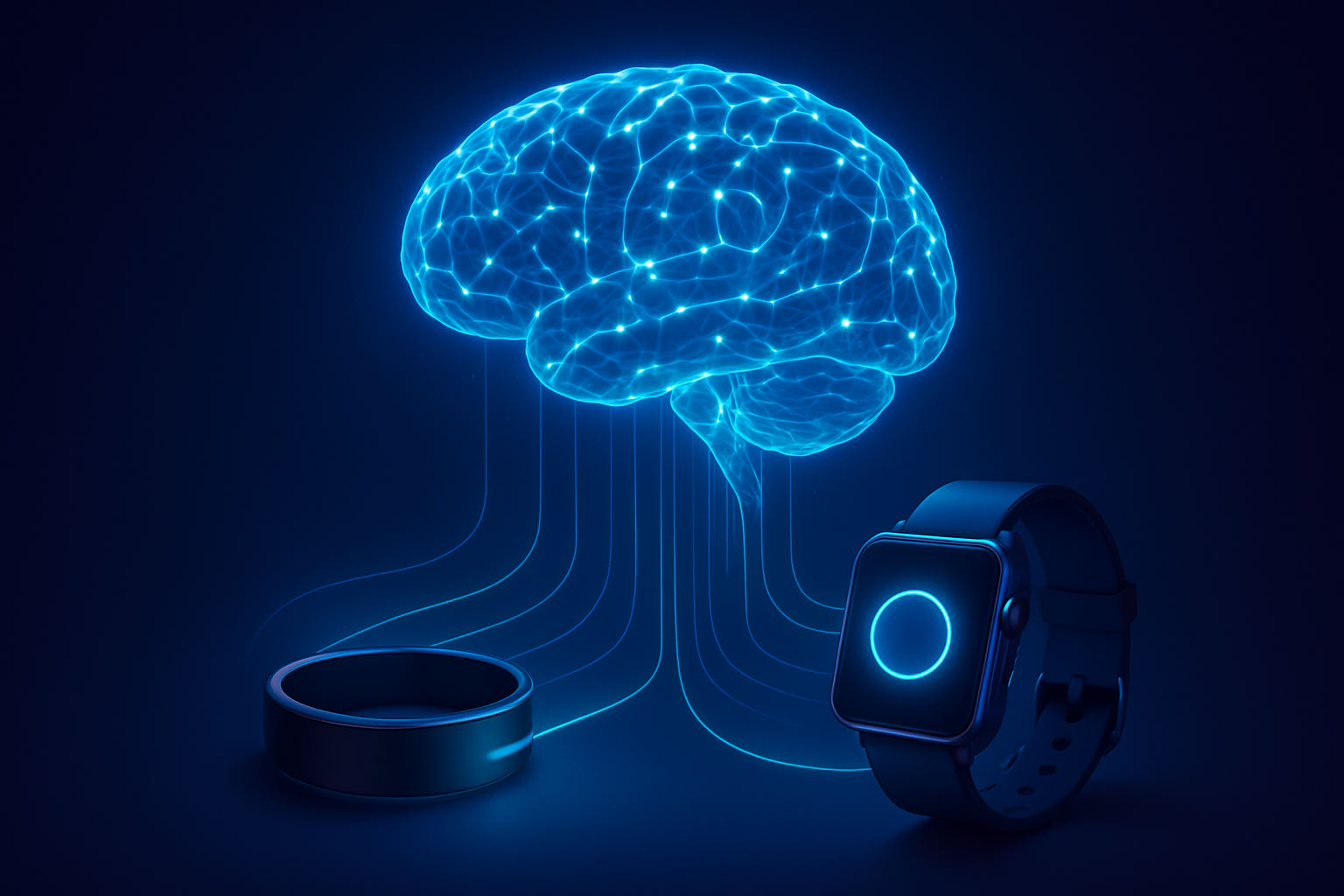
    In a landmark shift for the intersection of consumer technology and geriatric medicine, Samsung Electronics (KRX: 005930) and Stanford Medicine have unveiled a sophisticated AI-driven "Brain Health" suite designed to detect the earliest indicators of dementia and Alzheimer’s disease. Announced at CES 2026, the system leverages a continuous stream of physiological data from the Galaxy Watch and the recently popularized Galaxy Ring to identify "digital biomarkers"—subtle behavioral and biological shifts that occur years, or even decades, before a clinical diagnosis of cognitive decline is traditionally possible.

    This development marks a transition from reactive to proactive healthcare, turning ubiquitous consumer electronics into permanent medical monitors. By analyzing patterns in gait, sleep architecture, and even the micro-rhythms of smartphone typing, the Samsung-Stanford collaboration aims to bridge the "detection gap" in neurodegenerative diseases, allowing for lifestyle interventions and clinical treatments at a stage when the brain is most receptive to preservation.

    Deep Learning the Mind: The Science of Digital Biomarkers

    The technical backbone of this initiative is a multimodal AI system capable of synthesizing disparate data points into a cohesive "Cognitive Health Score." Unlike previous diagnostic tools that relied on episodic, in-person cognitive tests—often influenced by a patient's stress or fatigue on a specific day—the Samsung-Stanford AI operates passively in the background. According to research presented at the IEEE EMBS 2025 conference, one of the most predictive biomarkers identified is "gait variability." By utilizing the high-fidelity sensors in the Galaxy Ring and Watch, the AI monitors stride length, balance, and walking speed. A consistent 10% decline in these metrics, often invisible to the naked eye, has been correlated with the early onset of Mild Cognitive Impairment (MCI).

    Furthermore, the system introduces an innovative "Keyboard Dynamics" model. This AI analyzes the way a user interacts with their smartphone—monitoring typing speed, the frequency of backspacing, and the length of pauses between words. Crucially, the model is "content-agnostic," meaning it analyzes how someone types rather than what they are writing, preserving user privacy while capturing the fine motor and linguistic planning disruptions typical of early-stage Alzheimer's.

    Initial reactions from the AI research community have been overwhelmingly positive, particularly regarding the system's focus on "Sleep Architecture." Working with Stanford’s Dr. Robson Capasso and Dr. Clete Kushida, Samsung has integrated deep learning models that analyze REM cycle fragmentation and oxygen desaturation levels. These models were trained using federated learning—a decentralized AI training method that allows the system to learn from global datasets without ever accessing raw, identifiable patient data, addressing a major hurdle in medical AI: the balance between accuracy and privacy.

    The Wearable Arms Race: Samsung’s Strategic Advantage

    The introduction of the Brain Health suite significantly alters the competitive landscape for tech giants. While Apple Inc. (NASDAQ: AAPL) has long dominated the health-wearable space with its Apple Watch and ResearchKit, Samsung’s integration of the Galaxy Ring provides a distinct advantage in the quest for longitudinal dementia data. The "high compliance" nature of a ring—which users are more likely to wear 24/7 compared to a bulky smartwatch that requires daily charging—ensures an unbroken data stream. For a disease like dementia, where the most critical signals are found in long-term trends rather than isolated incidents, this data continuity is a strategic moat.

    Google (NASDAQ: GOOGL), through its Fitbit and Pixel Watch lines, has focused heavily on generative AI "Health Coaches" powered by its Gemini models. However, Samsung’s partnership with Stanford Medicine provides a level of clinical validation that pure-play software companies often lack. By acquiring the health-sharing platform Xealth in 2025, Samsung has also built the infrastructure for users to share these AI insights directly with healthcare providers, effectively positioning the Galaxy ecosystem as a legitimate extension of the hospital ward.

    Market analysts predict that this move will force a pivot among health-tech startups. Companies that previously focused on stand-alone cognitive assessment apps may find themselves marginalized as "Big Tech" integrates these features directly into the hardware layer. The strategic advantage for Samsung (KRX: 005930) lies in its "Knox Matrix" security, which processes the most sensitive cognitive data on-device, mitigating the "creep factor" associated with AI that monitors a user's every move and word.

    A Milestone in the AI-Human Symbiosis

    The wider significance of this breakthrough cannot be overstated. In the broader AI landscape, the focus is shifting from "Generative AI" (which creates content) to "Diagnostic AI" (which interprets reality). This Samsung-Stanford system represents a pinnacle of the latter. It fits into the burgeoning "longevity" trend, where the goal is not just to extend life, but to extend the "healthspan"—the years lived in good health. By identifying the biological "smoke" before the "fire" of full-blown dementia, this AI could fundamentally change the economics of aging, potentially saving billions in long-term care costs.

    However, the development brings valid concerns to the forefront. The prospect of an AI "predicting" a person's cognitive demise raises profound ethical questions. Should an insurance company have access to a "Cognitive Health Score"? Could a detected decline lead to workplace discrimination before any symptoms are present? Comparisons have been drawn to the "Black Mirror" scenarios of predictive policing, but in a medical context. Despite these fears, the medical community views this as a milestone equivalent to the first AI-powered radiology tools, which transformed cancer detection from a game of chance into a precision science.

    The Horizon: From Detection to Digital Therapeutics

    Looking ahead, the next 12 to 24 months will be a period of intensive validation. Samsung has announced that the Brain Health features will enter a public beta program in select markets—including the U.S. and South Korea—by mid-2026. Experts predict that the next logical step will be the integration of "Digital Therapeutics." If the AI detects a decline in cognitive biomarkers, it could automatically tailor "brain games," suggest specific physical exercises, or adjust the home environment (via SmartThings) to reduce cognitive load, such as simplifying lighting or automating medication reminders.

    The primary challenge remains regulatory. While Samsung’s sleep apnea detection already received FDA De Novo authorization in 2024, the bar for a "dementia early warning system" is significantly higher. The AI must prove that its "digital biomarkers" are not just correlated with dementia, but are reliable enough to trigger medical intervention without a high rate of false positives, which could cause unnecessary psychological distress for millions of aging users.

    Conclusion: A New Era of Preventative Neurology

    The collaboration between Samsung and Stanford represents one of the most ambitious applications of AI in the history of consumer technology. By turning the "noise" of our daily movements, sleep, and digital interactions into a coherent medical narrative, they have created a tool that could theoretically provide an extra decade of cognitive health for millions.

    The key takeaway is that the smartphone and the wearable are no longer just tools for communication and fitness; they are becoming the most sophisticated diagnostic instruments in the human arsenal. In the coming months, the tech industry will be watching closely as the first waves of beta data emerge. If Samsung and Stanford can successfully navigate the regulatory and ethical minefields, the "Brain Health" suite may well be remembered as the moment AI moved from being a digital assistant to a life-saving sentinel.


    This content is intended for informational purposes only and represents analysis of current AI developments.

    TokenRing AI delivers enterprise-grade solutions for multi-agent AI workflow orchestration, AI-powered development tools, and seamless remote collaboration platforms.
    For more information, visit https://www.tokenring.ai/.
  • Beyond the Human Eye: AI Breakthroughs in 2025 Redefine Early Dementia and Cancer Diagnosis

    Beyond the Human Eye: AI Breakthroughs in 2025 Redefine Early Dementia and Cancer Diagnosis

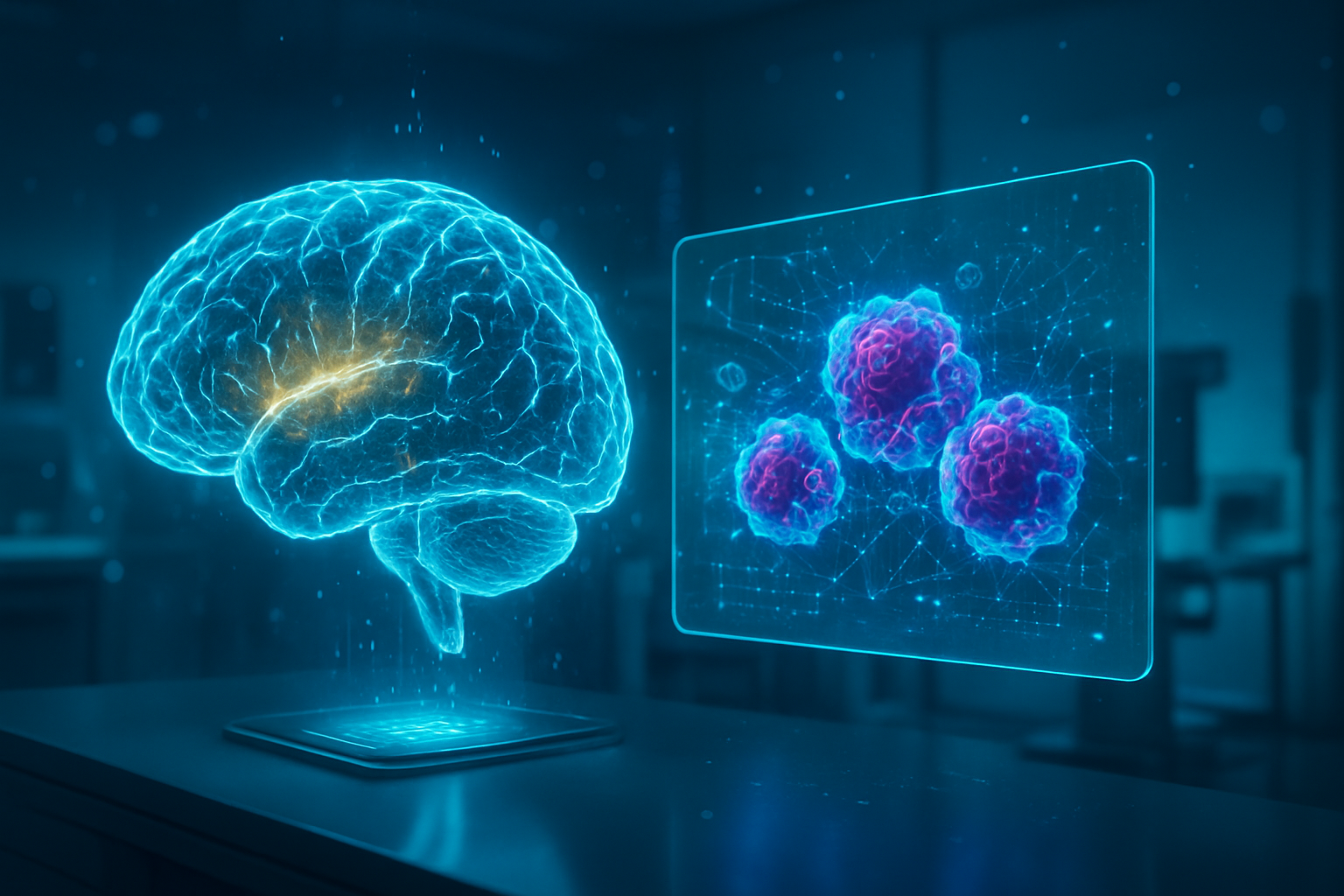
    In a landmark year for medical technology, 2025 has witnessed a seismic shift in how clinicians diagnose two of humanity’s most daunting health challenges: neurodegenerative disease and cancer. Through the deployment of massive "foundation models" and novel deep learning architectures, artificial intelligence has officially moved beyond experimental pilots into a realm of clinical utility where it consistently outperforms human specialists in specific diagnostic tasks. These breakthroughs—specifically in the analysis of electroencephalogram (EEG) signals for dementia and gigapixel pathology slides for oncology—mark the arrival of "Generalist Medical AI," a new era where machines detect the whispers of disease years before they become a roar.

    The immediate significance of these developments cannot be overstated. By achieving higher-than-human accuracy in identifying cancerous "micrometastases" and distinguishing between complex dementia subtypes like Alzheimer’s and Frontotemporal Dementia (FTD), AI is effectively solving the "diagnostic bottleneck." These tools are not merely assisting doctors; they are providing a level of granular analysis that was previously physically impossible for the human eye and brain to achieve within the time constraints of modern clinical practice. For patients, this means earlier intervention, more personalized treatment plans, and a significantly higher chance of survival and quality of life.

    The Technical Frontier: Foundation Models and Temporal Transformers

    The technical backbone of these breakthroughs lies in a transition from narrow, task-specific algorithms to broad "foundation models" (FMs). In the realm of pathology, the collaboration between Paige.ai and Microsoft (NASDAQ: MSFT) led to the release of Virchow2G, a 1.8-billion parameter model trained on over 3 million whole-slide images. Unlike previous iterations that relied on supervised learning—where humans had to label every cell—Virchow2G utilizes Self-Supervised Learning (SSL) via the DINOv2 architecture. This allows the AI to learn the "geometry" and "grammar" of human tissue autonomously, enabling it to identify over 40 different tissue types and rare cancer variants with unprecedented precision. Similarly, Harvard Medical School’s CHIEF (Clinical Histopathology Imaging Evaluation Foundation) model has achieved a staggering 96% accuracy across 19 different cancer types by treating pathology slides like a massive language, "reading" the cellular patterns to predict molecular profiles that previously required expensive genetic sequencing.

    In the field of neurology, the breakthrough comes from the ability to decode the "noisy" data of EEG signals. Researchers at Örebro University and Florida Atlantic University (FAU) have pioneered models that combine Temporal Convolutional Networks (TCNs) with Attention-based Long Short-Term Memory (LSTM) units. These models are designed to capture the subtle temporal dependencies in brain waves that indicate neurodegeneration. By breaking EEG signals into frequency bands—alpha, beta, and gamma—the AI has identified that "slow" delta waves in the frontal cortex are a universal biomarker for early-stage dementia. Most notably, a new federated learning model released in late 2025 allows hospitals to train these systems on global datasets without ever sharing sensitive patient data, achieving a diagnostic accuracy of over 97% for Alzheimer’s detection.

    These advancements differ from previous approaches by solving the "scale" and "explainability" problems. Earlier AI models often failed when applied to data from different hospitals or scanners. The 2025 generation of models, however, are "hardware agnostic" and utilize tools like Grad-CAM (Gradient-weighted Class Activation Mapping) to provide clinicians with visual heatmaps. When the AI flags a pathology slide or an EEG reading, it shows the doctor exactly which cellular cluster or frequency shift triggered the alert, bridging the gap between "black box" algorithms and actionable clinical insights.

    The Industrial Ripple Effect: Tech Giants and the Diagnostic Disruption

    The commercial landscape for healthcare AI has been radically reshaped by these breakthroughs. Microsoft (NASDAQ: MSFT) has emerged as a dominant infrastructure provider, not only through its partnership with Paige but also via its Prov-GigaPath model, which uses a "LongNet" architecture to analyze entire gigapixel images in one pass. By providing the supercomputing power necessary to train these multi-billion parameter models, Microsoft is positioning itself as the "operating system" for the modern digital pathology lab. Meanwhile, Alphabet Inc. (NASDAQ: GOOGL), through its Google DeepMind and Google Health divisions, has focused on "Generalist Medical AI" with its C2S-Scale model, which is now being used to generate novel hypotheses about cancer cell behavior, moving the company from a diagnostic aid to a drug discovery powerhouse.

    The hardware layer of this revolution is firmly anchored by NVIDIA (NASDAQ: NVDA). The company’s Blackwell GPU architecture has become the gold standard for training medical foundation models, with institutions like the Mayo Clinic utilizing NVIDIA’s "BioNeMo" platform to scale their diagnostic reach. This has created a high barrier to entry for smaller startups, though firms like Bioptimus have found success by releasing high-performing open-source models like H-optimus-1, challenging the proprietary dominance of the tech giants.

    For existing diagnostic service providers, this is a moment of profound disruption. Traditional pathology labs and neurology clinics that rely solely on manual review are facing immense pressure to integrate AI-driven workflows. The strategic advantage has shifted to those who possess the largest proprietary datasets—leading to a "data gold rush" where hospitals are increasingly partnering with AI labs to monetize their historical archives of slides and EEG recordings. This shift is expected to consolidate the market, as smaller labs may struggle to afford the licensing fees for top-tier AI diagnostic tools, potentially leading to a new era of "diagnostic-as-a-service" models.

    Wider Significance: Democratization and the Ethics of the "Black Box"

    Beyond the balance sheets, these breakthroughs represent a fundamental shift in the broader AI landscape. We are moving away from "AI as a toy" (LLMs for writing emails) to "AI as a critical infrastructure" for human survival. The success in pathology and EEG analysis serves as a proof of concept for multimodal AI—systems that can eventually combine a patient’s genetic data, imaging, and real-time sensor data into a single, unified health forecast. This is the realization of "Precision Medicine 2.0," where treatment is tailored not to a general disease category, but to the specific cellular and electrical signature of an individual patient.

    However, this progress brings significant concerns. The "higher-than-human accuracy" of these models—such as the 99.26% accuracy in detecting endometrial cancer versus the ~80% human average—raises difficult questions about liability and the role of the physician. If an AI and a pathologist disagree, who has the final word? There is also the risk of "diagnostic inflation," where AI detects tiny abnormalities that might never have progressed to clinical disease, leading to over-treatment and increased patient anxiety. Furthermore, the reliance on massive datasets from Western populations raises concerns about diagnostic equity, as models trained on specific demographics may not perform with the same accuracy for patients in the Global South.

    Comparatively, the 2025 breakthroughs in medical AI are being viewed by historians as the "AlphaFold moment" for clinical diagnostics. Just as DeepMind’s AlphaFold solved the protein-folding problem, these new models are solving the "feature extraction" problem in human biology. They are identifying patterns in the chaos of biological data that were simply invisible to the human species for the last century of medical practice.

    The Horizon: Wearables, Real-Time Surgery, and the Road Ahead

    Looking toward 2026 and beyond, the next frontier is the "miniaturization" and "real-time integration" of these models. In neurology, the goal is to move the high-accuracy EEG models from the clinic into consumer wearables. Experts predict that within the next 24 months, high-end smart headbands will be able to monitor for the "pre-symptomatic" signatures of Alzheimer’s in real-time, alerting users to seek medical intervention years before memory loss begins. This shift from reactive to proactive monitoring could fundamentally alter the trajectory of the aging population.

    In oncology, the focus is shifting to "intraoperative AI." Research is currently underway to integrate pathology foundation models into surgical microscopes. This would allow surgeons to receive real-time, AI-powered feedback during a tumor resection, identifying "positive margins" (cancer cells left at the edge of a surgical site) while the patient is still on the table. This would drastically reduce the need for follow-up surgeries and improve long-term outcomes.

    The primary challenge remaining is regulatory. While the technology has outpaced human performance, the legal and insurance frameworks required to support AI-first diagnostics are still in their infancy. Organizations like the FDA and EMA are currently grappling with how to "validate" an AI model that continues to learn and evolve after it has been deployed. Experts predict that the coming year will be defined by a "regulatory reckoning," as governments attempt to catch up with the blistering pace of medical AI innovation.

    Conclusion: A Milestone in the History of Intelligence

    The breakthroughs of 2025 in EEG-based dementia detection and AI-powered pathology represent a definitive milestone in the history of artificial intelligence. We have moved past the era of machines mimicking human intelligence to an era where machines provide a "super-human" perspective on our own biology. By identifying the earliest flickers of neurodegeneration and the most minute clusters of malignancy, AI has effectively extended the "diagnostic window," giving humanity a crucial head start in the fight against its most persistent biological foes.

    As we look toward the final days of 2025, the significance of this development is clear: the integration of AI into healthcare is no longer a future prospect—it is the current standard of excellence. The long-term impact will be measured in millions of lives saved and a fundamental restructuring of the global healthcare system. In the coming weeks and months, watch for the first wave of "AI-native" diagnostic clinics to open, and for the results of the first large-scale clinical trials where AI, not a human, was the primary diagnostic lead. The era of the "AI-augmented physician" has arrived, and medicine will never be the same.


    This content is intended for informational purposes only and represents analysis of current AI developments.

    TokenRing AI delivers enterprise-grade solutions for multi-agent AI workflow orchestration, AI-powered development tools, and seamless remote collaboration platforms.
    For more information, visit https://www.tokenring.ai/.