
Tag: Digital Inclusion

  • Bridging Divides: CityServe’s Groundbreaking Tech and E-Bike Initiatives Pave Way for Future AI Integration

    Bridging Divides: CityServe’s Groundbreaking Tech and E-Bike Initiatives Pave Way for Future AI Integration

    In a significant stride towards digital inclusion and sustainable urban mobility, CityServe, in partnership with Grand Canyon University (GCU) CityServe, is making headlines today, December 2, 2025, with its impactful initiatives to dismantle tech and transportation barriers. Through the strategic distribution of refurbished laptops and e-bikes, CityServe is empowering communities, fostering digital literacy, and providing vital access to resources for thousands. While the direct implementation of these programs currently relies on robust human-driven processes and a sophisticated supply chain, the underlying challenges and solutions present a fertile ground for future artificial intelligence applications that could dramatically amplify their reach and efficiency.

    These community-focused programs underscore a critical need for accessible technology and transportation, addressing gaps that profoundly affect education, employment, and social connectivity. The sheer scale of CityServe's operations, having distributed approximately $13 million worth of goods and impacting an estimated 50,000 families in Arizona through its laptop program alone, highlights the substantial societal benefit. As the tech world increasingly leans on AI for optimization and personalization, CityServe's work serves as a powerful reminder of how foundational technology, even without explicit AI integration at present, can transform lives, while simultaneously illuminating pathways for AI to enhance such humanitarian efforts.

    The Mechanics of Empowerment: Laptops, E-Bikes, and Community Collaboration

    CityServe's initiatives are built on a foundation of strategic partnerships and community engagement. The laptop program, which expanded significantly in 2021, sees GCU CityServe collaborating with Arizona Students Refurbishing Used Technology (AZStRUT). This partnership is instrumental in the meticulous refurbishment process of donated Chromebooks and other laptops, which are then distributed to nonprofit organizations and families in need. Around 3,000 devices have been reconditioned, enabling distance learning, resume building, job applications, and crucial email communication. This hands-on approach also provides valuable experience for College of Engineering and Technology students at GCU, who assist AZStRUT in data wiping and reconditioning. The program's reach has even extended internationally, with laptops sent to an orphanage in Mexico.

    Complementing this digital empowerment is the e-bike initiative, a recent development highlighted today, December 2, 2025. This program directly confronts transportation hurdles by providing e-bikes to individuals for whom traditional commuting methods are challenging. Operating from CityServe's headquarters within GCU's business complex, the program has already made a tangible difference, exemplified by providing an e-bike to a man in recovery for his 16-mile daily commute and a 20-year-old with autism who struggled with the sensory overload of public buses. Sophomore student workers, such as Brooklyn Johnson, are actively involved in the technical aspects, including salvaging parts from damaged Lectric e-bikes. While the current model emphasizes practical, human-led logistics and refurbishment, the scale and impact of these operations suggest significant potential for AI to enhance efficiency, predictive maintenance, and personalized distribution, aspects not yet explicitly integrated but ripe for future exploration.

    Market Implications and the Untapped Potential for AI Solutions

    While CityServe's primary mission is humanitarian, its initiatives inadvertently carve out potential market opportunities and strategic considerations for various sectors within the tech industry. Companies specializing in refurbished technology, like those providing enterprise-level refurbishment services or developing secure data-wiping solutions, could find a growing market in supporting similar large-scale donation and redistribution programs. E-mobility companies, particularly manufacturers of affordable and durable e-bikes such as Lectric e-bikes, stand to benefit from increased demand and brand exposure through philanthropic partnerships. Furthermore, logistics and supply chain technology providers, especially those offering AI-driven optimization platforms, could see a burgeoning need for their services to streamline the distribution of goods-in-kind across vast networks of "HUBs" and "PODs," as utilized by CityServe.

    For major AI labs and tech giants, these initiatives present a compelling case study for applying AI to social impact. Imagine AI algorithms optimizing collection routes for donated equipment, predicting demand for specific tech devices in underserved areas, or even personalizing educational software packages on distributed laptops based on recipient needs. Startups focused on "tech for good" or sustainable urban solutions could leverage AI to develop predictive maintenance systems for e-bikes, extending their lifespan and ensuring consistent accessibility. The current absence of explicit AI integration in CityServe's direct program implementation highlights an untapped frontier for AI companies to develop and deploy solutions that not only generate revenue but also contribute significantly to social equity and environmental sustainability, potentially disrupting traditional philanthropic models by injecting unprecedented levels of efficiency and data-driven decision-making.

    Broader Significance in the AI Landscape and Societal Impact

    CityServe's work with laptops and e-bikes resonates deeply within the broader AI landscape and global societal trends. It directly confronts the digital divide, a persistent challenge exacerbated by rapid technological advancement, ensuring that even basic access to computing is not a luxury. Simultaneously, the e-bike program champions sustainable transportation, aligning with global efforts to reduce carbon footprints and promote healthier, more accessible urban environments. These initiatives underscore the fundamental importance of equitable access to technology and mobility, foundational elements that, when addressed, can unlock human potential and foster economic growth.

    The current approach, while highly effective, also serves as a benchmark against which future AI-powered social programs might be measured. Previous AI milestones have often focused on complex problem-solving or efficiency gains in commercial sectors. CityServe's model, however, demonstrates the profound impact of practical, distributed technology. The comparison begs the question: how much more impactful could such initiatives be with AI-driven insights? Imagine AI predicting which communities face the most severe tech barriers, optimizing the allocation of specific types of laptops, or even using natural language processing to tailor support resources for e-bike recipients. The potential concerns around AI – data privacy, algorithmic bias, and job displacement – become less pertinent when AI is applied to augment human-led efforts in a transparent and ethical manner, serving as a powerful tool for social good rather than purely commercial gain.

    Charting the Future: AI's Role in Scaling Social Impact

    Looking ahead, the evolution of initiatives like CityServe's will undoubtedly intersect more deeply with artificial intelligence. In the near term, we can anticipate AI being deployed to optimize the logistics and supply chain of goods-in-kind distribution. Predictive analytics could forecast demand for laptops and e-bikes in specific demographics, allowing for more proactive and targeted outreach. AI-powered inventory management systems could streamline the refurbishment process, identifying optimal repair strategies and sourcing spare parts more efficiently.

    Longer term, the applications are even more transformative. Imagine AI-driven platforms that personalize digital literacy training for laptop recipients, adapting content to individual learning styles and needs. For the e-bike program, AI could be used for predictive maintenance, alerting users to potential mechanical issues before they arise, thereby extending the lifespan of the bikes and ensuring continuous mobility. Furthermore, AI could analyze usage patterns to inform urban planning and infrastructure development, identifying areas where e-bike lanes or charging stations are most needed. Experts predict a future where AI acts as a force multiplier for social impact, enabling organizations to serve more people with greater efficiency and precision, overcoming challenges that currently require immense human capital. The key challenge will be developing ethical, robust, and user-friendly AI solutions that integrate seamlessly with existing community-focused operations.

    A Blueprint for Empowerment: Reflecting on CityServe's Legacy and AI's Promise

    CityServe's current initiatives, highlighted today, December 2, 2025, stand as a powerful testament to the transformative potential of addressing fundamental barriers to technology and transportation. The distribution of refurbished laptops and e-bikes is not merely about providing devices; it's about opening doors to education, employment, and independent mobility, profoundly impacting thousands of lives. The key takeaway is the immense value of practical, community-driven solutions in bridging societal divides.

    While these specific programs, as detailed today, do not yet explicitly leverage advanced AI, their operational scale and profound societal impact present a compelling blueprint for how AI can be integrated into future humanitarian efforts. This development's significance in AI history lies not in an AI breakthrough itself, but in illustrating a critical area where AI's analytical and optimization capabilities could dramatically enhance and scale existing, successful human-led initiatives. It serves as a call to action for AI developers and researchers to focus on "AI for good," designing solutions that are accessible, ethical, and directly address pressing societal needs. In the coming weeks and months, the tech community should watch for increased partnerships between non-profits and AI solution providers, as organizations seek to leverage intelligent systems to amplify their impact and navigate the complexities of large-scale social programs.


    This content is intended for informational purposes only and represents analysis of current AI developments.

    TokenRing AI delivers enterprise-grade solutions for multi-agent AI workflow orchestration, AI-powered development tools, and seamless remote collaboration platforms.
    For more information, visit https://www.tokenring.ai/.
  • Santa Clarita’s Library Express: Bridging Digital Divides and Fueling Imagination on Wheels

    Santa Clarita’s Library Express: Bridging Digital Divides and Fueling Imagination on Wheels

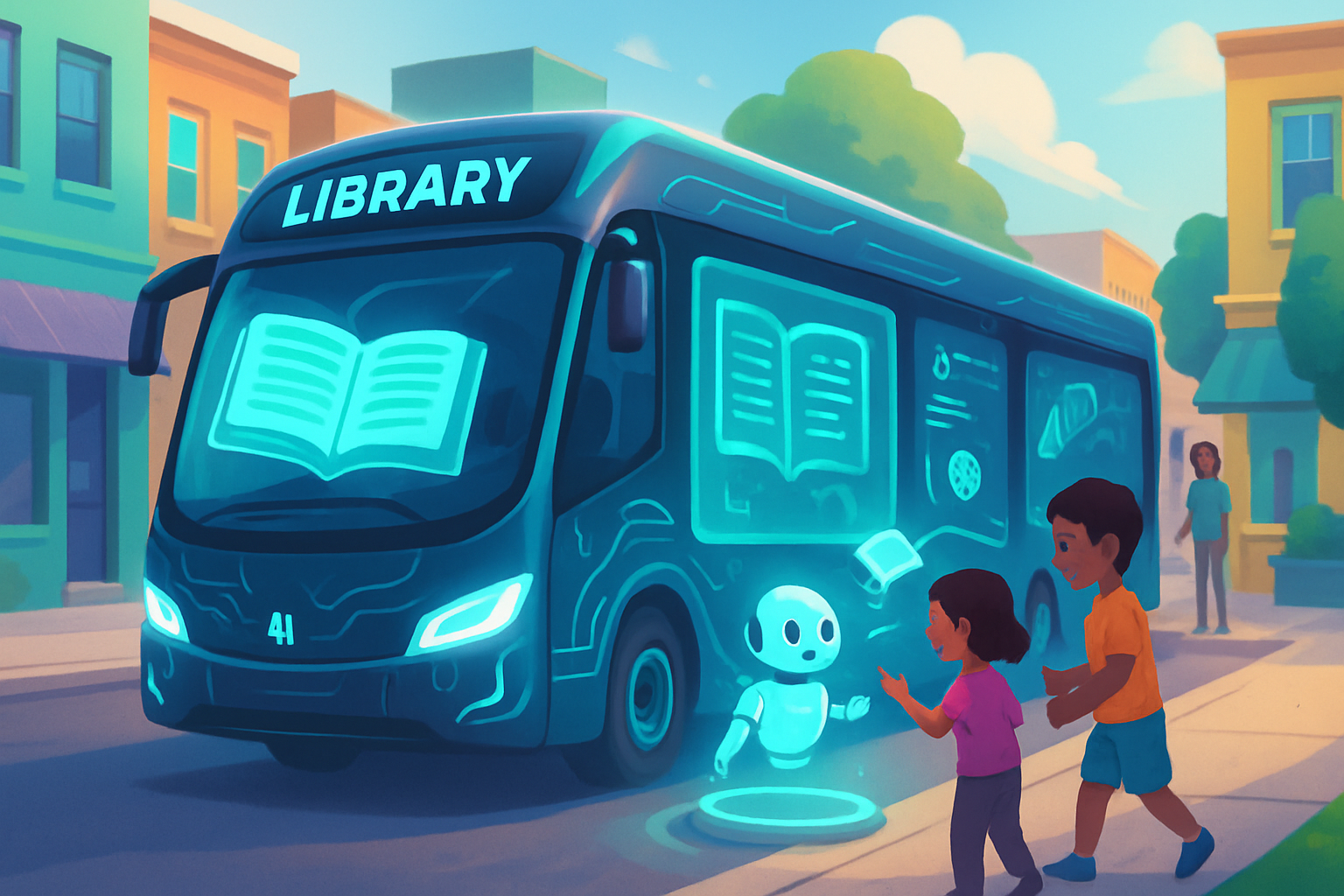
    In a pioneering move to redefine community access to knowledge and technology, the Santa Clarita Public Library launched its "Library Express" initiative on April 26, 2025. This innovative mobile library, a transformed "Go! Santa Clarita" bus, acts as a dynamic "library without walls," bringing a treasure trove of books, educational programs, and cutting-edge mobile technology directly to neighborhoods throughout the city. The initiative underscores a growing trend in public services: leveraging mobility and digital tools to enhance equitable access and foster community engagement, ensuring that vital resources are within reach for all residents, regardless of their proximity to a physical branch.

    The Library Express represents a significant leap forward in community outreach, aiming to dismantle barriers to literacy and digital inclusion. Its debut, celebrated with much fanfare at the Día de los Niños/Día de los Libros event, marked the beginning of a new era for Santa Clarita's educational landscape. By bringing the library experience directly to parks, schools, senior centers, and local events, the program actively promotes lifelong learning and creativity, fulfilling a crucial role in the city's broader SC2025 Strategic Plan to build a more connected and informed populace.

    Mobile Innovation: A Library Reimagined for the Digital Age

    At the heart of the Library Express's success is its robust integration of mobile technology, transforming a conventional bus into a vibrant hub of learning and discovery. The unit is meticulously outfitted with shelves brimming with popular titles, alongside advanced digital infrastructure. Patrons can enjoy seamless onboard check-out capabilities, much like a traditional branch, but with the added convenience of mobility. Crucially, the Library Express functions as a mobile hotspot, offering free Wi-Fi access, a vital resource for bridging the digital divide in underserved areas.

    Beyond connectivity, the mobile library boasts a suite of computing resources, including laptops, tablets, and dedicated computer stations, enabling residents to engage with digital content, complete schoolwork, or access online services. An external large mounted monitor further extends its reach, facilitating technology demonstrations, interactive presentations, and showcasing the library's diverse offerings to larger groups. For younger learners, the initiative incorporates interactive robots, providing hands-on learning experiences in foundational coding skills and STEM concepts, making complex subjects accessible and engaging. This comprehensive mobile setup starkly contrasts with traditional static library models, which often face geographical limitations in serving diverse communities. The Library Express's agile approach allows for dynamic scheduling and targeted outreach, ensuring that resources reach those who need them most, rather than expecting residents to travel to a fixed location.

    Implications for the AI and Tech Ecosystem

    While the Santa Clarita Public Library's Library Express initiative is primarily a public service endeavor, its successful deployment of mobile technology carries interesting implications for various segments of the tech industry, particularly companies involved in mobile infrastructure, educational technology, and potentially even logistics AI. Companies specializing in robust mobile networking solutions, such as those providing 5G hardware or advanced Wi-Fi solutions, stand to benefit as similar initiatives gain traction nationwide. The demand for reliable, high-speed mobile connectivity in non-traditional settings creates new market opportunities for network providers and equipment manufacturers.

    Furthermore, educational technology (EdTech) companies that develop interactive learning tools, digital content platforms, and STEM educational kits, particularly those designed for mobile or outreach environments, could find new avenues for collaboration and product deployment. The use of robots for coding education within the Library Express highlights a growing market for accessible, hands-on learning technologies. While major AI labs like Alphabet's (NASDAQ: GOOGL) DeepMind or Microsoft's (NASDAQ: MSFT) AI research might not directly benefit from a single mobile library, the broader trend of democratizing access to technology and education aligns with their long-term goals of societal impact and fostering a digitally literate population. Startups focusing on mobile-first educational applications, content delivery, and community engagement platforms could find a fertile ground for piloting and scaling their solutions in similar public service initiatives. The logistical challenges of operating a mobile library could also present opportunities for AI-powered route optimization and resource allocation software, improving efficiency and reach for such services.

    A Wider Lens: Democratizing Access in the AI Age

    The Library Express initiative fits seamlessly into the broader landscape of technology trends focused on democratizing access and bridging societal divides. In an era increasingly defined by artificial intelligence and digital literacy, ensuring that all community members have foundational access to technology and information is paramount. This mobile library acts as a critical node in fostering digital equity, directly addressing the challenge of limited access to computers, internet, and educational resources that many communities, particularly those in lower-income or geographically isolated areas, still face.

    The program's focus on providing free Wi-Fi, computer access, and STEM education, including robotics, is particularly significant. As AI continues to reshape industries and job markets, early exposure to computational thinking and digital tools becomes essential for future readiness. The Library Express is not just distributing books; it's cultivating the next generation of digitally literate citizens. This initiative echoes previous milestones in public access to technology, such as the widespread establishment of public computer labs in the early internet era. However, by taking these resources directly to the people, it represents an evolution, actively removing barriers of transportation and awareness. Potential concerns, however, include the sustainability of funding for such mobile operations, the maintenance of technology, and ensuring the curriculum remains current with rapidly evolving technological advancements. Nevertheless, the proactive approach of the Santa Clarita Public Library serves as a compelling model for other communities striving to harness technology for inclusive growth.

    The Road Ahead: Expanding Reach and Evolving Services

    Looking ahead, the Library Express initiative is poised for continued growth and evolution. Near-term developments are likely to focus on expanding its service routes, reaching an even broader spectrum of neighborhoods and community events. As the program matures, there's potential for enhanced data analytics to optimize scheduling and resource allocation, ensuring maximum impact. Experts predict a continued integration of emerging technologies, perhaps incorporating more advanced augmented reality (AR) or virtual reality (VR) experiences to further engage patrons, particularly in educational programming.

    Potential applications on the horizon could include partnerships with local businesses or non-profits to offer specialized workshops, or even serving as an emergency hub during community crises, leveraging its mobile connectivity and resources. Challenges that need to be addressed include securing long-term funding, continually updating the mobile technology to keep pace with rapid advancements, and training staff to manage an increasingly diverse array of digital tools and educational content. However, the initial success of the Library Express suggests a strong foundation for overcoming these hurdles. Experts envision similar mobile technology initiatives becoming a standard feature of public services, with libraries leading the charge in creating dynamic, accessible learning environments that adapt to the changing needs of their communities. The model set by Santa Clarita could inspire a wave of similar innovations across the nation.

    A Blueprint for Community Engagement in the Digital Age

    The Santa Clarita Public Library's Library Express stands as a testament to the transformative power of mobile technology in public service. Launched in April 2025, this "library without walls" has successfully brought books, digital literacy, and imaginative learning directly to the doorsteps of residents, effectively bridging geographical and digital divides within the community. Its innovative use of a repurposed bus, equipped with Wi-Fi, computers, and interactive STEM tools like robots, offers a compelling blueprint for how libraries can remain vital and relevant institutions in an increasingly digital and AI-driven world.

    The initiative's significance lies not just in its immediate impact on Santa Clarita residents but also in its potential to inspire similar programs nationwide. It highlights a critical shift towards proactive community engagement, demonstrating that access to knowledge and technology should not be a privilege but a fundamental right, delivered directly to where people live, work, and play. As we move forward, the Library Express will be a key project to watch, offering insights into the long-term benefits of mobile educational outreach, the challenges of sustaining such initiatives, and the evolving role of public libraries as essential pillars of community development and digital inclusion. Its ongoing success will undoubtedly shape discussions around equitable access to information and technology for years to come.


    This content is intended for informational purposes only and represents analysis of current AI developments.

    TokenRing AI delivers enterprise-grade solutions for multi-agent AI workflow orchestration, AI-powered development tools, and seamless remote collaboration platforms.
    For more information, visit https://www.tokenring.ai/.