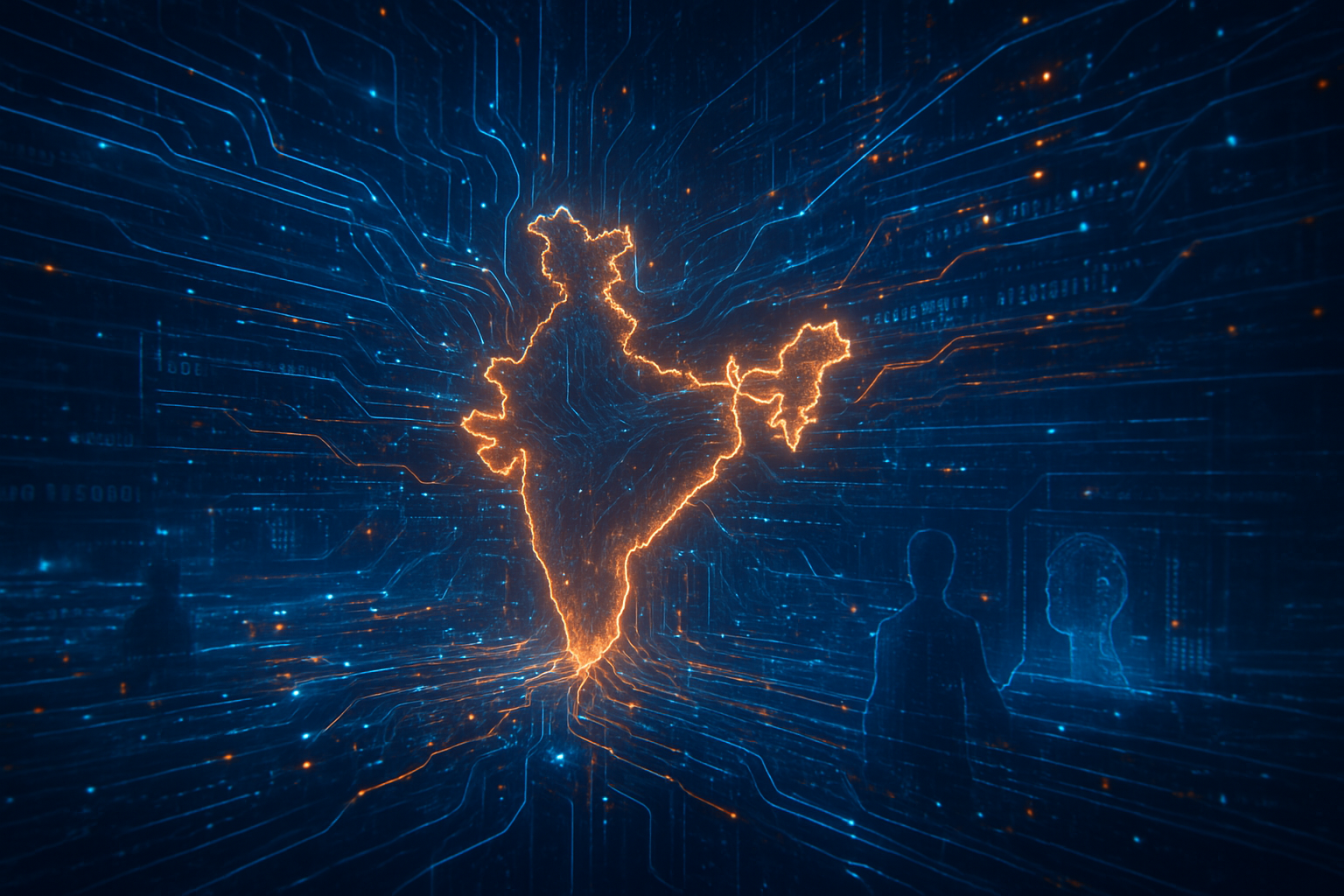
India has firmly established itself as an indispensable pillar of the global tech sector, providing a vast and highly specialized talent pool that is instrumental in driving innovation and development across cutting-edge technologies. With its expansive workforce, robust educational infrastructure, and a strategic focus on emerging fields like Artificial Intelligence (AI) and Machine Learning (ML), India is no longer merely a cost-effective outsourcing destination but a crucial engine for global digital transformation. The nation's ability to consistently produce a high volume of skilled professionals, coupled with a proactive approach to adopting and developing advanced technologies, underscores its vital role in shaping the future of the worldwide tech industry.
The immediate significance of India's contribution lies in its capacity to address critical talent shortages in developed economies, accelerate product development cycles for multinational corporations, and foster a new era of technological innovation. As of October 24, 2025, India's tech workforce continues to grow, adapting swiftly to the demands of a rapidly evolving technological landscape, making it a strategic partner for businesses seeking to scale, innovate, and maintain a competitive edge.
The Technical Backbone: India's Deep Dive into Specialized Tech
India's specialized tech talent pool is characterized by its breadth and depth across a multitude of critical domains. The nation boasts one of the world's largest concentrations of tech professionals, with over 5.4 million IT experts, and is projected to surpass the US in the number of software developers by 2026. This extensive workforce is not just numerically significant but also highly skilled, particularly in areas crucial for global tech advancement.
In Artificial Intelligence (AI) and Machine Learning (ML), India leads globally in AI skill penetration, indicating a workforce 2.8 times more skilled in AI-related competencies than the global average. Indian professionals are proficient in foundational programming languages like Python and R, adept with leading ML frameworks such as TensorFlow and PyTorch, and possess strong understanding of data structures and algorithms. This expertise is being channeled into developing sophisticated algorithms for natural language processing (NLP), decision-making systems, and problem-solving applications. India also emerged as the second-largest contributor to AI-related GitHub projects in 2024, accounting for nearly 20% of global contributions, showcasing its growing influence in the open-source AI community. Beyond AI, Indian talent excels in cloud computing, with expertise in major platforms like AWS, Microsoft Azure (NASDAQ: MSFT), and Google Cloud (NASDAQ: GOOGL), designing scalable, secure, and cost-efficient cloud infrastructures. Cybersecurity, data science, and platform engineering are other areas where Indian professionals are making significant contributions, providing essential services in risk management, data analytics, and PaaS development.
What differentiates Indian tech talent from other global pools is a combination of scale, adaptability, and an inherent culture of continuous learning. India's vast annual output of over 1.4 million STEM graduates provides an unparalleled supply of talent. This workforce is known for its strong work ethic and ability to quickly master new technologies, enabling rapid adaptation to the fast-evolving tech landscape. Indian Global Capability Centers (GCCs) have transformed from traditional back-office support to full-fledged innovation hubs, spearheading R&D and product engineering for Fortune 500 companies. Furthermore, the phenomenon of "reverse brain drain," where experienced Indian professionals return home, enriches the local talent pool with global expertise and an entrepreneurial mindset.
Initial reactions from the global AI research community and industry experts have been largely positive, acknowledging India's growing influence. While reports like Stanford University's Human-Centred Artificial Intelligence (AI) Index 2025 highlight areas where India still lags in private investments and research paper citations compared to China and Europe, there's a strong recognition of India's potential to become a global AI leader. Global tech giants are expanding their AI research hubs in India, leveraging its talent and cost advantages. Experts also view India as uniquely positioned to contribute to global discussions on ethical and responsible AI usage, aiming to maximize social impact through public-private partnerships grounded in responsible AI principles.
Reshaping the Global Tech Landscape: Corporate Impact and Strategic Advantages
India's specialized tech talent is fundamentally reshaping the competitive landscape for AI companies, tech giants, and startups worldwide, offering unparalleled strategic advantages in terms of cost, scale, and innovation.
Major AI labs such as OpenAI, Anthropic, and Perplexity are actively establishing or expanding their presence in India, initially focusing on sales and business development, with ambitious plans to grow their core AI engineering, product, and research teams. These companies are drawn by the unique combination of advanced expertise and significantly lower operational costs; senior and research-level AI roles in India can cost 15-25% of U.S. salaries. Tech giants like Google (NASDAQ: GOOGL), Microsoft (NASDAQ: MSFT), Amazon (NASDAQ: AMZN), Apple (NASDAQ: AAPL), Nvidia (NASDAQ: NVDA), and SAP (NYSE: SAP) have substantial operations and AI research hubs in India, leveraging the talent pool for critical product development, research, and innovation. They are increasingly adopting a "skills over pedigree" approach, hiring from a wider range of Indian colleges based on demonstrable abilities. The over 1,800 Global Capability Centers (GCCs) in India, employing 1.9 million professionals, serve as high-value innovation hubs for diverse industries, handling advanced analytics, AI, and product engineering.
The competitive implications for major AI labs and tech companies are profound. Leveraging Indian talent provides significant cost savings and the ability to rapidly scale operations, leading to faster time-to-market for new products and services. India serves as a critical source of innovation, accelerating R&D and driving technological advancements globally. However, this also intensifies the global talent war, potentially leading to upward pressure on salaries within the Indian tech ecosystem. The rise of GCCs represents a disruption to traditional IT services, as global enterprises increasingly insource high-value work, directly challenging the business models of traditional Indian IT services companies.
Potential disruptions to existing products and services are also evident. Indian tech talent is instrumental in developing AI-powered tools that enhance efficiency and reduce costs across industries, driving massive digital transformation programs including cloud migration and advanced cybersecurity. The integration of AI is transforming job roles, necessitating continuous upskilling in areas like machine learning and AI ethics. Furthermore, India's burgeoning "Swadeshi" (homegrown) tech startup ecosystem is developing indigenous alternatives to global tech giants, such as Zoho and Mappls, signaling a potential disruption of market share for established players within India and a push for data sovereignty. India's ambitious indigenous 7nm processor development initiative also holds the potential to reduce hardware costs and enhance supply chain predictability, offering strategic independence.
Strategically, India is solidifying its position as a global hub for technological innovation and a vital partner for multinational corporations. The deeper integration of Indian talent into global value chains enhances multi-regional business operations and brings diverse perspectives that boost innovation. Government initiatives like the National AI Strategy and the proposed National AI Talent Mission aim to make India the "AI workforce capital of the world," fostering a supportive environment for AI adoption and skill development. This confluence of factors provides a significant strategic advantage for companies that effectively leverage India's specialized tech talent.
Broader Horizons: India's Role in the Global AI Tapestry
India's role in providing specialized tech talent extends far beyond corporate bottom lines, profoundly influencing the broader AI landscape, global tech trends, international relations, economic development, and cultural exchange. The nation's emergence as a tech superpower is a defining characteristic of the 21st-century digital era.
Within the broader AI landscape, India is a formidable force, ranking first globally in AI skill penetration among all OECD and G20 countries. Indian professionals demonstrate an impressive 96% adoption rate of AI and generative AI tools at work, significantly higher than many developed nations, translating into increased productivity. This high adoption rate, coupled with a vast talent pool of over 5 million tech professionals and 1.5 million annual engineering graduates, positions India as a crucial global AI hub. Government initiatives like the "IndiaAI Mission," backed by substantial investments in AI compute infrastructure, including 38,000 GPUs by September 2025, further underscore this commitment. A thriving ecosystem of over 1,200 AI-driven startups, which attracted over $5.2 billion in funding as of October 2025, is leveraging AI to solve local challenges with global applicability.
The impacts on international relations are significant. India is using its technological prowess to engage in tech diplomacy, chairing AI-related forums in BRICS, G20, and GPAI (Global Partnership on AI), thereby influencing global standards and promoting responsible AI usage. Its ambition to produce "Made in India" semiconductor chips by late 2025 aims to diversify global supply chains and enhance resilience. Economically, India's AI adaptation is poised to bolster its $250 billion IT industry, with AI projected to contribute $1.7 trillion to India's economy by 2035, driving job creation, upskilling, and increased productivity. Culturally, the Indian diaspora, along with digital platforms, plays a crucial role in strengthening India's soft power and facilitating knowledge transfer, with many skilled professionals returning to India, enriching the local innovation ecosystem.
However, this rapid ascent is not without its challenges. A significant digital skills gap persists, with an estimated 25% gap that is expected to grow, requiring over half the current workforce to be reskilled. Talent migration (brain drain) remains a concern, as top talent often seeks opportunities overseas. India has also historically underinvested in deep-tech R&D compared to global leaders, and infrastructure disparities in rural areas limit participation in the AI economy. Concerns regarding intellectual property protection and the need for robust cybersecurity infrastructure and regulation also need continuous attention.
Comparing this to previous AI milestones or global talent shifts, India's current trajectory marks a profound evolution. While India has long been an IT services powerhouse, the current shift emphasizes specialized, high-value AI capabilities and product development rather than just traditional outsourcing. Global Capability Centers have transformed from mere back offices to innovation partners, and India is strategically moving to become a hardware and AI powerhouse, not just a software services hub. This phase is characterized by a government-led strategic vision, proactive upskilling, and deeper integration of Indian talent into global value chains, making it a more comprehensive and strategically driven shift than past, less coordinated efforts.
The Road Ahead: Future Developments and Expert Outlook
The future of India's specialized tech talent and its importance for the global tech sector is characterized by continued growth, deeper specialization, and an increasing role in pioneering advanced technologies. Both near-term and long-term developments point towards India solidifying its position as a critical global innovation hub.
In the near term (next 1-3 years), an explosive demand for specialized roles in AI, Machine Learning, data science, cybersecurity, and cloud computing is expected, with a projected 75% growth in these areas in 2025. The Indian IT and ITeS sector is anticipating a remarkable 20% job growth in 2025, with fresher hiring increasing by 15-20%. This growth is not confined to metropolitan areas; Tier-2 and Tier-3 cities are rapidly emerging as new tech hubs, offering cost-effective operations and access to fresh talent pools. Global AI leaders like OpenAI, Anthropic, and Perplexity are actively entering India to tap into this talent, focusing on engineering, research, sales, and product roles. AI is also set to further transform the Indian IT industry by enabling service delivery automation and driving smarter AI-infused offerings.
Looking further ahead (beyond 3 years), India is poised to become a global leader in skilled talent by 2030, driven by its youthful population, expanding digital access, and continuous emphasis on education and innovation. Experts predict India will emerge as a new global hub for technology innovation and entrepreneurship, particularly in deep tech and AI, leveraging its unparalleled capacity for data collection and utilization. There's also an anticipated focus on semiconductors and quantum computing, with Indian employers expecting these technologies to transform operations this decade. Indian GCCs will continue their evolution from delivery centers to full-fledged innovation partners, leading high-level product design, AI ops, and digital twin initiatives for global enterprises.
Potential applications and use cases on the horizon are vast. Indian talent will continue to develop AI-powered tools for finance, retail, and manufacturing, cementing its role as a leader in AI outsourcing. In cloud computing, Indian teams will lead comprehensive-stack modernization and data platform rewiring for global giants. Cybersecurity expertise will contribute to international policy and develop strategies for data privacy and cybercrime. Product development and innovation will see Indian professionals engaged in creating groundbreaking solutions for multinational corporations and startups, particularly in generative AI, with contextual solutions for identity verification, agriculture, transportation, and public services holding global significance.
However, several challenges need to be addressed. A significant digital skills gap persists, with an estimated 25% gap that is expected to grow, requiring extensive reskilling for over half the current workforce. Talent retention remains a major issue for GCCs, driven by factors like limited career growth and uncompetitive compensation. Cultural and time zone differences also pose challenges for global teams. Concerns regarding intellectual property protection and the need for robust cybersecurity infrastructure and regulation are ongoing.
Despite these challenges, experts are overwhelmingly optimistic. India is positioning itself as an AI powerhouse, with AI expected to contribute around $500 billion to India's GDP. The country's unique advantage of a huge talent pool and rapid digital adoption will be crucial in the global AI race. India is seen as an "inflection point," ready to assert leadership ambitions in technological domains and become the new global hub for technology innovation and entrepreneurship. Continued strong collaboration between the public and private sectors, exemplified by initiatives like the $1.25 billion IndiaAI Mission, will be crucial to enhance tech skills, foster innovation, and solidify India's role as a co-innovation partner poised to define the next wave of global AI products.
A Global Tech Nexus: India's Enduring Legacy
India's journey from a nascent IT services provider to a global powerhouse of specialized tech talent, particularly in AI, represents one of the most significant shifts in contemporary technological history. The nation's ability to cultivate and deploy a vast, highly skilled, and adaptable workforce has made it an indispensable component of the global tech sector's development. This is not merely an economic phenomenon but a strategic re-alignment of global innovation capabilities, with India at its core.
The key takeaways underscore India's unparalleled scale of tech talent, its leadership in AI skill penetration, and the transformative evolution of its Global Capability Centers into innovation hubs for multinational corporations. Indian professionals' proficiency in cutting-edge technologies, combined with a strong work ethic and a culture of continuous learning, makes them a critical asset for companies worldwide. This development's significance in AI history is profound: India is transitioning from a service provider to a co-innovation partner, actively shaping the future of AI products and solutions globally. Its strategic focus on indigenous development in areas like semiconductors and AI further cements its role as a strategic player rather than just a talent supplier.
The long-term impact will see India solidify its position as the global capital for robotics and AI, with its talent deeply integrated into the digital infrastructure of the world's largest corporations. The sustained emphasis on STEM education, coupled with a dynamic startup ecosystem, will ensure a continuous pipeline of innovators. India's agility in adapting to and innovating with new technologies will be crucial in defining its leadership in the global AI race, necessitating ongoing collaboration among industry, academia, and government.
In the coming weeks and months, watch for aggressive hiring drives by leading AI companies expanding their presence in India, particularly for core AI engineering and technical roles. Monitor the ongoing upskilling and reskilling initiatives across the Indian tech sector, which are vital for meeting evolving industry demands. The continued expansion of Global Capability Centers and the emergence of tech talent hubs in Tier 2 and Tier 3 cities will also be key indicators of growth. Furthermore, observe policy advancements concerning ethical AI frameworks, data privacy, and increased investment in R&D and intellectual property creation, as these will define India's long-term innovation capabilities. India's strategic focus on nurturing a specialized tech workforce, particularly in AI, positions it not just as a service provider but as a global leader driving the next wave of technological innovation.
This content is intended for informational purposes only and represents analysis of current AI developments.
TokenRing AI delivers enterprise-grade solutions for multi-agent AI workflow orchestration, AI-powered development tools, and seamless remote collaboration platforms.
For more information, visit https://www.tokenring.ai/.