Tag: Disinformation

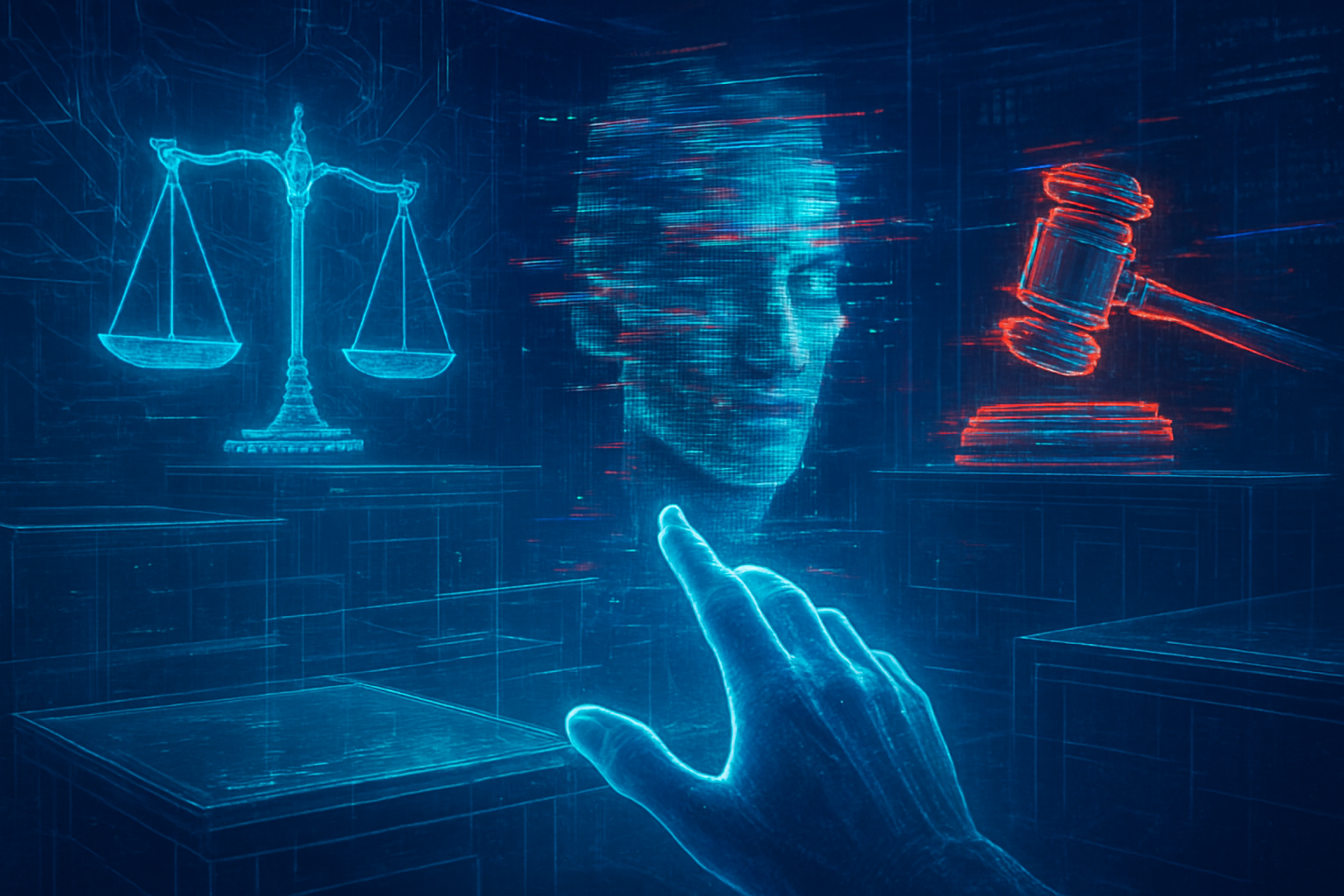
  • AI’s Shadow in the Courtroom: Deepfakes and Disinformation Threaten the Pillars of Justice

    AI’s Shadow in the Courtroom: Deepfakes and Disinformation Threaten the Pillars of Justice

    The legal sector and courtrooms worldwide are facing an unprecedented crisis, as the rapid advancement of artificial intelligence, particularly in the creation of sophisticated deepfakes and the spread of disinformation, erodes the very foundations of evidence and truth. Recent reports and high-profile incidents, extending into late 2025, paint a stark picture of a justice system struggling to keep pace with technology that can convincingly fabricate reality. The immediate significance is profound: the integrity of digital evidence is now under constant assault, demanding an urgent re-evaluation of legal frameworks, judicial training, and forensic capabilities.

    A landmark event on September 9, 2025, in Alameda County, California, served as a potent wake-up call when a civil case was dismissed, and sanctions were recommended against plaintiffs after a videotaped witness testimony was definitively identified as a deepfake. This incident is not an isolated anomaly but a harbinger of the "deepfake defense" and the broader weaponization of AI in legal proceedings, compelling courts to confront a future where digital authenticity can no longer be presumed.

    The Technicality of Deception: How AI Undermines Evidence

    The core of the challenge lies in AI's increasingly sophisticated ability to generate or alter digital media, creating audio and video content that is virtually indistinguishable from genuine recordings to the human eye and ear. This capability gives rise to the "deepfake defense," where genuine evidence can be dismissed as fake, and conversely, AI-generated fabrications can be presented as authentic to falsely incriminate or exculpate. The "Liar's Dividend" further complicates matters, as widespread awareness of deepfakes leads to a general distrust of all digital media, allowing individuals to dismiss authentic evidence to avoid accountability. A notable 2023 lawsuit involving a Tesla crash, for instance, saw the defense counsel unsuccessfully attempt to discredit a video by claiming it was an AI-generated fabrication.

    This represents a significant departure from previous forms of evidence tampering. While photo and audio manipulation have existed for decades, AI's ability to create hyper-realistic, dynamic, and contextually appropriate fakes at scale is unprecedented. Traditional forensic methods often struggle to detect these highly advanced manipulations, and even human experts face limitations in accurately authenticating evidence without specialized tools. The "black box" nature of some AI systems, where their internal workings are opaque, further complicates accountability and oversight, making it difficult to trace the origin or intent of AI-generated content.

    Initial reactions from the AI research community and legal experts underscore the severity of the situation. A November 2025 report led by the University of Colorado Boulder critically highlighted the U.S. legal system's profound unpreparedness to handle deepfakes and other AI-enhanced evidence equitably. The report emphasized the urgent need for specialized training for judges, jurors, and legal professionals, alongside the establishment of national standards for video and audio evidence to restore faith in digital testimony.

    Reshaping the AI Landscape: Companies and Competitive Implications

    The escalating threat of AI-generated disinformation and deepfakes is creating a new frontier for innovation and competition within the AI industry. Companies specializing in AI ethics, digital forensics, and advanced authentication technologies stand to benefit significantly. Startups developing robust deepfake detection software, verifiable AI systems, and secure data provenance solutions are gaining traction, offering critical tools to legal firms, government agencies, and corporations seeking to combat fraudulent content.

    For tech giants like Microsoft (NASDAQ: MSFT) and Meta (NASDAQ: META), this environment presents both challenges and opportunities. While their platforms are often exploited for the dissemination of deepfakes, they are also investing heavily in AI safety, content moderation, and detection research. The competitive landscape is heating up for AI labs, with a focus shifting towards developing "responsible AI" frameworks and integrated safeguards against misuse. This also creates a new market for legal tech companies that can integrate AI-powered authentication and verification tools into their existing e-discovery and case management platforms, potentially disrupting traditional legal review services.

    However, the legal challenges are also immense. 2025 has seen a significant spike in copyright litigation, with over 50 lawsuits currently pending in U.S. federal courts against AI developers for using copyrighted material to train their models without consent. Notable cases include The New York Times (NYSE: NYT) v. Microsoft & OpenAI (filed December 2023), Concord Music Group v. Anthropic (filed October 2024), and a lawsuit by authors like Richard Kadrey and Sarah Silverman against Meta (filed July 2023). These cases are challenging the "fair use" defense frequently invoked by AI companies, potentially redefining the economic models and data acquisition strategies for major AI labs.

    The Wider Significance: Erosion of Trust and Justice

    The proliferation of deepfakes and disinformation fits squarely into the broader AI landscape, highlighting the urgent need for robust AI governance and responsible AI development. Beyond the courtroom, the ability to convincingly fabricate reality poses a significant threat to democratic processes, public discourse, and societal trust. The impacts on the justice system are particularly alarming, threatening to undermine due process, compromise evidence integrity, and erode public confidence in legal outcomes.

    Concerns extend beyond just deepfakes. The ethical deployment of generative AI tools by legal professionals themselves has led to "horror stories" of AI generating fake case citations, underscoring issues of accuracy, algorithmic bias, and data security. AI tools in areas like predictive policing also risk perpetuating or amplifying existing biases, contributing to unequal access to justice. The Department of Justice (DOJ) in its December 2024 report on AI in criminal justice identified persistent operational and ethical considerations, including civil rights concerns related to potential discrimination and erosion of public trust through increased surveillance. This new era of AI-driven deception marks a significant milestone, demanding a level of scrutiny and adaptation that far surpasses previous challenges posed by digital evidence.

    On the Horizon: A Race for Solutions and Regulation

    Looking ahead, the legal sector is poised for a transformative period driven by the imperative to counter AI-fueled deception. Near-term developments will likely focus on enhancing digital forensic capabilities within law enforcement and judicial systems, alongside the rapid development and deployment of AI-powered authentication and detection tools. Experts predict a continued push for national standards for digital evidence and specialized training programs for judges, lawyers, and jurors to navigate this complex landscape.

    Legislatively, significant strides are being made, though not without challenges. In May 2025, President Trump signed the bipartisan "TAKE IT DOWN ACT," criminalizing the nonconsensual publication of intimate images, including AI-created deepfakes. The "NO FAKES Act," introduced in April 2025, aims to make it illegal to create or distribute AI-generated replicas of a person's voice or likeness without consent. Furthermore, the "Protect Elections from Deceptive AI Act," introduced in March 2025, seeks to ban the distribution of materially deceptive AI-generated audio or video related to federal election candidates. States are also active, with Washington State's House Bill 1205 and Pennsylvania's Act 35 establishing criminal penalties for malicious deepfakes in July and September 2025, respectively. However, legal hurdles remain, as seen in August and October 2025 when a federal judge struck down California's deepfake election laws, citing First Amendment concerns.

    Internationally, the EU AI Act, effective August 1, 2024, has already banned the most harmful uses of AI-based identity manipulation and imposed strict transparency requirements for AI-generated content. Denmark, in mid-2025, introduced an amendment to its copyright law to recognize an individual's right to their own body, facial features, and voice as intellectual property. The challenge remains for legislation and judicial processes to evolve at the pace of AI innovation, ensuring a fair and just system in an increasingly digital and manipulated world.

    A New Era of Scrutiny: The Future of Legal Authenticity

    The rise of deepfakes and AI-driven disinformation marks a pivotal moment in the history of artificial intelligence and its interaction with society's most critical institutions. The key takeaway is clear: the legal sector can no longer rely on traditional assumptions about the authenticity of digital evidence. This development signifies a profound shift, demanding a proactive and multi-faceted approach involving technological innovation, legislative action, and comprehensive judicial reform.

    The long-term impact will undoubtedly reshape legal practice, evidence standards, and the very concept of truth in courtrooms. It underscores the urgent need for a societal conversation about digital literacy, critical thinking, and the ethical boundaries of AI development. As AI continues its relentless march forward, the coming weeks and months will be crucial. Watch for the outcomes of ongoing copyright lawsuits against AI developers, the evolution of deepfake detection technologies, further legislative efforts to regulate AI's use, and the judicial system's adaptive responses to these unprecedented challenges. The integrity of justice itself hinges on our ability to navigate this new, complex reality.


    This content is intended for informational purposes only and represents analysis of current AI developments.

    TokenRing AI delivers enterprise-grade solutions for multi-agent AI workflow orchestration, AI-powered development tools, and seamless remote collaboration platforms.
    For more information, visit https://www.tokenring.ai/.

  • The Algorithmic Frontline: How AI Fuels Extremism and the Race to Counter It

    The Algorithmic Frontline: How AI Fuels Extremism and the Race to Counter It

    The rapid advancement of artificial intelligence presents a complex and escalating challenge to global security, as extremist groups increasingly leverage AI tools to amplify their agendas. This technological frontier, while offering powerful solutions for societal progress, is simultaneously being exploited for propaganda, sophisticated recruitment, and even enhanced operational planning by malicious actors. The growing intersection of AI and extremism demands urgent attention from governments, technology companies, and civil society, necessitating a multi-faceted approach to counter these evolving threats while preserving the open nature of the internet.

    This critical development casts AI as a double-edged sword, capable of both unprecedented good and profound harm. As of late 2025, the digital battlefield against extremism is undergoing a significant transformation, with AI becoming a central component in both the attack and defense strategies. Understanding the technical nuances of this arms race is paramount to formulating effective countermeasures against the algorithmic radicalization and coordination efforts of extremist organizations.

    The Technical Arms Race: AI's Role in Extremist Operations and Counter-Efforts

    The technical advancements in AI, particularly in generative AI, natural language processing (NLP), and machine learning (ML), have provided extremist groups with unprecedented capabilities. Previously, propaganda creation and dissemination were labor-intensive, requiring significant human effort in content production, translation, and manual targeting. Today, AI-powered tools have revolutionized these processes, making them faster, more efficient, and far more sophisticated.

    Specifically, generative AI allows for the rapid production of vast amounts of highly tailored and convincing propaganda content. This includes deepfake videos, realistic images, and human-sounding audio that can mimic legitimate news operations, feature AI-generated anchors resembling target demographics, or seamlessly blend extremist messaging with popular culture references to enhance appeal and evade detection. Unlike traditional methods of content creation, which often suffered from amateur production quality or limited reach, AI enables the creation of professional-grade disinformation at scale. For instance, AI can generate antisemitic imagery or fabricated attack scenarios designed to sow discord and instigate violence, a significant leap from manually photoshopped images.

    AI-powered algorithms also play a crucial role in recruitment. Extremist groups can now analyze vast amounts of online data to identify patterns and indicators of potential radicalization, allowing them to pinpoint and target vulnerable individuals sympathetic to their ideology with chilling precision. This goes beyond simple demographic targeting; AI can identify psychological vulnerabilities and tailor interactive radicalization experiences through AI-powered chatbots. These chatbots can engage potential recruits in personalized conversations, providing information that resonates with their specific interests and beliefs, thereby fostering a sense of connection and accelerating self-radicalization among lone actors. This approach differs significantly from previous mass-mailing or forum-based recruitment, which lacked the personalized, adaptive interaction now possible with AI.

    Furthermore, AI enhances operational planning. Large Language Models (LLMs) can assist in gathering information, learning, and planning actions more effectively, essentially acting as instructional chatbots for potential terrorists. AI can also bolster cyberattack capabilities, making them easier to plan and execute by providing necessary guidance. Instances have even been alleged where AI assisted in planning physical attacks, such as explosions. AI-driven tools, like encrypted voice modulators, can also enhance operational security by masking communications, complicating intelligence gathering efforts. The initial reaction from the AI research community and industry experts has been one of deep concern, emphasizing the urgent need for ethical AI development, robust safety protocols, and international collaboration to prevent further misuse. Many advocate for "watermarking" AI-generated content to distinguish it from authentic human-created media, though this remains a technical and logistical challenge.

    Corporate Crossroads: AI Companies, Tech Giants, and the Extremist Threat

    The intersection of AI and extremist groups presents a critical juncture for AI companies, tech giants, and startups alike. Companies developing powerful generative AI models and large language models (LLMs) find themselves at the forefront, grappling with the dual-use nature of their innovations.

    Microsoft (NASDAQ: MSFT), Google (NASDAQ: GOOGL), and Meta Platforms (NASDAQ: META), as leading developers of foundational AI models and operators of vast social media platforms, stand to benefit from the legitimate applications of AI while simultaneously bearing significant responsibility for mitigating its misuse. These companies are investing heavily in AI safety and content moderation tools, often leveraging AI itself to detect and remove extremist content. Their competitive advantage lies in their vast resources, data sets, and research capabilities to develop more robust counter-extremism AI. However, the public scrutiny and potential regulatory pressure stemming from AI misuse could significantly impact their brand reputation and market positioning.

    Startups specializing in AI ethics, content moderation, and digital forensics are also seeing increased demand. Companies like Modulate (specializing in voice AI for content moderation) or those developing AI watermarking technologies could see significant growth. Their challenge, however, is scaling their solutions to match the pace and sophistication of extremist AI adoption. The competitive landscape is fierce, with a constant arms race between those developing AI for malicious purposes and those creating defensive AI.

    This development creates potential disruption to existing content moderation services, which traditionally relied more on human review and simpler keyword filtering. AI-generated extremist content is often more subtle, adaptable, and capable of evading these older detection methods, necessitating a complete overhaul of moderation strategies. Companies that can effectively integrate advanced AI for real-time, nuanced content analysis and threat intelligence sharing will gain a strategic advantage. Conversely, those that fail to adapt risk becoming unwilling conduits for extremist propaganda, facing severe public backlash and regulatory penalties. The market is shifting towards solutions that not only identify explicit threats but also predict emerging narratives and identify coordinated inauthentic behavior driven by AI.

    The Wider Significance: AI, Society, and the Battle for Truth

    The entanglement of artificial intelligence with extremist agendas represents a profound shift in the broader AI landscape and global security trends. This development underscores the inherent dual-use nature of powerful technologies and raises critical questions about ethical AI development, governance, and societal resilience. It significantly amplifies existing concerns about disinformation, privacy, and the erosion of trust in digital information.

    The impacts are far-reaching. On a societal level, the ability of AI to generate hyper-realistic fake content (deepfakes) and personalized radicalization pathways threatens to further polarize societies, undermine democratic processes, and incite real-world violence. The ease with which AI can produce and disseminate tailored extremist narratives makes it harder for individuals to discern truth from fiction, especially when content is designed to exploit psychological vulnerabilities. This fits into a broader trend of information warfare, where AI provides an unprecedented toolkit for creating and spreading propaganda at scale, making it a critical concern for national security agencies worldwide.

    Potential concerns include the risk of "algorithmic radicalization," where individuals are funnelled into extremist echo chambers by AI-driven recommendation systems or directly engaged by AI chatbots designed to foster extremist ideologies. There's also the danger of autonomous AI systems being weaponized, either directly or indirectly, to aid in planning or executing attacks, a scenario that moves beyond theoretical discussion into a tangible threat. This situation draws comparisons to previous AI milestones that raised ethical alarms, such as the development of facial recognition technology and autonomous weapons systems, but with an added layer of complexity due to the direct malicious intent of the end-users.

    The challenge is not just about detecting extremist content, but also about understanding and countering the underlying psychological manipulation enabled by AI. The sheer volume and sophistication of AI-generated content can overwhelm human moderators and even existing AI detection systems, leading to a "needle in a haystack" problem on an unprecedented scale. The implications for free speech are also complex; striking a balance between combating harmful content and protecting legitimate expression becomes an even more delicate act when AI is involved in both its creation and its detection.

    Future Developments: The Evolving Landscape of AI Counter-Extremism

    Looking ahead, the intersection of AI and extremist groups is poised for rapid and complex evolution, necessitating equally dynamic countermeasures. In the near term, experts predict a significant escalation in the sophistication of AI tools used by extremist actors. This will likely include more advanced deepfake technology capable of generating highly convincing, real-time synthetic media for propaganda and impersonation, making verification increasingly difficult. We can also expect more sophisticated AI-powered bots and autonomous agents designed to infiltrate online communities, spread disinformation, and conduct targeted psychological operations with minimal human oversight. The development of "jailbroken" or custom-trained LLMs specifically designed to bypass ethical safeguards and generate extremist content will also continue to be a pressing challenge.

    On the counter-extremism front, future developments will focus on harnessing AI itself as a primary defense mechanism. This includes the deployment of more advanced machine learning models capable of detecting subtle linguistic patterns, visual cues, and behavioral anomalies indicative of AI-generated extremist content. Research into robust AI watermarking and provenance tracking technologies will intensify, aiming to create indelible digital markers for AI-generated media, though widespread adoption and enforcement remain significant hurdles. Furthermore, there will be a greater emphasis on developing AI systems that can not only detect but also predict emerging extremist narratives and identify potential radicalization pathways before they fully materialize.

    Challenges that need to be addressed include the "adversarial AI" problem, where extremist groups actively try to circumvent detection systems, leading to a continuous cat-and-mouse game. The need for international cooperation and standardized data-sharing protocols among governments, tech companies, and research institutions is paramount, as extremist content often transcends national borders and platform silos. Experts predict a future where AI-driven counter-narratives and digital literacy initiatives become even more critical, empowering individuals to critically evaluate online information and build resilience against sophisticated AI-generated manipulation. The development of "ethical AI" frameworks with built-in safeguards against misuse will also be a key focus, though ensuring compliance across diverse developers and global contexts remains a formidable task.

    The Algorithmic Imperative: A Call to Vigilance

    In summary, the growing intersection of artificial intelligence and extremist groups represents one of the most significant challenges to digital safety and societal stability in the mid-2020s. Key takeaways include the unprecedented ability of AI to generate sophisticated propaganda, facilitate targeted recruitment, and enhance operational planning for malicious actors. This marks a critical departure from previous, less sophisticated methods, demanding a new era of vigilance and innovation in counter-extremism efforts.

    This development's significance in AI history cannot be overstated; it highlights the urgent need for ethical considerations to be embedded at every stage of AI development and deployment. The "dual-use" dilemma of AI is no longer a theoretical concept but a tangible reality with profound implications for global security and human rights. The ongoing arms race between AI for extremism and AI for counter-extremism will define much of the digital landscape in the coming years.

    Final thoughts underscore that while completely preventing the misuse of AI may be impossible, a concerted, multi-stakeholder approach involving robust technological solutions, proactive regulatory frameworks, enhanced digital literacy, and continuous international collaboration can significantly mitigate the harm. What to watch for in the coming weeks and months includes further advancements in generative AI capabilities, new legislative attempts to regulate AI use, and the continued evolution of both extremist tactics and counter-extremism strategies on major online platforms. The battle for the integrity of our digital information environment and the safety of our societies will increasingly be fought on the algorithmic frontline.


    This content is intended for informational purposes only and represents analysis of current AI developments.

    TokenRing AI delivers enterprise-grade solutions for multi-agent AI workflow orchestration, AI-powered development tools, and seamless remote collaboration platforms.
    For more information, visit https://www.tokenring.ai/.

  • AI-Powered Cyberwarfare: Microsoft Sounds Alarm as Adversaries Escalate Attacks on U.S.

    AI-Powered Cyberwarfare: Microsoft Sounds Alarm as Adversaries Escalate Attacks on U.S.

    Redmond, WA – October 16, 2025 – In a stark warning echoing across the digital landscape, Microsoft (NASDAQ: MSFT) has today released its annual Digital Threats Report, revealing a dramatic escalation in cyberattacks against U.S. companies, governments, and individuals, increasingly propelled by advanced artificial intelligence (AI) capabilities. The report, building on earlier findings from February 2024, highlights a disturbing trend: foreign adversaries, including state-sponsored groups from Russia, China, Iran, and North Korea, are leveraging AI, particularly large language models (LLMs), as a potent "productivity tool" to enhance the sophistication and scale of their malicious operations. This development signals a critical juncture in national security, demanding immediate and robust defensive measures to counter the weaponization of AI in cyberspace.

    The implications are profound, as AI moves from a theoretical threat to an active component in geopolitical conflict. Microsoft's findings underscore a new era of digital warfare where AI-driven disinformation, enhanced social engineering, and automated vulnerability research are becoming commonplace. The urgency of this report on today's date, October 16, 2025, emphasizes that these are not future predictions but current realities, demanding a rapid evolution in cybersecurity strategies to protect critical infrastructure and democratic processes.

    The AI Arms Race: How Adversaries Are Redefining Cyberattack Capabilities

    Microsoft's Digital Threats Report, published today, October 16, 2025, alongside its earlier joint report with OpenAI from February 14, 2024, paints a comprehensive picture of AI's integration into nation-state cyber operations. The latest report identifies over 200 instances in July 2025 alone where foreign governments utilized AI to generate fake online content, a figure more than double that of July 2024 and a tenfold increase since 2023. This rapid acceleration demonstrates AI's growing role in influence operations and cyberespionage.

    Specifically, adversaries are exploiting AI in several key areas. Large language models are being used to fine-tune social engineering tactics, translating poorly worded phishing emails into fluent, convincing English and generating highly targeted spear-phishing campaigns. North Korea's Emerald Sleet (also known as Kimsuky), for instance, has been observed using AI to research foreign think tanks and craft bespoke phishing content. Furthermore, the report details how AI is being leveraged for vulnerability research, with groups like Russia's Forest Blizzard (Fancy Bear) investigating satellite communications and radar technologies for weaknesses, and Iran's Crimson Sandstorm employing LLMs to troubleshoot software errors and study network evasion techniques. Perhaps most alarming is the potential for generative AI to create sophisticated deepfakes and voice clones, allowing adversaries to impersonate senior government officials or create entirely fabricated personas for espionage, as seen with North Korea pioneering AI personas to apply for remote tech jobs.

    This AI-driven approach significantly differs from previous cyberattack methodologies, which often relied on manual reconnaissance, less sophisticated social engineering, and brute-force methods. AI acts as an force multiplier, automating tedious tasks, improving the quality of deceptive content, and rapidly identifying potential vulnerabilities, thereby reducing the time, cost, and skill required for effective attacks. While Microsoft and OpenAI noted in early 2024 that "particularly novel or unique AI-enabled attack or abuse techniques" hadn't yet emerged directly from threat actors' use of AI, the rapid evolution observed by October 2025 indicates a swift progression from enhancement to potential transformation of attack vectors. Initial reactions from cybersecurity experts, such as Amit Yoran, CEO of Tenable, confirm the sentiment that "bad actors are using large-language models — that decision was made when Pandora's Box was opened," underscoring the irreversible nature of this technological shift.

    Competitive Implications for the AI and Cybersecurity Industries

    The rise of AI-powered cyberattacks presents a complex landscape for AI companies, tech giants, and cybersecurity startups. Companies specializing in AI-driven threat detection and response stand to benefit significantly. Firms like Microsoft (NASDAQ: MSFT), with its extensive cybersecurity offerings, CrowdStrike (NASDAQ: CRWD), and Palo Alto Networks (NASDAQ: PANW) are already investing heavily in AI to bolster their defensive capabilities, developing solutions that can detect AI-generated phishing attempts, deepfakes, and anomalous network behaviors more effectively.

    However, the competitive implications are not without challenges. Major AI labs and tech companies face increased pressure to ensure the ethical and secure development of their LLMs. Critics, including Jen Easterly, Director of the U.S. Cybersecurity and Infrastructure Security Agency (CISA), have previously raised concerns about the hasty public release of LLMs without adequate security considerations, highlighting the need to "build AI with security in mind." This puts companies like OpenAI, Google (NASDAQ: GOOGL), and Meta (NASDAQ: META) under scrutiny to implement robust safeguards against misuse by malicious actors, potentially leading to new industry standards and regulatory frameworks for AI development.

    The potential disruption to existing cybersecurity products is substantial. Traditional signature-based detection systems are becoming increasingly obsolete against AI-generated polymorphic malware and rapidly evolving attack patterns. This necessitates a pivot towards more adaptive, AI-driven security architectures that can learn and predict threats in real-time. Startups focusing on niche AI security solutions, such as deepfake detection, AI-powered vulnerability management, and behavioral analytics, are likely to see increased demand and investment. The market positioning will favor companies that can demonstrate proactive, AI-native defense capabilities, creating a new arms race in defensive AI to counter the offensive AI deployed by adversaries.

    The Broader Significance: A New Era of National Security Threats

    Microsoft's report on AI-escalated cyberattacks fits into a broader AI landscape characterized by the dual-use nature of advanced technologies. While AI promises transformative benefits, its weaponization by nation-states represents a significant paradigm shift in global security. This development underscores the escalating "AI arms race," where technological superiority in AI translates directly into strategic advantage in cyber warfare and intelligence operations. The widespread availability of LLMs, even open-source variants, democratizes access to sophisticated tools that were once the exclusive domain of highly skilled state actors, lowering the barrier to entry for more potent attacks.

    The impacts on national security are profound. Critical infrastructure, including energy grids, financial systems, and defense networks, faces heightened risks from AI-driven precision attacks. The ability to generate convincing deepfakes and disinformation campaigns poses a direct threat to democratic processes, public trust, and social cohesion. Furthermore, the enhanced evasion techniques and automation capabilities of AI-powered cyber tools complicate attribution, making it harder to identify and deter aggressors, thus increasing the potential for miscalculation and escalation. The collaboration between nation-state actors and cybercrime gangs, sharing tools and techniques, blurs the lines between state-sponsored espionage and financially motivated crime, adding another layer of complexity to an already intricate threat environment.

    Comparisons to previous AI milestones highlight the accelerated pace of technological adoption by malicious actors. While earlier AI applications in cybersecurity primarily focused on defensive analytics, the current trend shows a rapid deployment of generative AI for offensive purposes. This marks a departure from earlier concerns about AI taking over physical systems, instead focusing on AI's ability to manipulate information, human perception, and digital vulnerabilities at an unprecedented scale. The concerns extend beyond immediate cyberattacks to the long-term erosion of trust in digital information and institutions, posing a fundamental challenge to information integrity in the digital age.

    The Horizon: Future Developments and Looming Challenges

    Looking ahead, the trajectory of AI in cyber warfare suggests an intensification of both offensive and defensive capabilities. In the near-term, we can expect to see further refinement in AI-driven social engineering, with LLMs becoming even more adept at crafting personalized, contextually aware phishing attempts and developing increasingly realistic deepfakes. Adversaries will continue to explore AI for automating vulnerability discovery and exploit generation, potentially leading to "zero-day" exploits being identified and weaponized more rapidly. The integration of AI into malware development, allowing for more adaptive and evasive payloads, is also a significant concern.

    On the defensive front, the cybersecurity industry will accelerate its development of AI-powered countermeasures. This includes advanced behavioral analytics to detect AI-generated content, real-time threat intelligence systems that leverage machine learning to predict attack vectors, and AI-driven security orchestration and automation platforms (SOAR) to respond to incidents with greater speed and efficiency. The potential applications of defensive AI extend to proactive threat hunting, automated patch management, and the development of "digital immune systems" that can learn and adapt to novel AI-driven threats.

    However, significant challenges remain. The ethical considerations surrounding AI development, particularly in a dual-use context, require urgent attention and international cooperation. The "Panda's Box" concern, as articulated by experts, highlights the difficulty of controlling access to powerful AI models once they are publicly available. Policy frameworks need to evolve rapidly to address issues of attribution, deterrence, and the responsible use of AI in national security. Experts predict a continued arms race, emphasizing that a purely reactive defense will be insufficient. Proactive measures, including robust AI governance, public-private partnerships for threat intelligence sharing, and continued investment in cutting-edge defensive AI research, will be critical in shaping what happens next. The need for simple, yet highly effective, defenses like phishing-resistant multi-factor authentication (MFA) remains paramount, as it can block over 99% of identity-based attacks, demonstrating that foundational security practices are still vital even against advanced AI threats.

    A Defining Moment for AI and Global Security

    Microsoft's latest report serves as a critical, real-time assessment of AI's weaponization by foreign adversaries, marking a defining moment in the history of both artificial intelligence and global security. The key takeaway is clear: AI is no longer a futuristic concept in cyber warfare; it is an active, escalating threat that demands immediate and comprehensive attention. The dramatic increase in AI-generated fake content and its integration into sophisticated cyber operations by Russia, China, Iran, and North Korea underscores the urgency of developing equally advanced defensive AI capabilities.

    This development signifies a fundamental shift in the AI landscape, moving beyond theoretical discussions of AI ethics to the practical realities of AI-enabled geopolitical conflict. The long-term impact will likely reshape national security doctrines, drive unprecedented investment in defensive AI technologies, and necessitate a global dialogue on the responsible development and deployment of AI. The battle for digital supremacy will increasingly be fought with algorithms, making the integrity of information and the resilience of digital infrastructure paramount.

    In the coming weeks and months, the world will be watching for several key developments: the speed at which governments and industries adapt their cybersecurity strategies, the emergence of new international norms or regulations for AI in warfare, and the innovation of defensive AI solutions that can effectively counter these evolving threats. The challenge is immense, but the clarity of Microsoft's report provides a crucial call to action for a united and technologically advanced response to safeguard our digital future.


    This content is intended for informational purposes only and represents analysis of current AI developments.

    TokenRing AI delivers enterprise-grade solutions for multi-agent AI workflow orchestration, AI-powered development tools, and seamless remote collaboration platforms.
    For more information, visit https://www.tokenring.ai/.