
Tag: Distributed AI

  • The Decentralized Brain: Specialized AI Chips Drive Real-Time Intelligence to the Edge

    The Decentralized Brain: Specialized AI Chips Drive Real-Time Intelligence to the Edge

    The landscape of artificial intelligence is undergoing a profound transformation, moving beyond the confines of centralized cloud data centers to the very periphery of networks. This paradigm shift, driven by the synergistic interplay of AI and edge computing, is manifesting in the rapid development of specialized semiconductor chips. These innovative processors are meticulously engineered to bring AI processing closer to the data source, enabling real-time AI applications that promise to redefine industries from autonomous vehicles to personalized healthcare. This evolution in hardware is not merely an incremental improvement but a fundamental re-architecting of how AI is deployed, making it more ubiquitous, efficient, and responsive.

    The immediate significance of this trend in semiconductor development is the enablement of truly intelligent edge devices. By performing AI computations locally, these chips dramatically reduce latency, conserve bandwidth, enhance privacy, and ensure reliability even in environments with limited or no internet connectivity. This is crucial for time-sensitive applications where milliseconds matter, fostering a new age in predictive analysis and operational performance across a broad spectrum of industries.

    The Silicon Revolution: Technical Deep Dive into Edge AI Accelerators

    The technical advancements driving Edge AI are characterized by a diverse range of architectures and increasing capabilities, all aimed at optimizing AI workloads under strict power and resource constraints. Unlike general-purpose CPUs or even traditional GPUs, these specialized chips are purpose-built for the unique demands of neural networks.

    At the heart of this revolution are Neural Processing Units (NPUs) and Application-Specific Integrated Circuits (ASICs). NPUs, such as those found in Intel's (NASDAQ: INTC) Core Ultra processors and Arm's Ethos-U55, are designed for highly parallel neural network computations, excelling at tasks like image recognition and natural language processing. They often support low-bitwidth operations (INT4, INT8, FP8, FP16) for superior energy efficiency. Google's (NASDAQ: GOOGL) Edge TPU, an ASIC, delivers impressive tera-operations per second (TOPS) of INT8 performance at minimal power consumption, a testament to the efficiency of specialized design. Startups like Hailo and SiMa.ai are pushing boundaries, with Hailo-8 achieving up to 26 TOPS at around 2.5W (10 TOPS/W efficiency) and SiMa.ai's MLSoC delivering 50 TOPS at roughly 5W, with a second generation optimized for transformer architectures and Large Language Models (LLMs) like Llama2-7B.

    This approach significantly differs from previous cloud-centric models where raw data was sent to distant data centers for processing. Edge AI chips bypass this round-trip delay, enabling real-time responses critical for autonomous systems. Furthermore, they address the "memory wall" bottleneck through innovative memory architectures like In-Memory Computing (IMC), which integrates compute functions directly into memory, drastically reducing data movement and improving energy efficiency. The AI research community and industry experts have largely embraced these developments with excitement, recognizing the transformative potential to enable new services while acknowledging challenges like balancing accuracy with resource constraints and ensuring robust security on distributed devices. NVIDIA's (NASDAQ: NVDA) chief scientist, Bill Dally, has even noted that AI is "already performing parts of the design process better than humans" in chip design, indicating AI's self-reinforcing role in hardware innovation.

    Corporate Chessboard: Impact on Tech Giants, AI Labs, and Startups

    The rise of Edge AI semiconductors is fundamentally reshaping the competitive landscape, creating both immense opportunities and strategic imperatives for companies across the tech spectrum.

    Tech giants like Google (NASDAQ: GOOGL), Amazon (NASDAQ: AMZN), and Microsoft (NASDAQ: MSFT) are heavily investing in developing their own custom AI chips, such as ASICs and TPUs. This strategy provides them with strategic independence from third-party suppliers, optimizes their massive cloud AI workloads, reduces operational costs, and allows them to offer differentiated AI services. NVIDIA (NASDAQ: NVDA), a long-standing leader in AI hardware with its powerful GPUs and Jetson platform, continues to benefit from the demand for high-performance edge AI, particularly in robotics and advanced computer vision, leveraging its strong CUDA software ecosystem. Intel (NASDAQ: INTC) is also a significant player, with its Movidius accelerators and new Core Ultra processors designed for edge AI.

    AI labs and major AI companies are compelled to diversify their hardware supply chains to reduce reliance on single-source suppliers and achieve greater efficiency and scalability for their AI models. The ability to run more complex models on resource-constrained edge devices opens up vast new application domains, from localized generative AI to sophisticated predictive analytics. This shift could disrupt traditional cloud AI service models for certain applications, as more processing moves on-device.

    Startups are finding niches by providing highly specialized chips for enterprise needs or innovative power delivery solutions. Companies like Hailo, SiMa.ai, Kinara Inc., and Axelera AI are examples of firms making significant investments in custom silicon for on-device AI. While facing high upfront development costs, these nimble players can carve out disruptive footholds by offering superior performance-per-watt or unique architectural advantages for specific edge AI workloads. Their success often hinges on strategic partnerships with larger companies or focused market penetration in emerging sectors. The lower cost and energy efficiency of advancements in inference ICs also make Edge AI solutions more accessible for smaller companies.

    A New Era of Intelligence: Wider Significance and Future Landscape

    The proliferation of Edge AI semiconductors signifies a crucial inflection point in the broader AI landscape. It represents a fundamental decentralization of intelligence, moving beyond the cloud to create a hybrid AI ecosystem where AI workloads can dynamically leverage the strengths of both centralized and distributed computing. This fits into broader trends like "Micro AI" for hyper-efficient models on tiny devices and "Federated Learning," where devices collaboratively train models without sharing raw data, enhancing privacy and reducing network load. The emergence of "AI PCs" with integrated NPUs also heralds a new era of personal computing with offline AI capabilities.

    The impacts are profound: significantly reduced latency enables real-time decision-making for critical applications like autonomous driving and industrial automation. Enhanced privacy and security are achieved by keeping sensitive data local, a vital consideration for healthcare and surveillance. Conserved bandwidth and lower operational costs stem from reduced reliance on continuous cloud communication. This distributed intelligence also ensures greater reliability, as edge devices can operate independently of cloud connectivity.

    However, concerns persist. Edge devices inherently face hardware limitations in terms of computational power, memory, and battery life, necessitating aggressive model optimization techniques that can sometimes impact accuracy. The complexity of building and managing vast edge networks, ensuring interoperability across diverse devices, and addressing unique security vulnerabilities (e.g., physical tampering) are ongoing challenges. Furthermore, the rapid evolution of AI models, especially LLMs, creates a "moving target" for chip designers who must hardwire support for future AI capabilities into silicon.

    Compared to previous AI milestones, such as the adoption of GPUs for accelerating deep learning in the late 2000s, Edge AI marks a further refinement towards even more tailored and specialized solutions. While GPUs democratized AI training, Edge AI is democratizing AI inference, making intelligence pervasive. This "AI supercycle" is distinct due to its intense focus on the industrialization and scaling of AI, driven by the increasing complexity of modern AI models and the imperative for real-time responsiveness.

    The Horizon of Intelligence: Future Developments and Predictions

    The future of Edge AI semiconductors promises an even more integrated and intelligent world, with both near-term refinements and long-term architectural shifts on the horizon.

    In the near term (1-3 years), expect continued advancements in specialized AI accelerators, with NPUs becoming ubiquitous in consumer devices, from smartphones to "AI PCs" (projected to make up 43% of all PC shipments by the end of 2025). The transition to advanced process nodes (3nm and 2nm) will deliver further power reductions and performance boosts. Innovations in In-Memory Computing (IMC) and Near-Memory Computing (NMC) will move closer to commercial deployment, fundamentally addressing memory bottlenecks and enhancing energy efficiency for data-intensive AI workloads. The focus will remain on achieving ever-greater performance within strict power and thermal budgets, leveraging materials like silicon carbide (SiC) and gallium nitride (GaN) for power management.

    Long-term developments (beyond 3 years) include more radical shifts. Neuromorphic computing, inspired by the human brain, promises exceptional energy efficiency and adaptive learning capabilities, proliferating in edge AI and IoT devices. Photonic AI chips, utilizing light for computation, could offer dramatically higher bandwidth and lower power consumption, potentially revolutionizing data centers and distributed AI. The vision of AI-designed and self-optimizing chips, where AI itself becomes an architect in semiconductor development, could lead to fully autonomous manufacturing and continuous refinement of chip fabrication. The nascent integration of quantum computing with AI also holds the potential to unlock problem-solving capabilities far beyond classical limits.

    Potential applications on the horizon are vast: truly autonomous vehicles, drones, and robotics making real-time, safety-critical decisions; industrial automation with predictive maintenance and adaptive AI control; smart cities with intelligent traffic management; and hyper-personalized experiences in smart homes, wearables, and healthcare. Challenges include the continuous battle against power consumption and thermal management, optimizing memory bandwidth, ensuring scalability across diverse devices, and managing the escalating costs of advanced R&D and manufacturing.

    Experts predict explosive market growth, with the global AI chip market projected to surpass $150 billion in 2025 and potentially reach $1.3 trillion by 2030. This will drive intense diversification and customization of AI chips, moving away from "one size fits all" solutions. AI will become the "backbone of innovation" within the semiconductor industry itself, optimizing chip design and manufacturing. Strategic partnerships between hardware manufacturers, AI software developers, and foundries will be critical to accelerating innovation and capturing market share.

    Wrapping Up: The Pervasive Future of AI

    The interplay of AI and edge computing in semiconductor development marks a pivotal moment in AI history. It signifies a profound shift towards a distributed, ubiquitous intelligence that promises to integrate AI seamlessly into nearly every device and system. The key takeaway is that specialized hardware, designed for power efficiency and real-time processing, is decentralizing AI, enabling capabilities that were once confined to the cloud to operate at the very source of data.

    This development's significance lies in its ability to unlock the next generation of AI applications, fostering highly intelligent and adaptive environments across sectors. The long-term impact will be a world where AI is not just a tool but an embedded, responsive intelligence that enhances daily life, drives industrial efficiency, and accelerates scientific discovery. This shift also holds the promise of more sustainable AI solutions, as local processing often consumes less energy than continuous cloud communication.

    In the coming weeks and months, watch for continued exponential market growth and intensified investment in specialized AI hardware. Keep an eye on new generations of custom silicon from major players like NVIDIA (NASDAQ: NVDA), AMD (NASDAQ: AMD), Google (NASDAQ: GOOGL), and Intel (NASDAQ: INTC), as well as groundbreaking innovations from startups in novel computing paradigms. The rollout of "AI PCs" will redefine personal computing, and advancements in advanced networking and interconnects will be crucial for distributed AI workloads. Finally, geopolitical factors concerning semiconductor supply chains will continue to heavily influence the global AI hardware market, making resilience in manufacturing and supply critical. The semiconductor industry isn't just adapting to AI; it's actively shaping its future, pushing the boundaries of what intelligent systems can achieve at the edge.


    This content is intended for informational purposes only and represents analysis of current AI developments.

    TokenRing AI delivers enterprise-grade solutions for multi-agent AI workflow orchestration, AI-powered development tools, and seamless remote collaboration platforms.
    For more information, visit https://www.tokenring.ai/.
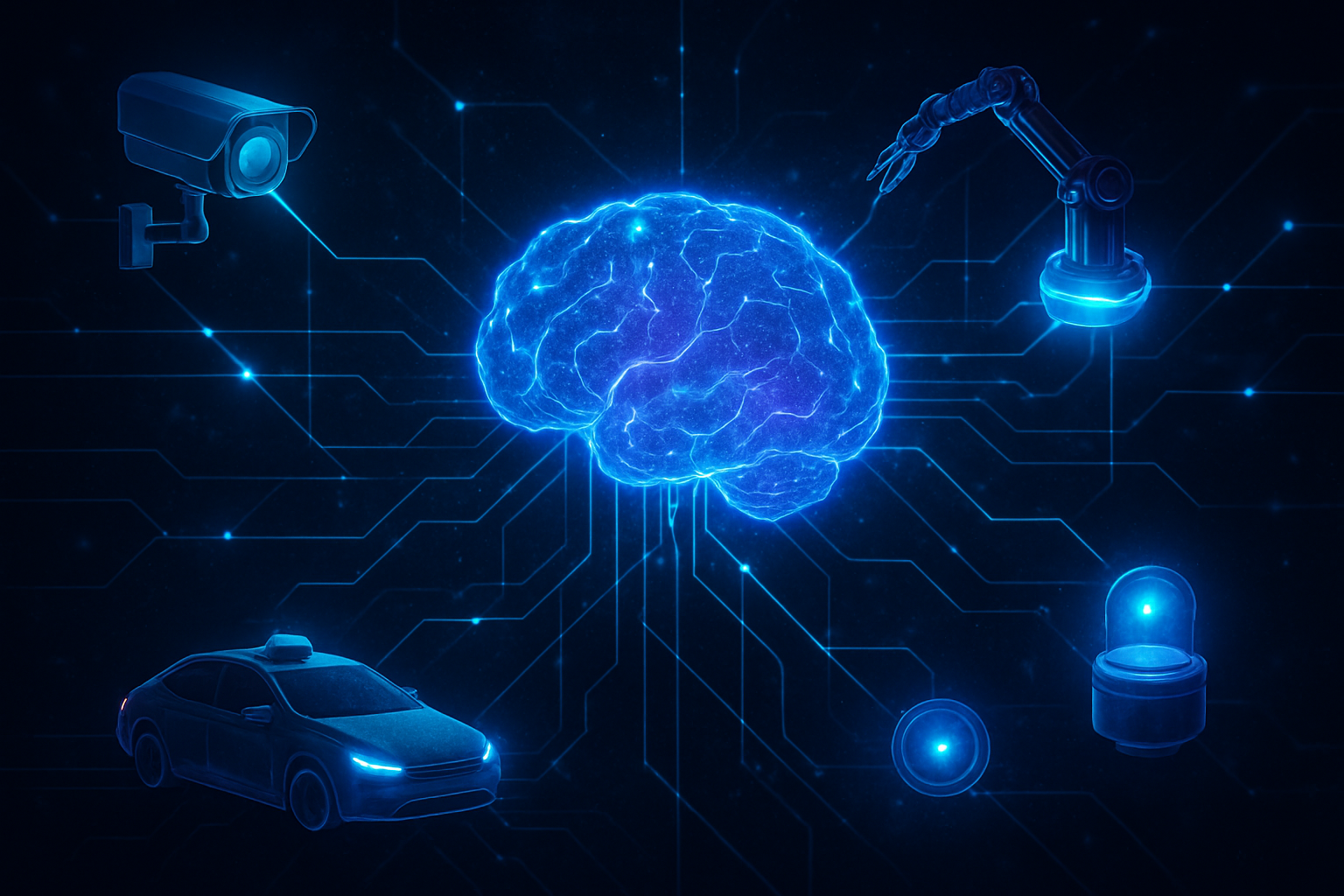
  • The Dawn of Decentralized Intelligence: Edge AI and Distributed Computing Reshape the Future

    The Dawn of Decentralized Intelligence: Edge AI and Distributed Computing Reshape the Future

    The world of Artificial Intelligence is experiencing a profound shift as specialized Edge AI processors and the trend towards distributed AI computing gain unprecedented momentum. This pivotal evolution is moving AI processing capabilities closer to the source of data, fundamentally transforming how intelligent systems operate across industries. This decentralization promises to unlock real-time decision-making, enhance data privacy, optimize bandwidth, and usher in a new era of pervasive and autonomous AI.

    This development signifies a departure from the traditional cloud-centric AI model, where data is invariably sent to distant data centers for processing. Instead, Edge AI empowers devices ranging from smartphones and industrial sensors to autonomous vehicles to perform complex AI tasks locally. Concurrently, distributed AI computing paradigms are enabling AI workloads to be spread across vast networks of interconnected systems, fostering scalability, resilience, and collaborative intelligence. The immediate significance lies in addressing critical limitations of centralized AI, paving the way for more responsive, secure, and efficient AI applications that are deeply integrated into our physical world.

    Technical Deep Dive: The Silicon and Software Powering the Edge Revolution

    The core of this transformation lies in the sophisticated hardware and innovative software architectures enabling AI at the edge and across distributed networks. Edge AI processors are purpose-built for efficient AI inference, optimized for low power consumption, compact form factors, and accelerated neural network computation.

    Key hardware advancements include:

    • Neural Processing Units (NPUs): Dedicated accelerators like Google's (NASDAQ: GOOGL) Edge TPU ASICs (e.g., in the Coral Dev Board) deliver high INT8 performance (e.g., 4 TOPS at ~2 Watts), enabling real-time execution of models like MobileNet V2 at hundreds of frames per second.
    • Specialized GPUs: NVIDIA's (NASDAQ: NVDA) Jetson series (e.g., Jetson AGX Orin with up to 275 TOPS, Jetson Orin Nano with up to 40 TOPS) integrates powerful GPUs with Tensor Cores, offering configurable power envelopes and supporting complex models for vision and natural language processing.
    • Custom ASICs: Companies like Qualcomm (NASDAQ: QCOM) (Snapdragon-based platforms with Hexagon Tensor Accelerators, e.g., 15 TOPS on RB5 platform), Rockchip (RK3588 with 6 TOPS NPU), and emerging players like Hailo (Hailo-10 for GenAI at 40 TOPS INT4) and Axelera AI (Metis chip with 214 TOPS peak performance) are designing chips specifically for edge AI, offering unparalleled efficiency.

    These specialized processors differ significantly from previous approaches by enabling on-device processing, drastically reducing latency by eliminating cloud roundtrips, enhancing data privacy by keeping sensitive information local, and conserving bandwidth. Unlike cloud AI, which leverages massive data centers, Edge AI demands highly optimized models (quantization, pruning) to fit within the limited resources of edge hardware.

    Distributed AI computing, on the other hand, focuses on spreading computational tasks across multiple nodes. Federated Learning (FL) stands out as a privacy-preserving technique where a global AI model is trained collaboratively on decentralized data from numerous edge devices. Only model updates (weights, gradients) are exchanged, never the raw data. For large-scale model training, parallelism is crucial: Data Parallelism replicates models across devices, each processing different data subsets, while Model Parallelism (tensor or pipeline parallelism) splits the model itself across multiple GPUs for extremely large architectures.

    The AI research community and industry experts have largely welcomed these advancements. They highlight the immense benefits in privacy, real-time capabilities, bandwidth/cost efficiency, and scalability. However, concerns remain regarding the technical complexity of managing distributed frameworks, data heterogeneity in FL, potential security vulnerabilities (e.g., inference attacks), and the resource constraints of edge devices, which necessitate continuous innovation in model optimization and deployment strategies.

    Industry Impact: A Shifting Competitive Landscape

    The advent of Edge AI and distributed AI is fundamentally reshaping the competitive dynamics for tech giants, AI companies, and startups alike, creating new opportunities and potential disruptions.

    Tech Giants like Microsoft (NASDAQ: MSFT) (Azure IoT Edge), Google (NASDAQ: GOOGL) (Edge TPU, Google Cloud), Amazon (NASDAQ: AMZN) (AWS IoT Greengrass), and IBM (NYSE: IBM) are heavily investing, extending their comprehensive cloud and AI services to the edge. Their strategic advantage lies in vast R&D resources, existing cloud infrastructure, and extensive customer bases, allowing them to offer unified platforms for seamless edge-to-cloud AI deployment. Many are also developing custom silicon (ASICs) to optimize performance and reduce reliance on external suppliers, intensifying hardware competition.

    Chipmakers and Hardware Providers are primary beneficiaries. NVIDIA (NASDAQ: NVDA), Intel (NASDAQ: INTC) (Core Ultra processors), Qualcomm (NASDAQ: QCOM), and AMD (NASDAQ: AMD) are at the forefront, developing the specialized, energy-efficient processors and memory solutions crucial for edge devices. Companies like TSMC (NYSE: TSM) also benefit from increased demand for advanced chip manufacturing. Altera (NASDAQ: ALTR) (an Intel (NASDAQ: INTC) company) is also seeing FPGAs emerge as compelling alternatives for specific, optimized edge AI inference.

    Startups are finding fertile ground in niche areas, developing innovative edge AI chips (e.g., Hailo, Axelera AI) and offering specialized platforms and tools that democratize edge AI development (e.g., Edge Impulse). They can compete by delivering best-in-class solutions for specific problems, leveraging diverse hardware and cloud offerings to reduce vendor dependence.

    The competitive implications include a shift towards "full-stack" AI solutions where companies offering both software/models and underlying hardware/infrastructure gain significant advantages. There's increased competition in hardware, with hyperscalers developing custom ASICs challenging traditional GPU dominance. The democratization of AI development through user-friendly platforms will lower barriers to entry, while a trend towards consolidation around major generative AI platforms will also occur. Edge AI's emphasis on data sovereignty and security creates a competitive edge for providers prioritizing local processing and compliance.

    Potential disruptions include reduced reliance on constant cloud connectivity for certain AI services, impacting cloud providers if they don't adapt. Traditional data center energy and cooling solutions face disruption due to the extreme power density of AI hardware. Legacy enterprise software could be disrupted by agentic AI, capable of autonomous workflows at the edge. Services hampered by latency or bandwidth (e.g., autonomous vehicles) will see existing cloud-dependent solutions replaced by superior edge AI alternatives.

    Strategic advantages for companies will stem from offering real-time intelligence, robust data privacy, bandwidth optimization, and hybrid AI architectures that seamlessly distribute workloads between cloud and edge. Building strong ecosystem partnerships and focusing on industry-specific customizations will also be critical.

    Wider Significance: A New Era of Ubiquitous Intelligence

    Edge AI and distributed AI represent a profound milestone in the broader AI landscape, signifying a maturation of AI deployment that moves beyond purely algorithmic breakthroughs to focus on where and how intelligence operates.

    This fits into the broader AI trend of the cloud continuum, where AI workloads dynamically shift between centralized cloud and decentralized edge environments. The proliferation of IoT devices and the demand for instantaneous, private processing have necessitated this shift. The rise of micro AI, lightweight models optimized for resource-constrained devices, is a direct consequence.

    The overall impacts are transformative: drastically reduced latency enabling real-time decision-making in critical applications, enhanced data security and privacy by keeping sensitive information localized, and lower bandwidth usage and operational costs. Edge AI also fosters increased efficiency and autonomy, allowing devices to function independently even with intermittent connectivity, and contributes to sustainability by reducing the energy footprint of massive data centers. New application areas are emerging in computer vision, digital twins, and conversational agents.

    However, significant concerns accompany this shift. Resource limitations on edge devices necessitate highly optimized models. Model consistency and management across vast, distributed networks introduce complexity. While enhancing privacy, the distributed nature broadens the attack surface, demanding robust security measures. Management and orchestration complexity for geographically dispersed deployments, along with heterogeneity and fragmentation in the edge ecosystem, remain key challenges.

    Compared to previous AI milestones – from early AI's theoretical foundations and expert systems to the deep learning revolution of the 2010s – this era is distinguished by its focus on hardware infrastructure and the ubiquitous deployment of AI. While past breakthroughs focused on what AI could do, Edge and Distributed AI emphasize where and how AI can operate efficiently and securely, overcoming the practical limitations of purely centralized approaches. It's about integrating AI deeply into our physical world, making it pervasive and responsive.

    Future Developments: The Road Ahead for Decentralized AI

    The trajectory for Edge AI processors and distributed AI computing points towards a future of even greater autonomy, efficiency, and intelligence embedded throughout our environment.

    In the near-term (1-3 years), we can expect:

    • More Powerful and Efficient AI Accelerators: The market for AI-specific chips is projected to soar, with more advanced TPUs, GPUs, and custom ASICs (like NVIDIA's (NASDAQ: NVDA) GB10 Grace-Blackwell SiP and RTX 50-series) becoming standard, capable of running sophisticated models with less power.
    • Neuromorphic Processing Units (NPUs) in Consumer Devices: NPUs are becoming commonplace in smartphones and laptops, enabling real-time, low-latency AI at the edge.
    • Agentic AI: The emergence of "agentic AI" will see edge devices, models, and frameworks collaborating to make autonomous decisions and take actions without constant human intervention.
    • Accelerated Shift to Edge Inference: The focus will intensify on deploying AI models closer to data sources to deliver real-time insights, with the AI inference market projected for substantial growth.
    • 5G Integration: The global rollout of 5G will provide the ultra-low latency and high-bandwidth connectivity essential for large-scale, real-time distributed AI.

    Long-term (5+ years), more fundamental shifts are anticipated:

    • Neuromorphic Computing: Brain-inspired architectures, integrating memory and processing, will offer significant energy efficiency and continuous learning capabilities at the edge.
    • Optical/Photonic AI Chips: Research-grade optical AI chips, utilizing light for operations, promise substantial efficiency gains.
    • Truly Decentralized AI: The future may involve harnessing the combined power of billions of personal and corporate devices globally, offering exponentially greater compute power than centralized data centers, enhancing privacy and resilience.
    • Multi-Agent Systems and Swarm Intelligence: Multiple AI agents will learn, collaborate, and interact dynamically, leading to complex collective behaviors.
    • Blockchain Integration: Distributed inferencing could combine with blockchain for enhanced security and trust, verifying outputs across networks.
    • Sovereign AI: Driven by data sovereignty needs, organizations and governments will increasingly deploy AI at the edge to control data flow.

    Potential applications span autonomous systems (vehicles, drones, robots), smart cities (traffic management, public safety), healthcare (real-time diagnostics, wearable monitoring), Industrial IoT (quality control, predictive maintenance), and smart retail.

    However, challenges remain: technical limitations of edge devices (power, memory), model optimization and performance consistency across diverse environments, scalability and management complexity of vast distributed infrastructures, interoperability across fragmented ecosystems, and robust security and privacy against new attack vectors. Experts predict significant market growth for edge AI, with 50% of enterprises adopting edge computing by 2029 and 75% of enterprise-managed data processed outside traditional data centers by 2025. The rise of agentic AI and hardware innovation are seen as critical for the next decade of AI.

    Comprehensive Wrap-up: A Transformative Shift Towards Pervasive AI

    The rise of Edge AI processors and distributed AI computing marks a pivotal, transformative moment in the history of Artificial Intelligence. This dual-pronged revolution is fundamentally decentralizing intelligence, moving AI capabilities from monolithic cloud data centers to the myriad devices and interconnected systems at the very edge of our networks.

    The key takeaways are clear: decentralization is paramount, enabling real-time intelligence crucial for critical applications. Hardware innovation, particularly specialized AI processors, is the bedrock of this shift, facilitating powerful computation within constrained environments. Edge AI and distributed AI are synergistic, with the former handling immediate local inference and the latter enabling scalable training and broader application deployment. Crucially, this shift directly addresses mounting concerns regarding data privacy, security, and the sheer volume of data generated by an relentlessly connected world.

    This development's significance in AI history cannot be overstated. It represents a maturation of AI, moving beyond the foundational algorithmic breakthroughs of machine learning and deep learning to focus on the practical, efficient, and secure deployment of intelligence. It is about making AI pervasive, deeply integrated into our physical world, and responsive to immediate needs, overcoming the inherent latency, bandwidth, and privacy limitations of a purely centralized model. This is as impactful as the advent of cloud computing itself, democratizing access to AI and empowering localized, autonomous intelligence on an unprecedented scale.

    The long-term impact will be profound. We anticipate a future characterized by pervasive autonomy, where countless devices make sophisticated, real-time decisions independently, creating hyper-responsive and intelligent environments. This will lead to hyper-personalization while maintaining user privacy, and reshape industries from manufacturing to healthcare. Furthermore, the inherent energy efficiency of localized processing will contribute to a more sustainable AI ecosystem, and the democratization of AI compute may foster new economic models. However, vigilance regarding ethical and societal considerations will be paramount as AI becomes more distributed and autonomous.

    In the coming weeks and months, watch for continued processor innovation – more powerful and efficient TPUs, GPUs, and custom ASICs. The accelerating 5G rollout will further bolster Edge AI capabilities. Significant advancements in software and orchestration tools will be crucial for managing complex, distributed deployments. Expect further developments and wider adoption of federated learning for privacy-preserving AI. The integration of Edge AI with emerging generative and agentic AI will unlock new possibilities, such as real-time data synthesis and autonomous decision-making. Finally, keep an eye on how the industry addresses persistent challenges such as resource limitations, interoperability, and robust edge security. The journey towards truly ubiquitous and intelligent AI is just beginning.

    This content is intended for informational purposes only and represents analysis of current AI developments.

    TokenRing AI delivers enterprise-grade solutions for multi-agent AI workflow orchestration, AI-powered development tools, and seamless remote collaboration platforms.
    For more information, visit https://www.tokenring.ai/.