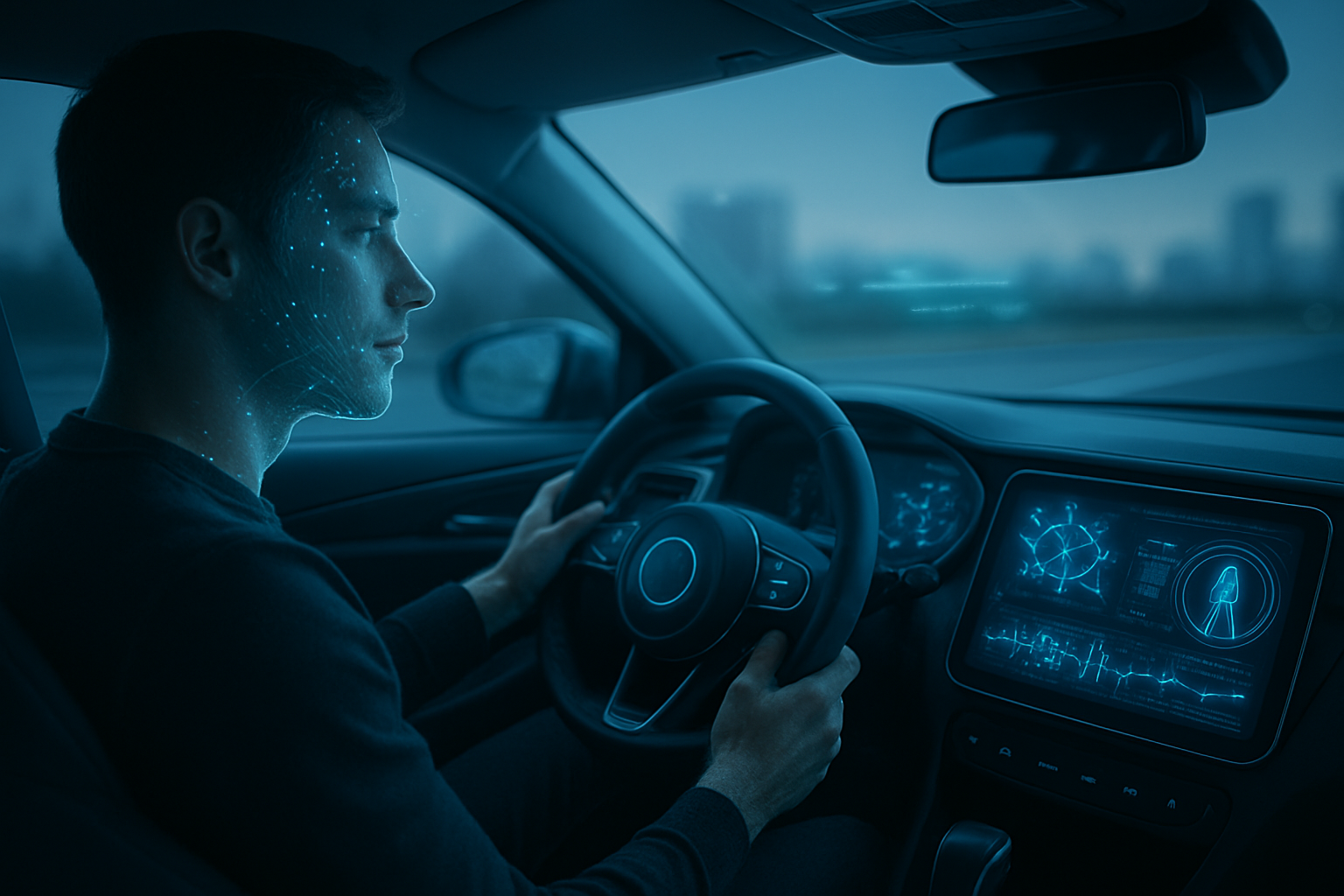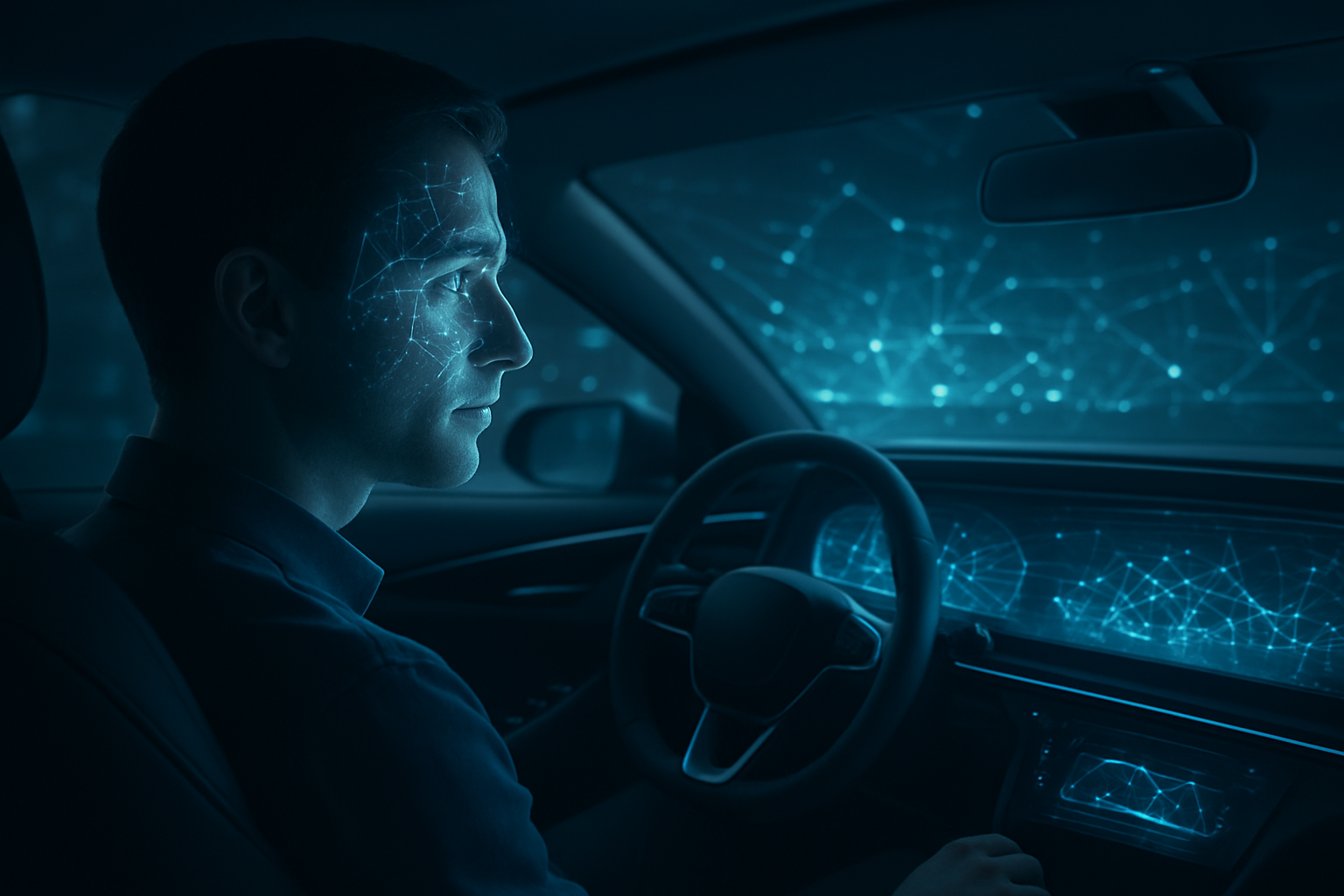
The automotive industry is on the cusp of a significant transformation, with biometric solutions increasingly becoming the bedrock of enhanced driver safety and the progression of autonomous driving. At the forefront of this evolution is Sony Semiconductor Solutions (SSS), a subsidiary of Sony Group Corporation (TYO: 6758), which is leveraging its deep expertise in imaging and sensing technologies to develop advanced in-cabin monitoring and environmental perception systems. These innovations are not just about convenience; they are critical for real-time driver state assessment, seamless human-machine handoffs in semi-autonomous vehicles, and compliance with stringent new safety regulations worldwide.
Sony's strategic focus on the automotive sector, encapsulated by its "Safety Cocoon" concept, aims to create a 360-degree safety net around vehicles. This involves not only detecting external hazards but also meticulously monitoring the driver and occupants within the cabin. The immediate significance of these biometric solutions is multifaceted: they promise a dramatic reduction in accidents caused by driver distraction or fatigue, enable more reliable and secure transitions in autonomous vehicles, and pave the way for highly personalized in-car experiences. As the industry grapples with the complexities of Level 2+ and Level 3 autonomy, where driver readiness remains paramount, Sony's contributions, alongside those of other key players, are proving indispensable.
Technical Prowess: Sony's Advanced Sensing and Biometric Integration
Sony Semiconductor Solutions' technical advancements are centered around high-performance CMOS image sensors and SPAD Time-of-Flight (ToF) depth sensors, which form the core of their biometric and perception capabilities. A recent pivotal development, announced in October 2025, is Sony's collaboration with Smart Eye AB, a leading Swedish company in Interior Sensing AI. This partnership integrates Smart Eye's sophisticated software with Sony's new IMX775 RGB-IR image sensor. This 5-megapixel sensor is specifically engineered for automotive applications, featuring a 2.1 µm pixel size and the unique ability to simultaneously capture both RGB and infrared data on a single chip. This dual-channel capability ensures high sensitivity in near-infrared wavelengths and a wide dynamic range of 110 dB in RGB, guaranteeing clear imaging even in challenging and varied lighting conditions, which is crucial for robust driver monitoring functions like distraction and drowsiness detection, as well as comprehensive occupant monitoring (posture, seatbelt usage, body positioning).
Another significant technical milestone, also from October 2025, is the release of the IMX828 CMOS Image Sensor. This 8-effective-megapixel sensor is touted as the industry's first CMOS image sensor for automotive applications to feature a built-in MIPI A-PHY interface. This integration significantly reduces the need for external serializer chips, leading to more compact, power-efficient camera systems—a vital consideration for automotive OEMs. The IMX828 also incorporates advanced cybersecurity functions, supporting hardware-level authentication and detecting image tampering, which are critical for maintaining the integrity and security of data exchanged within next-generation automotive camera systems, especially as vehicles become more connected and autonomous. These integrated security features mark a clear departure from older, less secure sensor technologies, providing a trusted foundation for future mobility.
These advancements differ from previous approaches primarily through their enhanced sensor fusion capabilities and integrated intelligence. Earlier driver monitoring systems often relied on simpler infrared cameras for basic eye-tracking. Sony's new sensors, particularly the IMX775 with its RGB-IR capability, provide a richer, more nuanced data stream that, when combined with AI from partners like Smart Eye, allows for more accurate and comprehensive understanding of driver state and cabin conditions. The IMX828's integrated MIPI A-PHY and cybersecurity features represent a move towards more streamlined, secure, and resilient sensor architectures, moving beyond basic image capture to intelligent, secure data acquisition. Initial reactions from the AI research community and industry experts have been positive, highlighting the potential for these integrated solutions to accelerate the deployment of safer and more reliable semi-autonomous and autonomous vehicles, while also setting new benchmarks for in-cabin experience and security.
Competitive Landscape: Shifting Dynamics for AI and Tech Giants
The advancements spearheaded by Sony Semiconductor Solutions are poised to significantly impact the competitive landscape for AI companies, tech giants, and startups in the automotive sector. Companies like Smart Eye AB (STO: SEYE), a direct partner in Sony's latest biometric integration, stand to benefit immensely. Their specialized AI software for interior sensing gains a powerful hardware platform, potentially expanding their market reach and solidifying their position as a leading provider of driver and occupant monitoring solutions. Other specialized DMS providers such as Seeing Machines (LSE: SEE) and Tobii (STO: TOBII) will face increased competition but also opportunities for similar hardware-software integrations to enhance their offerings.
For major automotive suppliers and tech giants, Sony's moves could either be a boon or a challenge, depending on their existing strategies. Companies like Robert Bosch GmbH, Continental AG (ETR: CON), and Valeo SA (EPA: FR) that already have strong footholds in ADAS and in-cabin sensing will need to either adopt or compete with Sony's advanced sensor technology. Those who can successfully integrate Sony's high-performance sensors into their broader ADAS platforms could gain a competitive edge, offering superior driver monitoring and perception capabilities. Conversely, companies relying on less advanced sensor technology might find their offerings disrupted, needing to accelerate their R&D or seek new partnerships to keep pace.
The integration of cybersecurity features directly into sensors, as seen with Sony's IMX828, could also disrupt existing cybersecurity solution providers in the automotive space. By embedding security at the hardware level, Sony is setting a new standard that could simplify the security architecture for OEMs but also challenge software-centric cybersecurity firms to adapt their offerings. Furthermore, the push for personalized in-car experiences, driven by advanced biometric identification, creates new avenues for data analytics companies and in-car infotainment providers, allowing for more tailored services and potentially new revenue streams. The market positioning for companies that can offer a complete, secure, and high-performance package—from sensor to AI-driven insights—will be significantly strengthened, creating a clear advantage in a rapidly evolving market.
Broader Significance: A New Era for Human-Centric AI in Mobility
Sony Semiconductor's latest developments in biometric solutions for the automotive industry signify a pivotal moment in the broader AI landscape, marking a decisive shift towards more human-centric and context-aware artificial intelligence in mobility. This trend extends beyond mere automation; it emphasizes understanding and interacting with human occupants in a sophisticated, proactive manner. The integration of advanced RGB-IR sensors and AI-powered interior sensing aligns perfectly with the overarching trend of "AI everywhere," embedding intelligent capabilities directly into critical automotive components.
The impacts are profound. For safety, these systems move beyond reactive crash mitigation to proactive accident prevention by continuously monitoring driver state. This is especially critical as semi-autonomous vehicles (Level 2+ and Level 3) become more prevalent, where the human driver remains an essential part of the safety loop. The technology is indispensable for meeting evolving global safety regulations, such as the EU's General Safety Regulation (GSR) and Euro NCAP's 2026 protocols, which mandate the inclusion of driver monitoring systems. Potential concerns, however, include data privacy—how biometric data is collected, stored, and used—and the potential for driver over-reliance on monitoring systems, leading to complacency. Robust regulatory frameworks and transparent data handling practices will be crucial to mitigate these issues.
Comparing this to previous AI milestones, the current focus on in-cabin biometrics represents a maturation of computer vision and machine learning applications. While early AI in automotive focused on external object detection (e.g., self-driving prototypes), this new wave brings AI inside the vehicle to understand human behavior and intent. This is akin to the progression from basic object recognition in smart devices to sophisticated facial and gesture recognition, now applied in a high-stakes environment. It underscores a broader trend in AI development: moving from purely technical problem-solving to creating more intuitive, safer, and personalized human-AI interactions. The "Safety Cocoon" concept highlights this holistic approach, where AI is not just about avoiding collisions, but about fostering a safer, more comfortable, and intelligent environment for all occupants.
Future Developments: The Road Ahead for Biometric Automotive Solutions
Looking ahead, the trajectory for biometric solutions in the automotive industry, fueled by advancements from Sony Semiconductor and its partners, promises exciting near-term and long-term developments. In the near term, we can expect to see wider adoption of integrated RGB-IR sensors and AI-powered driver monitoring systems across various vehicle segments, from luxury to mass-market cars, driven by regulatory mandates and consumer demand for enhanced safety. The focus will be on refining the accuracy and robustness of these systems in diverse driving conditions and for a wider range of driver demographics. Furthermore, the integration of these systems with other vehicle functions, such as adaptive cruise control and lane-keeping assistance, will become more seamless, enabling more intelligent and context-aware ADAS responses.
In the long term, the potential applications and use cases are vast. Biometric identification could become the standard for vehicle access and personalization, replacing physical keys and allowing for instant, personalized cabin settings (seat position, climate, infotainment preferences) upon driver entry. Advanced occupant monitoring, leveraging ToF sensors and more sophisticated AI, will evolve beyond just driver state to include comprehensive health monitoring of all passengers, detecting signs of distress, and even enabling autonomous emergency responses. The concept of "in-car payments" secured by iris or facial recognition, as demonstrated by some players, is also on the horizon, transforming the vehicle into a secure personal commerce hub.
However, several challenges need to be addressed. Interoperability between different sensor manufacturers and AI platforms remains a hurdle, requiring industry-wide standards. Data privacy and security, especially concerning sensitive biometric information, will continue to be a paramount concern, necessitating robust encryption and ethical data handling policies. Additionally, the computational demands of advanced AI processing for real-time biometric analysis will require continued innovation in edge computing and power efficiency within the vehicle. Experts predict that the next decade will see vehicles not just as modes of transport, but as intelligent, personalized, and health-aware mobile environments, with biometrics playing a central role in this transformation.
Wrap-up: A New Chapter in Automotive Intelligence
Sony Semiconductor Solutions' proactive role in advancing biometric solutions marks a significant chapter in the evolution of automotive intelligence. The key takeaways from these developments are clear: the future of driving safety and autonomy is intrinsically linked to sophisticated in-cabin monitoring and human-centric AI. The integration of advanced RGB-IR sensors like the IMX775 with AI software from companies like Smart Eye, coupled with secure, high-resolution sensors like the IMX828, is setting new industry benchmarks for driver monitoring, occupant sensing, and data security. This move is not merely an incremental improvement; it represents a fundamental shift towards vehicles that can intelligently understand and respond to their human occupants.
This development's significance in AI history lies in its application of advanced machine vision and deep learning to solve complex, real-world human interaction problems in a safety-critical domain. It underscores the growing maturity of AI, moving from theoretical concepts to tangible, life-saving applications. The long-term impact will be a profound transformation of the driving experience, making it safer, more personalized, and more secure. As regulatory pressures mount and consumer expectations for intelligent vehicles rise, the technologies pioneered by Sony and its partners will become foundational.
In the coming weeks and months, industry watchers should keenly observe the adoption rates of these advanced biometric systems by major automotive manufacturers. Pay attention to further partnerships between sensor providers, AI developers, and car makers, as well as any new regulatory announcements that might accelerate or shape the deployment of these technologies. The ethical considerations surrounding data privacy will also be a critical area to watch, as the industry navigates the balance between enhanced safety and individual rights. The journey towards truly intelligent and human-aware vehicles is well underway, and biometrics are undeniably in the driver's seat.
This content is intended for informational purposes only and represents analysis of current AI developments.
TokenRing AI delivers enterprise-grade solutions for multi-agent AI workflow orchestration, AI-powered development tools, and seamless remote collaboration platforms.
For more information, visit https://www.tokenring.ai/.