Tag: Drones

  • Indigenous Innovation Takes Flight: Local Startups Pioneer AI and Drone Technologies, Reshaping the Global Tech Landscape

    Indigenous Innovation Takes Flight: Local Startups Pioneer AI and Drone Technologies, Reshaping the Global Tech Landscape

    In a powerful testament to self-determination and localized innovation, indigenous tech startups are rapidly emerging as a formidable force in the global technology arena. These ventures, often rooted in specific community needs and cultural values, are making significant strides in developing sophisticated AI-powered tools and advanced drone technologies. As of November 2025, this movement is not merely about adopting existing tech; it's about actively shaping it, embedding unique cultural perspectives, traditional knowledge, and ethical frameworks into cutting-edge solutions, promising to redefine the future of technology and foster true digital sovereignty.

    Technical Prowess and Cultural Integration: The Core of Indigenous Tech

    The technical advancements spearheaded by indigenous startups are both impressive and deeply contextualized. Rather than simply replicating mainstream technologies, these innovators are engineering solutions that address specific challenges while preserving cultural integrity. For instance, in the realm of AI, startups like wâsikan kisewâtisiwin (Canada) are developing sophisticated AI tools to detect and correct anti-Indigenous bias and hate speech on social media, showcasing an AI application focused on social justice and cultural safety. Similarly, in India, CoRover AI, the owner of the "BharatGPT" chatbot, and Sarvam AI are building indigenous Large Language Models (LLMs) that understand and respond in multiple Indian languages, utilizing local datasets to mitigate hallucination and ensure cultural relevance, a stark contrast to general-purpose LLMs that often lack such contextual understanding.

    Drone technology is another area of significant indigenous innovation. Zuppa Geo Navigation Technologies Pvt Ltd (India) stands out with its patented Disseminated Parallel Control Computing (DPCC) architecture, an AI technology enabling real-time sensory data processing for autonomous systems, including advanced drones and swarm systems for defense and enterprise. This proprietary technology offers enhanced control and autonomy, differentiating it from many off-the-shelf drone solutions. IG Drones (India) is also developing indigenous military simulators and AI-powered drones, including what they claim is India's first 5G drone, expanding capabilities in defense, agriculture, and infrastructure monitoring. These indigenous developments often prioritize secure data transmission and customization for local needs, contrasting with previous approaches that relied heavily on foreign-made components and software, which could pose data security and sovereignty concerns. The initial reaction from the AI research community and industry experts highlights the innovative blend of traditional ecological knowledge (TEK) with modern AI and drone applications, particularly in environmental management and cultural preservation, setting new benchmarks for ethical and community-centric technology development.

    Reshaping the Competitive Landscape: Impact on Tech Giants and Startups

    The rise of indigenous tech has profound implications for the competitive landscape, challenging established tech giants and inspiring a new wave of startups. Companies like Zuppa Geo Navigation Technologies and IG Drones are directly competing with global drone manufacturers, reducing reliance on foreign imports and strengthening national technological independence, particularly in defense and critical infrastructure. This creates competitive pressure on dominant players like DJI, urging them to consider more localized and culturally sensitive solutions or risk losing market share in emerging economies.

    For major AI labs and tech companies, these developments highlight the critical importance of ethical AI, data sovereignty, and culturally informed design. Companies that fail to incorporate these principles may find their products less appealing or even problematic in diverse global markets. Conversely, this trend opens avenues for partnerships and collaborations where tech giants can support indigenous innovation, providing resources and platforms while learning from community-led development models. Startups, both indigenous and non-indigenous, are benefiting from the inspiration and proof-of-concept provided by these pioneers, demonstrating that technology can be developed with a primary focus on community benefit and cultural preservation, rather than purely corporate profit. This fosters a more diverse and equitable tech ecosystem, potentially disrupting existing products and services that have historically overlooked the unique needs and values of indigenous communities.

    Broader Significance: A Paradigm Shift in AI and Technology

    The emergence of indigenous tech, particularly in AI and drones, represents a significant paradigm shift within the broader AI landscape. It underscores a global trend towards decolonizing technology and asserting digital sovereignty. This movement challenges the traditional, often Western-centric, narrative of technological progress by demonstrating that innovation can thrive through diverse cultural lenses and indigenous knowledge systems. It impacts society by providing tools for cultural preservation, such as AI assistants like Tainá (developed by the Mura people in the Amazon) that store traditional knowledge and oral stories, ensuring cultural continuity.

    Potential concerns, however, include ensuring equitable access to digital infrastructure in remote indigenous communities and preventing the commodification or misuse of traditional knowledge by external entities. Nevertheless, this development offers valuable models for ethical and sustainable innovation, prioritizing community benefit and environmental stewardship. It stands in comparison to previous AI milestones, which often focused on general-purpose applications and commercial scaling, by emphasizing tailored solutions, ethical grounding, and the integration of traditional ecological knowledge, offering a more holistic and responsible approach to technological advancement. This represents a crucial step towards a more inclusive and equitable future for AI, where technology serves diverse human needs and values.

    The Horizon: Future Developments and Expert Predictions

    Looking ahead, the trajectory of indigenous tech in AI and drones is poised for significant expansion and deeper integration. Experts predict a continued emphasis on embedding Traditional Ecological Knowledge (TEK) into AI models for advanced environmental monitoring and climate change adaptation, particularly in regions like Australia where Indigenous rangers are already using drones and AI for habitat and species tracking. We can expect to see further development of culturally contextualized Large Language Models that support a wider array of indigenous languages, facilitating education, communication, and cultural revitalization efforts globally.

    Potential applications on the horizon include enhanced disaster preparedness and response using AI-powered drones for real-time data collection and predictive analytics, improved remote healthcare delivery via drone logistics, and sophisticated AI tools for land management and resource monitoring that respect indigenous land rights and practices. Challenges that need to be addressed include securing sustained funding for these community-led initiatives, developing robust digital infrastructure in remote areas, and establishing legal frameworks that protect indigenous data sovereignty and intellectual property. Experts predict that as these technologies mature, they will not only empower indigenous communities but also offer invaluable lessons to the wider tech world on building ethical, sustainable, and truly inclusive AI systems.

    A New Era of Inclusive Innovation

    The rise of indigenous tech startups in AI and advanced drones marks a pivotal moment in the history of artificial intelligence and global technology. It is a powerful narrative of self-determination, cultural resilience, and groundbreaking innovation. The key takeaways are clear: technology can and should be developed with community values, ethical considerations, and cultural sovereignty at its core. This movement demonstrates that by leveraging indigenous knowledge and local expertise, truly transformative and responsible technological solutions can emerge, addressing specific needs while contributing to a more diverse and equitable global tech landscape.

    The significance of this development lies not just in the technological products themselves, but in the shift it represents – a move away from a monolithic, often colonial, approach to technology towards a more inclusive, culturally rich, and community-driven model. In the coming weeks and months, it will be crucial to watch for continued government and institutional support, new funding models that prioritize indigenous leadership, and the expansion of these innovative solutions into new sectors and geographies. This is more than just tech news; it's a testament to the power of indigenous ingenuity shaping a better, more equitable future for all.


    This content is intended for informational purposes only and represents analysis of current AI developments.

    TokenRing AI delivers enterprise-grade solutions for multi-agent AI workflow orchestration, AI-powered development tools, and seamless remote collaboration platforms.
    For more information, visit https://www.tokenring.ai/.
  • Indigenous Innovation Soars: Local Startups Pioneer AI and Drone Technologies for a New Era of Autonomy and Empowerment

    Indigenous Innovation Soars: Local Startups Pioneer AI and Drone Technologies for a New Era of Autonomy and Empowerment

    The global technology landscape is witnessing a profound shift as local startups, often deeply rooted in indigenous communities, emerge as formidable innovators in the fields of artificial intelligence and advanced drone technology. These trailblazing companies are not merely adopting existing tech; they are developing groundbreaking, indigenous solutions tailored to unique environmental, social, and economic challenges. From enhancing national security with autonomous aerial systems to empowering tribal nations with streamlined grant funding, these advancements signify a powerful convergence of traditional knowledge and cutting-edge innovation, promising a future of greater autonomy, sustainability, and economic prosperity.

    These indigenous technological advancements are immediately significant, demonstrating a capability to solve localized problems with global implications. They represent a movement towards technological self-determination, where communities are building tools that directly serve their specific needs, often blending cultural values and traditional ecological knowledge with the latest in AI and robotics. This approach is not only fostering innovation but also creating new economic pathways and strengthening community resilience in an increasingly interconnected world.

    A Deep Dive into Indigenous AI and Drone Breakthroughs

    The technical prowess demonstrated by these local startups is truly remarkable, pushing the boundaries of what AI and drone technology can achieve. In India, Zuppa Geo Navigation Technologies Pvt Ltd has emerged as a leader in indigenous drone navigation. Their core innovation, the patented Disseminated Parallel Control Computing (DPCC) architecture developed in 2015, allows drones and autonomous systems to process sensory data in real time and make split-second decisions without constant cloud connectivity, mimicking human reflexes. This differs significantly from many existing drone systems that rely heavily on continuous GPS or cloud processing, making Zuppa's solutions highly resilient in GPS-denied or hostile environments, crucial for defense and critical infrastructure applications. Zuppa's collaboration with German startup Eighth Dimension to develop AI-based teaming algorithms for swarm drones further exemplifies their commitment to advanced autonomy.

    Similarly, Aerpace Industries Limited in India, through its "aerShield" initiative, has introduced an indigenous AI-powered, modular drone ecosystem. At its heart is "aerOS," an AI-based autonomous drone control platform that provides real-time flight navigation, mission execution, obstacle avoidance, and precision targeting. This system powers advanced drones like the aerRecon ARM-5 and ARM-10 for border surveillance and the aerReaper AMMO-R7 for tactical strike missions. The integration of real-time AI for autonomous decision-making sets these systems apart, offering dynamic adaptability in complex operational environments with minimal human intervention, a clear departure from more human-piloted or pre-programmed drone systems.

    Beyond defense, AI is empowering Indigenous communities in crucial administrative and environmental tasks. Syncurrent, a U.S. startup, has developed an AI-powered platform that navigates the complex landscape of grant funding for Tribal Nations. The platform intelligently scrapes federal, state, and philanthropic databases, identifying and aggregating grant opportunities specifically tailored to tribal governments' needs. This innovation drastically streamlines a historically arduous process, differing from generic grant search engines by its specialized focus and deep understanding of tribal funding requirements, thereby significantly improving access to essential resources for community development. In Australia, a collaboration between Microsoft (NASDAQ: MSFT), CSIRO, and Indigenous rangers in Kakadu National Park has led to an AI tool that automatically identifies invasive para grass from drone footage. This system merges Traditional Ecological Knowledge (TEK) with advanced machine learning, allowing rangers to detect the invasive species at various lifecycle stages without dangerous ground traverses, offering a more efficient and culturally sensitive approach to environmental management than manual surveys.

    Reshaping the AI and Tech Industry Landscape

    These indigenous technological advancements are poised to significantly reshape the competitive landscape for AI companies, tech giants, and startups alike. Local startups like Zuppa Geo Navigation Technologies Pvt Ltd and Aerpace Industries Limited stand to benefit immensely, positioning their respective nations as leaders in defense-grade drone navigation and autonomous systems. Their innovations create a strategic advantage by reducing reliance on foreign technology, bolstering national security, and opening up new markets for dual-use technologies that serve both civilian and military applications. The competitive implications for major AI labs and tech companies are substantial; these indigenous solutions demonstrate that innovation can thrive outside traditional tech hubs, challenging the notion of centralized technological development.

    The potential disruption to existing products and services is evident, particularly in sectors like defense, agriculture, and environmental management. For instance, Grene Robotics' "Indrajaal" system, an Indian autonomous Wide Area Anti-Drone/Counter-Unmanned Aerial System (C-UAS), offers aerial security over vast areas, detecting and neutralizing various aerial threats. This comprehensive solution could disrupt conventional air defense strategies by providing a cost-effective, AI-powered alternative for protecting critical assets. Similarly, Marut Drones' agri-intelligence and agri-automation solutions for precision agriculture could challenge traditional farming methods and agricultural tech providers by offering highly localized and efficient drone-based solutions for crop monitoring and disease detection, contributing significantly to national food security and sustainable farming practices.

    Market positioning and strategic advantages are also being redefined. Startups like Syncurrent and the Indigenomics Institute are carving out essential niches by addressing the specific economic and administrative needs of Indigenous communities. Syncurrent's platform empowers Tribal Nations by streamlining grant access, while the Indigenomics Institute's AI tool quantifies Indigenous economic activity, highlighting its true value and fostering greater economic opportunities. These specialized AI applications demonstrate a powerful market positioning built on cultural relevance and targeted problem-solving, offering solutions that traditional tech giants may overlook or fail to adequately address.

    Broader Significance and Societal Impacts

    The rise of indigenous AI and drone innovations fits seamlessly into the broader AI landscape, aligning with trends towards "AI for good," localized problem-solving, and the ethical integration of technology with cultural heritage. These developments underscore a critical shift from generic, one-size-fits-all technological solutions to highly contextualized and culturally appropriate applications. The impact is profound: enhanced environmental stewardship through precision monitoring and targeted intervention, economic empowerment for historically marginalized communities, and strengthened national security through advanced autonomous defense systems.

    Potential concerns, however, also warrant consideration. As with any advanced technology, questions around data sovereignty, ethical AI development, and the potential for misuse must be carefully addressed. Ensuring that these AI tools are developed and deployed in a manner that respects privacy, cultural protocols, and community autonomy is paramount. The comparison to previous AI milestones highlights the unique aspect of these indigenous innovations: they are not just about pushing technological boundaries, but also about fostering self-determination and preserving traditional knowledge. While past breakthroughs often focused on general-purpose AI, these initiatives demonstrate the power of AI when applied to specific, often overlooked, societal challenges, setting a new precedent for how technology can serve diverse communities.

    The use of drones by Indigenous communities in Australia and Brazil to track endangered species, monitor land health, manage controlled burns, and combat illegal deforestation exemplifies this synergy. Programs like Minyerra Borrinyu (Buzz Wing) and the Mimal-Warddeken Drone Uplift Program in Australia, and the Uru-Eu-Wau-Wau tribe's use of drones in the Brazilian Amazon, demonstrate how Traditional Ecological Knowledge (TEK) combined with drone technology leads to improved habitat management, reduced wildfires, and enhanced data sovereignty. These efforts are not just technological feats; they are vital contributions to global environmental conservation and community resilience.

    The Horizon: Future Developments and Challenges

    Looking ahead, the trajectory for indigenous AI and drone developments is one of continued growth and expanded application. In the near term, we can expect to see further integration of AI into drone autonomy, leading to more sophisticated swarm intelligence, enhanced real-time decision-making, and even greater resilience in challenging environments. The applications will diversify, moving beyond defense and agriculture into areas like infrastructure inspection, disaster response, and personalized healthcare delivery in remote regions. For AI-powered administrative tools, continued refinement in natural language processing and data analytics will allow for even more precise and proactive support for grant discovery, economic forecasting, and policy development within Indigenous communities.

    Long-term developments are likely to include the creation of fully autonomous AI ecosystems that can operate with minimal human oversight, learning and adapting to dynamic conditions. We might see advanced drone networks capable of collaborative environmental monitoring across vast territories, or AI platforms that facilitate complex economic planning and resource management for entire regions. The potential applications are vast, from leveraging AI for preserving endangered indigenous languages and cultural heritage to developing smart infrastructure solutions tailored to unique geographical and cultural contexts.

    However, several challenges need to be addressed for these innovations to reach their full potential. Securing consistent funding and investment, particularly for startups in underserved regions, remains a critical hurdle. Scaling these bespoke solutions to broader markets while maintaining their cultural specificity and ethical integrity will also require careful navigation. Furthermore, ensuring access to cutting-edge education and training for Indigenous youth in AI and robotics is essential to sustain this wave of innovation and prevent a new digital divide. Experts predict a future where these indigenous technological advancements not only solve local problems but also offer models for sustainable and equitable development that can be adapted globally, emphasizing the power of localized innovation.

    A New Chapter in AI History

    The indigenous technological advancements in AI-powered tools and advanced drones, spearheaded by local startups, mark a significant chapter in the ongoing history of artificial intelligence. The key takeaways are clear: innovation is global, deeply contextual, and thrives when technology is developed with a profound understanding of specific needs and cultural values. This movement underscores the immense potential of AI and robotics to not only drive economic growth but also to foster self-determination, environmental sustainability, and social equity.

    The significance of these developments in AI history cannot be overstated. They represent a powerful counter-narrative to the often centralized and homogenous nature of technological progress, showcasing how diverse perspectives and traditional knowledge can enrich and expand the very definition of innovation. What we are witnessing is not just the creation of new tools, but the forging of new pathways for technological empowerment and the redefinition of who leads the charge in shaping our digital future.

    In the coming weeks and months, it will be crucial to watch for continued investment in these local startups, the expansion of their pilot programs, and the emergence of new policy frameworks that support ethical AI development and data sovereignty for Indigenous communities. The world is learning that the most impactful innovations often arise from the places and people closest to the problems, demonstrating that the future of AI is intrinsically linked to its ability to serve all of humanity, in all its rich diversity.


    This content is intended for informational purposes only and represents analysis of current AI developments.

    TokenRing AI delivers enterprise-grade solutions for multi-agent AI workflow orchestration, AI-powered development tools, and seamless remote collaboration platforms.
    For more information, visit https://www.tokenring.ai/.
  • The Embodied Revolution: How Physical World AI is Redefining Autonomous Machines

    The Embodied Revolution: How Physical World AI is Redefining Autonomous Machines

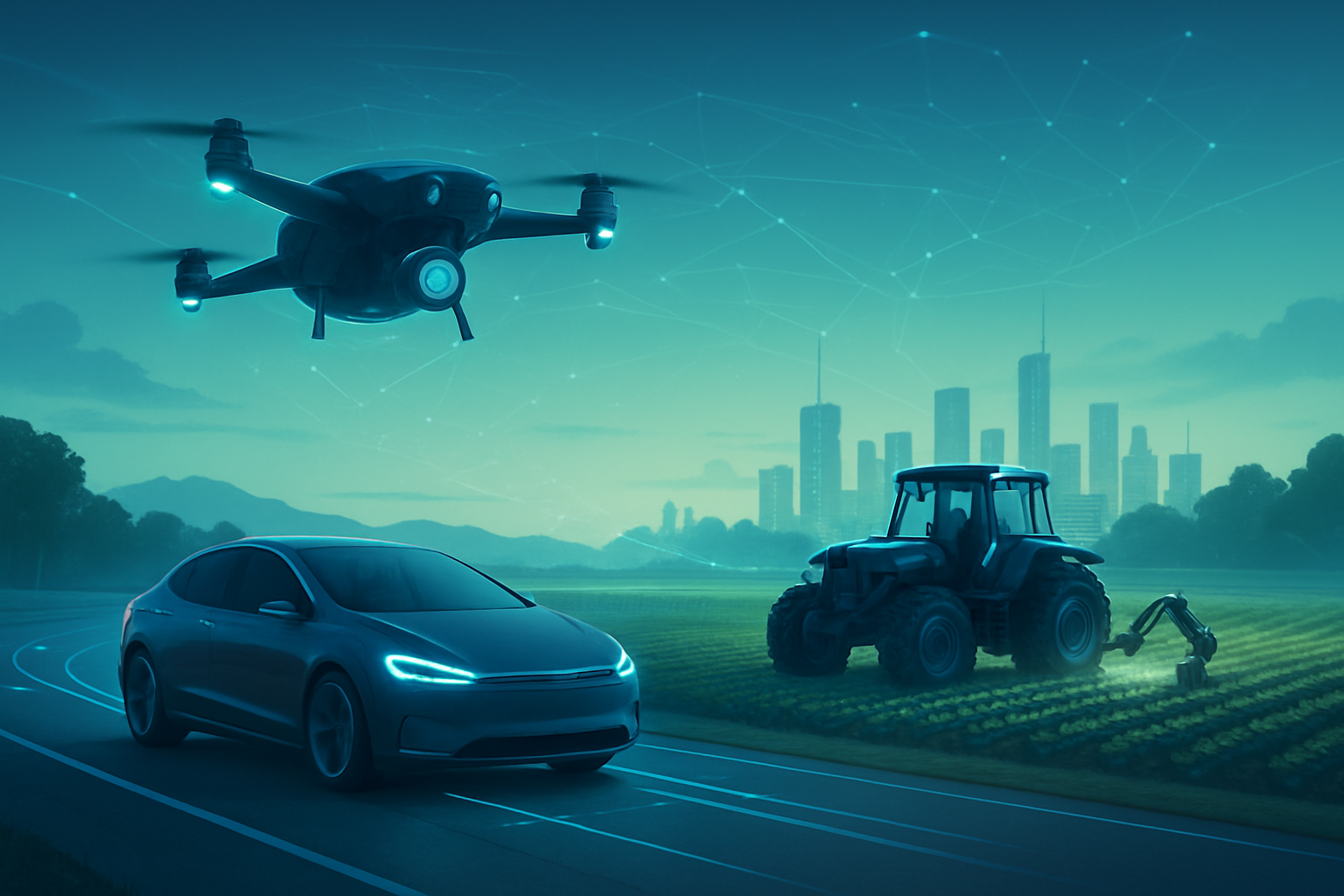
    The integration of artificial intelligence into the physical realm, often termed "Physical World AI" or "Embodied AI," is ushering in a transformative era for autonomous machines. Moving beyond purely digital computations, this advanced form of AI empowers robots, vehicles, and drones to perceive, reason, and interact with the complex and unpredictable real world with unprecedented sophistication. This shift is not merely an incremental improvement but a fundamental redefinition of what autonomous systems can achieve, promising to revolutionize industries from transportation and logistics to agriculture and defense.

    The immediate significance of these breakthroughs is profound, accelerating the journey towards widespread commercial adoption and deployment of self-driving cars, highly intelligent drones, and fully autonomous agricultural machinery. By enabling machines to navigate, adapt, and perform complex tasks in dynamic environments, Physical World AI is poised to enhance safety, dramatically improve efficiency, and address critical labor shortages across various sectors. This marks a pivotal moment in AI development, as systems gain the capacity for real-time decision-making and emergent intelligence in the chaotic yet structured reality of our daily lives.

    Unpacking the Technical Core: Vision-to-Action and Generative AI in the Physical World

    The latest wave of advancements in Physical World AI is characterized by several key technical breakthroughs that collectively enable autonomous machines to operate more intelligently and reliably in unstructured environments. Central among these is the integration of generative AI with multimodal data processing, advanced sensory perception, and direct vision-to-action models. Companies like NVIDIA (NASDAQ: NVDA) are at the forefront, with platforms such as Cosmos, revealed at CES 2025, aiming to imbue AI with a deeper understanding of 3D spaces and physics-based interactions, crucial for robust robotic operations.

    A significant departure from previous approaches lies in the move towards "Vision-Language-Action" (VLA) models, exemplified by XPeng's (NYSE: XPEV) VLA 2.0. These models directly link visual input to physical action, bypassing traditional intermediate "language translation" steps. This direct mapping not only results in faster reaction times but also fosters "emergent intelligence," where systems develop capabilities without explicit pre-training, such as recognizing human hand gestures as stop signals. This contrasts sharply with older, more modular AI architectures that relied on separate perception, planning, and control modules, often leading to slower responses and less adaptable behavior. Furthermore, advancements in high-fidelity simulations and digital twin environments are critical, allowing autonomous systems to be extensively trained and refined using synthetic data before real-world deployment, effectively bridging the "simulation-to-reality" gap. This rigorous virtual testing significantly reduces risks and costs associated with real-world trials.

    For self-driving cars, the technical evolution is particularly evident in the sophisticated sensor fusion and real-time processing capabilities. Leaders like Waymo, a subsidiary of Alphabet (NASDAQ: GOOGL), utilize an array of sensors—including cameras, radar, and LiDAR—to create a comprehensive 3D understanding of their surroundings. This data is processed by powerful in-vehicle compute platforms, allowing for instantaneous object recognition, hazard detection, and complex decision-making in diverse traffic scenarios. The adoption of "Chain-of-Action" planning further enhances these systems, enabling them to reason step-by-step before executing physical actions, leading to more robust and reliable behavior. The AI research community has largely reacted with optimism, recognizing the immense potential for increased safety and efficiency, while also emphasizing the ongoing challenges in achieving universal robustness and addressing edge cases in infinitely variable real-world conditions.

    Corporate Impact: Shifting Landscapes for Tech Giants and Disruptive Startups

    The rapid evolution of Physical World AI is profoundly reshaping the competitive landscape for AI companies, tech giants, and innovative startups. Companies deeply invested in the full stack of autonomous technology, from hardware to software, stand to benefit immensely. Alphabet's (NASDAQ: GOOGL) Waymo, with its extensive real-world operational experience in robotaxi services across cities like San Francisco, Phoenix, and Austin, is a prime example. Its deep integration of advanced sensors, AI algorithms, and operational infrastructure positions it as a leader in autonomous mobility, leveraging years of data collection and refinement.

    The competitive implications extend to major AI labs and tech companies, with a clear bifurcation emerging between those embracing sensor-heavy approaches and those pursuing vision-only solutions. NVIDIA (NASDAQ: NVDA), through its comprehensive platforms for training, simulation, and in-vehicle compute, is becoming an indispensable enabler for many autonomous vehicle developers, providing the foundational AI infrastructure. Meanwhile, companies like Tesla (NASDAQ: TSLA), with its vision-only FSD (Full Self-Driving) software, continue to push the boundaries of camera-centric AI, aiming for scalability and affordability, albeit with distinct challenges in safety validation compared to multi-sensor systems. This dynamic creates a fiercely competitive environment, driving rapid innovation and significant investment in AI research and development.

    Beyond self-driving cars, the impact ripples through other sectors. In agriculture, startups like Monarch Tractor are disrupting traditional farming equipment markets by offering electric, autonomous tractors equipped with computer vision, directly challenging established manufacturers like John Deere (NYSE: DE). Similarly, in the drone industry, companies developing AI-powered solutions for autonomous navigation, industrial inspection, and logistics are poised for significant growth, potentially disrupting traditional manual drone operation services. The market positioning and strategic advantages are increasingly defined by the ability to seamlessly integrate AI across hardware, software, and operational deployment, demonstrating robust performance and safety in real-world scenarios.

    Wider Significance: Bridging the Digital-Physical Divide

    The advancements in Physical World AI represent a pivotal moment in the broader AI landscape, signifying a critical step towards truly intelligent and adaptive systems. This development fits into a larger trend of AI moving out of controlled digital environments and into the messy, unpredictable physical world, bridging the long-standing divide between theoretical AI capabilities and practical, real-world applications. It marks a maturation of AI, moving from pattern recognition and data processing to embodied intelligence that can perceive, reason, and act within dynamic physical constraints.

    The impacts are far-reaching. Economically, Physical World AI promises unprecedented efficiency gains across industries, from optimized logistics and reduced operational costs in transportation to increased crop yields and reduced labor dependency in agriculture. Socially, it holds the potential for enhanced safety, particularly in areas like transportation, by significantly reducing accidents caused by human error. However, these advancements also raise significant ethical and societal concerns. The deployment of autonomous weapon systems, the potential for job displacement in sectors reliant on manual labor, and the complexities of accountability in the event of autonomous system failures are all critical issues that demand careful consideration and robust regulatory frameworks.

    Comparing this to previous AI milestones, Physical World AI represents a leap similar in magnitude to the breakthroughs in large language models or image recognition. While those milestones revolutionized information processing, Physical World AI is fundamentally changing how machines interact with and reshape our physical environment. The ability of systems to learn through experience, adapt to novel situations, and perform complex physical tasks with human-like dexterity—as demonstrated by advanced humanoid robots like Boston Dynamics' Atlas—underscores a shift towards more general-purpose, adaptive artificial agents. This evolution pushes the boundaries of AI beyond mere computation, embedding intelligence directly into the fabric of our physical world.

    The Horizon: Future Developments and Uncharted Territories

    The trajectory of Physical World AI points towards a future where autonomous machines become increasingly ubiquitous, capable, and seamlessly integrated into daily life. In the near term, we can expect continued refinement and expansion of existing applications. Self-driving cars will gradually expand their operational domains and weather capabilities, moving beyond geofenced urban areas to more complex suburban and highway environments. Drones will become even more specialized for tasks like precision agriculture, infrastructure inspection, and last-mile delivery, leveraging advanced edge AI for real-time decision-making directly on the device. Autonomous tractors will see wider adoption, particularly in large-scale farming operations, with further integration of AI for predictive analytics and resource optimization.

    Looking further ahead, the potential applications and use cases on the horizon are vast. We could see a proliferation of general-purpose humanoid robots capable of performing a wide array of domestic, industrial, and caregiving tasks, learning new skills through observation and interaction. Advanced manufacturing and construction sites could become largely autonomous, with robots and machines collaborating to execute complex projects. The development of "smart cities" will be heavily reliant on Physical World AI, with intelligent infrastructure, autonomous public transport, and integrated robotic services enhancing urban living. Experts predict a future where AI-powered physical systems will not just assist humans but will increasingly take on complex, non-repetitive tasks, freeing human labor for more creative and strategic endeavors.

    However, significant challenges remain. Achieving universal robustness and safety across an infinite variety of real-world scenarios is a monumental task, requiring continuous data collection, advanced simulation, and rigorous validation. Ethical considerations surrounding AI decision-making, accountability, and the impact on employment will need to be addressed proactively through public discourse and policy development. Furthermore, the energy demands of increasingly complex AI systems and the need for resilient, secure communication infrastructures for autonomous fleets are critical technical hurdles. What experts predict will happen next is a continued convergence of AI with robotics, material science, and sensor technology, leading to machines that are not only intelligent but also highly dexterous, energy-efficient, and capable of truly autonomous learning and adaptation in the wild.

    A New Epoch of Embodied Intelligence

    The advancements in Physical World AI mark the dawn of a new epoch in artificial intelligence, one where intelligence is no longer confined to the digital realm but is deeply embedded within the physical world. The journey from nascent self-driving prototypes to commercially operational robotaxi services by Waymo (NASDAQ: GOOGL), the deployment of intelligent drones for critical industrial inspections, and the emergence of autonomous tractors transforming agriculture are not isolated events but rather manifestations of a unified technological thrust. These developments underscore a fundamental shift in AI's capabilities, moving towards systems that can truly perceive, reason, and act within the dynamic and often unpredictable realities of our environment.

    The key takeaways from this revolution are clear: AI is becoming increasingly embodied, multimodal, and capable of emergent intelligence. The integration of generative AI, advanced sensors, and direct vision-to-action models is creating autonomous machines that are safer, more efficient, and adaptable than ever before. This development's significance in AI history is comparable to the invention of the internet or the advent of mobile computing, as it fundamentally alters the relationship between humans and machines, extending AI's influence into tangible, real-world operations. While challenges related to safety, ethics, and scalability persist, the momentum behind Physical World AI is undeniable.

    In the coming weeks and months, we should watch for continued expansion of autonomous services, particularly in ride-hailing and logistics, as companies refine their operational domains and regulatory frameworks evolve. Expect further breakthroughs in sensor technology and AI algorithms that enhance environmental perception and predictive capabilities. The convergence of AI with robotics will also accelerate, leading to more sophisticated and versatile physical assistants. This is not just about making machines smarter; it's about enabling them to truly understand and interact with the world around us, promising a future where intelligent autonomy reshapes industries and daily life in profound ways.


    This content is intended for informational purposes only and represents analysis of current AI developments.

    TokenRing AI delivers enterprise-grade solutions for multi-agent AI workflow orchestration, AI-powered development tools, and seamless remote collaboration platforms.
    For more information, visit https://www.tokenring.ai/.
  • US Senators Push for Sweeping Ban on Chinese Drone Giants Amid Escalating National Security Fears

    US Senators Push for Sweeping Ban on Chinese Drone Giants Amid Escalating National Security Fears

    In a significant move poised to reshape the global drone industry, U.S. Senator Rick Scott (R-FL) has intensified calls for the Federal Communications Commission (FCC) to implement a comprehensive ban on Chinese drone manufacturers, specifically targeting industry leaders DJI and Autel Robotics. This renewed pressure, most recently in October 2025, comes as the FCC prepares for a pivotal vote that could grant it unprecedented authority to revoke certifications for devices deemed national security risks. The push reflects growing bipartisan alarm within Congress over potential espionage, data security vulnerabilities, and the alleged evasion of U.S. regulations by companies linked to the Chinese Communist Party (CCP).

    The proposed ban, supported by legislative efforts like the "Countering CCP Drones and Supporting Drones for Law Enforcement Act" co-led by Senator Scott and Senator Mark Warner (D-VA), aims to sever the U.S. market from what lawmakers describe as a critical national security threat. With DJI already identified by the Pentagon as a "Chinese military company," the implications extend beyond commercial competition, touching upon the very fabric of national defense, critical infrastructure protection, and the privacy of American citizens. This aggressive stance signals a deepening resolve in Washington to de-risk U.S. technology supply chains from adversarial foreign influence, setting the stage for a potentially dramatic shift in the drone technology landscape.

    Technical Allegations and Regulatory Mechanisms

    The push for a ban is rooted in a series of grave technical and operational concerns. Central to the allegations is the perceived national security threat posed by drones manufactured by companies based in Communist China. DJI (Shenzhen DJI Sciences and Technologies Ltd.), in particular, has been explicitly named by the Pentagon as a "Chinese military company," fueling fears that its widely adopted drones could be exploited for foreign surveillance. This designation underscores a broader concern that any company operating under the purview of the CCP could be compelled to assist in intelligence gathering, making their products potential conduits for espionage.

    A primary technical concern revolves around data privacy and the potential for the CCP to access sensitive information collected by these drones. Senator Scott has articulated fears that companies at the will of the Xi regime could grant "total access to every bit of data collected by devices," including imagery of American citizens, their properties, businesses, and critical infrastructure. FCC Commissioner Brendan Carr echoed these sentiments as early as 2021, stating that DJI extracts user data from phones and transmits it to China. While specific technical specifications regarding backdoors or data transfer protocols are often proprietary and difficult to verify publicly, the sheer volume of data collected by drones—from high-resolution video to GPS coordinates and flight patterns—presents a significant intelligence opportunity if compromised.

    Furthermore, Chinese drone manufacturers, notably DJI, have been accused of consistently evading U.S. laws and regulations. Reports cited by Senator Scott suggest a pattern of establishing new shell companies or subsidiaries, such as Lyno Dynamics, to circumvent detection and certification processes. These entities, allegedly featuring DJI's logos in FCC filings, indicate a deliberate effort to undermine U.S. oversight. This differs significantly from standard regulatory compliance, where companies typically work within established frameworks. The FCC's "Covered List," which currently includes companies like Huawei (SHE: 002502) and Hikvision (SHE: 002415), serves as a mechanism to restrict equipment deemed a national security risk. The proposed inclusion of DJI and Autel Robotics (Autel Robotics Co., Ltd.) on this list, coupled with forthcoming FCC rules granting sweeping powers to revoke existing certifications, represents a significant escalation of regulatory action beyond merely blocking new authorizations. The Fiscal Year 2025 National Defense Authorization Act (NDAA) also mandates an investigation into these companies, with a deadline of December 23, 2025, after which DJI could be automatically added to the Covered List if no agency completes the review.

    Competitive Implications and Market Disruption

    A sweeping ban on Chinese drone manufacturers would send seismic waves through the global drone technology market, fundamentally altering the competitive landscape. DJI (Shenzhen DJI Sciences and Technologies Ltd.), as the undisputed global leader in consumer and professional drones, commands a significant market share. Its absence, alongside Autel Robotics (Autel Robotics Co., Ltd.), would create an immense vacuum, particularly in the prosumer, enterprise, and public safety sectors where their products are widely deployed.

    U.S. and allied drone manufacturers stand to be the primary beneficiaries of such a ban. Companies like Skydio (Skydio, Inc.), a prominent American drone maker, have long positioned themselves as secure alternatives, emphasizing domestic manufacturing and robust data security protocols. Other potential beneficiaries include smaller, specialized drone manufacturers from the U.S. and allied nations, who could see a dramatic increase in demand for their products. This shift would likely spur significant investment and innovation in the domestic drone industry, fostering the development of new technologies and capabilities tailored to U.S. security standards. The competitive implications for major AI labs and tech companies are also substantial. Many utilize drones for data collection, logistics, and various applications. A ban would force these entities to re-evaluate their drone fleets and potentially invest in new, compliant hardware, leading to partnerships with or acquisitions of non-Chinese drone companies.

    However, the disruption would not be without challenges. The immediate impact could include supply chain shortages, as alternative manufacturers scramble to scale production to meet the sudden surge in demand. Existing products and services reliant on DJI or Autel drones—ranging from real estate photography and agricultural surveying to critical infrastructure inspection and public safety operations—would need to transition to new platforms. This transition could be costly and time-consuming, requiring new training, equipment, and software integrations. Market positioning would be drastically altered, with companies able to offer secure, compliant, and readily available alternatives gaining significant strategic advantages. While the short-term could see some market instability, the long-term outlook points towards a more diversified and geographically resilient drone supply chain, albeit one potentially dominated by a different set of players.

    Broader AI Landscape and Geopolitical Trends

    The proposed ban on Chinese drone manufacturers is not an isolated incident but rather a significant development within the broader context of escalating geopolitical tensions and the ongoing technological competition between the United States and China. It mirrors previous U.S. actions against Chinese tech giants like Huawei (SHE: 002502) and ZTE (SHE: 000063), which were similarly placed on restricted lists due to national security concerns. This move underscores a consistent strategy by Washington to "de-risk" critical technology sectors from potential adversarial control, especially in areas with dual-use (civilian and military) applications like drone technology.

    This initiative fits squarely into the broader AI landscape by highlighting the critical intersection of hardware, software, and national security. Modern drones are essentially flying AI platforms, leveraging sophisticated algorithms for navigation, object recognition, data analysis, and autonomous operations. Concerns about Chinese-made drones are not just about the physical hardware but also about the embedded AI software, firmware, and potential data flows that could be exploited for intelligence gathering. The impact extends to the development of AI capabilities, as access to vast amounts of real-world data collected by drones is crucial for training and improving AI models. If Chinese drones are banned, it could limit the data available to Chinese AI developers from U.S. sources, while simultaneously bolstering the data ecosystem for U.S. and allied AI companies.

    Potential concerns arising from this ban include its impact on innovation, market fragmentation, and the potential for retaliatory measures from China. While the U.S. aims to foster a secure domestic drone industry, a complete severing of ties could slow down overall technological advancement if it limits cross-border collaboration and competition. Comparisons to previous AI milestones and breakthroughs, such as the rise of deep learning or the proliferation of AI in cloud computing, show that while innovation often thrives in open environments, national security imperatives can lead to strategic decoupling in critical areas. The drone ban represents a clear prioritization of national security over market efficiency, reflecting a growing global trend where technological leadership is increasingly intertwined with geopolitical power.

    Future Developments and Expert Predictions

    The proposed ban on Chinese drones heralds a period of dynamic shifts and challenges within the drone industry. In the near term, we can expect a scramble among U.S. and allied manufacturers to ramp up production and innovate to fill the void left by DJI (Shenzhen DJI Sciences and Technologies Ltd.) and Autel Robotics (Autel Robotics Co., Ltd.). This will likely accelerate the development of more robust, secure, and AI-powered drone solutions specifically designed for critical infrastructure inspection, public safety, defense, and commercial logistics within the U.S. and its partner nations. We may see increased investment in domestic manufacturing capabilities and supply chain resilience to reduce reliance on foreign components.

    Long-term developments will likely include the emergence of new industry standards for drone security and data privacy, potentially driven by government mandates. This could lead to a more fragmented global drone market, with distinct ecosystems developing around different geopolitical blocs. Potential applications and use cases on the horizon for secure, non-Chinese drones are vast, ranging from autonomous delivery networks in urban environments to advanced surveillance and reconnaissance for national security, and precision agriculture with enhanced data protection. The integration of cutting-edge AI for edge computing, swarm intelligence, and advanced sensor fusion will be paramount in these next-generation platforms.

    However, significant challenges need to be addressed. Scaling production to meet demand, ensuring cost competitiveness against previously low-cost Chinese alternatives, and fostering a robust ecosystem of developers and service providers will be critical. Regulatory hurdles, including air traffic management for increased drone density and evolving privacy concerns, will also require careful navigation. Experts predict that while the ban will initially create disruption, it will ultimately catalyze a stronger, more secure domestic drone industry. Many foresee a future where national security considerations continue to drive technology policy, leading to further decoupling in other critical AI-enabled sectors. The emphasis will be on building trust and verifiable security into every layer of the technology stack, from hardware to AI algorithms.

    Comprehensive Wrap-Up and Outlook

    The intensifying push by U.S. Senators, particularly Rick Scott, to ban Chinese drone manufacturers like DJI and Autel Robotics marks a pivotal moment in the ongoing technological rivalry between the United States and China. The core takeaway is a clear prioritization of national security and data privacy over market access and cost efficiency, reflecting a growing consensus in Washington that certain technologies pose unacceptable risks when sourced from geopolitical adversaries. The FCC's anticipated actions to grant itself broader powers to revoke certifications, coupled with congressional mandates like the FY2025 NDAA, underscore a decisive shift towards a more protective and restrictive regulatory environment for critical technologies.

    This development holds profound significance in AI history, illustrating how geopolitical considerations can profoundly influence the trajectory of technological adoption and innovation. Drones, as sophisticated AI-powered platforms, are at the forefront of this strategic competition. The ban will undoubtedly stimulate domestic innovation and investment in secure drone technologies, potentially fostering a new generation of American and allied drone manufacturers. However, it also raises concerns about market fragmentation, potential supply chain disruptions, and the long-term impact on global technological collaboration.

    Looking ahead, the coming weeks and months will be crucial. All eyes will be on the FCC's impending vote on new revocation powers and the progress of the NDAA-mandated investigation into DJI. The industry will closely watch how U.S. and allied drone manufacturers respond to the sudden market opportunity, and how quickly they can scale production and innovation to meet demand. Furthermore, the broader geopolitical implications, including potential retaliatory measures from China and the continued tightening of technology export controls, will shape the future landscape of AI-enabled hardware. This ban is not just about drones; it's a testament to the deepening intertwining of technology, national security, and global power dynamics in the 21st century.


    This content is intended for informational purposes only and represents analysis of current AI developments.

    TokenRing AI delivers enterprise-grade solutions for multi-agent AI workflow orchestration, AI-powered development tools, and seamless remote collaboration platforms.
    For more information, visit https://www.tokenring.ai/.
  • Sheriff Bizzell Campaigns for Re-election, Highlighting a Future Forged in Advanced Crime-Fighting Technology

    Sheriff Bizzell Campaigns for Re-election, Highlighting a Future Forged in Advanced Crime-Fighting Technology

    Johnston County, NC – October 15, 2025 – Johnston County Sheriff Steve Bizzell today officially announced his bid for re-election, a move that underscores his long-standing commitment to public safety and his vision for a future where cutting-edge technology plays a pivotal role in crime prevention and response. The Sheriff's campaign is poised to highlight the successful implementation of innovative tools within the Johnston County Sheriff's Office (JCSO) and signal an ongoing dedication to equipping deputies with the most advanced resources available.

    Sheriff Bizzell's announcement arrives amidst a growing national dialogue on the integration of artificial intelligence and sophisticated data analytics into law enforcement. While his initial re-election statement focused on a proven track record and community-centric policing, the underlying message is clear: modern challenges demand modern solutions, and technology is at the heart of his strategy to enhance public safety and operational efficiency across Johnston County.

    The Technological Edge: Drones, Data, and Real-Time Threat Detection

    Under Sheriff Bizzell's leadership, the JCSO has already demonstrated a proactive approach to technology adoption. A prime example is the acquisition in April 2018 of a Matrice 210 Law Enforcement Unmanned Aircraft System (UAS), commonly known as a drone. This sophisticated aerial platform is equipped with a FLIR thermal imaging camera, enabling crucial nighttime operations, and a Zenmuse Z30 high-resolution camera system for detailed visual capture. These drones are not merely gadgets; they are integral assets in critical operations such as locating missing persons, executing search and rescue missions, meticulously documenting crime scenes, and providing invaluable support in special tactics and response situations. This proactive embrace of drone technology significantly elevates the JCSO's capabilities, allowing for broader situational awareness and more efficient deployment of resources compared to traditional ground-based methods.

    The JCSO's commitment to technological advancement is further evidenced by its dedicated Computer Analyst, a role focused on the installation, maintenance, and recommendation of future technology purchases. This internal expertise ensures that the department remains at the forefront of innovation, constantly evaluating and integrating tools that can enhance deputy effectiveness and public safety. This differs significantly from older policing models that relied heavily on manual processes and reactive responses, showcasing a strategic shift towards data-driven and preemptive crime-fighting.

    Coincidentally, on the very day of Sheriff Bizzell's re-election announcement, a significant development in law enforcement technology was unveiled. ZeroEyes, a Pennsylvania-based tech firm, launched its "ZeroEyes Aerial Detection Kit" (ZAD). This drone-based software leverages advanced AI to detect firearms and other potential threats from live drone camera feeds, seamlessly integrating with existing law enforcement drone fleets and software. For an agency like the JCSO, already proficient in drone deployment, such AI-powered threat detection represents a compelling next step, offering real-time intelligence that could drastically reduce response times and potentially prevent violent incidents.

    Market Dynamics: AI Giants and Emerging Innovators in Public Safety

    The increasing demand for advanced technological solutions in law enforcement creates a fertile ground for both established tech giants and innovative startups. Companies like Palantir Technologies (Nasdaq: PLTR) are at the forefront, providing sophisticated data analysis platforms such as "Palantir Gotham." This intelligence tool is widely adopted by police forces globally, serving as a predictive policing system that integrates and analyzes vast datasets to identify patterns and forecast potential criminal activity. Palantir's expertise in large-scale data integration and analysis positions it as a key beneficiary of law enforcement's pivot towards data-driven strategies.

    Similarly, C3 AI (NYSE: AI) offers its "C3 Law Enforcement" application, designed to empower analysts, investigators, and officers by streamlining the search and synthesis of disparate datasets. This platform aggregates and analyzes information from various sources, including records management systems, dispatch software, license plate readers, and third-party intelligence feeds. With optional AI/Machine Learning capabilities, C3 AI facilitates crime trend reporting and relationship graphing, offering a comprehensive view of criminal networks and activities. These solutions provide a significant competitive advantage by enhancing efficiency and accuracy, potentially disrupting traditional investigative methods.

    ZeroEyes, with its newly announced ZAD system, represents an emerging force in the specialized niche of drone-based AI threat detection. While its public or private status was not immediately available, its innovative offering directly addresses a critical need for real-time, aerial surveillance capabilities. For agencies already invested in drone technology, ZeroEyes presents a compelling upgrade that could redefine the scope of proactive policing. The competitive landscape is intense, with companies vying to offer the most effective, secure, and ethically sound AI solutions to a public safety sector eager to leverage technological advancements.

    The Broader AI Landscape: Opportunities and Ethical Quandaries

    The integration of AI and advanced technology into law enforcement, exemplified by Sheriff Bizzell's approach, is a microcosm of a much broader trend in the AI landscape. This shift signifies a move towards "smart policing," where data and algorithms are deployed to enhance situational awareness, optimize resource allocation, and improve officer safety. The benefits are substantial: potentially leading to reduced crime rates, more efficient investigations, and faster responses to emergencies.

    However, this technological evolution is not without its complexities and concerns. The deployment of predictive policing systems, facial recognition technology, and widespread surveillance raises critical questions about privacy, civil liberties, and algorithmic bias. There are valid fears that such technologies could disproportionately target certain communities or lead to erroneous arrests if not implemented with stringent ethical guidelines and oversight. The accuracy and transparency of AI algorithms, as well as the potential for data misuse, remain significant points of contention for civil rights advocates and the public.

    Compared to previous AI milestones, such as early applications in forensics or database management, the current wave of AI in law enforcement represents a more pervasive and potentially transformative shift. It moves beyond mere data storage and retrieval to active, real-time analysis and predictive capabilities, demanding a careful balance between leveraging technological power for good and safeguarding fundamental rights.

    The Horizon of Policing: Future Developments and Ethical Frameworks

    Looking ahead, the integration of AI in law enforcement is expected to deepen and diversify. Near-term developments will likely include more sophisticated drone AI for automated patrol and detailed incident mapping, enhanced real-time threat assessment systems, and AI-powered tools for evidence analysis and digital forensics. We can anticipate the widespread adoption of AI for intelligent video analytics, enabling faster identification of persons of interest and suspicious activities in public spaces.

    In the long term, experts predict the emergence of AI-powered predictive resource deployment, where algorithms analyze crime patterns and socio-economic factors to recommend optimal patrol routes and personnel allocation. The concept of "smart cities" will likely see law enforcement AI seamlessly integrated with urban infrastructure, from traffic management to public safety alerts. However, realizing these applications will require addressing significant challenges, including securing adequate funding, providing comprehensive training for officers, fostering public trust through transparency, and developing robust regulatory frameworks to ensure ethical and unbiased deployment. Experts emphasize that the future success of AI in policing hinges not just on technological prowess, but equally on the establishment of strong ethical guidelines and continuous public engagement.

    A Tech-Forward Mandate for Public Safety

    Sheriff Steve Bizzell's re-election bid, launched today, October 15, 2025, serves as a powerful testament to the ongoing evolution of law enforcement in the digital age. His emphasis on leveraging advanced technology for crime-fighting underscores a critical shift towards proactive, data-driven policing, a trend that is reshaping public safety nationwide. The JCSO's existing drone program, coupled with the potential integration of cutting-edge AI solutions like ZeroEyes' Aerial Detection Kit, positions Johnston County at the forefront of this technological transformation.

    The significance of this development in AI history lies in its tangible impact on communities. While offering unprecedented capabilities for crime prevention and response, it also necessitates a careful and continuous dialogue about the ethical implications, privacy concerns, and the imperative for transparent and accountable AI systems. As companies like Palantir Technologies and C3 AI continue to innovate in the public safety sector, the coming weeks and months will be crucial in observing how law enforcement agencies balance the promise of AI with the need to uphold civil liberties and maintain public trust. The future of policing is undeniably intertwined with the future of artificial intelligence, and Sheriff Bizzell's campaign is a clear indicator of this evolving reality.


    This content is intended for informational purposes only and represents analysis of current AI developments.

    TokenRing AI delivers enterprise-grade solutions for multi-agent AI workflow orchestration, AI-powered development tools, and seamless remote collaboration platforms.
    For more information, visit https://www.tokenring.ai/.