Tag: E-commerce

  • Giftster: Revolutionizing the Art of Giving with Seamless Digital Wish Lists

    Giftster: Revolutionizing the Art of Giving with Seamless Digital Wish Lists

    In an increasingly digital world, the age-old tradition of gift-giving often remains fraught with guesswork, duplicate presents, and the stress of finding the "perfect" item. Enter Giftster, a popular cross-platform application designed to elegantly solve these perennial challenges. Acting as a year-round, centralized gift registry, Giftster empowers users to create, share, and manage wish lists, fundamentally transforming how families and friends approach special occasions from holidays to birthdays and everything in between. By eliminating the need for subtle inquiries or last-minute scrambles, Giftster ensures that every gift is not only desired but also a genuine surprise, fostering more thoughtful and appreciated exchanges.

    At its core, Giftster's mission is to simplify the entire gift-giving ecosystem. The app's intuitive design and robust feature set cater to the modern need for organization and efficiency, while preserving the joy and personal touch of gifting. It serves as a digital bridge between givers and recipients, providing clarity on desired items without spoiling the element of surprise. This innovative approach has positioned Giftster as an indispensable tool for countless users looking to make their gift exchanges smoother, more meaningful, and free from the common pitfalls of traditional methods.

    Unpacking Giftster's Technical Ingenuity and Feature Set

    Giftster's technical architecture is built around user-friendly design and robust functionality, making it accessible across iOS, Android, and web browsers. Its standout feature is the universal wish list capability, often dubbed "Fetch," which allows users to effortlessly add items from virtually any online store by simply pasting a product URL. The app intelligently extracts relevant details such as images, prices, and descriptions, populating the wish list with minimal effort from the user. This contrasts sharply with older methods of creating wish lists, which often involved manual entry, physical lists, or being restricted to specific retail registries, thus offering unparalleled flexibility and convenience.

    Beyond universal item fetching, Giftster facilitates the creation of private family groups, a cornerstone of its appeal. Users can invite family and friends via text or email into these secure environments, where everyone can view and shop from each other's lists. A critical innovation here is the "claiming" or "reserving" system: when a group member decides to purchase an item from a list, they can mark it as reserved. This status is updated in real-time for other group members, preventing duplicate purchases, yet remains hidden from the list maker, thereby maintaining the delightful element of surprise. This real-time synchronization and discrete tracking mechanism significantly differentiates Giftster from simple shared documents or verbal agreements, which often fail to prevent gift overlap.

    Furthermore, Giftster offers comprehensive preference settings, allowing users to specify not just desired items, but also clothing sizes, favorite colors, hobbies, and general interests. This granular level of detail provides invaluable guidance to givers, ensuring gifts are perfectly tailored. The inclusion of a Secret Santa generator further streamlines group gift exchanges, handling draws, exclusions, and maintaining secrecy, which is a notable improvement over traditional manual draws. The initial reactions from the user community have been overwhelmingly positive, highlighting the app's ability to reduce stress, save time, and consistently deliver gifts that are truly wanted, thereby enhancing the overall gift-giving experience.

    Competitive Implications and Market Impact

    The rise of digital wish list applications like Giftster has created a dynamic competitive landscape, influencing both e-commerce giants and traditional retailers. Giftster competes directly with a host of specialized wish list apps such as Gift Hero, Giftwhale, and Elfster, which often focus on group gifting and event coordination. However, a significant portion of the competition also comes from integrated wish list functionalities offered by major e-commerce platforms like Amazon (NASDAQ: AMZN) Wishlist, which, while convenient for their existing user base, are typically limited to products within their own ecosystems.

    For e-commerce retailers, wish list apps present a dual-edged sword. On one hand, they are powerful tools for driving sales and improving conversion rates. When customers save items to a wish list, they signal clear intent, providing valuable "zero-party data" that retailers can leverage for personalized marketing, targeted promotions, and inventory management. This can lead to increased customer engagement and loyalty, as personalized notifications about price drops or restocks can prompt purchases. On the other hand, retailers face the challenge of encouraging active use of their own wish list features amidst a crowded market of independent apps, and effectively integrating this data into their broader marketing strategies.

    Traditional brick-and-mortar stores are also feeling the ripple effects. While primarily digital, wish list apps can drive foot traffic by highlighting items available for in-store purchase or exclusive promotions. Innovative solutions are emerging where sales associates can create in-store wish lists, enhancing the personalized shopping experience and fostering deeper customer connections. However, physical retailers must overcome the challenge of integrating online wish list data with their physical operations and educating a potentially less digitally-inclined customer base. The broader gifting market benefits from reduced waste and returns, as gifts are more likely to be desired, leading to greater satisfaction for both givers and receivers and promoting more mindful consumption.

    Wider Significance in the Digital Landscape

    Digital wish list apps like Giftster are more than just convenient tools; they represent a significant shift in consumer behavior and digital organization, aligning with broader trends toward personalization, efficiency, and sustainability. They cater to a digital-first mindset, where consumers expect seamless experiences across devices and platforms, enabling them to curate desired items from any online store. This personalization is further amplified by the potential for AI-driven recommendations, where algorithms can suggest gifts based on browsing history and past preferences, making the gifting process even more intuitive and tailored.

    The societal impacts of these apps are noteworthy. Primarily, they contribute to a significant reduction in waste. By ensuring gifts are genuinely wanted, wish lists minimize the likelihood of unwanted items ending up in landfills or being returned, thus reducing the environmental footprint associated with gift exchanges. This leads to improved gift satisfaction for both parties, transforming gift-giving from a stressful obligation into a more thoughtful and appreciated act. Furthermore, these apps enhance personal organization, allowing users to track desires, set savings goals, and plan purchases more effectively.

    However, the widespread adoption of digital wish lists also brings potential concerns. Privacy is a significant issue, as wish lists can expose personal interests and shopping preferences, raising questions about data security and potential exploitation for targeted advertising. There's also a debate about the "commercialization of personal desires," where the direct communication of wants might inadvertently reduce the spontaneity and creative effort traditionally associated with gift selection. Some argue that wish lists could create subtle pressure on givers to conform to specific items, potentially stifling the joy of discovering a unique, unexpected gift. Balancing the benefits of efficiency and personalization with these ethical considerations remains a key challenge.

    The Horizon: Future Developments in Personalized Gifting

    The future of digital wish list apps like Giftster is set for continuous evolution, driven by advancements in artificial intelligence and immersive technologies. In the near term, we can expect hyper-personalized suggestions, where AI will analyze not just explicit preferences but also browsing habits and even social media activity to recommend gifts that are deeply relevant and emotionally resonant. Real-time updates on price changes and stock levels will become standard, alongside more sophisticated automated gift management features for budgets and occasion reminders. Enhanced social sharing and collaboration tools will also make group gifting more seamless and intuitive.

    Looking further ahead, the long-term developments promise a more integrated and predictive gifting experience. AI systems are expected to evolve into "predictive gifting" tools, anticipating desires even before they are consciously expressed by analyzing subtle patterns in behavior and preferences. There's even potential for "emotion-based recommendations," where AI could gauge a recipient's mood to suggest gifts that resonate with their current emotional state. The growing emphasis on sustainability will also see AI playing a pivotal role in recommending eco-friendly and ethically sourced gifts. These apps could also integrate seamlessly with smart devices and the Internet of Things (IoT), offering intelligent recommendations based on daily observations, further personalizing the gift selection process.

    Challenges will inevitably arise, primarily concerning data privacy and security as these apps gather more personal information. Avoiding "feature bloat" while adding new functionalities will be crucial to maintain user-friendliness. Experts predict that AI will act as a powerful creative assistant, helping users brainstorm ideas while leaving the final purchase decision to human intuition. Moreover, advanced technologies like Augmented Reality (AR) and Virtual Reality (VR) are poised to revolutionize how we interact with wish-listed items, allowing users to virtually "unwrap" digital gifts, preview how clothing might look, or visualize furniture in their own space before buying. This blend of AI and immersive tech aims to create highly engaging and personalized shopping journeys, transforming gifting into an even more intuitive and delightful experience.

    A Comprehensive Wrap-Up: The Evolving Art of Thoughtful Giving

    Giftster stands as a prime example of how digital innovation can profoundly simplify and enhance traditional human interactions. By offering a robust, cross-platform solution for wish list management, it effectively addresses the common pain points of gift-giving: guesswork, duplicates, and stress. Its core functionalities, from universal item fetching to private group collaboration and real-time reservation tracking, have established a new benchmark for thoughtful and efficient gifting, ensuring recipients receive gifts they truly desire while preserving the element of surprise.

    The significance of Giftster and similar apps extends far beyond mere convenience. They are catalysts in the evolving retail landscape, influencing how e-commerce platforms and brick-and-mortar stores engage with consumers. By providing invaluable data on consumer preferences, these apps drive personalized marketing strategies and contribute to more sustainable consumption patterns by reducing waste. As we look ahead, the integration of advanced AI for predictive gifting, emotion-based recommendations, and immersive AR/VR experiences promises an even more intuitive and engaging future for personalized gifting.

    In the grand narrative of technological progress, Giftster's role is a testament to the power of digital tools in optimizing everyday life. It underscores a fundamental shift towards more organized, personalized, and environmentally conscious consumer behavior. As these technologies continue to mature, the focus will remain on balancing innovation with ethical considerations, particularly around data privacy and maintaining the genuine human connection inherent in the act of giving. The coming weeks and months will undoubtedly bring further refinements and integrations, solidifying the place of digital wish lists as an indispensable component of modern celebrations and thoughtful exchanges.


    This content is intended for informational purposes only and represents analysis of current AI developments.

    TokenRing AI delivers enterprise-grade solutions for multi-agent AI workflow orchestration, AI-powered development tools, and seamless remote collaboration platforms.
    For more information, visit https://www.tokenring.ai/.

  • AI Transforms Holiday Shopping 2025: A New Era of Personalized Gifting and Streamlined Decisions

    AI Transforms Holiday Shopping 2025: A New Era of Personalized Gifting and Streamlined Decisions

    The 2025 holiday season stands as a landmark moment in the evolution of retail, marking a profound shift where Artificial Intelligence (AI) has transitioned from a supporting technology to an indispensable architect of the consumer shopping experience. This year, AI is not merely enhancing but fundamentally reshaping how individuals discover, evaluate, and purchase gifts, driven by an increasing consumer reliance on intelligent tools for convenience, confidence, and control in their purchasing decisions. From hyper-personalized gift recommendations to autonomous shopping agents, AI is redefining the festive retail landscape, making the search for the perfect present less daunting and more tailored than ever before.

    This transformative integration of AI is particularly evident in personalized gift-giving and streamlined decision-making. Consumers are increasingly turning to AI chatbots as sophisticated personal shoppers, engaging in natural language conversations to uncover recipient preferences and generate highly relevant suggestions based on vast datasets of interests, past purchases, and browsing history. Beyond mere recommendations, generative AI is enabling the creation of truly unique and customized gifts, from AI-powered artworks to personalized content for gift cards. Simultaneously, AI is empowering shoppers to navigate the holiday rush with unprecedented ease, offering efficient product research, comparison tools, and immersive experiences like virtual try-ons, all while mitigating decision fatigue. For retailers, this means leveraging AI for everything from demand forecasting and inventory management to dynamic pricing, ensuring products are available and delivered efficiently, thereby indirectly streamlining the consumer journey.

    The Invisible Engine: Technical Deep Dive into AI's Retail Revolution

    The 2025 holiday retail season showcases a significant leap in AI capabilities, with advanced solutions delivering real-time, context-aware, and emotionally intelligent personalization across all customer touchpoints. These advancements move far beyond previous approaches, generating considerable excitement within both the AI research community and the industry.

    Modern Natural Language Processing (NLP) models, often powered by large language models (LLMs), are at the forefront, enabling AI shopping assistants and virtual agents to engage in sophisticated, human-like conversations. These agents, unlike earlier rule-based chatbots, understand context, predict user intent, and deliver adaptive responses by integrating deeply with Customer Data Platforms (CDPs) and recommendation engines. For instance, OpenAI’s new ChatGPT Shopping Research tool, launched on November 24, 2025, exemplifies this by offering comprehensive, contextually rich buying guides and product comparisons. Voice commerce, driven by advanced NLP, is also reshaping interactions, allowing customers to use voice assistants to find products and complete purchases.

    Computer Vision (CV) is enhancing product discovery and customer engagement. Visual search tools allow customers to upload images to find similar products across various retailers. Augmented Reality (AR) experiences, particularly virtual try-on features for fashion and beauty, have matured significantly, allowing shoppers to visualize products in their own environment, boosting confidence and reportedly reducing returns by as much as 40% for size-sensitive items. This differs from previous, less accurate visual search and nascent AR applications.

    Recommendation Engines in 2025 are driven by advanced machine learning and predictive analytics, moving beyond basic collaborative filtering. They leverage behavioral, transactional, and contextual data, including real-time browsing and seasonal patterns, to deliver hyper-personalized, dynamic product recommendations. These engines employ deep learning algorithms that understand individual preferences at a much deeper level than older systems, adapting recommendations instantly to changing user behavior or market signals.

    Crucially, Generative AI is a cornerstone of this year's personalization. It's used to create unique marketing messages, hyper-personalized product descriptions, and dynamic website content that adapts in real-time to shopper preferences. Unlike traditional AI that predicts outcomes, generative AI creates new and original content, allowing for unprecedented levels of customization and creativity in retail experiences, enabling brands to move beyond generic automation to craft emotional, data-driven interactions.

    Behind the scenes, Predictive Analytics for inventory and demand forecasting, powered by AI, analyzes historical sales data, market trends, and even external factors like weather to forecast demand with remarkable accuracy. This allows retailers to optimize stock levels and anticipate disruptions, reducing waste and lost sales—a significant improvement over manual forecasting methods. AI also drives Dynamic Pricing and Promotions, adjusting prices in real-time based on market conditions, competitor pricing, and demand fluctuations, optimizing profit margins while maintaining competitiveness.

    Initial reactions from the AI research community are a mix of excitement and caution. While acknowledging the potential of foundation models and agentic AI, researchers emphasize concerns regarding algorithmic bias, data privacy, and the need for Explainable AI (XAI) to foster trust. Industry experts, on the other hand, express high expectations for ROI, with hyper-personalization expected to increase conversion rates by 15-25% and average order values by 20-35% during holiday periods. However, they also highlight implementation challenges, particularly regarding data quality and integration, and stress the importance of ethical AI practices to build consumer trust, which is now considered the "new currency" in AI-driven retail.

    Reshaping the Retail Powerhouses: Company Implications and Competitive Edge

    The pervasive integration of AI into holiday retail is profoundly impacting AI companies, tech giants, and startups, reshaping the competitive landscape and consumer experience. This season, AI is not just a tool but a central engine for personalized shopping and streamlined decision-making.

    Specialized AI firms are experiencing a boom, providing the foundational technologies and customized solutions that power the retail sector's AI transformation. Companies offering advanced algorithms for hyper-personalization, predictive analytics, computer vision, natural language processing, and generative AI tools are in high demand. Those that can create "retail-specific AI personas" or "Personal Language Models" tailored to a retailer's unique data stand to gain significant market share by offering precise, contextual responses while ensuring enterprise-grade security.

    Major tech companies like Amazon (NASDAQ: AMZN), Google (NASDAQ: GOOGL), Microsoft (NASDAQ: MSFT), Salesforce (NYSE: CRM), and Shopify (NYSE: SHOP) are leveraging their extensive resources, cloud infrastructure, and existing customer bases to deeply integrate AI into their commerce platforms. Amazon continues to lead with innovations like "Just Walk Out" technology and AI agents that monitor prices and execute purchases based on user budgets. Google has enhanced its search capabilities with "Shop with AI Mode" features, including virtual try-on and AI agents, and offers AI-driven insights for retailers. Salesforce predicts AI-driven product discovery will account for $260 billion in online sales and $1.6 trillion in in-store sales this holiday season, with 35% of retailers using agentic AI to boost productivity through tools like Einstein AI Commerce and Einstein Copilot. Shopify integrates AI through tools like Sidekick, an AI-powered commerce assistant. These giants benefit from their ability to offer end-to-end AI solutions, reinforcing their positions as indispensable partners for retailers.

    Innovative startups specializing in niche AI applications for retail are finding fertile ground for rapid growth. This includes companies focused on AI-driven inventory optimization, store automation, customer analytics, visual search, and agentic shopping platforms. Startups that can quickly develop and deploy specialized AI tools for specific retail challenges, such as those creating "AI Twins" for personalized try-ons, are attracting significant investment. However, they face challenges in marketing visibility against tech giants, with many e-commerce companies worrying AI search could make it harder for new customers to find their products.

    AI advancements are fundamentally disrupting traditional retail paradigms. AI-powered search engines, visual search, and conversational AI assistants are replacing traditional search methods, challenging conventional SEO strategies and pushing businesses towards "generative engine optimization" (GEO). Generic marketing campaigns are becoming less effective as hyper-personalization takes center stage. Basic chatbots are evolving into sophisticated "agentic AI" shopping assistants, reducing the need for human intervention in routine customer interactions. Operationally, AI is disrupting manual processes in demand forecasting, inventory management, and supply chain optimization.

    Companies that strategically embrace AI gain significant market positioning. Delivering hyper-personalized shopping experiences is now a baseline expectation, fostering customer loyalty and driving conversions, with retailers excelling in AI-driven personalization seeing up to 40% more revenue growth. AI also enables operational efficiency and cost reduction through automation and predictive analytics, making companies extensively using AI more than twice as likely to report increased profitability. Enhanced Customer Experience (CX) through seamless, intuitive, and emotionally intelligent shopping journeys is another key advantage. Ultimately, AI has become a "competitive necessity" for retailers to meet evolving consumer expectations and navigate fierce e-commerce competition.

    A New Baseline: Wider Significance and Societal Implications

    The 2025 holiday shopping season solidifies AI's role as an "invisible engine" within the retail sector, marking a significant evolution from earlier AI applications and deeply integrating it into the broader AI landscape. This pervasive influence, however, also raises crucial societal questions.

    The shift signifies that AI is no longer a novelty but a baseline expectation for customers, fostering feelings of happiness, less anxiety, and more control during the shopping journey. This is a critical component of the rapidly expanding global AI landscape, with the AI in retail market projected for significant growth. Generative AI's dominance, particularly LLMs, is central to this wave, enabling automated content creation, hyper-personalized marketing, and sophisticated conversational interfaces. Beyond the consumer front-end, AI is transforming back-end operations through smart inventory and demand forecasting, dynamic pricing, and supply chain optimization, leading to reduced costs and improved efficiency. AI is also enhancing fraud detection and even being leveraged for sustainability initiatives in retail.

    However, the pervasive integration of AI into holiday retail raises significant societal impacts and concerns. Privacy Concerns are paramount, as the extensive collection and analysis of customer data necessary for AI-driven personalization pose considerable risks. Opaque algorithms make it difficult for consumers to understand how decisions are made, and the sheer volume of data increases the risk of breaches. Retailers face the challenge of balancing personalization with ethical data use, requiring transparency, clear consent mechanisms, and robust data protection.

    Algorithmic Bias remains a significant concern. If trained on unrepresentative or historically biased data, AI systems can perpetuate and amplify existing societal biases, leading to biased product recommendations or discriminatory dynamic pricing. Such biases can limit consumer choice, create unfair systems, and erode trust.

    Furthermore, Job Displacement is a looming concern. AI's increasing capabilities, particularly in automation, are expected to lead to significant job displacement in the retail sector and beyond. Estimates suggest that AI could automate a large percentage of retail jobs, especially those involving routine tasks. The World Economic Forum estimates AI could replace 85 million jobs by 2026, with 65% of retail jobs potentially automated by that year. This requires a focus on reskilling and upskilling the workforce to adapt to new roles created by AI.

    The current state of AI in holiday retail represents a significant leap compared to earlier milestones. Over two decades ago, Amazon was an early adopter, using rudimentary AI for basic product recommendations. Today's breakthroughs, particularly in generative AI and LLMs, have transformed this landscape from simple "customers who bought this also bought…" suggestions to sophisticated, real-time hyper-personalization that anticipates needs. The evolution has moved from static interactions to human-like conversational commerce and agentic AI that can autonomously act on behalf of the user. AI has transitioned from a supporting backend tool to a central, front-end driver, integral to product discovery and decision-making, creating a new baseline for discovery, trust, and retail success.

    The Horizon of Hyper-Personalization: Future Developments in AI Retail

    As of November 25, 2025, AI is not merely a futuristic concept but a tangible force actively reshaping how shoppers discover, evaluate, and purchase gifts. This shift encompasses both immediate changes visible in the upcoming holiday seasons and long-term developments that will fundamentally alter the retail landscape.

    In the near-term (2025-2026 holiday seasons), consumers can expect an even more personalized and efficient shopping journey. Widespread generative AI-powered chatbots and virtual assistants will become the primary direct interaction, handling customer service, product questions, and order statuses 24/7. Hyper-personalized recommendations will move beyond basic browsing history, leveraging deep learning to understand individual preferences, seasonal trends, and gift-giving contexts. AI-powered search and discovery will see consumers increasingly using LLMs to kickstart their holiday shopping, while enhanced virtual try-ons and 3D product experiences will boost purchase confidence. Behind the scenes, AI will continue to optimize supply chains and logistics through accurate demand forecasting and streamlined warehouse operations, mitigating disruptions.

    Looking further ahead (3-5+ years), AI is poised to integrate even more deeply. The long-term vision includes Autonomous Shopping Agents capable of acting semi- or fully autonomously across the entire shopping journey, potentially outsourcing holiday shopping almost entirely. Seamless Omnichannel Integration will ensure a consistent and personalized customer journey whether shopping online, on mobile, or in a physical store, with AI systems capturing interactions across all touchpoints. Intelligent in-store environments will feature AI-powered displays and smart kiosks. Experts predict AI will transition from a mere tool to an emotional companion, reducing stress and enhancing happiness by simplifying complex decisions.

    Potential applications on the horizon include dynamic pricing and promotions adjusting in real-time, AI-driven gift inspiration that generates creative ideas beyond simple recommendations, and agent-assisted local shopping, where AI calls local stores to verify product availability. Automated price tracking and purchase by AI agents will become more common, and generative AI will be used by retailers for highly personalized marketing content at scale. AI will also augment retail staff with tools for optimized scheduling and personalized onboarding.

    Despite this immense potential, several challenges need to be addressed. Data Quality and Integration remain paramount, as poor data can lead to inaccurate predictions. The Complexity of Implementation requires specialized expertise and ongoing support. Consumer Trust and Privacy Concerns are crucial, demanding transparency and responsible data practices. Retailers must avoid "gimmicky" AI and ensure tools genuinely enhance the shopping experience. The "Attribution Gap" for marketers, where AI agents influence discovery, makes measuring ROI difficult. Finally, maintaining the Human Element is vital, balancing AI efficiency with the irreplaceable value of human interaction, especially for complex issues or emotional aspects of gift-giving.

    Experts unanimously agree that AI will be a dominant force, with Salesforce projecting AI to influence $260 billion in online sales and $1.6 trillion in in-store sales during the 2025 holiday season. Rapid consumer adoption and retailer prioritization of AI are expected, with nearly all large U.S. retailers (97%) planning to use AI to enhance the shopping experience. Some experts predict AI could shift customer loyalty from specific brands to the "outcomes" delivered by AI agents, necessitating that retailers articulate their unique value propositions clearly. The advice for retailers is to adopt AI methodically, focusing on trust and empathy, ensuring AI experiences are seamless, reliable, and truly add value over the long term.

    The AI-Fueled Holiday: A Comprehensive Wrap-Up

    The 2025 holiday retail season has undeniably cemented Artificial Intelligence as an indispensable co-pilot for both consumers and retailers. It marks a pivotal moment where AI has moved from niche utility to mainstream adoption, from experimental applications to deeply embedded, mission-critical functions. This year, AI has solidified its role as the "invisible engine of retail," powering how consumers discover value, make choices, and build trust.

    Key takeaways from this holiday season include the widespread consumer adoption of AI for gift ideas, price comparisons, and even direct purchases, with a significant majority of shoppers trusting AI recommendations. Hyper-personalization has become the new standard, driven by AI's ability to understand individual preferences and contexts. Conversational and agentic AI are transforming customer interactions, offering 24/7 support and even autonomous purchasing capabilities. Operationally, AI is optimizing dynamic pricing, inventory management, and supply chains, leading to enhanced discovery and trust for consumers. Retailers are also seeing higher returns on ad spend through AI-powered marketing.

    In AI history, the 2025 holiday season is a watershed moment, described as the "first truly AI-fueled holiday shopping season." AI is no longer an optional add-on but "the new baseline for discovery, trust, and holiday retail success." The rapid, intuitive acceptance of AI to alleviate shopping stress and decision fatigue highlights its maturity and consumer readiness, signifying a profound evolution from earlier, rudimentary AI applications.

    The long-term impact of AI on retail will be transformative and enduring. Expect ubiquitous hyper-personalization, where AI anticipates individual shopper needs in real-time across every touchpoint. The rise of agentic commerce and "neural shopping" will see AI agents managing workflows and making purchases autonomously, integrating shopping seamlessly into everyday life. AI will continue to drive unprecedented operational efficiency and profitability while evolving consumer expectations for smarter, faster, and more ethical AI-driven interactions. Addressing concerns around data privacy, potential job displacement, and ensuring transparent and ethical AI practices will be paramount for maintaining consumer trust.

    What to watch for in the coming weeks and months includes the further evolution and uptake of agentic AI, particularly regarding consumer comfort levels with autonomous spending. The necessity for retailers to maintain dynamic, high-quality product feeds optimized for AI workflows will intensify. Look for the refinement of predictive intent engines that anticipate customer wants based on contextual data, and the further integration of AI copilots to empower retail associates. Monitoring the "say-do gap" in consumer spending against stated intentions will provide insights into the true economic landscape. Finally, the emergence of real-time sustainability scores and enhanced traceability in supply chains, driven by AI, will be crucial as consumers demand ethical options. The 2025 holiday season has set a new precedent for how technology enhances the consumer shopping journey, laying the groundwork for an even more AI-driven future in retail.


    This content is intended for informational purposes only and represents analysis of current AI developments.

    TokenRing AI delivers enterprise-grade solutions for multi-agent AI workflow orchestration, AI-powered development tools, and seamless remote collaboration platforms.
    For more information, visit https://www.tokenring.ai/.

  • Saudi Arabia and China Forge Air Cargo Future: SAL and TAM Group Unveil Tech-Driven Logistics Partnership

    Saudi Arabia and China Forge Air Cargo Future: SAL and TAM Group Unveil Tech-Driven Logistics Partnership

    Riyadh, Saudi Arabia – October 31, 2025 – In a landmark move poised to redefine global air cargo dynamics, SAL Logistics Services (SAL) and TAM Group today announced a strategic partnership aimed at significantly enhancing air cargo operations between Saudi Arabia and China. Unveiled at the Transport Logistic Southeast Asia Exhibition in Singapore, this collaboration marks SAL's inaugural international expansion, signaling a robust entry into the lucrative Chinese market and a pivotal step towards solidifying Saudi Arabia's position as a premier global logistics hub.

    The alliance is set to leverage advanced logistical strategies and burgeoning technological capabilities to streamline the flow of goods, particularly catering to the escalating demands of the e-commerce sector. This partnership is not merely an operational agreement but a strategic alignment designed to foster innovative freight solutions, boost operational efficiencies, and unlock new horizons for international trade growth, directly contributing to the ambitious goals of Saudi Vision 2030 and the National Transport and Logistics Strategy.

    Engineering the Future of Air Cargo: A Deep Dive into Operational and Technological Synergy

    The newly minted partnership between SAL Logistics Services and TAM Group is a meticulously designed initiative to address the complexities and demands of modern global trade. Announced on October 31, 2025, the collaboration will see TAM Group, a global specialist in general sales and service agent (GSSA) solutions for air cargo and passenger services, combine its extensive international expertise with SAL's advanced operational capabilities. The immediate focus is on developing robust air cargo networks and expanding connectivity between China and Saudi Arabia, two of the world's most dynamic economies.

    While the specific, proprietary technologies underpinning this immediate partnership were not explicitly detailed in the announcement, the overarching strategic vision of SAL Logistics Services provides a clear indication of the technological backbone. SAL has consistently emphasized an investment in "advanced technologies," "smart logistics solutions," "automation and data-driven supply chain management," and "digital capabilities" to enhance its broader logistics ecosystem. This suggests that the SAL-TAM Group corridor will be optimized through such cutting-edge approaches, including sophisticated route optimization algorithms, real-time tracking and visibility platforms, and potentially AI-driven predictive analytics for demand forecasting and capacity planning. This strategic focus differentiates it from traditional logistics partnerships by embedding a commitment to digital transformation and efficiency from its inception, aiming to reduce operational bottlenecks and significantly improve cargo flow. Initial reactions from industry experts anticipate a substantial leap in efficiency and reliability for the Saudi-China trade route, setting a new benchmark for cross-continental air freight.

    Reshaping the Competitive Landscape: Beneficiaries and Market Implications

    This strategic alliance is set to have profound implications across the logistics and technology sectors, influencing a range of companies from established giants to nimble startups. SAL Logistics Services stands to gain immensely from this venture, marking its first major international expansion and providing direct access to the vast Chinese market. This move significantly bolsters SAL's market positioning, transforming it from a regional player into an emerging international force, perfectly aligning with Saudi Arabia's aspiration to become a global distribution powerhouse. Similarly, TAM Group will benefit from an expanded network and the opportunity to leverage its GSSA expertise on a strategically vital new corridor, enhancing its global footprint.

    Beyond the direct partners, Chinese manufacturers and e-commerce companies are poised to be major beneficiaries, gaining more efficient and reliable access to the Saudi Arabian market and, by extension, the broader Middle East and African regions. This enhanced connectivity could lead to reduced lead times, lower shipping costs, and improved supply chain resilience, giving Chinese businesses a competitive edge. The partnership also poses a potential disruption to existing air cargo routes and service providers that might not offer the same level of integrated, technologically advanced solutions. For major AI labs and tech companies, this partnership underscores the growing demand for AI-powered logistics solutions, from predictive maintenance for aircraft to intelligent warehouse automation and blockchain for supply chain transparency, potentially spurring further innovation and investment in these areas.

    A Wider Lens: The Broader Significance in the AI and Logistics Landscape

    The SAL-TAM Group partnership is more than just a commercial agreement; it is a microcosm of broader trends sweeping across the global logistics and AI landscapes. It highlights the accelerating digital transformation within the supply chain industry, where strategic alliances are increasingly underpinned by technological integration and data-driven decision-making. This initiative aligns perfectly with the global push towards smart logistics, where AI and automation are not just buzzwords but essential tools for achieving unparalleled efficiency and sustainability. The partnership's emphasis on e-commerce demand also reflects the profound impact of digital retail on logistics infrastructure, necessitating agile, high-capacity air cargo solutions.

    The impacts are multi-faceted: economically, it promises to stimulate trade volumes and foster economic growth for both Saudi Arabia and China. Operationally, it aims to set new standards for speed, reliability, and transparency in air freight. Potential concerns, while not explicitly detailed in the announcement, could include the complexities of integrating disparate technological systems, ensuring data security across borders, and managing the environmental footprint of increased air cargo, even with SAL's stated commitment to green logistics. Compared to previous AI milestones in logistics, such as the adoption of automated guided vehicles (AGVs) in warehouses or early route optimization software, this partnership represents a more holistic, internationally integrated application of advanced logistics thinking, driven by national strategic visions like Saudi Vision 2030.

    Charting the Course Ahead: Future Developments and Expert Predictions

    Looking ahead, the SAL-TAM Group partnership is expected to unfold in several phases, beginning with the immediate implementation of enhanced air cargo routes and the seamless integration of operational systems. In the near term, we can anticipate a focus on optimizing existing processes, leveraging data analytics to identify bottlenecks, and refining freight solutions to meet specific market demands. Longer-term developments are likely to include deeper technological integration, potentially incorporating advanced AI for dynamic pricing, predictive analytics for proactive problem-solving, and perhaps even blockchain technology for immutable supply chain transparency and enhanced security.

    Potential applications on the horizon could range from fully autonomous cargo handling systems at air freight hubs to sophisticated AI-driven customs clearance processes that drastically reduce transit times. Challenges that need to be addressed include navigating complex international regulatory frameworks, investing in robust digital infrastructure, and developing a skilled workforce capable of managing these advanced logistics systems. Experts predict that this partnership will serve as a blueprint for future international logistics collaborations, driving increased efficiency and fostering new trade opportunities globally. The success of this corridor could inspire similar initiatives, further solidifying Saudi Arabia's role as a critical node in global supply chains.

    A New Era for Global Logistics: Concluding Thoughts

    The strategic partnership between SAL Logistics Services and TAM Group marks a significant milestone in the evolution of global logistics. Announced on October 31, 2025, it encapsulates the key takeaways of modern supply chain management: the imperative for international collaboration, the indispensable role of advanced technology, and the strategic alignment with national economic visions. This development's significance in AI history lies in its demonstration of how intelligent systems and data-driven approaches are moving beyond isolated applications to become foundational elements of complex, cross-border operational frameworks.

    The long-term impact of this alliance is poised to reshape trade flows between the East and West, setting new standards for efficiency, reliability, and sustainability in air cargo. As Saudi Arabia continues its ambitious journey under Vision 2030, partnerships like this are crucial in transforming the Kingdom into a pivotal global logistics hub. In the coming weeks and months, industry watchers will be keenly observing the operational rollout, the metrics of efficiency gains, and any further announcements regarding the specific technological innovations deployed to power this vital new trade corridor. This collaboration is a testament to the fact that the future of global trade is inextricably linked to smart logistics and strategic technological integration.


    This content is intended for informational purposes only and represents analysis of current AI developments.

    TokenRing AI delivers enterprise-grade solutions for multi-agent AI workflow orchestration, AI-powered development tools, and seamless remote collaboration platforms.
    For more information, visit https://www.tokenring.ai/.

  • Amazon’s AI Engine Propels Record Quarter, Ignites Tech Market Optimism

    Amazon’s AI Engine Propels Record Quarter, Ignites Tech Market Optimism

    Amazon's strategic and expansive investment in Artificial Intelligence (AI) has demonstrably impacted its Q3 2025 financial performance, with the company reporting robust growth driven largely by its AI initiatives. These developments are not isolated but are deeply embedded within the broader AI landscape, characterized by rapid advancements in generative and agentic AI, and are reshaping economic and societal paradigms while also raising significant concerns. The e-commerce giant's strong quarterly results, particularly fueled by its aggressive AI push, are not only bolstering its own bottom line but are also sending positive ripples across the tech stock market, significantly influencing overall investor confidence as the industry navigates a transformative AI era.

    For the third quarter ending September 30, 2025, Amazon (NASDAQ: AMZN) reported exceptionally strong results, significantly exceeding analyst expectations. Net sales climbed 13% year-over-year to reach $180.2 billion, or 12% excluding foreign exchange impacts, surpassing earlier forecasts. Net income saw a sharp increase to $21.2 billion, equating to $1.95 per diluted share, comfortably beating Wall Street's expectation of $1.57 per share. This performance was crucially bolstered by a $9.5 billion pre-tax gain related to Amazon's strategic investment in the AI startup Anthropic. Amazon Web Services (AWS), the company's highly profitable cloud computing arm, was a standout performer, with revenue surging 20.2% year-over-year to $33.0 billion, marking AWS's fastest growth rate since 2022 and exceeding analyst estimates. This robust performance and bullish Q4 2025 outlook have largely restored investor confidence in Amazon's trajectory and the broader tech sector's momentum.

    Amazon's Technical AI Advancements: Powering the Future of Cloud and Commerce

    Amazon's Q3 2025 financial results underscore the significant impact of its strategic investments and technical advancements in artificial intelligence. The company's strong performance is attributed to specific technical advancements across AWS's generative AI offerings, custom AI chips, and innovative AI applications in retail.

    AWS's Generative AI Offerings: Bedrock and SageMaker

    Amazon's generative AI strategy centers around democratizing access to powerful AI capabilities through services like Amazon Bedrock and tools within Amazon SageMaker. Amazon Bedrock is an AWS-managed service providing access to a variety of foundation models (FMs) and large language models (LLMs) from Amazon (like Titan and Nova models) and third-party providers such as Anthropic, Stability AI, OpenAI, DeepSeek, and Qwen. It enables developers to easily build and scale generative AI applications, supporting Retrieval-Augmented Generation (RAG) to enhance model responses with proprietary data. Bedrock differentiates itself by offering a fully managed, pay-as-you-go experience, abstracting infrastructure complexities and lowering the barrier to entry for businesses, while emphasizing enterprise-grade security and responsible AI.

    Custom AI Chips: Trainium2 and Project Rainier

    Amazon's custom AI chip, Trainium2, is a cornerstone of its generative AI infrastructure, significantly contributing to the strong Q3 results. Amazon reported Trainium2 as a multi-billion-dollar business, fully subscribed and growing 150% quarter-over-quarter. Each Trainium2 chip delivers up to 1.3 petaflops of dense FP8 compute and 96 GiB of High Bandwidth Memory (HBM3e). The NeuronLink-v3 provides 1.28 TB/sec bandwidth per chip for ultra-fast communication. AWS offers Trn2 instances with 16 Trainium2 chips, and Trn2 UltraServers with 64 chips, scaling up to 83.2 peak petaflops. This represents a 4x performance uplift over its predecessor, Trainium1. Notably, Project Rainier, a massive AI compute cluster containing nearly 500,000 Trainium2 chips, is actively being used by Anthropic to train and deploy its leading Claude AI models, demonstrating the chip's scalability. Amazon asserts Trainium2 offers a 30-40% better price-performance ratio compared to current-generation GPU-based EC2 P5e/P5en instances from competitors like Nvidia (NASDAQ: NVDA), challenging its market dominance in AI hardware.

    AI Applications in Retail: Rufus and Help Me Decide

    Amazon's retail segment has also seen significant AI-driven enhancements. Rufus, a generative AI-powered expert shopping assistant, is trained on Amazon's vast product catalog, customer reviews, and external web information. It utilizes a custom Large Language Model (LLM) and Retrieval-Augmented Generation (RAG) to provide contextual, conversational assistance. Rufus saw 250 million active customers in 2025, with monthly users up 140% and interactions up 210% year-over-year, and is on track to deliver over $10 billion in incremental annualized sales. The "Help Me Decide" feature, another AI-powered shopping assistant, analyzes browsing activity and preferences to recommend the most suitable product with a single tap, reducing decision fatigue and streamlining the shopping process. These tools represent a significant departure from traditional keyword-based search, leveraging natural language understanding and personalized recommendations to enhance customer engagement and sales.

    Competitive Implications and Market Repositioning

    Amazon's AI advancements and robust Q3 2025 performance are significantly reshaping the competitive landscape across the tech industry, impacting tech giants, specialized AI companies, and startups alike.

    Beneficiaries: AWS itself is the most prominent beneficiary, with its accelerated growth validating massive infrastructure investments. Anthropic, a recipient of an $8 billion investment from Amazon, is deeply integrating its Claude AI models into Amazon's ecosystem. AI model developers like AI21 Labs, Cohere, Stability AI, and Meta (NASDAQ: META), whose models are hosted on AWS Bedrock, gain increased visibility. Semiconductor companies like Nvidia (NASDAQ: NVDA) and Intel (NASDAQ: INTC) also benefit from Amazon's substantial capital expenditure on AI infrastructure, though Amazon's custom chips pose a long-term challenge to Nvidia. AI startups leveraging AWS's Generative AI Accelerator program and third-party sellers on Amazon using AI tools also stand to gain.

    Competitive Pressure: Amazon's "platform of choice" strategy with Bedrock, offering diverse foundational models, creates a competitive challenge for rivals like Microsoft (NASDAQ: MSFT) and Google (NASDAQ: GOOGL), who are more tied to specific proprietary models. While AWS remains the cloud market leader, it faces intense competition from Microsoft Azure and Google Cloud, which are also investing billions in AI and expanding their infrastructure. Smaller AI labs and startups outside the AWS ecosystem face significant barriers to entry given the massive scale and subsidized services of tech giants. Amazon has also intensified efforts to block AI companies, including Meta, Google, Huawei, Mistral, Anthropic, and Perplexity, from scraping data from its e-commerce platform, indicating a proprietary view of its data assets.

    Competitive Implications for Major Tech Companies:

    • Microsoft: Microsoft's strategy leverages its productivity software, OpenAI partnership, and Azure cloud infrastructure, integrating AI across its consumer and cloud services.
    • Google: Google focuses on infusing AI across its consumer and cloud services, with a full-stack AI approach that includes its Gemini models and TPUs. Despite Amazon's investment in Anthropic, Google has also deepened its partnership with Anthropic.
    • Nvidia: While Nvidia remains a crucial partner and beneficiary in the short term, Amazon's heavy investment in custom AI chips like Trainium2 (a multi-billion dollar business itself) aims to reduce dependency on external vendors, posing a long-term competitive challenge to Nvidia's market dominance in AI hardware.

    Potential Disruption: Amazon's AI advancements are driving significant disruption. AI is hyper-personalizing e-commerce through Rufus and other tools, projected to add over $10 billion in annual sales. AI and robotics are optimizing logistics, cutting processing times by 25%, and setting new industry standards. AI enhances Alexa and the broader Alexa+ ecosystem. Amazon's aggressive pursuit of AI and robotics aims to improve safety and productivity, with internal documents suggesting the company might need significantly fewer new hires in the future due to automation, potentially impacting labor markets.

    Market Positioning and Strategic Advantages: Amazon's market positioning in AI is characterized by its cloud computing dominance (AWS), the "democratization" of AI via Bedrock's diverse model offerings, vertical integration with custom silicon, and its e-commerce data flywheel. Its operational excellence and strategic partnerships further solidify its advantage, all supercharged by aggressive AI investments.

    The Wider Significance of Amazon's AI Push

    Amazon's strategic and expansive investment in Artificial Intelligence (AI) is not just reshaping its financial performance; it's deeply embedded within a rapidly evolving global AI landscape, driving significant economic and societal shifts.

    Broader AI Landscape and Current Trends: Amazon's initiatives align with several prominent trends in late 2024 and 2025. Generative AI proliferation continues to transform creative processes, becoming a top tech budget priority. Amazon is "investing quite expansively" with over 1,000 generative AI services and applications in progress. The rise of Agentic AI systems in 2025, capable of autonomous task handling, is another key area, with AWS AI actively funding research in this domain. Multimodal AI integration and Edge AI adoption are also significant, enhancing user interactions and enabling faster, more secure solutions. Crucially, there's an increasing focus on Ethical AI and Responsible Development, with pressure on tech giants to address risks like bias and privacy.

    Overall Impacts on the Economy and Society: AI has emerged as a significant driver of economic growth. Many economists estimate that AI-related capital expenditures contributed over half of America's 1.6% GDP growth in the first half of 2025. The International Monetary Fund (IMF) projects that AI will boost global GDP by approximately 0.5% annually between 2025 and 2030. AI is enhancing productivity and innovation across diverse industries, from optimizing business processes to accelerating scientific discovery. Societally, AI's influence is pervasive, affecting employment, education, healthcare, and consumer behavior.

    Potential Concerns:

    • Job Displacement: One of the most pressing concerns is job displacement. Amazon's ambitious automation goals could eliminate the need for over 600,000 future hires in its U.S. workforce by 2033. CEO Andy Jassy explicitly stated that generative AI is expected to "reduce our total corporate workforce" through efficiency gains, with 14,000 corporate employees laid off in October 2025, partly attributed to AI innovation.
    • Ethical AI Challenges: Concerns include privacy issues, algorithmic bias, discrimination, and a lack of transparency. Amazon has faced shareholder resolutions regarding oversight of data usage. Past incidents, like Amazon's recruitment tool exhibiting bias against female candidates, highlight how AI can perpetuate historical prejudices.
    • Privacy Concerns: The vast amounts of personal data collected by Amazon, when leveraged by AI, raise questions about unconstrained data access and the potential for AI-driven business decisions to prioritize profit over ethical considerations.
    • Environmental Impact: The increasing demand for computing power for AI is leading to a significant rise in energy consumption, with the IMF estimating AI-driven global electricity needs could more than triple to 1,500 TWh by 2030, raising concerns about increased greenhouse gas emissions.

    Comparisons to Previous AI Milestones: The current wave of AI, particularly generative AI, is considered by many to be the most transformative technology since the internet. Unlike earlier AI milestones that often served as backend enhancements or specialized tools, today's generative AI is directly integrated into core business operations, becoming a front-facing, interactive, and transformative force. This pervasive integration into strategic functions, creativity, and customer interaction marks a significant evolution from prior AI eras, driving companies like Amazon to make unprecedented investments.

    The Horizon: Future Developments in Amazon's AI Journey

    Amazon is aggressively advancing its Artificial Intelligence (AI) initiatives, with a clear roadmap for near-term and long-term developments that build on its strong Q3 2025 performance.

    Expected Near-Term Developments (Late 2025 – 2026): In the near term, Amazon is focusing on expanding its AI infrastructure and enhancing existing AI-powered services. This includes continued massive capital expenditures exceeding $100 billion in 2025, primarily for AI initiatives and AWS expansion, with even higher spending projected for 2026. Further development of custom AI chips like Trainium3 is anticipated, expected to surpass current flagship offerings from competitors. Generative AI services like AWS Bedrock will continue to integrate more foundation models, and Amazon Q, its agentic coding environment, will see further enterprise improvements. Alexa+ is being enhanced with "agentic AI features" to make decisions and learn from interactions, aiming to dominate the consumer-facing AI agent market. Amazon's robotics team is also pushing to automate 75% of its operations, implementing advanced robotics and AI to improve logistics and warehouse efficiency.

    Long-Term Future Developments: Amazon's long-term vision involves a comprehensive, AI-powered ecosystem that continually reinvents customer experiences and operational efficiency. AI is expected to permeate virtually every part of Amazon, from cloud computing to robots in warehouses and Alexa. The company envisions a future where AI agents become "teammates" that accelerate innovation by handling rote work, allowing human employees to focus on strategic thinking. Beyond individual assistants, Amazon is focused on building and leveraging multiple new agents across all its business units and incubating future AI businesses in areas like healthcare (AI-enabled virtual care) and autonomous vehicles (Zoox robotaxis).

    Potential Applications and Use Cases on the Horizon:

    • Retail and E-commerce: Continued advancements in personalized recommendations, AI-powered search relevancy, and voice shopping through Alexa+ will enhance customer experience.
    • Cloud Computing (AWS): AWS will remain a core enabler, offering increasingly sophisticated generative AI and agentic AI services, machine learning tools, and optimized AI infrastructure.
    • Logistics and Supply Chain: AI will continue to optimize inventory placement, demand forecasting, and robot efficiency, leading to improved cost-to-serve and faster delivery speeds.
    • Healthcare and Life Sciences: Generative AI is being explored for designing new molecules and antibodies for drug discovery.

    Challenges That Need to Be Addressed: Amazon faces significant technical, ethical, and competitive challenges. Technical hurdles include ensuring data quality and mitigating bias, improving contextual understanding in AI, and managing integration complexities and "hallucinations" in LLMs like Amazon Q. Ethical challenges revolve around algorithmic bias, privacy concerns (e.g., confidential information leakage with Amazon Q), and the societal impact of job displacement due to automation. Competitively, Amazon must maintain its cloud AI market share against rivals like Microsoft Azure and Google Cloud, address feature parity with competitors, and manage the high integration costs for customers.

    Expert Predictions: Experts predict Amazon is positioned for a significant breakout in 2026, driven by its robust retail business, accelerating AI demand within AWS, and expanding high-margin advertising. Amazon's strategic investments in AI infrastructure and its three-tier AI stack (infrastructure, model customization, application) are expected to drive lasting adoption. While AI is expected to reduce the need for many current roles, it will also create new types of jobs, necessitating AI skills training. The focus in generative AI will shift from simply adopting large language models to how companies leverage AI with proprietary data within cloud architectures.

    A New Era: Amazon's AI-Driven Transformation and Its Broader Implications

    Amazon's aggressive pivot towards Artificial Intelligence is not merely a strategic adjustment; it represents a fundamental re-engineering of its business model, with its Q3 2025 earnings report serving as a powerful testament to AI's immediate and future impact. This commitment, underscored by massive capital expenditures and deep integration across its ecosystem, signals a transformative era for the company and the broader tech industry.

    Summary of Key Takeaways: Amazon has unequivocally positioned AI as the central engine for future growth across AWS, e-commerce, and internal operations. The company is making substantial, near-term financial sacrifices, evidenced by its over $100 billion capital expenditure plan for 2025 (and higher for 2026), to build out AI capacity, with CEO Andy Jassy asserting, "The faster we add capacity, the faster we monetize." This reflects a full-stack AI approach, from custom silicon (Trainium) and massive infrastructure (Project Rainier) to foundational models (Bedrock) and diverse applications (Rufus, Connect, Transform). The recent layoffs of approximately 14,000 corporate positions are presented as a strategic move to streamline operations and reallocate resources towards high-growth AI development, reflecting a maturing tech sector prioritizing efficiency.

    Significance in AI History: Amazon's current AI push is profoundly significant, representing one of the largest and most comprehensive bets on AI by a global tech giant. By investing heavily in foundational AI infrastructure, custom chips, and deeply integrating generative AI into both enterprise and consumer services, Amazon is not just aiming to maintain its leadership; it seeks to fundamentally revolutionize its operations and customer experiences. CEO Andy Jassy has called this generation of AI "the most transformative technology we've seen since the internet," underscoring its historical importance. This aggressive stance, coupled with its strategic investment in Anthropic and the development of large compute clusters, indicates an intent to be a foundational player in the AI era.

    Final Thoughts on Long-Term Impact: Amazon's current trajectory suggests a long-term vision where AI permeates every aspect of its business model. The massive capital expenditures are designed to yield substantial returns by capturing the exploding demand for AI services and enhancing efficiencies across its vast ecosystem. If successful, these investments could solidify AWS's dominance, create highly personalized and efficient shopping experiences, and significantly reduce operational costs through automation and robotics. This could lead to sustained revenue growth, improved profitability, and a reinforced competitive moat in the decades to come, transforming Amazon into a "leaner and faster" company, driven by AI-powered innovation.

    What to Watch For in the Coming Weeks and Months:

    • Capital Expenditure vs. Free Cash Flow: Analysts will closely monitor how Amazon's aggressive capital expenditure impacts free cash flow and the speed at which these investments translate into monetization and improved margins.
    • Trainium3 Performance and Adoption: The market will watch the preview and subsequent full release of Trainium3 in late 2025 and early 2026 to assess its performance against rival AI chips and its adoption by customers.
    • Further Generative AI Integrations: Expect more announcements regarding the integration of generative AI across Amazon's consumer products, services, and seller tools, particularly in "agentic commerce."
    • AWS AI Market Share: Continued monitoring of AWS's growth rate relative to competitors like Microsoft Azure and Google Cloud will be crucial to assess its long-term positioning.
    • Impact of Layoffs and Upskilling: The effectiveness of Amazon's corporate restructuring and upskilling initiatives in fostering efficiency and a stronger AI-focused workforce will be key.
    • Q4 2025 Outlook: Amazon's guidance for Q4 2025 will provide further insights into the near-term expectations for AI-driven growth heading into the critical holiday season.

    This content is intended for informational purposes only and represents analysis of current AI developments.

    TokenRing AI delivers enterprise-grade solutions for multi-agent AI workflow orchestration, AI-powered development tools, and seamless remote collaboration platforms.
    For more information, visit https://www.tokenring.ai/.

  • AI Revolutionizes Retail: Amazon’s Smart Shopping Tools and OpenAI’s Strategic Partnerships Usher in a New Era of E-commerce

    AI Revolutionizes Retail: Amazon’s Smart Shopping Tools and OpenAI’s Strategic Partnerships Usher in a New Era of E-commerce

    The landscape of e-commerce is undergoing a profound transformation, driven by a new wave of artificial intelligence innovations that promise to fundamentally reshape how consumers discover, evaluate, and purchase products. At the forefront of this revolution are tech giants like Amazon, which is rolling out sophisticated AI-powered shopping assistants, and strategic collaborations such as the groundbreaking partnership between OpenAI and retail behemoth Walmart. These developments signal a decisive shift towards hyper-personalized, proactive, and remarkably efficient shopping experiences, moving beyond traditional search-and-browse models to an era of intelligent, conversational commerce. The immediate significance is clear: consumers are gaining unprecedented assistance in navigating vast product selections, while retailers are unlocking new avenues for engagement and operational efficiency.

    The Technical Deep Dive: Unpacking the AI Engines of Modern Retail

    The latest AI advancements in e-commerce are characterized by their ability to understand nuanced user intent, provide contextual recommendations, and even complete complex transactions autonomously. Amazon (NASDAQ: AMZN) has introduced a suite of tools designed to combat "analysis paralysis" and streamline the shopping journey. Its "Help Me Decide" tool, for instance, leverages advanced machine learning algorithms to analyze a user's browsing history, search queries, shopping patterns, and product preferences. When a shopper lingers on similar items, the tool intelligently recommends a specific product, offering detailed justifications drawn from product features and aggregated customer reviews. This goes beyond simple collaborative filtering by incorporating a deeper understanding of individual decision-making processes, even suggesting "upgrade" or "budget" alternatives.

    Complementing this, Amazon is piloting "Rufus," an AI shopping assistant powered by a large language model (LLM) that can answer complex product questions in real-time, compare items, and even provide information about past orders. This conversational interface marks a significant departure from static product pages, offering dynamic, personalized assistance. Furthermore, AI Shopping Guides utilize generative AI to synthesize information from various sources, presenting users with curated product selections and insights for over 100 product types, adapting to individual shopping needs. This differs from previous approaches by moving from reactive keyword-based searches to proactive, context-aware guidance that anticipates user requirements. Initial reactions from industry experts highlight the sophistication of these tools, noting their potential to significantly reduce friction in the purchasing process and set new benchmarks for customer experience.

    Meanwhile, the partnership between OpenAI and Walmart (NYSE: WMT) represents a strategic leap into "agentic commerce." This collaboration integrates OpenAI's powerful generative AI, specifically ChatGPT, directly into the shopping experience, enabling customers to plan meals, restock essentials, or discover new products through natural language conversations. The "Instant Checkout" feature, co-developed with Stripe, allows these conversational interactions to seamlessly transition into completed purchases, with Walmart handling the fulfillment. This is a fundamental shift from traditional e-commerce, where AI primarily served as a recommendation engine or a backend optimization tool. Here, the AI acts as a true shopping agent, capable of understanding complex requests, making informed suggestions, and executing transactions. This direct integration of a leading LLM into a transactional pipeline sets a new standard for conversational commerce and underscores the growing trend of embedding AI capabilities deeply into consumer touchpoints.

    Competitive Landscape and Market Disruption

    These developments are poised to significantly reshape the competitive landscape of the retail and tech industries. Amazon, with its new AI-powered shopping tools, stands to further cement its dominance in e-commerce. By making the shopping experience more intuitive and personalized, Amazon aims to increase customer satisfaction, reduce bounce rates, and drive higher conversion rates. The integration of AI for sellers, such as "Enhance My Listing" and AI video generators, also empowers its vast network of merchants, indirectly strengthening the platform's overall appeal and competitive edge. This aggressive AI push is a strategic move to maintain its market leadership against emerging threats and evolving consumer expectations.

    The OpenAI-Walmart partnership, on the other hand, presents a formidable challenge to Amazon's singular dominance. By leveraging OpenAI's cutting-edge AI, Walmart is positioning itself as a leader in conversational and agentic commerce, potentially drawing a significant segment of online shoppers who prefer a more interactive and guided experience. This collaboration could disrupt existing e-commerce models by shifting consumer habits towards AI-first shopping interfaces, where the AI proactively manages the entire purchasing journey. For OpenAI, these retail partnerships, which also extend to platforms like Etsy and Shopify, solidify its position as a critical infrastructure provider for the next generation of e-commerce. It demonstrates the versatility and commercial viability of its large language models beyond content generation, embedding them directly into transactional workflows. This creates competitive implications for other AI labs and tech companies vying for similar enterprise partnerships, highlighting the importance of robust, scalable AI solutions for real-world applications.

    Startups in the retail tech space will face both opportunities and challenges. Those offering specialized AI solutions that complement these larger platforms, such as advanced analytics, personalized marketing, or supply chain optimization, may find new markets. However, companies that offer generic recommendation engines or basic chatbot services might find their offerings commoditized or overshadowed by the sophisticated, integrated solutions from giants like Amazon and the OpenAI-Walmart alliance. The market is increasingly demanding comprehensive, end-to-end AI solutions, pushing smaller players to specialize or integrate deeply with larger ecosystems.

    Broader Significance and Societal Implications

    The integration of advanced AI into e-commerce fits into a broader AI landscape characterized by the rapid maturation of large language models and their deployment in real-world applications. This trend signifies a move beyond AI as a backend optimization tool to AI as a direct customer interface, capable of complex reasoning, personalized interaction, and autonomous transaction. It underscores the increasing emphasis on "agentic AI" – systems that can not only process information but also take action on behalf of the user.

    The impacts are far-reaching. For consumers, it promises unprecedented convenience, reducing the time and mental effort required for shopping. For businesses, it offers enhanced personalization, improved customer engagement, and significant operational efficiencies through optimized inventory, supply chain, and demand forecasting. However, these advancements also raise potential concerns. Privacy implications are paramount, as AI systems collect and analyze vast amounts of personal data to provide tailored experiences. There are also ethical considerations around algorithmic bias in recommendations, potentially reinforcing existing inequalities or limiting consumer choice. Furthermore, the increasing automation of shopping tasks could have implications for employment in customer service and retail support roles, necessitating a focus on workforce retraining and adaptation.

    Comparing this to previous AI milestones, such as the rise of recommendation engines in the early 2010s or the advent of basic chatbots, the current wave represents a qualitative leap. These new AI systems are not just suggesting products; they are engaging in sophisticated conversations, understanding complex needs, and facilitating entire purchasing processes. This marks a transition from AI as a tool for passive filtering to AI as an active, intelligent assistant, fundamentally altering the user-system dynamic in commerce. The ability of AI to proactively anticipate and fulfill needs, as seen in agentic commerce, is a breakthrough that holds the potential to redefine consumer expectations across industries.

    The Future of Shopping: A Glimpse into Tomorrow

    Looking ahead, the trajectory of AI in e-commerce points towards even more integrated and immersive shopping experiences. In the near term, we can expect to see wider adoption and refinement of conversational AI shopping assistants, becoming standard features across major retail platforms. These assistants will likely gain enhanced capabilities in understanding multimodal inputs (voice, image, text) and providing richer, more interactive responses, potentially incorporating augmented reality (AR) for virtual try-ons or product visualizations directly within the shopping interface. The "Instant Checkout" model, pioneered by OpenAI and its partners, is expected to expand rapidly, making direct purchases from AI conversations a common occurrence.

    Long-term developments could see AI becoming an almost invisible layer that anticipates needs before they even arise. Imagine an AI that proactively replenishes household staples based on consumption patterns, suggests gifts for upcoming events based on social cues, or even curates entire lifestyle packages tailored to evolving preferences. The concept of "proactive commerce," where AI agents manage a significant portion of routine purchasing, is firmly on the horizon. Challenges that need to be addressed include ensuring data security and privacy as AI systems become more deeply embedded in personal lives, developing robust ethical guidelines for AI-driven recommendations, and fostering transparency in algorithmic decision-making. Furthermore, the seamless integration of AI across various channels – online, in-store, and through smart home devices – will be crucial for a truly unified shopping experience.

    Experts predict that the future of retail will be characterized by a symbiotic relationship between human shoppers and AI assistants, with AI handling the mundane and complex tasks, freeing humans to focus on discovery, inspiration, and enjoyment. The focus will shift from simply buying products to solving problems and enhancing lifestyles through intelligent recommendations and automated fulfillment. We can anticipate AI-powered personal shoppers becoming as common as search engines are today, fundamentally altering consumer behavior and the competitive dynamics of the global retail market.

    Wrap-Up: A New Chapter in AI-Powered Commerce

    The recent advancements in AI for e-commerce, exemplified by Amazon's sophisticated shopping tools and the strategic OpenAI-Walmart partnership, mark a pivotal moment in the history of artificial intelligence and retail. The key takeaways are clear: AI is moving beyond simple automation to become a proactive, intelligent agent in the shopping journey, offering unprecedented levels of personalization and convenience. This shift is redefining customer expectations, creating new competitive battlegrounds for tech giants, and opening novel avenues for innovation across the retail ecosystem.

    The significance of these developments in AI history cannot be overstated. They represent a tangible step towards general-purpose AI applications that can engage in complex human-like interactions and execute real-world transactions. This demonstrates the commercial viability and transformative power of large language models when integrated with robust retail infrastructure. The long-term impact will likely see a more efficient, intuitive, and deeply personalized shopping experience for consumers, coupled with significant operational efficiencies and new business models for retailers.

    In the coming weeks and months, it will be crucial to watch for the widespread adoption rates of these new AI shopping tools, the expansion of conversational commerce platforms, and the regulatory responses to data privacy and ethical concerns. The rapid pace of innovation suggests that what seems futuristic today will quickly become commonplace, cementing AI's role as an indispensable driver of the future of commerce.


    This content is intended for informational purposes only and represents analysis of current AI developments.

    TokenRing AI delivers enterprise-grade solutions for multi-agent AI workflow orchestration, AI-powered development tools, and seamless remote collaboration platforms.
    For more information, visit https://www.tokenring.ai/.

  • Amazon’s ‘Help Me Decide’ AI Ignites the E-commerce Personalization Arms Race

    Amazon’s ‘Help Me Decide’ AI Ignites the E-commerce Personalization Arms Race

    Seattle, WA – October 23, 2025 – Amazon (NASDAQ: AMZN) has officially launched its groundbreaking 'Help Me Decide' AI feature in the U.S., a significant stride in its ongoing mission to redefine online shopping. This innovative tool, designed to combat "choice paralysis" among consumers overwhelmed by the vast selection on its platform, represents a pivotal moment in the escalating e-commerce AI battle. By offering highly personalized product recommendations coupled with clear, concise explanations, Amazon aims to simplify the shopping journey, boost conversion rates, and further cement its dominance in the digital retail space.

    The introduction of 'Help Me Decide' is more than just a new feature; it's a strategic declaration in the intensifying "AI shopping wars." Coming on the heels of other major AI initiatives, this tool underscores Amazon's aggressive strategy to infuse artificial intelligence into every facet of the customer experience, effectively raising the bar for personalization and intelligent assistance across the online retail sector.

    Under the Hood: How Amazon's AI Crafts Your Perfect Pick

    Amazon's 'Help Me Decide' is a sophisticated AI-powered shopping assistant built to cut through the noise of billions of products and guide shoppers to their ideal purchase. It leverages advanced large language models (LLMs) and a robust suite of Amazon Web Services (AWS) to deliver its intelligent recommendations.

    When a user browses several similar items without making a purchase, a "Help Me Decide" button proactively appears on the product detail page. Upon activation, the AI meticulously analyzes the user's comprehensive "Amazon footprint," encompassing browsing history, search queries, past purchases, and expressed preferences. This deep dive into individual shopping behavior allows the system to build a nuanced profile of the customer's current needs and long-term preferences.

    The core of 'Help Me Decide' lies in its ability to not just suggest a product, but to explain the rationale behind that suggestion. Utilizing services like Amazon Bedrock (for accessing and customizing foundation models), Amazon OpenSearch (for efficient indexing and searching of vast product and review data), and Amazon SageMaker (for building, training, and deploying ML models), the system generates a single "top pick" product. This recommendation is accompanied by bullet-point rationales that highlight relevant features, incorporate insights from customer reviews, and explicitly demonstrate how the product aligns with the user's specific needs and history. For instance, if a user has been viewing camping tents after recently purchasing cold-weather sleeping bags and hiking boots, 'Help Me Decide' might recommend an all-season, four-person tent, explaining its suitability for family adventures. To offer flexibility, the feature also presents "upgrade picks" and "budget options."

    This approach marks a significant departure from Amazon's previous recommendation engines, which primarily relied on collaborative filtering and item-to-item similarity ("customers who bought this also bought…"). While effective, those systems lacked the explanatory power and generative AI capabilities of 'Help Me Decide.' The new feature moves beyond simple product matching to a more consultative, human-like interaction, aiming to build a compelling case for why a product is the right fit. This contextual depth and explanatory power set it apart from many existing e-commerce AI technologies, positioning it as a "shopping psychology engine" designed to alleviate decision fatigue and instill purchase confidence.

    The E-commerce AI Battle Intensifies: Amazon vs. the Alliances

    The launch of 'Help Me Decide' is a critical strategic maneuver by Amazon in the intensifying "AI shopping wars," directly countering alliances such as the partnership between Walmart (NYSE: WMT) and OpenAI. This feature solidifies Amazon's market positioning by deepening personalization within its vast, proprietary e-commerce ecosystem, aiming to boost conversion rates and customer satisfaction.

    Amazon's strategy is characterized by a "walled garden" approach, where its extensive data reserves and robust AWS infrastructure enable it to control the entire customer journey. The integration of 'Help Me Decide' with other AI tools like Rufus (a conversational shopping assistant), Interests (personalized product discovery), and Shopping Guides creates a formidable, end-to-end AI-driven shopping experience that is difficult for competitors to replicate without similar data access and processing power. By "doubling down on AI-driven customer experience as its moat," Amazon seeks to reduce cart abandonment and significantly improve purchase completion rates, translating into substantial revenue gains.

    In contrast, the Walmart-OpenAI partnership represents a strategic gamble on an "open" AI ecosystem. This collaboration allows consumers to browse and purchase Walmart products directly through the ChatGPT chatbot, featuring an "Instant Checkout" option. Walmart (NYSE: WMT) positions itself as an indispensable fulfillment backbone for any AI assistant, making its inventory and logistics data easily accessible to external AI platforms. This "bridge-building" strategy aims to redefine the "traffic entry point" for shopping, betting that if AI assistants become the primary interface, companies like Walmart, which provide reliable real-time product and fulfillment data, could win orders even if the initial customer interaction happens outside their owned platforms.

    Other tech giants, including Google (NASDAQ: GOOGL), are also aggressively rolling out rival AI shopping features, indicating a fierce battle for consumer wallets and attention. For smaller AI companies and startups, directly competing with Amazon or the Walmart-OpenAI alliance in comprehensive AI-driven shopping experiences is resource-intensive. Instead, opportunities may lie in providing enabling AI technologies for specific e-commerce needs, platform-specific solutions for independent merchants, or focusing on niche retail AI applications that the giants haven't yet addressed. The contrasting strategies highlight different visions for the future of AI in commerce, where ownership of the customer relationship and data access are paramount.

    Wider Implications: Shaping Consumer Behavior and Retail Standards

    Amazon's 'Help Me Decide' feature extends beyond a mere product recommendation tool; it represents a significant shift in the broader AI landscape and its application in retail. It is a key component of a larger trend towards hyper-personalization, conversational commerce, and proactive customer engagement, signaling a move from traditional keyword searches to more dynamic, intelligent shopping interactions.

    The impacts of this feature are far-reaching. For consumers, it promises to alleviate the "paradox of choice," saving time and increasing confidence in purchases by providing clear, reasoned explanations for recommendations. This fosters a shift towards more guided and conversational shopping experiences, mirroring the assistance of an in-store associate. For the retail industry, 'Help Me Decide' is expected to significantly enhance e-commerce efficiency and conversion rates, driving substantial revenue growth. It also intensifies competitive pressure, forcing rivals to innovate rapidly in AI-driven personalization.

    However, this advancement also brings potential concerns. The feature's reliance on extensive user data for hyper-personalization raises significant questions about data privacy and the transparency of AI's data usage, especially given increasing regulatory scrutiny. There are also concerns about algorithmic bias, where AI systems, if trained on biased data, could inadvertently perpetuate societal biases or limit product discovery. Amazon (NASDAQ: AMZN) has faced issues with algorithmic bias in the past, such as a recruiting engine that discriminated against women, highlighting the ongoing challenge of ensuring fairness in AI. Furthermore, the impact on third-party sellers needs careful consideration; if the AI prioritizes Amazon's own brands or preferred vendors, it could disadvantage other sellers, creating a dependency on optimizing listings specifically for Amazon's AI algorithms.

    Compared to previous AI milestones in e-commerce, 'Help Me Decide' marks a fundamental evolution. Earlier recommendation engines primarily offered a multitude of personalized options. This new feature moves beyond simple suggestions to actively helping shoppers choose a single best option, complete with a rationale. This "shopping psychology engine" aims to build a compelling case for why a specific product fits the customer's needs, representing a shift towards predictive commerce and a more consultative AI role in the shopping journey.

    The Horizon of E-commerce AI: From Assistance to Autonomy

    The launch of 'Help Me Decide' sets the stage for a future where AI plays an increasingly pivotal, and potentially autonomous, role in online retail. Near-term developments for the feature are likely to focus on even deeper personalization, incorporating real-time contextual factors like local weather or current trends. Enhanced conversational capabilities will allow users to refine recommendations through natural language dialogue, while its application will expand to more complex purchases requiring extensive research, such as electronics or home appliances. Seamless omnichannel integration could see 'Help Me Decide' extending to smart home devices or even physical stores.

    Looking further ahead, the long-term vision for 'Help Me Decide' could involve its evolution into a more autonomous "AI agent." This agentic commerce model would anticipate consumer needs, navigate shopping options, negotiate deals, and execute transactions on behalf of the user, aligning with human intent but acting independently. Experts predict that such AI agents could orchestrate up to $1 trillion in the U.S. B2C retail market alone by 2030, with global projections reaching $3 trillion to $5 trillion, signaling a "seismic shift" in the marketplace. Other long-term trends include predictive shopping and replenishment, where AI anticipates and even automatically orders consumables, and deeper integration with virtual and augmented reality for immersive "try-before-you-buy" experiences.

    However, several challenges must be addressed for this future to materialize ethically and effectively. Data quality and quantity remain crucial, as AI algorithms require vast amounts of high-quality data, and ensuring data privacy and security will be paramount to maintaining consumer trust amidst increasing regulatory scrutiny. Addressing algorithmic bias through diverse datasets and continuous evaluation is also critical. Furthermore, the "black box problem" of opaque AI decision-making needs to be tackled with greater transparency and explainability. Experts predict that success in AI-driven e-commerce will hinge on giving AI agents access to accurate, up-to-date customer data and integrating agentic AI early, making AI not just an option, but a necessity for businesses to stay competitive.

    A New Era of Guided Commerce

    Amazon's 'Help Me Decide' feature marks a significant milestone in the history of AI in e-commerce, moving beyond simple recommendations to a truly guided and intelligent shopping experience. By leveraging generative AI to address the pervasive problem of "choice paralysis," Amazon (NASDAQ: AMZN) is not just improving its own platform but also setting new standards for personalization and customer engagement across the entire retail industry.

    The key takeaway is that the future of online shopping is increasingly conversational, predictive, and deeply personalized. This development intensifies the competitive landscape, pushing tech giants and even smaller players to innovate rapidly in AI. While challenges related to data privacy, algorithmic bias, and the impact on third-party sellers remain crucial considerations, the long-term trajectory points towards an era of autonomous AI agents that anticipate and fulfill consumer needs with unprecedented efficiency.

    In the coming weeks and months, the tech world will be watching closely to see how consumers adopt 'Help Me Decide,' how Amazon further integrates its growing suite of AI tools, and how competitors like Walmart (NYSE: WMT) and Google (NASDAQ: GOOGL) respond with their own advancements. The "AI shopping wars" have just begun, and the ultimate winner will be the one that can most effectively leverage AI to build trust, simplify decisions, and deliver unparalleled value to the connected consumer.


    This content is intended for informational purposes only and represents analysis of current AI developments.

    TokenRing AI delivers enterprise-grade solutions for multi-agent AI workflow orchestration, AI-powered development tools, and seamless remote collaboration platforms.
    For more information, visit https://www.tokenring.ai/.

  • Amazon’s Robotic Revolution: A Glimpse into a Future Without 600,000 Human Jobs

    Amazon’s Robotic Revolution: A Glimpse into a Future Without 600,000 Human Jobs

    Seattle, WA – October 22, 2025 – Amazon.com Inc. (NASDAQ: AMZN) is reportedly poised to usher in a new era of automation, with internal documents suggesting the e-commerce giant is considering using advanced robotics and artificial intelligence to fill roles that would otherwise require hiring an additional 600,000 workers by 2033. This ambitious strategy, driven by anticipated sales growth and a relentless pursuit of efficiency, signals a profound shift in the company's operational model and casts a long shadow over the future of work in the logistics and retail sectors.

    The immediate significance of this development is multifaceted. It highlights an accelerating trend towards large-scale automation, where robots are not merely assisting human workers but are strategically deployed to "flatten the hiring curve" for future growth. For the labor market, this foreshadows a potential long-term reduction in new job opportunities for repetitive tasks, intensifying the debate around job displacement, the ethics of automation, and the urgent need for workforce retraining. While Amazon has reportedly pushed back against the full scope of these leaked documents, emphasizing its role as a job creator, the underlying internal considerations underscore a strategic imperative to leverage AI and robotics for unprecedented operational cost savings and efficiency gains.

    The Technical Backbone of Amazon's Automated Future

    Amazon's journey into large-scale automation is built upon a sophisticated and continuously evolving array of robotic systems and AI-powered platforms. The company already operates over 750,000 robots globally, and its future plans involve a deeper integration of these technologies into every facet of its fulfillment network.

    At the core of this transformation are diverse robotic units. The foundational Kiva Robots (now Amazon Robotics drive units) autonomously move entire shelving units to human operators, a "goods-to-person" system that revolutionized warehouse efficiency. More recently, Amazon introduced Proteus, its first fully autonomous mobile robot (AMR) designed to safely navigate and work alongside human employees in shared spaces, using advanced perception and navigation to avoid collisions. For intricate tasks, robotic arms like Sparrow leverage computer vision and AI to detect, select, and handle individual products of varying shapes and sizes, a significant leap from older systems that handled uniform packages. Cardinal assists with heavy lifting and sorting, capable of moving over 20kg packages.

    Perhaps the most forward-looking development is the integration of Digit, a bipedal humanoid robot from Agility Robotics. Digit's two-legged design allows it to navigate environments built for humans, including stairs and uneven terrains, making it adaptable to existing infrastructure. Initial tests involve tasks like tote recycling. Additionally, integrated systems like Sequoia combine mobile robots, gantry systems, and robotic arms with ergonomic workstations to identify and store inventory up to 75% faster and reduce order processing time by 25%. The Hercules drive unit further improves storage density, and Vulcan, Amazon's first robot with a sense of touch, enhances delicate item manipulation.

    Technically, this scale of automation differs from previous approaches in several key ways. The emphasis on human-robot coexistence (Proteus, Digit) allows for seamless integration into shared workspaces, moving beyond the caged-off environments of traditional industrial robots. The development of advanced dexterity and perception (Sparrow, Vulcan) enables robots to handle the vast diversity of Amazon's inventory, a task previously requiring human precision. The bipedal navigation of Digit opens up new possibilities for automation in complex, multi-level facilities. Critically, these systems are powered by integrated AI and machine learning, enabling real-time decision-making, optimal fleet orchestration (e.g., the DeepFleet generative AI model), and continuous operational optimization, a far cry from pre-programmed, rigid automation.

    Initial reactions from the AI research community and industry experts are mixed. While the efficiency gains and technological innovation are widely acknowledged, there are significant concerns about the potential for large-scale job displacement. Nobel laureate Daron Acemoglu has expressed apprehension that Amazon's success in automation could be emulated by other companies, leading to widespread labor market shifts. Amazon, however, counters by highlighting the creation of new, higher-skilled roles in robotics maintenance and engineering, and its investment in upskilling programs for its workforce.

    Reshaping the AI and Tech Landscape

    Amazon's aggressive push into large-scale AI and robotics is not just an internal operational shift; it's a seismic event that is reshaping the competitive dynamics across the entire tech industry, from AI companies and tech giants to specialized startups.

    Amazon (NASDAQ: AMZN) itself stands to be the primary beneficiary. By automating up to 75% of its warehouse operations, the company anticipates billions in annual savings by 2027, leading to higher operating margins and enabling faster delivery times. This strategic advantage in cost leadership and efficiency is crucial for maintaining its dominance in e-commerce. The internal documents reportedly project savings of approximately 30 cents per item processed, translating to an estimated $12.6 billion in operational cost savings between 2025 and 2027.

    The development creates a lucrative environment for specialized AI and robotics startups. Companies like Agility Robotics (developer of Digit), Figure AI, Swiss-Mile, Skild AI, Rightbot, and Instock are direct beneficiaries, receiving investments from Amazon's venture arms and gaining opportunities to integrate their technologies into Amazon's massive operational network. This provides crucial validation and accelerates their growth. Semiconductor and AI chip manufacturers, such as NVIDIA (NASDAQ: NVDA), also stand to gain significantly from the increased demand for high-powered AI computing infrastructure required to run these sophisticated robotic systems.

    For other tech giants, Amazon's move intensifies the "AI arms race." Competitors in retail and logistics, including Walmart (NYSE: WMT), Target (NYSE: TGT), and FedEx (NYSE: FDX), are compelled to accelerate their own automation strategies to match Amazon's speed and cost efficiency. In the cloud computing arena, Amazon Web Services (AWS) benefits as the underlying infrastructure for Amazon's vast AI and robotics operations, further solidifying its market position against rivals like Microsoft Azure (NASDAQ: MSFT) and Google Cloud (NASDAQ: GOOGL). This competitive pressure drives all major players to invest heavily in proprietary AI infrastructure and advanced AI services.

    The potential disruption to existing products and services is significant. The entire logistics and supply chain industry is being redefined, with Amazon's integrated AI-powered robots slashing shipping costs and accelerating delivery times, setting new industry benchmarks that challenge traditional delivery services. This shift also disrupts workforce dynamics, necessitating massive retraining initiatives as demand for traditional warehouse roles declines while demand for higher-skilled technical and supervisory roles surges. Amazon's strategic advantages lie in unparalleled cost reduction, enhanced customer experience through faster and more reliable delivery, operational resilience against labor shortages, and a data-driven optimization "flywheel" that continuously improves its AI systems.

    A Wider Lens: Implications for Society and the Future of Work

    Amazon's large-scale AI and robotics adoption is more than just a corporate strategy; it's a real-world demonstration of advanced AI's profound impact on society, pushing the boundaries of what's possible while raising critical questions about the future of work and social equity. This development fits squarely within the broader trend of hyper-automation, where intelligent technologies are integrated to automate processes end-to-end.

    The impacts on employment are perhaps the most significant. While Amazon projects avoiding 600,000 hires by 2033, it also claims to have created over 700 new categories of skilled jobs, such as robotics technicians and systems engineers, and upskilled over 700,000 employees. This suggests a polarization of the labor market, where low- and medium-skilled jobs face increasing pressure, while demand for high-skilled technical roles escalates. The nature of work itself is transforming, with robots handling repetitive and physically demanding tasks, theoretically allowing humans to focus on more complex problem-solving and supervisory roles.

    However, this transition comes with potential concerns. The displacement of a large number of low-skilled jobs without adequate reskilling programs could exacerbate income inequality, particularly in communities heavily reliant on logistics employment. There are also concerns about worker welfare and surveillance, as AI-powered systems monitor performance, potentially leading to increased pressure and algorithmic management. The ethical implications extend to algorithmic bias in decision-making and the privacy of data collected from workers. Furthermore, some analyses suggest that automation may disproportionately affect minority workers, who constitute a significant portion of Amazon's warehouse workforce.

    Comparing this to previous AI milestones, Amazon's acquisition of Kiva Systems in 2012 was a pivotal moment for warehouse automation. However, the current drive represents an acceleration beyond mere productivity enhancement. It's about fundamentally reshaping the workforce by flattening hiring curves and actively seeking to replace future labor demand. Unlike earlier industrial revolutions that unfolded over decades, the rapid pace of AI integration means these shifts are occurring within years, necessitating a far more agile societal response. This marks a significant step towards the "Amazonian Era" where algorithmic systems control fundamental aspects of work, setting a precedent for industries worldwide.

    The Road Ahead: Challenges and Expert Predictions

    The trajectory of Amazon's AI and robotics strategy points towards a future characterized by increasingly autonomous and intelligent operations, but not without significant challenges and ongoing societal adjustments.

    In the near term (1-3 years), Amazon aims for a substantial increase in automation, with 75% of certain fulfillment tasks managed by machines. This includes replicating highly automated warehouses, like the one in Shreveport, across 40 facilities by late 2027. The deployment of "cobots" designed to work safely alongside humans will expand, and generative AI models like "DeepFleet" will further optimize robot efficiency. Deeper interoperability among AI services and expanded on-device AI capabilities are also expected.

    Long-term (beyond 3 years), by 2033, Amazon's goal of automating 75% of overall operations to avoid 600,000 hires will drive a complete re-imagining of its workforce. AI is expected to become foundational across its ecosystem, from personalized recommendations and hyper-intelligent customer service agents to AI-guided business decisions. Applications will extend beyond logistics to areas like sustainability (optimizing energy, reducing waste), healthcare, finance, and education, with AWS playing a pivotal role in democratizing AI solutions for enterprises.

    However, several challenges need to be addressed. The most pressing is the job displacement issue and the massive undertaking of reskilling and upskilling the existing workforce to fill new, higher-skilled roles in robotics maintenance, AI engineering, and data analysis. The pace of technological change risks outstripping the ability of many workers to adapt. Ethical concerns regarding algorithmic bias, data privacy, and worker surveillance will require robust frameworks and transparent governance. Worker safety and conditions also remain a concern, as some studies suggest a correlation between automation and increased injury rates or mental strain due to the pressure to keep pace with machines. Technical integration and reliability of complex AI systems, along with potential regulatory scrutiny and labor pushback, are also significant hurdles.

    Experts predict a profound transformation of the workplace. Amazon CEO Andy Jassy anticipates that AI will reduce the company's total corporate workforce over the next few years due to efficiency gains, even as new roles emerge. MIT professor Daron Acemoglu warns that Amazon could shift from being a "net job creator to a net job destroyer." While some experts predict the displacement of 85 million jobs globally by 2025, others suggest the emergence of 97 million new roles better suited to human-machine collaboration. The consensus points to a future of sophisticated human-machine collaboration, but one that demands massive investments in retraining, support programs, and thoughtful long-term planning to navigate the socio-economic shifts and prevent widespread unemployment. Employees who become proficient in AI will be best positioned for the roles of tomorrow.

    A New Frontier in Automation

    Amazon's reported consideration of using robots to absorb the demand for 600,000 additional workers marks a pivotal moment in the history of AI and automation. It underscores the unparalleled efficiency and cost savings that advanced robotics can deliver, profoundly impacting Amazon's market positioning and forcing competitors to accelerate their own technological adoption.

    The long-term impact of this development will be felt across industries and societies. It accelerates the shift towards a hybrid human-robot workforce, demanding a proactive approach to education, workforce retraining, and the development of ethical guidelines for AI deployment. As Amazon continues to push the boundaries of automation, the world will be watching closely to see how this technological leap balances innovation with its broader societal responsibilities. The coming weeks and months will likely bring further details on Amazon's implementation plans, the evolution of its robotic fleet, and the ongoing dialogue surrounding the future of work in an increasingly automated world.


    This content is intended for informational purposes only and represents analysis of current AI developments.

    TokenRing AI delivers enterprise-grade solutions for multi-agent AI workflow orchestration, AI-powered development tools, and seamless remote collaboration platforms.
    For more information, visit https://www.tokenring.ai/.
  • Walmart and OpenAI Forge Groundbreaking Alliance for AI-Driven Shopping via ChatGPT

    Walmart and OpenAI Forge Groundbreaking Alliance for AI-Driven Shopping via ChatGPT

    In a landmark announcement that sent ripples across the retail and technology sectors yesterday, October 14, 2025, retail behemoth Walmart (NYSE: WMT) officially unveiled a strategic partnership with artificial intelligence pioneer OpenAI. This collaboration is set to revolutionize the online shopping experience by integrating advanced AI capabilities directly into ChatGPT, allowing customers to engage in "agentic commerce" through conversational interfaces. The move signals a significant leap in how consumers will interact with e-commerce platforms, promising a future where shopping is not just personalized but proactively intelligent.

    This unprecedented alliance aims to transform the transactional nature of online retail into a seamless, intuitive, and highly personalized dialogue. By leveraging OpenAI's cutting-edge language models and newly introduced "Instant Checkout" feature, Walmart is positioning itself at the forefront of AI-powered commerce, redefining convenience and efficiency for its vast customer base and loyalty members across Walmart and Sam's Club. The immediate significance lies in the potential for mass adoption of truly conversational shopping, moving beyond the traditional search bar and into a dynamic, AI-guided purchasing journey.

    The Dawn of Agentic Commerce: A Technical Deep Dive into Conversational Retail

    The core of the Walmart-OpenAI partnership lies in its innovative approach to AI-driven shopping, fundamentally shifting from reactive search to proactive, "agentic commerce." At its heart, customers will be able to "Chat and Buy" directly within ChatGPT using natural language, either through text or voice commands. This goes far beyond simple product searches; the system is designed to understand complex requests and anticipate user needs. For instance, a user planning a "Taco Tuesday" dinner can simply ask ChatGPT to find all necessary ingredients, and the AI will curate a comprehensive grocery list, ready for purchase.

    Technically, this experience is powered by OpenAI's recently launched "Instant Checkout" feature, which enables direct purchases within the ChatGPT interface. This feature, initially rolled out for Etsy sellers and slated for Shopify (NYSE: SHOP) merchants, facilitates a frictionless transaction process, eliminating the need for users to navigate to external websites or applications. The underlying mechanism, dubbed "Agentic Commerce Protocol," was co-developed by OpenAI and Stripe (NYSE: STRIP), ensuring secure and efficient payment processing. Initially, the Instant Checkout system will support single-item purchases, with ambitious plans to expand to multi-item carts and additional geographical regions, signifying a phased but rapid deployment strategy.

    This approach dramatically differs from previous e-commerce models, which predominantly relied on keyword searches, curated product listings, and manual navigation. While some retailers have experimented with AI chatbots, their functionalities have largely been limited to customer service or basic product recommendations. The Walmart-OpenAI integration, however, introduces a truly multi-media, personalized, and contextual shopping experience. It's an AI that learns, plans, and predicts, effectively acting as a personal shopping assistant that evolves with the consumer's habits and preferences. Initial reactions from the AI research community and industry experts highlight this as a pivotal moment, demonstrating the practical application of large language models (LLMs) in transforming real-world consumer interactions at an unprecedented scale.

    Reshaping the Retail Landscape: Implications for AI Companies and Tech Giants

    This groundbreaking partnership between Walmart (NYSE: WMT) and OpenAI sends a clear signal to the entire tech and retail industry: AI is no longer just a backend optimization tool but a front-facing, revenue-generating engine. Walmart stands to benefit immensely, solidifying its position as an innovator in digital retail and potentially capturing a significant share of the burgeoning conversational commerce market. By being an early mover in integrating advanced LLMs into its core shopping experience, Walmart gains a strategic advantage over competitors, particularly Amazon (NASDAQ: AMZN), which has traditionally dominated online retail. While Amazon has its own AI capabilities (like Alexa), the direct, conversational "Chat and Buy" integration within a widely adopted platform like ChatGPT represents a novel and potentially more fluid user experience.

    For OpenAI, this collaboration is a massive validation of its generative AI capabilities and its strategic push into "agentic commerce." The partnership with a retail giant like Walmart demonstrates the commercial viability and scalability of its Instant Checkout and Agentic Commerce Protocol. This move positions OpenAI not just as a developer of foundational AI models but as a critical enabler of next-generation digital marketplaces. Other AI labs and tech companies will undoubtedly feel the pressure to innovate in similar conversational commerce spaces. Companies like Google (NASDAQ: GOOGL), Meta (NASDAQ: META), and Apple (NASDAQ: AAPL), all with significant AI investments and consumer-facing platforms, will likely accelerate their efforts to integrate sophisticated shopping functionalities into their own AI assistants and ecosystems to avoid being left behind.

    The potential disruption to existing products and services is substantial. Traditional e-commerce interfaces, comparison shopping sites, and even some niche shopping apps could face significant challenges as consumers gravitate towards the ease and intelligence of AI-driven conversational shopping. Market positioning will increasingly depend on the seamless integration of AI into the customer journey, with companies that can offer personalized, predictive, and frictionless experiences gaining a significant competitive edge. This partnership underscores a strategic shift where AI companies are becoming direct partners in consumer transactions, rather than just providing underlying technology, thereby reshaping the competitive dynamics across both the AI and retail sectors.

    The Broader AI Landscape: A Paradigm Shift in Consumer Interaction

    The Walmart-OpenAI partnership represents more than just a new feature; it signifies a profound shift in the broader AI landscape, particularly in how artificial intelligence is expected to interact with and serve consumers. This move towards "agentic commerce" aligns perfectly with the overarching trend of AI becoming more proactive and less reactive. Instead of merely responding to explicit commands, AI is now being designed to anticipate needs, plan complex tasks (like meal planning), and execute multi-step processes (like shopping and checkout) autonomously. This is a significant evolution from earlier AI applications, which were often siloed or offered limited interactive capabilities.

    The impacts are far-reaching. For consumers, it promises unparalleled convenience and personalization, potentially reducing decision fatigue and saving time. Imagine an AI that not only knows your dietary preferences but also your typical shopping list, prompting you to restock essentials before you even realize you're running low. However, this level of integration also raises potential concerns, particularly around data privacy and security. The linking of personal shopping habits and financial information to an AI platform necessitates robust safeguards and transparent data handling policies. There's also the question of algorithmic bias in product recommendations and the potential for over-reliance on AI for purchasing decisions, which could impact consumer autonomy.

    Comparing this to previous AI milestones, the Walmart-OpenAI collaboration stands out as a major step in the commercialization and mainstream adoption of advanced generative AI. While the introduction of voice assistants like Alexa and Google Assistant marked an initial foray into conversational AI, their shopping capabilities remained relatively rudimentary. This new partnership, leveraging the sophisticated understanding and generation capabilities of ChatGPT, pushes the boundaries into truly intelligent and transactional conversations. It echoes the transformative impact of early e-commerce platforms but with an added layer of AI-driven intelligence that fundamentally alters the user experience, moving from browsing to a guided, predictive interaction.

    Future Horizons: What's Next for AI-Driven Retail

    Looking ahead, the Walmart-OpenAI partnership is merely the beginning of a transformative era for AI-driven retail. In the near-term, we can expect the gradual rollout of the "Chat and Buy" feature to Walmart (NYSE: WMT) and Sam's Club customers across the US, initially focusing on single-item purchases. The expansion to multi-item carts and more complex shopping scenarios, such as subscription management and personalized recommendations based on evolving lifestyle needs, is a highly anticipated next step. Beyond basic transactions, the "Agentic Commerce Protocol" could evolve to integrate with smart home devices, automatically reordering groceries when stock is low, or suggesting recipes based on available ingredients and dietary goals.

    Long-term developments are poised to see AI becoming an indispensable personal shopping agent that understands not just what you want to buy, but why, when, and how you prefer to shop. This could lead to a hyper-personalized retail experience where AI anticipates needs even before they manifest, offering curated selections, exclusive deals, and proactive problem-solving. Potential applications extend beyond groceries to fashion, electronics, and even services, with AI assisting in booking appointments or managing subscriptions based on user preferences and schedules.

    However, several challenges need to be addressed for this vision to fully materialize. Ensuring the ethical use of AI, particularly concerning data privacy and algorithmic transparency, will be paramount. Developing robust security measures to protect sensitive customer data and financial information is crucial. Furthermore, refining the AI's understanding of nuanced human language and intent, especially in complex or ambiguous shopping scenarios, will require continuous development. Experts predict that the success of this model will spur other major retailers and tech companies to invest heavily in similar "agentic" AI solutions, leading to a highly competitive landscape where the most intelligent and trustworthy AI assistants will gain consumer loyalty. The evolution of the "Instant Checkout" feature to support a wider array of merchants and product categories will also be a key indicator of its broader market impact.

    The AI Retail Revolution: A Concluding Assessment

    The recent announcement of the partnership between Walmart (NYSE: WMT) and OpenAI to launch AI-driven shopping through ChatGPT marks a pivotal moment in the history of both artificial intelligence and retail. The key takeaway is the shift towards "agentic commerce," where AI moves beyond simple chatbots to become a proactive, intelligent assistant capable of understanding complex needs, planning purchases, and executing transactions directly within a conversational interface. This integration of OpenAI's advanced language models and "Instant Checkout" feature into Walmart's vast retail ecosystem is set to redefine consumer expectations for convenience, personalization, and efficiency in online shopping.

    This development holds immense significance in AI history, illustrating the maturation of large language models from experimental tools to commercially viable engines driving fundamental changes in consumer behavior. It underscores the accelerating trend of AI becoming deeply embedded in our daily lives, transforming mundane tasks into seamless, intelligent interactions. While offering unprecedented convenience, it also brings to the forefront critical discussions around data privacy, algorithmic ethics, and the evolving relationship between humans and AI in commercial contexts.

    In the long term, this partnership is likely to be remembered as a catalyst that spurred a new wave of innovation in conversational commerce. It sets a new benchmark for how retailers and technology companies will collaborate to leverage AI for enhanced customer experiences. What to watch for in the coming weeks and months includes the initial rollout and customer adoption rates of the "Chat and Buy" feature, the expansion of "Instant Checkout" to multi-item carts and other merchants, and how competitors will respond to this bold strategic move. The AI retail revolution has truly begun, and its trajectory will be shaped by how effectively these intelligent systems can deliver on their promise while navigating the inherent challenges of advanced AI integration.


    This content is intended for informational purposes only and represents analysis of current AI developments.

    TokenRing AI delivers enterprise-grade solutions for multi-agent AI workflow orchestration, AI-powered development tools, and seamless remote collaboration platforms.
    For more information, visit https://www.tokenring.ai/.

  • Walmart and OpenAI Forge Historic Partnership: ChatGPT Revolutionizes Online Shopping

    Walmart and OpenAI Forge Historic Partnership: ChatGPT Revolutionizes Online Shopping

    Walmart (NYSE: WMT) has announced a groundbreaking partnership with OpenAI, integrating ChatGPT directly into its online shopping experience. This collaboration, unveiled on Tuesday, October 14, 2025, aims to usher in an "AI-first" era for retail, fundamentally transforming how customers browse, discover, and purchase products. The immediate significance of this alliance lies in its potential to shift online retail from a reactive search-based model to a proactive, personalized, and conversational journey, where AI anticipates and fulfills customer needs.

    This strategic move is designed to empower Walmart and Sam's Club customers to engage with ChatGPT's conversational interface for a myriad of shopping tasks. From receiving personalized meal suggestions and automatically adding ingredients to their cart, to effortlessly restocking household essentials and discovering new products based on nuanced preferences, the integration promises an intuitive and efficient experience. A key enabler of this seamless process is OpenAI's "Instant Checkout" feature, allowing users to complete purchases directly within the chat interface after linking their existing Walmart or Sam's Club accounts. While the initial rollout, expected later this fall, will exclude fresh food items, it will encompass a broad spectrum of products, including apparel, entertainment, and packaged goods from both Walmart's extensive inventory and third-party sellers. This partnership builds upon OpenAI's existing commerce integrations with platforms like Etsy and Shopify, further solidifying conversational AI as a rapidly expanding channel in the digital retail landscape.

    The Technical Backbone: How Walmart is Powering "Agentic Commerce"

    Walmart's integration of generative AI, particularly with OpenAI's ChatGPT, represents a significant leap in its technological strategy, extending across both customer-facing applications and internal operations. This multifaceted approach is designed to foster "adaptive retail" and "agentic commerce," where AI proactively assists customers and streamlines employee tasks.

    At the core of this technical advancement is the ability for customers to engage in "conversational shopping." Through ChatGPT, users can articulate complex needs in natural language, such as "ingredients for a week's worth of meals," prompting the AI to suggest recipes and compile a comprehensive shopping list, which can then be purchased via "Instant Checkout." This feature initially focuses on nonperishable categories, with fresh items slated for future integration. Beyond direct shopping, Walmart is enhancing its search capabilities across its website and mobile apps, leveraging generative AI to understand the context of a customer's query rather than just keywords. For instance, a search for "I need a red top to wear to a party" will yield more relevant and curated results than a generic "red women's blouse." On the customer service front, an upgraded AI assistant now recognizes individual customers, understands their intent, and can execute actions like managing returns, offering a more integrated and transactional support experience. Internally, generative AI is bolstering the "Ask Sam" app for employees, providing immediate, detailed answers on everything from product locations to company policies. A new "My Assistant" app helps associates summarize documents and create content, while an AI tool intelligently prioritizes and recommends tasks for store associates, significantly reducing shift planning time. Real-time translation in 44 languages further empowers associates to assist a diverse customer base.

    Walmart's generative AI strategy is a sophisticated blend of proprietary technology and external partnerships. It utilizes OpenAI's advanced large language models (LLMs), likely including GPT-3 and more recent iterations, accessible through the Microsoft (NASDAQ: MSFT) Azure OpenAI Service, ensuring enterprise-grade security and compliance. Crucially, Walmart has also developed its own system of proprietary Generative AI platforms, notably "Wallaby," a series of retail-specific LLMs trained on decades of Walmart's vast internal data. This allows for highly contextual and tailored responses aligned with Walmart's unique retail environment and values. The company has also launched its own customer-facing generative AI assistant named "Sparky," envisioned as a "super agent" within Walmart's new company-wide AI framework, designed to help shoppers find and compare products, manage reorders, and accept multimodal inputs (text, images, audio, video). Further technical underpinnings include a Content Decision Platform for personalized website customization and a Retina AR Platform for creating 3D assets and immersive commerce experiences.

    This integration marks a significant departure from previous retail AI approaches. Earlier e-commerce AI was largely reactive, offering basic recommendations or simple chatbots for frequently asked questions. Walmart's current strategy embodies "agentic commerce," where AI proactively anticipates needs, plans, and predicts, moving beyond mere response to active assistance. The level of contextual understanding and multi-turn conversational capabilities offered by ChatGPT is far more sophisticated than previous voice ordering or basic chatbot experiments. The ability to complete purchases directly within the chat interface via "Instant Checkout" collapses the traditional sales funnel, transforming inspiration into transaction seamlessly. This holistic enterprise integration of AI, from customer interactions to supply chain and employee tools, positions AI not as a supplementary feature, but as a core driver of the entire business. Initial reactions from the AI research community and industry experts have been overwhelmingly positive, hailing the integration as a "game-changing role" for AI in retail and a "paradigm shift." Data from Similarweb even indicates ChatGPT driving significant referral traffic to retailers, with one in five of Walmart's referral clicks in August 2025 reportedly originating from ChatGPT. Walmart's stock surged following the announcement, reflecting investor optimism. While acknowledging benefits, experts also caution against "AI workslop"—AI-generated content lacking substance—and emphasize the need for clear quality standards. Walmart CEO Doug McMillon has stressed that AI will "change literally every job" at Walmart, transforming roles rather than eliminating them, with significant investment in reskilling the workforce.

    Reshaping the AI and Tech Landscape: Winners, Losers, and Disruptors

    Walmart's (NYSE: WMT) partnership with OpenAI and the integration of ChatGPT is more than just a retail innovation; it's a seismic event poised to send ripple effects across the entire AI and tech industry, redefining competitive dynamics and market positioning. This move towards "agentic commerce" will undoubtedly create beneficiaries, challenge incumbents, and disrupt existing services.

    Walmart stands as a clear winner, strategically positioning itself as a pioneer in "AI-first shopping experiences" and "adaptive retail." By leveraging OpenAI's cutting-edge AI, Walmart aims to create a highly differentiated online shopping journey that boosts customer retention and increases average basket sizes. Its vast proprietary data, gleaned from its extensive physical and digital footprint, provides a powerful engine for its AI models, enhancing demand forecasting and personalization. The profitability of its e-commerce business, with over 20% growth across segments, underscores the efficacy of its AI strategy. OpenAI also reaps substantial benefits, monetizing its advanced AI models and significantly expanding ChatGPT's application beyond general conversation into a direct commerce platform. This partnership solidifies OpenAI's role as a foundational technology provider across diverse industries and positions ChatGPT as a potential central gateway for digital services, unlocking new revenue streams through transaction commissions. Indirectly, Microsoft (NASDAQ: MSFT), a major investor in OpenAI, benefits from the validation of its AI strategy and the potential for increased enterprise adoption of its cloud AI solutions like Azure OpenAI Service. The ripple effect extends to other retailers and brands that proactively adapt to AI shopping agents, optimizing their online presence to integrate with these new interaction models. Data already suggests ChatGPT is driving significant referral traffic to other major retailers, indicating a new avenue for customer acquisition. Furthermore, the burgeoning demand for specialized AI tools in areas like personalization, demand forecasting, supply chain optimization, and generative AI for marketing content will create substantial opportunities for various AI solution providers and startups.

    The competitive implications for major AI labs and tech giants are profound. Amazon (NASDAQ: AMZN), Walmart's primary e-commerce rival, faces a direct challenge to its long-standing dominance in AI-driven retail. By focusing on narrowing the personalization gap, Walmart aims to compete more effectively. While Amazon has its own AI features, such as the Rufus shopping assistant, experts suggest it might need to integrate AI more deeply into its core search experience to truly compete, potentially impacting its significant advertising revenue. Google (NASDAQ: GOOGL), whose business model heavily relies on search-based advertising, could see disruption as "agentic commerce" facilitates direct purchases rather than traditional search. Google will be pressured to enhance its AI assistants with stronger shopping capabilities and leverage its vast data to offer competitive, personalized experiences. The precedent set by the Walmart-OpenAI collaboration will likely compel other major AI labs to seek similar strategic partnerships across industries, intensifying competition in the AI platform space and accelerating the monetization of their advanced models. Traditional e-commerce search and comparison engines face significant disruption as AI agents increasingly handle product discovery and purchase directly, shifting consumer behavior from "scroll searching" to "goal searching." Similarly, affiliate marketing websites face a considerable threat as AI tools like ChatGPT can directly surface product recommendations, potentially undermining existing affiliate marketing structures and revenues.

    The potential disruption to existing products and services is widespread. Traditional e-commerce interfaces, with their static search bars and product listing pages, will be fundamentally altered as users engage with AI to articulate complex shopping goals and receive curated recommendations. Existing customer service platforms will need to evolve to offer more sophisticated, integrated, and transactional AI capabilities, building on Walmart's demonstrated ability to cut customer care resolution times by up to 40%. The models for digital advertising could be reshaped as AI agents facilitate direct discovery and purchase, impacting ad placements and click-through metrics, though Walmart Connect, the company's advertising arm, is already leveraging AI-driven insights. Supply chain management will see further disruption as AI-driven optimization algorithms enhance demand forecasting, route optimization, and warehouse automation, pushing out less intelligent, traditional software providers. In workforce management and training, AI will increasingly automate or augment routine tasks, necessitating new training programs for employees. Finally, content and product catalog creation will be transformed by generative AI, which can improve product data quality, create engaging marketing content, and reduce timelines for processes like fashion production, disrupting traditional manual generation. Walmart's strategic advantage lies in its commitment to "agentic commerce" and its "open ecosystem" approach to AI shopping agents, aiming to become a central hub for AI-mediated shopping, even for non-Walmart purchases. OpenAI, in turn, solidifies its position as a dominant AI platform provider, showcasing the practical, revenue-generating capabilities of its LLMs in a high-stakes industry.

    A Wider Lens: AI's Evolving Role in Society and Commerce

    Walmart's (NYSE: WMT) integration of ChatGPT through its partnership with OpenAI represents a pivotal moment in the broader AI landscape, signaling a profound shift towards more intuitive, personalized, and "agentic" commerce. This move underscores AI's transition from a supplementary tool to a foundational engine driving the retail business, with far-reaching implications for customers, employees, operational efficiency, and the competitive arena.

    This development aligns with several overarching trends in the evolving AI landscape. Firstly, it exemplifies the accelerating shift towards conversational and agentic AI. Unlike earlier e-commerce AI that offered reactive recommendations or basic chatbots, this integration introduces AI that proactively learns, plans, predicts customer needs, and can execute purchases directly within a chat interface. Secondly, it underscores the relentless pursuit of hyper-personalization. By combining OpenAI's advanced LLMs with its proprietary retail-specific LLM, "Wallaby," trained on decades of internal data, Walmart can offer tailored recommendations, curated product suggestions, and unique homepages for every customer. Thirdly, it champions the concept of AI-first shopping experiences, aiming to redefine consumer interaction with online retail beyond traditional search-and-click models. This reflects a broader industry expectation that AI assistants will become a primary interface for shopping. Finally, Walmart's strategy emphasizes end-to-end AI adoption, integrating AI throughout its operations, from supply chain optimization and inventory management to marketing content creation and internal employee tools, demonstrating a comprehensive understanding of AI's enterprise-wide value.

    The impacts of this ChatGPT integration are poised to be substantial. For the customer experience, it promises seamless conversational shopping, allowing users to articulate complex needs in natural language and complete purchases via "Instant Checkout." This translates to enhanced personalization, improved 24/7 customer service, and future immersive discovery through multimodal AI and Augmented Reality (AR) platforms like Walmart's "Retina." For employee productivity and operations, AI tools will streamline workflows, assist with task management, provide enhanced internal support through conversational AI like an upgraded "Ask Sam," and offer real-time translation. Furthermore, AI will optimize supply chain and inventory management, reducing waste and improving availability, and accelerate product development, such as reducing fashion production timelines by up to 18 weeks. From a business outcomes and industry landscape perspective, this integration provides a significant competitive advantage, narrowing the personalization gap with rivals like Amazon (NASDAQ: AMZN) and enhancing customer retention. Generative AI is projected to contribute an additional $400 billion to $660 billion annually to the retail and consumer packaged goods sectors, with Walmart's AI initiatives already demonstrating substantial improvements in customer service resolution times (up to 40%) and operational efficiency. This also signals an evolution of business models, where AI informs and improves every critical decision.

    Despite the transformative potential, several potential concerns warrant attention. Data privacy and security are paramount, as the collection of vast amounts of customer data for personalization raises ethical questions about consent and usage. Ensuring algorithmic bias is minimized is crucial, as AI systems can perpetuate biases present in their training data, potentially leading to unfair recommendations. While Walmart emphasizes AI's role in augmenting human performance, concerns about job displacement persist, necessitating significant investment in employee reskilling and training. The complexity and cost of integrating advanced AI solutions across an enterprise of Walmart's scale are considerable. The potential for AI accuracy issues and "hallucinations" (inaccurate information generation) from LLMs like ChatGPT could impact customer trust if not carefully managed. Lastly, while online, customers may have fewer privacy concerns, in-store AI applications could lead to greater discomfort if perceived as intrusive, and the proliferation of siloed AI systems could replicate inefficiencies, highlighting the need for cohesive AI frameworks.

    In comparison to previous AI milestones, Walmart's ChatGPT integration represents a fundamental leap. Earlier AI in e-commerce was largely confined to basic product recommendations or simple chatbots. This new era transcends those reactive systems, shifting to proactive, agentic AI that anticipates needs and directly executes purchases. The complexity of interaction is vastly superior, enabling sophisticated, multi-turn conversational capabilities for complex shopping tasks. This partnership is viewed as a "game-changing role" for AI in retail, moving it from a supplementary tool to a core driver of the entire business. Some experts predict AI's impact on retail in the coming years will be even more significant than that of big box stores like Walmart and Target (NYSE: TGT) in the 1990s. The emphasis on enterprise-wide integration across customer interactions, internal operations, and the supply chain marks a foundational shift in how the business will operate.

    The Road Ahead: Anticipating Future Developments and Challenges

    Walmart's (NYSE: WMT) aggressive integration of ChatGPT and other generative AI technologies is not merely a tactical adjustment but a strategic pivot aimed at fundamentally reshaping the future of retail. The company is committed to an "AI-first" shopping experience, driven by continuous innovation and adaptation to evolving consumer behaviors.

    In the near-term, building on already implemented and soon-to-launch features, Walmart will continue to refine its generative AI-powered conversational search on its website and apps, allowing for increasingly nuanced natural language queries. The "Instant Checkout" feature within ChatGPT will expand its capabilities, moving beyond single-item purchases to accommodate multi-item carts and more complex shopping scenarios. Internally, the "Ask Sam" app for associates will become even more sophisticated, offering deeper insights and proactive assistance, while corporate tools like "My Assistant" will continue to evolve, enhancing content creation and document summarization. AI-powered customer service chatbots will handle an even broader range of inquiries, further freeing human agents for intricate issues. Furthermore, the company will leverage AI for advanced supply chain and warehouse optimization, improving demand forecasting, inventory management, and waste reduction through robotics and computer vision. AI-powered anti-theft measures and an AI interview coach for job applicants are also part of this immediate horizon.

    Looking further ahead, the long-term developments will center on the realization of true "agentic commerce." This envisions AI assistants that proactively manage recurring orders, anticipate seasonal shopping needs, and even suggest items based on health or dietary goals, becoming deeply embedded in customers' daily lives. Hyper-personalization will reach new heights, with generative AI creating highly customized online homepages and product recommendations tailored to individual interests, behaviors, and purchase history, effectively mimicking a personal shopper. Walmart's AI shopping assistant, "Sparky," is expected to evolve into a truly multimodal assistant, accepting inputs beyond text to include images, voice, and video, offering more immersive and intuitive shopping experiences. Internally, advanced AI-powered task management, real-time translation tools for associates, and agent-to-agent retail protocols will automate complex workflows across the enterprise. AI will also continue to revolutionize product development and marketing, accelerating design processes and enabling hyper-targeted advertising. Walmart also plans further AI integration into digital environments, including proprietary mobile games and experiences on platforms like Roblox (NYSE: RBLX), and has indicated an openness to an industry-standard future where external shopping agents can directly interact with its systems.

    However, this ambitious vision is not without its challenges. Data privacy and security remain paramount, as integrating customer accounts and purchase data with external AI platforms like ChatGPT necessitates robust safeguards and adherence to privacy regulations. Ensuring data accuracy and ethical AI is crucial to maintain customer trust and prevent biased outcomes. Widespread user adoption of AI-powered shopping experiences will be key, requiring seamless integration and intuitive interfaces. The issue of job displacement versus reskilling is a significant concern; while Walmart emphasizes augmentation, the transformation of "every job" necessitates substantial investment in talent development and employee training. The impact on traditional affiliate marketing models also needs to be addressed, as AI's ability to directly recommend products could bypass existing structures.

    Experts predict that Walmart's AI strategy is a "game-changing" move for the retail industry, solidifying AI's role as an essential, not optional, component of e-commerce, with hyper-personalization becoming the new standard. The rise of "agentic commerce" will redefine customer interactions, making shopping more intuitive and proactive. Over half of consumers are expected to use AI assistants for shopping by the end of 2025, highlighting the shift towards conversational AI as a primary interface. Economically, the integration of AI in retail is projected to significantly boost productivity and revenue, potentially adding hundreds of billions annually to the sector through automated tasks and cost savings. Retailers that embrace AI early, like Walmart, are expected to capture greater market share and customer loyalty. The workforce transformation anticipated by Walmart's CEO will lead to a shift in required skills rather than a reduction in overall headcount, necessitating significant reskilling efforts across the enterprise.

    A New Era of Retail: A Comprehensive Wrap-Up

    Walmart's (NYSE: WMT) integration of ChatGPT, a product of its strategic partnership with OpenAI, marks a watershed moment in the retail sector, definitively signaling a shift towards an AI-powered, conversational commerce paradigm. This initiative is a cornerstone of Walmart's broader "Adaptive Retail" strategy, designed to deliver hyper-personalized and exceptionally seamless shopping experiences for its vast customer base and Sam's Club members.

    The key takeaways from this groundbreaking development underscore a fundamental transformation of the online shopping journey. Customers can now engage in truly conversational and personalized shopping, articulating complex needs in natural language within ChatGPT and receiving curated product recommendations directly from Walmart's and Sam's Club's extensive catalogs. This represents a significant evolution from reactive tools to proactive, predictive assistance. The introduction of "Instant Checkout" is pivotal, allowing users to complete purchases directly within the ChatGPT interface, thereby streamlining the buying process and eliminating the need for multi-page navigation. This integration ushers in "agentic commerce," where AI becomes a proactive agent that learns, plans, and predicts customer needs, making shopping inherently more intuitive and efficient. Beyond customer-facing applications, Walmart is deeply embedding ChatGPT Enterprise internally and fostering AI literacy across its workforce through OpenAI Certifications. This comprehensive approach extends AI's transformative impact to critical operational areas such as inventory management, scheduling, supplier coordination, and has already demonstrated significant efficiencies, including reducing fashion production timelines by up to 18 weeks and cutting customer care resolution times by up to 40%. This integration builds upon and enhances Walmart's existing AI tools, like "Sparky," transforming them into more dynamic and predictive shopping aids.

    This development holds significant historical importance in AI history, widely regarded as a "monumental leap" in the evolution of e-commerce. It fundamentally redefines how consumers will interact with online retail, moving beyond traditional search-bar-driven experiences and challenging existing e-commerce paradigms. This partnership positions conversational AI, specifically ChatGPT, as a potential central gateway for digital services, thereby challenging traditional app store models and opening new revenue streams through transaction commissions for OpenAI. It also signifies a democratization of advanced AI in everyday life, making sophisticated capabilities accessible for routine shopping tasks. Competitively, this strategic move is a direct challenge to e-commerce giants like Amazon (NASDAQ: AMZN), aiming to capture greater market share by leveraging emerging consumer behavior changes and vastly improving the user experience.

    The long-term impact of Walmart's ChatGPT integration is expected to be profound, shaping the very fabric of retail and consumer behavior. It will undoubtedly lead to a complete transformation of product discovery and marketing, as AI agents become central to the shopping journey, necessitating an "AI-first approach" from all retailers. Consumer behavior will increasingly gravitate towards greater convenience and personalization, with AI potentially managing a significant portion of shopping tasks, from intricate meal planning to automatic reordering of essentials. This envisions a future where AI agents become more proactive, anticipating needs and potentially even making autonomous purchasing decisions. This integration also underscores a future hybrid retail model, where AI and human decision-makers collaborate to ensure accuracy and maintain a customer-centric experience. Walmart envisions "adaptive stores" and self-optimizing logistics systems driven by AI. The investment in AI-powered personalization by Walmart could set a new global standard for customer experience, influencing other retailers worldwide. Furthermore, continued AI integration will yield even greater efficiencies in supply chain management, demand forecasting, and inventory optimization, reducing waste and ensuring optimal stock availability.

    In the coming weeks and months, several key aspects will be critical to observe. The industry will closely monitor the speed and success of the new feature's rollout and, crucially, how quickly consumers adopt these AI-powered shopping experiences within ChatGPT. User feedback will be paramount in understanding effectiveness and identifying areas for improvement, and new, unanticipated use cases are likely to emerge as users explore the capabilities. The responses and strategies of Walmart's competitors, particularly Amazon, will be a significant indicator of the broader industry impact. The expansion of "Instant Checkout" capabilities to include multi-item carts and more complex shopping scenarios will be a key technical development to watch. Internally, continued progress in Walmart's AI initiatives, including the adoption of ChatGPT Enterprise and the impact of AI literacy programs on employee productivity and innovation, will provide valuable insights into the company's internal transformation. Finally, observing how this specific ChatGPT integration aligns with and accelerates Walmart's overarching "Adaptive Retail" strategy, including its use of Generative AI, Augmented Reality, and Immersive Commerce platforms, will be essential for understanding its holistic impact.


    This content is intended for informational purposes only and represents analysis of current AI developments.

    TokenRing AI delivers enterprise-grade solutions for multi-agent AI workflow orchestration, AI-powered development tools, and seamless remote collaboration platforms.
    For more information, visit https://www.tokenring.ai/.
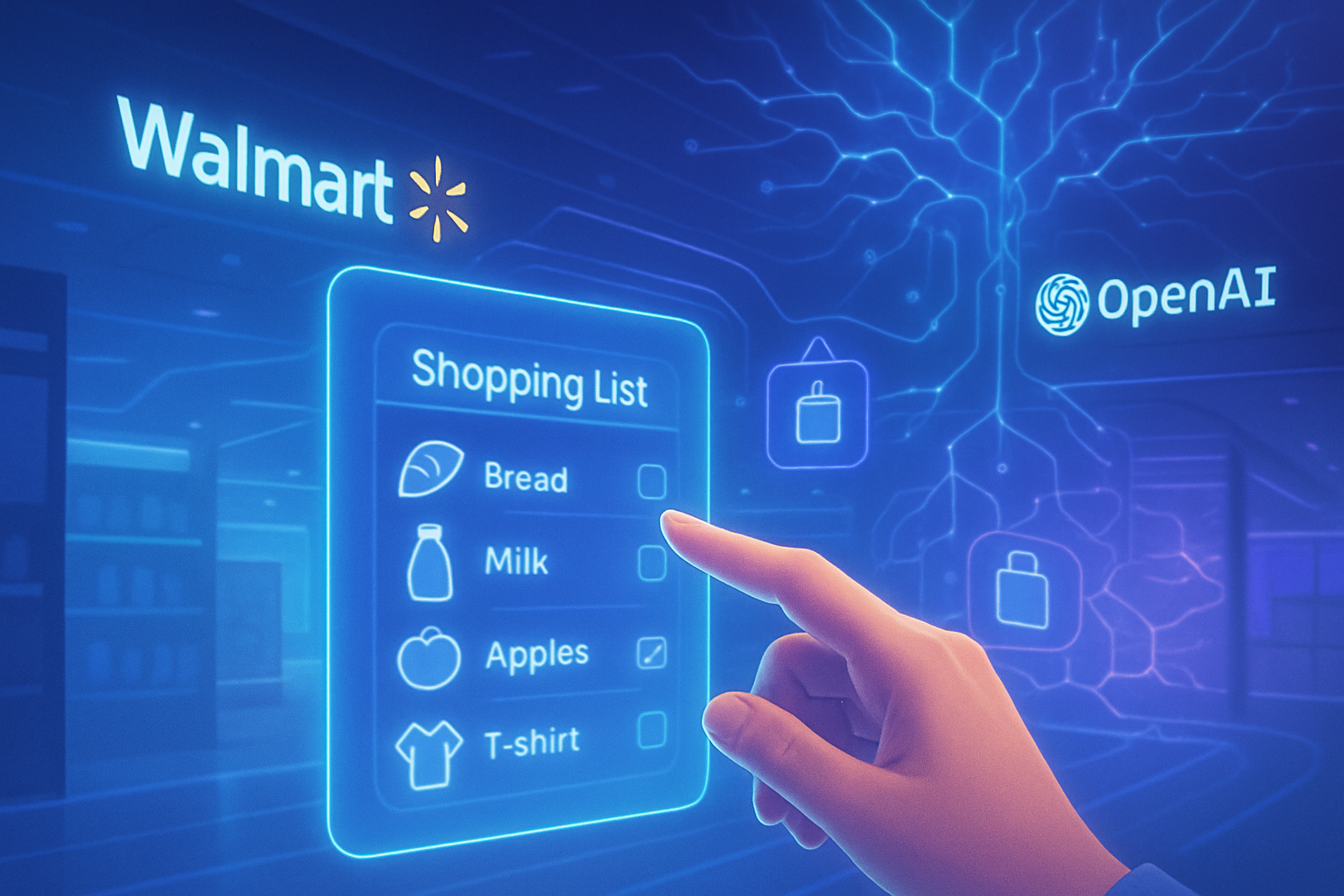
  • Walmart and OpenAI Forge New Frontier in E-commerce with ChatGPT Shopping Integration

    Walmart and OpenAI Forge New Frontier in E-commerce with ChatGPT Shopping Integration

    In a landmark announcement made today, Tuesday, October 14, 2025, retail giant Walmart (NYSE: WMT) has officially partnered with OpenAI to integrate a groundbreaking shopping feature directly into ChatGPT. This strategic collaboration is poised to redefine the landscape of online retail, moving beyond traditional search-and-click models to usher in an era of intuitive, conversational, and "agentic commerce." The immediate significance of this development lies in its potential to fundamentally transform consumer shopping behavior, offering unparalleled convenience and personalized assistance, while simultaneously intensifying the competitive pressures within the e-commerce and technology sectors.

    The essence of this partnership is to embed a comprehensive shopping experience directly within the ChatGPT interface, enabling customers to discover and purchase products from Walmart and Sam's Club through natural language commands. Termed "Instant Checkout," this feature allows users to engage with the AI chatbot for various shopping needs—from planning elaborate meals and restocking household essentials to exploring new products—with Walmart handling the fulfillment. This initiative represents a definitive leap from static search bars to an AI that proactively learns, plans, and predicts customer needs, promising a shopping journey that is not just efficient but also deeply personalized.

    The Technical Blueprint of Conversational Commerce

    The integration of Walmart's vast product catalog and fulfillment capabilities with OpenAI's advanced conversational AI creates a seamless, AI-first shopping experience. At its core, the system leverages sophisticated Natural Language Understanding (NLU) to interpret complex, multi-turn queries, discern user intent, and execute transactional actions. This allows users to articulate their shopping goals in everyday language, such as "Help me plan a healthy dinner for four with chicken," and receive curated product recommendations that can be added to a cart and purchased directly within the chat.

    A critical technical component is the "Instant Checkout" feature, which directly links a user's existing Walmart or Sam's Club account to ChatGPT, facilitating a frictionless transaction process without requiring users to navigate away from the chat interface. This capability is a significant departure from previous AI shopping tools that primarily offered recommendations or directed users to external websites. Furthermore, the system is designed for "multi-media, personalized and contextual" interactions, implying that the AI analyzes user input to provide highly relevant suggestions, potentially leveraging Walmart's internal AI for deeper personalization based on past purchases and browsing history. Walmart CEO Doug McMillon describes this as "agentic commerce in action," where the AI transitions from a reactive tool to a proactive agent that dynamically learns and anticipates customer needs. This integration is also part of Walmart's broader "super agents" framework, with customer-facing agents like "Sparky" designed for personalized recommendations and eventual automatic reordering of staple items.

    This approach dramatically differs from previous e-commerce models. Historically, online shopping has relied on explicit keyword searches and extensive product listings. The ChatGPT integration replaces this with an interactive, conversational interface that aims to understand and predict consumer needs with greater accuracy. Unlike traditional recommendation engines that react to browsing history, this new feature strives for proactive, predictive assistance. While Walmart has previously experimented with voice ordering and basic chatbots, the ChatGPT integration signifies a far more sophisticated level of contextual understanding and multi-turn conversational capabilities for complex shopping tasks. Initial reactions from the AI research community and industry experts highlight this as a "game-changing role" for AI in retail, recognizing its potential to revolutionize online shopping by embedding AI directly into the purchase flow. Data already indicates ChatGPT's growing role in driving referral traffic to retailers, underscoring the potential for in-chat checkout to become a major transactional channel.

    Reshaping the AI and Tech Landscape

    The Walmart-OpenAI partnership carries profound implications for AI companies, tech giants, and startups alike, igniting a new phase of competition and innovation in the AI commerce space. OpenAI, in particular, stands to gain immensely, extending ChatGPT's utility from a general conversational AI to a direct commerce platform. This move, coupled with similar integrations with partners like Shopify, positions ChatGPT as a potential central gateway for digital services, challenging traditional app store models and opening new revenue streams through transaction commissions. This solidifies OpenAI's position as a leading AI platform provider, showcasing the practical, revenue-generating applications of its large language models (LLMs).

    For Walmart (NYSE: WMT), this collaboration accelerates its "people-led, tech-powered" AI strategy, enabling it to offer hyper-personalized, convenient, and engaging shopping experiences. It empowers Walmart to narrow the personalization gap with competitors and enhance customer retention and basket sizes across its vast physical and digital footprint. The competitive implications for major tech giants are significant. Amazon (NASDAQ: AMZN), a long-time leader in AI-driven e-commerce, faces a direct challenge to its dominance. While Amazon has its own AI initiatives like Rufus, this partnership introduces a powerful new conversational shopping interface backed by a major retailer, compelling Amazon to accelerate its own investments in conversational commerce. Google (NASDAQ: GOOGL), whose core business relies on search-based advertising, could see disruption as agentic commerce encourages direct AI interaction for purchases rather than traditional searches. Google will need to further integrate shopping capabilities into its AI assistants and leverage its data to offer competitive, personalized experiences. Microsoft (NASDAQ: MSFT), a key investor in OpenAI, indirectly benefits as the partnership strengthens OpenAI's ecosystem and validates its AI strategy, potentially driving more enterprises to adopt Microsoft's cloud AI solutions.

    The potential for disruption to existing products and services is substantial. Traditional e-commerce search, comparison shopping engines, and even digital advertising models could be fundamentally altered as AI agents handle discovery and purchase directly. The shift from "scroll searching" to "goal searching" could reduce reliance on traditional product listing pages. Moreover, the rise of agentic commerce presents both challenges and opportunities for payment processors, demanding new fraud prevention methods and innovative payment tools for AI-initiated purchases. Customer service tools will also need to evolve to offer more integrated, transactional AI capabilities. Walmart's market positioning is bolstered as a frontrunner in "AI-first shopping experiences," leveraging OpenAI's cutting-edge AI to differentiate itself. OpenAI gains a critical advantage by monetizing its advanced AI models and broadening ChatGPT's application, cementing its role as a foundational technology provider for diverse industries. This collaborative innovation between a retail giant and a leading AI lab sets a precedent for future cross-industry AI collaborations.

    A Broader Lens: AI's March into Everyday Life

    The Walmart-OpenAI partnership transcends a mere business deal; it signifies a pivotal moment in the broader AI landscape, aligning with several major trends and carrying far-reaching societal and economic implications. This collaboration vividly illustrates the transition to "agentic commerce," where AI moves beyond being a reactive tool to a proactive, dynamic agent that learns, plans, and predicts customer needs. This aligns with the trend of conversational AI becoming a primary interface, with over half of consumers expected to use AI assistants for shopping by the end of 2025. OpenAI's strategy to embed commerce directly into ChatGPT, potentially earning commissions, positions AI platforms as direct conduits for transactions, challenging traditional digital ecosystems.

    Economically, the integration of AI in retail is predicted to significantly boost productivity and revenue, with generative AI alone potentially adding hundreds of billions annually to the retail sector. AI automates routine tasks, leading to substantial cost savings in areas like customer service and supply chain management. For consumers, this promises enhanced convenience, making online shopping more intuitive and accessible, potentially evolving human-technology interaction where AI assistants become integral to managing daily tasks.

    However, this advancement is not without its concerns. Data privacy is paramount, as the feature necessitates extensive collection and analysis of personal data, raising questions about transparency, consent, and security risks. The "black box" nature of some AI algorithms further complicates accountability. Ethical AI use is another critical area, with concerns about algorithmic bias perpetuating discrimination in recommendations or pricing. The ability of AI to hyper-personalize also raises ethical questions about potential consumer manipulation and the erosion of human agency as AI agents make increasingly autonomous purchasing decisions. Lastly, job displacement is a significant concern, as AI is poised to automate many routine tasks in retail, particularly in customer service and sales, with estimates suggesting a substantial percentage of retail jobs could be automated in the coming years. While new roles may emerge, a significant focus on employee reskilling and training, as exemplified by Walmart's internal AI literacy initiatives, will be crucial.

    Compared to previous AI milestones in e-commerce, this partnership represents a fundamental leap. Early e-commerce AI focused on basic recommendations and chatbots for FAQs. This new era transcends those reactive systems, moving towards proactive, agentic commerce where AI anticipates needs and executes purchases directly within the chat interface. The seamless conversational checkout and holistic enterprise integration across Walmart's operations signify that AI is no longer a supplementary tool but a core engine driving the entire business, marking a foundational shift in how consumers will interact with commerce.

    The Horizon of AI-Driven Retail

    Looking ahead, the Walmart-OpenAI partnership sets the stage for a dynamic evolution in AI-driven e-commerce. In the near-term, we can expect a refinement of the conversational shopping experience, with ChatGPT becoming even more adept at understanding nuanced requests and providing hyper-personalized product suggestions. The "Instant Checkout" feature will likely be streamlined further, and Walmart's internal AI initiatives, such as deploying ChatGPT Enterprise and training its workforce in AI literacy, will continue to expand, fostering a more AI-empowered retail ecosystem.

    Long-term developments point towards a future of truly "agentic" and immersive commerce. AI agents are expected to become increasingly proactive, learning individual preferences to anticipate needs and even make purchasing decisions autonomously, such as automatically reordering groceries or suggesting new outfits based on calendar events. Potential applications include advanced product discovery through multi-modal AI, where users can upload images to find similar items. Immersive commerce, leveraging Augmented Reality (AR) platforms like Walmart's "Retina," will aim to bring shopping into new virtual environments. Voice-activated shopping is also projected to dominate a significant portion of e-commerce sales, with AI assistants simplifying product discovery and transactions.

    However, several challenges must be addressed for widespread adoption. Integration complexity and high costs remain significant hurdles for many retailers. Data quality, privacy, and security are paramount, demanding transparent AI practices and robust safeguards to build customer trust. The shortage of AI/ML expertise within retail, alongside concerns about job displacement, necessitates substantial investment in talent development and employee reskilling. Experts predict that AI will become an essential rather than optional component of e-commerce, with hyper-personalization becoming the standard. The rise of agentic commerce will lead to smarter, faster, and more self-optimizing online storefronts, while AI will provide deeper insights into market trends and automate various operational tasks. The coming months will be critical to observe the initial rollout, user adoption, competitor responses, and the evolving capabilities of this groundbreaking AI shopping feature.

    A New Chapter in Retail History

    In summary, Walmart's partnership with OpenAI to embed a shopping feature within ChatGPT represents a monumental leap in the evolution of e-commerce. The key takeaways underscore a definitive shift towards conversational, personalized, and "agentic" shopping experiences, powered by seamless "Instant Checkout" capabilities and supported by Walmart's broader, enterprise-wide AI strategy. This development is not merely an incremental improvement but a foundational redefinition of how consumers will interact with online retail.

    This collaboration holds significant historical importance in the realm of AI. It marks one of the most prominent instances of a major traditional retailer integrating advanced generative AI directly into the consumer purchasing journey, moving AI from an auxiliary tool to a central transactional agent. It signals a democratization of AI in everyday life, challenging existing e-commerce paradigms and setting a precedent for future cross-industry AI integrations. The long-term impact on e-commerce will see a transformation in product discovery and marketing, demanding that retailers adapt their strategies to an AI-first approach. Consumer behavior will evolve towards greater convenience and personalization, with AI potentially managing a significant portion of shopping tasks.

    In the coming weeks and months, the industry will closely watch the rollout and adoption rates of this new feature, user feedback on the AI-powered shopping experience, and the specific use cases that emerge. The responses from competitors, particularly Amazon (NASDAQ: AMZN), will be crucial in shaping the future trajectory of AI-driven commerce. Furthermore, data on sales impact and referral traffic, alongside any further enhancements to the AI's capabilities, will provide valuable insights into the true disruptive potential of this partnership. This alliance firmly positions Walmart (NYSE: WMT) and OpenAI at the forefront of a new chapter in retail history, where AI is not just a tool, but a trusted shopping agent.


    This content is intended for informational purposes only and represents analysis of current AI developments.

    TokenRing AI delivers enterprise-grade solutions for multi-agent AI workflow orchestration, AI-powered development tools, and seamless remote collaboration platforms.
    For more information, visit https://www.tokenring.ai/.