Tag: Economic Impact

  • AI’s Double-Edged Sword: Job Displacement and Creation Reshape the Global Workforce

    AI’s Double-Edged Sword: Job Displacement and Creation Reshape the Global Workforce

    The accelerating integration of Artificial Intelligence (AI) into industries worldwide is forging a new economic reality, presenting a dual impact on the global job market. While AI's automation capabilities threaten to displace millions of existing roles, particularly in routine and administrative tasks, it simultaneously acts as a powerful catalyst for the creation of entirely new professions and the transformation of others. This profound shift necessitates an urgent re-evaluation of workforce development strategies, educational paradigms, and governmental policies to navigate what many, including Senator Mark Warner, describe as an impending period of significant social and economic disruption.

    The immediate significance of this dual impact is the imperative for rapid adaptation. Industries are bracing for transitional unemployment as workers in AI-exposed occupations face displacement, even as a surge in demand for AI specialists and complementary human skills emerges. This dynamic underscores a transformative era in the job market, demanding continuous learning and strategic preparedness from individuals, businesses, and policymakers alike to harness AI's productivity gains while mitigating its disruptive potential.

    The Algorithmic Reshaping of Work: Specifics of Displacement and Emergence

    The current wave of AI advancement is characterized by its ability to perform tasks previously considered the exclusive domain of human intellect. Generative AI, in particular, has demonstrated capabilities in writing code, drafting content, and analyzing complex datasets with unprecedented speed and scale. This differs significantly from previous automation waves, which primarily impacted manual labor. Now, white-collar and knowledge-based roles are increasingly susceptible.

    Specific details reveal a stark picture of both loss and opportunity. Roles such as customer service representatives, data entry clerks, telemarketers, and even entry-level programmers are at high risk of displacement as AI-powered chatbots, virtual assistants, and code-generating tools become more sophisticated. Labor market research firm Challenger, Gray & Christmas reported over 48,000 job cuts in the US directly attributable to AI so far in 2025, with a significant portion occurring just last month (October 2025). Goldman Sachs (NYSE: GS) estimates that AI could displace 300 million full-time equivalent jobs globally. Initial reactions from the AI research community acknowledge these trends, emphasizing the efficiency gains but also the ethical imperative to manage the societal transition responsibly.

    Conversely, AI is a potent engine for job creation, fostering roles that demand unique human attributes or specialized AI expertise. New positions like AI specialists, data scientists, machine learning engineers, prompt engineers, AI ethicists, and AI operations (MLOps) specialists are in high demand. These roles are crucial for designing, developing, deploying, and managing AI systems, as well as ensuring their ethical and effective integration. The World Economic Forum projects that AI could create 97 million new jobs by 2025, potentially outpacing the number of jobs lost. This shift requires workers to develop a blend of technical skills alongside uniquely human capabilities such as creativity, critical thinking, and emotional intelligence, which remain beyond AI's current grasp. The technical specifications of modern AI, particularly large language models and advanced machine learning algorithms, allow for complex problem-solving and pattern recognition, driving both the automation of routine tasks and the need for human oversight and strategic direction in AI development and application.

    Corporate Maneuvers in the AI-Driven Job Market

    The dual impact of AI on the job market is profoundly influencing the strategies and competitive landscapes of AI companies, tech giants, and startups. Companies that successfully integrate AI to augment human capabilities and create new value propositions stand to benefit significantly, while those slow to adapt risk disruption.

    Tech giants like Microsoft (NASDAQ: MSFT), Google (NASDAQ: GOOGL), and Amazon (NASDAQ: AMZN) are heavily investing in AI research and development, not only to enhance their product offerings but also to streamline internal operations. These companies are at the forefront of developing AI tools that can automate tasks, thereby potentially reducing the need for certain types of human labor while simultaneously creating demand for AI specialists within their own ranks. Their strategic advantage lies in their vast resources, data access, and ability to attract top AI talent, allowing them to shape the future of work through their platforms and services. Startups focusing on niche AI applications, such as AI-powered development tools or multi-agent AI workflow orchestration, are also poised for growth, catering to the evolving needs of businesses seeking to leverage AI efficiently.

    However, the competitive implications extend to potential disruption for existing products and services across various sectors. Companies that rely on traditional service models, administrative processes, or manufacturing techniques are facing pressure to adopt AI or risk being outcompeted by more efficient, AI-augmented rivals. This dynamic is leading to a wave of acquisitions and partnerships as larger entities seek to absorb innovative AI technologies and talent. Market positioning is increasingly defined by a company's AI maturity – its ability to develop, deploy, and ethically manage AI solutions that either displace human tasks for efficiency or, more ideally, empower human workers to achieve higher productivity and innovation. The challenge for all companies, from established tech giants to agile startups, is to navigate this transition by strategically investing in AI while also addressing the societal implications of job displacement and fostering the creation of new, valuable roles.

    Wider Implications: A Societal Crossroads

    The integration of AI into the job market represents more than just a technological upgrade; it signifies a fundamental shift in the broader AI landscape and societal structure. This development fits into a larger trend of automation that has historically reshaped economies, from the agricultural revolution to the industrial age. However, AI's unique capability to automate cognitive tasks sets it apart, raising new and complex concerns.

    One of the most vocal critics regarding the societal implications is Senator Mark Warner. He has expressed significant concerns about the potential for widespread job displacement, particularly in entry-level white-collar positions, predicting unemployment rates as high as 10-20% within the next five years for some demographics. Senator Warner emphasizes the critical lack of comprehensive data on how AI is truly affecting the U.S. labor market, stating that "good policy starts with good data." Without a clear picture of job elimination, worker retraining, and emerging opportunities, he warns of "a level of social disruption that's unprecedented" by 2028 due to economic frustration among young workers and families burdened by higher education costs. His concerns extend to algorithmic bias and the potential for AI's disruptive power on financial markets, leading him to introduce legislation like the Financial Artificial Intelligence Risk Reduction Act and the bipartisan AI-Related Job Impacts Clarity Act, which aims to mandate data sharing on AI's workforce effects.

    Comparisons to previous AI milestones, such as the advent of expert systems or early machine learning, highlight the current era's accelerated pace and broader impact. Unlike previous breakthroughs, today's AI systems are more general-purpose, capable of learning from vast datasets and performing diverse tasks, making their reach into the job market far more extensive. The potential concerns are not merely about job losses but also about widening income inequality, the need for robust social safety nets, and the ethical governance of AI to prevent misuse or the exacerbation of existing biases. The wider significance lies in the urgent need for a coordinated response from governments, industries, and educational institutions to ensure that AI serves as a tool for societal progress rather than a source of instability.

    Charting the Future: Navigating AI's Evolving Impact

    Looking ahead, the trajectory of AI's impact on the job market suggests both continued disruption and exciting new avenues for human endeavor. In the near-term, we can expect an acceleration of job displacement in highly routine and predictable roles across various sectors, coupled with an increasing demand for specialized AI skills. Companies will continue to experiment with AI integration, leading to further optimization of workflows and, in some cases, reductions in headcount as efficiency gains become more pronounced.

    Long-term developments are likely to see a more symbiotic relationship between humans and AI. Experts predict the emergence of entirely new industries and job categories that are currently unimaginable, driven by AI's ability to unlock new capabilities and solve complex problems. Potential applications and use cases on the horizon include highly personalized education systems, advanced AI-driven healthcare diagnostics, and sophisticated environmental management tools, all of which will require human oversight, ethical guidance, and creative problem-solving. Challenges that need to be addressed include developing scalable and accessible retraining programs for displaced workers, ensuring equitable access to AI education, and establishing robust regulatory frameworks to govern AI's development and deployment responsibly.

    What experts predict will happen next is a continuous evolution of job roles, where the emphasis shifts from performing repetitive tasks to tasks requiring critical thinking, creativity, emotional intelligence, and complex problem-solving. The workforce will need to embrace lifelong learning, constantly acquiring new skills to remain relevant in an AI-augmented economy. The focus will move towards human-AI collaboration, where AI acts as a powerful tool that enhances human productivity and allows individuals to concentrate on higher-value, more strategic work.

    A New Era of Work: Key Takeaways and Future Watchpoints

    The current era of AI development marks a pivotal moment in the history of work, characterized by an unprecedented dual impact on the global job market. The key takeaways from this transformation are clear: AI is undeniably displacing existing jobs, particularly those involving routine and predictable tasks, while simultaneously acting as a powerful engine for the creation of new roles that demand advanced technical skills and uniquely human attributes. This dynamic underscores the urgent need for a societal shift towards continuous learning, adaptability, and strategic investment in workforce retraining.

    The significance of this development in AI history cannot be overstated. Unlike previous technological revolutions, AI's ability to automate cognitive tasks means its reach extends into white-collar professions, challenging established notions of work and value creation. The concerns raised by figures like Senator Mark Warner regarding potential widespread unemployment and social disruption highlight the critical need for proactive policy-making and ethical governance to ensure AI serves humanity's best interests.

    In the long term, the impact of AI is likely to foster a more productive and innovative global economy, but only if the transition is managed thoughtfully and equitably. The challenge lies in mitigating the short-term disruptions of job displacement while maximizing the long-term benefits of job creation and augmentation. What to watch for in the coming weeks and months includes further announcements from major tech companies regarding AI integration into their products and services, governmental responses to the emerging job market shifts, and the development of new educational and retraining initiatives designed to equip the workforce for an AI-powered future. The success of this transition will depend on a collaborative effort from all stakeholders to harness AI's potential while safeguarding societal well-being.


    This content is intended for informational purposes only and represents analysis of current AI developments.

    TokenRing AI delivers enterprise-grade solutions for multi-agent AI workflow orchestration, AI-powered development tools, and seamless remote collaboration platforms.
    For more information, visit https://www.tokenring.ai/.
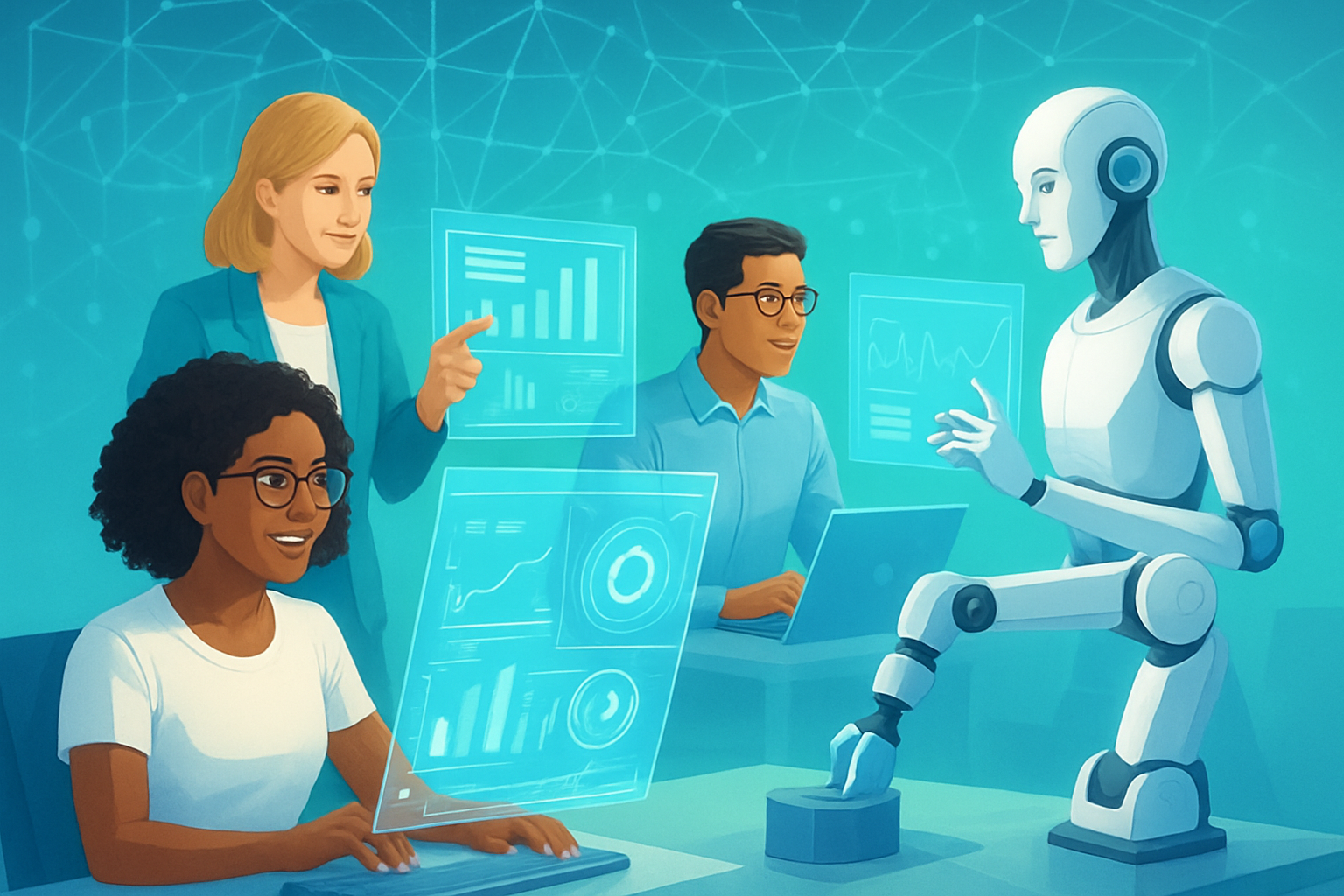
  • AI’s Billion-Dollar Blitz: Propelling Corporate Profits and Rocketing Tech Valuations

    AI’s Billion-Dollar Blitz: Propelling Corporate Profits and Rocketing Tech Valuations

    Artificial intelligence (AI) is no longer a futuristic concept but a tangible, immediate force profoundly reshaping corporate earnings and driving unprecedented valuations within the technology sector. Companies across various industries are already leveraging AI to boost revenues, slash costs, enhance productivity, and redefine their market standing. Recent earnings reports and market trends unequivocally underscore AI's transformative financial impact, positioning it as a central pillar of global economic growth in the mid-2020s.

    The immediate significance of AI lies in its ability to unlock substantial value across the enterprise. From automating routine tasks to powering hyper-personalized customer experiences and accelerating scientific discovery, AI is proving to be a catalyst for both efficiency gains and novel revenue streams. This widespread adoption and the promise of future innovation have ignited an investment frenzy, propelling the market capitalizations of AI-forward technology companies to historic highs and recalibrating how investors assess potential growth.

    The AI Engine: Specific Advancements Fueling Financial Gains

    AI's direct contribution to corporate earnings stems from a suite of sophisticated applications that significantly outperform previous technological approaches. These advancements, leveraging machine learning, natural language processing, and advanced analytics, are not just incremental improvements but fundamental shifts in operational capabilities.

    Generative AI for Content Creation, Marketing, and Sales: Generative AI, exemplified by large language models, is proving transformative. Companies are utilizing it to accelerate product development, personalize customer experiences, and enhance marketing efforts, leading to significant cost savings and revenue growth. McKinsey's research indicates that generative AI alone could add between $2.6 trillion and $4.4 trillion to global corporate profits annually. For example, AI-powered chatbots reduce customer support costs by up to one-third and make service 14% faster. In marketing, generative AI boosts productivity by 5% to 15% of total marketing spending, optimizing content and generating sales lead profiles. Unlike traditional marketing automation that follows predefined rules, generative AI dynamically creates nuanced, on-brand content and personalizes interactions at scale, leading to higher conversion rates.

    AI in Drug Discovery and Pharmaceutical Research: The pharmaceutical industry is leveraging AI to dramatically reduce the time and cost associated with drug development and clinical trials. AI accelerates the identification of potential drug candidates, optimizes molecular design, and predicts drug efficacy and safety profiles. This can shorten the drug discovery process from 10-15 years to as little as one year and reduce R&D costs significantly, with AI applications projected to create between $350 billion and $410 billion in annual value for pharmaceutical companies by 2025. Historically, drug discovery was a lengthy, expensive, and high-failure-rate process; AI, through advanced algorithms, can screen millions of compounds in days, analyze vast biological data, and predict outcomes with much higher precision.

    AI-Powered Supply Chain Optimization: AI is revolutionizing supply chain management by enhancing visibility, improving forecasting, and optimizing logistics. AI-driven predictive analytics for demand forecasting minimizes overstocking and stockouts, reducing waste, lowering holding costs, and improving profitability. Manufacturing executives using AI in supply chains report decreased costs (61%) and increased revenues (53%). Traditional supply chain management relied on historical data and static algorithms, making it less responsive. AI systems, integrated with IoT and robotics, can process real-time data from multiple sources, dynamically adjust to market fluctuations, and optimize operations.

    AI for Personalized Marketing and Customer Experience: AI enables hyper-personalization, delivering tailored content, product recommendations, and services in real-time. Personalized experiences significantly increase customer engagement, conversion rates, and sales. Companies implementing AI-powered marketing strategies have seen an improvement in customer engagement (93%) and an increase in sales (87%). Modern AI uses deep learning, natural language processing, and computer vision to analyze vast amounts of individual customer data, identifying complex patterns and preferences to deliver highly relevant and timely interactions.

    The core difference from previous approaches lies in the shift from static, rule-based software to adaptive, learning, and autonomous AI systems. Enterprise AI processes both structured and unstructured data in real-time, learns from data, adapts to changing conditions, and makes decisions independently, often through AI agents. Initial reactions from the AI research community and industry experts are characterized by optimism regarding the significant economic potential, tempered with caution regarding strategic implementation challenges. While the potential is vast, capturing enterprise-level value from AI requires a clear strategy and careful consideration of data quality, ethics, and integration with human expertise.

    Reshaping the Tech Landscape: Giants, Startups, and the AI Arms Race

    AI has profoundly reshaped the technology landscape, impacting AI-first companies, major tech giants, and startups by altering competitive dynamics, fostering disruption, and creating new strategic advantages. This transformative force is redefining market positioning and product development across the industry.

    AI-First Companies are adopting strategies where AI is a default consideration for every decision and investment. This approach allows them to achieve up to 25% better business outcomes by accelerating innovation, improving efficiency, and uncovering new opportunities. Companies like OpenAI, creators of ChatGPT, started as small entities but quickly became global leaders, disrupting industries from education to software development. Their speed, agility, and data-driven decision-making allow them to pivot faster and adapt to market changes in real-time, often outpacing larger, slower-moving entities.

    Major Tech Giants are engaged in an intense "AI arms race," investing heavily to integrate AI into their core operations and secure market dominance.

    • Microsoft (NASDAQ: MSFT) has committed substantial funds to OpenAI, integrating AI into products like Microsoft Copilot and Azure, leveraging its cloud infrastructure for AI capabilities.
    • Amazon (NASDAQ: AMZN) has invested in Anthropic and relies on AI for its e-commerce platform, Alexa, and Amazon Web Services (AWS), which sees significant increases in cloud service revenues attributable to AI-related demand.
    • Alphabet (NASDAQ: GOOGL), through Google and DeepMind, develops specialized AI chips like Tensor Processing Units (TPUs) and integrates AI across its search, Gmail, and Google Cloud services.
    • Apple (NASDAQ: AAPL) uses AI for Siri, fraud detection, and battery optimization, with "Apple Intelligence" adding smarter, contextual features.
    • Meta Platforms (NASDAQ: META) utilizes AI for enhanced ad targeting and user engagement across its social media platforms.
      These giants leverage their vast user bases, proprietary data, and existing ecosystems to train, deploy, and monetize AI systems at scale.

    Startups have seen a significant transformation of their landscape, with AI lowering barriers to entry and enabling rapid innovation. The widespread availability of cloud computing and open-source AI tools means startups can develop powerful solutions without massive upfront investment, leading to an "explosion of new startups." AI-based startups are attracting significant venture capital, with over $100 billion invested globally in 2024. These agile companies are not just filling gaps but fundamentally changing how industries operate, offering faster, smarter, and more cost-effective solutions in sectors like healthcare, financial services, and retail.

    Companies best positioned to benefit fall into several categories:

    1. AI Infrastructure Providers: Nvidia (NASDAQ: NVDA), a pioneer in accelerated computing, whose GPUs are essential for training and running AI models. Advanced Micro Devices (NASDAQ: AMD) is rapidly gaining ground with AI GPUs. Taiwan Semiconductor Manufacturing Co. (NYSE: TSM) is the leading manufacturer of advanced chips. Super Micro Computer (NASDAQ: SMCI) is a leader in AI-optimized server technology.
    2. Major Cloud Service Providers: Microsoft (Azure), Amazon (AWS), and Alphabet (Google Cloud) offer AI-as-a-Service and the underlying cloud infrastructure.
    3. Companies with Proprietary Data and Ethical AI Frameworks: Those that can leverage unique datasets to train superior AI models and build trust.
    4. Agile "AI-First" Companies: Both large and small, those that embed AI into every aspect of their strategy and operations.

    AI introduces more layers of competition across the entire "AI stack," from chips and data infrastructure to algorithms and end-user applications. This intensifies competition, shifts sources of advantage towards proprietary data and speed of learning, and disrupts existing products through automation, generative capabilities, and enhanced customer experiences. Incumbents face challenges, but many are adapting by adopting an "AI-first" mindset, investing in data strategies, prioritizing ethical AI, and leveraging AI for personalization and operational optimization.

    AI's Broader Canvas: Societal Shifts and Economic Repercussions

    The wider significance of AI's impact on corporate earnings and valuations extends far beyond the tech sector, driving profound societal and economic shifts. As of November 2025, AI is undeniably reshaping industries, generating substantial profits, and sparking intense debate about its future trajectory, potential risks, and historical parallels.

    AI is a significant driver of corporate earnings and market valuations, particularly within the technology sector and for companies that effectively integrate AI into their operations. Many S&P 500 companies are expected to see substantial net benefits, with Morgan Stanley estimating annual net economic benefits of approximately $920 billion for these companies, potentially translating into $13 trillion to $16 trillion in market value creation. This growth is fueled by both cost cutting and new revenue generation through AI, leading to efficiency gains and accelerated innovation. Industries like healthcare, manufacturing, and finance are experiencing significant AI-driven transformations, with projections of billions in annual savings and added value. This has led to an "AI infrastructure arms race," with massive investments in data centers and AI chips, bolstering earnings for suppliers like AMD and Cisco Systems (NASDAQ: CSCO).

    The AI landscape in November 2025 is characterized by the dominance of generative AI, widespread experimentation with AI agents, and a soaring demand for diversified AI talent. Governments are increasingly involved in guiding AI's development toward broader societal benefit and ethical deployment. AI is projected to significantly boost global GDP, with estimates suggesting a $15.7 trillion contribution by 2030. However, concerns persist about economic inequality and the digital divide, as the benefits risk remaining in the hands of a privileged few.

    Potential concerns include:

    1. Job Displacement: Goldman Sachs Research estimates AI could displace 6-7% of the US workforce if widely adopted, with global impacts affecting up to 40% of jobs by 2026. Entry-level white-collar roles are particularly vulnerable. While new jobs will be created, there's an urgent need for workers to acquire new skills.
    2. Ethical Issues: These include AI literacy, the need for trust, transparency, and accountability in "black box" AI models, potential biases in algorithms, data privacy and security concerns, and unresolved intellectual property rights for AI-generated works.
    3. 'AI Bubble': The debate over whether current AI valuations constitute a bubble is intense. Some analysts see risks resembling the dot-com bubble, with high investment spending and stretched valuations. Others argue this wave is different, with leading AI companies often being powerful incumbents with strong balance sheets and actual profits. However, the concentration of market power and blurring lines between revenue and equity in AI deals (e.g., Nvidia selling chips to OpenAI for a stake) raise concerns about economic distortion.

    The current AI revolution draws comparisons to the Industrial Revolution in reshaping labor markets and the Internet Revolution (dot-com bubble) due to hype and soaring valuations. While both periods saw significant hype and investment, today's leading AI companies often have stronger fundamentals. However, the current wave of AI, particularly generative AI, is seen by many as unique in its speed, depth, and potential to disrupt a wider range of high-skill professions, marking a pivotal moment in technological history.

    The Horizon: Future Trajectories and Emerging Challenges

    The future impact of AI on corporate earnings and tech valuations is poised for significant developments in both the near and long term. As of November 2025, the AI landscape is characterized by rapid innovation, substantial investment, and a growing recognition of its potential to redefine business operations and financial markets.

    In the near term (2025-2028), AI is already demonstrating tangible revenue and productivity impacts, with major tech companies disclosing tens of billions in incremental AI-related capital spending. Morgan Stanley projects generative AI (GenAI) revenue to increase more than 20-fold over the next three years, potentially reaching $1.1 trillion by 2028. However, this rapid growth is accompanied by warnings of an "AI bubble," with unprecedented market capitalizations and valuations appearing disconnected from traditional financial fundamentals, as seen with companies like Palantir Technologies (NYSE: PLTR) trading at extreme earnings multiples. A significant trend is the widening "AI value gap," where a small percentage of "future-built" companies are accelerating value creation, expecting twice the revenue increase and 40% greater cost reductions by 2028 compared to laggards.

    Longer term (2028 and beyond), AI is expected to gradually reshape the credit quality of US tech companies and drive substantial economic growth. The overall AI market is forecast to expand to nearly $650 billion by 2028, accounting for nearly 15% of total global IT spending. Full AI adoption across S&P 500 companies could yield an annual net benefit of $920 billion, primarily from cost reductions and additional revenue, potentially leading to a market cap increase of $13 trillion to $16 trillion for the S&P 500. Agentic AI, capable of planning, decision-making, and task execution with minimal human oversight, is expected to contribute substantially to these benefits.

    Potential applications and use cases on the horizon span enhanced customer support, detailed customer insights, automated sales, dynamic pricing, and accelerated product and service development. AI will continue to automate operations across various functions, leading to significant cost reductions and improved fraud detection. In financial services, AI will automate mundane tasks for financial planners and enhance predictive analytics for strategic planning and credit risk assessment.

    Despite immense potential, several significant challenges hinder the full realization of AI's impact:

    • Data Quality and Governance: Messy data, poor data integrity, and conflicting formats are major obstacles.
    • Privacy and Security Concerns: AI systems often process sensitive data, raising concerns about confidentiality, consent, and cyber threats.
    • Outdated Infrastructure and Integration: Many companies struggle to integrate AI into decades-old legacy systems.
    • Cultural Pushback and Skill Gaps: Employee worries about job displacement and a lack of AI skills among leadership and the workforce slow adoption.
    • Unclear Economics and ROI: Many organizations struggle to document clear ROI from AI.
    • Market Concentration and Antitrust Concerns: The AI supply chain is becoming increasingly concentrated among a small number of large private firms.
    • Ethical Risks: Bias in training data can lead to legal and reputational risks.

    Experts predict a widening performance divide between AI-fluent organizations and laggards. While some warn of an AI bubble, others advise tempering expectations for an immediate economic boom, suggesting it will take years to realize AI's full potential. AI is seen as a strategic imperative, with a focus on revenue growth beyond initial cost reduction. The job market will transform, with AI-driven job loss for middle-income earners becoming a reality in the near term, though new jobs will also be created. Investment and consolidation in AI infrastructure and services will continue to be massive.

    The AI Epoch: A Transformative Journey Unfolding

    The financial impact of Artificial Intelligence has been a dominant theme in corporate strategy and market valuations throughout 2024 and 2025, marking a significant acceleration in AI's historical trajectory. As of November 2025, the landscape is characterized by soaring investments, considerable productivity gains in some areas, but also a discernible "GenAI Divide" in realizing enterprise-wide profits, setting the stage for a critical period ahead.

    Key Takeaways: AI is driving both immediate and long-term corporate earnings through efficiency gains, cost reductions, and new revenue streams across diverse sectors like BFSI, manufacturing, and healthcare. Companies leveraging AI are reporting significant ROIs and productivity improvements. Simultaneously, AI has profoundly impacted tech valuations, propelling giants like Nvidia (NASDAQ: NVDA), Microsoft (NASDAQ: MSFT), and Amazon (NASDAQ: AMZN) to unprecedented market capitalizations, fueled by massive AI-related capital expenditures. However, despite widespread adoption of general-purpose AI tools, a "GenAI Divide" persists, with many organizations still struggling to translate pilot projects into measurable P&L impact at an enterprise scale.

    Significance in AI History: This period represents a pivotal moment, moving beyond previous "AI winters" into an "AI spring" characterized by the widespread adoption and practical application of generative AI. The exponential growth in AI capabilities and its integration into daily life and business operations signify a "phase change" rather than incremental disruption. AI is now firmly established as a core business infrastructure and is widely considered the most crucial technological advancement in decades.

    Long-Term Impact: The long-term impact of AI is anticipated to be profoundly transformative, contributing trillions of dollars to the global economy and driving significant labor productivity gains. AI investment is increasingly seen as a structural shift, becoming a cornerstone of economic growth worldwide. While concerns about job displacement persist, the consensus suggests a more nuanced impact, with a shift towards more educated and technically skilled workers. The long-term success of AI will hinge on systematic, transparent approaches to governance, risk management, and fostering a workforce ready to adapt and acquire new skills.

    What to Watch For: In the coming weeks and months (post-November 2025), several critical areas warrant close attention. Firstly, the realization of measurable ROI from enterprise AI will be a key indicator of whether more companies can bridge the "GenAI Divide." Secondly, observe the progress of organizations moving from experimentation to scaled deployment and integration of AI across core business operations. Thirdly, monitor the emergence and adoption of "AI agents," advanced systems capable of acting autonomously. Fourthly, track the evolution of investment patterns, particularly shifts towards AI-native applications. Fifthly, assess how the competitive landscape evolves, with tech giants and challengers vying for dominance. Finally, pay close attention to regulatory developments and governance frameworks, as well as trends in workforce adaptation and skill development.

    The coming months will be crucial in determining whether the current AI boom matures into sustained, widespread economic transformation or faces a period of recalibration as businesses grapple with effective implementation and tangible returns.


    This content is intended for informational purposes only and represents analysis of current AI developments.

    TokenRing AI delivers enterprise-grade solutions for multi-agent AI workflow orchestration, AI-powered development tools, and seamless remote collaboration platforms.
    For more information, visit https://www.tokenring.ai/.

  • Nvidia and Big Tech Fuel Wall Street’s AI-Driven Resurgence Amidst Market Volatility

    Nvidia and Big Tech Fuel Wall Street’s AI-Driven Resurgence Amidst Market Volatility

    In an extraordinary display of market power, Nvidia (NASDAQ: NVDA) and a cohort of other 'Big Tech' giants have spearheaded a significant rally, providing a crucial lift to Wall Street as it navigates recent downturns. This resurgence, primarily fueled by an insatiable investor appetite for artificial intelligence (AI), has seen technology stocks dramatically outperform the broader market, solidifying AI's role as a primary catalyst for economic transformation. As of November 10, 2025, the tech sector's momentum continues to drive major indices upward, helping the market recover from recent weekly losses, even as underlying concerns about concentration and valuation persist.

    The AI Engine: Detailed Market Performance and Driving Factors

    Nvidia (NASDAQ: NVDA) has emerged as the undisputed titan of this tech rally, experiencing an "eye-popping" ascent fueled by the AI investing craze. From January 2024 to January 2025, Nvidia's stock returned over 240%, significantly outpacing major tech indexes. Its market capitalization milestones are staggering: crossing the $1 trillion mark in May 2023, the $2 trillion mark in March 2024, and briefly becoming the world's most valuable company in June 2024, reaching a valuation of $3.3 trillion. By late 2025, Nvidia's market capitalization has soared past $5 trillion, a testament to its pivotal role in AI infrastructure.

    This explosive growth is underpinned by robust financial results and groundbreaking product announcements. For fiscal year 2025, Nvidia's revenue exceeded $88 billion, a 44% year-over-year increase, with gross margins rising to 76%. Its data center segment has been particularly strong, with revenue consistently growing quarter-over-quarter, reaching $30.8 billion in Q3 2025 and projected to jump to $41.1 billion in Q2 Fiscal 2026, accounting for nearly 88% of total revenue. Key product launches, such as the Blackwell chip architecture (unveiled in March 2024) and the subsequent Blackwell Ultra (announced in March 2025), specifically engineered for generative AI and large language models (LLMs), have reinforced Nvidia's technological leadership. The company also introduced its GeForce RTX 50-series GPUs at CES 2025, further enhancing its offerings for gaming and professional visualization.

    The "Magnificent Seven" (Mag 7) — comprising Nvidia, Alphabet (NASDAQ: GOOGL), Amazon (NASDAQ: AMZN), Apple (NASDAQ: AAPL), Meta Platforms (NASDAQ: META), Microsoft (NASDAQ: MSFT),, and Tesla (NASDAQ: TSLA) — have collectively outpaced the S&P 500 (INDEXSP: .INX). By the end of 2024, this group accounted for approximately one-third of the S&P 500's total market capitalization. While Nvidia led with a 78% return year-to-date in 2024, other strong performers included Meta Platforms (NASDAQ: META) (40%) and Amazon (NASDAQ: AMZN) (15%). However, investor sentiment has not been uniformly positive; Apple (NASDAQ: AAPL) faced concerns over slowing iPhone sales, and Tesla (NASDAQ: TSLA) experienced a notable decline after surpassing a $1 trillion valuation in November 2024.

    This current rally draws parallels to the dot-com bubble of the late 1990s, characterized by a transformative technology (AI now, the internet then) driving significant growth in tech stocks and an outperformance of large-cap tech. Market concentration is even higher today, with the top ten stocks comprising 39% of the S&P 500's weight, compared to 27% during the dot-com peak. However, crucial differences exist. Today's leading tech companies generally boast strong balance sheets, profitable operations, and proven business models, unlike many speculative startups of the late 1990s. Valuations, while elevated, are not as extreme, with the Nasdaq 100's forward P/E ratio significantly lower than its March 2000 peak. The current AI boom is driven by established, highly profitable companies demonstrating their ability to monetize AI through real demand and robust cash flows, suggesting a more fundamentally sound, albeit still volatile, market trend.

    Reshaping the Tech Landscape: Impact on Companies and Competition

    Nvidia's (NASDAQ: NVDA) market rally, driven by its near-monopoly in AI accelerators (estimated 70% to 95% market share), has profoundly reshaped the competitive landscape across the tech industry. Nvidia itself is the primary beneficiary, with its market cap soaring past $5 trillion. Beyond Nvidia, its board members, early investors, and key partners like Taiwan Semiconductor Manufacturing Co. (TSMC: TPE) and SK Hynix (KRX: 000660) have also seen substantial gains due to increased demand for their chip manufacturing and memory solutions.

    Hyperscale cloud service providers (CSPs) such as Amazon Web Services (AWS), Google Cloud (NASDAQ: GOOGL), and Microsoft Azure (NASDAQ: MSFT) are significant beneficiaries as they heavily invest in Nvidia's GPUs to build their AI infrastructure. For instance, Amazon (NASDAQ: AMZN) secured a multi-billion dollar deal with OpenAI for AWS infrastructure, including hundreds of thousands of Nvidia GPUs. Their reliance on Nvidia's technology deepens, cementing Nvidia's position as a critical enabler of their AI offerings. Other AI-focused companies, like Palantir Technologies (NYSE: PLTR), have also seen significant stock jumps, benefiting from the broader AI enthusiasm.

    However, Nvidia's dominance has intensified competition. Major tech firms like Advanced Micro Devices (NASDAQ: AMD) and Intel (NASDAQ: INTC) are aggressively developing their own AI chips to challenge Nvidia's lead. Furthermore, Meta Platforms (NASDAQ: META), Google (NASDAQ: GOOGL), and Microsoft (NASDAQ: MSFT) are investing in homegrown chip products to reduce their dependency on Nvidia and optimize solutions for their specific AI workloads. Custom chips are projected to capture over 40% of the AI chip market by 2030, posing a significant long-term disruption to Nvidia's market share. Nvidia's proprietary CUDA software platform creates a formidable ecosystem that "locks in" customers, forming a significant barrier to entry for competitors. However, the increasing importance of software innovation in AI chips and the shift towards integrated software solutions could reduce dependency on any single hardware provider.

    The AI advancements are driving significant disruption across various sectors. Nvidia's powerful hardware is democratizing advanced AI capabilities, allowing industries from healthcare to finance to implement sophisticated AI solutions. The demand for AI training and inference is driving a massive capital expenditure cycle in data centers and cloud infrastructure, fundamentally transforming how businesses operate. Nvidia is also transitioning into a full-stack technology provider, offering enterprise-grade AI software suites and platforms like DGX systems and Omniverse, establishing industry standards and creating recurring revenue through subscription models. This ecosystem approach disrupts traditional hardware-only models.

    Broader Significance: AI's Transformative Role and Emerging Concerns

    The Nvidia-led tech rally signifies AI's undeniable role as a General-Purpose Technology (GPT), poised to fundamentally remake economies, akin to the steam engine or the internet. Its widespread applicability spans every industry and business function, fostering significant innovation. Global private AI investment reached a record $252.3 billion in 2024, with generative AI funding soaring to $33.9 billion, an 8.5-fold increase from 2022. This investment race is concentrated among a few tech giants, particularly OpenAI, Nvidia (NASDAQ: NVDA), and hyperscalers like Google (NASDAQ: GOOGL), Amazon (NASDAQ: AMZN), and Microsoft (NASDAQ: MSFT), with a substantial portion directed towards building robust AI infrastructure.

    AI is driving shifts in software, becoming a required layer in Software-as-a-Service (SaaS) platforms and leading to the emergence of "copilots" across various business departments. New AI-native applications are appearing in productivity, health, finance, and entertainment, creating entirely new software categories. Beyond the core tech sector, AI has the potential to boost productivity and economic growth across all sectors by increasing efficiency, improving decision-making, and enabling new products and services. However, it also poses a disruptive effect on the labor market, potentially displacing jobs through automation while creating new ones in technology and healthcare, which could exacerbate income inequality. The expansion of data centers to support AI models also raises concerns about energy consumption and environmental impact, with major tech players already securing nuclear energy agreements.

    The current market rally is marked by a historically high concentration of market value in a few large-cap technology stocks, particularly the "Magnificent Seven," which account for a significant portion of major indices. This concentration poses a "concentration risk" for investors. While valuations are elevated and considered "frothy" by some, many leading tech companies demonstrate strong fundamentals and profitability. Nevertheless, persistent concerns about an "AI bubble" are growing, with some analysts warning that the boom might not deliver anticipated financial returns. The Bank of England and the International Monetary Fund issued warnings in October and November 2025 about the increasing risk of a sharp market correction in tech stocks, noting that valuations are "comparable to the peak" of the 2000 dot-com bubble.

    Comparing this rally to the dot-com bubble reveals both similarities and crucial differences. Both periods are centered around a revolutionary technology and saw rapid valuation growth and market concentration. However, today's dominant tech companies possess strong underlying fundamentals, generating substantial free cash flows and funding much of their AI investment internally. Valuations, while high, are generally lower than the extreme levels seen during the dot-com peak. The current AI rally is underpinned by tangible earnings growth and real demand for AI applications and infrastructure, rather than pure speculation.

    The Road Ahead: Future Developments and Expert Predictions

    In the near term (late 2025 – 2027), Nvidia (NASDAQ: NVDA) is poised for continued strong performance, primarily driven by its dominance in AI hardware. The Blackwell GPU line (B100, B200, GB200 Superchip) is in full production and expected to be a primary revenue driver through 2025, with the Rubin architecture slated for initial shipments in 2026. The data center segment remains a major focus due to increasing demand from hyperscale cloud providers. Nvidia is also expanding beyond pure GPU sales into comprehensive AI platforms, networking, and the construction of "AI factories," such as the "Stargate Project" with OpenAI.

    Long-term, Nvidia aims to solidify its position as a foundational layer for the entire AI ecosystem, providing full-stack AI solutions, AI-as-a-service, and specialized AI cloud offerings. The company is strategically diversifying into autonomous vehicles (NVIDIA DRIVE platform), professional visualization, healthcare, finance, edge computing, and telecommunications. Deeper dives into robotics and edge AI are expected, leveraging Nvidia's GPU technology and AI expertise. These technologies are unlocking a vast array of applications, including advanced generative AI and LLMs, AI-powered genomics analysis, intelligent diagnostic imaging, biomolecular foundation models, real-time AI reasoning in robotics, and accelerating scientific research and climate modeling.

    Despite its strong position, Nvidia and the broader AI market face significant challenges. Intensifying competition from AMD (NASDAQ: AMD), Intel (NASDAQ: INTC), and hyperscale cloud providers developing custom AI chips is a major threat. Concerns about market saturation and cyclicality in the AI training market, with some analysts suggesting a tapering off of demand within the next 18 months, also loom. Geopolitical tensions and U.S. trade restrictions on advanced chip sales to China pose a significant challenge, impacting Nvidia's growth in a market estimated at $50 billion annually. Valuation concerns and the substantial energy consumption required by AI also need to be addressed.

    Experts largely maintain a bullish outlook on Nvidia's future, while acknowledging potential market recalibrations. Analysts have a consensus "Strong Buy" rating for Nvidia, with average 12-month price targets suggesting an 11-25% increase from current levels as of November 2025. Some long-term predictions for 2030 place Nvidia's stock around $920.09 per share. The AI-driven market rally is expected to extend into 2026, with substantial capital expenditures from Big Tech validating the bullish AI thesis. The AI narrative is broadening beyond semiconductor companies and cloud providers to encompass sectors like healthcare, finance, and industrial automation, indicating a more diffuse impact across industries. The lasting impact is expected to be an acceleration of digital transformation, with AI becoming a foundational technology for future economic growth and productivity gains.

    Final Thoughts: A New Era of AI-Driven Growth

    The Nvidia (NASDAQ: NVDA) and Big Tech market rally represents a pivotal moment in recent financial history, marking a new era where AI is the undisputed engine of economic growth and technological advancement. Key takeaways underscore AI as the central market driver, Nvidia's unparalleled dominance as an AI infrastructure provider, and the increasing market concentration among a few tech giants. While valuation concerns and "AI bubble" debates persist, the strong underlying fundamentals and profitability of these leading companies differentiate the current rally from past speculative booms.

    The long-term impact on the tech industry and Wall Street is expected to be profound, characterized by a sustained AI investment cycle, Nvidia's enduring influence, and accelerated AI adoption across virtually all industries. This period will reshape investment strategies, prioritizing companies with robust AI integration and growth narratives, potentially creating a persistent divide between AI leaders and laggards.

    In the coming weeks and months, investors and industry observers should closely monitor Nvidia's Q3 earnings report (expected around November 19, 2025) for insights into demand and future revenue prospects. Continued aggressive capital expenditure announcements from Big Tech, macroeconomic and geopolitical developments (especially regarding U.S.-China chip trade), and broader enterprise AI adoption trends will also be crucial indicators. Vigilance for signs of excessive speculation or "valuation fatigue" will be necessary to navigate this dynamic and transformative period. This AI-driven surge is not merely a market rally; it is a fundamental reordering of the technological and economic landscape, with far-reaching implications for innovation, productivity, and global competition.


    This content is intended for informational purposes only and represents analysis of current AI developments.

    TokenRing AI delivers enterprise-grade solutions for multi-agent AI workflow orchestration, AI-powered development tools, and seamless remote collaboration platforms.
    For more information, visit https://www.tokenring.ai/.

  • The Digital Barometer: How Tech’s Tides Shape Consumer Confidence

    The Digital Barometer: How Tech’s Tides Shape Consumer Confidence

    In an increasingly interconnected world, the performance and trends within the technology sector have emerged as a powerful barometer for broader consumer economic sentiment. Far from being a niche industry, technology's pervasive influence on daily life, employment, and wealth creation means that tech news, company announcements, and market fluctuations can profoundly sway how consumers perceive their financial present and future. This intricate interplay between Silicon Valley's fortunes and Main Street's mood is a critical factor in understanding the modern economic landscape.

    The tech sector acts as both a leading indicator and a direct driver of consumer confidence. When tech giants announce groundbreaking innovations, robust earnings, or ambitious expansion plans, a wave of optimism often ripples through the economy, bolstering investor confidence and, in turn, consumer willingness to spend. Conversely, periods of tech layoffs, market corrections, or concerns over data privacy can quickly dampen spirits, leading to more cautious spending and a tightening of household budgets. As of November 7, 2025, recent data continues to underscore this dynamic, with tech's dual role in shaping a complex and sometimes contradictory consumer outlook.

    The Digital Pulse: How Tech Shapes Economic Outlook

    The tech sector's influence on consumer sentiment is multifaceted, stemming from its direct impact on wealth, employment, and the very fabric of daily life. Historically, this relationship has seen dramatic swings. The dot-com bubble of the late 1990s serves as a stark reminder: a speculative frenzy driven by internet promises saw the Nasdaq Composite index, heavily weighted with tech stocks, soar by hundreds of percent. This created a significant "wealth effect" for investors, encouraging increased spending and widespread optimism. However, its eventual burst in 2000 led to massive job losses, bankruptcies, and a sharp decline in consumer confidence, illustrating how a tech downturn can precipitate broader economic malaise.

    Fast forward to the present, and the mechanisms remain similar, albeit with new dimensions. The wealth effect continues to be a powerful factor; a buoyant stock market, particularly one buoyed by mega-cap tech companies, directly impacts the financial health of households with stock holdings, fostering greater spending. The tech industry also remains a major employer. Periods of growth translate into job creation and higher wages, boosting confidence, while significant layoffs, as observed in parts of 2023, can erode job security and spending. Furthermore, innovation and product impact are central. New tech offerings—from AI-driven applications to advanced smartphones—fundamentally reshape consumer expectations and spending habits, generating excitement and stimulating purchases.

    Recent trends from 2023 to 2025 highlight this complexity. In 2023, consumers grappled with inflation and rising interest rates, leading to cautious tech spending despite a growing awareness of generative AI. By 2024, a cautious optimism emerged, fueled by expectations of falling inflation and the promise of AI innovation driving new device cycles, such as "AI PCs." For 2025, global consumer technology sales are projected to grow, with generative AI becoming integral to daily life. However, this excitement is tempered by consumer skepticism regarding affordability, privacy, and the emotional toll of tech overload. The Tech Sentiment Index (TSI) for 2025, at 58.7, reflects this duality: enthusiasm for new tech alongside demands for transparency and control.

    Corporate Catalysts: Tech Giants and Market Vibrations

    The performance and strategic moves of major tech companies reverberate through the economy, directly influencing investor and consumer confidence. Tech giants like Apple Inc. (NASDAQ: AAPL), Microsoft Corp. (NASDAQ: MSFT), Amazon.com Inc. (NASDAQ: AMZN), Alphabet Inc. (NASDAQ: GOOGL), and Meta Platforms Inc. (NASDAQ: META) are not merely product providers; they are significant employers, major market cap drivers, and bellwethers for innovation. Their quarterly earnings reports, product launches, and investment strategies can trigger widespread market reactions, which in turn affect the wealth effect and overall economic sentiment.

    When these companies report strong growth, particularly in emerging areas like artificial intelligence, it often signals a healthy and forward-looking economy, encouraging investment and consumer spending. Conversely, disappointing results, regulatory challenges, or significant layoffs can send jitters through the market, prompting consumers to tighten their belts. The competitive landscape among these major players also plays a role; intense innovation races, such as those currently seen in AI, can generate excitement and a sense of progress, fostering optimism about future economic prospects.

    Beyond the established giants, the health of the startup ecosystem also contributes to consumer sentiment. A vibrant startup scene, fueled by venture capital and groundbreaking ideas, signals dynamism and future job creation. Conversely, a slowdown in startup funding or a wave of startup failures can indicate broader economic headwinds. The current focus on AI has created a boom for many AI-centric startups, attracting significant investment and talent, which contributes positively to the perception of economic opportunity and technological advancement, even amidst broader economic uncertainties. However, the concentration of benefits, particularly from explosive returns in big tech and AI, can lead to a "K-shaped" recovery, where top-income households experience a strengthened wealth effect, while broader consumer sentiment, as evidenced by recent lows in November 2025, struggles due to pessimism over personal finances and business conditions.

    Beyond the Gadgets: Wider Societal and Economic Implications

    The tech sector's influence extends far beyond mere economic indicators, deeply intertwining with societal values, ethical considerations, and the very fabric of digital life. The ongoing digital transformation across industries, largely driven by technological advancements, has fundamentally reshaped how consumers work, shop, communicate, and entertain themselves. This pervasive integration means that news related to tech—whether it's a new AI breakthrough, a data privacy scandal, or a debate over platform regulation—directly impacts how consumers perceive their security, convenience, and control in the digital realm.

    One significant aspect is the evolving relationship between consumers and trust in technology. While consumers are eager for innovations that offer convenience and efficiency, there is growing skepticism regarding data privacy, security breaches, and the ethical implications of powerful AI systems. News about misuse of data or algorithmic bias can quickly erode trust, leading to calls for greater transparency and regulation. This tension is evident in the 2025 Tech Sentiment Index, which, despite excitement for new tech, highlights concerns about affordability, privacy, and the potential for "tech overload." Consumers are increasingly demanding that tech providers act as "trusted trailblazers," prioritizing responsible practices alongside innovation.

    The tech sector also serves as a crucial economic bellwether, often signaling broader economic trends. Its robust performance can inspire overall optimism, while a downturn can amplify fears about consumer and corporate spending, contributing to market volatility. Comparisons to previous AI milestones, such as the initial excitement around machine learning or the widespread adoption of smartphones, reveal a pattern: initial enthusiasm often gives way to a more nuanced understanding of both the immense potential and the accompanying challenges. The current AI revolution is no different, with its promise of transforming industries juxtaposed against concerns about job displacement, misinformation, and the pace of technological change.

    The Horizon of Influence: Future Trends and Challenges

    Looking ahead, the tech sector's impact on consumer sentiment is poised to evolve further, driven by continued innovation and the increasing integration of advanced technologies into everyday life. In the near term, generative AI is expected to become even more pervasive, transforming everything from personal productivity tools to creative endeavors and decision-making processes. This will likely fuel continued excitement and demand for AI-powered devices and services, potentially creating new "super cycles" in hardware upgrades, as seen with the anticipated rise of AI PCs. However, this growth will be contingent on tech companies effectively addressing consumer concerns around privacy, data security, and the ethical deployment of AI.

    Longer term, the emergence of agentic AI—virtual coworkers capable of autonomous workflows—could fundamentally alter the nature of work and consumer interaction with digital services. Similarly, advancements in mixed reality (VR/XR) technologies are anticipated to move beyond niche gaming applications, potentially creating immersive experiences that redefine entertainment, education, and social connection. These developments hold the promise of significant economic and societal benefits, but they also present challenges. Affordability of cutting-edge tech, the digital divide, and the psychological impact of increasingly intelligent and pervasive technologies will need careful consideration.

    Experts predict that the delicate balance between technological advancement and consumer trust will be paramount. Companies that prioritize transparency, user control, and responsible innovation are likely to gain greater loyalty and spending. The ongoing debate surrounding regulation of big tech and AI will also play a critical role in shaping public perception and confidence. What's next will largely depend on how effectively the tech industry can deliver on its promises while mitigating potential harms, ensuring that the benefits of innovation are broadly shared and understood.

    A Symbiotic Future: Navigating Tech's Enduring Impact

    In summary, the tech sector's performance is inextricably linked to broader consumer economic sentiment, acting as a crucial indicator and driver of confidence. From the historical boom-and-bust cycles of the dot-com era to the current excitement and apprehension surrounding generative AI, technology's influence permeates wealth creation, employment, and the daily lives of consumers. Key takeaways include the enduring power of the "wealth effect" from tech stock performance, the critical role of tech employment, and the dual nature of consumer sentiment—excitement for innovation tempered by concerns over privacy, affordability, and ethical implications.

    This development's significance in AI history is profound, as the rapid advancements in AI are not just technical achievements but economic catalysts that directly shape how consumers feel about their financial future. The current landscape, as of November 7, 2025, presents a complex picture: robust stock market returns driven by big tech and AI contrast with broader consumer pessimism, highlighting a "K-shaped" recovery.

    In the coming weeks and months, it will be crucial to watch several key indicators: the continued evolution of the Tech Sentiment Index (TSI), consumer spending patterns on new AI-powered devices and services, and the regulatory responses to ethical concerns surrounding AI. The tech sector's ability to navigate these challenges, foster trust, and deliver tangible benefits to a broad consumer base will ultimately determine its long-term impact on economic confidence and societal well-being.


    This content is intended for informational purposes only and represents analysis of current AI developments.

    TokenRing AI delivers enterprise-grade solutions for multi-agent AI workflow orchestration, AI-powered development tools, and seamless remote collaboration platforms.
    For more information, visit https://www.tokenring.ai/.
  • Tech’s Titanic Tremors: How AI’s Surges and Stumbles Ignite Global Market Volatility and Shake Investor Confidence

    Tech’s Titanic Tremors: How AI’s Surges and Stumbles Ignite Global Market Volatility and Shake Investor Confidence

    The technology sector, a titan of innovation and economic growth, has become an undeniable driver of overall stock market volatility. Its performance, characterized by rapid advancements, high growth potential, and significant market capitalization, creates a dynamic intersection with the broader financial markets. Recent trends, particularly the artificial intelligence (AI) boom, coupled with evolving interest rates and regulatory pressures, have amplified both the sector's highs and its dramatic corrections, profoundly influencing investor confidence.

    The sheer scale and market dominance of a handful of "Big Tech" companies, often referred to as the "Magnificent Seven" (including giants like Apple (NASDAQ: AAPL), Microsoft (NASDAQ: MSFT), Amazon (NASDAQ: AMZN), Alphabet (NASDAQ: GOOGL), Meta (NASDAQ: META), Nvidia (NASDAQ: NVDA), and Tesla (NASDAQ: TSLA)), mean their individual performance can disproportionately sway major stock indices like the S&P 500 and Nasdaq. Tech stocks are frequently valued on the promise of future growth and innovation, making them highly sensitive to shifts in economic outlook and investor sentiment. This "growth at all costs" mentality, prevalent in earlier low-interest-rate environments, has faced a recalibration, with investors increasingly favoring companies that demonstrate sustainable cash flows and margins.

    The Algorithmic Engine: AI's Technical Contributions to Market Volatility

    Artificial intelligence is profoundly transforming financial markets, introducing advanced capabilities that, while enhancing efficiency, also contribute to increased volatility. Specific AI advancements, such as new models, high-frequency trading (HFT) algorithms, and increased automation, technically drive these market fluctuations in ways that significantly differ from previous approaches. The AI research community and industry experts are actively discussing the multifaceted impact of these technologies on market stability.

    New AI models contribute to volatility through their superior analytical capabilities and, at times, through their disruptive market impact. Deep learning models, including neural networks, Convolutional Neural Networks (CNNs), Long Short-Term Memory (LSTM) networks, and Transformer architectures, are adept at recognizing complex, non-linear patterns and trends in vast financial datasets. They can analyze both structured data (like price movements and trading volumes) and unstructured data (such as news articles, social media sentiment, and corporate reports) in real-time. However, their complexity and "black box" nature can make it difficult for risk managers to interpret how decisions are made, elevating model risk. A striking example of a new AI model contributing to market volatility is the Chinese startup Deepseek. In January 2025, Deepseek's announcement of a cost-efficient, open-source AI model capable of competing with established solutions like OpenAI's ChatGPT caused a significant stir in global financial markets. This led to a nearly $1 trillion decline in the market capitalization of the US tech sector in a single day, with major semiconductor stocks like Nvidia (NASDAQ: NVDA) plunging 17%. The volatility arose as investors re-evaluated the future dominance and valuation premiums of incumbent tech companies, fearing that inexpensive, high-performing AI could disrupt the need for massive AI infrastructure investments.

    High-Frequency Trading (HFT), a subset of algorithmic trading, employs sophisticated algorithms to execute a massive number of trades at ultra-fast speeds (microseconds to milliseconds), leveraging slight price discrepancies. HFT algorithms continually analyze real-time market data, identify fleeting opportunities, and execute orders with extreme speed. This rapid reaction can generate sharp price swings and exacerbate short-term volatility, especially during periods of rapid price movements or market stress. A critical concern is the potential for "herding behavior." When multiple HFT algorithms, possibly developed by different firms but based on similar models or reacting to the same market signals, converge on identical trading strategies, they can act in unison, amplifying market volatility and leading to dramatic and rapid price movements that can undermine market liquidity. HFT has been widely implicated in triggering or exacerbating "flash crashes"—events where market prices plummet and then recover within minutes, such as the 2010 Flash Crash.

    The growing automation of financial processes, driven by AI, impacts volatility through faster decision-making and interconnectedness. AI's ability to process enormous volumes of data and instantly rebalance investment portfolios leads to significantly higher trading volumes. This automation means prices can react much more quickly to new information or market shifts than in manually traded markets, potentially compressing significant price changes into shorter timeframes. While designed to limit individual losses, the widespread deployment of automated stop-loss orders in AI-driven systems can collectively trigger cascades of selling during market downturns, contributing to sudden and significant market swings.

    AI advancements fundamentally differ from previous quantitative and algorithmic trading approaches in several key aspects. Unlike traditional algorithms that operate on rigid, pre-defined rules, AI trading systems can adapt to evolving market conditions, learn from new data, and dynamically adjust their strategies in real-time without direct human intervention. AI models can process vast and diverse datasets—including unstructured text, news, and social media—to uncover complex, non-linear patterns and subtle correlations beyond the scope of traditional statistical methods or human analysis. While algorithmic trading automates execution, AI automates the decision-making process itself, evaluating live market data, recognizing trends, and formulating strategies with significantly less human input. However, this complexity often leads to "black box" issues, where the internal workings and decision rationale of an AI model are difficult to understand, posing challenges for validation and oversight.

    Initial reactions from the AI research community and industry experts are varied, encompassing both excitement about AI's potential and significant caution regarding its risks. Concerns over increased volatility and systemic risk are prevalent. Michael Barr, the Federal Reserve's Vice Chair for Supervision, warned that generative AI could foster market instability and facilitate coordinated market manipulation due to potential "herding behavior" and risk concentration. The International Monetary Fund (IMF) has also echoed concerns about "cascading" effects and sudden liquidity evaporation during stressful periods driven by AI-enhanced algorithmic trading. Experts emphasize the need for regulators to adapt their tools and frameworks, including designing new volatility response mechanisms like circuit breakers, while also recognizing AI's significant benefits for risk management, liquidity, and efficiency.

    Corporate Crossroads: How Volatility Shapes AI and Tech Giants

    The increasing role of technology in financial markets, particularly through AI-driven trading and rapid innovation cycles, has amplified market volatility, creating a complex landscape for AI companies, tech giants, and startups. This tech-driven volatility is characterized by swift valuation changes, intense competition, and the potential for significant disruption.

    Pure-play AI companies, especially those with high cash burn rates and undifferentiated offerings, are highly vulnerable in a volatile market. The market is increasingly scrutinizing the disconnect between "hype" and "reality" in AI, demanding demonstrable returns on investment rather than speculative future growth. Valuation concerns can significantly impede their ability to secure the substantial funding required for research and development and talent acquisition. Companies merely "AI-washing" or relying on third-party APIs without developing genuine AI capabilities are likely to struggle. Similarly, market volatility generally leads to reduced startup valuations. Many AI startups, despite securing billion-dollar valuations, have minimal operational infrastructure or revenue, drawing parallels to the speculative excesses of the dot-com era.

    The "Magnificent Seven" (Apple (NASDAQ: AAPL), Microsoft (NASDAQ: MSFT), Amazon (NASDAQ: AMZN), Alphabet (NASDAQ: GOOGL), Meta (NASDAQ: META), Nvidia (NASDAQ: NVDA), and Tesla (NASDAQ: TSLA)) have experienced significant price drops and increased volatility. Factors contributing to this include fears of trade tensions, potential recessions, interest rate uncertainty, and market rotations from high-growth tech to perceived value sectors. While some, like Nvidia (NASDAQ: NVDA), have surged due to their dominance in AI infrastructure and chips, others like Apple (NASDAQ: AAPL) and Tesla (NASDAQ: TSLA) have faced declines. This divergence in performance highlights concentration risks, where the faltering of one or more of these dominant companies could significantly impact broader market indices like the S&P 500.

    In this volatile environment, certain companies are better positioned to thrive. Established firms possessing strong balance sheets, diversified revenue streams, and essential product or service offerings are more resilient. Companies building the foundational technology for AI, such as semiconductor manufacturers (e.g., Nvidia (NASDAQ: NVDA), Broadcom (NASDAQ: AVGO)), data infrastructure providers, and cloud computing platforms (e.g., Microsoft's Azure, Amazon's AWS, Alphabet's Google Cloud), are direct beneficiaries of the "AI arms race." They are essential for the massive investments tech giants are making in data centers and AI development. Furthermore, companies that effectively integrate and leverage AI to improve efficiency, cut costs, and open new revenue streams across various industries are expected to benefit over the long term.

    The competitive landscape is intensifying due to tech-driven market volatility. Major AI labs like OpenAI, Anthropic, Google DeepMind, and Meta AI face significant pressure to demonstrate sustainable profitability. The emergence of new players offering advanced AI tools at a fraction of the traditional cost, such as Deepseek, is disrupting established firms. This forces major tech companies to reassess their capital expenditure strategies and justify large investments in an environment where cheaper alternatives exist. Tech giants are locked in an "AI arms race," collectively investing hundreds of billions annually into AI infrastructure and development, necessitating continuous innovation across cloud computing, digital advertising, and other sectors. Even dominant tech companies face the risk of disruption from upstarts or unforeseen economic changes, reminding investors that "competitive moats" can be breached.

    AI-driven market volatility carries significant disruptive potential. AI is rapidly changing online information access and corporate operations, threatening to make certain businesses obsolete, particularly service-based businesses with high headcounts. Companies in sectors like graphic design and stock media (e.g., Adobe (NASDAQ: ADBE), Shutterstock (NYSE: SSTK), Wix.com (NASDAQ: WIX)) are facing headwinds due to competition from generative AI, which can automate and scale content creation more efficiently. AI also has the potential to disrupt labor markets significantly, particularly threatening white-collar jobs in sectors such as finance, law, and customer service through automation.

    To navigate and capitalize on tech-driven market volatility, companies are adopting several strategic approaches. AI is moving from an experimental phase to being a core component of enterprise strategy, with many companies structurally adopting generative AI. Tech giants are strategically investing unprecedented amounts in AI infrastructure, such as data centers. For example, Microsoft (NASDAQ: MSFT), Google (NASDAQ: GOOGL), and Meta (NASDAQ: META) have committed tens to hundreds of billions to build out their AI capabilities, securing long-term strategic advantages. Strategic partnerships between AI platforms, chip providers, and data center providers are becoming crucial for scaling faster and leveraging specialized expertise. In a market scrutinizing "hype" versus "reality," companies that can demonstrate genuine revenue generation and sustainable business models from their AI investments are better positioned to weather downturns and attract capital.

    A New Era of Financial Dynamics: Wider Significance of Tech-Driven Volatility

    The integration of technology, particularly Artificial Intelligence (AI) and related computational technologies, presents a complex interplay of benefits and significant risks that extend to the broader economy and society. This phenomenon profoundly reshapes financial markets, fundamentally altering their dynamics and leading to increased volatility.

    Technology, particularly algorithmic and high-frequency trading (HFT), is a primary driver of increased financial market volatility. HFT utilizes advanced computer algorithms to analyze market data, identify trading opportunities, and execute trades at speeds far exceeding human capability. This speed can increase short-term intraday volatility, making markets riskier for traditional investors. While HFT can enhance market efficiency by improving liquidity and narrowing bid-ask spreads under normal conditions, its benefits tend to diminish during periods of market stress, amplifying price swings. Events like the 2010 "Flash Crash" are stark examples where algorithmic trading strategies contributed to sudden and severe market dislocations. Beyond direct trading mechanisms, social media also plays a role in market volatility, as sentiment extracted from platforms like X (formerly Twitter) and Reddit can predict stock market fluctuations and be integrated into algorithmic trading strategies.

    The role of technology in financial market volatility is deeply embedded within the broader AI landscape and its evolving trends. Advanced AI and machine learning (ML) models are increasingly employed for sophisticated tasks such as price prediction, pattern recognition, risk assessment, portfolio optimization, fraud detection, and personalized financial services. These systems can process vast amounts of diverse information sources, including news articles, social media, and economic indicators, to identify patterns and trends that inform investment strategies more effectively than traditional models. Current AI trends, such as deep learning and and reinforcement learning, allow algorithms to continuously refine their predictions and adapt to changing market conditions. However, these sophisticated AI systems introduce new dynamics, as they may converge on similar trading strategies when exposed to the same price signals. This "monoculture" effect, where many market participants rely on similar AI-driven decision-making frameworks, can diminish market diversity and amplify systemic risks, leading to correlated trades and increased volatility during stress scenarios.

    The wider significance of tech-driven market volatility encompasses substantial economic and societal impacts. While technology can enhance market efficiency by allowing faster processing of information and more accurate price discovery, the lightning speed of AI-driven trading can also lead to price movements not rooted in genuine supply and demand, potentially distorting price signals. Firms with superior AI resources and advanced technological infrastructure may gain disproportionate advantages, potentially exacerbating wealth inequality. Frequent flash crashes and rapid, seemingly irrational market movements can erode investor confidence and deter participation, particularly from retail investors. While AI can improve risk management and enhance financial stability by providing early warnings, its potential to amplify volatility and trigger systemic events poses a threat to overall economic stability.

    The rapid evolution of AI in financial markets introduces several critical concerns. Existing regulatory frameworks often struggle to keep pace with AI's speed and complexity. There's a pressing need for new regulations addressing algorithmic trading, AI oversight, and market manipulation. Regulators are concerned about "monoculture" effects and detecting manipulative AI strategies, such as "spoofing" or "front-running," which is a significant challenge due to the opacity of these systems. AI in finance also raises ethical questions regarding fairness and bias. If AI models are trained on historical data reflecting societal inequalities, they can perpetuate or amplify existing biases. The "black box" nature of AI algorithms makes it difficult to understand their decision-making processes, complicating accountability. The interconnectedness of algorithms and the potential for cascading failures pose a significant systemic risk, especially when multiple AI systems converge on similar strategies during stress scenarios.

    The current impact of AI on financial market volatility is distinct from previous technological milestones, even while building on earlier trends. The shift from floor trading to electronic trading in the late 20th century significantly increased market accessibility and efficiency. Early algorithmic trading and quantitative strategies improved market speed but also contributed to "flash crash" events. What distinguishes the current AI era is the unprecedented speed and capacity to process vast, complex, and unstructured datasets almost instantly. Unlike earlier expert systems that relied on predefined rules, modern AI models can learn complex patterns, adapt to dynamic conditions, and even generate insights. This capability takes the impact on market speed and potential for volatility to "another level." For example, AI can interpret complex Federal Reserve meeting minutes faster than any human, potentially generating immediate trading signals.

    The Horizon Ahead: Future Developments in AI and Financial Markets

    The intersection of Artificial Intelligence (AI) and financial technology (FinTech) is rapidly reshaping global financial markets, promising enhanced efficiency and innovation while simultaneously introducing new forms of volatility and systemic risks. Experts anticipate significant near-term and long-term developments, new applications, and a range of challenges that necessitate careful consideration.

    In the near term (within 3-5 years), the financial sector is projected to significantly increase its spending on AI, from USD 35 billion in 2023 to USD 97 billion in 2027. High-frequency, AI-driven trading is expected to become more prevalent, especially in liquid asset classes like equities, government bonds, and listed derivatives. Financial institutions foresee greater integration of sophisticated AI into investment and trading decisions, though a "human in the loop" approach is expected to persist for large capital allocation decisions. Generative AI (GenAI) is also being gradually deployed, initially focusing on internal operational efficiency and employee productivity rather than high-risk, customer-facing services.

    Over the longer term, the widespread adoption of AI strategies could lead to deeper and more liquid markets. However, AI also has the potential to make markets more opaque, harder to monitor, and more vulnerable to cyber-attacks and manipulation. AI uptake could drive fundamental changes in market structure, macroeconomic conditions, and even energy use, with significant implications for financial institutions. A key long-term development is the potential for AI to predict financial crises by examining vast datasets and identifying pre-crisis patterns, enabling pre-emptive actions to mitigate or avert them. While AI can enhance market efficiency, it also poses significant risks to financial stability, particularly through "herding" behavior, where many firms relying on similar AI models may act in unison, leading to rapid and extreme market drops. Experts like Goldman Sachs (NYSE: GS) CEO David Solomon have warned of a potential 10-20% market correction within the next year, partly attributed to elevated AI market valuations. Saxo Bank's Ole Hansen also predicts that a revaluation of the AI sector could trigger a volatility shock.

    AI and FinTech are poised to introduce a wide array of new applications and enhance existing financial services. Beyond high-frequency trading, AI will further optimize portfolios, balancing risk and return across diverse asset classes. Sentiment analysis of news, social media, and financial reports will be used to gauge market sentiment and predict price volatility. AI will provide more precise, real-time insights into market, credit, and operational risks, evolving from fraud detection to prediction. Robotic Process Automation (RPA) will automate repetitive back-office tasks, while Generative AI tools and advanced chatbots will streamline and personalize customer service. AI will also automate continuous monitoring, documentation, and reporting to help financial institutions meet complex compliance obligations.

    The rapid advancement and adoption of AI in financial markets present several critical challenges across regulatory, ethical, and technological domains. The regulatory landscape for AI in finance is still nascent and rapidly evolving, struggling to keep pace with technological advancements. Determining accountability when AI systems fail is a major legal challenge due to their "black box" nature. The global nature of AI applications creates complexities with fragmented regulatory approaches, highlighting the need for strong international coordination. Ethical challenges include algorithmic bias and fairness, as AI systems trained on historical data can perpetuate and amplify existing biases. The "black box" nature also erodes trust and complicates compliance with regulations that require clear explanations for AI-driven decisions. Technologically, AI systems require vast datasets, raising concerns about data privacy and security, and the effectiveness of AI models depends heavily on data quality.

    Experts predict that AI will become a critical differentiator for financial institutions, enabling them to manage complexity, mitigate risk, and seize market opportunities. The Bank of England, the IMF, and other financial institutions are increasingly issuing warnings about AI's potential to amplify market volatility, especially if a narrow set of AI companies dominate and their valuations become disconnected from fundamentals. There is a consensus that a "human in the loop" approach will remain crucial, particularly for significant capital allocation decisions, even as AI integration deepens. Regulators are expected to intensify their scrutiny of the sector, focusing on ensuring consumer protection, financial stability, and developing robust governance frameworks.

    The AI-Driven Market: A Comprehensive Wrap-Up

    The integration of technology, particularly Artificial Intelligence, into financial markets has profoundly reshaped their landscape, introducing both unprecedented efficiencies and new avenues for volatility. From accelerating information flows and trade execution to revolutionizing risk management and investment strategies, AI stands as a pivotal development in financial history. However, its rapid adoption also presents significant challenges to market stability, demanding close scrutiny and evolving regulatory responses.

    Key takeaways regarding AI's impact on market stability include its positive contributions to enhanced efficiency, faster price discovery, improved risk management, and operational benefits through automation. AI significantly improves price discovery and deepens market liquidity by processing vast amounts of structured and unstructured data at speeds unachievable by humans. However, these benefits are counterbalanced by significant risks. AI-driven markets can amplify the speed and size of price movements, leading to "herding behavior" and procyclicality, where widespread adoption of similar AI models can exacerbate liquidity crunches and rapid, momentum-driven swings. The "black box" problem, where the complexity and limited explainability of AI models make it difficult to understand their decisions, increases model risk and complicates oversight. Furthermore, concentration risks due to reliance on a few specialized hardware and cloud service providers, along with increased cyber risks, pose systemic threats.

    AI's journey in finance began in the late 20th century with algorithmic trading and statistical arbitrage. The current era, particularly with the rapid advancements in Generative AI and large language models, represents a significant leap. These technologies allow for the processing of vast amounts of unstructured, text-based data, enhancing existing analytical tools and automating a wider range of financial tasks. This shift signifies a move from mere automation to systems capable of learning, adapting, and acting with increasing autonomy, profoundly transforming trading, risk management, and market analysis. This period is recognized as a "revolutionary force" that continues to redefine financial services.

    The long-term impact of AI on financial markets is expected to be transformative and far-reaching. AI will continue to drive new levels of precision, efficiency, and innovation. While it promises deeper and potentially more liquid markets, the risk of amplified volatility, especially during stress events, remains a significant concern due to the potential for widespread algorithmic selling and herding behavior. AI uptake is also expected to alter market structures, potentially increasing the dominance of non-bank financial intermediaries that are agile and less burdened by traditional regulations. This, coupled with the concentration of AI technology providers, could lead to new forms of systemic risk and challenges for market transparency. Furthermore, AI introduces broader societal challenges such as job displacement, widening skill gaps, and biases in decision-making. The increasing talk of an "AI bubble" within certain high-growth tech stocks raises concerns about inflated valuations detached from underlying earnings, reminiscent of past tech booms, which could lead to significant market corrections. Regulatory frameworks will need to continually evolve to address these emerging complexities.

    In the coming weeks and months, several critical areas warrant close attention. Monitor for signs of fatigue or potential corrections in the AI sector, particularly among large tech companies, as recent market dips indicate growing investor apprehension about rapid price increases outpacing fundamental earnings. Keep an eye on global financial authorities as they work to address information gaps for monitoring AI usage, assess the adequacy of current policy frameworks, and enhance supervisory and regulatory capabilities. Observe the continued growth and influence of non-bank entities in AI-driven trading, and the concentration of critical AI technology and cloud service providers. Assess whether AI innovations are translating into sustainable productivity gains and revenue growth for companies, rather than merely speculative hype. Finally, the broader economic environment remains a crucial watch point, as a significant economic slowdown or recession could magnify any AI-related market declines.


    This content is intended for informational purposes only and represents analysis of current AI developments.

    TokenRing AI delivers enterprise-grade solutions for multi-agent AI workflow orchestration, AI-powered development tools, and seamless remote collaboration platforms.
    For more information, visit https://www.tokenring.ai/.

  • AI Sentiment Shifts: Nasdaq Reels as “Bubble” Fears Grip Tech Sector

    AI Sentiment Shifts: Nasdaq Reels as “Bubble” Fears Grip Tech Sector

    New York, NY – November 7, 2025 – The once-unbridled optimism surrounding Artificial Intelligence (AI) has given way to a palpable sense of caution, sending shockwaves through the tech-heavy Nasdaq Composite. As of early November 2025, investor sentiment has pivoted from enthusiastic embrace to skeptical scrutiny, leading to the Nasdaq's most significant weekly losses since March. Concerns over "stretched valuations" and the looming specter of an "AI bubble" are now the primary drivers of market movements, signaling a crucial recalibration in the tech landscape.

    This dramatic shift underscores a broader re-evaluation of AI's immediate financial returns versus its long-term potential. While the transformative power of AI remains undisputed, the market is increasingly demanding tangible monetization strategies and sustainable growth beyond mere technological promise. The resulting sell-off has impacted leading AI infrastructure giants and the "Magnificent Seven" tech behemoths, highlighting a newfound investor selectivity in a sector that has, for months, seemed impervious to doubt.

    From Exuberance to Skepticism: The Mechanics Behind Nasdaq's Downturn

    The current market retreat is fundamentally driven by a reassessment of AI's financial underpinnings. The initial "AI arms race" saw colossal capital expenditures poured into infrastructure and platform development by tech giants. However, investors are now shifting their gaze from the "buildout" phase to the "monetization" phase, demanding clear pathways to profitability and returns on these massive investments. A recent October 2025 survey revealed that a striking 54% of institutional investors believe AI stocks are currently in a bubble, a sentiment echoed by prominent financial leaders like Jamie Dimon (JPMorgan Chase (NYSE: JPM)) and David Solomon (Goldman Sachs (NYSE: GS)), who have publicly warned of an impending market correction.

    This growing apprehension is manifest in the Nasdaq's performance. The index suffered its largest one-day percentage drop in nearly a month on November 4th, falling 2%, and continued its descent with a 1.9% tumble on November 7th, pushing it below its critical 50-day moving average. This trajectory positions the Nasdaq for its worst weekly performance since March, with the broader S&P 500 (NYSEARCA: SPY) also on track for its steepest weekly loss in four months. The CBOE Volatility Index (VIX), often referred to as Wall Street's "fear gauge," recently spiked to its highest level in three weeks, reflecting heightened market anxiety.

    A significant contributor to this downturn has been the scrutiny of "sky-high valuations" that many perceive as detached from current earnings and concrete monetization strategies. The concentration of AI investment returns, primarily benefiting a select few companies like OpenAI and Nvidia (NASDAQ: NVDA), further fuels concerns about the broader market's ability to generate widespread value from AI. This has led to increased investor selectivity, with late-stage capital flowing predominantly to a smaller cohort of established market leaders, while earlier-stage startups face mounting pressure to demonstrate clear product-market fit and a viable revenue model beyond sheer technical potential.

    Competitive Shake-Up: Who Benefits and Who Bears the Brunt?

    The shift in AI sentiment is creating a significant competitive shake-up across the tech industry, impacting established tech giants, AI pure-plays, and nascent startups alike. Companies that can swiftly pivot from AI investment to tangible revenue generation are poised to benefit, while those perceived as having overextended valuations without clear monetization strategies are facing intense pressure. Leading the declines are AI infrastructure giants and the "Magnificent Seven" AI-related stocks, including Nvidia (NASDAQ: NVDA), Amazon (NASDAQ: AMZN), Apple (NASDAQ: AAPL), Microsoft (NASDAQ: MSFT), Tesla (NASDAQ: TSLA), Alphabet (NASDAQ: GOOGL), and Meta Platforms (NASDAQ: META).

    Nvidia, a bellwether for the AI chip sector, experienced a staggering loss of approximately $450 billion in market capitalization over a three-day period in early November, its most significant wipeout since January 2025. This downturn occurred shortly after the company briefly touched a $5 trillion valuation in early October, underscoring the volatility driven by valuation concerns. The US government's recent decision to bar sales of advanced AI chips to China further exacerbated Nvidia's woes, causing its stock to plunge over 4% on November 7th, highlighting the significant impact of geopolitical risks on market leaders.

    Meanwhile, Meta Platforms (NASDAQ: META) saw its stock enter a bear market after its Q3 2025 earnings report revealed significantly increased capital expenditure guidance for AI infrastructure for 2025 and 2026. This triggered investor apprehension over immediate profitability and the return on investment for these massive expenditures. Analysts are increasingly predicting an "AI sell-off," arguing that the enormous AI investments by US hyperscalers—Microsoft, Alphabet, Amazon, Meta, and Oracle (NYSE: ORCL)—might lead to subpar returns, consequently depressing their stock valuations. This scenario suggests a potential disruption to existing products and services if the promised AI-driven efficiencies and innovations fail to materialize into substantial financial gains, forcing a strategic re-evaluation for many tech titans.

    Broader Implications: AI's Maturation and Market Realities

    This current market recalibration for AI stocks fits into a broader narrative of technological maturation and market realism. While AI's long-term potential to revolutionize industries remains undiminished, the market is now grappling with the practicalities of integrating and monetizing these advancements. The initial phase of speculative investment, driven by the sheer excitement of new capabilities, is giving way to a more discerning approach focused on sustainable business models and demonstrable value. This period of adjustment is reminiscent of previous tech booms and busts, where revolutionary technologies eventually faced the crucible of financial scrutiny.

    The impacts extend beyond just stock prices. The increased investor selectivity means that funding for AI startups is becoming more concentrated, with late-stage capital now flowing to a smaller number of well-established market leaders. This environment poses significant challenges for earlier-stage companies, which must now prove product-market fit and a clear path to revenue, moving beyond simply technical potential to tangible commercial viability. This could lead to a consolidation in the AI startup landscape, favoring those with robust business strategies over pure innovation.

    Potential concerns also include the exacerbation of market concentration, where the vast majority of AI investment benefits a very small group of tech companies. This could stifle competition and innovation in the long run if smaller, disruptive players struggle to secure funding. Furthermore, geopolitical risks, such as ongoing trade tensions and export controls between the US and China concerning advanced chips, introduce significant uncertainty into the global AI investment landscape, impacting supply chains and market access for key players. This period marks a crucial transition for AI, moving from a phase of speculative growth to one where market fundamentals and strategic execution will increasingly dictate success.

    The Road Ahead: Navigating AI's Evolving Landscape

    Looking ahead, the AI sector is poised for a period of critical re-evaluation and strategic realignment. Experts predict a continued focus on demonstrable returns on investment, with companies under increased pressure to show how their AI initiatives translate into enhanced profitability, operational efficiencies, or novel revenue streams. Near-term developments are likely to include a sharper distinction between AI companies with viable monetization strategies and those still in the speculative phase. This could lead to further market volatility and potential consolidation within the industry as weaker players struggle to secure funding and prove their worth.

    In the long term, the core potential of AI remains robust, but its applications and use cases will be scrutinized more rigorously. We can expect to see a greater emphasis on enterprise-grade AI solutions that offer clear business value, such as multi-agent AI workflow orchestration, AI-powered development tools, and seamless remote collaboration platforms. Companies that can deliver these practical, high-impact solutions are likely to thrive. Challenges that need to be addressed include the ongoing issue of AI governance, ethical considerations, and the development of robust, scalable, and secure AI infrastructure that can support widespread adoption while ensuring data privacy and integrity.

    What experts predict will happen next is a more segmented market where AI's influence becomes more nuanced. Instead of a blanket enthusiasm for all things AI, investors will differentiate between sectors and specific applications. Those companies effectively leveraging AI to create defensible competitive advantages and generate sustainable profits will be rewarded, while those relying solely on hype will face increasing skepticism. The coming months will be crucial in determining the long-term trajectory of AI's integration into the global economy and its sustained impact on market dynamics.

    A Critical Juncture for AI and the Nasdaq

    The current market environment represents a critical juncture for both Artificial Intelligence and the Nasdaq Composite. The shift from unbridled enthusiasm to cautious prudence underscores a necessary maturation of the AI market, moving beyond speculative growth to a focus on tangible value and sustainable business models. Key takeaways from this period include the paramount importance of monetization strategies, the impact of geopolitical factors, and the increased selectivity of investors demanding clear returns on AI investments.

    This development holds significant historical importance in the context of AI's journey, marking a transition from its initial hype cycle into a more grounded phase of commercialization. It serves as a stark reminder that even the most revolutionary technologies must eventually prove their financial viability. The long-term impact will likely be a more resilient and strategically focused AI industry, where innovation is coupled with sound business principles.

    In the coming weeks and months, market watchers should pay close attention to corporate earnings reports, particularly from the "Magnificent Seven" and other AI-heavy tech companies, for insights into their AI monetization efforts and capital expenditure plans. Further, developments in global trade policies and their impact on the semiconductor industry will continue to be crucial indicators of market sentiment. The current turbulence, while challenging, ultimately represents a necessary step in solidifying AI's place as a foundational technology with lasting economic impact.


    This content is intended for informational purposes only and represents analysis of current AI developments.

    TokenRing AI delivers enterprise-grade solutions for multi-agent AI workflow orchestration, AI-powered development tools, and seamless remote collaboration platforms.
    For more information, visit https://www.tokenring.ai/.

  • The AI Earthquake: Which Jobs Will Be Transformed (or Replaced) by the Cognitive Revolution?

    The AI Earthquake: Which Jobs Will Be Transformed (or Replaced) by the Cognitive Revolution?

    The relentless march of artificial intelligence is ushering in a profound and irreversible transformation of the global workplace. Experts are sounding the alarm, warning that a wide array of job sectors face significant impact, prompting a critical need for widespread reskilling and the rapid emergence of entirely new professions. This technological revolution, particularly driven by generative AI, is not merely automating tasks; it's fundamentally reshaping career paths, redefining human-machine collaboration, and challenging traditional notions of work itself. As of November 6, 2025, the implications of these advancements are becoming clearer, pointing towards an era where adaptability and continuous learning are not just advantageous, but essential for professional survival.

    The Technical Tsunami: How Generative AI Is Redefining Work

    The current wave of AI, spearheaded by advanced generative models, marks a pivotal technical evolution in automation. Unlike previous iterations that focused on replicating predefined, repetitive tasks, generative AI excels at producing novel content, solving complex problems, and engaging in cognitive processes once thought exclusive to humans. This fundamental shift is having a direct and often disruptive impact on specific job roles across industries.

    For instance, in software development, AI copilots like GitHub Copilot, powered by Large Language Models (LLMs) based on the transformer architecture, are generating functional code snippets, components, and tests. Trained on vast code repositories (exceeding 715 terabytes of programming data), these systems can produce contextually relevant solutions, detect bugs, and refactor code, enabling developers to complete tasks up to 56% faster. Similarly, graphic designers and digital artists are leveraging tools like DALL-E, Midjourney, and Stable Diffusion, which utilize Generative Adversarial Networks (GANs) and Diffusion Models. These AIs generate images from text prompts, perform style transfers, and automate mundane tasks like resizing and background removal, allowing designers to explore new aesthetics and overcome creative blocks. Content creators and writers, including those in marketing and journalism, are seeing LLMs like GPT-4 and Claude streamline their work by producing initial drafts, summarizing texts, personalizing content, and optimizing for SEO, all while maintaining contextual relevance and grammatical coherence.

    This differs significantly from previous automation waves, such as Robotic Process Automation (RPA), which was rigid and rule-based, primarily impacting blue-collar and repetitive clerical work. Generative AI, by contrast, operates on implicit patterns learned from massive datasets, allowing it to learn, adapt, and generate novel outputs for undefined processes. It doesn't aim to remove the human entirely but to augment human skills, keeping individuals in the loop for refinement, fact-checking, and strategic insight. While past automation focused on physical strength or explicit analytical tasks, current AI is uniquely poised to influence white-collar, professional, and creative jobs, demanding a re-evaluation of skills and a greater focus on human-AI collaboration. Initial reactions from the AI research community and industry experts are a mix of excitement over productivity gains and concern over job displacement, particularly for entry-level white-collar roles, emphasizing the need for continuous upskilling and a focus on uniquely human capabilities.

    Corporate Chessboard: AI's Strategic Impact on Tech Giants and Startups

    The transformative power of AI is not only reshaping individual job functions but also dramatically altering the competitive landscape for AI companies, established tech giants, and agile startups. Companies that can effectively leverage AI for workforce transformation and integrate it into their core operations stand to gain significant market advantages.

    AI infrastructure providers are among the primary beneficiaries. Companies like NVIDIA (NASDAQ: NVDA) and AMD (NASDAQ: AMD), which produce the high-performance chips essential for AI training and deployment, are experiencing unprecedented demand. Similarly, major cloud service providers such as Amazon Web Services (AWS), a subsidiary of Amazon (NASDAQ: AMZN), Google Cloud from Alphabet (NASDAQ: GOOGL), and Microsoft Azure from Microsoft (NASDAQ: MSFT), are critical enablers of the AI revolution, providing the scalable computing resources needed for AI development. These companies are not just selling infrastructure; they are integrating AI deeply into their own services, enhancing efficiency and creating new value propositions.

    Tech giants are strategically navigating this shift with a blend of targeted hiring and workforce adjustments. Amazon (NASDAQ: AMZN) CEO Andy Jassy has indicated that AI agents will reduce the total corporate workforce, necessitating fewer people for current jobs but more for new types of roles. Google (NASDAQ: GOOGL) CEO Sundar Pichai believes AI will be a net job creator, yet the company has undertaken layoffs, particularly in cloud divisions, as AI integration streamlines workflows. Microsoft (NASDAQ: MSFT), with its significant investment in OpenAI, is pivoting to an "AI-first" workforce strategy, prioritizing roles in machine learning, cloud infrastructure for AI, and prompt engineering over generalist positions. Meta (NASDAQ: META) is aggressively recruiting top AI talent, even as it has cut jobs within its AI unit, aiming for a more agile operation. Even IBM (NYSE: IBM) has reported AI replacing jobs in human resources while simultaneously reinvesting in higher-value roles in software engineering and AI consulting.

    The competitive implications are profound. A fierce "talent war" for top AI specialists is driving up salaries and forcing companies to adopt unconventional recruitment strategies. Strategic partnerships, like Microsoft's stake in OpenAI, are becoming crucial for accessing cutting-edge AI advancements. The race to integrate AI into existing product portfolios and develop entirely new AI-powered services is accelerating innovation. Companies that can effectively retrain and upskill their workforce to collaborate with AI, adopting an "AI-first" mindset, will secure a strategic advantage. Conversely, companies that fail to adapt risk significant disruption to their existing products and services, particularly in areas like customer service, content creation, software development, and administrative functions, as AI democratizes previously specialized skills.

    The Wider Significance: Reshaping Society and Labor Paradigms

    The integration of AI into the global economy extends far beyond corporate balance sheets, instigating a profound societal shift that challenges existing labor paradigms and demands proactive policy responses. This transformation is not merely another technological upgrade; it represents a unique evolutionary stage with wide-ranging ethical, economic, and social implications.

    In the broader AI landscape, the technology is driving unprecedented operational efficiencies and innovation, but also creating significant job churn. While the World Economic Forum (WEF) initially projected a net gain of 58 million jobs by 2025 due to AI, more recent reports suggest a potential net loss of 14 million jobs over the next five years, with 83 million displaced and 69 million created. This dynamism underscores the urgent need for continuous adaptation. The societal impacts are complex, particularly concerning income inequality. Many believe AI will exacerbate disparities, as high-skilled workers may initially benefit more from AI-driven productivity. However, some studies suggest AI can also boost the productivity of lower-skilled workers in certain professions, potentially reducing inequality through an "inverse skill-bias." To mitigate negative societal impacts, proactive labor policies are essential, including education reform, comprehensive labor market policies, and enhanced social safety nets that promote professional development and training in AI capabilities and ethical considerations.

    Potential concerns are significant. Ethical implications and bias in AI systems can lead to discriminatory outcomes in hiring and performance evaluations, demanding fairness, transparency, and accountability in AI deployment. A prominent concern is human deskilling, where over-reliance on AI could erode critical cognitive skills like judgment, intuition, and ethical reasoning. To counter this, a "human-in-the-loop" approach is advocated, where AI augments human judgment rather than replacing it. Compared to previous AI milestones, such as early automation or the internet revolution, the current wave of generative AI is distinct because it can automate non-routine cognitive tasks previously considered unique to human intelligence. While past technological revolutions ultimately created more jobs than they destroyed, the speed and breadth of current AI adoption could lead to a faster rate of worker displacement, making the transition period particularly challenging for some workers and necessitating a different approach to policy and workforce development than in previous eras.

    Glimpse into Tomorrow: Future Developments and the AI-Augmented Workforce

    The trajectory of AI's impact on jobs points towards a future characterized by continuous evolution, demanding foresight and strategic adaptation from individuals and institutions alike. Both near-term and long-term developments suggest a workplace profoundly reshaped by intelligent systems, with new applications emerging and significant challenges requiring proactive solutions.

    In the near term (1-5 years), AI will continue to automate routine and repetitive tasks, particularly in white-collar and entry-level positions. Data entry, basic coding, administrative support, and customer service are already seeing significant AI integration, with some experts predicting the elimination of half of all entry-level white-collar jobs within five years. However, this period will also see AI boosting productivity and augmenting human capabilities, allowing workers to focus on more complex, creative, and interpersonal aspects of their roles. The World Economic Forum estimates that while 85 million jobs may be displaced, as many as 97 million new jobs could be created, leading to a net gain. The skills required for work are expected to change by 70% over the next five years, emphasizing critical evaluation and the ability to effectively guide AI systems.

    Looking to the long term (beyond 5 years, up to 2030-2050), AI is expected to drive a profound structural change in the labor market. McKinsey projects that up to 30% of hours worked in the US economy could be automated by 2030, requiring 12 million occupational transitions. Goldman Sachs predicts AI could replace 300 million full-time jobs globally by 2030, but also anticipates a productivity boom that could increase global GDP by 7%, creating new jobs and fields. This hyper-automation will extend beyond individual tasks to integrate AI across entire workflows, with roles emphasizing human qualities like creativity, emotional intelligence, strategic thinking, and complex problem-solving becoming increasingly vital. Potential applications on the horizon include AI-powered project management, advanced marketing analytics, predictive healthcare diagnostics, legal research automation, and hyper-automated business operations. However, significant challenges need to be addressed, including widespread job displacement and potential economic inequality, the immense need for reskilling and upskilling, and critical ethical concerns such as bias, privacy, and the potential for human deskilling. Experts predict that AI will primarily transform tasks within jobs rather than entirely eliminating whole professions, stressing that "Your job will not be taken by AI; it will be taken by a person who knows how to use AI." The future will heavily involve human-AI collaboration, with a strong emphasis on adaptability and continuous learning.

    The AI Horizon: Navigating the Evolving Employment Landscape

    The ongoing impact of artificial intelligence on the global job market is a defining narrative of our era, representing a complex interplay of disruption, innovation, and adaptation. As we stand in late 2025, the picture emerging from this technological revolution is one of profound transformation, demanding a proactive and thoughtful approach from all stakeholders.

    The key takeaways are clear: AI will lead to significant job churn, both displacing and creating roles, with a particular impact on routine white-collar and entry-level positions. It will augment human capabilities, boosting productivity and allowing for a focus on higher-value tasks. Crucially, the skills required for success are rapidly evolving, emphasizing critical thinking, creativity, and the ability to effectively collaborate with AI. This development marks a significant juncture in AI history, distinguishing itself from previous technological revolutions by its ability to automate complex cognitive tasks. While historical parallels suggest net job creation in the long run, the speed and breadth of AI adoption present unique challenges, particularly in managing frictional unemployment during the transition.

    The long-term impact points towards a more dynamic labor market, demanding lifelong learning and adaptation. If managed effectively, AI promises higher productivity and improved living standards, potentially leading to shifts in work-life balance. However, the equitable distribution of these benefits and the severity of the transition period will heavily depend on government policies, investment in education, retraining programs, and robust social safety nets. The coming weeks and months will be crucial for observing several trends: continued layoff announcements explicitly linked to AI efficiency, sector-specific impacts (especially in white-collar professions), the acceleration of generative AI adoption rates, shifts in skill demand, and the responses from governments and corporations regarding retraining initiatives and regulatory frameworks. Monitoring economic indicators like unemployment rates and productivity growth will provide further insights into AI's macro-level influence.

    Ultimately, AI's impact on jobs is a complex and evolving story. It promises immense productivity gains and economic growth, but it necessitates a massive re-evaluation of skills, education, and social support systems to ensure a just and prosperous transition for the global workforce.


    This content is intended for informational purposes only and represents analysis of current AI developments.

    TokenRing AI delivers enterprise-grade solutions for multi-agent AI workflow orchestration, AI-powered development tools, and seamless remote collaboration platforms.
    For more information, visit https://www.tokenring.ai/.

  • US Government Shutdown Creates Unprecedented Data Void, Chilling Tech Sector Sentiment and Stalling AI Progress

    US Government Shutdown Creates Unprecedented Data Void, Chilling Tech Sector Sentiment and Stalling AI Progress

    As of November 5, 2025, the United States finds itself in the throes of its longest government shutdown in history, a protracted stalemate that has far-reaching consequences beyond the immediate political gridlock. This unprecedented closure has plunged the nation into a significant "data void," severely disrupting the flow of critical official information and casting a palpable pall over the tech sector, particularly impacting the burgeoning field of artificial intelligence. The economic and scientific ramifications are immediate and profound, leaving policymakers, businesses, and researchers "operating blind" and fueling a cautious, if not outright negative, sentiment across the innovation landscape.

    The current shutdown, now exceeding 36 days, has surpassed the previous record set in 2018-2019, escalating the disruption to federal agencies responsible for collecting, analyzing, and disseminating vital data. This interruption has not only delayed crucial economic indicators but also frozen scientific research initiatives and stalled the advancement of key AI policy frameworks, raising concerns about America's global competitiveness in a rapidly evolving technological era. The tech industry, accustomed to data-driven decision-making, faces an environment of heightened uncertainty, with investment decisions paused and long-term strategic planning complicated by the absence of reliable government statistics.

    The Deepening Data Drought: Technical Disruptions and Scientific Stagnation

    The technical impact of the government shutdown on data flow is immediate and pervasive. Key federal statistical agencies, including the Bureau of Labor Statistics (BLS), the Bureau of Economic Analysis (BEA), and the Census Bureau, have ceased or suspended routine operations. This means that critical economic indicators—such as the monthly jobs report, Consumer Price Index (CPI), retail sales figures, and Gross Domestic Product (GDP) estimates—are either delayed indefinitely or not being collected at all. For instance, the Q3 GDP report and the September jobs report have been notably absent, leaving a gaping hole in the economic picture. This "data void" makes it exceedingly difficult for the Federal Reserve to gauge economic health, for investors to make informed decisions, and for businesses to plan effectively.

    Beyond economic data, the scientific research enterprise has been brought to a near standstill. Agencies like the National Institutes of Health (NIH) and the National Science Foundation (NSF) have largely furloughed staff, halting the review of new grant proposals, freezing new research awards, and even pausing new patient admissions for clinical trials. This disruption directly impacts ongoing AI-related research projects that rely on federal funding and access to specialized government datasets. Researchers are cut off from vital resources and communication with agency staff, creating backlogs and significant delays in scientific progress. The integrity of retrospectively collected data also comes into question, as prolonged pauses can compromise accuracy once operations eventually resume, potentially leading to "tainted data" that is less reliable for future analysis. This differs significantly from previous approaches where, even in short shutdowns, data collection often resumed quickly without long-term integrity concerns. Initial reactions from the AI research community express deep frustration over stalled projects and the potential for a brain drain as researchers seek more stable environments.

    Chilling Effects on AI Companies, Tech Giants, and Startups

    The government shutdown has sent a ripple of negative sentiment through the tech sector, directly impacting AI companies, tech giants, and startups alike. General private sector confidence has eroded, leading to a "softening mood" that translates into more cautious investment behavior. Investors are reassessing portfolios, often pivoting towards more stable assets and away from high-growth tech stocks, particularly those in the AI space that are already subject to scrutiny regarding their valuations. Major players heavily invested in AI, such as Nvidia (NASDAQ: NVDA), Amazon (NASDAQ: AMZN), Apple (NASDAQ: AAPL), AMD (NASDAQ: AMD), and Arista Networks (NYSE: ANET), have seen their stock prices experience downward pressure amid market jitters and concerns about an "AI bubble."

    Regulatory bottlenecks are another significant concern. Agencies like the Securities and Exchange Commission (SEC) are operating with minimal staff, severely slowing down critical approvals for Initial Public Offerings (IPOs), mergers and acquisitions (M&A), and other regulatory processes essential for the growth and liquidity of tech companies. This creates uncertainty for startups looking to raise capital or exit, and for established tech giants planning strategic acquisitions. The competitive implications are stark: while some global competitors may gain an advantage due to uninterrupted government support for their domestic tech sectors, U.S. companies face a stagnant regulatory environment. Furthermore, the shutdown is specifically noted for stalling key AI executive orders and the White House's AI Action Plan. This delays critical U.S. initiatives in AI innovation, education, and infrastructure development, hindering the nation's ability to foster a competitive AI ecosystem and potentially disrupting product roadmaps for companies aligned with these national strategies.

    Broader Implications: A Setback for the AI Landscape

    The ongoing government shutdown fits into the broader AI landscape as a significant setback, particularly concerning the United States' leadership in artificial intelligence. The delay in implementing the White House's AI Action Plan and other AI-focused executive orders means that crucial national strategies for AI development, ethical guidelines, and infrastructure investment are languishing. This directly impacts the nation's ability to compete effectively on the global stage, especially against countries with robust, government-backed AI initiatives. The halt in federal research and development funding, coupled with restricted access to government datasets, creates a vacuum that could slow the pace of U.S. AI advancements relative to other nations.

    Potential concerns extend to national security and cybersecurity, as agencies tasked with leading AI objectives, such as the Commerce Department and the Office of Science and Technology Policy, are stripped of staff and resources. This negatively impacts the implementation of AI across government functions, including cybersecurity enhancements, and could impede the adoption of AI technologies for critical national infrastructure. Comparisons to previous AI milestones and breakthroughs highlight the current shutdown's detrimental nature; while past advancements were often fueled by a collaborative ecosystem involving government research and private innovation, the current situation actively undermines this synergy. The shutdown amplifies existing anxieties within the market regarding an "AI bubble," contributing to sell-offs and prompting investors to question the profitability and long-term viability of massive investments in AI capacities. Ironically, some analysts suggest that the disruption underscores the value of AI-powered supply chain solutions, as they enable companies to adapt more effectively to unexpected disruptions and plan proactively.

    Navigating the Future: Challenges and Expert Predictions

    Looking ahead, the immediate challenge lies in addressing the massive backlog of data collection, analysis, and dissemination once the government reopens. Restoring the integrity and timeliness of official statistics will be a monumental task, and the "data void" created by the shutdown will have lasting effects on economic modeling and policy decisions. In the long term, the disruption to scientific research, particularly in AI, could lead to a measurable slowdown in innovation. Grant applications will need to be processed, furloughed researchers will need to restart their work, and the momentum lost during the shutdown will be difficult to regain. Experts predict that the U.S. will face an uphill battle to catch up on stalled AI policy initiatives, potentially ceding ground to international competitors who have continued their strategic investments without interruption.

    Potential applications and use uses on the horizon for AI may also be delayed as a direct consequence. Government-funded pilot programs, collaborative research with federal agencies, and initiatives to integrate AI into public services could all see significant postponements. Challenges that need to be addressed include not only the immediate resumption of operations but also a reassessment of how federal agencies can maintain essential functions, including data collection and critical research, during future shutdowns. Experts are calling for more resilient frameworks to protect vital government services from political impasses. What happens next largely depends on the duration and resolution of the shutdown, but the consensus is that the recovery will be slow, and the long-term impact on the U.S. AI ecosystem could be profound, altering the trajectory of innovation and competitiveness for years to come.

    A Stalled Engine: Assessing the Shutdown's Significance

    In summary, the ongoing US government shutdown represents a critical juncture in the nation's technological and economic history, particularly for the AI sector. Its key takeaways include an unprecedented "data void" that blinds policymakers and businesses, a severe disruption to scientific research and innovation, and a palpable chilling effect on tech sector sentiment, leading to market volatility and stalled AI policy initiatives. The shutdown's significance in AI history is that it marks a period where the foundational elements for AI growth—data, research funding, and clear regulatory frameworks—have been severely undermined by political gridlock.

    This development serves as a stark reminder of the interconnectedness of government function and technological progress. The long-term impact could include a measurable slowdown in U.S. AI advancements, a potential loss of talent, and a weakening of the nation's competitive edge in a global race for AI supremacy. What to watch for in the coming weeks and months includes the immediate aftermath of the shutdown's resolution: how quickly federal agencies can resume operations, the reliability of the data they eventually release, and the speed at which stalled AI policies and research initiatives can be reactivated. The tech sector, and particularly AI companies, will be closely observing these developments for any signs of recovery or continued challenges, as they navigate an environment profoundly shaped by this unprecedented period of governmental paralysis.


    This content is intended for informational purposes only and represents analysis of current AI developments.

    TokenRing AI delivers enterprise-grade solutions for multi-agent AI workflow orchestration, AI-powered development tools, and seamless remote collaboration platforms.
    For more information, visit https://www.tokenring.ai/.

  • The Unseen Ripple: How Semiconductor Shortages Sent Shockwaves Beyond Automotive

    The Unseen Ripple: How Semiconductor Shortages Sent Shockwaves Beyond Automotive

    The global economy, still reeling from the aftershocks of the COVID-19 pandemic, faced an unprecedented challenge between 2020 and 2023: a severe and widespread semiconductor shortage. While the plight of the automotive industry frequently captured headlines, with car manufacturers idling assembly lines and consumers facing exorbitant prices and long waits, the true scope of this crisis extended far beyond car lots. This "perfect storm" of surging demand, disrupted supply chains, and geopolitical tensions created a ripple effect that touched nearly every sector reliant on modern technology, from the smartphones in our pockets to the life-saving medical devices in hospitals, and the heavy machinery powering our industries.

    The immediate significance of this scarcity was profound, manifesting in soaring prices, significant production stoppages, and extended lead times across over 169 industries. Delivery times for crucial components often more than doubled, transforming routine procurement into a frantic scramble. This crisis not only exposed the fragility of global supply chains but also underscored the indispensable role semiconductors play in the modern world, revealing how deeply embedded these tiny components are in the fabric of our daily lives and the global economy.

    The Microchip Meltdown: A Deep Dive into Industrial Paralysis

    The semiconductor shortage, primarily from 2020 to 2023, was a complex phenomenon driven by a confluence of factors, not merely an isolated incident. The initial shockwave came with the COVID-19 pandemic, which simultaneously disrupted manufacturing and logistics while triggering an unprecedented surge in demand for consumer electronics due to the global shift to remote work and learning. Compounding this, the automotive industry, anticipating a downturn, prematurely canceled chip orders, leaving them unprepared when consumer demand for vehicles rebounded sharply. Geopolitical tensions, particularly trade restrictions between the U.S. and China, further constrained supply, as did natural disasters like droughts in Taiwan and factory fires in Japan, which impacted critical raw material and production capacities. Even the cryptocurrency boom contributed, with its insatiable demand for high-end graphics cards.

    This intricate web of causes led to a dramatic extension of lead times, with some components taking over 50 weeks for delivery, compared to a typical 8-12 weeks pre-pandemic. This was not merely a logistical hiccup but a fundamental imbalance between supply and demand that exposed the highly concentrated nature of advanced semiconductor manufacturing. The technical specifications of modern chips, often requiring highly specialized fabrication plants (fabs) that cost billions and take years to build, meant that increasing supply was not a quick or easy solution. This differed significantly from previous supply chain disruptions, which were often localized or temporary; the semiconductor crisis was global, systemic, and prolonged, affecting everything from basic microcontrollers to advanced processors.

    The initial reactions from the AI research community and industry experts were a mix of concern and calls for strategic re-evaluation. Many highlighted the potential for stifled innovation, as companies would be forced to prioritize existing product lines over the development of new, chip-intensive AI applications. There was a strong consensus on the need for greater supply chain resilience, including diversification of manufacturing locations and increased investment in domestic chip production capabilities, particularly in regions like the United States and Europe, to mitigate future vulnerabilities. The crisis served as a stark reminder that even the most advanced AI models are ultimately dependent on the availability of physical hardware.

    Beyond the well-documented struggles of the automotive sector, the consumer electronics industry experienced a profound impact. Companies like Apple (NASDAQ: AAPL), Samsung (KRX: 005930), and Sony (NYSE: SONY) faced significant delays in launching new products, with popular gaming consoles like the PlayStation 5 and Xbox Series X remaining notoriously difficult to acquire for extended periods. This scarcity not only frustrated consumers but also led to increased prices and a robust secondary market where coveted electronics were resold at inflated costs. Innovation was also stifled, as manufacturers were forced to delay or scale back the development of cutting-edge technologies due to the unavailability of advanced chips.

    The medical device sector, though using a smaller percentage of global semiconductor supply, experienced critical vulnerabilities. Chips are essential for approximately 50% of all medical devices, from MRI machines to insulin pumps. Manufacturers faced severe difficulties acquiring integrated circuits, leading to production halts and decreased output of vital equipment. This forced healthcare providers to explore alternative treatment modalities and highlighted the potential for public health crises if essential medical technology production faltered. Replacing or re-engineering components was not straightforward, often triggering complex and time-consuming regulatory approval processes, further exacerbating the issue. Calls were made to prioritize chip allocation to the medical technology sector to prevent critical shortages.

    Industrial machinery, crucial for automation, control systems, and infrastructure, also felt the squeeze. Chips are vital for sensors and control systems in everything from factory automation equipment to critical infrastructure like dams and water systems. Many industrial companies reported material and equipment shortages as a key factor limiting production. This directly impacted the ability to manufacture and maintain essential machinery, leading to operational disruptions across various heavy industries. Even as the broader shortage began to ease by late 2022, specific bottlenecks for advanced industrial chips continued to affect this sector, underscoring the deep integration of semiconductors into the foundational elements of modern industrial output.

    Economic Aftershocks and Strategic Realignment in the AI Era

    The semiconductor shortage presented a complex landscape of winners and losers, significantly altering competitive dynamics across the tech industry. Companies with robust supply chain management, strong existing relationships with chip manufacturers, or the financial leverage to secure priority allocations often fared better. Tech giants like Apple (NASDAQ: AAPL) and Microsoft (NASDAQ: MSFT), with their immense purchasing power and long-term contracts, were generally more resilient in securing chips for their flagship products, though not entirely immune to delays. Conversely, smaller startups and companies with less diversified supply chains struggled immensely, often facing debilitating production delays or even having to redesign products to accommodate available, albeit less optimal, components.

    The competitive implications for major AI labs and tech companies were substantial. The scarcity of high-performance GPUs and specialized AI accelerators, crucial for training and deploying advanced AI models, posed a significant challenge. Companies heavily invested in AI research and development found their progress potentially hampered by hardware limitations. This situation underscored the strategic advantage of vertical integration, where companies like Google (NASDAQ: GOOGL) and Amazon (NASDAQ: AMZN) that design their own custom AI chips (e.g., Google's TPUs, Amazon's Inferentia) had a degree of insulation from the broader market shortages, allowing them to maintain momentum in their AI initiatives.

    Potential disruption to existing products and services was widespread. For instance, the availability of new smart home devices, IoT sensors, and advanced robotics, all heavily reliant on various types of semiconductors, was severely curtailed. This slowed the expansion of the connected ecosystem and delayed the rollout of innovative AI-powered features in consumer and industrial applications. Companies that could pivot quickly to alternative chip architectures or optimize their software to run efficiently on a wider range of hardware gained a strategic advantage, while those locked into specific, scarce components faced significant market positioning challenges. The crisis also accelerated the trend towards greater supply chain visibility and resilience, with many companies investing in real-time tracking and predictive analytics to better manage future disruptions.

    Redefining Resilience: Semiconductors in the Broader AI Landscape

    The semiconductor shortage fits into the broader AI landscape as a critical reminder of the foundational importance of hardware in an increasingly software-driven world. While much attention is paid to AI algorithms and models, their performance and accessibility are ultimately tethered to the underlying silicon. This crisis highlighted that the rapid advancements in AI, particularly in areas like deep learning and generative AI, are heavily dependent on the continuous supply of powerful, specialized chips. It underscored that without robust and resilient semiconductor supply chains, the pace of AI innovation itself can be significantly hampered, potentially slowing the rollout of transformative AI applications across various sectors.

    The impacts extended beyond mere production delays. The crisis prompted a global re-evaluation of national security and economic sovereignty, with governments recognizing semiconductors as strategic assets. This led to legislative initiatives like the U.S. CHIPS and Science Act and similar efforts in Europe, aimed at boosting domestic chip manufacturing capabilities. Potential concerns include the risk of "chip nationalism," where countries prioritize their own supply, potentially fragmenting the global market and increasing costs. There's also the challenge of balancing the push for domestic production with the inherent global nature of the semiconductor industry, which relies on a complex international ecosystem of design, fabrication, and assembly.

    Comparisons to previous AI milestones reveal a different kind of breakthrough. While past milestones often celebrated algorithmic advancements (e.g., AlphaGo's victory, large language models), the semiconductor shortage underscored a more fundamental challenge: the physical limits and vulnerabilities of the infrastructure supporting these advancements. It wasn't a breakthrough in AI itself, but rather a crisis that illuminated the critical dependency of AI on a resilient hardware foundation. This event will likely be remembered as a pivotal moment that forced the industry and governments to confront the physical realities of the digital age, shifting focus from purely software innovation to the equally vital realm of hardware supply chain security and resilience.

    Building Tomorrow's Silicon: Future Developments and Predictions

    Looking ahead, the semiconductor industry is poised for significant transformation, driven by the lessons learned from the recent shortages. In the near term, we can expect continued efforts to diversify supply chains, with more companies adopting a "China+1" or "regionalization" strategy to reduce reliance on single geographic areas. There will also be a stronger emphasis on inventory management, with a move away from just-in-time (JIT) models towards more robust, but potentially more costly, just-in-case inventories for critical components. Long-term developments include substantial investments in new fabrication plants (fabs) in North America, Europe, and Japan, supported by government incentives. Companies like Taiwan Semiconductor Manufacturing Company (TSMC) (NYSE: TSM) and Intel (NASDAQ: INTC) are already making multi-billion dollar commitments to build new facilities, though these will take years to become fully operational.

    Potential applications and use cases on the horizon include a more stable supply of chips for advanced AI hardware, enabling faster development and deployment of next-generation AI models in areas like autonomous vehicles, personalized medicine, and advanced robotics. Enhanced supply chain visibility, powered by AI and blockchain technologies, could also become standard, allowing for real-time tracking of components and predictive analytics for potential disruptions. Furthermore, the crisis may accelerate research into alternative materials and manufacturing techniques for semiconductors, reducing reliance on current methods and rare earth elements.

    However, significant challenges need to be addressed. The sheer cost and complexity of building and operating advanced fabs remain immense, requiring sustained government support and private investment. Workforce development is another critical hurdle, as there is a global shortage of skilled engineers and technicians needed to staff these new facilities. Experts predict that while the most acute phase of the shortage has passed, specific bottlenecks for cutting-edge chips, particularly those used in AI and high-performance computing, could persist or re-emerge. The industry will likely move towards a more resilient but potentially more fragmented and costly supply chain structure, with a greater focus on domestic and regional production capabilities.

    The Enduring Legacy of Scarcity: A New Era for AI and Industry

    The semiconductor shortage of 2020-2023 stands as a monumental event in recent economic history, fundamentally reshaping how industries and governments perceive global supply chains and technological independence. The key takeaway is clear: semiconductors are not merely components but the foundational bedrock of the modern digital economy and, crucially, the future of artificial intelligence. The crisis unequivocally demonstrated that even the most advanced software and AI models are ultimately constrained by the availability and resilience of their underlying hardware infrastructure.

    This development's significance in AI history is profound. It served as a stark, real-world stress test, revealing the vulnerabilities inherent in the rapid expansion of AI without a commensurate focus on the stability of its physical enablers. It has shifted strategic priorities, compelling companies and nations to invest heavily in onshore manufacturing and supply chain diversification, recognizing that technological leadership in AI is inextricably linked to control over semiconductor production. This era will be remembered not for an AI breakthrough, but for the hard-won lessons in resilience that will shape the trajectory of AI development for decades to come.

    Looking forward, the long-term impact will likely include a more geographically diversified, albeit potentially more expensive, semiconductor ecosystem. This will foster greater national security and economic stability but may also introduce new complexities in global trade and collaboration. What to watch for in the coming weeks and months includes the progress of new fab construction, the effectiveness of government incentive programs, and how companies adapt their product roadmaps to this new reality. The ongoing balancing act between global efficiency and national resilience will define the next chapter of the semiconductor industry and, by extension, the future of AI.


    This content is intended for informational purposes only and represents analysis of current AI developments.

    TokenRing AI delivers enterprise-grade solutions for multi-agent AI workflow orchestration, AI-powered development tools, and seamless remote collaboration platforms.
    For more information, visit https://www.tokenring.ai/.

  • Fed’s October Rate Cut Ignites Tech Sector Optimism Amidst Economic Shifts

    Fed’s October Rate Cut Ignites Tech Sector Optimism Amidst Economic Shifts

    Washington D.C., October 24, 2025 – As the Federal Reserve's Open Market Committee (FOMC) concludes its critical October 28-29 meeting, the overwhelming consensus among economists and market participants points to a widely anticipated interest rate cut. This move, expected to be a quarter-point (25 basis points) reduction in the federal funds rate, marks the second consecutive cut this autumn, signaling a significant pivot in monetary policy designed to bolster a softening labor market. For the technology sector, this easing of financial conditions is largely viewed as a potent catalyst, promising lower borrowing costs, enhanced investment opportunities, and a renewed surge in investor confidence, particularly in the burgeoning field of artificial intelligence.

    The immediate significance of this decision cannot be overstated for an industry heavily reliant on capital for innovation and growth. While inflation persists above the Fed's 2% target, the central bank's focus has clearly shifted towards mitigating risks to employment. This strategic recalibration by the Fed is poised to inject fresh liquidity and optimism into tech markets, which have already demonstrated remarkable resilience and growth, driven in no small part by the transformative power of AI.

    Monetary Policy's New Trajectory: Fueling Tech's Future

    The projected rate cut, which would place the federal funds rate target range between 3.75% and 4%—a level not seen since late 2022—is a direct response to a weakening labor market. Recent data from the Bureau of Labor Statistics revealed a substantial downward revision of nearly a million jobs created between April 2024 and March 2025, alongside a significant dip in consumer confidence regarding employment prospects. While the Consumer Price Index (CPI) in September registered 3% year-over-year, slightly above target but below forecasts, the more closely watched "core" inflation also showed a modest decline, offering the Fed the necessary latitude to prioritize economic growth and employment.

    This monetary easing differs significantly from previous periods of aggressive rate hikes, where the primary objective was to curb soaring inflation. The current environment sees the Fed navigating a more complex landscape, balancing persistent inflation with clear signs of economic deceleration, particularly in employment. By reducing borrowing costs, the Fed aims to stimulate corporate investment, encourage hiring, and prevent a deeper economic downturn. This approach provides a crucial lifeline for growth-oriented sectors like technology, which often rely on accessible capital for research and development, market expansion, and talent acquisition.

    Initial reactions from the AI research community and industry experts are cautiously optimistic. Lower interest rates are expected to directly reduce the cost of capital for tech companies, improving their profitability and allowing for greater reinvestment into cutting-edge AI projects. This financial tailwind could accelerate the pace of innovation, enabling companies to push the boundaries of machine learning, natural language processing, and advanced robotics. Experts note that while the broader economic picture remains nuanced, the Fed's proactive stance in supporting growth is a net positive for an industry that thrives on capital availability and future-oriented investments.

    Corporate Beneficiaries and Competitive Dynamics in a Looser Credit Environment

    The anticipated rate cut is set to create a ripple effect across the technology sector, significantly benefiting companies at various stages of maturity. Growth-oriented startups and mid-sized tech firms, which often rely on venture capital and debt financing to scale operations and fund ambitious AI initiatives, will find capital more accessible and less expensive. This could lead to a resurgence in fundraising rounds, initial public offerings (IPOs), and mergers and acquisitions (M&A) activities, providing a much-needed boost to the innovation ecosystem.

    Established tech giants such as Apple (NASDAQ: AAPL), Microsoft (NASDAQ: MSFT), Alphabet (NASDAQ: GOOGL), and Amazon (NASDAQ: AMZN) also stand to gain. While these companies often have robust balance sheets, lower borrowing costs can enhance their ability to finance large-scale infrastructure projects, invest in strategic AI acquisitions, and optimize their capital structures. For example, companies heavily investing in data centers and specialized hardware for AI training, like Microsoft and Alphabet, could see reduced costs associated with expanding their computational capabilities. This competitive advantage allows them to further solidify their market positioning and accelerate their AI development roadmaps.

    The competitive implications are profound. Companies with strong AI portfolios and clear growth trajectories are likely to attract even more investor interest, potentially leading to higher valuations. This environment could exacerbate the divide between well-funded, innovative players and those struggling to secure capital, potentially leading to consolidation within certain tech sub-sectors. Furthermore, lower rates might encourage tech giants to acquire promising AI startups, integrating their technologies and talent to gain an edge. This could disrupt existing product roadmaps by accelerating the deployment of advanced AI features across various platforms and services, from cloud computing to consumer electronics.

    Broadening Horizons: AI's Role in a Shifting Economic Landscape

    The Fed's pivot towards rate cuts fits squarely into a broader economic landscape characterized by a delicate balance between inflation management and growth stimulation. For the AI industry, this decision arrives at a pivotal moment, further fueling an investment boom that has already seen unprecedented capital flowing into artificial intelligence. The accessibility of cheaper capital could accelerate the development and deployment of AI across various sectors, from healthcare and finance to manufacturing and logistics, driving productivity gains and fostering new markets.

    However, the wider significance also brings potential concerns. While lower rates are generally positive for growth, they could also contribute to asset price inflation, particularly in highly valued tech stocks. Some experts draw parallels to previous periods of market exuberance, cautioning against the potential for overvaluation in certain segments of the tech market, especially for U.S. tech mega-caps. The continued stock gains for these companies will depend heavily on their ability to meet increasingly elevated profit expectations, a challenge even with reduced borrowing costs.

    Compared to previous AI milestones, where breakthroughs were often driven by scientific advancements, the current environment sees economic policy playing a direct and significant role in shaping the industry's trajectory. The Fed's actions underscore the growing interdependence between macroeconomic conditions and technological innovation. This period could be viewed as a critical juncture where financial incentives align with technological potential, potentially accelerating the mainstream adoption and commercialization of AI solutions on an unprecedented scale.

    The Road Ahead: Anticipating AI's Next Evolution

    Looking ahead, the near-term developments in the tech sector are expected to be marked by a surge in investment and strategic maneuvering. Companies are likely to leverage the lower cost of capital to double down on AI research and development, expand their cloud infrastructure, and invest in talent acquisition. We can anticipate an increase in strategic partnerships and collaborations aimed at accelerating AI innovation and bringing new applications to market. The focus will be on refining existing AI models, improving efficiency, and developing more specialized AI solutions for various industries.

    In the long term, the sustained availability of capital at lower rates could foster a new wave of disruptive AI startups, challenging established players and driving further innovation. Potential applications and use cases on the horizon include more sophisticated AI-powered automation in manufacturing, advanced diagnostic tools in healthcare, highly personalized educational platforms, and more intuitive human-computer interfaces. The focus will shift towards ethical AI development, robust data governance, and ensuring the equitable distribution of AI's benefits.

    However, challenges remain. The tech sector will need to address concerns around AI's societal impact, including job displacement, algorithmic bias, and data privacy. Regulatory frameworks will continue to evolve, and companies will need to navigate an increasingly complex legal and ethical landscape. Experts predict that the next phase of AI development will not only be about technological breakthroughs but also about responsible deployment and integration into society. What happens next will largely depend on how effectively tech companies can balance innovation with ethical considerations and how regulatory bodies respond to the rapid pace of AI advancement.

    A New Chapter for Tech and AI: Navigating the Future

    The October 2025 Federal Reserve meeting, with its widely anticipated interest rate cut, marks a significant turning point for the technology sector and the broader economy. The key takeaway is a clear signal from the Fed that it is prioritizing economic growth and employment, even as it continues to monitor inflation. For tech, this translates into a more favorable financial environment, potentially fueling a renewed surge in innovation, investment, and market expansion, particularly within the AI landscape.

    This development holds considerable significance in AI history, as it underscores how macroeconomic policies can directly influence the speed and direction of technological progress. The availability of cheaper capital is not just an economic boon; it's an accelerator for scientific and engineering endeavors, enabling the ambitious projects that define the frontier of AI. As companies like NVIDIA (NASDAQ: NVDA) and Advanced Micro Devices (NASDAQ: AMD) continue to build the foundational hardware for AI, and software companies develop ever more sophisticated models, the financial environment will play a critical role in how quickly these innovations reach the market.

    In the coming weeks and months, all eyes will be on how tech companies leverage this new financial landscape. We should watch for increased venture capital activity, a potential uptick in IPOs, and strategic M&A deals. Furthermore, observing how major tech players allocate their newfound financial flexibility towards AI research, ethical development, and market expansion will be crucial. The interplay between monetary policy and technological advancement is creating a dynamic and exciting, albeit challenging, future for artificial intelligence.


    This content is intended for informational purposes only and represents analysis of current AI developments.

    TokenRing AI delivers enterprise-grade solutions for multi-agent AI workflow orchestration, AI-powered development tools, and seamless remote collaboration platforms.
    For more information, visit https://www.tokenring.ai/.