Tag: Economic Resilience

  • US and Vietnam Forge Strategic Semiconductor Alliance: A New Era for Global Supply Chains

    US and Vietnam Forge Strategic Semiconductor Alliance: A New Era for Global Supply Chains

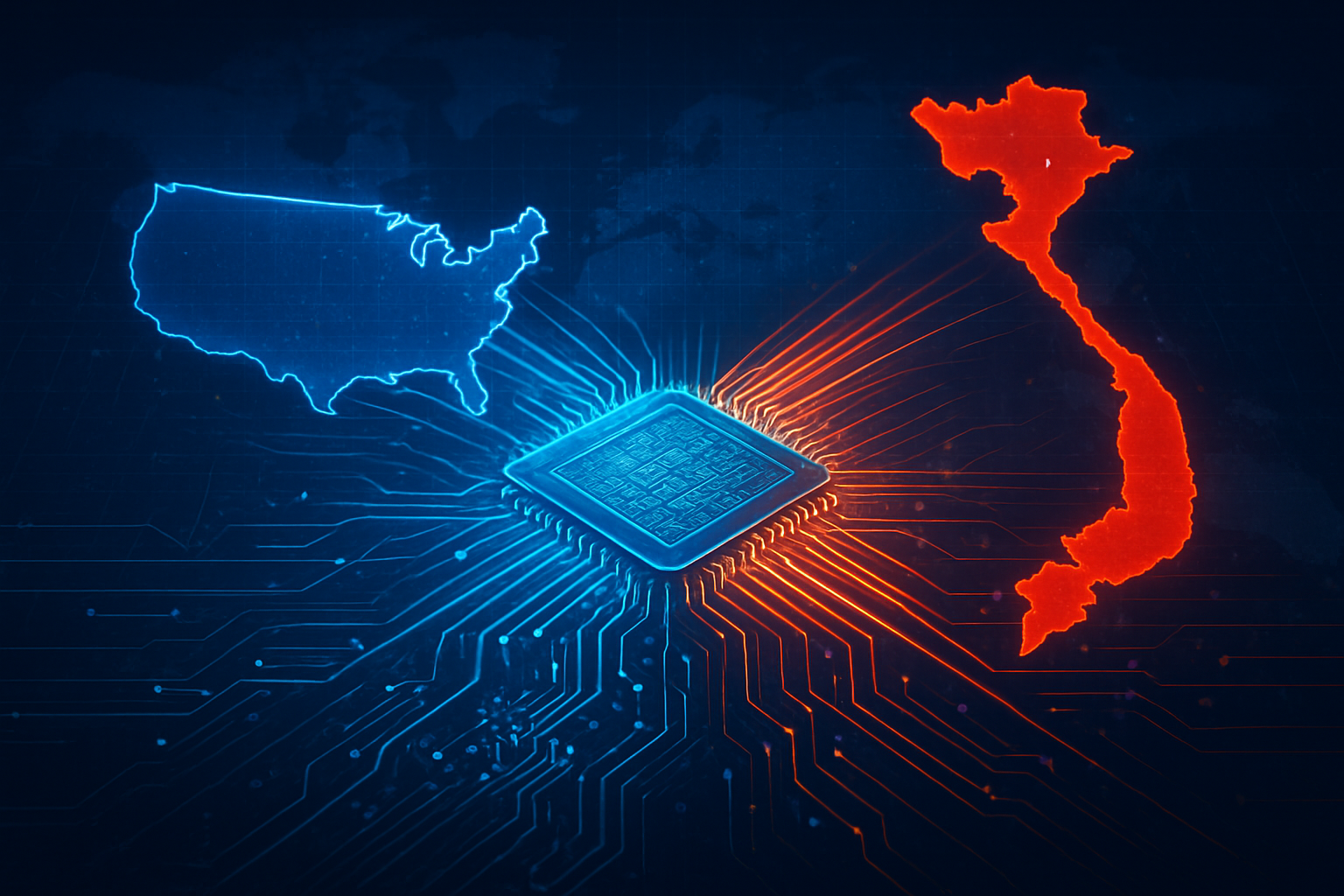
    In a significant realignment of global technology power, the United States and Vietnam have solidified a comprehensive strategic partnership aimed at fortifying the semiconductor supply chain and drastically reducing reliance on existing manufacturing hubs. This burgeoning alliance, which gained substantial momentum throughout 2023 and 2024, represents a pivotal moment for both nations, promising to reshape the landscape of semiconductor production, foster economic resilience, and deepen geopolitical ties. The collaboration is a direct response to the urgent need for supply chain diversification, driven by recent geopolitical tensions and the lessons learned from pandemic-induced disruptions.

    The immediate significance of this partnership lies in its potential to create a more robust and geographically distributed semiconductor ecosystem. For the United States, it offers a crucial pathway to enhance national security and economic stability by securing access to vital microchips. For Vietnam, it represents an unparalleled opportunity to ascend as a major player in the high-tech manufacturing sector, attracting substantial foreign investment, fostering advanced technological capabilities, and cultivating a highly skilled workforce, aligning with its ambitious goal of becoming a regional technology hub by 2050.

    Deepening the Silicon Ties: Technicalities and Strategic Shifts

    The strategic push between the US and Vietnam is underpinned by a series of concrete agreements and initiatives, marking a significant departure from previous approaches to global semiconductor manufacturing. A pivotal moment occurred in September 2023, when US President Joe Biden's visit to Hanoi elevated bilateral relations to a "Comprehensive Strategic Partnership." This visit formalized a deal for semiconductor and mineral procurement and saw both nations pledge support for the "rapid development of Vietnam's semiconductor ecosystem." A Memorandum of Cooperation on Semiconductor Supply Chains, Workforce and Ecosystem Development was signed, immediately followed by an initial US seed funding of $2 million for critical workforce development initiatives.

    Technically, the partnership leverages the US CHIPS and Science Act of 2022, particularly the International Technology Security and Innovation (ITSI) Fund, which allocates $500 million over five years to enhance semiconductor capabilities globally. Vietnam, with its established strengths in semiconductor assembly, testing, and packaging (ATP), is a prime beneficiary. The collaboration involves jointly developing hands-on teaching labs and training courses for ATP, aiming to train 50,000 semiconductor engineers by 2030. Arizona State University (ASU) has been awarded $13.8 million by the US Department of State to lead talent development and public policy recommendations, offering free online courses and certification opportunities through its ITSI-SkillsAccelerator portal. This proactive investment in human capital and infrastructure distinguishes this partnership, moving beyond mere trade agreements to foundational ecosystem building.

    This strategic shift differs significantly from previous approaches that often concentrated manufacturing in a few highly specialized regions. By actively investing in Vietnam's nascent yet rapidly developing capabilities, the US is not just diversifying but also helping to build an entirely new, resilient node in the global supply chain. Initial reactions from the AI research community and industry experts have been largely optimistic, viewing it as a pragmatic step towards de-risking supply chains and fostering innovation through broader collaboration. However, some experts caution that while Vietnam holds immense potential, it will require sustained investment and a clear strategic roadmap to fully meet the high expectations for advanced, secure semiconductor production.

    Corporate Ripples: Impact on AI Companies and Tech Giants

    This elevated partnership carries profound implications for AI companies, tech giants, and startups alike. Major global semiconductor corporations have already signaled their confidence in Vietnam's potential through significant investments. Intel (NASDAQ: INTC), for example, operates its largest global facility for semiconductor assembly and testing in Vietnam, a testament to the country's existing capabilities and strategic importance. Other industry titans like Samsung and Micron Technology (NASDAQ: MU) have also made substantial commitments, positioning themselves to benefit directly from Vietnam's growing role in the supply chain.

    For these companies, the partnership offers a strategic advantage by diversifying their manufacturing footprint and mitigating risks associated with geopolitical instability or natural disasters in traditional production hubs. It provides access to a growing pool of skilled labor, preferential investment incentives offered by the Vietnamese government—such as tax policies and streamlined land access—and a supportive policy environment designed to attract foreign direct investment. This competitive advantage extends to enhanced supply chain resilience, allowing for more stable and predictable production cycles, which is crucial for the high-demand, high-innovation sectors like AI.

    The potential disruption to existing products or services is less about immediate displacement and more about strategic evolution. Companies that can leverage Vietnam's emerging capabilities will gain market positioning and strategic advantages, potentially leading to faster time-to-market for new chips and technologies. Vietnamese companies, such as FPT Semiconductor, which has already launched the country's first "Made in Vietnam" semiconductor chip, stand to benefit immensely. They gain access to advanced US technology, expertise, and a global market, fostering local innovation and creating a vibrant domestic tech ecosystem. Startups in both countries could find new opportunities in specialized component manufacturing, design services, and AI-driven optimization of semiconductor processes.

    Broader Significance: Geopolitics, Resilience, and the AI Frontier

    This strategic semiconductor alliance between the US and Vietnam fits squarely into the broader AI landscape and ongoing global trends towards supply chain de-risking and technological sovereignty. It represents a significant step in the US's "friend-shoring" strategy, aimed at building secure and resilient supply chains with trusted partners. For Vietnam, it solidifies its position as a crucial player in the global technology arena, balancing its foreign policy to collaborate with various tech powers while strategically aligning with the US.

    The impacts extend beyond mere economics. Geopolitically, it strengthens ties between the US and a key Southeast Asian nation, providing a counterweight to regional influences and enhancing stability. For the global semiconductor industry, it means a more diversified and resilient supply chain, reducing the vulnerability of critical technologies to single points of failure. This increased resilience is paramount for the continuous advancement of AI, which relies heavily on a steady supply of cutting-edge processors. Potential concerns, however, include the speed and scale at which Vietnam can truly ramp up advanced manufacturing capabilities, as well as the need for robust intellectual property protections and cybersecurity measures to safeguard sensitive technologies.

    Comparisons to previous AI milestones reveal a shift in focus from purely computational breakthroughs to the foundational infrastructure that supports them. While milestones like the development of large language models captivated headlines, this partnership addresses the underlying hardware dependency, which is equally critical for AI's sustained growth. It acknowledges that the future of AI is not just about algorithms but also about the secure and reliable production of the silicon brains that power them. The alliance is a proactive measure to ensure that the physical infrastructure for AI innovation remains robust and unconstrained.

    The Road Ahead: Future Developments and Expert Predictions

    Looking ahead, the US-Vietnam semiconductor partnership is poised for several key developments in the near and long term. Near-term focus will remain on the ambitious workforce development goals, particularly the target of training 50,000 semiconductor engineers by 2030. This will involve continued investment in educational programs, vocational training, and the establishment of advanced research centers. The ongoing workshops and policy dialogues, such as those launched in September 2024 as part of the ITSI Fund initiative, will continue to refine Vietnam's regulatory framework and investment incentives to attract more foreign direct investment.

    In the long term, experts predict that Vietnam will progressively move beyond assembly, testing, and packaging into more complex stages of semiconductor manufacturing, including chip design and potentially even fabrication, though the latter presents significant capital and technological hurdles. Potential applications and use cases on the horizon include specialized chip manufacturing for AI, IoT, and automotive industries, leveraging Vietnam's cost-effective manufacturing capabilities and burgeoning engineering talent. The collaboration could also foster joint R&D projects, leading to innovations in materials science and advanced packaging technologies.

    Challenges that need to be addressed include scaling up infrastructure rapidly, ensuring a consistent supply of clean energy, and maintaining a competitive regulatory environment. Experts also highlight the importance of intellectual property protection and cybersecurity as Vietnam integrates more deeply into the global semiconductor ecosystem. What experts predict will happen next is a gradual but steady increase in Vietnam's contribution to the global semiconductor output, particularly in niche areas and advanced packaging, making it an indispensable link in the diversified supply chain. The partnership is expected to serve as a model for how developed nations can collaborate with emerging economies to build resilient technological ecosystems.

    A New Chapter in Global Tech: Comprehensive Wrap-Up

    The elevated strategic partnership between the United States and Vietnam to strengthen semiconductor supply chains marks a watershed moment in global technology and geopolitics. The key takeaways include a deliberate push for supply chain diversification, significant US investment through the CHIPS Act's ITSI Fund, Vietnam's strategic emergence as a semiconductor hub, and a strong emphasis on workforce development and ecosystem building. This development's significance in AI history is profound, as it addresses the foundational hardware infrastructure critical for AI's continued growth and resilience, moving beyond purely software-centric advancements.

    This alliance is a testament to the proactive measures being taken to safeguard the future of technology against geopolitical risks and economic disruptions. It underscores the understanding that a robust AI future requires not just intelligent algorithms but also secure, diversified, and resilient manufacturing capabilities for the microchips that power them.

    In the coming weeks and months, observers should watch for further announcements regarding investment incentives from the Vietnamese government, progress reports on the workforce development programs, and potential new partnerships between US and Vietnamese companies. The sustained commitment from both nations will be crucial in realizing the full potential of this strategic collaboration, ultimately shaping a more secure and innovative future for the global tech industry.


    This content is intended for informational purposes only and represents analysis of current AI developments.

    TokenRing AI delivers enterprise-grade solutions for multi-agent AI workflow orchestration, AI-powered development tools, and seamless remote collaboration platforms.
    For more information, visit https://www.tokenring.ai/.

  • Silicon’s Unyielding Ascent: How AI Fuels Semiconductor Resilience Amidst Economic Headwinds

    Silicon’s Unyielding Ascent: How AI Fuels Semiconductor Resilience Amidst Economic Headwinds

    October 6, 2025 – The semiconductor sector is demonstrating unprecedented resilience and robust growth, primarily propelled by the insatiable demand for Artificial Intelligence (AI) and high-performance computing (HPC). This formidable strength persists even as the broader economy, reflected in the S&P 500, navigates uncertainties like an ongoing U.S. government shutdown. The industry, projected to reach nearly $700 billion in global sales this year with an anticipated 11% growth, remains a powerful engine of technological advancement and a significant driver of market performance.

    The immediate significance of this resilience is profound. The semiconductor industry, particularly AI-centric companies, is a leading force in driving market momentum. Strategic partnerships, such as OpenAI's recent commitment to massive chip purchases from AMD, underscore the critical role semiconductors play in advancing AI and reshaping the tech landscape, solidifying the sector as the bedrock of modern technological advancement.

    The AI Supercycle: Technical Underpinnings of Semiconductor Strength

    The semiconductor industry is undergoing a profound transformation, often termed the "AI Supercycle," where AI not only fuels unprecedented demand for advanced chips but also actively participates in their design and manufacturing. This symbiotic relationship is crucial for enhancing resilience, improving efficiency, and accelerating innovation across the entire value chain. AI-driven solutions are dramatically reducing chip design cycles, optimizing circuit layouts, and rigorously enhancing verification and testing to detect design flaws with unprecedented accuracy, with companies like Synopsys reporting a 75% reduction in design timelines.

    In fabrication plants, AI and Machine Learning (ML) are game-changers for yield optimization. They enable predictive maintenance to avert costly downtime, facilitate real-time process adjustments for higher precision, and employ advanced defect detection systems. For example, TSMC (NYSE: TSM) has boosted its 3nm production line yields by 20% through AI-driven defect detection. NVIDIA's (NASDAQ: NVDA) NV-Tesseract and NIM technologies further enhance anomaly detection in fabs, minimizing production losses. This AI integration extends to supply chain optimization, achieving over 90% demand forecasting accuracy and reducing inventory holding costs by 15-20% by incorporating global economic indicators and real-time consumer behavior.

    The relentless demands of AI workloads necessitate immense computational power, vast memory bandwidth, and ultra-low latency, driving the development of specialized chip architectures far beyond traditional CPUs. Current leading AI chips include NVIDIA's Blackwell Ultra GPU (expected H2 2025) with 288 GB HBM3e and enhanced FP4 inference, and AMD's (NASDAQ: AMD) Instinct MI300 series, featuring the MI325X with 256 GB HBM3E and 6 TB/s bandwidth, offering 6.8x AI training performance over its predecessor. Intel's (NASDAQ: INTC) Gaudi 3 AI Accelerator, fabricated on TSMC's 5nm process, boasts 128 GB HBM2e with 3.7 TB/s bandwidth and 1.8 PFLOPs of FP8 and BF16 compute power, claiming significant performance and power efficiency gains over NVIDIA's H100 on certain models. High-Bandwidth Memory (HBM), including HBM3e and the upcoming HBM4, is critical, with SK hynix sampling 16-Hi HBM3e chips in 2025.

    These advancements differ significantly from previous approaches through specialization (purpose-built ASICs, NPUs, and highly optimized GPUs), advanced memory architecture (HBM), fine-grained precision support (INT8, FP8), and sophisticated packaging technologies like chiplets and CoWoS. The active role of AI in design and manufacturing, creating a self-reinforcing cycle, fundamentally shifts the innovation paradigm. The AI research community and industry experts overwhelmingly view AI as an "indispensable tool" and a "game-changer," recognizing an "AI Supercycle" driving unprecedented market growth, with AI chips alone projected to exceed $150 billion in sales in 2025. However, a "precision shortage" of advanced AI chips, particularly in sub-11nm geometries and advanced packaging, persists as a key bottleneck.

    Corporate Beneficiaries and Competitive Dynamics

    The AI-driven semiconductor resilience is creating clear winners and intensifying competition among tech giants and specialized chipmakers.

    NVIDIA (NASDAQ: NVDA) remains the undisputed market leader and primary beneficiary, with its market capitalization soaring past $4.5 trillion. The company commands an estimated 70-80% market share in new AI data center spending, with its GPUs being indispensable for AI model training. NVIDIA's integrated hardware and software ecosystem, particularly its CUDA platform, provides a significant competitive moat. Data center AI revenue is projected to reach $172 billion by 2025, with its AI PC business also experiencing rapid growth.

    Advanced Micro Devices (NASDAQ: AMD) is rapidly emerging as NVIDIA's chief competitor. A monumental strategic partnership with OpenAI, announced in October 2025, involves deploying up to 6 gigawatts of AMD Instinct GPUs for next-generation AI infrastructure. This focus on inference workloads and strong partnerships could position AMD to capture 15-20% of the estimated $165 billion AI chip market by 2030, with $3.5 billion in AI accelerator orders for 2025.

    Intel (NASDAQ: INTC), while facing challenges in the high-end AI chip market, is pursuing its IDM 2.0 strategy and benefiting from U.S. CHIPS Act funding. Intel aims to deliver full-stack AI solutions and targets the growing edge AI market. A strategic development includes NVIDIA's $5 billion investment in Intel stock, with Intel building NVIDIA-custom x86 CPUs for AI infrastructure. TSMC (NYSE: TSM) is the critical foundational partner, manufacturing chips for NVIDIA, AMD, Apple (NASDAQ: AAPL), Qualcomm (NASDAQ: QCOM), and Broadcom (NASDAQ: AVGO). Its revenue surged over 40% year-over-year in early 2025, with AI applications driving 60% of its Q2 2025 revenue. Samsung Electronics (KRX: 005930) is aggressively expanding its foundry business, positioning itself as a "one-stop shop" for AI chip development by integrating memory, foundry services, and advanced packaging.

    Hyperscalers like Google (NASDAQ: GOOGL), Microsoft (NASDAQ: MSFT), and Amazon (NASDAQ: AMZN) are central to the AI boom, with their collective annual investment in AI infrastructure projected to triple to $450 billion by 2027. Microsoft is seeing significant AI monetization, with AI-driven revenue up 175% year-over-year. However, Microsoft has adjusted its internal AI chip roadmap, highlighting challenges in competing with industry leaders. Broadcom (NASDAQ: AVGO) and Marvell Technology (NASDAQ: MRVL) are also key beneficiaries, with AI sales surging for Broadcom, partly due to a $10 billion custom chip order linked to OpenAI. AI is expected to account for 40-50% of revenue for both companies. The competitive landscape is also shaped by the rise of custom silicon, foundry criticality, memory innovation, and the importance of software ecosystems.

    Broader Implications and Geopolitical Undercurrents

    The AI-driven semiconductor resilience extends far beyond corporate balance sheets, profoundly impacting the broader AI landscape, geopolitical stability, and even environmental considerations. The "AI Supercycle" signifies a fundamental reshaping of the technological landscape, where generative AI, HPC, and edge AI are driving exponential demand for specialized silicon across every sector. The global semiconductor market is projected to reach approximately $800 billion in 2025, on track for a $1 trillion industry by 2030.

    The economic impact is significant, with increased profitability for companies with AI exposure and a reshaping of global supply chain strategies. Technologically, AI is accelerating chip design, cutting timelines from months to weeks, and enabling the creation of more efficient and innovative chip designs, including the exploration of neuromorphic and quantum computing. Societally, the pervasive integration of AI-enabled semiconductors is driving innovation across industries, from AI-powered consumer devices to advanced diagnostics in healthcare and autonomous systems.

    However, this rapid advancement is not without its concerns. Intense geopolitical competition, particularly between the United States and China, is a major concern. Export controls, trade restrictions, and substantial investments in domestic semiconductor production globally highlight the strategic importance of this sector. The high concentration of advanced chip manufacturing in Taiwan (TSMC) and South Korea (Samsung) creates significant vulnerabilities and strategic chokepoints, making the supply chain susceptible to disruptions and driving "technonationalism." Environmental concerns also loom large, as the production of AI chips is extremely energy and water-intensive, leading to substantial carbon emissions and a projected 3% contribution to total global emissions by 2040 if current trends persist. A severe global talent shortage further threatens sustained progress.

    Compared to previous AI milestones, the current "AI Supercycle" represents a distinct phase. Unlike the broad pandemic-era chip shortage, the current constraints are highly concentrated on advanced AI chips and their cutting-edge manufacturing processes. This era elevates semiconductor supply chain resilience from a niche industry concern to an urgent, strategic imperative, directly impacting national security and a nation's capacity for AI leadership, a level of geopolitical tension and investment arguably unprecedented.

    The Road Ahead: Future Developments in Silicon and AI

    The AI-driven semiconductor market anticipates a sustained "supercycle" of expansion, with significant advancements expected in the near and long term, fundamentally transforming computing paradigms and AI integration.

    In the near term (2025-2027), the global AI chip market is projected for significant growth, with sales potentially reaching $700 billion in 2025. Mass production of 2nm chips is scheduled to begin in late 2025, followed by A16 (1.6nm) for data center AI and HPC by late 2026. Demand for HBM, including HBM3E and HBM4, is skyrocketing, with Samsung accelerating its HBM4 development for completion by H2 2025. There's a strong trend towards custom AI chips developed by hyperscalers and enterprises, and Edge AI is gaining significant traction with AI-enabled PCs and mobile devices expanding rapidly.

    Longer term (2028-2035 and beyond), the global semiconductor market is projected to reach $1 trillion by 2030, with the AI chip market potentially exceeding $400 billion by 2030. The roadmap includes A14 (1.4nm) for mass production in 2028. Beyond traditional silicon, emerging architectures like neuromorphic computing, photonic computing (expected commercial viability by 2028), and quantum computing are poised to offer exponential leaps in efficiency and speed. TSMC forecasts a proliferation of "physical AI," with 1.3 billion AI robots globally by 2035, necessitating pushing AI capabilities to every edge device. This will be accompanied by an unprecedented expansion of fabrication capacity, with 105 new fabs expected to come online through 2028, and nearshoring efforts maturing between 2027 and 2029.

    Potential applications are vast, spanning data centers and cloud computing, edge AI (autonomous vehicles, industrial automation, AR, IoT, AI-enabled PCs/smartphones), healthcare (diagnostics, personalized treatment), manufacturing, energy management, defense, and more powerful generative AI models. However, significant challenges remain, including technical hurdles like heat dissipation, memory bandwidth, and design complexity at nanometer scales. Economic challenges include the astronomical costs of fabs and R&D, supply chain vulnerabilities, and the massive energy consumption of AI. Geopolitical and regulatory challenges, along with a severe talent shortage, also need addressing. Experts predict sustained growth, market dominance by AI chips, pervasive AI impact (transforming 40% of daily work tasks by 2028), and continued innovation in architectures, including "Sovereign AI" initiatives by governments.

    A New Era of Silicon Dominance

    The AI-driven semiconductor market is navigating a period of intense growth and transformation, exhibiting significant resilience driven by insatiable AI demand. This "AI Supercycle" marks a pivotal moment in AI history, fundamentally reshaping the technological landscape and positioning the semiconductor industry at the core of the digital economy's evolution. The industry's ability to overcome persistent supply chain fragilities, geopolitical pressures, and talent shortages through strategic innovation and diversification will define its long-term impact on AI's trajectory and the global technological landscape.

    Key takeaways include the projected growth towards a $1 trillion market by 2030, the targeted scarcity of advanced AI chips, escalating geopolitical tensions driving regionalized manufacturing, and the critical global talent shortage. AI itself has become an indispensable tool for enhancing chip design, manufacturing, and supply chain management, creating a virtuous cycle of innovation. While economic benefits are heavily concentrated among a few leading companies, the long-term impact promises transformative advancements in materials, architectures, and energy-efficient solutions. However, concerns about market overvaluation, ethical AI deployment, and the physical limits of transistor scaling remain pertinent.

    In the coming weeks and months, watch for the ramp-up of 2nm and 3nm chip production, expansion of advanced packaging capacity, and the market reception of AI-enabled consumer electronics. Further geopolitical developments and strategic alliances, particularly around securing chip allocations and co-development, will be crucial. Monitor talent development initiatives and how competitors continue to challenge NVIDIA's dominance. Finally, keep an eye on innovations emphasizing energy-efficient chip designs and improved thermal management solutions as the immense power demands of AI continue to grow.


    This content is intended for informational purposes only and represents analysis of current AI developments.

    TokenRing AI delivers enterprise-grade solutions for multi-agent AI workflow orchestration, AI-powered development tools, and seamless remote collaboration platforms.
    For more information, visit https://www.tokenring.ai/.