Tag: Electric Vehicles

  • The Efficiency Frontier: How AI-Driven Silicon Carbide and Gallium Nitride are Redefining the Electric Vehicle

    The Efficiency Frontier: How AI-Driven Silicon Carbide and Gallium Nitride are Redefining the Electric Vehicle

    The global automotive industry has reached a pivotal inflection point as of late 2025, driven by a fundamental shift in the materials that power our vehicles. The era of traditional silicon-based power electronics is rapidly drawing to a close, replaced by a new generation of "wide-bandgap" (WBG) semiconductors: Silicon Carbide (SiC) and Gallium Nitride (GaN). This transition is not merely a hardware upgrade; it is a sophisticated marriage of advanced material science and artificial intelligence that is enabling the 800-volt architectures and 500-mile ranges once thought impossible for mass-market electric vehicles (EVs).

    This technological leap comes at a critical time. As of December 22, 2025, the EV market has shifted its focus from raw battery capacity to "efficiency-first" engineering. By utilizing AI-optimized SiC and GaN components, automakers are achieving up to 99% inverter efficiency, effectively adding 30 to 50 miles of range to vehicles without increasing the size—or the weight—of the battery pack. This "silent revolution" in the drivetrain is what finally allows EVs to achieve price and performance parity with internal combustion engines across all vehicle segments.

    The Physics of Performance: Breaking the Silicon Ceiling

    The technical superiority of SiC and GaN stems from their wide bandgap—a physical property that allows these materials to operate at much higher voltages, temperatures, and frequencies than standard silicon. While traditional silicon has a bandgap of approximately 1.1 electron volts (eV), SiC sits at 3.3 eV and GaN at 3.4 eV. In practical terms, this means these semiconductors can withstand electric fields ten times stronger than silicon, allowing for thinner device layers and significantly lower internal resistance.

    In late 2025, the industry has standardized around 800V architectures, a move made possible by these materials. High-voltage systems allow for thinner wiring—reducing vehicle weight—and enable "ultra-fast" charging sessions that can replenish 80% of a battery in under 15 minutes. Furthermore, the higher switching frequencies of GaN, which can now reach the megahertz range in traction inverters, allow for much smaller passive components like inductors and capacitors. This has led to the "shrinking" of the power electronics block; a 2025-model traction inverter is roughly 40% smaller and 50% lighter than its 2021 predecessor.

    The integration of AI has been the "secret sauce" in mastering these difficult-to-manufacture materials. Throughout 2025, companies like Infineon Technologies (OTCMKTS: IFNNY) have utilized Convolutional Neural Networks (CNNs) to achieve a breakthrough in 300mm GaN-on-Silicon manufacturing. By using AI-driven defect classification, Infineon has reached 99% accuracy in identifying nanoscale lattice mismatches during the epitaxy process, a feat that was previously the primary bottleneck to mass-market GaN adoption. Initial reactions from the research community suggest that this 300mm milestone will drop the cost of GaN power chips by nearly 50% by the end of 2026.

    Market Dynamics: A New Hierarchy of Power

    The shift to WBG semiconductors has fundamentally reshaped the competitive landscape for chipmakers and OEMs alike. STMicroelectronics (NYSE: STM) currently maintains the largest market share in the SiC space, largely due to its long-standing partnership with Tesla (NASDAQ: TSLA). However, the market saw a massive shakeup in mid-2025 when Wolfspeed (NYSE: WOLF) emerged from a strategic Chapter 11 restructuring. Now operating as a "pure-play" SiC powerhouse, Wolfspeed has pivoted its focus toward 200mm wafer production at its Mohawk Valley fab, recently securing a massive multi-year supply agreement with Toyota for their next-generation e-mobility platforms.

    Meanwhile, ON Semiconductor (NASDAQ: ON), under its EliteSiC brand, has aggressively captured the Asian market. Their recent partnership with Xiaomi for the YU7 SUV highlights a growing trend: the "Vertical GaN" (vGaN) breakthrough. By using AI to optimize the vertical structure of GaN crystals, ON Semi has created chips that handle the high-power loads of heavy SUVs—a domain previously reserved exclusively for SiC. This creates a new competitive front between SiC and GaN, potentially disrupting the established product roadmaps of major power electronics suppliers.

    Tesla, ever the industry disruptor, has taken a different strategic path. In late 2025, the company revealed it has successfully reduced the SiC content in its "Next-Gen" platform by 75% without sacrificing performance. This was achieved through "Cognitive Power Electronics"—an AI-driven gate driver system that uses real-time machine learning to adjust switching frequencies based on driving conditions. This software-centric approach allows Tesla to use fewer, smaller chips, giving them a significant cost advantage over legacy manufacturers who are still reliant on high volumes of raw WBG material.

    The AI Connection: From Material Discovery to Real-Time Management

    The significance of the SiC and GaN transition extends far beyond the hardware itself; it represents the first major success of AI-driven material science. Throughout 2024 and 2025, researchers have utilized Neural Network Potentials (NNPs), such as the PreFerred Potential (PFP) model, to simulate atomic interactions in semiconductor substrates. This AI-led approach accelerated the discovery of new high-k dielectrics for SiC MOSFETs, a process that would have taken decades using traditional trial-and-error laboratory methods.

    Beyond the factory floor, AI is now embedded directly into the vehicle's power management system. Modern Battery Management Systems (BMS), such as those found in the 2025 Hyundai (OTCMKTS: HYMTF) IONIQ 5, use Recurrent Neural Networks (RNNs) to monitor the "State of Health" (SOH) of individual power transistors. These systems can predict a semiconductor failure up to three months in advance by analyzing subtle deviations in thermal signatures and switching transients. This "predictive maintenance" for the drivetrain is a milestone that mirrors the evolution of jet engine monitoring in the aerospace industry.

    However, this transition is not without concerns. The reliance on complex AI models to manage high-voltage power electronics introduces new cybersecurity risks. Industry experts have warned that a "malicious firmware update" targeting the AI-driven gate drivers could theoretically cause a catastrophic failure of the inverter. As a result, 2025 has seen a surge in "Secure-BMS" startups focusing on hardware-level encryption for the data streams flowing between the battery cells and the WBG power modules.

    The Road Ahead: 2026 and Beyond

    Looking toward 2026, the industry expects the "GaN-ification" of the on-board charger (OBC) and DC-DC converter to be nearly 100% complete in new EV models. The next frontier is the integration of WBG materials into wireless charging pads. AI models are currently being trained to manage the complex electromagnetic fields required for high-efficiency wireless power transfer, with initial 11kW systems expected to debut in premium German EVs by late next year.

    The primary challenge remaining is the scaling of 300mm manufacturing. While Infineon has proven the concept, the capital expenditure required to transition the entire industry away from 150mm and 200mm lines is immense. Experts predict a "two-tier" market for the next few years: premium vehicles utilizing AI-optimized 300mm GaN and SiC for maximum efficiency, and budget EVs utilizing "hybrid inverters" that mix traditional silicon IGBTs with small amounts of SiC to balance cost.

    Furthermore, as AI compute loads within the vehicle increase—driven by Level 4 autonomous driving systems—the power demand of the "AI brain" itself is becoming a factor. In late 2025, NVIDIA (NASDAQ: NVDA) and MediaTek announced a joint venture to develop WBG-based power delivery modules specifically for AI chips, ensuring that the energy saved by the SiC drivetrain isn't immediately consumed by the car's self-driving computer.

    A New Foundation for Electrification

    The transition to Silicon Carbide and Gallium Nitride marks the end of the "experimental" phase of electric mobility. By leveraging the unique physical properties of these wide-bandgap materials and the predictive power of artificial intelligence, the automotive industry has solved the twin problems of range anxiety and slow charging. The developments of 2025 have proven that the future of the EV is not just about bigger batteries, but about smarter, more efficient power conversion.

    In the history of AI, this period will likely be remembered as the moment when artificial intelligence moved from the "cloud" to the "core" of physical infrastructure. The ability to design, manufacture, and manage power at the atomic level using machine learning has fundamentally changed our relationship with energy. As we move into 2026, the industry will be watching closely to see if the cost reductions promised by 300mm manufacturing can finally bring $25,000 high-performance EVs to the global mass market.

    For now, the message is clear: the silicon age of the automobile is over. The WBG era, powered by AI, has begun.


    This content is intended for informational purposes only and represents analysis of current AI developments.

    TokenRing AI delivers enterprise-grade solutions for multi-agent AI workflow orchestration, AI-powered development tools, and seamless remote collaboration platforms.
    For more information, visit https://www.tokenring.ai/.
  • Silicon Sovereignty: Tata and ROHM Forge Strategic Alliance to Power India’s Semiconductor Revolution

    Silicon Sovereignty: Tata and ROHM Forge Strategic Alliance to Power India’s Semiconductor Revolution

    In a landmark development for the global electronics supply chain, Tata Electronics has officially entered into a strategic partnership with Japan’s ROHM Co., Ltd. (TYO: 6963) to manufacture power semiconductors in India. Announced today, December 22, 2025, this collaboration marks a pivotal moment in India’s ambitious journey to transition from a software-centric economy to a global hardware and semiconductor manufacturing powerhouse. The deal focuses on the joint development and production of high-efficiency power devices, specifically targeting the burgeoning electric vehicle (EV) and industrial automation sectors.

    This partnership is not merely a bilateral agreement; it is the cornerstone of India’s broader strategy to secure its technological sovereignty. By integrating ROHM’s world-class expertise in wide-bandgap semiconductors with the massive industrial scale of the Tata Group, India is positioning itself to capture a significant share of the $80 billion global power semiconductor market. The move is expected to drastically reduce the nation’s reliance on imported silicon components, providing a stable, domestic supply chain for Indian automotive giants like Tata Motors (NSE: TATAMOTORS) and green energy leaders like Tata Power (NSE: TATAPOWER).

    Technical Breakthroughs: Silicon Carbide and the Future of Power Efficiency

    The technical core of the Tata-ROHM alliance centers on the manufacturing of advanced power discrete components. Initially, the partnership will focus on the assembly and testing of automotive-grade Silicon (Si) MOSFETs—specifically the Nch 100V, 300A variants—designed for high-current applications in electric drivetrains. However, the true disruptive potential lies in the roadmap for "Wide-Bandgap" (WBG) materials, including Silicon Carbide (SiC) and Gallium Nitride (GaN). Unlike traditional silicon, SiC and GaN allow for higher voltage operation, faster switching speeds, and significantly better thermal management, which are essential for extending the range and reducing the charging times of modern EVs.

    This collaboration differs from previous semiconductor initiatives in India by focusing on the "power" segment rather than just logic chips. Power semiconductors are the "muscles" of electronic systems, managing how electricity is converted and distributed. By establishing a dedicated production line for these components at Tata’s new Outsourced Semiconductor Assembly and Test (OSAT) facility in Jagiroad, Assam, the partnership ensures that India can produce chips that are up to 50% more efficient than current standards. Industry experts have lauded the move, noting that ROHM’s proprietary SiC technology is among the most advanced in the world, and its transfer to Indian soil represents a major leap in domestic technical capability.

    Market Disruption: Shifting the Global Semiconductor Balance of Power

    The strategic implications for the global tech landscape are profound. For years, the semiconductor industry has been heavily concentrated in East Asia, leaving global markets vulnerable to geopolitical tensions and supply chain bottlenecks. The Tata-ROHM partnership, backed by the Indian government’s $10 billion India Semiconductor Mission (ISM), provides a viable "China Plus One" alternative for global OEMs. Major tech giants and automotive manufacturers seeking to diversify their sourcing will now look toward India as a high-tech manufacturing hub that offers both scale and competitive cost structures.

    Within India, the primary beneficiaries will be the domestic EV ecosystem. Tata Motors (NSE: TATAMOTORS), which currently dominates the Indian electric car market, will gain a first-mover advantage by integrating locally-produced, high-efficiency chips into its future vehicle platforms. Furthermore, the partnership poses a competitive challenge to established European and American power semiconductor firms. By leveraging India’s lower operational costs and ROHM’s engineering prowess, the Tata-ROHM venture could potentially disrupt the pricing models for power modules globally, forcing competitors to accelerate their own investments in emerging markets.

    A National Milestone: India’s Transition to a Global Chip Hub

    This announcement fits into a broader trend of "techno-nationalism," where nations are racing to build domestic chip capabilities to ensure economic and national security. The Tata-ROHM deal is the latest in a series of high-profile successes for the India Semiconductor Mission. It follows the massive ₹91,000 crore investment in the Dholera mega-fab, a joint venture between Tata Electronics and Powerchip Semiconductor Manufacturing Corp (TPE: 6770), and the entry of Micron Technology (NASDAQ: MU) into the Indian packaging space. Together, these projects signal that India has moved past the "planning" phase and is now in the "execution" phase of its semiconductor roadmap.

    However, the rapid expansion is not without its challenges. The industry remains concerned about the availability of specialized ultra-pure water and uninterrupted high-voltage power—critical requirements for semiconductor fabrication. Comparisons are already being made to the early days of China’s semiconductor rise, with analysts noting that India’s democratic framework and strong intellectual property protections may offer a more stable long-term environment for international partners. The success of the Tata-ROHM partnership will serve as a litmus test for whether India can successfully manage the complex logistics of high-tech manufacturing at scale.

    The Road Ahead: 2026 and the Leap Toward "Semicon 2.0"

    Looking toward 2026, the partnership is expected to move into full-scale mass production. The Jagiroad facility in Assam is projected to reach a daily output of 48 million chips by early next year, while the Dholera fab will begin pilot runs for 28nm logic chips. The next frontier for the Tata-ROHM collaboration will be the integration of Artificial Intelligence (AI) into the manufacturing process. AI-driven predictive maintenance and yield optimization are expected to be implemented at the Dholera plant, making it one of the most advanced "Smart Fabs" in the world.

    Beyond manufacturing, the Indian government is already preparing for "Semicon 2.0," a second phase of incentives that will likely double the current financial outlay to $20 billion. This phase will focus on the upstream supply chain, including specialized chemicals, gases, and wafer production. Experts predict that if the current momentum continues, India could account for nearly 10% of the global semiconductor assembly and testing market by 2030, fundamentally altering the geography of the digital age.

    Conclusion: A New Era for Indian Electronics

    The partnership between Tata Electronics and ROHM Co., Ltd. is more than a business deal; it is a declaration of intent. It signifies that India is no longer content with being the world’s back-office for software but is ready to build the physical foundations of the future. By securing a foothold in the critical power semiconductor market, India is ensuring that its transition to a green, electrified economy is built on a foundation of domestic innovation and manufacturing.

    As we move into 2026, the world will be watching the progress of the Jagiroad and Dholera facilities with intense interest. The success of these projects will determine whether India can truly become the "third pillar" of the global semiconductor industry, alongside East Asia and the West. For now, the Tata-ROHM alliance stands as a testament to the power of international collaboration in solving the world's most complex technological challenges.


    This content is intended for informational purposes only and represents analysis of current AI and semiconductor developments as of December 22, 2025.

    TokenRing AI delivers enterprise-grade solutions for multi-agent AI workflow orchestration, AI-powered development tools, and seamless remote collaboration platforms.
    For more information, visit https://www.tokenring.ai/.

  • The 800V Revolution: How Navitas Semiconductor is Electrifying the Future of AI and Mobility

    The 800V Revolution: How Navitas Semiconductor is Electrifying the Future of AI and Mobility

    As of December 19, 2025, the global energy landscape is undergoing a silent but high-voltage transformation, driven by the shift from legacy 400V systems to the 800VDC (Direct Current) standard. At the heart of this transition is Navitas Semiconductor (NASDAQ: NVTS), which has pivoted from a niche player in mobile fast-charging to a dominant force in high-power industrial and automotive infrastructure. By leveraging Wide Bandgap (WBG) materials—specifically Gallium Nitride (GaN) and Silicon Carbide (SiC)—Navitas is solving the "energy wall" problem that currently threatens the expansion of both Electric Vehicles (EVs) and massive AI "factories."

    The immediate significance of this development cannot be overstated. With 800V architectures, EVs are now achieving 10-80% charge times in under 18 minutes, while AI data centers are reducing their end-to-end power losses by up to 30%. This leap in efficiency is not merely an incremental improvement; it is a fundamental redesign of how electricity is managed at scale. Navitas’ recent announcement of its 800VDC power architecture for next-generation AI platforms, developed in strategic collaboration with NVIDIA (NASDAQ: NVDA), marks a watershed moment where power semiconductor technology becomes the primary bottleneck—or the primary enabler—of the AI revolution.

    The Technical Edge: GeneSiC and the 1200V GaN Breakthrough

    Navitas’ technical superiority in the 800V space stems from its unique "pure-play" focus on next-generation materials. While traditional silicon-based chips struggle with heat and energy loss at high voltages, Navitas’ GeneSiC and GaNSafe™ technologies thrive. The company's Gen-3 "Fast" (G3F) SiC MOSFETs are specifically optimized for 800V EV traction inverters, offering 20% lower resistance at high temperatures compared to industry incumbents. This allows for smaller, lighter cooling systems and a direct 5-10% increase in vehicle range.

    The most disruptive technical advancement in late 2025 is Navitas’ successful sampling of 1200V Gallium Nitride (GaN-on-Silicon) products. Historically, GaN was limited to lower voltages (under 650V), leaving the high-voltage 800V domain to Silicon Carbide. However, Navitas has broken this "voltage ceiling," allowing GaN’s superior switching speeds—up to 10 times faster than SiC—to be applied to 800V on-board chargers (OBCs) and DC-DC converters. This shift enables power densities of 3.5 kW/L, resulting in power electronics that are 30% smaller and lighter than previous generations.

    Furthermore, the introduction of the GaNSafe™ platform has addressed long-standing reliability concerns in high-power environments. By integrating drive, control, sensing, and protection into a single integrated circuit (IC), Navitas has achieved a short-circuit response time of just 350 nanoseconds. This level of integration eliminates "parasitic" energy losses that plague discrete component designs. In industrial applications, particularly the new 800VDC AI data center racks, Navitas’ IntelliWeave™ digital control technique has pushed peak efficiency to an unprecedented 99.3%, nearly reaching the theoretical limits of power conversion.

    Disruption in the Power Corridor: Market Positioning and Strategic Advantages

    The 800V revolution has significantly altered the competitive balance among semiconductor giants. While STMicroelectronics (NYSE: STM) remains the market share leader in SiC due to its deep-rooted partnerships with Tesla (NASDAQ: TSLA) and Volkswagen, Navitas is rapidly capturing the high-growth "innovation" segment. Navitas' agility has allowed it to secure a $2.4 billion design-win pipeline by the end of 2025, largely by targeting the "support systems" of EVs and the specialized power needs of AI infrastructure.

    In contrast, incumbents like Wolfspeed (NYSE: WOLF) have faced challenges in 2025, struggling with the high capital expenditures required to scale 200mm SiC wafer production. Navitas has avoided these "substrate wars" by utilizing a fab-lite model and focusing on GaN-on-Si, which can be manufactured in high volumes using existing silicon foundries like GlobalFoundries (NASDAQ: GFS). This manufacturing flexibility gives Navitas a strategic advantage in pricing and scalability as 800V adoption moves from luxury vehicles to mass-market platforms from Hyundai, Kia, and Geely.

    The most profound shift, however, is the pivot toward AI data centers. As AI GPUs like NVIDIA’s Rubin Ultra platform consume upwards of 1,000 watts per chip, traditional 54V power distribution has become inefficient due to massive copper requirements and heat. Navitas’ 800VDC architecture allows data centers to bypass multiple conversion stages, reducing copper cabling thickness by 45%. This has positioned Navitas as a critical partner for "AI Factory" builders, a sector where traditional power semiconductor companies like Infineon (OTC: IFNNY) are now racing to catch up with Navitas’ integrated GaN solutions.

    The Global Implications: Sustainability and the "Energy Wall"

    Beyond corporate balance sheets, the 800V revolution is a critical component of global sustainability goals. The "energy wall" is a real phenomenon in 2025; as AI and EVs scale, the demand on aging electrical grids has become a primary concern for policymakers. By reducing end-to-end energy losses by 30% in data centers and improving EV drivetrain efficiency, Navitas’ technology acts as a "virtual power plant," effectively increasing the capacity of the existing grid without building new generation facilities.

    This development fits into the broader trend of "Electrification of Everything," but with a focus on quality over quantity. Previous milestones in the semiconductor industry focused on computing power (Moore’s Law); the current era is defined by "Power Density Law." The ability to shrink a 22kW EV charger to the size of a shoebox or to power a multi-megawatt AI rack with 99.3% efficiency is the hardware foundation upon which the software-driven AI era must be built.

    However, this transition is not without concerns. The rapid shift to 800V creates a "charging gap" where legacy 400V infrastructure may become obsolete or require expensive boost-converters. Furthermore, the reliance on Wide Bandgap materials like SiC and GaN introduces new supply chain dependencies on materials like gallium and high-purity carbon, which are subject to geopolitical tensions. Despite these hurdles, the industry consensus is clear: the efficiency gains of 800V are too significant to ignore.

    The Horizon: 2000V Systems and Autonomous Power Management

    Looking toward 2026 and beyond, the industry is already eyeing the next frontier: 2000V systems for heavy-duty trucking and maritime transport. Navitas is expected to leverage its GeneSiC portfolio to enter the megawatt-scale charging market, where "Electric Highways" will require power levels far beyond what current passenger vehicle tech can provide. We are also likely to see the emergence of "AI-defined power," where machine learning models are embedded directly into Navitas' GaNFast ICs to predict load changes and optimize switching frequencies in real-time.

    Another area of intense development is the integration of 800V power electronics with solid-state batteries. Experts predict that the combination of Navitas’ high-speed switching and the thermal stability of solid-state cells will finally enable the "5-minute charge," matching the convenience of internal combustion engines. Challenges remain in thermal packaging and the long-term durability of 1200V GaN under extreme automotive vibrations, but the roadmap suggests these are engineering hurdles rather than fundamental physical barriers.

    A New Era for Power Electronics

    The 800VDC revolution, led by innovators like Navitas Semiconductor, represents a pivotal shift in the history of technology. It is the moment when power management moved from the "basement" of engineering to the "boardroom" of strategic importance. By bridging the gap between the massive energy demands of AI and the practical needs of global mobility, Navitas has cemented its role as an essential architect of the 21st-century energy economy.

    As we move into 2026, the key metrics to watch will be the speed of 800V infrastructure deployment and the volume of 1200V GaN shipments. For investors and industry observers, Navitas (NVTS) stands as a bellwether for the broader transition to a more efficient, electrified world. The "800V Revolution" is no longer a future prospect—it is the current reality, and it is charging ahead at full speed.


    This content is intended for informational purposes only and represents analysis of current AI and semiconductor developments.

    TokenRing AI delivers enterprise-grade solutions for multi-agent AI workflow orchestration, AI-powered development tools, and seamless remote collaboration platforms.
    For more information, visit https://www.tokenring.ai/.

  • Navitas Semiconductor Navigates Strategic Pivot Towards High-Growth AI and EV Markets Amidst Stock Volatility

    Navitas Semiconductor Navigates Strategic Pivot Towards High-Growth AI and EV Markets Amidst Stock Volatility

    Navitas Semiconductor (NASDAQ: NVTS), a leading innovator in gallium nitride (GaN) and silicon carbide (SiC) power semiconductors, is undergoing a significant strategic transformation, dubbed "Navitas 2.0." This pivot involves shifting focus from lower-margin consumer and mobile markets to high-power, high-growth segments like AI data centers, electric vehicles (EVs), and renewable energy infrastructure. This strategic realignment has profoundly impacted its recent market performance and stock fluctuations, with investor sentiment reflecting a cautious optimism for long-term growth despite near-term financial adjustments.

    The company's stock has shown remarkable volatility, surging 165% year-to-date in 2025, even as it faces anticipated revenue declines in the immediate future due to its deliberate exit from less profitable ventures. Navitas's immediate significance lies in its crucial role in enabling more efficient power conversion, particularly in the burgeoning AI data center market, where its GaN and SiC technologies are becoming indispensable for next-generation computing infrastructure.

    GaN and SiC: Powering the Future of High-Efficiency Electronics

    Navitas Semiconductor's core strength lies in its advanced gallium nitride (GaN) and silicon carbide (SiC) power ICs and discrete components, which are at the forefront of enabling next-generation power conversion. Unlike traditional silicon-based power semiconductors, GaN and SiC offer superior performance characteristics, including higher switching speeds, lower on-resistance, and reduced energy losses. These attributes are critical for applications demanding high power density and efficiency, such as fast chargers, data center power supplies, electric vehicle powertrains, and renewable energy inverters.

    The company's "Navitas 2.0" strategy specifically targets the deployment of these advanced materials in high-power, high-growth markets. For instance, Navitas is recognized for its GaNFast™ power ICs, which integrate GaN power FETs with drive, control, and protection features into a single, monolithic device. This integration simplifies design, reduces component count, and enhances reliability, offering a distinct advantage over discrete GaN solutions. In the SiC domain, Navitas is developing and sampling high-voltage SiC modules, including 2.3kV and 3.3kV devices, specifically for demanding applications like energy storage systems and industrial electrification.

    This approach significantly differs from previous reliance on the consumer electronics market, where profit margins are typically thinner and product lifecycles shorter. By focusing on enterprise and industrial applications, Navitas aims to leverage the inherent technical advantages of GaN and SiC to address critical pain points like power density and energy efficiency in complex systems. Initial reactions from the AI research community and power electronics industry experts have been largely positive, viewing GaN and SiC as essential technologies for the future, particularly given the escalating power demands of AI data centers. The selection of Navitas as a power semiconductor partner by NVIDIA for its next-generation 800V DC architecture in AI factory computing serves as a strong validation of Navitas's technological leadership and the market's recognition of its advanced solutions.

    Market Dynamics: Beneficiaries, Competition, and Strategic Positioning

    Navitas Semiconductor's strategic pivot towards high-power GaN and SiC solutions positions it to significantly benefit from the explosive growth in several key sectors. Companies investing heavily in AI infrastructure, electric vehicles, and renewable energy stand to gain from Navitas's ability to provide more efficient and compact power conversion. Notably, hyperscale data center operators and AI hardware manufacturers, such as NVIDIA (NASDAQ: NVDA) and other developers of AI accelerators, are direct beneficiaries, as Navitas's technology helps address the critical challenges of power delivery and thermal management in increasingly dense AI computing environments. The company's partnership with NVIDIA underscores its critical role in enabling the next generation of AI factories.

    The competitive landscape for Navitas is multifaceted, involving both established semiconductor giants and other specialized GaN/SiC players. Major tech companies like Infineon (ETR: IFX, OTCQX: IFNNY), STMicroelectronics (NYSE: STM), and Wolfspeed (NYSE: WOLF) are also heavily invested in GaN and SiC technologies. However, Navitas aims to differentiate itself through its GaNFast™ IC integration approach, offering a more complete and easy-to-implement solution compared to discrete components. This could potentially disrupt existing power supply designs that rely on more complex discrete GaN or SiC implementations. For startups in the power electronics space, Navitas's advancements could either present opportunities for collaboration or intensify competition, depending on their specific niche.

    Navitas's market positioning is strengthened by its strategic focus on specific high-growth applications where GaN and SiC offer distinct advantages. By moving away from the highly commoditized consumer mobile market, the company seeks higher-margin opportunities and more stable, long-term design wins. Its expanding ecosystem, including collaborations with GlobalFoundries (NASDAQ: GFS) for U.S.-based GaN technology and WT Microelectronics (TPE: 3036) for Asian distribution, further solidifies its strategic advantages. This network of partnerships aims to accelerate GaN adoption globally and ensure a robust supply chain, crucial for scaling its solutions in demanding enterprise and industrial markets.

    Broader Implications: Powering the AI Revolution and Beyond

    Navitas Semiconductor's advancements in GaN and SiC power semiconductors are not merely incremental improvements; they represent a fundamental shift in how power is managed in the broader AI landscape and other critical sectors. The increasing demand for computational power in AI, particularly for training large language models and running complex inference tasks, has led to a significant surge in energy consumption within data centers. Traditional silicon-based power solutions are reaching their limits in terms of efficiency and power density. GaN and SiC technologies, with their superior switching characteristics and reduced energy losses, are becoming indispensable for addressing this energy crisis, enabling smaller, lighter, and more efficient power supplies that can handle the extreme power requirements of AI accelerators.

    The impact of this shift extends far beyond data centers. In electric vehicles, GaN and SiC enable more efficient inverters and on-board chargers, leading to increased range and faster charging times. In renewable energy, they improve the efficiency of solar microinverters and energy storage systems, crucial for grid modernization and decarbonization efforts. These developments fit perfectly into broader trends of electrification, digitalization, and the pursuit of sustainability across industries.

    However, the widespread adoption of GaN and SiC also presents potential concerns. The supply chain for these relatively newer materials is still maturing compared to silicon, and any disruptions could impact production. Furthermore, the cost premium associated with GaN and SiC, while decreasing, can still be a barrier for some applications. Despite these challenges, the current trajectory suggests that GaN and SiC are on par with previous semiconductor milestones, such as the transition from germanium to silicon, in terms of their potential to unlock new levels of performance and efficiency. Their role in enabling the current AI revolution, which is heavily dependent on efficient power delivery, underscores their significance as a foundational technology for the next wave of technological innovation.

    The Road Ahead: Anticipated Developments and Challenges

    The future for Navitas Semiconductor, and indeed for the broader GaN and SiC power semiconductor market, is characterized by anticipated rapid growth and continuous innovation. In the near-term, Navitas expects to complete its strategic pivot, with management projecting Q4 2025 revenues to be the lowest point as it sheds lower-margin businesses. However, a healthier growth rate is expected to resume in late 2025 and accelerate significantly through 2027 and 2028, with substantial contributions from AI data centers and EV markets. The company's bidirectional GaN ICs, GaN BDS, launched in early 2025, are expected to ramp up in solar microinverters by late 2025, indicating new product cycles coming online.

    Long-term developments include the increasing adoption of 800-volt equipment in data centers, starting in 2026 and accelerating through 2030, which Navitas is well-positioned to capitalize on with its GaN and SiC solutions. Experts predict that the overall GaN and SiC device markets will continue robust annualized growth of 25% through 2032, highlighting the sustained demand for these efficient power technologies. Potential applications on the horizon include more advanced power solutions for robotics, industrial automation, and even future aerospace applications, where weight and efficiency are paramount.

    However, several challenges need to be addressed. Scaling manufacturing to meet the anticipated demand, further reducing the cost of GaN and SiC devices, and educating the broader engineering community on their optimal design and implementation are crucial. Competition from other wide-bandgap materials and ongoing advancements in silicon-based technologies could also pose challenges. Despite these hurdles, experts predict that the undeniable performance benefits and efficiency gains offered by GaN and SiC will drive their continued integration into critical infrastructure. What to watch for next includes Navitas's revenue rebound in 2027 and beyond, further strategic partnerships, and the expansion of its product portfolio into even higher power and voltage applications.

    Navitas's Strategic Resurgence: A New Era for Power Semiconductors

    Navitas Semiconductor's journey through 2025 and into the future marks a pivotal moment in the power semiconductor industry. The company's "Navitas 2.0" strategy, a decisive shift from low-margin consumer electronics to high-growth, high-power applications like AI data centers, EVs, and renewable energy, is a clear recognition of the evolving demands for energy efficiency and power density. While this transition has introduced near-term revenue pressures and stock volatility, the significant year-to-date stock surge of 165% reflects strong investor confidence in its long-term vision and its foundational role in powering the AI revolution.

    This development is profoundly significant in AI history, as the efficiency of power delivery is becoming as critical as computational power itself. Navitas's GaN and SiC technologies are not just components; they are enablers of the next generation of AI infrastructure, allowing for more powerful, compact, and sustainable computing. The validation from industry leaders like NVIDIA underscores the transformative potential of these materials. The challenges of scaling production, managing costs, and navigating a competitive landscape remain, but Navitas's strong cash position and strategic partnerships provide a solid foundation for continued innovation and market penetration.

    In the coming weeks and months, observers should closely watch for Navitas's Q4 2025 results as the anticipated low point in its revenue trajectory. Subsequent quarters will be crucial indicators of the success of its strategic pivot and the ramp-up of its GaN and SiC solutions in key markets. Further announcements regarding partnerships, new product introductions, and design wins in AI data centers, EVs, and renewable energy will provide insights into the company's progress and its long-term impact on the global energy and technology landscape. Navitas Semiconductor is not just riding the wave of technological change; it is actively shaping the future of efficient power.


    This content is intended for informational purposes only and represents analysis of current AI developments.

    TokenRing AI delivers enterprise-grade solutions for multi-agent AI workflow orchestration, AI-powered development tools, and seamless remote collaboration platforms.
    For more information, visit https://www.tokenring.ai/.
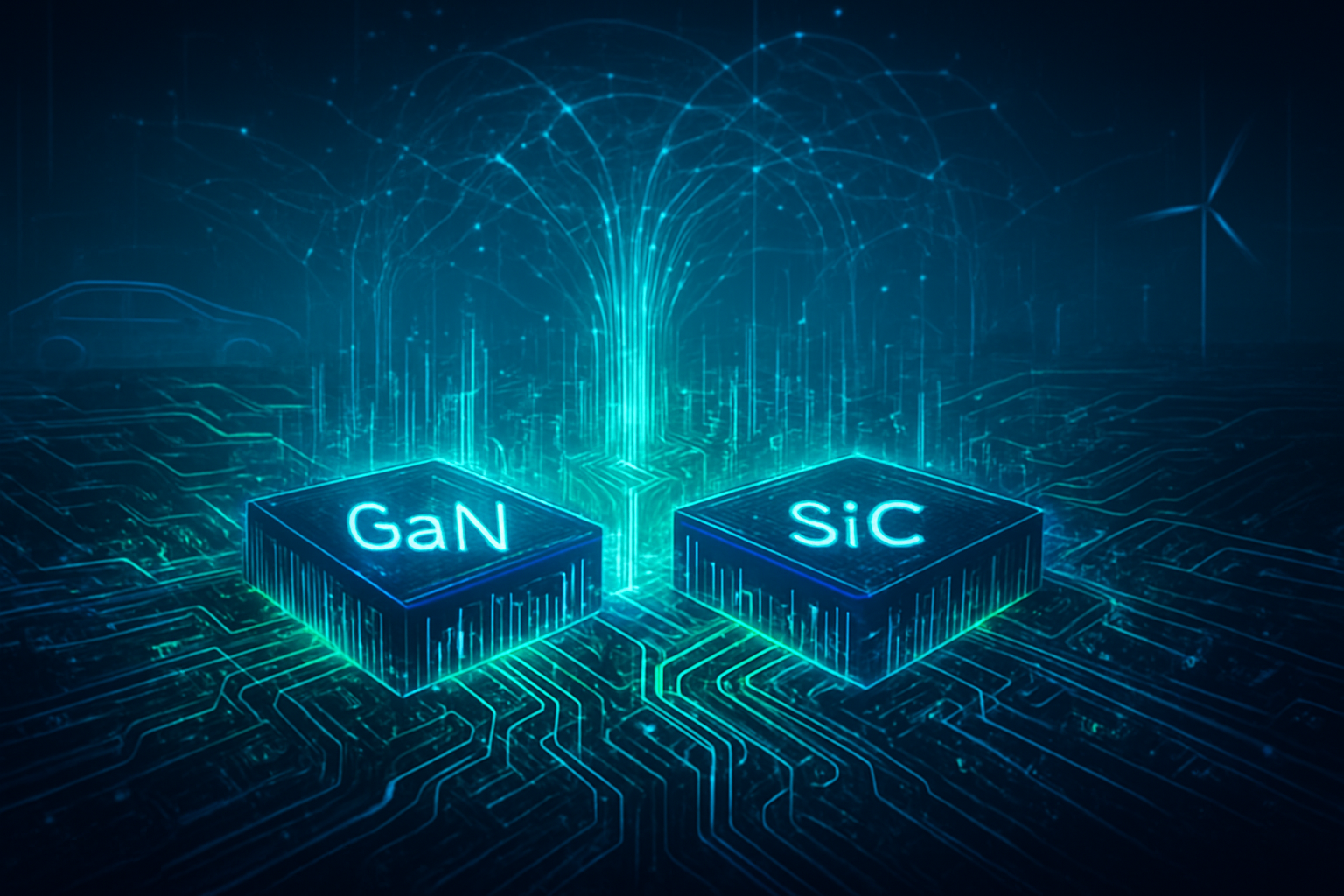
  • The Wide-Bandgap Revolution: GaN and SiC Power Devices Reshape the Future of Electronics

    The Wide-Bandgap Revolution: GaN and SiC Power Devices Reshape the Future of Electronics

    The semiconductor industry is on the cusp of a profound transformation, driven by the escalating adoption and strategic alliances surrounding next-generation power devices built with Gallium Nitride (GaN) and Silicon Carbide (SiC). These wide-bandgap (WBG) materials are rapidly displacing traditional silicon in high-performance applications, promising unprecedented levels of efficiency, power density, and thermal management. As of December 2025, the convergence of advanced manufacturing techniques, significant cost reductions, and a surge in demand from critical sectors like electric vehicles (EVs), AI data centers, and renewable energy is cementing GaN and SiC's role as foundational technologies for the coming decades.

    This paradigm shift is not merely an incremental improvement; it represents a fundamental rethinking of power electronics design. With their superior inherent properties, GaN and SiC enable devices that can switch faster, operate at higher temperatures, and handle greater power with significantly less energy loss than their silicon counterparts. This immediate significance translates into smaller, lighter, and more energy-efficient systems across a vast array of applications, propelling innovation and addressing pressing global challenges related to energy consumption and sustainability.

    Unpacking the Technical Edge: How GaN and SiC Redefine Power

    The technical advancements in GaN and SiC power devices are multifaceted, focusing on optimizing their intrinsic material properties to push the boundaries of power conversion. Unlike silicon, GaN and SiC possess a wider bandgap, higher electron mobility, and superior thermal conductivity. These characteristics allow them to operate at much higher voltages, frequencies, and temperatures without compromising efficiency or reliability.

    Recent breakthroughs include the mass production of 300mm GaN wafers, a critical step towards cost reduction and broader market penetration in high-power consumer and automotive applications. Similarly, the transition to 8-inch SiC wafers is improving yields and lowering per-device costs. In device architecture, innovations like monolithic bidirectional GaN switches are enabling highly efficient EV onboard chargers that are up to 40% smaller and achieve over 97.5% efficiency. New generations of 1200V SiC MOSFETs boast up to 30% lower switching losses, directly impacting the performance of EV traction inverters and industrial drives. Furthermore, hybrid GaN/SiC integration is supporting ultra-high-voltage and high-frequency power conversion vital for cutting-edge AI data centers and 800V EV drivetrains.

    These advancements fundamentally differ from previous silicon-based approaches by offering a step-change in performance. Silicon's physical limits for high-frequency and high-power applications have been largely reached. GaN and SiC, by contrast, offer lower conduction and switching losses, higher power density, and better thermal performance, which translates directly into smaller form factors, reduced cooling requirements, and significantly higher energy efficiency. The initial reaction from the AI research community and industry experts has been overwhelmingly positive, with many recognizing these materials as essential enablers for next-generation computing and energy infrastructure. The ability to manage power more efficiently at higher frequencies is particularly crucial for AI accelerators and data centers, where power consumption and heat dissipation are enormous challenges.

    Corporate Chessboard: Companies Vying for Wide-Bandgap Dominance

    The rise of GaN and SiC has ignited a fierce competitive landscape and fostered a wave of strategic alliances among semiconductor giants, tech titans, and innovative startups. Companies like Infineon Technologies AG (ETR: IFX), STMicroelectronics (NYSE: STM), Wolfspeed (NYSE: WOLF), ROHM Semiconductor (TYO: 6767), onsemi (NASDAQ: ON), and Navitas Semiconductor (NASDAQ: NVTS) are at the forefront, investing heavily in R&D, manufacturing capacity, and market development.

    These companies stand to benefit immensely from the growing adoption of WBG materials. For instance, Infineon Technologies AG (ETR: IFX) is pioneering 300mm GaN wafers and expanding its SiC production to meet surging demand, particularly from the automotive sector. GlobalFoundries (NASDAQ: GFS) and Navitas Semiconductor (NASDAQ: NVTS) have formed a long-term strategic alliance to bolster U.S.-focused GaN technology and manufacturing for critical high-power applications. Similarly, onsemi (NASDAQ: ON) and Innoscience have entered a deep cooperation to jointly develop high-efficiency GaN power devices, leveraging Innoscience's 8-inch silicon-based GaN process platform. These alliances are crucial for accelerating innovation, scaling production, and securing supply chains in a rapidly expanding market.

    The competitive implications for major AI labs and tech companies are significant. As AI workloads demand ever-increasing computational power, the energy efficiency offered by GaN and SiC in power supply units (PSUs) becomes critical. Companies like NVIDIA Corporation (NASDAQ: NVDA), heavily invested in AI infrastructure, are already partnering with GaN leaders like Innoscience for their 800V DC power supply architectures for AI data centers. This development has the potential to disrupt existing power management solutions, making traditional silicon-based PSUs less competitive in terms of efficiency and form factor. Companies that successfully integrate GaN and SiC into their products will gain a strategic advantage through superior performance, smaller footprints, and reduced operating costs for their customers.

    A Broader Horizon: Impact on AI, Energy, and Global Trends

    The widespread adoption of GaN and SiC power devices extends far beyond individual company balance sheets, fitting seamlessly into broader AI, energy, and global technological trends. These materials are indispensable enablers for the global transition towards a more energy-efficient and sustainable future. Their ability to minimize energy losses is directly contributing to carbon neutrality goals, particularly in energy-intensive sectors.

    In the context of AI, the impact is profound. AI data centers are notorious for their massive energy consumption and heat generation. GaN and SiC-based power supplies and converters dramatically improve the efficiency of power delivery within these centers, reducing rack power loss and cutting facility energy costs. This allows for denser server racks and more powerful AI accelerators, pushing the boundaries of what is computationally feasible. Beyond data centers, these materials are crucial for the rapid expansion of electric vehicles, enabling faster charging, longer ranges, and more compact power electronics. They are also integral to renewable energy systems, enhancing the efficiency of solar inverters, wind turbines, and energy storage solutions, thereby facilitating better grid integration and management.

    Potential concerns, however, include the initial higher cost compared to silicon, the need for specialized manufacturing facilities, and the complexity of designing with these high-frequency devices (e.g., managing EMI and parasitic inductance). Nevertheless, the industry is actively addressing these challenges, with costs reaching near-parity with silicon in 2025 for many applications, and design tools becoming more sophisticated. This shift can be compared to previous semiconductor milestones, such as the transition from germanium to silicon, marking a similar fundamental leap in material science that unlocked new levels of performance and application possibilities.

    The Road Ahead: Charting Future Developments and Applications

    The trajectory for GaN and SiC power devices points towards continued innovation and expanding applications. In the near term, experts predict further advancements in packaging technologies, leading to more integrated power modules that simplify design and improve thermal performance. The development of higher voltage GaN devices, potentially challenging SiC in some 900-1200V segments, is also on the horizon, with research into vertical GaN and new material platforms like GaN-on-Sapphire gaining momentum.

    Looking further out, the potential applications and use cases are vast. Beyond current applications in EVs, data centers, and consumer electronics, GaN and SiC are expected to play a critical role in advanced robotics, aerospace power systems, smart grids, and even medical devices where miniaturization and efficiency are paramount. The continuous drive for higher power density and efficiency will push these materials into new frontiers, enabling devices that are currently impractical with silicon.

    However, challenges remain. Further cost reduction through improved manufacturing processes and economies of scale is crucial for widespread adoption in more cost-sensitive markets. Ensuring long-term reliability and robustness in extreme operating conditions is also a key focus for research and development. Experts predict that the market will see increasing specialization, with GaN dominating high-frequency, mid-to-low voltage applications and SiC retaining its lead in very high-power, high-voltage domains. The coming years will likely witness a consolidation of design best practices and the emergence of standardized modules, making it easier for engineers to integrate these powerful new semiconductors into their designs.

    A New Era of Power: Summarizing the Wide-Bandgap Impact

    In summary, the advancements in GaN and SiC power devices represent a pivotal moment in the history of electronics. These wide-bandgap semiconductors are not just an alternative to silicon; they are a fundamental upgrade, enabling unprecedented levels of efficiency, power density, and thermal performance across a spectrum of industries. From significantly extending the range and reducing the charging time of electric vehicles to dramatically improving the energy efficiency of AI data centers and bolstering renewable energy infrastructure, their impact is pervasive and transformative.

    This development's significance in AI history cannot be overstated. As AI models grow in complexity and computational demand, the ability to power them efficiently and reliably becomes a bottleneck. GaN and SiC provide a critical solution, allowing for the continued scaling of AI technologies without commensurate increases in energy consumption and physical footprint. The ongoing strategic alliances and massive investments from industry leaders underscore the long-term commitment to these materials.

    What to watch for in the coming weeks and months includes further announcements of new product lines, expanded manufacturing capacities, and deeper collaborations between semiconductor manufacturers and end-user industries. The continued downward trend in pricing, coupled with increasing performance benchmarks, will dictate the pace of market penetration. The evolution of design tools and best practices for GaN and SiC integration will also be a key factor in accelerating their adoption. The wide-bandgap revolution is here, and its ripples will be felt across every facet of the tech industry for decades to come.


    This content is intended for informational purposes only and represents analysis of current AI developments.

    TokenRing AI delivers enterprise-grade solutions for multi-agent AI workflow orchestration, AI-powered development tools, and seamless remote collaboration platforms.
    For more information, visit https://www.tokenring.ai/.
  • Powering Tomorrow: POSCO Future M and Factorial Forge Alliance for All-Solid-State Battery Breakthrough

    Powering Tomorrow: POSCO Future M and Factorial Forge Alliance for All-Solid-State Battery Breakthrough

    In a landmark move poised to reshape the landscape of energy storage and electric mobility, South Korean battery materials giant POSCO Future M (KRX: 003670) and U.S.-based all-solid-state battery innovator Factorial have officially joined forces. The strategic cooperation, formalized through a Memorandum of Understanding (MOU) signed on November 25, 2025, in Berlin, Germany, aims to accelerate the development and commercialization of next-generation all-solid-state battery technology. This collaboration represents a significant leap forward in the quest for safer, higher-energy-density, and faster-charging batteries, promising profound implications for the electric vehicle (EV) sector, robotics, and broader energy storage systems.

    This partnership is not merely an agreement but a fusion of specialized expertise, bringing together POSCO Future M's prowess in advanced battery materials with Factorial's cutting-edge solid-state battery architecture. The timing of this announcement, coinciding with the "Future Battery Forum," underscores the urgency and global focus on transitioning away from conventional lithium-ion batteries, which, despite their widespread adoption, present limitations in safety and performance. The synergy between these two industry players is expected to catalyze innovation, streamline the supply chain, and ultimately drive down the costs associated with this transformative technology, setting the stage for a new era of electric power.

    Technical Synergy: Unpacking the All-Solid-State Revolution

    The core of this collaboration lies in combining distinct, yet complementary, technological strengths to overcome the formidable challenges of all-solid-state battery development. POSCO Future M, a cornerstone of the global battery supply chain, is focusing its extensive research and development on creating high-performance cathode and anode materials specifically optimized for solid-state applications. Their current efforts are concentrated on advanced cathode materials for all-solid-state batteries and innovative silicon-based anode materials. Furthermore, the broader POSCO Group is actively engaged in pioneering lithium metal anode materials and sulfide-based solid electrolytes, crucial components for unlocking the full potential of solid-state designs. Factorial's decision to partner with POSCO Future M was not arbitrary; rigorous testing of cathode material samples from various international suppliers reportedly demonstrated POSCO Future M's materials to possess superior quality, competitive cost structures, and excellent rate capability, making them an ideal fit.

    Factorial, on the other hand, brings its proprietary all-solid-state battery technology to the table, notably its FEST® (Factorial Electrolyte System Technology) and Solstice™ platforms. These innovations are designed to replace the flammable liquid electrolytes found in traditional lithium-ion batteries with a solid counterpart, fundamentally enhancing safety by eliminating the risk of thermal runaway and fire. Beyond safety, all-solid-state batteries promise significantly higher energy density, allowing for longer driving ranges in EVs without increasing battery size or weight, and superior charging performance, drastically reducing charging times. This represents a monumental shift from previous approaches, where the trade-offs between energy density, safety, and cycle life were often unavoidable. The partnership aims to leverage Factorial's established network of collaborations with global automakers, including Mercedes-Benz (ETR: MBG), Stellantis (NYSE: STLA), Hyundai (KRX: 005380), and Kia (KRX: 000270), to accelerate the market integration of these advanced batteries.

    Initial reactions from the AI research community and industry experts have been overwhelmingly positive, recognizing the immense potential of this alliance. Experts highlight that the combination of a materials giant like POSCO Future M with an innovative battery startup like Factorial could significantly de-risk the commercialization pathway for solid-state batteries. The focus on both cathode and anode materials, alongside Factorial's electrolyte technology, addresses critical bottlenecks in the solid-state battery ecosystem. The industry views such collaborations as essential for overcoming the complex engineering and manufacturing challenges inherent in scaling up this next-generation technology, moving it from laboratory success to mass production.

    Competitive Implications and Market Dynamics

    This collaboration is poised to create significant ripple effects across the AI industry, particularly within the electric vehicle and energy storage sectors. Companies that stand to benefit most directly include POSCO Future M and Factorial themselves, as they solidify their positions at the forefront of advanced battery technology. For POSCO Future M, this partnership is a strategic move to secure a dominant role in the emerging all-solid-state battery materials market, diversifying its offerings beyond traditional lithium-ion components. Factorial gains a powerful ally with deep expertise in materials science and a robust supply chain, which is crucial for scaling production and meeting the rigorous demands of automotive manufacturers.

    The competitive implications for major battery manufacturers like Contemporary Amperex Technology Co. Limited (CATL), LG Energy Solution (KRX: 373220), and Panasonic (TYO: 6752) are substantial. While these giants are also investing heavily in solid-state research, the POSCO Future M-Factorial alliance, backed by commitments from major automakers, could establish a formidable new contender. This development could disrupt existing product lines and accelerate the timeline for solid-state battery adoption, forcing competitors to intensify their own R&D efforts or seek similar strategic partnerships. For tech giants heavily invested in EV production or energy storage solutions, such as Tesla (NASDAQ: TSLA), this collaboration signals a potential shift in the performance benchmarks for battery technology, demanding continuous innovation to maintain market leadership.

    Moreover, the involvement of automakers like Mercedes-Benz, Stellantis, Hyundai, and Kia through Factorial's existing partnerships grants them a strategic advantage. Early access to and input on the development of these advanced batteries could allow them to launch EVs with superior range, safety, and charging capabilities, differentiating their products in an increasingly competitive market. This move underscores a broader trend of automakers directly engaging with battery developers to secure future supply and influence technological direction. The market positioning of companies involved in this collaboration is significantly enhanced, as they are seen as pioneers in a technology widely regarded as the "game changer" for future mobility.

    Broader Significance: A Leap Towards Sustainable Energy

    The POSCO Future M and Factorial collaboration fits seamlessly into the AI landscape and the accelerating global shift towards sustainable energy solutions. All-solid-state battery technology is not merely an incremental improvement; it represents a foundational change that can unlock new possibilities in electric vehicles, grid-scale energy storage, and even advanced robotics. By eliminating the flammable liquid electrolyte, these batteries offer an unparalleled level of safety, which is a critical factor for consumer adoption and regulatory approval, especially in high-density applications. Furthermore, their potential for higher energy density translates directly into extended range for EVs, making electric travel more convenient and comparable to traditional gasoline vehicles, thereby accelerating the transition away from fossil fuels.

    The impacts of successful commercialization are far-reaching. Environmentally, widespread adoption could significantly reduce carbon emissions from transportation and energy generation. Economically, it could create new industries, jobs, and supply chains, while technologically, it could enable smaller, lighter, and more powerful electronic devices and vehicles. Potential concerns, however, revolve around the scalability of manufacturing, the cost of raw materials, and the overall production cost compared to established lithium-ion technologies. While solid-state batteries promise superior performance, achieving cost parity and mass production at a competitive price point remains a significant hurdle. This development draws comparisons to previous AI milestones such as the initial breakthroughs in lithium-ion battery technology itself, or the rapid advancements in solar panel efficiency, both of which fundamentally altered their respective industries and contributed to a more sustainable future.

    This partnership signifies a major step in addressing these challenges, as it combines material expertise with battery architecture innovation. The move reflects a global trend where governments, corporations, and research institutions are pouring resources into developing next-generation battery technologies, recognizing them as central to achieving climate goals and energy independence. The collaboration's success could set a new benchmark for battery performance and safety, propelling the entire industry forward and potentially making electric vehicles a more viable and attractive option for a wider segment of the population.

    The Road Ahead: Future Developments and Expert Predictions

    The strategic alliance between POSCO Future M and Factorial signals a clear path towards the near-term and long-term commercialization of all-solid-state battery technology. In the near term, we can expect intensified joint research and development efforts, focusing on optimizing the interface between POSCO Future M's advanced materials and Factorial's battery architecture. The goal will be to refine prototypes, enhance cycle life, and further improve energy density and charging rates. Factorial's existing pilot plant in Cheonan, South Chungcheong Province, South Korea, alongside its Massachusetts, USA headquarters, will likely play a crucial role in scaling up initial production and testing.

    Looking further ahead, the long-term developments will hinge on successfully transitioning from pilot production to large-scale manufacturing. This will involve significant capital investment in new production facilities and the establishment of a robust, localized supply chain for solid electrolyte materials, which are still relatively nascent. Potential applications and use cases on the horizon extend beyond electric vehicles to include grid-scale energy storage, urban air mobility (UAM), high-performance drones, and even advanced medical devices where safety and energy density are paramount. Experts predict that while initial adoption might be in premium EV segments due to potentially higher costs, continuous innovation and economies of scale will gradually bring these batteries to the mainstream market within the next decade.

    However, several challenges need to be addressed. Scaling production of solid electrolytes and ensuring their long-term stability and performance under various operating conditions are critical. Reducing manufacturing costs to compete with established lithium-ion batteries is another significant hurdle. Additionally, the development of new manufacturing processes compatible with solid materials, which differ significantly from liquid electrolyte-based systems, will require substantial engineering effort. Experts predict that the next few years will see a "race to scale" among solid-state battery developers, with partnerships like this one being crucial for sharing risks and accelerating progress. The industry will be closely watching for definitive commercialization timelines and the first mass-produced vehicles powered by these revolutionary batteries.

    A New Horizon for Energy Storage

    The collaboration between POSCO Future M and Factorial marks a pivotal moment in the evolution of energy storage technology. It represents a strategic convergence of material science excellence and innovative battery design, aimed at overcoming the limitations of current lithium-ion batteries. The key takeaways from this development are the enhanced safety, higher energy density, and superior charging performance promised by all-solid-state technology, which are critical for accelerating the global energy transition. This partnership's significance in AI history is profound, as it could usher in an era where electric vehicles become truly mainstream, energy grids more resilient, and portable electronics more powerful and safer.

    This development serves as a testament to the power of cross-border and cross-company collaboration in tackling complex technological challenges. It underscores the industry's collective commitment to innovation and sustainability. The long-term impact could be transformative, fundamentally altering how we power our world and interact with technology. As the world moves rapidly towards electrification, the race for superior battery technology is intensifying, and this alliance positions both companies at the vanguard of that charge.

    What to watch for in the coming weeks and months will be further announcements regarding specific material specifications, pilot production milestones, and any definitive agreements that outline the commercial supply of these next-generation batteries to Factorial's automotive partners. The progress of this collaboration will be a key indicator of the broader trajectory of all-solid-state battery technology and its potential to redefine the future of energy.


    This content is intended for informational purposes only and represents analysis of current AI developments.

    TokenRing AI delivers enterprise-grade solutions for multi-agent AI workflow orchestration, AI-powered development tools, and seamless remote collaboration platforms.
    For more information, visit https://www.tokenring.ai/.
  • ON Semiconductor Navigates Market Headwinds with Strategic Clarity: SiC, AI, and EVs Drive Long-Term Optimism Amidst Analyst Upgrades

    ON Semiconductor Navigates Market Headwinds with Strategic Clarity: SiC, AI, and EVs Drive Long-Term Optimism Amidst Analyst Upgrades

    PHOENIX, AZ – December 2, 2025 – ON Semiconductor (NASDAQ: ON) has been a focal point of investor attention throughout late 2024 and 2025, demonstrating a resilient, albeit sometimes volatile, stock performance despite broader market apprehension. The company, a key player in intelligent power and sensing technologies, has consistently showcased its strategic pivot towards high-growth segments such as electric vehicles (EVs), industrial automation, and Artificial Intelligence (AI) data centers. This strategic clarity, underpinned by significant investments in Silicon Carbide (SiC) technology and key partnerships, has garnered a mixed but ultimately optimistic outlook from industry analysts, with a notable number of "Buy" ratings and upward-revised price targets signaling confidence in its long-term trajectory.

    Despite several quarters where ON Semiconductor surpassed Wall Street's earnings and revenue expectations, its stock often reacted negatively, indicating investor sensitivity to forward-looking guidance and macroeconomic headwinds. However, as the semiconductor market shows signs of stabilization in late 2025, ON Semiconductor's consistent focus on operational efficiency through its "Fab Right" strategy and its aggressive pursuit of next-generation technologies like SiC and Gallium Nitride (GaN) are beginning to translate into renewed analyst confidence and a clearer path for future growth.

    Powering the Future: ON Semiconductor's Technological Edge in Wide Bandgap Materials and AI

    ON Semiconductor's positive long-term outlook is firmly rooted in its leadership and significant investments in several transformative technological and market trends. Central to this is its pioneering work in Silicon Carbide (SiC) technology, a wide bandgap material offering superior efficiency, thermal conductivity, and breakdown voltage compared to traditional silicon. SiC is indispensable for high-power density and efficiency applications, particularly in the rapidly expanding EV market and the increasingly energy-hungry AI data centers.

    The company's strategic advantage in SiC stems from its aggressive vertical integration, controlling the entire manufacturing process from crystal growth to wafer processing and final device fabrication. This comprehensive approach, supported by substantial investments including a planned €1.64 billion investment in Europe's first fully integrated 8-inch SiC power device fab in the Czech Republic, ensures supply chain stability, stringent quality control, and accelerated innovation. ON Semiconductor's EliteSiC MOSFETs and diodes are engineered to deliver superior efficiency and faster switching speeds, crucial for extending EV range, enabling faster charging, and optimizing power conversion in industrial and AI applications.

    Beyond SiC, ON Semiconductor is making significant strides in electric vehicles, where its integrated SiC solutions are pivotal for 800V architectures, enhancing range and reducing charging times. Strategic partnerships with automotive giants like Volkswagen Group (XTRA: VOW) and other OEMs underscore its deep market penetration. In industrial automation, its intelligent sensing and broad power portfolios support the shift towards Industry 4.0, while for AI data centers, ON Semiconductor provides high-efficiency power conversion solutions, including a critical partnership with Nvidia (NASDAQ: NVDA) to accelerate the transition to 800 VDC power architectures. The company is also exploring Gallium Nitride (GaN) technology, collaborating with Innoscience to scale production for similar high-efficiency applications across industrial, automotive, and AI sectors.

    Strategic Positioning and Competitive Advantage in a Dynamic Semiconductor Landscape

    ON Semiconductor's strategic position in the semiconductor industry is robust, built on a foundation of continuous innovation, operational efficiency, and a deliberate focus on high-growth, high-value segments. As the second-largest power chipmaker globally and a leading supplier of automotive image sensors, the company has successfully pivoted its portfolio towards megatrends such as EV electrification, Advanced Driver-Assistance Systems (ADAS), industrial automation, and renewable energy. This targeted approach is critical for long-term growth and market leadership, providing stability amidst market fluctuations.

    The company's "Fab Right" strategy is a cornerstone of its competitive advantage, optimizing its manufacturing asset footprint to enhance efficiency and improve return on invested capital. This involves consolidating facilities, divesting subscale fabs, and investing in more efficient 300mm fabs, such as the East Fishkill facility acquired from GLOBALFOUNDRIES (NASDAQ: GFS). This strategy allows ON Semiconductor to manufacture higher-margin strategic growth products on larger wafers, leading to increased capacity and manufacturing efficiencies while maintaining flexibility through foundry partnerships.

    Crucially, ON Semiconductor's aggressive vertical integration in Silicon Carbide (SiC) sets it apart. By controlling the entire SiC production process—from crystal growth to advanced packaging—the company ensures supply assurance, maintains stringent quality and cost controls, and accelerates innovation. This end-to-end capability is vital for meeting the demanding requirements of automotive customers and building supply chain resilience. Strategic partnerships with industry leaders like Audi (XTRA: NSU), DENSO CORPORATION (TYO: 6902), Innoscience, and Nvidia further solidify ON Semiconductor's market positioning, enabling collaborative innovation and early integration of its advanced semiconductor technologies into next-generation products. These developments collectively enhance ON Semiconductor's competitive edge, allowing it to capitalize on evolving market demands and solidify its role as a critical enabler of future technologies.

    Broader Implications: Fueling Global Electrification and the AI Revolution

    ON Semiconductor's strategic advancements in SiC technology for EVs and AI data centers, amplified by its partnership with Nvidia, resonate deeply within the broader semiconductor and AI landscape. These developments are not isolated events but rather integral components of a global push towards increased power efficiency, widespread electrification, and the relentless demand for high-performance computing. The industry's transition to wide bandgap materials like SiC and GaN represents a fundamental shift, moving beyond the physical limitations of traditional silicon to unlock new levels of performance and energy savings.

    The wider impacts of these innovations are profound. In the realm of sustainability, ON Semiconductor's SiC solutions contribute significantly to reducing energy losses in EVs and data centers, thereby lowering the carbon footprint of electrified transport and digital infrastructure. Technologically, the collaboration with Nvidia on 800V DC power architectures pushes the boundaries of power management in AI, facilitating more powerful, compact, and efficient AI accelerators and data center designs. Economically, the increased adoption of SiC drives substantial growth in the power semiconductor market, creating new opportunities and fostering innovation across the ecosystem.

    However, this transformative period is not without its concerns. SiC manufacturing remains complex and costly, with challenges in crystal growth, wafer processing, and defect rates potentially limiting widespread adoption. Intense competition, particularly from aggressive Chinese manufacturers, coupled with potential short-term oversupply in 2025 due to rapid capacity expansion and fluctuating EV demand, poses significant market pressures. Geopolitical risks and cost pressures also continue to reshape global supply chain strategies. This dynamic environment, characterized by both immense opportunity and formidable challenges, echoes historical transitions in the semiconductor industry, such as the shift from germanium to silicon or the relentless pursuit of miniaturization under Moore's Law, where material science and manufacturing prowess dictate the pace of progress.

    The Road Ahead: Future Developments and Expert Outlook

    Looking to the near-term (2025-2026), ON Semiconductor anticipates a period of financial improvement and market recovery, with positive revenue trends and projected earnings growth. The company's strategic focus on AI and industrial markets, bolstered by its Nvidia partnership, is expected to mitigate potential downturns in the automotive sector. Longer-term (beyond 2026), ON Semiconductor is committed to sustainable growth through continued investment in next-generation technologies and ambitious environmental goals, including significant reductions in greenhouse gas emissions by 2034. A key challenge remains its sensitivity to the EV market slowdown and broader economic factors impacting consumer spending.

    The broader semiconductor industry is poised for robust growth, with projections of the global market exceeding $700 billion in 2025 and potentially reaching $1 trillion by the end of the decade, or even $2 trillion by 2040. This expansion will be primarily fueled by AI, Internet of Things (IoT), advanced automotive applications, and real-time data processing needs. Near-term, improvements in chip supply are expected, alongside growth in PC and smartphone sales, and the ramp-up of advanced packaging technologies and 2 nm processes by leading foundries.

    Future applications and use cases will be dominated by AI accelerators for data centers and edge devices, high-performance components for EVs and autonomous vehicles, power management solutions for renewable energy infrastructure, and specialized chips for medical devices, 5G/6G communication, and IoT. Expert predictions include AI chips exceeding $150 billion in 2025, with the total addressable market for AI accelerators reaching $500 billion by 2028. Generative AI is seen as the next major growth curve, driving innovation in chip design, manufacturing, and the development of specialized hardware like Neural Processing Units (NPUs). Challenges include persistent talent shortages, geopolitical tensions impacting supply chains, rising manufacturing costs, and the increasing demand for energy efficiency and sustainability in chip production. The continued adoption of SiC and GaN, along with AI's transformative impact on chip design and manufacturing, will define the industry's trajectory towards a future of more intelligent, efficient, and powerful electronic systems.

    A Strategic Powerhouse in the AI Era: Final Thoughts

    ON Semiconductor's journey through late 2024 and 2025 underscores its resilience and strategic foresight in a rapidly evolving technological landscape. Despite navigating market headwinds and investor caution, the company has consistently demonstrated its commitment to high-growth sectors and next-generation technologies. The key takeaways from this period are clear: ON Semiconductor's aggressive vertical integration in SiC, its pivotal role in powering the EV revolution, and its strategic partnership with Nvidia for AI data centers position it as a critical enabler of the future.

    This development signifies ON Semiconductor's transition from a broad-based semiconductor supplier to a specialized powerhouse in intelligent power and sensing solutions, particularly in wide bandgap materials. Its "Fab Right" strategy and focus on operational excellence are not merely cost-saving measures but fundamental shifts designed to enhance agility and competitiveness. In the grand narrative of AI history and semiconductor evolution, ON Semiconductor's current trajectory represents a crucial phase where material science breakthroughs are directly translating into real-world applications that drive energy efficiency, performance, and sustainability across industries.

    In the coming weeks and months, investors and industry observers should watch for further announcements regarding ON Semiconductor's SiC manufacturing expansion, new design wins in the automotive and industrial sectors, and the tangible impacts of its collaboration with Nvidia in the burgeoning AI data center market. The company's ability to continue capitalizing on these megatrends, while effectively managing manufacturing complexities and competitive pressures, will be central to its sustained growth and its enduring significance in the AI-driven era.


    This content is intended for informational purposes only and represents analysis of current AI developments.

    TokenRing AI delivers enterprise-grade solutions for multi-agent AI workflow orchestration, AI-powered development tools, and seamless remote collaboration platforms.
    For more information, visit https://www.tokenring.ai/.

  • Ford Accelerates EV Overhaul: A Direct Challenge to Tesla’s Engineering Dominance

    Ford Accelerates EV Overhaul: A Direct Challenge to Tesla’s Engineering Dominance

    In a significant strategic pivot, Ford Motor Company (NYSE: F) is aggressively re-engineering its electric vehicle (EV) development and manufacturing processes, directly addressing the efficiency and innovation benchmarks set by industry leader Tesla (NASDAQ: TSLA). This comprehensive overhaul, spurred by an candid internal assessment of competitor vehicles, signals a new era of intense competition in the rapidly evolving EV market. Ford's CEO, Jim Farley, has openly admitted to a "shocking" and "humbling" realization of the disparities in production efficiency and design simplicity, particularly after a deep dive into the Tesla Model 3. This introspection has ignited a sweeping transformation within the Dearborn giant, aiming to streamline operations, reduce costs, and accelerate the rollout of a new generation of affordable and technologically advanced electric vehicles, with many key developments anticipated or already underway around November 2025.

    The move is more than just a reaction; it represents a fundamental shift in Ford's approach to EV architecture and production. By dissecting the engineering of its rivals, Ford is not just playing catch-up but is actively laying the groundwork for a scalable and cost-effective EV future. This strategy is critical for Ford as it navigates the transition from traditional internal combustion engine (ICE) vehicles to a fully electric lineup, aiming to secure a significant slice of the burgeoning global EV market against established players and agile newcomers alike. The implications for the broader automotive industry, especially in terms of manufacturing innovation and software integration, are profound, setting the stage for a fiercely contested future.

    Engineering a Revolution: Ford's Technical Response to Tesla's Efficiency

    Ford's engineering response is multifaceted, focusing on fundamental design and manufacturing improvements. A pivotal discovery, for instance, revealed that the Mustang Mach-E contained 1.6 kilometers more electrical wiring than the Tesla Model 3, contributing to increased weight and higher battery costs—an additional $200 per vehicle. This insight underscored the urgent need for simpler, more integrated designs. To spearhead this transformation, Ford established its Model E division in 2022, a dedicated unit focused on fostering EV innovation and directly competing with tech-driven automakers.

    Central to Ford's revised strategy is a monumental investment of approximately $5 billion into a new "Universal EV Platform" and "Universal EV Production System." This platform is engineered to serve as a scalable foundation for a new generation of affordable electric vehicles, emphasizing rapid development cycles and extensive over-the-air (OTA) software updates, a feature popularized by Tesla. The associated production system aims to revolutionize manufacturing through modular subassemblies, digital twins, and automated quality assurance. Ford anticipates these changes will reduce parts by 20%, fasteners by 25%, workstations by 40%, and assembly time by 15%, marking a concerted effort to achieve a "Model T moment" for EV affordability and efficiency. A key engineering improvement on this new platform is a significantly shorter and lighter wiring harness, projected to be over 1.3 kilometers shorter and 10 kilograms lighter than in current-generation Ford EVs.

    In battery technology, Ford is making substantial moves, particularly with Lithium Iron Phosphate (LFP) batteries for its mass-market EVs. LFP batteries offer lower costs, increased durability, and enable space and weight savings. Production of LFP batteries is slated to begin at the BlueOval Battery Park Michigan in 2026, positioning Ford to be among the first automakers to manufacture prismatic LFP batteries in the U.S. Furthermore, Ford has announced breakthroughs in LFP technology, claiming the potential for no degradation, longer life, lower cost, and safer chemistry. The company also continues its investment in Solid Power, accelerating the development of solid-state battery technology, recognizing its future importance for extended range and reduced costs. While Ford recently shifted its software-defined vehicle (SDV) program from a centralized, multi-billion-dollar effort (FNV4) in May 2025, it is evolving its existing architecture (FNV3.X) to modernize software across a broader range of vehicles, including EVs, F-150s, Mustangs, and Broncos, to deliver advanced features and OTA updates. Ford's BlueCruise hands-free driving system is also expanding, gaining regulatory approval in 16 European markets and slated for wider availability in models like the Puma, Puma Gen-E, Kuga, and Ranger PHEV starting in spring 2026.

    Competitive Implications: Shifting Sands for Auto Giants and Startups

    Ford's aggressive re-engineering and strategic focus on affordability and manufacturing efficiency carry significant competitive implications for the entire automotive industry. Ford (NYSE: F) stands to benefit immensely if its "Universal EV Platform" and "Universal EV Production System" prove successful, allowing it to produce competitive EVs at lower costs and higher volumes. This could dramatically improve the profitability of its Model E division, which has seen initial financial losses but remains crucial for Ford's long-term EV ambitions. The emphasis on LFP batteries and streamlined manufacturing could give Ford a substantial advantage in the crucial mass-market segment, potentially undercutting rivals who rely on more expensive battery chemistries or complex production processes.

    For Tesla (NASDAQ: TSLA), Ford's moves represent a direct challenge to its long-held advantages in manufacturing efficiency and software integration. While Tesla continues to innovate, Ford's focused effort to replicate and improve upon these efficiencies could erode Tesla's lead, particularly in the truck and SUV segments where Ford has a strong legacy. The push for a $30,000 mid-size electric pickup, for example, directly targets a segment where Tesla's Cybertruck, despite its unique design, occupies a different price point and market niche. This could force Tesla to accelerate its own efforts in cost reduction and introduce more affordable models to maintain its market share.

    Beyond the two giants, other traditional automakers and EV startups will also feel the ripple effects. Companies that have not invested as heavily in re-thinking their EV architectures and manufacturing might find themselves at a disadvantage, struggling to compete on price and features. Ford Pro, Ford's commercial vehicle division, is already seeing strong performance with its emphasis on software, telematics, and aftermarket services, indicating how integrated software solutions can create strategic advantages and new revenue streams, a lesson for all players in the commercial EV space. The market positioning for all companies will increasingly depend not just on innovative designs, but on the underlying efficiency of their production and the sophistication of their software ecosystems.

    Wider Significance: The Broader AI and Automotive Landscape

    Ford's strategic pivot fits squarely within the broader trends of the AI and automotive landscapes, highlighting the increasing convergence of software, manufacturing efficiency, and sustainable energy. The "shocking" discovery of wiring complexity in the Mustang Mach-E compared to the Tesla Model 3 underscores a critical lesson for the entire industry: the future of automotive manufacturing is as much about elegant, software-defined engineering and supply chain optimization as it is about traditional mechanical design. This shift is driving a profound re-evaluation of vehicle architecture, pushing towards simpler designs that are easier and cheaper to produce, and more amenable to continuous software updates.

    The emphasis on a "Universal EV Platform" and "Universal EV Production System" with modular subassemblies and digital twins is a clear embrace of Industry 4.0 principles, heavily leveraging AI and automation. Digital twins, for instance, allow for virtual testing and optimization of production lines, reducing physical prototypes and speeding up development cycles. Automated quality assurance, often powered by AI vision systems, ensures higher consistency and fewer defects. This level of integration and data-driven decision-making is becoming the new standard, moving beyond incremental improvements to fundamental re-imagining of how vehicles are designed, built, and maintained.

    This development also reflects a broader societal push for more affordable and accessible electric vehicles. By targeting a $30,000 price point for its upcoming mid-size electric pickup, Ford is directly addressing one of the biggest barriers to mass EV adoption: cost. This mirrors historical automotive milestones, such as the original Model T, which democratized personal transportation. The shift to LFP batteries is another critical component of this affordability drive, offering a more cost-effective and durable solution for mass-market EVs. While the immediate focus is on engineering and manufacturing, the underlying AI-driven efficiencies in design and production will be key to unlocking this affordability, making EVs a viable option for a much wider demographic and accelerating the global transition to sustainable transportation. Potential concerns, however, include the massive capital expenditure required for such a transformation and the ability of traditional automakers to fully embrace a software-first mindset against agile tech companies.

    Future Developments: The Road Ahead for Ford's EV Ambitions

    Looking ahead, Ford's strategic re-engineering promises a series of significant developments that will reshape its presence in the EV market. The most anticipated is the launch of the first vehicle built on the new Universal EV Platform: an affordable mid-size electric pickup truck, targeting a starting price of around $30,000, with its debut expected in 2027. This vehicle is designed to offer performance comparable to a Mustang EcoBoost, coupled with more passenger space than a Toyota RAV4, signaling Ford's intent to capture a broad segment of the market. This platform will also underpin an all-new electric commercial van for Ford Pro customers, set to begin production in 2026 at Ford's Ohio Assembly Plant.

    Further down the line, the BlueOval City complex in Tennessee is progressing towards an anticipated production start around 2026, envisioned as Ford's first Industry 4.0 plant. This advanced manufacturing facility will leverage cutting-edge automation and connectivity to produce the next generation of electric vehicles, including the delayed Project T3 electric truck, now slated for 2028 (or potentially 2026 for customer deliveries of a new truck). Additionally, Ford plans all-electric versions of its Explorer and Lincoln Aviator SUVs, with the Explorer EV expected in 2025. The Puma Gen-E is expected in spring 2026, featuring the expanded BlueCruise system, and an entry-level variant of the Capri is anticipated in early 2025 with a 52 kWh battery, offering approximately 230 miles of range.

    Challenges that need to be addressed include the immense capital investment required for these new platforms and facilities, the successful scaling of LFP battery production, and the continuous evolution of Ford's software capabilities to truly deliver on the promise of software-defined vehicles. Experts predict that Ford's success hinges on its ability to execute these ambitious plans efficiently, delivering on its cost and production targets while simultaneously innovating in battery technology and advanced driver-assistance systems. The coming years will be a crucial test of Ford's ability to transform into a leading EV player, competing head-to-head with the likes of Tesla and other global EV manufacturers.

    Comprehensive Wrap-Up: A Defining Moment for Ford and the EV Industry

    Ford's aggressive re-engineering of its electric vehicle strategy marks a defining moment, not only for the venerable automaker but for the broader EV industry. The key takeaway is a profound acknowledgment from a legacy manufacturer that the future of automotive lies in holistic efficiency—from the simplicity of the wiring harness to the sophistication of the manufacturing process and the intelligence of the software. By openly learning from competitors like Tesla, Ford has demonstrated a willingness to dismantle and rebuild its approach from the ground up, prioritizing cost reduction, scalability, and advanced technology.

    This development's significance in AI history, while indirectly, is rooted in the pervasive application of AI and automation within Ford's new "Universal EV Production System." The use of digital twins, automated quality assurance, and data-driven optimization exemplifies how AI is moving beyond niche applications to fundamentally reshape industrial processes. Ford's commitment to LFP batteries and its push for an affordable mid-size electric pickup underscore a critical market shift towards democratizing EV access, a move that will accelerate global electrification and reduce reliance on fossil fuels.

    The long-term impact of Ford's strategy could be a more competitive and diverse EV market, where innovation is driven not just by technological breakthroughs but also by manufacturing ingenuity and cost-effectiveness. This could force all players to re-evaluate their production methods and supply chains, leading to a more efficient and sustainable automotive ecosystem. In the coming weeks and months, industry observers will be closely watching Ford's progress on its BlueOval City complex, the development of its Universal EV Platform, and any further announcements regarding its upcoming affordable EV models. The success of these initiatives will determine Ford's trajectory in the electric age and significantly influence the pace and direction of the global EV transition.


    This content is intended for informational purposes only and represents analysis of current AI developments.

    TokenRing AI delivers enterprise-grade solutions for multi-agent AI workflow orchestration, AI-powered development tools, and seamless remote collaboration platforms.
    For more information, visit https://www.tokenring.ai/.
  • Silicon Carbide Surges: Powering a Greener Future with a 12.5% CAGR to Reach $1.8 Billion by 2027

    Silicon Carbide Surges: Powering a Greener Future with a 12.5% CAGR to Reach $1.8 Billion by 2027

    The global Silicon Carbide (SiC) market is experiencing an unprecedented surge, poised to reach a staggering US$1,810.56 million by 2027, growing at a robust Compound Annual Growth Rate (CAGR) of 12.5%. This rapid expansion is not merely a market trend but a fundamental shift in power electronics, driven primarily by the insatiable demands of the electric vehicle (EV) revolution and the accelerating transition to renewable energy sources. SiC, with its superior material properties, is proving to be the indispensable backbone for next-generation energy-efficient technologies, fundamentally reshaping how power is managed and delivered across industries.

    This significant growth reflects a pivotal moment where traditional silicon-based power electronics are reaching their inherent limitations. SiC, a wide-bandgap semiconductor, offers vastly improved efficiency, power density, and thermal performance, making it the material of choice for applications requiring high power, high voltage, and high-temperature operation. Its immediate significance lies in its ability to extend EV driving ranges, enable faster charging, and maximize the energy yield from solar and wind power, directly contributing to global decarbonization efforts and the broader adoption of sustainable technologies.

    The Technical Edge: Why SiC is the New Gold Standard

    The technical superiority of Silicon Carbide over conventional silicon is the bedrock of its market dominance. SiC boasts a bandgap of approximately 3.2 eV, nearly three times that of silicon (1.12 eV), allowing it to withstand significantly higher electric fields before breakdown. This translates to devices capable of operating at much higher voltages (up to 3.3 kV in commercial MOSFETs) with lower leakage currents and reduced on-resistance. Furthermore, SiC's exceptional thermal conductivity (100–400 W/m·K, more than three times silicon's) enables efficient heat dissipation, allowing devices to operate reliably at elevated temperatures (up to 250°C commercially) and at higher power densities, often negating the need for bulky cooling systems.

    These intrinsic properties yield profound differences in power electronics. SiC devices offer vastly faster switching speeds and lower switching and conduction losses, leading to significantly higher power conversion efficiencies—up to 80% reduction in power loss compared to silicon IGBTs. This efficiency directly translates to tangible benefits in critical applications. In Electric Vehicle (EV) traction inverters, SiC MOSFETs enhance power density and reduce energy loss, potentially increasing an EV's driving range by 5-10%. For instance, a SiC-based inverter can achieve 220 kW output power with a peak efficiency of 99.1%, while reducing weight by approximately 6 kg and volume by 30% compared to a Si IGBT-based solution. SiC is also crucial for the emerging 800V EV architectures, where it can reduce losses by up to 70% compared to silicon.

    For on-board chargers (OBCs), SiC's high switching frequency and low losses enable faster charging times and increased power density, allowing for smaller, lighter, and more compact charger designs with peak system efficiencies of up to 98%. In renewable energy systems, particularly solar inverters, SiC minimizes losses, leading to higher energy conversion efficiencies (often exceeding 98-99%) and enabling more compact, reliable designs. Its ability to handle higher voltages also allows solar farms to increase string voltage, reducing cable size and inverter count, thereby lowering overall project costs. Initial reactions from the research community and industry experts universally hail SiC as a "game-changer" and a "disruptive technology," noting its rapid adoption and continuous R&D efforts focused on improving wafer quality, reducing defects, and enhancing packaging technologies. Despite challenges like initial costs and manufacturing complexities, the long-term outlook remains overwhelmingly positive.

    Corporate Power Plays: Who Benefits from the SiC Boom

    The rapid expansion of the SiC market is creating a new hierarchy of beneficiaries, from material manufacturers to automotive giants and renewable energy innovators. Major SiC manufacturers are strategically positioning themselves for dominance. STMicroelectronics (NYSE: STM), for instance, holds the largest market share in SiC power devices and is investing heavily in a full-process SiC factory in Italy, expected by 2026, alongside an 8-inch SiC joint venture in China. Infineon Technologies AG (FWB: IFX) is expanding its SiC capabilities through product innovation and factory expansions, such as in Kulim, Malaysia. Wolfspeed, Inc. (NYSE: WOLF) stands out as a pioneer and the world's largest supplier of SiC materials, particularly for automotive-grade MOSFET substrates, leveraging a vertically integrated model and a first-mover advantage in 8-inch wafer technology. Onsemi (NASDAQ: ON) has rapidly ascended in market share, largely due to its EliteSiC series and a significant contract with Volkswagen for EV traction inverters. Other key players like ROHM Co., Ltd. (TYO: 6767), Fuji Electric Co., Ltd. (TYO: 6504), Toshiba Electronic Devices & Storage Corporation (TYO: 6502), and Microchip Technology Inc. (NASDAQ: MCHP) are also making substantial investments.

    In the automotive sector, Electric Vehicle (EV) manufacturers are the primary drivers of SiC demand, expected to account for 70% of SiC power device consumption by 2030. Early adopters like Tesla (NASDAQ: TSLA), which integrated SiC into its Model 3 in 2017, have paved the way. Now, major players such as Hyundai (KRX: 005380), Kia (KRX: 000270), BYD (HKG: 1211), Nio (NYSE: NIO), Xpeng (NYSE: XPEV), and Li Auto (NASDAQ: LI) are heavily utilizing SiC to enhance vehicle efficiency, range, and charging speeds. The Volkswagen Group (FWB: VOW) has secured a multi-year contract with Onsemi for EV traction inverters, signaling a broader industry shift. These OEMs are increasingly forming partnerships with SiC manufacturers to secure supply and co-develop optimized solutions.

    In the renewable energy sector, companies like Wolfspeed, Inc. are leading the charge in providing SiC power devices for solar inverters, wind turbines, and battery-based energy storage systems. SiC's ability to handle high power densities reduces energy losses in power conversion, critical for scaling green technologies and integrating smart grids. The competitive landscape is characterized by intense R&D, significant capital investments in manufacturing capacity, and a strategic push towards vertical integration to ensure supply chain control and cost efficiency. The transition to larger 8-inch SiC wafers is a crucial strategy to reduce device costs, with many players investing heavily in this shift. While challenges such as higher initial costs, material defects, and recent market adjustments due to a slowdown in EV demand persist, companies adopting SiC gain significant strategic advantages in efficiency, performance, and system miniaturization, ensuring their competitive edge in an increasingly electrified world.

    A Cornerstone of the Green Revolution: Wider Implications

    The expansion of the Silicon Carbide market is far more than an industrial success story; it represents a fundamental cornerstone of the global electrification and decarbonization trends, deeply embedded in the push for sustainable technology. Valued at approximately $2 billion today, the global SiC device market is projected to surge to between $11 billion and $14 billion by 2030, underscoring its pivotal role in transforming energy systems worldwide.

    SiC is a critical enabler for electrification, particularly in the automotive industry, where EVs are poised to account for 70% or more of future SiC power device demand. Its ability to increase EV range by over 20% with the same battery pack, reduce charging times to under 40 minutes for fast chargers, and enable high-efficiency 800V powertrains is indispensable for widespread EV adoption. Beyond vehicles, SiC is increasingly adopted in industrial automation, telecommunications (including 5G infrastructure), and data centers, where its high-frequency handling reduces energy consumption.

    In decarbonization efforts, SiC is a powerhouse. It is essential in renewable energy sources like solar panel cells and wind turbines, where it efficiently converts and manages large amounts of energy. SiC semiconductors offer potential energy savings of up to 30% compared to traditional silicon chips, significantly contributing to CO2 emission reduction. For data centers, which consume vast amounts of electricity, SiC devices generate less heat, improving energy efficiency and reducing the need for extensive cooling systems. If all global data centers replaced silicon components with SiC, the energy savings could power Manhattan for a year. This aligns perfectly with the broader trend towards sustainable technology, as SiC's superior material properties—including a bandgap nearly three times that of silicon, a 10-fold higher breakdown field strength, and three times better thermal conductivity—enable smaller, more robust, and more reliable electronic systems with a reduced environmental footprint.

    However, the rapid growth also brings potential concerns. High manufacturing costs, complex production processes, and the higher initial environmental impact of SiC wafer production compared to silicon are challenges that need addressing. Supply chain volatility, including a recent "capacity glut" and price erosion for SiC wafers, along with increased competition, demand continuous innovation. Material defects and technical integration issues also require ongoing R&D. Despite these hurdles, the transition from silicon to SiC is widely described as a "once-in-a-generation technological shift," echoing the transformative impact of the Insulated Gate Bipolar Transistor (IGBT) in the 1980s. SiC transistors are now poised to achieve similar, if not greater, impact by further eliminating losses and enabling unprecedented efficiency and miniaturization, where silicon has reached its physical limits. The interplay between SiC and other wide bandgap semiconductors like Gallium Nitride (GaN) further highlights this dynamic evolution in power electronics.

    The Road Ahead: SiC's Future Trajectory

    The future of Silicon Carbide technology is brimming with potential, promising continued advancements and an expanding sphere of influence far beyond its current strongholds in EVs and renewable energy. In the near term (1-3 years), the industry is intensely focused on the widespread transition to 200 mm (8-inch) SiC wafers. This shift, already being spearheaded by companies like Wolfspeed, Inc. (NYSE: WOLF), Infineon Technologies AG (FWB: IFX), and Robert Bosch GmbH (ETR: BOSCH), is critical for enhancing manufacturing efficiency, boosting yields, and significantly reducing costs. Broader deployment and mass production scaling of 200mm wafers are anticipated by 2026. Concurrently, efforts are concentrated on improving wafer quality to eliminate microstructural defects and advancing packaging technologies to fully exploit SiC's capabilities in harsh operating environments. New generations of SiC MOSFETs, promising even greater power density and switching efficiency, are expected to be introduced every 2 to 2.5 years.

    Looking further ahead (beyond 3 years), "radical innovations" in SiC technology are on the horizon, with companies like STMicroelectronics (NYSE: STM) hinting at breakthroughs by 2027. This could include integrated sensing functions within SiC devices, further diversifying their utility. Research into alternative SiC polytypes and the synergy of SiC manufacturing with AI and digital twin technologies are also expected to optimize production processes.

    Beyond its current applications, SiC is poised to revolutionize numerous other high-growth sectors. Its high-frequency and power-handling capabilities make it ideal for 5G and 6G infrastructure, enabling faster data transmission and robust connectivity. In data centers, SiC devices can drastically improve energy efficiency by reducing heat generation in power supplies, crucial for the demands of AI and high-performance computing. Industrial automation and motor drives will benefit from SiC's enhanced durability and efficiency, leading to reduced energy consumption in heavy machinery. Its extreme temperature resilience and radiation resistance position SiC as a key material for aerospace and defense components, including satellites and aircraft. Other emerging applications include railway systems, consumer electronics (for faster charging), medical devices (due to biocompatibility), MEMS, photonics devices, and smart grid infrastructure.

    Despite this promising outlook, challenges remain. The high cost of SiC wafers due to complex and lengthy production processes, along with difficulties arising from SiC's extreme hardness and brittleness during manufacturing, continue to be significant hurdles. Material defects and ensuring a robust, reliable supply chain at scale also require continuous attention. Experts, however, remain optimistic, predicting continued substantial market growth with CAGRs ranging from 10.7% to 25.7% through 2032. SiC is widely expected to soon surpass silicon as the dominant semiconductor for power devices with voltage ratings above 600V. While the automotive sector will remain a key driver, diversification into non-EV applications is essential. The industry will prioritize vertical integration and a relentless focus on cost reduction, particularly through the acceleration of 200mm wafer production, to solidify SiC's role as a critical enabler for a more electrified and sustainable future.

    A Transformative Era: The Lasting Impact of SiC

    The rapid expansion of the Silicon Carbide market marks a transformative era in power electronics, fundamentally reshaping industries and accelerating the global shift towards a sustainable future. The projected growth to US$1,810.56 million by 2027, driven by a 12.5% CAGR, is not just a statistical projection but a testament to SiC's undeniable technological superiority and its critical role in enabling the next generation of energy-efficient solutions.

    Key takeaways underscore SiC's indispensable contribution: its superior wide bandgap properties, high thermal conductivity, and faster switching speeds translate directly into higher efficiency, increased power density, and enhanced reliability across a spectrum of applications. This makes it the cornerstone for extending the range and accelerating the charging of Electric Vehicles, maximizing the energy yield from renewable sources like solar and wind, and revolutionizing power management in data centers, 5G infrastructure, and industrial automation. SiC is effectively breaking the performance barriers that traditional silicon has encountered, propelling industries into a new era of energy optimization.

    This development holds immense significance in AI history and the broader tech industry. While not an AI development itself, SiC's role in powering AI-driven data centers and advanced robotics highlights its foundational importance to the entire technological ecosystem. It represents a "once-in-a-generation technological shift," akin to previous semiconductor breakthroughs that laid the groundwork for entirely new capabilities. Its long-term impact will be profound, enabling a more electrified, efficient, and decarbonized world. By facilitating the development of smaller, lighter, and more powerful electronic systems, SiC is a crucial enabler for achieving global climate goals and fostering a truly sustainable technological landscape.

    In the coming weeks and months, market watchers should pay close attention to several key indicators. Continued investments in SiC production facilities, particularly the acceleration towards 200mm wafer manufacturing by major players like STMicroelectronics (NYSE: STM), Wolfspeed, Inc. (NYSE: WOLF), and Infineon Technologies AG (FWB: IFX), will be crucial for scaling supply and driving down costs. Strategic partnerships between SiC manufacturers and automotive OEMs will also define the competitive landscape. Furthermore, any new breakthroughs in material quality, defect reduction, or advanced packaging technologies will further unlock SiC's full potential. Despite short-term market fluctuations and competitive pressures, the Silicon Carbide market is poised for sustained, impactful growth, solidifying its legacy as a pivotal force in the global energy transition and the advancement of modern technology.


    This content is intended for informational purposes only and represents analysis of current AI developments.

    TokenRing AI delivers enterprise-grade solutions for multi-agent AI workflow orchestration, AI-powered development tools, and seamless remote collaboration platforms.
    For more information, visit https://www.tokenring.ai/.

  • Silent Guardians: Electric Tundra Buggies Revolutionize Polar Bear Conservation in Canada

    Silent Guardians: Electric Tundra Buggies Revolutionize Polar Bear Conservation in Canada

    In a groundbreaking stride for environmental stewardship and sustainable tourism, Canada is deploying a fleet of cutting-edge electric Tundra Buggies to safeguard its iconic polar bear populations. This innovative technological shift, spearheaded by adventure travel operators in Churchill, Manitoba—the self-proclaimed "Polar Bear Capital of the World"—marks a pivotal moment in conservation efforts, directly addressing climate change and minimizing human impact in fragile Arctic ecosystems. By replacing traditional diesel engines with silent, zero-emission electric powertrains, these specialized vehicles offer a new paradigm for wildlife observation, promising a less intrusive and more impactful experience for both bears and visitors.

    The immediate significance of this transition is multifaceted. Each electric Tundra Buggy put into operation immediately reduces the localized carbon footprint of tourism activities, contributing to a tangible decrease in greenhouse gas (GHG) emissions that are accelerating Arctic sea ice melt—the primary threat to polar bear survival. Furthermore, the virtually silent operation of these electric vehicles drastically minimizes noise pollution, allowing for a more authentic and stress-free environment for wildlife, while also enhancing the educational and research platforms vital for understanding and protecting these magnificent creatures. This initiative serves as a powerful proof of concept for green technology's viability even in the planet's most extreme conditions, inspiring a proactive approach to environmental challenges.

    Engineering a Quieter Future: The Technical Prowess of Electric Tundra Buggies

    The transformation of diesel-powered Tundra Buggies into their electric counterparts is a testament to sophisticated engineering tailored for the subarctic's demanding environment. These custom-built, large-capacity (typically 40-passenger) off-road vehicles are now propelled by repurposed batteries, initially sourced from electric buses manufactured by New Flyer Industries (NASDAQ: NFYEF). The battery system boasts a total energy capacity of 200 kWh, organized into four independent banks, operating at a nominal 622 VDC. This redundant design ensures operational continuity, allowing the vehicle to function even if one battery bank is compromised. Charging primarily relies on Manitoba's 100% renewable hydroelectric grid, further solidifying their eco-friendly credentials.

    The conversion process involves a complete overhaul of the vehicle's propulsion system. The original 7.6 L Navistar DT466 diesel engine and Allison transmission are replaced by an all-electric system featuring one motor per axle, each continuously rated at 100 kW (134 HP) with peak outputs of 170 kW (228 HP). This delivers significantly increased torque—up to 1,320 Nm at 0 RPM—compared to the diesel versions. The chassis and suspension are entirely new, incorporating a 5-link suspension system with 8 inches of travel for enhanced articulation and passenger comfort. Advanced steering modes, including front-wheel, rear-wheel, crab, and four-wheel steer, dramatically improve maneuverability on the rugged tundra. The operator interface has also been modernized, replacing traditional controls with an LCD display and custom software integrating propulsion, hydraulic steering, and battery management.

    Operating electric vehicles in temperatures as low as -50°C (-58°F) presents formidable engineering challenges. Battery efficiency, capacity, and charging speed are all significantly impacted by extreme cold. To mitigate this, specialized thermal management systems are crucial, though some early models still rely on a small kerosene heater to maintain battery warmth when not in use, indicating ongoing development. Component durability, ensuring electronics and mechanical parts withstand drastic temperature fluctuations, is also paramount. Despite these hurdles, the successful deployment and ongoing expansion of the electric Tundra Buggy fleet demonstrate the remarkable progress in cold-weather EV technology, drawing positive reactions from the conservation community and industry experts who laud the initiative as a significant step towards sustainable tourism and a "made-in-Manitoba story" of clean tech innovation.

    Corporate Footprints: Beneficiaries and Competitive Edge

    The pioneering effort to electrify Tundra Buggies involves a collaborative ecosystem of companies, each playing a crucial role in advancing sustainable tourism and technology. At the forefront is Frontiers North Adventures, a private Canadian-based, family-owned, and Certified B Corp adventure travel operator. As the initiator and primary operator of the EV Tundra Buggy project, Frontiers North is committed to converting its entire fleet of 12 vehicles to electric by the end of the decade, gaining a significant first-mover advantage in the eco-tourism sector. Their strategic positioning as a leader in sustainable Arctic eco-tourism attracts environmentally conscious travelers and fosters strong brand loyalty.

    Several key partners contribute to the technical success. Red River College Polytechnic (RRC Polytech), through its Vehicle Technology & Energy Centre (VTEC), provided crucial technical validation and expertise. Noble Northern, a private company, is actively involved in the conversion process and building new EV Tundra Buggies. Specialized component providers like JEM Technical, which developed custom control software, and CrossControl and HydraForce, which supplied the touchscreen display and primary controller respectively, are establishing expertise in a niche market for heavy-duty EV conversions in extreme conditions. Their involvement enhances their reputation as providers of robust, green engineering solutions.

    The most notable public company benefiting from this development is NFI Group (NASDAQ: NFYEF), the parent company of New Flyer Industries. New Flyer Industries, a leading electric bus manufacturer, donated repurposed batteries for the initial Tundra Buggy conversions. While not a core business, this contribution showcases NFI Group's commitment to sustainable technologies and the adaptability of their battery technology, indirectly reinforcing their market position in the broader electric vehicle sector. The success of this project could inspire other eco-tourism operators globally to adopt similar electric vehicle solutions, creating a ripple effect that benefits technology providers specializing in rugged, off-road EV conversions and sustainable charging infrastructure.

    A Broader Canvas: Impact, Concerns, and Conservation Milestones

    The integration of electric Tundra Buggies into Arctic tourism extends far beyond local operational benefits, fitting into the broader global landscape of environmental conservation and sustainable tourism. By significantly reducing greenhouse gas emissions—estimated at 15.74 tonnes annually per electric buggy, with a projected fleet-wide reduction of over 3,600 tonnes of CO2 over 25 years—these vehicles directly contribute to mitigating climate change, the existential threat to polar bears and their sea ice habitat. The minimized noise pollution also creates a less intrusive presence in the delicate Arctic ecosystem, allowing wildlife to behave more naturally and enhancing the immersive experience for tourists, who can now hear the sounds of the tundra rather than a diesel engine.

    The wider impacts touch upon both Arctic ecosystems and, indirectly, Indigenous communities. A healthier, less polluted Arctic environment directly benefits the region's diverse wildlife and the Indigenous peoples whose cultures and livelihoods are deeply intertwined with the land. While direct engagement with Indigenous communities regarding the buggies isn't extensively detailed, the commitment to "stewardship, and positively contributing to our communities and environments" by operators like Frontiers North Adventures aligns with broader goals of reconciliation and sustainable development. The Tundra Buggies also serve as vital research platforms for organizations like Polar Bears International, hosting scientists and live webcams, thereby aiding global awareness and conservation research.

    However, the technology is not without its limitations and concerns. Operating electric vehicles in extreme cold poses ongoing challenges for battery performance, range, and charging efficiency, necessitating specialized thermal management. The high initial investment and conversion costs can be a barrier for wider adoption, though projected long-term savings in fuel and maintenance may offset this. Furthermore, while crucial locally, the electric Tundra Buggy alone cannot solve the overarching climate crisis, which requires broader systemic changes. Compared to other conservation technology milestones like GPS tracking, remote sensing, or drone surveillance, electric Tundra Buggies offer a unique contribution: they don't just monitor environmental impact but actively reduce it at the source, transforming the very mode of human interaction with nature to be more harmonious and less disruptive.

    The Horizon: Future Developments and Expert Predictions

    The journey for electric Tundra Buggies and similar conservation technologies is just beginning, with significant near-term and long-term developments anticipated. Frontiers North Adventures is steadily progressing towards its goal of a fully electric fleet by the end of the decade, with continuous improvements expected in battery performance and cold-weather resilience. Beyond the Tundra Buggies, the success of this initiative is likely to accelerate the adoption of electric safari vehicles in Africa and electric boats for water-based wildlife viewing in other sensitive ecosystems, expanding the reach of silent, zero-emission tourism.

    Future advancements in battery technology will be crucial, focusing on enhanced thermoregulatory designs, new chemistries like solid-state or sodium-ion batteries, and methods for ultra-fast charging even in sub-zero temperatures. Experts predict increasingly robust and efficient battery thermal management systems (BTMS) will become standard. Furthermore, the integration of AI and robotics will revolutionize conservation, with autonomous drones equipped with AI-powered thermal cameras for anti-poaching and wildlife monitoring, and AI systems analyzing data from underwater drones for ocean health.

    Despite the promising outlook, challenges remain for wider adoption. The high initial cost of specialized electric vehicles and the need for robust charging infrastructure in remote areas are significant hurdles. The availability of skilled technicians for maintenance and repair in isolated regions also needs to be addressed. Experts predict a continued and accelerated shift towards electric and autonomous technologies, with a strong emphasis on decentralized and renewable charging solutions, such as off-grid solar and wind-powered stations. This synergy between technology and conservation will empower conservationists to manage resources more effectively, respond proactively to threats, and gather more comprehensive data, ultimately leading to a more sustainable and harmonious coexistence with nature.

    A New Era of Conservation: Wrapping Up the Electric Revolution

    The advent of electric Tundra Buggies represents a transformative moment in the history of environmental conservation and sustainable tourism. By leveraging advanced electric vehicle technology, these silent guardians are directly combating climate change, reducing localized pollution, and fostering a more respectful interaction with the Arctic's delicate ecosystem and its iconic polar bears. The initiative by Frontiers North Adventures, supported by a network of innovative partners including NFI Group (NASDAQ: NFYEF), showcases the power of collaboration and technological ingenuity in addressing pressing environmental challenges.

    The key takeaways from this development are clear: electric vehicles offer a viable and impactful solution for reducing the ecological footprint of human activities in sensitive natural areas, even in extreme climates. The enhanced guest experience, coupled with tangible environmental benefits, sets a new benchmark for responsible tourism. While challenges related to cost, infrastructure, and extreme weather performance persist, the rapid pace of innovation in battery technology and renewable energy solutions suggests these hurdles will continue to be overcome.

    Looking ahead, the success of electric Tundra Buggies will undoubtedly inspire similar electrification efforts across various conservation and eco-tourism sectors globally. The coming weeks and months will likely see further progress in Frontiers North Adventures' fleet conversion, ongoing research into cold-weather EV performance, and increased interest from other operators in adopting similar sustainable technologies. This marks not just a technological upgrade, but a profound shift in our approach to nature—moving towards a future where human presence in the wild is characterized by minimal impact and maximum respect.


    This content is intended for informational purposes only and represents analysis of current AI developments.

    TokenRing AI delivers enterprise-grade solutions for multi-agent AI workflow orchestration, AI-powered development tools, and seamless remote collaboration platforms.
    For more information, visit https://www.tokenring.ai/.