
Tag: Electrification

  • Canada Charts a Course for a Smarter Ocean: $15.8 Million Investment Fuels AI-Driven Marine Innovation

    Canada Charts a Course for a Smarter Ocean: $15.8 Million Investment Fuels AI-Driven Marine Innovation

    Vancouver, BC – December 1, 2025 – In a significant stride towards a more sustainable and technologically advanced marine sector, Canada's Ocean Supercluster (OSC) has announced a substantial investment of $15.8 million (CAD$22.1 million) across three groundbreaking ocean innovation projects. This strategic funding, part of the OSC's broader commitment to fostering a "blue economy," is poised to revolutionize offshore operations, accelerate maritime electrification, and scale up vital environmental initiatives like seaweed cultivation, with a strong undercurrent of AI and advanced data analytics driving these advancements.

    The immediate significance of these projects extends beyond mere financial injection. They represent a concerted effort to position Canada as a global leader in ocean technology, generating significant economic output, creating thousands of jobs, and bolstering the nation's capacity to address critical global challenges from climate change to food security. By leveraging cutting-edge technologies, these initiatives aim to enhance operational efficiency, improve safety, and ensure the long-term health and productivity of the world's oceans.

    Detailed Technical Dive: Robotics, Electrification, and Cultivation Innovations

    The three newly funded projects showcase a diverse array of technological advancements, each pushing the boundaries of what's possible in the marine environment.

    The Marsupial Flying Robots Project, spearheaded by Burnaby, BC-based Avestec in collaboration with Reach Systems Inc. and Anarampower Ltd., is developing an integrated dual-robot system for complex inspection and maintenance tasks in hazardous offshore and marine environments. This innovative approach moves beyond traditional human-centric methods like rope access or diver-based inspections, which are costly and high-risk. The "Marsupial" design implies a collaborative robotic mechanism where one robot likely deploys or assists the other, enabling unprecedented reach and maneuverability. While specific AI details are not yet fully disclosed, the nature of advanced robotic inspection strongly suggests high-resolution data capture and potentially AI-driven analysis for anomaly detection, autonomous navigation, and task execution, significantly improving safety and efficiency.

    Meanwhile, the Lilypad: Electric Charge Barge Project, led by Victoria, BC-based Mostar Labs, introduces a mobile floating charging station. This groundbreaking solution aims to overcome the limitations of fixed, land-based charging infrastructure for electric vessels. By offering flexible, on-demand charging in coastal waters, the Lilypad barge accelerates maritime electrification, a crucial step towards decarbonizing marine transportation. This project is expected to integrate smart grid technologies for efficient power distribution and potentially leverage data analytics for optimized barge positioning and automated service delivery, making electric vessel adoption more practical and accessible.

    Finally, the Enabling Scalable Seaweed Restoration & Cultivation Project, a substantial $11.08 million (CAD$15.5 million) initiative led by Canadian Pacifico Seaweeds (Richmond, BC) with a consortium of 13 partners including Indigenous communities like Wayi Waum First Nation and Inbata Holdings, as well as Canadian Kelp Resources and Bioform Technologies, focuses on industrial-scale seaweed restoration and cultivation. This project aims to significantly enhance existing, often labor-intensive, cultivation methods through automation and advanced monitoring. Achieving scalability will necessitate sophisticated data collection from automated environmental sensors (temperature, salinity, nutrients), imaging technologies (underwater cameras, drones) for biomass estimation, and AI-powered analytics platforms to optimize farming conditions and restoration success, thereby enabling large-scale "blue carbon" initiatives.

    Corporate Tides: Who Benefits and What's the Competitive Shift?

    The Ocean Supercluster's strategic investments are designed to create a "market-pull" for innovation, directly benefiting the involved companies and reshaping competitive landscapes within the marine technology sector.

    Avestec, Reach Systems Inc., and Anarampower Ltd., as the driving forces behind the Marsupial Flying Robots, stand to gain an early-mover advantage in the burgeoning field of autonomous offshore inspection. Their advanced robotic solutions could disrupt traditional inspection and maintenance service providers, pushing them to adopt similar high-tech approaches or risk losing market share. Similarly, Mostar Labs with its Lilypad Electric Charge Barge is positioned to become a key enabler of maritime electrification, potentially challenging the fossil fuel bunkering industry and accelerating the transition to cleaner marine transport.

    The Enabling Scalable Seaweed Restoration & Cultivation Project directly benefits Canadian Pacifico Seaweeds and its 13 partners, including Canadian Kelp Resources and Bioform Technologies. This initiative has the potential to create entirely new value chains in sustainable seafood and bio-resources, potentially disrupting traditional aquaculture practices and agricultural models by offering environmentally friendly and scalable alternatives. While many direct beneficiaries of this $15.8 million investment are currently private companies, their success contributes to a broader ecosystem that influences larger entities. For instance, Grieg Seafood ASA (OSE: GSF), a Norwegian aquaculture company, through its subsidiary Grieg Seafood Newfoundland, is involved in other OSC-funded projects focused on fish health and monitoring, underscoring how these innovations can impact established players. Similarly, Clearwater Seafoods, though now acquired by Premium Brands Holdings Corporation (TSX: PBH), has been a partner in OSC projects, indicating the ripple effect of these advancements across the industry.

    These companies gain strategic advantages through early market positioning, access to crucial funding and resources, and the development of valuable intellectual property. The OSC's focus on AI and data-driven solutions means that companies embracing these technologies will gain significant competitive edges, potentially forcing others to rapidly invest in AI integration to remain relevant.

    The Blue Economy's AI Wave: Broader Implications and Global Standing

    Canada's significant investment in ocean innovation, heavily underpinned by a drive towards digitalization and AI, is a pivotal component of its "Ambition 2035" strategy, aiming for a fivefold growth in its ocean economy. This initiative aligns seamlessly with the United Nations' "Decade of Ocean Science for Sustainable Development," positioning Canada as a leader in balancing economic prosperity with environmental stewardship.

    The wider impacts are profound. On ocean health, these projects contribute to climate change mitigation through carbon sequestration via seaweed farms and the decarbonization of marine transport. Advanced monitoring technologies, often AI-enhanced, provide crucial data for better resource management, from sustainable aquaculture to tracking marine biodiversity. Economically, the OSC has already generated over $1 billion in GDP contribution and 10,000 jobs, with a target of 20,000 by 2030, fostering a robust innovation ecosystem and skilled workforce.

    This current wave of investment marks a significant evolution from previous milestones in ocean technology. While past efforts often focused on specific hardware (e.g., sonar, underwater vehicles), the contemporary strategy is more integrated and digitally driven. The explicit and integral focus on global sustainability and AI-powered solutions, a paradigm shift from even five years ago, sets this era apart. The "AI Ocean Program" within the OSC, which encourages investment and adoption of AI solutions, highlights this new direction. However, challenges persist, including the high costs of commercial viability in harsh marine environments, global competition in emerging areas like marine carbon dioxide removal (mCDR), and regulatory bottlenecks that need streamlining.

    Charting the Future: AI, Autonomy, and Sustainability on the Horizon

    The Canadian Ocean Supercluster's investment signals a future where marine operations are increasingly smart, autonomous, and sustainable. Near-term, we can expect to see accelerated commercialization of the 300 new Canadian ocean products, processes, and services the OSC has approved, with significant economic impact and job creation continuing to grow. The $20 million dedicated to nine new AI-powered ocean projects, creating over 40 AI use cases, will rapidly advance AI adoption in aquaculture and coastal cleantech.

    Long-term, Canada aims for a "smart ocean advantage," characterized by widespread digitalization of ocean ecosystem data, advanced autonomous systems for operational performance, and seamless integration of ocean data for enhanced prediction and risk characterization. Potential applications are vast: fully autonomous Maritime Autonomous Surface Ships (MASS) for research and surveillance, AI-powered predictive maintenance for vessels, smart ports leveraging digital twins for optimized logistics, and hyper-localized coastal intelligence for improved safety and reduced emissions. Environmental genomics, driven by AI, promises cheaper and faster biological data for marine biodiversity monitoring and fish stock evaluation.

    However, significant challenges remain. Regulatory frameworks for emerging technologies like MASS are still evolving, and the inherent cost and complexity of operating in harsh ocean environments require continuous innovation. Addressing talent gaps, securing adequate equity investment for scaling startups, and overcoming industrial inertia will be crucial for successful implementation and widespread adoption. Experts predict that AI will play a "huge role" in revolutionizing marine protection, economic productivity, and unlocking powerful insights from ocean data, driving continued growth and positioning Canada as a global leader in the blue economy.

    Navigating the Deep: A Comprehensive Outlook on Canada's Ocean AI Leadership

    Canada's $15.8 million investment through the Ocean Supercluster is a powerful testament to its commitment to pioneering sustainable and technologically advanced solutions for the marine sector. The key takeaways underscore a deliberate strategy to integrate cutting-edge robotics, accelerate maritime electrification, and scale up nature-based solutions like seaweed cultivation, all while leveraging the transformative power of AI and advanced data analytics.

    This development holds immense significance for the future of marine technology, propelling Canada towards a "smart ocean advantage" where autonomous systems, real-time data, and predictive intelligence enhance safety, efficiency, and environmental stewardship. It firmly places Canada at the forefront of the global "blue economy," demonstrating how economic growth can be harmonized with critical sustainability goals.

    In the coming weeks and months, the focus will shift to the successful commercialization and scalable deployment of these projects. Watch for measurable environmental impacts from the seaweed cultivation, the expansion of mobile charging networks, and the broader adoption of autonomous inspection robots in offshore industries. Critically, observing how these projects further integrate and advance AI capabilities—from autonomous navigation to environmental data analysis—will be a key indicator of Canada's evolving leadership in ocean innovation. The ongoing collaboration between industry, academia, and Indigenous communities will also be vital in shaping the long-term success and global influence of Canada's AI-driven ocean initiatives.


    This content is intended for informational purposes only and represents analysis of current AI developments.

    TokenRing AI delivers enterprise-grade solutions for multi-agent AI workflow orchestration, AI-powered development tools, and seamless remote collaboration platforms.
    For more information, visit https://www.tokenring.ai/.

  • Power Integrations Taps Nancy Erba as New CFO, Signaling Future Strategic Direction

    Power Integrations Taps Nancy Erba as New CFO, Signaling Future Strategic Direction

    San Jose, CA – November 18, 2025 – Power Integrations (NASDAQ: POWI), a leading innovator in high-voltage power conversion, has announced the strategic appointment of Nancy Erba as its new Chief Financial Officer. The transition, effective January 5, 2026, positions a seasoned financial executive at the helm of the company's fiscal operations as it navigates a period of significant technological advancement and market expansion. This forward-looking executive change, occurring in the near future, underscores Power Integrations' commitment to fortifying its financial leadership in anticipation of continued growth in key sectors like artificial intelligence, electrification, and decarbonization.

    Erba's impending arrival is seen as a pivotal move for Power Integrations, signaling a renewed focus on financial stewardship and strategic growth initiatives. With her extensive background in corporate finance within the technology sector, she is expected to play a crucial role in shaping the company's financial strategies to capitalize on emerging opportunities. The announcement highlights Power Integrations' proactive approach to leadership, ensuring a robust financial framework is in place to support its innovative product development and market penetration in the burgeoning high-voltage semiconductor landscape.

    A Proven Financial Leader for a High-Growth Sector

    Nancy Erba's appointment as CFO is a testament to her distinguished career spanning over 25 years in corporate finance, primarily within the dynamic technology and semiconductor industries. Her professional journey includes significant leadership roles at prominent companies, equipping her with a comprehensive skill set directly relevant to Power Integrations' strategic ambitions. Most recently, Erba served as CFO for Infinera Corporation, an optical networking solutions provider, until its acquisition by Nokia (HEL: NOKIA) earlier this year. In this capacity, she oversaw global finance strategy, encompassing financial planning and analysis, accounting, tax, treasury, and investor relations, alongside global IT and government affairs.

    Prior to Infinera, Erba held the CFO position at Immersion Corporation (NASDAQ: IMMR), a leader in haptic touch technology, further solidifying her expertise in managing the finances of innovative tech firms. A substantial portion of her career was spent at Seagate Technology (NASDAQ: STX), a global data storage company, where she held a series of increasingly senior executive roles. These included Vice President of Financial Planning and Analysis, Division CFO for Strategic Growth Initiatives, and Vice President of Corporate Development, among others. Her tenure at Seagate provided her with invaluable experience in restructuring finance organizations and leading complex mergers and acquisitions, capabilities that will undoubtedly benefit Power Integrations.

    Power Integrations enters this new chapter with a robust financial foundation and clear strategic objectives. The company, currently valued at approximately $1.77 billion, boasts a strong balance sheet with no long-term debt and healthy liquidity, with short-term assets significantly exceeding liabilities. Recent financial reports indicate positive momentum, with net revenues in the first and second quarters of 2025 showing year-over-year increases of 15% and 9% respectively. The company also maintains consistent dividend payments and an active share repurchase program. Strategically, Power Integrations is deeply focused on capitalizing on the accelerating demand in semiconductor markets driven by Artificial Intelligence (AI), electrification, and decarbonization initiatives, with a strong emphasis on continuous R&D investment and expanding market penetration in automotive, industrial, and high-power sectors.

    A cornerstone of Power Integrations' innovation strategy is its proprietary PowiGaN™ technology. This internally developed gallium nitride (GaN) technology is crucial for creating smaller, lighter, and more efficient power supplies by replacing traditional silicon MOSFETs. PowiGaN™ is integrated into various product families, including InnoSwitch™ and HiperPFS™-5 ICs, and is at the forefront of high-voltage advancements, with Power Integrations introducing industry-first 1250V and 1700V PowiGaN switches. These advanced switches are specifically designed to meet the rigorous demands of next-generation 800VDC AI data centers, demonstrating high efficiency and reliability. The company's collaboration with NVIDIA (NASDAQ: NVDA) to accelerate the transition to 800VDC power for AI applications underscores the strategic importance and revenue-driving potential of PowiGaN™-based products, which saw GaN technology revenues surge over 50% in the first half of 2025.

    Strategic Financial Leadership Amidst Industry Transformation

    The arrival of Nancy Erba as CFO is anticipated to significantly influence Power Integrations' financial strategy, operational efficiency, and overall market outlook. Her extensive experience, particularly in driving profitable growth and enhancing shareholder value within the technology and semiconductor sectors, suggests a refined and potentially more aggressive financial approach for the company. Erba's background, which includes leading global financial strategies at Infinera (NASDAQ: INFN) and Immersion Corporation (NASDAQ: IMMR), positions her to champion a sharpened strategic focus, as articulated by Power Integrations' CEO, Jen Lloyd, aiming to accelerate growth through optimized capital allocation and disciplined investment in key areas.

    Under Erba's financial stewardship, Power Integrations is likely to intensify its focus on shareholder value creation. This could manifest in strategies designed to optimize profitability through enhanced cost efficiencies, strategic pricing models, and a rigorous approach to evaluating investment opportunities. Her known advocacy for data-driven decision-making and the integration of analytics into business processes suggests a more analytical and precise approach to financial planning and performance assessment. Furthermore, Erba's substantial experience with complex mergers and acquisitions and corporate development at Seagate Technology (NASDAQ: STX) indicates that Power Integrations may explore strategic acquisitions or divestitures to fortify its market position or expand its technology portfolio, a crucial maneuver in the rapidly evolving power semiconductor landscape.

    Operationally, Erba's dual background in finance and business operations at Seagate Technology is expected to drive improvements in efficiency. She is likely to review and optimize internal financial processes, streamlining accounting, reporting, and financial planning functions. Her holistic perspective could foster better alignment between financial objectives and operational execution, leveraging financial insights to instigate operational enhancements and optimize resource allocation across various segments. This integrated approach aims to boost productivity and reduce waste, allowing Power Integrations to compete more effectively on cost and efficiency.

    The market outlook for Power Integrations, operating in the high-voltage power conversion semiconductor market, is already robust, fueled by secular trends in AI, electrification, and decarbonization. The global power semiconductor market is projected for substantial growth in the coming years. Erba's appointment is expected to bolster investor confidence, particularly as the company's shares have recently experienced fluctuations despite strong long-term prospects. Her leadership is poised to reinforce Power Integrations' strategic positioning in high-growth segments, ensuring financial strategies are well-aligned with investments in wide-bandgap (WBG) materials like GaN and SiC, which are critical for electric vehicles, renewable energy, and high-frequency applications.

    Within the competitive power semiconductor industry, which includes major players such as STMicroelectronics (NYSE: STM), onsemi (NASDAQ: ON), Infineon (OTC: IFNNY), Wolfspeed (NYSE: WOLF), and ROHM, Erba's appointment will likely be perceived as a strategic move to strengthen Power Integrations' executive leadership. Her extensive experience in the broader semiconductor ecosystem signals a commitment to robust financial management and strategic growth. Competitors will likely interpret this as Power Integrations preparing to be more financially agile, potentially leading to more aggressive market strategies, disciplined cost management, or even strategic consolidations to gain competitive advantages in a capital-intensive and intensely competitive market.

    Broader Strategic Implications and Market Resonance

    Nancy Erba's appointment carries significant broader implications for Power Integrations' overall strategic trajectory, extending beyond mere financial oversight. Her seasoned leadership is expected to finely tune the company's financial priorities, investment strategies, and shareholder value initiatives, aligning them precisely with the company's ambitious growth targets in the high-voltage power conversion sector. With Power Integrations deeply committed to innovation, sustainability, and serving burgeoning markets like electric vehicles, renewable energy, advanced industrial applications, and data centers, Erba's financial acumen will be crucial in steering these efforts.

    A key shift under Erba's leadership is likely to be an intensified focus on optimized capital allocation. Drawing from her extensive experience, she is expected to meticulously evaluate R&D investments, capital expenditures, and potential mergers and acquisitions to ensure they directly bolster Power Integrations' expansion into high-growth areas. This strategic deployment of resources will be critical for maintaining the company's competitive edge in next-generation technologies like Gallium Nitride (GaN), where Power Integrations is a recognized leader. Her expertise in managing complex M&A integrations also suggests a potential openness to strategic acquisitions that could broaden market reach, diversify product offerings, or achieve operational synergies in the rapidly evolving clean energy and AI-driven markets.

    Furthermore, Erba's emphasis on robust financial planning and analysis, honed through her previous roles, will likely lead to an enhancement of Power Integrations' rigorous financial forecasting and budgeting processes. This will ensure optimal resource allocation, striking a balance between aggressive growth initiatives and sustainable profitability. Her commitment to driving "sustainable growth and shareholder value" indicates a comprehensive approach to enhancing long-term profitability, including optimizing the capital structure to minimize funding costs and boost financial flexibility, thereby improving market valuation. As a public company veteran and audit committee chair for PDF Solutions (NASDAQ: PDFS), Erba is well-positioned to elevate financial transparency and foster investor confidence through clear and consistent communication.

    While Power Integrations is not an AI company in the traditional sense, Erba herself has highlighted the profound connection between AI advancements and the demand for high-voltage semiconductors. She noted that "AI, electrification, and decarbonization are accelerating demand for innovative high-voltage semiconductors." This underscores that the rapid progress and widespread deployment of AI technologies create a substantial underlying demand for the efficient power management solutions that Power Integrations provides, particularly in the burgeoning data center market. Therefore, Erba's strategic financial direction will implicitly support and enable the broader advancements in AI by ensuring Power Integrations is financially robust and strategically positioned to meet the escalating power demands of the AI ecosystem. Her role is to ensure the company effectively capitalizes on the financial opportunities presented by these technological breakthroughs, rather conducive to leading AI breakthroughs directly, making her appointment a significant enabler for the wider tech landscape.

    Charting Future Growth: Goals, Initiatives, and Navigating Headwinds

    Under Nancy Erba's financial leadership, Power Integrations is poised to embark on a strategic trajectory aimed at solidifying its position in the high-growth power semiconductor market. In the near term, the company is navigating a mixed financial landscape. While the industrial, communications, and computer segments show robust growth, the consumer segment has experienced softness due to appliance demand and inventory adjustments. For the fourth quarter of 2025, Power Integrations projects revenues between $100 million and $105 million, with full-year revenue growth anticipated around 6%. Despite some recent fluctuations in guidance, analysts maintain optimism for "sustainable double-digit growth" in the long term, buoyed by the company's robust product pipeline and new executive leadership.

    Looking ahead, Power Integrations' long-term financial goals and strategic initiatives will be significantly shaped by its proprietary PowiGaN™ technology. This gallium nitride-based innovation is a major growth driver, with accelerating adoption across high-voltage power conversion applications. A notable recent win includes securing its first GaN design win in the automotive sector for an emergency power supply in a U.S. electric vehicle, with production expected to commence later in 2025. The company is also actively developing 1250V and 1700V PowiGaN technology specifically for next-generation 800VDC AI data centers, underscoring its commitment to the AI sector and its role in enabling the future of computing.

    Strategic initiatives under Erba will primarily center on expanding Power Integrations' serviceable addressable market (SAM), which is projected to double by 2027 compared to 2022 levels. This expansion will be achieved through diversification into new end-markets aligned with powerful megatrends: AI data centers, electrification (including electric vehicles, industrial applications, and grid modernization), and decarbonization. The company's consistent investment in research and development, allocating approximately 15% of its 2024 revenues to R&D, will be crucial for maintaining its competitive edge and driving future innovation in high-efficiency AC-DC converters and advanced LED drivers.

    However, Power Integrations, under Erba's financial guidance, will also need to strategically navigate several potential challenges. The semiconductor industry is currently experiencing a "shifting sands" phenomenon, where companies not directly riding the explosive "AI wave" may face investor scrutiny. Power Integrations' stock has recently traded near 52-week lows, hinting at concerns about its perceived direct exposure to the booming AI sector compared to some peers. Geopolitical tensions and evolving U.S. export controls, particularly those targeting China, continue to cast a shadow over market access and supply chain strategies. Additionally, consumer market volatility, intense competition, manufacturing complexity, and the increasing energy footprint of AI infrastructure present ongoing hurdles. Erba's extensive experience in managing complex M&A integrations and driving profitable growth in capital-intensive hardware manufacturing suggests a disciplined approach to optimizing operational efficiency, prudent capital allocation, and potentially strategic acquisitions or partnerships to strengthen the company's position in high-growth segments, all while carefully managing costs and mitigating market risks.

    A New Era of Financial Stewardship for Power Integrations

    Nancy Erba's impending arrival as Chief Financial Officer at Power Integrations marks a significant executive transition, positioning a highly experienced financial leader at the core of the company's strategic future. Effective January 5, 2026, her appointment signals Power Integrations' proactive commitment to fortifying its financial leadership as it aims to capitalize on the transformative demands of AI, electrification, and decarbonization. Erba's distinguished career, characterized by over two decades of corporate finance expertise in the technology sector, including prior CFO roles at Infinera and Immersion Corporation, equips her with a profound understanding of the financial intricacies of high-growth, innovation-driven companies.

    This development is particularly significant in the context of Power Integrations' robust financial health and its pivotal role in the power semiconductor market. With a strong balance sheet, consistent revenue growth in key segments, and groundbreaking technologies like PowiGaN™, the company is well-positioned to leverage Erba's expertise in capital allocation, operational efficiency, and shareholder value creation. Her strategic mindset is expected to refine financial priorities, intensify investment in high-growth areas, and potentially explore strategic M&A opportunities to further expand market reach and technological leadership. The industry and competitors will undoubtedly be watching closely, perceiving this move as Power Integrations strengthening its financial agility and strategic resolve in a competitive landscape.

    The long-term impact of Erba's leadership is anticipated to be a more disciplined, data-driven approach to financial management that supports Power Integrations' ambitious growth trajectory. While the company faces challenges such as market volatility and intense competition, her proven track record suggests a strong capacity to navigate these headwinds while optimizing profitability and ensuring sustainable growth. What to watch for in the coming weeks and months, as her effective date approaches and beyond, will be the articulation of specific financial strategies, any shifts in investment priorities, and how Power Integrations leverages its financial strength under her guidance to accelerate innovation and market penetration in the critical sectors it serves. This appointment underscores the critical link between astute financial leadership and technological advancement in shaping the future of the semiconductor industry.


    This content is intended for informational purposes only and represents analysis of current AI developments.

    TokenRing AI delivers enterprise-grade solutions for multi-agent AI workflow orchestration, AI-powered development tools, and seamless remote collaboration platforms.
    For more information, visit https://www.tokenring.ai/.

  • AI-Driven Electrification Takes Center Stage: ConnectM’s $1.7 Million Heat Pump Deal with Greentech Renewables Set to Transform Green Tech Market

    AI-Driven Electrification Takes Center Stage: ConnectM’s $1.7 Million Heat Pump Deal with Greentech Renewables Set to Transform Green Tech Market

    BOSTON, MA – November 10, 2025 – In a significant move poised to accelerate the adoption of all-electric heating and cooling across the United States, ConnectM Technology Solutions, Inc. (NASDAQ: CNCT) has finalized a $1.7 million heat pump distribution agreement with Greentech Renewables. This strategic partnership will see ConnectM's advanced AI-powered Keen Heat Pumps and smart controls disseminated through Greentech Renewables' extensive network of solar, electrical, and energy contractors, marking a pivotal moment for the smart home and renewable energy sectors.

    The deal underscores a growing trend of integrating sophisticated artificial intelligence with green technology to drive efficiency, reduce carbon footprints, and make sustainable living more accessible. By combining ConnectM's innovative AI platform with Greentech Renewables' robust distribution capabilities, the collaboration aims to streamline the transition to fully electrified homes and and buildings, directly impacting energy consumption and environmental goals nationwide.

    The Technical Edge: AI-Powered Heat Pumps for a Greener Future

    ConnectM's Keen Heat Pump system stands out due to its deep integration of advanced AI, designed to deliver optimized home heating and cooling with reduced energy consumption and a significantly lower carbon footprint. The core of this innovation lies in its IoT-enabled AI engine, reportedly powered by a large language model (LLM), which continuously monitors and analyzes real-time environmental data and system performance. This AI allows for predictive maintenance, ensuring optimal operation and consistent efficiency, even in challenging weather conditions, with the heat pumps certified to perform down to -15°F.

    Unlike conventional heating and cooling systems, which often rely on fossil fuels and less efficient energy conversion, Keen Heat Pumps operate by transferring heat, making them significantly more efficient—often two to four times more so than traditional furnaces. This high-efficiency design is intended to drastically cut heating and cooling costs, especially when paired with solar panels for a fully integrated renewable energy solution. The systems are also engineered for quiet operation and come with a comprehensive 10-year parts and labor warranty, emphasizing reliability and user comfort. Keen offers both ductless and central heat pump options, including a multi-zone system that can connect multiple units to a single outdoor unit, providing versatile solutions for various building types and renovation projects. While the heat pumps themselves are the focus of this deal, ConnectM's broader Energy Intelligence Network (EIN) monitors and manages electrified assets, collecting vast amounts of performance data daily to refine its AI models, ensuring continuous improvement and adaptability.

    The $1.7 million distribution agreement with Greentech Renewables (formerly CED Greentech) is specifically structured to make these Keen Labs-branded products widely available. Greentech Renewables brings to the table an extensive logistics and warehousing infrastructure, a privately-owned shipping fleet, and a network of over 100 locations across major U.S. solar markets. This collaboration is set to provide contractors with a streamlined pathway to offering comprehensive all-electric home energy solutions, filling a crucial gap in the integrated home electrification ecosystem. Initial reactions from the industry highlight the increasing market growth for heat pumps, driven by policy-backed electrification targets and technological breakthroughs in cold-climate performance. This deal is seen as a strategic move to capitalize on these trends and scale the deployment of AI-powered green technology.

    Reshaping the Landscape: Impact on AI Companies, Tech Giants, and Startups

    The ConnectM-Greentech Renewables deal is set to send ripples across the AI, tech, and startup ecosystems, fundamentally altering competitive dynamics and market positioning within the burgeoning energy and smart home sectors.

    For ConnectM (NASDAQ: CNCT) and its Keen Labs subsidiary, the benefits are immediate and substantial. The partnership significantly expands the market reach for its AI-powered heat pumps, enabling wider deployment and, critically, the collection of more extensive operational data. This data is invaluable for continuously refining ConnectM's AI models, further enhancing system efficiency, predictive maintenance capabilities, and overall performance, solidifying its position as a leader in AI-driven clean energy solutions. Greentech Renewables also stands to gain immensely, strengthening its market leadership by offering a more comprehensive and integrated suite of renewable energy products. By moving beyond its traditional solar, storage, and EV charging offerings to include high-efficiency, AI-powered heating and cooling, Greentech Renewables caters to contractors seeking complete home energy packages, thereby expanding its revenue streams and market influence.

    More broadly, the increased adoption of smart, AI-driven heat pumps creates a fertile ground for various AI-focused companies. Firms specializing in energy management and optimization algorithms, predictive maintenance solutions for HVAC systems, and smart home integration platforms will find new avenues for growth. The demand for AI solutions that can analyze vast amounts of sensor data for demand response optimization, personalized comfort control, and fault detection will surge. Tech giants with a strong presence in smart home ecosystems, such as Google (NASDAQ: GOOGL), Amazon (NASDAQ: AMZN), and Apple (NASDAQ: AAPL), will likely see an expanding market for seamless integration with their platforms, potentially leading to increased partnerships or even strategic acquisitions as they look to bolster their energy technology portfolios. For startups, this deal validates the market for AI in electrification, attracting further venture capital and fostering innovation in specialized AI algorithms, IoT sensors, user interface platforms, and critical data privacy and security solutions.

    This partnership will intensify competition within the smart HVAC and home electrification markets, pressuring traditional HVAC manufacturers to accelerate their adoption of AI and IoT technologies. It also promotes a significant shift towards an "all-electric home and building ecosystem," potentially disrupting business models focused solely on single-category energy services. The emphasis on AI and data collection will push the entire industry towards more data-driven energy management, favoring companies that embrace this holistic and technologically advanced approach in the renewable energy landscape.

    Wider Significance: AI's Role in a Sustainable Future

    The ConnectM-Greentech Renewables deal is more than just a distribution agreement; it represents a significant stride in the practical application of AI to address one of the most pressing global challenges: climate change and energy efficiency. It firmly positions AI as a crucial enabler of the renewable energy transition.

    This partnership fits seamlessly into the broader AI landscape by showcasing the maturation of AI from theoretical breakthroughs to widespread industrial and consumer deployment. ConnectM's use of an IoT-enabled AI engine, reportedly powered by a large language model, for optimizing heat pump performance and conducting predictive maintenance exemplifies the trend of embedding AI into physical infrastructure. This data-driven approach, where ConnectM's Energy Intelligence Network collects and analyzes vast amounts of operational data to refine its AI models, is central to AI's role in creating more intelligent and efficient energy systems. This aligns with the "electrification economy" trend, where AI is vital for managing complex energy demands as the world transitions away from fossil fuels.

    The impacts on the renewable energy market are profound. By significantly expanding the reach of AI-powered heat pumps, the deal directly accelerates the adoption of a cornerstone technology for decarbonization. Heat pumps are exceptionally efficient, capable of reducing energy consumption and carbon emissions in buildings, which account for a substantial portion of global energy use. The AI optimization further amplifies these benefits, making clean energy more reliable and cost-effective. This market transformation encourages the broader HVAC industry to pivot towards electric solutions, strengthening the range of electrification options available to contractors and helping them navigate regulatory mandates.

    However, the widespread integration of AI in green technology also brings potential concerns. The substantial computational resources and energy required for training and operating sophisticated AI models, especially large language models, raise questions about AI's own energy footprint. While AI optimizes energy consumption in end-use applications, its underlying energy demands could potentially offset some environmental gains. Furthermore, the collection of vast amounts of real-time data from homes and businesses raises critical data privacy and cybersecurity concerns, necessitating robust protection measures. The digital infrastructure and skills gap within the energy industry also present challenges to full AI integration, alongside the potential for job displacement due to increased automation.

    Compared to previous AI milestones, such as AlphaGo's mastery of Go or the development of large generative AI models, this deal marks a significant milestone in the commercial application and practical scaling of AI for tangible environmental and economic impact. It signifies a shift to applied AI, where the focus is on optimizing real-world physical systems for efficiency and sustainability. This integration of AI with IoT in a physical product like a heat pump, connected to a broader energy intelligence network, demonstrates the creation of "smart entities" that operate with minimal human intervention. It showcases AI as a powerful tool for addressing grand challenges like climate change, similar to its applications in smart grids and precision agriculture, moving beyond niche applications to bring its benefits to a wider consumer base.

    The Road Ahead: Future Developments and Expert Outlook

    The ConnectM-Greentech Renewables deal is not merely a transaction but a foundational step towards a future where AI and renewable energy are inextricably linked, promising significant near-term and long-term developments.

    In the near term (1-3 years), we can expect an accelerated adoption of AI-powered heat pumps, leading to immediate energy savings and enhanced user comfort through dynamic operational adjustments based on real-time data and occupant behavior. This partnership will likely drive a more comprehensive approach to home electrification, with AI-driven heat pumps seamlessly integrating with rooftop solar, battery storage, and EV charging infrastructure to create a cohesive "fully electrified home and building ecosystem." We will also see enhanced predictive maintenance capabilities, allowing systems to anticipate and prevent failures, thereby reducing downtime and extending equipment lifespan. Initial smart grid integration will enable heat pumps to participate in demand response programs, optimizing energy consumption during peak periods to alleviate grid strain.

    Looking long-term (3+ years), AI will become crucial in managing sophisticated Distributed Energy Resource (DER) networks, where heat pumps, solar installations, and energy storage systems operate as coordinated "virtual power plants." This will involve advanced optimization of energy flow based on predictive analytics of supply, demand, and pricing. Experts predict AI will contribute to more autonomous grid management, optimizing power distribution and demand response across vast geographical areas to maintain stability with high penetrations of intermittent renewable energy. The development of decentralized microgrids, managed efficiently by AI, will further improve local energy reliability. AI algorithms will continually learn and adapt, pushing the boundaries of energy efficiency and personalized climate control.

    Potential applications for AI in renewable energy, highlighted by this deal, include optimizing heat pump performance, advanced demand-side management, enhanced resource assessment and integration of renewables into the broader energy system, and robust fault detection and proactive maintenance for all renewable assets.

    Despite the promising outlook, challenges remain. Data quality and availability, cybersecurity risks, and the substantial computational energy demand of AI itself are critical concerns. The need for Explainable AI (XAI) to build trust, significant initial investment in infrastructure, and a talent gap in AI and machine learning within the energy sector must also be addressed. However, experts are highly optimistic, projecting the global AI in energy market to reach USD 14.0 billion by 2029 and the AI in renewable energy market to hit approximately USD 158.76 billion by 2034. They predict a phased evolution, with smart grid integration dominating the 2024-2026 period, followed by optimized energy storage and real-time forecasting.

    A New Era of Energy Intelligence

    The $1.7 million distribution deal between ConnectM (NASDAQ: CNCT) and Greentech Renewables represents a significant milestone in the convergence of artificial intelligence and renewable energy. It underscores a clear trajectory towards an energy-intelligent future, where AI-powered technologies are not just theoretical concepts but practical, scalable solutions actively shaping our energy landscape.

    The key takeaways are clear: AI is moving from niche applications to mainstream infrastructure, fundamentally transforming how we heat and cool our homes and buildings. This partnership will accelerate heat pump adoption, enhance energy efficiency, and provide a comprehensive pathway to home electrification. In the long term, it promises a future of more resilient, interconnected, and autonomously optimized energy systems.

    As we move forward, several factors warrant close observation. The actual scaling and expansion of ConnectM's Keen Heat Pumps through Greentech's network will be a crucial indicator of market reception. ConnectM's financial performance will also be key, as the company aims for improved profitability and revenue growth following this significant agreement. Furthermore, changes in federal, state, and utility incentive programs for heat pumps could influence adoption rates, and continued advancements in ConnectM's AI platform and new product developments from Keen Labs will define the cutting edge of this evolving market. This deal is a powerful testament to AI's growing role in building a sustainable and energy-efficient world, and its unfolding impact will be a defining narrative in the coming weeks and months.


    This content is intended for informational purposes only and represents analysis of current AI developments.

    TokenRing AI delivers enterprise-grade solutions for multi-agent AI workflow orchestration, AI-powered development tools, and seamless remote collaboration platforms.
    For more information, visit https://www.tokenring.ai/.
  • The Silicon Lifeline: Geopolitical Fissures and the Future of Automotive Innovation

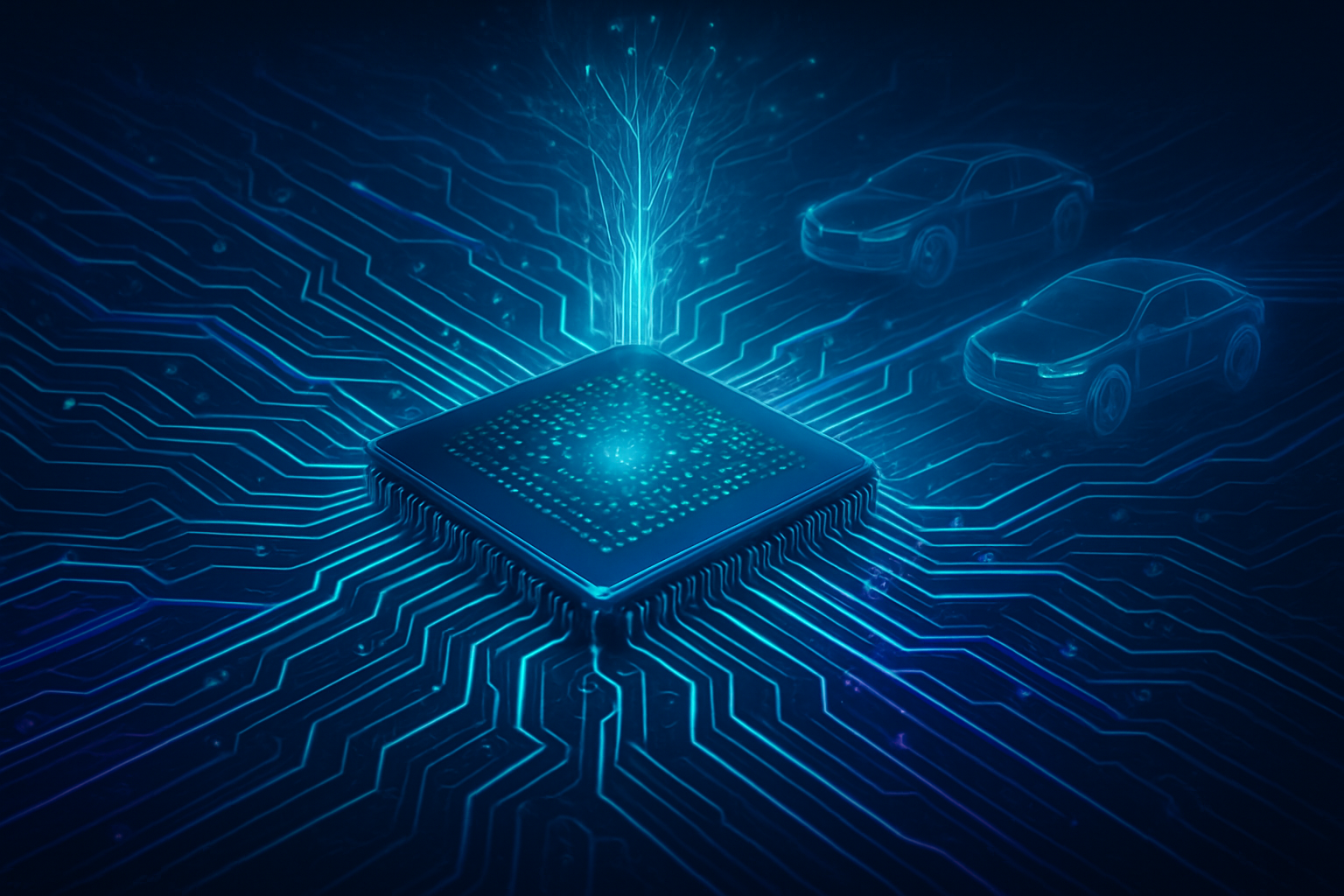
    The Silicon Lifeline: Geopolitical Fissures and the Future of Automotive Innovation

    As of late October 2025, the global automotive industry finds itself in a precarious yet transformative period, where its very pulse—from daily production lines to groundbreaking technological leaps—is dictated by the intricate world of semiconductor manufacturing. These minuscule yet mighty chips are no longer mere components; they are the digital sinews of modern vehicles, underpinning everything from basic operational controls to the most ambitious advancements in autonomous driving and electrification. However, a fresh wave of supply chain disruptions, intensified by escalating geopolitical tensions, is once again casting a long shadow over global vehicle production, threatening to derail an industry still recovering from past shortages.

    The immediate crisis, exemplified by a recent dispute involving the Dutch chipmaker Nexperia, underscores the fragility of this critical interdependence. With the Dutch government's seizure of Nexperia and subsequent retaliatory measures from Beijing, major automakers are facing imminent production stoppages. This ongoing volatility highlights that while lessons were ostensibly learned from the COVID-era chip shortages, the global supply chain for essential semiconductor components remains exceptionally vulnerable, demanding urgent strategic recalibrations from manufacturers and governments alike.

    The Digital Engine: How Chips Power Automotive's Technological Revolution

    Beyond the immediate supply chain anxieties, semiconductors are the undisputed architects of innovation within the automotive sector, responsible for over 90% of all advancements. They are transforming conventional cars into sophisticated, software-defined computing platforms, a paradigm shift that demands increasingly powerful and specialized silicon. The automotive semiconductor market, projected to exceed $67 billion by the end of 2025 and potentially $130 billion by 2029, is driven by several interconnected megatrends, each demanding unique chip architectures and capabilities.

    The electrification revolution, for instance, is profoundly chip-intensive. Electric Vehicles (EVs) typically contain two to three times more semiconductors than their internal combustion engine (ICE) counterparts, with some estimates placing the chip count at 1,300 for an EV compared to around 600 for a petrol car. Critical to EV efficiency are power semiconductors like Silicon Carbide (SiC) and Gallium Nitride (GaN). These advanced materials can handle higher operating voltages and faster switching frequencies than traditional silicon, leading to significantly smaller, lighter, and more efficient inverters—components crucial for converting battery power to drive the electric motors. This technological leap directly translates into extended range, faster charging, and improved vehicle performance.

    Furthermore, the relentless pursuit of Advanced Driver-Assistance Systems (ADAS) and fully autonomous driving capabilities hinges entirely on high-performance processing power. These systems require sophisticated System-on-Chips (SoCs), graphics processing units (GPUs), and specialized AI accelerators to perform real-time sensor fusion from cameras, radar, lidar, and ultrasonic sensors, execute complex AI algorithms for perception and decision-making, and manage in-vehicle inferencing. This necessitates chips capable of tera-operations per second (TOPS) of compute, far exceeding the requirements of traditional automotive microcontrollers (MCUs). The integration of next-generation CMOS image sensors with built-in high-speed interfaces, offering high dynamic range and lower power consumption, is also pivotal for enhancing the fidelity and reliability of automotive camera systems.

    The advent of Software-Defined Vehicles (SDVs) represents another fundamental shift, where software dictates vehicle functions and features, enabling over-the-air updates and personalized experiences. This necessitates a robust and adaptable semiconductor architecture that can support complex software stacks, hypervisors, and powerful central compute units. Unlike previous generations where ECUs (Electronic Control Units) were siloed for specific functions, SDVs demand a more centralized, domain-controller, or even zonal architecture, requiring high-bandwidth communication chips and processors capable of managing diverse workloads across the vehicle's network. Initial reactions from the automotive engineering community emphasize the need for tighter collaboration with chip designers to co-create these integrated hardware-software platforms, moving away from a purely supplier-customer relationship.

    Reshaping the Landscape: Corporate Strategies in the Silicon Age

    The escalating reliance on semiconductors has fundamentally reshaped corporate strategies across both the automotive and chip manufacturing sectors. As of late October 2025, automakers are increasingly viewing chips as core strategic assets, leading to a notable trend towards greater vertical integration and direct engagement with semiconductor producers. This shift is creating distinct beneficiaries and competitive challenges, redrawing the lines of influence and innovation.

    Among automakers, Tesla (NASDAQ: TSLA) remains a trailblazer in in-house chip design, exemplified by its AI4 and the newer AI5 chips. The AI5, designed for its self-driving vehicles, Optimus robots, and data centers, is touted to offer up to 40 times the performance of its predecessor and be 10 times more cost-efficient than off-the-shelf AI inference chips for Tesla-specific workloads. This aggressive vertical integration, with manufacturing partners like Samsung (KRX: 005930) and TSMC (NYSE: TSM), allows Tesla unparalleled optimization of hardware and software for its Full Self-Driving (FSD) capabilities, giving it a significant competitive edge in autonomous technology. Other major players are following suit: Volkswagen (FWB: VOW), for instance, has proactively overhauled its procurement, establishing direct channels with manufacturers like Intel (NASDAQ: INTC) and NXP Semiconductors (NASDAQ: NXPI), signing long-term agreements, and investing in R&D partnerships for customized chips. Similarly, General Motors (NYSE: GM) aims to develop its own "family of microchips" by 2025 to standardize components, reduce complexity, and enhance supply control. Even Toyota (NYSE: TM), a titan known for its lean manufacturing, has embarked on in-house chip development through a joint venture with Denso, recognizing the strategic imperative of silicon mastery.

    On the semiconductor manufacturing side, companies specializing in high-performance, automotive-grade chips are experiencing robust demand. Nvidia (NASDAQ: NVDA) stands as a dominant force in AI and autonomous driving, leveraging its comprehensive NVIDIA DRIVE platform (e.g., DRIVE AGX Thor) and securing major partnerships with companies like Uber, Stellantis, and Mercedes-Benz for Level 4 autonomous fleets. While Tesla designs its own inference chips, it still relies on Nvidia hardware for AI model training, underscoring Nvidia's foundational role in the AI ecosystem. NXP Semiconductors (NASDAQ: NXPI) continues to strengthen its leadership with solutions like S32K5 MCUs for Software-Defined Vehicles (SDVs) and S32R47 radar processors for L2+ autonomous driving, bolstered by recent acquisitions of Aviva Links and Kinara to enhance in-vehicle connectivity and AI capabilities. Infineon Technologies AG (FWB: IFX) remains a critical supplier, particularly for power semiconductors essential for EVs and hybrid vehicles, strengthening ties with automakers like Hyundai. Meanwhile, TSMC (NYSE: TSM), as the world's largest contract chipmaker, is a significant beneficiary of the surging demand for advanced processors, reporting record profits driven by AI and high-performance computing, making it an indispensable partner for cutting-edge chip design.

    The competitive landscape is marked by shifting power dynamics. Automakers bringing chip design in-house challenge the traditional Tier 1 and Tier 2 supplier models, fostering more direct relationships with foundries and specialized chipmakers. This increased vertical integration blurs the lines between traditional sectors, transforming automakers into technology companies. However, this also introduces new vulnerabilities, as demonstrated by the recent Nexperia dispute. Even for basic components, geopolitical tensions can create immediate and significant supply chain disruptions, impacting companies like Ford (NYSE: F) and Volkswagen, who, as members of industry alliances, have urged for swift resolutions. The ability to offer scalable, high-performance, and energy-efficient AI-centric architectures, coupled with robust software support, is now paramount for chipmakers seeking market leadership, while automakers are strategically positioning themselves through a hybrid approach: developing critical chips internally while forging direct, long-term partnerships for specialized components and foundry services.

    Beyond the Assembly Line: Societal Shifts and Ethical Frontiers

    The profound integration of semiconductors into the automotive industry transcends mere manufacturing efficiency; it represents a pivotal shift in the broader AI landscape and global technological trends, carrying immense societal implications and raising critical ethical and geopolitical concerns. This evolution marks a new, more complex phase in the journey of artificial intelligence.

    In the broader AI landscape, the automotive sector is a primary driver for the advancement of "edge AI," where sophisticated AI processing occurs directly within the vehicle, minimizing reliance on cloud connectivity. This necessitates the development of powerful yet energy-efficient Neural Processing Units (NPUs) and modular System-on-Chip (SoC) architectures, pushing the boundaries of chip design. Companies like Nvidia (NASDAQ: NVDA), Qualcomm (NASDAQ: QCOM), and Intel (NASDAQ: INTC) are at the forefront, creating integrated solutions that combine AI, GPUs, and CPUs for high-performance vehicle computing. The shift towards Software-Defined Vehicles (SDVs), where software's share of vehicle cost is projected to double by 2030, further amplifies the demand for advanced silicon, creating vast opportunities for AI software and algorithm developers specializing in sensor fusion, decision-making, and over-the-air (OTA) updates. The automotive semiconductor market itself is poised for exponential growth, projected to reach nearly $149 billion by 2030, with AI chips in this segment seeing a staggering compound annual growth rate (CAGR) of almost 43% through 2034. This convergence of AI, electrification, 5G connectivity for Vehicle-to-Everything (V2X) communication, and advanced driver-assistance systems (ADAS) positions the automotive industry as a crucible for cutting-edge technological development.

    Societally, the deep integration of semiconductors and AI promises transformative benefits. Enhanced safety is a primary outcome, with AI-powered semiconductors improving accident prevention through superior object detection, faster decision-making, and more accurate ADAS features, ultimately making roads safer. Autonomous vehicles, enabled by these advanced chips, hold the potential to optimize traffic flow, reduce congestion, and lead to significant cost savings in infrastructure by more efficiently utilizing existing road systems. Furthermore, this technological leap fosters new business models, including personalized insurance and subscription-based vehicle functions, and contributes to environmental sustainability through optimized fuel efficiency and improved battery management in EVs. However, this also implies significant shifts in employment, requiring new expertise in AI, robotics, and self-driving car professionals.

    Yet, this transformative role introduces substantial concerns. Supply chain resilience remains a critical vulnerability, vividly demonstrated by the Nexperia crisis in October 2025, where geopolitical tensions between the Netherlands, China, and the U.S. led to halted chip exports from China, causing production cuts at major automakers. Even "basic" chips, ubiquitous in systems like climate control and speedometers, can trigger widespread disruption due to their deep integration and the lengthy re-qualification processes for alternative components. Geopolitical factors are increasingly weaponizing technology policy, making the semiconductor landscape a critical battleground, driving calls for "de-globalization" or "friend-shoring" to prioritize supply chain resilience over pure economic efficiency. Moreover, the deployment of AI in autonomous vehicles raises complex ethical considerations regarding safety, responsibility, and liability. Concerns include potential biases in AI systems (e.g., in pedestrian detection), the challenge of determining responsibility in accidents, the need for transparency and explainability in opaque machine learning models, and the imperative for human-centric design that prioritizes human life, integrity, freedom of choice, and privacy.

    Compared to previous AI milestones, the current evolution in automotive AI represents a significant leap. Earlier applications, such as basic navigation and automated parking in the 1990s and 2000s, were largely based on rule-based systems. Today's automotive AI leverages sophisticated machine learning and deep learning algorithms to process vast amounts of real-time data from diverse sensors, enabling far more nuanced and dynamic decision-making in complex real-world environments. This marks a shift from isolated, task-specific AI (like chess-playing computers) to comprehensive environmental understanding and complex, safety-critical decision-making in pervasive, real-world commercial applications, moving AI beyond impressive demonstrations to widespread, daily operational impact.

    The Road Ahead: Innovations, Challenges, and a Connected Future

    The trajectory of automotive semiconductors points towards a future of unprecedented innovation, driven by the relentless pursuit of autonomous driving, widespread electrification, and hyper-connectivity. Experts anticipate a significant surge in both the complexity and value of chips integrated into vehicles, fundamentally reshaping mobility in the near and long term. The automotive chip market is projected to reach nearly $149 billion by 2030, with the average semiconductor content per vehicle increasing by 40% to over $1,400 within the same period.

    In the near term (2025-2030), several key technological advancements are set to accelerate. The widespread adoption of Wide-Bandgap (WBG) semiconductors like Silicon Carbide (SiC) and Gallium Nitride (GaN) will be a dominant trend, particularly for 800V and higher voltage Electric Vehicle (EV) systems. SiC is expected to lead in power electronics, enhancing efficiency, extending range, and enabling faster charging, while GaN gains traction for onboard chargers and power inverters, promising further miniaturization and efficiency. The industry is also rapidly moving towards centralized computing architectures, consolidating from distributed Electronic Control Units (ECUs) to more powerful domain controllers and zonal architectures. This requires high-performance Systems-on-Chip (SoCs), specialized AI accelerators (such as Neural Processing Units or NPUs), and high-speed memory chips designed for complex machine learning algorithms and real-time decision-making in autonomous systems. The modularity, scalability, and cost-effectiveness of chiplet designs will also become more prevalent, allowing for flexible and efficient solutions for future vehicle platforms.

    Looking further ahead (beyond 2030), the long-term impact will be transformative. While Level 3 autonomous driving is expected to become more common by 2030, Level 5 (full autonomy without human intervention) is anticipated well into the 2040s or beyond, demanding exponentially more sophisticated silicon to manage massive volumes of data. This will underpin a future of enhanced safety, reduced congestion, and highly personalized mobility experiences. Potential applications span advanced autonomous driving levels (from L2/3 becoming standard to L4/5 requiring massive sensor fusion and AI processing), widespread Vehicle-to-Everything (V2X) communication facilitated by 5G for enhanced safety and traffic management, and significant advancements in electrification, with SiC and GaN revolutionizing EV power management for extended range and quicker charging, especially for 800V platforms. The in-cabin experience will also see significant upgrades, with semiconductors powering AI-driven diagnostics, real-time navigation, and sophisticated infotainment systems.

    However, this promising outlook is tempered by several significant challenges. The high cost of cutting-edge materials like SiC and the overall increased semiconductor content will significantly raise vehicle production costs, with fully autonomous driving potentially leading to a tenfold increase in chip cost per vehicle. Managing power consumption and ensuring energy-efficient designs are critical, especially for battery-powered EVs with soaring computational demands. Cybersecurity risks will escalate with increasing vehicle connectivity, necessitating robust hardware and encryption. Regulatory frameworks for autonomous vehicles and stringent safety standards (like ISO 26262) still require extensive development and harmonization. Moreover, persistent semiconductor shortages, exacerbated by geopolitical tensions, continue to challenge supply chain resilience, driving some automakers towards in-house chip design. Experts predict that the automotive semiconductor market will grow five times faster than the overall automotive market, with EV production representing over 40% of total vehicle production by 2030. This will foster strategic partnerships and further vertical integration, with a few dominant players likely emerging in the consolidated automotive AI chip market, marking a fundamental architectural shift in vehicle design.

    The Silicon Future: A Concluding Perspective

    The symbiotic relationship between the semiconductor and automotive industries has never been more critical or complex. The current geopolitical turbulence, as exemplified by the Nexperia dispute, serves as a stark reminder of the fragility of global supply chains and the profound impact even "basic" chips can have on vehicle production. Yet, simultaneously, semiconductors are the indispensable engine driving the automotive sector's most ambitious innovations—from the widespread adoption of electric vehicles and sophisticated ADAS to the transformative vision of fully autonomous, software-defined vehicles.

    This era marks a significant inflection point in AI history, moving beyond isolated breakthroughs to the pervasive integration of intelligent systems into safety-critical, real-world applications. The shift towards in-house chip design by automakers like Tesla (NASDAQ: TSLA), Volkswagen (FWB: VOW), and General Motors (NYSE: GM), alongside the strategic positioning of chipmakers like Nvidia (NASDAQ: NVDA), NXP Semiconductors (NASDAQ: NXPI), and Infineon Technologies AG (FWB: IFX), underscores a fundamental re-evaluation of value chains and competitive strategies. The long-term impact promises safer roads, optimized mobility, and entirely new service models, but these benefits are contingent on addressing formidable challenges: ensuring supply chain resilience, navigating complex geopolitical landscapes, establishing robust ethical AI frameworks, and managing the escalating costs and power demands of advanced silicon.

    In the coming weeks and months, all eyes will remain on the resolution of ongoing geopolitical disputes affecting chip supply, the accelerated development of next-generation power semiconductors for EVs, and the continued evolution of AI-powered SoCs for autonomous driving. The journey towards a fully digitized and autonomous automotive future is undeniably paved with silicon, and its path will be defined by the industry's ability to innovate, collaborate, and adapt to an ever-changing technological and geopolitical environment.


    This content is intended for informational purposes only and represents analysis of current AI developments.

    TokenRing AI delivers enterprise-grade solutions for multi-agent AI workflow orchestration, AI-powered development tools, and seamless remote collaboration platforms.
    For more information, visit https://www.tokenring.ai/.

  • GE Vernova Electrifies the Market: Soaring Orders, Strategic Acquisition Fueling Energy and Manufacturing Boom

    GE Vernova Electrifies the Market: Soaring Orders, Strategic Acquisition Fueling Energy and Manufacturing Boom

    Boston, MA – October 23, 2025 – GE Vernova (NYSE: GEV), the global energy powerhouse, is making significant waves in the market, demonstrating robust stock performance, an unprecedented surge in organic orders, and a strategic move to fully acquire Prolec GE. These developments signal a major growth trajectory not only for the company itself but also for the broader energy and manufacturing sectors, positioning GE Vernova as a pivotal player in the ongoing global energy transition and grid modernization efforts.

    Since its spin-off from General Electric in April 2024, GE Vernova has rapidly established its independence and market leadership. The company's strategic focus on power generation, grid infrastructure, and wind energy has resonated with investors and customers alike, driving impressive financial results and a clear path for future expansion. The full acquisition of Prolec GE, a critical player in transformer manufacturing, underscores Vernova's commitment to strengthening its core electrification business and capitalizing on the surging demand for robust and resilient energy infrastructure.

    Powering Ahead: Detailed Performance and Strategic Maneuvers

    GE Vernova's journey as an independent entity began with its debut on the New York Stock Exchange (NYSE: GEV) on April 2, 2024, opening at $142.85. The stock has since delivered a stellar performance, rallying from the low $100s to the low $600s, boasting an 87% year-to-date rally as of September 2, 2025, and a remarkable 116.42% increase over the past year. While experiencing minor fluctuations recently, with a closing price of $576.00 on October 22, 2025, analysts maintain a strong positive outlook, with estimates reaching up to $760.00 USD.

    The company's financial results for 2025 have been particularly strong. In the third quarter of 2025, GE Vernova reported total orders of $14.6 billion, a substantial 55% organic increase year-over-year. Revenue hit $10.0 billion, up 12% (10% organically), exceeding analyst expectations. The Power segment saw orders surge 50% organically to $7.8 billion, driven by robust gas power equipment demand. The Electrification segment emerged as the fastest-growing, with orders soaring 102% organically to $5.1 billion and revenue increasing 35%, primarily fueled by hyperscale data center demand, which contributed $400 million in orders in Q3 alone. This performance built on a strong second quarter, where total orders grew 4% organically to $12.4 billion, and revenue reached $9.1 billion, up 11% (12% organically). The total backlog now stands at an impressive $135 billion, indicating sustained future revenue.

    A cornerstone of GE Vernova's strategic growth is its planned acquisition of the remaining 50% stake in Prolec GE, its unconsolidated joint venture with Xignux, for $5.275 billion. Announced on October 21, 2025, and expected to close by mid-2026, this move is set to significantly accelerate the growth of the Electrification segment. Prolec GE, a leading transformer manufacturer, is projected to achieve $3 billion in revenue in 2025 with an adjusted EBITDA margin of approximately 25%, and is expected to contribute an incremental $0.6 billion in EBITDA to GE Vernova in 2026. This acquisition directly addresses the rapidly expanding demand for grid equipment, especially in North America, propelled by new energy policies and the insatiable power needs of data centers.

    Reshaping the Energy Landscape: Industry Impact and Competitive Dynamics

    GE Vernova's aggressive expansion and strategic acquisitions are poised to reshape the competitive landscape within the energy and manufacturing sectors. By fully integrating Prolec GE, the company significantly strengthens its position in the critical grid infrastructure market, directly challenging competitors in power transmission and distribution. The intensified focus on electrification, driven by the burgeoning demand from hyperscale data centers and the broader energy transition, positions GE Vernova to capture a larger share of a rapidly expanding market. This move could put pressure on other industrial giants and specialized grid component manufacturers to accelerate their own investment and innovation in these areas.

    The company's advancements in Small Modular Reactors (SMRs), with projects like the BWRX-300 seeing construction and regulatory approvals, also highlight its commitment to diverse, clean energy solutions. This positions GE Vernova as a key player in the future of nuclear power, a sector seeing renewed interest for its reliability and low-carbon footprint. While the Wind segment faces ongoing challenges due to permitting delays and tariffs, the strategic portfolio optimization, including the sale of its Proficy® manufacturing software business to TPG for $0.6 billion, demonstrates a disciplined approach to focusing on core, high-growth areas. The emphasis on digital solutions and predictive maintenance, often powered by AI, across its power and electrification assets, will further enhance operational efficiency and differentiate its offerings in a competitive market.

    Broader Significance: Fueling the Future of Energy

    GE Vernova's trajectory is deeply intertwined with the broader global push for energy transition and grid modernization. Its robust order book, particularly in electrification, underscores the massive investments being made worldwide to upgrade aging infrastructure, integrate renewable energy sources, and meet the escalating power demands of digitalization. The company's focus on grid equipment is crucial for building resilient, smart grids capable of handling distributed energy resources and ensuring energy security. This aligns perfectly with global trends aiming for decarbonization and sustainable development.

    The strategic emphasis on supporting hyperscale data centers is particularly significant. As AI, cloud computing, and digital services continue their exponential growth, the energy footprint of these facilities is becoming a critical concern. GE Vernova's ability to provide the necessary power generation and grid solutions directly addresses this challenge, enabling the expansion of the digital economy while striving for more efficient and cleaner energy delivery. The company's commitment to manufacturing expansion and job creation, such as the 250 new jobs at its Charleroi, Pennsylvania factory, also has positive societal impacts, reinforcing domestic supply chains and contributing to economic growth in key industrial regions.

    The Road Ahead: Innovation and Integration

    Looking forward, GE Vernova is poised for continued growth, particularly as the Prolec GE acquisition is finalized by mid-2026. The integration of Prolec GE's manufacturing capabilities will likely lead to enhanced operational synergies and a stronger competitive edge in the transformer market. Experts anticipate sustained high organic revenue growth in the Electrification segment, potentially driven by further innovations in smart grid technologies, energy storage solutions, and advanced power electronics. The company's reaffirmed 2025 financial guidance, with revenue trending towards the higher end of its $36-$37 billion range and a significantly boosted free cash flow outlook of $3.0-$3.5 billion, reflects confidence in its strategic direction.

    Challenges remain, particularly within the Wind segment, which continues to grapple with permitting delays, supply chain issues, and tariff impacts. Addressing these headwinds will be critical for achieving balanced growth across its portfolio. However, the ongoing advancements in Small Modular Reactors (SMRs) and strategic alliances, such as with GE Vernova Hitachi Nuclear Energy and Samsung C&T, suggest a long-term vision for providing diverse, reliable, and clean power solutions. The company's continued investment in research and development, particularly in areas like advanced materials for turbines and intelligent grid controls, will be crucial for maintaining its leadership in a rapidly evolving energy landscape.

    A New Era for Industrial Power

    GE Vernova's recent performance, marked by impressive stock gains, an organic order surge, and the strategic acquisition of Prolec GE, undeniably signals a new era for industrial power and energy infrastructure. The company is not merely participating in the energy transition; it is actively shaping it, providing essential technologies for power generation, grid modernization, and electrification. Its focused approach on high-growth segments, coupled with disciplined portfolio management, positions it as a resilient and dynamic force in the global economy.

    The next few months will be crucial for observing the seamless integration of Prolec GE and the continued execution of GE Vernova's electrification strategy. Investors and industry watchers will also be keenly observing how the company navigates the persistent challenges in its Wind segment and capitalizes on emerging opportunities in advanced nuclear and digital grid solutions. As the world accelerates its shift towards cleaner, more reliable, and decentralized energy systems, GE Vernova stands as a testament to the transformative power of strategic vision and operational excellence in the industrial sector.


    This content is intended for informational purposes only and represents analysis of current AI developments.

    TokenRing AI delivers enterprise-grade solutions for multi-agent AI workflow orchestration, AI-powered development tools, and seamless remote collaboration platforms.
    For more information, visit https://www.tokenring.ai/.