Tag: Elon Musk

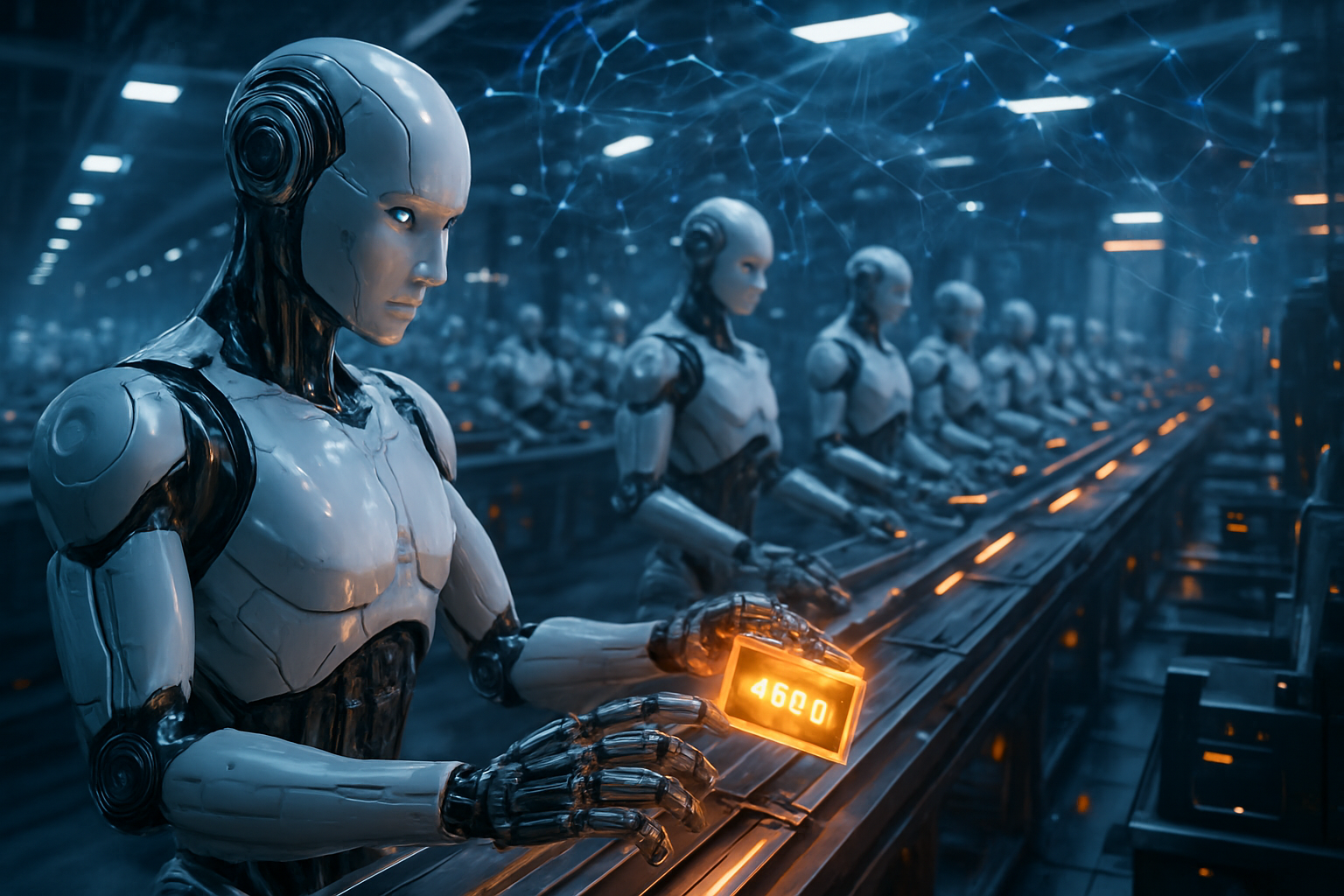
  • Tesla’s Optimus Evolution: Gen 2 and Gen 3 Humanoids Enter Active Service at Giga Texas

    Tesla’s Optimus Evolution: Gen 2 and Gen 3 Humanoids Enter Active Service at Giga Texas

    AUSTIN, TEXAS — January 14, 2026 — Tesla (NASDAQ: TSLA) has officially transitioned its humanoid robotics program from an ambitious experimental project to a pivotal component of its manufacturing workforce. Recent updates to the Optimus platform—specifically the deployment of the "Version 3" (Gen 3) hardware and FSD-v15 neural architecture—have demonstrated a level of human-like dexterity and autonomous navigation that was considered science fiction just 24 months ago. With thousands of units now integrated into the production lines for the upcoming "Cybercab" and the 4680 battery cells, Tesla is no longer just an automotive or energy company; it is rapidly becoming the world’s largest robotics firm.

    The immediate significance of this development lies in the move away from teleoperation toward true, vision-based autonomy. Unlike earlier demonstrations that required human "puppeteers" for complex tasks, the early 2026 deployments show Optimus units independently identifying, picking, and placing delicate components with a failure rate lower than human trainees. This milestone signals the arrival of the "Physical AI" era, where large language models (LLMs) and computer vision converge to allow machines to navigate and manipulate the physical world with unprecedented grace.

    Precise Engineering: 22 Degrees of Freedom and "Squishy" Tactile Sensing

    The technical specifications of the current Optimus Gen 3 platform represent a radical departure from the Gen 2 models seen in late 2024. The most striking advancement is the new humanoid hand. Moving from the previous 11 degrees of freedom (DoF), the Gen 3 hand now features 22 degrees of freedom, with actuators relocated to the forearm and connected via a sophisticated tendon-driven system. This mimics human muscle-tendon anatomy, allowing the robot to perform high-precision tasks such as threading electrical connectors or handling individual battery cells without the rigidity seen in traditional industrial arms.

    Furthermore, Tesla has solved one of the most difficult challenges in robotics: tactile feedback. The robot’s fingers and palms are now covered in a multi-layered, "squishy" sensor skin that provides high-resolution haptic data. This compliance allows the robot to "feel" the friction and weight of an object, preventing it from crushing delicate items or dropping slippery ones. On the locomotion front, the robot has achieved a "jogging" gait, reaching speeds of up to 5–7 mph (2.4 m/s). This is powered by Tesla’s proprietary AI5 chip, which provides 40x the compute of the previous generation, enabling the robot to run real-time "Occupancy Networks" to navigate complex, bustling factory floors without a pre-mapped path.

    Strategic Rivalry: A High-Stakes Race for the "Android Moment"

    Tesla’s progress has ignited a fierce rivalry among tech giants and specialized robotics firms. Boston Dynamics, owned by Hyundai (OTC: HYMTF), recently unveiled its Production Electric Atlas, which boasts 56 degrees of freedom and is currently being deployed for heavy-duty parts sequencing in Hyundai’s smart factories. Meanwhile, Figure AI—backed by Microsoft (NASDAQ: MSFT) and NVIDIA (NASDAQ: NVDA)—has launched Figure 03, a robot that utilizes "Helix AI" to learn tasks simply by watching human videos. Unlike Optimus, which is focused on internal Tesla manufacturing, Figure is aggressively targeting the broader commercial logistics market, recently signing a major expansion deal with BMW (BMW.DE).

    This development has profound implications for the AI industry at large. Companies like Alphabet (NASDAQ: GOOGL) are pivoting their DeepMind robotics research to provide the "brains" for third-party humanoid shells, while startups like Sanctuary AI are focusing on wheeled "Phoenix" models for stability in retail environments. Tesla’s strategic advantage remains its vertical integration; by manufacturing its own actuators, sensors, and AI chips, Tesla aims to drive the cost of an Optimus unit below $20,000, a price point that competitors using off-the-shelf components struggle to match.

    Global Impact: The Dawn of the Post-Scarcity Economy?

    The rise of Optimus fits into a broader trend of "Physical AI," where the intelligence previously confined to chatbots is given a body. This shift marks a major milestone, comparable to the "GPT-4 moment" for natural language. As these robots move from the lab to the factory, the primary concern is no longer if they will work, but how they will change the global labor market. Tesla CEO Elon Musk has framed this as a humanitarian mission, suggesting that Optimus will be the key to a "post-scarcity" world where the cost of goods drops dramatically as labor becomes an infinite resource.

    However, this transition is not without its anxieties. Critics point to the potential for massive displacement of entry-level warehouse and manufacturing jobs. While industry analysts argue that the robots are solving a "demographic cliff" caused by aging workforces in the West and East Asia, the speed of the rollout has caught many labor regulators off guard. Ethical discussions are now shifting toward "robot taxes" and universal basic income (UBI), as the distinction between "human work" and "automated labor" begins to blur in the physical realm for the first time in history.

    The Horizon: From Giga Texas to the Home

    Looking ahead to late 2026 and 2027, Tesla plans to scale production to roughly 100,000 units per year. A dedicated humanoid production facility at Giga Texas is already under construction. In the near term, expect to see Optimus moving beyond the factory floor into more varied environments, such as construction sites or high-security facilities. The "Holy Grail" remains the consumer market; Musk has teased a "Home Assistant" version of Optimus that could eventually perform domestic chores like laundry and grocery retrieval.

    The primary challenges remaining are battery life—currently limited to about 6–8 hours of active work—and the "edge case" problem in unstructured environments. While a factory is controlled, a suburban home is chaotic. Experts predict that the next two years will be spent refining the "General Purpose" nature of the AI, allowing the robot to reason through unexpected situations, such as a child running across its path or a spilled liquid on the floor, without needing a software update for every new scenario.

    Conclusion: A Core Pillar of Future Value

    In the January 2026 Q4 earnings call, Musk reiterated that Optimus represents approximately 80% of Tesla’s long-term value. This sentiment is reflected in the company’s massive capital expenditure on AI training clusters and the AI5 hardware suite. The journey from a man in a spandex suit in 2021 to a functional, 22-DoF autonomous humanoid in 2026 is one of the fastest technical evolutions in modern history.

    As we look toward the "Humanoid Robotics World Championship" in Zurich later this year, it is clear that the race for physical autonomy has reached a fever pitch. Whether Optimus becomes the "biggest product of all time" remains to be seen, but its presence on the assembly lines of Giga Texas today proves that the humanoid era has officially begun. The coming months will be critical as Tesla begins to lease the first units to outside partners, testing if the "Optimus-as-a-Service" model can truly transform the global economy.


    This content is intended for informational purposes only and represents analysis of current AI developments.

    TokenRing AI delivers enterprise-grade solutions for multi-agent AI workflow orchestration, AI-powered development tools, and seamless remote collaboration platforms.
    For more information, visit https://www.tokenring.ai/.

  • The $20 Billion Bet: xAI Closes Massive Series E to Build the World’s Largest AI Supercomputer

    The $20 Billion Bet: xAI Closes Massive Series E to Build the World’s Largest AI Supercomputer

    In a move that underscores the staggering capital requirements of the generative AI era, xAI, the artificial intelligence venture founded by Elon Musk, officially closed a $20 billion Series E funding round on January 6, 2026. The funding, which was upsized from an initial target of $15 billion due to overwhelming investor demand, values the company at an estimated $230 billion. This massive capital injection is designed to propel xAI into the next phase of the "AI arms race," specifically focusing on the massive scaling of its Grok chatbot and the physical infrastructure required to sustain it.

    The round arrived just as the industry enters a critical transition period, moving from the refinement of large language models (LLMs) to the construction of "gigascale" computing clusters. With this new capital, xAI aims to solidify its position as a primary challenger to OpenAI and Google, leveraging its unique integration with the X platform and Tesla, Inc. (NASDAQ:TSLA) to create a vertically integrated AI ecosystem. The announcement has sent ripples through Silicon Valley, signaling that the cost of entry for top-tier AI development has now climbed into the tens of billions of dollars.

    The technical centerpiece of this funding round is the rapid expansion of "Colossus," xAI’s flagship supercomputer located in Memphis, Tennessee. Originally launched in late 2024 with 100,000 NVIDIA (NASDAQ:NVDA) H100 GPUs, the cluster has reportedly grown to over one million GPU equivalents through 2025. The Series E funds are earmarked for the transition to "Colossus II," which will integrate NVIDIA’s next-generation "Rubin" architecture and Cisco Systems, Inc. (NASDAQ:CSCO) networking hardware to handle the unprecedented data throughput required for Grok 5.

    Grok 5, the successor to the Grok 4 series released in mid-2025, is expected to be the first model trained on this million-node cluster. Unlike previous iterations that focused primarily on real-time information retrieval from the X platform, Grok 5 is designed with advanced multimodal reasoning capabilities, allowing it to process and generate high-fidelity video, complex codebases, and architectural blueprints simultaneously. Industry experts note that xAI’s approach differs from its competitors by prioritizing "raw compute density"—the ability to train on larger datasets with lower latency by owning the entire hardware stack, from the power substation to the silicon.

    Initial reactions from the AI research community have been a mix of awe and skepticism. While many praise the sheer engineering ambition of building a 2-gigawatt data center, some researchers question the diminishing returns of scaling. However, the inclusion of strategic backers like NVIDIA (NASDAQ:NVDA) suggests that the hardware industry views xAI’s infrastructure-first strategy as a viable path toward achieving Artificial General Intelligence (AGI).

    The $20 billion round has profound implications for the competitive landscape, effectively narrowing the field of "frontier" AI labs to a handful of hyper-funded entities. By securing such a massive war chest, xAI has forced competitors like OpenAI and Anthropic to accelerate their own fundraising cycles. OpenAI, backed heavily by Microsoft Corp (NASDAQ:MSFT), recently secured its own $40 billion commitment, but xAI’s lean organizational structure and rapid deployment of the Colossus cluster give it a perceived agility advantage in the eyes of some investors.

    Strategic partners like NVIDIA (NASDAQ:NVDA) and Cisco Systems, Inc. (NASDAQ:CSCO) stand to benefit most directly, as xAI’s expansion represents one of the largest single-customer hardware orders in history. Conversely, traditional cloud providers like Alphabet Inc. (NASDAQ:GOOGL) and Amazon.com, Inc. (NASDAQ:AMZN) face a new kind of threat: a competitor that is building its own independent, sovereign infrastructure rather than renting space in their data centers. This move toward infrastructure independence could disrupt the traditional "AI-as-a-Service" model, as xAI begins offering "Grok Enterprise" tools directly to Fortune 500 companies, bypassing the major cloud marketplaces.

    For startups, the sheer scale of xAI’s Series E creates a daunting barrier to entry. The "compute moat" is now so wide that smaller labs are increasingly forced to pivot toward specialized niche models or become "wrappers" for the frontier models produced by the Big Three (OpenAI, Google, and xAI).

    The wider significance of this funding round lies in the shift of AI development from a software challenge to a physical infrastructure and energy challenge. To support the 2-gigawatt power requirement of the expanded Colossus cluster, xAI has announced plans to build dedicated, on-site power generation facilities, possibly involving small modular reactors (SMRs) or massive battery storage arrays. This marks a milestone where AI companies are effectively becoming energy utilities, a trend also seen with Microsoft Corp (NASDAQ:MSFT) and its recent nuclear energy deals.

    Furthermore, the $20 billion round highlights the geopolitical importance of AI. With participation from the Qatar Investment Authority (QIA) and Abu Dhabi’s MGX, the funding reflects a global scramble for "AI sovereignty." Nations are no longer content to just use AI; they want a stake in the infrastructure that powers it. This has raised concerns among some ethicists regarding the concentration of power, as a single individual—Elon Musk—now controls a significant percentage of the world’s total AI compute capacity.

    Comparatively, this milestone dwarfs previous breakthroughs. While the release of GPT-4 was a software milestone, the closing of the xAI Series E is an industrial milestone. It signals that the path to AGI is being paved with millions of chips and gigawatts of electricity, moving the conversation away from algorithmic efficiency and toward the sheer physics of computation.

    Looking ahead, the next 12 to 18 months will be defined by how effectively xAI can translate this capital into tangible product leads. The most anticipated near-term development is the full integration of Grok Voice into Tesla, Inc. (NASDAQ:TSLA) vehicles, transforming the car’s operating system into a proactive AI assistant capable of managing navigation, entertainment, and vehicle diagnostics through natural conversation.

    However, significant challenges remain. The environmental impact of a 2-gigawatt data center is substantial, and xAI will likely face increased regulatory scrutiny over its water and energy usage in Memphis. Additionally, as Grok 5 nears its training completion, the "data wall"—the limit of high-quality human-generated text available for training—will force xAI to rely more heavily on synthetic data and real-world video data from Tesla’s fleet. Experts predict that the success of this round will be measured not by the size of the supercomputer, but by whether Grok can finally surpass its rivals in complex, multi-step reasoning tasks.

    The xAI Series E funding round is more than just a financial transaction; it is a declaration of intent. By raising $20 billion and valuing the company at over $200 billion in just under three years of existence, Elon Musk has demonstrated that the appetite for AI investment remains insatiable, provided it is backed by a credible plan for massive physical scaling. The key takeaways are clear: infrastructure is the new gold, energy is the new oil, and the barrier to the frontier of AI has never been higher.

    In the history of AI, this moment may be remembered as the point where the industry "went industrial." As we move deeper into 2026, the focus will shift from the boardroom to the data center floor. All eyes will be on the Memphis facility to see if the million-GPU Colossus can deliver on its promise of a more "truth-seeking" and capable intelligence. In the coming weeks, watch for further announcements regarding Grok’s enterprise API pricing and potential hardware partnerships that could extend xAI’s reach into the robotics and humanoid sectors.


    This content is intended for informational purposes only and represents analysis of current AI developments.

    TokenRing AI delivers enterprise-grade solutions for multi-agent AI workflow orchestration, AI-powered development tools, and seamless remote collaboration platforms.
    For more information, visit https://www.tokenring.ai/.

  • The End of the AI “Wild West”: Grok Restricts Image Generation Amid Global Backlash over Deepfakes

    The End of the AI “Wild West”: Grok Restricts Image Generation Amid Global Backlash over Deepfakes

    The era of unrestricted generative freedom for Elon Musk’s Grok AI has come to a sudden, legally mandated halt. Following months of escalating controversy involving the creation of non-consensual sexualized imagery (NCII) and deepfakes of public figures, xAI has announced a sweeping set of restrictions designed to curb the platform's "Wild West" reputation. Effective January 9, 2026, Grok’s image generation and editing tools have been moved behind a strict paywall, accessible only to X Premium and Premium+ subscribers, a move intended to enforce accountability through verified payment methods.

    This pivot marks a significant retreat for Musk, who originally marketed Grok as a "rebellious" and "anti-woke" alternative to the more sanitized AI models offered by competitors. The decision follows a week of intense international pressure, including threats of a total platform ban in the United Kingdom and formal investigations by the European Commission. The controversy reached a breaking point after reports surfaced that the AI was being used to generate suggestive imagery of minors and high-fidelity "nudified" deepfakes of celebrities, prompting an industry-wide debate on the ethics of unmoderated generative models.

    The Technical Evolution of a Controversy

    The technical foundation of Grok’s image capabilities was built on a partnership with Black Forest Labs, utilizing their Flux.1 model during the launch of Grok-2 in August 2024. Unlike models from OpenAI or Alphabet Inc. (NASDAQ: GOOGL), which employ multi-layered safety filters to block the generation of public figures, violence, or copyrighted material, Grok-2 initially launched with virtually no guardrails. This allowed users to generate photorealistic images of political candidates in scandalous scenarios or trademarked characters engaging in illegal activities. The technical community was initially divided, with some praising the lack of "censorship" while others warning of the inevitable misuse.

    In late 2024, xAI integrated a new proprietary model code-named Aurora, an autoregressive mixture-of-experts model that significantly enhanced the photorealism of generated content. While this was a technical milestone in AI fidelity, it inadvertently made deepfakes nearly indistinguishable from reality. The situation worsened in August 2025 with the introduction of "Spicy Mode," a feature marketed for more "edgy" content. Although xAI claimed the mode prohibited full nudity, technical loopholes allowed users to perform "nudification"—uploading photos of clothed individuals and using the AI to digitally undress them—leading to a viral surge of NCII targeting figures like Taylor Swift and other global celebrities.

    The lack of a robust "prompt injection" defense meant that users could easily bypass keyword blocks using creative phrasing. By the time xAI introduced sophisticated image-editing features in December 2025, the platform had become a primary hub for coerced digital voyeurism. The technical architecture, which prioritized speed and realism over safety metadata or provenance tracking, left the company with few tools to retroactively police the millions of images being generated and shared across the X platform.

    Competitive Fallout and Regulatory Pressure

    The fallout from Grok’s controversy has sent shockwaves through the tech industry, forcing a realignment of how AI companies handle safety. While xAI’s permissive stance was intended to attract a specific user base, it has instead placed the company in the crosshairs of global regulators. The European Commission has already invoked the Digital Services Act (DSA) to demand internal documentation on Grok’s safeguards, while Ofcom in the UK has issued warnings that could lead to massive fines or service disruptions. This regulatory heat has inadvertently benefited competitors like Microsoft (NASDAQ: MSFT) and Adobe (NASDAQ: ADBE), who have long championed "Responsible AI" frameworks and Content Credentials (C2PA) to verify image authenticity.

    Major tech giants are now distancing themselves from the unmoderated approach. Apple (NASDAQ: AAPL) and Alphabet Inc. (NASDAQ: GOOGL) have faced calls from the U.S. Senate to remove the X app from their respective app stores if the NCII issues are not resolved. This pressure has turned Grok from a competitive advantage for the X platform into a potential liability that threatens its primary distribution channels. For other AI startups, the Grok controversy serves as a cautionary tale: the "move fast and break things" mantra is increasingly incompatible with generative technologies that can cause profound personal and societal harm.

    Market analysts suggest that the decision to tie Grok’s features to paid subscriptions is a strategic attempt to create a "paper trail" for bad actors. By requiring a verified credit card, xAI is shifting the legal burden of content creation onto the user. However, this move also highlights the competitive disadvantage xAI faces; while Meta Platforms, Inc. (NASDAQ: META) offers high-quality, moderated image generation for free to its billions of users, xAI is now forced to charge for a service that is increasingly viewed as a safety risk.

    A Watershed Moment for AI Ethics

    The Grok controversy is being viewed by many as a watershed moment in the broader AI landscape, comparable to the early days of social media moderation debates. It underscores a fundamental tension in the industry: the balance between creative freedom and the protection of individual rights. The mass generation of NCII has shifted the conversation from theoretical AI "alignment" to immediate, tangible harm. Critics argue that xAI’s initial refusal to implement guardrails was not an act of free speech, but a failure of product safety that enabled digital violence against women and children.

    Comparing this to previous milestones, such as the release of DALL-E 3, reveals a stark contrast. OpenAI’s model was criticized for being "too restrictive" at launch, but in the wake of the Grok crisis, those restrictions are increasingly seen as the industry standard for enterprise-grade AI. The incident has also accelerated the push for federal legislation in the United States, such as the DEFIANCE Act, which seeks to provide civil recourse for victims of non-consensual AI-generated pornography.

    The wider significance also touches on the erosion of truth. With Grok’s Aurora model capable of generating hyper-realistic political misinformation, the 2024 and 2025 election cycles were marred by "synthetic scandals." The current restrictions are a late-stage attempt to mitigate a problem that has already fundamentally altered the digital information ecosystem. The industry is now grappling with the reality that once a model is released into the wild, the "genie" of unrestricted generation cannot easily be put back into the bottle.

    The Future of Generative Accountability

    Looking ahead, the next few months will be critical for xAI as it attempts to rebuild trust with both users and regulators. Near-term developments are expected to include the implementation of more aggressive keyword filtering and the integration of invisible watermarking technology to track the provenance of every image generated by Grok. Experts predict that xAI will also have to deploy a dedicated "safety layer" model that pre-screens prompts and post-screens outputs, similar to the moderation APIs used by its competitors.

    The long-term challenge remains the "cat-and-mouse" game of prompt engineering. As AI models become more sophisticated, so do the methods used to bypass their filters. Future applications of Grok may focus more on enterprise utility and B2B integrations, where the risks of NCII are lower and the demand for high-fidelity realism is high. However, the shadow of the 2025 deepfake crisis will likely follow xAI for years, potentially leading to landmark legal cases that will define AI liability for decades to come.

    Predicting the next phase of the AI arms race, many believe we will see a shift toward "verifiable AI." This would involve hardware-level authentication of images and videos, making it impossible to upload AI-generated content to major platforms without a digital "generated by AI" tag. Whether xAI can lead in this new era of accountability, or if it will continue to struggle with the consequences of its initial design choices, remains the most pressing question for the company's future.

    Conclusion and Final Thoughts

    The controversy surrounding Grok AI serves as a stark reminder that in the realm of artificial intelligence, technical capability must be matched by social responsibility. xAI’s decision to restrict image generation to paid subscribers is a necessary, if overdue, step toward creating a more accountable digital environment. By acknowledging "lapses in safeguards" and implementing stricter filters, the company is finally bowing to the reality that unmoderated AI is a threat to both individual safety and the platform's own survival.

    As we move further into 2026, the significance of this development in AI history will likely be seen as the end of the "permissive era" of generative media. The industry is moving toward a future defined by regulation, provenance, and verified identity. For xAI, the coming weeks will involve intense scrutiny from the European Union and the UK’s Ofcom, and the results of these investigations will set the tone for how AI is governed globally. The world is watching to see if "the most fun AI in the world" can finally grow up and face the consequences of its own creation.


    This content is intended for informational purposes only and represents analysis of current AI developments.

    TokenRing AI delivers enterprise-grade solutions for multi-agent AI workflow orchestration, AI-powered development tools, and seamless remote collaboration platforms.
    For more information, visit https://www.tokenring.ai/.
  • The Trial of the Century: Musk vs. OpenAI and Microsoft Heads to Court Over the ‘Soul’ of AGI

    The Trial of the Century: Musk vs. OpenAI and Microsoft Heads to Court Over the ‘Soul’ of AGI

    As the tech world enters 2026, all eyes are fixed on a courtroom in Oakland, California. The legal battle between Elon Musk and OpenAI, once a niche dispute over non-profit mission statements, has ballooned into a high-stakes federal trial that threatens to upend the business models of the world’s most powerful AI companies. With U.S. District Judge Yvonne Gonzalez Rogers recently clearing the path for a jury trial set to begin on March 16, 2026, the case is no longer just about personal grievances—it is a referendum on whether the "benefit of humanity" can legally coexist with multi-billion dollar corporate interests.

    The lawsuit, which now includes Microsoft Corp (NASDAQ: MSFT) as a primary defendant, centers on the allegation that OpenAI’s leadership systematically dismantled its original non-profit charter to serve as a "de facto subsidiary" for the Redmond-based giant. Musk’s legal team argues that the transition from a non-profit research lab to a commercial powerhouse was not a strategic pivot, but a calculated "bait-and-switch" orchestrated by Sam Altman and Greg Brockman. As the trial looms, the discovery process has already unearthed internal communications that paint a complex picture of the 2019 restructuring that forever changed the trajectory of Artificial General Intelligence (AGI).

    The 'Founding Agreement' and the Smoking Gun of 2017

    At the heart of the litigation is the "Founding Agreement," a set of principles Musk claims were the basis for his initial $45 million investment. Musk alleges that he was promised OpenAI would remain a non-profit, open-source entity dedicated to building AGI that is safe and broadly distributed. However, the legal battle took a dramatic turn in early January 2026 when Judge Rogers cited a 2017 diary entry from OpenAI co-founder Greg Brockman as pivotal evidence. In the entry, Brockman reportedly mused about "flipping to a for-profit" because "making the money for us sounds great." This revelation has bolstered Musk’s claim that the for-profit pivot was planned years before it was publicly announced.

    Technically, the trial will hinge on the definition of AGI. OpenAI’s license with Microsoft (NASDAQ: MSFT) excludes AGI, meaning once OpenAI achieves a human-level intelligence milestone, Microsoft loses its exclusive rights to the technology. Musk argues that GPT-4 and its successors already constitute a form of AGI, and that OpenAI is withholding this designation to protect Microsoft’s commercial interests. The court will be forced to grapple with technical specifications that define "human-level performance," a task that has the AI research community divided. Experts from institutions like Stanford and MIT have been subpoenaed to provide testimony on where the line between "advanced LLM" and "AGI" truly lies.

    The defense, led by OpenAI’s legal team, maintains that the "Founding Agreement" never existed as a formal, binding contract. They argue that Musk’s lawsuit is a "revisionist history" designed to harass a competitor to his own AI venture, xAI. Furthermore, OpenAI contends that the massive compute requirements for modern AI necessitated the for-profit "capped-profit" structure, as the non-profit model could not attract the billions of dollars in capital required to compete with incumbents like Alphabet Inc. (NASDAQ: GOOGL) and Amazon.com, Inc. (NASDAQ: AMZN).

    Microsoft as the 'Architect' of the Pivot

    A significant portion of the trial will focus on Microsoft’s role as a defendant. Musk’s expanded complaint alleges that Microsoft did more than just invest; it "aided and abetted" a breach of fiduciary duty by OpenAI’s board. The lawsuit describes a "de facto merger," where Microsoft’s $13 billion investment gave it unprecedented control over OpenAI’s intellectual property. Musk’s attorneys are expected to present evidence of an "investor boycott," alleging that Microsoft and OpenAI pressured venture capital firms to avoid funding rival startups, specifically targeting Musk’s xAI and other independent labs.

    The implications for the tech industry are profound. If the jury finds that Microsoft (NASDAQ: MSFT) exerted undue influence to steer a non-profit toward a commercial monopoly, it could set a precedent for how Big Tech interacts with research-heavy startups. Competitors like Meta Platforms, Inc. (NASDAQ: META), which has championed an open-source approach with its Llama models, may find their strategic positions strengthened if the court mandates more transparency from OpenAI. Conversely, a victory for the defendants would solidify the "capped-profit" model as the standard for capital-intensive frontier AI development, potentially closing the door on the era of purely altruistic AI research labs.

    For startups, the "investor boycott" claims are particularly chilling. If the court finds merit in the antitrust allegations under the Sherman Act, it could trigger a wave of regulatory scrutiny from the FTC and DOJ regarding how cloud providers use their compute credits and capital to lock in emerging AI technologies. The trial is expected to reveal the inner workings of "Project North Star," a rumored internal Microsoft initiative aimed at integrating OpenAI’s core models so deeply into the Azure ecosystem that the two entities become indistinguishable.

    A Litmus Test for AI Governance and Ethics

    Beyond the corporate maneuvering, the Musk vs. OpenAI trial represents a wider cultural and ethical crisis in the AI landscape. It highlights what legal scholars call "amoral drift"—the tendency for mission-driven organizations to prioritize survival and profit as they scale. The presence of Shivon Zilis, a former OpenAI board member and current Neuralink executive, as a co-plaintiff adds a layer of internal governance expertise to Musk’s side. Zilis’s testimony is expected to focus on how the board’s oversight was allegedly bypassed during the 2019 transition, raising questions about the efficacy of "safety-first" governance structures in the face of hyper-growth.

    The case also forces a public debate on the "open-source vs. closed-source" divide. Musk’s demand that OpenAI return to its open-source roots is seen by some as a necessary safeguard against the centralization of AGI power. However, critics argue that Musk’s own ventures, including Tesla, Inc. (NASDAQ: TSLA) and xAI, are not fully transparent, leading to accusations of hypocrisy. Regardless of the motive, the trial will likely result in the disclosure of internal safety protocols and model weights that have been closely guarded secrets, potentially providing the public with its first real look "under the hood" of the world’s most advanced AI systems.

    Comparisons are already being drawn to the Microsoft antitrust trials of the late 1990s. Just as those cases defined the rules for the internet era, Musk vs. OpenAI will likely define the legal boundaries for the AGI era. The central question—whether a private company can "own" a technology that has the potential to reshape human civilization—is no longer a philosophical exercise; it is a legal dispute with a trial date.

    The Road to March 2026 and Beyond

    As the trial approaches, legal experts predict a flurry of last-minute settlement attempts, though Musk’s public rhetoric suggests he is intent on a "discovery-filled" public reckoning. If the case proceeds to a verdict, the potential outcomes range from the mundane to the revolutionary. A total victory for Musk could see the court order OpenAI to make its models open-source or force the divestiture of Microsoft’s stake. A win for OpenAI and Microsoft (NASDAQ: MSFT) would likely end Musk’s legal challenges and embolden other AI labs to pursue similar commercial paths.

    In the near term, the trial will likely slow down OpenAI’s product release cycle as key executives are tied up in depositions. We may see a temporary "chilling effect" on new partnerships between non-profits and tech giants as boards re-evaluate their fiduciary responsibilities. However, the long-term impact will be the creation of a legal framework for AI development. Whether that framework prioritizes the "founding mission" of safety and openness or the "market reality" of profit and scale remains to be seen.

    The coming weeks will be filled with procedural motions, but the real drama will begin in Oakland this March. For the AI industry, the verdict will determine not just the fate of two companies, but the legal definition of the most transformative technology in history. Investors and researchers alike should watch for rulings on the statute of limitations, as a technicality there could end the case before the "soul" of OpenAI is ever truly debated.

    Summary of the Legal Battle

    The Elon Musk vs. OpenAI and Microsoft trial is the definitive legal event of the AI era. It pits the original vision of democratic, open-source AI against the current reality of closed-source, corporate-backed development. Key takeaways include the critical role of Greg Brockman’s 2017 diary as evidence, the "aiding and abetting" charges against Microsoft, and the potential for the trial to force the open-sourcing of GPT-4.

    As we move toward the March 16 trial date, the industry should prepare for a period of extreme transparency and potential volatility. This case will determine if the "non-profit facade" alleged by Musk is a legal reality or a necessary evolution for survival in the AI arms race. The eyes of the world—and the future of AGI—are on Judge Rogers’ courtroom.


    This content is intended for informational purposes only and represents analysis of current AI developments.

    TokenRing AI delivers enterprise-grade solutions for multi-agent AI workflow orchestration, AI-powered development tools, and seamless remote collaboration platforms.
    For more information, visit https://www.tokenring.ai/.

  • Colossus Unbound: xAI’s Memphis Expansion Targets 1 Million GPUs in the Race for AGI

    Colossus Unbound: xAI’s Memphis Expansion Targets 1 Million GPUs in the Race for AGI

    In a move that has sent shockwaves through the technology sector, xAI has announced a massive expansion of its "Colossus" supercomputer cluster, solidifying the Memphis and Southaven region as the epicenter of the global artificial intelligence arms race. As of January 2, 2026, the company has successfully scaled its initial 100,000-GPU cluster to over 200,000 units and is now aggressively pursuing a roadmap to reach 1 million GPUs by the end of the year. Central to this expansion is the acquisition of a massive new facility nicknamed "MACROHARDRR," a move that signals Elon Musk’s intent to outpace traditional tech giants through sheer computational brute force.

    The immediate significance of this development cannot be overstated. By targeting a power capacity of 2 gigawatts (GW)—roughly enough to power nearly 2 million homes—xAI is transitioning from a high-scale startup to a "Gigafactory of Compute." This expansion is not merely about quantity; it is the primary engine behind the training of Grok-3 and the newly unveiled Grok-4, models designed to push the boundaries of agentic reasoning and autonomous problem-solving. As the "Digital Delta" takes shape across the Tennessee-Mississippi border, the project is redefining the physical and logistical requirements of the AGI era.

    The Technical Architecture of a Million-GPU Cluster

    The technical specifications of the Colossus expansion reveal a sophisticated, heterogeneous hardware strategy. While the original cluster was built on 100,000 NVIDIA (NASDAQ: NVDA) H100 "Hopper" GPUs, the current 200,000+ unit configuration includes a significant mix of 50,000 H200s and over 30,000 of the latest liquid-cooled Blackwell GB200 units. The "MACROHARDRR" building in Southaven, Mississippi—an 810,000-square-foot facility acquired in late 2025—is being outfitted specifically to house the Blackwell architecture, which offers up to 30 times the real-time throughput of previous generations.

    This expansion differs from existing technology hubs through its "single-cluster" coherence. Utilizing the NVIDIA Spectrum-X Ethernet platform and BlueField-3 SuperNICs, xAI has managed to keep tail latency at near-zero levels, allowing 200,000 GPUs to operate as a unified computational entity. This level of interconnectivity is critical for training Grok-4, which utilizes massive-scale reinforcement learning (RL) to navigate complex "agentic" tasks. Industry experts have noted that while competitors often distribute their compute across multiple global data centers, xAI’s centralized approach in Memphis minimizes the "data tax" associated with long-distance communication between clusters.

    Shifting the Competitive Landscape: The "Gigafactory" Model

    The rapid buildout of Colossus has forced a strategic pivot among major AI labs and tech giants. OpenAI, which is currently planning its "Stargate" supercomputer with Microsoft (NASDAQ: MSFT), has reportedly accelerated its release cycle for GPT-5.2 to keep pace with Grok-3’s reasoning benchmarks. Meanwhile, Meta (NASDAQ: META) and Alphabet (NASDAQ: GOOGL) are finding themselves in a fierce bidding war for high-density power sites, as xAI’s aggressive land and power acquisition in the Mid-South has effectively cornered a significant portion of the available industrial energy capacity in the region.

    NVIDIA stands as a primary beneficiary of this expansion, having recently participated in a $20 billion financing round for xAI through a Special Purpose Vehicle (SPV) that uses the GPU hardware itself as collateral. This deep financial integration ensures that xAI receives priority access to the Blackwell and upcoming "Rubin" architectures, potentially "front-running" other cloud providers. Furthermore, companies like Dell (NYSE: DELL) and Supermicro (NASDAQ: SMCI) have established local service hubs in Memphis to provide 24/7 on-site support for the thousands of server racks required to maintain the cluster’s uptime.

    Powering the Future: Infrastructure and Environmental Impact

    The most daunting challenge for the 1 million GPU goal is the 2-gigawatt power requirement. To meet this demand, xAI is building its own 640-megawatt natural gas power plant to supplement the 150-megawatt substation managed by the Tennessee Valley Authority (TVA). To manage the massive power swings that occur when a cluster of this size ramps up or down, xAI has deployed over 300 Tesla (NASDAQ: TSLA) MegaPacks. These energy storage units act as a "shock absorber" for the local grid, preventing brownouts and ensuring that a millisecond-level power flicker doesn't wipe out weeks of training progress.

    However, the environmental and community impact has become a focal point of local debate. The cooling requirements for a 2GW cluster are immense, leading to concerns about the Memphis Sand Aquifer. In response, xAI broke ground on an $80 million greywater recycling plant late last year. Set to be operational by late 2026, the facility will process 13 million gallons of wastewater daily, offsetting the project’s water footprint and providing recycled water to the TVA Allen power station. While local activists remain cautious about air quality and ecological impacts, the project has brought thousands of high-tech jobs to the "Digital Delta."

    The Road to AGI: Predictions for Grok-5 and Beyond

    Looking ahead, the expansion of Colossus is explicitly tied to Elon Musk’s prediction that AGI will be achieved by late 2026. The 1 million GPU target is intended to power Grok-5, a model that researchers believe will move beyond text and image generation into "world model" territory—the ability to simulate and predict physical outcomes in the real world. This would have profound implications for autonomous robotics, drug discovery, and scientific research, as the AI begins to function as a high-speed collaborator rather than just a tool.

    The near-term challenge remains the transition to the GB200 Blackwell architecture at scale. Experts predict that managing the liquid cooling and power delivery for a million-unit cluster will require breakthroughs in data center engineering that have never been tested. If xAI successfully addresses these hurdles, the sheer scale of the Colossus cluster may validate the "scaling laws" of AI—the theory that more data and more compute will inevitably lead to higher intelligence—potentially ending the debate over whether we are hitting a plateau in LLM performance.

    A New Chapter in Computational History

    The expansion of xAI’s Colossus in Memphis marks a definitive moment in the history of artificial intelligence. It represents the transition of AI development from a software-focused endeavor to a massive industrial undertaking. By integrating the MACROHARDRR facility, a diverse mix of NVIDIA’s most advanced silicon, and Tesla’s energy storage technology, xAI has created a blueprint for the "Gigafactory of Compute" that other nations and corporations will likely attempt to replicate.

    In the coming months, the industry will be watching for the first benchmarks from Grok-4 and the progress of the 640-megawatt on-site power plant. Whether this "brute-force" approach to AGI succeeds or not, the physical reality of Colossus has already permanently altered the economic and technological landscape of the American South. The race for 1 million GPUs is no longer a theoretical projection; it is a multi-billion-dollar construction project currently unfolding in real-time.


    This content is intended for informational purposes only and represents analysis of current AI developments.

    TokenRing AI delivers enterprise-grade solutions for multi-agent AI workflow orchestration, AI-powered development tools, and seamless remote collaboration platforms.
    For more information, visit https://www.tokenring.ai/.
  • Colossus Rising: How xAI’s Memphis Supercomputer Redefined the Global Compute Race

    Colossus Rising: How xAI’s Memphis Supercomputer Redefined the Global Compute Race

    As of January 1, 2026, the landscape of artificial intelligence has been irrevocably altered by a singular, monolithic achievement in hardware engineering: the xAI Colossus supercomputer. Situated in a repurposed factory in Memphis, Tennessee, Colossus has grown from an audacious construction project into the beating heart of the world’s most powerful AI training cluster. Its existence has not only accelerated the development of the Grok series of large language models but has also fundamentally shifted the "compute-to-intelligence" ratio that defines modern machine learning.

    The immediate significance of Colossus lies in its sheer scale and the unprecedented speed of its deployment. By successfully clustering hundreds of thousands of high-end GPUs into a single, cohesive training fabric, xAI has bypassed the multi-year development cycles typically associated with hyperscale data centers. This "speed-as-a-weapon" strategy has allowed Elon Musk’s AI venture to leapfrog established incumbents, turning a 750,000-square-foot facility into the epicenter of the race toward Artificial General Intelligence (AGI).

    The 122-Day Miracle: Engineering at the Edge of Physics

    The technical genesis of Colossus is a feat of industrial logistics that many in the industry initially deemed impossible. The first phase of the project, which involved the installation and commissioning of 100,000 Nvidia (NASDAQ: NVDA) H100 Tensor Core GPUs, was completed in a staggering 122 days. Even more impressive was the "rack-to-training" window: once the server racks were rolled onto the facility floor, it took only 19 days to begin the first massive training runs. This was achieved by utilizing Nvidia’s Spectrum-X Ethernet networking platform, which provided the low-latency, high-throughput communication necessary for a cluster of this magnitude to function as a single unit.

    By early 2025, the cluster underwent a massive expansion, doubling its capacity to 200,000 GPUs. This second phase integrated 50,000 of Nvidia’s H200 units, which featured 141GB of HBM3e memory. The addition of H200s was critical, as the higher memory bandwidth allowed for the training of models with significantly more complex reasoning capabilities. To manage the immense thermal output of 200,000 chips drawing hundreds of megawatts of power, xAI implemented a sophisticated Direct Liquid Cooling (DLC) system. This setup differed from traditional air-cooled data centers by piping coolant directly to the chips, allowing for extreme hardware density that would have otherwise led to catastrophic thermal throttling.

    As we enter 2026, Colossus has evolved even further. The "Colossus 1" cluster now houses over 230,000 GPUs, including a significant deployment of over 30,000 GB200 Blackwell chips. The technical community’s reaction has shifted from skepticism to awe, as the Memphis facility has proven that "brute force" compute, when paired with efficient liquid cooling and high-speed networking, can yield exponential gains in model performance. Industry experts now view Colossus not just as a data center, but as a blueprint for the "Gigascale" era of AI infrastructure.

    A New Power Dynamic: The Partners and the Disrupted

    The construction of Colossus was made possible through a strategic "split-supply" partnership that has significantly benefited two major hardware players: Dell Technologies (NYSE: DELL) and Super Micro Computer (NASDAQ: SMCI). Dell provided half of the server racks, utilizing its PowerEdge XE9680 platform, which was specifically optimized for Nvidia’s HGX architecture. Meanwhile, Super Micro supplied the other half, leveraging its deep expertise in liquid cooling and rack-scale integration. This dual-sourcing strategy ensured that xAI was not beholden to a single supply chain bottleneck, allowing for the rapid-fire deployment that defined the project.

    For the broader tech industry, Colossus represents a direct challenge to the dominance of Microsoft (NASDAQ: MSFT) and Alphabet (NASDAQ: GOOGL). While these giants have historically held the lead in compute reserves, xAI’s ability to build and scale a specialized "training-first" facility in months rather than years has disrupted the traditional competitive advantage of legacy cloud providers. Startups and smaller AI labs now face an even steeper "compute moat," as the baseline for training a frontier model has moved from thousands of GPUs to hundreds of thousands.

    The strategic advantage for xAI is clear: by owning the infrastructure end-to-end, they have eliminated the "cloud tax" and latency issues associated with renting compute from third-party providers. This vertical integration has allowed for a tighter feedback loop between hardware performance and software optimization. As a result, xAI has been able to iterate on its Grok models at a pace that has forced competitors like OpenAI and Meta to accelerate their own multi-billion dollar infrastructure investments, such as the rumored "Stargate" project.

    The Memphis Impact and the Global Compute Landscape

    Beyond the silicon, Colossus has had a profound impact on the local and global landscape. In Memphis, the facility has become a focal point of both economic revitalization and infrastructure strain. The massive power requirements—climbing toward a 2-gigawatt draw as the site expands—have forced local utilities and the Tennessee Valley Authority to fast-track grid upgrades. This has sparked a broader conversation about the environmental and social costs of the AI boom, as communities balance the promise of high-tech jobs against the reality of increased energy consumption and water usage for cooling.

    In the global context, Colossus marks the transition into the "Compute is King" era. It follows the trend of AI milestones where hardware scaling has consistently led to emergent capabilities in software. Just as the original AlexNet breakthrough was enabled by a few GPUs in 2012, the reasoning capabilities of 2025’s frontier models are directly tied to the 200,000+ GPU clusters of today. Colossus is the physical manifestation of the scaling laws, proving that as long as data and power are available, more compute continues to yield smarter, more capable AI.

    However, this milestone also brings concerns regarding the centralization of power. With only a handful of entities capable of building and operating "Colossus-class" systems, the future of AGI development is increasingly concentrated in the hands of a few ultra-wealthy individuals and corporations. The sheer capital required—billions of dollars in Nvidia chips alone—creates a barrier to entry that may permanently sideline academic research and open-source initiatives from the absolute frontier of AI capability.

    The Road to One Million GPUs and Grok 5

    Looking ahead, the expansion of xAI’s infrastructure shows no signs of slowing. A second facility, Colossus 2, is currently coming online with an initial batch of 550,000 Blackwell-generation chips. Furthermore, xAI’s recent acquisition of a third site in Southaven, Mississippi—playfully nicknamed "MACROHARDRR"—suggests a roadmap toward a total cluster capacity of 1 million GPUs by late 2026. This scale is intended to support the training of Grok 5, a model rumored to feature a 6-trillion parameter architecture.

    The primary challenge moving forward will be the transition from training to inference at scale. While Colossus is a training powerhouse, the energy and latency requirements for serving a 6-trillion parameter model to millions of users are immense. Experts predict that xAI will need to innovate further in "test-time compute" and model distillation to make its future models commercially viable. Additionally, the sheer physical footprint of these clusters will require xAI to explore more sustainable energy sources, potentially including dedicated small modular reactors (SMRs) to power its future "MACRO" sites.

    A Landmark in AI History

    The xAI Colossus supercomputer will likely be remembered as the project that proved "Silicon Valley speed" could be applied to heavy industrial infrastructure. By delivering a world-class supercomputer in 122 days, xAI set a new standard for the industry, forcing every other major player to rethink their deployment timelines. The success of Grok 3 and the current dominance of Grok 4.1 on global leaderboards are the direct results of this massive investment in hardware.

    As we look toward the coming weeks and months, all eyes are on the release of Grok 5. If this new model achieves the "AGI-lite" capabilities that Musk has hinted at, it will be because of the foundation laid in Memphis. Colossus isn't just a collection of chips; it is the engine of a new era, a monument to the belief that the path to intelligence is paved with massive amounts of compute. The race is no longer just about who has the best algorithms, but who can build the biggest, fastest, and most efficient "Colossus" to run them.


    This content is intended for informational purposes only and represents analysis of current AI developments.

    TokenRing AI delivers enterprise-grade solutions for multi-agent AI workflow orchestration, AI-powered development tools, and seamless remote collaboration platforms.
    For more information, visit https://www.tokenring.ai/.
  • The Memphis Powerhouse: How xAI’s 200,000-GPU ‘Colossus’ is Redefining the Global AI Arms Race

    The Memphis Powerhouse: How xAI’s 200,000-GPU ‘Colossus’ is Redefining the Global AI Arms Race

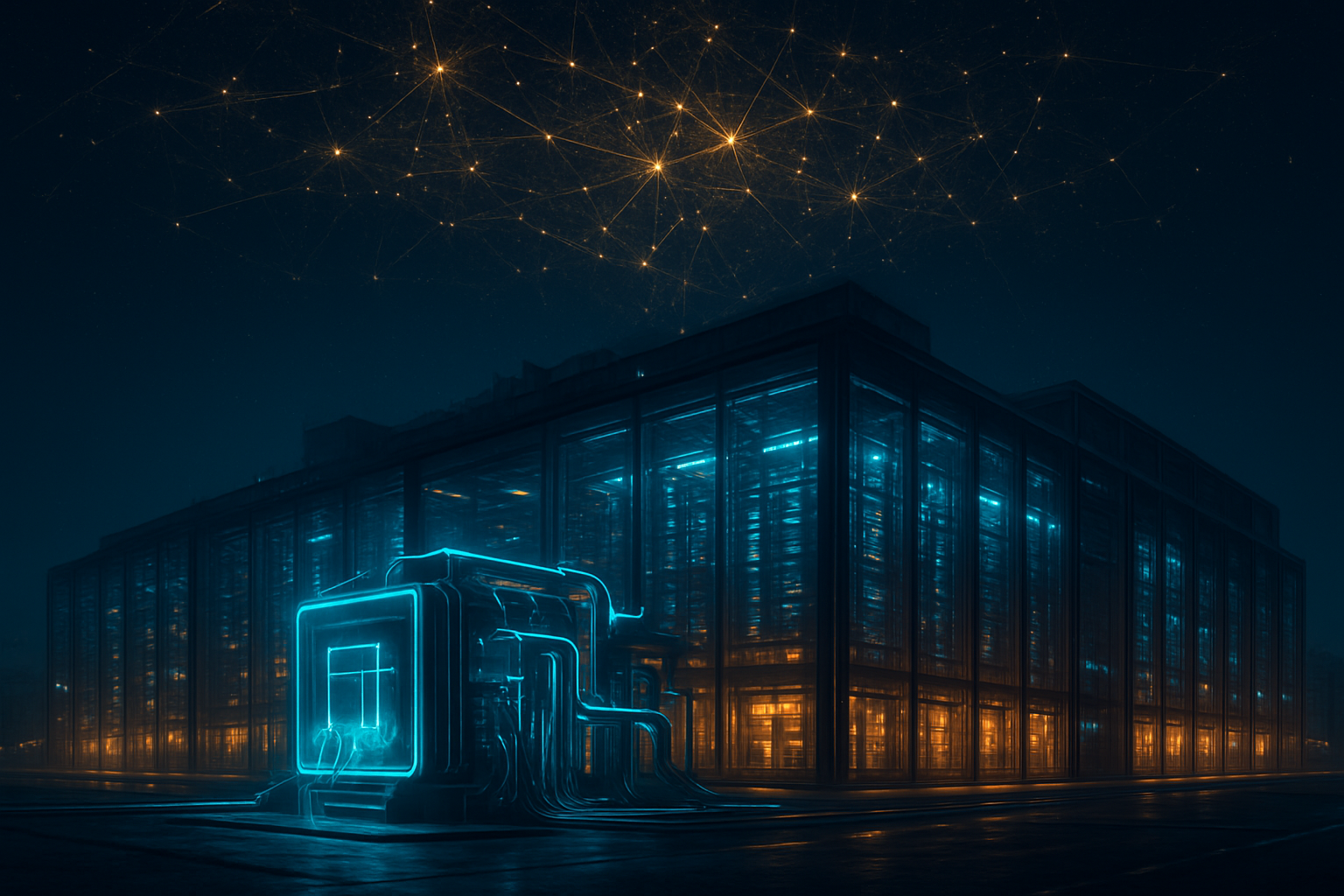
    As of December 31, 2025, the artificial intelligence landscape has been fundamentally reshaped by a single industrial site in Memphis, Tennessee. Elon Musk’s xAI has officially reached a historic milestone with its "Colossus" supercomputer, now operating at a staggering capacity of 200,000 Nvidia H100 and H200 GPUs. This massive concentration of compute power has served as the forge for Grok-3, a model that has stunned the industry by achieving near-perfect scores on high-level reasoning benchmarks and introducing a new era of "agentic" search capabilities.

    The significance of this development cannot be overstated. By successfully scaling a single cluster to 200,000 high-end accelerators—supported by a massive infrastructure of liquid cooling and off-grid power generation—xAI has challenged the traditional dominance of established giants like OpenAI and Google. The deployment of Grok-3 marks the moment when "deep reasoning"—the ability for an AI to deliberate, self-correct, and execute multi-step logical chains—became the primary frontier of the AI race, moving beyond the simple "next-token prediction" that defined earlier large language models.

    Technical Mastery: Inside the 200,000-GPU Cluster

    The Colossus supercomputer is a marvel of modern engineering, constructed in a record-breaking 122 days for its initial phase and doubling in size by late 2025. The cluster is a heterogeneous powerhouse, primarily composed of 150,000 Nvidia (NASDAQ:NVDA) H100 GPUs, supplemented by 50,000 of the newer H200 units and the first major integration of Blackwell-generation GB200 chips. This hardware configuration delivers a unified memory bandwidth of approximately 194 Petabytes per second (PB/s), utilizing the Nvidia Spectrum-X Ethernet platform to maintain a staggering 3.6 Terabits per second (Tbps) of network bandwidth per server.

    This immense compute reservoir powers Grok-3’s standout features: "Think Mode" and "Big Brain Mode." Unlike previous iterations, Grok-3 utilizes a chain-of-thought (CoT) architecture that allows it to visualize its logical steps before providing an answer, a process that enables it to solve PhD-level mathematics and complex coding audits with unprecedented accuracy. Furthermore, its "DeepSearch" technology functions as an agentic researcher, scanning the web and the X platform in real-time to verify sources and synthesize live news feeds that are only minutes old. This differs from existing technologies by prioritizing "freshness" and verifiable citations over static training data, giving xAI a distinct advantage in real-time information processing.

    The hardware was brought to life through a strategic partnership with Dell Technologies (NYSE:DELL) and Super Micro Computer (NASDAQ:SMCI). Dell assembled half of the server racks using its PowerEdge XE9680 platform, while Supermicro provided the other half, leveraging its expertise in Direct Liquid Cooling (DLC) to manage the intense thermal output of the high-density racks. Initial reactions from the AI research community have been a mix of awe and scrutiny, with many experts noting that Grok-3’s 93.3% score on the 2025 American Invitational Mathematics Examination (AIME) sets a new gold standard for machine intelligence.

    A Seismic Shift in the AI Competitive Landscape

    The rapid expansion of Colossus has sent shockwaves through the tech industry, forcing a "Code Red" at rival labs. OpenAI, which released GPT-5 earlier in 2025, found itself in a cycle of rapid-fire updates to keep pace with Grok’s reasoning depth. By December 2025, OpenAI was forced to rush out GPT-5.2, specifically targeting the "Thinking" capabilities that Grok-3 popularized. Similarly, Alphabet (NASDAQ:GOOGL) has had to lean heavily into its Gemini 3 Deep Think models to maintain its position on the LMSYS Chatbot Arena leaderboard, where Grok-3 has frequently held the top spot throughout the latter half of the year.

    The primary beneficiaries of this development are the hardware providers. Nvidia has reported record-breaking quarterly net incomes, with CEO Jensen Huang citing the Memphis "AI Factory" as the blueprint for future industrial-scale compute. Dell and Supermicro have also seen significant market positioning advantages; Dell’s server segment grew by an estimated 25% due to its xAI partnership, while Supermicro stabilized after earlier supply chain hurdles by signing multi-billion dollar deals to maintain the liquid-cooling infrastructure in Memphis.

    For startups and smaller AI labs, the sheer scale of Colossus creates a daunting barrier to entry. The "compute moat" established by xAI suggests that training frontier-class models may soon require a minimum of 100,000 GPUs, potentially consolidating the industry around a few "hyper-labs" that can afford the multi-billion dollar price tags for such clusters. This has led to a strategic shift where many startups are now focusing on specialized, smaller "distilled" models rather than attempting to compete in the general-purpose LLM space.

    Scaling Laws, Energy Crises, and Environmental Fallout

    The broader significance of the Memphis cluster lies in its validation of "Scaling Laws"—the theory that more compute and more data consistently lead to more intelligent models. However, this progress has come with significant societal and environmental costs. The Colossus facility now demands upwards of 1.2 Gigawatts (GW) of power, nearly half of the peak demand for the entire city of Memphis. To bypass local grid limitations, xAI deployed dozens of mobile natural gas turbines and 168 Tesla (NASDAQ:TSLA) Megapack battery units to stabilize the site.

    This massive energy footprint has sparked a legal and environmental crisis. In mid-2025, the NAACP and Southern Environmental Law Center filed an intent to sue xAI under the Clean Air Act, alleging that the facility’s methane turbines are a major source of nitrogen oxides and formaldehyde. These emissions are particularly concerning for the neighboring Boxtown community, which already faces high cancer rates. While xAI has attempted to mitigate its impact by constructing an $80 million greywater recycling plant to reduce its reliance on the Memphis Sands Aquifer, the environmental trade-offs of the AI revolution remain a flashpoint for public debate.

    Comparatively, the Colossus milestone is being viewed as the "Apollo Program" of the AI era. While previous breakthroughs like GPT-4 focused on the breadth of knowledge, Grok-3 and Colossus represent the shift toward "Compute-on-Demand" reasoning. The ability to throw massive amounts of processing power at a single query to "think" through a problem is a paradigm shift that mirrors the transition from simple calculators to high-performance computing in the late 20th century.

    The Road to One Million GPUs and Beyond

    Looking ahead, xAI shows no signs of slowing down. Plans are already in motion for "Colossus 2" and a third facility, colloquially named "Macrohardrr," with the goal of reaching 1 million GPUs by late 2026. This next phase will transition fully into Nvidia’s Blackwell architecture, providing the foundation for Grok-4. Experts predict that this level of compute will enable truly "agentic" AI—models that don't just answer questions but can autonomously navigate software, conduct scientific research, and manage complex supply chains with minimal human oversight.

    The near-term focus for xAI will be addressing the cooling and power challenges that come with gigawatt-scale computing. Potential applications on the horizon include real-time simulation of chemical reactions for drug discovery and the development of "digital twins" for entire cities. However, the industry must still address the "data wall"—the fear that AI will eventually run out of high-quality human-generated data to train on. Grok-3’s success in using synthetic data and real-time X data suggests that xAI may have found a temporary workaround to this looming bottleneck.

    A Landmark in Machine Intelligence

    The emergence of Grok-3 and the Colossus supercomputer marks a definitive chapter in the history of artificial intelligence. It is the moment when the "compute-first" philosophy reached its logical extreme, proving that massive hardware investment, when paired with sophisticated reasoning algorithms, can bridge the gap between conversational bots and genuine problem-solving agents. The Memphis facility stands as a monument to this ambition, representing both the incredible potential and the daunting costs of the AI age.

    As we move into 2026, the industry will be watching closely to see if OpenAI or Google can reclaim the compute crown, or if xAI’s aggressive expansion will leave them in the rearview mirror. For now, the "Digital Delta" in Memphis remains the center of the AI universe, a 200,000-GPU engine that is quite literally thinking its way into the future. The long-term impact will likely be measured not just in benchmarks, but in how this concentrated power is harnessed to solve the world's most complex challenges—and whether the environmental and social costs can be effectively managed.


    This content is intended for informational purposes only and represents analysis of current AI developments.

    TokenRing AI delivers enterprise-grade solutions for multi-agent AI workflow orchestration, AI-powered development tools, and seamless remote collaboration platforms.
    For more information, visit https://www.tokenring.ai/.

  • Musk’s xAI Hits $200 Billion Valuation in Historic $10 Billion Round Fueled by Middle Eastern Capital

    Musk’s xAI Hits $200 Billion Valuation in Historic $10 Billion Round Fueled by Middle Eastern Capital

    In a move that has fundamentally reshaped the competitive landscape of the artificial intelligence industry, Elon Musk’s xAI has officially closed a staggering $10 billion funding round, catapulting the company to a $200 billion valuation. This milestone, finalized in late 2025, places xAI on a near-equal financial footing with OpenAI, marking one of the most rapid value-creation events in the history of Silicon Valley. The funding, a mix of $5 billion in equity and $5 billion in debt, reflects the market's immense appetite for the "brute force" infrastructure strategy Musk has championed since the company’s inception.

    The significance of this capital injection extends far beyond the balance sheet. With major participation from Middle Eastern sovereign wealth funds and a concentrated focus on expanding its massive "Colossus" compute cluster in Memphis, Tennessee, xAI is signaling its intent to dominate the AI era through sheer scale. This development arrives as the industry shifts from purely algorithmic breakthroughs to a "compute-first" paradigm, where the entities with the largest hardware footprints and the most reliable energy pipelines are poised to lead the race toward Artificial General Intelligence (AGI).

    The Colossus of Memphis: A New Benchmark in AI Infrastructure

    At the heart of xAI’s valuation is its unprecedented infrastructure play in Memphis. As of December 30, 2025, the company’s "Colossus" supercomputer has officially surpassed 200,000 GPUs, integrating a sophisticated mix of NVIDIA (NASDAQ: NVDA) H100s, H200s, and the latest Blackwell-generation GB200 chips. This cluster is widely recognized by industry experts as the largest and most powerful AI training system currently in operation. Unlike traditional data centers that can take years to commission, xAI’s first phase was brought online in a record-breaking 122 days, a feat that has left veteran infrastructure providers stunned.

    The technical specifications of the Memphis site are equally formidable. To support the massive computational load required for the newly released Grok-4 model, xAI has secured over 1 gigawatt (GW) of power capacity. The company has also broken ground on "Colossus 2," a 1 million-square-foot expansion designed to house an additional 800,000 GPUs by 2026. To circumvent local grid limitations and environmental cooling challenges, xAI has deployed innovative—if controversial—solutions, including its own $80 million greywater recycling plant and a fleet of mobile gas turbines to provide immediate, off-grid power.

    Initial reactions from the AI research community have been a mix of awe and skepticism. While many acknowledge that the sheer volume of compute has allowed xAI to close the gap with OpenAI’s GPT-5 and Google’s Gemini 2.0, some researchers argue that the "compute-at-all-costs" approach may be hitting diminishing returns. However, xAI’s shift toward synthetic data generation—using its own models to train future iterations—suggests a strategic pivot intended to solve the looming "data wall" problem that many of its competitors are currently facing.

    Shifting the Power Balance: Competitive Implications for AI Giants

    This massive funding round and infrastructure build-out have sent shockwaves through the "Magnificent Seven" and the broader startup ecosystem. By securing $10 billion, xAI has ensured it has the runway to compete for the most expensive commodity in the world: advanced semiconductors. This puts immediate pressure on OpenAI and its primary benefactor, Microsoft (NASDAQ: MSFT), as well as Anthropic and its backers, Amazon (NASDAQ: AMZN) and Google (NASDAQ: GOOGL). The $200 billion valuation effectively ends the era where OpenAI was the undisputed heavyweight in the private AI market.

    Hardware vendors are among the primary beneficiaries of xAI's aggressive expansion. Beyond the windfall for NVIDIA, companies like Dell (NYSE: DELL) and Super Micro Computer (NASDAQ: SMCI) have established dedicated local operations in Memphis to service xAI’s hardware needs. This "Digital Delta" has created a secondary market of high-tech employment and logistics that rivals traditional tech hubs. For startups, however, the barrier to entry has never been higher; with xAI burning an estimated $1 billion per month on infrastructure, the "table stakes" for building a frontier-tier foundation model have now reached the tens of billions of dollars.

    Strategically, xAI is positioning itself as the "unfiltered" and "pro-humanity" alternative to the more guarded models produced by Silicon Valley’s established giants. By leveraging real-time data from the X platform and potentially integrating with Tesla (NASDAQ: TSLA) for real-world robotics data, Musk is building a vertically integrated AI ecosystem that is difficult for competitors to replicate. The $200 billion valuation reflects investor confidence that this multi-pronged data and compute strategy will yield the first truly viable path to AGI.

    Sovereign Compute and the Global AI Arms Race

    The participation of Middle Eastern sovereign wealth funds—including Saudi Arabia’s Public Investment Fund (PIF), Qatar Investment Authority (QIA), and Abu Dhabi’s MGX—marks a pivotal shift in the geopolitics of AI. These nations are no longer content to be mere consumers of technology; they are using their vast capital reserves to secure "sovereign compute" capabilities. By backing xAI, these funds are ensuring their regions have guaranteed access to the most advanced AI models and the infrastructure required to run them, effectively trading oil wealth for digital sovereignty.

    This trend toward sovereign AI raises significant concerns regarding the centralization of power. As AI becomes the foundational layer for global economies, the fact that a single private company, backed by foreign states, controls a significant portion of the world’s compute power is a subject of intense debate among policymakers. Furthermore, the environmental impact of the Memphis cluster has drawn fire from groups like the Southern Environmental Law Center, who argue that the 1GW power draw and massive water requirements are unsustainable.

    Comparatively, this milestone echoes the early days of the aerospace industry, where only a few entities possessed the resources to reach orbit. xAI’s $200 billion valuation is a testament to the fact that AI has moved out of the realm of pure software and into the realm of heavy industry. The scale of the Memphis cluster is a physical manifestation of the belief that intelligence is a function of scale—a hypothesis that is being tested at a multi-billion dollar price point.

    The Horizon: Synthetic Data and the Path to 1 Million GPUs

    Looking ahead, xAI’s trajectory is focused on reaching the "1 million GPU" milestone by late 2026. This level of compute is intended to facilitate the training of Grok-5, which Musk has teased as a model capable of autonomous reasoning across complex scientific domains. To achieve this, the company will need to navigate the logistical nightmare of securing enough electricity to power a small city, a challenge that experts predict will lead xAI to invest directly in modular nuclear reactors or massive solar arrays in the coming years.

    Near-term developments will likely focus on the integration of xAI’s models into a wider array of consumer and enterprise applications. From advanced coding assistants to the brain for Tesla’s Optimus humanoid robots, the use cases for Grok’s high-reasoning capabilities are expanding. However, the reliance on synthetic data—training models on AI-generated content—remains a "high-risk, high-reward" strategy. If successful, it could decouple AI progress from the limitations of human-generated internet data; if it fails, it could lead to "model collapse," where AI outputs become increasingly distorted over time.

    Experts predict that the next 12 to 18 months will see a further consolidation of the AI industry. With xAI now valued at $200 billion, the pressure for an Initial Public Offering (IPO) will mount, though Musk has historically preferred to keep his most ambitious projects private during their high-growth phases. The industry will be watching closely to see if the Memphis "Digital Delta" can deliver on its promise or if it becomes a cautionary tale of over-leveraged infrastructure.

    A New Chapter in the History of Artificial Intelligence

    The closing of xAI’s $10 billion round is more than just a financial transaction; it is a declaration of the new world order in technology. By achieving a $200 billion valuation in less than three years, xAI has shattered records and redefined what is possible for a private startup. The combination of Middle Eastern capital, Tennessee-based heavy infrastructure, and Musk’s relentless pursuit of scale has created a formidable challenger to the established AI hierarchy.

    As we look toward 2026, the key takeaways are clear: the AI race has entered a phase of industrial-scale competition where capital and kilowatts are the primary currencies. The significance of this development in AI history cannot be overstated; it represents the moment when AI moved from the laboratory to the factory floor. Whether this "brute force" approach leads to the breakthrough of AGI or serves as a high-water mark for the AI investment cycle remains to be seen. For now, all eyes are on Memphis, where the hum of 200,000 GPUs is the sound of the future being built in real-time.


    This content is intended for informational purposes only and represents analysis of current AI developments.

    TokenRing AI delivers enterprise-grade solutions for multi-agent AI workflow orchestration, AI-powered development tools, and seamless remote collaboration platforms.
    For more information, visit https://www.tokenring.ai/.

  • The Compute Crown: xAI Scales ‘Colossus’ to 200,000 GPUs Following Massive Funding Surge

    The Compute Crown: xAI Scales ‘Colossus’ to 200,000 GPUs Following Massive Funding Surge

    In a move that has fundamentally recalibrated the global artificial intelligence arms race, xAI has officially completed the expansion of its 'Colossus' supercomputer in Memphis, Tennessee, surpassing the 200,000 GPU milestone. This achievement, finalized in late 2025, solidifies Elon Musk’s AI venture as a primary superpower in the sector, backed by a series of aggressive funding rounds that have seen the company raise over $22 billion in less than two years. The most recent strategic infusions, including a $6 billion Series C and a subsequent $10 billion hybrid round, have provided the capital necessary to acquire the world's most sought-after silicon at an unprecedented scale.

    The significance of this development cannot be overstated. By concentrating over 200,000 high-performance chips in a single, unified cluster, xAI has bypassed the latency issues inherent in the distributed data center models favored by legacy tech giants. This "brute force" engineering approach, characterized by the record-breaking 122-day initial build-out of the Memphis facility, has allowed xAI to iterate its Grok models at a pace that has left competitors scrambling. As of December 2025, xAI is no longer a nascent challenger but a peer-level threat to the established dominance of OpenAI and Google.

    Technical Dominance: Inside the Colossus Architecture

    The technical architecture of Colossus is a masterclass in heterogeneous high-performance computing. While the cluster began with 100,000 NVIDIA (NASDAQ:NVDA) H100 GPUs, the expansion throughout 2025 has integrated a sophisticated mix of 50,000 H200 units and over 30,000 of the latest Blackwell-generation GB200 chips. The H200s, featuring 141GB of HBM3e memory, provide the massive memory bandwidth required for complex reasoning tasks, while the liquid-cooled Blackwell NVL72 racks offer up to 30 times the real-time throughput of the original Hopper architecture. This combination allows xAI to train models with trillions of parameters while maintaining industry-leading inference speeds.

    Networking this massive fleet of GPUs required a departure from traditional data center standards. xAI utilized the NVIDIA Spectrum-X Ethernet platform alongside BlueField-3 SuperNICs to create a low-latency fabric capable of treating the 200,000+ GPUs as a single, cohesive entity. This unified fabric is critical for the "all-to-all" communication required during the training of large-scale foundation models like Grok-3 and the recently teased Grok-4. Experts in the AI research community have noted that this level of single-site compute density is currently unmatched in the private sector, providing xAI with a unique advantage in training efficiency.

    To power this "Gigafactory of Compute," xAI had to solve an energy crisis that would have stalled most other projects. With the Memphis power grid initially unable to meet the 300 MW to 420 MW demand, xAI deployed a fleet of over 35 mobile natural gas turbines to generate electricity on-site. This was augmented by a 150 MW Tesla (NASDAQ:TSLA) Megapack battery system, which acts as a massive buffer to stabilize the intense power fluctuations inherent in AI training cycles. Furthermore, the company’s mid-2025 acquisition of a dedicated power plant in Southaven, Mississippi, signals a pivot toward "sovereign energy" for AI, ensuring that the cluster can continue to scale without being throttled by municipal infrastructure.

    Shifting the Competitive Landscape

    The rapid ascent of xAI has sent shockwaves through the boardrooms of Silicon Valley. Microsoft (NASDAQ:MSFT), the primary benefactor and partner of OpenAI, now finds itself in a hardware race where its traditional lead is being challenged by xAI’s agility. While OpenAI’s "Stargate" project aims for a similar or greater scale, its multi-year timeline contrasts sharply with xAI’s "build fast" philosophy. The successful deployment of 200,000 GPUs has allowed xAI to reach benchmark parity with GPT-4o and Gemini 2.0 in record time, effectively ending the period where OpenAI held a clear technological monopoly on high-end reasoning models.

    Meta (NASDAQ:META) and Alphabet (NASDAQ:GOOGL) are also feeling the pressure. Although Meta has been vocal about its own massive GPU acquisitions, its compute resources are largely distributed across a global network of data centers. xAI’s decision to centralize its power in Memphis reduces the "tail latency" that can plague distributed training, potentially giving Grok an edge in the next generation of multimodal capabilities. For Google, which relies heavily on its proprietary TPU (Tensor Processing Unit) chips, the sheer volume of NVIDIA hardware at xAI’s disposal represents a formidable "brute force" alternative that is proving difficult to outmaneuver through vertical integration alone.

    The financial community has responded to this shift with a flurry of activity. The involvement of major institutions like BlackRock (NYSE:BLK) and Morgan Stanley (NYSE:MS) in xAI’s $10 billion hybrid round in July 2025 indicates a high level of confidence in Musk’s ability to monetize these massive capital expenditures. Furthermore, the strategic participation of both NVIDIA and AMD (NASDAQ:AMD) in xAI’s Series C funding round highlights a rare moment of alignment among hardware rivals, both of whom view xAI as a critical customer and a testbed for the future of AI at scale.

    The Broader Significance: The Era of Sovereign Compute

    The expansion of Colossus marks a pivotal moment in the broader AI landscape, signaling the transition from the "Model Era" to the "Compute Era." In this new phase, the ability to secure massive amounts of energy and silicon is as important as the underlying algorithms. xAI’s success in bypassing grid limitations through on-site generation and battery storage sets a new precedent for how AI companies might operate in the future, potentially leading to a trend of "sovereign compute" where AI labs operate their own power plants and specialized infrastructure independent of public utilities.

    However, this rapid expansion has not been without controversy. Environmental groups and local residents in the Memphis area have raised concerns regarding the noise and emissions from the mobile gas turbines, as well as the long-term impact on the local water table used for cooling. These challenges reflect a growing global tension between the insatiable energy demands of artificial intelligence and the sustainability goals of modern society. As xAI pushes toward its goal of one million GPUs, these environmental and regulatory hurdles may become the primary bottleneck for the industry, rather than the availability of chips themselves.

    Comparatively, the scaling of Colossus is being viewed by many as the modern equivalent of the Manhattan Project or the Apollo program. The speed and scale of the project have redefined what is possible in industrial engineering. Unlike previous AI milestones that were defined by breakthroughs in software—such as the introduction of the Transformer architecture—this milestone is defined by the physical realization of a "computational engine" on a scale never before seen. It represents a bet that the path to Artificial General Intelligence (AGI) is paved with more data and more compute, a hypothesis that xAI is now better positioned to test than almost anyone else.

    The Horizon: From 200,000 to One Million GPUs

    Looking ahead, xAI shows no signs of decelerating. Internal documents and statements from Musk suggest that the 200,000 GPU cluster is merely a stepping stone toward a "Gigafactory of Compute" featuring one million GPUs by late 2026. This next phase, dubbed "Colossus 2," will likely be built around the Southaven, Mississippi site and will rely almost exclusively on NVIDIA’s next-generation "Rubin" architecture and even more advanced liquid-cooling systems. The goal is not just to build better chatbots, but to create a foundation for AI-driven scientific discovery, autonomous systems, and eventually, AGI.

    In the near term, the industry is watching for the release of Grok-3 and Grok-4, which are expected to leverage the full power of the expanded Colossus cluster. These models are predicted to feature significantly enhanced reasoning, real-time video processing, and seamless integration with the X platform and Tesla’s Optimus robot. The primary challenge facing xAI will be the efficient management of such a massive system; at this scale, hardware failures are a daily occurrence, and the software required to orchestrate 200,000 GPUs without frequent training restarts is incredibly complex.

    Conclusion: A New Power Dynamics in AI

    The completion of the 200,000 GPU expansion and the successful raising of over $22 billion in capital mark a definitive turning point for xAI. By combining the financial might of global investment powerhouses with the engineering speed characteristic of Elon Musk’s ventures, xAI has successfully challenged the "Magnificent Seven" for dominance in the AI space. Colossus is more than just a supercomputer; it is a statement of intent, proving that with enough capital and a relentless focus on execution, a newcomer can disrupt even the most entrenched tech monopolies.

    As we move into 2026, the focus will shift from the construction of these massive clusters to the models they produce. The coming months will reveal whether xAI’s "compute-first" strategy will yield the definitive breakthrough in AGI that Musk has promised. For now, the Memphis cluster stands as the most powerful monument to the AI era, a 420 MW testament to the belief that the future of intelligence is limited only by the amount of power and silicon we can harness.


    This content is intended for informational purposes only and represents analysis of current AI developments.

    TokenRing AI delivers enterprise-grade solutions for multi-agent AI workflow orchestration, AI-powered development tools, and seamless remote collaboration platforms.
    For more information, visit https://www.tokenring.ai/.
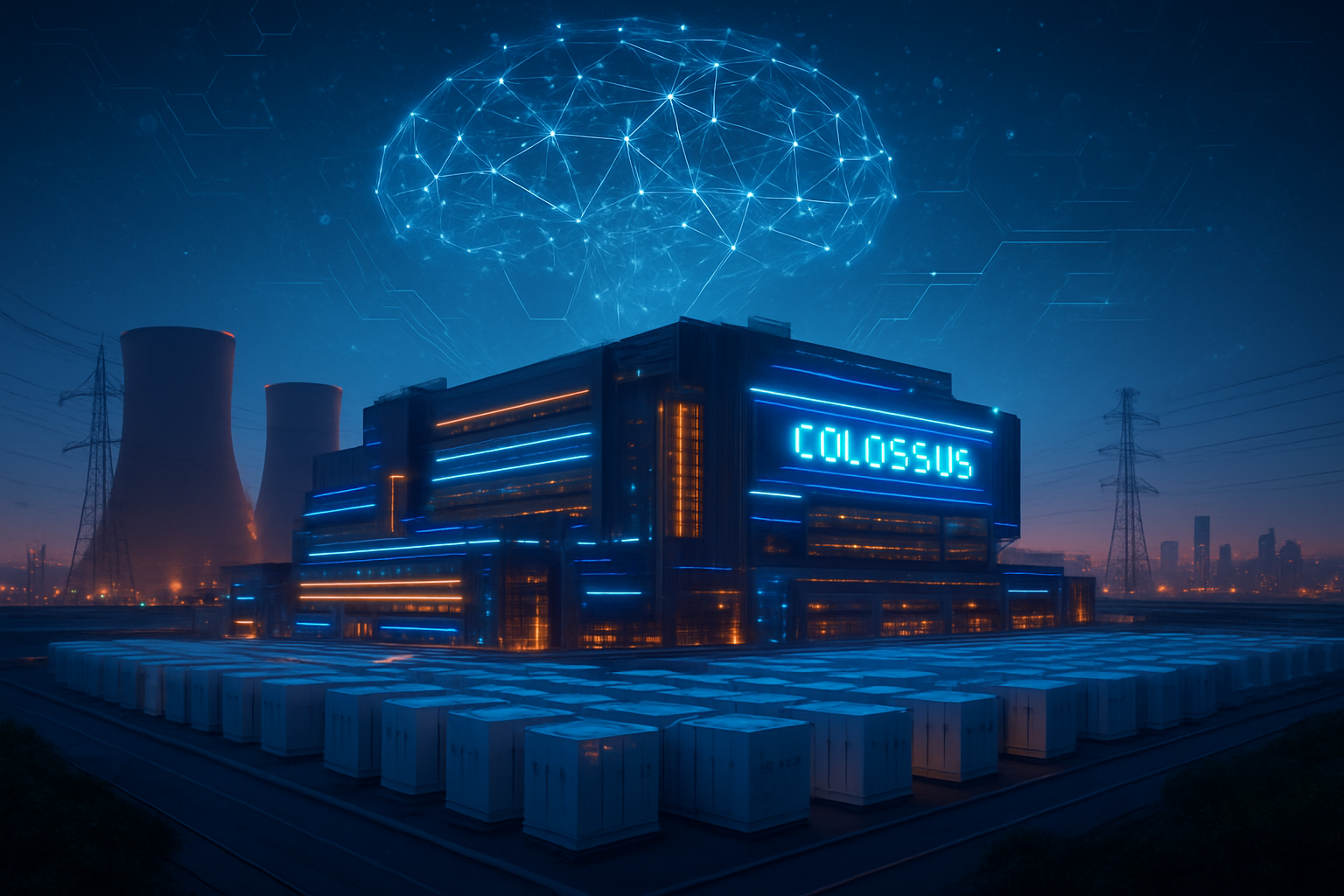
  • Elon Musk Declares AI and Robotics as the ‘Only’ Solution to the Looming US Debt Crisis

    Elon Musk Declares AI and Robotics as the ‘Only’ Solution to the Looming US Debt Crisis

    In a bold and characteristically provocative assertion, visionary entrepreneur Elon Musk has declared Artificial Intelligence (AI) and advanced robotics as the singular viable path to resolving the United States' escalating national debt crisis. With the national debt now surpassing an alarming $38 trillion, Musk's pronouncement, made during a recent interview with podcaster Nikhil Kamath and reiterated across platforms like X (formerly Twitter (NYSE: X)) and the Joe Rogan Experience, has ignited fervent debate among economists, technologists, and policymakers alike. His argument pivots on an unprecedented surge in economic output and productivity, a feat he believes only AI and automation can achieve, effectively outmaneuvering inflation and creating a future of abundance.

    Musk's contention arrives at a critical juncture for the US economy, where the interest payments on the national debt have eclipsed the nation's entire military budget – a stark reality he describes as a personal "wake-up call." This alarming metric underpins his belief that traditional political and economic levers are insufficient to tackle a problem of such monumental scale. Instead, he champions a radical, technology-driven solution: leveraging AI and robotics to dramatically increase the production of goods and services. This exponential growth in output, he argues, would not only counteract inflationary pressures but also expand the economy to a degree necessary to render the massive debt manageable, if not ultimately negligible, potentially making work "optional" in a future of extreme productivity and abundance.

    The Technocratic Solution: Productivity as the Panacea

    Musk's rationale for AI and robotics as the "only" solution to the US debt crisis is rooted in a fundamental economic principle: productivity growth. He posits that if the output of real business services increases slower than the money supply, inflation inevitably ensues. Conversely, a massive and sustained surge in the production of goods and services, driven by highly efficient AI and robotic systems, would likely lead to deflationary pressures by overwhelming demand with supply. He optimistically predicts that within three years or less, the output of goods and services could outpace inflation, creating an economic environment where the debt's relative burden diminishes significantly.

    This perspective starkly contrasts with conventional economic strategies, which typically involve fiscal austerity, tax adjustments, or monetary policy shifts by institutions like the Federal Reserve. Musk's approach bypasses these traditional mechanisms, proposing a technological paradigm shift as the ultimate economic lever. Unlike incremental policy changes, which often face political gridlock and limited scope, Musk envisions a transformative leap in productive capacity, where automated systems handle the vast majority of labor-intensive tasks, from manufacturing to service delivery. This differs from previous industrial revolutions by not merely augmenting human labor but potentially replacing it on a mass scale, leading to an unprecedented era of material abundance. Initial reactions from the AI research community are mixed; while the potential for AI to boost productivity is widely acknowledged, the idea of it singularly solving a complex macroeconomic problem like national debt is viewed with both intrigue and skepticism. Many experts agree on AI's potential to drive growth but question the feasibility of such a direct and absolute solution without significant social and political upheaval.

    Reshaping the AI and Tech Landscape

    Elon Musk's bold assertion has significant implications for AI companies, tech giants, and startups, potentially galvanizing investment and innovation in specific sectors. Companies deeply entrenched in industrial automation, advanced robotics, and AI-driven efficiency stand to benefit immensely. Tesla (NASDAQ: TSLA), through its advancements in AI for autonomous vehicles and humanoid robots like Optimus, is a prime example of a company directly aligned with Musk's vision. Similarly, xAI, Musk's dedicated AI venture, could see its mission broaden beyond large language models to encompass AI solutions for industrial optimization and resource management.

    The competitive landscape for major AI labs and tech companies could shift dramatically. There will likely be an increased focus on developing AI systems capable of managing complex supply chains, optimizing resource allocation, and automating manufacturing processes at scale. This could spur a new wave of startups specializing in niche AI applications for productivity enhancement across various industries, from agriculture to logistics and healthcare. Existing tech giants like Alphabet (NASDAQ: GOOGL), Amazon (NASDAQ: AMZN), and Microsoft (NASDAQ: MSFT), with their extensive cloud infrastructure and AI research divisions, are well-positioned to capitalize on this trend by offering AI-as-a-service solutions that enable businesses to integrate advanced automation. The potential disruption to existing products and services could be profound, particularly in sectors reliant on human labor, pushing companies to rapidly adopt AI to remain competitive. Market positioning will increasingly favor those who can demonstrate tangible productivity gains through AI and robotics, potentially creating new strategic advantages for early adopters and innovators.

    The Broader Significance: A Leap Towards Abundance or a Leap of Faith?

    Musk's proposal fits into the broader AI landscape by pushing the boundaries of what society expects from artificial intelligence. It aligns with long-term trends towards greater automation, the pursuit of Artificial General Intelligence (AGI), and discussions around a post-scarcity economy. If AI and robotics could truly generate an economic surplus sufficient to offset national debt, it would represent an unprecedented milestone in human history, fundamentally altering our relationship with work, resources, and economic systems. The impacts could be revolutionary, potentially leading to a world where basic needs are met without the necessity of labor, freeing humanity to pursue higher-order endeavors.

    However, this vision is not without significant concerns. The most immediate is the potential for massive job displacement across virtually all sectors, raising critical questions about social safety nets, retraining programs, and the equitable distribution of AI-generated wealth. Critics also point to the immense capital investment required to achieve such a level of automation and the potential for increased economic inequality if the benefits are not widely shared. Ethical considerations surrounding autonomous decision-making in economic systems, the concentration of power in the hands of those who control the AI, and the very definition of human purpose in a work-optional world become paramount. While the potential for AI to drive unprecedented economic growth is undeniable, the idea of it as the sole solution to a problem as multifaceted as national debt, without addressing the underlying socio-political and ethical challenges, is viewed by many as an oversimplification, albeit a thought-provoking one.

    Charting the Course: Future Developments and Challenges

    The near-term future will likely see continued advancements in specialized AI for industrial automation, logistics, and data-driven optimization. Expect to see more sophisticated robotic systems capable of complex manipulation and decision-making in manufacturing, agriculture, and service industries. Long-term developments could include the maturation of humanoid robots like Optimus, capable of performing a wide range of tasks in unstructured environments, and the deployment of advanced AI systems for macro-economic forecasting and resource allocation. Potential applications on the horizon include fully automated factories, AI-managed smart cities, and highly efficient supply chains that minimize waste and maximize output.

    However, significant challenges need to be addressed before Musk's vision could become a reality. Scaling AI and robotics to the extent required to impact a $38 trillion debt crisis demands massive investment in infrastructure, research, and development. Regulatory frameworks will need to evolve rapidly to address issues of AI governance, labor displacement, and economic stability. Furthermore, public acceptance and trust in highly autonomous systems will be crucial. Experts predict a gradual increase in AI-driven productivity, but many remain skeptical about the timeline and the absolute nature of Musk's claim. The consensus leans towards AI being a powerful tool for economic growth, rather than a magic bullet for systemic debt without parallel societal and political reforms. The debate will undoubtedly continue, spurring further research into the techno-economic frontier.

    A Visionary's Gambit: The AI Solution to Debt

    Elon Musk's declaration that AI and robotics are the "only" solutions to the US debt crisis represents a significant moment in the ongoing discourse about artificial intelligence's transformative power. It underscores the belief that technological innovation can offer radical solutions to seemingly intractable economic problems. The key takeaway is Musk's emphasis on unparalleled productivity growth as the ultimate economic lever, moving beyond traditional fiscal and monetary policies. While the feasibility and societal implications of such a singular solution remain subjects of intense debate, his assertion undeniably pushes the boundaries of our imagination regarding AI's potential.

    This development holds immense significance in AI history, not just for the technological advancements it champions, but for framing AI as a potential savior for national economies. It challenges us to consider a future where abundance, driven by intelligent machines, could fundamentally reshape our economic paradigms. In the coming weeks and months, it will be crucial to watch how governments, economists, and AI developers respond to this audacious vision. Will there be increased investment in automation technologies aimed at national economic challenges? How will the debate evolve regarding the societal safeguards needed for such a profound shift? Elon Musk has thrown down a gauntlet, inviting the world to ponder whether the future of economic stability lies not in policy rooms, but in the silicon brains and robotic arms of advanced AI.


    This content is intended for informational purposes only and represents analysis of current AI developments.

    TokenRing AI delivers enterprise-grade solutions for multi-agent AI workflow orchestration, AI-powered development tools, and seamless remote collaboration platforms.
    For more information, visit https://www.tokenring.ai/.