Paris, France – November 24, 2025 – French medtech innovator AI-Stroke has successfully closed a substantial US$4.6 million seed funding round, a pivotal step in advancing its groundbreaking artificial intelligence technology aimed at transforming pre-computed tomography (CT) stroke triage. Announced on November 18, 2025, this significant investment underscores a growing confidence in AI-driven solutions to critical healthcare challenges, particularly in time-sensitive emergencies like stroke. The capital infusion is set to accelerate the startup's regulatory pathway and clinical validation efforts in the United States, bringing an "AI neurologist" closer to frontline emergency medical services.
This seed round, spearheaded by Heka (Newfund VC's dedicated BrainTech fund) and bolstered by contributions from Bpifrance and a consortium of angel investors, positions AI-Stroke at the forefront of a new era in stroke management. By enabling rapid, AI-powered neurological assessments directly at the point of initial patient contact, the company aims to dramatically reduce diagnostic delays, improve patient outcomes, and alleviate the burden on emergency departments. The implications for stroke care are profound, promising a future where critical treatment decisions can be made moments faster, potentially saving lives and mitigating long-term disability.
A New Frontier in Neurological Assessment: The AI Neurologist
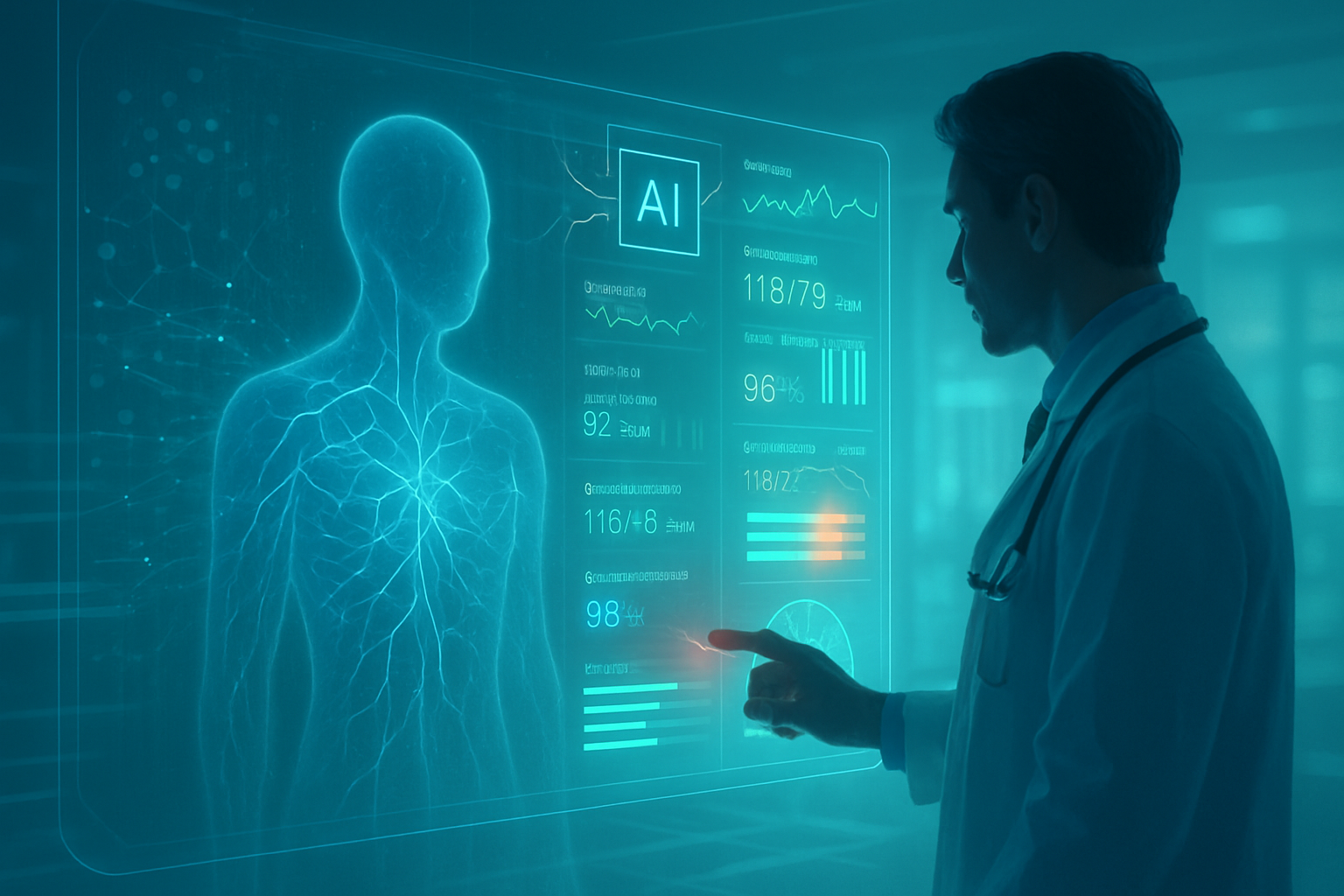
AI-Stroke's core innovation lies in its "AI neurologist," a sophisticated system designed to conduct immediate neurological assessments using readily available mobile technology. This groundbreaking approach transforms any standard smartphone or tablet into a rapid stroke-assessment tool, empowering paramedics and triage nurses with an unprecedented ability to detect stroke signs early. The process is remarkably simple yet highly effective: a short, 30-second video of the patient is recorded, which the AI system then instantly analyzes for key indicators such as facial symmetry, arm movement, and speech patterns. Within seconds, the AI can identify potential stroke signs, providing a preliminary neurological assessment even before the patient reaches a hospital for definitive CT imaging.
This technology represents a significant departure from traditional pre-hospital stroke assessment methods, which primarily rely on manual application of scales like FAST (Face, Arm, Speech, Time) or the Cincinnati Prehospital Stroke Scale (CPSS). While effective, these manual assessments are inherently subjective and can be influenced by the experience level of the responder. AI-Stroke's system, built upon an extensive, clinically annotated dataset comprising 20,000 videos and 6 million images, offers an objective, consistent, and rapid analysis that complements and enhances existing protocols. In a recent study involving 2,000 emergency medical services (EMS) personnel, the AI-Stroke system demonstrated its superior effectiveness by detecting twice as many true stroke cases compared to traditional methods. Its design ensures full compatibility with established U.S. pre-hospital protocols, aiming for seamless integration into existing emergency care workflows. Initial reactions from the medical community have been overwhelmingly positive, highlighting the potential for this technology to standardize and expedite early stroke detection.
Reshaping the Medtech Landscape: Competitive Implications and Market Positioning
AI-Stroke's successful seed round and the advancement of its pre-CT stroke triage technology carry significant competitive implications across the medtech and AI in healthcare sectors. As a pioneering startup, AI-Stroke (private) is carving out a unique niche by focusing on the critical pre-hospital phase of stroke care, an area where rapid, objective assessment has historically been challenging. This positions the company to potentially disrupt the market for traditional diagnostic tools and even influence the development strategies of larger medical device manufacturers and tech giants exploring AI applications in healthcare.
Companies specializing in medical imaging, emergency response technology, and health informatics could either view AI-Stroke as a potential partner or a competitive threat. While established players like Siemens Healthineers (ETR: SHL), GE HealthCare (NASDAQ: GEHC), and Philips (AMS: PHIA) offer advanced CT and MRI solutions, AI-Stroke's technology addresses the crucial pre-hospital gap, potentially funneling more patients to these imaging systems more efficiently. For other AI startups in medical diagnostics, AI-Stroke's success validates the market for specialized, task-specific AI solutions in urgent care. The company's strategic advantage lies in its clinically validated dataset and its focus on practical, smartphone-based deployment, making its solution highly accessible and scalable. This could prompt other innovators to explore similar point-of-care AI diagnostics, intensifying competition but also accelerating overall innovation in the field.
Broader Significance: AI's Role in Urgent Care and Beyond
The development by AI-Stroke fits squarely into the broader trend of artificial intelligence revolutionizing healthcare, particularly in urgent and critical care settings. The ability to leverage AI for rapid, accurate diagnosis in emergency situations represents a monumental leap forward, aligning with the global push for earlier intervention in conditions where "time is brain," such as ischemic stroke. This innovation has the potential to significantly improve patient outcomes by reducing the time to definitive diagnosis and treatment, thereby minimizing brain damage and long-term disability.
However, as with all AI in healthcare, potential concerns include the accuracy and reliability of the AI in diverse patient populations, the risk of false positives or negatives, and the ethical implications of AI-driven diagnostic recommendations. Data privacy and security, especially when handling sensitive patient video data, will also be paramount. Nevertheless, AI-Stroke's technology stands as a significant milestone, drawing comparisons to previous breakthroughs in AI-assisted radiology and pathology that have demonstrated AI's capability to augment human expertise and accelerate diagnostic processes. It underscores a shift towards proactive, preventative, and rapid-response AI applications that extend beyond traditional hospital walls into pre-hospital and community care.
Future Developments: Expanding Reach and Clinical Validation
Looking ahead, the US$4.6 million seed funding will be instrumental in propelling AI-Stroke through its crucial next phases. A primary focus will be navigating the demanding FDA regulatory pathway, a critical step for market entry and widespread adoption in the United States. Concurrently, the company plans to conduct multi-site clinical studies at leading U.S. stroke centers, further validating the efficacy and safety of its AI neurologist in real-world emergency scenarios. These studies will be vital for demonstrating robust performance across diverse patient demographics and clinical environments.
Experts predict that the near-term will see continued refinement of the AI algorithm, potentially incorporating additional physiological data points beyond video analysis. Long-term, the potential applications are vast, extending beyond stroke to other time-sensitive neurological emergencies or even general neurological screening in remote or underserved areas. Challenges that need to be addressed include seamless integration into existing EMS communication and data systems, training for emergency personnel, and addressing any lingering skepticism about AI in critical decision-making. What experts predict will happen next is a concentrated effort on regulatory approval and the generation of compelling clinical evidence, which will be the bedrock for widespread adoption and the eventual transformation of pre-hospital stroke care.
A Pivotal Moment for AI in Emergency Medicine
AI-Stroke's successful US$4.6 million seed round marks a pivotal moment in the application of artificial intelligence to emergency medicine, particularly in the critical field of stroke triage. The development of an "AI neurologist" capable of providing rapid, objective neurological assessments at the point of initial contact is a significant leap forward, promising to dramatically shorten diagnostic times and improve patient outcomes for stroke victims. This investment not only validates AI-Stroke's innovative approach but also highlights the increasing recognition of AI's potential to address some of healthcare's most pressing challenges.
The significance of this development in AI history lies in its focus on practical, deployable, and impactful solutions for acute medical emergencies. It demonstrates how specialized AI can augment human capabilities in high-stakes environments, moving beyond theoretical applications to tangible improvements in patient care. In the coming weeks and months, all eyes will be on AI-Stroke's progress through FDA regulatory processes and the results of their multi-site clinical trials. These milestones will be crucial indicators of the technology's readiness for widespread adoption and its long-term impact on how strokes are identified and managed globally. This is a clear signal that AI is not just a tool for back-end analysis but a frontline asset in saving lives.
This content is intended for informational purposes only and represents analysis of current AI developments.
TokenRing AI delivers enterprise-grade solutions for multi-agent AI workflow orchestration, AI-powered development tools, and seamless remote collaboration platforms.
For more information, visit https://www.tokenring.ai/.