
Tag: Emerging Markets

  • NerdzFactory Forges Nigeria’s Tech Future with Free Talent Programs: A Blueprint for Emerging Markets

    NerdzFactory Forges Nigeria’s Tech Future with Free Talent Programs: A Blueprint for Emerging Markets

    In a significant stride towards fostering local tech growth and addressing the persistent digital skills gap, NerdzFactory, a leading human capital and technology company in Nigeria, has been instrumental in implementing free tech talent internship programs. These initiatives are not merely training schemes; they are critical pipelines designed to equip young Nigerians with essential 21st-century tech skills, thereby empowering local businesses and catalyzing the nation's burgeoning tech ecosystem. As of November 10, 2025, NerdzFactory's efforts continue to demonstrate a profound impact, shaping a future where Nigeria stands as a formidable player in the global digital landscape.

    The immediate significance of these programs lies in their direct approach to tackling two pressing national challenges: high youth unemployment and the scarcity of skilled tech professionals. By offering comprehensive, demand-driven training in various digital domains, NerdzFactory is creating a job-ready workforce that can immediately contribute to the economy. This model provides invaluable support to Nigerian businesses, particularly startups and Small and Medium-sized Enterprises (SMEs), by offering them access to pre-vetted, entry-level talent without the burden of recruitment costs. The ripple effect extends to fostering innovation, increasing productivity, and ultimately driving inclusive economic growth across the nation.

    Detailed Coverage: Crafting a New Generation of Tech Professionals

    NerdzFactory's free tech talent internship programs are meticulously structured to deliver practical, industry-relevant skills, marking a clear departure from traditional, often theoretical, educational models. The curriculum is agile, adapting to the dynamic demands of the tech industry, and focuses on immediate employability.

    Specific Tech Skills Taught: Participants receive hands-on training in a diverse array of high-demand digital skills, including:

    • Software Development (Frontend, general software engineering)
    • Product Management
    • Product Design (UI/UX)
    • Graphics Design
    • Digital Marketing (encompassing online brand building and business growth strategies)
    • Cybersecurity
    • Practical Use of Digital Tools for enhanced productivity and collaboration
    • Artificial Intelligence (AI) education: A notable initiative, the "Experience AI" program, funded by Google.org and in partnership with Google DeepMind and the Raspberry Pi Foundation, aims to build foundational AI literacy among secondary school teachers and students.

    Beyond technical prowess, the programs integrate crucial soft skills suching as CV writing, LinkedIn optimization, communication, emotional intelligence, and time management. This holistic approach ensures graduates are not only technically competent but also well-rounded professionals prepared for the modern workplace.

    How This Differs from Previous Approaches: Unlike conventional education that often lags behind industry needs, NerdzFactory's model is demand-driven and project-based. It prioritizes hands-on experience, culminating in capstone projects and "Demo Days" where trainees showcase their skills to potential employers. A distinguishing feature is the inclusion of guaranteed internship placements and a "Tech Talent Matching Program" that directly connects businesses with skilled professionals at no recruitment cost. This streamlined process significantly reduces the friction between training and employment, a common challenge in traditional educational pathways. Furthermore, strategic partnerships with organizations like GIZ, the Lagos State Employment Trust Fund (LSETF), and the UK-NG Tech Hub provide vital funding, curriculum development support, and expanded placement opportunities, ensuring the programs are well-resourced and impactful.

    Initial Reactions from the AI Research Community and Industry Experts: The local tech community and businesses have largely welcomed NerdzFactory's initiatives with positive reactions. The programs are lauded for their effectiveness in bridging the critical skills gap and addressing youth unemployment. Businesses appreciate the access to "job-ready" professionals who can contribute measurable results from day one, streamlining talent acquisition. High job placement rates, with some programs achieving over 75%, serve as a strong endorsement of the model's success. Industry leaders, including NerdzFactory Founding Partner Ade Olowojoba, emphasize the program's role in driving inclusive economic growth and preparing a generation of professionals for Nigeria's digital economy. The involvement of governmental bodies and international organizations further validates the relevance and potential of these programs to significantly boost the Nigerian tech sector.

    Analyzing the Impact: A Catalyst for Companies Across the Spectrum

    NerdzFactory's free tech talent internship program acts as a crucial enabler, fortifying the talent pipeline and addressing systemic challenges within the Nigerian tech ecosystem. Its impact is primarily seen in fostering growth, innovation, and competitiveness across AI companies, tech giants, and startups.

    Which companies stand to benefit:

    • AI Companies: Specialized AI companies in Nigeria, such as Intelia, Zummit Africa, Jada Technologies Ltd, CipherSense AI, Data Science Nigeria (DSN), and Kudi.ai (now Nomba), will significantly benefit from the increased availability of AI-literate talent. The "Experience AI" program, by building foundational AI understanding, reduces recruitment costs and accelerates the development of AI-powered solutions tailored for the Nigerian market.
    • Tech Giants: Major tech companies operating in Nigeria, including multinational corporations like Google (NASDAQ: GOOGL), Microsoft (NASDAQ: MSFT), MTN Group (JSE: MTN), Interswitch, Flutterwave, and Andela, can leverage a more robust local talent pool. This reduces reliance on expat talent, lowers operational costs, and improves their ability to scale local teams. Partnerships with NerdzFactory also enhance their Corporate Social Responsibility (CSR) profile.
    • Startups: Nigerian startups, which often struggle with talent acquisition due to limited resources, gain immense benefit. Fintech players like Paystack and e-commerce giants like Konga can rapidly expand their teams with qualified, entry-level tech professionals at no recruitment cost, significantly lowering a major barrier to growth and innovation. The program's entrepreneurship focus also aids the formation of new tech ventures.

    Competitive Implications for Major AI Labs and Tech Companies: By alleviating the overall tech talent scarcity, NerdzFactory's program eases the intense competition for skilled labor, potentially stabilizing salary expectations and making talent acquisition more sustainable. It enables tech giants to build stronger local teams, fostering products better suited for the Nigerian market. Companies actively partnering with NerdzFactory or hiring its graduates gain a strategic advantage in securing high-quality, pre-vetted talent, leading to faster product development and a more competitive workforce. A thriving startup ecosystem, fueled by accessible talent, could also lead to more localized innovation, pushing established companies to innovate faster.

    Potential Disruption to Existing Products or Services: The program is less about direct disruption and more about enabling and accelerating growth. By providing a consistent supply of skilled professionals, it indirectly empowers startups to develop innovative products that might challenge existing market leaders. For instance, readily available AI talent could lead to more affordable and specialized AI solutions, potentially disrupting traditional service delivery in various sectors.

    Market Positioning and Strategic Advantages: The initiative significantly strengthens Nigeria's position as a leading tech hub in Africa, attracting further investment. Companies engaged with the program gain a strategic talent advantage, leading to faster innovation cycles. By helping retain valuable tech talent domestically, the program counteracts the "brain drain" phenomenon. Furthermore, aligning with national development goals through partnerships with government bodies can lead to favorable regulatory environments and increased government support.

    Wider Significance: Shaping Nigeria's Digital Destiny

    NerdzFactory's free tech talent internship program is a cornerstone in addressing Nigeria's critical skill gaps and youth unemployment, aligning with broader global trends in tech talent development, particularly in emerging markets.

    How this fits into the broader AI landscape and trends: The program is perfectly aligned with global efforts to address the tech talent shortage, projected to exceed 85 million workers by 2030. Nigeria, with its vast youth population, is uniquely positioned to help fill this gap, and NerdzFactory is cultivating this potential. The "Experience AI" program directly supports Nigeria's National AI Strategy, aiming to position the nation to capitalize on AI's estimated $15 billion economic potential by 2030. By fostering AI literacy from an early age, Nigeria is preparing a future workforce capable of developing, rather than just consuming, AI technologies. This also feeds into the global trend of emerging markets, especially in Africa, solidifying their status as significant hubs for tech talent and offshore development.

    Impacts on Society and the Economy: The overall impacts are transformative. The programs significantly enhance human capital by equipping young Africans with 21st-century skills, creating pathways to prosperity and lifting marginalized populations. By increasing employability and fostering entrepreneurship, NerdzFactory directly contributes to poverty reduction and improved living standards. The influx of skilled talent fuels the local innovation ecosystem, supporting startups and MSMEs. Moreover, initiatives like the Women Digital Entrepreneurship Program actively work to close the digital gender gap, promoting women's participation in the digital economy.

    Potential Concerns: Despite its successes, challenges persist. Inconsistent infrastructure, particularly reliable internet and electricity, can hinder the program's reach. "Brain drain," where skilled professionals emigrate for better opportunities, remains a significant concern, as local companies struggle to retain talent against international offers. The traditional education system's slow adaptation to industry needs also poses a broader challenge. Furthermore, the long-term sustainability and scalability of free programs require continuous funding and support, although NerdzFactory's extensive partnerships help mitigate this.

    Comparisons to Previous AI Milestones and Breakthroughs: NerdzFactory's efforts build upon previous tech talent development milestones by focusing on broader collaboration, market-relevant skills (including AI), and a direct link to employment. Unlike many past initiatives that lacked robust job placement mechanisms, NerdzFactory's "Tech Talent Matching Program" provides a direct bridge from training to employment. Its strategic alignment with national goals, such as the government's "3 Million Technical Talent (3MTT) Programme," ensures its efforts are integrated into a larger national development strategy, making them more sustainable and impactful than isolated projects.

    Future Developments: A Glimpse into Nigeria's Digital Horizon

    NerdzFactory's free tech talent internship program is poised for significant expansion and deeper impact, with a clear vision for shaping Nigeria's digital future.

    Expected Near-Term and Long-Term Developments: In the near term, NerdzFactory will continue to expand its curriculum to include more high-demand areas like advanced frontend development, specialized product management, and cutting-edge cybersecurity. The "Experience AI" program is actively rolling out, aiming to train 3,150 secondary school teachers and impact over 157,000 students across five Nigerian states by December 2026, fostering early AI literacy. The "Tech Talent Matching Program" for 2025 is actively connecting businesses with skilled entry-level professionals. Long-term goals include geographic expansion across Nigeria's six geopolitical zones, a stronger emphasis on fostering entrepreneurship to enable graduates to create their own ventures, and deepening disability inclusion through specialized programs. NerdzFactory also aims to influence national education and workforce development policies through advisory roles with governments and international agencies.

    Potential Applications and Use Cases on the Horizon: The newly skilled workforce will drive innovation across various sectors. Graduates will fill essential roles in core tech, contribute to industry-specific solutions in fintech, e-commerce, health tech, and agritech. With foundational AI knowledge, they will be capable of developing AI-powered solutions such as intelligent chatbots, fraud detection systems, personalized educational platforms, and advanced medical image analysis. They will also contribute to cloud computing and infrastructure management, supporting scalable IT solutions. A significant number are expected to launch their own startups, creating innovative products and services tailored to local market needs, and participating in the global gig economy.

    Challenges that Need to Be Addressed: Sustaining this growth requires addressing persistent challenges. The "japa" phenomenon (brain drain) continues to impact talent retention, as local companies struggle to compete with international compensation. Inadequate infrastructure, particularly power supply and affordable internet, remains a significant impediment. Workplace burnout and occasional restrictive government regulations also pose hurdles. There's a continuous need for sustained investment in education and training, ensuring the curriculum remains aligned with emerging industry demands.

    What Experts Predict Will Happen Next: Experts remain optimistic about Nigeria's tech talent development. Nigeria is projected to maintain its lead in African tech prowess, driven by its youthful population and increasing internet penetration. Government-backed initiatives, such as the "3 Million Technical Talent (3MTT) Programme," are expected to cultivate a robust pipeline of skills, potentially positioning Nigeria as a net-exporter of tech talent by 2027. Experts also highlight that Nigeria's unique challenges create abundant opportunities for local tech talent to innovate solutions, a scenario less common in developed economies. The focus on emerging technologies like data science, cloud computing, cybersecurity, AI, ML, and blockchain is expected to intensify, while the rise of remote work will continue to intensify global competition for Nigerian talent.

    Comprehensive Wrap-up: A Blueprint for Progress

    NerdzFactory's free tech talent internship program represents a critical and highly effective model for human capital development in Nigeria and serves as a blueprint for other emerging markets.

    Summary of Key Takeaways: The program successfully bridges the digital skills gap and addresses youth unemployment through practical, industry-relevant training in high-demand areas, including foundational AI. Its project-based learning, integrated soft skills, guaranteed internship placements, and strategic partnerships with government, international bodies, and corporations (like Access Corporation (NGX: ACCESS) and Meta (NASDAQ: META)) distinguish it from traditional approaches. The program significantly benefits Nigerian startups, tech giants, and emerging AI companies by providing a steady stream of job-ready talent, fostering innovation, and enhancing market competitiveness.

    Assessment of This Development's Significance in AI History: While not a direct AI breakthrough, NerdzFactory's "Experience AI" program is a foundational milestone in AI history for Nigeria. By democratizing AI literacy at the secondary school level, it is cultivating the intellectual capital necessary for Nigeria to move from being an AI consumer to a significant AI producer. This initiative is crucial for realizing Nigeria's ambition to add $15 billion to its economy from AI by 2030 and solidifies its position as an emerging AI hub in Africa.

    Final Thoughts on Long-Term Impact: The long-term impact will be transformative, nurturing a robust talent pipeline that drives innovation, stimulates economic growth, and enhances Nigeria's global tech competitiveness. By fostering entrepreneurship and digital inclusion, NerdzFactory is empowering a generation to create their own opportunities, contributing to poverty reduction and a more equitable society. The alignment with national strategies like the "3 Million Technical Talent (3MTT) Programme" ensures a sustained, systemic impact on the nation's digital economy.

    What to Watch for in the Coming Weeks and Months:

    • Expansion of AI Education: Monitor the progress of the "Experience AI" program towards its 2026 targets for teacher training and student reach.
    • NerdzFactory's Evolving Programs: Look for announcements regarding new programs, partnerships, and geographic expansions from NerdzFactory Foundation.
    • Government Initiatives: Track the scaling of the federal government's 3MTT program and the rollout of the Nigeria Talent Cities Initiative, which aims to create 500,000 new jobs by 2027.
    • Digital Economy Growth: Observe broader indicators of Nigeria's digital transformation, including investment in tech startups and the country's performance in events like GITEX Nigeria, as these will reflect the collective impact of such talent development efforts.

    NerdzFactory's pioneering efforts, in conjunction with government and international partners, are charting a clear course for Nigeria to harness its youthful potential and solidify its position as a major force in the global tech arena. The coming months will undoubtedly reveal further milestones in this transformative journey.


    This content is intended for informational purposes only and represents analysis of current AI developments.

    TokenRing AI delivers enterprise-grade solutions for multi-agent AI workflow orchestration, AI-powered development tools, and seamless remote collaboration platforms.
    For more information, visit https://www.tokenring.ai/.
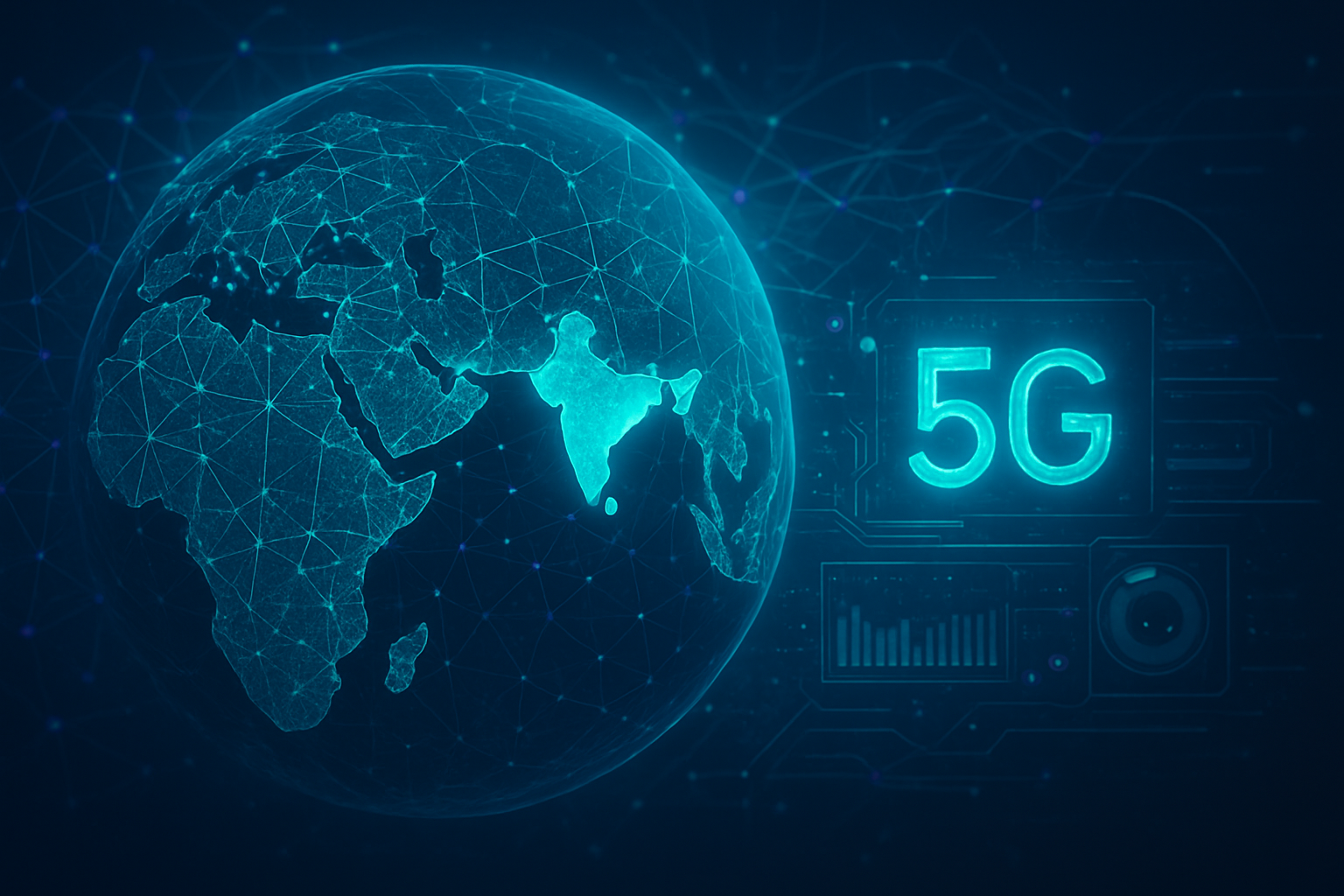
  • Jio’s Global 5G Offensive: A Low-Cost Revolution for the Telecommunications Industry

    Jio’s Global 5G Offensive: A Low-Cost Revolution for the Telecommunications Industry

    Reliance Jio (NSE: RELIANCE, BSE: 500325), a subsidiary of the Indian conglomerate Reliance Industries Limited (RIL), is embarking on an ambitious global expansion, aiming to replicate its disruptive success in the Indian telecommunications market on a worldwide scale. This strategic move, centered around its indigenously developed, low-cost 5G technology, is poised to redefine the competitive landscape of the global telecom industry. By targeting underserved regions with low 5G penetration, Jio seeks to democratize advanced connectivity and extend digital access to a broader global population, challenging the long-standing dominance of established telecom equipment vendors.

    The immediate significance of Jio's global 5G strategy is profound. With 5G penetration still relatively low in many parts of the world, particularly in low-income regions, Jio's cost-efficient solutions present a substantial market opportunity. Having rigorously tested and scaled its 5G stack with over 200 million subscribers in India, the company offers a proven and reliable technology alternative. This aggressive push is not just about expanding market share; it's about making advanced connectivity and AI accessible globally, potentially accelerating digital adoption and fostering economic growth in developing markets.

    The Technical Backbone of a Global Disruption

    Jio's global offensive is underpinned by its comprehensive, homegrown 5G technology stack, developed "from scratch" within India. This end-to-end solution encompasses 5G radio, core network solutions, Operational Support Systems (OSS), Business Support Systems (BSS), and innovative Fixed Wireless Access (FWA) solutions. A key differentiator is Jio's commitment to a Standalone (SA) 5G architecture, which operates independently of 4G infrastructure. This true 5G deployment promises superior capabilities, including ultra-low latency, enhanced bandwidth, and efficient machine-to-machine communication, crucial for emerging applications like IoT and industrial automation.

    This indigenous development contrasts sharply with the traditional model where telecom operators largely rely on a handful of established global vendors for bundled hardware and software solutions. Jio's approach allows for greater control over its network, optimized capital expenditure, and the ability to tailor solutions precisely to market needs. Furthermore, Jio is integrating cutting-edge artificial intelligence (AI) capabilities for network optimization, predictive maintenance, and consumer-facing generative AI, aligning with an "AI Everywhere for Everyone" vision. This fusion of cost-effective infrastructure and advanced AI is designed to deliver both efficiency and enhanced user experiences, setting a new benchmark for network intelligence.

    The technical prowess of Jio's 5G stack has garnered significant attention from the AI research community and industry experts. Its successful large-scale deployment in India demonstrates the viability of a vertically integrated, software-centric approach to 5G infrastructure. Initial reactions highlight the potential for Jio to disrupt the incumbent telecom equipment market, offering a compelling alternative to traditional vendors like Ericsson (NASDAQ: ERIC), Nokia (NYSE: NOK), Huawei, ZTE, and Samsung (KRX: 005930). This shift could accelerate the adoption of Open Radio Access Network (Open RAN) architectures, which facilitate the unbundling of hardware and software, further empowering operators with more flexible and cost-effective deployment options.

    Competitive Implications and Market Repositioning

    Jio's foray into the global 5G market carries significant competitive implications for a wide array of companies, from established telecom equipment manufacturers to emerging AI labs and even tech giants. The primary beneficiaries of this development stand to be telecom operators in emerging markets who have historically faced high infrastructure costs. Jio's cost-effective, managed service model for its 5G solutions offers a compelling alternative, potentially reducing capital expenditure and accelerating network upgrades in many countries. This could level the playing field, enabling smaller operators to deploy advanced 5G networks without prohibitive upfront investments.

    For major telecom equipment vendors such as Ericsson, Nokia, Huawei, ZTE, and Samsung, Jio's emergence as a global player represents a direct challenge to their market dominance. These companies, which collectively command a significant portion of the network infrastructure market, traditionally offer bundled hardware and software solutions that can be expensive. Jio's unbundled, software-centric approach, coupled with its emphasis on indigenous technology, could lead to increased price competition and force incumbents to re-evaluate their pricing strategies and solution offerings. This dynamic could accelerate the shift towards Open RAN architectures, which are inherently more open to new entrants and diverse vendor ecosystems.

    Beyond infrastructure, Jio's "AI Everywhere for Everyone" vision and its integration of generative AI into its services could disrupt existing products and services offered by tech giants and AI startups. By embedding AI capabilities directly into its network and consumer-facing applications, Jio aims to create a seamless, intelligent digital experience. This could impact cloud providers offering AI services, as well as companies specializing in AI-driven network optimization or customer engagement platforms. Jio's strategic advantage lies in its vertical integration, controlling both the network infrastructure and the application layer, allowing for optimized performance and a unified user experience. The company's market positioning as a provider of affordable, advanced digital ecosystems, including low-cost 5G-ready devices like the JioBharat feature phone, further strengthens its competitive stance, particularly in markets where device affordability remains a barrier to digital adoption.

    Wider Significance in the AI and Telecom Landscape

    Jio's global 5G expansion is more than just a business strategy; it represents a significant development within the broader AI and telecommunications landscape. It underscores a growing trend towards vertical integration and indigenous technology development, particularly in nations seeking greater digital sovereignty and economic independence. By building its entire 5G stack from the ground up, Jio demonstrates a model that could be emulated by other nations or companies, fostering a more diverse and competitive global tech ecosystem. This initiative also highlights the increasing convergence of telecommunications infrastructure and advanced AI, where AI is not merely an add-on but an intrinsic component of network design, optimization, and service delivery.

    The impacts of this strategy are multi-faceted. On one hand, it promises to accelerate digital inclusion, bringing affordable, high-speed connectivity to millions in developing regions, thereby bridging the digital divide. This could unlock significant economic opportunities, foster innovation, and improve access to education, healthcare, and financial services. On the other hand, potential concerns revolve around market consolidation if Jio achieves overwhelming dominance in certain regions, or the geopolitical implications of a new major player in critical infrastructure. Comparisons to previous AI milestones reveal a similar pattern of disruptive innovation; just as early AI breakthroughs democratized access to computing power, Jio's low-cost 5G and integrated AI could democratize access to advanced digital infrastructure. It represents a shift from proprietary, expensive systems to more accessible, scalable, and intelligent networks.

    This move by Jio fits into broader trends of disaggregation in telecommunications and the increasing importance of software-defined networks. It also aligns with the global push for "AI for Good" initiatives, aiming to leverage AI for societal benefit. However, the sheer scale of Jio's ambition and its proven track record in India suggest a potential to reshape not just the telecom industry but also the digital economies of entire regions. The implications extend to data localization, digital governance, and the future of internet access, making it a critical development to watch.

    Future Developments and Expert Predictions

    Looking ahead, the near-term and long-term developments stemming from Jio's global 5G strategy are expected to be transformative. In the near term, we can anticipate Jio solidifying its initial market entry points, likely through strategic partnerships with local operators or direct investments in new markets, particularly in Africa and other developing regions. The company is expected to continue refining its cost-effective 5G solutions, potentially offering its technology stack as a managed service or even a "network-as-a-service" model to international partners. The focus will remain on driving down the total cost of ownership for operators while enhancing network performance through advanced AI integration.

    Potential applications and use cases on the horizon include widespread deployment of Fixed Wireless Access (FWA) services, such as Jio AirFiber, to deliver high-speed home and enterprise broadband, bypassing traditional last-mile infrastructure challenges. We can also expect further advancements in AI-driven network automation, predictive analytics for network maintenance, and personalized generative AI experiences for end-users, potentially leading to new revenue streams beyond basic connectivity. The continued development of affordable 5G-ready devices, including smartphones in partnership with Google (NASDAQ: GOOGL) and feature phones like JioBharat, will be crucial in overcoming device affordability barriers in new markets.

    However, challenges that need to be addressed include navigating diverse regulatory landscapes, establishing robust supply chains for global deployment, and building local talent pools for network management and support. Geopolitical considerations and competition from established players will also pose significant hurdles. Experts predict that Jio's strategy will accelerate the adoption of Open RAN and software-defined networks globally, fostering greater vendor diversity and potentially leading to a significant reduction in network deployment costs worldwide. Many believe that if successful, Jio could emerge as a dominant force in global telecom infrastructure, fundamentally altering the competitive dynamics of an industry long dominated by a few established players.

    A Comprehensive Wrap-Up: Reshaping Global Connectivity

    Jio's global expansion with its low-cost 5G strategy marks a pivotal moment in the history of telecommunications and AI. The key takeaways include its disruptive business model, leveraging indigenous, vertically integrated 5G technology to offer cost-effective solutions to operators worldwide, particularly in underserved markets. This approach, honed in the fiercely competitive Indian market, promises to democratize access to advanced connectivity and AI, challenging the status quo of established telecom equipment vendors and fostering greater competition.

    This development's significance in AI history lies in its seamless integration of AI into the core network and service delivery, embodying an "AI Everywhere for Everyone" vision. It represents a practical, large-scale application of AI to optimize critical infrastructure and enhance user experience, pushing the boundaries of what's possible in intelligent networks. The long-term impact could be a more interconnected, digitally equitable world, where high-speed internet and AI-powered services are accessible to a much broader global population, driving innovation and economic growth in regions previously left behind.

    In the coming weeks and months, it will be crucial to watch for Jio's concrete announcements regarding international partnerships, specific market entry points, and the scale of its initial deployments. The reactions from incumbent telecom equipment providers and how they adapt their strategies to counter Jio's disruptive model will also be a key indicator of the industry's future trajectory. Furthermore, the development of new AI applications and services built upon Jio's intelligent 5G networks will demonstrate the full potential of this ambitious global offensive.


    This content is intended for informational purposes only and represents analysis of current AI developments.

    TokenRing AI delivers enterprise-grade solutions for multi-agent AI workflow orchestration, AI-powered development tools, and seamless remote collaboration platforms.
    For more information, visit https://www.tokenring.ai/.

  • India Ignites Global Semiconductor and AI Ambitions: A New Era of Innovation Dawns

    India Ignites Global Semiconductor and AI Ambitions: A New Era of Innovation Dawns

    New Delhi, India – October 22, 2025 – India is rapidly solidifying its position as a formidable force in the global semiconductor and artificial intelligence (AI) landscapes, ushering in a transformative era that promises to reshape technology supply chains, foster unprecedented innovation, and diversify the global talent pool. Propelled by an aggressive confluence of government incentives, multi-billion dollar investments from both domestic and international giants, and a strategic vision for technological self-reliance, the nation is witnessing a manufacturing and R&D renaissance. The period spanning late 2024 and 2025 has been particularly pivotal, marked by the groundbreaking of new fabrication plants, the operationalization of advanced packaging facilities, and massive commitments to AI infrastructure, signalling India's intent to move beyond being a software services hub to a hardware and AI powerhouse. This strategic pivot is not merely about economic growth; it's about establishing India as a critical node in the global tech ecosystem, offering resilience and innovation amidst evolving geopolitical dynamics.

    The immediate significance of India's accelerated ascent cannot be overstated. By aiming to produce its first "Made in India" semiconductor chip by late 2025 and attracting over $20 billion in AI investments this year alone, India is poised to fundamentally alter the global technology map. This ambitious trajectory promises to diversify the concentrated East Asian semiconductor supply chains, enhance global resilience, and provide a vast, cost-effective talent pool for both chip design and AI development. The nation's strategic initiatives are not just attracting foreign investment but are also cultivating a robust indigenous ecosystem, fostering a new generation of technological breakthroughs and securing a vital role in shaping the future of AI.

    Engineering India's Digital Destiny: A Deep Dive into Semiconductor and AI Advancements

    India's journey towards technological self-sufficiency is underpinned by a series of concrete advancements and strategic investments across the semiconductor and AI sectors. In the realm of semiconductors, the nation is witnessing the emergence of multiple fabrication and advanced packaging facilities. Micron Technology (NASDAQ: MU) is on track to make its Assembly, Testing, Marking, and Packaging (ATMP) facility in Sanand, Gujarat, operational by December 2025, with initial products expected in the first half of the year. This $2.75 billion investment is a cornerstone of India's packaging ambitions.

    Even more significantly, Tata Electronics, in collaboration with Taiwan's Powerchip Semiconductor Manufacturing Corp (PSMC), is establishing a semiconductor fabrication unit in Dholera, Gujarat, with a staggering investment of approximately $11 billion. This plant is designed to produce up to 50,000 wafers per month, focusing on 28nm technology crucial for automotive, mobile, and AI applications, with commercial production anticipated by late 2026, though some reports suggest chips could roll out by September-October 2025. Complementing this, Tata Semiconductor Assembly and Test (TSAT) is investing $3.25 billion in an ATMP unit in Morigaon, Assam, set to be operational by mid-2025, aiming to produce 48 million chips daily using advanced packaging like flip chip and integrated system in package (ISIP). Furthermore, a tripartite venture between India's CG Power (NSE: CGPOWER), Japan's Renesas, and Thailand's Stars Microelectronics launched India's first full-service Outsourced Semiconductor Assembly and Test (OSAT) pilot line facility in Sanand, Gujarat, in August 2025, with plans to produce 15 million chips daily. These facilities represent a significant leap from India's previous limited role in chip design, marking its entry into high-volume manufacturing and advanced packaging.

    In the AI domain, the infrastructure build-out is equally impressive. Google (NASDAQ: GOOGL) has committed $15 billion over five years to construct its largest AI data hub outside the US, located in Visakhapatnam, Andhra Pradesh, featuring gigawatt-scale compute capacity. Nvidia (NASDAQ: NVDA) has forged strategic partnerships with Reliance Industries to build AI computing infrastructure, deploying its latest Blackwell AI chips and collaborating with major Indian IT firms like Tata Consultancy Services (TCS) (NSE: TCS) and Infosys (NSE: INFY) to develop diverse AI solutions. Microsoft (NASDAQ: MSFT) is investing $3 billion in cloud and AI infrastructure, while Amazon Web Services (AWS) (NASDAQ: AMZN) has pledged over $127 billion in India by 2030 for cloud and AI computing expansion. These commitments, alongside the IndiaAI Mission's provision of over 38,000 GPUs, signify a robust push to create a sovereign AI compute infrastructure, enabling the nation to "manufacture its own AI" rather than relying solely on imported intelligence, a significant departure from previous approaches.

    A Shifting Landscape: Competitive Implications for Tech Giants and Startups

    India's emergence as a semiconductor and AI hub carries profound competitive implications for both established tech giants and burgeoning startups. Companies like Micron (NASDAQ: MU), Tata Electronics, and the CG Power (NSE: CGPOWER) consortium stand to directly benefit from the government's generous incentives and the rapidly expanding domestic market. Micron's ATMP facility, for instance, is a critical step in localizing its supply chain and tapping into India's talent pool. Similarly, Tata's ambitious semiconductor ventures position the conglomerate as a major player in a sector it previously had limited direct involvement in, potentially disrupting existing supply chains and offering a new, diversified source for global chip procurement.

    For AI powerhouses like Nvidia (NASDAQ: NVDA), Google (NASDAQ: GOOGL), Microsoft (NASDAQ: MSFT), and Amazon (NASDAQ: AMZN), India presents not just a massive market for their AI services and hardware but also a strategic location for R&D and infrastructure expansion. Nvidia's partnerships with Indian IT majors will accelerate AI adoption and development across various industries, while Google's data hub underscores India's growing importance as a data and compute center. This influx of investment and manufacturing capacity could lead to a more competitive landscape for AI chip design and production, potentially reducing reliance on a few dominant players and fostering innovation from new entrants. Indian AI startups, which attracted over $5.2 billion in funding as of October 2025, particularly in generative AI, are poised to leverage this indigenous infrastructure, potentially leading to disruptive products and services tailored for the Indian and global markets. The "IndiaAI Startups Global Program" further supports their expansion into international territories, fostering a new wave of competition and innovation.

    Broader Significance: Reshaping Global AI and Semiconductor Trends

    India's aggressive push into semiconductors and AI is more than an economic endeavor; it's a strategic move that profoundly impacts the broader global technology landscape. This initiative is a critical step towards diversifying global semiconductor supply chains, which have historically been concentrated in East Asia. The COVID-19 pandemic and ongoing geopolitical tensions highlighted the fragility of this concentration, and India's rise offers a much-needed alternative, enhancing global resilience and mitigating risks. This strategic de-risking effort is seen as a welcome development by many international players seeking more robust and distributed supply networks.

    Furthermore, India is leveraging its vast talent pool, which includes 20% of the world's semiconductor design workforce and over 1.5 million engineers graduating annually, many with expertise in VLSI and chip design. This human capital, combined with a focus on indigenous innovation, positions India to become a major AI hardware powerhouse. The "IndiaAI Mission," with its focus on compute capacity, foundational models, and application development, aims to establish India as a global leader in AI, comparable to established players like Canada. The emphasis on "sovereign AI" infrastructure—building and retaining AI capabilities domestically—is a significant trend, allowing India to tailor AI solutions to its unique needs and cultural contexts, while also contributing to global AI safety and governance discussions through initiatives like the IndiaAI Safety Institute. This move signifies a shift from merely consuming technology to actively shaping its future, fostering economic growth, creating millions of jobs, and potentially influencing the ethical and responsible development of AI on a global scale.

    The Road Ahead: Future Developments and Expert Predictions

    Looking ahead, the trajectory of India's semiconductor and AI ambitions points towards continued rapid expansion and increasing sophistication. In the near term, experts predict the operationalization of more ATMP facilities and the initial rollout of chips from the Dholera fab, solidifying India's manufacturing capabilities. The focus will likely shift towards scaling production, optimizing processes, and attracting more advanced fabrication technologies beyond the current 28nm node. The government's India Semiconductor Mission, with its approved projects across various states, indicates a distributed manufacturing ecosystem taking shape, further enhancing resilience.

    Longer-term developments include the potential for India to move into more advanced node manufacturing, possibly through collaborations or indigenous R&D, as evidenced by the inauguration of state-of-the-art 3-nanometer chip design facilities in Noida and Bengaluru. The "IndiaAI Mission" is expected to foster the development of indigenous large language models and AI applications tailored for India's diverse linguistic and cultural landscape. Potential applications on the horizon span across smart cities, advanced healthcare diagnostics, precision agriculture, and the burgeoning electric vehicle sector, all powered by locally designed and manufactured chips and AI. Challenges remain, including sustaining the momentum of investment, developing a deeper talent pool for cutting-edge research, and ensuring robust intellectual property protection. However, experts like those at Semicon India 2025 predict that India will be among the top five global destinations for semiconductor manufacturing by 2030, securing 10% of the global market. The establishment of the Deep Tech Alliance with $1 billion in funding, specifically targeting semiconductors, underscores the commitment to overcoming these challenges and driving future breakthroughs.

    A New Dawn for Global Tech: India's Enduring Impact

    India's current trajectory in semiconductors and AI represents a pivotal moment in global technology history. The confluence of ambitious government policies, substantial domestic and foreign investments, and a vast, skilled workforce is rapidly transforming the nation into a critical global hub for both hardware manufacturing and advanced AI development. The operationalization of fabrication and advanced packaging units, coupled with massive investments in AI compute infrastructure, marks a significant shift from India's traditional role, positioning it as a key contributor to global technological resilience and innovation.

    The key takeaways from this development are clear: India is not just an emerging market but a rapidly maturing technological powerhouse. Its strategic focus on "sovereign AI" and diversified semiconductor supply chains will have long-term implications for global trade, geopolitical stability, and the pace of technological advancement. The economic impact, with projections of millions of jobs and a semiconductor market reaching $55 billion by 2026, underscores its significance. In the coming weeks and months, the world will be watching for further announcements regarding production milestones from the new fabs, the rollout of indigenous AI models, and the continued expansion of partnerships. India's rise is not merely a regional story; it is a global phenomenon poised to redefine the future of AI and semiconductors for decades to come.


    This content is intended for informational purposes only and represents analysis of current AI developments.

    TokenRing AI delivers enterprise-grade solutions for multi-agent AI workflow orchestration, AI-powered development tools, and seamless remote collaboration platforms.
    For more information, visit https://www.tokenring.ai/.