Tag: Energy Consumption

  • AI’s Insatiable Appetite: Nadella Warns of Energy Crisis Threatening Future Growth

    AI’s Insatiable Appetite: Nadella Warns of Energy Crisis Threatening Future Growth

    Redmond, WA – December 1, 2025 – Microsoft (NASDAQ: MSFT) CEO Satya Nadella has issued a stark warning that the burgeoning energy demands of artificial intelligence pose a critical threat to its future expansion and sustainability. In recent statements, Nadella emphasized that the primary bottleneck for AI growth is no longer the availability of advanced chips but rather the fundamental limitations of power and data center infrastructure. His concerns, voiced in June and reiterated in November of 2025, underscore a pivotal shift in the AI industry's focus, demanding that the sector justify its escalating energy footprint by delivering tangible social and economic value.

    Nadella's pronouncements have sent ripples across the tech world, highlighting an urgent need for the industry to secure "social permission" for its energy consumption. With modern AI operations capable of drawing electricity comparable to small cities, the environmental and infrastructural implications are immense. This call for accountability marks a critical juncture, compelling AI developers and tech giants alike to prioritize sustainability and efficiency alongside innovation, or risk facing significant societal and logistical hurdles.

    The Power Behind the Promise: Unpacking AI's Enormous Energy Footprint

    The exponential growth of AI, particularly in large language models (LLMs) and generative AI, is underpinned by a colossal and ever-increasing demand for electricity. This energy consumption is driven by several technical factors across the AI lifecycle, from intensive model training to continuous inference operations within sprawling data centers.

    At the core of this demand are specialized hardware components like Graphics Processing Units (GPUs) and Tensor Processing Units (TPUs). These powerful accelerators, designed for parallel processing, consume significantly more energy than traditional CPUs. For instance, high-end NVIDIA (NASDAQ: NVDA) H100 GPUs can draw up to 700 watts under load. Beyond raw computation, the movement of vast amounts of data between memory, processors, and storage is a major, often underestimated, energy drain, sometimes being 200 times more energy-intensive than the computations themselves. Furthermore, the sheer heat generated by thousands of these powerful chips necessitates sophisticated, energy-hungry cooling systems, often accounting for a substantial portion of a data center's overall power usage.

    Training a large language model like OpenAI's GPT-3, with its 175 billion parameters, consumed an estimated 1,287 megawatt-hours (MWh) of electricity—equivalent to the annual power consumption of about 130 average US homes. Newer models like Meta Platforms' (NASDAQ: META) LLaMA 3.1, trained on over 16,000 H100 GPUs, incurred an estimated energy cost of around $22.4 million for training alone. While inference (running the trained model) is less energy-intensive per query, the cumulative effect of billions of user interactions makes it a significant contributor. A single ChatGPT query, for example, is estimated to consume about five times more electricity than a simple web search.

    The overall impact on data centers is staggering. US data centers consumed 183 terawatt-hours (TWh) in 2024, representing over 4% of the national power use, and this is projected to more than double to 426 TWh by 2030. Globally, data center electricity consumption is projected to reach 945 TWh by 2030, nearly 3% of global electricity, with AI potentially accounting for nearly half of this by the end of 2025. This scale of energy demand far surpasses previous computing paradigms, with generative AI training clusters consuming seven to eight times more energy than typical computing workloads, pushing global grids to their limits.

    Corporate Crossroads: Navigating AI's Energy-Intensive Future

    AI's burgeoning energy consumption presents a complex landscape of challenges and opportunities for tech companies, from established giants to nimble startups. The escalating operational costs and increased scrutiny on environmental impact are forcing strategic re-evaluations across the industry.

    Tech giants like Alphabet's (NASDAQ: GOOGL) Google, Microsoft, Meta Platforms, and Amazon (NASDAQ: AMZN) are at the forefront of this energy dilemma. Google, for instance, already consumes an estimated 25 TWh annually. These companies are investing heavily in expanding data center capacities, but are simultaneously grappling with the strain on power grids and the difficulty in meeting their net-zero carbon pledges. Electricity has become the largest operational expense for data center operators, accounting for 46% to 60% of total spending. For AI startups, the high energy costs associated with training and deploying complex models can be a significant barrier to entry, necessitating highly efficient algorithms and hardware to remain competitive.

    Companies developing energy-efficient AI chips and hardware stand to benefit immensely. NVIDIA, with its advanced GPUs, and companies like Arm Holdings (NASDAQ: ARM) and Groq, pioneering highly efficient AI technologies, are well-positioned. Similarly, providers of renewable energy and smart grid solutions, such as AutoGrid, C3.ai (NYSE: AI), and Tesla Energy (NASDAQ: TSLA), will see increased demand for their services. Developers of innovative cooling technologies and sustainable data center designs are also finding a growing market. Tech giants investing directly in alternative energy sources like nuclear, hydrogen, and geothermal power, such as Google and Microsoft, could secure long-term energy stability and differentiate themselves. On the software front, companies focused on developing more efficient AI algorithms, model architectures, and "on-device AI" (e.g., Hugging Face, Google's DeepMind) offer crucial solutions to reduce energy footprints.

    The competitive landscape is intensifying, with increased competition for energy resources potentially leading to market concentration as well-capitalized tech giants secure dedicated power infrastructure. A company's carbon footprint is also becoming a key factor in procurement, with businesses increasingly demanding "sustainability invoices." This pressure fosters innovation in green AI technologies and sustainable data center designs, offering strategic advantages in cost savings, enhanced reputation, and regulatory compliance. Paradoxically, AI itself is emerging as a powerful tool to achieve sustainability by optimizing energy usage across various sectors, potentially offsetting some of its own consumption.

    Beyond the Algorithm: AI's Broader Societal and Ethical Reckoning

    The vast energy consumption of AI extends far beyond technical specifications, casting a long shadow over global infrastructure, environmental sustainability, and the ethical fabric of society. This issue is rapidly becoming a defining trend within the broader AI landscape, demanding a fundamental re-evaluation of its development trajectory.

    AI's economic promise, with forecasts suggesting a multi-trillion-dollar boost to GDP, is juxtaposed against the reality that this growth could lead to a tenfold to twentyfold increase in overall energy use. This phenomenon, often termed Jevons paradox, implies that efficiency gains in AI might inadvertently lead to greater overall consumption due to expanded adoption. The strain on existing power grids is immense, with some new data centers consuming electricity equivalent to a city of 100,000 people. By 2030, data centers could account for 20% of global electricity use, necessitating substantial investments in new power generation and reinforced transmission grids. Beyond electricity, AI data centers consume vast amounts of water for cooling, exacerbating scarcity in vulnerable regions, and the manufacturing of AI hardware depletes rare earth minerals, contributing to environmental degradation and electronic waste.

    The concept of "social permission" for AI's energy use, as highlighted by Nadella, is central to its ethical implications. This permission hinges on public acceptance that AI's benefits genuinely outweigh its environmental and societal costs. Environmentally, AI's carbon footprint is significant, with training a single large model emitting hundreds of metric tons of CO2. While some tech companies claim to offset this with renewable energy purchases, concerns remain about the true impact on grid decarbonization. Ethically, the energy expended on training AI models with biased datasets is problematic, perpetuating inequalities. Data privacy and security in AI-powered energy management systems also raise concerns, as do potential socioeconomic disparities caused by rising energy costs and job displacement. To gain social permission, AI development requires transparency, accountability, ethical governance, and a clear demonstration of balancing benefits and harms, fostering public engagement and trust.

    Compared to previous AI milestones, the current scale of energy consumption is unprecedented. Early AI systems had a negligible energy footprint. While the rise of the internet and cloud computing also raised energy concerns, these were largely mitigated by continuous efficiency innovations. However, the rapid shift towards generative AI and large-scale inference is pushing energy consumption into "unprecedented territory." A single ChatGPT query uses an estimated 100 times more energy than a regular Google search, and GPT-4 required 50 times more electricity to train than GPT-3. This clearly indicates that current AI's energy demands are orders of magnitude larger than any previous computing advancement, presenting a unique and pressing challenge that requires a holistic approach to technological innovation, policy intervention, and transparent societal dialogue.

    The Path Forward: Innovating for a Sustainable AI Future

    The escalating energy consumption of AI demands a proactive and multi-faceted approach, with future developments focusing on innovative solutions across hardware, software, and policy. Experts predict a continued surge in electricity demand from data centers, making efficiency and sustainability paramount.

    In the near term, hardware innovations are critical. The development of low-power AI chips, specialized Application-Specific Integrated Circuits (ASICs), and Field-Programmable Gate Arrays (FPGAs) tailored for AI tasks will offer superior performance per watt. Neuromorphic computing, inspired by the human brain's energy efficiency, holds immense promise, potentially reducing energy consumption by 100 to 1,000 times by integrating memory and processing units. Companies like Intel (NASDAQ: INTC) with Loihi and IBM (NYSE: IBM) with NorthPole are actively pursuing this. Additionally, advancements in 3D chip stacking and Analog In-Memory Computing (AIMC) aim to minimize energy-intensive data transfers.

    Software and algorithmic optimizations are equally vital. The trend towards "sustainable AI algorithms" involves developing more efficient models, using techniques like model compression (pruning and quantization), and exploring smaller language models (SLMs). Data efficiency, through transfer learning and synthetic data generation, can reduce the need for massive datasets, thereby lowering energy costs. Furthermore, "carbon-aware computing" aims to optimize AI systems for energy efficiency throughout their operation, considering the environmental impact of the infrastructure at all stages. Data center efficiencies, such as advanced liquid cooling systems, full integration with renewable energy sources, and grid-aware scheduling that aligns workloads with peak renewable energy availability, are also crucial. On-device AI, or edge AI, which processes AI directly on local devices, offers a significant opportunity to reduce energy consumption by eliminating the need for energy-intensive cloud data transfers.

    Policy implications will play a significant role in shaping AI's energy future. Governments are expected to introduce incentives for energy-efficient AI development, such as tax credits and subsidies, alongside regulations for data center energy consumption and mandatory disclosure of AI systems' greenhouse gas footprint. The European Union's AI Act, fully applicable by August 2026, already includes provisions for reducing energy consumption for high-risk AI and mandates transparency regarding environmental impact for General Purpose AI (GPAI) models. Experts like OpenAI (privately held) CEO Sam Altman emphasize that an "energy breakthrough is necessary" for the future of AI, as its power demands will far exceed current predictions. While efficiency gains are being made, the ever-growing complexity of new AI models may still outpace these improvements, potentially leading to increased reliance on less sustainable energy sources. However, many also predict that AI itself will become a powerful tool for sustainability, optimizing energy grids, smart buildings, and industrial processes, potentially offsetting some of its own energy demands.

    A Defining Moment for AI: Balancing Innovation with Responsibility

    Satya Nadella's recent warnings regarding the vast energy consumption of artificial intelligence mark a defining moment in AI history, shifting the narrative from unbridled technological advancement to a critical examination of its environmental and societal costs. The core takeaway is clear: AI's future hinges not just on computational prowess, but on its ability to demonstrate tangible value that earns "social permission" for its immense energy footprint.

    This development signifies a crucial turning point, elevating sustainability from a peripheral concern to a central tenet of AI development. The industry is now confronted with the undeniable reality that power availability, cooling infrastructure, and environmental impact are as critical as chip design and algorithmic innovation. Microsoft's own ambitious goals to be carbon-negative, water-positive, and zero-waste by 2030 underscore the urgency and scale of the challenge that major tech players are now embracing.

    The long-term impact of this energy reckoning will be profound. We can expect accelerated investments in renewable energy infrastructure, a surge in innovation for energy-efficient AI hardware and software, and the widespread adoption of sustainable data center practices. AI itself, paradoxically, is poised to become a key enabler of global sustainability efforts, optimizing energy grids and resource management. However, the potential for increased strain on energy grids, higher electricity prices, and broader environmental concerns like water consumption and electronic waste remain significant challenges that require careful navigation.

    In the coming weeks and months, watch for more tech companies to unveil detailed sustainability roadmaps and for increased collaboration between industry, government, and energy providers to address grid limitations. Innovations in specialized AI chips and cooling technologies will be key indicators of progress. Crucially, the industry's ability to transparently report its energy and water consumption, and to clearly demonstrate the societal and economic benefits of its AI applications, will determine whether it successfully secures the "social permission" vital for its continued, responsible growth.


    This content is intended for informational purposes only and represents analysis of current AI developments.

    TokenRing AI delivers enterprise-grade solutions for multi-agent AI workflow orchestration, AI-powered development tools, and seamless remote collaboration platforms.
    For more information, visit https://www.tokenring.ai/.

  • The Looming Power Crisis: How AI’s Insatiable Energy Appetite Strains Global Grids and Demands Urgent Solutions

    The Looming Power Crisis: How AI’s Insatiable Energy Appetite Strains Global Grids and Demands Urgent Solutions

    The relentless march of artificial intelligence, particularly the exponential growth of large language models (LLMs) and generative AI, is precipitating an unprecedented energy crisis, placing immense strain on global infrastructure and utility providers. This burgeoning demand for computational power, fueled by the "always-on" nature of AI operations, is not merely an operational challenge but a critical threat to environmental sustainability, grid stability, and the economic viability of AI's future. Recent reports and industry concerns underscore the urgent need for substantial investment in energy generation, infrastructure upgrades, and innovative efficiency solutions to power the AI revolution without plunging the world into darkness or accelerating climate change.

    Experts project that global electricity demand from data centers, the physical homes of AI, could more than double by 2030, with AI being the single most significant driver. In the United States, data centers consumed 4.4% of the nation's electricity in 2023, a figure that could triple by 2028. This surge is already causing "bad harmonics" on power grids, leading to higher electricity bills for consumers, and raising serious questions about the feasibility of ambitious net-zero commitments by major tech players. The scale of the challenge is stark: a single AI query can demand ten times more electricity than a traditional search, and training a complex LLM can consume as much energy as hundreds of households over a year.

    The Technical Underbelly: Decoding AI's Power-Hungry Architectures

    The insatiable energy appetite of modern AI is deeply rooted in its technical architecture and operational demands, a significant departure from earlier, less resource-intensive AI paradigms. The core of this consumption lies in high-performance computing hardware, massive model architectures, and the computationally intensive processes of training and inference.

    Modern AI models, particularly deep learning networks, are heavily reliant on Graphics Processing Units (GPUs), predominantly from companies like NVIDIA (NASDAQ: NVDA). GPUs, such as the A100 and H100 series, are designed for parallel processing, making them ideal for the vector and matrix computations central to neural networks. A single NVIDIA A100 GPU can consume approximately 400 watts. Training a large AI model, like those developed by OpenAI, Google (NASDAQ: GOOGL), or Meta (NASDAQ: META), often involves clusters of thousands of these GPUs running continuously for weeks or even months. For instance, training OpenAI's GPT-3 consumed an estimated 1,287 MWh of electricity, equivalent to the annual consumption of about 120 average U.S. homes. The more advanced GPT-4 is estimated to have required 50 times more electricity. Beyond GPUs, Google's custom Tensor Processing Units (TPUs) and other specialized Application-Specific Integrated Circuits (ASICs) are also key players, designed for optimized AI workloads but still contributing to overall energy demand.

    The architecture of Large Language Models (LLMs) like GPT-3, GPT-4, Gemini, and Llama, with their billions to trillions of parameters, is a primary driver of this energy intensity. These Transformer-based models are trained on colossal datasets, requiring immense computational power to adjust their internal weights through iterative processes of forward and backward propagation (backpropagation). While training is a one-time, albeit massive, energy investment, the inference phase—where the trained model makes predictions on new data—is a continuous, high-volume operation. A single ChatGPT query, for example, can require nearly ten times more electricity than a standard Google search due to the billions of inferences performed to generate a response. For widely used generative AI services, inference can account for 80-90% of the lifetime AI costs.

    This contrasts sharply with previous AI approaches, such as simpler machine learning models or traditional expert systems, which had significantly lower energy footprints and often ran on general-purpose Central Processing Units (CPUs). While hardware efficiency has improved dramatically (AI chips have doubled their efficiency every three years), the exponential increase in model size and complexity has outpaced these gains, leading to a net increase in overall energy consumption. The AI research community is increasingly vocal about these technical challenges, advocating for "Green AI" initiatives, including more energy-efficient hardware designs, model optimization techniques (like quantization and pruning), smarter training methods, and the widespread adoption of renewable energy for data centers.

    Corporate Crossroads: Navigating the Energy-Intensive AI Landscape

    AI's escalating energy consumption is creating a complex web of challenges and opportunities for AI companies, tech giants, and startups, fundamentally reshaping competitive dynamics and strategic priorities. The ability to secure reliable, sustainable, and affordable power is fast becoming a critical differentiator.

    Tech giants like Google (NASDAQ: GOOGL) and Microsoft (NASDAQ: MSFT) are feeling the immediate impact, as their rapidly expanding AI initiatives directly conflict with their public sustainability and net-zero commitments. Google's emissions, for instance, rose by 13% in 2023 due to AI, while Microsoft's CO2 emissions increased by nearly 30% since 2020. These companies face soaring operational costs from electricity bills and intense scrutiny over their carbon footprint. For major AI labs and companies like OpenAI, the sheer cost of training and operating LLMs translates into massive expenses and infrastructure requirements.

    However, this energy crisis also creates significant opportunities. Companies developing energy-efficient AI hardware stand to benefit immensely. NVIDIA (NASDAQ: NVDA), for example, continues to innovate with its Blackwell GPU microarchitecture, promising 2.5 times faster performance and 25 times more energy efficiency than previous generations. Startups like Positron and Groq are emerging with claims of superior performance per watt. Tech giants are also investing heavily in proprietary AI chips (e.g., Google's Ironwood TPU, Amazon's Inferentia) to reduce reliance on third-party vendors and optimize for their specific cloud infrastructures. IBM (NYSE: IBM) is also working on energy-reducing processors like Telum II and Spyre Accelerator.

    Furthermore, providers of sustainable data center and cooling solutions are gaining prominence. Companies offering advanced liquid cooling systems, AI-powered airflow management, and designs optimized for renewable energy integration are becoming crucial. Dell Technologies (NYSE: DELL) is focusing on AI-powered cooling and renewable energy for its data centers, while Crusoe Energy Systems provides AI infrastructure powered by flared natural gas and other renewable sources. The market for AI-driven energy management and optimization software is also booming, with firms like AutoGrid, C3.ai (NYSE: AI), and Siemens (ETR: SIE) offering solutions to optimize grids, predict demand, and enhance efficiency.

    The competitive landscape is shifting. Infrastructure investment in energy-efficient data centers and secured renewable energy sources is becoming a key differentiator. Companies with the capital and foresight to build or partner for direct energy sources will gain a significant strategic advantage. The energy demands could also disrupt existing products and services by driving up operating costs, potentially leading to higher pricing for AI-powered offerings. More broadly, the strain on power grids could affect service reliability and even slow the transition to clean energy by prolonging reliance on fossil fuels. In response, sustainability branding and compliance are becoming paramount, with companies like Salesforce (NYSE: CRM) introducing "AI Energy Scores" to promote transparency. Ultimately, energy efficiency and robust, sustainable infrastructure are no longer just good practices but essential strategic assets for market positioning and long-term viability in the AI era.

    A Wider Lens: AI's Energy Footprint in the Global Context

    The escalating energy consumption of AI is not merely a technical or corporate challenge; it is a multifaceted crisis with profound environmental, societal, and geopolitical implications, marking a significant inflection point in the broader AI landscape. This issue forces a critical re-evaluation of how technological progress aligns with planetary health and equitable resource distribution.

    In the broader AI landscape, this energy demand is intrinsically linked to the current trend of developing ever-larger and more complex models, especially LLMs and generative AI. The computational power required for AI's growth is estimated to be doubling roughly every 100 days—a trajectory that is unsustainable without radical changes in energy generation and consumption. While AI is paradoxically being developed to optimize energy use in other sectors, its own footprint risks undermining these efforts. The environmental impacts are far-reaching: AI's electricity consumption contributes significantly to carbon emissions, with data centers potentially consuming as much electricity as entire countries. Furthermore, data centers require vast amounts of water for cooling, with facilities potentially consuming millions of gallons daily, straining local water supplies. The rapid lifecycle of high-performance AI hardware also contributes to a growing problem of electronic waste and the depletion of rare earth minerals, whose extraction is often environmentally damaging.

    Societally, the strain on power grids can lead to rising electricity costs for consumers and increased risks of blackouts. This creates issues of environmental inequity, as the burdens of AI's ecological footprint often fall disproportionately on local communities, while the benefits are concentrated elsewhere. The global race for AI dominance also intensifies competition for critical resources, particularly rare earth minerals. China's dominance in their extraction and refining presents significant geopolitical vulnerabilities and risks of supply chain disruptions, making control over these materials and advanced manufacturing capabilities crucial national security concerns.

    Comparing this to previous AI milestones reveals a stark difference in resource demands. Earlier AI, like traditional expert systems or simpler machine learning models, had negligible energy footprints. Even significant breakthroughs like Deep Blue defeating Garry Kasparov or AlphaGo beating Lee Sedol, while computationally intensive, did not approach the sustained, massive energy requirements of today's LLMs. A single query to a generative AI chatbot can use significantly more energy than a traditional search engine, highlighting a new era of computational intensity that far outstrips past advancements. While efficiency gains in AI chips have been substantial, the sheer exponential growth in model size and usage has consistently outpaced these improvements, leading to a net increase in overall energy consumption. This paradox underscores the need for a holistic approach to AI development that prioritizes sustainability alongside performance.

    The Horizon: Charting a Sustainable Path for AI's Power Needs

    The future of AI energy consumption is a dual narrative of unprecedented demand and innovative solutions. As AI continues its rapid expansion, both near-term optimizations and long-term technological shifts will be essential to power this revolution sustainably.

    In the near term, expect continued advancements in energy-efficient hardware. Companies like IBM (NYSE: IBM) are developing specialized processors such as the Telum II Processor and Spyre Accelerator, anticipated by 2025, specifically designed to reduce AI's energy footprint. NVIDIA (NASDAQ: NVDA) continues to push the boundaries of GPU efficiency, with its GB200 Grace Blackwell Superchip promising a 25x improvement over previous generations. On the software and algorithmic front, the focus will be on creating smaller, more efficient AI models through techniques like quantization, pruning, and knowledge distillation. Smarter training methods and dynamic workload management will also aim to reduce computational steps and energy use. NVIDIA's TensorRT-LLM, for instance, can reduce LLM inference energy consumption by threefold. Furthermore, data center optimization will leverage AI itself to manage and fine-tune cooling systems and resource allocation, with Google's DeepMind having already reduced data center cooling energy by 40%.

    Looking further into the long term, more revolutionary hardware and fundamental shifts are anticipated. Compute-in-Memory (CRAM) technology, which processes data within memory, shows potential to reduce AI energy use by 1,000 to 2,500 times. Neuromorphic and brain-inspired computing, mimicking the human brain's remarkable energy efficiency, is another promising avenue for significant gains. The concept of "Green AI" will evolve beyond mere efficiency to embed sustainability principles across the entire AI lifecycle, from algorithm design to deployment.

    Potential applications for sustainable AI are abundant. AI will be crucial for optimizing energy grid management, predicting demand, and seamlessly integrating intermittent renewable energy sources. It will enhance renewable energy forecasting, improve building energy efficiency through smart management systems, and optimize processes in industrial and manufacturing sectors. AI will also be leveraged for carbon footprint and waste reduction and for advanced climate modeling and disaster prevention.

    However, significant challenges remain. The sheer escalating energy demand continues to outpace efficiency gains, placing immense strain on power grids and necessitating trillions in global utility investments. The substantial water consumption of data centers remains a critical environmental and social concern. The continued reliance on fossil fuels for a significant portion of electricity generation means that even efficient AI still contributes to emissions if the grid isn't decarbonized fast enough. The rebound effect (Jevons Paradox), where increased efficiency leads to greater overall consumption, is also a concern. Furthermore, regulatory and policy gaps persist, and technological limitations in integrating AI solutions into existing infrastructure need to be addressed.

    Experts predict a future characterized by continued exponential demand for AI power, necessitating massive investment in renewables and energy storage. Tech giants will increasingly partner with or directly invest in solar, wind, and even nuclear power. Utilities are expected to play a critical role in developing the necessary large-scale clean energy projects. Hardware and software innovation will remain constant, while AI itself will paradoxically become a key tool for energy optimization. There's a growing recognition that AI is not just a digital service but a critical physical infrastructure sector, demanding deliberate planning for electricity and water resources. Coordinated global efforts involving governments, industry, and researchers will be vital to develop regulations, incentives, and market mechanisms for sustainable AI.

    The Sustainable AI Imperative: A Call to Action

    The unfolding narrative of AI's energy consumption underscores a pivotal moment in technological history. What was once perceived as a purely digital advancement is now undeniably a physical one, demanding a fundamental reckoning with its environmental and infrastructural costs. The key takeaway is clear: the current trajectory of AI development, if unchecked, is unsustainable, threatening to exacerbate climate change, strain global resources, and destabilize energy grids.

    This development holds immense significance, marking a transition from a phase of unbridled computational expansion to one where sustainability becomes a core constraint and driver of innovation. It challenges the notion that technological progress can exist in isolation from its ecological footprint. The long-term impact will see a reorientation of the tech industry towards "Green AI," where energy efficiency, renewable power, and responsible resource management are not optional add-ons but foundational principles. Society will grapple with questions of energy equity, the environmental justice implications of data center siting, and the need for robust regulatory frameworks to govern AI's physical demands.

    In the coming weeks and months, several critical areas warrant close attention. Watch for further announcements on energy-efficient AI chips and computing architectures, as hardware innovation remains a primary lever. Observe the strategies of major tech companies as they strive to meet their net-zero pledges amidst rising AI energy demands, particularly their investments in renewable energy procurement and advanced cooling technologies. Pay close heed to policy developments from governments and international bodies, as mandatory reporting and regulatory frameworks for AI's environmental impact are likely to emerge. Finally, monitor the nascent but crucial trend of AI being used to optimize energy systems itself – a paradoxical but potentially powerful solution to the very problem it creates. The future of AI, and indeed our planet, hinges on a collective commitment to intelligent, sustainable innovation.


    This content is intended for informational purposes only and represents analysis of current AI developments.

    TokenRing AI delivers enterprise-grade solutions for multi-agent AI workflow orchestration, AI-powered development tools, and seamless remote collaboration platforms.
    For more information, visit https://www.tokenring.ai/.

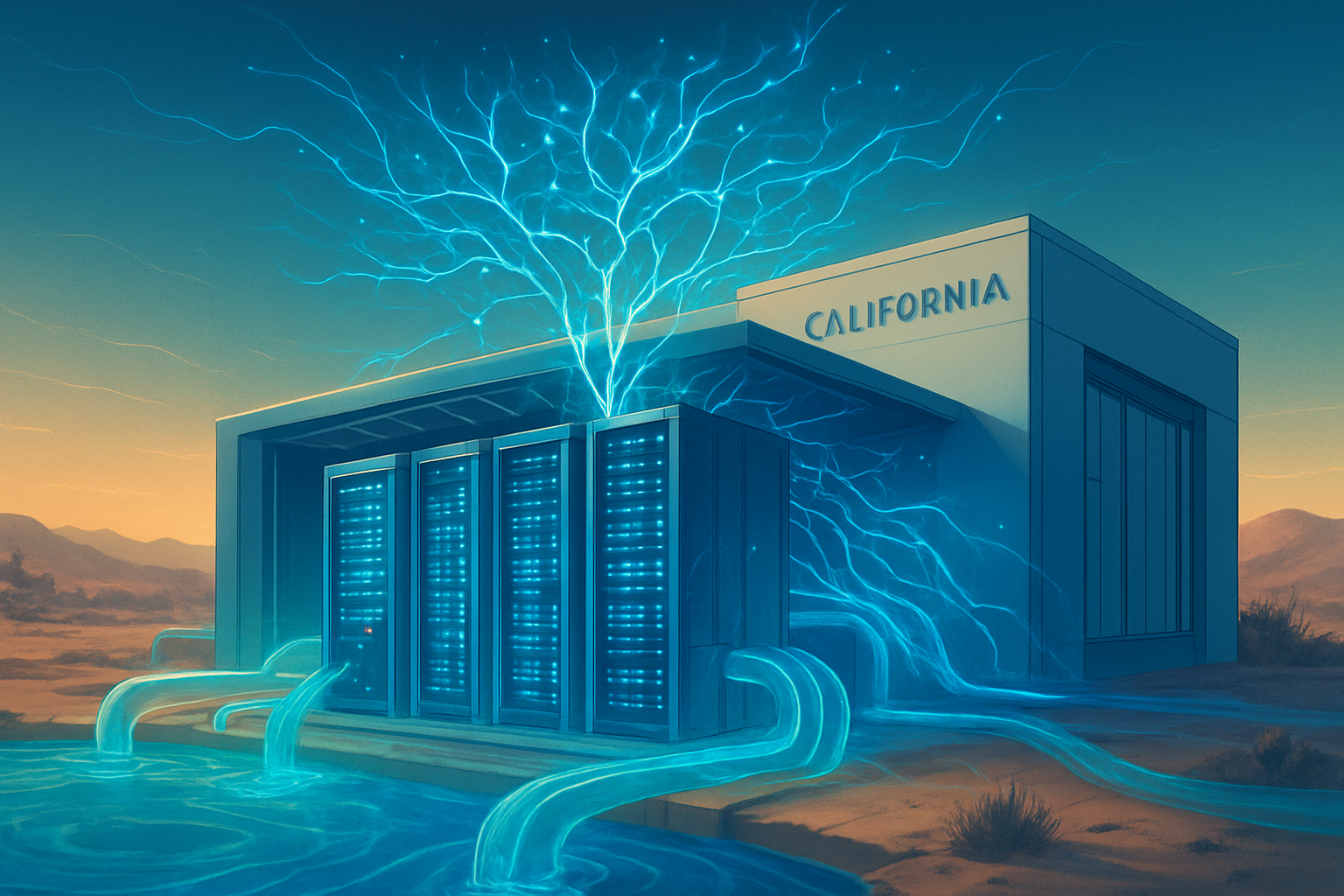
  • AI’s Thirsty Ambition: California Data Centers Grapple with Soaring Energy and Water Demands

    AI’s Thirsty Ambition: California Data Centers Grapple with Soaring Energy and Water Demands

    The relentless ascent of Artificial Intelligence (AI) is ushering in an era of unprecedented computational power, but this technological marvel comes with a growing and increasingly urgent environmental cost. As of November 2025, California, a global epicenter for AI innovation, finds itself at the forefront of a critical challenge: the explosive energy and water demands of the data centers that power AI's rapid expansion. This escalating consumption is not merely an operational footnote; it is a pressing issue straining the state's electrical grid, exacerbating water scarcity in drought-prone regions, and raising profound questions about the sustainability of our AI-driven future.

    The immediate significance of this trend cannot be overstated. AI models, particularly large language models (LLMs), are ravenous consumers of electricity, requiring colossal amounts of power for both their training and continuous operation. A single AI query, for instance, can demand nearly ten times the energy of a standard web search, while training a major LLM like GPT-4 can consume as much electricity as 300 American homes in a year. This surge is pushing U.S. electricity consumption by data centers to unprecedented levels, projected to more than double from 183 terawatt-hours (TWh) in 2024 to 426 TWh by 2030, representing over 4% of the nation's total electricity demand. In California, this translates into immense pressure on an electrical grid not designed for such intensive workloads, with peak power demand forecasted to increase by the equivalent of powering 20 million more homes by 2040, primarily due to AI computing. Utilities are grappling with numerous applications for new data centers requiring substantial power, necessitating billions in new infrastructure investments.

    The Technical Underpinnings of AI's Insatiable Appetite

    The technical reasons behind AI's burgeoning resource footprint lie deep within its computational architecture and operational demands. AI data centers in California, currently consuming approximately 5,580 gigawatt-hours (GWh) of electricity annually (about 2.6% of the state's 2023 electricity demand), are projected to see this figure double or triple by 2028. Pacific Gas & Electric (NYSE: PCG) anticipates a 3.5 GW increase in data center energy demand by 2029, with more than half concentrated in San José.

    This intensity is driven by several factors. AI workloads, especially deep learning model training, rely heavily on Graphics Processing Units (GPUs) and Tensor Processing Units (TPUs) rather than traditional Central Processing Units (CPUs). These specialized processors, crucial for the massive matrix multiplications in neural networks, consume substantially more power; training-optimized GPUs like the NVIDIA (NASDAQ: NVDA) A100 and H100 SXM5 can draw between 250W and 700W. Consequently, AI-focused data centers operate with significantly higher power densities, often exceeding 20 kW per server rack, compared to traditional data centers typically below 10 kW per rack. Training large AI models involves iterating over vast datasets for weeks or months, requiring GPUs to operate at near-maximum capacity continuously, leading to considerably higher energy draw. Modern AI training clusters can consume seven to eight times more energy than typical computing workloads.

    Water consumption, primarily for cooling, is equally stark. In 2023, U.S. data centers directly consumed an estimated 17 billion gallons of water. Hyperscale data centers, largely driven by AI, are projected to consume between 16 billion and 33 billion gallons annually by 2028. A medium-sized data center can consume roughly 110 million gallons of water per year, equivalent to the annual usage of about 1,000 households. Each 100-word AI prompt is estimated to consume approximately one bottle (519 milliliters) of water, with more recent studies indicating 10 to 50 ChatGPT queries consume about two liters. Training the GPT-3 model in Microsoft's (NASDAQ: MSFT) U.S. data centers directly evaporated an estimated 700,000 liters of clean freshwater, while Google's (NASDAQ: GOOGL) data centers in the U.S. alone consumed an estimated 12.7 billion liters in 2021.

    The AI research community and industry experts are increasingly vocal about these technical challenges. Concerns range from the direct environmental impact of carbon emissions and water scarcity to the strain on grid stability and the difficulty in meeting corporate sustainability goals. A significant concern is the lack of transparency from many data center operators regarding their resource usage. However, this pressure is also accelerating innovation. Researchers are developing more energy-efficient AI hardware, including specialized ASICs and FPGAs, and focusing on software optimization techniques like quantization and pruning to reduce computational requirements. Advanced cooling technologies, such as direct-to-chip liquid cooling and immersion cooling, are being deployed, offering significant reductions in water and energy use. Furthermore, there's a growing recognition that AI itself can be a part of the solution, leveraged to optimize energy grids and enhance the energy efficiency of infrastructure.

    Corporate Crossroads: AI Giants and Startups Navigate Sustainability Pressures

    The escalating energy and water demands of AI data centers in California are creating a complex landscape of challenges and opportunities for AI companies, tech giants, and startups alike, fundamentally reshaping competitive dynamics and market positioning. The strain on California's infrastructure is palpable, with utility providers like PG&E anticipating billions in new infrastructure spending. This translates directly into increased operational costs for data center operators, particularly in hubs like Santa Clara, where data centers consume 60% of the municipal utility's power.

    Companies operating older, less efficient data centers or those relying heavily on traditional evaporative cooling systems face significant headwinds due to higher water consumption and increased costs. AI startups with limited capital may find themselves at a disadvantage, struggling to afford the advanced cooling systems or renewable energy contracts necessary to meet sustainability benchmarks. Furthermore, a lack of transparency regarding environmental footprints can lead to reputational risks, public criticism, and regulatory scrutiny. California's high taxes and complex permitting processes, coupled with existing moratoria on nuclear power, are also making other states like Texas and Virginia more attractive for data center development, potentially leading to a geographic diversification of AI infrastructure.

    Conversely, tech giants like Alphabet (NASDAQ: GOOGL) (Google), Microsoft (NASDAQ: MSFT), Amazon (NASDAQ: AMZN), and Meta Platforms (NASDAQ: META), with their vast resources, stand to benefit. These companies are already investing heavily in sustainable data center operations, piloting advanced cooling technologies that can reduce water consumption by up to 90% and improve energy efficiency. Their commitments to "water positive" initiatives, aiming to replenish more water than they consume by 2030, also enhance their brand image and mitigate water-related risks. Cloud providers optimizing AI chips and software for greater efficiency will gain a competitive edge by lowering their environmental footprint and operational costs. The demand for clean energy and sustainable data center solutions also creates significant opportunities for renewable energy developers and innovators in energy efficiency, as well as companies offering water-free cooling systems like Novva Data Centers or river-cooled solutions like Nautilus Data Technologies.

    The competitive implications are leading to a "flight to quality," where companies offering "California-compliant" AI solutions with strong sustainability practices gain a strategic advantage. The high capital expenditure for green infrastructure could also lead to market consolidation, favoring well-resourced tech giants. This intense pressure is accelerating innovation in energy-efficient hardware, software, and cooling technologies, creating new market leaders in sustainable AI infrastructure. Companies are strategically positioning themselves by embracing transparency, investing in sustainable infrastructure, marketing "Green AI" as a differentiator, forming strategic partnerships, and advocating for supportive policies that incentivize sustainable practices.

    Broader Implications: AI's Environmental Reckoning

    The escalating energy and water demands of AI data centers in California are not isolated incidents but rather a critical microcosm of a burgeoning global challenge, carrying significant environmental, economic, and social implications. This issue forces a re-evaluation of AI's role in the broader technological landscape and its alignment with global sustainability trends. Globally, data centers consumed 4.4% of U.S. electricity in 2023, a number that could triple by 2028. By 2030-2035, data centers could account for 20% of global electricity use, with AI workloads alone potentially consuming nearly 50% of all data center energy worldwide by the end of 2024.

    The environmental impacts are profound. The massive electricity consumption, often powered by fossil fuels, significantly contributes to greenhouse gas emissions, exacerbating climate change and potentially delaying California's transition to renewable energy. The extensive use of water for cooling, particularly evaporative cooling, puts immense pressure on local freshwater resources, especially in drought-prone regions, creating competition with agriculture and other essential community needs. Furthermore, the short lifespan of high-performance computing components in AI data centers contributes to a growing problem of electronic waste and resource depletion, as manufacturing these components requires the extraction of rare earth minerals and other critical materials.

    Economically, the rising electricity demand can lead to higher bills for all consumers and necessitate billions in new infrastructure spending for utilities. However, it also presents opportunities for investment in more efficient AI models, greener hardware, advanced cooling systems, and renewable energy sources. Companies with more efficient AI implementations may gain a competitive advantage through lower operational costs and enhanced sustainability credentials. Socially, the environmental burdens often disproportionately affect marginalized communities located near data centers or power plants, raising environmental justice concerns. Competition for scarce resources like water can lead to conflicts between different sectors and communities.

    The long-term concerns for AI development and societal well-being are significant. If current patterns persist, AI's resource demands risk undermining climate targets and straining resources across global markets, leading to increased scarcity. The computational requirements for training AI models are doubling approximately every five months, an unsustainable trajectory. This period marks a critical juncture in AI's history, fundamentally challenging the notion of "dematerialized" digital innovation and forcing a global reckoning with the environmental costs. While previous technological milestones, like the industrial revolution, also consumed vast resources, AI's rapid adoption and pervasive impact across nearly every sector present an unprecedented scale and speed of demand. The invisibility of its impact, largely hidden within "the cloud," makes the problem harder to grasp despite its massive scale. However, AI also offers a unique duality: it can be a major resource consumer but also a powerful tool for optimizing resource use in areas like smart grids and precision agriculture, potentially mitigating some of its own footprint if developed and deployed responsibly.

    Charting a Sustainable Course: Future Developments and Expert Predictions

    The future trajectory of AI's energy and water demands in California will be shaped by a confluence of technological innovation, proactive policy, and evolving industry practices. In the near term, we can expect wider adoption of advanced cooling solutions such as direct-to-chip cooling and liquid immersion cooling, which can reduce water consumption by up to 90% and improve energy efficiency. The development and deployment of more energy-efficient AI chips and semiconductor-based flash storage, which consumes significantly less power than traditional hard drives, will also be crucial. Ironically, AI itself is being leveraged to improve data center efficiency, with algorithms optimizing energy usage in real-time and dynamically adjusting servers based on workload.

    On the policy front, the push for greater transparency and reporting of energy and water usage by data centers will continue. While California Governor Gavin Newsom vetoed Assembly Bill 93, which would have mandated water usage reporting, similar legislative efforts, such as Assembly Bill 222 (mandating transparency in energy usage for AI developers), are indicative of the growing regulatory interest. Incentives for sustainable practices, like Senate Bill 58's proposed tax credit for data centers meeting specific carbon-free energy and water recycling criteria, are also on the horizon. Furthermore, state agencies are urged to improve forecasting and coordinate with developers for strategic site selection in underutilized grid areas, while the California Public Utilities Commission (CPUC) is considering special electrical rate structures for data centers to mitigate increased costs for residential ratepayers.

    Industry practices are also evolving. Data center operators are increasingly prioritizing strategic site selection near underutilized wastewater treatment plants to integrate non-potable water into operations, and some are considering naturally cold climates to reduce cooling demands. Companies like Digital Realty (NYSE: DLR) and Google (NASDAQ: GOOGL) are actively working with local water utilities to use recycled or non-potable water. Operational optimization, focusing on improving Power Usage Effectiveness (PUE) and Water Usage Effectiveness (WUE) metrics, is a continuous effort, alongside increased collaboration between technology companies, policymakers, and environmental advocates.

    Experts predict a substantial increase in energy and water consumption by data centers in the coming years, with AI's global energy needs potentially reaching 21% of all electricity usage by 2030. Stanford University experts warn that California has a narrow 24-month window to address permitting, interconnection, and energy forecasting challenges, or it risks losing its competitive advantage in AI and data centers to other states. The emergence of nuclear power as a favored energy source for AI data centers is also a significant trend to watch, with its 24/7 reliable, clean emissions profile. The overarching challenge remains the exponential growth of AI, which is creating unprecedented demands on infrastructure not designed for such intensive workloads, particularly in water-stressed regions.

    A Pivotal Moment for Sustainable AI

    The narrative surrounding AI's escalating energy and water demands in California represents a pivotal moment in the technology's history. No longer can AI be viewed as a purely digital, ethereal construct; its physical footprint is undeniable and rapidly expanding. The key takeaways underscore a critical dichotomy: AI's transformative potential is inextricably linked to its substantial environmental cost, particularly in its reliance on vast amounts of electricity and water for data center operations. California, as a global leader in AI innovation, is experiencing this challenge acutely, with its grid stability, water resources, and climate goals all under pressure.

    This development marks a significant turning point, forcing a global reckoning with the environmental sustainability of AI. It signifies a shift where AI development must now encompass not only algorithmic prowess but also responsible resource management and infrastructure design. The long-term impact will hinge on whether this challenge becomes a catalyst for profound innovation in green computing and sustainable practices or an insurmountable barrier that compromises environmental well-being. Unchecked growth risks exacerbating resource scarcity and undermining climate targets, but proactive intervention can accelerate the development of more efficient AI models, advanced cooling technologies, and robust regulatory frameworks.

    In the coming weeks and months, several key indicators will reveal the direction of this critical trajectory. Watch for renewed legislative efforts in California to mandate transparency in data center resource usage, despite previous hurdles. Monitor announcements from utilities like PG&E and the California ISO (CAISO) regarding infrastructure upgrades and renewable energy integration plans to meet surging AI demand. Pay close attention to major tech companies as they publicize their investments in and deployment of advanced cooling technologies and efforts to develop more energy-efficient AI chips and software. Observe trends in data center siting and design, noting any shift towards regions with abundant renewable energy and water resources or innovations in water-efficient cooling. Finally, look for new industry commitments and standards for environmental impact reporting, as well as academic research providing refined estimates of AI's footprint and proposing innovative solutions. The path forward for AI's sustainable growth will be forged through unprecedented collaboration and a collective commitment to responsible innovation.


    This content is intended for informational purposes only and represents analysis of current AI developments.

    TokenRing AI delivers enterprise-grade solutions for multi-agent AI workflow orchestration, AI-powered development tools, and seamless remote collaboration platforms.
    For more information, visit https://www.tokenring.ai/.