Tag: Enterprise AI

  • The Great Desktop Takeover: How Anthropic’s “Computer Use” Redefined the AI Frontier

    The Great Desktop Takeover: How Anthropic’s “Computer Use” Redefined the AI Frontier

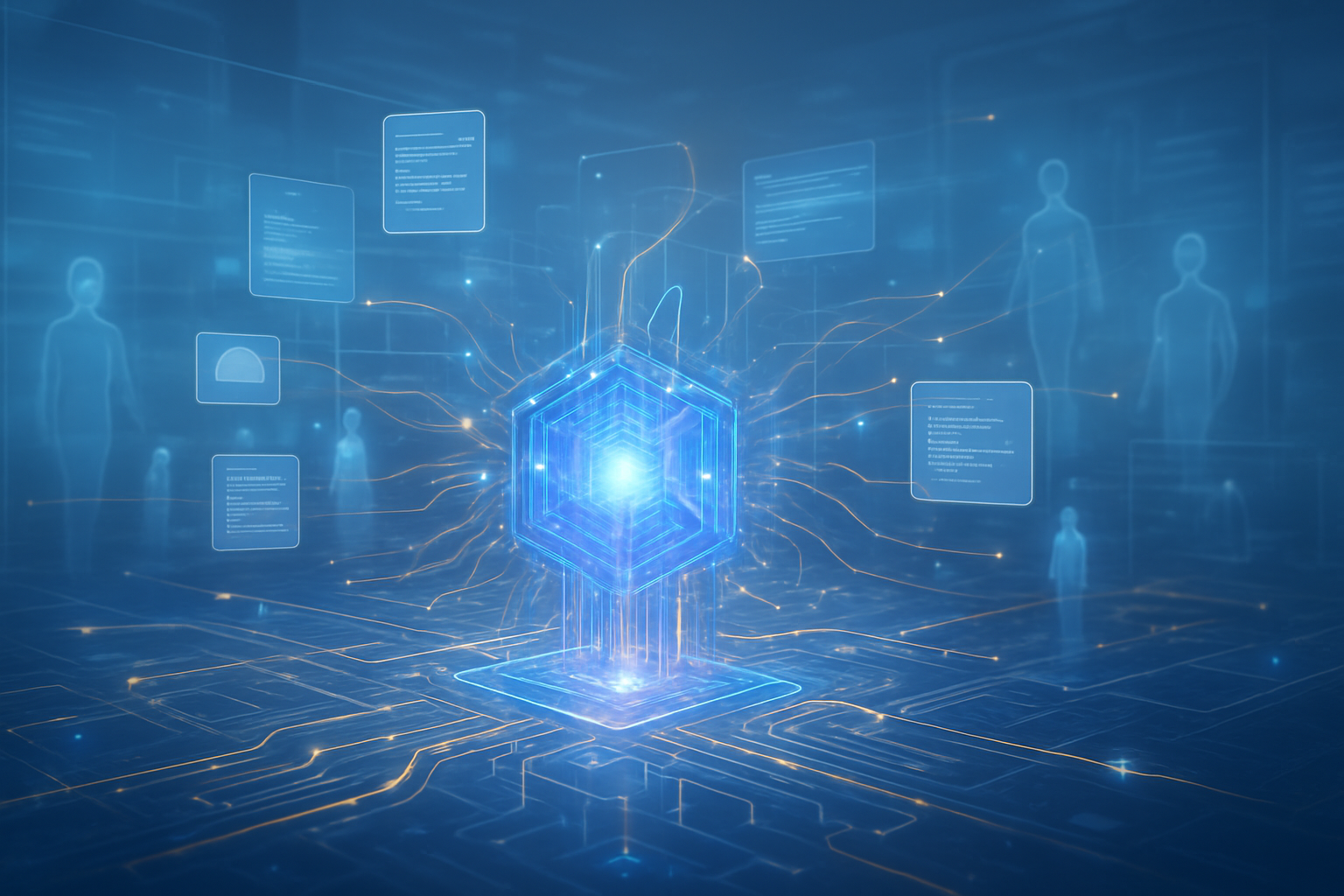
    The era of the passive chatbot is officially over. As of early 2026, the artificial intelligence landscape has transitioned from models that merely talk to models that act. At the center of this revolution is Anthropic’s "Computer Use" capability, a breakthrough that allows AI to navigate a desktop interface with the same visual and tactile precision as a human being. By interpreting screenshots, moving cursors, and typing text across any application, Anthropic has effectively given its Claude models a "body" to operate within the digital world, marking the most significant shift in AI agency since the debut of large language models.

    This development has fundamentally altered how enterprises approach productivity. No longer confined to the "walled gardens" of specific software integrations or brittle APIs, Claude can now bridge the gap between legacy systems and modern workflows. Whether it’s navigating a decades-old ERP system or orchestrating complex data transfers between disparate creative tools, the "Computer Use" feature has turned the personal computer into a playground for autonomous agents, sparking a high-stakes arms race among tech giants to control the "Agentic OS" of the future.

    The technical architecture of Anthropic’s Computer Use capability represents a radical departure from traditional automation. Unlike Robotic Process Automation (RPA), which relies on pre-defined scripts and rigid UI selectors, Claude operates through a continuous "Vision-Action Loop." The model captures a screenshot of the user's environment, analyzes the pixels to identify buttons and text fields, and then calculates the exact (x, y) coordinates needed to move the mouse or execute a click. This pixel-based approach allows the AI to interact with any software—from specialized scientific tools to standard office suites—without requiring custom backend integration.

    Since its initial beta release in late 2024, the technology has seen massive refinements. The current Claude 4.5 iteration, released in late 2025, introduced a "Thinking" layer that allows the agent to pause and reason through multi-step plans before execution. This "Hybrid Reasoning" has drastically reduced the "hallucinated clicks" that plagued earlier versions. Furthermore, a new "Zoom" capability allows the model to request high-resolution crops of specific screen regions, enabling it to read fine print or interact with dense spreadsheets that were previously illegible at standard resolutions.

    Initial reactions from the AI research community were a mix of awe and apprehension. While experts praised the move toward "Generalist Agents," many pointed out the inherent fragility of visual-only navigation. Early benchmarks, such as OSWorld, showed Claude’s success rate jumping from a modest 14.9% at launch to over 61% by 2026. This leap was largely attributed to Anthropic’s Model Context Protocol (MCP), an open standard that allows the AI to securely pull data from local files and databases, providing the necessary context to make sense of what it "sees" on the screen.

    The market impact of this "agency explosion" has been nothing short of disruptive. Anthropic’s strategic lead in desktop control has forced competitors to accelerate their own agentic roadmaps. OpenAI (Private) recently responded with "Operator," a browser-centric agent optimized for consumer tasks, while Google (NASDAQ:GOOGL) launched "Jarvis" to turn the Chrome browser into an autonomous action engine. However, Anthropic’s focus on full-desktop control has given it a distinct advantage in the B2B sector, where legacy software often lacks the web-based APIs that Google and OpenAI rely upon.

    Traditional RPA leaders like UiPath (NYSE:PATH) and Automation Anywhere (Private) have been forced to pivot or risk obsolescence. Once the kings of "scripted" automation, these companies are now repositioning themselves as "Agentic Orchestrators." For instance, UiPath recently launched its Maestro platform, which coordinates Anthropic agents alongside traditional robots, acknowledging that while AI can "reason," traditional RPA is still more cost-effective for high-volume, repetitive data entry. This hybrid approach is becoming the standard for enterprise-grade automation.

    The primary beneficiaries of this shift have been the cloud providers hosting these compute-heavy agents. Amazon (NASDAQ:AMZN), through its AWS Bedrock platform, has become the de facto home for Claude-powered agents, offering the "air-gapped" virtual machines required for secure desktop use. Meanwhile, Microsoft (NASDAQ:MSFT) has performed a surprising strategic maneuver by integrating Anthropic models into Office 365 alongside its OpenAI-based Copilots. By offering a choice of models, Microsoft ensures that its enterprise customers have access to the "pixel-perfect" navigation of Claude when OpenAI’s browser-based agents fall short.

    Beyond the corporate balance sheets, the wider significance of Computer Use touches on the very nature of human-computer interaction. We are witnessing a transition from the "Search and Click" era to the "Delegate and Approve" era. This fits into the broader trend of "Agentic AI," where the value of a model is measured by its utility rather than its chatty personality. Much like AlphaGo proved AI could master strategic systems and GPT-4 proved it could master language, Computer Use proves that AI can master the tools of modern civilization.

    However, this newfound agency brings harrowing security concerns. Security researchers have warned of "Indirect Prompt Injection," where a malicious website or document could contain hidden instructions that trick an AI agent into exfiltrating sensitive data or deleting files. Because the agent has the same permissions as the logged-in user, it can act as a "Confused Deputy," performing harmful actions under the guise of a legitimate task. Anthropic has countered this with specialized "Guardrail Agents" that monitor the main model’s actions in real-time, but the battle between autonomous agents and adversarial actors is only beginning.

    Ethically, the move toward autonomous computer use has reignited fears of white-collar job displacement. As agents become capable of handling 30–70% of routine office tasks—such as filing expenses, generating reports, and managing calendars—the "entry-level" cognitive role is under threat. The societal challenge of 2026 is no longer just about retraining workers for "AI tools," but about managing the "skill atrophy" that occurs when humans stop performing the foundational tasks that build expertise, delegating them instead to a silicon-based teammate.

    Looking toward the horizon, the next logical step is the "Agentic OS." Industry experts predict that by 2028, the traditional desktop metaphor—files, folders, and icons—will be replaced by a goal-oriented sandbox. In this future, users won't "open" applications; they will simply state a goal, and the operating system will orchestrate a fleet of background agents to achieve it. This "Zero-Click UI" will prioritize "Invisible Intelligence," where the interface only appears when the AI requires human confirmation or a high-level decision.

    The rise of the "Agent-to-Agent" (A2A) economy is another imminent development. Using protocols like MCP, an agent representing a buyer will negotiate in milliseconds with an agent representing a supplier, settling transactions via blockchain-based micropayments. While the technical hurdles—such as latency and "context window" management—remain significant, the potential for an autonomous B2B economy is a multi-trillion-dollar opportunity. The challenge for developers in the coming months will be perfecting the "handoff"—the moment an AI realizes it has reached the limit of its reasoning and must ask a human for help.

    In summary, Anthropic’s Computer Use capability is more than just a feature; it is a milestone in the history of artificial intelligence. It marks the moment AI stopped being a digital librarian and started being a digital worker. The shift from "talking" to "doing" has fundamentally changed the competitive dynamics of the tech industry, disrupted the multi-billion-dollar automation market, and forced a global conversation about the security and ethics of autonomous agency.

    As we move further into 2026, the success of this technology will depend on trust. Can enterprises secure their desktops against agent-based attacks? Can workers adapt to a world where their primary job is "Agent Management"? The answers to these questions will determine the long-term impact of the Agentic Revolution. For now, the world is watching as the cursor moves on its own, signaling the start of a new chapter in the human-machine partnership.


    This content is intended for informational purposes only and represents analysis of current AI developments.

    TokenRing AI delivers enterprise-grade solutions for multi-agent AI workflow orchestration, AI-powered development tools, and seamless remote collaboration platforms.
    For more information, visit https://www.tokenring.ai/.
  • The End of Exclusivity: Microsoft Officially Integrates Anthropic’s Claude into Copilot 365

    The End of Exclusivity: Microsoft Officially Integrates Anthropic’s Claude into Copilot 365

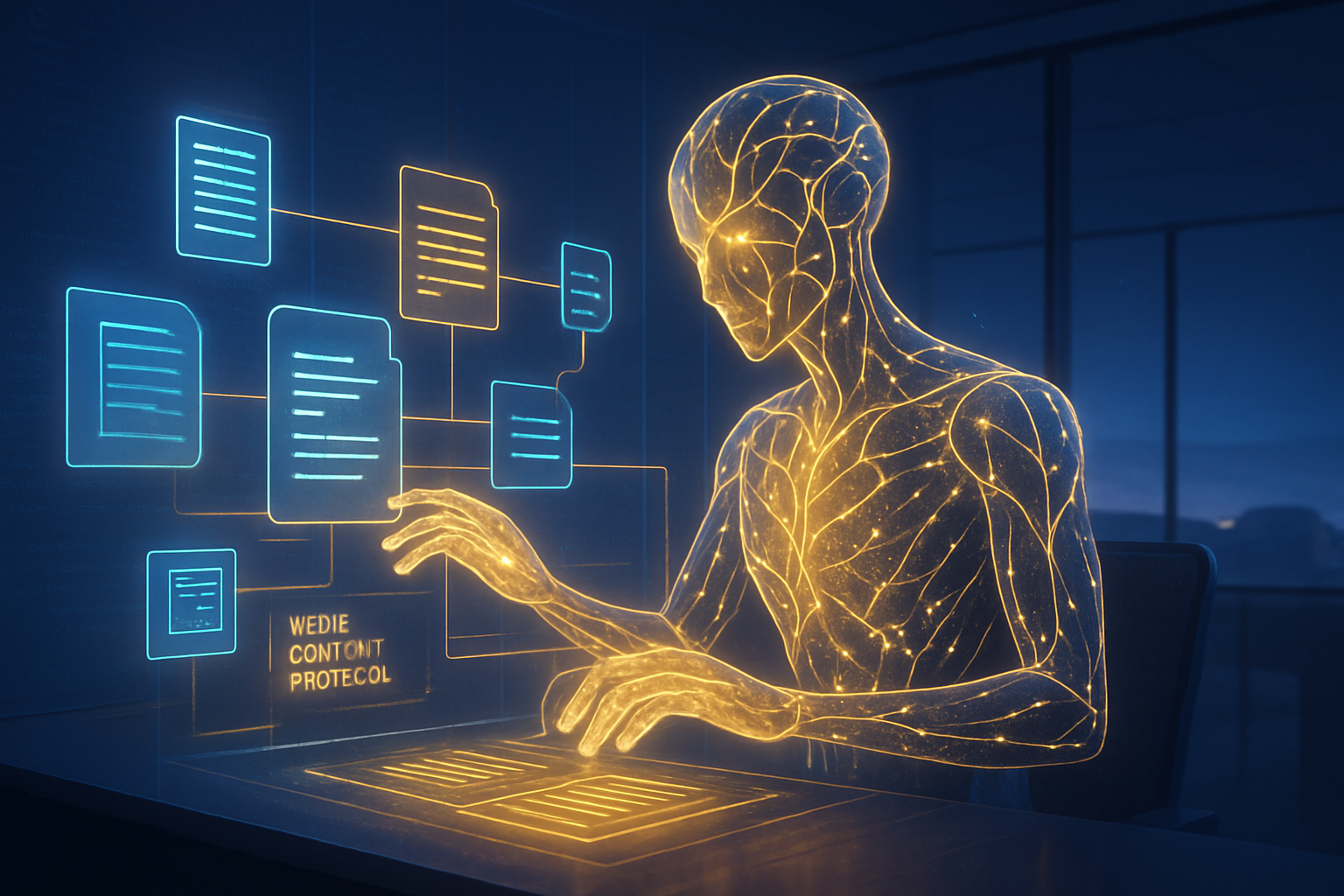
    In a move that fundamentally reshapes the artificial intelligence landscape, Microsoft (NASDAQ: MSFT) has officially completed the integration of Anthropic’s Claude models into its flagship Microsoft 365 Copilot suite. This strategic pivot, finalized in early January 2026, marks the formal conclusion of Microsoft’s exclusive reliance on OpenAI for its core consumer and enterprise productivity tools. By incorporating Claude Sonnet 4.5 and Opus 4.1 into the world’s most widely used office software, Microsoft has transitioned from being a dedicated OpenAI partner to a diversified AI platform provider.

    The significance of this shift cannot be overstated. For years, the "Microsoft-OpenAI alliance" was viewed as an unbreakable duopoly in the generative AI race. However, as of January 7, 2026, Anthropic was officially added as a data subprocessor for Microsoft 365, allowing enterprise administrators to deploy Claude models as the primary engine for their organizational workflows. This development signals a new era of "model agnosticism" where performance, cost, and reliability take precedence over strategic allegiances.

    A Technical Deep Dive: The Multi-Model Engine

    The integration of Anthropic’s technology into Copilot 365 is not merely a cosmetic update but a deep architectural overhaul. Under the new "Multi-Model Choice" framework, users can now toggle between OpenAI’s latest reasoning models and Anthropic’s Claude 4 series depending on the specific task. Technical specifications released by Microsoft indicate that Claude Sonnet 4.5 has been optimized specifically for Excel Agent Mode, where it has shown a 15% improvement over GPT-4o in generating complex financial models and error-checking multi-sheet workbooks.

    Furthermore, the Copilot Researcher agent now utilizes Claude Opus 4.1 for high-reasoning tasks that require long-context windows. With Opus 4.1’s ability to process up to 500,000 tokens in a single prompt, enterprise users can now summarize entire libraries of corporate documentation—a feat that previously strained the architecture of earlier GPT iterations. For high-volume, low-latency tasks, Microsoft has deployed Claude Haiku 4.5 as a "sub-agent" to handle basic email drafting and calendar scheduling, significantly reducing the operational cost and carbon footprint of the Copilot service.

    Industry experts have noted that this transition was made possible by a massive contractual restructuring between Microsoft and OpenAI in October 2025. This "Grand Bargain" granted Microsoft the right to develop its own internal models, such as the rumored MAI-1, and partner with third-party labs like Anthropic. In exchange, OpenAI, which recently transitioned into a Public Benefit Corporation (PBC), gained the freedom to utilize other cloud providers such as Oracle (NYSE: ORCL) and Amazon (NASDAQ: AMZN) Web Services to meet its staggering compute requirements.

    Strategic Realignment: The New AI Power Dynamics

    This move places Microsoft in a unique position of leverage. By breaking the OpenAI "stranglehold," Microsoft has de-risked its entire AI strategy. The leadership instability at OpenAI in late 2023 and the subsequent departure of several key researchers served as a wake-up call for Redmond. By integrating Claude, Microsoft ensures that its 400 million Microsoft 365 subscribers are never dependent on the stability or roadmap of a single startup.

    For Anthropic, this is a monumental victory. Although the company remains heavily backed by Amazon and Alphabet (NASDAQ: GOOGL), its presence within the Microsoft ecosystem allows it to reach the lucrative enterprise market that was previously the exclusive domain of OpenAI. This creates a "co-opetition" environment where Anthropic models are hosted on Microsoft’s Azure AI Foundry while simultaneously serving as the backbone for Amazon’s Bedrock.

    The competitive implications for other tech giants are profound. Google must now contend with a Microsoft that offers the best of both OpenAI and Anthropic, effectively neutralizing the "choice" advantage that Google Cloud’s Vertex AI previously marketed. Meanwhile, startups in the AI orchestration space may find their market share shrinking as Microsoft integrates sophisticated multi-model routing directly into the OS and productivity layer.

    The Broader Significance: A Shift in the AI Landscape

    The integration of Claude into Copilot 365 reflects a broader trend toward the "commoditization of intelligence." We are moving away from an era where a single model was expected to be a "god in a box" and toward a modular approach where different models act as specialized tools. This milestone is comparable to the early days of the internet when web browsers shifted from supporting a single proprietary standard to a multi-standard ecosystem.

    However, this shift also raises potential concerns regarding data privacy and model governance. With two different AI providers now processing sensitive corporate data within Microsoft 365, enterprise IT departments face the challenge of managing disparate safety protocols and "hallucination profiles." Microsoft has attempted to mitigate this by unifying its "Responsible AI" filters across all models, but the complexity of maintaining consistent output quality across different architectures remains a significant hurdle.

    Furthermore, this development highlights the evolving nature of the Microsoft-OpenAI relationship. While Microsoft remains OpenAI’s largest investor and primary commercial window for "frontier" models like the upcoming GPT-5, the relationship is now clearly transactional rather than exclusive. This "open marriage" allows both entities to pursue their own interests—Microsoft as a horizontal platform and OpenAI as a vertical AGI laboratory.

    The Horizon: What Comes Next?

    Looking ahead, the next 12 to 18 months will likely see the introduction of "Hybrid Agents" that can split a single task across multiple models. For example, a user might ask Copilot to write a legal brief; the system could use an OpenAI model for the creative drafting and a Claude model for the rigorous citation checking and logical consistency. This "ensemble" approach is expected to significantly reduce the error rates that have plagued generative AI since its inception.

    We also anticipate the launch of Microsoft’s own first-party frontier model, MAI-1, which will likely compete directly with both GPT-5 and Claude 5. The challenge for Microsoft will be managing this internal competition without alienating its external partners. Experts predict that by 2027, the concept of "choosing a model" will disappear entirely for the end-user, as AI orchestrators automatically route requests to the most efficient and accurate model in real-time behind the scenes.

    Conclusion: A New Chapter for Enterprise AI

    Microsoft’s integration of Anthropic’s Claude into Copilot 365 is a watershed moment that signals the end of the "exclusive partnership" era of AI. By prioritizing flexibility and performance over a single-vendor strategy, Microsoft has solidified its role as the indispensable platform for the AI-powered enterprise. The key takeaways are clear: diversification is the new standard for stability, and the race for AI supremacy is no longer about who has the best model, but who offers the best ecosystem of models.

    As we move further into 2026, the industry will be watching closely to see how OpenAI responds to this loss of exclusivity and whether other major players, like Apple (NASDAQ: AAPL), will follow suit by opening their closed ecosystems to multiple AI providers. For now, Microsoft has sent a clear message to the market: in the age of AI, the platform is king, and the platform demands choice.


    This content is intended for informational purposes only and represents analysis of current AI developments.

    TokenRing AI delivers enterprise-grade solutions for multi-agent AI workflow orchestration, AI-powered development tools, and seamless remote collaboration platforms.
    For more information, visit https://www.tokenring.ai/.
  • Databricks Unveils ‘Instructed Retriever’ to Solve the AI Accuracy Crisis, Threatening Traditional RAG

    Databricks Unveils ‘Instructed Retriever’ to Solve the AI Accuracy Crisis, Threatening Traditional RAG

    On January 6, 2026, Databricks officially unveiled its "Instructed Retriever" technology, a breakthrough in retrieval architecture designed to move enterprise AI beyond the limitations of "naive" Retrieval-Augmented Generation (RAG). By integrating a specialized 4-billion parameter model that interprets complex system-level instructions, Databricks aims to provide a "reasoning engine" for AI agents that can navigate enterprise data with unprecedented precision.

    The announcement marks a pivotal shift in how businesses interact with their internal knowledge bases. While traditional RAG systems often struggle with hallucinations and irrelevant data retrieval, the Instructed Retriever allows AI to respect hard constraints—such as specific date ranges, business rules, and data schemas—ensuring that the information fed into large language models (LLMs) is both contextually accurate and compliant with enterprise governance.

    The Architecture of Precision: Inside the InstructedRetriever-4B

    At the heart of this advancement is the InstructedRetriever-4B, a specialized model developed by Databricks Mosaic AI Research. Unlike standard retrieval systems that rely solely on probabilistic similarity (matching text based on how "similar" it looks), the Instructed Retriever uses a hybrid approach. It employs an LLM to interpret a user’s natural language prompt alongside complex system specifications, generating a sophisticated "search plan." This plan combines deterministic filters—such as SQL-like metadata queries—with traditional vector embeddings to pinpoint the exact data required.

    Technically, the InstructedRetriever-4B was optimized using Test-time Adaptive Optimization (TAO) and Offline Reinforcement Learning (RL). By utilizing verifiable rewards (RLVR) based on retrieval recall, Databricks "taught" the model to follow complex instructions with a level of precision typically reserved for much larger frontier models like GPT-5 or Claude 4.5. This allows the system to differentiate between semantically similar but factually distinct data points, such as distinguishing a 2024 sales report from a 2025 one based on explicit metadata constraints rather than just text overlap.

    Initial benchmarks are striking. Databricks reports that the Instructed Retriever provides a 35–50% gain in retrieval recall on instruction-following benchmarks and a 70% improvement in end-to-end answer quality compared to standard RAG architectures. By solving the "accuracy crisis" that has plagued early enterprise AI deployments, Databricks is positioning this technology as the essential foundation for production-grade Agentic AI.

    A Strategic Blow to the Data Warehouse Giants

    The release of the Instructed Retriever is a direct challenge to major competitors in the data intelligence space, most notably Snowflake (NYSE: SNOW). While Snowflake has been aggressive in its AI acquisitions and the development of its "Cortex" AI layer, Databricks is leveraging its deep integration with the Unity Catalog to provide a more seamless, governed retrieval experience. By embedding the retrieval logic directly into the data governance layer, Databricks makes it significantly harder for rivals to match its accuracy without similar unified data architectures.

    Tech giants like Microsoft (NASDAQ: MSFT) and Amazon (NASDAQ: AMZN) find themselves in a complex position. While both are major partners of Databricks through Azure and AWS, they also offer competing services like Microsoft Fabric and Amazon Bedrock. The Instructed Retriever sets a new bar for these platforms, forcing them to evolve their own "agentic reasoning" capabilities. For startups and smaller AI labs, the availability of a high-performance 4B parameter model for retrieval could disrupt the market for expensive, proprietary reranking services, as Databricks offers a more integrated and efficient alternative.

    Furthermore, strategic partners like NVIDIA (NASDAQ: NVDA) and Salesforce (NYSE: CRM) are expected to benefit from this development. NVIDIA’s hardware powers the intensive RL training required for these models, while Salesforce can leverage the Instructed Retriever to enhance the accuracy of its "Agentforce" autonomous agents, providing their enterprise customers with more reliable data-driven insights.

    Navigating the Shift Toward Agentic AI

    The broader significance of the Instructed Retriever lies in its role as a bridge between natural language and deterministic data. For years, the AI industry has struggled with the "black box" nature of vector search. The Instructed Retriever introduces a layer of transparency and control, allowing developers to see exactly how instructions are translated into data filters. This fits into the wider trend of Agentic RAG, where AI is not just a chatbot but a system capable of executing multi-step reasoning tasks across heterogeneous data sources.

    However, this advancement also highlights a growing divide in the AI landscape: the "data maturity" gap. For the Instructed Retriever to work effectively, an enterprise's data must be well-organized and richly tagged with metadata. Companies with messy, unstructured data silos may find themselves unable to fully capitalize on these gains, potentially widening the competitive gap between data-forward organizations and laggards.

    Compared to previous milestones, such as the initial popularization of RAG in 2023, the Instructed Retriever represents the "professionalization" of AI retrieval. It moves the conversation away from "can the AI talk?" to "can the AI be trusted with mission-critical business data?" This focus on reliability is essential for high-stakes industries like financial services, legal discovery, and supply chain management, where even a 5% error rate can be catastrophic.

    The Future of "Instructed" Systems

    Looking ahead, experts predict that "instruction-tuning" will expand beyond retrieval into every facet of the AI stack. In the near term, we can expect Databricks to integrate this technology deeper into its Agent Bricks suite, potentially allowing for "Instructed Synthesis"—where the model follows specific stylistic or structural guidelines when generating the final answer based on retrieved data.

    The long-term potential for this technology includes the creation of autonomous "Knowledge Assistants" that can manage entire corporate wikis, automatically updating and filtering information based on evolving business policies. The primary challenge remaining is the computational overhead of running even a 4B model for every retrieval step, though optimizations in inference hardware from companies like Alphabet (NASDAQ: GOOGL) and NVIDIA are likely to mitigate these costs over time.

    As AI agents become more autonomous, the ability to give them "guardrails" through technology like the Instructed Retriever will be paramount. Industry analysts expect a wave of similar "instructed" models to emerge from other labs as the industry moves away from generic LLMs toward specialized, task-oriented architectures that prioritize accuracy over broad-spectrum creativity.

    A New Benchmark for Enterprise Intelligence

    Databricks' Instructed Retriever is more than just a technical upgrade; it is a fundamental rethinking of how AI interacts with the structured and unstructured data that powers the modern economy. By successfully merging the flexibility of natural language with the rigor of deterministic data filtering, Databricks has set a new standard for what "enterprise-grade" AI actually looks like.

    The key takeaway for the industry is that the era of "naive" RAG is coming to an end. As businesses demand higher ROI and lower risk from their AI investments, the focus will shift toward architectures that offer granular control and verifiable accuracy. In the coming months, all eyes will be on how Snowflake and the major cloud providers respond to this move, and whether they can close the "accuracy gap" that Databricks has so aggressively highlighted.

    For now, the Instructed Retriever stands as a significant milestone in AI history—a clear signal that the future of the field lies in the intelligent, instructed orchestration of data.


    This content is intended for informational purposes only and represents analysis of current AI developments.

    TokenRing AI delivers enterprise-grade solutions for multi-agent AI workflow orchestration, AI-powered development tools, and seamless remote collaboration platforms.
    For more information, visit https://www.tokenring.ai/.
  • Snowflake’s $1 Billion Bet: Acquiring Observe to Command the AI Control Plane

    Snowflake’s $1 Billion Bet: Acquiring Observe to Command the AI Control Plane

    In a move that signals a seismic shift in the enterprise technology landscape, Snowflake (NYSE: SNOW) announced on January 8, 2026, its intent to acquire Observe, the leader in AI-powered observability, for approximately $1 billion. This landmark acquisition—the largest in Snowflake’s history—marks the company’s definitive transition from a cloud data warehouse to a comprehensive "control plane" for production AI. By integrating Observe’s advanced telemetry processing directly into the Snowflake AI Data Cloud, the company aims to provide enterprises with a unified platform to manage the massive, often overwhelming, data streams generated by modern autonomous AI agents and distributed applications.

    The significance of this deal lies in its timing and technical synergy. As organizations move beyond experimental LLM projects into full-scale production AI, the volume of telemetry data—logs, metrics, and traces—has exploded, rendering traditional monitoring tools cost-prohibitive and technically inadequate. Snowflake’s acquisition of Observe addresses this "observability crisis" head-on, positioning Snowflake as the central nervous system for the modern enterprise, where data storage, model execution, and operational monitoring are finally unified under a single, governed architecture.

    The Technical Evolution: From Reactive Monitoring to AI-Driven Troubleshooting

    The technical foundation of this deal is rooted in what industry insiders call "shared DNA." Unlike most acquisitions that require years of replatforming, Observe was built natively on Snowflake from its inception. This means Observe’s "O11y Context Graph"—an engine that maps the complex relationships between various telemetry signals—already speaks the language of the Snowflake Data Cloud. By treating logs and traces as structured data rather than ephemeral "exhaust," the integrated platform allows engineers to query operational health using standard SQL and AI-driven natural language interfaces.

    At the heart of the new offering is Observe’s flagship "AI SRE" (Site Reliability Engineer) technology. This agentic assistant is designed to autonomously investigate the root causes of failures in complex, distributed AI applications. When an AI agent fails or begins to hallucinate, the AI SRE can instantly correlate the event across the entire stack—identifying if the issue was caused by a schema change in the database, a spike in compute costs, or a degradation in model performance. This capability reportedly allows teams to resolve production issues up to 10 times faster than traditional manual dashboarding.

    Furthermore, the integration leverages open standards like Apache Iceberg and OpenTelemetry. By adopting these formats, Snowflake ensures that telemetry data is not trapped in a proprietary silo. Instead, it becomes a "first-class" governed asset. This allows enterprises to store years of high-fidelity operational data at a fraction of the cost of legacy systems, providing a rich dataset that can be used to further train and fine-tune future AI models for better reliability and performance.

    Shaking Up the $50 Billion ITOM Market

    The acquisition is a direct shot across the bow of established observability giants like Datadog (NASDAQ: DDOG), Cisco (NASDAQ: CSCO) (via its Splunk acquisition), and Dynatrace (NYSE: DT). For years, these incumbents have dominated the IT Operations Management (ITOM) market by charging premium prices for proprietary storage and ingestion. Snowflake’s move challenges this "data tax" by arguing that observability is essentially a data problem that should be handled by the existing enterprise data platform rather than a separate, siloed tool.

    Market analysts suggest that Snowflake’s strategy could undercut the pricing models of traditional vendors by as much as 60%. By utilizing Snowflake’s elastic compute and low-cost object storage, customers can retain massive amounts of telemetry data without the punitive costs associated with legacy ingestion fees. This economic advantage is expected to put immense pressure on Datadog and Splunk to either lower their pricing or accelerate their own transitions toward open data lake architectures.

    For major AI labs and tech giants, this deal validates the trend of vertical integration. Snowflake is effectively completing the loop of the AI lifecycle: it now hosts the raw data, provides the infrastructure to build and run models via Snowflake Cortex, and now offers the tools to monitor and troubleshoot those models in production. This "one-stop-shop" approach provides a significant strategic advantage over fragmented stacks, offering CIOs a single point of governance and control for their entire AI investment.

    Redefining Telemetry in the Era of Production AI

    Beyond the immediate market competition, this acquisition reflects a wider shift in how the tech industry views operational data. In the pre-AI era, logs were often viewed as temporary files to be deleted after 30 days. In the era of production AI, however, telemetry is the lifeblood of system improvement. By treating telemetry as "first-class data," Snowflake is enabling a new paradigm where every system error or performance lag is captured and analyzed to improve the underlying AI models.

    This development mirrors previous AI milestones, such as the shift from specialized hardware to general-purpose GPUs. Just as GPUs unified compute for diverse AI tasks, Snowflake’s acquisition of Observe seeks to unify data management for both business intelligence and operational health. The potential impact is profound: if AI agents are to run our businesses, the systems that monitor them must be just as intelligent and integrated as the agents themselves.

    However, the move also raises concerns regarding vendor lock-in. As Snowflake expands its reach into every layer of the enterprise stack, some customers may worry about becoming too dependent on a single provider. Snowflake’s commitment to open formats like Iceberg is intended to mitigate these fears, but the gravitational pull of a unified "AI control plane" will undoubtedly be a central topic of debate among enterprise architects in the coming years.

    The Horizon: Autonomous Remediation and Agentic Operations

    Looking ahead, the integration of Observe into the Snowflake ecosystem is expected to pave the way for "autonomous remediation." In the near term, we can expect the AI SRE to move from merely diagnosing problems to suggesting—and eventually implementing—fixes. For example, if an AI-driven supply chain application detects a data pipeline bottleneck, the system could automatically scale compute resources or reroute data flows without human intervention.

    The long-term vision involves a fully "agentic" operations layer. Experts predict that within the next two years, the distinction between "monitoring" and "management" will disappear. We will see the rise of self-healing systems where the Snowflake control plane acts as a supervisor, constantly optimizing the performance and cost of thousands of concurrent AI agents. The primary challenge will be ensuring the safety and predictability of these autonomous systems, requiring new frameworks for AI governance and "human-in-the-loop" checkpoints.

    A New Chapter for the AI Data Cloud

    Snowflake’s $1 billion acquisition of Observe is more than just a corporate merger; it is a declaration of intent. It marks the moment when the industry recognized that AI cannot exist in a vacuum—it requires a robust, intelligent, and economically viable control plane to survive the rigors of production environments. Under the leadership of CEO Sridhar Ramaswamy, Snowflake has signaled that it will not be content with merely storing data; it intends to be the operating system upon which the future of AI is built.

    As we move deeper into 2026, the tech community will be watching closely to see how quickly Snowflake can realize the full potential of this integration. The success of this deal will be measured not just by Snowflake’s stock price, but by the reliability and efficiency of the next generation of AI applications. For enterprises, the message is clear: the era of siloed observability is over, and the era of the integrated AI control plane has begun.


    This content is intended for informational purposes only and represents analysis of current AI developments.

    TokenRing AI delivers enterprise-grade solutions for multi-agent AI workflow orchestration, AI-powered development tools, and seamless remote collaboration platforms.
    For more information, visit https://www.tokenring.ai/.
  • Microsoft Fabric Supercharges AI Pipelines with Osmos Integration: The Dawn of Autonomous Data Ingestion

    Microsoft Fabric Supercharges AI Pipelines with Osmos Integration: The Dawn of Autonomous Data Ingestion

    In a move that signals a decisive shift in the artificial intelligence arms race, Microsoft (NASDAQ: MSFT) has officially integrated the technology of its recently acquired startup, Osmos, into the Microsoft Fabric ecosystem. This strategic update, finalized in early January 2026, introduces a suite of "agentic AI" capabilities designed to automate the traditionally labor-intensive "first mile" of data engineering. By embedding autonomous data ingestion directly into its unified analytics platform, Microsoft is attempting to eliminate the primary bottleneck preventing enterprises from scaling real-time AI: the cleaning and preparation of unstructured, "messy" data.

    The significance of this integration cannot be overstated for the enterprise sector. As organizations move beyond experimental chatbots toward production-grade agentic workflows and Retrieval-Augmented Generation (RAG) systems, the demand for high-quality, real-time data has skyrocketed. The Osmos-powered updates to Fabric transform the platform from a passive repository into an active, self-organizing data lake, potentially reducing the time required to prep data for AI models from weeks to mere minutes.

    The Technical Core: Agentic Engineering and Autonomous Wrangling

    At the heart of the new Fabric update are two primary agentic AI solutions: the AI Data Wrangler and the AI Data Engineer. Unlike traditional ETL (Extract, Transform, Load) tools that require rigid, manual mapping of source-to-target schemas, the AI Data Wrangler utilizes advanced machine learning to autonomously interpret relationships within "unruly" data formats. Whether dealing with deeply nested JSON, irregular CSV files, or semi-structured PDFs, the agent identifies patterns and normalizes the data without human intervention. This represents a fundamental departure from the "brute force" coding previously required to handle data drift and schema evolution.

    For more complex requirements, the AI Data Engineer agent now generates production-grade PySpark notebooks directly within the Fabric environment. By interpreting natural language prompts, the agent can build, test, and deploy sophisticated pipelines that handle multi-file joins and complex transformations. This is paired with Microsoft Fabric’s OneLake—a unified "OneDrive for data"—which now functions as an "airlock" for incoming streams. Data ingested via Osmos is automatically converted into open standards like Delta Parquet and Apache Iceberg, ensuring immediate compatibility with various compute engines, including Power BI and Azure AI.

    Initial reactions from the data science community have been largely positive, though seasoned data engineers remain cautious. "We are seeing a transition from 'hand-coded' pipelines to 'supervised' pipelines," noted one lead architect at a Fortune 500 firm. While the speed of the AI Data Engineer is undeniable, experts emphasize that human oversight remains critical for governance and security. However, the ability to monitor incoming streams via Fabric’s Real-Time Intelligence module—autonomously correcting schema drifts before they pollute the data lake—marks a significant technical milestone that sets a new bar for cloud data platforms.

    A "Walled Garden" Strategy in the Cloud Wars

    The integration of Osmos into the Microsoft stack has immediate and profound implications for the competitive landscape. By acquiring the startup and subsequently announcing plans to sunset Osmos’ support for non-Azure platforms—including its previous integrations with Databricks—Microsoft is clearly leaning into a "walled garden" strategy. This move is a direct challenge to independent data cloud providers like Snowflake (NYSE: SNOW) and Databricks, who have long championed multi-cloud flexibility.

    For companies like Snowflake, which has been aggressively expanding its Cortex AI capabilities for in-warehouse processing, the Microsoft update increases the pressure to simplify the ingestion layer. While Databricks remains a leader in raw Spark performance and MLOps through its Lakeflow pipelines, Microsoft’s deep integration with the broader Microsoft 365 and Dynamics 365 ecosystems gives it a unique "home-field advantage." Enterprises already entrenched in the Microsoft ecosystem now have a compelling reason to consolidate their data stack to avoid the "data tax" of moving information between competing clouds.

    This development could potentially disrupt the market for third-party "glue" tools such as Informatica (NYSE: INFA) or Fivetran. If the ingestion and cleaning process becomes a native, autonomous feature of the primary data platform, the need for specialized ETL vendors may diminish. Market analysts suggest that Microsoft is positioning Fabric not just as a tool, but as the essential "operating system" for the AI era, where data flows seamlessly from business applications into AI models with zero manual friction.

    From Model Wars to Data Infrastructure Dominance

    The broader AI landscape is currently undergoing a pivot. While 2024 and 2025 were defined by the "Model Wars"—a race to build the largest and most capable Large Language Models (LLMs)—2026 is emerging as the year of "Data Infrastructure." The industry has realized that even the most sophisticated model is useless without a reliable, high-velocity stream of clean data. Microsoft’s move to own the ingestion layer reflects this shift, treating data readiness as a first-class citizen in the AI development lifecycle.

    This transition mirrors previous milestones in the history of computing, such as the move from manual memory management to garbage-collected languages. Just as developers stopped worrying about allocating bits and started focusing on application logic, Microsoft is betting that data scientists should stop worrying about regex and schema mapping and start focusing on model tuning and agentic logic. However, this shift raises valid concerns regarding vendor lock-in and the "black box" nature of AI-generated pipelines. If an autonomous agent makes an error in data normalization that goes unnoticed, the resulting AI hallucinations could be catastrophic for enterprise decision-making.

    Despite these risks, the move toward autonomous data engineering appears inevitable. The sheer volume of data generated by modern IoT sensors, transaction logs, and social streams has surpassed the capacity of human engineering teams to manage manually. The Osmos integration is a recognition that the "human-in-the-loop" model for data engineering is no longer scalable in a world where AI models require millisecond-level updates to remain relevant.

    The Horizon: Fully Autonomous Data Lakes

    Looking ahead, the next logical step for Microsoft Fabric will likely be the expansion of these agentic capabilities into the realm of "Self-Healing Data Lakes." Experts predict that within the next 18 to 24 months, we will see agents that not only ingest and clean data but also autonomously optimize storage tiers, manage data retention policies for compliance, and even suggest new features for machine learning models based on observed data patterns.

    The near-term challenge for Microsoft will be proving the reliability of these autonomous pipelines to skeptical enterprise IT departments. We can expect to see a flurry of new governance and observability tools launched within Fabric to provide the "explainability" that regulated industries like finance and healthcare require. Furthermore, as the "walled garden" approach matures, the industry will watch closely to see if competitors like Snowflake and Databricks respond with their own high-profile acquisitions to bolster their ingestion capabilities.

    Conclusion: A New Standard for Enterprise AI

    The integration of Osmos into Microsoft Fabric represents a landmark moment in the evolution of data engineering. By automating the most tedious and error-prone aspects of data ingestion, Microsoft has cleared a major hurdle for enterprises seeking to harness the power of real-time AI. The key takeaways from this update are clear: the "data engineering bottleneck" is finally being addressed through agentic AI, and the competition between cloud giants has moved from the models themselves to the infrastructure that feeds them.

    As we move further into 2026, the success of this initiative will be measured by how quickly enterprises can turn raw data into actionable intelligence. This development is a significant chapter in AI history, marking the point where data preparation shifted from a manual craft to an autonomous service. In the coming weeks, industry watchers should look for early case studies from Microsoft’s "Private Preview" customers to see if the promised 50% reduction in operational overhead holds true in complex, real-world environments.


    This content is intended for informational purposes only and represents analysis of current AI developments.

    TokenRing AI delivers enterprise-grade solutions for multi-agent AI workflow orchestration, AI-powered development tools, and seamless remote collaboration platforms.
    For more information, visit https://www.tokenring.ai/.

  • Beyond the Vector: Databricks Unveils ‘Instructed Retrieval’ to Solve the Enterprise RAG Accuracy Crisis

    Beyond the Vector: Databricks Unveils ‘Instructed Retrieval’ to Solve the Enterprise RAG Accuracy Crisis

    In a move that signals a major shift in how businesses interact with their proprietary data, Databricks has officially unveiled its "Instructed Retrieval" architecture. This new framework aims to move beyond the limitations of traditional Retrieval-Augmented Generation (RAG) by fundamentally changing how AI agents search for information. By integrating deterministic database logic directly into the probabilistic world of large language models (LLMs), Databricks claims to have solved the "hallucination and hearsay" problem that has plagued enterprise AI deployments for the last two years.

    The announcement, made early this week, introduces a paradigm where system-level instructions—such as business rules, date constraints, and security permissions—are no longer just suggestions for the final LLM to follow. Instead, these instructions are baked into the retrieval process itself. This ensures that the AI doesn't just find information that "looks like" what the user asked for, but information that is mathematically and logically correct according to the company’s specific data constraints.

    The Technical Core: Marrying SQL Determinism with Vector Probability

    At the heart of the Instructed Retrieval architecture is a three-tiered declarative system designed to replace the simplistic "query-to-vector" pipeline. Traditional RAG systems often fail in enterprise settings because they rely almost exclusively on vector similarity search—a probabilistic method that identifies semantically related text but struggles with hard constraints. For instance, if a user asks for "sales reports from Q3 2025," a traditional RAG system might return a highly relevant report from Q2 because the language is similar. Databricks’ new architecture prevents this by utilizing Instructed Query Generation. In this first stage, an LLM interprets the user’s prompt and system instructions to create a structured "search plan" that includes specific metadata filters.

    The second stage, Multi-Step Retrieval, executes this plan by combining deterministic SQL-like filters with probabilistic similarity scores. Leveraging the Databricks Unity Catalog for schema awareness, the system can translate natural language into precise executable filters (e.g., WHERE date >= '2025-07-01'). This ensures the search space is narrowed down to a logically correct subset before any similarity ranking occurs. Finally, the Instruction-Aware Generation phase passes both the retrieved data and the original constraints to the LLM, ensuring the final output adheres to the requested format and business logic.

    To validate this approach, Databricks Mosaic Research released the StaRK-Instruct dataset, an extension of the Semi-Structured Retrieval Benchmark. Their findings indicate a staggering 35–50% gain in retrieval recall compared to standard RAG. Perhaps most significantly, the company demonstrated that by using offline reinforcement learning, smaller 4-billion parameter models could be optimized to perform this complex reasoning at a level comparable to frontier models like GPT-4, drastically reducing the latency and cost of high-accuracy enterprise agents.

    Shifting the Competitive Landscape: Data-Heavy Giants vs. Vector Startups

    This development places Databricks in a commanding position relative to competitors like Snowflake (NYSE: SNOW), which has also been racing to integrate AI more deeply into its Data Cloud. While Snowflake has focused heavily on making LLMs easier to run next to data, Databricks is betting that the "logic of retrieval" is where the real value lies. By making the retrieval process "instruction-aware," Databricks is effectively turning its Lakehouse into a reasoning engine, rather than just a storage bin.

    The move also poses a strategic challenge to major cloud providers like Microsoft (NASDAQ: MSFT) and Alphabet (NASDAQ: GOOGL). While these giants offer robust RAG tooling through Azure AI and Vertex AI, Databricks' deep integration with the Unity Catalog provides a level of "data-context" that is difficult to replicate without owning the underlying data governance layer. Furthermore, the ability to achieve high performance with smaller, cheaper models could disrupt the revenue models of companies like OpenAI, which rely on the heavy consumption of massive, expensive API-driven models for complex reasoning tasks.

    For the burgeoning ecosystem of RAG-focused startups, the "Instructed Retrieval" announcement is a warning shot. Many of these companies have built their value propositions on "fixing" RAG through middleware. Databricks' approach suggests that the fix shouldn't happen in the middleware, but at the intersection of the database and the model. As enterprises look for "out-of-the-box" accuracy, they may increasingly prefer integrated platforms over fragmented, multi-vendor AI stacks.

    The Broader AI Evolution: From Chatbots to Compound AI Systems

    Instructed Retrieval is more than just a technical patch; it represents the industry's broader transition toward "Compound AI Systems." In 2023 and 2024, the focus was on the "Model"—making the LLM smarter and larger. In 2026, the focus has shifted to the "System"—how the model interacts with tools, databases, and logic gates. This architecture treats the LLM as one component of a larger machine, rather than the machine itself.

    This shift addresses a growing concern in the AI landscape: the reliability gap. As the "hype" phase of generative AI matures into the "implementation" phase, enterprises have found that 80% accuracy is not enough for financial reporting, legal discovery, or supply chain management. By reintroducing deterministic elements into the AI workflow, Databricks is providing a blueprint for "Reliable AI" that aligns with the rigorous standards of traditional software engineering.

    However, this transition is not without its challenges. The complexity of managing "instruction-aware" pipelines requires a higher degree of data maturity. Companies with messy, unorganized data or poor metadata management will find it difficult to leverage these advancements. It highlights a recurring theme in the AI era: your AI is only as good as your data governance. Comparisons are already being made to the early days of the Relational Database, where the move from flat files to SQL changed the world; many experts believe the move from "Raw RAG" to "Instructed Retrieval" is a similar milestone for the age of agents.

    The Horizon: Multi-Modal Integration and Real-Time Reasoning

    Looking ahead, Databricks plans to extend the Instructed Retrieval architecture to multi-modal data. The near-term goal is to allow AI agents to apply the same deterministic-probabilistic hybrid search to images, video, and sensor data. Imagine an AI agent for a manufacturing firm that can search through thousands of hours of factory floor footage to find a specific safety violation, filtered by a deterministic timestamp and a specific machine ID, while using probabilistic search to identify the visual "similarity" of the incident.

    Experts predict that the next evolution will involve "Real-Time Instructed Retrieval," where the search plan is constantly updated based on streaming data. This would allow for AI agents that don't just look at historical data, but can reason across live telemetry. The challenge will be maintaining low latency as the "reasoning" step of the retrieval process becomes more computationally expensive. However, with the optimization of small, specialized models, Databricks seems confident that these "reasoning retrievers" will become the standard for all enterprise AI within the next 18 months.

    A New Standard for Enterprise Intelligence

    Databricks' Instructed Retrieval marks a definitive end to the era of "naive RAG." By proving that instructions must propagate through the entire data pipeline—not just the final prompt—the company has set a new benchmark for what "enterprise-grade" AI looks like. The integration of the Unity Catalog's governance with Mosaic AI's reasoning capabilities offers a compelling vision of the "Data Intelligence Platform" that Databricks has been promising for years.

    The key takeaway for the industry is that accuracy in AI is not just a linguistic problem; it is a data architecture problem. As we move into the middle of 2026, the success of AI initiatives will likely be measured by how well companies can bridge the gap between their structured business logic and their unstructured data. For now, Databricks has taken a significant lead in providing the bridge. Watch for a flurry of "instruction-aware" updates from other major data players in the coming weeks as the industry scrambles to match this new standard of precision.


    This content is intended for informational purposes only and represents analysis of current AI developments.

    TokenRing AI delivers enterprise-grade solutions for multi-agent AI workflow orchestration, AI-powered development tools, and seamless remote collaboration platforms.
    For more information, visit https://www.tokenring.ai/.
  • The End of the Chatbot: Why 2026 is the Year of the ‘AI Intern’

    The End of the Chatbot: Why 2026 is the Year of the ‘AI Intern’

    The era of the general-purpose chatbot is rapidly fading, replaced by a new paradigm of autonomous, task-specific "Agentic AI" that is fundamentally reshaping the corporate landscape. While 2023 and 2024 were defined by employees "chatting" with Large Language Models (LLMs) to draft emails or summarize meetings, 2026 has ushered in the age of the "AI Intern"—specialized agents that don't just talk about work, but execute it. Leading this charge is Nexos.ai, a startup that recently emerged from stealth with a €35 million Series A to provide the "connective tissue" for these digital colleagues.

    This shift marks a critical turning point for the enterprise. Instead of a single, monolithic interface, companies are now deploying fleets of named, assigned AI agents embedded directly into HR, Legal, and Sales workflows. These agents operate with a level of agency previously reserved for human employees, monitoring live data streams, triggering multi-step processes across different software platforms, and adhering to strict Standard Operating Procedures (SOPs). The significance is immediate: businesses are moving from "AI as an assistant" to "AI as infrastructure," where the value is measured not by words generated, but by tasks completed.

    From Reactive Chat to Proactive Agency

    The technical evolution from a standard chatbot to an "AI Intern" involves a shift from reactive text prediction to proactive reasoning and tool use. Unlike the early iterations of ChatGPT or Claude, which required a human prompt to initiate any action, the agents developed by Nexos.ai and others are built on "agentic loops." These loops allow the AI to perceive a trigger—such as a new candidate application in a recruitment portal or a red-line in a contract—and then plan a series of actions to resolve the task. This is powered by the latest generation of reasoning models, such as GPT-5 from OpenAI (NASDAQ:MSFT) and Claude 4 from Anthropic, which have transitioned from "predicting the next word" to "predicting the next logical action."

    Central to this transition are two major technical breakthroughs: the Model Context Protocol (MCP) and the Agent-to-Agent (A2A) protocol. MCP, championed by Anthropic, has become the "USB-C" of the AI world, allowing agents to safely discover and interact with enterprise tools like SharePoint, Jira, and various CRMs without custom coding for every integration. Meanwhile, the A2A protocol allows an HR agent to "talk" to a Legal agent to verify compliance before sending an offer letter. This interoperability allows for a "multi-agent orchestration" layer where the AI can navigate the complex web of enterprise software autonomously.

    This approach differs significantly from previous "Co-pilot" models. While a Co-pilot sits beside a human and waits for instructions, an AI Intern is "onboarded" with specific permissions and data access. For example, a Nexos.ai Sales Intern doesn't just suggest a follow-up email; it monitors a salesperson’s Gmail and Salesforce (NYSE:CRM) account, identifies a "buyer signal" in an incoming message, checks the inventory in an ERP system, and drafts a personalized quote—all before the human salesperson has even had their morning coffee. Initial reactions from the AI research community, including pioneers like Andrew Ng, suggest that this move toward agentic workflows is the most significant leap in productivity since the introduction of the cloud.

    The Great Agent War: MSFT, CRM, and NOW

    The transition to agentic AI has sparked a "Great Agent War" among the world’s largest software providers, as they vie to become the "Agentic Operating System" for the enterprise. Salesforce (NYSE:CRM) has pivoted its entire strategy around "Agentforce," utilizing its Atlas Reasoning Engine to allow agents to "think" through complex customer service and sales tasks. By moving from advice-giving to execution, Salesforce is aggressively encroaching on territory traditionally held by back-office specialists, aiming to replace manual data entry and lead qualification with autonomous loops.

    Microsoft (NASDAQ:MSFT) has taken a different approach, leveraging its dominance in productivity software to embed agents directly into the Windows and Office ecosystems. In early 2026, Microsoft launched its "Agentic Retail Suite," which allows store managers to delegate inventory management and supply chain logistics to autonomous agents. To maintain a competitive edge, Microsoft is also ramping up production of its custom Maia 200 AI accelerators, seeking to lower the "intelligence tax"—the high computational cost of running autonomous agents—and making it more affordable for enterprises to run hundreds of agents simultaneously.

    Meanwhile, ServiceNow (NYSE:NOW) is positioning itself as the "Control Tower" for this new era. With its "Zurich" update in early 2026, ServiceNow introduced a governance layer that allows Chief Information Officers (CIOs) to monitor every decision made by an autonomous agent across their organization. This includes "kill switches" and audit logs to ensure that as agents from different vendors (Microsoft, Salesforce, Nexos) begin to interact, they do so within the bounds of corporate policy. This strategic positioning as the "platform of platforms" aims to make ServiceNow indispensable for the secure management of a non-human workforce.

    The Societal Impact of the Digital Colleague

    The wider significance of the "AI Intern" goes beyond corporate efficiency; it represents a fundamental shift in the white-collar labor market. Gartner (NYSE:IT) predicts that by the end of 2026, 40% of enterprise applications will have embedded autonomous agents. This "White-Collar Shockwave" is already being felt in the entry-level job market. As AI interns take over the "junior" tasks—data cleaning, initial legal research, and candidate screening—the traditional pathway for recent college graduates is being disrupted. There is a growing concern that the "internship" phase of a human career is being automated away, leading to a potential "AI Talent Shortage" where there are no experienced seniors because there were no entry-level roles for them to learn in.

    Security and accountability also remain top-tier concerns. As agents are granted "Non-Human Identities" (NHI) and the permissions required to execute tasks—such as accessing sensitive financial records or HR files—they become high-value targets for cyberattacks. Security experts warn of the "Superuser Problem," where an over-empowered AI intern could be manipulated into leaking data or bypassing internal controls. Furthermore, the legal landscape is still catching up to the "The Model Did It" paradox: if an autonomous agent from Nexos.ai makes a multi-million dollar error in a contract, the industry is still debating whether the liability lies with the model provider, the software platform, or the enterprise that deployed it.

    Despite these concerns, the move to agentic AI is seen as an inevitable evolution of the digital transformation that began decades ago. Much like the transition from paper to spreadsheets, the transition from manual workflows to agentic ones is expected to create a massive productivity dividend. However, this dividend comes with a price: a widening "intelligence gap" between companies that can effectively orchestrate these agents and those that remain stuck in the "chatbot" era of 2024.

    Future Horizons: The Rise of Agentic Infrastructure

    Looking ahead to the remainder of 2026 and into 2027, experts predict the emergence of "Cross-Company Agents." These are agents that can negotiate and execute transactions between different organizations without any human intervention. For instance, a procurement agent at a manufacturing firm could autonomously negotiate pricing and delivery schedules with a logistics agent at a shipping company, effectively automating the entire B2B supply chain. This would require a level of trust and standardization in A2A protocols that is currently being debated in international standards bodies.

    Another frontier is the development of "Physical-Digital Hybrid Agents." As AI models gain better "world models"—a concept championed by Meta (NASDAQ:META) Chief AI Scientist Yann LeCun—agents will move beyond digital screens to interact with the physical world via IoT-connected sensors and robotics in warehouses and hospitals. The challenge will be ensuring these agents can handle the "edge cases" of the physical world as reliably as they handle the structured data of a CRM.

    Conclusion: A New Chapter in Human-AI Collaboration

    The transition from general-purpose chatbots to task-specific AI interns marks the end of the "Generative AI" hype cycle and the beginning of the "Agentic AI" utility era. The success of companies like Nexos.ai and the aggressive pivots by giants like Microsoft and Salesforce signal that the enterprise has moved past the novelty of AI-generated text. We are now in a period where AI is judged by its ability to act as a reliable, autonomous, and secure member of a professional team.

    As we move through 2026, the key takeaway is that the "AI Intern" is no longer a futuristic concept—it is a current reality. For businesses, the challenge is no longer just "using AI," but building the governance, security, and cultural frameworks to manage a hybrid workforce of humans and autonomous agents. The coming months will likely see a wave of consolidation as the "Great Agent War" intensifies, and the first major legal and security tests of these autonomous systems will set the precedents for the decade to come.


    This content is intended for informational purposes only and represents analysis of current AI developments.

    TokenRing AI delivers enterprise-grade solutions for multi-agent AI workflow orchestration, AI-powered development tools, and seamless remote collaboration platforms.
    For more information, visit https://www.tokenring.ai/.

  • IBM Granite 3.0: The “Workhorse” Release That Redefined Enterprise AI

    IBM Granite 3.0: The “Workhorse” Release That Redefined Enterprise AI

    The landscape of corporate artificial intelligence reached a definitive turning point with the release of IBM Granite 3.0. Positioned as a high-performance, open-source alternative to the massive, proprietary "frontier" models, Granite 3.0 signaled a strategic shift away from the "bigger is better" philosophy. By focusing on efficiency, transparency, and specific business utility, International Business Machines (NYSE: IBM) successfully commoditized the "workhorse" AI model—providing enterprises with the tools to build scalable, secure, and cost-effective applications without the overhead of massive parameter counts.

    Since its debut, Granite 3.0 has become the foundational layer for thousands of corporate AI implementations. Unlike general-purpose models designed for creative writing or broad conversation, Granite was built from the ground up for the rigors of the modern office. From automating complex Retrieval-Augmented Generation (RAG) pipelines to accelerating enterprise-grade software development, these models have proven that a "right-sized" AI—one that can run on smaller, more affordable hardware—is often superior to a generalist giant when it comes to the bottom line.

    Technical Precision: Built for the Realities of Business

    The technical architecture of Granite 3.0 was a masterclass in optimization. The family launched with several key variants, most notably the 8B and 2B dense models, alongside innovative Mixture-of-Experts (MoE) versions like the 3B-A800M. Trained on a massive corpus of over 12 trillion tokens across 12 natural languages and 116 programming languages, the 8B model was specifically engineered to outperform larger competitors in its class. In internal and public benchmarks, Granite 3.0 8B Instruct consistently surpassed Llama 3.1 8B from Meta (NASDAQ: META) and Mistral 7B in MMLU reasoning and cybersecurity tasks, proving that training data quality and alignment can trump raw parameter scale.

    What truly set Granite 3.0 apart was its specialized focus on RAG and coding. IBM utilized a unique two-phase training approach, leveraging its proprietary InstructLab technology to refine the model's ability to follow complex, multi-step instructions and call external tools (function calling). This made Granite 3.0 a natural fit for agentic workflows. Furthermore, the introduction of the "Granite Guardian" models—specialized versions trained specifically for safety and risk detection—allowed businesses to monitor for hallucinations, bias, and jailbreaking in real-time. This "safety-first" architecture addressed the primary hesitation of C-suite executives: the fear of unpredictable AI behavior in regulated environments.

    Shifting the Competitive Paradigm: Open-Source vs. Proprietary

    The release of Granite 3.0 under the permissive Apache 2.0 license sent shockwaves through the tech industry, placing immediate pressure on major AI labs. By offering a model that was not only high-performing but also legally "safe" through IBM’s unique intellectual property (IP) indemnity, the company carved out a strategic advantage over competitors like Google (NASDAQ: GOOGL) and Microsoft (NASDAQ: MSFT). While Meta’s Llama series dominated the hobbyist and general developer market, IBM’s focus on "Open-Source for Business" appealed to the legal and compliance departments of the Fortune 500.

    Strategically, IBM’s move forced a response from the entire ecosystem. NVIDIA (NASDAQ: NVDA) quickly moved to optimize Granite for its NVIDIA NIM inference microservices, ensuring that the models could be deployed with "push-button" efficiency on hybrid clouds. Meanwhile, cloud giants like Amazon (NASDAQ: AMZN) integrated Granite 3.0 into their Bedrock platform to cater to customers seeking high-efficiency alternatives to the expensive Claude or GPT-4o models. This competitive pressure accelerated the industry-wide trend toward "Small Language Models" (SLMs), as enterprises realized that using a 100B+ parameter model for simple data classification was a massive waste of both compute and capital.

    Transparency and the Ethics of Enterprise AI

    Beyond raw performance, Granite 3.0 represented a significant milestone in the push for AI transparency. In an era where many AI companies are increasingly secretive about their training data, IBM provided detailed disclosures regarding the composition of the Granite datasets. This transparency is more than a moral stance; it is a business necessity for industries like finance and healthcare that must justify their AI-driven decisions to regulators. By knowing exactly what the model was trained on, enterprises can better manage the risks of copyright infringement and data leakage.

    The wider significance of Granite 3.0 also lies in its impact on sustainability. Because the models are designed to run efficiently on smaller servers—and even on-device in some edge computing scenarios—they drastically reduce the carbon footprint associated with AI inference. As of early 2026, the "Granite Effect" has led to a measurable decrease in the "compute debt" of many large firms, allowing them to scale their AI ambitions without a linear increase in energy costs. This focus on "Sovereign AI" has also made Granite a favorite for government agencies and national security organizations that require localized, air-gapped AI processing.

    Toward Agentic and Autonomous Workflows

    Looking ahead from the current 2026 vantage point, the legacy of Granite 3.0 is clearly visible in the rise of the "AI Profit Engine." The initial release paved the way for more advanced versions, such as Granite 4.0, which has further refined the "thinking toggle"—a feature that allows the model to switch between high-speed responses and deep-reasoning "slow" thought. We are now seeing the emergence of truly autonomous agents that use Granite as their core reasoning engine to manage multi-step business processes, from supply chain optimization to automated legal discovery, with minimal human intervention.

    Industry experts predict that the next frontier for the Granite family will be even deeper integration with "Zero Copy" data architectures. By allowing AI models to interact with proprietary data exactly where it lives—on mainframes or in secure cloud silos—without the need for constant data movement, IBM is solving the final hurdle of enterprise AI: data gravity. Partnerships with companies like Salesforce (NYSE: CRM) and SAP (NYSE: SAP) have already begun to embed these capabilities into the software that runs the world’s most critical business systems, suggesting that the era of the "generalist chatbot" is being replaced by a network of specialized, highly efficient "Granite Agents."

    A New Era of Pragmatic AI

    In summary, the release of IBM Granite 3.0 was the moment AI grew up. It marked the transition from the experimental "wow factor" of large language models to the pragmatic, ROI-driven reality of enterprise automation. By prioritizing safety, transparency, and efficiency over sheer scale, IBM provided the industry with a blueprint for how AI can be deployed responsibly and profitably at scale.

    As we move further into 2026, the significance of this development continues to resonate. The key takeaway for the tech industry is clear: the most valuable AI is not necessarily the one that can write a poem or pass a bar exam, but the one that can securely, transparently, and efficiently solve a specific business problem. In the coming months, watch for further refinements in agentic reasoning and even smaller, more specialized "Micro-Granite" models that will bring sophisticated AI to the furthest reaches of the edge.


    This content is intended for informational purposes only and represents analysis of current AI developments.

    TokenRing AI delivers enterprise-grade solutions for multi-agent AI workflow orchestration, AI-powered development tools, and seamless remote collaboration platforms.
    For more information, visit https://www.tokenring.ai/.
  • OpenAI’s “Swarm”: Orchestrating the Next Generation of AI Agent Collaborations

    OpenAI’s “Swarm”: Orchestrating the Next Generation of AI Agent Collaborations

    As we enter 2026, the landscape of artificial intelligence has shifted dramatically from single-prompt interactions to complex, multi-agent ecosystems. At the heart of this evolution lies a foundational, experimental project that changed the industry’s trajectory: OpenAI’s "Swarm." Originally released as an open-source research project, Swarm introduced a minimalist philosophy for agent orchestration that has since become the "spiritual ancestor" of the enterprise-grade autonomous systems powering global industries today.

    While the framework was never intended for high-stakes production environments, its introduction marked a pivotal departure from heavy, monolithic AI models. By prioritizing "routines" and "handoffs," Swarm demonstrated that the future of AI wasn't just a smarter chatbot, but a collaborative network of specialized agents capable of passing tasks between one another with the fluid precision of a relay team. This breakthrough has paved the way for the "agentic workflows" that now dominate the 2026 tech economy.

    The Architecture of Collaboration: Routines and Handoffs

    Technically, Swarm was a masterclass in "anti-framework" design. Unlike its contemporaries at the time, which often required complex state management and heavy orchestration layers, Swarm operated on a minimalist, stateless-by-default principle. It introduced two core primitives: Routines and Handoffs. A routine is essentially a set of instructions—a system prompt—coupled with a specific list of tools or functions. This allowed developers to create highly specialized "workers," such as a legal researcher, a data analyst, or a customer support specialist, each confined to their specific domain of expertise.

    The true innovation, however, was the "handoff." In the Swarm architecture, an agent can autonomously decide that a task is outside its expertise and "hand off" the conversation to another specialized agent. This is achieved through a simple function call that returns another agent object. This model-driven delegation allowed for dynamic, multi-step problem solving without a central "brain" needing to oversee every micro-decision. At the time of its release, the AI research community praised Swarm for its transparency and control, contrasting it with more opaque, "black-box" orchestrators.

    Strategic Shifts: From Experimental Blueprints to Enterprise Standards

    The release of Swarm sent ripples through the corporate world, forcing tech giants to accelerate their own agentic roadmaps. Microsoft (NASDAQ: MSFT), OpenAI’s primary partner, quickly integrated these lessons into its broader ecosystem, eventually evolving its own AutoGen framework into a high-performance, actor-based model. By early 2026, we have seen Microsoft transform Windows into an "Agentic OS," where specialized sub-agents handle everything from calendar management to complex software development, all using the handoff patterns first popularized by Swarm.

    Competitors like Alphabet Inc. (NASDAQ: GOOGL) and Amazon.com, Inc. (NASDAQ: AMZN) have responded by building "digital assembly lines." Google’s Vertex AI Agentic Ecosystem now utilizes the Agent2Agent (A2A) protocol to allow cross-platform collaboration, while Amazon’s Bedrock AgentCore provides the secure infrastructure for enterprise "agent fleets." Even specialized players like Salesforce (NYSE: CRM) have benefited, integrating multi-agent orchestration into their CRM platforms to allow autonomous sales agents to collaborate with marketing and support agents in real-time.

    The Macro Impact: The Rise of the Agentic Economy

    Looking at the broader AI landscape in 2026, Swarm’s legacy is evident in the shift toward "Agentic Workflows." We are no longer in the era of "AI as a tool," but rather "AI as a teammate." Current projections suggest that the agentic AI market has surged to nearly $28 billion, with Gartner predicting that 40% of all enterprise applications now feature embedded, task-specific agents. This shift has redefined productivity, with organizations reporting 20% to 50% reductions in cycle times for complex business processes.

    However, this transition has not been without its hurdles. The autonomy introduced by Swarm-like frameworks has raised significant concerns regarding "agent hijacking" and security. As agents gain the ability to call tools and move money independently, the industry has had to shift its focus from data protection to "Machine Identity" management. Furthermore, the "ROI Awakening" of 2026 has forced companies to prove that these autonomous swarms actually deliver measurable value, rather than just impressive technical demonstrations.

    The Road Ahead: From Research to Agentic Maturity

    As we look toward the remainder of 2026 and beyond, the experimental spirit of Swarm has matured into the OpenAI Agents SDK and the AgentKit platform. These production-ready tools have added the features Swarm intentionally lacked: robust memory management, built-in guardrails, and sophisticated observability. We are now seeing the emergence of "Role-Based" agents—digital employees that can manage end-to-end professional roles, such as a digital recruiter who can source, screen, and schedule candidates without human intervention.

    Experts predict the next frontier will be the refinement of "Human-in-the-Loop" (HITL) systems. The challenge is no longer making the agents autonomous, but ensuring they remain aligned with human intent as they scale. We expect to see the development of "Orchestration Dashboards" that allow human managers to audit agent "conversations" and intervene only when necessary, effectively turning the workforce into a collection of AI managers.

    A Foundational Milestone in AI History

    In retrospect, OpenAI’s Swarm was never about the code itself, but about the paradigm shift it represented. It proved that complexity in AI systems could be managed through simplicity in architecture. By open-sourcing the "routine and handoff" pattern, OpenAI democratized the building blocks of multi-agent systems, allowing the entire industry to move beyond the limitations of single-model interactions.

    As we monitor the developments in the coming months, the focus will be on interoperability. The goal is a future where an agent built on OpenAI’s infrastructure can seamlessly hand off a task to an agent running on Google’s or Amazon’s cloud. Swarm started the conversation; now, the global tech ecosystem is finishing it.


    This content is intended for informational purposes only and represents analysis of current AI developments.

    TokenRing AI delivers enterprise-grade solutions for multi-agent AI workflow orchestration, AI-powered development tools, and seamless remote collaboration platforms.
    For more information, visit https://www.tokenring.ai/.
  • The 2026 Unit Economics Reckoning: Proving AI’s Profitability

    The 2026 Unit Economics Reckoning: Proving AI’s Profitability

    As of January 5, 2026, the artificial intelligence industry has officially transitioned from the "build-at-all-costs" era of speculative hype into a disciplined "Efficiency Era." This shift, often referred to by industry analysts as the "Premium Reckoning," marks the moment when the blank checks of 2023 and 2024 were finally called in. Investors, boards, and Chief Financial Officers are no longer satisfied with "vanity pilots" or impressive demos; they are demanding a clear, measurable return on investment (ROI) and sustainable unit economics that prove AI can be a profit center rather than a bottomless pit of capital expenditure.

    The immediate significance of this reckoning is a fundamental revaluation of the AI stack. While the previous two years were defined by the race to train the largest models, 2025 and the beginning of 2026 have seen a pivot toward inference—the actual running of these models in production. With inference now accounting for an estimated 80% to 90% of total AI compute consumption, the industry is hyper-focused on the "Great Token Deflation," where the cost of delivering intelligence has plummeted, forcing companies to prove they can turn these cheaper tokens into high-margin revenue.

    The Great Token Deflation and the Rise of Efficient Inference

    The technical landscape of 2026 is defined by a staggering collapse in the cost of intelligence. In early 2024, achieving GPT-4 level performance cost approximately $60 per million tokens; by the start of 2026, that cost has plummeted by over 98%, with high-efficiency models now delivering comparable reasoning for as little as $0.30 to $0.75 per million tokens. This deflation has been driven by a "triple threat" of technical advancements: specialized inference silicon, advanced quantization, and the strategic deployment of Small Language Models (SLMs).

    NVIDIA (NASDAQ:NVDA) has maintained its dominance by shifting its architecture to meet this demand. The Blackwell B200 and GB200 systems introduced native FP4 (4-bit floating point) precision, which effectively tripled throughput and delivered a 15x ROI for inference-heavy workloads compared to previous generations. Simultaneously, the industry has embraced "hybrid architectures." Rather than routing every query to a massive frontier model, enterprises now use "router" agents that send 80% of routine tasks to SLMs—models with 1 billion to 8 billion parameters like Microsoft’s Phi-3 or Google’s Gemma 2—which operate at 1/10th the cost of their larger siblings.

    This technical shift differs from previous approaches by prioritizing "compute-per-dollar" over "parameters-at-any-cost." The AI research community has largely pivoted from "Scaling Laws" for training to "Inference-Time Scaling," where models use more compute during the thinking phase rather than just the training phase. Industry experts note that this has democratized high-tier performance, as techniques like NVFP4 and QLoRA (Quantized Low-Rank Adaptation) allow 70-billion-parameter models to run on single-GPU instances, drastically lowering the barrier to entry for self-hosted enterprise AI.

    The Margin War: Winners and Losers in the New Economy

    The reckoning has created a clear divide between "monetizers" and "storytellers." Microsoft (NASDAQ:MSFT) has emerged as a primary beneficiary, successfully transitioning into an AI-first platform. By early 2026, Azure's growth has consistently hovered around 40%, driven by its early integration of OpenAI services and its ability to upsell "Copilot" seats to its massive enterprise base. Similarly, Alphabet (NASDAQ:GOOGL) saw a surge in operating income in late 2025, as Google Cloud's decade-long investment in custom Tensor Processing Units (TPUs) provided a significant price-performance edge in the ongoing API price wars.

    However, the pressure on pure-play AI labs has intensified. OpenAI, despite reaching an estimated $14 billion in revenue for 2025, continues to face massive operational overhead. The company’s recent $40 billion investment from SoftBank (OTC:SFTBY) in late 2025 was seen as a bridge to a potential $100 billion-plus IPO, but it came with strict mandates for profitability. Meanwhile, Amazon (NASDAQ:AMZN) has seen AWS margins climb toward 40% as its custom Trainium and Inferentia chips finally gained mainstream adoption, offering a 30% to 50% cost advantage over rented general-purpose GPUs.

    For startups, the "burn multiple"—the ratio of net burn to new Annual Recurring Revenue (ARR)—has replaced "user growth" as the most important metric. The trend of "tiny teams," where startups of fewer than 20 people generate millions in revenue using agentic workflows, has disrupted the traditional VC model. Many mid-tier AI companies that failed to find a "unit-economic fit" by late 2025 are currently being consolidated or wound down, leading to a healthier, albeit leaner, ecosystem.

    From Hype to Utility: The Wider Economic Significance

    The 2026 reckoning mirrors the post-Dot-com era, where the initial infrastructure build-out was followed by a period of intense focus on business models. The "AI honeymoon" ended when CFOs began writing off the 42% of AI initiatives that failed to show ROI by late 2025. This has led to a more pragmatic AI landscape where the technology is viewed as a utility—like electricity or cloud computing—rather than a magical solution.

    One of the most significant impacts has been on the labor market and productivity. Instead of the mass unemployment predicted by some in 2023, 2026 has seen the rise of "Agentic Orchestration." Companies are now using AI to automate the "middle-office" tasks that were previously too expensive to digitize. This shift has raised concerns about the "hollowing out" of entry-level white-collar roles, but it has also allowed firms to scale revenue without scaling headcount, a key component of the improved unit economics being seen across the S&P 500.

    Comparisons to previous milestones, such as the 2012 AlexNet moment or the 2022 ChatGPT launch, suggest that 2026 is the year of "Economic Maturity." While the technology is no longer "new," its integration into the bedrock of global finance and operations is now irreversible. The potential concern remains the "compute moat"—the idea that only the wealthiest companies can afford the massive capex required for frontier models—though the rise of efficient training methods and SLMs is providing a necessary counterweight to this centralization.

    The Road Ahead: Agentic Workflows and Edge AI

    Looking toward the remainder of 2026 and into 2027, the focus is shifting toward "Vertical AI" and "Edge AI." As the cost of tokens continues to drop, the next frontier is running sophisticated models locally on devices to eliminate latency and further reduce cloud costs. Apple (NASDAQ:AAPL) and various PC manufacturers are expected to launch a new generation of "Neural-First" hardware in late 2026 that will handle complex reasoning locally, fundamentally changing the unit economics for consumer AI apps.

    Experts predict that the next major breakthrough will be the "Self-Paying Agent." These are AI systems capable of performing complex, multi-step tasks—such as procurement, customer support, or software development—where the cost of the AI's "labor" is a fraction of the value it creates. The challenge remains in the "reliability gap"; as AI becomes cheaper, the cost of an AI error becomes the primary bottleneck to adoption. Addressing this through automated "evals" and verification layers will be the primary focus of R&D in the coming months.

    Summary of the Efficiency Era

    The 2026 Unit Economics Reckoning has successfully separated AI's transformative potential from its initial speculative excesses. The key takeaways from this period are the 98% reduction in token costs, the dominance of inference over training, and the rise of the "Efficiency Era" where profit margins are the ultimate validator of technology. This development is perhaps the most significant in AI history because it proves that the "Intelligence Age" is not just technically possible, but economically sustainable.

    In the coming weeks and months, the industry will be watching for the anticipated OpenAI IPO filing and the next round of quarterly earnings from the "Hyperscalers" (Microsoft, Google, and Amazon). These reports will provide the final confirmation of whether the shift toward agentic workflows and specialized silicon has permanently fixed the AI industry's margin problem. For now, the message to the market is clear: the time for experimentation is over, and the era of profitable AI has begun.


    This content is intended for informational purposes only and represents analysis of current AI developments.

    TokenRing AI delivers enterprise-grade solutions for multi-agent AI workflow orchestration, AI-powered development tools, and seamless remote collaboration platforms.
    For more information, visit https://www.tokenring.ai/.