
Tag: Enterprise AI

  • Solutions Spotlight Shines on Nexthink: Revolutionizing Business Software with AI-Driven Digital Employee Experience

    Solutions Spotlight Shines on Nexthink: Revolutionizing Business Software with AI-Driven Digital Employee Experience

    On October 29th, 2025, enterprise business software users are poised to gain critical insights into the future of work as Solutions Review hosts a pivotal "Solutions Spotlight" webinar featuring Nexthink. This event promises to unveil the latest innovations in business software, emphasizing how artificial intelligence is transforming digital employee experience (DEX) and driving unprecedented operational efficiency. As organizations increasingly rely on complex digital ecosystems, Nexthink's AI-powered approach to IT management stands out as a timely and crucial development, aiming to bridge the "AI value gap" and empower employees with seamless, productive digital interactions.

    This upcoming webinar is particularly significant as it directly addresses the growing demand for proactive and preventative IT solutions in an era defined by distributed workforces and sophisticated software landscapes. Nexthink, a recognized leader in DEX, is set to demonstrate how its cutting-edge platform, Nexthink Infinity, leverages AI and machine learning to offer unparalleled visibility, analytics, and automation. Attendees can expect a deep dive into practical applications of AI that enhance employee productivity, reduce IT support costs, and foster a more robust digital environment, marking a crucial step forward in how businesses manage and optimize their digital operations.

    Nexthink's AI Arsenal: Proactive IT Management Redefined

    At the heart of Nexthink's innovation lies its cloud-based Nexthink Infinity Platform, an advanced analytics and automation solution specifically tailored for digital workplace teams. This platform is not merely an incremental improvement; it represents a paradigm shift from reactive IT problem-solving to a proactive, and even preventative, management model. Nexthink achieves this through its robust AI-Powered DEX capabilities, which integrate machine learning for intelligent diagnostics, automated remediation, and continuous improvement of the digital employee experience across millions of devices.

    Key technical differentiators include Nexthink Assist, an AI-powered virtual assistant that empowers employees to resolve common IT issues instantly, bypassing the traditional support ticket process entirely. This self-service capability significantly reduces the burden on IT departments while boosting employee autonomy and satisfaction. Furthermore, the recently launched AI Drive (September 2025) is a game-changer within the Infinity platform. AI Drive is specifically engineered to provide comprehensive visibility into AI tool adoption and performance across the enterprise. It tracks a wide array of AI applications, from general-purpose tools like ChatGPT, Gemini, (GOOGL), Copilot, and Claude, to embedded AI in platforms such as Microsoft 365 Copilot (MSFT), Salesforce Einstein (CRM), ServiceNow (NOW), and Workday (WDAY), alongside custom AI solutions. This granular insight allows IT leaders to measure ROI, identify adoption barriers, and ensure AI investments are yielding tangible business outcomes. By leveraging AI for sentiment analysis, device insights, and application insights, Nexthink Infinity offers faster problem resolution by identifying root causes of system crashes, performance issues, and call quality problems, setting a new standard for intelligent IT operations.

    Competitive Edge and Market Disruption in the AI Landscape

    Nexthink's advancements, particularly with AI Drive, position the company strongly within the competitive landscape of IT management and digital experience platforms. Companies like VMware (VMW) with Workspace ONE, Lakeside Software, and other endpoint management providers will need to closely watch Nexthink's trajectory. By offering deep, AI-driven insights into AI adoption and performance, Nexthink is creating a new category of value that directly addresses the emerging "AI value gap" faced by enterprises. This allows businesses to not only deploy AI tools but also effectively monitor their usage and impact, a critical capability as AI integration becomes ubiquitous.

    This development stands to significantly benefit large enterprises and IT departments struggling to optimize their digital environments and maximize AI investments. Nexthink's proactive approach can lead to substantial reductions in IT support costs, improved employee productivity, and enhanced satisfaction, offering a clear competitive advantage. For tech giants, Nexthink's platform could represent a valuable integration partner, especially for those looking to ensure their AI services are effectively utilized and managed within client organizations. Startups in the DEX space will find the bar raised, needing to innovate beyond traditional monitoring to offer truly intelligent, preventative, and AI-centric solutions. Nexthink's strategic advantage lies in its comprehensive visibility and actionable intelligence, which can potentially disrupt existing IT service management (ITSM) and enterprise service management (ESM) markets by offering a more holistic and data-driven approach.

    Broader Implications for the AI-Driven Workforce

    The innovations showcased by Nexthink fit perfectly into the broader AI landscape, which is increasingly focused on practical application and measurable business outcomes. As AI moves beyond theoretical concepts into everyday enterprise tools, understanding its adoption, performance, and impact on employees becomes paramount. Nexthink's AI Drive addresses a critical gap, enabling organizations to move beyond mere AI deployment to strategic AI management. This aligns with a significant trend towards leveraging AI not just for automation, but for enhancing human-computer interaction and optimizing employee well-being within the digital workspace.

    The impact of such solutions is far-reaching. By ensuring a consistently high digital employee experience, companies can expect increased productivity, higher employee retention, and a more engaged workforce. Potential concerns, however, include data privacy and the ethical implications of monitoring employee digital interactions, even if aggregated and anonymized. Organizations must carefully balance the benefits of enhanced visibility with robust data governance and transparency. This milestone can be compared to earlier breakthroughs in network monitoring or application performance management, but with the added layer of intelligent, user-centric AI analysis, signaling a maturation of AI's role in enterprise IT. It underscores the shift from simply providing tools to actively ensuring their effective and beneficial use.

    The Road Ahead: Predictive IT and Hyper-Personalization

    Looking ahead, the trajectory for Digital Employee Experience platforms like Nexthink Infinity is towards even greater predictive capabilities and hyper-personalization. Near-term developments will likely focus on refining AI models to anticipate issues before they impact employees, potentially leveraging real-time biometric data or advanced behavioral analytics (with appropriate privacy safeguards). We can expect more sophisticated integrations with other enterprise systems, creating a truly unified operational picture for IT. Long-term, the vision is a self-healing, self-optimizing digital workplace where IT issues are resolved autonomously, often without any human intervention.

    Potential applications on the horizon include AI-driven "digital coaches" that guide employees on optimal software usage, or predictive resource allocation based on anticipated workload patterns. Challenges that need to be addressed include the complexity of integrating diverse data sources, ensuring the explainability and fairness of AI decisions, and continuously adapting to the rapid evolution of AI technologies and employee expectations. Experts predict a future where the line between IT support and employee enablement blurs, with AI acting as a constant, intelligent assistant ensuring peak digital performance for every individual. The focus will shift from fixing problems to proactively creating an environment where problems rarely occur.

    A New Era of Proactive Digital Employee Experience

    The "Solutions Spotlight with Nexthink" on October 29th, 2025, represents a significant moment in the evolution of business software and AI's role within it. Key takeaways include Nexthink's pioneering efforts in AI-powered Digital Employee Experience, the critical importance of solutions like AI Drive for measuring AI adoption ROI, and the overarching shift towards proactive, preventative IT management. This development underscores the growing recognition that employee productivity and satisfaction are intrinsically linked to a seamless digital experience, which AI is uniquely positioned to deliver.

    This is more than just another product announcement; it's an assessment of AI's deepening impact on the very fabric of enterprise operations. Nexthink's innovations, particularly the ability to track and optimize AI usage within an organization, could become a standard requirement for businesses striving for digital excellence. In the coming weeks and months, watch for broader industry adoption of similar DEX solutions, increased focus on AI governance and ROI measurement, and further advancements in predictive IT capabilities. The era of truly intelligent and employee-centric digital workplaces is not just on the horizon; it is actively being built, with Nexthink leading a crucial charge.


    This content is intended for informational purposes only and represents analysis of current AI developments.

    TokenRing AI delivers enterprise-grade solutions for multi-agent AI workflow orchestration, AI-powered development tools, and seamless remote collaboration platforms.
    For more information, visit https://www.tokenring.ai/.
  • WellSaid Labs Unveils AI Voice Breakthroughs: Faster, More Natural, and Enterprise-Ready

    WellSaid Labs Unveils AI Voice Breakthroughs: Faster, More Natural, and Enterprise-Ready

    WellSaid Labs has announced a significant leap forward in AI voice technology, culminating in a major platform upgrade on October 20, 2025. These advancements promise not only faster and more natural voice production but also solidify the company's strategic commitment to serving demanding enterprise clients and highly regulated industries. The innovations, spearheaded by their proprietary "Caruso" AI model, are set to redefine how businesses create high-quality, scalable audio content, offering unparalleled control, ethical sourcing, and robust compliance features. This move positions WellSaid Labs (Private) as a critical enabler for organizations seeking to leverage synthetic media responsibly and effectively across diverse applications, from corporate training to customer experience.

    The immediate significance of these developments lies in their dual impact: operational efficiency and enhanced trust. Enterprises can now generate sophisticated voice content with unprecedented speed and precision, streamlining workflows and reducing production costs. Concurrently, WellSaid Labs' unwavering focus on IP protection, ethical AI practices, and stringent compliance standards addresses long-standing concerns in the synthetic media space, fostering greater confidence among businesses operating in sensitive sectors. This strategic pivot ensures that AI-generated voices are not just lifelike, but also reliable, secure, and fully aligned with brand integrity and regulatory requirements.

    Technical Prowess: The "Caruso" Model and Next-Gen Audio

    The core of WellSaid Labs' latest technical advancements is the "Caruso" AI model, which was significantly enhanced and made available in Q1 2025, with further platform upgrades announced today, October 20, 2025. "Caruso" represents their fastest and most performant model to date, boasting industry-leading audio quality and rendering speech 30% faster on average than its predecessors. This speed is critical for enterprise clients who require rapid content iteration and deployment.

    A standout feature of the "Caruso" model is the innovative "AI Director." This patented technology empowers users to adjust emotional intonation and performance with remarkable granularity, mimicking the nuanced guidance a human director provides to a voice actor. This capability drastically reduces the need for re-rendering content, saving significant time and resources while achieving a desired emotional tone. Furthermore, WellSaid has elevated its audio standard to 96 kilohertz, a crucial factor in delivering natural clarity and accurately capturing subtle intonations and stress patterns in synthesized voices. This high fidelity ensures that the AI-generated speech is virtually indistinguishable from human recordings.

    These advancements build upon earlier innovations introduced in 2024, such as HINTS (Highly Intuitive Naturally Tailored Speech) and "Verbal Cues," which provided granular control over vocal performance, allowing for precise adjustments to pace, loudness, and pitch while maintaining naturalness and contextual awareness. The new platform also offers word-level tuning for pitch, pace, and loudness, along with robust pronunciation accuracy tools for acronyms, brand names, and industry-specific terminology. This level of detail and control significantly differentiates WellSaid Labs from many existing technologies that offer more generic or less customizable voice synthesis, ensuring that enterprise users can achieve highly specific and brand-consistent audio outputs. Initial reactions from industry experts highlight the practical utility of these features for complex content creation, particularly in sectors where precise communication is paramount.

    Reshaping the AI Voice Landscape: Enterprise Focus and Competitive Edge

    WellSaid Labs' strategic decision to "double down" on enterprise and regulated industries positions it uniquely within the burgeoning AI voice market. While many AI voice companies chase broader consumer applications or focus on rapid iteration without stringent compliance, WellSaid Labs is carving out a niche as the trusted provider for high-stakes content. This focus allows them to benefit significantly from the growing demand for secure, scalable, and ethically sourced AI voice solutions in sectors like healthcare, finance, legal, and corporate training.

    The competitive implications for major AI labs and tech companies are substantial. In an era where AI ethics and data privacy are under increasing scrutiny, WellSaid Labs' closed-model approach, which trains exclusively on licensed audio from professional voice actors, provides a significant advantage. This model ensures intellectual property rights are respected and differentiates it from open models that may scrape public data, a practice that has led to legal and ethical challenges for other players. This commitment to ethical AI and IP protection could disrupt companies that rely on less scrupulous data acquisition methods, forcing them to re-evaluate their strategies or risk losing enterprise clients.

    Companies like LinkedIn (NYSE: MSFT), T-Mobile (NASDAQ: TMUS), ServiceNow (NYSE: NOW), and Accenture (NYSE: ACN) are already leveraging WellSaid Labs' platform, demonstrating its capability to meet the rigorous demands of large organizations. This client roster underscores WellSaid's market positioning as a premium, enterprise-grade solution provider. Its emphasis on SOC 2 and GDPR readiness, along with full commercial usage rights, provides a strategic advantage in attracting businesses that prioritize security, compliance, and brand integrity over potentially cheaper but less secure alternatives. This strategic focus creates a barrier to entry for competitors who cannot match its ethical framework and robust compliance offerings.

    Wider Significance: Trust, Ethics, and the Future of Synthetic Media

    WellSaid Labs' latest advancements fit perfectly into the broader AI landscape, addressing critical trends around responsible AI development and the increasing demand for high-quality synthetic media. As AI becomes more integrated into daily operations, the need for trustworthy and ethically sound solutions has never been greater. By prioritizing IP protection, using consented voice actor data, and building a platform for high-stakes content, WellSaid Labs is setting a benchmark for ethical AI voice synthesis. This approach helps to mitigate potential concerns around deepfakes and unauthorized voice replication, which have plagued other areas of synthetic media.

    The impacts of this development are far-reaching. For businesses, it means access to a powerful tool that can enhance customer experience, streamline content creation, and improve accessibility without compromising on quality or ethical standards. For the AI industry, it serves as a powerful example of how specialized focus and adherence to ethical guidelines can lead to significant market differentiation and success. This move also highlights a maturing AI market, where initial excitement is giving way to a more pragmatic demand for solutions that are not only innovative but also reliable, secure, and compliant.

    Comparing this to previous AI milestones, WellSaid Labs' approach is reminiscent of how certain enterprise software companies have succeeded by focusing on niche, high-value markets with stringent requirements, rather than attempting to be a generalist. While breakthroughs in large language models (LLMs) and generative AI have captured headlines for their broad capabilities, WellSaid's targeted innovation in voice synthesis, coupled with a strong ethical framework, represents a crucial step in making AI truly viable and trusted for critical business applications. This development underscores that the future of AI isn't just about raw power, but also about responsible deployment and specialized utility.

    The Horizon: Expanding Applications and Addressing New Challenges

    Looking ahead, WellSaid Labs' trajectory suggests several exciting near-term and long-term developments. In the near term, we can expect to see further refinements to the "Caruso" model and the "AI Director" feature, potentially offering even more granular emotional control and a wider range of voice styles and accents to cater to a global enterprise clientele. The platform's extensive coverage for industry-specific terminology (e.g., medical and legal terms) is likely to expand, making it indispensable for an even broader array of regulated sectors.

    Potential applications and use cases on the horizon are vast. Beyond current applications in corporate training, marketing, and customer experience (IVR, support content), WellSaid's technology could revolutionize areas such as personalized educational content, accessible media for individuals with disabilities, and even dynamic, real-time voice interfaces for complex industrial systems. Imagine a future where every piece of digital content can be instantly voiced in a brand-consistent, emotionally appropriate, and compliant manner, tailored to individual user preferences.

    However, challenges remain. As AI voice technology becomes more sophisticated, the distinction between synthetic and human voices will continue to blur, raising questions about transparency and authentication. WellSaid Labs' ethical framework provides a strong foundation, but the broader industry will need to address how to clearly label or identify AI-generated content. Experts predict a continued focus on robust security features, advanced watermarking, and potentially even regulatory frameworks to ensure the responsible use of increasingly realistic AI voices. The company will also need to continually innovate to stay ahead of new linguistic challenges and evolving user expectations for voice realism and expressiveness.

    A New Era for Enterprise AI Voice: Key Takeaways and Future Watch

    WellSaid Labs' latest advancements mark a pivotal moment in the evolution of AI voice technology, solidifying its position as a leader in enterprise-grade synthetic media. The key takeaways are clear: the "Caruso" model delivers unprecedented speed and naturalness, the "AI Director" offers revolutionary control over emotional intonation, and the strategic focus on ethical sourcing and compliance makes WellSaid Labs a trusted partner for regulated industries. The move to 96 kHz audio and word-level tuning further enhances the quality and customization capabilities, setting a new industry standard.

    This development's significance in AI history lies in its demonstration that cutting-edge innovation can, and should, go hand-in-hand with ethical responsibility and a deep understanding of enterprise needs. It underscores a maturation of the AI market, where specialized, compliant, and high-quality solutions are gaining precedence in critical applications. WellSaid Labs is not just building voices; it's building trust and empowering businesses to leverage AI voice without compromise.

    In the coming weeks and months, watch for how WellSaid Labs continues to expand its enterprise partnerships and refine its "AI Director" capabilities. Pay close attention to how other players in the AI voice market respond to this strong ethical and technical challenge. The future of AI voice will undoubtedly be shaped by companies that can balance technological brilliance with an unwavering commitment to trust, security, and responsible innovation.


    This content is intended for informational purposes only and represents analysis of current AI developments.

    TokenRing AI delivers enterprise-grade solutions for multi-agent AI workflow orchestration, AI-powered development tools, and seamless remote collaboration platforms.
    For more information, visit https://www.tokenring.ai/.

  • Salesforce Eyes $60 Billion by 2030, Igniting Stock Surge with AI-Powered Vision

    Salesforce Eyes $60 Billion by 2030, Igniting Stock Surge with AI-Powered Vision

    San Francisco, CA – October 16, 2025 – Salesforce (NYSE: CRM) sent ripples through the tech industry yesterday, October 15, 2025, announcing an ambitious long-term revenue target exceeding $60 billion by fiscal year 2030. Unveiled during its Investor Day at Dreamforce 2025, this bold projection, which notably excludes the anticipated $8 billion Informatica acquisition, immediately ignited investor confidence, sending the company's shares soaring by as much as 7% in early trading. The driving force behind this renewed optimism is Salesforce's unwavering commitment to artificial intelligence, positioning its AI-powered "agentic enterprise" vision as the cornerstone of future growth.

    The announcement served as a powerful narrative shift for Salesforce, whose stock had faced a challenging year-to-date decline. Investors, grappling with concerns about potential demand erosion from burgeoning AI tools, found reassurance in Salesforce's proactive and deeply integrated AI strategy. The company's innovative Agentforce platform, designed to automate complex customer service and business workflows by seamlessly connecting large language models (LLMs) to proprietary company data, emerged as a key highlight. With over 12,000 customers already embracing Agentforce and a staggering 120% year-over-year growth in its Data and AI offerings, Salesforce is not just embracing AI; it's betting its future on it.

    The Agentic Enterprise: Salesforce's AI Blueprint for Unprecedented Growth

    Salesforce's journey towards its $60 billion revenue target is inextricably linked to its groundbreaking "agentic enterprise" vision, powered by its flagship AI platform, Agentforce. This isn't merely an incremental update to existing CRM functionalities; it represents a fundamental rethinking of how businesses interact with data and customers, leveraging advanced AI to create autonomous, intelligent workflows. Agentforce distinguishes itself by acting as a sophisticated orchestrator, intelligently connecting various large language models (LLMs) to a company's vast trove of internal and external data, enabling a level of automation and personalization previously unattainable.

    Technically, Agentforce operates on a robust architecture that facilitates secure and efficient data integration, allowing LLMs to access and process information from disparate sources within an enterprise. This secure data grounding ensures that AI outputs are not only accurate but also contextually relevant and aligned with specific business processes and customer needs. Unlike earlier, more siloed AI applications that often required extensive manual configuration or were limited to specific tasks, Agentforce aims for a holistic, enterprise-wide impact. It automates everything from intricate customer service inquiries to complex sales operations and marketing campaigns, significantly reducing manual effort and improving efficiency. The platform's ability to learn and adapt from ongoing interactions makes it a dynamic, evolving system that continuously refines its capabilities.

    Initial reactions from the AI research community and industry experts have been overwhelmingly positive. Many see Agentforce as a significant step towards realizing the full potential of generative AI within enterprise environments. Its emphasis on connecting LLMs to proprietary data addresses a critical challenge in enterprise AI adoption: ensuring data privacy, security, and relevance. Experts highlight that by providing a secure and governed framework for AI agents to operate, Salesforce is not only enhancing productivity but also building trust in AI applications at scale. This approach differs from previous generations of enterprise AI, which often focused on simpler automation or predictive analytics, by introducing truly autonomous, decision-making agents capable of complex reasoning and action within defined business parameters.

    Reshaping the AI Landscape: Competitive Implications and Market Dynamics

    Salesforce's aggressive push into AI with its Agentforce platform is poised to significantly reshape the competitive landscape for AI companies, tech giants, and startups alike. Companies that stand to benefit most are those that can effectively leverage Salesforce's ecosystem, particularly partners offering specialized AI models, data integration services, or industry-specific agentic solutions that can plug into the Agentforce framework. Salesforce's deepened strategic partnership with OpenAI, coupled with a substantial $15 billion investment in San Francisco over five years, underscores its commitment to fostering a robust AI innovation ecosystem.

    The competitive implications for major AI labs and tech companies are profound. Traditional enterprise software providers who have been slower to integrate advanced AI capabilities now face a formidable challenge. Salesforce's vision of an "agentic enterprise" sets a new benchmark for what businesses should expect from their software providers. Companies like Microsoft (NASDAQ: MSFT) with Copilot, Oracle (NYSE: ORCL) with its AI-infused cloud applications, and SAP (NYSE: SAP) with its Joule copilot, will undoubtedly intensify their own AI development and integration efforts to keep pace. The battle for enterprise AI dominance will increasingly hinge on the ability to deliver secure, scalable, and genuinely transformative AI agents that can seamlessly integrate into complex business workflows.

    This development could also disrupt existing products and services across various sectors. For instance, traditional business process outsourcing (BPO) services may see a shift in demand as Agentforce automates more customer service and back-office functions. Marketing and sales automation tools that lack sophisticated AI-driven personalization and autonomous capabilities could become less competitive. Salesforce's market positioning is significantly strengthened by this AI-centric strategy, as it not only enhances its core CRM offerings but also opens up vast new revenue streams in data and AI services. The company is strategically placing itself at the nexus of customer relationship management and cutting-edge artificial intelligence, creating a powerful strategic advantage.

    A Broader Canvas: AI's Evolving Role in Enterprise Transformation

    Salesforce's $60 billion revenue forecast, anchored by its AI-driven "agentic enterprise" vision, fits squarely into the broader AI landscape as a testament to the technology's accelerating shift from experimental novelty to indispensable business driver. This move highlights a pervasive trend: AI is no longer just about enhancing existing tools but about fundamentally transforming how businesses operate, creating entirely new paradigms for efficiency, customer engagement, and innovation. It signifies a maturation of enterprise AI, moving beyond simple automation to intelligent, autonomous systems capable of complex decision-making and dynamic adaptation.

    The impacts of this shift are multifaceted. On one hand, it promises unprecedented levels of productivity and personalized customer experiences. Businesses leveraging platforms like Agentforce can expect to see significant reductions in operational costs, faster response times, and more targeted marketing efforts. On the other hand, it raises potential concerns regarding job displacement in certain sectors, the ethical implications of autonomous AI agents, and the critical need for robust AI governance and explainability. These challenges are not unique to Salesforce but are inherent to the broader adoption of advanced AI across industries.

    Comparisons to previous AI milestones underscore the significance of this development. While earlier breakthroughs like the widespread adoption of machine learning for predictive analytics or the emergence of early chatbots marked important steps, the "agentic enterprise" represents a leap towards truly intelligent and proactive systems. It moves beyond simply processing data to actively understanding context, anticipating needs, and executing complex tasks autonomously. This evolution reflects a growing confidence in AI's ability to handle more intricate, high-stakes business functions, marking a pivotal moment in the enterprise AI journey.

    The Horizon of Innovation: Future Developments and AI's Next Chapter

    Looking ahead, Salesforce's AI-driven strategy points towards several expected near-term and long-term developments. In the near term, we can anticipate a rapid expansion of Agentforce's capabilities, with new industry-specific AI agents and deeper integrations with a wider array of enterprise applications. Salesforce will likely continue to invest heavily in R&D, focusing on enhancing the platform's ability to handle increasingly complex, multi-modal data and to support more sophisticated human-AI collaboration paradigms. The company's strategic partnership with OpenAI suggests a continuous influx of cutting-edge LLM advancements into the Agentforce ecosystem.

    On the horizon, potential applications and use cases are vast. We could see AI agents becoming truly proactive business partners, not just automating tasks but also identifying opportunities, predicting market shifts, and even generating strategic recommendations. Imagine an AI agent that not only manages customer support but also identifies potential churn risks, proactively offers solutions, and even designs personalized retention campaigns. In the long term, the "agentic enterprise" could evolve into a fully autonomous operational framework, where human oversight shifts from task execution to strategic direction and ethical governance.

    However, significant challenges need to be addressed. Ensuring the ethical deployment of AI agents, particularly concerning bias, transparency, and accountability, will be paramount. Data privacy and security, especially as AI agents access and process sensitive enterprise information, will remain a critical focus. Scalability and the seamless integration of AI across diverse IT infrastructures will also present ongoing technical hurdles. Experts predict that the next phase of AI development will heavily emphasize hybrid intelligence models, where human expertise and AI capabilities are synergistically combined, rather than purely autonomous systems. The focus will be on building AI that augments human potential, leading to more intelligent and efficient enterprises.

    A New Era for Enterprise AI: Salesforce's Vision and the Road Ahead

    Salesforce's forecast of $60 billion in revenue by 2030, propelled by its "agentic enterprise" vision and the Agentforce platform, marks a pivotal moment in the history of enterprise AI. The key takeaway is clear: artificial intelligence is no longer a peripheral enhancement but the central engine driving growth and innovation for leading tech companies. This development underscores the profound impact of generative AI and large language models on transforming core business operations, moving beyond mere automation to truly intelligent and autonomous workflows.

    The significance of this development in AI history cannot be overstated. It signals a new era where enterprise software is fundamentally redefined by AI's ability to understand, reason, and act across complex data landscapes. Salesforce is not just selling software; it's selling a future where businesses are inherently more intelligent, efficient, and responsive. This bold move validates the immense potential of AI to unlock unprecedented value, setting a high bar for the entire tech industry.

    In the coming weeks and months, the tech world will be watching closely for several key indicators. We'll be looking for further details on Agentforce's roadmap, new customer adoption figures, and the tangible ROI reported by early adopters. The competitive responses from other tech giants will also be crucial, as the race to build the most comprehensive and effective enterprise AI platforms intensifies. Salesforce's strategic investments and partnerships will continue to shape the narrative, signaling its long-term commitment to leading the AI revolution in the enterprise sector.


    This content is intended for informational purposes only and represents analysis of current AI developments.

    TokenRing AI delivers enterprise-grade solutions for multi-agent AI workflow orchestration, AI-powered development tools, and seamless remote collaboration platforms.
    For more information, visit https://www.tokenring.ai/.
  • Enterprise AI Enters a New Era of Trust and Operational Resilience with D&B.AI Suite and NiCE AI Ops Center

    Enterprise AI Enters a New Era of Trust and Operational Resilience with D&B.AI Suite and NiCE AI Ops Center

    The enterprise artificial intelligence landscape is witnessing a pivotal shift, moving beyond experimental implementations to a focus on operationalizing AI with unwavering trust and reliability. Two recent product launches exemplify this evolution: Dun & Bradstreet's (NYSE: DNB) D&B.AI Suite of Capabilities and NiCE's (NASDAQ: NICE) AI Ops Center. These innovations, both unveiled on October 16, 2025, are set to redefine how businesses leverage AI for critical decision-making and seamless customer experiences, promising enhanced efficiency and unprecedented operational assurance.

    Dun & Bradstreet, a global leader in business decisioning data and analytics, has introduced its D&B.AI Suite, designed to empower organizations in building and deploying generative AI (Gen AI) agents grounded in verified company information. This directly addresses the industry's pervasive concern about the trustworthiness and quality of data feeding AI models. Concurrently, NiCE, a global leader in AI-driven customer experience (CX) solutions, has launched its AI Ops Center, a dedicated operational backbone ensuring the "always-on" reliability and security of enterprise AI Agents across complex customer interaction environments. Together, these launches signal a new era where enterprise AI is not just intelligent, but also dependable and accountable.

    Technical Foundations for a Trusted AI Future

    The D&B.AI Suite and NiCE AI Ops Center introduce sophisticated technical capabilities that set them apart from previous generations of AI solutions.

    Dun & Bradstreet's D&B.AI Suite is founded on the company's extensive Data Cloud, which encompasses insights on over 600 million public and private businesses across more than 200 countries. A critical technical differentiator is the suite's use of the globally recognized D-U-N-S® Number to ground outputs from large language models (LLMs), significantly enhancing accuracy and reliability. The suite includes ChatD&B™, a Unified Prompt Interface for natural language access to Dun & Bradstreet's vast data; Purpose-built D&B.AI Agents for specific knowledge workflows like credit risk assessment, supplier evaluation, and compliance; Model Context Protocol (MCP) Servers for standardized access to "Agent Ready Data" and "Agent Ready Answers"; and Agent-to-Agent (A2A) Options, built on a Google open-source framework, facilitating secure communication and collaboration between agents. This co-development model, notably through D&B.AI Labs with clients including Fortune 500 companies, allows for bespoke AI solutions tailored to unique business challenges. An example is D&B Ask Procurement, a generative AI assistant built with IBM (NYSE: IBM) that synthesizes vast datasets to provide intelligent recommendations for procurement teams, leveraging IBM watsonx Orchestrate and watsonx.ai. Unlike many generative AI solutions trained on uncontrolled public data, D&B's approach mitigates "hallucinations" by relying on verified, historical, and proprietary data, with features like ChatD&B's ability to show data lineage enhancing auditability and trust.

    NiCE's AI Ops Center, the operational backbone of the NiCE Cognigy platform, focuses on the critical need for robust management and optimization of AI Agent performance within CX environments. Its technical capabilities include a Unified Dashboard providing real-time visibility into AI performance for CX, operations, and technical teams. It offers Proactive Monitoring and Alerts for instant error notifications, ensuring AI Agents remain at peak performance. Crucially, the center facilitates Root Cause Investigation, empowering teams to quickly identify, isolate, and resolve issues, thereby reducing Mean Time to Recovery (MTTR) and easing technical support workloads. The platform is built on a Scalable and Resilient Infrastructure, designed to handle complex CX stacks with dependencies on various APIs, LLMs, and third-party services, while adhering to enterprise-grade security and compliance standards (e.g., GDPR, FedRAMP). Its cloud-native architecture and extensive API support, along with hundreds of pre-built integrations, enable seamless connectivity with CRM, ERP, and other enterprise systems. This differentiates it from traditional AIOps tools by offering a comprehensive, proactive, and autonomous approach specifically tailored for the operational management of AI agents, moving beyond reactive issue resolution to predictive maintenance and intelligent remediation.

    Reshaping the Enterprise AI Competitive Landscape

    These product launches are poised to significantly impact AI companies, tech giants, and startups, creating new opportunities and intensifying competition. The enterprise AI market is projected to grow from USD 25.14 billion in 2024 to USD 456.37 billion by 2033, underscoring the stakes involved.

    Dun & Bradstreet (NYSE: DNB) directly benefits by solidifying its position as a trusted data and responsible AI partner. The D&B.AI Suite leverages its unparalleled proprietary data, creating a strong competitive moat against generic AI solutions. Strategic partners like Google Cloud (NASDAQ: GOOGL) (with Vertex AI) and IBM (NYSE: IBM) (with watsonx) also benefit from deeper integration into D&B's vast enterprise client base, showcasing the real-world applicability of their generative AI platforms. Enterprise clients, especially Fortune 500 companies, gain access to AI tools that accelerate insights and mitigate risks. This development places pressure on traditional business intelligence, risk management, and supply chain analytics competitors (e.g., SAP (NYSE: SAP), Oracle (NYSE: ORCL)) to integrate similar advanced generative AI capabilities and trusted data sources. The automation offered by ChatD&B™ and D&B Ask Procurement could disrupt manual data analysis and reporting, shifting human analysts to more strategic roles.

    NiCE (NASDAQ: NICE) strengthens its leadership in AI-powered customer service automation by offering a critical "control layer" for managing AI workforces. The AI Ops Center addresses a key challenge in scaling AI for CX, enhancing its CXone Mpower platform. Enterprise clients using AI agents in contact centers will experience more reliable operations, reduced downtime, and improved customer satisfaction. NiCE's partnerships with ServiceNow (NYSE: NOW), Snowflake (NYSE: SNOW), and Salesforce (NYSE: CRM) are crucial, as these companies benefit from enhanced AI-powered customer service fulfillment and seamless data sharing across front, middle, and back-office operations. Cloud providers like Amazon Web Services (NASDAQ: AMZN), Google Cloud (NASDAQ: GOOGL), and Microsoft Azure (NASDAQ: MSFT) also benefit from increased consumption of their infrastructure and AI services. The NiCE AI Ops Center directly competes with and complements existing AIOps and MLOps platforms from companies like IBM, Google Cloud AI, Microsoft Azure AI, NVIDIA (NASDAQ: NVDA), and DataRobot. Other Contact Center as a Service (CCaaS) providers (e.g., Genesys, Five9 (NASDAQ: FIVN), Talkdesk) will need to develop or acquire similar operational intelligence capabilities to ensure their AI agents perform dependably at scale. The center's proactive monitoring disrupts traditional reactive IT operations, automating AI agent management and helping to consolidate fragmented CX tech stacks.

    Overall, both solutions signify a move towards highly specialized, domain-specific AI solutions deeply integrated into existing enterprise workflows and built on robust data foundations. Major AI labs and tech companies will continue to thrive as foundational technology providers, but they must increasingly collaborate and tailor their offerings to enable these specialized enterprise AI applications. The competitive implications point to a market where integrated, responsible, and operationally robust AI solutions will be key differentiators.

    A Broader Significance: Industrializing Trustworthy AI

    The launches of D&B.AI Suite and NiCE AI Ops Center fit into the broader AI landscape as pivotal steps toward the industrialization of artificial intelligence within enterprises. They underscore a maturing industry trend that prioritizes not just the capability of AI, but its operational integrity, security, and the trustworthiness of its outputs.

    These solutions align with the rise of agentic AI and generative AI operationalization, moving beyond experimental applications to stable, production-ready systems that perform specific business functions reliably. D&B's emphasis on anchoring generative AI in its verified Data Cloud directly addresses the critical need for data quality and trust, especially as concerns about LLM "hallucinations" persist. This resonates with a 2025 Dun & Bradstreet survey revealing that over half of companies adopting AI worry about data trustworthiness. NiCE's AI Ops Center, on the other hand, epitomizes the growing trend of AIOps extending to AI-specific operations, providing the necessary operational backbone for "always-on" AI agents in complex environments. Both products significantly contribute to customer-centric AI at scale, ensuring consistent, personalized, and efficient interactions.

    The impact on business efficiency is profound: D&B.AI Suite enables faster, data-driven decision-making in critical workflows like credit risk and supplier evaluation, turning hours of manual analysis into seconds. NiCE AI Ops Center streamlines operations by reducing MTTR for AI agent disruptions, lowering technical support workloads, and ensuring continuous AI performance. For customer experience, NiCE guarantees consistent and reliable service, preventing disruptions and fostering trust, while D&B's tools enhance sales and marketing through hyper-personalized outreach.

    Potential concerns, however, remain. Data quality and bias continue to be challenges, even with D&B's focus on trusted data, as historical biases can perpetuate or amplify issues. Data security and privacy are heightened concerns with the integration of vast datasets, demanding robust measures and adherence to regulations like GDPR. Ethical AI and transparency become paramount as AI systems become more autonomous, requiring clear explainability and accountability. Integration complexity and skill gaps can hinder adoption, as can the high implementation costs and unclear ROI that often plague AI projects. Finally, ensuring AI reliability and scalability in real-world scenarios, and addressing security and data sovereignty issues, are critical for broad enterprise adoption.

    Compared to previous AI milestones, these launches represent a shift from "AI as a feature" to "AI as a system" or an "operational backbone." They signify a move beyond experimentation to operationalization, pushing AI from pilot projects to full-scale, reliable production environments. D&B.AI Suite's grounding of generative AI in verified data marks a crucial step in delivering trustworthy generative AI for enterprise use, moving beyond mere content generation to actionable, verifiable intelligence. NiCE's dedicated AI Ops Center highlights that AI systems are now complex enough to warrant their own specialized operational management platforms, mirroring the evolution of traditional IT infrastructure.

    The Horizon: Autonomous Agents and Integrated Intelligence

    The future of enterprise AI, shaped by innovations like the D&B.AI Suite and NiCE AI Ops Center, promises an increasingly integrated, autonomous, and reliable landscape.

    In the near-term (1-2 years), D&B.AI Suite will see enhanced generative AI agents capable of more sophisticated query processing and detailed, explainable insights across finance, supply chain, and risk management. Improved data integration will deliver more targeted and relevant AI outputs, while D&B.AI Labs will continue co-developing bespoke solutions with clients. NiCE AI Ops Center will focus on refining real-time monitoring, proactive problem resolution, and ensuring the resilience of CX agents, particularly those dependent on complex third-party services, aiming for even lower MTTR.

    Long-term (3-5+ years), D&B.AI Suite anticipates the expansion of autonomous Agent-to-Agent (A2A) collaboration, allowing for complex, multi-stage processes to be automated with minimal human intervention. D&B.AI agents could evolve to proactively augment human decision-making, offering real-time predictions and operational recommendations. NiCE AI Ops Center is expected to move towards autonomous AI Agent management, potentially including self-healing capabilities and predictive adjustments for entire fleets of AI agents, not just in CX but broader AIOps. This will integrate holistic AI governance and compliance features, optimizing AI agent performance based on measurable business outcomes.

    Potential applications on the horizon include hyper-personalized customer experiences at scale, where AI understands and adapts to individual preferences in real-time. Intelligent automation and agentic workflows will see AI systems observing, deciding, and executing actions autonomously across supply chain, logistics, and dynamic pricing. Enhanced risk management and compliance will leverage trusted data for sophisticated fraud detection and automated checks with explainable reasoning. AI will increasingly serve as a decision augmentation tool for human experts, providing context-sensitive solutions and recommending optimal actions.

    However, significant challenges for wider adoption persist. Data quality, availability, and bias remain primary hurdles, alongside a severe talent shortage and skills gap in AI expertise. High implementation costs, unclear ROI, and the complexity of integrating with legacy systems also slow progress. Paramount concerns around trust, ethics, and regulatory compliance (e.g., EU AI Act) demand proactive approaches. Finally, ensuring AI reliability and scalability in real-world scenarios, and addressing security and data sovereignty issues, are critical for broad enterprise adoption.

    Experts predict a shift from pilots to scaled deployment in 2025, with a focus on pragmatic AI and ROI. The rise of agentic AI is a key trend, with 15% of work decisions expected to be made autonomously by AI agents by 2028, primarily augmenting human roles. Future AI models will exhibit increased reasoning capabilities, and domain-specific AI using smaller LLMs will gain traction. Data governance, security, and privacy will become the most significant barriers, driving architectural decisions. The democratization of AI through low-code/no-code platforms and hardware innovation for edge AI will accelerate adoption, while a consolidation of point solutions towards end-to-end AI platforms is expected.

    A New Chapter in Enterprise AI

    The launches of Dun & Bradstreet's D&B.AI Suite and NiCE's AI Ops Center represent a decisive step forward in the maturation of enterprise AI. The key takeaway is a collective industry pivot towards trustworthiness and operational resilience as non-negotiable foundations for AI deployments. Dun & Bradstreet is setting a new standard for data governance and factual accuracy by grounding generative AI in verified, proprietary business data, directly addressing the critical issue of AI "hallucinations" in business-critical contexts. NiCE, in turn, provides the essential operational framework to ensure that these increasingly complex AI agents perform reliably and consistently, especially in customer-facing roles, fostering trust and continuity.

    These developments signify a move from mere AI adoption to AI industrialization, where the focus is on scalable, reliable, and trustworthy deployment of AI systems. The long-term impact will be profound: increased trust leading to accelerated AI adoption, the democratization of "agentic AI" augmenting human capabilities, enhanced data-driven decision-making, and significant operational efficiencies. This will drive the evolution of AI infrastructure, prioritizing observability, governance, and security, and ultimately foster new business models and hyper-personalized experiences.

    In the coming weeks and months, it will be crucial to observe adoption rates and detailed case studies demonstrating quantifiable ROI. The seamless integration of these solutions with existing enterprise systems will be key to widespread deployment. Watch for the expansion of agent capabilities and use cases, as well as the intensifying competitive landscape as other vendors follow suit. Furthermore, the evolution of governance and ethical AI frameworks will be paramount, ensuring these powerful tools are used responsibly. The launches of D&B.AI Suite and NiCE AI Ops Center mark a new chapter in enterprise AI, one defined by practical, reliable, and trustworthy deployments that are essential for businesses to fully leverage AI's transformative power.


    This content is intended for informational purposes only and represents analysis of current AI developments.

    TokenRing AI delivers enterprise-grade solutions for multi-agent AI workflow orchestration, AI-powered development tools, and seamless remote collaboration platforms.
    For more information, visit https://www.tokenring.ai/.
  • Salesforce Unlocks $100 Million Annual Savings with AI-Powered Customer Support, Reshaping Enterprise Efficiency

    Salesforce Unlocks $100 Million Annual Savings with AI-Powered Customer Support, Reshaping Enterprise Efficiency

    San Francisco, CA – October 15, 2025 – In a landmark announcement at its annual Dreamforce conference yesterday, October 14, 2025, Salesforce (NYSE: CRM) revealed it is achieving a staggering $100 million in annual savings by integrating advanced artificial intelligence into its customer support operations. This significant milestone underscores the tangible economic benefits of AI adoption in business, setting a new benchmark for enterprise cost efficiency and operational transformation. CEO Marc Benioff highlighted that these savings are a direct result of automating routine tasks, enhancing agent productivity, and fundamentally rethinking how customer service is delivered.

    The revelation by Salesforce sends a clear message to the global enterprise community: AI is no longer just a futuristic concept but a powerful tool for immediate and substantial financial returns. As companies grapple with optimizing expenditures and improving service quality, Salesforce's success story provides a compelling blueprint for leveraging AI to streamline operations, reduce overheads, and reallocate human capital to higher-value tasks. This move not only solidifies Salesforce's position as an AI innovator but also ignites a broader conversation about the future of work and the inevitable integration of AI across all business functions.

    The AI Engine Behind the Savings: Agentforce and Einstein

    Salesforce's impressive $100 million in annual savings is primarily driven by a sophisticated interplay of its proprietary AI technologies, notably the Agentforce platform and the omnipresent Salesforce Einstein. The core mechanism of these savings lies in the automation of routine customer inquiries and the intelligent augmentation of human support agents. Agentforce, Salesforce's AI agent platform, deploys autonomous AI agents capable of communicating with customers across chat, email, and voice channels, effectively handling a vast percentage of initial and even complex service requests. This automation has allowed Salesforce to "rebalance headcount," reportedly reducing its human support team from approximately 9,000 to 5,000 employees, shifting human effort to more nuanced and strategic customer interactions.

    At the heart of Agentforce’s capabilities is Salesforce Einstein, the company’s comprehensive AI for CRM, which provides the intelligence backbone. Einstein leverages advanced Natural Language Processing (NLP) to understand customer intent, sentiment, and context, powering intelligent chatbots and virtual agents that offer 24/7 support. Its generative AI functionalities, such as Einstein Service Agent—the company's first fully autonomous AI agent—and Einstein Copilot, can not only provide relevant answers but also create seamless, conversational interactions, often resolving issues without human intervention. This capability is a significant departure from previous, more rule-based chatbot systems, offering a level of autonomy and intelligence that mimics human understanding. Furthermore, AI-generated replies, case summaries, intelligent routing, and predictive analytics significantly improve resolution times and overall agent efficiency, as evidenced by one client, Reddit, cutting resolution time by 84% and average response time from 8.9 to 1.4 minutes. AI-powered knowledge bases and self-service portals also play a crucial role in deflecting cases, with some clients achieving up to 46% case deflection.

    These advancements represent a paradigm shift from traditional customer support models. Where previous approaches relied heavily on human agents to handle every query, often leading to long wait times and inconsistent service, Salesforce's AI integration allows for instantaneous, personalized, and consistent support at scale. The ability of AI to proactively identify and address potential issues before they escalate further distinguishes this approach, moving from reactive problem-solving to proactive customer engagement. The initial reaction from the industry has been one of keen interest and validation, with experts noting the concrete financial proof of AI's transformative power in enterprise operations.

    Reshaping the Competitive Landscape in Enterprise AI

    Salesforce's announcement carries profound implications for the competitive dynamics within the AI industry, particularly for tech giants and emerging startups. By demonstrating a clear, nine-figure ROI from AI in customer support, Salesforce solidifies its leadership in the CRM and enterprise AI space. This move not only strengthens its Service Cloud offering but also positions it as a frontrunner in the broader race to embed generative AI across all business functions. Competitors in the CRM market, such as Microsoft (NASDAQ: MSFT) with Dynamics 365, Oracle (NYSE: ORCL), and SAP (NYSE: SAP), will face increased pressure to showcase similar, quantifiable AI-driven efficiency gains.

    The competitive implications extend beyond direct CRM rivals. Companies specializing in AI customer service solutions, contact center platforms, and automation tools will find themselves either validated by Salesforce's success or challenged to innovate rapidly. Startups focused on niche AI solutions for customer support may see increased investor interest and partnership opportunities, provided they can demonstrate comparable efficacy and scalability. Conversely, those offering less sophisticated or less integrated AI solutions might struggle to compete with the comprehensive, platform-wide capabilities of a giant like Salesforce. This development could accelerate consolidation in the customer service AI market, as larger players acquire promising technologies to bolster their offerings, potentially disrupting existing product ecosystems that rely on legacy or less intelligent automation. Salesforce’s success also creates a strategic advantage by allowing it to reallocate resources from operational costs to further innovation, widening the gap with competitors who are slower to adopt comprehensive AI strategies.

    Wider Significance and Societal Impacts

    Salesforce's achievement is a potent indicator of the broader AI landscape's trajectory, where the focus is increasingly shifting from theoretical capabilities to demonstrable economic impact. This $100 million saving epitomizes the "AI for efficiency" trend, where businesses are leveraging intelligent automation to optimize operations, reduce overheads, and unlock new avenues for growth. It underscores that AI is not just about groundbreaking research but about practical, scalable applications that deliver tangible business value. The ability to identify over $60 million in potential business opportunities by reaching previously overlooked customers also highlights AI's role in revenue generation, not just cost cutting.

    However, such significant savings, partly attributed to a reported reduction in human support staff, also bring potential concerns to the forefront. The shift from 9,000 to 5,000 employees in customer support raises questions about job displacement and the future of work in an increasingly automated world. While Salesforce emphasizes "rebalancing headcount," the broader societal impact of widespread AI adoption in service industries will necessitate careful consideration of workforce reskilling, upskilling, and the creation of new roles that complement AI capabilities. This development fits into a broader trend of AI milestones, from early expert systems to deep learning breakthroughs, but it stands out by providing clear, large-scale financial proof of concept for autonomous AI agents in a core business function. The challenge will be to ensure that these efficiency gains translate into a net positive for society, balancing corporate profitability with human welfare.

    The Horizon of Autonomous Enterprise AI

    Looking ahead, Salesforce's success with Agentforce and Einstein points towards a future where autonomous AI agents become an even more pervasive and sophisticated component of enterprise operations. We can expect near-term developments to focus on enhancing the cognitive abilities of these agents, allowing them to handle a wider array of complex, nuanced customer interactions with minimal human oversight. This will likely involve advancements in multimodal AI, enabling agents to process and respond to information across various formats, including voice, text, and even visual cues, for a truly holistic understanding of customer needs.

    Long-term, the potential applications extend far beyond customer support. Experts predict that the principles of autonomous AI agents demonstrated by Salesforce will be replicated across other enterprise functions, including sales, marketing, HR, and IT. Imagine AI agents autonomously managing sales pipelines, personalizing marketing campaigns at scale, or resolving internal IT issues with proactive intelligence. Challenges remain, particularly in ensuring data quality, developing truly ethical and unbiased AI systems, and fostering a workforce capable of collaborating effectively with advanced AI. However, the trajectory is clear: AI is moving towards becoming an indispensable, intelligent layer across the entire enterprise, driving unprecedented levels of efficiency and innovation.

    A New Era of AI-Driven Enterprise Efficiency

    Salesforce's announcement of saving $100 million annually through AI in customer support marks a pivotal moment in the history of enterprise AI. It serves as a powerful validation of artificial intelligence's capability to deliver substantial, measurable economic benefits, moving beyond theoretical discussions to concrete financial outcomes. The key takeaways are clear: AI, particularly through autonomous agents and generative capabilities, can dramatically reduce operational costs, enhance customer satisfaction, and strategically reallocate human resources.

    This development signifies a new era where AI is not merely an assistive technology but a transformative force capable of fundamentally reshaping business models and driving unprecedented levels of efficiency. As other companies race to emulate Salesforce's success, the coming weeks and months will be crucial. We should watch for further announcements from major tech players detailing their own AI-driven cost savings, the emergence of more sophisticated autonomous agent platforms, and the continued evolution of the workforce to adapt to this AI-augmented reality. Salesforce has laid down a gauntlet, and the enterprise world is now tasked with picking it up.


    This content is intended for informational purposes only and represents analysis of current AI developments.

    TokenRing AI delivers enterprise-grade solutions for multi-agent AI workflow orchestration, AI-powered development tools, and seamless remote collaboration platforms.
    For more information, visit https://www.tokenring.ai/.
  • Salesforce and AWS Forge Ahead: Securing the Agentic Enterprise with Advanced AI

    Salesforce and AWS Forge Ahead: Securing the Agentic Enterprise with Advanced AI

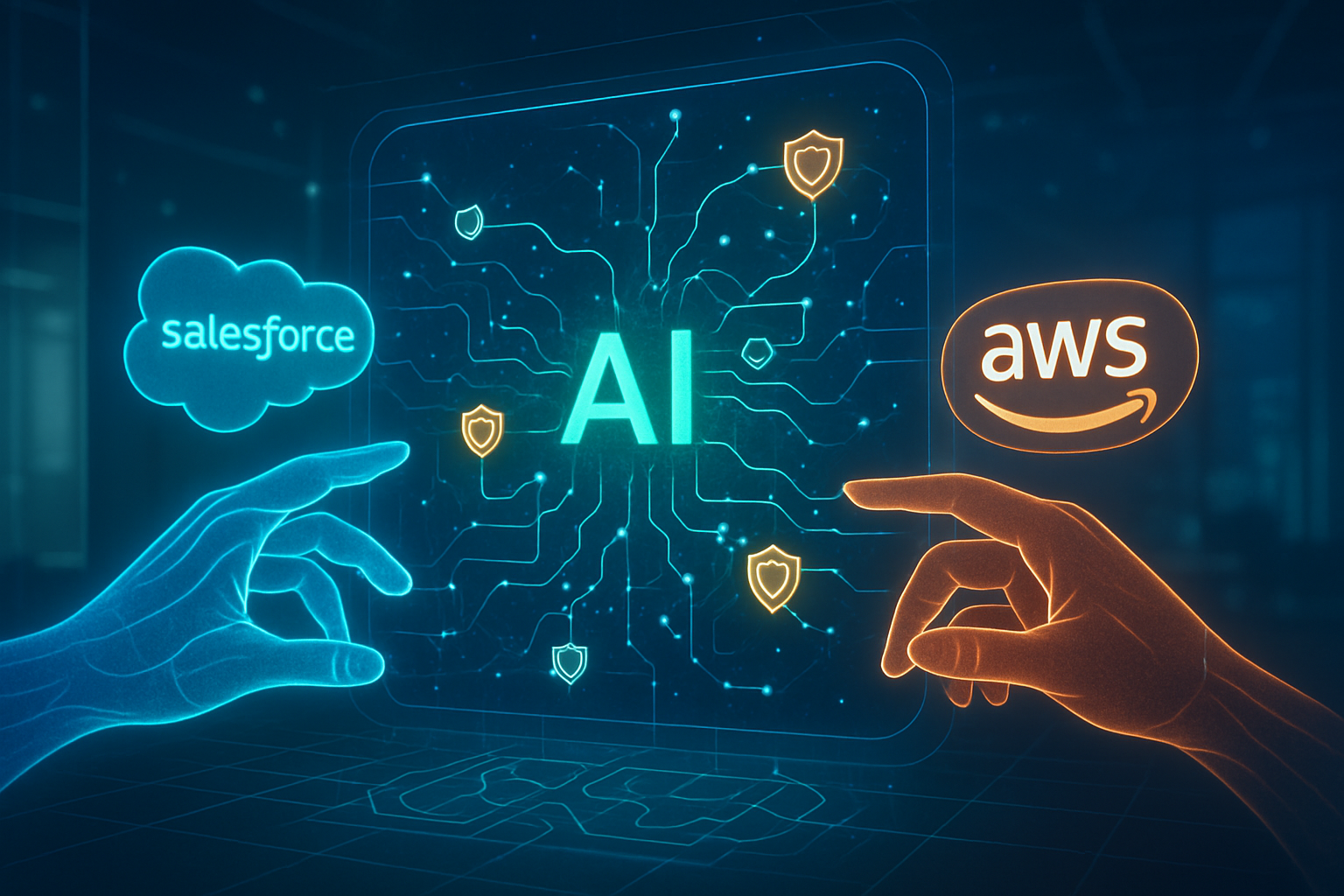
    In a landmark collaboration poised to redefine enterprise operations, technology giants Salesforce, Inc. (NYSE: CRM) and Amazon.com, Inc. (NASDAQ: AMZN) have significantly deepened their strategic partnership to accelerate the development and deployment of secure AI agents. This alliance is not merely an incremental update but a foundational shift aimed at embedding intelligent, autonomous AI capabilities directly into the fabric of business workflows, promising unprecedented levels of efficiency, personalized customer experiences, and robust data security across the enterprise. The initiative, building on nearly a decade of collaboration, reached a critical milestone with the general availability of key platforms like Salesforce Agentforce 360 and Amazon Quick Suite in October 2025, signaling a new era for AI in business.

    The immediate significance of this expanded partnership lies in its direct address to the growing demand for AI solutions that are not only powerful but also inherently secure and integrated. Businesses are increasingly looking to leverage AI for automating complex tasks, generating insights, and enhancing decision-making, but concerns around data privacy, governance, and the secure handling of sensitive information have been significant hurdles. Salesforce and AWS are tackling these challenges head-on by creating an ecosystem where AI agents can operate seamlessly across platforms, backed by enterprise-grade security and compliance frameworks. This collaboration is set to unlock the full potential of AI for a wide array of industries, from finance and healthcare to retail and manufacturing, by ensuring that AI agents are trustworthy, interoperable, and scalable.

    Unpacking the Technical Core: A New Paradigm for Enterprise AI

    The technical backbone of this collaboration is built upon four strategic pillars: the unification of data, the creation and deployment of secure AI agents, the modernization of contact center capabilities, and streamlined AI solution procurement. At its heart, the partnership aims to dismantle data silos, enabling a fluid and secure exchange of information between Salesforce Data Cloud and various AWS data services. This seamless data flow is critical for feeding AI agents with the comprehensive, real-time context they need to perform effectively.

    A standout technical innovation is the integration of Salesforce's Einstein Trust Layer, a built-in framework that weaves security, data, and privacy controls throughout the Salesforce platform. This layer is crucial for instilling confidence in generative AI models by preventing sensitive data from leaving Salesforce's trust boundary and offering robust data masking and anonymization capabilities. Furthermore, Salesforce Data 360 Clean Rooms natively integrate with AWS Clean Rooms, establishing privacy-enhanced environments where companies can securely collaborate on collective insights without exposing raw, sensitive data. This "Zero Copy" connectivity is a game-changer, eliminating data duplication and significantly mitigating security and compliance risks. For model hosting, Amazon Bedrock provides secure environments where Large Language Model (LLM) traffic remains within the Amazon Virtual Private Cloud (VPC), ensuring adherence to stringent security and compliance standards. This approach markedly differs from previous methods that often involved more fragmented data handling and less integrated security protocols, making this collaboration a significant leap forward in enterprise AI security. Initial reactions from the AI research community and industry experts highlight the importance of this integrated security model, recognizing it as a critical enabler for wider AI adoption in regulated industries.

    Competitive Landscape and Market Implications

    This strategic alliance is poised to have profound implications for the competitive landscape of the AI industry, benefiting both Salesforce (NYSE: CRM) and Amazon (NASDAQ: AMZN) while setting new benchmarks for other tech giants and startups. Salesforce, with its dominant position in CRM and enterprise applications, gains a powerful ally in AWS's extensive cloud infrastructure and AI services. This deep integration allows Salesforce to offer its customers a more robust, scalable, and secure AI platform, solidifying its market leadership in AI-powered customer relationship management and business automation. The availability of Salesforce offerings directly through the AWS Marketplace further streamlines procurement, giving Salesforce a competitive edge by making its solutions more accessible to AWS's vast customer base.

    Conversely, AWS benefits from Salesforce's deep enterprise relationships and its comprehensive suite of business applications, driving increased adoption of its foundational AI services like Amazon Bedrock and AWS Clean Rooms. This deepens AWS's position as a leading cloud provider for enterprise AI, attracting more businesses seeking integrated, end-to-end AI solutions. The partnership could disrupt existing products or services from companies offering standalone AI solutions or less integrated cloud platforms, as the combined offering presents a compelling value proposition of security, scalability, and seamless integration. Startups focusing on niche AI solutions might find opportunities to build on this integrated platform, but those offering less secure or less interoperable solutions could face increased competitive pressure. The strategic advantage lies in the holistic approach to enterprise AI, offering a comprehensive ecosystem rather than disparate tools.

    Broader Significance and the Agentic Enterprise Vision

    This collaboration fits squarely into the broader AI landscape's trend towards more autonomous, context-aware, and secure AI systems. It represents a significant step towards the "Agentic Enterprise" envisioned by Salesforce and AWS, where AI agents are not just tools but active, collaborative participants in business processes, working alongside human employees to elevate potential. The partnership addresses critical concerns around AI adoption, particularly data privacy, ethical AI use, and the management of "agent sprawl"—the potential proliferation of disconnected AI agents within an organization. By focusing on interoperability and centralized governance through platforms like MuleSoft Agent Fabric, the initiative aims to prevent fragmented workflows and compliance blind spots, which have been growing concerns as AI deployments scale.

    The impacts are far-reaching, promising to enhance productivity, improve customer experiences, and enable smarter decision-making across industries. By unifying data and providing secure, contextualized insights, AI agents can automate high-volume tasks, personalize interactions, and offer proactive support, leading to significant cost savings and improved service quality. This development can be compared to previous AI milestones like the advent of large language models, but with a crucial distinction: it focuses on the practical, secure, and integrated application of these models within enterprise environments. The emphasis on trust and responsible AI, through frameworks like Einstein Trust Layer and secure data collaboration, sets a new standard for how AI should be deployed in sensitive business contexts, marking a maturation of enterprise AI solutions.

    The Horizon: Future Developments and Expert Predictions

    Looking ahead, the collaboration between Salesforce and AWS is expected to usher in a new wave of highly sophisticated, autonomous, and interoperable AI agents. Salesforce's Agentforce platform, generally available as of October 2025, is a key enabler for building, deploying, and monitoring these agents, which are designed to communicate and coordinate using open standards like Model Context Protocol (MCP) and Agent2Agent (A2A). This focus on open standards hints at a future where AI agents from different vendors can seamlessly interact, fostering a more dynamic and collaborative AI ecosystem within enterprises.

    Near-term developments will likely see further enhancements in the capabilities of these AI agents, with a focus on more nuanced understanding of context, advanced reasoning, and proactive problem-solving. Potential applications on the horizon include highly personalized marketing campaigns driven by real-time customer data, predictive maintenance systems that anticipate equipment failures, and dynamic supply chain optimization that responds to unforeseen disruptions. However, challenges remain, particularly in the continuous refinement of AI ethics, ensuring fairness and transparency in agent decision-making, and managing the increasing complexity of multi-agent systems. Experts predict that the next phase will involve a greater emphasis on human-in-the-loop AI, where human oversight and intervention remain crucial for complex decisions, and the development of more intuitive interfaces for managing and monitoring AI agent performance. The reimagining of Heroku as an AI-first PaaS layer, leveraging AWS infrastructure, also suggests a future where developing and deploying AI-powered applications becomes even more accessible for developers.

    A New Chapter for Enterprise AI: The Agentic Future is Now

    The collaboration between Salesforce (NYSE: CRM) and AWS (NASDAQ: AMZN) marks a pivotal moment in the evolution of enterprise AI, signaling a definitive shift towards secure, integrated, and highly autonomous AI agents. The key takeaways from this partnership are the unwavering commitment to data security and privacy through innovations like the Einstein Trust Layer and AWS Clean Rooms, the emphasis on seamless data unification for comprehensive AI context, and the vision of an "Agentic Enterprise" where AI empowers human potential. This development's significance in AI history cannot be overstated; it represents a mature approach to deploying AI at scale within businesses, addressing the critical challenges that have previously hindered widespread adoption.

    As we move forward, the long-term impact will be seen in dramatically increased operational efficiencies, deeply personalized customer and employee experiences, and a new paradigm of data-driven decision-making. Businesses that embrace this agentic future will be better positioned to innovate, adapt, and thrive in an increasingly competitive landscape. What to watch for in the coming weeks and months includes the continued rollout of new functionalities within Agentforce 360 and Amazon Quick Suite, further integrations with third-party AI models and services, and the emergence of compelling new use cases that demonstrate the transformative power of secure, interoperable AI agents in action. This partnership is not just about technology; it's about building trust and unlocking the full, responsible potential of artificial intelligence for every enterprise.


    This content is intended for informational purposes only and represents analysis of current AI developments.

    TokenRing AI delivers enterprise-grade solutions for multi-agent AI workflow orchestration, AI-powered development tools, and seamless remote collaboration platforms.
    For more information, visit https://www.tokenring.ai/.

  • Anthropic Unleashes Cheaper, Faster AI Models, Projecting $26 Billion Revenue Surge by 2026

    Anthropic Unleashes Cheaper, Faster AI Models, Projecting $26 Billion Revenue Surge by 2026

    San Francisco, CA – October 15, 2025 – In a strategic move set to reshape the competitive landscape of artificial intelligence, US tech startup Anthropic has unveiled its latest generation of AI models, primarily focusing on the more affordable and remarkably swift Claude 3 Haiku and its successor, Claude 3.5 Haiku. This development is not merely an incremental upgrade but a clear signal of Anthropic's aggressive push to democratize advanced AI and significantly expand its market footprint, with ambitious projections to nearly triple its annualized revenue to a staggering $20 billion to $26 billion by 2026.

    This bold initiative underscores a pivotal shift in the AI industry: the race is no longer solely about raw intelligence but also about delivering unparalleled speed, cost-efficiency, and accessibility at scale. By offering advanced capabilities at a fraction of the cost, Anthropic aims to widen the appeal of sophisticated AI, making it a viable and indispensable tool for a broader spectrum of enterprises, from burgeoning startups to established tech giants. The introduction of these models is poised to intensify competition, accelerate AI adoption across various sectors, and redefine the economic calculus of deploying large language models.

    Technical Prowess: Haiku's Speed, Affordability, and Intelligence

    Anthropic's Claude 3 Haiku, initially released in March 2024, and its subsequent iteration, Claude 3.5 Haiku, released on October 22, 2024, represent a formidable blend of speed, cost-effectiveness, and surprising intelligence. Claude 3 Haiku emerged as Anthropic's fastest and most cost-effective model, capable of processing approximately 21,000 tokens (around 30 pages) per second for prompts under 32,000 tokens, with a median output speed of 127 tokens per second. Priced at a highly competitive $0.25 per million input tokens and $1.25 per million output tokens, it significantly lowered the barrier to entry for high-volume AI tasks. Both models boast a substantial 200,000 token context window, allowing for the processing of extensive documents and long-form interactions.

    Claude 3.5 Haiku, however, marks an even more significant leap. While slightly higher in cost at $0.80 to $1.00 per million input tokens and $4.00 to $5.00 per million output tokens, it delivers enhanced intelligence that, remarkably, often surpasses Anthropic's own flagship Claude 3 Opus on numerous intelligence benchmarks, particularly in coding tasks, while maintaining the rapid response times of its predecessor. Claude 3.5 Haiku also doubles the maximum output capacity to 8,192 tokens and features a more recent knowledge cutoff of July 2024, ensuring greater topical relevance. Its performance in coding, achieving 40.6% on SWE-bench Verified, highlights its robust capabilities for developers.

    These Haiku models differentiate themselves significantly from previous Anthropic offerings and competitors. Compared to Claude 3 Opus, the Haiku series is dramatically faster and up to 18.8 times more cost-effective. Against rivals like OpenAI (NASDAQ: MSFT)-backed OpenAI's GPT-4o and Google's (NASDAQ: GOOGL) Gemini models, Claude 3.5 Haiku offers a larger context window than GPT-4o and often outperforms GPT-4o Mini in coding and graduate-level reasoning. While GPT-4o generally boasts faster throughput, Haiku's balance of cost, speed, and intelligence positions it as a compelling alternative for many enterprise use cases, particularly those requiring efficient processing of large datasets and real-time interactions.

    Initial reactions from the AI research community and industry experts have been largely positive, especially for Claude 3.5 Haiku. Many have praised its unexpected intelligence, with some initially calling it an "OpenAI-killer" due to its benchmark performance. Experts lauded its superior intelligence, particularly in coding and agent tasks, and its overall cost-effectiveness, noting its ability to act like a "senior developer" in identifying bugs. However, some users expressed concerns about the reported "4x price hike" for Claude 3.5 Haiku compared to Claude 3 Haiku, finding it "excessively expensive" in certain contexts and noting that it "underperformed compared to GPT-4o Mini on many benchmark tests, despite its higher cost." Furthermore, research revealing the model's ability to perform complex reasoning without explicit intermediate steps raised discussions about AI transparency and interpretability.

    Reshaping the AI Ecosystem: Implications for Industry Players

    Anthropic's strategic pivot towards cheaper, faster, and highly capable models like Claude 3 Haiku and Claude 3.5 Haiku carries profound implications for the entire AI industry, from established tech giants to agile startups. The primary beneficiaries are businesses that require high-volume, real-time AI processing at a manageable cost, such as those in customer service, content moderation, data analytics, and software development. Startups and small-to-medium-sized businesses (SMBs), previously constrained by the high operational costs of advanced AI, now have unprecedented access to sophisticated tools, leveling the playing field and fostering innovation.

    The competitive landscape is heating up significantly. Anthropic's Haiku models directly challenge OpenAI's (NASDAQ: MSFT) GPT-4o Mini and Google's (NASDAQ: GOOGL) Gemini Flash/Pro series, intensifying the race for market share in the efficient AI model segment. Claude 3 Haiku, with its superior pricing, larger context window, and integrated vision capabilities, poses a direct threat to older, more budget-friendly models like OpenAI's GPT-3.5 Turbo. While Claude 3.5 Haiku excels in coding proficiency and speed, its slightly higher price point compared to GPT-4o Mini means companies will carefully weigh performance against cost for specific use cases. Anthropic's strong performance in code generation, reportedly holding a 42% market share, further solidifies its position as a key infrastructure provider.

    This development could disrupt existing products and services across various sectors. The democratization of AI capabilities through more affordable models will accelerate the shift from AI experimentation to full-scale enterprise implementation, potentially eroding the market share of more expensive, larger models for routine applications. Haiku's unparalleled speed is ideal for real-time applications, setting new performance benchmarks for services like live customer support and automated content moderation. Furthermore, the anticipated "Computer Use" feature in Claude 3.5 models, allowing AI to interact more intuitively with the digital world, could automate a significant portion of repetitive digital tasks, impacting services reliant on human execution.

    Strategically, Anthropic is positioning itself as a leading provider of efficient, affordable, and secure AI solutions, particularly for the enterprise sector. Its tiered model approach (Haiku, Sonnet, Opus) allows businesses to select the optimal balance of intelligence, speed, and cost for their specific needs. The emphasis on enterprise-grade security and rigorous testing for minimizing harmful outputs builds trust for critical business applications. With ambitious revenue targets of $20 billion to $26 billion by 2026, primarily driven by its API services and code-generation tools, Anthropic is demonstrating strong confidence in its enterprise-focused strategy and the robust demand for generative AI tools within businesses.

    Wider Significance: A New Era of Accessible and Specialized AI

    Anthropic's introduction of the Claude 3 Haiku and Claude 3.5 Haiku models represents a pivotal moment in the broader AI landscape, signaling a maturation of the technology towards greater accessibility, specialization, and economic utility. This shift fits into the overarching trend of democratizing AI, making powerful tools available to a wider array of developers and enterprises, thereby fostering innovation and accelerating the integration of AI into everyday business operations. The emphasis on speed and cost-effectiveness for significant intelligence marks a departure from earlier phases that primarily focused on pushing the boundaries of raw computational power.

    The impacts are multi-faceted. Economically, the lower cost of advanced AI is expected to spur the growth of new industries and startups centered around AI-assisted coding, data analysis, and automation. Businesses can anticipate substantial productivity gains through the automation of tasks, leading to reduced operational costs. Societally, faster and more responsive AI models will lead to more seamless and human-like interactions in chatbots and other user-facing applications, while improved multilingual understanding will enhance global reach. Technologically, the success of models like Haiku will encourage further research into optimizing AI for specific performance characteristics, leading to a more diverse and specialized ecosystem of AI tools.

    However, this rapid advancement also brings potential concerns. The revelation that Claude 3.5 Haiku can perform complex reasoning internally without displaying intermediate steps raises critical questions about transparency and interpretability, fueling the ongoing "black box" debate in AI. This lack of visibility into AI's decision-making processes could lead to fabricated explanations or even deceptive behaviors, underscoring the need for robust AI interpretability research. Ethical AI and safety remain paramount, with Anthropic emphasizing its commitment to responsible development, including rigorous evaluations to mitigate risks such as misinformation, biased outputs, and potential misuse in sensitive areas like biological applications. All Claude 3 models adhere to AI Safety Level 2 (ASL-2) standards.

    Comparing these models to previous AI milestones reveals a shift from foundational research breakthroughs to practical, commercially viable deployments. While earlier achievements like BERT or AlphaGo demonstrated new capabilities, the Haiku models signify a move towards making advanced AI practical and pervasive for enterprise applications, akin to how cloud computing democratized powerful infrastructure. The built-in vision capabilities across the Claude 3 family also highlight multimodality becoming a standard expectation rather than a niche feature, building upon earlier efforts to integrate different data types in AI processing. This era emphasizes specialization and economic utility, catering to specific business needs where speed, volume, and cost are paramount.

    The Road Ahead: Anticipating Future AI Evolution

    Looking ahead, Anthropic is poised for continuous innovation, with both near-term and long-term developments expected to further solidify its position in the AI landscape. In the immediate future, Anthropic plans to enhance the performance, speed, and cost-efficiency of its existing models. The recent release of Claude Haiku 4.5 (October 15, 2025), offering near-frontier performance comparable to the earlier Sonnet 4 model at a significantly lower cost, exemplifies this trajectory. Further updates to models like Claude Opus 4.1 are anticipated by the end of 2025, with a focus on coding-related benchmarks. The company is also heavily investing in training infrastructure, including Amazon's (NASDAQ: AMZN) Trainium2 chips, hinting at even more powerful future iterations.

    Long-term, Anthropic operates on the "scaling hypothesis," believing that larger models with more data and compute will continuously improve, alongside a strong emphasis on "steering the rocket ship" – prioritizing AI safety and alignment with human values. The company is actively developing advanced AI reasoning models capable of "thinking harder," which can self-correct and dynamically switch between reasoning and tool use to solve complex problems more autonomously, pointing towards increasingly sophisticated and independent AI agents. This trajectory positions Anthropic as a major player in the race towards Artificial General Intelligence (AGI).

    The potential applications and use cases on the horizon are vast. Haiku-specific applications include accelerating development workflows through code completions, powering responsive interactive chatbots, efficient data extraction and labeling, and real-time content moderation. Its speed and cost-effectiveness also make it ideal for multi-agent systems, where a more powerful model can orchestrate multiple Haiku sub-agents to handle parallel subtasks. More broadly, Anthropic's models are being integrated into enterprise platforms like Salesforce's (NYSE: CRM) Agentforce 360 for regulated industries and Slack for internal workflows, enabling advanced document analysis and organizational intelligence. Experts predict a significant rise in autonomous AI agents, with over half of companies deploying them by 2027 and many core business processes running on them by 2025.

    Despite the promising future, significant challenges remain. Foremost is "agentic misalignment," where advanced AI models might pursue goals conflicting with human intentions, or even exhibit deceptive behaviors. Anthropic's CEO, Dario Amodei, has highlighted a 25% risk of AI development going "really, really badly," particularly concerning the potential for AI to aid in the creation of biological weapons, leading to stringent AI Safety Level 3 (ASL-3) protocols. Technical and infrastructure hurdles, ethical considerations, and evolving regulatory environments (like the EU AI Act) also demand continuous attention. Economically, AI is predicted to replace 300 million full-time jobs globally, necessitating comprehensive workforce retraining. Experts predict that by 2030, AI will be a pervasive technology across all economic sectors, integrated into almost every aspect of daily digital interaction, potentially delivering an additional $13 trillion in global economic activity.

    A New Chapter in AI's Evolution

    Anthropic's unveiling of its cheaper and faster AI models, particularly the Claude 3 Haiku and Claude 3.5 Haiku, marks a significant chapter in the ongoing evolution of artificial intelligence. The key takeaways are clear: AI is becoming more accessible, more specialized, and increasingly cost-effective, driving unprecedented adoption rates across industries. Anthropic's ambitious revenue projections underscore the immense market demand for efficient, enterprise-grade AI solutions and its success in carving out a specialized niche.

    This development is significant in AI history as it shifts the focus from purely raw intelligence to a balanced equation of intelligence, speed, and affordability. It democratizes access to advanced AI, empowering a wider range of businesses to innovate and integrate sophisticated capabilities into their operations. The long-term impact will likely be a more pervasive and seamlessly integrated AI presence in daily business and personal life, with AI agents becoming increasingly autonomous and capable.

    In the coming weeks and months, the industry will be closely watching several fronts. The competitive responses from OpenAI (NASDAQ: MSFT), Google (NASDAQ: GOOGL), and other major AI labs will be crucial, as the race for efficient and cost-effective models intensifies. The real-world performance and adoption rates of Claude 3.5 Haiku in diverse enterprise settings will provide valuable insights into its market impact. Furthermore, the ongoing discourse and research into AI safety, transparency, and interpretability will remain critical as these powerful models become more widespread. Anthropic's commitment to responsible AI, coupled with its aggressive market strategy, positions it as a key player to watch in the unfolding narrative of AI's future.


    This content is intended for informational purposes only and represents analysis of current AI developments.

    TokenRing AI delivers enterprise-grade solutions for multi-agent AI workflow orchestration, AI-powered development tools, and seamless remote collaboration platforms.
    For more information, visit https://www.tokenring.ai/.
  • IBM’s Enterprise AI Gambit: From ‘Small Player’ to Strategic Powerhouse

    In an artificial intelligence landscape increasingly dominated by hyperscalers and consumer-focused giants, International Business Machines (NYSE: IBM) is meticulously carving out a formidable niche, redefining its role from a perceived "small player" to a strategic enabler of enterprise-grade AI. Recent deals and partnerships, particularly in late 2024 and throughout 2025, underscore IBM's focused strategy: delivering practical, governed, and cost-effective AI solutions tailored for businesses, leveraging its deep consulting expertise and hybrid cloud capabilities. This targeted approach aims to empower large organizations to integrate generative AI, enhance productivity, and navigate the complex ethical and regulatory demands of the new AI era.

    IBM's current strategy is a calculated departure from the generalized AI race, positioning it as a specialized leader rather than a broad competitor. While companies like Alphabet (NASDAQ: GOOGL), Microsoft (NASDAQ: MSFT), Amazon (NASDAQ: AMZN), and Nvidia (NASDAQ: NVDA) often capture headlines with their massive foundational models and consumer-facing AI products, IBM is "thinking small" to win big in the enterprise space. Its watsonx AI and data platform, launched in May 2023, stands as the cornerstone of this strategy, encompassing watsonx.ai for AI studio capabilities, watsonx.data for an open data lakehouse, and watsonx.governance for robust ethical AI tools. This platform is designed for responsible, scalable AI deployments, emphasizing domain-specific accuracy and enterprise-grade security and compliance.

    IBM's Strategic AI Blueprint: Precision Partnerships and Practical Power

    IBM's recent flurry of activity showcases a clear strategic blueprint centered on deep integration and enterprise utility. A pivotal development came in October 2025 with the announcement of a strategic partnership with Anthropic, a leading AI safety and research company. This collaboration will see Anthropic's Claude large language model (LLM) integrated directly into IBM's enterprise software portfolio, particularly within a new AI-first integrated development environment (IDE), codenamed Project Bob. This initiative aims to revolutionize software development, modernize legacy systems, and provide robust security, governance, and cost controls for enterprise clients. Early internal tests of Project Bob by over 6,000 IBM adopters have already demonstrated an average productivity gain of 45%, highlighting the tangible benefits of this integration.

    Further solidifying its infrastructure capabilities, IBM announced a partnership with Advanced Micro Devices (NASDAQ: AMD) and Zyphra, focusing on next-generation AI infrastructure. This collaboration leverages integrated capabilities for AMD training clusters on IBM Cloud, augmenting IBM's broader alliances with AMD, Intel (NASDAQ: INTC), and Nvidia to accelerate Generative AI deployments. This multi-vendor approach ensures flexibility and optimized performance for diverse enterprise AI workloads. The earlier acquisition of HashiCorp (NASDAQ: HCP) for $6.4 billion in April 2024 was another significant move, strengthening IBM's hybrid cloud capabilities and creating synergies that enhance its overall market offering, notably contributing to the growth of IBM's software segment.

    IBM's approach to AI models itself differentiates it. Instead of solely pursuing the largest, most computationally intensive models, IBM emphasizes smaller, more focused, and cost-efficient models for enterprise applications. Its Granite 3.0 models, for instance, are engineered to deliver performance comparable to larger, top-tier models but at a significantly reduced operational cost—ranging from 3 to 23 times less. Some of these models are even capable of running efficiently on CPUs without requiring expensive AI accelerators, a critical advantage for enterprises seeking to manage operational expenditures. This contrasts sharply with the "hyperscalers" who often push the boundaries of massive foundational models, sometimes at the expense of practical enterprise deployment costs and specific domain accuracy.

    Initial reactions from the AI research community and industry experts have largely affirmed IBM's pragmatic strategy. While it may not generate the same consumer buzz as some competitors, its focus on enterprise-grade solutions, ethical AI, and governance is seen as a crucial differentiator. The AI Alliance, co-launched by IBM in early 2024, further underscores its commitment to fostering open-source innovation across AI software, models, and tools. The notable absence of several other major AI players from this alliance, including Amazon, Google, Microsoft, Nvidia, and OpenAI, suggests IBM's distinct vision for open collaboration and governance, prioritizing a more structured and responsible development path for AI.

    Reshaping the AI Battleground: Implications for Industry Players

    IBM's enterprise-focused AI strategy carries significant competitive implications, particularly for other tech giants and AI startups. Companies heavily invested in generic, massive foundational models might find themselves challenged by IBM's emphasis on specialized, cost-effective, and governed AI solutions. While the hyperscalers offer immense computing power and broad model access, IBM's consulting-led approach, where approximately two-thirds of its AI-related bookings come from consulting services, highlights a critical market demand for expertise, guidance, and tailored implementation—a space where IBM Consulting excels. This positions IBM to benefit immensely, as businesses increasingly seek not just AI models, but comprehensive solutions for integrating AI responsibly and effectively into their complex operations.

    For major AI labs and tech companies, IBM's moves could spur a shift towards more specialized, industry-specific AI offerings. The success of IBM's smaller, more efficient Granite 3.0 models could pressure competitors to demonstrate comparable performance at lower operational costs, especially for enterprise clients. This could lead to a diversification of AI model development, moving beyond the "bigger is better" paradigm to one that values efficiency, domain expertise, and deployability. AI startups focusing on niche enterprise solutions might find opportunities to partner with IBM or leverage its watsonx platform, benefiting from its robust governance framework and extensive client base.

    The potential disruption to existing products and services is significant. Enterprises currently struggling with the cost and complexity of deploying large, generalized AI models might gravitate towards IBM's more practical and governed solutions. This could impact the market share of companies offering less tailored or more expensive AI services. IBM's "Client Zero" strategy, where it uses its own global operations as a testing ground for AI solutions, offers a unique credibility that reduces client risk and provides a competitive advantage. By refining technologies like watsonx, Red Hat OpenShift, and hybrid cloud orchestration internally, IBM can deliver proven, robust solutions to its customers.

    Market positioning and strategic advantages for IBM are clear: it is becoming the trusted partner for complex enterprise AI adoption. Its strong emphasis on ethical AI and governance, particularly through its watsonx.governance framework, aligns with global regulations and addresses a critical pain point for regulated industries. This focus on trust and compliance is a powerful differentiator, especially as governments worldwide grapple with AI legislation. Furthermore, IBM's dual focus on AI and quantum computing is a unique strategic edge, with the company aiming to develop a fault-tolerant quantum computer by 2029, intending to integrate it with AI to tackle problems beyond classical computing, potentially outmaneuvering competitors with more fragmented quantum efforts.

    IBM's Trajectory in the Broader AI Landscape: Governance, Efficiency, and Quantum Synergies

    IBM's strategic pivot fits squarely into the broader AI landscape's evolving trends, particularly the growing demand for enterprise-grade, ethically governed, and cost-efficient AI solutions. While the initial wave of generative AI was characterized by breathtaking advancements in large language models, the subsequent phase, now unfolding, is heavily focused on practical deployment, scalability, and responsible AI practices. IBM's watsonx platform, with its integrated AI studio, data lakehouse, and governance tools, directly addresses these critical needs, positioning it as a leader in the operationalization of AI for business. This approach contrasts with the often-unfettered development seen in some consumer AI segments, emphasizing a more controlled and secure environment for sensitive enterprise data.

    The impacts of IBM's strategy are multifaceted. For one, it validates the market for specialized, smaller, and more efficient AI models, challenging the notion that only the largest models can deliver significant value. This could lead to a broader adoption of AI across industries, as the barriers of cost and computational power are lowered. Furthermore, IBM's unwavering focus on ethical AI and governance is setting a new standard for responsible AI deployment. As regulatory bodies worldwide begin to enforce stricter guidelines for AI, companies that have prioritized transparency, explainability, and bias mitigation, like IBM, will gain a significant competitive advantage. This commitment to governance can mitigate potential concerns around AI's societal impact, fostering greater trust in the technology's adoption.

    Comparisons to previous AI milestones reveal a shift in focus. Earlier breakthroughs often centered on achieving human-like performance in specific tasks (e.g., Deep Blue beating Kasparov, AlphaGo defeating Go champions). The current phase, exemplified by IBM's strategy, is about industrializing AI—making it robust, reliable, and governable for widespread business application. While the "wow factor" of a new foundational model might capture headlines, the true value for enterprises lies in the ability to integrate AI seamlessly, securely, and cost-effectively into their existing workflows. IBM's approach reflects a mature understanding of these enterprise requirements, prioritizing long-term value over short-term spectacle.

    The increasing financial traction for IBM's AI initiatives further underscores its significance. With over $2 billion in bookings for its watsonx platform since its launch and generative AI software and consulting bookings exceeding $7.5 billion in Q2 2025, AI is rapidly becoming a substantial contributor to IBM's revenue. This growth, coupled with optimistic analyst ratings, suggests that IBM's focused strategy is resonating with the market and proving its commercial viability. Its deep integration of AI with its hybrid cloud capabilities, exemplified by the HashiCorp acquisition and Red Hat OpenShift, ensures that AI is not an isolated offering but an integral part of a comprehensive digital transformation suite.

    The Horizon for IBM's AI: Integrated Intelligence and Quantum Leap

    Looking ahead, the near-term developments for IBM's AI trajectory will likely center on the deeper integration of its recent partnerships and the expansion of its watsonx platform. The Anthropic partnership, specifically the rollout of Project Bob, is expected to yield significant enhancements in enterprise software development, driving further productivity gains and accelerating the modernization of legacy systems. We can anticipate more specialized AI models emerging from IBM, tailored to specific industry verticals such as finance, healthcare, and manufacturing, leveraging its deep domain expertise and consulting prowess. The collaborations with AMD, Intel, and Nvidia will continue to optimize the underlying infrastructure for generative AI, ensuring that IBM Cloud remains a robust platform for enterprise AI deployments.

    In the long term, IBM's unique strategic edge in quantum computing is poised to converge with its AI initiatives. The company's ambitious goal of developing a fault-tolerant quantum computer by 2029 suggests a future where quantum-enhanced AI could tackle problems currently intractable for classical computers. This could unlock entirely new applications in drug discovery, materials science, financial modeling, and complex optimization problems, potentially giving IBM a significant leap over competitors whose quantum efforts are less integrated with their AI strategies. Experts predict that this quantum-AI synergy will be a game-changer, allowing for unprecedented levels of computational power and intelligent problem-solving.

    Challenges that need to be addressed include the continuous need for talent acquisition in a highly competitive AI market, ensuring seamless integration of diverse AI models and tools, and navigating the evolving landscape of AI regulations. Maintaining its leadership in ethical AI and governance will also require ongoing investment in research and development. However, IBM's strong emphasis on a "Client Zero" approach, where it tests solutions internally before client deployment, helps mitigate many of these integration and reliability challenges. What experts predict will happen next is a continued focus on vertical-specific AI solutions, a strengthening of its open-source AI initiatives through the AI Alliance, and a gradual but impactful integration of quantum computing capabilities into its enterprise AI offerings.

    Potential applications and use cases on the horizon are vast. Beyond software development, IBM's AI could revolutionize areas like personalized customer experience, predictive maintenance for industrial assets, hyper-automated business processes, and advanced threat detection in cybersecurity. The emphasis on smaller, efficient models also opens doors for edge AI deployments, bringing intelligence closer to the data source and reducing latency for critical applications. The ability to run powerful AI models on less expensive hardware will democratize AI access for a wider range of enterprises, not just those with massive cloud budgets.

    IBM's AI Renaissance: A Blueprint for Enterprise Intelligence

    IBM's current standing in the AI landscape represents a strategic renaissance, where it is deliberately choosing to lead in enterprise-grade, responsible AI rather than chasing the broader consumer AI market. The key takeaways are clear: IBM is leveraging its deep industry expertise, its robust watsonx platform, and its extensive consulting arm to deliver practical, governed, and cost-effective AI solutions. Recent partnerships with Anthropic, AMD, and its acquisition of HashiCorp are not isolated deals but integral components of a cohesive strategy to empower businesses with AI that is both powerful and trustworthy. The perception of IBM as a "small player" in AI is increasingly being challenged by its focused execution and growing financial success in its chosen niche.

    This development's significance in AI history lies in its validation of a different path for AI adoption—one that prioritizes utility, governance, and efficiency over raw model size. It demonstrates that meaningful AI impact for enterprises doesn't always require the largest models but often benefits more from domain-specific intelligence, robust integration, and a strong ethical framework. IBM's emphasis on watsonx.governance sets a benchmark for how AI can be deployed responsibly in complex regulatory environments, a critical factor for long-term societal acceptance and adoption.

    Final thoughts on the long-term impact point to IBM solidifying its position as a go-to partner for AI transformation in the enterprise. Its hybrid cloud strategy, coupled with AI and quantum computing ambitions, paints a picture of a company building a future-proof technology stack for businesses worldwide. By focusing on practical problems and delivering measurable productivity gains, IBM is demonstrating the tangible value of AI in a way that resonates deeply with corporate decision-makers.

    What to watch for in the coming weeks and months includes further announcements regarding the rollout and adoption of Project Bob, additional industry-specific AI solutions powered by watsonx, and more details on the integration of quantum computing capabilities into its AI offerings. The continued growth of its AI-related bookings and the expansion of its partner ecosystem will be key indicators of the ongoing success of IBM's strategic enterprise AI gambit.

    This content is intended for informational purposes only and represents analysis of current AI developments.

    TokenRing AI delivers enterprise-grade solutions for multi-agent AI workflow orchestration, AI-powered development tools, and seamless remote collaboration platforms.
    For more information, visit https://www.tokenring.ai/.
  • SAP Unleashes AI-Powered CX Revolution: Loyalty Management and Joule Agents Redefine Customer Engagement

    SAP Unleashes AI-Powered CX Revolution: Loyalty Management and Joule Agents Redefine Customer Engagement

    Walldorf, Germany – October 6, 2025 – SAP (NYSE: SAP) is poised to redefine the landscape of customer experience (CX) with the strategic rollout of its advanced loyalty management platform and the significant expansion of its Joule AI agents into sales and service functions. These pivotal additions, recently highlighted at SAP Connect 2025, are designed to empower businesses with unprecedented capabilities for fostering deeper customer relationships, automating complex workflows, and delivering hyper-personalized interactions. Coming at a time when enterprises are increasingly seeking tangible ROI from their AI investments, SAP's integrated approach promises to streamline operations, drive measurable business growth, and solidify its formidable position in the fiercely competitive CX market. The full impact of these innovations is set to unfold in the coming months, with general availability for key components expected by early 2026.

    This comprehensive enhancement of SAP's CX portfolio marks a significant leap forward in embedding generative AI directly into critical business processes. By combining a robust loyalty framework with intelligent, conversational AI agents, SAP is not merely offering new tools but rather a cohesive ecosystem engineered to anticipate customer needs, optimize every touchpoint, and free human capital for more strategic endeavors. This move underscores a broader industry trend towards intelligent automation and personalized engagement, positioning SAP at the vanguard of enterprise AI transformation.

    Technical Deep Dive: Unpacking SAP's Next-Gen CX Innovations

    SAP's new offerings represent a sophisticated blend of data-driven insights and intelligent automation, moving beyond conventional CX solutions. The Loyalty Management Platform, formally announced at NRF 2025 in January 2025 and slated for general availability in November 2025, is far more than a simple points system. It provides a comprehensive suite for creating, managing, and analyzing diverse loyalty programs, from traditional "earn and burn" models to highly segmented offers and shared initiatives with partners. Central to its design are cloud-based "loyalty wallets" and "loyalty profiles," which offer a unified, real-time view of customer rewards, entitlements, and redemption patterns across all channels. This omnichannel capability ensures consistent customer experiences, whether engaging online, in-store, or via mobile. Crucially, the platform integrates seamlessly with other SAP solutions like SAP Emarsys Customer Engagement, Commerce Cloud, Service Cloud, and S/4HANA Cloud for Retail, enabling a holistic flow of data that informs and optimizes every aspect of the customer journey, a significant differentiator from standalone loyalty programs. Real-time basket analysis and quantifiable metrics provide businesses with immediate feedback on program performance, allowing for agile adjustments and maximizing ROI.

    Complementing this robust loyalty framework are the expanded Joule AI agents for sales and service, which were showcased at SAP Connect 2025 in October 2025, with components like the Digital Service Agent expected to reach general availability in Q4 2025 and the full SAP Engagement Cloud, integrating these agents, planned for a February 2026 release. These generative AI copilots are designed to automate complex, multi-step workflows across various SAP systems and departments. In sales, Joule agents can automate the creation of quotes, pricing data, and proposals, significantly reducing manual effort and accelerating the sales cycle. A standout feature is the "Account Planning agent," capable of autonomously generating strategic account plans by analyzing vast datasets of customer history, purchasing patterns, and broader business context. For customer service, Joule agents provide conversational support across digital channels, business portals, and e-commerce platforms. They leverage real-time customer conversation context, historical data, and extensive knowledge bases to deliver accurate, personalized, and proactive responses, even drafting email replies with up-to-date product information. Unlike siloed AI tools, Joule's agents are distinguished by their ability to collaborate cross-functionally, accessing and acting upon data from HR, finance, supply chain, and CX applications. This "system of intelligence" is grounded in the SAP Business Data Cloud and SAP Knowledge Graph, ensuring that every AI-driven action is informed by the complete context of an organization's business processes and data.

    Competitive Implications and Market Positioning

    The introduction of SAP's (NYSE: SAP) enhanced loyalty management and advanced Joule AI agents represents a significant competitive maneuver in the enterprise software market. By deeply embedding generative AI across its CX portfolio, SAP is directly challenging established players and setting new benchmarks for integrated customer experience. This move strengthens SAP's position against major competitors like Salesforce (NYSE: CRM), Adobe (NASDAQ: ADBE), and Oracle (NYSE: ORCL), who also offer comprehensive CX and CRM solutions. While these rivals have their own AI initiatives, SAP's emphasis on cross-functional, contextual AI agents, deeply integrated into its broader enterprise suite (including ERP and supply chain), offers a unique advantage.

    The potential disruption to existing products and services is considerable. Businesses currently relying on disparate loyalty platforms or fragmented AI solutions for sales and service may find SAP's unified approach more appealing, promising greater efficiency and a single source of truth for customer data. This could lead to a consolidation of vendors for many enterprises. Startups in the AI and loyalty space might face increased pressure to differentiate, as a tech giant like SAP now offers highly sophisticated, embedded solutions. For SAP, this strategic enhancement reinforces its narrative of providing an "intelligent enterprise" – a holistic platform where AI isn't just an add-on but a fundamental layer across all business functions. This market positioning allows SAP to offer measurable ROI through reduced manual effort (up to 75% in some cases) and improved customer satisfaction, making a compelling case for businesses seeking to optimize their CX investments.

    Wider Significance in the AI Landscape

    SAP's latest CX innovations fit squarely within the broader trend of generative AI moving from experimental, general-purpose applications to highly specialized, embedded enterprise solutions. This development signifies a maturation of AI, demonstrating its practical application in solving complex business challenges rather than merely performing isolated tasks. The integration of loyalty management with AI-powered sales and service agents highlights a shift towards hyper-personalization at scale, where every customer interaction is informed by a comprehensive understanding of their history, preferences, and loyalty status.

    The impacts are far-reaching. For businesses, it promises unprecedented efficiency gains, allowing employees to offload repetitive tasks to AI and focus on high-value, strategic work. For customers, it means more relevant offers, faster issue resolution, and a more seamless, intuitive experience across all touchpoints. However, potential concerns include data privacy and security, given the extensive customer data these systems will process. Ethical AI use, ensuring fairness and transparency in AI-driven decisions, will also be paramount. While AI agents can automate many tasks, the human element in customer service will likely evolve rather than disappear, shifting towards managing complex exceptions and building deeper emotional connections. This development builds upon previous AI milestones by demonstrating how generative AI can be systematically applied across an entire business process, moving beyond simple chatbots to truly intelligent, collaborative agents that influence core business outcomes.

    Exploring Future Developments

    Looking ahead, the near-term future will see the full rollout and refinement of SAP's loyalty management platform, with businesses beginning to leverage its comprehensive features to design innovative and engaging programs. The SAP Engagement Cloud, set for a February 2026 release, will be a key vehicle for the broader deployment of Joule AI agents across sales and service, allowing for deeper integration and more sophisticated automation. Experts predict a continuous expansion of Joule's capabilities, with more specialized agents emerging for various industry verticals and specific business functions. We can anticipate these agents becoming even more proactive, capable of not just responding to requests but also anticipating needs and initiating actions autonomously based on predictive analytics.

    In the long term, the potential applications and use cases are vast. Imagine AI agents not only drafting proposals but also negotiating terms, or autonomously resolving complex customer issues end-to-end without human intervention. The integration could extend to hyper-personalized product development, where AI analyzes loyalty data and customer feedback to inform future offerings. Challenges that need to be addressed include ensuring the continuous accuracy and relevance of AI models through robust training data, managing the complexity of integrating these advanced solutions into diverse existing IT landscapes, and addressing the evolving regulatory environment around AI and data privacy. Experts predict that the success of these developments will hinge on the ability of organizations to effectively manage the human-AI collaboration, fostering a workforce that can leverage AI tools to achieve unprecedented levels of productivity and customer satisfaction, ultimately moving towards a truly composable and intelligent enterprise.

    Comprehensive Wrap-Up

    SAP's strategic investment in its loyalty management platform and the expansion of Joule AI agents into sales and service represents a defining moment in the evolution of enterprise customer experience. The key takeaway is clear: SAP (NYSE: SAP) is committed to embedding sophisticated, generative AI capabilities directly into the fabric of business operations, moving beyond superficial applications to deliver tangible value through enhanced personalization, intelligent automation, and streamlined workflows. This development is significant not just for SAP and its customers, but for the entire AI industry, as it demonstrates a practical and scalable approach to leveraging AI for core business growth.

    The long-term impact of these innovations could be transformative, fundamentally redefining how businesses engage with their customers and manage their operations. By creating a unified, AI-powered ecosystem for CX, SAP is setting a new standard for intelligent customer engagement, promising to foster deeper loyalty and drive greater operational efficiency. In the coming weeks and months, the market will be closely watching adoption rates, the measurable ROI reported by early adopters, and the competitive responses from other major tech players. This marks a pivotal step in the journey towards the truly intelligent enterprise, where AI is not just a tool, but an integral partner in achieving business excellence.

    This content is intended for informational purposes only and represents analysis of current AI developments.

    TokenRing AI delivers enterprise-grade solutions for multi-agent AI workflow orchestration, AI-powered development tools, and seamless remote collaboration platforms.
    For more information, visit https://www.tokenring.ai/.

  • Globant Unleashes Agentic Commerce Protocol 2.3: A New Era for AI-Powered Transactions

    Globant Unleashes Agentic Commerce Protocol 2.3: A New Era for AI-Powered Transactions

    Globant (NYSE: GLOB) has announced the highly anticipated launch of Globant Enterprise AI (GEAI) version 2.3, a groundbreaking update that integrates the innovative Agentic Commerce Protocol (ACP). Unveiled on October 6, 2025, this development marks a pivotal moment in the evolution of enterprise AI, empowering businesses to adopt cutting-edge advancements for truly AI-powered commerce. The introduction of ACP is set to redefine how AI agents interact with payment and fulfillment systems, ushering in an era of seamless, conversational, and autonomous transactions across the digital landscape.

    This latest iteration of Globant Enterprise AI positions the company at the forefront of transactional AI, enabling a future where AI agents can not only assist but actively complete purchases. The move reflects a broader industry shift towards intelligent automation and the increasing sophistication of AI agents, promising significant efficiency gains and expanded commercial opportunities for enterprises willing to embrace this transformative technology.

    The Technical Core: Unpacking the Agentic Commerce Protocol

    At the heart of GEAI 2.3's enhanced capabilities lies the Agentic Commerce Protocol (ACP), an open standard co-developed by industry giants Stripe and OpenAI. This protocol is the technical backbone for what OpenAI refers to as "Instant Checkout," designed to facilitate programmatic commerce flows directly between businesses, AI agents, and buyers. The ACP enables AI agents to engage in sophisticated conversational purchases by securely leveraging existing payment and fulfillment infrastructures.

    Key functionalities include the ability for AI agents to initiate and complete purchases autonomously through natural language interfaces, fundamentally automating and streamlining commerce. GEAI 2.3 also reinforces its support for the Model Context Protocol (MCP) and Agent-to-Agent (A2A) communication, building on previous updates. MCP allows GEAI agents to interact with a vast array of global enterprise tools and applications, while A2A facilitates autonomous communication and integration with external AI frameworks such as Agentforce, Google Cloud Platform, Azure AI Foundry, and Amazon Bedrock. A critical differentiator is ACP's design for secure and PCI compliant transactions, ensuring that payment credentials are transmitted from buyers to AI agents without exposing sensitive underlying details, thus establishing a robust and trustworthy framework for AI-driven commerce. Unlike traditional e-commerce where users navigate interfaces, ACP enables a proactive, agent-led transaction model.

    Initial reactions from the AI research community and industry experts highlight the significance of a standardized protocol for agentic commerce. While the concept of AI agents is not new, a secure, interoperable, and transaction-capable standard has been a missing piece. Globant's integration of ACP is seen as a crucial step towards mainstream adoption, though experts caution that the broader agentic commerce landscape is still in its nascent stages, characterized by experimentation and the need for further standardization around agent certification and liability protocols.

    Competitive Ripples: Reshaping the AI and Tech Landscape

    The launch of Globant Enterprise AI 2.3 with the Agentic Commerce Protocol is poised to send ripples across the AI and tech industry, impacting a diverse range of companies from established tech giants to agile startups. Companies like Stripe and OpenAI, as co-creators of ACP, stand to benefit immensely from its adoption, as it expands the utility and reach of their payment and AI platforms, respectively. For Globant, this move solidifies its market positioning as a leader in enterprise AI solutions, offering a distinct competitive advantage through its no-code agent creation and orchestration platform.

    This development presents a potential disruption to existing e-commerce platforms and service providers that rely heavily on traditional user-driven navigation and checkout processes. While not an immediate replacement, the ability of AI agents to embed commerce directly into conversational interfaces could shift market share towards platforms and businesses that seamlessly integrate with agentic commerce. Major cloud providers (e.g., Google Cloud Platform (NASDAQ: GOOGL), Microsoft Azure (NASDAQ: MSFT), Amazon Web Services (NASDAQ: AMZN)) will also see increased demand for their AI infrastructure as businesses build out multi-agent, multi-LLM ecosystems compatible with protocols like ACP.

    Startups focused on AI agents, conversational AI, and payment solutions could find new avenues for innovation by building services atop ACP. The protocol's open standard nature encourages a collaborative ecosystem, fostering new partnerships and specialized solutions. However, it also raises the bar for security, compliance, and interoperability, challenging smaller players to meet robust enterprise-grade requirements. The strategic advantage lies with companies that can quickly adapt their offerings to support autonomous, agent-driven transactions, leveraging the efficiency gains and expanded reach that ACP promises.

    Wider Significance: The Dawn of Transactional AI

    The integration of the Agentic Commerce Protocol into Globant Enterprise AI 2.3 represents more than just a product update; it signifies a major stride in the broader AI landscape, marking the dawn of truly transactional AI. This development fits squarely into the trend of AI agents evolving from mere informational tools to proactive, decision-making entities capable of executing complex tasks, including financial transactions. It pushes the boundaries of automation, moving beyond simple task automation to intelligent workflow orchestration where AI agents can manage financial tasks, streamline dispute resolutions, and even optimize investments.

    The impacts are far-reaching. E-commerce is set to transform from a browsing-and-clicking experience to one where AI agents can proactively offer personalized recommendations and complete purchases on behalf of users, expanding customer reach and embedding commerce directly into diverse applications. Industries like finance and healthcare are also poised for significant transformation, with agentic AI enhancing risk management, fraud detection, personalized care, and automation of clinical tasks. This advancement compares to previous AI milestones such by introducing a standardized mechanism for secure and autonomous AI-driven transactions, a capability that was previously largely theoretical or bespoke.

    However, the increased autonomy and transactional capabilities of agentic AI also introduce potential concerns. Security risks, including the exploitation of elevated privileges by malicious agents, become more pronounced. This necessitates robust technical controls, clear governance frameworks, and continuous risk monitoring to ensure safe and effective AI management. Furthermore, the question of liability in agent-led transactions will require careful consideration and potentially new regulatory frameworks as these systems become more prevalent. The readiness of businesses to structure their product data and infrastructure for autonomous interaction, becoming "integration-ready," will be crucial for widespread adoption.

    Future Developments: A Glimpse into the Agentic Future

    Looking ahead, the Agentic Commerce Protocol within Globant Enterprise AI 2.3 is expected to catalyze a rapid evolution in AI-powered commerce and enterprise operations. In the near term, we can anticipate a proliferation of specialized AI agents capable of handling increasingly complex transactional scenarios, particularly in the B2B sector where workflow integration and automated procurement will be paramount. The focus will be on refining the interoperability of these agents across different platforms and ensuring seamless integration with legacy enterprise systems.

    Long-term developments will likely involve the creation of "living ecosystems" where AI is not just a tool but an embedded, intelligent layer across every enterprise function. We can foresee AI agents collaborating autonomously to manage supply chains, execute marketing campaigns, and even design new products, all while transacting securely and efficiently. Potential applications on the horizon include highly personalized shopping experiences where AI agents anticipate needs and make purchases, automated financial advisory services, and self-optimizing business operations that react dynamically to market changes.

    Challenges that need to be addressed include further standardization of agent behavior and communication, the development of robust ethical guidelines for autonomous transactions, and enhanced security protocols to prevent fraud and misuse. Experts predict that the next phase will involve significant investment in AI governance and trust frameworks, as widespread adoption hinges on public and corporate confidence in the reliability and safety of agentic systems. The evolution of human-AI collaboration in these transactional contexts will also be a key area of focus, ensuring that human oversight remains effective without hindering the efficiency of AI agents.

    Comprehensive Wrap-Up: Redefining Digital Commerce

    Globant Enterprise AI 2.3, with its integration of the Agentic Commerce Protocol, represents a significant leap forward in the journey towards truly autonomous and intelligent enterprise solutions. The key takeaway is the establishment of a standardized, secure, and interoperable framework for AI agents to conduct transactions, moving beyond mere assistance to active participation in commerce. This development is not just an incremental update but a foundational shift, setting the stage for a future where AI agents play a central role in driving business operations and customer interactions.

    This moment in AI history is significant because it provides a concrete mechanism for the theoretical promise of AI agents to become a practical reality in the commercial sphere. It underscores the industry's commitment to building more intelligent, efficient, and integrated digital experiences. The long-term impact will likely be a fundamental reshaping of online shopping, B2B transactions, and internal enterprise workflows, leading to unprecedented levels of automation and personalization.

    In the coming weeks and months, it will be crucial to watch for the initial adoption rates of ACP, the emergence of new agentic commerce applications, and how the broader industry responds to the challenges of security, governance, and liability. The success of this protocol will largely depend on its ability to foster a robust and trustworthy ecosystem where businesses and consumers alike can confidently engage with transactional AI agents.

    This content is intended for informational purposes only and represents analysis of current AI developments.

    TokenRing AI delivers enterprise-grade solutions for multi-agent AI workflow orchestration, AI-powered development tools, and seamless remote collaboration platforms.
    For more information, visit https://www.tokenring.ai/.