Tag: Environmental Monitoring

  • The Ocean’s Digital Awakening: IoT and AI Charting a New Future for Marine Environments

    The Ocean’s Digital Awakening: IoT and AI Charting a New Future for Marine Environments

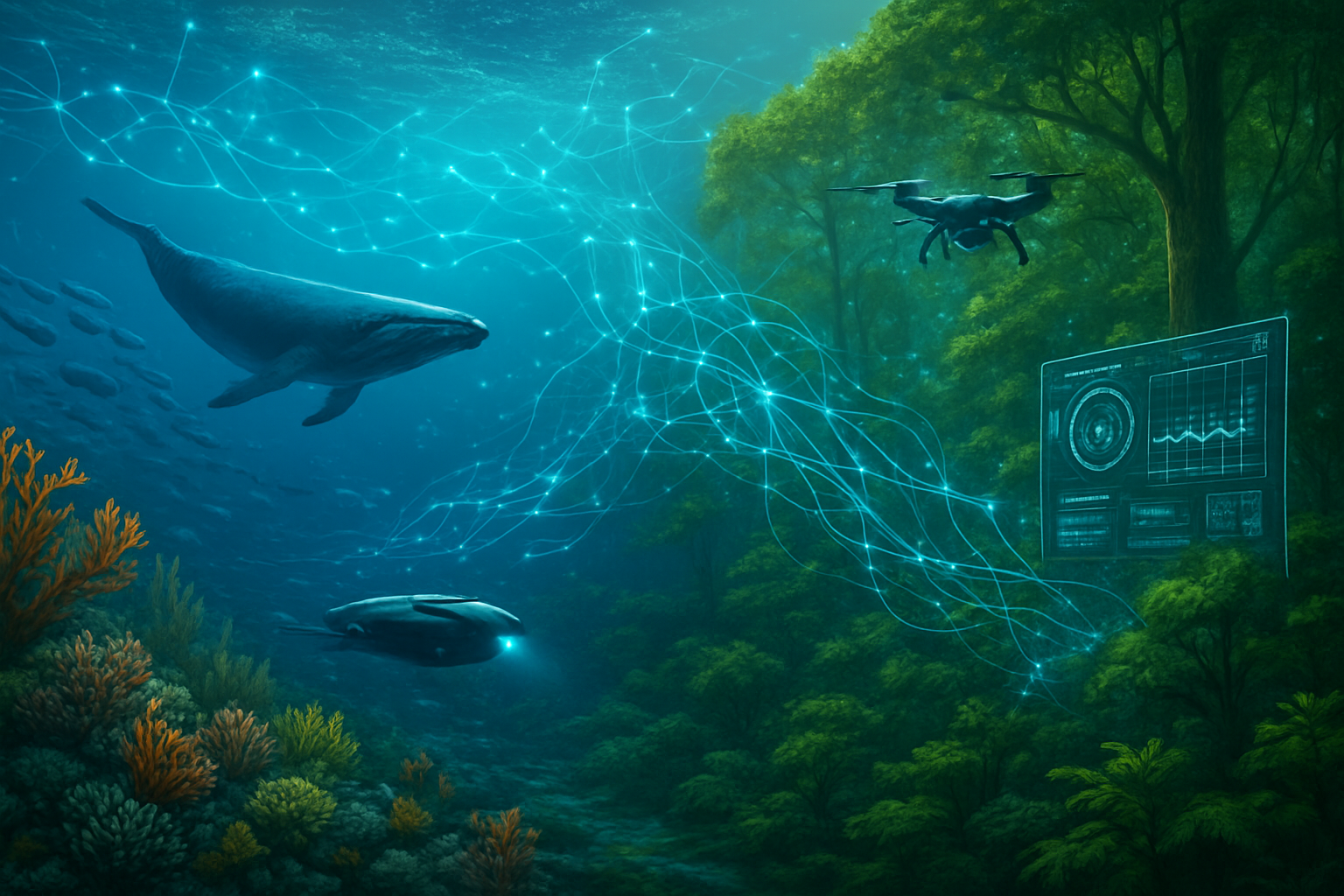
    The world's oceans, vast and enigmatic, are on the cusp of a profound digital transformation. Driven by increasing investment in ocean innovation, advanced connectivity and the Internet of Things (IoT) are rapidly becoming indispensable tools for understanding, managing, and protecting our planet's most vital ecosystem. This technological tide promises to revolutionize marine research, enhance resource management, and provide unprecedented capabilities for environmental monitoring, ushering in an era of real-time insights and data-driven decision-making for the blue economy.

    As of December 1, 2025, the vision of a connected ocean is rapidly moving from concept to reality. From smart buoys tracking elusive marine life to autonomous underwater vehicles (AUVs) mapping the deepest trenches, these innovations are equipping scientists, policymakers, and industries with the critical intelligence needed to address pressing global challenges, including climate change, overfishing, and pollution. The implications for sustainable development and our stewardship of marine resources are immense, promising a future where humanity's interaction with the ocean is guided by precise, actionable data.

    Unveiling the Subsea Internet: Technical Leaps and Innovations

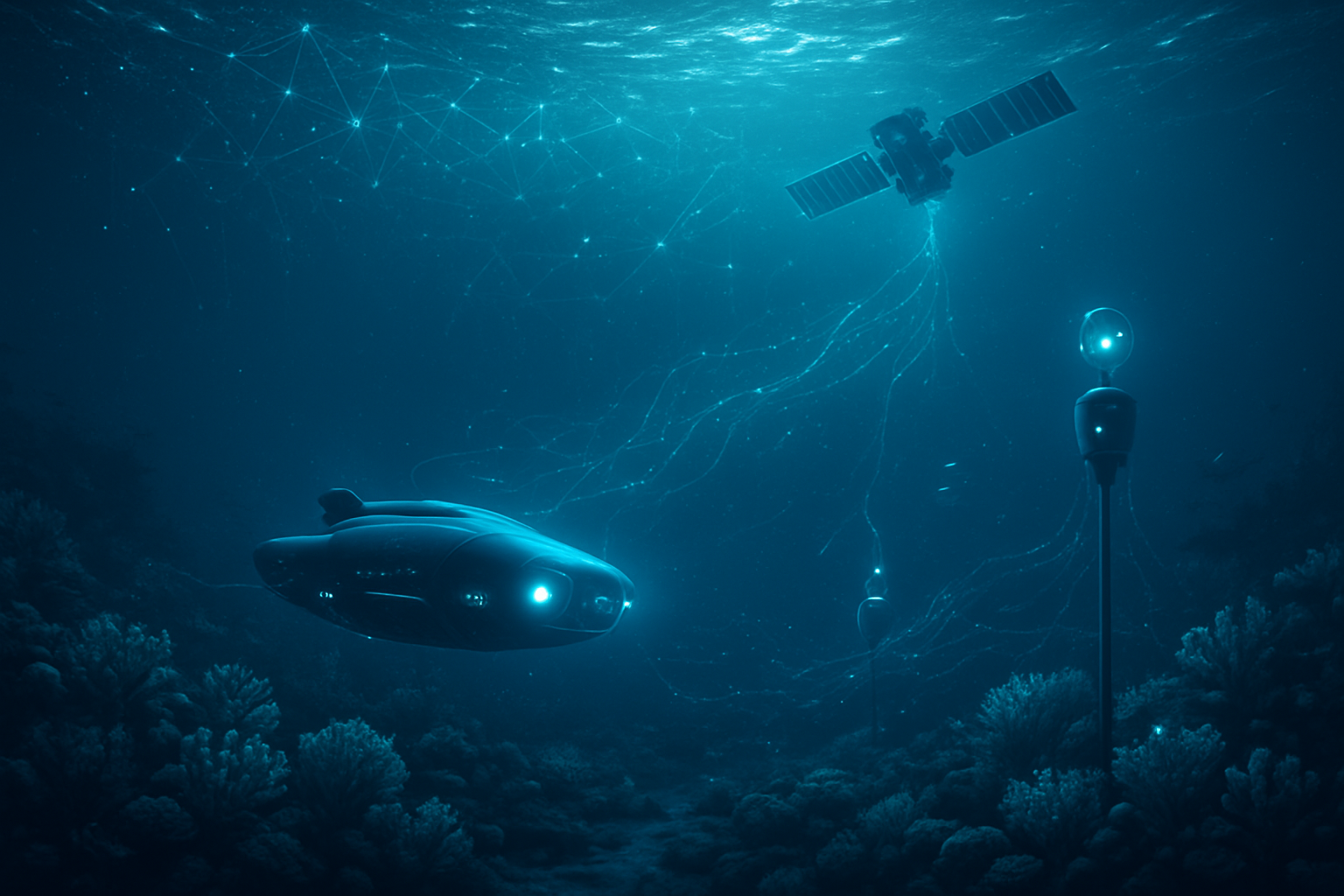
    The deployment of IoT in marine environments, often termed the Subsea Internet of Things (SIoT) or Internet of Underwater Things (IoUT), represents a significant leap from traditional, sporadic data collection methods. This advancement is characterized by a confluence of specialized hardware, robust communication protocols, and sophisticated data analytics designed to overcome the ocean's inherent challenges: limited bandwidth, high latency, energy constraints, and harsh conditions.

    Key technical advancements include the miniaturization and increased sensitivity of underwater sensors, capable of measuring a wide array of parameters such as temperature, pressure, salinity, pH, dissolved oxygen, and even marine particles. Emerging eDNA sensors are also poised to revolutionize marine biological research by detecting genetic material from organisms in water samples. Communication, a major hurdle underwater, is being tackled through hybrid approaches. While acoustic communication remains the most widely used for long ranges, offering data transmission via sound waves, it is complemented by short-range, high-bandwidth optical communication and specialized electromagnetic technologies like Seatooth radio for challenging water-air interfaces. Crucially, innovations like Translational Acoustic-RF (TARF) communication enable seamless data transfer between underwater acoustic signals and airborne radio signals by sensing surface vibrations. This differs significantly from previous approaches that relied heavily on infrequent human-operated data retrieval or tethered systems, offering continuous, real-time monitoring capabilities. Initial reactions from the AI research community and industry experts highlight the potential for unprecedented data density and temporal resolution, opening new avenues for scientific discovery and operational efficiency.

    Further bolstering the SIoT are advancements in marine robotics. Autonomous Underwater Vehicles (AUVs) and Remotely Operated Vehicles (ROVs) are no longer just exploration tools; they are becoming mobile data mules and intelligent sensor platforms, performing tasks from seafloor mapping to environmental sampling. Unmanned Surface Vessels (USVs) act as vital surface gateways, receiving data from underwater sensors via acoustic links and relaying it to shore via satellite or cellular networks. The integration of edge computing allows for on-site data processing, reducing the need for constant, high-bandwidth transmission, while cloud platforms provide scalable storage and analysis capabilities. These integrated systems represent a paradigm shift, moving from isolated data points to a comprehensive, interconnected network that continuously monitors and reports on the state of our oceans.

    Corporate Tides: Beneficiaries and Competitive Shifts

    The burgeoning field of ocean IoT and connectivity is attracting significant attention and investment, poised to reshape the competitive landscape for tech giants, specialized startups, and established marine technology firms. Companies positioned to benefit immensely include those specializing in satellite communication, underwater robotics, sensor manufacturing, and AI/data analytics platforms.

    Major satellite communication providers like Iridium Communications Inc. (NASDAQ: IRDM) and Globalstar, Inc. (NYSE: GSAT) stand to gain from the increasing demand for reliable, global data transmission from remote ocean environments, particularly with the rise of Low Earth Orbit (LEO) satellite constellations. Companies developing advanced AUVs and ROVs, such as Kongsberg Gruppen ASA (OSL: KOG) and Teledyne Technologies Incorporated (NYSE: TDY), are seeing expanded markets for their autonomous systems as key components of the SIoT infrastructure. Sensor manufacturers, both large and specialized, will experience heightened demand for robust, accurate, and energy-efficient underwater sensors. AI labs and tech giants like Google (NASDAQ: GOOGL), Microsoft (NASDAQ: MSFT), and Amazon (NASDAQ: AMZN) are strategically positioning themselves to offer the cloud infrastructure, AI/ML processing power, and data analytics tools necessary to manage and interpret the vast datasets generated by these ocean networks. Their existing cloud services and AI expertise give them a significant competitive advantage in processing and deriving insights from marine data.

    This development could disrupt traditional marine surveying and monitoring services, shifting towards more automated, continuous, and less labor-intensive operations. Startups focused on niche solutions, such as battery-free underwater communication (e.g., Piezo-Acoustic Backscatter technology) or specialized marine AI applications, could carve out significant market shares by addressing specific technical challenges. The competitive implications are clear: companies that can integrate hardware, software, and communication solutions into cohesive, scalable platforms will lead the charge. Strategic partnerships between hardware manufacturers, communication providers, and AI specialists are becoming crucial for market positioning, fostering an ecosystem where collaborative innovation drives progress and market share.

    A Deeper Dive: Wider Significance and Global Implications

    The rise of advanced connectivity and IoT in ocean environments represents a pivotal moment in the broader AI and technology landscape, extending the reach of smart systems into one of Earth's last great frontiers. This development aligns perfectly with global trends towards pervasive sensing, real-time data analysis, and autonomous operations, pushing the boundaries of what is possible in extreme environments.

    The impacts are far-reaching. In environmental monitoring, continuous data streams from smart buoys and sensors will provide unprecedented insights into ocean health, enabling earlier detection of harmful algal blooms, hypoxic dead zones, and pollution. This real-time intelligence is critical for understanding and mitigating the effects of climate change, tracking phenomena like coral bleaching and ocean acidification with granular detail. For resource management, particularly in sustainable fishing and aquaculture, IoT devices offer the promise of precision monitoring, ensuring compliance with quotas, optimizing fish farm operations, and combating illegal, unreported, and unregulated (IUU) fishing through smart surveillance systems in Marine Protected Areas (MPAs). The ability to monitor offshore energy infrastructure, such as wind turbines and oil & gas platforms, for performance and predictive maintenance also significantly enhances operational efficiency and safety, while minimizing environmental risks. However, potential concerns include the energy consumption of these vast networks, the risk of acoustic pollution from underwater communication systems impacting marine life, data security, and the ethical implications of pervasive surveillance in marine ecosystems. This milestone can be compared to the advent of satellite imaging for terrestrial monitoring, but with the added complexity and challenge of the underwater domain, promising a similar revolution in our understanding and management of a critical global resource.

    Charting Uncharted Waters: Future Developments and Predictions

    The trajectory for connectivity and IoT in ocean environments points towards even more sophisticated and integrated systems in the coming years. Near-term developments are expected to focus on enhancing energy efficiency, improving the robustness of underwater communication, and further integrating AI for autonomous decision-making.

    Experts predict a significant expansion of cooperative multi-robot systems, where AUVs, ROVs, and USVs work in concert to conduct large-scale surveys and coordinated sampling missions, with machine learning algorithms enabling adaptive mission planning and real-time data interpretation. The drive towards batteryless and highly scalable ocean IoT deployments, leveraging technologies like Piezo-Acoustic Backscatter (PAB), is expected to reduce maintenance costs and environmental impact, making widespread, continuous monitoring more feasible. Long-term, the vision includes a truly global Subsea Cloud Computing architecture, where edge computing plays a critical role in processing massive marine datasets efficiently, enabling instantaneous insights. Potential applications on the horizon include highly automated deep-sea mining operations, advanced tsunami and hurricane forecasting systems that provide earlier and more accurate warnings, and sophisticated networks for tracking and predicting the movement of marine plastics. Challenges that need to be addressed include standardizing communication protocols across diverse platforms, developing truly robust and long-lasting power sources for deep-sea applications, and establishing international frameworks for data sharing and governance. Experts foresee a future where our oceans are no longer black boxes but transparent, digitally monitored environments, providing the foundational data for a sustainable blue economy.

    The Ocean's Digital Horizon: A Concluding Assessment

    The emergence of advanced connectivity and IoT in ocean environments marks a pivotal moment in our technological and environmental history. This development is not merely an incremental improvement but a fundamental shift in how humanity interacts with and understands its marine ecosystems. The key takeaway is the transition from sporadic, often manual, data collection to continuous, real-time, and autonomous monitoring, driven by a convergence of sensor technology, sophisticated communication networks, marine robotics, and powerful AI/ML analytics.

    This technological wave holds immense significance, offering unprecedented tools to tackle some of the most pressing global challenges of our time: climate change, biodiversity loss, and unsustainable resource exploitation. It promises to empower marine researchers with richer datasets, enable resource managers to implement more effective conservation and exploitation strategies, and provide environmental agencies with the intelligence needed to protect vulnerable ecosystems. As we move forward, the long-term impact will be measured not just in technological prowess but in the health and sustainability of our oceans. What to watch for in the coming weeks and months are further pilot projects scaling up to regional deployments, increasing standardization efforts across different technologies, and a growing number of public-private partnerships aimed at building out this crucial marine infrastructure. The digital awakening of the ocean is here, and its waves will undoubtedly shape our future.


    This content is intended for informational purposes only and represents analysis of current AI developments.

    TokenRing AI delivers enterprise-grade solutions for multi-agent AI workflow orchestration, AI-powered development tools, and seamless remote collaboration platforms.
    For more information, visit https://www.tokenring.ai/.
  • Tech-Savvy CNU Team’s “Mosquito Watch” AI: A Game-Changer in Public Health and Data Science

    Tech-Savvy CNU Team’s “Mosquito Watch” AI: A Game-Changer in Public Health and Data Science

    Newport News, VA – November 18, 2025 – A team of talented students from Christopher Newport University (CNU) has captured national attention, securing an impressive second place at the recent Hampton Roads Datathon. Their groundbreaking artificial intelligence (AI) prototype, dubbed "Mosquito Watch," promises to revolutionize mosquito surveillance and control, offering a proactive defense against mosquito-borne diseases. This achievement not only highlights the exceptional capabilities of CNU's emerging data scientists but also underscores the escalating importance of AI in addressing critical public health and environmental challenges.

    The week-long Hampton Roads Datathon, a regional competition uniting university students, researchers, nonprofits, and industry partners, challenged participants to leverage data science for community benefit. The CNU team’s innovative "Mosquito Watch" system, developed just prior to its recognition around November 18, 2025, represents a significant leap forward in automating and enhancing the City of Norfolk's mosquito control operations, offering real-time insights that could save lives and improve city services.

    Technical Brilliance Behind "Mosquito Watch": Redefining Surveillance

    The "Mosquito Watch" AI prototype is a sophisticated, machine learning-based interactive online dashboard designed to analyze images collected by the City of Norfolk, accurately identify mosquito species, and pinpoint areas at elevated risk of mosquito-borne diseases. This innovative approach stands in stark contrast to traditional, labor-intensive surveillance methods, marking a significant advancement in public health technology.

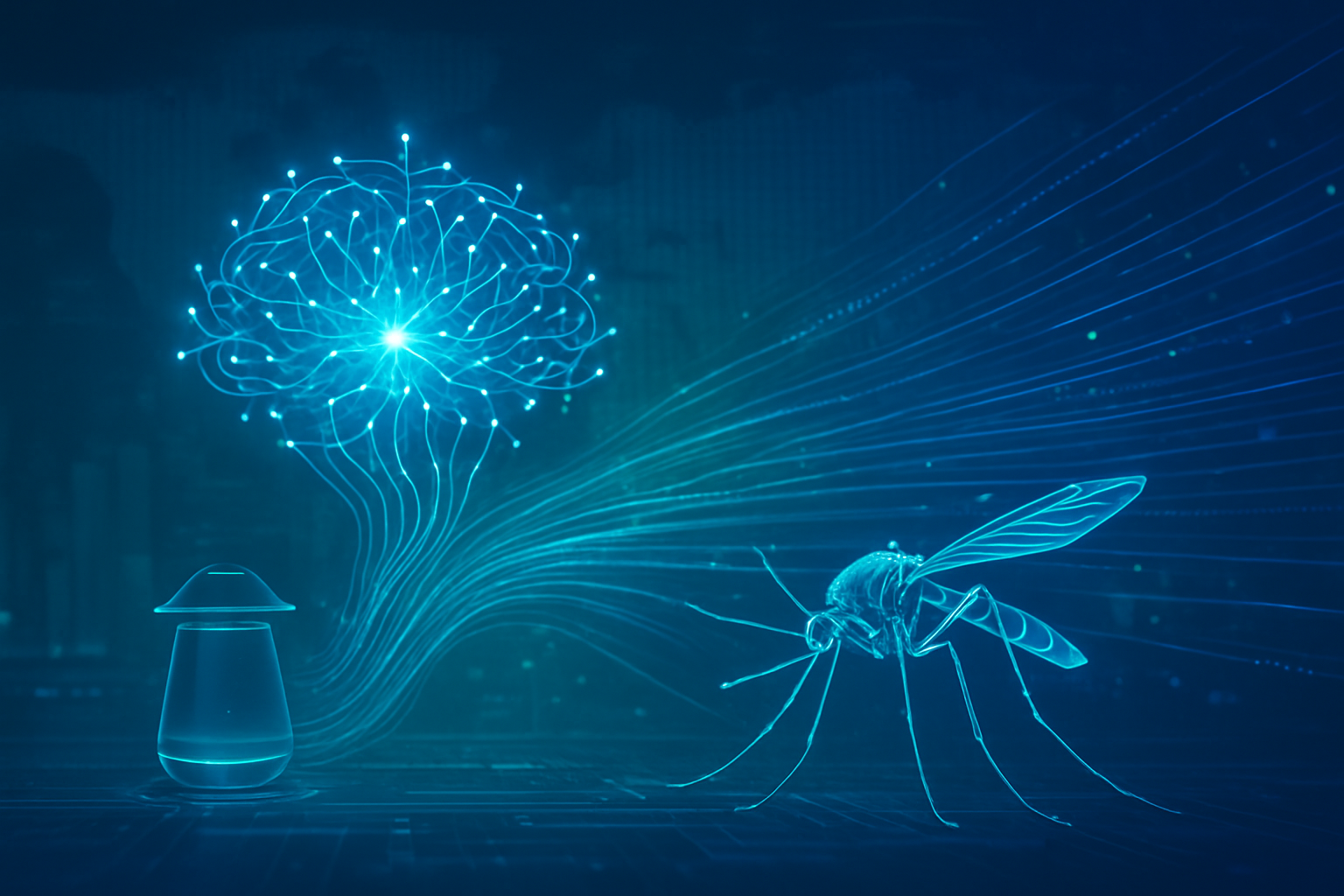
    At its core, "Mosquito Watch" leverages deep neural networks and computer vision technology. The CNU team developed and trained an AlexNet classifier network, which achieved an impressive accuracy of approximately 91.57% in predicting test images. This level of precision is critical for differentiating between various mosquito species, such as Culex quinquefasciatus and Aedes aegypti, which are vectors for diseases like West Nile virus and dengue fever, respectively. The system is envisioned to be integrated into Internet of Things (IoT)-based smart mosquito traps equipped with cameras and environmental sensors to monitor CO2 concentration, humidity, and temperature. This real-time data, combined with a unique mechanical design for capturing specific live mosquitoes after identification, is then uploaded to a cloud database, enabling continuous observation and analysis.

    This automated, real-time identification capability fundamentally differs from traditional mosquito surveillance. Conventional methods typically involve manual trapping, followed by laborious laboratory identification and analysis, a process that is time-consuming, expensive, and provides delayed data. "Mosquito Watch" offers immediate, data-driven insights, moving public health officials from a reactive stance to a proactive one. By continuously monitoring populations and environmental factors, the AI can forecast potential outbreaks, allowing for targeted countermeasures and preventative actions before widespread transmission occurs. This precision prevention approach replaces less efficient "blind fogging" with data-informed interventions. The initial reaction from the academic community, particularly from Dr. Yan Lu, Assistant Professor of Computer Science and the team’s leader, has been overwhelmingly positive, emphasizing the prototype’s practical application and the significant contributions undergraduates can make to regional challenges.

    Reshaping the AI Industry: A New Frontier for Innovation

    Innovations like "Mosquito Watch" are carving out a robust and expanding market for AI companies, tech giants, and startups within the public health and environmental monitoring sectors. The global AI in healthcare market alone is projected to reach USD 178.66 billion by 2030 (CAGR 45.80%), with the AI for Earth Monitoring market expected to hit USD 23.9 billion by 2033 (CAGR 22.5%). This growth fuels demand for specialized AI technologies, including computer vision for image-based detection, machine learning for predictive analytics, and IoT for real-time data collection.

    Tech giants like IBM Watson Health (NYSE: IBM), Google Health (NASDAQ: GOOGL), Microsoft (NASDAQ: MSFT), and NVIDIA (NASDAQ: NVDA) are exceptionally well-positioned to capitalize on this trend. Their extensive cloud infrastructure (Google Cloud, Microsoft Azure, Amazon Web Services (NASDAQ: AMZN)) can process and store the massive datasets generated by such solutions, while their substantial R&D budgets drive fundamental AI research. Furthermore, their existing consumer ecosystems (e.g., Apple (NASDAQ: AAPL) Watch, Fitbit) offer avenues for integrating public health features and leveraging wearables for continuous data collection. These companies can also forge strategic partnerships with public health agencies and pharmaceutical companies, solidifying their market presence globally.

    Startups also find fertile ground in this emerging sector, attracting significant venture capital. Their agility allows them to focus on niche specializations, such as advanced computer vision models for specific vector identification or localized environmental sensor networks. While facing challenges like navigating complex regulatory frameworks and ensuring data privacy, startups that demonstrate clear return on investment (ROI) and integrate seamlessly with existing public health infrastructure will thrive. The competitive landscape will likely see a mix of consolidation, as larger tech companies acquire promising startups, and increased specialization. Early movers who develop scalable, effective AI solutions will establish market leadership, while access to high-quality, longitudinal data will become a core competitive advantage.

    A Broader Lens: AI's Role in Global Health and Environmental Stewardship

    The success of "Mosquito Watch" signifies a crucial juncture in the broader AI landscape, demonstrating AI's escalating role in addressing global health and environmental challenges. This initiative aligns with the growing trend of leveraging computer vision, machine learning, and predictive analytics for real-time monitoring and automation. Such solutions contribute to improved public health outcomes through faster and more accurate disease prediction, enhanced environmental protection via proactive management of issues like pollution and deforestation, and increased efficiency and cost-effectiveness in public agencies.

    Compared to earlier AI milestones, which often involved "narrow AI" excelling at specific, well-defined tasks, modern AI, as exemplified by "Mosquito Watch," showcases adaptive learning from diverse, massive datasets. It moves beyond static analysis to real-time predictive capabilities, enabling proactive rather than reactive responses. The COVID-19 pandemic further accelerated this shift, highlighting AI's critical role in managing global health crises. However, this progress is not without its concerns. Data privacy and confidentiality remain paramount, especially when dealing with sensitive health and environmental data. Algorithmic bias, stemming from incomplete or unrepresentative training data, could perpetuate existing disparities. The environmental footprint of AI, particularly the energy consumption of training large models, also necessitates the development of greener AI solutions.

    The Horizon: AI-Driven Futures in Health and Environment

    Looking ahead, AI-driven public health and environmental monitoring solutions are poised for transformative developments. In the near term (1-5 years), we can expect enhanced disease surveillance with more accurate outbreak forecasting, personalized health assessments integrating individual and environmental data, and operational optimization within healthcare systems. For environmental monitoring, real-time pollution tracking, advanced climate change modeling with refined uncertainty ranges, and rapid detection of deforestation will become more sophisticated and widespread.

    Longer term (beyond 5 years), AI will move towards proactive disease prevention at both individual and societal levels, with integrated virtual healthcare becoming commonplace. Edge AI will enable data processing directly on remote sensors and drones, crucial for immediate detection and response in inaccessible environments. AI will also actively drive ecosystem restoration, with autonomous robots for tree planting and coral reef restoration, and optimize circular economy models. Potential new applications include hyper-local "Environmental Health Watch" platforms providing real-time health risk alerts, AI-guided autonomous environmental interventions, and predictive urban planning for health. Experts foresee AI revolutionizing disease surveillance and health service delivery, enabling the simultaneous uncovering of complex relationships between multiple diseases and environmental factors. However, challenges persist, including ensuring data quality and accessibility, addressing ethical concerns and algorithmic bias, overcoming infrastructure gaps, and managing the cost and resource intensity of AI development. The future success hinges on proactive solutions to these challenges, ensuring equitable and responsible deployment of AI for the benefit of all.

    A New Era of Data-Driven Public Service

    The success of the Tech-Saavy CNU Team at the Hampton Roads Datathon with their "Mosquito Watch" AI prototype is more than just an academic achievement; it's a powerful indicator of AI's transformative potential in public health and environmental stewardship. This development underscores several key takeaways: the critical role of interdisciplinary collaboration, the capacity of emerging data scientists to tackle real-world problems, and the urgent need for innovative, data-driven solutions to complex societal challenges.

    "Mosquito Watch" represents a significant milestone in AI history, showcasing how advanced machine learning and computer vision can move public services from reactive to proactive, providing actionable insights that directly impact community well-being. Its long-term impact could be profound, leading to more efficient resource allocation, earlier disease intervention, and ultimately, healthier communities. As AI continues to evolve, we can expect to see further integration of such intelligent systems into every facet of public health and environmental management. What to watch for in the coming weeks and months are the continued development and pilot programs of "Mosquito Watch" and similar AI-driven initiatives, as they transition from prototypes to deployed solutions, demonstrating their real-world efficacy and shaping the future of data-driven public service.


    This content is intended for informational purposes only and represents analysis of current AI developments.

    TokenRing AI delivers enterprise-grade solutions for multi-agent AI workflow orchestration, AI-powered development tools, and seamless remote collaboration platforms.
    For more information, visit https://www.tokenring.ai/.
  • AI Unlocks Real-Time Global Land Cover Mapping with Fusion of Satellite, Ground Cameras

    AI Unlocks Real-Time Global Land Cover Mapping with Fusion of Satellite, Ground Cameras

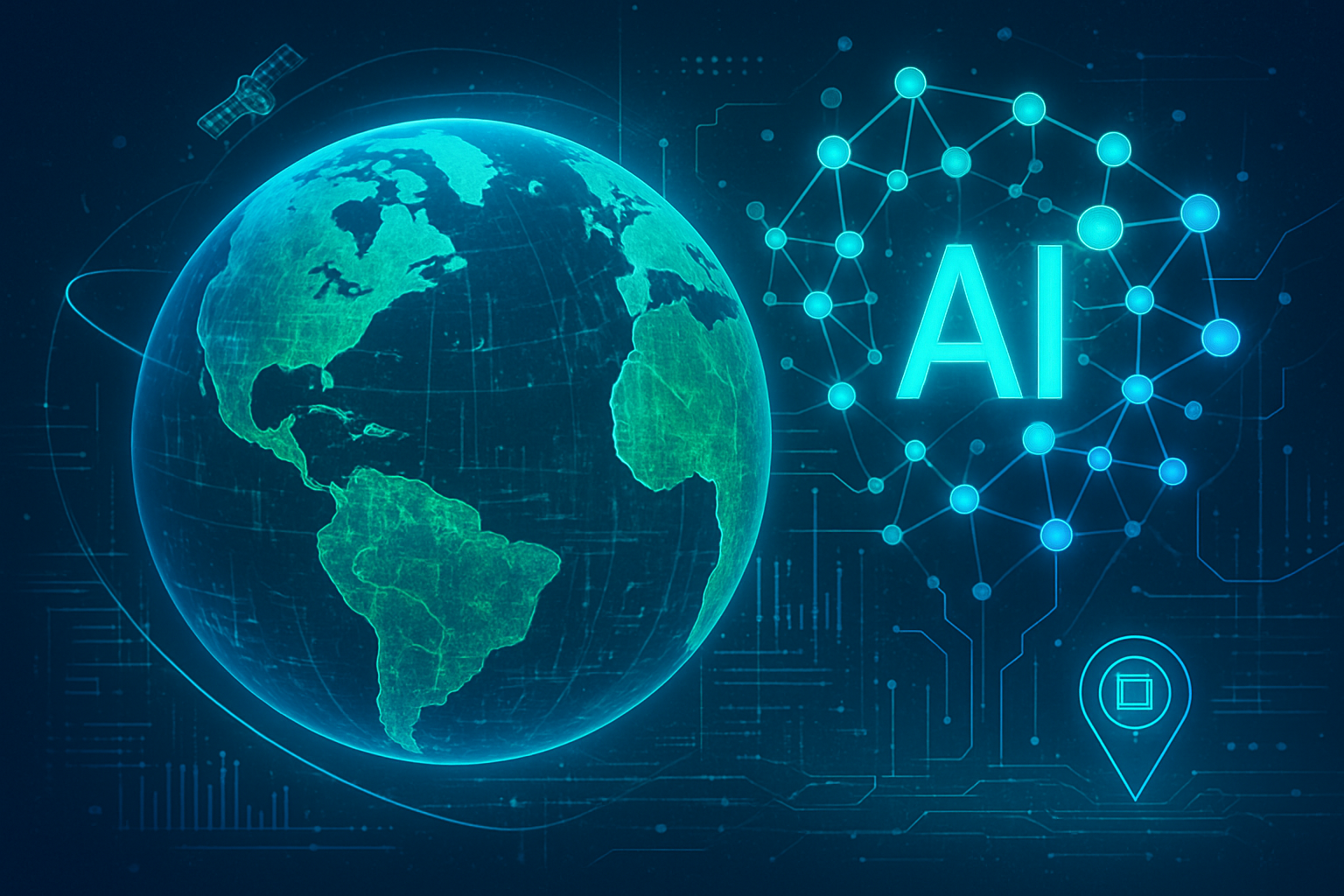
    A novel AI framework, FROM-GLC Plus 3.0, developed by researchers from Tsinghua University and their collaborators, marks a significant leap forward in environmental monitoring. This innovative system integrates satellite imagery, near-surface camera data, and advanced artificial intelligence to provide near real-time, highly accurate global land cover maps. Its immediate significance lies in overcoming long-standing limitations of traditional satellite-only methods, such as cloud cover and infrequent data updates, enabling unprecedented timeliness and detail in tracking environmental changes. This breakthrough is poised to revolutionize how we monitor land use, biodiversity, and climate impacts, empowering faster, more informed decision-making for sustainable land management worldwide.

    A Technical Deep Dive into Multimodal AI for Earth Observation

    The FROM-GLC Plus 3.0 framework represents a sophisticated advancement in land cover mapping, integrating a diverse array of data sources and cutting-edge AI methodologies. At its core, the system is designed with three interconnected modules: annual mapping, dynamic daily monitoring, and high-resolution parcel classification. It masterfully fuses near-surface camera data, which provides localized, high-frequency observations to reconstruct dense daily Normalized Difference Vegetation Index (NDVI) time series, with broad-scale satellite imagery from Sentinel-1 Synthetic Aperture Radar (SAR) and Sentinel-2 spectral data. This multimodal integration is crucial for overcoming limitations like cloud cover and infrequent satellite revisits, which have historically hampered real-time environmental monitoring.

    Technically, FROM-GLC Plus 3.0 leverages a suite of advanced AI and machine learning models. A pivotal component is the Segment Anything Model (SAM), a state-of-the-art deep learning technique applied for precise parcel-level delineation. SAM significantly reduces classification noise and achieves sharper boundaries at meter- and sub-meter scales, enhancing the accuracy of features like water bodies and urban structures. Alongside SAM, the framework employs various machine learning classifiers, including multi-season sample space-time migration, multi-source data time series reconstruction, supervised Random Forest, and unsupervised SW K-means, for robust land cover classification and data processing. The system also incorporates post-processing steps such as time consistency checks, spatial filtering, and super-resolution techniques to refine outputs, ultimately delivering land cover maps with multi-temporal scales (annual to daily updates) and multi-resolution mapping (from 30m to sub-meter details).

    This framework significantly differentiates itself from previous approaches. While Google's (NASDAQ: GOOGL) Dynamic World has made strides in near real-time mapping using satellite data, FROM-GLC Plus 3.0's key innovation is its explicit multimodal data fusion, particularly the seamless integration of ground-based near-surface camera observations. This addresses the cloud interference and infrequent revisit intervals that limit satellite-only systems, allowing for a more complete and continuous daily time series. Furthermore, the application of SAM provides superior spatial detail and segmentation, achieving more precise parcel-level delineation compared to Dynamic World's 10m resolution. Compared to specialized models like SAGRNet, which focuses on diverse vegetation cover classification using Graph Convolutional Neural Networks, FROM-GLC Plus 3.0 offers a broader general land cover mapping framework, identifying a wide array of categories beyond just vegetation, and its core innovation lies in its comprehensive data integration strategy for dynamic, real-time monitoring of all land cover types.

    Initial reactions from the AI research community and industry experts, though still nascent given the framework's recent publication in August 2025 and news release in October 2025, are overwhelmingly positive. Researchers from Tsinghua University and their collaborators are hailing it as a "methodological breakthrough" for its ability to synthesize multimodal data sources and integrate space and surface sensors for real-time land cover change detection. They emphasize that FROM-GLC Plus 3.0 "surpasses previous mapping products in both accuracy and temporal resolution," delivering "daily, accurate insights at both global and parcel scales." Experts highlight its capability to capture "rapid shifts that shape our environment," which satellite-only products often miss, providing "better environmental understanding but also practical support for agriculture, disaster preparedness, and sustainable land management," thus "setting the stage for next-generation land monitoring."

    Reshaping the Landscape for AI Companies and Tech Giants

    The FROM-GLC Plus 3.0 framework is poised to create significant ripples across the AI and tech industry, particularly within the specialized domains of geospatial AI and remote sensing. Companies deeply entrenched in processing and analyzing satellite and aerial imagery, such as Planet Labs (NYSE: PL) and Maxar Technologies (NYSE: MAXR), stand to benefit immensely. By integrating the methodologies of FROM-GLC Plus 3.0, these firms can significantly enhance the accuracy and granularity of their existing offerings, expanding into new service areas that demand real-time, finer-grained land cover data. Similarly, AgriTech startups and established players focused on precision agriculture, crop monitoring, and yield prediction will find the framework's daily land cover dynamics and high-resolution capabilities invaluable for optimizing resource management and early detection of agricultural issues.

    Major tech giants like Google (NASDAQ: GOOGL), Amazon (NASDAQ: AMZN), and Microsoft (NASDAQ: MSFT), which provide extensive cloud computing resources and AI platforms, are strategically positioned to capitalize on this development. Their robust infrastructure can handle the vast amounts of multimodal data required by FROM-GLC Plus 3.0, further solidifying their role as foundational providers for advanced geospatial analytics. These companies could integrate or offer services based on the framework's underlying techniques, providing advanced capabilities to their users through platforms like Google Earth Engine or Azure AI. The framework's reliance on deep learning techniques, especially the Segment Anything Model (SAM), also signals an increased demand for refined AI segmentation capabilities, pushing major AI labs to invest more in specialized geospatial AI teams or acquire startups with niche expertise.

    The competitive landscape will likely see a shift. Traditional satellite imagery providers that rely solely on infrequent data updates for land cover products may face disruption due to FROM-GLC Plus 3.0's superior temporal resolution and ground-truth validation. These companies will need to adapt by incorporating similar multimodal approaches or by focusing on unique data acquisition methods. Existing land cover maps with coarser spatial or temporal resolutions, such as the MODIS Land Cover Type product (MCD12Q1) or ESA Climate Change Initiative Land Cover (CCI-LC) maps, while valuable, may become less competitive for applications demanding high precision and timeliness. The market will increasingly value "real-time" and "high-resolution" as key differentiators, driving companies to develop strong expertise in fusing diverse data types (satellite, near-surface cameras, ground sensors) to offer more comprehensive and accurate solutions.

    Strategic advantages will accrue to firms that master data fusion expertise and AI model specialization, particularly for specific environmental or agricultural features. Vertical integration, from data acquisition (e.g., deploying their own near-surface camera networks or satellite constellations) to advanced analytics, could become a viable strategy for tech giants and larger startups. Furthermore, strategic partnerships between remote sensing companies, AI research labs, and domain-specific experts (e.g., agronomists, ecologists) will be crucial for fully harnessing the framework's potential across various industries. As near-surface cameras and high-resolution data become more prevalent, companies will also need to strategically address ethical considerations and data privacy concerns, particularly in populated areas, to maintain public trust and comply with evolving regulations.

    Wider Significance: A New Era for Earth Observation and AI

    The FROM-GLC Plus 3.0 framework represents a monumental stride in Earth observation, fitting seamlessly into the broader AI landscape and reinforcing several critical current trends. Its core innovation of multimodal data integration—synthesizing satellite imagery with ground-based near-surface camera observations—epitomizes the burgeoning field of multimodal AI, where diverse data streams are combined to build more comprehensive and robust AI systems. This approach directly addresses long-standing challenges in remote sensing, such as cloud cover and infrequent satellite revisits, paving the way for truly continuous and dynamic global monitoring. Furthermore, the framework's adoption of state-of-the-art foundation models like the Segment Anything Model (SAM) showcases the increasing trend of leveraging large, general-purpose AI models for specialized, high-precision applications like parcel-level delineation.

    The emphasis on "near real-time" and "daily monitoring" aligns with the growing demand for dynamic AI systems that provide up-to-date insights, moving beyond static analyses to continuous observation and prediction. This capability is particularly vital for tracking rapidly changing environmental phenomena, offering an unprecedented level of responsiveness in environmental science. The methodological breakthrough in combining space and surface sensor data also marks a significant advancement in data fusion, a critical area in AI research aimed at extracting more complete and reliable information from disparate sources. This positions FROM-GLC Plus 3.0 as a leading example of how advanced deep learning and multimodal data fusion can transform the perception and monitoring of Earth's surface.

    The impacts of this framework are profound and far-reaching. For environmental monitoring and conservation, it offers unparalleled capabilities for tracking land system changes, including deforestation, urbanization, and ecosystem health, critical for biodiversity safeguarding and climate change adaptation. In agriculture, it can provide detailed daily insights into crop rotations and vegetation changes, aiding sustainable land use and food security efforts. Its ability to detect rapid land cover changes in near real-time can significantly enhance early warning systems for natural disasters, improving preparedness and response. However, potential concerns exist, particularly regarding data privacy due to the high-resolution near-surface camera data, which requires careful consideration of deployment and accessibility. The advanced nature of the framework also raises questions about accessibility and equity, as less-resourced organizations might struggle to leverage its full benefits, potentially widening existing disparities in environmental monitoring capabilities.

    Compared to previous AI milestones, FROM-GLC Plus 3.0 stands out as a specialized geospatial AI breakthrough. While not a general-purpose AI like large language models (e.g., Google's (NASDAQ: GOOGL) Gemini or OpenAI's GPT series) or game-playing AI (e.g., DeepMind's AlphaGo), it represents a transformative leap within its domain. It significantly advances beyond earlier land cover mapping efforts and traditional satellite-only approaches, which were limited by classification detail, spatial resolution, and the ability to monitor rapid changes. Just as AlphaGo demonstrated the power of deep reinforcement learning in strategy games, FROM-GLC Plus 3.0 exemplifies how advanced deep learning and multimodal data fusion can revolutionize environmental intelligence, pushing towards truly dynamic and high-fidelity global monitoring capabilities.

    Future Developments: Charting a Course for Enhanced Environmental Intelligence

    The FROM-GLC Plus 3.0 framework is not merely a static achievement but a foundational step towards a dynamic future in environmental intelligence. In the near term, expected developments will focus on further refining its core capabilities. This includes enhancing data fusion techniques to more seamlessly integrate the rapidly expanding networks of near-surface cameras, which are crucial for reconstructing dense daily satellite data time series and overcoming temporal gaps caused by cloud cover. The framework will also continue to leverage and improve advanced AI segmentation models, particularly the Segment Anything Model (SAM), to achieve even more precise, parcel-level delineation, thereby reducing classification noise and boosting accuracy at sub-meter resolutions. A significant immediate goal is the deployment of an operational dynamic mapping tool, likely hosted on platforms like Google Earth Engine (NASDAQ: GOOGL), to provide near real-time land cover maps for any given location, offering unprecedented timeliness for a wide range of applications.

    Looking further ahead, the long-term vision for FROM-GLC Plus 3.0 involves establishing a more extensive and comprehensive global near-surface camera network. This expanded network would not only facilitate the monitoring of subtle land system changes within a single year but also enable multi-year time series analysis, providing richer historical context for understanding environmental trends. The framework's design emphasizes extensibility and flexibility, allowing for the development of customized land cover monitoring solutions tailored to diverse application scenarios and user needs. A key overarching objective is its seamless integration with Earth System Models, aiming to meet the rigorous requirements of land process modeling, resource management, and ecological environment evaluation, while also ensuring easy cross-referencing with existing global land cover classification schemes. Continuous refinement of algorithms and data integration methods will further push the boundaries of spatio-temporal detail and accuracy, paving the way for highly flexible global land cover change datasets.

    The enhanced capabilities of FROM-GLC Plus 3.0 unlock a vast array of potential applications and use cases on the horizon. Beyond its immediate utility in environmental monitoring and conservation, it will be crucial for climate change adaptation and mitigation efforts, providing timely data for carbon cycle modeling and land-based climate strategies. In agriculture, it promises to revolutionize sustainable land use by offering daily insights into crop types, health, and irrigation needs. The framework will also significantly bolster disaster response and early warning systems for floods, droughts, and wildfires, enabling faster and more accurate interventions. Furthermore, national governments and urban planners can leverage this detailed land cover information to inform policy decisions, manage natural capital, and guide sustainable urban development.

    Despite these promising advancements, several challenges need to be addressed. While the framework mitigates issues like cloud cover through multimodal data fusion, overcoming the perspective mismatch and limited coverage of near-surface cameras remains an ongoing task. Addressing data inconsistency among different datasets, which arises from variations in classification systems and methodologies, is crucial for achieving greater harmonization and comparability. Improving classification accuracy for complex land cover types, such as shrubland and impervious surfaces, which often exhibit spectral similarity or fragmented distribution, will require continuous algorithmic refinement. The "salt-and-pepper" noise common in high-resolution products, though being addressed by SAM, still requires ongoing attention. Finally, the significant computational resources required for global, near real-time mapping necessitate efforts to ensure the accessibility and usability of these sophisticated tools for a broader range of users. Experts in remote sensing and AI predict a transformative future, characterized by a shift towards more sophisticated AI models that consider spatial context, a rapid innovation cycle driven by increasing data availability, and a growing integration of geoscientific knowledge with machine learning techniques to set new benchmarks for accuracy and reliability.

    Comprehensive Wrap-up: A New Dawn for Global Environmental Intelligence

    The FROM-GLC Plus 3.0 framework represents a pivotal moment in the evolution of global land cover mapping, offering an unprecedented blend of detail, timeliness, and accuracy by ingeniously integrating diverse data sources with cutting-edge artificial intelligence. Its core innovation lies in the multimodal data fusion, seamlessly combining wide-coverage satellite imagery with high-frequency, ground-level observations from near-surface camera networks. This methodological breakthrough effectively bridges critical temporal and spatial gaps that have long plagued satellite-only approaches, enabling the reconstruction of dense daily satellite data time series. Coupled with the application of state-of-the-art deep learning techniques, particularly the Segment Anything Model (SAM), FROM-GLC Plus 3.0 delivers precise, parcel-level delineation and high-resolution mapping at meter- and sub-meter scales, offering near real-time, multi-temporal, and multi-resolution insights into our planet's ever-changing surface.

    In the annals of AI history, FROM-GLC Plus 3.0 stands as a landmark achievement in specialized AI application. It moves beyond merely processing existing data to creating a more comprehensive and robust observational system, pioneering multimodal integration for Earth system monitoring. This framework offers a practical AI solution to long-standing environmental challenges like cloud interference and limited temporal resolution, which have historically hampered accurate land cover mapping. Its effective deployment of foundational AI models like SAM for precise segmentation also demonstrates how general-purpose AI can be adapted and fine-tuned for specialized scientific applications, yielding superior and actionable results.

    The long-term impact of this framework is poised to be profound and far-reaching. It will be instrumental in tracking critical environmental changes—such as deforestation, biodiversity habitat alterations, and urban expansion—with unprecedented precision, thereby greatly supporting conservation efforts, climate change modeling, and sustainable development initiatives. Its capacity for near real-time monitoring will enable earlier and more accurate warnings for environmental hazards, enhancing disaster management and early warning systems. Furthermore, it promises to revolutionize agricultural intelligence, urban planning, and infrastructure development by providing granular, timely data. The rich, high-resolution, and temporally dense land cover datasets generated by FROM-GLC Plus 3.0 will serve as a foundational resource for earth system scientists, enabling new research avenues and improving the accuracy of global environmental models.

    In the coming weeks and months, several key areas will be crucial to observe. We should watch for announcements regarding the framework's global adoption and expansion, particularly its integration into national and international monitoring programs. The scalability and coverage of the near-surface camera component will be critical, so look for efforts to expand these networks and the technologies used for data collection and transmission. Continued independent validation of its accuracy and robustness across diverse geographical and climatic zones will be essential for widespread scientific acceptance. Furthermore, it will be important to observe how the enhanced data from FROM-GLC Plus 3.0 begins to influence environmental policies, land-use planning decisions, and resource management strategies by governments and organizations worldwide. Given the rapid pace of AI development, expect future iterations or complementary frameworks that build on FROM-GLC Plus 3.0's success, potentially incorporating more sophisticated AI models or new sensor technologies, and watch for how private sector companies might adopt or adapt this technology for commercial services.


    This content is intended for informational purposes only and represents analysis of current AI developments.

    TokenRing AI delivers enterprise-grade solutions for multi-agent AI workflow orchestration, AI-powered development tools, and seamless remote collaboration platforms.
    For more information, visit https://www.tokenring.ai/.
  • HydroSpread: Robots That Walk on Water – A Leap in Soft Robotics

    HydroSpread: Robots That Walk on Water – A Leap in Soft Robotics

    In a groundbreaking advancement that promises to redefine the capabilities of autonomous systems, engineers at the University of Virginia have unveiled HydroSpread, an innovative fabrication method for creating ultrathin soft robots capable of navigating aquatic environments with unprecedented agility. This breakthrough, poised to revolutionize fields from environmental monitoring to search and rescue, marks a significant leap in soft robotics by enabling the reliable and precise manufacturing of delicate, resilient machines directly on the surface of water. HydroSpread's ingenious approach bypasses the traditional pitfalls of soft robot fabrication, paving the way for a new generation of aquatic explorers.

    The immediate significance of HydroSpread lies in its ability to produce highly functional, ultrathin robots that mimic the effortless locomotion of water-walking insects. By eliminating the fragile transfer processes inherent in previous manufacturing techniques, this method dramatically increases the yield and reliability of these sensitive devices. This innovation is not merely an incremental improvement; it represents a paradigm shift in how soft robots are designed and deployed, offering a pathway to low-cost, disposable scouts that can delve into hazardous or inaccessible aquatic zones, providing critical data and assistance where human intervention is challenging.

    The Liquid Workbench: A Technical Deep Dive into HydroSpread's Innovation

    At the heart of the HydroSpread method is a deceptively simple yet profoundly effective technique: utilizing water itself as the primary fabrication platform. This "liquid workbench" approach involves depositing liquid polymer ink onto a water bath, where surface tension and other natural forces cause the polymer to spread spontaneously and uniformly. The result is the formation of ultrathin films, some as fine as 100 micrometers—thinner than a human hair—which are then cured, typically with ultraviolet light, and precisely laser-cut into intricate shapes directly on the water's surface. This direct-on-liquid fabrication eliminates the need for transferring fragile films from solid substrates, a process that historically led to tearing, wrinkling, and structural failures.

    The technical prowess of HydroSpread is evident in its ability to enable robots that genuinely "walk on water." This is achieved through a combination of direct fabrication on a liquid surface, which ensures ultralow surface roughness crucial for buoyancy and surface tension interaction, and biomimicry. The robots' designs are inspired by water striders, incorporating elements like curved legs and hydrophobic coatings for enhanced stability. Their locomotion is often powered by heat-actuated bilayer films; these films consist of two layers that expand at different rates when heated, causing them to bend or buckle, generating the precise paddling or walking motions required for movement. Precision laser cutting directly on the water further refines these designs, creating functional mechanisms that mimic natural aquatic movements, with the water acting as a heat sink to prevent distortion during cutting.

    This novel approach stands in stark contrast to previous soft robotics manufacturing methods, which often struggled with the delicate balance required to create functional, ultrathin structures. Traditional techniques involved fabricating films on rigid surfaces and then attempting to transfer them to water, a step fraught with high rates of failure. HydroSpread's innovation lies in bypassing this problematic transfer entirely, building the robot in situ on its operational medium. Initial reactions from the AI research community have been overwhelmingly positive, with experts highlighting the method's potential to unlock new possibilities in robot design, particularly for applications requiring extreme delicacy, flexibility, and interaction with fluid environments. The enhanced precision, scalability, and versatility offered by HydroSpread are seen as critical advancements that could accelerate the development of a wide range of soft robotic devices.

    Industry Ripples: HydroSpread's Competitive Edge and Market Disruption

    The advent of HydroSpread is poised to send significant ripples across the robotics and AI landscape, particularly within the burgeoning field of soft robotics and flexible electronics. While the technology is still emerging from academic research, its foundational innovation in fabrication promises to confer strategic advantages and potential disruptions for a range of companies.

    Companies specializing in environmental technology stand to be among the earliest and most direct beneficiaries. Firms engaged in water quality monitoring, oceanography, and ecological data collection could leverage HydroSpread to develop entirely new lines of low-cost, disposable, and highly deployable robotic scouts. These miniature autonomous agents could offer a scalable and efficient alternative to current expensive equipment and labor-intensive human operations, providing real-time data on pollutants, harmful algal blooms, or microplastics. Similarly, robotics manufacturers with a focus on specialized soft robots, especially those designed for interaction with fluid or delicate environments, will find HydroSpread's precise and reliable fabrication process highly advantageous. While giants like Boston Dynamics (NASDAQ: BDX) are known for their rigid, dynamic robots, the future could see specialized divisions or startups embracing HydroSpread for novel aquatic or compliant robotic solutions.

    The competitive implications for major AI labs and tech companies, while not immediately impacting their core software-centric AI offerings, lie in the realm of embodied AI and AI for sensing and control in dynamic, fluid environments. HydroSpread provides the hardware foundation for highly adaptable, physical AI agents. This could disrupt traditional environmental monitoring services, where large, expensive sensors and human-operated vehicles might be supplanted by swarms of HydroSpread-enabled autonomous robots. Furthermore, existing manufacturing processes for flexible electronics, often plagued by fragile transfer steps and high failure rates, could face obsolescence as HydroSpread offers a more direct, precise, and potentially cost-effective alternative. Companies that act as early adopters and integrate HydroSpread into their R&D could secure a significant first-mover advantage, differentiating themselves with highly adaptable, sustainable, and integrated robotic solutions that can operate where conventional rigid robots cannot. This strategic positioning could unlock entirely new product categories, from biologically inspired robots for medical applications to flexible circuits resilient to extreme environmental conditions.

    A New Frontier for Embodied AI: Wider Significance and Ethical Considerations

    HydroSpread's breakthrough extends far beyond mere fabrication, signaling a profound shift in the broader AI landscape, particularly in the realms of soft robotics and embodied AI. This method aligns perfectly with the growing trend of creating intelligent systems that are deeply integrated with their physical environment, moving away from rigid, metallic constructs towards pliable, adaptive machines inspired by nature. By simplifying the creation of delicate, water-interacting robots, HydroSpread makes it easier to design systems that can float, glide, and operate seamlessly within aquatic ecosystems, pushing the boundaries of what embodied AI can achieve. The biomimetic approach, drawing inspiration from water striders, underscores a broader trend in robotics to learn from and work in harmony with the natural world.

    The impacts of this technology are potentially transformative. In environmental monitoring and protection, fleets of HydroSpread-fabricated robots could revolutionize data collection on water quality, pollutants, and microplastics, offering a scalable and cost-effective alternative to current methods. For search and rescue operations, especially in flood-affected disaster zones, these miniature, agile robots could scout dangerous areas and deliver sensors, significantly boosting response capabilities without endangering human lives. Furthermore, the ability to create ultrathin, flexible devices holds immense promise for medical innovation, from advanced wearable diagnostics and smart patches to implantable devices that integrate seamlessly with biological systems. This technology also contributes to the advancement of flexible electronics, enabling more resilient and adaptable devices for various applications.

    However, with great potential come significant challenges and concerns. The current lab prototypes, while impressive, face hurdles regarding durability and autonomous power supply for widespread field deployment. Ensuring these ultrathin films can withstand diverse environmental conditions and operate independently for extended periods requires further research into robust power sources and materials. Navigation and autonomy in unpredictable aquatic environments also present a complex AI challenge, demanding sophisticated algorithms for obstacle avoidance and task execution. Scalability and cost-effectiveness for mass production remain critical questions, as does the environmental impact of deploying potentially thousands of polymer-based devices; questions of biodegradability and recovery methods will need careful consideration. Finally, as with any pervasive sensing technology, ethical considerations surrounding surveillance, data privacy, and potential misuse of discrete monitoring capabilities will be paramount, requiring thoughtful regulation and public discourse.

    The Horizon of HydroSpread: From Lab to Ubiquitous Aquatic AI

    The trajectory of HydroSpread soft robotics is poised for rapid evolution, moving from laboratory-dependent prototypes towards autonomous, widely deployable devices. In the near term, research will intensely focus on integrating compact, onboard power sources, moving beyond external infrared heaters to solutions responsive to sunlight, magnetic fields, or tiny embedded heaters. This will be coupled with efforts to enhance autonomy through embedded sensors and sophisticated control systems, enabling robots to operate independently. Improving speed and responsiveness by optimizing heating and cooling cycles will also be crucial for efficient navigation in real-world scenarios, alongside refining fabrication precision to ensure consistent, high-quality, and reproducible devices.

    Looking further ahead, the long-term developments for HydroSpread promise to unlock advanced functionalities and widespread deployment. The inherent simplicity of the method suggests significant potential for mass production and scalability, paving the way for the deployment of vast swarms of micro-robots capable of collaborative tasks like comprehensive environmental mapping or large-scale disaster response. Advanced AI integration will be paramount for autonomous navigation, complex decision-making, and executing intricate tasks in unpredictable environments. Concurrently, efforts will be directed towards significantly enhancing the durability and resilience of these ultrathin films to withstand the rigors of diverse real-world conditions.

    The potential applications and use cases on the horizon are vast and impactful. HydroSpread robots could become ubiquitous in environmental monitoring, serving as autonomous sensors to track pollutants, map water quality, and detect harmful algal blooms or microplastics across vast aquatic bodies. In search and rescue operations, they could scout flooded zones or deliver sensors to dangerous areas, significantly boosting response capabilities. The biomedical field stands to gain immensely, with the promise of next-generation wearable medical sensors that conform seamlessly to the skin, advanced prosthetics, targeted drug-delivery systems, and even future implantable devices. Beyond robotics, HydroSpread could revolutionize flexible electronics and materials science, leading to bendable displays, smart patches, and novel sensors capable of operating in wet or dynamic conditions.

    Despite this immense potential, several challenges must be overcome. The current dependence on external power is a significant hurdle, necessitating efficient onboard power solutions. Long-term durability in harsh natural environments remains a key area for improvement. Achieving complex actuation and precise navigation in dynamic aquatic settings will require integrating more sophisticated sensors and control algorithms. Furthermore, scaling production for commercial viability will demand addressing cost-effectiveness, reproducibility, and ensuring consistent performance across millions of units, alongside careful consideration of the environmental impact of widespread polymer deployment. Experts are, however, overwhelmingly optimistic, predicting that HydroSpread will "accelerate the development of autonomous sensors" and usher in a "paradigm shift in materials science," making the future of soft robotics "buoyant indeed." They foresee HydroSpread as a crucial pathway toward creating practical, durable, and flexible robots capable of operating effectively where traditional rigid machines fail.

    Conclusion: A New Era for Aquatic Robotics and Embodied AI

    The HydroSpread fabrication method represents a pivotal moment in the evolution of soft robotics and embodied AI. By enabling the precise, reliable, and scalable creation of ultrathin, water-walking robots, it fundamentally expands the capabilities of autonomous systems in aquatic and delicate environments. The key takeaways from this breakthrough are its innovative use of water as a manufacturing platform, its potential to democratize environmental monitoring, enhance disaster response, and drive advancements in flexible electronics and biomedical devices.

    This development holds significant historical importance in AI, not as a direct algorithmic breakthrough, but as a foundational enabling technology. Much like advanced microchip fabrication paved the way for powerful computational AI, HydroSpread provides the physical substrate for a new generation of intelligent agents that can interact with the real world in ways previously unimaginable for rigid robots. It underscores a broader trend towards bio-inspired design and the integration of AI with highly adaptable physical forms.

    In the coming weeks and months, the focus will undoubtedly remain on addressing the critical challenges of power autonomy, real-world durability, and advanced navigation. As researchers continue to refine the HydroSpread method and explore its myriad applications, the world will be watching to see how these miniature, water-walking robots begin to transform our understanding and interaction with our planet's most vital resource. This innovation promises to make the future of soft robotics and environmentally integrated AI not just intelligent, but truly buoyant.

    This content is intended for informational purposes only and represents analysis of current AI developments.

    TokenRing AI delivers enterprise-grade solutions for multi-agent AI workflow orchestration, AI-powered development tools, and seamless remote collaboration platforms.
    For more information, visit https://www.tokenring.ai/.