
Tag: Environmental Tech

  • Northwestern University Secures $2.7 Million for Groundbreaking Microbial Wastewater Resource Recovery: A Leap Towards a Circular Economy

    Northwestern University Secures $2.7 Million for Groundbreaking Microbial Wastewater Resource Recovery: A Leap Towards a Circular Economy

    EVANSTON, IL – November 10, 2025 – Northwestern University today announced it has been awarded a substantial $2.7 million by the U.S. Department of Energy (DOE) Advanced Research Projects Agency-Energy (ARPA-E) for the development of its innovative microbial wastewater resource recovery technology. This significant funding, granted under ARPA-E's Realize Energy-rich Compound Opportunities Valorizing Extraction from Refuse waters (RECOVER) program, marks a pivotal moment in transforming wastewater treatment from a costly disposal challenge into a vital source of domestic resources. The N-PRIME system, as it is known, promises not only profound environmental benefits by mitigating nutrient pollution but also a strategic shift towards national energy and economic security by reducing reliance on imported fertilizers and critical materials.

    N-PRIME: Engineering Nature for a Sustainable Future

    The Northwestern-led project, officially titled "Nitrogen and Phosphorus Recovery via Intensified Microbial Extraction (N-PRIME): A Biotechnological Approach for Valorization of Municipal Wastewater," is spearheaded by a collaborative team of Northwestern Engineering researchers, including Professor George Wells (Civil and Environmental Engineering), Associate Professor Keith Tyo (Chemical and Biological Engineering), and Professor Jennifer Dunn (Chemical and Biological Engineering). The team also includes partners from the University of Minnesota, Current Innovation NFP, and Hazen and Sawyer.

    At its core, N-PRIME utilizes engineered microbial systems – specifically, "self-replicating, self-assembling, and self-repairing bacteria" – to selectively concentrate and capture nitrogen and phosphorus from wastewater streams. Unlike conventional wastewater treatment that primarily focuses on removing pollutants, N-PRIME aims to recover these essential nutrients as high-value amino acids and marketable fertilizer products. This biotechnological marvel is designed for continuous recovery at greater productivity and lower cost than current state-of-the-art methods. While conventional biological nitrogen removal often involves energy-intensive nitrification and denitrification, N-PRIME seeks to efficiently capture nitrogen compounds before they are converted to atmospheric nitrogen, concentrating them for reuse. Similarly, for phosphorus, it likely leverages enhanced biological phosphorus accumulation processes, facilitating easier extraction of the concentrated nutrient.

    This approach represents a fundamental departure from traditional "once-through" wastewater management, which typically treats wastewater as a waste product. Instead, N-PRIME champions a circular economy model, where "old resources are turned into new resources by recycling." Initial reactions from the environmental engineering and biotechnology communities are highly positive, recognizing N-PRIME as a forward-thinking solution that aligns with global sustainability goals. The project's academic and industry partnerships underscore its scientific rigor and potential for practical, scalable implementation, addressing limitations such as high costs, energy consumption, and sludge generation associated with conventional methods.

    Market Implications and the Rise of Resource Recovery

    The successful development and scaling of technologies like N-PRIME hold significant competitive implications across several sectors. Wastewater treatment plants and municipal utilities stand to benefit directly by transforming operational costs into potential revenue streams from the sale of recovered nutrients and amino acids. Major wastewater treatment companies like Veolia (EPA: VEOEY) and Suez (EPA: SZEVY) could integrate N-PRIME into their offerings, enhancing their sustainability profiles and providing more cost-effective services. Conversely, companies slow to adopt such innovations risk falling behind.

    Fertilizer producers, including global giants like Nutrien (NYSE: NTR) and Mosaic (NYSE: MOS), could find new, domestic supply chains for nitrogen and phosphorus, reducing their reliance on imported raw materials and mitigating exposure to volatile global markets. This could disrupt established supply chains that rely on energy-intensive industrial processes for synthetic fertilizer production. Environmental technology companies and startups in the "climate-tech" and "circular economy" spaces are also poised for growth, with new opportunities for innovation, investment, and market entry by offering sustainable solutions. The recovery of high-value amino acids also implies benefits for companies in the specialty chemical and biochemical industries.

    N-PRIME's potential to provide domestic sources of critical materials could significantly disrupt existing import/export markets for nutrients, strengthening national energy and economic security. Early adopters and developers will gain a first-mover advantage, establishing technological leadership and enhancing brand differentiation as pioneers in sustainable resource management. They can position themselves as sustainability leaders and cost-efficiency innovators, attracting environmentally conscious investors and customers while potentially benefiting from government incentives for sustainable resource recovery.

    A Wider Lens: Sustainability, Smart Systems, and the AI Nexus

    N-PRIME is a powerful example of how scientific innovation is driving the broader landscape of sustainable technologies and the circular economy. By transforming waste valorization, it directly addresses critical environmental concerns such as nutrient pollution, which causes algal blooms and oxygen depletion in aquatic ecosystems, and the generation of nitrous oxide, a potent greenhouse gas, from traditional treatment processes. Economically, it promises reduced operational costs for wastewater treatment and new revenue streams from valuable byproducts, enhancing economic security by reducing reliance on imported resources. Societally, it contributes to public health by improving water quality and promoting a healthier environment.

    However, challenges remain for widespread adoption, including the technological and biological complexity of managing dynamic microbial communities, the need for robust regulatory frameworks, and substantial investment.

    While the core N-PRIME technology is biological, its development, optimization, and future deployment are ripe for integration with the broader Artificial Intelligence (AI) landscape. Complex microbial systems like N-PRIME generate vast amounts of operational data, from influent composition to microbial community structure and product yield. AI and machine learning (ML) are indispensable for analyzing this data to:

    • Predictive Performance: Monitor and predict system performance, detect anomalies, and anticipate suboptimal conditions in real-time.
    • Process Optimization: Continuously learn and adapt operational parameters (e.g., temperature, pH, flow rates) to maximize nutrient recovery efficiency, product quality, and energy savings.
    • Microbial Dynamics: Analyze complex multi-omics data (metagenomics, metatranscriptomics) to understand and manage microbial consortia, enabling better control and engineering of these biological systems.

    AI can enable "smart control systems" for N-PRIME, automating adjustments based on incoming wastewater characteristics and desired output. This positions N-PRIME as a key component in the evolution towards "smart cities" and intelligent resource management infrastructure, where AI-driven insights ensure optimal resource allocation and environmental stewardship.

    The Horizon: Adaptive Biorefineries and AI-Driven Sustainability

    Looking ahead, the N-PRIME project is expected to contribute significantly to the long-term vision of transforming current wastewater treatment plants (WWTPs) into "adaptive, climate-conscious biorefineries." These future facilities will not only treat wastewater but also actively recover resources, mitigate ecological risks, and substantially reduce their carbon footprint. Potential applications on the horizon include enhanced nutrient recovery for domestic fertilizer production, bioenergy generation through anaerobic digestion or hydrothermal liquefaction, and even the production of biopolymers and bioplastics from wastewater.

    Experts widely predict that AI and ML will be transformative tools in this evolution. AI-enhanced environmental DNA (eDNA) models are already achieving high predictive accuracy for effluent quality and the prevalence of antibiotic resistance genes, enabling near-real-time monitoring and adaptive control of treatment processes. This can lead to significant energy savings, particularly in aeration. The future envisions AI-driven "digital twins" of WWTPs, integrating molecular data with operational analytics to provide predictive microbiome management. This will allow operators to directly link microbial ecological signals with process optimization, public health risk mitigation, and climate-resilient infrastructure management.

    Challenges for widespread adoption include the inherent complexity of microbial systems, the need for robust regulatory frameworks, and substantial investment. However, the integration of AI promises to overcome many of these hurdles by providing the intelligence needed to manage these complex biological systems efficiently and cost-effectively, accelerating the transition to a truly circular economy.

    A Watershed Moment in AI-Enhanced Environmental Tech

    Northwestern University's $2.7 million award for the N-PRIME technology is more than just a research grant; it's a profound investment in a sustainable future. This development underscores a critical shift in how we perceive and manage wastewater, moving from disposal to strategic resource recovery. The immediate significance lies in its potential to create secure domestic supply chains for essential nutrients, reduce environmental pollution, and foster economic value from what was once considered waste.

    In the broader context of AI and technology, N-PRIME represents a compelling frontier where advanced biotechnology meets intelligent systems. While the core innovation is microbial, the ability of AI to analyze vast datasets, optimize complex biological processes, and enable autonomous control will be crucial for N-PRIME's scalability, efficiency, and long-term success. This synergy positions N-PRIME not just as an environmental breakthrough but as a significant milestone in the application of AI to solve real-world sustainability challenges.

    In the coming weeks and months, industry watchers will be keen to observe the progress of the N-PRIME project, particularly its pilot-scale demonstrations and the refinement of its microbial engineering. Its success could catalyze further investment in similar resource recovery technologies and accelerate the integration of AI into environmental engineering, paving the way for a more resilient, resource-independent, and environmentally conscious society.


    This content is intended for informational purposes only and represents analysis of current AI developments.

    TokenRing AI delivers enterprise-grade solutions for multi-agent AI workflow orchestration, AI-powered development tools, and seamless remote collaboration platforms.
    For more information, visit https://www.tokenring.ai/.
  • AI Takes Flight and Dives Deep: Bezos Earth Fund Fuels $4 Million in Conservation Innovation

    AI Takes Flight and Dives Deep: Bezos Earth Fund Fuels $4 Million in Conservation Innovation

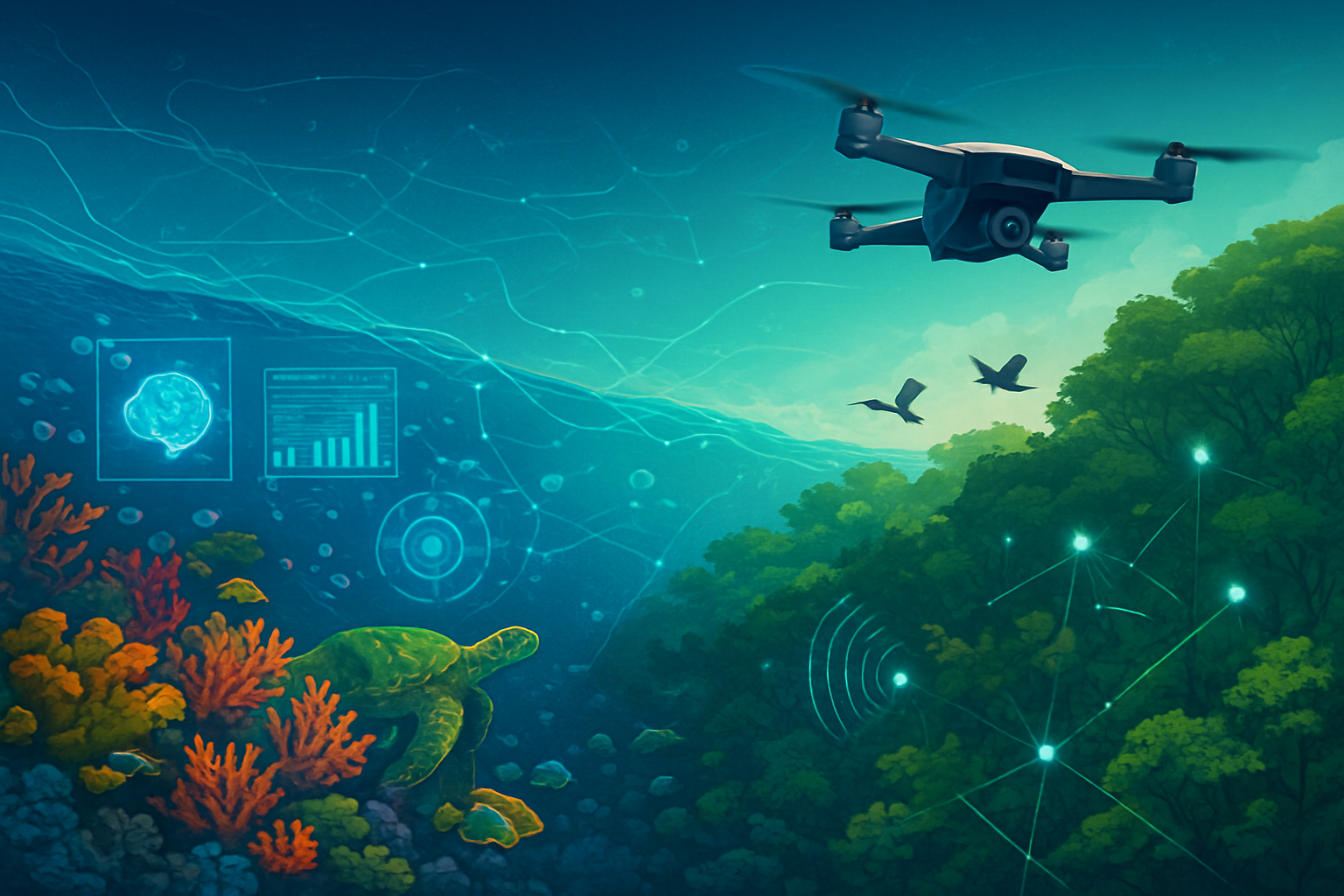
    Seattle, WA – October 23, 2025 – In a landmark move poised to revolutionize global conservation efforts, the Bezos Earth Fund has awarded substantial Phase II grants, totaling up to $4 million, to the Wildlife Conservation Society (WCS) and the Cornell Lab of Ornithology. Each organization stands to receive up to $2 million to dramatically scale their pioneering artificial intelligence (AI) solutions for monitoring and protecting wildlife and natural ecosystems. These grants, part of the Bezos Earth Fund's ambitious AI Grand Challenge for Climate and Nature, underscore a growing commitment to harnessing advanced technology to combat biodiversity loss and bolster climate resilience worldwide.

    The infusion of capital will empower WCS to expand its MERMAID platform, an AI-driven system for coral reef monitoring, while the Cornell Lab of Ornithology will advance its bioacoustics network, leveraging AI to listen in on biodiversity hotspots and detect threats in real-time. This strategic investment highlights a critical turning point in conservation, shifting from labor-intensive, often localized efforts to scalable, data-driven approaches capable of addressing environmental crises with unprecedented speed and precision.

    Unpacking the Tech: AI's New Frontier in Nature

    The grants propel two distinct yet equally impactful AI innovations to the forefront of conservation technology. Both projects leverage sophisticated machine learning to tackle challenges previously deemed insurmountable due to sheer scale and complexity.

    The Wildlife Conservation Society (WCS) is scaling its MERMAID (Marine Ecological Research Management AID) platform, which uses AI to analyze benthic photo quadrats—images of the seafloor—to assess coral reef health. Launched in June 2025, MERMAID AI integrates machine learning directly into its workflows. Its core technology is a shared AI model, initially trained on over 500,000 public images, capable of identifying 54 different attributes, from broad benthic groups to 37 specific coral genera, with a promising accuracy of 82%. Built on Amazon Web Services (AWS) (NASDAQ: AMZN) cloud-native infrastructure, MERMAID utilizes Amazon S3 for image hosting, Amazon ECS for processing, Amazon RDS PostgreSQL for its database, and AWS SageMaker for hosting continuously improving AI models. This open-source platform, already used by over 3,000 individuals in 52 countries, dramatically accelerates analysis, processing data at least 200 times faster and at approximately 1% of the cost of traditional manual methods. It standardizes data input and integrates imagery analysis with other ecological data, freeing scientists to focus on management. Initial reactions from WCS field teams in Mozambique confirm significant streamlining of workflows, transforming multi-day tasks into single steps and enabling more accurate, optimistic predictions for coral reef futures by capturing ecosystem complexity better than traditional models.

    Meanwhile, the Cornell Lab of Ornithology is revolutionizing biodiversity monitoring through its "Sound Sense: Global Wildlife Listening Network," leveraging advanced bioacoustics and AI. Their project, supported by a $1.8 million grant, focuses on developing sophisticated acoustic sensors combined with AI analytics to identify species and detect real-time threats like poaching in biodiversity hotspots, particularly in the Global South. The Lab's K. Lisa Yang Center for Conservation Bioacoustics employs tools like BirdNET, an artificial neural network trained to classify over 6,000 bird species from audio signals converted into spectrograms. They also utilize the Koogu toolkit, an open-source deep learning solution for bio-acousticians, and the Perch Model, developed with Google Research (NASDAQ: GOOGL), which uses vector search and active learning to rapidly build new classifiers from even a single sound example. This AI-powered approach allows continuous, large-scale monitoring over vast areas with minimal disturbance, processing thousands of hours of audio in minutes—a task previously impossible due to the sheer volume of data. Unlike traditional methods that could only analyze about 1% of collected audio, AI enables comprehensive analysis, providing deeper insights into animal activity, population changes, and ecosystem health. Experts hail this as a "paradigm shift," unlocking new avenues for studying and understanding wildlife populations and the causes of their decline.

    Tech Titans and Startups: A New Green Horizon

    The Bezos Earth Fund's grants act as a significant catalyst, shaping a rapidly expanding market for AI in wildlife conservation. Valued at $1.8 billion in 2023, this market is projected to skyrocket to $16.5 billion by 2032, presenting immense opportunities for various tech entities.

    Cloud computing providers stand to benefit immensely. WCS's reliance on AWS for its MERMAID platform, utilizing services like S3, ECS, RDS PostgreSQL, and SageMaker, exemplifies this. Given Jeff Bezos's ties to Amazon, AWS is likely to remain a preferred partner, but other giants like Google.org and Microsoft Research (NASDAQ: MSFT), who offered mentorship during Phase I, are also poised to contribute their cloud and AI services. This solidifies their strategic positioning in the "AI for Good" space, aligning with growing ESG commitments.

    AI hardware manufacturers will see increased demand for specialized equipment. Companies producing acoustic sensors, camera traps, drones, and edge AI devices will be crucial. The Cornell Lab's focus on advanced acoustic sensors for real-time threat detection directly fuels this segment. Similarly, AI software and platform developers specializing in machine learning, computer vision, bioacoustic analysis, and predictive modeling will find new avenues. Firms offering AI development platforms, data analytics tools, and image recognition software will be key partners, potentially disrupting traditional monitoring equipment markets that lack integrated AI.

    The grants also create a fertile ground for specialized AI startups. Agile firms with expertise in niche areas like marine computer vision or bioacoustics can partner with larger organizations or develop bespoke solutions, potentially leading to acquisitions or strategic collaborations. This accelerated development in conservation AI provides a real-world proving ground for AI and cloud platforms, allowing tech giants to showcase their capabilities in challenging environments and attract future clients. Furthermore, involvement in these projects grants access to unique environmental datasets, a significant competitive advantage for training and improving AI models.

    Wider Implications: AI for a Sustainable Future

    These advancements in conservation AI represent a pivotal moment in the broader AI landscape, signaling a maturation of the technology beyond commercial applications to address critical global challenges.

    The projects exemplify the evolution of AI from general-purpose intelligence to specialized "AI for Good" applications. Similar to how AI revolutionized fields like finance and healthcare by processing vast datasets, these conservation initiatives are transforming ecology and wildlife biology into "big data" sciences. This enables unprecedented scalability and efficiency in monitoring, providing real-time insights into ecosystem health, detecting illegal activities, and informing proactive interventions against poaching and deforestation. WCS's goal to monitor 100% of the world's coral reefs by 2030, and Cornell Lab's ability to analyze vast soundscapes for early threat detection, underscore AI's capacity to bridge the gap between data and actionable conservation strategies.

    However, the proliferation of AI in conservation also raises important ethical considerations. Concerns about privacy and surveillance arise from extensive data collection that might inadvertently capture human activities, particularly impacting local and indigenous communities. Algorithmic bias, if trained on incomplete datasets, could lead to misidentifications or inaccurate threat predictions. Issues of data sovereignty and consent are paramount, demanding careful consideration of data ownership and equitable benefit sharing. Furthermore, the environmental cost of AI itself, through the energy consumption of large models and data centers, necessitates a careful balance to ensure the benefits outweigh the carbon footprint. There is also a nascent concern around "AI colonialism," where data from the Global South could be extracted to train models in the Global North, potentially perpetuating existing inequities.

    Despite these challenges, the practical utility demonstrated by these projects positions them as significant milestones, comparable to AI's breakthroughs in areas like medical image analysis or cybersecurity threat detection. They underscore a societal shift towards leveraging AI as a vital tool for planetary stewardship, moving from academic research to direct, tangible impact on global environmental challenges.

    The Horizon: What's Next for Conservation AI

    The future of AI in wildlife conservation, supercharged by grants like those from the Bezos Earth Fund, promises a rapid acceleration of capabilities and applications, though not without its challenges.

    In the near term, we can expect enhanced species identification with improved computer vision models (e.g., Ultralytics YOLOv8), leading to more accurate classification from camera traps and drones. Real-time data processing, increasingly leveraging edge computing, will become standard, significantly reducing analysis time for conservationists. AI systems will also grow more sophisticated in anti-poaching and illegal wildlife trade detection, using surveillance and natural language processing to monitor illicit activities. The integration of AI with citizen science initiatives will expand, allowing global participation in data collection that AI can then analyze.

    Looking long-term, autonomous drones and robotics are expected to perform complex tasks like animal tracking and environmental monitoring with minimal human intervention. Multimodal AI systems, capable of analyzing images, audio, video, and environmental sensor data simultaneously, will provide comprehensive predictions of biodiversity loss and improve strategies for human-wildlife conflict mitigation. AI will play a greater role in conservation planning and policy, optimizing protected area locations and restoration efforts. Experts even predict the unveiling of "dark diversity"—previously unidentified species—through novel category discovery models. Ultimately, a global network of sensors, continuously feeding data to sophisticated AI, could provide a dynamic, real-time picture of planetary health.

    However, significant challenges remain. Data limitations—the scarcity of high-quality, labeled datasets in remote regions—is a primary hurdle. Financial barriers for implementing and maintaining expensive AI systems, coupled with a lack of technological infrastructure and expertise in many conservation areas, slow adoption. Addressing algorithmic bias and ensuring ethical deployment (privacy, consent, equitable access) will be crucial for public trust and effective long-term impact. The environmental footprint of AI itself must also be managed responsibly.

    Experts predict that AI will continue to be an indispensable tool, augmenting human efforts through advancements in computational power, machine learning algorithms, and sensor technologies. WCS's MERMAID aims to integrate global citizen science apps, build an open-source AI model for over 100 coral species, and generate real-time maps of climate-resilient reefs, striving to monitor 100% of global reefs within a decade. The Cornell Lab's bioacoustics project will develop cutting-edge technology to monitor wildlife and detect threats in the Global South, aiming to unlock scalable approaches to understand and reverse species declines.

    Wrapping Up: A New Era for Earth's Defenders

    The Bezos Earth Fund's multi-million dollar grants to the Wildlife Conservation Society and the Cornell Lab of Ornithology mark a profound shift in the battle for Earth's biodiversity. By empowering these leading institutions with significant funding for AI innovation, the initiative solidifies AI's role as a critical ally in conservation, transforming how we monitor, protect, and understand the natural world.

    The key takeaway is the unprecedented scalability and precision that AI brings to conservation. From autonomously identifying coral species at speed to listening for elusive wildlife and detecting threats in vast forests, AI is enabling conservationists to operate at a scale previously unimaginable. This represents a significant milestone in AI history, moving beyond computational feats to direct, tangible impact on global environmental challenges.

    The long-term impact promises a future where conservation decisions are driven by real-time, comprehensive data, leading to more effective interventions and a greater chance of preserving endangered species and ecosystems. However, the journey will require continuous innovation, robust ethical frameworks, and collaborative efforts to overcome challenges in data, infrastructure, and equitable access.

    In the coming weeks and months, watch for the initial deployments and expanded capabilities of MERMAID and the Cornell Lab's bioacoustics network. Their progress will serve as a bellwether for the broader adoption and effectiveness of AI in conservation, shaping a new era where technology actively defends the planet.


    This content is intended for informational purposes only and represents analysis of current AI developments.

    TokenRing AI delivers enterprise-grade solutions for multi-agent AI workflow orchestration, AI-powered development tools, and seamless remote collaboration platforms.
    For more information, visit https://www.tokenring.ai/.