
Tag: EV Technology

  • The Silicon Sovereignty Era: Rivian’s RAP1 Chip and the High-Stakes Race for the ‘Data Center on Wheels’

    The Silicon Sovereignty Era: Rivian’s RAP1 Chip and the High-Stakes Race for the ‘Data Center on Wheels’

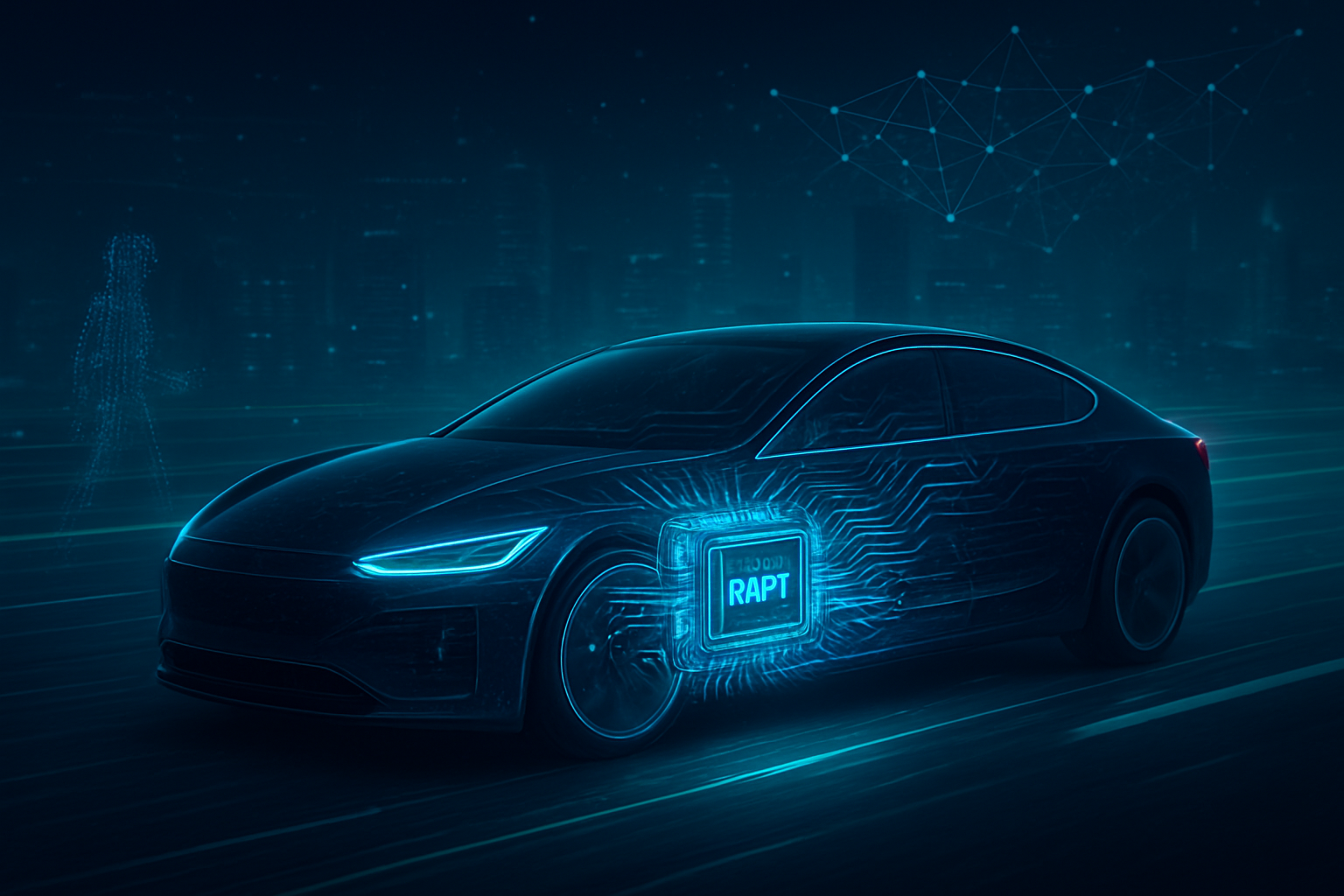
    The automotive industry has officially entered the era of "Silicon Sovereignty." As of early 2026, the battle for electric vehicle (EV) dominance is no longer being fought just on factory floors or battery chemistry labs, but within the nanometer-scale architecture of custom-designed AI chips. Leading this charge is Rivian Automotive (NASDAQ: RIVN), which recently unveiled its groundbreaking Rivian Autonomy Processor 1 (RAP1). This move signals a definitive shift away from off-the-shelf hardware toward vertically integrated, bespoke silicon designed to turn vehicles into high-performance, autonomous "data centers on wheels."

    The announcement of the RAP1 chip, which took place during Rivian’s Autonomy & AI Day in late December 2025, marks a pivotal moment for the company and the broader EV sector. By designing its own AI silicon, Rivian joins an elite group of "tech-first" automakers—including Tesla (NASDAQ: TSLA) and NIO (NYSE: NIO)—that are bypassing traditional semiconductor giants to build hardware optimized specifically for their own software stacks. This development is not merely a technical milestone; it is a strategic maneuver intended to unlock Level 4 autonomy while drastically improving vehicle range through unprecedented power efficiency.

    The technical specifications of the RAP1 chip place it at the absolute vanguard of automotive computing. Manufactured on a cutting-edge 5nm process by TSMC (NYSE: TSM) and utilizing the Armv9 architecture from Arm Holdings (NASDAQ: ARM), the RAP1 features 14 high-performance Cortex-A720AE (Automotive Enhanced) CPU cores. In its flagship configuration, the Autonomy Compute Module 3 (ACM3), Rivian pairs two RAP1 chips to deliver a staggering 1,600 sparse INT8 TOPS (Trillion Operations Per Second). This massive computational headroom is designed to process over 5 billion pixels per second, managing inputs from 11 high-resolution cameras, five radars, and a proprietary long-range LiDAR system simultaneously.

    What truly distinguishes the RAP1 from previous industry standards, such as the Nvidia (NASDAQ: NVDA) Drive Orin, is its focus on "Performance-per-Watt." Rivian claims the RAP1 is 2.5 times more power-efficient than the systems used in its second-generation vehicles. This efficiency is achieved through a specialized "RivLink" low-latency interconnect, which allows the chips to communicate with minimal overhead. The AI research community has noted that while raw TOPS were the metric of 2024, the focus in 2026 has shifted to how much intelligence can be squeezed out of every milliwatt of battery power—a critical factor for maintaining EV range during long autonomous hauls.

    Industry experts have reacted with significant interest to Rivian’s "Large Driving Model" (LDM), an end-to-end AI model that runs natively on the RAP1. Unlike legacy ADAS systems that rely on hand-coded rules, the LDM uses the RAP1’s neural processing units to predict vehicle trajectories based on massive fleet datasets. This vertical integration allows Rivian to optimize its software specifically for the RAP1’s memory bandwidth and cache hierarchy, a level of tuning that is impossible when using general-purpose silicon from third-party vendors.

    The rise of custom automotive silicon is creating a seismic shift in the competitive landscape of the tech and auto industries. For years, Nvidia was the undisputed king of the automotive AI hill, but as companies like Rivian, NIO, and XPeng (NYSE: XPEV) transition to in-house designs, the market for high-end "merchant silicon" is facing localized disruption. While Nvidia remains a dominant force in training the AI models in the cloud, the "inference" at the edge—the actual decision-making inside the car—is increasingly moving to custom chips. This allows automakers to capture more of the value chain and eliminate the "chip tax" paid to external suppliers, with NIO estimating that its custom Shenji NX9031 chip saves the company over $1,300 per vehicle.

    Tesla remains the primary benchmark in this space, with its upcoming AI5 (Hardware 5) expected to begin sampling in early 2026. Tesla’s AI5 is rumored to be up to 40 times more performant than its predecessor, maintaining a fierce rivalry with Rivian’s RAP1 for the title of the most advanced automotive computer. Meanwhile, Chinese giants like Xiaomi (HKG: 1810) are leveraging their expertise in consumer electronics to build "Grand Convergence" platforms, where custom 3nm chips like the XRING O1 unify the car, the smartphone, and the home into a single AI-driven ecosystem.

    This trend provides a significant strategic advantage to companies that can afford the massive R&D costs of chip design. Startups and legacy automakers that lack the scale or technical expertise to design their own silicon may find themselves at a permanent disadvantage, forced to rely on generic hardware that is less efficient and more expensive. For Rivian, the RAP1 is more than a chip; it is a moat that protects its software margins and ensures that its future vehicles, such as the highly anticipated R2, are "future-proofed" for the next decade of AI advancements.

    The broader significance of the RAP1 chip lies in its role as the foundation for the "Data Center on Wheels." Modern EVs are no longer just transportation devices; they are mobile nodes in a global AI network, generating up to 5 terabytes of data per day. The transition to custom silicon allows for a "Zonal Architecture," where a single centralized compute node replaces dozens of smaller, inefficient Electronic Control Units (ECUs). This simplification reduces vehicle weight and complexity, but more importantly, it enables the deployment of Agentic AI—intelligent assistants that can proactively diagnose vehicle health, manage energy consumption, and provide natural language interaction for passengers.

    The move toward Level 4 autonomy—defined as "eyes-off, mind-off" driving in specific environments—is the ultimate goal of this silicon race. By 2026, the industry has largely moved past the "Level 2+" plateau, and the RAP1 hardware provides the necessary redundancy and compute to make Level 4 a reality in geofenced urban and highway environments. However, this progress also brings potential concerns regarding data privacy and cybersecurity. As vehicles become more reliant on centralized AI, the "attack surface" for hackers increases, necessitating the hardware-level security features that Rivian has integrated into the RAP1’s Armv9 architecture.

    Comparatively, the RAP1 represents a milestone similar to Apple’s transition to M-series silicon in its MacBooks. It is a declaration that the most important part of a modern machine is no longer the engine or the chassis, but the silicon that governs its behavior. This shift mirrors the broader AI landscape, where companies like OpenAI and Microsoft are also exploring custom silicon to optimize for specific large language models, proving that specialized hardware is the only way to keep pace with the exponential growth of AI capabilities.

    Looking ahead, the near-term focus for Rivian will be the integration of the RAP1 into the Rivian R2, scheduled for mass production in late 2026. This vehicle is expected to be the first to showcase the full potential of the RAP1’s efficiency, offering advanced Level 3 highway autonomy at a mid-market price point. In the longer term, Rivian’s roadmap points toward 2027 and 2028 for the rollout of true Level 4 features, where the RAP1’s "distributed mesh network" will allow vehicles to share real-time sensor data to "see" around corners and through obstacles.

    The next frontier for automotive silicon will likely involve even tighter integration with generative AI. Experts predict that by 2027, custom chips will include dedicated "Transformer Engines" designed specifically to accelerate the attention mechanisms used in Large Language Models and Vision Transformers. This will enable cars to not only navigate the world but to understand it contextually—recognizing the difference between a child chasing a ball and a pedestrian standing on a sidewalk. The challenge will be managing the thermal output of these massive processors while maintaining the ultra-low latency required for safety-critical driving decisions.

    The unveiling of the Rivian RAP1 chip is a watershed moment in the history of automotive technology. It signifies the end of the era where car companies were simply assemblers of parts and the beginning of an era where they are the architects of the most sophisticated AI hardware on the planet. The RAP1 is a testament to the "data center on wheels" philosophy, proving that the path to Level 4 autonomy and maximum EV efficiency runs directly through custom silicon.

    As we move through 2026, the industry will be watching closely to see how the RAP1 performs in real-world conditions and how quickly Rivian can scale its production. The success of this chip will likely determine Rivian’s standing in the high-stakes EV market and may serve as a blueprint for other manufacturers looking to reclaim their "Silicon Sovereignty." For now, the RAP1 stands as a powerful symbol of the convergence between the automotive and AI industries—a convergence that is fundamentally redefining what it means to drive.


    This content is intended for informational purposes only and represents analysis of current AI developments.

    TokenRing AI delivers enterprise-grade solutions for multi-agent AI workflow orchestration, AI-powered development tools, and seamless remote collaboration platforms.
    For more information, visit https://www.tokenring.ai/.
  • India’s Silicon Ambition: The Tata-ROHM Alliance and the Dawn of a New Semiconductor Powerhouse

    India’s Silicon Ambition: The Tata-ROHM Alliance and the Dawn of a New Semiconductor Powerhouse

    In a move that signals a seismic shift in the global technology landscape, India has officially transitioned from a chip design hub to a manufacturing contender. On December 22, 2025, just days before the dawn of 2026, Tata Electronics and ROHM Co., Ltd. (TYO:6963) announced a landmark strategic partnership to establish a domestic manufacturing framework for power semiconductors. This alliance is not merely a corporate agreement; it is a cornerstone of the 'India Semiconductor Mission' (ISM), aimed at securing a vital position in the global supply chain for electric vehicles (EVs), industrial automation, and the burgeoning AI data center market.

    The partnership focuses on the production of high-efficiency power semiconductors, specifically Silicon MOSFETs and Wide-Bandgap (WBG) materials like Silicon Carbide (SiC) and Gallium Nitride (GaN). By combining ROHM’s world-class device expertise with the industrial might of the Tata Group, the collaboration aims to address the critical shortage of "mature node" chips that have plagued global industries for years. As of January 1, 2026, the first production lines are already being prepared, marking the beginning of a new era where "Made in India" silicon will power the next generation of global infrastructure.

    Technical Mastery: From Silicon MOSFETs to Wide-Bandgap Frontiers

    The collaboration between Tata and ROHM is structured as a phased technological offensive. The immediate priority is the mass production of automotive-grade N-channel 100V, 300A Silicon MOSFETs. These components, housed in advanced Transistor Outline Leadless (TOLL) packages, are engineered for high-current applications where thermal efficiency and power density are paramount. Unlike traditional packaging, the TOLL format significantly reduces board space while enhancing heat dissipation—a critical requirement for the power management systems in modern electric drivetrains.

    Beyond standard silicon, the alliance is a major bet on Wide-Bandgap (WBG) semiconductors. As AI data centers and EVs move toward 800V architectures to handle massive power loads, traditional silicon reaches its physical limits. ROHM, a global pioneer in SiC technology, is transferring critical process knowledge to Tata to enable the localized production of SiC and GaN modules. These materials allow for higher switching frequencies and can operate at significantly higher temperatures than silicon, effectively reducing the energy footprint of AI "factories" and extending the range of EVs. This technical leap differentiates the Tata-ROHM venture from previous attempts at domestic manufacturing, which often focused on lower-value, legacy components.

    The manufacturing will be distributed across two massive hubs: the $11 billion Dholera Fab in Gujarat and the $3.2 billion Jagiroad Outsourced Semiconductor Assembly and Test (OSAT) facility in Assam. While the Dholera plant handles the complex front-end wafer fabrication, the Assam facility—slated to be fully operational by April 2026—will manage the backend assembly and testing of up to 48 million chips per day. This end-to-end integration ensures that India is not just a participant in the assembly process but a master of the entire value chain.

    Disruption in the Power Semiconductor Hierarchy

    The Tata-ROHM alliance is a direct challenge to the established dominance of European and American power semiconductor giants. Companies like Infineon Technologies AG (ETR:IFX), STMicroelectronics N.V. (NYSE:STM), and onsemi (NASDAQ:ON) now face a formidable competitor that possesses a unique "captive customer" advantage. The Tata Group’s vertical integration is its greatest weapon; Tata Motors Limited (NSE:TATAMOTORS), which controls nearly 40% of India’s EV market, provides a guaranteed high-volume demand for these chips, allowing the partnership to scale with a speed that independent manufacturers cannot match.

    Market analysts suggest that this partnership could disrupt the global pricing of SiC and GaN components. By leveraging India’s lower manufacturing costs and the massive 50% fiscal support provided by the Indian government under the ISM, Tata-ROHM can produce high-end power modules at a fraction of the cost of their Western counterparts. This "democratization" of WBG semiconductors is expected to accelerate the adoption of high-efficiency power management in mid-range industrial applications and non-luxury EVs, forcing global leaders to rethink their margin structures and supply chain strategies.

    Furthermore, the alliance serves as a pivotal implementation of the "China Plus One" strategy. Global OEMs are increasingly desperate to diversify their semiconductor sourcing away from East Asian flashpoints. By establishing a robust, high-tech manufacturing hub in India, ROHM is positioning itself as the "local" strategic architect for the Global South, using India as a launchpad to serve markets in Africa, the Middle East, and Southeast Asia.

    The Geopolitical and AI Significance of India's Rise

    The broader significance of this development cannot be overstated. We are currently witnessing the "Green AI" revolution, where the bottleneck for AI advancement is no longer just compute power, but the energy infrastructure required to sustain it. Power semiconductors are the "muscles" of the AI era, managing the electricity flow into the massive GPU clusters that drive large language models. The Tata-ROHM partnership ensures that India is not just a consumer of AI technology but a provider of the essential hardware that makes AI sustainable.

    Geopolitically, this marks India’s entry into the elite club of semiconductor-producing nations. For decades, India’s contribution to the sector was limited to high-end design services. With the Dholera and Jagiroad facilities coming online in 2026, India is effectively insulating itself from global supply shocks. This move mirrors the strategic intent of the US CHIPS Act and China’s "Made in China 2025" initiative, but with a specific focus on the high-growth power and analog sectors rather than the hyper-competitive sub-5nm logic space.

    However, the path is not without its hurdles. The industry community remains cautiously optimistic, noting that while the capital and technology are now in place, India faces a looming talent gap. Estimates suggest the country will need upwards of 300,000 specialized semiconductor professionals by 2027. The success of the Tata-ROHM venture will depend heavily on the rapid upskilling of India’s engineering workforce to handle "clean-room" manufacturing environments, a starkly different challenge from the software-centric expertise the nation is known for.

    The Road Ahead: 2026 and Beyond

    As we look toward the remainder of 2026, the first "Made in India" chips from the Tata-ROHM collaboration are expected to hit the market. In the near term, the focus will remain on stabilizing the production of Silicon MOSFETs for the domestic automotive sector. By 2027, the roadmap shifts toward trial production of SiC wafers at the Dholera fab, a move that will place India at the forefront of the global energy transition.

    Experts predict that by 2030, the Indian semiconductor market will reach a valuation of $110 billion. The Tata-ROHM partnership is the vanguard of this growth, with plans to eventually move into advanced 28nm and 40nm nodes for logic and mixed-signal chips. The ultimate challenge will be maintaining infrastructure stability—specifically the "zero-fluctuation" power and ultra-pure water supplies required for high-yield fabrication—in the face of India’s rapid industrialization.

    A New Chapter in Semiconductor History

    The Tata-ROHM alliance represents more than just a business deal; it is a declaration of industrial independence. By successfully bridging the gap between design and fabrication, India has rewritten its role in the global tech ecosystem. The key takeaways are clear: vertical integration, strategic international partnerships, and aggressive government backing have created a new powerhouse that can compete on both cost and technology.

    In the history of semiconductors, 2026 will likely be remembered as the year the "Silicon Shield" began to extend toward the Indian subcontinent. For the tech industry, the coming months will be defined by how quickly Tata can scale its Assam and Gujarat facilities. If they succeed, the global power semiconductor market will never be the same again. Investors and industry leaders should watch for the first yield reports from the Jagiroad facility in Q2 2026, as they will serve as the litmus test for India’s manufacturing future.


    This content is intended for informational purposes only and represents analysis of current AI and semiconductor developments.

    TokenRing AI delivers enterprise-grade solutions for multi-agent AI workflow orchestration, AI-powered development tools, and seamless remote collaboration platforms.
    For more information, visit https://www.tokenring.ai/.

  • India’s Semiconductor Rise: The Rohm and Tata Partnership

    India’s Semiconductor Rise: The Rohm and Tata Partnership

    In a landmark move that cements India’s position as a burgeoning titan in the global technology supply chain, Rohm Co., Ltd. (TYO: 6963) and Tata Electronics have officially entered into a strategic partnership to establish a domestic semiconductor manufacturing ecosystem. Announced on December 22, 2025, this collaboration focuses on the high-growth sector of power semiconductors—the essential hardware that manages electricity in everything from electric vehicle (EV) drivetrains to the massive data centers powering modern artificial intelligence.

    The partnership represents a critical milestone for the India Semiconductor Mission (ISM), a $10 billion government initiative designed to reduce reliance on foreign imports and build a "China Plus One" alternative for global electronics. By combining Rohm’s decades of expertise in Integrated Device Manufacturing (IDM) with the industrial scale of the Tata Group, the two companies aim to localize the entire value chain—from design and wafer fabrication to advanced packaging and testing—positioning India as a primary node in the global chip architecture.

    Powering the Future: Technical Specifications and the Shift to Wide-Bandgap Materials

    The technical core of the Rohm-Tata partnership centers on the production of advanced power semiconductors, which are significantly more complex to manufacture than standard logic chips. The first product slated for production is an India-designed, automotive-grade N-channel 100V, 300A Silicon MOSFET. This device utilizes a TOLL (Transistor Outline Leadless) package, a specialized form factor that offers superior thermal management and high current density, making it ideal for the demanding power-switching requirements of modern electric drivetrains and industrial automation.

    Beyond traditional silicon, the collaboration is heavily focused on "wide-bandgap" (WBG) materials, specifically Silicon Carbide (SiC) and Gallium Nitride (GaN). Rohm is a recognized global leader in SiC technology, which allows for higher voltage operation and significantly faster switching speeds than traditional silicon. In practical terms, SiC modules can reduce switching losses by up to 85%, a technical leap that is essential for extending the range of EVs and shrinking the footprint of the power inverters used in AI-driven smart grids.

    This approach differs from previous attempts at Indian semiconductor manufacturing by focusing on "specialty" chips rather than just chasing the smallest nanometer nodes. While the industry often focuses on 3nm or 5nm logic chips for CPUs, the power semiconductors being developed by Rohm and Tata are the "muscles" of the digital world. Industry experts note that by securing the supply of these specialized components, India is addressing a critical bottleneck in the global supply chain that was exposed during the shortages of 2021-2022.

    Market Disruption: Tata’s Manufacturing Might Meets Rohm’s Design Prowess

    The strategic implications of this deal for the global market are profound. Tata Electronics, a subsidiary of the storied Tata Group, is leveraging its massive new facilities in Jagiroad, Assam, and Dholera, Gujarat, to provide the backend infrastructure. The Jagiroad Assembly and Test (ATMP) facility, a $3.2 billion investment, has already begun commissioning and is expected to handle the bulk of the Rohm-designed chip packaging. This allows Rohm to scale its production capacity without the massive capital expenditure of building new wholly-owned fabs in Japan or Malaysia.

    For the broader tech ecosystem, the partnership creates a formidable competitor to established players in the power semi space like Infineon and STMicroelectronics. Companies within the Tata umbrella, such as Tata Motors (NSE: TATAMOTORS) and Tata Elxsi (NSE: TATAELXSI), stand to benefit immediately from a localized, secure supply of high-efficiency chips. This vertical integration provides a significant strategic advantage, insulating the Indian automotive and aerospace sectors from geopolitical volatility in the Taiwan Strait or the South China Sea.

    Furthermore, the "Designed in India, Manufactured in India" nature of this partnership qualifies it for the highest tier of government incentives. Under the ISM, the project receives nearly 50% fiscal support for capital expenditure, a level of subsidy that makes the Indian-produced chips highly competitive on the global export market. This cost advantage, combined with Rohm’s reputation for reliability, is expected to attract major global OEMs looking to diversify their supply chains away from East Asian hubs.

    The Geopolitical Shift: India as a Global Semiconductor Hub

    The Rohm-Tata partnership is more than just a corporate deal; it is a manifestation of the "China Plus One" strategy that is reshaping global geopolitics. As the United States and its allies continue to restrict the flow of advanced AI hardware to certain regions, India is positioning itself as a neutral, democratic alternative for high-tech manufacturing. This development fits into a broader trend where India is no longer just a consumer of technology but a critical architect of the hardware that runs it.

    This shift has massive implications for the AI landscape. While much of the public discourse around AI focuses on Large Language Models (LLMs), the physical infrastructure—the data centers and cooling systems—requires sophisticated power management. The SiC and GaN chips produced by this partnership are the very components that make "Green AI" possible by reducing the energy footprint of massive server farms. By localizing this production, India is ensuring that its own AI ambitions are supported by a resilient and efficient hardware foundation.

    The significance of this milestone can be compared to the early days of the IT services boom in India, but with a much higher barrier to entry. Unlike software, semiconductor manufacturing requires extreme precision, stable power, and a highly specialized workforce. The success of the Rohm-Tata venture will serve as a "proof of concept" for other global giants like Intel (NASDAQ: INTC) or TSMC (NYSE: TSM), who are closely watching India’s ability to execute on these complex manufacturing projects.

    The Road Ahead: Fabs, Talent, and the 2026 Horizon

    Looking toward the near future, the next major milestone will be the completion of the Dholera Fab in Gujarat. While initial production is focused on assembly and testing (the "backend"), the Dholera facility is designed for front-end wafer fabrication. Trials are expected to begin in early 2026, with the first commercial wafers in the 28nm to 110nm range slated for late 2026. This will complete the "sand-to-chip" cycle within Indian borders, a feat achieved by only a handful of nations.

    However, challenges remain. The industry faces a significant talent gap, requiring thousands of specialized engineers to operate these facilities. To address this, Tata and Rohm are expected to launch joint training programs and university partnerships across India. Additionally, the infrastructure in Dholera and Jagiroad—including ultra-pure water supplies and uninterrupted green energy—must be maintained at world-class standards to ensure the high yields necessary for semiconductor profitability.

    Experts predict that if the Rohm-Tata partnership meets its 2026 targets, India could become a net exporter of power semiconductors by 2028. This would not only balance India’s trade deficit in electronics but also provide the country with significant "silicon diplomacy" leverage on the world stage, as global industries become increasingly dependent on Indian-made SiC and GaN modules.

    Conclusion: A New Chapter in the Silicon Century

    The partnership between Rohm and Tata Electronics marks a definitive turning point in India’s industrial history. By focusing on the high-efficiency power semiconductors that are essential for the AI and EV eras, the collaboration bypasses the "commodity chip" trap and moves straight into high-value, high-complexity manufacturing. The support of the India Semiconductor Mission has provided the necessary financial tailwinds, but the real test will be the operational execution over the next 18 months.

    As we move into 2026, the tech world will be watching the Jagiroad and Dholera facilities closely. The success of these sites will determine if India can truly sustain a semiconductor ecosystem that rivals the established hubs of East Asia. For now, the Rohm-Tata alliance stands as a bold statement of intent: the future of the global chip supply chain is no longer just about where the chips are designed, but where the power to run the future is built.


    This content is intended for informational purposes only and represents analysis of current AI and semiconductor developments.

    TokenRing AI delivers enterprise-grade solutions for multi-agent AI workflow orchestration, AI-powered development tools, and seamless remote collaboration platforms.
    For more information, visit https://www.tokenring.ai/.

  • The Silicon Brain: How Specialized Chipsets Are Driving Automotive’s Intelligent Revolution

    The Silicon Brain: How Specialized Chipsets Are Driving Automotive’s Intelligent Revolution

    The automotive industry is undergoing a profound transformation, rapidly evolving from a mechanical domain into a sophisticated, software-defined ecosystem where vehicles function as "computers on wheels." At the heart of this revolution lies the escalating integration of specialized chipsets. These advanced semiconductors are no longer mere components but the central nervous system of modern automobiles, enabling a vast array of innovations in safety, performance, connectivity, and user experience. The immediate significance of this trend is its critical role in facilitating next-generation automotive technologies, from extending the range and safety of electric vehicles to making autonomous driving a reality and delivering immersive in-car digital experiences. The increasing demand for these highly reliable and robust semiconductor components highlights their pivotal role in defining the future landscape of mobility, with the global automotive chip market projected for substantial growth in the coming years.

    The Micro-Engineers Behind Automotive Innovation

    The push for smarter, safer, and more connected vehicles has necessitated a departure from general-purpose computing in favor of highly specialized silicon. These purpose-built chipsets are designed to manage the immense data flows and complex algorithms required for cutting-edge automotive functions.

    In Battery Management Systems (BMS) for electric vehicles (EVs), specialized chipsets are indispensable for safe, efficient, and optimized operation. Acting as a "battery nanny," BMS chips meticulously monitor and control rechargeable batteries, performing crucial functions such as precise voltage and current monitoring, temperature sensing, and estimation of the battery's state of charge (SOC) and state of health (SOH). They also manage cell balancing, vital for extending battery life and overall pack performance. These chips enable critical safety features by detecting faults and protecting against overcharge, over-discharge, and thermal runaway. Companies like NXP Semiconductors (NASDAQ: NXPI) and Infineon (XTRA: IFX) are developing advanced BMS chipsets that integrate monitoring, balancing, and protection functionalities, supporting high-voltage applications and meeting stringent safety standards up to ASIL-D.

    Autonomous driving (AD) technology is fundamentally powered by highly specialized AI chips, which serve as the "brain" orchestrating complex real-time operations. These processors handle the massive amounts of data generated by various sensors—cameras, LiDAR, radar, and ultrasound—enabling vehicles to perceive their environment accurately. Specialized AI chips are crucial for processing these inputs, performing sensor fusion, and executing complex AI algorithms for object detection, path planning, and real-time decision-making. For higher levels of autonomy (Level 3 to Level 5), the demand for processing power intensifies, necessitating advanced System-on-Chip (SoC) architectures that integrate AI accelerators, GPUs, and CPUs. Key players include NVIDIA (NASDAQ: NVDA) with its Thor and Orin platforms, Mobileye (NASDAQ: MBLY) with its EyeQ Ultra, Qualcomm (NASDAQ: QCOM) with Snapdragon Ride, and even automakers like Tesla (NASDAQ: TSLA), which designs its custom FSD hardware.

    For in-car entertainment (ICE) and infotainment systems, specialized chipsets play a pivotal role in creating a personalized and connected driving experience. Automotive infotainment SoCs are specifically engineered for managing display audio, navigation, and various in-cabin applications. These chipsets facilitate features such as enhanced connectivity, in-vehicle GPS with real-time mapping, multimedia playback, and intuitive user interfaces. They enable seamless smartphone integration, voice command recognition, and access to digital services. The demand for fast boot times and immediate wake-up from sleep mode is a crucial consideration, ensuring a responsive and user-friendly experience. Manufacturers like STMicroelectronics (NYSE: STM) and MediaTek (TPE: 2454) provide cutting-edge chipsets that power these advanced entertainment and connectivity features.

    Corporate Chessboard: Beneficiaries and Disruptors

    The increasing importance of specialized automotive chipsets is profoundly reshaping the landscape for AI companies, tech giants, and startups, driving innovation, fierce competition, and significant strategic shifts across the industry.

    AI chip startups are at the forefront of designing purpose-built hardware for AI workloads. Companies like Groq, Cerebras Systems, Blaize, and Hailo are developing specialized processors optimized for speed, efficiency, and specific AI models, including transformers essential for large language models (LLMs). These innovations are enabling generative AI capabilities to run directly on edge devices like automotive infotainment systems. Simultaneously, tech giants are leveraging their resources to develop custom silicon and secure supply chains. NVIDIA (NASDAQ: NVDA) remains a leader in AI computing, expanding its influence in automotive AI. AMD (NASDAQ: AMD), with its acquisition of Xilinx, offers FPGA solutions and CPU processors for edge computing. Intel (NASDAQ: INTC), through its Intel Foundry services, is poised to benefit from increased chip demand. Hyperscale cloud providers like Google (NASDAQ: GOOGL), Microsoft (NASDAQ: MSFT), and Amazon (NASDAQ: AMZN) are also developing custom ASICs (e.g., Google's TPUs) to optimize their cloud AI workloads, reduce operational costs, and offer differentiated AI services. Samsung (KRX: 005930) benefits from its foundry business, exemplified by its deal to produce Tesla's next-generation AI6 automotive chips.

    Automotive OEMs are embracing vertical integration or collaboration. Tesla (NASDAQ: TSLA) designs its own chips and controls its hardware and software stack, offering streamlined development and better performance. European OEMs like Stellantis (NYSE: STLA), Mercedes-Benz (ETR: MBG), and Volkswagen (OTC: VWAGY) are adopting collaborative, platform-centric approaches to accelerate the development of software-defined vehicles (SDVs). Traditional automotive suppliers like NXP Semiconductors (NASDAQ: NXPI) and Bosch are also actively developing AI-driven solutions for automated driving and electrification. Crucially, TSMC (NYSE: TSM), as the world's largest outsourced semiconductor foundry, is a primary beneficiary, manufacturing high-end AI chipsets for major tech companies.

    This intense competition is driving a "AI chip arms race," leading to diversification of hardware supply chains, where major AI labs seek to reduce reliance on single-source suppliers. Tech giants are pursuing strategic independence through custom silicon, disrupting traditional cloud AI services. Chipmakers are evolving from mere hardware suppliers to comprehensive solution providers, expanding their software capabilities. The rise of specialized chipsets is also disrupting the traditional automotive business model, shifting towards revenue generation from software upgrades and services delivered via over-the-air (OTA) updates. This redefines power dynamics, potentially elevating tech giants while challenging traditional car manufacturers to adapt or risk being relegated to hardware suppliers.

    Beyond the Dashboard: Wider Significance and Concerns

    The integration of specialized automotive chipsets is a microcosm of a broader "AI supercycle" that is reshaping the semiconductor industry and the entire technological landscape. This trend signifies a diversification and customization of AI chips, driven by the imperative for enhanced performance, greater energy efficiency, and the widespread enablement of edge computing. This "hardware renaissance" is making advanced AI more accessible, sustainable, and powerful across various sectors, with the global AI chip market projected to reach $460.9 billion by 2034.

    Beyond the automotive sector, these advancements are driving industrial transformation in healthcare, robotics, natural language processing, and scientific research. The demand for low-power, high-efficiency NPUs, initially propelled by automotive needs, is transforming other edge AI devices like industrial robotics, smart cameras, and AI-enabled PCs. This enables real-time decision-making, enhanced privacy, and reduced reliance on cloud resources. The semiconductor industry is evolving, with players shifting from hardware suppliers to solution providers. The increased reliance on specialized chipsets is also part of a larger trend towards software-defined everything, meaning more functionality is determined by software running on powerful, specialized hardware, opening new avenues for updates, customization, and new business models. Furthermore, the push for energy-efficient chips in automotive applications translates into broader efforts to reduce the significant energy demands of AI workloads.

    However, this rapid evolution brings potential concerns. The reliance on specialized chipsets exacerbates existing supply chain vulnerabilities, as evidenced by past chip shortages that caused production delays. The high development and manufacturing costs of cutting-edge AI chips pose a significant barrier, potentially concentrating power among a few large corporations and driving up vehicle costs. Ethical implications include data privacy and security, as AI chipsets gather vast amounts of vehicular data. The transparency of AI decision-making in autonomous vehicles is crucial for accountability. There are also concerns about potential job displacement due to automation and the risk of algorithmic bias if training data is flawed. The complexity of integrating diverse specialized chips can lead to hardware fragmentation and interoperability challenges.

    Compared to previous AI milestones, the current trend of specialized automotive chipsets represents a further refinement beyond the shift from CPUs to GPUs for AI workloads. It signifies a move to even more tailored solutions like ASICs and NPUs, analogous to how AI's specialized demands moved beyond general-purpose CPUs and now beyond general-purpose GPUs to achieve optimal performance and efficiency, especially with the rise of generative AI. This "hardware renaissance" is not just making existing AI faster but fundamentally expanding what AI can achieve, paving the way for more powerful, pervasive, and sustainable intelligent systems.

    The Road Ahead: Future Developments

    The future of specialized automotive chipsets is characterized by unprecedented growth and innovation, fundamentally reshaping vehicles into intelligent, connected, and autonomous systems.

    In the near term (next 1-5 years), we can expect enhanced ADAS capabilities, driven by chips that process real-time sensor data more effectively. The integration of 5G-capable chipsets will become essential for Vehicle-to-Everything (V2X) communication and edge computing, ensuring faster and safer decision-making. AI and machine learning integration will deepen, requiring more sophisticated processing units for object detection, movement prediction, and traffic management. For EVs, power management innovations will focus on maximizing energy efficiency and optimizing battery performance. We will also see a rise in heterogeneous systems and chiplet technology to manage increasing complexity and performance demands.

    Long-term advancements (beyond 5 years) will push towards higher levels of autonomous driving (L4/L5), demanding exponentially faster and more capable chips, potentially rivaling today's supercomputers. Neuromorphic chips, designed to mimic the human brain, offer real-time decision-making with significantly lower power consumption, ideal for self-driving cars. Advanced in-cabin user experiences will include augmented reality (AR) heads-up displays, sophisticated in-car gaming, and advanced conversational voice interfaces powered by LLMs. Breakthroughs are anticipated in new materials like graphene and wide bandgap semiconductors (SiC, GaN) for power electronics. The concept of Software-Defined Vehicles (SDVs) will fully mature, where vehicle controls are primarily managed by software, offering continuous updates and customizable experiences.

    These chipsets will enable a wide array of applications, from advanced sensor fusion for autonomous driving to enhanced V2X connectivity for intelligent traffic management. They will power sophisticated infotainment systems, optimize electric powertrains, and enhance active safety systems.

    However, significant challenges remain. The immense complexity of modern vehicles, with over 100 Electronic Control Units (ECUs) and millions of lines of code, makes verification and integration difficult. Security is a growing concern as connected vehicles present a larger attack surface for cyber threats, necessitating robust encryption and continuous monitoring. A lack of unified standardization for rapidly changing automotive systems, especially concerning cybersecurity, poses difficulties. Supply chain resilience remains a critical issue, pushing automakers towards vertical integration or long-term partnerships. The high R&D investment for new chips, coupled with relatively smaller automotive market volumes compared to consumer electronics, also presents a challenge.

    Experts predict significant market growth, with the automotive semiconductor market forecast to double to $132 billion by 2030. The average semiconductor content per vehicle is expected to grow, with EVs requiring three times more semiconductors than internal combustion engine (ICE) vehicles. The shift to software-defined platforms and the mainstreaming of Level 2 automation are also key predictions.

    The Intelligent Journey: A Comprehensive Wrap-Up

    The rapid evolution of specialized automotive chipsets stands as a pivotal development in the ongoing transformation of the automotive industry, heralding an era of unprecedented innovation in vehicle intelligence, safety, and connectivity. These advanced silicon solutions are no longer mere components but the "digital heart" of modern vehicles, underpinning a future where cars are increasingly smart, autonomous, and integrated into a broader digital ecosystem.

    The key takeaway is that specialized chipsets are indispensable for enabling advanced driver-assistance systems, fully autonomous driving, sophisticated in-vehicle infotainment, and seamless connected car ecosystems. The market is experiencing robust growth, driven by the increasing deployment of autonomous and semi-autonomous vehicles and the imperative for real-time data processing. This progression showcases AI's transition from theoretical concepts to becoming an embedded, indispensable component of safety-critical and highly complex machines.

    The long-term impact will be profound, fundamentally redefining personal and public transportation. We can anticipate transformative mobility through safer roads and more efficient traffic management, with SDVs becoming the standard, allowing for continuous OTA updates and personalized experiences. This will drive significant economic shifts and further strategic partnerships within the automotive supply chain. Continuous innovation in energy-efficient AI processors and neuromorphic computing will be crucial, alongside the development of robust ethical guidelines and harmonized regulatory standards.

    In the coming weeks and months, watch for continued advancements in chiplet technology, increased NPU integration for advanced AI tasks, and enhanced edge AI capabilities to minimize latency. Strategic collaborations between automakers and semiconductor companies will intensify to fortify supply chains. Keep an eye on progress towards higher levels of autonomy and the wider adoption of 5G and V2X communication, which will collectively underscore the foundational role of specialized automotive chipsets in driving the next wave of automotive innovation.


    This content is intended for informational purposes only and represents analysis of current AI developments.

    TokenRing AI delivers enterprise-grade solutions for multi-agent AI workflow orchestration, AI-powered development tools, and seamless remote collaboration platforms.
    For more information, visit https://www.tokenring.ai/.