Tag: Export Restrictions

  • Nvidia’s Blackwell AI Chips Caught in Geopolitical Crossfire: China Export Ban Reshapes Global AI Landscape

    Nvidia's (NASDAQ: NVDA) latest and most powerful Blackwell AI chips, unveiled in March 2024, are poised to revolutionize artificial intelligence computing. However, their global rollout has been immediately overshadowed by stringent U.S. export restrictions, preventing their sale to China. This decision, reinforced by Nvidia CEO Jensen Huang's recent confirmation of no plans to ship Blackwell chips to China, underscores the escalating geopolitical tensions and their profound impact on the AI chip supply chain and the future of AI development worldwide. This development marks a pivotal moment, forcing a global recalibration of strategies for AI innovation and deployment.

    Unprecedented Power Meets Geopolitical Reality: The Blackwell Architecture

    Nvidia's Blackwell AI chip architecture, comprising the B100, B200, and the multi-chip GB200 Superchip and NVL72 system, represents a significant leap forward in AI and accelerated computing, pushing beyond the capabilities of the preceding Hopper architecture (H100). Announced at GTC 2024 and named after mathematician David Blackwell, the architecture is specifically engineered to handle the massive demands of generative AI and large language models (LLMs).

    Blackwell GPUs, such as the B200, boast a staggering 208 billion transistors, more than 2.5 times the 80 billion in Hopper H100 GPUs. This massive increase in density is achieved through a dual-die design, where two reticle-sized dies are integrated into a single, unified GPU, connected by a 10 TB/s chip-to-chip interconnect (NV-HBI). Manufactured using a custom-built TSMC 4NP process, Blackwell chips offer unparalleled performance. The B200, for instance, delivers up to 20 petaFLOPS (PFLOPS) of FP4 AI compute, approximately 10 PFLOPS for FP8/FP6 Tensor Core operations, and roughly 5 PFLOPS for FP16/BF16. This is a substantial jump from the H100's maximum of 4 petaFLOPS of FP8 AI compute, translating to up to 4.5 times faster training and 15 times faster inference for trillion-parameter LLMs. Each B200 GPU is equipped with 192GB of HBM3e memory, providing a memory bandwidth of up to 8 TB/s, a significant increase over the H100's 80GB HBM3 with 3.35 TB/s bandwidth.

    A cornerstone of Blackwell's advancement is its second-generation Transformer Engine, which introduces native support for 4-bit floating point (FP4) AI, along with new Open Compute Project (OCP) community-defined MXFP6 and MXFP4 microscaling formats. This doubles the performance and size of next-generation models that memory can support while maintaining high accuracy. Furthermore, Blackwell introduces a fifth-generation NVLink, significantly boosting data transfer with 1.8 TB/s of bidirectional bandwidth per GPU, double that of Hopper's NVLink 4, and enabling model parallelism across up to 576 GPUs. Beyond raw power, Blackwell also offers up to 25 times lower energy per inference, addressing the growing energy consumption challenges of large-scale LLMs, and includes Nvidia Confidential Computing for hardware-based security.

    Initial reactions from the AI research community and industry experts have been overwhelmingly positive, characterized by immense excitement and record-breaking demand. CEOs from major tech companies like Google (NASDAQ: GOOGL), Meta (NASDAQ: META), Microsoft (NASDAQ: MSFT), OpenAI, and Oracle (NYSE: ORCL) have publicly endorsed Blackwell's capabilities, with demand described as "insane" and orders reportedly sold out for the next 12 months. Experts view Blackwell as a revolutionary leap, indispensable for advancing generative AI and enabling the training and inference of trillion-parameter LLMs with ease. However, this enthusiasm is tempered by the geopolitical reality that these groundbreaking chips will not be made available to China, a significant market for AI hardware.

    A Divided Market: Impact on AI Companies and Tech Giants

    The U.S. export restrictions on Nvidia's Blackwell AI chips have created a bifurcated global AI ecosystem, significantly reshaping the competitive landscape for AI companies, tech giants, and startups worldwide.

    Nvidia, outside of China, stands to solidify its dominance in the high-end AI market. The immense global demand from hyperscalers like Microsoft, Amazon (NASDAQ: AMZN), Google, and Meta ensures strong revenue growth, with projections of exceeding $200 billion in revenue from Blackwell this year and potentially reaching a $5 trillion market capitalization. However, Nvidia faces a substantial loss of market share and revenue opportunities in China, a market that accounted for 17% of its revenue in fiscal 2025. CEO Jensen Huang has confirmed the company currently holds "zero share in China's highly competitive market for data center compute" for advanced AI chips, down from 95% in 2022. The company is reportedly redesigning chips like the B30A in hopes of meeting future U.S. export conditions, but approval remains uncertain.

    U.S. tech giants such as Google, Microsoft, Meta, and Amazon are early adopters of Blackwell, integrating them into their AI infrastructure to power advanced applications and data centers. Blackwell chips enable them to train larger, more complex AI models more quickly and efficiently, enhancing their AI capabilities and product offerings. These companies are also actively developing custom AI chips (e.g., Google's TPUs, Amazon's Trainium/Inferentia, Meta's MTIA, Microsoft's Maia) to reduce dependence on Nvidia, optimize performance, and control their AI infrastructure. While benefiting from access to cutting-edge hardware, initial deployments of Blackwell GB200 racks have reportedly faced issues like overheating and connectivity problems, leading some major customers to delay orders or opt for older Hopper chips while waiting for revised versions.

    For other non-Chinese chipmakers like Advanced Micro Devices (NASDAQ: AMD), Intel (NASDAQ: INTC), Broadcom (NASDAQ: AVGO), and Cerebras Systems, the restrictions create a vacuum in the Chinese market, offering opportunities to step in with compliant alternatives. AMD, with its Instinct MI300X series, and Intel, with its Gaudi accelerators, offer a unique approach for large-scale AI training. The overall high-performance AI chip market is experiencing explosive growth, projected to reach $150 billion in 2025.

    Conversely, Chinese tech giants like Alibaba (NYSE: BABA), Baidu (NASDAQ: BIDU), and Tencent (HKG: 0700) face significant hurdles. The U.S. export restrictions severely limit their access to cutting-edge AI hardware, potentially slowing their AI development and global competitiveness. Alibaba, for instance, canceled a planned spin-off of its cloud computing unit due to uncertainties caused by the restrictions. In response, these companies are vigorously developing and integrating their own in-house AI chips. Huawei, with its Ascend AI processors, is seeing increased demand from Chinese state-owned telecoms. While Chinese domestic chips still lag behind Nvidia's products in performance and software ecosystem support, the performance gap is closing for certain tasks, and China's strategy focuses on making domestic chips economically competitive through generous energy subsidies.

    A Geopolitical Chessboard: Wider Significance and Global Implications

    The introduction of Nvidia's Blackwell AI chips, juxtaposed with the stringent U.S. export restrictions preventing their sale to China, marks a profound inflection point in the broader AI landscape. This situation is not merely a commercial challenge but a full-blown geopolitical chessboard, intensifying the tech rivalry between the two superpowers and fundamentally reshaping the future of AI innovation and deployment.

    Blackwell's capabilities are integral to the current "AI super cycle," driving unprecedented advancements in generative AI, large language models, and scientific computing. Nations and companies with access to these chips are poised to accelerate breakthroughs in these fields, with Nvidia's "one-year rhythm" for new chip releases aiming to maintain this performance lead. However, the U.S. government's tightening grip on advanced AI chip exports, citing national security concerns to prevent their use for military applications and human rights abuses, has transformed the global AI race. The ban on Blackwell, following earlier restrictions on chips like the A100 and H100 (and their toned-down variants like A800 and H800), underscores a strategic pivot where technological dominance is inextricably linked to national security. The Biden administration's "Framework for Artificial Intelligence Diffusion" further solidifies this tiered system for global AI-relevant semiconductor trade, with China facing the most stringent limitations.

    China's response has been equally assertive, accelerating its aggressive push toward technological self-sufficiency. Beijing has mandated that all new state-funded data center projects must exclusively use domestically produced AI chips, even requiring projects less than 30% complete to remove foreign chips or cancel orders. This directive, coupled with significant energy subsidies for data centers using domestic chips, is one of China's most aggressive steps toward AI chip independence. This dynamic is fostering a bifurcated global AI ecosystem, where advanced capabilities are concentrated in certain regions, and restricted access prevails in others. This "dual-core structure" risks undermining international research and regulatory cooperation, forcing development practitioners to choose sides, and potentially leading to an "AI Cold War."

    The economic implications are substantial. While the U.S. aims to maintain its technological advantage, overly stringent controls could impair the global competitiveness of U.S. chipmakers by shrinking global market share and incentivizing China to develop its own products entirely free of U.S. technology. Nvidia's market share in China's AI chip segment has reportedly collapsed, yet the insatiable demand for AI chips outside China means Nvidia's Blackwell production is largely sold out. This period is often compared to an "AI Sputnik moment," evoking Cold War anxiety about falling behind. Unlike previous tech milestones, where innovation was primarily merit-based, access to compute and algorithms now increasingly depends on geopolitical alignment, signifying that infrastructure is no longer neutral but ideological.

    The Horizon: Future Developments and Enduring Challenges

    The future of AI chip technology and market dynamics will be profoundly shaped by the continued evolution of Nvidia's Blackwell chips and the enduring impact of China export restrictions.

    In the near term (late 2024 – 2025), the first Blackwell chip, the GB200, is expected to ship, with consumer-focused RTX 50-series GPUs anticipated to launch in early 2025. Nvidia also unveiled Blackwell Ultra in March 2025, featuring enhanced systems like the GB300 NVL72 and HGX B300 NVL16, designed to further boost AI reasoning and HPC. Benchmarks consistently show Blackwell GPUs outperforming Hopper-class GPUs by factors of four to thirty for various LLM workloads, underscoring their immediate impact. Long-term (beyond 2025), Nvidia's roadmap includes a successor to Blackwell, codenamed "Rubin," indicating a continuous two-year cycle of major architectural updates that will push boundaries in transistor density, memory bandwidth, and specialized cores. Deeper integration with HPC and quantum computing, alongside relentless focus on energy efficiency, will also define future chip generations.

    The U.S. export restrictions will continue to dictate Nvidia's strategy for the Chinese market. While Nvidia previously designed "downgraded" chips (like the H20 and reportedly the B30A) to comply, even these variants face intense scrutiny. The U.S. government is expected to maintain and potentially tighten restrictions, ensuring its most advanced chips are reserved for domestic use. China, in turn, will double down on its domestic chip mandate and continue offering significant subsidies to boost its homegrown semiconductor industry. While Chinese-made chips currently lag in performance and energy efficiency, the performance gap is slowly closing for certain tasks, fostering a distinct and self-sufficient Chinese AI ecosystem.

    The broader AI chip market is projected for substantial growth, from approximately $52.92 billion in 2024 to potentially over $200 billion by 2030, driven by the rapid adoption of AI and increasing investment in semiconductors. Nvidia will likely maintain its dominance in high-end AI outside China, but competition from AMD's Instinct MI300X series, Intel's Gaudi accelerators, and hyperscalers' custom ASICs (e.g., Google's Trillium) will intensify. These custom chips are expected to capture over 40% of the market share by 2030, as tech giants seek optimization and reduced reliance on external suppliers. Blackwell's enhanced capabilities will unlock more sophisticated applications in generative AI, agentic and physical AI, healthcare, finance, manufacturing, transportation, and edge AI, enabling more complex models and real-time decision-making.

    However, significant challenges persist. The supply chain for advanced nodes and high-bandwidth memory (HBM) remains capital-intensive and supply-constrained, exacerbated by geopolitical risks and potential raw material shortages. The US-China tech war will continue to create a bifurcated global AI ecosystem, forcing companies to recalibrate strategies and potentially develop different products for different markets. Power consumption of large AI models and powerful chips remains a significant concern, pushing for greater energy efficiency. Experts predict a continued GPU dominance for training but a rising share for ASICs, coupled with expansion in edge AI and increased diversification and localization of chip manufacturing to mitigate supply chain risks.

    A New Era of AI: The Long View

    Nvidia's Blackwell AI chips represent a monumental technological achievement, driving the capabilities of AI to unprecedented heights. However, their story is inextricably linked to the U.S. export restrictions to China, which have fundamentally altered the landscape, transforming a technological race into a geopolitical one. This development marks an "irreversible bifurcation of the global AI ecosystem," where access to cutting-edge compute is increasingly a matter of national policy rather than purely commercial availability.

    The significance of this moment in AI history cannot be overstated. It underscores a strategic shift where national security and technological leadership take precedence over free trade, turning semiconductors into critical strategic resources. While Nvidia faces immediate revenue losses from the Chinese market, its innovation leadership and strong demand from other global players ensure its continued dominance in the AI hardware sector. For China, the ban accelerates its aggressive pursuit of technological self-sufficiency, fostering a distinct domestic AI chip industry that will inevitably reshape global supply chains. The long-term impact will be a more fragmented global AI landscape, influencing innovation trajectories, research partnerships, and the competitive dynamics for decades to come.

    In the coming weeks and months, several key areas will warrant close attention:

    • Nvidia's Strategy for China: Observe any further attempts by Nvidia to develop and gain approval for less powerful, export-compliant chip variants for the Chinese market, and assess their market reception if approved. CEO Jensen Huang has expressed optimism about eventually returning to the Chinese market, but also stated it's "up to China" when they would like Nvidia products back.
    • China's Indigenous AI Chip Progress: Monitor the pace and scale of advancements by Chinese semiconductor companies like Huawei in developing high-performance AI chips. The effectiveness and strictness of Beijing's mandate for domestic chip use in state-funded data centers will be crucial indicators of China's self-sufficiency efforts.
    • Evolution of US Export Policy: Watch for any potential expansion of US export restrictions to cover older generations of AI chips or a tightening of existing controls, which could further impact the global AI supply chain.
    • Global Supply Chain Realignment: Observe how international AI research partnerships and global supply chains continue to shift in response to this technological decoupling. This will include monitoring investment trends in AI infrastructure outside of China.
    • Competitive Landscape: Keep an eye on Nvidia's competitors, such as AMD's anticipated MI450 series GPUs in 2026 and Broadcom's growing AI chip revenue, as well as the increasing trend of hyperscalers developing their own custom AI silicon. This intensified competition, coupled with geopolitical pressures, could further fragment the AI hardware market.

    This content is intended for informational purposes only and represents analysis of current AI developments.

    TokenRing AI delivers enterprise-grade solutions for multi-agent AI workflow orchestration, AI-powered development tools, and seamless remote collaboration platforms.
    For more information, visit https://www.tokenring.ai/.
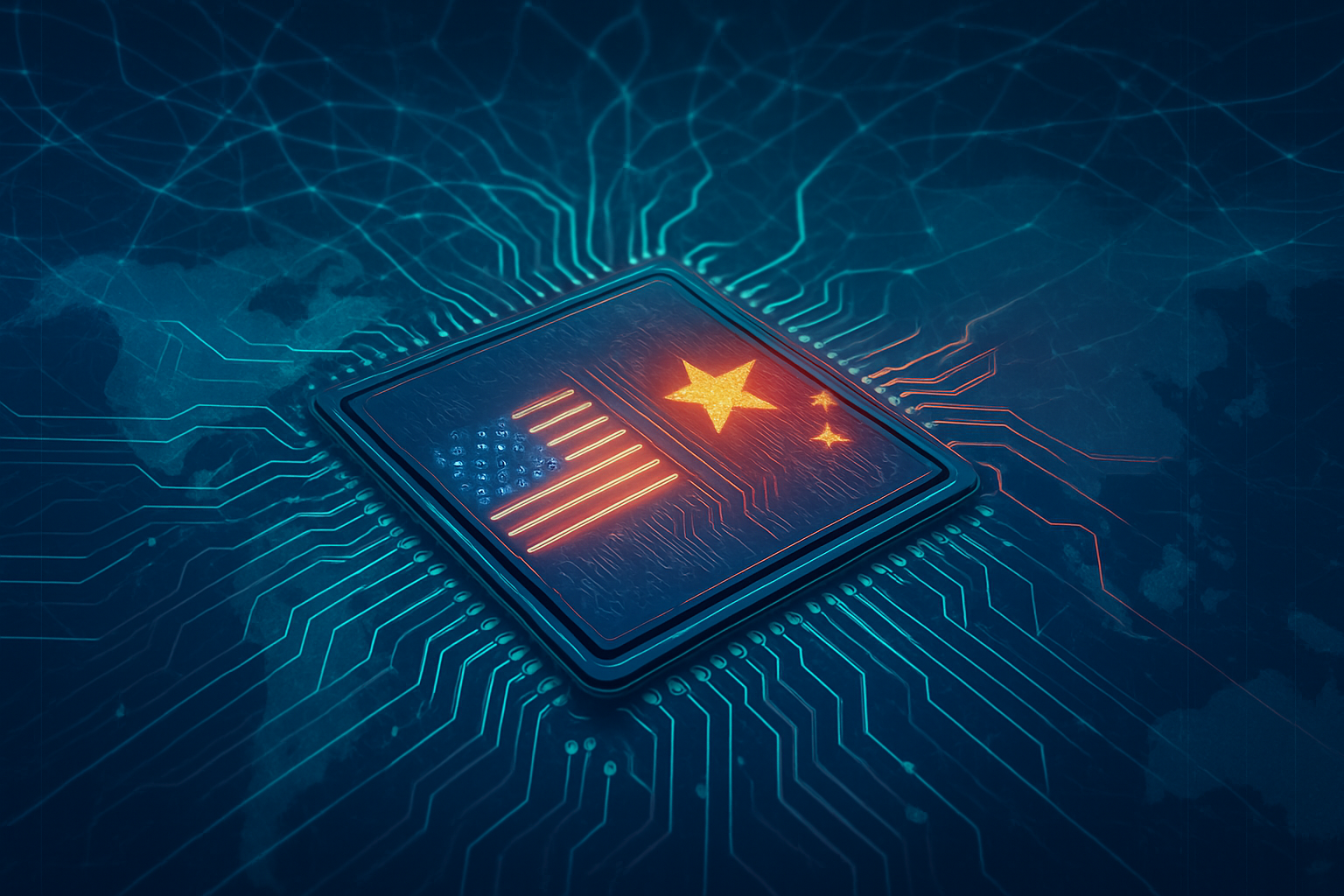
  • The Silicon Curtain Descends: Nvidia’s China Exodus and the Reshaping of Global AI

    October 21, 2025 – The global artificial intelligence landscape is undergoing a seismic shift, epitomized by the dramatic decline of Nvidia's (NASDAQ: NVDA) market share in China's advanced AI chip sector. This precipitous fall, from a dominant 95% to effectively zero, is a direct consequence of the United States' progressively stringent AI chip export restrictions to China. The implications extend far beyond Nvidia's balance sheet, signaling a profound technological decoupling, intensifying the race for AI supremacy, and forcing a re-evaluation of global supply chains and innovation pathways.

    This strategic maneuver by the U.S. government, initially aimed at curbing China's military and surveillance capabilities, has inadvertently catalyzed China's drive for technological self-reliance, creating a bifurcated AI ecosystem that promises to redefine the future of artificial intelligence.

    The Escalating Technical Battle: From A100 to H20 and Beyond

    The U.S. government's export controls on advanced AI chips have evolved through several iterations, each more restrictive than the last. Initially, in October 2022, the ban targeted Nvidia's most powerful GPUs, the A100 and H100, which are essential for high-performance computing and large-scale AI model training. In response, Nvidia developed "China-compliant" versions with reduced capabilities, such as the A800 and H800.

    However, updated restrictions in October 2023 swiftly closed these loopholes, banning the A800 and H800 as well. This forced Nvidia to innovate further, leading to the creation of a new series of chips specifically designed to meet the tightened performance thresholds. The most notable of these was the Nvidia H20, a derivative of the H100 built on the Hopper architecture. The H20 featured 96GB of HBM3 memory with a bandwidth of 4.0 TB/s and an NVLink bandwidth of 900GB/s. While its raw mixed-precision compute power (296 TeraFLOPS) was significantly lower than the H100 (~2,000 TFLOPS FP8), it was optimized for certain large language model (LLM) inference tasks, leveraging its substantial memory bandwidth. Other compliant chips included the Nvidia L20 PCIe and Nvidia L2 PCIe, based on the Ada Lovelace architecture, with specifications adjusted to meet regulatory limits.

    Despite these efforts, a critical escalation occurred in April 2025 when the U.S. government banned the export of Nvidia's H20 chips to China indefinitely, requiring a special license for any shipments. This decision stemmed from concerns that even these reduced-capability chips could still be diverted for use in Chinese supercomputers with potential military applications. Further policy shifts, such as the January 2025 AI Diffusion Policy, designated China as a "Tier 3 nation," effectively barring it from receiving advanced AI technology. This progressive tightening demonstrates a policy shift from merely limiting performance to outright blocking chips perceived to pose a national security risk.

    Initial reactions from the AI research community and industry experts have been largely one of concern. Nvidia CEO Jensen Huang publicly stated that the company's market share in China's advanced AI chip segment has plummeted from an estimated 95% to effectively zero, anticipating a $5.5 billion hit in 2025 from H20 export restrictions alone. Experts widely agree that these restrictions are inadvertently accelerating China's efforts to develop its own domestic AI chip alternatives, potentially weakening U.S. technological leadership in the long run. Jensen Huang has openly criticized the U.S. policies as "counterproductive" and a "failure," arguing that they harm American innovation and economic interests by ceding a massive market to competitors.

    Reshaping the Competitive Landscape: Winners and Losers in the AI Chip War

    The updated U.S. AI chip export restrictions have profoundly reshaped the global technology landscape, creating significant challenges for American chipmakers while fostering unprecedented opportunities for domestic Chinese firms and alternative global suppliers.

    Chinese AI companies, tech giants like Alibaba (NYSE: BABA), and startups face severe bottlenecks, hindering their AI development and deployment. This has forced a strategic pivot towards self-reliance and innovation with less advanced hardware. Firms are now focusing on optimizing algorithms to run efficiently on older or domestically produced hardware, exemplified by companies like DeepSeek, which are building powerful AI models at lower costs. Tencent Cloud (HKG: 0700) and Baidu (NASDAQ: BIDU) are actively adapting their computing platforms to support mainstream domestic chips and utilizing in-house developed processors.

    The vacuum left by Nvidia in China has created a massive opportunity for domestic Chinese AI chip manufacturers. Huawei, despite being a primary target of U.S. sanctions, has shown remarkable resilience, aggressively pushing its Ascend series of AI processors (e.g., Ascend 910B, 910C). Huawei is expected to ship approximately 700,000 Ascend AI processors in 2025, leveraging advancements in clustering and manufacturing. Other Chinese firms like Cambricon (SSE: 688256) have experienced explosive growth, with revenue climbing over 4,000% year-over-year in the first half of 2025. Dubbed "China's Nvidia," Cambricon is becoming a formidable contender, with Chinese AI developers increasingly opting for its products. Locally developed AI chips are projected to capture 55% of the Chinese market by 2027, up from 17% in 2023.

    Globally, alternative suppliers are also benefiting. Advanced Micro Devices (NASDAQ: AMD) is rapidly gaining ground with its Instinct MI300X/A series, attracting major players like OpenAI and Oracle (NYSE: ORCL). Oracle, for instance, has pledged to deploy 50,000 of AMD's upcoming MI450 AI chips. Intel (NASDAQ: INTC) is also aggressively pushing its Gaudi accelerators. Taiwan Semiconductor Manufacturing Company (NYSE: TSM), as the world's largest contract chipmaker, benefits from the overall surge in AI chip demand globally, posting record earnings in Q3 2025.

    For Nvidia, the undisputed market leader in AI GPUs, the restrictions have been a significant blow, with the company assuming zero revenue from China in its forecasts and incurring a $4.5 billion inventory write-down for unsold China-specific H20 chips. Both AMD and Intel also face similar headwinds, with AMD expecting a $1.5 billion impact on its 2025 revenues due to restrictions on its MI308 series accelerators. The restrictions are accelerating a trend toward a "bifurcated AI world" with separate technological ecosystems, potentially hindering global collaboration and fragmenting supply chains.

    The Broader Geopolitical Chessboard: Decoupling and the Race for AI Supremacy

    The U.S. AI chip export restrictions are not merely a trade dispute; they are a cornerstone of a broader "tech war" or "AI Cold War" aimed at maintaining American technological leadership and preventing China from achieving AI supremacy. This strategic move underscores a fundamental shift where semiconductors are no longer commercial goods but strategic national assets, central to 21st-century global power struggles. The rationale has expanded beyond national security to a broader contest for winning the AI race, leading to a "Silicon Curtain" descending, dividing technological ecosystems and redefining the future of innovation.

    These restrictions have profoundly reshaped global semiconductor supply chains, which were previously optimized for efficiency through a globally integrated model. This has led to rapid fragmentation, compelling companies to reconsider manufacturing footprints and diversify suppliers, often at significant cost. The drive for strategic resilience has led to increased production costs, with U.S. fabs costing significantly more to build and operate than those in East Asia. Both the U.S. and China are "weaponizing" their technological and resource chokepoints. China, in retaliation for U.S. controls, has imposed its own export bans on critical minerals like gallium and germanium, essential for semiconductors, further straining U.S. manufacturers.

    Technological decoupling, initially a strategic rivalry, has intensified into a full-blown struggle for technological supremacy. The U.S. aims to maintain a commanding lead at the technological frontier by building secure, resilient supply chains among trusted partners, restricting China's access to advanced computing items, AI model weights, and essential manufacturing tools. In response, China is accelerating its "Made in China 2025" initiative and pushing for "silicon sovereignty" to achieve self-sufficiency across the entire semiconductor supply chain. This involves massive state funding into domestic semiconductor production and advanced AI and quantum computing research.

    While the restrictions aim to contain China's technological advancement, they also pose risks to global innovation. Overly stringent export controls can stifle innovation by limiting access to essential technologies and hindering collaboration with international researchers. Some argue that these controls have inadvertently spurred Chinese innovation, forcing firms to optimize older hardware and find smarter ways to train AI models, driving China towards long-term independence. The "bifurcated AI world" risks creating separate technological ecosystems, which can hinder global collaboration and lead to a fragmentation of supply chains, affecting research collaborations, licensing agreements, and joint ventures.

    The Road Ahead: Innovation, Adaptation, and Geopolitical Tensions

    The future of the AI chip market and the broader AI industry is characterized by accelerated innovation, market fragmentation, and persistent geopolitical tensions. In the near term, we can expect rapid diversification and customization of AI chips, driven by the need for specialized hardware for various AI workloads. The ubiquitous integration of Neural Processing Units (NPUs) into consumer devices like smartphones and "AI PCs" is already underway, with AI PCs projected to comprise 43% of all PC shipments by late 2025. Longer term, an "Agentic AI" boom is anticipated, demanding exponentially more computing resources and driving a multi-trillion dollar AI infrastructure boom.

    For Nvidia, the immediate challenge is to offset lost revenue from China through growth in unrestricted markets and new product developments. The company may focus more on emerging markets like India and the Middle East, accelerate software-based revenue streams, and lobby for regulatory clarity. A controversial August 2025 agreement even saw Nvidia and AMD agree to share 15% of their revenues from chip sales to China with the U.S. government as part of a deal to secure export licenses for certain semiconductors, blurring the lines between sanctions and taxation. However, Chinese regulators have also directly instructed major tech companies to stop buying Nvidia's compliant chips.

    Chinese counterparts like Huawei and Cambricon face the challenge of access to advanced technology and production bottlenecks. While Huawei's Ascend series is making significant strides, it is still generally a few generations behind the cutting edge due to sanctions. Building a robust software ecosystem comparable to Nvidia's CUDA will also take time. However, the restrictions have undeniably spurred China's accelerated domestic innovation, leading to more efficient use of older hardware and a focus on smaller, more specialized AI models.

    Expert predictions suggest continued tightening of U.S. export controls, with a move towards more targeted enforcement. The "Guaranteeing Access and Innovation for National Artificial Intelligence Act of 2026 (GAIN Act)," if enacted, would prioritize domestic customers for U.S.-made semiconductors. China is expected to continue its countermeasures, including further retaliatory export controls on critical materials and increased investment in its domestic chip industry. The degree of multilateral cooperation with U.S. allies on export controls will also be crucial, as concerns persist among allies regarding the balance between national security and commercial competition.

    A New Era of AI: Fragmentation, Resilience, and Divergent Paths

    The Nvidia stock decline, intrinsically linked to the U.S. AI chip export restrictions on China, marks a pivotal moment in AI history. It signifies not just a commercial setback for a leading technology company but a fundamental restructuring of the global tech industry and a deepening of geopolitical divides. The immediate impact on Nvidia's revenue and market share in China has been severe, forcing the company to adapt its global strategy.

    The long-term implications are far-reaching. The world is witnessing the acceleration of technological decoupling, leading to the emergence of parallel AI ecosystems. While the U.S. aims to maintain its leadership by controlling access to advanced chips, these restrictions have inadvertently fueled China's drive for self-sufficiency, fostering rapid innovation in domestic AI hardware and software optimization. This will likely lead to distinct innovation trajectories, with the U.S. focusing on frontier AI and China on efficient, localized solutions. The geopolitical landscape is increasingly defined by this technological rivalry, with both nations weaponizing supply chains and intellectual property.

    In the coming weeks and months, market observers will closely watch Nvidia's ability to diversify its revenue streams, the continued rise of Chinese AI chipmakers, and any further shifts in global supply chain resilience. On the policy front, the evolution of U.S. export controls, China's retaliatory measures, and the alignment of international allies will be critical. Technologically, the progress of China's domestic innovation and the broader industry's adoption of alternative AI architectures and efficiency research will be key indicators of the long-term effectiveness of these policies in shaping the future trajectory of AI and global technological leadership.


    This content is intended for informational purposes only and represents analysis of current AI developments.

    TokenRing AI delivers enterprise-grade solutions for multi-agent AI workflow orchestration, AI-powered development tools, and seamless remote collaboration platforms.
    For more information, visit https://www.tokenring.ai/.

  • US Escalates Chip War: New Restrictions Threaten Global Tech Landscape and Accelerate China’s Self-Sufficiency Drive

    US Escalates Chip War: New Restrictions Threaten Global Tech Landscape and Accelerate China’s Self-Sufficiency Drive

    The ongoing technological rivalry between the United States and China has reached a fever pitch, with Washington implementing a series of increasingly stringent export restrictions aimed at curbing Beijing's access to advanced semiconductor technology. These measures, primarily driven by U.S. national security concerns, seek to impede China's military modernization and maintain American technological superiority in critical areas like advanced computing and artificial intelligence. The immediate fallout includes significant disruptions to global supply chains, financial pressures on leading U.S. chipmakers, and a forceful push for technological self-reliance within China's burgeoning tech sector.

    The latest wave of restrictions, culminating in actions through late September and October 2025, has dramatically reshaped the landscape for global chip manufacturing and trade. From adjusting performance density thresholds to blacklisting hundreds of Chinese entities and even introducing controversial revenue-sharing conditions for certain chip sales, the U.S. strategy signals a determined effort to create a "chokehold" on China's high-tech ambitions. While intended to slow China's progress, these aggressive policies are also inadvertently accelerating Beijing's resolve to develop its own indigenous semiconductor ecosystem, setting the stage for a more fragmented and competitive global technology arena.

    Unpacking the Technical Tightening: A Closer Look at the New Controls

    The U.S. Bureau of Industry and Security (BIS) has systematically tightened its grip on China's access to advanced semiconductors and manufacturing equipment, building upon the foundational controls introduced in October 2022. A significant update in October 2023 revised the original rules, introducing a "performance density" parameter for chips. This technical adjustment was crucial, as it aimed to capture a broader array of chips, including those specifically designed to circumvent earlier restrictions, such as Nvidia's (NASDAQ: NVDA) A800/H800 and Intel's (NASDAQ: INTC) Gaudi2 chips. Furthermore, these restrictions extended to companies headquartered in China, Macau, and other countries under U.S. arms embargoes, affecting an additional 43 nations.

    The escalation continued into December 2024, when the BIS further expanded its restricted list to include 24 types of semiconductor manufacturing equipment and three types of software tools, effectively targeting the very foundations of advanced chip production. A controversial "AI Diffusion Rule" was introduced in January 2025 by the outgoing Biden administration, mandating a worldwide license for the export of advanced integrated circuits. However, the incoming Trump administration quickly announced plans to rescind this rule, citing bureaucratic burdens. Despite this, the Trump administration intensified measures by March 2025, blacklisting over 40 Chinese entities and adding another 140 to the Entity List, severely curtailing trade in semiconductors and other strategic technologies.

    The most recent and impactful developments occurred in late September and October 2025. The U.S. widened its trade blacklists, broadening export rules to encompass not only direct dealings with listed entities but also with thousands of Chinese companies connected through ownership. This move, described by Goldman Sachs analysts as a "large expansion of sanctions," drastically increased the scope of affected businesses. Concurrently, in October 2025, the U.S. controversially permitted Nvidia (NASDAQ: NVDA) and AMD (NASDAQ: AMD) to sell certain AI chips, like Nvidia's H20, to China, but with a contentious condition: these companies would pay the U.S. government 15 percent of their revenues from these sales. This unprecedented revenue-sharing model marks a novel and highly debated approach to export control, drawing mixed reactions from the industry and policymakers alike.

    Corporate Crossroads: Winners, Losers, and Strategic Shifts

    The escalating chip war has sent ripples through the global technology sector, creating a complex landscape of challenges and opportunities for various companies. U.S. chip giants, while initially facing significant revenue losses from restricted access to the lucrative Chinese market, are now navigating a new reality. Companies like Nvidia (NASDAQ: NVDA) and AMD (NASDAQ: AMD) have been compelled to design "de-tuned" chips specifically for the Chinese market to comply with export controls. While the recent conditional approval for sales like Nvidia's H20 offers a partial lifeline, the 15% revenue-sharing requirement is a novel imposition that could set a precedent and impact future profitability. Analysts had previously projected annual losses of $83 billion in sales and 124,000 jobs for U.S. firms due to the restrictions, highlighting the substantial financial risks involved.

    On the Chinese front, the restrictions have created immense pressure but also spurred an unprecedented drive for domestic innovation. Companies like Huawei (SHE: 002502) have emerged as central players in China's self-sufficiency push. Despite being on the U.S. Entity List, Huawei, in partnership with SMIC (HKG: 0981), successfully developed an advanced 7nm chip, a capability the U.S. controls aimed to prohibit. This breakthrough underscored China's resilience and capacity for indigenous advancement. Beijing is now actively urging major Chinese tech giants such as ByteDance and Alibaba (NYSE: BABA) to prioritize domestic suppliers, particularly Huawei's Ascend chips, over foreign alternatives. Huawei's unveiling of new supercomputing systems powered by its Ascend chips further solidifies its position as a viable domestic alternative to Nvidia and Intel in the critical AI computing space.

    The competitive landscape is rapidly fragmenting. While U.S. companies face reduced market access, they also benefit from government support aimed at bolstering domestic manufacturing through initiatives like the CHIPS Act. However, the long-term risk for U.S. firms is the potential for Chinese companies to "design out" U.S. technology entirely, leading to a diminished market share and destabilizing the U.S. semiconductor ecosystem. For European and Japanese equipment manufacturers like ASML (AMS: ASML), the pressure from the U.S. to align with export controls has created a delicate balancing act between maintaining access to the Chinese market and adhering to allied policies. The recent Dutch government seizure of Nexperia, a Dutch chipmaker with Chinese ownership, exemplifies the intensifying geopolitical pressures affecting global supply chains and threatening production halts in industries like automotive across Europe and North America.

    Global Reverberations: The Broader Significance of the Chip War

    The escalating US-China chip war is far more than a trade dispute; it is a pivotal moment that is profoundly reshaping the global technological landscape and geopolitical order. These restrictions fit into a broader trend of technological decoupling, where nations are increasingly prioritizing national security and economic sovereignty over unfettered globalization. The U.S. aims to maintain its technological leadership, particularly in foundational areas like AI and advanced computing, viewing China's rapid advancements as a direct challenge to its strategic interests. This struggle is not merely about chips but about who controls the future of innovation and military capabilities.

    The impacts on global trade are significant and multifaceted. The restrictions have introduced considerable volatility into semiconductor supply chains, leading to shortages and price increases across various industries, from consumer electronics to automotive. Companies worldwide, reliant on complex global networks for components, are facing increased production costs and delays. This has prompted a strategic rethinking of supply chain resilience, with many firms looking to diversify their sourcing away from single points of failure. The pressure on U.S. allies, such as the Netherlands and Japan, to implement similar export controls further fragments the global supply chain, compelling companies to navigate a more balkanized technological world.

    Concerns extend beyond economic disruption to potential geopolitical instability. China's retaliatory measures, such as weaponizing its dominance in rare earth elements—critical for semiconductors and other high-tech products—signal Beijing's willingness to leverage its own strategic advantages. The expansion of China's rare earth export controls in early October 2025, requiring government approval for designated rare earths, prompted threats of 100% tariffs on all Chinese goods from U.S. President Donald Trump, illustrating the potential for rapid escalation. This tit-for-tat dynamic risks pushing the world towards a more protectionist and confrontational trade environment, reminiscent of Cold War-era technological competition. This current phase of the chip war dwarfs previous AI milestones, not in terms of a specific breakthrough, but in its systemic impact on global innovation, supply chain architecture, and international relations.

    The Road Ahead: Future Developments and Expert Predictions

    The trajectory of the US-China chip war suggests a future characterized by continued technological decoupling, intensified competition, and a relentless pursuit of self-sufficiency by both nations. In the near term, we can expect further refinements and expansions of export controls from the U.S. as it seeks to close any remaining loopholes and broaden the scope of restricted technologies and entities. Conversely, China will undoubtedly redouble its efforts to bolster its domestic semiconductor industry, channeling massive state investments into research and development, fostering local talent, and incentivizing the adoption of indigenous hardware and software solutions. The success of Huawei (SHE: 002502) and SMIC (HKG: 0981) in producing a 7nm chip demonstrates China's capacity for rapid advancement under pressure, suggesting that future breakthroughs in domestic chip manufacturing and design are highly probable.

    Long-term developments will likely see the emergence of parallel technology ecosystems. China aims to create a fully self-reliant tech stack, from foundational materials and manufacturing equipment to advanced chip design and AI applications. This could lead to a scenario where global technology standards and supply chains diverge significantly, forcing multinational corporations to operate distinct product lines and supply chains for different markets. Potential applications and use cases on the horizon include advancements in China's AI capabilities, albeit potentially at a slower pace initially, as domestic alternatives to high-end foreign chips become more robust. We might also see increased collaboration among U.S. allies to fortify their own semiconductor supply chains and reduce reliance on both Chinese and potentially over-concentrated U.S. production.

    However, significant challenges remain. For the U.S., maintaining its technological edge while managing the economic fallout on its own companies and preventing Chinese retaliation will be a delicate balancing act. For China, the challenge lies in overcoming the immense technical hurdles of advanced chip manufacturing without access to critical Western tools and intellectual property. Experts predict that while the restrictions will undoubtedly slow China's progress in the short to medium term, they will ultimately accelerate its long-term drive towards technological independence. This could inadvertently strengthen China's domestic industry and potentially lead to a "designing out" of U.S. technology from Chinese products, eventually destabilizing the U.S. semiconductor ecosystem. The coming years will be a test of strategic endurance and innovative capacity for both global superpowers.

    Concluding Thoughts: A New Era of Tech Geopolitics

    The escalating US-China chip war, marked by increasingly stringent export restrictions and retaliatory measures, represents a watershed moment in global technology and geopolitics. The key takeaway is the irreversible shift towards technological decoupling, driven by national security imperatives. While the U.S. aims to slow China's military and AI advancements by creating a "chokehold" on its access to advanced semiconductors and manufacturing equipment, these actions are simultaneously catalyzing China's fervent pursuit of technological self-sufficiency. This dynamic is leading to a more fragmented global tech landscape, where parallel ecosystems may ultimately emerge.

    This development holds immense significance in AI history, not for a specific algorithmic breakthrough, but for fundamentally altering the infrastructure upon which future AI advancements will be built. The ability of nations to access, design, and manufacture advanced chips directly correlates with their capacity for leading-edge AI research and deployment. The current conflict ensures that the future of AI will be shaped not just by scientific progress, but by geopolitical competition and strategic industrial policy. The long-term impact is likely a bifurcated global technology market, increased innovation in domestic industries on both sides, and potentially higher costs for consumers due to less efficient, duplicated supply chains.

    In the coming weeks and months, observers should closely watch several key indicators. These include any further expansions or modifications to U.S. export controls, particularly regarding the contentious revenue-sharing model for chip sales to China. On China's side, monitoring advancements from companies like Huawei (SHE: 002502) and SMIC (HKG: 0981) in domestic chip production and AI hardware will be crucial. The responses from U.S. allies, particularly in Europe and Asia, regarding their alignment with U.S. policies and their own strategies for supply chain resilience, will also provide insights into the future shape of global tech trade. Finally, any further retaliatory measures from China, especially concerning critical raw materials or market access, will be a significant barometer of the ongoing escalation.


    This content is intended for informational purposes only and represents analysis of current AI developments.

    TokenRing AI delivers enterprise-grade solutions for multi-agent AI workflow orchestration, AI-powered development tools, and seamless remote collaboration platforms.
    For more information, visit https://www.tokenring.ai/.

  • China’s Rare Earth Clampdown Ignites Global Tech Tensions, Threatening AI and Defense Supply Chains

    China’s Rare Earth Clampdown Ignites Global Tech Tensions, Threatening AI and Defense Supply Chains

    Beijing's Expanded Export Restrictions Send Shockwaves Through Semiconductor and Defense Industries

    On Thursday, October 9, 2025, China significantly expanded its rare earth export restrictions, implementing stringent new controls that directly target foreign defense and advanced semiconductor users. This decisive move, announced by China's Ministry of Commerce, marks a critical escalation in the ongoing geopolitical competition, leveraging Beijing's near-monopoly on these vital materials to assert national security interests and strategic leverage. The immediate significance of these restrictions lies in their profound potential to disrupt global supply chains, impede national defense capabilities, and introduce significant uncertainty for the worldwide semiconductor industry, particularly impacting the development and deployment of artificial intelligence (AI) technologies.

    The expanded measures, some taking immediate effect and others slated for December 1, 2025, go far beyond previous rare earth export quotas. They introduce broad licensing requirements for a wider range of rare earth elements and, critically, the advanced processing technologies used to extract and refine them. This strategic pivot signals China's intent to control not just the raw materials, but also the intellectual property and manufacturing know-how that underpins the global rare earth supply chain, directly challenging the technological independence of nations reliant on these critical inputs.

    The Indispensable Role of Rare Earths in High-Tech and China's Strategic Chokepoint

    Rare earth elements (REEs), a group of 17 metallic elements including the 15 lanthanides, scandium, and yttrium, are not "rare" in geological terms but are notoriously difficult and costly to mine and process. Their unique electrical, magnetic, and optical properties make them indispensable for modern high-tech applications, particularly in semiconductor manufacturing and advanced AI hardware. For instance, cerium oxide (CeO2) is crucial for chemical-mechanical planarization (CMP), a vital wafer polishing step in chip fabrication. Neodymium, often alloyed with praseodymium, is essential for powerful permanent magnets used in critical semiconductor manufacturing equipment like lithography scanners, as well as in AI-powered robotics, drones, and electric vehicle motors. Dysprosium and terbium enhance the high-temperature performance of these magnets, while europium is pivotal for phosphors in advanced displays. Gallium and germanium, also categorized as critical rare earths, are fundamental to high-performance chips and optoelectronics.

    The October 2025 restrictions significantly broaden the scope of China's export controls. They now encompass all 17 rare earth elements, adding holmium, erbium, thulium, europium, and ytterbium to the existing list. More importantly, the controls extend to advanced processing technologies for rare earth mining, smelting, separation, metallurgy, magnetic material manufacturing, and secondary resource recovery, including specialized equipment for rare earth recycling. Export applications for "advanced semiconductors" (logic chips at 14 nanometers and below, memory chips with 256 layers or more, and associated manufacturing tools) will be approved only on a case-by-case basis, introducing immense uncertainty. Furthermore, licenses for "foreign military forces" or "overseas defense users" will, "in principle," not be granted, effectively imposing a near-blanket ban.

    These new measures represent a significant escalation from previous Chinese export controls. Earlier restrictions, such as those implemented in April 2025, primarily focused on specific rare earth elements and magnets. The October 2025 controls shift towards a technology-focused approach, explicitly targeting downstream applications in advanced tech sectors like semiconductors and AI with military potential. A key departure is the "extraterritorial" application, requiring foreign entities to obtain export licenses for products containing even "tiny amounts" (0.1% or more of value) of Chinese-origin rare earths or those manufactured using Chinese rare earth processing technology. This mirrors Western, particularly U.S., restrictions on semiconductor exports, signaling a tit-for-tat escalation in the tech trade war. Initial reactions from the AI research community and industry experts are largely characterized by alarm, with many interpreting the move as China "weaponizing" its rare earth dominance to gain geopolitical leverage.

    Ripple Effects: Tech Giants, AI Innovators, and Defense Contractors on Edge

    The expanded rare earth export restrictions are poised to send significant ripple effects across the global technology landscape, creating clear winners and losers. Major tech giants and defense contractors, heavily reliant on Chinese rare earths for their sophisticated products and manufacturing processes, stand to be severely disadvantaged. Conversely, non-Chinese rare earth producers, alternative material developers, and recycling innovators are likely to see a surge in demand and investment.

    Companies like Apple (NASDAQ: AAPL), Dell Technologies (NYSE: DELL), HP (NYSE: HPQ), IBM (NYSE: IBM), Intel (NASDAQ: INTC), Samsung (KRX: 005930), and TSMC (NYSE: TSM) face substantial disruption. Their extensive use of rare earths in smartphones, laptops, servers, AI accelerators, and data centers, as well as in critical semiconductor manufacturing equipment, will lead to potential production delays, increased costs, and complex compliance hurdles. AI labs and startups developing hardware, robotics, or advanced computing solutions that depend on specialized rare earth components will also experience heightened supply chain uncertainty and potentially prohibitive material costs. Defense contractors are perhaps the most impacted, facing a near-blanket license prohibition for rare earth materials used in military applications, which will disrupt supply chains for guidance systems, radar technologies, and advanced weaponry.

    On the other hand, non-Chinese rare earth producers and processors are poised to benefit significantly. Companies such as MP Materials (NYSE: MP), operating the Mountain Pass mine in California, USA Rare Earth, which is building an integrated "mine-to-magnet" supply chain in the U.S., American Battery Technology (NASDAQ: ABML), focusing on rare earth salvage from battery recycling, and NioCorp (NASDAQ: NB), exploring rare earth magnet recycling, are strategically positioned. These firms will likely attract increased demand and strategic investments from governments and industries seeking to diversify supply chains. Developers of rare earth alternatives, such as ceramic magnets or advanced alloys, and e-waste recycling companies will also find new opportunities. Interestingly, Chinese rare earth companies like China Northern Rare Earth Group and Shenghe Resources saw their share prices surge, as these restrictions solidify China's dominant market position and enhance its pricing power.

    The competitive implications are profound, accelerating global efforts to establish resilient rare earth supply chains outside China. This includes increased investment in mining, processing, and recycling facilities in other countries, as well as the development of "friend-shoring" initiatives. Tech companies will face higher raw material costs and potential manufacturing delays, compelling them to invest heavily in R&D to redesign products or develop viable alternative materials. Nations and companies that successfully secure diversified rare earth supply chains or develop effective alternatives will gain a significant strategic and competitive advantage, while those heavily reliant on Chinese rare earths will face persistent vulnerabilities.

    Geopolitical Chessboard: AI, National Security, and Resource Nationalism

    China's expanded rare earth export restrictions signify a major geopolitical maneuver, underscoring the critical role of these materials in the broader AI landscape and global power dynamics. This move fits squarely into a global trend of resource nationalism and technological decoupling, where nations increasingly view control over strategic materials as essential for national security and economic sovereignty.

    The restrictions establish China's overwhelming control over the rare earth supply chain as a critical "chokepoint" in the global AI race. By controlling these essential inputs for AI chips, robotics, and advanced computing infrastructure, Beijing gains substantial leverage over nations developing advanced AI capabilities. This weaponization of resources is not new for China, which previously imposed an embargo on Japan in 2010 and, more recently, restricted exports of gallium, germanium, antimony, graphite, and tungsten between 2023 and 2025—all crucial for defense applications. These actions draw parallels to historical strategic resource control events, such as the OPEC oil embargoes of the 1970s, which similarly demonstrated how controlling vital resources could exert significant geopolitical pressure and reshape industrial strategies.

    The direct targeting of foreign defense and semiconductor industries has profound national security implications, particularly for the United States and its allies. It poses a significant threat to military readiness and reindustrialization ambitions, forcing a rapid reassessment of strategic vulnerabilities. The extraterritorial reach of the new rules, requiring licenses for products containing even trace amounts of Chinese rare earths, creates widespread uncertainty and compliance challenges across global manufacturing. This escalates the ongoing trade and technology rivalry between the U.S. and China, raising the specter of further retaliatory measures and increasing the risk of a more confrontational global environment, akin to the "chip wars" but upstreamed to the raw material level.

    These restrictions will undoubtedly intensify efforts by countries to "friendshore" or "reshore" critical mineral supplies, building more resilient supply chains with politically aligned nations or boosting domestic production. The European Commission has already expressed concern, urging China to act as a reliable partner, while South Korea and Taiwan, major semiconductor hubs, are assessing the impact and exploring diversification strategies. The long-term consequence is a likely acceleration towards a more fragmented global technology landscape, driven by national security imperatives rather than purely economic efficiency.

    The Road Ahead: Diversification, Innovation, and Enduring Challenges

    Looking ahead, China's expanded rare earth export restrictions will catalyze significant near-term and long-term developments in global supply chains, material science, and geopolitical responses. While immediate disruptions and price volatility are expected, particularly as existing rare earth inventory buffers deplete within the next 3-6 months, the long-term trajectory points towards a concerted global effort to reduce dependence on Chinese rare earths.

    In the near term, high-tech manufacturers and defense contractors will grapple with securing critical components, potentially facing complete license bans for military uses and stricter conditions for advanced semiconductors. This will lead to increased costs and investment uncertainty. In the long term, nations are accelerating efforts to develop indigenous rare earth supply chains, investing in mining projects in Australia, the U.S., Canada, and Brazil, and enhancing recycling capacities. New processing plants, such as one set to open in Texas by 2026, and efforts by Belgium and South Korea to produce rare earth oxides and magnets by 2025, signal a determined push for diversification.

    Material science research is also intensifying to find rare earth substitutes. While the unique properties of REEs make them difficult to replace without performance compromises, breakthroughs are emerging. A UK-based company, Materials Nexus, reportedly developed a rare-earth-free magnet using AI in just three months, showcasing the potential of advanced computational methods. Other research focuses on manganese-based, iron-nitride, and tetrataenite magnets as alternatives. Innovations in rare earth processing, including advanced hydrometallurgical techniques, bioleaching, in-situ leaching, and AI-enhanced recycling methods, are crucial for establishing competitive non-Chinese supply chains and reducing environmental impact.

    Despite these promising developments, significant challenges remain. Building new rare earth production capacity is a lengthy and costly endeavor, often taking 10-15 years and hundreds of millions of dollars. Non-Chinese projects face higher production costs, complex permitting, and environmental concerns. Alternative magnet materials often offer lower magnetic strength and may require larger components, posing a performance gap. Western nations also face a skilled workforce shortage in the rare earth industry. Experts predict that while China's dominance is formidable, it may diminish over the next decade as new sources emerge globally, particularly reducing China's share of raw materials from an estimated 62% to 28% by 2035. However, the demand for rare earth elements is projected to double by 2050, driven by the renewable energy transition, creating persistent supply constraints even with diversification efforts.

    A New Era of Resource Geopolitics: AI's Unforeseen Vulnerability

    China's expanded rare earth export restrictions on October 9, 2025, mark a pivotal moment in global trade and technology, fundamentally reshaping the landscape for AI development and national security. This strategic move, leveraging China's unparalleled dominance in rare earth mining and processing, underscores a stark reality: access to critical raw materials is now as vital a battleground as control over advanced semiconductor manufacturing.

    The key takeaway is that the era of globally integrated and optimized supply chains, driven purely by economic efficiency, is rapidly giving way to a new paradigm defined by resource nationalism and strategic autonomy. For the AI industry, this represents an unforeseen vulnerability. The very building blocks of AI hardware—from high-performance chips and data center cooling systems to advanced robotics and autonomous vehicles—are now subject to geopolitical leverage. This will undoubtedly accelerate the trend towards technological decoupling, forcing nations to prioritize supply chain resilience over cost, even if it means slower innovation or higher prices in the short term.

    The long-term impact will be a profound restructuring of global technology supply chains, characterized by intensified investment in non-Chinese rare earth sources, a surge in R&D for alternative materials and recycling technologies, and closer integration of critical minerals policy with climate and security agendas. While China's short-term leverage is undeniable, the long-term effectiveness of such export controls remains debated, with some experts suggesting they may ultimately accelerate global self-sufficiency and diminish China's future dominance.

    In the coming weeks and months, observers should closely watch for official responses from major importing nations, particularly the U.S., EU, Japan, and South Korea, including potential retaliatory measures and diplomatic efforts. The immediate impact on critical industries, rare earth price volatility, and the strategic adjustments made by major tech and defense companies will be crucial indicators. Furthermore, any announcements of new mining projects, processing facilities, and recycling initiatives outside of China will signal the global commitment to building truly resilient rare earth supply chains, charting a new course for the future of AI and global technological independence.


    This content is intended for informational purposes only and represents analysis of current AI developments.

    TokenRing AI delivers enterprise-grade solutions for multi-agent AI workflow orchestration, AI-powered development tools, and seamless remote collaboration platforms. For more information, visit https://www.tokenring.ai/.