Tag: Fan Experience

  • AI and 5G Unite: Bristol Lab Unveils Game-Changing Tech for Immersive Match Days

    AI and 5G Unite: Bristol Lab Unveils Game-Changing Tech for Immersive Match Days

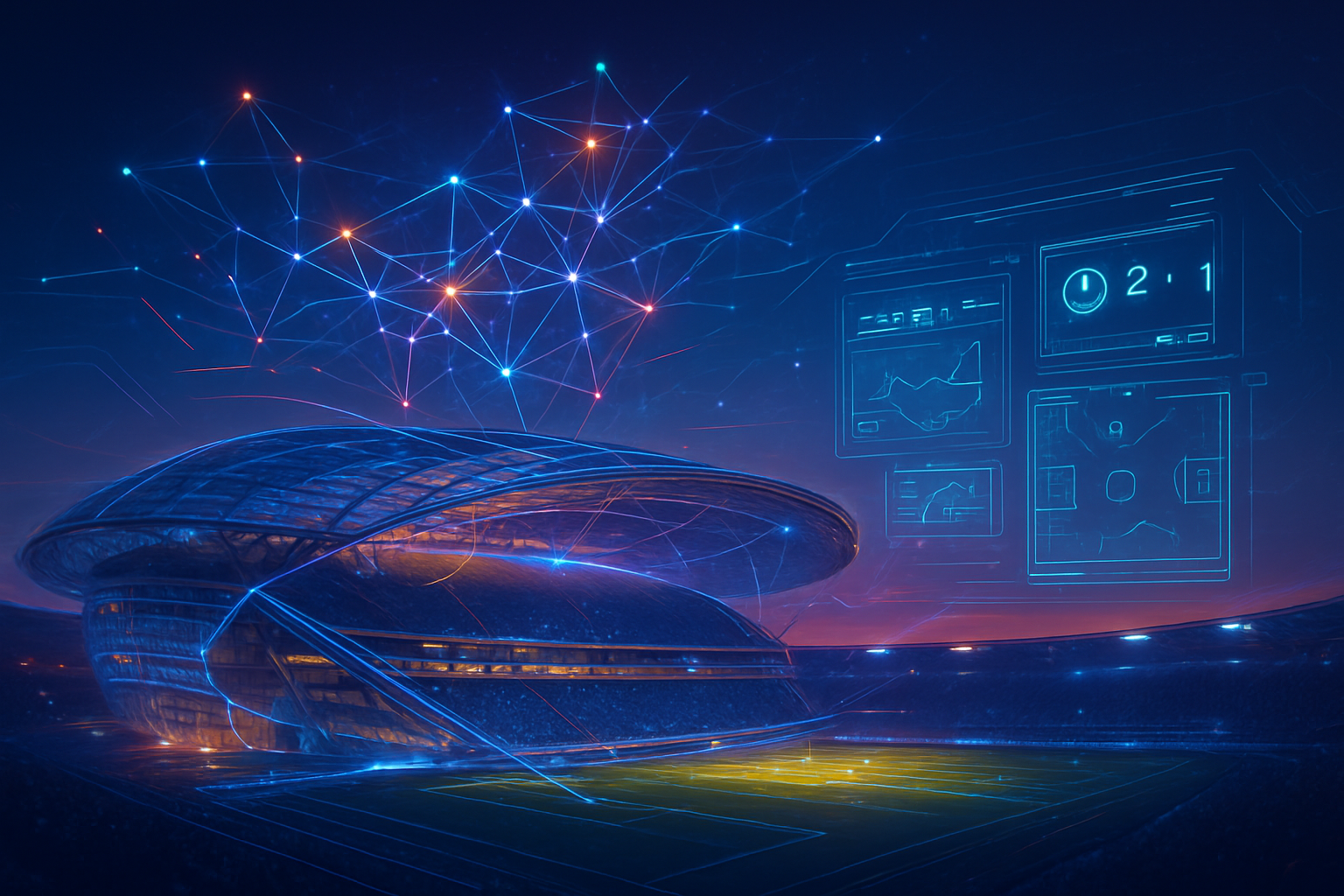
    BRISTOL, UK – November 28, 2025 – The future of live sports entertainment has arrived, heralded by a groundbreaking fusion of Artificial Intelligence (AI) and 5G technology developed at the University of Bristol's Smart Internet Lab. Dubbed Project ARANA, this innovative system is set to redefine the match day experience, transforming traditional stadiums into hyper-connected, intelligent venues that offer fans unprecedented levels of engagement and convenience. Following successful trials at the MK Dons stadium, this technology promises to bring the rich, data-driven insights and seamless connectivity of home viewing directly to the stands, addressing long-standing issues of poor mobile service in crowded environments.

    Project ARANA represents a significant leap forward in how technology enhances public gatherings, moving beyond basic Wi-Fi to create a truly interactive and personalized experience. Its immediate significance lies in its ability to solve the pervasive problem of network congestion at large-scale events, while simultaneously unlocking a new realm of fan-centric services, from real-time player statistics to in-seat food ordering. This development positions the University of Bristol and its partners at the forefront of the smart stadium revolution, setting a new benchmark for immersive live entertainment.

    The Technical Playbook: How AI and 5G Transform the Stadium

    At its core, Project ARANA leverages a robust, fully integrated 5G private network, distinguishing itself from conventional cellular solutions that often buckle under the strain of thousands of simultaneous users. This private network is engineered with advanced 5G broadcast capabilities, allowing for the efficient, cost-effective distribution of high-bandwidth content to a massive audience. By intelligently pushing data and managing network traffic in real-time, the system ensures ultra-fast, stable internet access across the entire venue, eliminating notorious dead zones and buffering delays that plague traditional stadium connectivity.

    The true innovation, however, lies in the deep integration of Artificial Intelligence. Madevo, a University of Bristol spin-out and AI firm, has developed cutting-edge AI models and a proprietary AI cloud technology that enables stadiums to host their own private AI network. This AI backbone is crucial for delivering real-time insights and personalized content. For instance, in collaboration with Nokia (NYSE: NOK), the system employs advanced video analytics to generate critical data, such as precise player coordinates for tactical analysis and live performance metrics like a striker's speed, all available instantly to fans' mobile devices. This differs markedly from previous approaches, which either relied on limited public Wi-Fi or struggled with the scale required for truly interactive, data-rich experiences, often leaving fans feeling disconnected despite being physically present. Initial reactions from trial participants at Stadium MK have been overwhelmingly positive, highlighting the seamless connectivity and the novelty of having such detailed, real-time information at their fingertips.

    Strategic Implications: A New Frontier for Tech Giants and Startups

    This breakthrough technology carries significant implications for a diverse range of companies, from established tech giants to agile startups. Companies like Weaver Labs, with their Cell-Stack platform offering Network-as-a-Service solutions, stand to benefit immensely from the demand for private 5G and OpenRAN architectures in sports venues. Madevo, as a key AI innovator in the project, is poised to become a leader in AI cloud solutions for large-scale public environments. Nokia, already a collaborator, could see expanded opportunities in real-time video analytics and network infrastructure for smart stadiums globally.

    Furthermore, the involvement of major players such as Meta (NASDAQ: META), Samsung (KRX: 005930), and Capgemini (EPA: CAP) underscores the strategic importance of this development. These companies could leverage their expertise in VR/AR, mobile devices, and system integration, respectively, to further enhance the ARANA ecosystem, potentially offering new hardware or software solutions that integrate seamlessly with the platform. This creates competitive implications for other network providers and sports technology companies, pushing them to innovate rapidly in fan engagement and connectivity. The potential for disruption to existing stadium infrastructure and fan experience products is substantial, as ARANA sets a new, higher standard. Companies that can adapt and integrate with such advanced AI and 5G platforms will gain significant market positioning and strategic advantages in the rapidly evolving sports and entertainment sector.

    Wider Significance: Reshaping the Live Event Landscape

    Project ARANA fits squarely into the broader trend of AI and 5G convergence, illustrating how these powerful technologies can combine to create genuinely transformative experiences. Its success in a complex, high-density environment like a sports stadium signals a paradigm shift not just for sports entertainment, but also for other large-scale public events such as concerts, festivals, and conferences. The impacts extend beyond mere entertainment, touching on urban planning and smart city initiatives, where reliable, high-bandwidth connectivity and real-time data analytics can enhance public safety, crowd management, and emergency response.

    However, with such advanced capabilities come potential concerns, particularly regarding data privacy and security, given the collection and analysis of extensive fan data. Ensuring robust safeguards will be paramount for widespread adoption. This development can be compared to previous AI milestones that democratized access to information or personalized experiences, but in a live, physical setting. Just as streaming services revolutionized home entertainment, ARANA has the potential to revolutionize the live event experience, making it more interactive, informative, and enjoyable. It highlights a future where physical presence is augmented, not replaced, by digital intelligence.

    Future Developments: The Road Ahead for Immersive Experiences

    Looking ahead, the near-term future for Project ARANA involves wider commercial deployment and additional trials, with further applications and deeper fan engagement features expected to be showcased at Stadium MK early next year. These trials will likely explore more sophisticated AI applications, such as predictive analytics for crowd flow and personalized content delivery based on individual fan preferences. Long-term, this technology lays the groundwork for the evolution towards 6G and beyond, with the University of Bristol's Smart Internet Lab continuing its mission to define future connectivity standards and large-scale experimental platforms.

    Potential applications and use cases on the horizon are vast, including hyper-personalized augmented reality (AR) overlays for live game viewing, real-time betting insights integrated with live action, and enhanced accessibility features for all attendees. Challenges that need to be addressed include the significant infrastructure investment required for widespread deployment, ensuring interoperability with diverse mobile devices, and navigating regulatory landscapes concerning data usage. Experts predict that within the next decade, smart, AI and 5G-powered venues will become the norm, offering ubiquitous connectivity and immersive digital layers that seamlessly blend with the physical world, fundamentally altering how we interact with live events.

    A New Era for Live Entertainment

    Project ARANA represents a pivotal moment in the convergence of AI and 5G, offering a compelling vision for the future of live entertainment. The key takeaway is the successful demonstration of how intelligent network design, combined with advanced AI analytics, can overcome the inherent challenges of high-density environments to deliver a superior fan experience. This development's significance in AI history lies in its practical application of complex AI and 5G principles to solve a real-world problem, moving beyond theoretical discussions to tangible, impactful solutions.

    The long-term impact of this technology will likely extend far beyond sports, influencing how all large public gatherings are designed and managed, fostering more interactive, efficient, and safer environments. As we move into the coming weeks and months, the rollout of further trials and the commercialization efforts of the partners involved will be crucial to watch. This initiative not only showcases the power of collaborative innovation but also sets a new precedent for what consumers can expect from live events, promising a future where every moment is enhanced by intelligent, seamless technology.


    This content is intended for informational purposes only and represents analysis of current AI developments.

    TokenRing AI delivers enterprise-grade solutions for multi-agent AI workflow orchestration, AI-powered development tools, and seamless remote collaboration platforms.
    For more information, visit https://www.tokenring.ai/.
  • From Seats to Snacks: How AI is Revolutionizing Stadium Concessions with Real-Time Wait Times

    From Seats to Snacks: How AI is Revolutionizing Stadium Concessions with Real-Time Wait Times

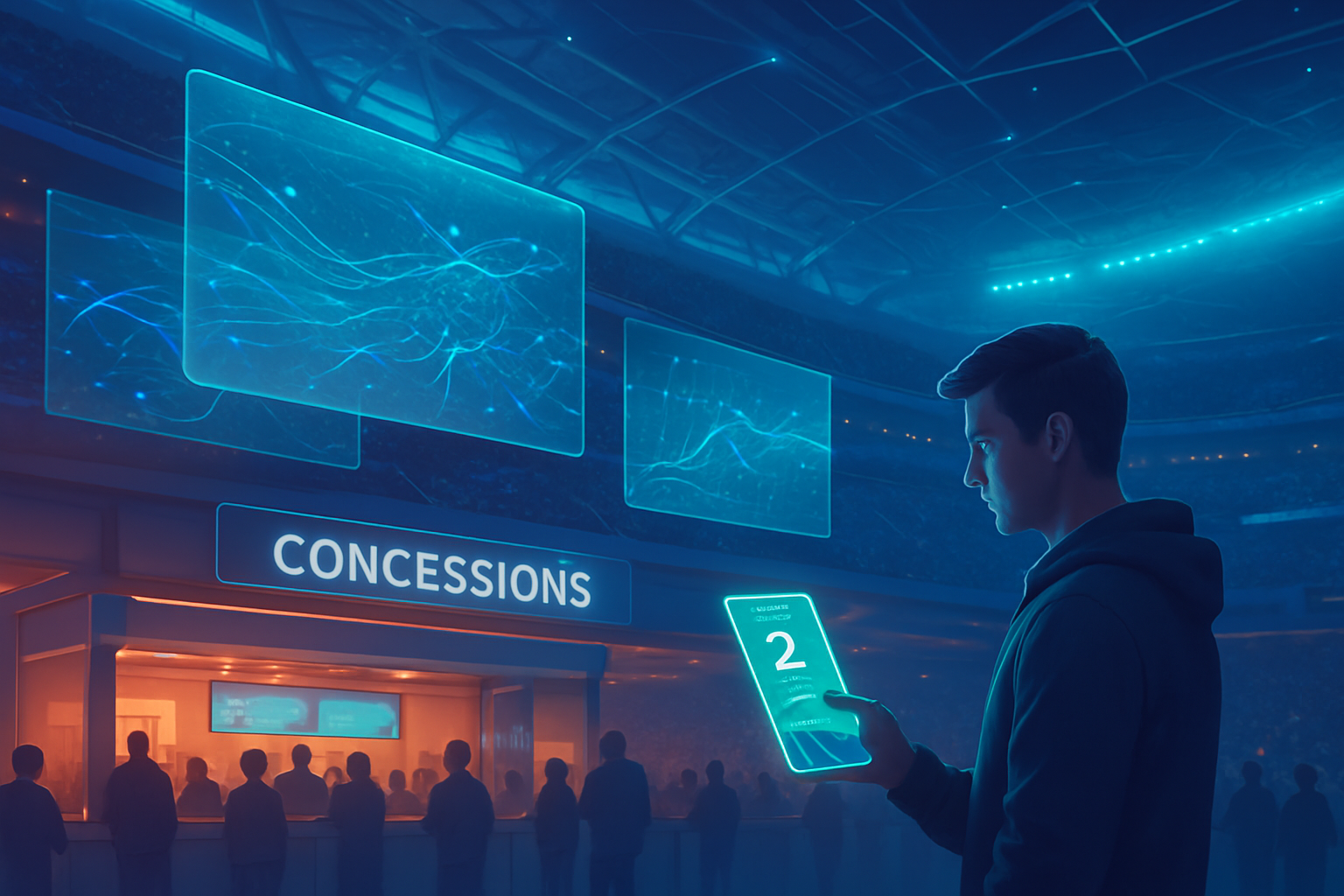
    The modern stadium experience is undergoing a significant transformation, driven by an array of smart technologies aimed at enhancing fan engagement and operational efficiency. Among the most impactful innovations are new systems that allow attendees to view real-time concession wait times directly from their seats. This breakthrough leverages sophisticated artificial intelligence (AI) and computer vision, promising to eliminate one of the most persistent frustrations of live events: long queues for food and beverages.

    These advancements represent a pivotal moment for venues worldwide, offering a dual benefit: a dramatically improved fan experience and a substantial boost to concession revenues. By empowering fans with information and convenience, smart stadiums are not just selling tickets; they are selling an optimized, seamless entertainment journey, ensuring that every moment spent at an event is focused on the action, not the wait.

    The Technical Playbook: AI, Vision, and Mobile Integration

    At the heart of this revolution are advanced technical systems that blend AI, computer vision, and robust mobile platforms. Companies like WaitTime are leading the charge, deploying networks of cameras, often discreetly mounted on ceilings above concession stands. These cameras feed live video into AI-powered computer vision systems that meticulously analyze crowd movement and flow. Unlike traditional crowd counting, these systems focus on the dynamics of queues, distinguishing between casual foot traffic and active lines, to accurately determine real-time wait times and even predict order completion durations. Crucially, these systems prioritize anonymity, analyzing body movements and patterns rather than individual identification.

    This data is then seamlessly integrated into the stadium's digital ecosystem. Real-time wait times are broadcast on large digital screens strategically placed throughout concourses and, more critically, are pushed directly to fans' smartphones via the venue's official mobile applications. For instance, the University of Alabama's UA Gameday app at Bryant-Denny Stadium has successfully debuted a live wait time feature. Furthermore, innovations from companies like Mapsted enhance this experience with location-based technology, using AI and machine learning to provide precise indoor navigation and direct fans to less congested stands without relying on traditional hardware like beacons.

    This approach marks a significant departure from previous, more rudimentary crowd management techniques. Older methods often relied on manual observations, fixed sensors that only counted entries/exits, or simple estimations, all of which lacked the dynamic, granular accuracy of AI-driven computer vision. The ability to process complex visual data in real-time, identify queue formation, and calculate precise wait times allows for an unprecedented level of operational insight and fan-facing transparency, setting a new benchmark for venue technology. Initial reactions from the AI research community and industry experts highlight the elegance of using non-invasive computer vision for practical crowd management, praising its potential for scalability and accuracy.

    Reshaping the AI and Tech Landscape

    The proliferation of smart stadium technology, particularly real-time wait time systems, creates significant ripple effects across the AI and tech industries. Companies specializing in computer vision, machine learning, and data analytics stand to benefit immensely. WaitTime, a Detroit-based startup, is a prime example, solidifying its position as a key player with its patented AI software. Similarly, Mapsted, with its AI-driven location-based services, is gaining traction by offering comprehensive smart venue solutions.

    Tech giants are also keenly aware of this burgeoning market. Verizon (NYSE: VZ), for instance, is actively involved, leveraging its robust 5G networks and 5G Edge Crowd Analytics to provide the high-speed, low-latency connectivity essential for these real-time systems. This positions telecommunications providers as critical infrastructure enablers for the smart stadium ecosystem. Payment processing companies like Shift4 (NYSE: FOUR), which acquired VenueNext, are integrating advanced payment and app solutions to streamline transactions within these intelligent venues, further enhancing the fan experience.

    The competitive landscape is intensifying as more venues recognize the value of these solutions. Startups with innovative AI algorithms for crowd sensing and prediction have a clear strategic advantage, while larger tech companies are looking to integrate these capabilities into broader smart city or smart venue platforms. This development disrupts traditional venue management software providers, pushing them to adopt or partner with AI specialists to remain competitive. For AI labs, it offers a real-world, high-stakes application for their research, driving further innovation in anonymous crowd analysis and predictive analytics.

    A Broader Significance for the AI-Powered Future

    The integration of AI for real-time concession wait times fits squarely into the broader trend of AI permeating public spaces to enhance convenience and efficiency. It's a tangible example of how AI can solve everyday frustrations, transforming what was once a tedious necessity into a manageable, informed choice. This technology extends beyond concessions, with similar AI-powered systems being explored for managing lines at restrooms, security checkpoints, and merchandise stores, creating a truly intelligent venue environment.

    The impacts are far-reaching. For fans, it means less time in line and more time enjoying the event, fostering greater satisfaction and loyalty. For venues, it translates into increased revenue from higher concession sales – studies suggest fans are willing to spend more when lines are shorter – and optimized operational efficiency through better staff allocation and resource management. The data gathered by these systems also provides invaluable insights into fan behavior and traffic patterns, informing long-term strategic planning.

    However, potential concerns include data privacy, even with anonymous tracking. While current systems focus on aggregate movement rather than individual identification, the public conversation around surveillance in public spaces remains pertinent. Comparisons to previous AI milestones, such as facial recognition for security, highlight the need for clear ethical guidelines and transparent communication about how data is collected and used. This development showcases AI's power to enhance user experience through subtle, infrastructural improvements, rather than overt, flashy applications.

    The Horizon: Smarter, More Seamless Experiences

    Looking ahead, the evolution of smart stadium technology, particularly around wait times, promises even more sophisticated solutions. Near-term developments are likely to include predictive analytics that not only show current wait times but also forecast future congestion based on event dynamics, crowd ingress, and historical data. This could enable venues to proactively open more stands or deploy additional staff before peak demand hits. We can also expect deeper integration with in-seat ordering and delivery platforms, where wait time data could dynamically adjust delivery estimates or suggest optimal pick-up points.

    Potential applications on the horizon extend to personalized fan experiences. Imagine an AI system learning your preferences and sending a notification to your phone when your favorite concession stand has a short wait, or even suggesting a less crowded route to it. Challenges that need to be addressed include ensuring the robustness and accuracy of AI models across diverse crowd conditions and venue layouts, as well as maintaining system reliability in high-traffic, high-demand environments. Scalability and cost-effectiveness for smaller venues will also be crucial.

    Experts predict a future where AI-driven insights will not just inform fans but will actively manage and optimize every aspect of the stadium experience, from traffic flow outside the venue to personalized engagement inside. The goal is to create a truly responsive environment that anticipates and caters to fan needs, making every visit effortless and enjoyable.

    A New Era of Fan-Centric Venues

    The advent of real-time concession wait time systems, powered by advanced AI and computer vision, marks a significant milestone in the ongoing evolution of smart stadium technology. The key takeaway is the profound shift towards a fan-centric approach, where technology is deployed to solve common pain points and elevate the overall event experience. This development underscores AI's growing role in optimizing physical spaces and services, moving beyond theoretical applications to deliver tangible, immediate benefits.

    Its significance in AI history lies in demonstrating the practical power of computer vision for anonymous crowd analytics and real-time decision support in high-volume public environments. It sets a precedent for how AI can be leveraged to improve efficiency and satisfaction without compromising privacy. What to watch for in the coming weeks and months includes broader adoption across major sports leagues and entertainment venues, further refinement of predictive algorithms, and the emergence of new players in the smart venue technology space. The era of endless concession lines is rapidly drawing to a close, replaced by an intelligent, informed, and ultimately more enjoyable fan journey.


    This content is intended for informational purposes only and represents analysis of current AI developments.

    TokenRing AI delivers enterprise-grade solutions for multi-agent AI workflow orchestration, AI-powered development tools, and seamless remote collaboration platforms.
    For more information, visit https://www.tokenring.ai/.