Tag: Farming

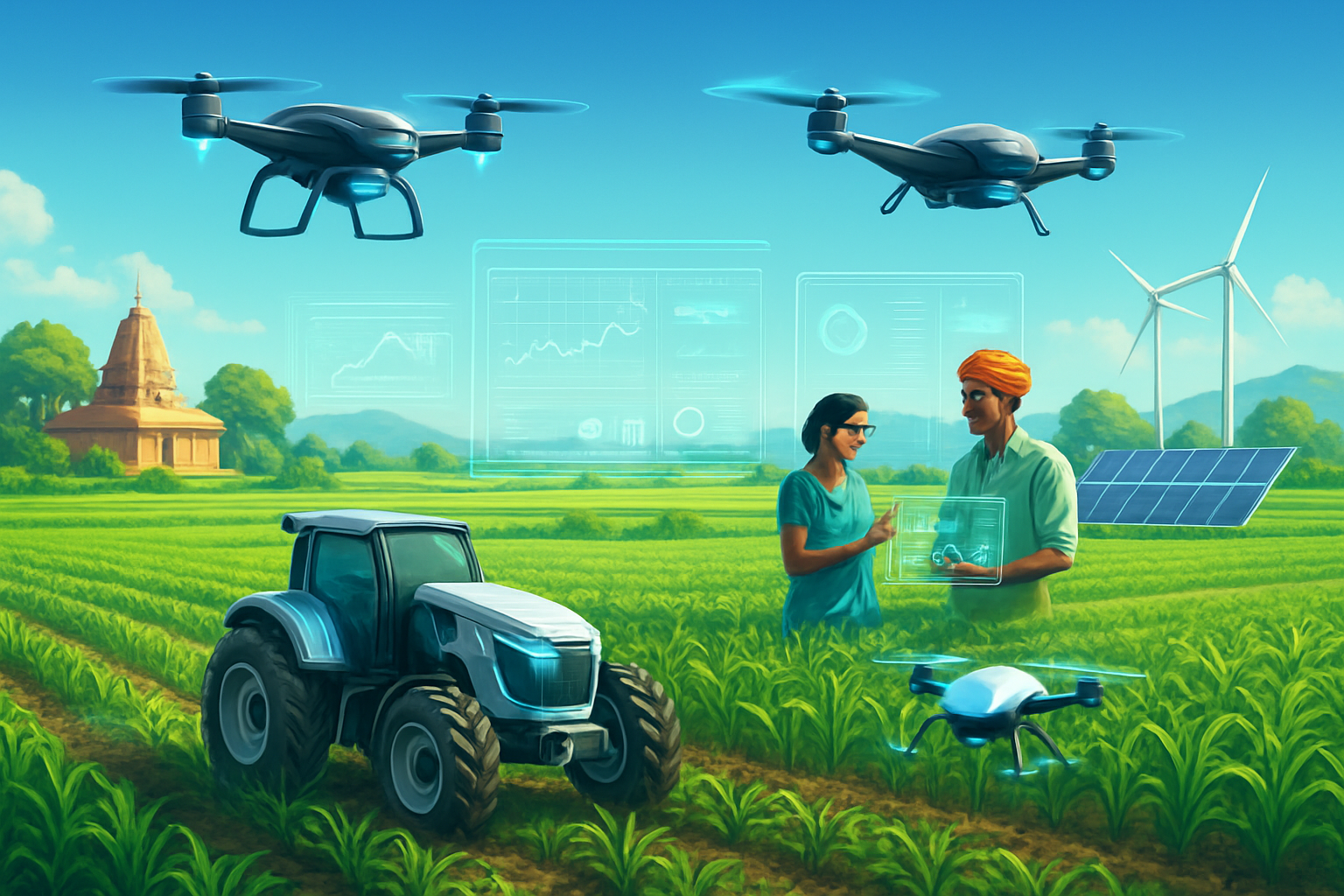
  • India Unveils Ambitious Tech-Led Farming Revolution: NITI Aayog’s Roadmap for an AI-Powered Agricultural Future

    India Unveils Ambitious Tech-Led Farming Revolution: NITI Aayog’s Roadmap for an AI-Powered Agricultural Future

    GANDHINAGAR, INDIA – November 3, 2025 – In a landmark move set to redefine the future of Indian agriculture, NITI Aayog, India's premier policy think tank, today unveiled a comprehensive roadmap titled "Reimagining Agriculture: A Roadmap for Frontier Technology Led Transformation." Launched in collaboration with global consulting firm BCG, tech giant Google (NASDAQ: GOOGL), and the Confederation of Indian Industry (CII), this ambitious initiative charts a 10-year course to integrate cutting-edge frontier technologies, including Artificial Intelligence (AI) and Agentic AI, into the nation's farmlands. The vision, announced at a pivotal event in Gandhinagar, aims to dramatically enhance productivity, ensure sustainability, and significantly boost farmer incomes, aligning directly with India's overarching goal of becoming a developed nation by 2047 (Viksit Bharat 2047).

    This groundbreaking roadmap signifies a proactive stride towards leveraging the power of advanced technology to address longstanding challenges in the agricultural sector, from climate change impacts and resource management to market access and income stability. By democratizing access to sophisticated tools and data-driven insights, NITI Aayog seeks to foster inclusive rural prosperity and solidify India's position as a global leader in agri-tech innovation. The initiative is poised to unlock new levels of agricultural resilience, ensuring food security for its vast population while creating new economic opportunities across the value chain.

    Engineering a Smarter Harvest: The Technical Blueprint for Agricultural Transformation

    The "Reimagining Agriculture" roadmap is not merely a conceptual framework but a detailed technical blueprint for integrating a diverse array of frontier technologies into every facet of farming. At its core are advancements in Artificial Intelligence (AI), including sophisticated Agentic AI, which will power applications such as hyper-local AI-driven weather forecasts, early pest and disease detection, and predictive farming models that optimize planting and harvesting schedules. This move towards intelligent automation marks a significant departure from traditional, often reactive, agricultural practices, enabling proactive decision-making based on real-time data and predictive analytics.

    Beyond AI, the roadmap champions Digital Twins, allowing for the creation of virtual models of entire farm ecosystems to simulate and predict outcomes, optimize resource allocation, and test different scenarios without physical intervention. Precision Agriculture techniques, combined with Smart Sensors and the Internet of Things (IoT), will enable granular monitoring of crop health, soil conditions, and water usage, ensuring efficient input management. This contrasts sharply with previous, often generalized, approaches to resource application, promising substantial reductions in waste and environmental impact. Furthermore, Advanced Mechanization and Robotics are set to address labor shortages and improve operational efficiency, while the development of Climate-Resilient Seeds and the promotion of Verticalized Farming will enhance adaptability to changing climatic conditions and optimize land use. Drones are earmarked for widespread use in monitoring, spraying, and data collection, while Blockchain Technology will be deployed to enhance data integrity, traceability, and provide quality certification across the agricultural supply chain, bridging existing data silos and fostering trust.

    The Agri-Tech Gold Rush: Implications for Companies and Market Dynamics

    NITI Aayog's vision for tech-led farming is set to ignite a significant "agri-tech gold rush," creating immense opportunities for a diverse range of companies, from established tech giants to nimble startups. Google (NASDAQ: GOOGL), already a collaborator in this initiative, stands to benefit significantly through its cloud services, AI platforms, and data analytics capabilities, which will be crucial for processing the vast amounts of agricultural data generated. Similarly, other cloud providers and AI solution developers will find a burgeoning market for specialized agricultural applications.

    The competitive landscape will see intensified innovation, particularly among agri-tech startups focusing on precision farming, drone technology, IoT sensors, and AI-driven predictive analytics. Companies like Mahindra & Mahindra (NSE: M&M), a major player in agricultural machinery, could see increased demand for advanced, robot-enabled farm equipment, while also potentially venturing deeper into integrated smart farming solutions. The emphasis on data systems and blockchain will open doors for companies specializing in secure data management and supply chain transparency. This development could disrupt traditional agricultural input suppliers by shifting focus towards data-driven recommendations and optimized resource use, forcing them to adapt or partner with tech providers. Market positioning will favor companies that can offer end-to-end solutions, integrate seamlessly with existing farm infrastructure, and demonstrate tangible improvements in farmer profitability and sustainability.

    A New Green Revolution: Wider Significance and Global Implications

    NITI Aayog's "Reimagining Agriculture" roadmap represents a pivotal moment in the broader AI landscape, signaling a dedicated national effort to harness frontier technologies for a foundational sector. It aligns with global trends where AI is increasingly being deployed to tackle complex challenges like food security, climate change, and sustainable resource management. This initiative positions India as a significant player in the global agri-tech innovation ecosystem, potentially serving as a model for other developing nations facing similar agricultural challenges.

    The impacts are far-reaching: from boosting rural economies and creating new skilled jobs to enhancing national food security and reducing agriculture's environmental footprint. By fostering climate resilience and diversifying farming practices, the roadmap directly addresses the existential threat of climate change to agriculture. However, potential concerns include the digital divide, ensuring equitable access to technology for all farmers, data privacy, and the ethical deployment of AI. Comparisons to previous "Green Revolutions" highlight this initiative's potential to usher in a new era of productivity, but this time driven by intelligence and sustainability rather than just chemical inputs and mechanization. It represents a paradigm shift from input-intensive to knowledge-intensive agriculture.

    Cultivating the Future: Expected Developments and Emerging Horizons

    In the near term, we can expect a rapid rollout of pilot projects and the establishment of "centers of excellence" to foster interdisciplinary research and talent development in agri-tech. The government's role as a facilitator will likely see the creation of robust policy frameworks, incentives for technology adoption, and significant investments in digital and physical infrastructure to bridge the 'phygital divide.' Over the long term, the widespread integration of Agentic AI could lead to fully autonomous farm management systems, where AI agents manage everything from planting to harvesting, optimizing for yield, resource efficiency, and market demand.

    Potential applications on the horizon include hyper-personalized crop management based on individual plant health, AI-driven market prediction tools that advise farmers on optimal selling times, and advanced robotics for delicate tasks like fruit picking. Challenges that need to be addressed include overcoming farmer skepticism and ensuring trust in new technologies, developing user-friendly interfaces for complex AI tools, and securing adequate capital flows for agri-tech startups. Experts predict a significant transformation of the agricultural workforce, requiring new skill sets and a collaborative ecosystem involving technologists, agronomists, and policymakers to realize the full potential of this vision.

    Harvesting Innovation: A New Era for Indian Agriculture

    NITI Aayog's "Reimagining Agriculture" roadmap marks a monumental commitment to transforming Indian farming through frontier technologies. The key takeaways are clear: a strategic, holistic, and technology-driven approach is being adopted to enhance productivity, sustainability, and farmer incomes, with AI at its forefront. This development is not just another milestone; it represents a fundamental re-evaluation of how agriculture will operate in the 21st century, placing India at the vanguard of this global shift.

    Its significance in AI history lies in demonstrating a national-level commitment to deploying advanced AI and related technologies in a critical sector, with a clear focus on practical, scalable solutions tailored to diverse needs. The long-term impact could be a more resilient, efficient, and prosperous agricultural sector, contributing substantially to India's economic growth and global food security. In the coming weeks and months, stakeholders will be keenly watching for the detailed implementation plans, the first wave of public-private partnerships, and the initial pilot project outcomes, which will set the stage for this ambitious and transformative journey.


    This content is intended for informational purposes only and represents analysis of current AI developments.

    TokenRing AI delivers enterprise-grade solutions for multi-agent AI workflow orchestration, AI-powered development tools, and seamless remote collaboration platforms.
    For more information, visit https://www.tokenring.ai/.
  • Agtonomy Propels Global Agriculture into a New Era with Vision-Powered Autonomous Fleets

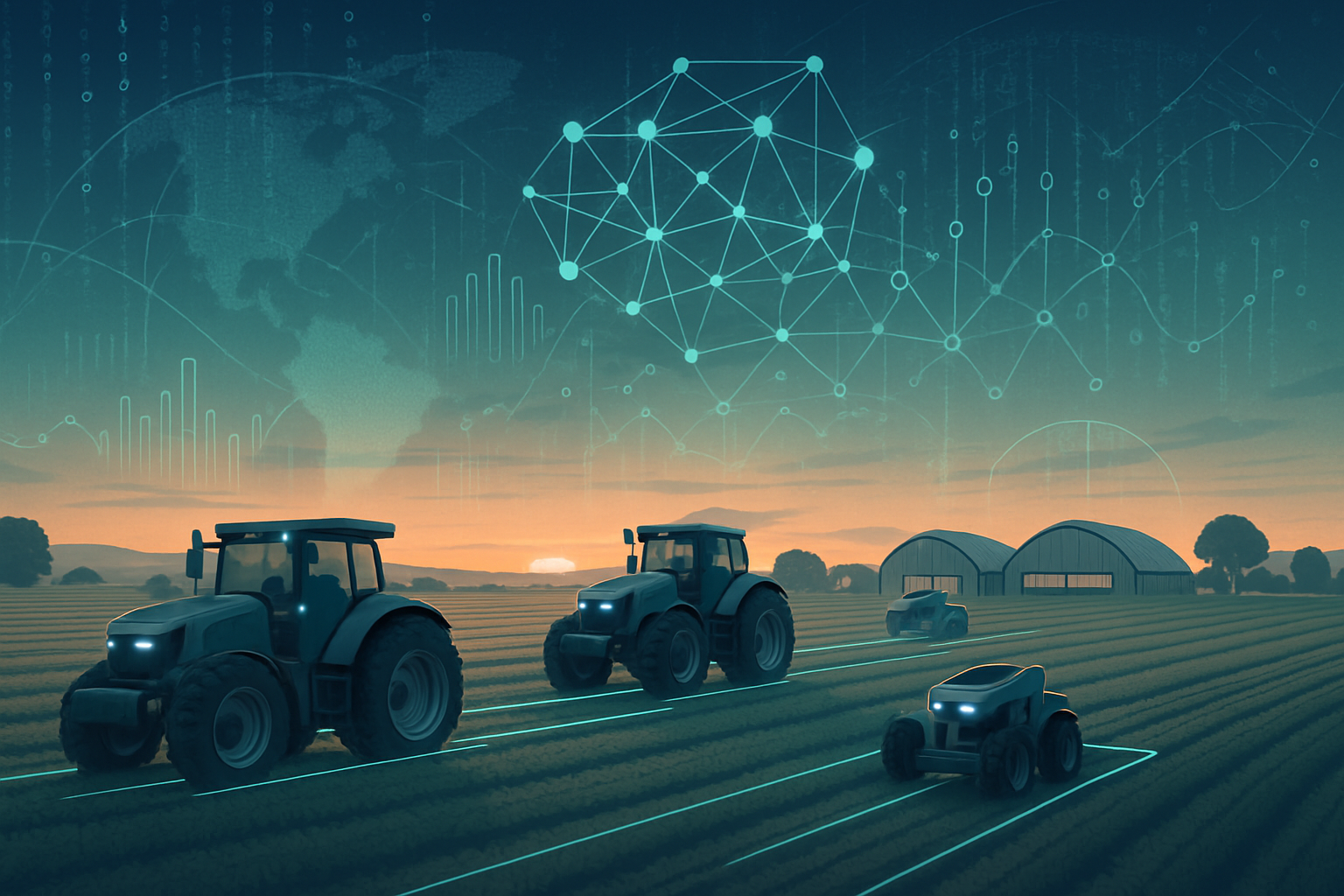
    Agtonomy Propels Global Agriculture into a New Era with Vision-Powered Autonomous Fleets

    October 20, 2025 – Agtonomy, a pioneer in agricultural automation, has announced a significant global expansion of its AI-powered autonomous fleets, marking a pivotal moment for the future of farming. This strategic move, which includes new deployments across the southeastern United States and its first international commercial operation in Australia, underscores a growing industry reliance on intelligent automation to combat persistent challenges such as labor shortages, escalating operational costs, and the urgent demand for sustainable practices. By transforming traditional agricultural machinery into smart, self-driving units, Agtonomy is not just expanding its footprint; it's redefining the operational paradigm for specialty crop producers and land managers worldwide.

    The immediate significance of Agtonomy's expansion lies in its potential to democratize advanced agricultural technology. Through strategic partnerships with leading original equipment manufacturers (OEMs) like Bobcat (NYSE: LBRD) and Kubota (TYO: 6326), Agtonomy is embedding its cutting-edge software and services platform into familiar machinery, making sophisticated automation accessible to a broader base of farmers through established dealer networks. This approach addresses the critical need for increased efficiency, reduced labor dependency, and enhanced precision in high-value crop cultivation, promising a future where a single operator can manage multiple tasks with unprecedented accuracy and impact.

    The Physical AI Revolutionizing Farm Operations

    Agtonomy's technological prowess centers around its third-generation platform, released in April 2025, which introduces a concept dubbed "Physical AI." This advanced system enables infrastructure-free autonomy, a significant departure from previous approaches that often required extensive pre-mapping or reliance on local base stations. The platform integrates embedded cellular and Starlink connectivity with sophisticated vision-based navigation, allowing for immediate deployment in diverse and challenging agricultural environments. This means tractors can navigate precisely through narrow rows of high-value crops like fruit trees and vineyards without the need for pre-existing digital maps, adapting to real-time conditions with remarkable agility.

    At the core of Agtonomy's innovation is its "TrunkVision" technology, which leverages computer vision to ensure safe and accurate operation, even in areas with limited GPS visibility—a common hurdle for traditional autonomous systems. This vision-first approach allows for centimeter-level precision, minimizing crop damage and maximizing efficiency in tasks such as mowing, spraying, and weeding. Furthermore, the multi-fleet management capability allows a single operator to remotely oversee more than ten autonomous tractors simultaneously, with the system continuously learning and improving its performance from real-world data. This intelligent feedback loop fundamentally differs from rigid, rule-based automation, offering a dynamic and evolving solution that adapts to the unique demands of each farm. Initial reactions from the agricultural research community and early adopters have highlighted the platform's robustness and ease of integration, praising its practical application in solving long-standing operational bottlenecks.

    The Agtonomy platform also includes a comprehensive "Smart Farm Task Ecosystem." This ecosystem digitally connects self-driving tractors with various implements through innovations like the Smart Take-Off (STO) for efficient power and data transfer, and the Smart Toolbar, which intelligently adjusts tools based on plant spacing and terrain. Smart Implement Sensors (SIS) and Smart Sprayers further enhance precision, allowing for optimized application rates of inputs based on real-time data such as canopy density or weed pressure. This integrated approach not only boosts efficiency but also significantly contributes to sustainable farming by reducing chemical usage and resource consumption.

    Reshaping the Agricultural Automation Landscape

    Agtonomy's global expansion and technological advancements are poised to significantly impact the competitive landscape for AI companies, tech giants, and startups in the agricultural sector. Companies like Kubota and Bobcat, by partnering with Agtonomy, stand to benefit immensely by integrating cutting-edge AI into their product lines, offering their customers advanced solutions without the need for extensive in-house AI development. This strategy positions them as leaders in the rapidly evolving smart agriculture market, potentially disrupting the dominance of traditional agricultural machinery manufacturers who have been slower to adopt comprehensive autonomous solutions.

    The competitive implications extend to other major AI labs and tech companies eyeing the agricultural space. Agtonomy's focus on "Physical AI" and infrastructure-free autonomy sets a high bar, challenging competitors to develop equally robust and adaptable systems. Startups focusing on niche agricultural AI solutions might find opportunities for integration with Agtonomy's platform, while larger tech giants like John Deere (NYSE: DE) and CNH Industrial (NYSE: CNHI), who have their own autonomous initiatives, will face increased pressure to accelerate their innovation cycles. Agtonomy's mobile-first control and versatile application across compact and mid-size tractors give it a strategic advantage in market positioning, making advanced automation accessible and user-friendly for a broad segment of farmers. This development could catalyze a wave of consolidation or strategic alliances as companies vie for market share in the burgeoning autonomous agriculture sector.

    The potential disruption to existing products and services is substantial. Manual labor-intensive tasks will increasingly be automated, leading to a shift in workforce roles and a demand for new skill sets related to operating and managing autonomous fleets. Traditional agricultural software providers might need to adapt their offerings to integrate with or compete against Agtonomy's comprehensive platform. Furthermore, the precision agriculture market, already experiencing rapid growth, will see an acceleration in demand for AI-driven solutions that offer tangible benefits in terms of yield optimization and resource efficiency. Agtonomy's strategy of partnering with established OEMs ensures a faster route to market and wider adoption, giving it a significant edge in establishing a dominant market position.

    Broader Significance and Ethical Considerations

    Agtonomy's global expansion fits squarely into the broader AI landscape trend of moving AI from theoretical models to practical, real-world applications, especially in sectors traditionally lagging in technological adoption. This development signifies a major step towards intelligent automation becoming an indispensable part of critical global industries. It underscores the increasing sophistication of "edge AI"—processing data directly on devices rather than relying solely on cloud infrastructure—which is crucial for real-time decision-making in dynamic environments like farms. The impact on food security, rural economies, and environmental sustainability cannot be overstated, as autonomous fleets promise to enhance productivity, reduce waste, and mitigate the ecological footprint of agriculture.

    However, with great power comes potential concerns. The increased reliance on automation raises questions about data privacy and security, particularly concerning sensitive farm data. The digital divide could also widen if smaller farms or those in less developed regions struggle to access or afford such advanced technologies, potentially leading to further consolidation in the agricultural industry. Furthermore, the ethical implications of AI in labor markets, specifically the displacement of human workers, will require careful consideration and policy frameworks to ensure a just transition. Comparisons to previous AI milestones, such as the advent of precision GPS farming or early robotic milking systems, reveal a clear trajectory towards increasingly autonomous and intelligent agricultural systems. Agtonomy's vision-based, infrastructure-free approach represents a significant leap forward, making high-level autonomy more adaptable and scalable than ever before.

    This development aligns with global efforts to achieve sustainable development goals, particularly those related to food production and responsible consumption. By optimizing resource use and minimizing environmental impact, Agtonomy's technology contributes to a more resilient and eco-friendly agricultural system. The ability to manage multiple machines with a single operator also addresses the demographic challenge of an aging farming population and the decreasing availability of agricultural labor in many parts of the world.

    The Horizon: Future Developments and Challenges

    Looking ahead, Agtonomy's expansion is just the beginning. Expected near-term developments include the refinement of its "Physical AI" to handle an even wider array of crops and environmental conditions, potentially incorporating more advanced sensor fusion techniques beyond just vision. Long-term, we can anticipate the integration of Agtonomy's platform with other smart farm technologies, such as drone-based analytics, advanced weather forecasting AI, and sophisticated yield prediction models, creating a truly holistic and interconnected autonomous farm ecosystem. Potential applications on the horizon extend beyond traditional agriculture to include forestry, landscaping, and even municipal grounds management, wherever precision and efficiency are paramount for industrial equipment.

    However, significant challenges remain. Regulatory frameworks for autonomous agricultural vehicles are still evolving and will need to catch up with the pace of technological advancement, especially across different international jurisdictions. The cost of adoption, while mitigated by OEM partnerships, could still be a barrier for some farmers, necessitating innovative financing models or government subsidies. Furthermore, ensuring the cybersecurity of these interconnected autonomous fleets will be critical to prevent malicious attacks or data breaches that could cripple farm operations. Experts predict that the next phase will involve a greater emphasis on human-AI collaboration, where farmers utilize AI as an intelligent assistant rather than a complete replacement, focusing on optimizing workflows and leveraging human expertise for complex decision-making. Continuous training and support for farmers transitioning to these new technologies will also be crucial for successful adoption and maximizing benefits.

    A New Chapter for Agricultural AI

    In summary, Agtonomy's global expansion with its AI-powered autonomous fleets marks a profound moment in the history of agricultural technology. The company's innovative "Physical AI" and vision-based navigation offer a practical, scalable solution to some of farming's most pressing challenges, promising increased efficiency, reduced costs, and enhanced sustainability. By democratizing access to advanced automation through strategic OEM partnerships, Agtonomy is not just selling technology; it's fostering a new paradigm for how food is grown and managed.

    The significance of this development in AI history lies in its successful translation of complex AI research into tangible, field-ready applications that deliver immediate economic and environmental benefits. It serves as a testament to the power of specialized AI to transform traditional industries. In the coming weeks and months, the agricultural world will be watching closely for the initial performance metrics from the new deployments, further partnerships, and how Agtonomy continues to evolve its platform to meet the dynamic needs of a global farming community. The journey towards fully autonomous, intelligent agriculture has truly gained momentum, with Agtonomy leading the charge into a more productive and sustainable future.


    This content is intended for informational purposes only and represents analysis of current AI developments.

    TokenRing AI delivers enterprise-grade solutions for multi-agent AI workflow orchestration, AI-powered development tools, and seamless remote collaboration platforms.
    For more information, visit https://www.tokenring.ai/.