Tag: Figure AI

  • The Era of Physical AI: Figure 02 Completes Record-Breaking Deployment at BMW

    The Era of Physical AI: Figure 02 Completes Record-Breaking Deployment at BMW

    The industrial world has officially crossed the Rubicon from experimental automation to autonomous humanoid labor. In a milestone that has sent ripples through both the automotive and artificial intelligence sectors, Figure AI has concluded its landmark deployment of the Figure 02 humanoid robot at the BMW Group (BMWYY) Plant Spartanburg. Over the course of a multi-month trial ending in late 2025, the fleet of robots transitioned from simple testing to operating full 10-hour shifts on the assembly line, proving that "Physical AI" is no longer a futuristic concept but a functional industrial reality.

    This deployment represents the first time a humanoid robot has been successfully integrated into a high-volume manufacturing environment with the endurance and precision required for automotive production. By the time the pilot concluded, the Figure 02 units had successfully loaded over 90,000 parts onto the production line, contributing to the assembly of more than 30,000 BMW X3 vehicles. The success of this program has served as a catalyst for the "Physical AI" boom of early 2026, shifting the global conversation from large language models (LLMs) to large behavior models.

    The Mechanics of Precision: Humanoid Endurance on the Line

    Technically, the Figure 02 represents a massive leap over previous iterations of humanoid hardware. While earlier robots were often relegated to "teleoperation" or scripted movements, Figure 02 utilized a proprietary Vision-Language-Action (VLA) model—often referred to as "Helix"—to navigate the complexities of the factory floor. The robot’s primary task involved sheet-metal loading, a physically demanding job that requires picking heavy, awkward parts and placing them into welding fixtures with a millimeter-precision tolerance of 5mm.

    What sets this achievement apart is the speed and reliability of the execution. Each part placement had to occur within a strict two-second window of a 37-second total cycle time. Unlike traditional industrial arms that are bolted to the floor and programmed for a single repetitive motion, Figure 02 used its humanoid form factor and onboard AI to adjust to slight variations in part positioning in real-time. Industry experts have noted that Figure 02’s ability to maintain a >99% placement accuracy over 10-hour shifts (and even 20-hour double-shifts in late-stage trials) effectively solves the "long tail" of robotics—the unpredictable edge cases that have historically broken automated systems.

    A New Arms Race: The Business of Physical Intelligence

    The success at Spartanburg has triggered an aggressive strategic shift among tech giants and manufacturers. Tesla (TSLA) has already responded by ramping up its internal deployment of the Optimus robot, with reports indicating over 50,000 units are now active across its Gigafactories. Meanwhile, NVIDIA (NVDA) has solidified its position as the "brains" of the industry with the release of its Cosmos world models, which allow robots like Figure’s to simulate physical outcomes in milliseconds before executing them.

    The competitive landscape is no longer just about who has the best chatbot, but who can most effectively bridge the "sim-to-real" gap. Companies like Microsoft (MSFT) and Amazon (AMZN), both early investors in Figure AI, are now looking to integrate these physical agents into their logistics and cloud infrastructures. For BMW, the pilot wasn't just about labor replacement; it was about "future-proofing" their workforce against demographic shifts and labor shortages. The strategic advantage now lies with firms that can deploy general-purpose robots that do not require expensive, specialized retooling of factories.

    Beyond the Factory: The Broader Implications of Physical AI

    The Figure 02 deployment fits into a broader trend where AI is escaping the confines of screens and entering the three-dimensional world. This shift, termed Physical AI, represents the convergence of generative reasoning and robotic actuation. By early 2026, we are seeing the "ChatGPT moment" for robotics, where machines are beginning to understand natural language instructions like "clean up this spill" or "sort these defective parts" without explicit step-by-step coding.

    However, this rapid industrialization has raised significant concerns regarding safety and regulation. The European AI Act, which sees major compliance deadlines in August 2026, has forced companies to implement rigorous "kill-switch" protocols and transparent fault-reporting for high-risk autonomous systems. Comparisons are being drawn to the early days of the assembly line; just as Henry Ford’s innovations redefined the 20th-century economy, Physical AI is poised to redefine 21st-century labor, prompting intense debates over job displacement and the need for new safety standards in human-robot collaborative environments.

    The Road Ahead: From Factories to Front Doors

    Looking toward the remainder of 2026 and into 2027, the focus is shifting toward "Figure 03" and the commercialization of humanoid robots for non-industrial settings. Figure AI has already teased a third-generation model designed for even higher volumes and higher-speed manufacturing. Simultaneously, companies like 1X are beginning to deliver their "NEO" humanoids to residential customers, marking the first serious attempt at a home-care robot powered by the same VLA foundations as Figure 02.

    Experts predict that the next challenge will be "biomimetic sensing"—giving robots the ability to feel texture and pressure as humans do. This will allow Physical AI to move from heavy sheet metal to delicate tasks like assembly of electronics or elderly care. As production scales and the cost per unit drops, the barrier to entry for small-to-medium enterprises will vanish, potentially leading to a "Robotics-as-a-Service" (RaaS) model that could disrupt the entire global supply chain.

    Closing the Loop on a Milestone

    The Figure 02 deployment at BMW will likely be remembered as the moment the "humanoid dream" became a measurable industrial metric. By proving that a robot could handle 90,000 parts with the endurance of a human worker and the precision of a machine, Figure AI has set the gold standard for the industry. It is a testament to how far generative AI has come, moving from generating text to generating physical work.

    As we move deeper into 2026, watch for the results of Tesla's (TSLA) first external Optimus sales and the integration of NVIDIA’s (NVDA) Isaac Lab-Arena for standardized robot benchmarking. The machines have left the lab, they have survived the factory floor, and they are now ready for the world at large.


    This content is intended for informational purposes only and represents analysis of current AI developments.

    TokenRing AI delivers enterprise-grade solutions for multi-agent AI workflow orchestration, AI-powered development tools, and seamless remote collaboration platforms.
    For more information, visit https://www.tokenring.ai/.
  • The Humanoid Inflection Point: Figure AI Achieves 400% Efficiency Gain at BMW’s Spartanburg Plant

    The Humanoid Inflection Point: Figure AI Achieves 400% Efficiency Gain at BMW’s Spartanburg Plant

    The era of the "general-purpose" humanoid robot has transitioned from a Silicon Valley vision to a concrete industrial reality. In a milestone that has sent shockwaves through the global manufacturing sector, Figure AI has officially transitioned its partnership with the BMW Group (OTC: BMWYY) from an experimental pilot to a large-scale commercial deployment. The centerpiece of this announcement is a staggering 400% efficiency gain in complex assembly tasks, marking the first time a bipedal robot has outperformed traditional human-centric benchmarks in a high-volume automotive production environment.

    The deployment at BMW’s massive Spartanburg, South Carolina, plant—the largest BMW manufacturing facility in the world—represents a fundamental shift in the "iFACTORY" strategy. By integrating Figure’s advanced robotics into the Body Shop, BMW is no longer just automating tasks; it is redefining the limits of "Embodied AI." With the pilot phase successfully concluding in late 2025, the January 2026 rollout of the new Figure 03 fleet signals that the age of the "Physical AI" workforce has arrived, promising to bridge the labor gap in ways previously thought impossible.

    A Technical Masterclass in Embodied AI

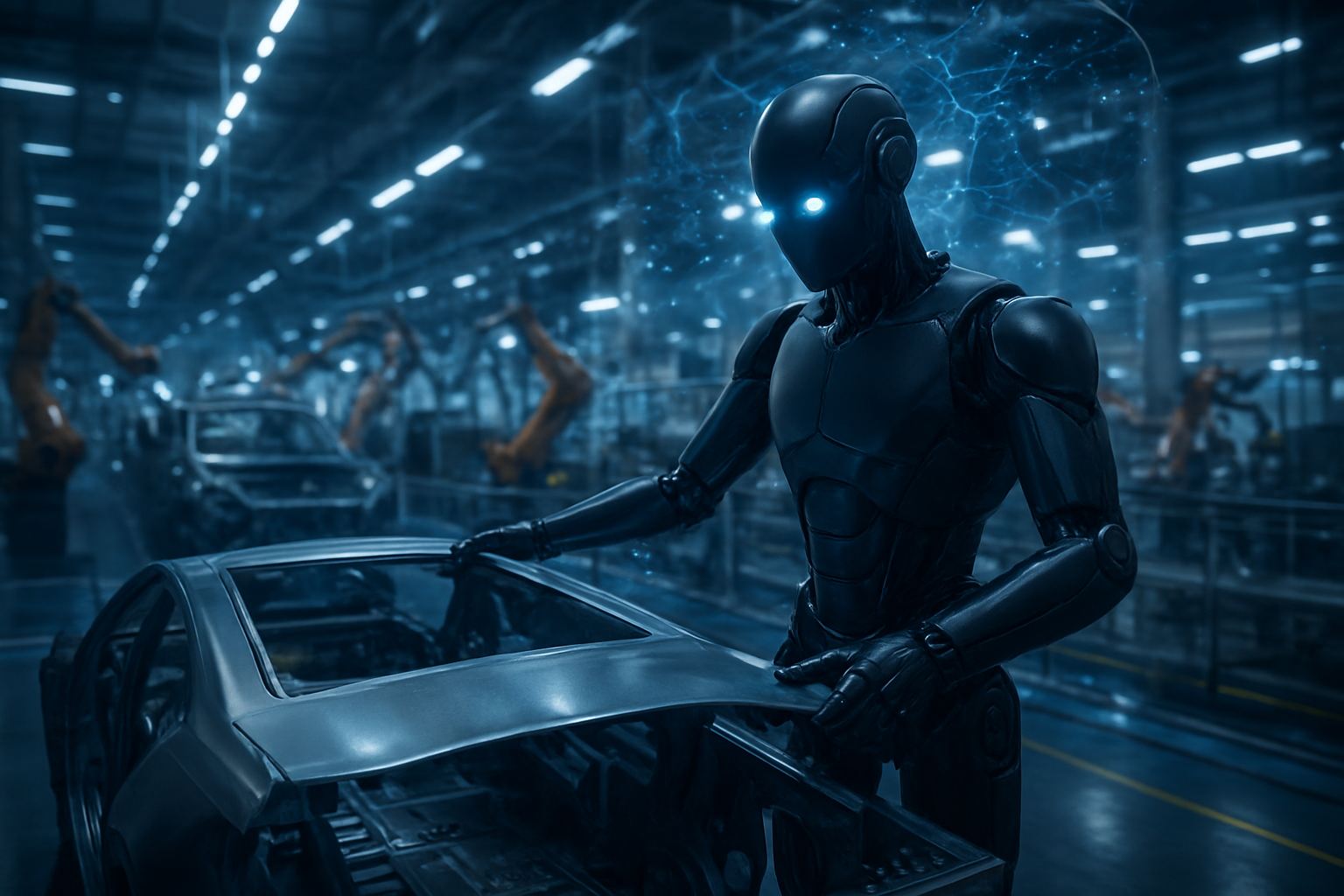
    The technical success of the Spartanburg deployment centers on the "Figure 02" model’s ability to master "difficult-to-handle" sheet metal parts. Unlike traditional six-axis industrial robots that require rigid cages and precise, pre-programmed paths, the Figure robots utilized "Helix," an end-to-end neural network that maps vision directly to motor action. This allowed the robots to handle parts with human-like dexterity, performing millimeter-precision insertions into "pin-pole" fixtures with a tolerance of just 5 millimeters. The reported 400% speed boost refers to the robot's rapid evolution from initial slow-motion trials to its current ability to match—and in some cases, exceed—the cycle times of human operators, completing complex load phases in just 37 seconds.

    Under the hood, the transition to the 2026 "Figure 03" model has introduced several critical hardware breakthroughs. The robot features 4th-generation hands with 16 degrees of freedom (DOF) and human-equivalent strength, augmented by integrated palm cameras and fingertip sensors. This tactile feedback allows the bot to "feel" when a part is seated correctly, a capability essential for the high-vibration environment of an automotive body shop. Furthermore, the onboard computing power has tripled, enabling a Large Vision Model (LVM) to process environmental changes in real-time. This eliminates the need for expensive "clean-room" setups, allowing the robots to walk and work alongside human associates in existing "brownfield" factory layouts.

    Initial reactions from the AI research community have been overwhelmingly positive, with many citing the "5-month continuous run" as the most significant metric. During this period, a single unit operated for 10 hours daily, successfully loading over 90,000 parts without a major mechanical failure. Industry experts note that Figure AI’s decision to move motor controllers directly into the joints and eliminate external dynamic cabling—a move mirrored by the newest "Electric Atlas" from Boston Dynamics, owned by Hyundai Motor Company (OTC: HYMTF)—has finally solved the reliability issues that plagued earlier humanoid prototypes.

    The Robotic Arms Race: Market Disruption and Strategic Positioning

    Figure AI's success has placed it at the forefront of a high-stakes industrial arms race, directly challenging the ambitions of Tesla (NASDAQ: TSLA). While Elon Musk’s Optimus project has garnered significant media attention, Figure AI has achieved what Tesla is still struggling to scale: external customer validation in a third-party factory. By proving the Return on Investment (ROI) at BMW, Figure AI has seen its market valuation soar to an estimated $40 billion, backed by strategic investors like Microsoft (NASDAQ: MSFT) and Nvidia (NASDAQ: NVDA).

    The competitive implications are profound. While Agility Robotics has focused on logistics and "tote-shifting" for partners like Amazon (NASDAQ: AMZN), Figure has targeted the more lucrative and technically demanding "precision assembly" market. This positioning gives BMW a significant strategic advantage over other automakers who are still in the evaluation phase. For BMW, the ability to deploy depreciable robotic assets that can work two or three shifts without fatigue provides a massive hedge against rising labor costs and the chronic shortage of skilled manufacturing technicians in North America.

    This development also signals a potential disruption to the traditional "specialized automation" market. For decades, companies like Fanuc and ABB have dominated factories with specialized arms. However, the Figure 03’s ability to learn tasks via human demonstration—rather than thousands of lines of code—lowers the barrier to entry for automation. Major AI labs are now pivoting to "Embodied AI" as the next frontier, recognizing that the most valuable data is no longer text or images, but the physical interactions captured by robots working in the real world.

    The Socio-Economic Ripple: "Lights-Out" Manufacturing and Labor Trends

    The broader significance of the Spartanburg success lies in its acceleration of the "lights-out" manufacturing trend—factories that can operate with minimal human intervention. As the "Automation Gap" widens due to aging populations in Europe, North America, and East Asia, humanoid robots are increasingly viewed as a demographic necessity rather than a luxury. The BMW deployment proves that humanoids can effectively close this gap, moving beyond simple pick-and-place tasks into the "high-dexterity" roles that were once the sole province of human workers.

    However, this breakthrough is not without its concerns. Labor advocates point to the 400% efficiency gain as a harbinger of massive workforce displacement. Reports from early 2026 suggest that as much as 60% of traditional manufacturing roles could be augmented or replaced by humanoid labor within the next decade. While BMW emphasizes that these robots are intended for "ergonomic relief"—taking over the physically taxing and dangerous jobs—the long-term impact on the "blue-collar" middle class remains a subject of intense debate.

    Comparatively, this milestone is being hailed as the "GPT-3 moment" for physical labor. Just as generative AI transformed knowledge work in 2023, the success of Figure AI at Spartanburg serves as the proof-of-concept that bipedal machines can function reliably in the complex, messy reality of a 2.5-million-square-foot factory. It marks the transition from robots as "toys" or "research projects" to robots as "stable, depreciable industrial assets."

    Looking Ahead: The Roadmap to 2030

    In the near term, we can expect Figure AI to rapidly expand its fleet within the Spartanburg facility before moving into BMW's "Neue Klasse" electric vehicle plants in Europe and Mexico. Experts predict that by late 2026, we will see the first "multi-bot" coordination, where teams of Figure 03 robots collaborate to move large sub-assemblies, further reducing the need for heavy overhead conveyor systems.

    The next major challenge for Figure and its competitors will be "Generalization." While the robots have mastered sheet metal loading, the "holy grail" remains the ability to switch between vastly different tasks—such as wire harness installation and quality inspection—without specialized hardware changes. On the horizon, we may also see the introduction of "Humanoid-as-a-Service" (HaaS), allowing smaller manufacturers to lease robotic labor by the hour, effectively democratizing the technology that BMW has pioneered.

    What experts are watching for next is the response from the "Big Three" in Detroit and the tech giants in China. If Figure AI can maintain its 400% efficiency lead as it scales, the pressure on other manufacturers to adopt similar Physical AI platforms will become irresistible. The "pilot-to-production" inflection point has been reached; the next four years will determine which companies lead the automated world and which are left behind.

    Conclusion: A New Chapter in Industrial History

    The success of Figure AI at BMW’s Spartanburg plant is more than just a win for a single startup; it is a landmark event in the history of artificial intelligence. By achieving a 400% efficiency gain and loading over 90,000 parts in a real-world production environment, Figure has silenced critics who argued that humanoid robots were too fragile or too slow for "real work." The partnership has provided a blueprint for how Physical AI can be integrated into the most demanding industrial settings on Earth.

    As we move through 2026, the key takeaways are clear: the hardware is finally catching up to the software, the ROI for humanoid labor is becoming undeniable, and the "iFACTORY" vision is no longer a futuristic concept—it is currently assembling the cars of today. The coming months will likely bring news of similar deployments across the aerospace, logistics, and healthcare sectors, as the world digests the lessons learned in Spartanburg. For now, the successful integration of Figure 03 stands as a testament to the transformative power of AI when it is given legs, hands, and the intelligence to use them.


    This content is intended for informational purposes only and represents analysis of current AI developments.

    TokenRing AI delivers enterprise-grade solutions for multi-agent AI workflow orchestration, AI-powered development tools, and seamless remote collaboration platforms.
    For more information, visit https://www.tokenring.ai/.
  • From Pixels to Production: How Figure’s Humanoid Robots Are Mastering the Factory Floor Through Visual Learning

    From Pixels to Production: How Figure’s Humanoid Robots Are Mastering the Factory Floor Through Visual Learning

    In a landmark shift for the robotics industry, Figure AI has successfully transitioned its humanoid platforms from experimental prototypes to functional industrial workers. By leveraging a groundbreaking end-to-end neural network architecture known as "Helix," the company’s latest robots—including the production-ready Figure 02 and the recently unveiled Figure 03—are now capable of mastering complex physical tasks simply by observing human demonstrations. This "watch-and-learn" capability has moved beyond simple laboratory tricks, such as making coffee, to high-stakes integration within global manufacturing hubs.

    The significance of this development cannot be overstated. For decades, industrial robotics relied on rigid, pre-programmed movements that struggled with variability. Figure’s approach mirrors human cognition, allowing robots to interpret visual data and translate it into precise motor torques in real-time. As of late 2025, this technology is no longer a "future" prospect; it is currently being stress-tested on live production lines at the BMW Group (OTC: BMWYY) Spartanburg plant, marking the first time a general-purpose humanoid has maintained a multi-month operational streak in a heavy industrial setting.

    The Helix Architecture: A New Paradigm in Robotic Intelligence

    The technical backbone of Figure’s recent progress is the "Helix" Vision-Language-Action (VLA) model. Unlike previous iterations that relied on collaborative AI from partners like OpenAI, Figure moved its AI development entirely in-house in early 2025 to achieve tighter hardware-software integration. Helix utilizes a dual-system approach to mimic human thought: "System 2" provides high-level reasoning through a 7-billion parameter Vision-Language Model, while "System 1" operates as a high-frequency (200 Hz) visuomotor policy. This allows the robot to understand a command like "place the sheet metal on the fixture" while simultaneously making micro-adjustments to its grip to account for a slightly misaligned part.

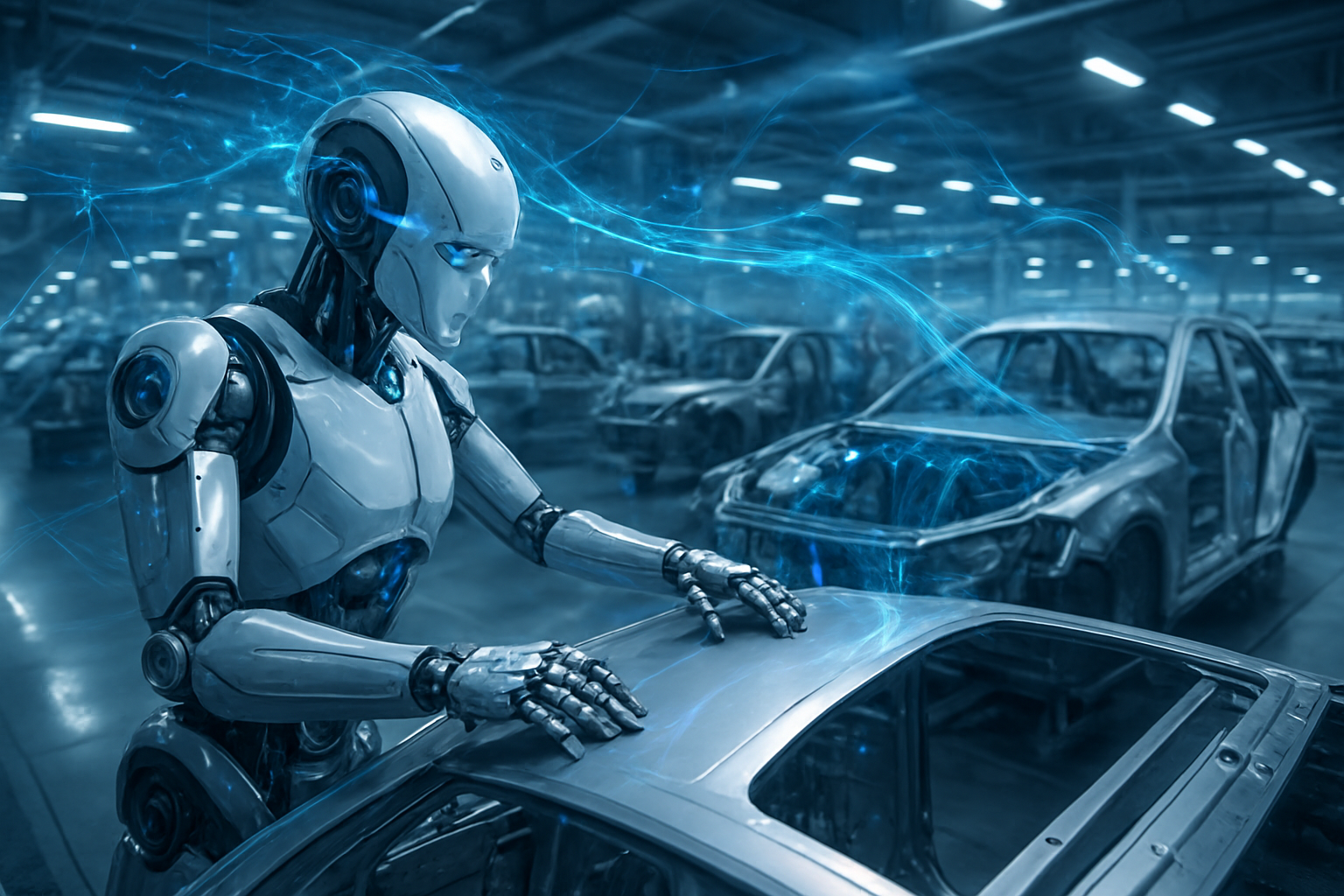
    This shift to end-to-end neural networks represents a departure from the modular "perception-planning-control" stacks of the past. In those older systems, an error in the vision module would cascade through the entire chain, often leading to total task failure. With Helix, the robot maps pixels directly to motor torque. This enables "imitation learning," where the robot watches video data of humans performing a task and builds a probabilistic model of how to replicate it. By mid-2025, Figure had scaled its training library to over 600 hours of high-quality human demonstration data, allowing its robots to generalize across tasks ranging from grocery sorting to complex industrial assembly without a single line of task-specific code.

    The hardware has evolved in tandem with the intelligence. The Figure 02, which became the workhorse of the 2024-2025 period, features six onboard RGB cameras providing a 360-degree field of view and dual NVIDIA (NASDAQ: NVDA) RTX GPU modules for localized inference. Its hands, boasting 16 degrees of freedom and human-scale strength, allow it to handle delicate components and heavy tools with equal proficiency. The more recent Figure 03, introduced in October 2025, further refines this with integrated palm cameras and a lighter, more agile frame designed for the high-cadence environments of "BotQ," Figure's new mass-production facility.

    Strategic Shifts and the Battle for the Factory Floor

    The move to bring AI development in-house and terminate the OpenAI partnership was a strategic masterstroke that has repositioned Figure as a sovereign leader in the humanoid race. While competitors like Tesla (NASDAQ: TSLA) continue to refine the Optimus platform through internal vertical integration, Figure’s success with BMW has provided a "proof of utility" that few others can match. The partnership at the Spartanburg plant saw Figure robots operating for five consecutive months on the X3 body shop production line, achieving a 95% success rate in "bin-to-fixture" tasks. This real-world data is invaluable, creating a feedback loop that has already led to a 13% improvement in task speed through fleet-wide learning.

    This development places significant pressure on other tech giants and AI labs. Microsoft (NASDAQ: MSFT) and Amazon (NASDAQ: AMZN), both major investors in Figure, stand to benefit immensely as they look to integrate these autonomous agents into their own logistics and cloud ecosystems. Conversely, traditional industrial robotics firms are finding their "single-purpose" arms increasingly threatened by the flexibility of Figure’s general-purpose humanoids. The ability to retrain a robot for a new task in a matter of hours via video demonstration—rather than weeks of manual programming—offers a competitive advantage that could disrupt the multi-billion dollar logistics and warehousing sectors.

    Furthermore, the launch of "BotQ," Figure’s high-volume manufacturing facility in San Jose, signals the transition from R&D to commercial scale. Designed to produce 12,000 robots per year, BotQ is a "closed-loop" environment where existing Figure robots assist in the assembly of their successors. This self-sustaining manufacturing model is intended to drive down the cost per unit, making humanoid labor a viable alternative to traditional automation in a wider array of industries, including electronics assembly and even small-scale retail logistics.

    The Broader Significance: General-Purpose AI Meets the Physical World

    Figure’s progress marks a pivotal moment in the broader AI landscape, signaling the arrival of "Physical AI." While Large Language Models (LLMs) have mastered text and image generation, the "Moravec’s Paradox"—the idea that high-level reasoning is easy for AI but low-level sensorimotor skills are hard—has finally been challenged. By successfully mapping visual input to physical action, Figure has bridged the gap between digital intelligence and physical labor. This aligns with a broader trend in 2025 where AI is moving out of the browser and into the "real world" to address labor shortages in aging societies.

    However, this rapid advancement brings a host of ethical and societal concerns. The ability for a robot to learn any task by watching a video suggests a future where human manual labor could be rapidly displaced across multiple sectors simultaneously. While Figure emphasizes that its robots are designed to handle "dull, dirty, and dangerous" jobs, the versatility of the Helix architecture means that even more nuanced roles could eventually be automated. Industry experts are already calling for updated safety standards and labor regulations to manage the influx of autonomous humanoids into public and private workspaces.

    Comparatively, this milestone is being viewed by the research community as the "GPT-3 moment" for robotics. Just as GPT-3 demonstrated that scaling data and compute could lead to emergent linguistic capabilities, Figure’s work with imitation learning suggests that scaling visual demonstration data can lead to emergent physical dexterity. This shift from "programming" to "training" is the definitive breakthrough that will likely define the next decade of robotics, moving the industry away from specialized machines toward truly general-purpose assistants.

    Looking Ahead: The Road to 100,000 Humanoids

    In the near term, Figure is focused on scaling its deployment within the automotive sector. Following the success at BMW, several other major manufacturers are reportedly in talks to begin pilot programs in early 2026. The goal is to move beyond simple part-moving tasks into more complex assembly roles, such as wire harness installation and quality inspection using the Figure 03’s advanced palm cameras. Figure’s leadership has set an ambitious target of shipping 100,000 robots over the next four years, a goal that hinges on the continued success of the BotQ facility.

    Long-term, the applications for Figure’s technology extend far beyond the factory. With the introduction of "soft-goods" coverings and enhanced safety protocols in the Figure 03 model, the company is clearly eyeing the domestic market. Experts predict that by 2027, we may see the first iterations of these robots entering home environments to assist with laundry, cleaning, and elder care. The primary challenge remains "edge-case" handling—ensuring the robot can react safely to unpredictable human behavior in unstructured environments—but the rapid iteration seen in 2025 suggests these hurdles are being cleared faster than anticipated.

    A New Chapter in Human-Robot Collaboration

    Figure AI’s achievements over the past year have fundamentally altered the trajectory of the robotics industry. By proving that a humanoid robot can learn complex tasks through visual observation and maintain a persistent presence in a high-intensity factory environment, the company has moved the conversation from "if" humanoids will be useful to "how quickly" they can be deployed. The integration of the Helix architecture and the success of the BMW partnership serve as a powerful validation of the end-to-end neural network approach.

    As we look toward 2026, the key metrics to watch will be the production ramp-up at BotQ and the expansion of Figure’s fleet into new industrial verticals. The era of the general-purpose humanoid has officially arrived, and its impact on global manufacturing, logistics, and eventually daily life, is set to be profound. Figure has not just built a better robot; it has built a system that allows robots to learn, adapt, and work alongside humanity in ways that were once the sole province of science fiction.


    This content is intended for informational purposes only and represents analysis of current AI developments.

    TokenRing AI delivers enterprise-grade solutions for multi-agent AI workflow orchestration, AI-powered development tools, and seamless remote collaboration platforms.
    For more information, visit https://www.tokenring.ai/.
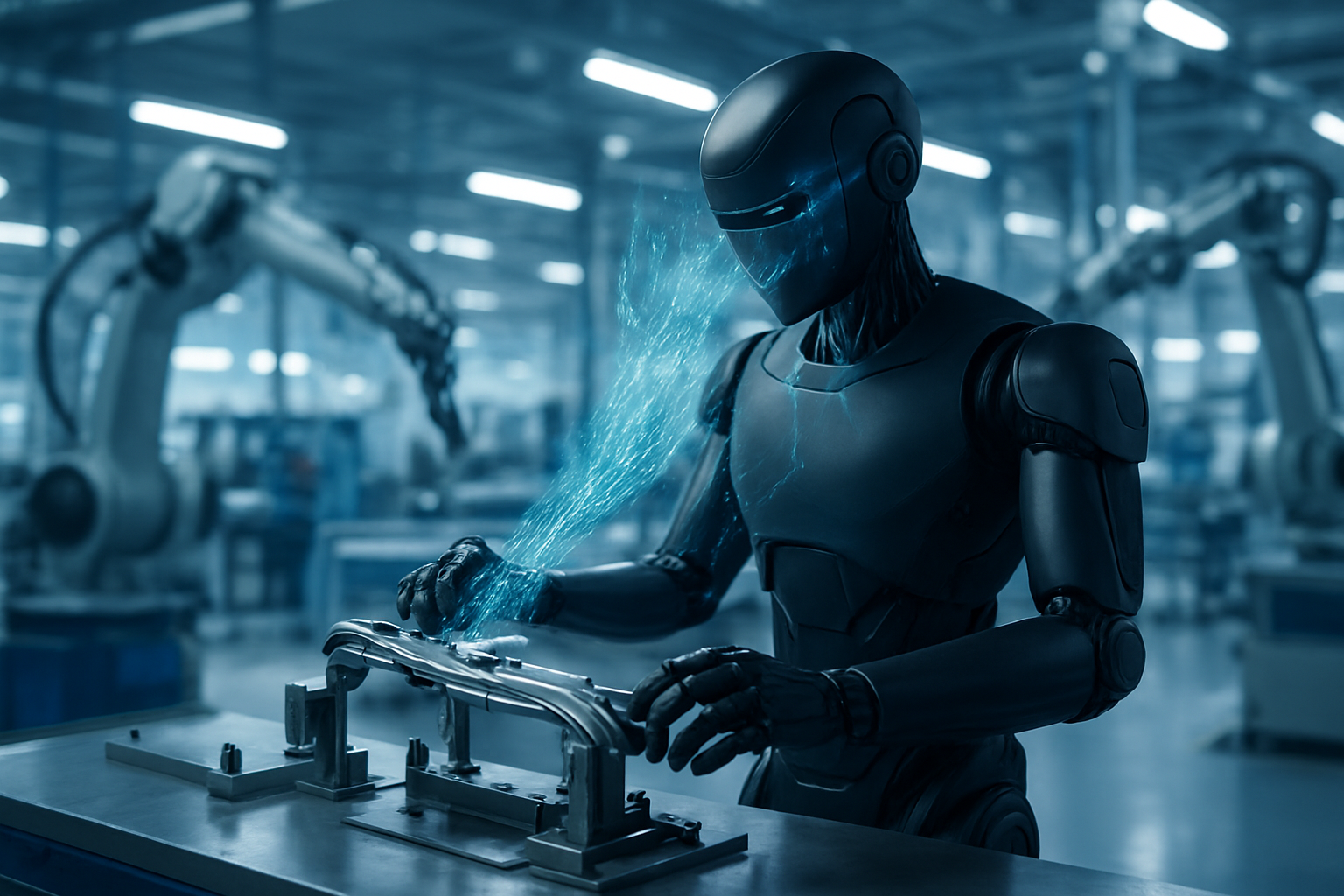
  • The Dawn of the Android Age: Figure AI Ignites the Humanoid Robotics Revolution

    The Dawn of the Android Age: Figure AI Ignites the Humanoid Robotics Revolution

    Brett Adcock, the visionary CEO of Figure AI (NASDAQ: FGR), is not one to mince words when describing the future of technology. He emphatically declares humanoid robotics as "the next major technological revolution," a paradigm shift he believes will be as profound as the advent of the internet itself. This bold assertion, coupled with Figure AI's rapid advancements and staggering valuations, is sending ripples across the tech industry, signaling an impending era where autonomous, human-like machines could fundamentally transform global economies and daily life. Adcock envisions an "age of abundance" driven by these versatile robots, making physical labor optional and reshaping the very fabric of society.

    Figure AI's aggressive pursuit of general-purpose humanoid robots is not merely theoretical; it is backed by significant technological breakthroughs and substantial investment. The company's mission to "expand human capabilities through advanced AI" by deploying autonomous humanoids globally aims to tackle critical labor shortages, eliminate hazardous jobs, and ultimately enhance the quality of life for future generations. This ambition places Figure AI at the forefront of a burgeoning industry poised to redefine the human-machine interface in the physical world.

    Unpacking Figure AI's Autonomous Marvels: A Technical Deep Dive

    Figure AI's journey from concept to cutting-edge reality has been remarkably swift, marked by the rapid iteration of its humanoid prototypes. The company unveiled its first prototype, Figure 01, in 2022, quickly followed by Figure 02 in 2024, which showcased enhanced mobility and dexterity. The latest iteration, Figure 03, launched in October 2025, represents a significant leap forward, specifically designed for home environments with advanced vision-language-action (VLA) AI. This model incorporates features like soft goods for safer interaction, wireless charging, and improved audio systems for sophisticated voice reasoning, pushing the boundaries of what a domestic robot can achieve.

    At the heart of Figure's robotic capabilities lies its proprietary "Helix" neural network. This advanced VLA model is central to enabling the robots to perform complex, autonomous tasks, even those involving deformable objects like laundry. Demonstrations have shown Figure's robots adeptly folding clothes, loading dishwashers, and executing uninterrupted logistics work for extended periods. Unlike many existing robotic solutions that rely on teleoperation or pre-programmed, narrow tasks, Figure AI's unwavering commitment is to full autonomy. Brett Adcock has explicitly stated that the company "will not teleoperate" its robots in the market, insisting that products will only launch at scale when they are fully autonomous, a stance that sets a high bar for the industry and underscores their focus on true general-purpose intelligence.

    This approach significantly differentiates Figure AI from previous robotic endeavors. While industrial robots have long excelled at repetitive tasks in controlled environments, and earlier humanoid projects often struggled with real-world adaptability and general intelligence, Figure AI aims to create machines that can learn, adapt, and interact seamlessly within unstructured human environments. Initial reactions from the AI research community and industry experts have been a mix of excitement and cautious optimism. The substantial funding from tech giants like Microsoft (NASDAQ: MSFT), OpenAI, Nvidia (NASDAQ: NVDA), and Jeff Bezos underscores the belief in Figure AI's potential, even as experts acknowledge the immense challenges in scaling truly autonomous, general-purpose humanoids. The ability of Figure 03 to perform household chores autonomously is seen as a crucial step towards validating Adcock's vision of robots in every home within "single-digit years."

    Reshaping the AI Landscape: Competitive Dynamics and Market Disruption

    Figure AI's aggressive push into humanoid robotics is poised to profoundly impact the competitive landscape for AI companies, tech giants, and startups alike. Companies that stand to benefit most directly are those capable of integrating advanced AI with sophisticated hardware, a niche Figure AI has carved out for itself. Beyond Figure AI, established players like Boston Dynamics (a subsidiary of Hyundai Motor Group), Tesla (NASDAQ: TSLA) with its Optimus project, and emerging startups in the robotics space are all vying for leadership in what Adcock terms a "humanoid arms race." The sheer scale of investment in Figure AI, surpassing $1 billion and valuing the company at $39 billion, highlights the intense competition and the perceived market opportunity.

    The competitive implications for major AI labs and tech companies are immense. Companies like Google (NASDAQ: GOOGL), Amazon (NASDAQ: AMZN), and Microsoft, already heavily invested in AI research, are now facing a new frontier where their software prowess must converge with physical embodiment. Those with strong AI development capabilities but lacking robust hardware expertise may seek partnerships or acquisitions to stay competitive. Conversely, hardware-focused companies without leading AI could find themselves at a disadvantage. Figure AI's strategic partnerships, such as the commercial deployment of Figure 02 robots at BMW's (FWB: BMW) South Carolina facility in 2024, demonstrate the immediate commercial viability and potential for disruption in manufacturing and logistics.

    This development poses a significant disruption to existing products and services. Industries reliant on manual labor, from logistics and manufacturing to elder care and domestic services, could see radical transformations. The promise of humanoids making physical labor optional could lead to a dramatic reduction in the cost of goods and services, forcing companies across various sectors to re-evaluate their operational models. For startups, the challenge lies in finding defensible niches or developing unique AI models or hardware components that can integrate with or compete against the likes of Figure AI. Market positioning will hinge on the ability to demonstrate practical, safe, and scalable autonomous capabilities, with Figure AI's focus on fully autonomous, general-purpose robots setting a high bar.

    The Wider Significance: Abundance, Ethics, and the Humanoid Era

    The emergence of capable humanoid robots like those from Figure AI fits squarely into the broader AI landscape as a critical next step in the evolution of artificial intelligence from digital to embodied intelligence. While large language models (LLMs) and generative AI have dominated recent headlines, humanoid robotics represents the physical manifestation of AI's capabilities, bridging the gap between virtual intelligence and real-world interaction. This development is seen by many, including Adcock, as a direct path to an "age of abundance," where repetitive, dangerous, or undesirable jobs are handled by machines, freeing humans for more creative and fulfilling pursuits.

    The potential impacts are vast and multifaceted. Economically, humanoids could drive unprecedented productivity gains, alleviate labor shortages in aging populations, and significantly lower production costs. Socially, they could redefine work, leisure, and even the structure of households. However, these profound changes also bring potential concerns. The most prominent is job displacement, a challenge that Adcock suggests could be mitigated by discussions around universal basic income. Ethical considerations surrounding the safety of human-robot interaction, data privacy, and the societal integration of intelligent machines become increasingly urgent as these robots move from factories to homes. The notion of "10 billion humanoids on Earth" within decades, as Adcock predicts, necessitates robust regulatory frameworks and societal dialogues.

    Comparing this to previous AI milestones, the current trajectory of humanoid robotics feels akin to the early days of digital AI or the internet's nascent stages. Just as the internet fundamentally changed information access and communication, humanoid robots have the potential to fundamentally alter physical labor and interaction with the material world. The ability of Figure 03 to perform complex domestic tasks autonomously is a tangible step, reminiscent of early internet applications that hinted at the massive future potential. This is not just an incremental improvement; it's a foundational shift towards truly general-purpose physical AI.

    The Horizon of Embodied Intelligence: Future Developments and Challenges

    Looking ahead, the near-term and long-term developments in humanoid robotics are poised for rapid acceleration. In the near term, experts predict a continued focus on refining dexterity, improving navigation in unstructured environments, and enhancing human-robot collaboration. Figure AI's plan to ship 100,000 units within the next four years, alongside establishing a high-volume manufacturing facility, BotQ, with an initial capacity of 12,000 robots annually, indicates an imminent scale-up. The strategic collection of massive amounts of real-world data, including partnering with Brookfield to gather human movement footage from 100,000 homes, is critical for training more robust and adaptable AI models. Adcock expects robots to enter the commercial workforce "now and in the next like year or two," with the home market "definitely solvable" within this decade, aiming for Figure 03 in select homes by 2026.

    Potential applications and use cases on the horizon are boundless. Beyond logistics and manufacturing, humanoids could serve as assistants in healthcare, companions for the elderly, educators, and even disaster relief responders. The vision of a "universal interface in the physical world" suggests a future where these robots can adapt to virtually any task currently performed by humans. However, significant challenges remain. Foremost among these is achieving true, robust general intelligence that can handle the unpredictability and nuances of the real world without constant human supervision. The "sim-to-real" gap, where AI trained in simulations struggles in physical environments, is a persistent hurdle. Safety, ethical integration, and public acceptance are also crucial challenges that need to be addressed through rigorous testing, transparent development, and public education.

    Experts predict that the next major breakthroughs will come from advancements in AI's ability to reason, plan, and learn from limited data, coupled with more agile and durable hardware. The convergence of advanced sensors, powerful onboard computing, and sophisticated motor control will continue to drive progress. What to watch for next includes more sophisticated demonstrations of complex, multi-step tasks in varied environments, deeper integration of multimodal AI (vision, language, touch), and the deployment of humanoids in increasingly public and domestic settings.

    A New Era Unveiled: The Humanoid Robotics Revolution Takes Hold

    In summary, Brett Adcock's declaration of humanoid robotics as the "next major technological revolution" is more than just hyperbole; it is a vision rapidly being materialized by companies like Figure AI. Key takeaways include Figure AI's swift development of autonomous humanoids like Figure 03, powered by advanced VLA models like Helix, and its unwavering commitment to full autonomy over teleoperation. This development is poised to disrupt industries, create new economic opportunities, and profoundly reshape the relationship between humans and technology.

    The significance of this development in AI history cannot be overstated. It represents a pivotal moment where AI transitions from primarily digital applications to widespread physical embodiment, promising an "age of abundance" by making physical labor optional. While challenges related to job displacement, ethical integration, and achieving robust general intelligence persist, the momentum behind humanoid robotics is undeniable. This is not merely an incremental step but a foundational shift towards a future where intelligent, human-like machines are integral to our daily lives.

    In the coming weeks and months, observers should watch for further demonstrations of Figure AI's robots in increasingly complex and unstructured environments, announcements of new commercial partnerships, and the initial deployment of Figure 03 in select home environments. The competitive landscape will intensify, with other tech giants and startups accelerating their own humanoid initiatives. The dialogue around the societal implications of widespread humanoid adoption will also grow, making this a critical area of innovation and public discourse. The age of the android is not just coming; it is already here, and its implications are just beginning to unfold.


    This content is intended for informational purposes only and represents analysis of current AI developments.

    TokenRing AI delivers enterprise-grade solutions for multi-agent AI workflow orchestration, AI-powered development tools, and seamless remote collaboration platforms.
    For more information, visit https://www.tokenring.ai/.