Tag: Filmmaking

  • AI Cinema Arrives: Google’s Veo 3 Rollout Brings 4K Photorealism and Integrated Audio to the Masses

    AI Cinema Arrives: Google’s Veo 3 Rollout Brings 4K Photorealism and Integrated Audio to the Masses

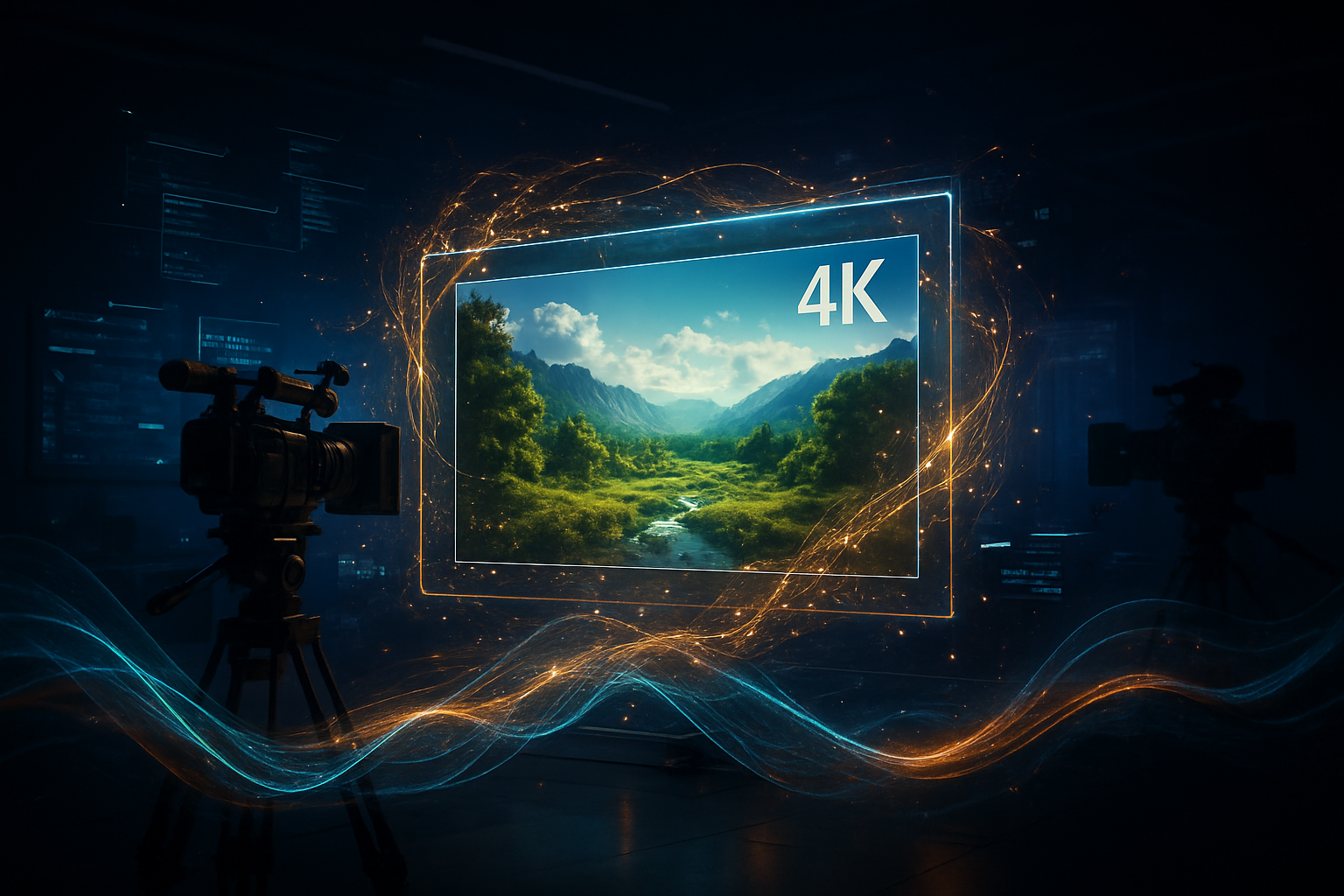
    The landscape of digital creation has shifted fundamentally this month as Alphabet Inc. (NASDAQ: GOOGL) finalized the wide public rollout of Veo 3. This landmark release represents the transition of generative video from a technical curiosity into a production-ready tool capable of outputting cinema-grade 4K content with native, high-fidelity audio synchronization. By integrating these capabilities directly into the Gemini app and launching the professional-grade "Flow" platform for filmmakers, Google has effectively democratized high-end visual effects and cinematography for creators across the globe.

    The significance of this development cannot be overstated; it marks the first time a major technology firm has provided a unified pipeline for visuals, sound, and identity consistency at this scale. For the millions of users with access to Gemini AI Pro and Ultra, the ability to generate a minute-long, 4K narrative sequence with realistic dialogue and ambient soundscapes is no longer a futuristic concept—it is a live feature. As of January 26, 2026, the creative community is already grappling with the implications of a world where the barrier between a script and a finished film is now measured in seconds rather than months.

    Technical Capabilities and the "3D Latent Diffusion" Breakthrough

    Veo 3, specifically version 3.1, utilizes a groundbreaking "3D Latent Diffusion" architecture that treats time as a spatial dimension, allowing for unprecedented physical consistency across frames. Unlike earlier iterations that often suffered from "morphing" or flickering, Veo 3 maintains the structural integrity of skin textures, fabric movements, and complex environmental lighting at a native 4K resolution (3840×2160). Perhaps the most striking technical advancement is the integration of 48kHz synchronized audio. This allows the model to generate not just the video, but the accompanying sound—ranging from perfect lip-synced dialogue to intricate musical scores—all guided by a single multi-modal prompt.

    The platform introduces a feature called "Ingredients to Video," which addresses one of the most persistent hurdles in generative AI: character and object consistency. By uploading up to three reference images, filmmakers can ensure that a protagonist’s appearance remains identical across multiple scenes, even under different lighting conditions or camera angles. Furthermore, the model supports native 9:16 vertical video for mobile-first platforms like YouTube Shorts and TikTok, alongside traditional cinematic aspect ratios, making it a versatile tool for both social media influencers and independent documentarians.

    Initial reactions from the AI research community have been largely celebratory, with many noting that Google has successfully bridged the "uncanny valley" that plagued previous models. Dr. Aris Thorne, a senior researcher at the Institute for Digital Ethics, noted that "the temporal stability in Veo 3.1 is the closest we have seen to true physics-based simulation in a generative model." However, some industry experts have pointed out that the model still occasionally experiences "hallucinatory physics" during extremely fast-paced action sequences, requiring creators to perform multiple "re-rolls" to achieve a flawless take.

    Market Implications: Google vs. The Field

    This rollout places Alphabet Inc. in a dominant position within the generative media market, directly challenging the dominance of specialized AI video startups and established rivals like OpenAI. While OpenAI’s Sora initially set the standard for video quality, Google’s integration of Veo 3 into the existing Gemini ecosystem and its specialized "Flow" suite provides a strategic advantage in terms of workflow and accessibility. For professional filmmakers, Flow offers a project-management-centric interface that includes granular controls for object removal, scene extension, and multi-track audio editing—features that turn a generative model into a legitimate creative workstation.

    The competitive pressure is also being felt by traditional software giants like Adobe (NASDAQ: ADBE), whose Creative Cloud suite has long been the industry standard. By offering cinema-grade generation within the same environment where scripts are written and edited (Gemini), Google is creating a closed-loop creative ecosystem. This could potentially disrupt the VFX industry, as small-to-mid-sized studios may now find it more cost-effective to use AI-generated plates for backgrounds and secondary characters rather than hiring large teams for manual rendering.

    Moreover, the tiered subscription model—where Google AI Ultra subscribers gain priority access to 4K upscaling—suggests a shift in how tech giants will monetize high-compute AI services. By locking the most advanced cinematic features behind professional paywalls, Google is signaling that it views Veo 3 not just as a consumer toy, but as a high-value enterprise tool. This move forces other players to accelerate their own public rollouts or risk losing the early-adopter professional market to Google’s all-in-one ecosystem.

    Ethical Boundaries and the "AI Cinema" Era

    The arrival of Veo 3 represents a pivotal moment in the broader AI landscape, signaling the end of the "silent film" era of generative AI. By combining vision and sound into a single, cohesive generation process, Google is mimicking the way humans perceive and experience reality. This holistic approach to media generation aligns with the industry trend toward "omni-modal" models that can reason across text, image, audio, and video simultaneously. It moves the conversation beyond simple image generation and toward the creation of entire digital worlds.

    However, the widespread availability of such powerful tools brings significant safety and ethical concerns. To combat the potential for deepfakes and misinformation, Google has embedded SynthID watermarking into every frame and audio track generated by Veo 3. This imperceptible digital signature is designed to survive cropping, compression, and filtering, allowing users to verify the provenance of a video via Google’s own verification tools. While this is a major step forward for transparency, critics argue that the sheer volume of high-quality AI content could still overwhelm current detection systems and erode public trust in visual evidence.

    The cultural impact is equally profound. As independent creators gain the ability to produce Hollywood-level visuals from their bedrooms, the "gatekeeper" status of traditional film studios is being challenged. This mirrors previous milestones like the advent of digital cameras or YouTube itself, but at an exponential scale. We are witnessing the birth of "AI Cinema," a genre where the primary constraint is no longer the budget or the size of the crew, but the imagination of the prompter.

    Future Horizons: From Minutes to Features

    In the near term, we can expect Google to further refine the "Flow" platform, likely adding real-time collaborative features that allow multiple directors to edit a single AI-generated project simultaneously. There is also significant buzz regarding "Interactive Veo," an experimental branch that could allow viewers to change the direction of a narrative in real-time, effectively blurring the lines between cinema and gaming. As compute efficiency improves, the current 60-second limit for continuous narrative blocks is expected to expand, potentially allowing for the generation of full feature-length sequences by the end of 2026.

    Despite these advancements, the industry must still address the legal and philosophical challenges surrounding training data and intellectual property. As AI models become more capable of mimicking specific cinematic styles, the debate over "fair use" and compensation for the artists whose work informed these models will reach a fever pitch. Experts predict that the next major breakthrough will involve "Controllable AI Actors"—digital entities with persistent memories and personalities that can be "hired" by different creators for recurring roles across various films.

    Conclusion: A New Chapter in Visual Storytelling

    The wide public rollout of Veo 3.1 is more than just a software update; it is a declaration of the new reality of digital media. By providing cinema-grade 4K resolution, integrated 48kHz audio, and the professional Flow environment, Google has set a new benchmark for what generative AI can achieve. The inclusion of SynthID serves as a necessary, albeit complex, safeguard in an era where the distinction between real and synthetic is becoming increasingly blurred.

    Key takeaways from this rollout include the arrival of true identity consistency and the integration of professional filmmaking workflows into consumer-grade AI. As we move through the early months of 2026, the tech industry and the creative world will be watching closely to see how these tools are utilized—and how traditional institutions respond to the rapid democratization of high-end production. The era of the AI-powered auteur has officially begun.


    This content is intended for informational purposes only and represents analysis of current AI developments.

    TokenRing AI delivers enterprise-grade solutions for multi-agent AI workflow orchestration, AI-powered development tools, and seamless remote collaboration platforms.
    For more information, visit https://www.tokenring.ai/.
  • Hollywood’s AI Revolution: A Rare Look at the Future of Filmmaking

    Hollywood’s AI Revolution: A Rare Look at the Future of Filmmaking

    Hollywood, the global epicenter of entertainment, is undergoing a profound transformation as artificial intelligence rapidly integrates into its production processes. A recent 'rare look' reported by ABC News, among other outlets, reveals that AI is no longer a futuristic concept but a present-day reality, already streamlining workflows, cutting costs, and opening unprecedented creative avenues. This immediate significance signals a pivotal shift, promising to reshape how stories are conceived, created, and consumed, while simultaneously sparking intense debate over job security, creative control, and ethical boundaries. As of November 3, 2025, the industry stands at a critical juncture, balancing the allure of technological innovation with the imperative to preserve human artistry.

    Technical Deep Dive: AI's Precision Tools Reshape Production

    The technical advancements of AI in Hollywood are both sophisticated and diverse, extending across pre-production, visual effects (VFX), and content generation. These AI-powered tools fundamentally differ from previous approaches by automating labor-intensive tasks, accelerating workflows, and democratizing access to high-end filmmaking capabilities.

    In Visual Effects (VFX), AI is a game-changer. Tools like those from Adobe (NASDAQ: ADBE) with Content-Aware Fill and Runway ML for AI-powered masking can instantly separate subjects from backgrounds, automate rotoscoping, tracking, and masking – processes that traditionally required meticulous, frame-by-frame manual effort. Intelligent rendering engines, such as those integrated into Epic Games' Unreal Engine 5, utilize AI-powered upscaling for real-time photorealistic rendering, drastically cutting down rendering times from days to minutes. AI also enables hyper-realistic character and facial animation, generating natural lip-syncing and micro-expressions from simple video inputs, thus reducing reliance on expensive motion capture suits. The "de-aging" of actors in films like "The Irishman" showcases AI's unprecedented fidelity in digital alterations. Experts like Darren Hendler, Head of Digital Human at Digital Domain, acknowledge AI's power in speeding up the VFX pipeline, with Weta Digital reportedly cutting rotoscoping time by 90% using AI for "The Mandalorian."

    For Content Generation, generative AI models like OpenAI's Sora, Google's (NASDAQ: GOOGL) Veo, and Runway ML's Gen-4 are creating cinematic shots, short clips, and even entire films from text prompts or existing images, offering realism and consistency previously unattainable. These tools can also assist in scriptwriting by analyzing narrative structures, suggesting plot twists, and drafting dialogue, a process that traditionally takes human writers months. AI-powered tools also extend to music and sound composition, generating original scores and realistic sound effects. This differs from previous methods, which relied entirely on human effort, by introducing automation and algorithmic analysis, dramatically speeding up creative iterations. While praised for democratizing filmmaking, this also raises concerns, with critics like Jonathan Taplin worrying about "formulaic content" and a lack of originality if AI is over- relied upon.

    In Pre-production, AI streamlines tasks from concept to planning. AI tools like ScriptBook analyze scripts for narrative structure, pacing, and emotional tone, providing data-driven feedback. AI-driven platforms can automatically generate storyboards and rough animated sequences from scripts, allowing directors to visualize scenes rapidly. AI also aids in casting by matching actors to roles based on various factors and can recommend filming locations, generate AI-designed sets, and optimize budgeting and scheduling. Colin Cooper, co-founder of Illuminate XR, notes that AI helps creatives experiment faster and eliminate "grunt work." However, the adoption of generative AI in this phase is proceeding cautiously due to IP rights and talent displacement concerns.

    Corporate Chessboard: Who Wins in Hollywood's AI Era?

    The AI revolution in Hollywood is creating a dynamic competitive landscape, benefiting specialized AI companies and tech giants while disrupting traditional workflows and fostering new strategic advantages.

    AI companies, particularly those focused on generative AI, are seeing significant growth. Firms like OpenAI and Anthropic are attracting substantial investments, pushing them to the forefront of foundational AI model development. Moonvalley, for instance, is an AI research company building licensed AI video for Hollywood studios, collaborating with Adobe (NASDAQ: ADBE). These companies are challenging traditional content creation by offering sophisticated tools for text, image, audio, and video generation.

    Tech giants are strategically positioning themselves to capitalize on this shift. Amazon (NASDAQ: AMZN), through AWS, is solidifying its dominance in cloud computing for AI, attracting top-tier developers and investing in custom AI silicon like Trainium2 chips and Project Rainier. Its investment in Anthropic further cements its role in advanced AI. Apple (NASDAQ: AAPL) is advancing on-device AI with "Apple Intelligence," utilizing its custom Silicon chips for privacy-centric features and adopting a multi-model strategy, integrating third-party AI models like ChatGPT. Netflix (NASDAQ: NFLX) is integrating generative AI into content production and advertising, using it for special effects, enhancing viewer experiences, and developing interactive ads. NVIDIA (NASDAQ: NVDA) remains critical, with its GPU technology powering the complex AI models used in VFX and content creation. Adobe (NASDAQ: ADBE) is embedding AI into its creative suite (Photoshop, Premiere Pro) with tools like generative fill, emphasizing ethical data use.

    Startups are emerging as crucial disruptors. Companies like Deep Voodoo (deepfake tech, backed by "South Park" creators), MARZ (AI-driven VFX), Wonder Dynamics (AI for CGI character insertion), Metaphysic (realistic deepfakes), Respeecher (AI voice cloning), DeepDub (multilingual dubbing), and Flawless AI (adjusting actor performances) are attracting millions in venture capital. Runway ML, with deals with Lionsgate (NYSE: LGF.A, LGF.B) and AMC Networks (NASDAQ: AMCX), is training AI models on content libraries for promotional material. These startups offer specialized, cost-effective solutions that challenge established players.

    The competitive implications are significant: tech giants are consolidating power through infrastructure, while startups innovate in niche areas. The demand for content to train AI models could trigger acquisitions of Hollywood content libraries by tech companies. Studios are pressured to adopt AI to reduce costs and accelerate time-to-market, competing not only with each other but also with user-generated content. Potential disruptions include widespread job displacement (affecting writers, actors, VFX artists, etc.), complex copyright and intellectual property issues, and concerns about creative control leading to "formulaic content." However, strategic advantages include massive cost reduction, enhanced creativity through AI as a "co-pilot," democratization of filmmaking, personalized audience engagement, and new revenue streams from AI-driven advertising.

    Wider Significance: A New Epoch for Creativity and Ethics

    The integration of AI into Hollywood is more than just a technological upgrade; it represents a significant milestone in the broader AI landscape, signaling a new epoch for creative industries. It embodies the cutting edge of generative AI and machine learning, mirroring developments seen across marketing, gaming, and general content creation, but adapted to the unique demands of storytelling.

    Societal and Industry Impacts are profound. AI promises increased efficiency and cost reduction across pre-production (script analysis, storyboarding), production (real-time VFX, digital replicas), and post-production (editing, de-aging). It expands creative possibilities, allowing filmmakers to craft worlds and scenarios previously impossible or too costly, as seen in the use of AI for visual perspectives in series like "House of David" or enhancing performances in "The Brutalist." This democratization of filmmaking, fueled by accessible AI tools, could empower independent creators, potentially diversifying narratives. For audiences, AI-driven personalization enhances content recommendations and promises deeper immersion through VR/AR experiences.

    However, these benefits come with Potential Concerns. Job displacement is paramount, with studies indicating tens of thousands of entertainment jobs in the U.S. could be impacted. The 2023 Writers Guild of America (WGA) and Screen Actors Guild – American Federation of Television and Radio Artists (SAG-AFTRA) strikes were largely centered on demands for protection against AI replacement and unauthorized use of digital likenesses. The ethics surrounding Intellectual Property (IP) and Copyright are murky, as AI models are often trained on copyrighted material without explicit permission, leading to legal challenges against firms like Midjourney and OpenAI by studios like Disney (NYSE: DIS) and Warner Bros. Discovery (NASDAQ: WBD). Consent and digital likeness are critical, with deepfake technology enabling the digital resurrection or alteration of actors, raising serious ethical and legal questions about exploitation. There are also worries about creative control, with fears that over-reliance on AI could lead to homogenized, formulaic content, stifling human creativity. The proliferation of hyper-realistic deepfakes also contributes to the erosion of trust in media and the spread of misinformation.

    Comparing this to previous AI milestones, the current wave of generative AI marks a significant departure from earlier systems that primarily analyzed data. This shift from "image recognition to image generation" is a profound leap. Historically, Hollywood has embraced technological innovations like CGI (e.g., "Terminator 2"). AI's role in de-aging or creating virtual environments is the next evolution of these methods, offering more instant and less labor-intensive transformations. The democratization of filmmaking tools through AI is reminiscent of earlier milestones like the widespread adoption of open-source software like Blender. This moment signifies a convergence of rapid AI advancements, presenting unprecedented opportunities alongside complex ethical, economic, and artistic challenges that the industry is actively navigating.

    The Horizon: Anticipating AI's Next Act in Hollywood

    The future of AI in Hollywood promises a landscape of continuous innovation, with both near-term applications solidifying and long-term visions emerging that could fundamentally redefine the industry. However, this evolution is inextricably linked to addressing significant ethical and practical challenges.

    In the near-term, AI will continue to embed itself deeper into current production pipelines. Expect further advancements in script analysis and writing assistance, with AI generating more sophisticated outlines, dialogue, and plot suggestions, though human refinement will remain crucial for compelling narratives. Pre-visualization and storyboarding will become even more automated and intuitive. In production and post-production, AI will drive more realistic and efficient VFX, including advanced de-aging and digital character creation. AI-assisted editing will become standard, identifying optimal cuts and assembling rough edits with greater precision. Voice synthesis and dubbing will see improvements in naturalness and real-time capabilities, further dissolving language barriers. AI-powered music composition and sound design will offer more bespoke and contextually aware audio. For marketing and distribution, AI will enhance predictive analytics for box office success and personalize content recommendations with greater accuracy.

    Looking towards long-term applications, the potential is even more transformative. We could see the emergence of fully AI-generated actors capable of nuanced emotional performances, potentially starring in their own films or resurrecting deceased celebrities for new roles. Virtual production environments may eliminate the need for physical soundstages, costumes, and makeup, offering unparalleled creative control and cost reduction. Experts predict that by 2025, a hit feature film made entirely with AI is a strong possibility, with visions of "one-click movie generation" by 2029, democratizing cinema-quality content creation. This could lead to personalized viewing experiences that adapt narratives to individual preferences and the rise of "AI agent directors" and "AI-first" content studios.

    However, several challenges need to be addressed. Job displacement remains a primary concern, necessitating robust labor protections and retraining initiatives for roles vulnerable to automation. Ethical considerations around consent for digital likenesses, the misuse of deepfakes, and intellectual property ownership of AI-generated content trained on copyrighted material require urgent legal and regulatory frameworks. The balance between creative limitations and AI's efficiency is crucial to prevent formulaic storytelling and maintain artistic depth. Furthermore, ensuring human connection and emotional resonance in AI-assisted or generated content is a continuous challenge.

    Expert predictions generally lean towards AI augmenting human creativity rather than replacing it, at least initially. AI is expected to continue democratizing filmmaking, making high-quality tools accessible to independent creators. While efficiency and cost reduction will be significant drivers, the industry faces a critical balancing act between leveraging AI's power and safeguarding human artistry, intellectual property, and fair labor practices.

    The Curtain Call: A New Era Unfolds

    Hollywood's rapid integration of AI marks a pivotal moment, not just for the entertainment industry but for the broader history of artificial intelligence's impact on creative fields. The "rare look" into its current applications underscores a fundamental shift where technology is no longer just a tool but an active participant in the creative process.

    The key takeaways are clear: AI is driving unprecedented efficiency and cost reduction, revolutionizing visual effects, and augmenting creative processes across all stages of filmmaking. Yet, this technological leap is shadowed by significant concerns over job displacement, intellectual property, and the very definition of human authorship, as dramatically highlighted by the 2023 WGA and SAG-AFTRA strikes. These labor disputes were a landmark, setting crucial precedents for how AI's use will be governed in creative industries globally.

    This development's significance in AI history lies in its tangible, large-scale application within a highly visible creative sector, pushing the boundaries of generative AI and forcing a societal reckoning with its implications. Unlike previous technological shifts, AI's ability to create original content and realistic human likenesses introduces a new level of disruption, prompting a re-evaluation of the value of human creative input.

    The long-term impact suggests a hybrid model for Hollywood, where human ingenuity is amplified by AI. This could lead to a democratization of filmmaking, allowing diverse voices to produce high-quality content, and the evolution of new creative roles focused on AI collaboration. However, maintaining artistic integrity, ensuring ethical AI implementation, and establishing robust legal frameworks will be paramount to navigate the challenges of hyper-personalized content and the blurring lines of reality.

    In the coming weeks and months, watch for continued advancements in generative AI video models like OpenAI's Sora and Google's Veo, whose increasing sophistication will dictate new production possibilities. The critical and commercial reception of the first major AI-generated feature films will be a key indicator of audience acceptance. Further union negotiations and the specific implementation of AI clauses in contracts will shape labor rights and ethical standards. Also, observe the emergence of "AI-native" studios and workflows, and potential legal battles over copyright and IP, as these will define the future landscape of AI in creative industries. Hollywood is not just adapting to AI; it's actively shaping its future, setting a precedent for how humanity will collaborate with its most advanced creations.


    This content is intended for informational purposes only and represents analysis of current AI developments.

    TokenRing AI delivers enterprise-grade solutions for multi-agent AI workflow orchestration, AI-powered development tools, and seamless remote collaboration platforms.
    For more information, visit https://www.tokenring.ai/.