
Tag: Food Tech

  • Beyond Meat’s Health Revolution: A Strategic Pivot Reshaping the Plant-Based Landscape

    Beyond Meat’s Health Revolution: A Strategic Pivot Reshaping the Plant-Based Landscape

    Beyond Meat (NASDAQ: BYND) is undergoing a significant strategic transformation, embarking on an aggressive expansion into health-conscious markets with a new generation of plant-based products designed to address evolving consumer demands for cleaner labels and superior nutritional profiles. This pivotal shift, marked by the debut of its "Beyond IV" platform and other innovative offerings, signals a maturation of the plant-based food tech industry, pushing it beyond mere meat mimicry towards a future where health and sustainability are paramount. The company's move, announced on October 23, 2025, to feature its latest formulations in high-end health retailers like Erewhon, underscores a calculated effort to regain consumer trust and redefine the standards for plant-based alternatives amidst a challenging market.

    This strategic reorientation comes at a critical juncture for Beyond Meat, which has faced headwinds including declining revenues and skepticism surrounding the "ultra-processed" nature of some plant-based foods. By prioritizing ingredients like avocado oil, faba bean protein, and mycelium, and securing certifications from prestigious health organizations, Beyond Meat aims to not only revitalize its brand but also set a new benchmark for what plant-based meat can achieve in terms of both taste and nutrition. The immediate significance of this pivot lies in its potential to reignite growth for Beyond Meat and inspire a broader industry-wide movement towards healthier, more transparent plant-based food innovation.

    Technical Prowess: Unpacking Beyond Meat's Next-Gen Formulations

    Beyond Meat's "Beyond IV" platform, which includes the reformulated Beyond Burger IV and Beyond Beef IV, represents a substantial technical leap in plant-based food science. These updated versions boast significant nutritional enhancements, delivering 21g of protein per serving while drastically reducing saturated fat to just 2g, primarily sourced from heart-healthy avocado oil. This marks a 60% reduction in saturated fat and a 20% decrease in sodium compared to previous iterations. The formulations are free from GMOs, cholesterol, added antibiotics, or hormones, and crucially, are the first plant-based meat products to receive Clean Label Project Certification, emphasizing ingredient transparency and quality. Protein sources have been diversified to include yellow peas, red lentils, and faba beans, contributing to a more complete amino acid profile and enhanced texture.

    Beyond its core offerings, Beyond Meat has also introduced novel products that push the boundaries of plant-based innovation. The Beyond Sun Sausage, launched exclusively at Sprouts Farmers Market, is a "first of its kind" plant-based protein not designed to mimic traditional meat. Made with whole, clean ingredients like spinach, bell peppers, brown rice, red lentils, and fava beans, it provides 12g of protein and just 1g of saturated fat per link, also leveraging avocado oil. This product has earned certifications from both the American Heart Association's Heart-Check program and the American Diabetes Association's Better Choices for Life program, validating its health credentials. Furthermore, the "Beyond Test Kitchen" initiative unveiled Beyond Ground, a minimalist product with only four ingredients (water, faba bean protein, potato protein, and psyllium husk), offering 27g of protein per serving without added oils. The Beyond Steak Filet, debuted at BOA Steakhouse, showcases a significant technical advancement by leveraging mycelium (the root-like structure of fungi) alongside faba bean protein and avocado oil to create a "whole-muscle" cut, a long-standing challenge in plant-based meat due to the complexity of replicating fibrous animal muscle tissue.

    The strategic replacement of coconut and canola oils with avocado oil is a critical technical differentiator. Avocado oil's higher smoke point (270°C/521°F) allows for better searing and grilling, enhancing the cooking experience and meaty flavor development. Nutritionally, its richness in monounsaturated fats significantly improves the product's fat profile, addressing previous concerns about high saturated fat in some plant-based alternatives. Initial reactions from the plant-based food tech community are largely positive regarding these technical shifts, with nutritionists and dietitians applauding the focus on health, cleaner labels, and third-party certifications. However, financial analysts remain cautious, noting Beyond Meat's ongoing financial struggles and emphasizing that successful execution and a return to profitability are paramount for the company's long-term survival.

    Competitive Ripples: Reshaping the Food Industry Landscape

    Beyond Meat's aggressive pivot towards health-conscious markets is poised to send ripples across the entire food industry, impacting not only its direct plant-based competitors but also traditional meat producers, retailers, and ingredient suppliers. This strategy aims to solidify Beyond Meat's market positioning by directly addressing evolving consumer preferences and the "ultra-processed food" debate.

    For direct competitors like Impossible Foods, Beyond Meat's health-focused approach could exert significant pressure. While Impossible has also innovated, focusing heavily on the "experience and performance" of meat mimicry, Beyond Meat's emphasis on "clean label" and health certifications sets a new bar. If Beyond Meat successfully captures the health-conscious consumer segment, Impossible and other plant-based startups may be compelled to similarly reformulate or more prominently highlight the nutritional benefits of their own offerings. This could lead to a broader industry trend where health claims and transparency become as crucial as taste and texture. Smaller startups that have already focused on whole-food, minimally processed ingredients might find a stronger market niche, while those relying on less healthy formulations could face significant challenges.

    Traditional meat companies, which have often used the "highly processed" critique against plant-based alternatives, will find their narrative challenged. Beyond Meat's demonstrably healthier options could disrupt this long-standing marketing angle. Meat giants like Tyson Foods, which have their own plant-based lines, may be forced to either enhance the health profiles of their alternative products or double down on emphasizing the perceived naturalness of traditional meat. Retailers, particularly health-focused chains like Erewhon and Sprouts Farmers Market, stand to benefit from Beyond Meat's strategy. The company's dual approach of targeting premium health retailers with certified products while simultaneously expanding value-pack distribution at stores like Walmart allows it to cater to a broad spectrum of consumers. This could lead retailers to re-evaluate their plant-based sections, prioritizing products with clear health certifications and transparent ingredient lists, potentially inspiring private-label brands to follow suit.

    Ingredient suppliers are also directly affected. The shift from canola and coconut oils to avocado oil will boost demand for avocado oil producers while potentially reducing demand for traditional plant oils from Beyond Meat. Similarly, the expanded protein matrix, incorporating red lentils and faba beans alongside peas and brown rice, will increase demand for these specific plant proteins. This encourages innovation in sourcing and processing other "novel" or less common plant proteins that offer superior nutritional profiles or cleaner label potential, driving a broader trend towards diversified and sustainable protein sources.

    A Wider Lens: Beyond Meat's Role in Food Tech Evolution

    Beyond Meat's health-conscious expansion is more than just a corporate strategy; it's a significant marker in the broader evolution of the plant-based food tech landscape. This pivot directly confronts the prevailing "ultra-processed food" (UPF) debate that has cast a shadow over many plant-based meat alternatives, aiming to reposition them as genuinely healthy and sustainable choices. By simplifying ingredient lists, reducing saturated fat with avocado oil, and securing Clean Label Project Certification, Beyond Meat is actively responding to the "clean eating" movement, seeking to enhance consumer perception of plant-based foods as wholesome options.

    This strategy reinforces the long-standing environmental benefits of plant-based diets, with Beyond Meat continuing to highlight the reduced ecological footprint of its products compared to animal meat. However, it also brings into sharper focus potential concerns such as ingredient sourcing traceability and the ongoing challenge of cost. While Beyond Meat emphasizes non-GMO ingredients and plant-based proteins, historical debates around the environmental and social impacts of sourcing ingredients like soy and coconut oil underscore the need for transparent and ethical supply chains. The premium price point of Beyond Meat products, though the company is working on value options, remains a barrier for widespread adoption, particularly in economically sensitive times.

    Comparing this development to previous milestones in the plant-based industry reveals its profound significance. While early plant-based innovations (like tofu) focused on basic alternatives, and the late 2000s saw the rise of companies like Beyond Meat and Impossible Foods prioritizing hyper-realistic meat mimicry for flexitarians, the current "Beyond IV" platform marks a new era. This era moves beyond simply replicating the experience of meat to actively enhancing the nutritional profile and cleanliness of plant-based products. It signifies an industry maturation where taste, texture, and environmental impact are now joined by superior nutritional value and transparency as critical drivers of innovation and consumer acceptance. This strategic pivot acknowledges and responds to evolving consumer priorities that now demand not only sensory satisfaction but also demonstrably healthy and transparent food choices.

    The Road Ahead: Navigating Future Plant-Based Horizons

    The trajectory for Beyond Meat's health-focused strategy and the broader plant-based food tech industry points towards continued innovation, increased scrutiny on nutritional profiles, and a diversified market landscape. In the near term, Beyond Meat is expected to further refine its "Beyond IV" platform, potentially introducing more products that leverage avocado oil and novel protein sources. The company's continued investment in scientific research, including partnerships with institutions like Stanford University and the American Cancer Society, indicates a long-term commitment to providing evidence-based health benefits for its products. This will be crucial for educating consumers and countering misinformation about plant-based meat.

    For the broader plant-based food tech industry, near-term developments will likely involve continuous improvements in taste, texture, and nutritional content across various categories—meat, dairy, and egg alternatives. This includes exploring an even wider array of protein sources beyond soy and pea, such as mung beans and mycoprotein, to enhance nutritional completeness and address allergen concerns. Looking further ahead, emerging technologies like precision fermentation and cellular agriculture are poised to revolutionize the industry, offering the potential to produce identical dairy proteins, customized fats, and even cultivated meat with precise nutritional specifications and minimal environmental impact. The focus will increasingly shift towards "clean label" ingredients, reducing reliance on highly processed components, and incorporating functional ingredients that offer additional health benefits.

    Potential applications for healthier plant-based products are vast. We can expect increased integration into mainstream food service, including fast-food chains and institutional catering, with options explicitly marketed for their enhanced health benefits. Targeted nutrition products tailored for specific dietary needs (e.g., high-protein for athletes, low-sodium for cardiovascular health) are also on the horizon. Challenges, however, persist. Achieving consistent taste and texture that truly satisfies all consumers remains a hurdle. The premium cost of plant-based alternatives continues to be a significant barrier, demanding further economies of scale. Crucially, consumer education is vital to differentiate genuinely healthy plant-based options from less nutritious ones and to combat lingering perceptions of "ultra-processed" foods. The evolving regulatory environment for labeling and claims also requires careful navigation. Experts predict continued growth in the plant-based health market, with an emphasis on "whole food" options and cleaner ingredient lists. Beyond Meat's ability to effectively communicate its improved health profile, maintain taste, and achieve price parity will be critical to its long-term success and its capacity to lead this next wave of plant-based innovation.

    A New Chapter for Plant-Based Innovation

    Beyond Meat's strategic pivot to health-conscious markets with its "Beyond IV" platform marks a new, defining chapter in the plant-based food industry. By proactively addressing consumer concerns about nutrition and processing, the company is not merely adapting to market shifts but actively shaping them. The key takeaways from this development are clear: the plant-based industry is maturing, with a heightened focus on demonstrably healthier formulations, cleaner labels, and third-party health certifications. The integration of ingredients like avocado oil, faba bean protein, and mycelium signifies a significant leap in food science, moving beyond simple mimicry to create nutritionally superior and structurally innovative products.

    This development holds profound significance for the future of food. It challenges competitors to raise their own nutritional bars, pushes traditional meat companies to re-evaluate their narratives, and creates new opportunities for ingredient suppliers. While Beyond Meat faces ongoing financial challenges and the perpetual hurdles of taste, cost, and consumer education, its current strategy positions it as a potential leader in the next generation of plant-based foods—those that are not only sustainable and ethical but also unequivocally healthy.

    In the coming weeks and months, industry watchers will be keenly observing several factors: the market reception of Beyond Meat's new products in health-focused retailers, the company's progress towards profitability, and how competitors respond to this elevated standard of plant-based health. The success or failure of this bold pivot will undoubtedly influence investment and innovation across the entire plant-based food tech landscape, dictating the direction of a sector increasingly defined by its commitment to both planetary and personal well-being.


    This content is intended for informational purposes only and represents analysis of current AI developments.

    TokenRing AI delivers enterprise-grade solutions for multi-agent AI workflow orchestration, AI-powered development tools, and seamless remote collaboration platforms.
    For more information, visit https://www.tokenring.ai/.
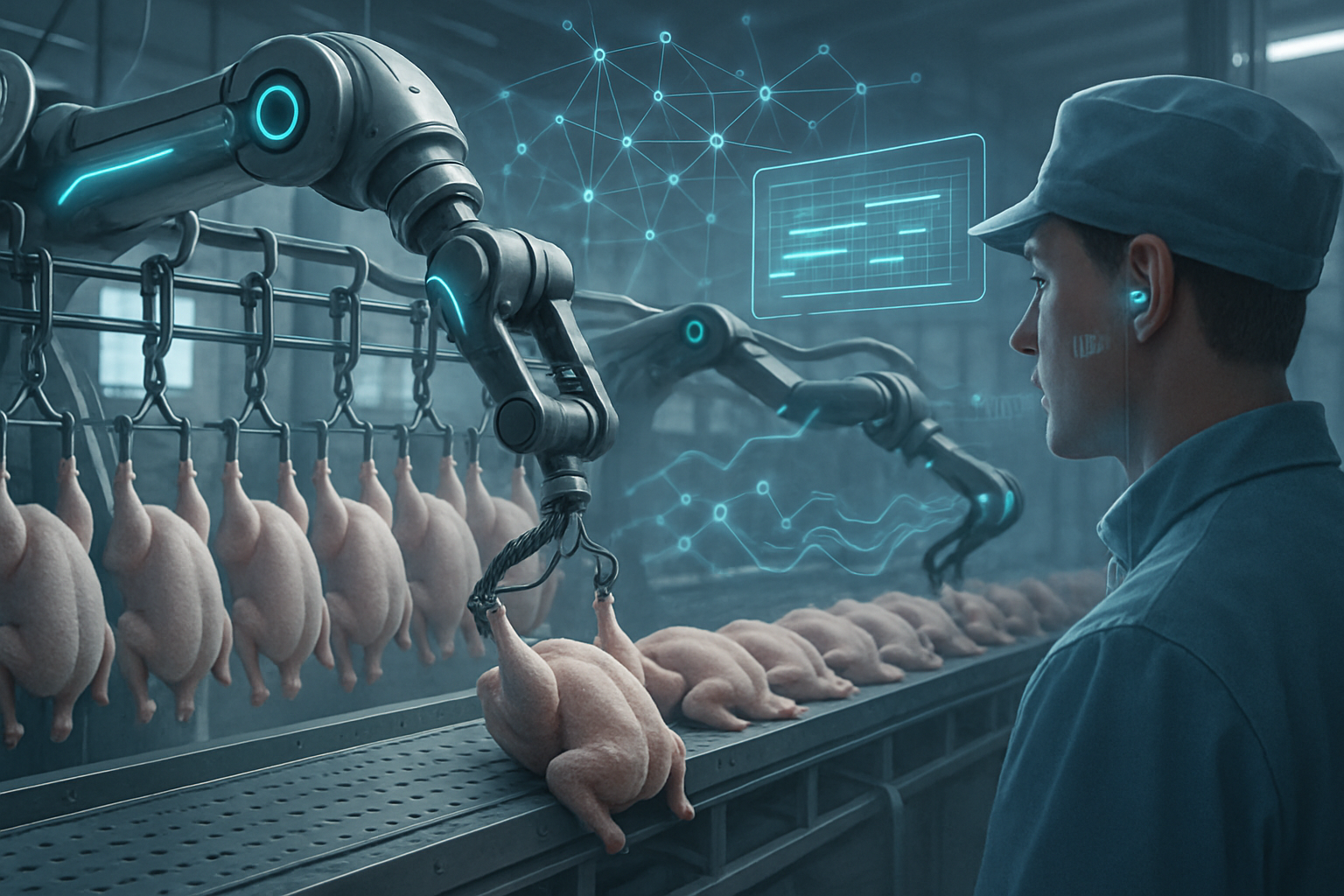
  • AI Takes Flight: Revolutionizing Poultry Processing with Predictive Scheduling and Voice Assistants

    AI Takes Flight: Revolutionizing Poultry Processing with Predictive Scheduling and Voice Assistants

    The global poultry processing industry is undergoing a profound transformation, propelled by the latest advancements in Artificial Intelligence. At the forefront of this revolution are sophisticated AI-powered predictive scheduling systems and intuitive voice-activated assistants, fundamentally reshaping how poultry products are brought to market. These innovations promise to deliver unprecedented levels of efficiency, food safety, and sustainability, addressing critical challenges faced by producers worldwide.

    The immediate significance of these AI deployments lies in their ability to optimize complex operations from farm to fork. Predictive scheduling, leveraging advanced machine learning, ensures that production aligns perfectly with demand, minimizing waste and maximizing resource utilization. Simultaneously, voice-activated assistants, powered by conversational AI, empower factory workers with hands-free, real-time information and guidance, significantly boosting productivity and streamlining workflows in fast-paced environments. This dual approach marks a pivotal moment, moving the industry from traditional, often reactive, methods to a proactive, data-driven paradigm, poised to meet escalating global demand for poultry products efficiently and ethically.

    Unpacking the Technical Revolution: From Algorithms to Conversational AI

    The technical underpinnings of AI in poultry processing represent a leap forward from previous approaches. Predictive scheduling relies on a suite of sophisticated machine learning models and neural networks. Algorithms such as regression techniques (e.g., linear regression, support vector regression) analyze historical production data, breed standards, environmental conditions, and real-time feed consumption to forecast demand and optimize harvest schedules. Deep learning models, including Convolutional Neural Networks (CNNs) like YOLOv8, are deployed for real-time monitoring, such as accurate chicken counting and health issue detection through fecal image analysis (using models like EfficientNetB7). Backpropagation Neural Networks (BPNNs) and Support Vector Machines (SVMs) are used to classify raw poultry breast myopathies with high accuracy, far surpassing traditional statistical methods. These AI systems dynamically adjust schedules based on live data, preventing overproduction or shortages, a stark contrast to static, assumption-based manual planning.

    Voice-activated assistants, on the other hand, are built upon a foundation of advanced Natural Language Processing (NLP) and Large Language Models (LLMs). The process begins with robust Speech-to-Text (STT) technology (Automatic Speech Recognition – ASR) that converts spoken commands into text, capable of handling factory noise and diverse accents. NLP then interprets the user's intent and context, even with nuanced language, through Natural Language Understanding (NLU). Finally, Natural Language Generation (NLG) and LLMs (like those from OpenAI) craft coherent, contextually aware responses. This allows for natural, conversational interactions, moving beyond the rigid, rule-based systems of traditional Interactive Voice Response (IVR). The hands-free operation in often cold, wet, and gloved environments is a significant technical advantage, providing instant access to information without interrupting physical tasks.

    Initial reactions from the AI research community and industry experts have been overwhelmingly positive. Industry professionals view these advancements as essential for competitiveness, food safety, and yield improvement, emphasizing the need for "digital transformation" and breaking down "data silos" within the Industry 4.0 framework. Researchers are actively refining algorithms for computer vision (e.g., advanced object detection for monitoring), machine learning (e.g., myopathy detection), and even vocalization analysis for animal welfare. Both groups acknowledge the challenges of data quality and the need for explainable AI models to build trust, but the consensus is that these technologies offer unprecedented precision, real-time control, and predictive capabilities, fundamentally reshaping the sector.

    Corporate Flight Paths: Who Benefits in the AI Poultry Race

    The integration of AI in poultry processing is creating a dynamic landscape for AI companies, tech giants, and startups, reconfiguring competitive advantages and market positioning. Specialized AI companies focused on industrial automation and food tech stand to benefit immensely by providing bespoke solutions, such as AI-powered vision systems for quality control and algorithms for predictive maintenance.

    Tech giants, while not always developing poultry-specific AI directly, are crucial enablers. Companies like Google (NASDAQ: GOOGL) and Microsoft (NASDAQ: MSFT) provide the foundational AI infrastructure, cloud computing services, and general AI/ML platforms that power these specialized applications. Their ongoing large-scale AI research and development indirectly contribute to the entire ecosystem, creating a fertile ground for innovation. The increasing investment in AI across manufacturing and supply chain operations, projected to grow significantly, underscores the opportunity for these core technology providers.

    Startups are particularly well-positioned to disrupt existing practices with agile, specialized solutions. Venture arms of major food corporations, such as Tyson Ventures (from Tyson Foods, NYSE: TSN), are actively partnering with and investing in startups focusing on areas like food waste reduction, animal welfare, and efficient logistics. This provides a direct pathway for innovative young companies to gain traction and funding. Companies like BAADER (private), with its AI-powered ClassifEYE vision system, and Cargill (private), through innovations like 'Birdoo' developed with Knex, are leading the charge in deploying intelligent, learning tools for real-time quality control and flock insights. Other significant players include Koch Foods (private) utilizing AI for demand forecasting, and AZLOGICA® (private) offering IoT and AI solutions for agricultural optimization.

    This shift presents several competitive implications. There's an increased demand for specialized AI talent, and new vertical markets are opening for tech giants. Companies that can demonstrate positive societal impact (e.g., sustainability, animal welfare) alongside economic benefits may gain a reputational edge. The massive data generated will drive demand for robust edge computing and advanced analytics platforms, areas where tech giants excel. Furthermore, the potential for robust, industrial-grade voice AI solutions, akin to those seen in fast-food drive-thrus, creates opportunities for companies specializing in this domain.

    The disruption to existing products and services is substantial. AI-driven robotics are fundamentally altering manual labor roles, addressing persistent labor shortages but also raising concerns about job displacement. AI-powered vision systems are disrupting conventional, often slower, manual quality control methods. Predictive scheduling is replacing static production plans, leading to more dynamic and responsive supply chains. Reactive disease management is giving way to proactive prevention through real-time monitoring. The market will increasingly favor "smart" machinery and integrated AI platforms over generic equipment and software. This leads to strategic advantages in cost leadership, differentiation through enhanced quality and safety, operational excellence, and improved sustainability, positioning early adopters as market leaders.

    A Wider Lens: AI's Footprint in the Broader World

    AI's integration into poultry processing is not an isolated event but a significant component within broader AI trends encompassing precision agriculture, industrial automation, and supply chain optimization. In precision agriculture, AI extends beyond crop management to continuous monitoring of bird health, behavior, and microenvironments, detecting issues earlier than human observation. Within industrial automation, AI transforms food manufacturing lines by enabling robots to perform precise, individualized tasks like cutting and deboning, adapting to the biological variability of each bird – a challenge that traditional, rigid automation couldn't overcome. For the supply chain, AI is pivotal in optimizing demand forecasting, inventory management, and logistics, ensuring product freshness and reducing waste.

    The broader impacts are far-reaching. Societally, AI enhances food safety, addresses labor shortages in demanding roles, and improves animal welfare through continuous, data-driven monitoring. Economically, it boosts efficiency, productivity, and profitability, with the AI-driven food tech market projected for substantial growth into the tens of billions by 2030. Environmentally, AI contributes to sustainability by reducing food waste through accurate forecasting and optimizing resource consumption (feed, water, energy), thereby lowering the industry's carbon footprint.

    However, these advancements are not without concerns. Job displacement is a primary worry, as AI-driven automation replaces manual labor, necessitating workforce reskilling and potentially impacting rural communities. Ethical AI considerations include algorithmic bias, the need for transparency in "black box" models, and ensuring responsible use, particularly concerning animal welfare. Data privacy is another critical concern, as vast amounts of data are collected, raising questions about collection, storage, and potential misuse, demanding robust compliance with regulations like GDPR. High initial investment and the need for specialized technical expertise also pose barriers for smaller producers.

    Compared to previous AI milestones, the current wave in poultry processing showcases AI's maturing ability to tackle complex, variable biological systems, moving beyond the uniform product handling seen in simpler industrial automation. It mirrors the data-driven transformations observed in finance and healthcare, applying predictive analytics and complex problem-solving to a traditionally slower-to-adopt sector. The use of advanced capabilities like hyperspectral imaging for defect detection and VR-assisted robotics for remote control highlights a level of sophistication comparable to breakthroughs in medical imaging or autonomous driving, signifying a profound shift from basic automation to truly intelligent, adaptive systems.

    The Horizon: What's Next for AI in Poultry

    Looking ahead, the trajectory of AI in poultry processing points towards even more integrated and autonomous systems. In the near term, predictive scheduling will become even more granular, offering continuous, self-correcting 14-day forecasts for individual flocks, optimizing everything from feed delivery to precise harvest dates. Voice-activated assistants will evolve to offer more sophisticated, context-aware guidance, potentially integrating with augmented reality to provide visual overlays for tasks or real-time quality checks, further enhancing worker productivity and safety.

    Longer-term developments will see AI-powered robotics expanding beyond current capabilities to perform highly complex and delicate tasks like advanced deboning and intelligent cutting with millimeter precision, significantly reducing waste and increasing yield. Automated quality control will incorporate quantum sensors for molecular-level contamination detection, setting new benchmarks for food safety. Generative AI is expected to move beyond recipe optimization to automated product development and sophisticated quality analysis across the entire food processing chain, potentially creating entirely new product lines based on market trends and nutritional requirements.

    The pervasive integration of AI with other advanced technologies like the Internet of Things (IoT) for real-time monitoring and blockchain for immutable traceability will create truly transparent and interconnected supply chains. Innovations such as AI-powered automated chick sexing and ocular vaccination are predicted to revolutionize hatchery operations, offering significant animal welfare benefits and operational efficiencies. Experts widely agree that AI, alongside robotics and virtual reality, will be "game changers," driven by consumer demand, rising labor costs, and persistent labor shortages.

    Despite this promising outlook, challenges remain. The high initial investment and the ongoing need for specialized technical expertise and training for the workforce are critical hurdles. Ensuring data quality and seamlessly integrating new AI systems with existing legacy infrastructure will also be crucial. Furthermore, the inherent difficulty in predicting nuanced human behavior for demand forecasting and the risk of over-reliance on predictive models need careful management. Experts emphasize the need for hybrid AI models that combine biological logic with algorithmic predictions to build trust and prevent unforeseen operational issues. The industry will need to navigate these complexities to fully realize AI's transformative potential.

    Final Assessment: A New Era for Poultry Production

    The advancements in AI for poultry processing, particularly in predictive scheduling and voice-activated assistants, represent a pivotal moment in the industry's history. This is not merely an incremental improvement but a fundamental re-architecting of how poultry is produced, processed, and delivered to consumers. The shift to data-driven, intelligent automation marks a significant milestone in AI's journey, demonstrating its capacity to bring unprecedented efficiency, precision, and sustainability to even the most traditional and complex industrial sectors.

    The long-term impact will be a more resilient, efficient, and ethical global food production system. As of October 17, 2025, the industry is poised for continued rapid innovation. We are moving towards a future where AI-powered systems can continuously learn, adapt, and optimize every facet of poultry management, from farm to table. This will lead to higher quality products, enhanced food safety, reduced environmental footprint, and improved animal welfare, all while addressing the critical challenges of labor shortages and increasing global demand.

    In the coming weeks and months, watch for accelerating adoption of advanced robotics, further integration of AI with IoT and blockchain for end-to-end traceability, and the emergence of more sophisticated generative AI applications for product development. Crucially, pay attention to how the industry addresses the evolving workforce needs, focusing on training and upskilling to ensure a smooth transition into this AI-powered future. The poultry sector, once considered traditional, is now a vibrant arena for technological innovation, setting a precedent for other agricultural and industrial sectors worldwide.


    This content is intended for informational purposes only and represents analysis of current AI developments.

    TokenRing AI delivers enterprise-grade solutions for multi-agent AI workflow orchestration, AI-powered development tools, and seamless remote collaboration platforms.
    For more information, visit https://www.tokenring.ai/.

  • UmamiPredict: AI’s Groundbreaking Leap into the Science of Taste

    In a significant stride for artificial intelligence and food science, the groundbreaking machine learning model, UmamiPredict, has emerged, demonstrating an unprecedented ability to predict the umami taste of molecules and peptides. Developed by a research team led by Singh, Goel, and Garg, and published in Molecular Diversity, this innovation marks a profound convergence of AI with molecular gastronomy, promising to revolutionize how we understand, create, and experience flavor. The model's immediate significance lies in its potential to dramatically accelerate food product development, enhance culinary innovation, and deepen our scientific understanding of taste perception, moving beyond subjective human assessment to precise, data-driven prediction.

    The advent of UmamiPredict signals a new era for the food industry, where the elusive fifth taste can now be decoded at a molecular level. This capability is poised to assist food manufacturers in formulating healthier, more appealing products by naturally enhancing umami, reducing reliance on artificial additives, and optimizing ingredient selection for maximum flavor impact. For consumers, this could translate into a wider array of delicious and nutritious food options, while for researchers, it opens new avenues for exploring the complex interplay between chemical structures and sensory experiences.

    Deciphering the Fifth Taste: The Technical Prowess of UmamiPredict

    UmamiPredict operates by processing the chemical structures of molecules and peptides, typically utilizing the SMILES (Simplified Molecular Input Line Entry System) representation as its input data. Its primary output is the accurate prediction of umami taste, a feat that has long challenged traditional scientific methods. While specific proprietary details of UmamiPredict's architecture are not fully public, the broader landscape of taste prediction models, within which UmamiPredict resides, leverages a sophisticated array of machine learning algorithms. These include tree-based models like Random Forest and Adaptive Boosting, as well as Neural Networks, often incorporating advanced feature engineering techniques such as Morgan Fingerprints and the Tanimoto Similarity Index to represent chemical structures effectively. Physicochemical features like ATSC1m, Xch_6d, and JGI1 have been identified as particularly important for umami prediction.

    This model, and others like it such as VirtuousUmami, represent a significant departure from previous umami prediction methods. Earlier approaches often relied on the amino acid sequence of peptides, limiting their applicability. UmamiPredict, however, can predict umami taste from general molecular annotations, allowing for the screening of diverse compound types and the exploration of extensive molecular databases. This capability to differentiate subtle variations in molecular structures to predict their impact on umami sensation is described as a "paradigm shift." Performance metrics for related models, like VirtuousMultiTaste, showcase high accuracy, with umami flavor prediction achieving an Area Under the Curve (AUC) value of 0.98, demonstrating the robustness of these AI-driven approaches. Initial reactions from both the AI research community and food industry experts have been overwhelmingly positive, hailing the technology as crucial for advancing the scientific understanding of taste and offering pivotal tools for accelerating flavor compound development and streamlining product innovation.

    Corporate Appetites: Implications for the AI and Food Industries

    The emergence of UmamiPredict carries substantial implications for a wide array of companies, from established food and beverage giants to agile food tech startups and major AI labs. Food and beverage manufacturers such as Nestlé (SWX: NESN), Mars, Coca-Cola (NYSE: KO), and Mondelez (NASDAQ: MDLZ), already investing heavily in AI for product innovation, stand to benefit immensely. They can leverage UmamiPredict to accelerate the creation of new savory products, reformulate existing ones to enhance natural umami, and meet the growing consumer demand for healthier, "clean label" options with reduced sodium without compromising taste. Plant-based and alternative protein companies like Impossible Foods and Beyond Meat (NASDAQ: BYND) could also utilize this technology to fine-tune their formulations, making plant-based alternatives more closely mimic the savory profiles of animal proteins.

    Major flavor houses and ingredient suppliers, including Givaudan (SWX: GIVN), Firmenich, IFF (NYSE: IFF), and Symrise (ETR: SY1), are poised to gain a significant competitive edge. UmamiPredict can enable them to develop novel umami-rich ingredients and flavor blends more rapidly and efficiently, drastically reducing the time from concept to viable flavor prototype. This agility is crucial in a fast-evolving market. For major AI labs and tech companies like Google (NASDAQ: GOOGL), IBM (NYSE: IBM), Microsoft (NASDAQ: MSFT), and Amazon (NASDAQ: AMZN), the success of specialized AI models like UmamiPredict could incentivize further expansion into niche AI applications or lead to strategic partnerships and acquisitions within the food science domain. The potential disruption to existing services is also noteworthy; the lengthy and costly process of traditional trial-and-error product development and human sensory panel testing could be significantly streamlined, if not partially replaced, by AI-driven predictions, leading to faster time-to-market and enhanced product success rates.

    A New Frontier in Sensory AI: Wider Significance and Ethical Considerations

    UmamiPredict fits seamlessly into the broader AI landscape, embodying several key trends: predictive AI for scientific discovery, the expansion of AI into complex sensory domains, and data-driven innovation. It represents a fundamental shift in how research and development are conducted, moving beyond laborious experimentation to explore vast possibilities with unprecedented precision. This concept, often termed "AI for Science," is a paradigm shift in how research and development are conducted. This development mirrors advancements in "Sensory AI," where systems are learning to understand taste and tactile sensations by mapping molecular structures to human perception, bridging different domains of human experience.

    The wider impacts are profound, transforming not only the food industry but also potentially influencing pharmaceuticals, healthcare, and materials design. The methodology of predicting properties from molecular structures resonates strongly with AI's growing role in materials discovery, where AI tools accelerate the process of predicting material properties and even generating novel materials. However, this transformative power also brings potential concerns. Challenges remain in ensuring the absolute accuracy and reliability of predictions for subjective experiences like taste, which are influenced by numerous factors beyond molecular composition. Data quality and potential biases in training datasets are critical considerations, as is the interpretability of AI models – understanding why a model makes a certain prediction. Ethical implications surrounding the precise engineering of flavors and the potential manipulation of consumer preferences will necessitate robust AI frameworks. Nevertheless, UmamiPredict stands as a significant milestone, evolving from traditional subjective sensory evaluation methods and "electronic senses" by directly predicting taste from molecular structure, much like generative AI models are revolutionizing materials discovery by creating novel structures based on desired properties.

    The Future Palate: Expected Developments and Looming Challenges

    In the near term, UmamiPredict is expected to undergo continuous refinement through ongoing research and the integration of continuous learning algorithms, enhancing its predictive accuracy. Researchers envision an updated version capable of predicting a broader spectrum of tastes beyond just umami, moving towards a more comprehensive understanding of flavor profiles. Long-term, UmamiPredict's implications could extend to molecular biology and pharmacology, where understanding molecular taste interactions could hold significant research value.

    On the horizon, potential applications are vast. AI will not only predict successful flavors and textures for new products but also extrapolate consumer taste preferences across different regions, helping companies predict market popularity and forecast local flavor trends in real-time. This could lead to hyper-personalized food and beverage offerings tailored to individual or regional preferences. AI-driven ingredient screening will swiftly analyze vast chemical databases to identify candidate compounds with desired taste qualities, accelerating the discovery of new ingredients or flavor enhancers. However, significant challenges persist. Accurately predicting taste solely from chemical structure remains complex, and the intricate molecular mechanisms underlying taste perception are still not fully clear. Data privacy, the need for specialized training for users, and seamless integration with existing systems are practical hurdles. Experts predict a future characterized by robust human-AI collaboration, where AI augments human capabilities, allowing experts to focus on creative and strategic tasks. The market for smart systems in the food and beverage industry is projected to grow substantially, driven by this transformative role of AI in accelerating product development and delivering comprehensive flavor and texture prediction.

    A Taste of Tomorrow: Wrapping Up UmamiPredict's Significance

    UmamiPredict represents a monumental step in the application of artificial intelligence to the intricate world of taste. Its ability to accurately predict the umami taste of molecules from their chemical structures is a testament to AI's growing capacity to decipher and engineer complex sensory experiences. The key takeaways from this development are clear: AI is poised to revolutionize food product development, accelerate innovation in the flavor industry, and deepen our scientific understanding of taste perception.

    This breakthrough signifies a critical moment in AI history, moving beyond traditional data analysis into the realm of subjective sensory prediction. It aligns with broader trends of AI for scientific discovery and the development of sophisticated sensory AI systems. While challenges related to accuracy, data quality, and ethical considerations require diligent attention, UmamiPredict underscores the profound potential of AI to reshape not just industries, but also our fundamental interaction with the world around us. In the coming weeks and months, the industry will be watching closely for further refinements to the model, its integration into commercial R&D pipelines, and the emergence of new products that bear the signature of AI-driven flavor innovation. The future of taste, it seems, will be increasingly intelligent.

    This content is intended for informational purposes only and represents analysis of current AI developments.

    TokenRing AI delivers enterprise-grade solutions for multi-agent AI workflow orchestration, AI-powered development tools, and seamless remote collaboration platforms. For more information, visit https://www.tokenring.ai/.