
Tag: Foxconn

  • The Silicon Shield Moves West: US and Taiwan Ink $500 Billion AI and Semiconductor Reshoring Pact

    The Silicon Shield Moves West: US and Taiwan Ink $500 Billion AI and Semiconductor Reshoring Pact

    In a move that signals a seismic shift in the global technology landscape, the United States and Taiwan finalized a historic trade and investment agreement on January 15, 2026. The deal, spearheaded by the U.S. Department of Commerce, centers on a massive $250 billion direct investment pledge from Taiwanese industry titans to build advanced semiconductor and artificial intelligence production capacity on American soil. Combined with an additional $250 billion in credit guarantees from the Taiwanese government to support supply-chain migration, the $500 billion package represents the most significant effort in history to reshore the foundations of the digital age.

    The agreement aims to fundamentally alter the geographical concentration of high-end computing. Its central strategic pillar is an ambitious goal to relocate 40% of Taiwan’s entire chip supply chain to the United States within the next few years. By creating a domestic "Silicon Shield," the U.S. hopes to secure its leadership in the AI revolution while mitigating the risks of regional instability in the Pacific. For Taiwan, the pact serves as a "force multiplier," ensuring that its "Sacred Mountain" of tech companies remains indispensable to the global economy through a permanent and integrated presence in the American industrial heartland.

    The "Carrot and Stick" Framework: Section 232 and the Quota System

    The technical core of the agreement revolves around a sophisticated utilization of Section 232 of the Trade Expansion Act, transforming traditional protectionist tariffs into powerful incentives for industrial relocation. To facilitate the massive capital flight required, the U.S. has introduced a "quota-based exemption" model. Under this framework, Taiwanese firms that commit to building new U.S.-based capacity are granted the right to import up to 2.5 times their planned U.S. production volume from their home facilities in Taiwan entirely duty-free during the construction phase. Once these facilities become operational, the companies maintain a 1.5-times duty-free import quota based on their actual U.S. output.

    This mechanism is designed to prevent supply chain disruptions while the new American "Gigafabs" are being built. Furthermore, the agreement caps general reciprocal tariffs on a wide range of goods—including auto parts and timber—at 15%, down from previous rates that reached as high as 32% for certain sectors. For the AI research community, the inclusion of 0% tariffs on generic pharmaceuticals and specialized aircraft components is seen as a secondary but vital win for the broader high-tech ecosystem. Initial reactions from industry experts have been largely positive, with many praising the deal's pragmatic approach to bridging the cost gap between manufacturing in East Asia versus the United States.

    Corporate Titans Lead the Charge: TSMC, Foxconn, and the 2nm Race

    The success of the deal rests on the shoulders of Taiwan’s largest corporations. Taiwan Semiconductor Manufacturing Co., Ltd. (NYSE: TSM) has already confirmed that its 2026 capital expenditure will surge to a record $52 billion to $56 billion. As a direct result of the pact, TSM has acquired hundreds of additional acres in Arizona to create a "Gigafab" cluster. This expansion is not merely about volume; it includes the rapid deployment of 2nm production lines and advanced "CoWoS" packaging facilities, which are essential for the next generation of AI accelerators used by firms like NVIDIA Corp. (NASDAQ: NVDA).

    Hon Hai Precision Industry Co., Ltd., better known as Foxconn (OTC: HNHPF), is also pivoting its U.S. strategy toward high-end AI infrastructure. Under the new trade framework, Foxconn is expanding its footprint to assemble the highly complex NVL 72 AI servers for NVIDIA and has entered a strategic partnership with OpenAI to co-design AI hardware components within the U.S. Meanwhile, MediaTek Inc. (TPE: 2454) is shifting its smartphone System-on-Chip (SoC) roadmap to utilize U.S.-based 2nm nodes, a strategic move to avoid potential 100% tariffs on foreign-made chips that could be applied to companies not participating in the reshoring initiative. This positioning grants these firms a massive competitive advantage, securing their access to the American market while stabilizing their supply lines against geopolitical volatility.

    A New Era of Economic Security and Geopolitical Friction

    This agreement is more than a trade deal; it is a declaration of economic sovereignty. By aiming to bring 40% of the supply chain to the U.S., the Department of Commerce is attempting to reverse a thirty-year decline in American wafer fabrication, which fell from a 37% global share in 1990 to less than 10% in 2024. The deal seeks to replicate Taiwan’s successful "Science Park" model in states like Arizona, Ohio, and Texas, creating self-sustaining industrial clusters where R&D and manufacturing exist side-by-side. This move is seen as the ultimate insurance policy for the AI era, ensuring that the hardware required for LLMs and autonomous systems is produced within a secure domestic perimeter.

    However, the pact has not been without its detractors. Beijing has officially denounced the agreement as "economic plunder," accusing the U.S. of hollowing out Taiwan’s industrial base for its own gain. Within Taiwan, a heated debate persists regarding the "brain drain" of top engineering talent to the U.S. and the potential loss of the island's "Silicon Shield"—the theory that its dominance in chipmaking protects it from invasion. In response, Taiwanese Vice Premier Cheng Li-chiun has argued that the deal represents a "multiplication" of Taiwan's strength, moving from a single island fortress to a global distributed network that is even harder to disrupt.

    The Road Ahead: 2026 and Beyond

    Looking toward the near-term, the focus will shift from diplomatic signatures to industrial execution. Over the next 18 to 24 months, the tech industry will watch for the first "breaking of ground" on the new Gigafab sites. The primary challenge remains the development of a skilled workforce; the agreement includes provisions for "educational exchange corridors," but the sheer scale of the 40% reshoring goal will require tens of thousands of specialized engineers that the U.S. does not currently have in reserve.

    Experts predict that if the "2.5x/1.5x" quota system proves successful, it could serve as a blueprint for similar trade agreements with other key allies, such as Japan and South Korea. We may also see the emergence of "sovereign AI clouds"—compute clusters owned and operated within the U.S. using exclusively domestic-made chips—which would have profound implications for government and military AI applications. The long-term vision is a world where the hardware for artificial intelligence is no longer a bottleneck or a geopolitical flashpoint, but a commodity produced with American energy and labor.

    Final Reflections on a Landmark Moment

    The US-Taiwan Agreement of January 2026 marks a definitive turning point in the history of the information age. By successfully incentivizing a $250 billion private sector investment and securing a $500 billion total support package, the U.S. has effectively hit the "reset" button on global manufacturing. This is not merely an act of protectionism, but a massive strategic bet on the future of AI and the necessity of a resilient, domestic supply chain for the technologies that will define the rest of the century.

    As we move forward, the key metrics of success will be the speed of fab construction and the ability of the U.S. to integrate these Taiwanese giants into its domestic economy without stifling innovation. For now, the message to the world is clear: the era of hyper-globalized, high-risk supply chains is ending, and the era of the "domesticated" AI stack has begun. Investors and industry watchers should keep a close eye on the quarterly Capex reports of TSMC and Foxconn throughout 2026, as these will be the first true indicators of how quickly this historic transition is taking hold.


    This content is intended for informational purposes only and represents analysis of current AI developments.

    TokenRing AI delivers enterprise-grade solutions for multi-agent AI workflow orchestration, AI-powered development tools, and seamless remote collaboration platforms.
    For more information, visit https://www.tokenring.ai/.
  • AI Infrastructure Titan: Hon Hai’s Unprecedented Surge Fuels Global AI Ambitions

    AI Infrastructure Titan: Hon Hai’s Unprecedented Surge Fuels Global AI Ambitions

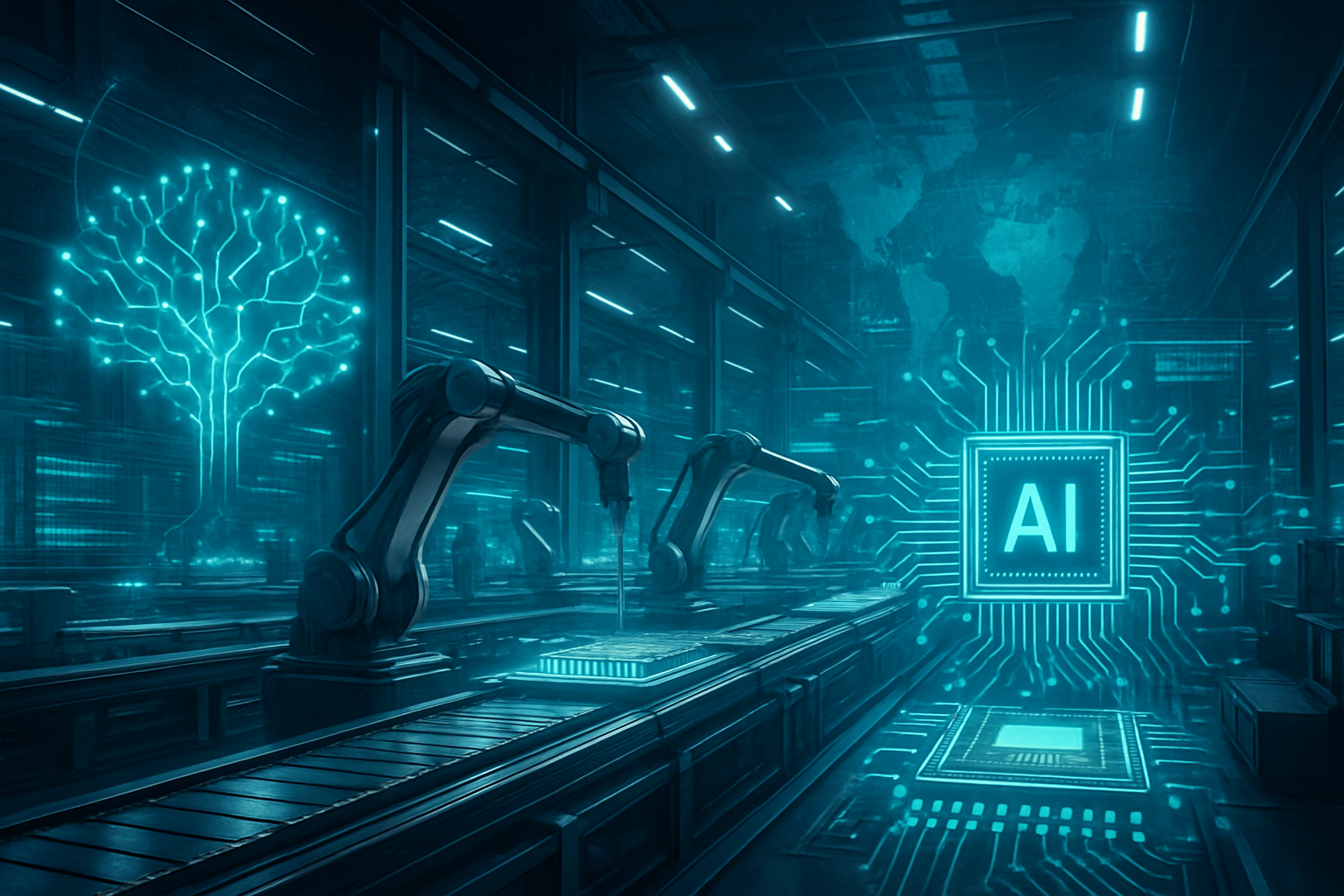
    The global demand for Artificial Intelligence (AI) is reaching a fever pitch, and at the heart of this technological revolution stands Hon Hai Technology Group (TWSE: 2317), better known as Foxconn. Once primarily recognized as the manufacturing backbone for consumer electronics, Hon Hai has strategically pivoted, becoming an indispensable partner in the burgeoning AI infrastructure market. Its deep and expanding collaboration with Nvidia (NASDAQ: NVDA), the leading AI chip designer, is not only driving unprecedented sales for the Taiwanese giant but also fundamentally reshaping the landscape of AI development and deployment worldwide.

    This dramatic shift underscores a pivotal moment in the AI industry. As companies race to build and deploy ever more sophisticated AI models, the foundational hardware – particularly high-performance AI servers and GPU clusters – has become the new gold. Hon Hai's ability to rapidly scale production of these critical components positions it as a key enabler of the AI era, with its financial performance now inextricably linked to the trajectory of AI innovation.

    The Engine Room of AI: Hon Hai's Technical Prowess and Nvidia Synergy

    Hon Hai's transformation into an AI infrastructure powerhouse is built on a foundation of sophisticated manufacturing capabilities and a decade-long strategic alliance with Nvidia. The company is not merely assembling components; it is deeply involved in developing and producing the complex, high-density systems required for cutting-edge AI workloads. This includes being the exclusive manufacturer of Nvidia's most advanced compute GPU modules, such as the A100, A800, H100, and H800, and producing over 50% of Nvidia's HGX boards. Furthermore, Hon Hai assembles complete Nvidia DGX servers and entire AI server racks, which are the backbone of modern AI data centers.

    What sets Hon Hai apart is its comprehensive approach. Beyond individual components, the company is integrating Nvidia's accelerated computing platforms to develop new classes of data centers. This includes leveraging the latest Nvidia GH200 Grace Hopper Superchips and Nvidia AI Enterprise software to create "AI factory supercomputers." An ambitious project with the Taiwanese government aims to build such a facility featuring 10,000 Nvidia Blackwell GPUs, providing critical AI computing resources. Hon Hai's subsidiary, Big Innovation Company, is set to become Taiwan's first Nvidia Cloud Partner, further cementing this collaborative ecosystem. This differs significantly from previous approaches where contract manufacturers primarily focused on mass production of consumer devices; Hon Hai is now a co-developer and strategic partner in advanced computing infrastructure. Initial reactions from the AI research community and industry experts highlight Hon Hai's critical role in alleviating hardware bottlenecks, enabling faster deployment of large language models (LLMs) and other compute-intensive AI applications.

    Reshaping the Competitive Landscape for AI Innovators

    Hon Hai's dominant position in AI server manufacturing has profound implications for AI companies, tech giants, and startups alike. With Foxconn producing over half of Nvidia-based AI hardware and approximately 70% of AI servers globally – including those for major cloud service providers like Amazon Web Services (NASDAQ: AMZN) and Google (NASDAQ: GOOGL) that utilize proprietary AI processors – its operational efficiency and capacity directly impact the entire AI supply chain. Companies like OpenAI, Anthropic, and countless AI startups, whose very existence relies on access to powerful compute, stand to benefit from Hon Hai's expanded production capabilities.

    This concentration of manufacturing power also has competitive implications. While it ensures a steady supply of critical hardware, it also means that the pace of AI innovation is, to a degree, tied to Hon Hai's manufacturing prowess. Tech giants with direct procurement relationships or strategic alliances with Hon Hai might secure preferential access to next-generation AI infrastructure, potentially widening the gap with smaller players. However, by enabling the mass production of advanced AI servers, Hon Hai also democratizes access to powerful computing, albeit indirectly, by making these systems more available to cloud providers who then offer them as services. This development is disrupting existing product cycles by rapidly accelerating the deployment of new GPU architectures, forcing competitors to innovate faster or risk falling behind. Hon Hai's market positioning as the go-to manufacturer for high-end AI infrastructure provides it with a strategic advantage that extends far beyond traditional electronics assembly.

    Wider Significance: Fueling the AI Revolution and Beyond

    Hon Hai's pivotal role in the AI server market fits squarely into the broader trend of AI industrialization. As AI transitions from research labs to mainstream applications, the need for robust, scalable, and energy-efficient infrastructure becomes paramount. The company's expansion, including plans for an AI server assembly plant in the U.S. and a facility in Mexico for Nvidia's GB200 superchips, signifies a global arms race in AI infrastructure development. This not only boosts manufacturing in these regions but also reduces geographical concentration risks for critical AI components.

    The impacts are far-reaching. Enhanced AI computing availability, facilitated by Hon Hai's production, accelerates research, enables more complex AI models, and drives innovation across sectors from autonomous vehicles (Foxconn Smart EV, built on Nvidia DRIVE Hyperion 9) to smart manufacturing (robotics systems based on Nvidia Isaac) and smart cities (Nvidia Metropolis intelligent video analytics). Potential concerns, however, include the environmental impact of massive data centers, the increasing energy demands of AI, and the geopolitical implications of concentrated AI hardware manufacturing. Compared to previous AI milestones, where breakthroughs were often software-centric, this era highlights the critical interplay between hardware and software, emphasizing that without the physical infrastructure, even the most advanced algorithms remain theoretical. Hon Hai's internal development of "FoxBrain," a large language model trained on 120 Nvidia H100 GPUs for manufacturing functions, further illustrates the company's commitment to leveraging AI within its own operations, improving efficiency by over 80% in some areas.

    The Road Ahead: Anticipating Future AI Infrastructure Developments

    Looking ahead, the trajectory of AI infrastructure development, heavily influenced by players like Hon Hai and Nvidia, points towards even more integrated and specialized systems. Near-term developments include the continued rollout of next-generation AI chips like Nvidia's Blackwell architecture and Hon Hai's increased production of corresponding servers. The collaboration on humanoid robots for manufacturing, with a new Houston factory slated to produce Nvidia's GB300 AI servers in Q1 2026 using these robots, signals a future where AI and robotics will not only be products but also integral to the manufacturing process itself.

    Potential applications and use cases on the horizon include the proliferation of edge AI devices, requiring miniaturized yet powerful AI processing capabilities, and the development of quantum-AI hybrid systems. Challenges that need to be addressed include managing the immense power consumption of AI data centers, developing sustainable cooling solutions, and ensuring the resilience of global AI supply chains against disruptions. Experts predict a continued acceleration in the pace of hardware innovation, with a focus on specialized accelerators and more efficient interconnect technologies to support the ever-growing computational demands of AI, particularly for multimodal AI and foundation models. Hon Hai Chairman Young Liu's declaration of 2025 as the "AI Year" for the group, projecting annual AI server-related revenue to exceed NT$1 trillion, underscores the magnitude of this impending transformation.

    A New Epoch in AI Manufacturing: The Enduring Impact

    Hon Hai's remarkable surge, driven by an insatiable global appetite for AI, marks a new epoch in the history of artificial intelligence. Its transformation from a general electronics manufacturer to a specialized AI infrastructure titan is a testament to the profound economic and technological shifts underway. The company's financial results for Q2 2025, reporting a 27% year-over-year increase in net profit and cloud/networking products (including AI servers) becoming the largest revenue contributor at 41%, clearly demonstrate this paradigm shift. Hon Hai's projected AI server revenue increase of over 170% year-over-year for Q3 2025 further solidifies its critical role.

    The key takeaway is that the AI revolution is not just about algorithms; it's fundamentally about the hardware that powers them. Hon Hai, in close partnership with Nvidia, has become the silent, yet indispensable, engine driving this revolution. Its significance in AI history will be remembered as the company that scaled the production of the foundational computing power required to bring AI from academic curiosity to widespread practical application. In the coming weeks and months, we will be watching closely for further announcements regarding Hon Hai's expansion plans, the deployment of new AI factory supercomputers, and the continued integration of AI and robotics into its own manufacturing processes – all indicators of a future increasingly shaped by intelligent machines and the infrastructure that supports them.

    This content is intended for informational purposes only and represents analysis of current AI developments.

    TokenRing AI delivers enterprise-grade solutions for multi-agent AI workflow orchestration, AI-powered development tools, and seamless remote collaboration platforms.
    For more information, visit https://www.tokenring.ai/.