
Tag: France

  • The Rise of the Silicon Fortress: How the ‘Sovereign AI’ Movement is Redrawing the Global Tech Map

    The Rise of the Silicon Fortress: How the ‘Sovereign AI’ Movement is Redrawing the Global Tech Map

    As of January 2026, the global artificial intelligence landscape has shifted from a race between private tech giants to a high-stakes geopolitical competition for "Sovereign AI." No longer content to "rent" intelligence from Silicon Valley, nations are aggressively building their own end-to-end AI stacks—encompassing domestic hardware, localized data centers, and culturally specific foundation models. This movement, once a strategic talking point, has evolved into a massive industrial mobilization, with countries like the United Arab Emirates, France, and the United Kingdom committing billions to ensure their digital autonomy in an era defined by agentic intelligence.

    The immediate significance of this shift cannot be overstated. By decoupling from the infrastructure of American and Chinese hyperscalers, these nations are attempting to safeguard their national security, preserve linguistic heritage, and insulate their economies from potential supply chain weaponization. The "Sovereign AI" movement represents a fundamental reordering of the digital world, where compute power is now viewed with the same strategic weight as oil reserves or nuclear capabilities.

    Technical Foundations: From Hybrid Architectures to Exascale Compute

    The technical spearhead of the Sovereign AI movement is characterized by a move away from generic, one-size-fits-all models toward specialized architectures. In the UAE, the Technology Innovation Institute (TII) recently launched the Falcon-H1 Arabic and Falcon H1R models in early January 2026. These models utilize a groundbreaking hybrid Mamba-Transformer architecture, which merges the deep reasoning capabilities of traditional Transformers with the linear-scaling efficiency of State Space Models (SSMs). This allows for a massive 256,000-token context window, enabling the UAE’s sovereign systems to process entire national archives or legal frameworks in a single pass—a feat previously reserved for the largest models from OpenAI or Google (NASDAQ: GOOGL).

    In Europe, the technical focus has shifted toward massive compute density. France’s Jean Zay supercomputer, following its "Phase 4" extension in mid-2025, now boasts an AI capacity of 125.9 petaflops, powered by over 1,400 NVIDIA (NASDAQ: NVDA) H100 GPUs. This infrastructure is specifically tuned for "sovereign training," allowing French researchers and companies like Mistral AI to develop models on domestic soil. Looking ahead to later in 2026, France is preparing to inaugurate the Jules Verne system, which aims to be the continent’s second exascale supercomputer, designed specifically for the next generation of "sovereign" foundation models.

    The United Kingdom has countered with its own massive technical investment: the Isambard-AI cluster in Bristol. Fully operational as of mid-2025, it utilizes 5,448 NVIDIA GH200 Grace Hopper superchips to deliver a staggering 21 exaFLOPS of AI performance. Unlike previous generations of supercomputers that were primarily for academic physics simulations, Isambard-AI is a dedicated "AI factory." It is part of a broader £18 billion infrastructure program designed to provide UK startups and government agencies with the raw power needed to build models that comply with British regulatory and safety standards without relying on external cloud providers.

    Market Disruption: The Dawn of the 'Sovereign Cloud'

    The Sovereign AI movement is creating a new class of winners in the tech industry. NVIDIA (NASDAQ: NVDA) has emerged as the primary beneficiary, with CEO Jensen Huang championing the "Sovereign AI" narrative to open up massive new revenue streams from nation-states. While traditional cloud giants like Amazon (NASDAQ: AMZN) and Microsoft (NASDAQ: MSFT) continue to dominate the commercial market, they are facing new competition from state-backed "Sovereign Clouds." These domestic providers offer guarantees that data will never leave national borders, a requirement that is becoming mandatory for government and critical infrastructure AI applications.

    Hardware providers like Hewlett Packard Enterprise (NYSE: HPE) and Intel (NASDAQ: INTC) are also finding renewed relevance as they partner with governments to build localized data centers. For instance, the UK’s Dawn cluster utilizes Intel Data Center GPU Max systems, showcasing a strategic move to diversify hardware dependencies. This shift is disrupting the traditional "winner-takes-all" dynamic of the AI industry; instead of a single global leader, we are seeing the rise of regional champions. Startups that align themselves with sovereign projects, such as France’s Mistral or the UAE’s G42, are gaining access to subsidized compute and government contracts that were previously out of reach.

    However, this trend poses a significant challenge to the dominance of US-based AI labs. As nations build their own "Silicon Fortresses," the addressable market for generic American models may shrink. If a country can provide its citizens and businesses with a "sovereign" model that is faster, cheaper, and more culturally attuned than a generic version of GPT-5, the strategic advantage of the early AI pioneers could rapidly erode.

    Geopolitical Significance: Linguistic Sovereignty and the Silicon Fortress

    Beyond the technical and economic implications, the Sovereign AI movement is a response to a profound cultural and political anxiety. UAE officials have framed the Falcon project as a matter of "linguistic sovereignty." By training models on high-quality Arabic datasets rather than translated English data, they ensure that the AI reflects the nuances of their culture rather than a Western-centric worldview. This is a direct challenge to the "cultural imperialism" of early LLMs, which often struggled with non-Western logic and social norms.

    This movement also signals a shift in global power dynamics. The UK's £18 billion program is a clear signal that the British government views AI as "Critical National Infrastructure" (CNI), on par with the power grid or water supply. By treating AI as a public utility, the UK and France are attempting to prevent a future where they are "vassal states" to foreign tech empires. This has led to what analysts call the "Silicon Fortress" era—a multipolar AI world where data and compute are increasingly siloed behind national borders.

    There are, however, significant concerns. Critics warn that a fragmented AI landscape could lead to a "race to the bottom" regarding AI safety. If every nation develops its own autonomous agents under different regulatory frameworks, global coordination on existential risks becomes nearly impossible. Furthermore, the massive energy requirements of these sovereign supercomputers are clashing with national net-zero goals, forcing governments to make difficult trade-offs between technological supremacy and environmental sustainability.

    The Horizon: Exascale Ambitions and Agentic Autonomy

    Looking toward the remainder of 2026 and beyond, the Sovereign AI movement is expected to move from "foundation models" to "sovereign agents." These are AI systems capable of autonomously managing national logistics, healthcare systems, and energy grids. The UK’s Sovereign AI Unit is already exploring "Agentic Governance" frameworks to oversee these systems. As the £18 billion program continues its rollout, we expect to see the birth of the first "Government-as-a-Service" platforms, where sovereign AI handles everything from tax processing to urban planning with minimal human intervention.

    The next major milestone will be the completion of the Jules Verne exascale system in France and the expansion of the UAE’s partnership with G42 to build a 1GW AI data center on European soil. These projects will likely trigger a second wave of sovereign investment from smaller nations in Southeast Asia and South America, who are watching the UAE-France-UK trio as a blueprint for their own digital independence. The challenge will be the "talent war"—as nations build the hardware, the struggle to attract and retain the world's top AI researchers will only intensify.

    Conclusion: A New Chapter in AI History

    The Sovereign AI movement marks the end of the "borderless" era of artificial intelligence. The massive investments by the UAE, France, and the UK demonstrate that in 2026, technological autonomy is no longer optional—it is a prerequisite for national relevance. From the hybrid architectures of the Falcon-H1 to the exascale ambitions of Isambard-AI and Jules Verne, the infrastructure being built today will define the geopolitical landscape for decades to come.

    As we move forward, the key metric for national success will not just be GDP, but "Compute-per-Capita" and the depth of a nation’s sovereign data reserves. The "Silicon Fortress" is here to stay, and the coming months will reveal whether this multipolar AI world leads to a new era of localized innovation or a fractured global community struggling to govern an increasingly autonomous technology. For now, the race for technological autonomy is in full sprint, and the finish line is nothing less than the future of national identity itself.


    This content is intended for informational purposes only and represents analysis of current AI developments.

    TokenRing AI delivers enterprise-grade solutions for multi-agent AI workflow orchestration, AI-powered development tools, and seamless remote collaboration platforms.
    For more information, visit https://www.tokenring.ai/.
  • French Regulator Dismisses Qwant’s Antitrust Case Against Microsoft, Sending Ripples Through Tech Competition

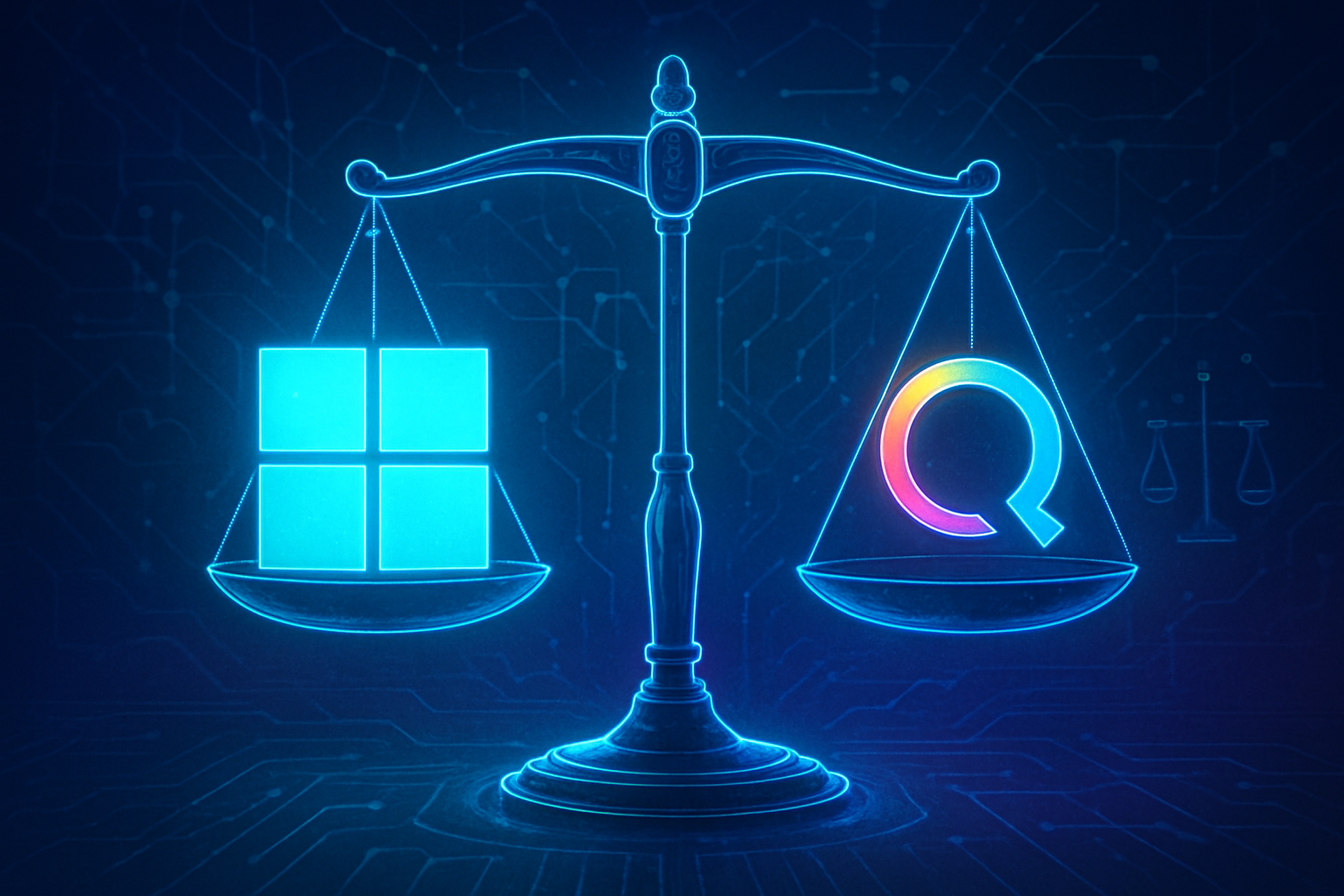
    French Regulator Dismisses Qwant’s Antitrust Case Against Microsoft, Sending Ripples Through Tech Competition

    Paris, France – November 28, 2025 – In a move that underscores the persistent challenges faced by smaller tech innovators against industry behemoths, France's competition watchdog, the Autorité de la concurrence, has dismissed an antitrust complaint filed by French search engine Qwant against tech giant Microsoft (NASDAQ: MSFT). The decision, handed down on November 27, 2025, marks a significant moment for European antitrust enforcement and raises critical questions about the effectiveness of current regulations in fostering fair competition within the rapidly evolving digital landscape.

    The dismissal comes as a blow to Qwant, which has long positioned itself as a privacy-focused alternative to dominant search engines, and highlights the difficulties in proving anti-competitive practices against companies with vast market power. The ruling is expected to be closely scrutinized by other European regulators and tech startups, as it sets a precedent for how allegations of abuse of dominant position and restrictive commercial practices in the digital sector are evaluated.

    The Unraveling of a Complaint: Allegations and the Authority's Verdict

    Qwant's complaint against Microsoft centered on allegations of several anti-competitive practices primarily related to Microsoft's Bing search engine syndication services. Qwant, which previously relied on Bing's technology to power parts of its search and news results, accused Microsoft of leveraging its market position to stifle competition. The core of Qwant's claims included:

    • Imposing Exclusivity Restrictions: Qwant alleged that Microsoft imposed restrictive conditions within its syndication agreements, limiting Qwant's ability to develop its own independent search engine technology, expand its advertising network, and advance its artificial intelligence capabilities. This, Qwant argued, created an unfair dependency.
    • Preferential Treatment for Microsoft's Own Services: The French search engine contended that Microsoft systematically favored its own services when allocating search advertising through the Bing syndication network, thereby disadvantaging smaller European providers and hindering their growth.
    • Abuse of Dominant Position and Economic Dependence: Qwant asserted that Microsoft abused its dominant position in the search syndication market and exploited Qwant's economic dependence on its services, hindering fair market access and development.
    • Exclusive Supply Arrangements and Tying: Specifically, Qwant claimed that Microsoft engaged in "exclusive supply arrangements" and "tying," forcing Qwant to use Microsoft's search results and advertising tools in conjunction, rather than allowing for independent selection and integration of other services.

    However, the Autorité de la concurrence ultimately found these allegations to be insufficiently substantiated. The French regulator dismissed the complaint for several key reasons. Crucially, the authority concluded that Qwant failed to provide "convincing or sufficient evidence" to support its claims of anti-competitive conduct and abusive behavior by Microsoft. The regulator found no adequate proof regarding the alleged exclusivity restrictions or preferential advertising treatment. Furthermore, the Autorité de la concurrence determined that Qwant did not successfully demonstrate that Microsoft held a dominant position in the relevant search syndication market or that Qwant lacked viable alternative services, especially noting Qwant's recent partnership with another search engine to launch a new syndication service using its own technology. Consequently, the watchdog also declined to impose the urgent interim measures against Microsoft that Qwant had requested.

    Competitive Implications: A Setback for Smaller Players

    The dismissal of Qwant's antitrust case against Microsoft carries significant competitive implications, particularly for smaller tech companies and startups striving to compete in markets dominated by tech giants. For Qwant, this decision represents a substantial setback. The French search engine, which has championed privacy and data protection as its core differentiator, aimed to use the antitrust complaint to level the playing field and foster greater independence from larger technology providers. Without a favorable ruling, Qwant and similar challengers may find it even more arduous to break free from the gravitational pull of established ecosystems and develop proprietary technologies without facing perceived restrictive practices.

    Microsoft (NASDAQ: MSFT), conversely, emerges from this ruling with its existing business practices seemingly validated by the French regulator. This decision could embolden Microsoft and other major tech companies to continue their current strategies regarding search syndication and partnership agreements, potentially reinforcing their market positioning. The ruling might be interpreted as a green light for dominant players to maintain or even expand existing contractual frameworks, making it harder for nascent competitors to gain traction. This outcome could intensify the competitive pressures on alternative search engines and other digital service providers, as the cost and complexity of challenging tech giants in court remain exceptionally high, often outweighing the resources of smaller entities. The decision also highlights the ongoing debate about what constitutes "dominant position" and "anti-competitive behavior" in fast-evolving digital markets, where innovation and rapid market shifts can complicate traditional antitrust analyses.

    Broader Significance: Antitrust in the Digital Age

    This decision by the Autorité de la concurrence resonates far beyond the specific dispute between Qwant and Microsoft, touching upon the broader landscape of antitrust regulation in the digital age. It underscores the immense challenges faced by competition watchdogs globally in effectively scrutinizing and, when necessary, curbing the power of technology giants. The digital economy's characteristics—network effects, data advantages, and rapid innovation cycles—often make it difficult to apply traditional antitrust frameworks designed for industrial-era markets. Regulators are frequently tasked with interpreting complex technological agreements and market dynamics, requiring deep technical understanding alongside legal expertise.

    The Qwant case highlights a recurring theme in antitrust enforcement: the difficulty for smaller players to gather sufficient, irrefutable evidence against well-resourced incumbents. Critics often argue that the burden of proof placed on complainants can be prohibitively high, especially when dealing with opaque contractual agreements and rapidly changing digital services. This situation can create a chilling effect, deterring other potential complainants from pursuing similar cases. The ruling also stands in contrast to other ongoing antitrust efforts in Europe and elsewhere, where regulators are increasingly taking a tougher stance on tech giants, evidenced by landmark fines and new legislative initiatives like the Digital Markets Act (DMA). The Autorité de la concurrence's dismissal, therefore, provides a point of divergence and invites further discussion on the consistency and efficacy of antitrust enforcement across different jurisdictions and specific case merits. It also re-emphasizes the ongoing debate about whether existing antitrust tools are adequate to address the unique challenges posed by platform economies and digital ecosystems.

    Future Developments: A Long Road Ahead

    The dismissal of Qwant's complaint does not necessarily signal the end of the road for antitrust scrutiny in the tech sector, though it certainly presents a hurdle for similar cases. In the near term, Qwant could explore options for an appeal, although the likelihood of success would depend on new evidence or a different interpretation of existing facts. More broadly, this case is likely to fuel continued discussions among policymakers and legal experts about strengthening antitrust frameworks to better address the nuances of digital markets. There is a growing push for ex-ante regulations, such as the EU's Digital Markets Act, which aim to prevent anti-competitive behavior before it occurs, rather than relying solely on lengthy and often unsuccessful ex-post investigations.

    Experts predict that the focus will increasingly shift towards these proactive regulatory measures and potentially more aggressive enforcement by national and supranational bodies. The challenges that Qwant faced in demonstrating Microsoft's dominant position and anti-competitive conduct may prompt regulators to reconsider how market power is defined and proven in highly dynamic digital sectors. Future applications and use cases on the horizon include the development of new legal precedents based on novel theories of harm specific to AI and platform economies. The core challenge that needs to be addressed remains the imbalance of power and resources between tech giants and smaller innovators, and how regulatory bodies can effectively intervene to foster genuine competition and innovation.

    Comprehensive Wrap-Up: A Call for Evolved Antitrust

    The dismissal of Qwant's antitrust complaint against Microsoft by the Autorité de la concurrence is a significant development, underscoring the formidable barriers smaller companies face when challenging the market power of tech giants. The key takeaway is the high bar for proving anti-competitive behavior, particularly regarding dominant positions and restrictive practices in complex digital ecosystems. This outcome highlights the ongoing debate about the adequacy of current antitrust regulations in addressing the unique dynamics of the digital economy.

    While a setback for Qwant and potentially other aspiring competitors, this event serves as a crucial case study for regulators worldwide. Its significance in AI history, though indirect, lies in its implications for competition in the underlying infrastructure that powers AI development—search, data, and advertising networks. If smaller players cannot compete effectively in these foundational areas, the diversity and innovation within the broader AI landscape could be constrained. Moving forward, observers will be watching to see if this decision prompts Qwant to pivot its strategy, or if it galvanizes policymakers to further refine and strengthen antitrust laws to create a more equitable playing field. The long-term impact will depend on whether this ruling is an isolated incident or if it signals a broader trend in how digital antitrust cases are adjudicated, potentially influencing the very structure of competition and innovation in the tech sector for years to come.


    This content is intended for informational purposes only and represents analysis of current AI developments.

    TokenRing AI delivers enterprise-grade solutions for multi-agent AI workflow orchestration, AI-powered development tools, and seamless remote collaboration platforms.
    For more information, visit https://www.tokenring.ai/.