Tag: Fraud Prevention

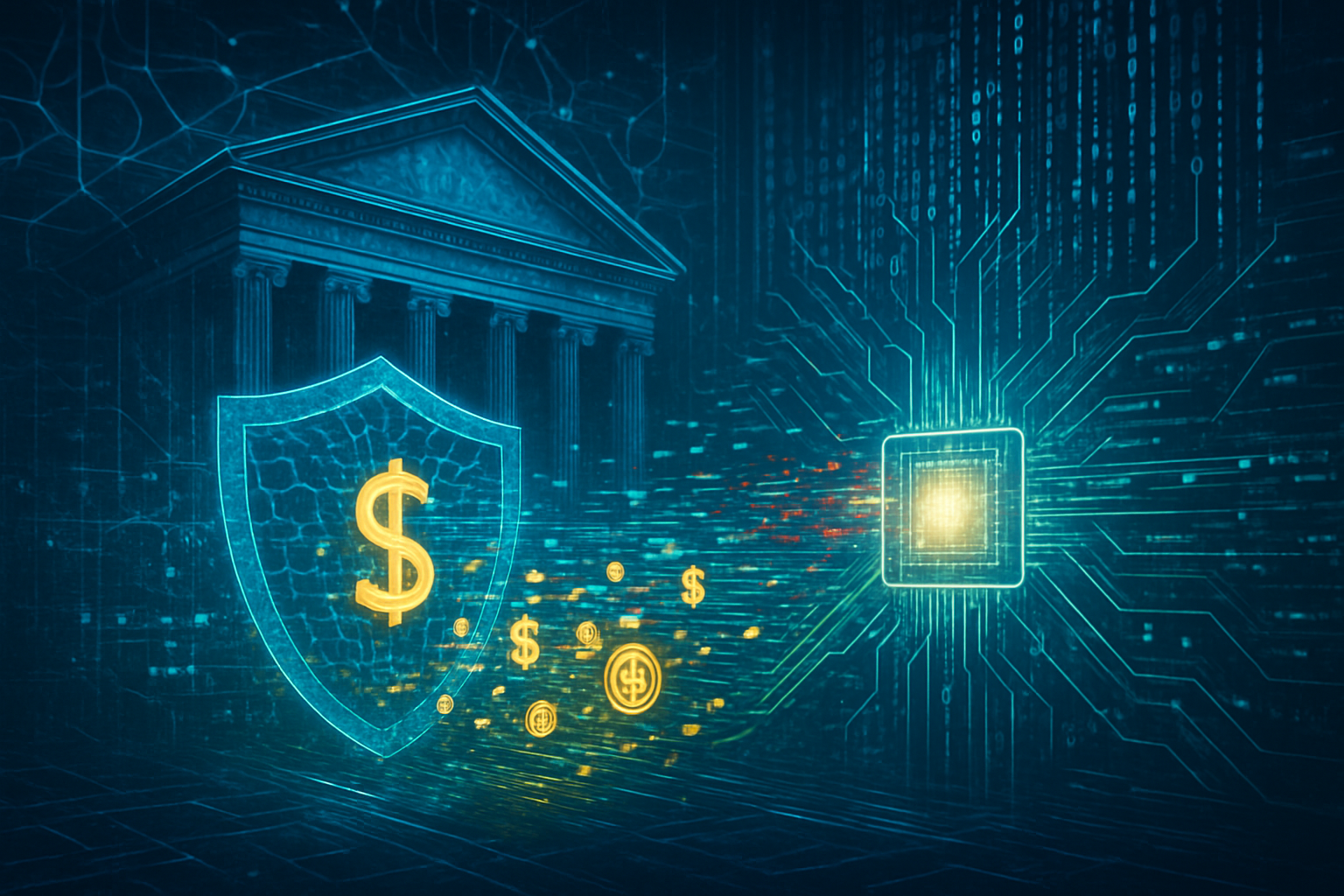
  • The $4 Billion Shield: How the US Treasury’s AI Revolution is Reclaiming Taxpayer Wealth

    The $4 Billion Shield: How the US Treasury’s AI Revolution is Reclaiming Taxpayer Wealth

    In a landmark victory for federal financial oversight, the U.S. Department of the Treasury has announced the recovery and prevention of over $4 billion in fraudulent and improper payments within a single fiscal year. This staggering figure, primarily attributed to the deployment of advanced machine learning and anomaly detection systems, represents a six-fold increase over previous years. As of early 2026, the success of this initiative has fundamentally altered the landscape of government spending, shifting the federal posture from a reactive "pay-and-chase" model to a proactive, AI-driven defense system that protects the integrity of the global financial system.

    The surge in recovery—which includes $1 billion specifically reclaimed from check fraud and $2.5 billion in prevented high-risk transactions—comes at a critical time as sophisticated bad actors increasingly use "offensive AI" to target government programs. By integrating cutting-edge data science into the Bureau of the Fiscal Service, the Treasury has not only safeguarded taxpayer dollars but has also established a new technological benchmark for central banks and financial institutions worldwide. This development marks a turning point in the use of artificial intelligence as a primary tool for national economic security.

    The Architecture of Integrity: Moving Beyond Manual Audits

    The technical backbone of this recovery effort lies in the transition from static, rule-based systems to dynamic machine learning (ML) models. Historically, fraud detection relied on fixed parameters—such as flagging any transaction over a certain dollar amount—which were easily bypassed by sophisticated criminal syndicates. The new AI-driven framework, managed by the Office of Payment Integrity (OPI), utilizes high-speed anomaly detection to analyze the Treasury’s 1.4 billion annual payments in near real-time. These models are trained on massive historical datasets to identify "hidden patterns" and outliers that would be impossible for human auditors to detect across $6.9 trillion in total annual disbursements.

    One of the most significant technical breakthroughs involves behavioral analytics. The Treasury's systems now build complex profiles of "normal" behavior for vendors, agencies, and individual payees. When a transaction occurs that deviates from these established baselines—such as an unexpected change in a vendor’s banking credentials or a sudden spike in payment frequency from a specific geographic region—the AI assigns a risk score in milliseconds. High-risk transactions are then automatically flagged for human review or paused before the funds ever leave the Treasury’s accounts. This shift to pre-payment screening has been credited with preventing $500 million in losses through expanded risk-based screening alone.

    For check fraud, which saw a 385% increase following the pandemic, the Treasury deployed specialized ML algorithms capable of recognizing the evolving tactics of organized fraud rings. These models analyze the metadata and physical characteristics of checks to detect forgeries and alterations that were previously undetectable. Initial reactions from the AI research community have been overwhelmingly positive, with experts noting that the Treasury’s implementation of "defensive AI" is one of the most successful large-scale applications of machine learning in the public sector to date.

    The Bureau of the Fiscal Service has also enhanced its "Do Not Pay" service, a centralized data hub that cross-references outgoing payments against dozens of federal and state databases. By using AI to automate the verification process against the Social Security Administration’s Death Master File and the Department of Labor’s integrity hubs, the Bureau has eliminated the manual bottlenecks that previously allowed fraudulent claims to slip through the cracks. This integrated approach ensures that data silos are broken down, allowing for a holistic view of every dollar spent by the federal government.

    Market Impact: The Rise of Government-Grade AI Contractors

    The success of the Treasury’s AI initiative has sent ripples through the technology sector, highlighting the growing importance of "GovTech" as a major market for AI labs and enterprise software companies. Palantir Technologies (NYSE: PLTR) has emerged as a primary beneficiary, with its Foundry platform deeply integrated into federal fraud analytics. The partnership between the IRS and Palantir has reportedly expanded, with IRS engineers working side-by-side to trace offshore accounts and illicit cryptocurrency flows, positioning Palantir as a critical infrastructure provider for national financial defense.

    Cloud giants are also vying for a larger share of this specialized market. Microsoft (NASDAQ: MSFT) recently secured a multi-million dollar contract to further modernize the Treasury’s cloud operations via Azure, providing the scalable compute power necessary to run complex ML models. Similarly, Amazon (NASDAQ: AMZN) Web Services (AWS) is being utilized by the Office of Payment Integrity to leverage tools like Amazon SageMaker for model training and Amazon Fraud Detector. The competition between these tech titans to provide the most robust "sovereign AI" solutions is intensifying as other federal agencies look to replicate the Treasury's $4 billion success.

    Specialized data and fintech firms are also finding new strategic advantages. Snowflake (NYSE: SNOW), in collaboration with contractors like Peraton, has launched tools specifically designed for real-time pre-payment screening, allowing agencies to transition away from legacy "pay-and-chase" workflows. Meanwhile, traditional data providers like Thomson Reuters (NYSE: TRI) and LexisNexis are evolving their offerings to include AI-driven identity verification services that are now essential for government risk assessment. This shift is disrupting the traditional government contracting landscape, favoring companies that can offer end-to-end AI integration rather than simple data storage.

    The market positioning of these companies is increasingly defined by their ability to provide "explainable AI." As the Treasury moves toward more autonomous systems, the demand for models that can provide a clear audit trail for why a payment was flagged is paramount. Companies that can bridge the gap between high-performance machine learning and regulatory transparency are expected to dominate the next decade of government procurement, creating a new gold standard for the fintech industry at large.

    A Global Precedent: AI as a Pillar of Financial Security

    The broader significance of the Treasury’s achievement extends far beyond the $4 billion recovered; it represents a fundamental shift in the global AI landscape. As "offensive AI" tools become more accessible to bad actors—enabling automated phishing and deepfake-based identity theft—the Treasury's successful defense provides a blueprint for how democratic institutions can use technology to maintain public trust. This milestone is being compared to the early adoption of cybersecurity protocols in the 1990s, marking the moment when AI moved from a "nice-to-have" experimental tool to a core requirement for national governance.

    However, the rapid adoption of AI in financial oversight has also raised important concerns regarding algorithmic bias and privacy. Experts have pointed out that if AI models are trained on biased historical data, they may disproportionately flag legitimate payments to vulnerable populations. In response, the Treasury has begun leading an international effort to create "AI Nutritional Labels"—standardized risk-assessment frameworks that ensure transparency and fairness in automated decision-making. This focus on ethical AI is crucial for maintaining the legitimacy of the financial system in an era of increasing automation.

    Comparisons are also being drawn to previous AI breakthroughs, such as the use of neural networks in credit card fraud detection in the early 2010s. While those systems were revolutionary for the private sector, the scale of the Treasury’s operation—protecting trillions of dollars in public funds—is unprecedented. The impact on the national debt and fiscal responsibility cannot be overstated; by reducing the "fraud tax" on government programs, the Treasury is effectively reclaiming resources that can be redirected toward infrastructure, education, and public services.

    Globally, the U.S. Treasury’s success is accelerating the timeline for international regulatory harmonization. Organizations like the IMF and the OECD are closely watching the American model as they look to establish global standards for AI-driven Anti-Money Laundering (AML) and Counter-Terrorism Financing (CTF). The $4 billion recovery serves as a powerful proof-of-concept that AI can be a force for stability in the global financial system, provided it is implemented with rigorous oversight and cross-agency cooperation.

    The Horizon: Generative AI and Predictive Governance

    Looking ahead to the remainder of 2026 and beyond, the Treasury is expected to pivot toward even more advanced applications of artificial intelligence. One of the most anticipated developments is the integration of Generative AI (GenAI) to process unstructured data. While current models are excellent at identifying numerical anomalies, GenAI will allow the Treasury to analyze complex legal documents, international communications, and vendor contracts to identify "black box" fraud schemes that involve sophisticated corporate layering and shell companies.

    Predictive analytics will also play a larger role in future deployments. Rather than just identifying fraud as it happens, the next generation of Treasury AI will attempt to predict where fraud is likely to occur based on macroeconomic trends, social engineering patterns, and emerging cyber threats. This "predictive governance" model could allow the government to harden its defenses before a new fraud tactic even gains traction. However, the challenge of maintaining a 95% or higher accuracy rate while scaling these systems remains a significant hurdle for data scientists.

    Experts predict that the next phase of this evolution will involve a mandatory data-sharing framework between the federal government and smaller financial institutions. As fraudsters are pushed out of the federal ecosystem by the Treasury’s AI shield, they are likely to target smaller banks that lack the resources for high-level AI defense. To prevent this "displacement effect," the Treasury may soon offer its AI tools as a service to regional banks, effectively creating a national immune system for the entire U.S. financial sector.

    Summary and Final Thoughts

    The recovery of $4 billion in a single year marks a watershed moment in the history of artificial intelligence and public administration. By successfully leveraging machine learning, anomaly detection, and behavioral analytics, the U.S. Treasury has demonstrated that AI is not just a tool for commercial efficiency, but a vital instrument for protecting the economic interests of the state. The transition from reactive auditing to proactive, real-time prevention is a permanent shift that will likely be adopted by every major government agency in the coming years.

    The key takeaway from this development is the power of "defensive AI" to counter the growing sophistication of global fraud networks. As we move deeper into 2026, the tech industry should watch for further announcements regarding the Treasury’s use of Generative AI and the potential for new legislation that mandates AI-driven transparency in government spending. The $4 billion shield is only the beginning; the long-term impact will be a more resilient, efficient, and secure financial system for all taxpayers.


    This content is intended for informational purposes only and represents analysis of current AI developments.

    TokenRing AI delivers enterprise-grade solutions for multi-agent AI workflow orchestration, AI-powered development tools, and seamless remote collaboration platforms.
    For more information, visit https://www.tokenring.ai/.

  • India’s Verified Caller ID: A New Dawn in the Fight Against Spam and Fraud Calls by 2026

    India’s Verified Caller ID: A New Dawn in the Fight Against Spam and Fraud Calls by 2026

    India is on the cusp of a significant telecommunications revolution with the planned nationwide rollout of its Calling Name Presentation (CNAP) system by March 2026. This ambitious initiative, spearheaded by the Department of Telecommunications (DoT) and supported by the Telecom Regulatory Authority of India (TRAI), aims to fundamentally transform how Indians receive and perceive incoming calls. By displaying the verified name of the caller on the recipient's screen, CNAP is poised to be a powerful weapon in the escalating battle against spam, unsolicited commercial communications (UCC), and the pervasive threat of online fraud.

    The immediate significance of CNAP lies in its promise to restore trust in digital communication. In an era plagued by sophisticated financial scams, digital arrests, and relentless telemarketing, the ability to instantly identify a caller by their official, government-verified name offers an unprecedented layer of security and transparency. This move is expected to empower millions of mobile users to make informed decisions before answering calls, thereby significantly reducing their exposure to deceptive practices and enhancing overall consumer protection.

    A Technical Deep Dive into CNAP: Beyond Crowdsourcing

    India's CNAP system is engineered as a robust, network-level feature, designed to integrate seamlessly into the country's vast telecom infrastructure. Unlike existing third-party applications, CNAP leverages official, government-verified data, marking a pivotal shift in caller identification technology.

    The core of CNAP's implementation lies in the establishment and maintenance of Calling Name (CNAM) databases by each Access Service Provider (TSP). These databases will store the subscriber's verified name, sourced directly from their Know Your Customer (KYC) documents submitted during SIM card registration. When a call is initiated, the terminating network queries its Local Number Portability Database (LNPD) to identify the originating TSP. It then accesses the originating TSP's CNAM database to retrieve the verified name, which is subsequently displayed on the recipient's device screen before the call begins to ring.

    This approach fundamentally differs from previous methods and existing technology, most notably third-party caller ID applications like Truecaller. While Truecaller relies predominantly on crowdsourced data, user-contributed information, and reports—which can often be unverified or inaccurate—CNAP's data source is the authentic, legally registered name tied to official government records. This distinction ensures a higher degree of reliability and authenticity. Furthermore, CNAP is a native, network-level feature, meaning it's embedded directly into the telecom infrastructure and will be activated by default for all compatible users (with an opt-out option), removing the need for users to download and install external applications.

    Initial reactions from the telecom industry have been mixed but largely positive regarding the intent. While major telecom operators like Reliance Jio (NSE: JIOFIN), Bharti Airtel (NSE: AIRTELPP), and Vodafone Idea (NSE: IDEA) acknowledge the benefits in combating fraud, they have also voiced concerns regarding the technical complexities and costs. Challenges include the substantial investment required for network upgrades and database management, particularly for older 2G and 3G networks. Some handset manufacturers also initially questioned the urgency, pointing to existing app-based solutions. However, there is a broad consensus among experts that CNAP is a landmark initiative, poised to significantly curb spam and enhance digital trust.

    Industry Ripples: Winners, Losers, and Market Shifts

    The nationwide rollout of CNAP by 2026 is set to create significant ripples across the Indian telecommunications and tech industries, redefining competitive landscapes and market positioning.

    Telecom Operators stand as both primary implementers and beneficiaries. Companies like Reliance Jio, Bharti Airtel, and Vodafone Idea (Vi) are central to the rollout, tasked with building and maintaining the CNAM databases and integrating the service into their networks. While this entails substantial investment in infrastructure and technical upgrades, it also allows them to enhance customer trust and improve the overall quality of communication. Reliance Jio, with its exclusively 4G/5G network, is expected to have a smoother integration, having reportedly developed its CNAP technology in-house. Airtel and Vi, with their legacy 2G/3G infrastructures, face greater challenges and are exploring partnerships (e.g., with Nokia for IMS platform deployment) for a phased rollout. By providing a default, verified caller ID service, telcos position themselves as integral providers of digital security, beyond just connectivity.

    The most significant disruption will be felt by third-party caller ID applications, particularly Truecaller (STO: TRUEC). CNAP is a direct, government-backed alternative that offers verified caller identification, directly challenging Truecaller's reliance on crowdsourced data. Following the initial approvals for CNAP, Truecaller's shares have already experienced a notable decline. While Truecaller offers additional features like call blocking and spam detection, CNAP's default activation and foundation on verified KYC data pose a serious threat to its market dominance in India. Other smaller caller ID apps will likely face similar, if not greater, disruption, as their core value proposition of identifying unknown callers is absorbed by the network-level service. These companies will need to innovate and differentiate their offerings through advanced features beyond basic caller ID to remain relevant.

    Handset manufacturers will also be impacted, as the government plans to mandate that all new mobile devices sold in India after a specified cut-off date must support the CNAP feature. This will necessitate software integration and adherence to new specifications. The competitive landscape for caller identification services is shifting from a user-driven, app-dependent model to a network-integrated, default service, eroding the dominance of third-party solutions and placing telecom operators at the forefront of digital security.

    Wider Significance: Building Digital Trust in a Connected India

    India's CNAP rollout is more than just a technological upgrade; it represents a profound regulatory intervention aimed at strengthening the nation's digital security and consumer protection framework. It fits squarely into the broader landscape of combating online fraud and fostering digital trust, a critical endeavor in an increasingly connected society.

    The initiative is a direct response to the pervasive menace of spam and fraudulent calls, which have eroded public trust and led to significant financial losses. By providing a verified caller identity, CNAP aims to significantly reduce the effectiveness of common scams such as "digital arrests," phishing, and financial fraud, making it harder for malicious actors to impersonate legitimate entities. This aligns with India's broader digital security strategy, which includes mandatory E-KYC for SIM cards and the Central Equipment Identity Register (CEIR) system for tracking stolen mobile devices, all designed to create a more secure digital ecosystem.

    However, the rollout is not without its potential concerns, primarily around privacy. The mandatory display of a user's registered name on every call raises questions about individual privacy and the potential for misuse of this information. Concerns have been voiced regarding the safety of vulnerable individuals (e.g., victims of abuse, whistle-blowers) whose names would be displayed. There are also apprehensions about the security of the extensive databases containing names and mobile numbers, and the potential for data breaches. To address these, TRAI is reportedly working on a comprehensive privacy framework, and users will have an opt-out option, with those using Calling Line Identification Restriction (CLIR) remaining exempt. The regulatory framework is designed to align with India's Data Protection Bill (DPDP), incorporating necessary safeguards.

    Compared to previous digital milestones, CNAP is a significant step towards a government-regulated, standardized approach to caller identification, contrasting with the largely unregulated, crowdsourced model that has dominated the space. It reflects a global trend towards operator-provided caller identification services to enhance consumer protection, placing India at the forefront of this regulatory innovation.

    The Road Ahead: Evolution and Challenges

    As India moves towards the full nationwide rollout of CNAP by March 2026, several key developments are anticipated, alongside significant challenges that will need careful navigation.

    In the near term, the focus will be on the successful completion of pilot rollouts by telecom operators in various circles. These trials, currently underway by Vodafone Idea and Reliance Jio in regions like Haryana and Mumbai, will provide crucial insights into technical performance, user experience, and potential bottlenecks. Ensuring device compatibility is another immediate priority, with the DoT working to mandate CNAP functionality in all new mobile devices sold in India after a specified cut-off date. The establishment of robust and secure CNAM databases by each TSP will also be critical.

    Longer-term developments include the eventual extension of CNAP to older 2G networks. While initial deployment focuses on 4G and 5G, bringing 200-300 million 2G users under the ambit of CNAP presents substantial technical hurdles due to bandwidth limitations and the architecture of circuit-switched networks. TRAI has also proposed revising the unified license definition of Calling Line Identification (CLI) to formally include both the number and the name of the caller, solidifying CNAP's place in the telecom regulatory framework.

    Potential future applications extend beyond basic spam prevention. CNAP can streamline legitimate business communications by displaying verified trade names, potentially improving call answer rates for customer support and essential services. In public safety, verified caller ID could assist emergency services in identifying callers more efficiently. While CNAP itself is not an AI system, the verified identity it provides forms a crucial data layer for AI-powered fraud detection systems. Telecom operators already leverage AI and machine learning to identify suspicious call patterns and block fraudulent messages. CNAP's validated caller information can be integrated into these AI models to create more robust and accurate fraud prevention mechanisms, particularly against emerging threats like deepfakes and sophisticated phishing scams.

    However, challenges remain. Besides the technical complexities of 2G integration, ensuring the accuracy of caller information is paramount, given past issues with forged KYC documents or numbers used by individuals other than the registered owner. Concerns about call latency and increased network load have also been raised by telcos. Experts predict that while CNAP will significantly curb spam and fraud, its ultimate efficacy in fully authenticating call legitimacy and restoring complete user trust will depend on how effectively these challenges are addressed and how the system evolves.

    A New Era of Trust: Concluding Thoughts

    India's verified caller ID rollout by 2026 marks a watershed moment in the nation's journey towards a more secure and transparent digital future. The CNAP system represents a bold, government-backed initiative to empower consumers, combat the persistent menace of spam and fraud, and instill a renewed sense of trust in mobile communications.

    The key takeaway is a fundamental shift from reactive, app-based caller identification to a proactive, network-integrated, government-verified system. This development is significant not just for India but potentially sets a global precedent for how nations can leverage telecom infrastructure to enhance digital security. Its long-term impact is poised to be transformative, fostering a safer communication environment and potentially altering user behavior towards incoming calls.

    As we approach the March 2026 deadline, several aspects warrant close observation. The performance of pilot rollouts, the successful resolution of interoperability challenges between different telecom networks, and the strategies adopted to bring 2G users into the CNAP fold will be critical. Furthermore, the ongoing development of robust privacy frameworks and the continuous effort to ensure the accuracy and security of the CNAM databases will be essential for maintaining public trust. The integration of CNAP's verified data with advanced AI-driven fraud detection systems will also be a fascinating area to watch, as technology continues to evolve in the fight against cybercrime. India's CNAP system is not merely a technical upgrade; it's a foundational step towards building a more secure and trustworthy digital India.


    This content is intended for informational purposes only and represents analysis of current AI developments.

    TokenRing AI delivers enterprise-grade solutions for multi-agent AI workflow orchestration, AI-powered development tools, and seamless remote collaboration platforms.
    For more information, visit https://www.tokenring.ai/.

  • AI Fuels a New Era of Holiday Scams: FBI and CISA Issue Urgent Cybersecurity Warnings

    AI Fuels a New Era of Holiday Scams: FBI and CISA Issue Urgent Cybersecurity Warnings

    As the 2025 holiday shopping season looms, consumers and businesses alike are facing an unprecedented wave of cyber threats, meticulously crafted and amplified by the pervasive power of artificial intelligence. The Federal Bureau of Investigation (FBI) and the Cybersecurity and Infrastructure Security Agency (CISA) have issued stark warnings, highlighting how scammers are leveraging cutting-edge AI to create highly convincing fraudulent schemes, making the digital marketplace a treacherous landscape. These advisories, building on insights from the late 2024 and early 2025 holiday periods, underscore a significant escalation in the sophistication and impact of online fraud, demanding heightened vigilance from every online participant.

    The immediate significance of these warnings cannot be overstated. With global consumer losses to scams soaring past $1 trillion in 2024, and U.S. consumer losses reaching $12.5 billion in 2023—a 22% increase from 2022—the financial stakes are higher than ever. As AI tools become more accessible, the barrier to entry for cybercriminals lowers, enabling them to launch more personalized, believable, and scalable attacks, fundamentally reshaping the dynamics of holiday season cybersecurity.

    The AI-Powered Arsenal: How Technology is Being Exploited

    The current surge in holiday shopping scams is largely attributable to the sophisticated exploitation of technology, with AI at its core. Scammers are no longer relying on crude, easily detectable tactics; instead, they are harnessing AI to mimic legitimate entities with startling accuracy. This represents a significant departure from previous approaches, where poor grammar, pixelated images, and generic messaging were common red flags.

    Specifically, AI is being deployed to create highly realistic fake websites that perfectly clone legitimate retailers. These AI-crafted sites often feature deep discounts and stolen branding, designed to deceive even the most cautious shoppers. Unlike older scams, which might have been betrayed by subtle misspellings or grammatical errors, AI-generated content is virtually flawless, making traditional detection methods less effective. Furthermore, AI enables the creation of highly personalized and grammatically correct phishing emails and text messages (smishing), impersonating retailers, delivery services like FedEx (NYSE: FDX) or UPS (NYSE: UPS), financial institutions, or even government agencies. These messages are tailored to individual victims, increasing their believability and effectiveness.

    Perhaps most concerning is the use of AI for deepfakes and advanced impersonation. Criminals are employing AI for audio and video cloning, impersonating well-known personalities, customer service representatives, or even family members to solicit money or sensitive information. This technology allows for the creation of fake social media accounts and pages that appear to be from legitimate companies, pushing fraudulent advertisements for enticing but non-existent deals. The FBI and CISA emphasize that these AI-driven tactics contribute to prevalent scams such as non-delivery/non-payment fraud, gift card scams, and sophisticated package delivery hoaxes, where malicious links lead to data theft. The financial repercussions are severe, with the FBI's Internet Crime Complaint Center (IC3) reporting hundreds of millions lost to non-delivery and credit card fraud annually.

    Competitive Implications for Tech Giants and Cybersecurity Firms

    The rise of AI-powered scams has profound implications for a wide array of companies, from e-commerce giants to cybersecurity startups. E-commerce platforms such as Amazon (NASDAQ: AMZN), eBay (NASDAQ: EBAY), and Walmart (NYSE: WMT) are on the front lines, facing increased pressure to protect their users from fraudulent listings, fake storefronts, and phishing attacks that leverage their brand names. Their reputations and customer trust are directly tied to their ability to combat these evolving threats, necessitating significant investments in AI-driven fraud detection and prevention systems.

    For cybersecurity firms like CrowdStrike (NASDAQ: CRWD), Palo Alto Networks (NASDAQ: PANW), and Zscaler (NASDAQ: ZS), this surge in sophisticated scams presents both a challenge and an opportunity. These companies stand to benefit from the increased demand for advanced threat intelligence, AI-powered anomaly detection, and robust identity verification solutions. The competitive landscape for security providers is intensifying, as firms race to develop AI models that can identify and neutralize AI-generated threats faster than scammers can create them. Payment processors such as Visa (NYSE: V) and Mastercard (NYSE: MA) are also heavily impacted, dealing with higher volumes of fraudulent transactions and chargebacks, pushing them to enhance their own fraud detection algorithms and work closely with banks and retailers. The potential disruption to existing products and services is significant, as traditional security measures prove less effective against AI-enhanced attacks, forcing a rapid evolution in defensive strategies and market positioning.

    A Broader Shift in the AI Landscape and Societal Impact

    The proliferation of AI in holiday shopping scams is not merely a seasonal concern; it signifies a broader shift in the AI landscape, where the technology is increasingly becoming a double-edged sword. While AI promises advancements in countless sectors, its accessibility also empowers malicious actors, creating an ongoing arms race between cyber defenders and attackers. This development fits into a larger trend of AI being weaponized, moving beyond theoretical concerns to tangible, widespread harm.

    The impact on consumer trust in online commerce is a significant concern. As scams become indistinguishable from legitimate interactions, consumers may become more hesitant to shop online, affecting the digital economy. Economically, the escalating financial losses contribute to a hidden tax on society, impacting individuals' savings and businesses' bottom lines. Compared to previous cyber milestones, the current AI-driven threat marks a new era. Earlier threats, while damaging, often relied on human error or less sophisticated technical exploits. Today, AI enhances social engineering, automates attack generation, and creates hyper-realistic deceptions, making the human element—our inherent trust—the primary vulnerability. This evolution necessitates a fundamental re-evaluation of how we approach online safety and digital literacy.

    The Future of Cyber Defense in an AI-Driven World

    Looking ahead, the battle against AI-powered holiday shopping scams will undoubtedly intensify, driving rapid innovation in both offensive and defensive technologies. Experts predict an ongoing escalation where scammers will continue to refine their AI tools, leading to even more convincing deepfakes, highly personalized phishing attacks, and sophisticated bot networks capable of overwhelming traditional defenses. The challenge lies in developing AI that can detect and counteract these evolving threats in real-time.

    On the horizon, we can expect to see advancements in AI-powered fraud detection systems that analyze behavioral patterns, transaction anomalies, and linguistic cues with greater precision. Enhanced multi-factor authentication (MFA) methods, potentially incorporating biometric AI, will become more prevalent. The development of AI-driven cybersecurity platforms capable of identifying AI-generated content and malicious code will be crucial. Furthermore, there will be a significant push for public education campaigns focused on digital literacy, helping users identify subtle signs of AI deception. Experts predict that the future will involve a continuous cat-and-mouse game, with security firms and law enforcement constantly adapting to new scam methodologies, emphasizing collaborative intelligence sharing and proactive threat hunting.

    Navigating the New Frontier of Online Fraud

    In conclusion, the rise of AI-powered holiday shopping scams represents a critical juncture in the history of cybersecurity and consumer protection. The urgent warnings from the FBI and CISA serve as a stark reminder that the digital landscape is more perilous than ever, with sophisticated AI tools enabling fraudsters to execute highly convincing and damaging schemes. The key takeaways for consumers are unwavering vigilance, adherence to secure online practices, and immediate reporting of suspicious activities. Always verify sources directly, use secure payment methods, enable MFA, and be skeptical of deals that seem too good to be true.

    This development signifies AI's mainstream deployment in cybercrime, marking a permanent shift in how we approach online security. The long-term impact will necessitate a continuous evolution of both technological defenses and human awareness. In the coming weeks and months, watch for new advisories from cybersecurity agencies, innovative defensive technologies emerging from the private sector, and potentially legislative responses aimed at curbing AI-enabled fraud. The fight against these evolving threats will require a collective effort from individuals, businesses, and governments to secure the digital future.


    This content is intended for informational purposes only and represents analysis of current AI developments.

    TokenRing AI delivers enterprise-grade solutions for multi-agent AI workflow orchestration, AI-powered development tools, and seamless remote collaboration platforms.
    For more information, visit https://www.tokenring.ai/.