Tag: FSD

  • Tesla Breaks the Foundry Monopoly: Dual-Sourcing AI5 Silicon Across TSMC and Samsung’s U.S. Fabs for 2026 Global Ramp

    Tesla Breaks the Foundry Monopoly: Dual-Sourcing AI5 Silicon Across TSMC and Samsung’s U.S. Fabs for 2026 Global Ramp

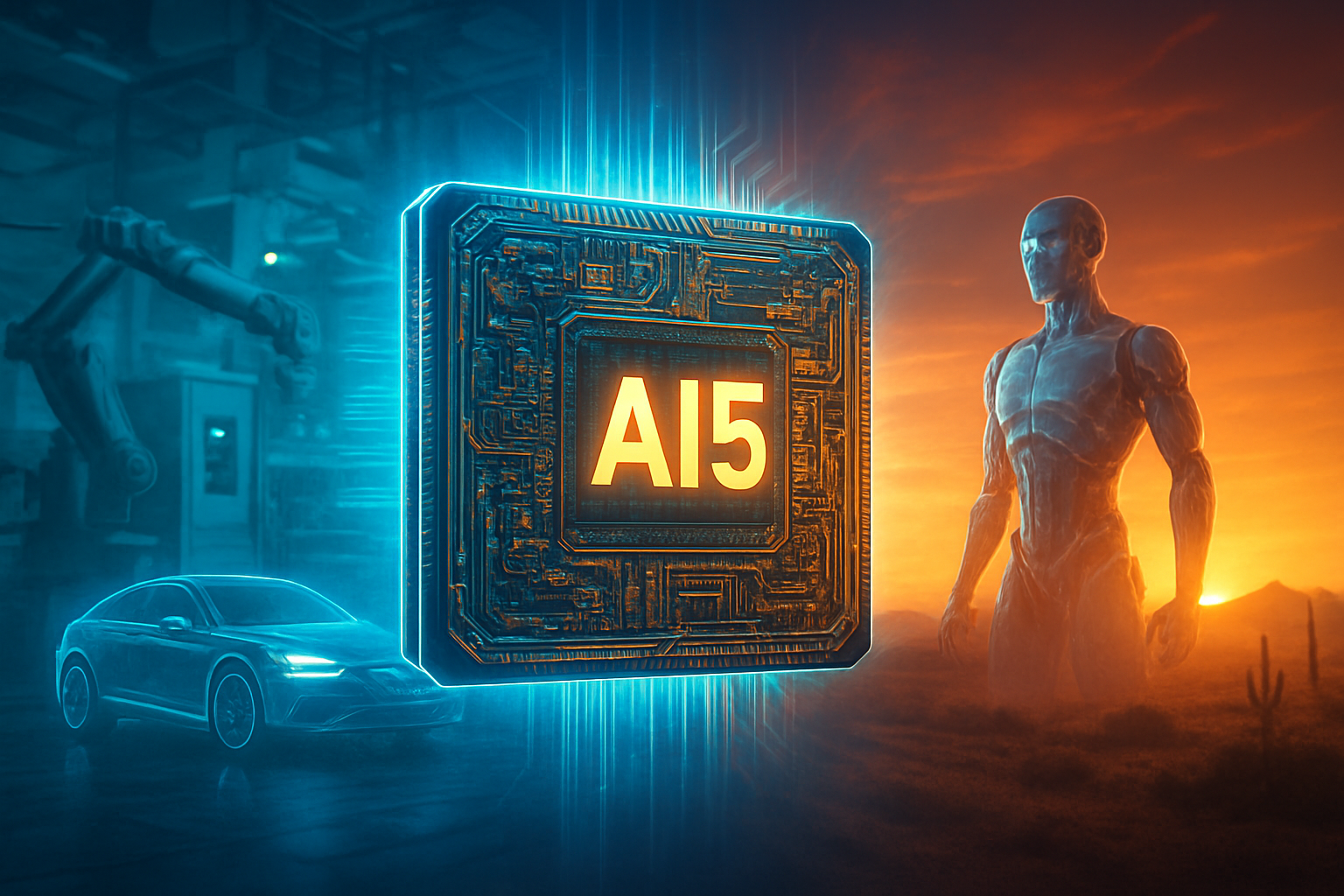
    As of January 2026, Tesla (NASDAQ: TSLA) has officially transitioned from a specialized automaker into a "sovereign silicon" powerhouse, solidifying its multi-foundry strategy for the rollout of the AI5 chip. In a move that observers are calling the most aggressive supply chain diversification in the history of the semiconductor industry, Tesla has split its high-volume 2026 production orders between Taiwan Semiconductor Manufacturing Co. (NYSE: TSM) and Samsung Electronics (KRX: 005930). Crucially, this manufacturing is being localized within the United States, utilizing TSMC’s Arizona complex and Samsung’s newly commissioned Taylor, Texas, facility.

    The immediate significance of this announcement cannot be overstated. By decoupling its most advanced AI hardware from a single geographic point of failure, Tesla has insulated its future Robotaxi and Optimus humanoid robotics programs from the mounting geopolitical tensions in the Taiwan Strait. This "foundry diversification" not only guarantees a massive volume of chips—essential for the 2026 ramp of the Cybercab—but also grants Tesla unprecedented leverage in the high-end silicon market, setting a new standard for how AI-first companies manage their hardware destiny.

    The Architecture of Autonomy: Inside the AI5 Breakthrough

    The AI5 silicon, formerly referred to internally as Hardware 5, represents an architectural clean break from its predecessor, Hardware 4 (AI4). While previous generations utilized off-the-shelf blocks for graphics and image processing, AI5 is a "pure AI" system-on-chip (SoC). Tesla engineers have stripped away legacy GPU and Image Signal Processor (ISP) components, dedicating nearly the entire die area to transformer-optimized neural processing units. The result is a staggering leap in performance: AI5 delivers between 2,000 and 2,500 TOPS (Tera Operations Per Second), representing a 4x to 5x increase over the 500 TOPS of HW4.

    Manufactured on a mix of 3nm and refined 4nm nodes, AI5 features an integrated memory architecture with bandwidth reaching 1.9 TB/s—nearly five times that of its predecessor. This massive throughput is designed specifically to handle the high-parameter "System 2" reasoning networks required for unsupervised Full Self-Driving (FSD). Initial reactions from the silicon research community highlight Tesla’s shift toward Samsung’s 3nm Gate-All-Around (GAA) architecture at the Taylor fab. Unlike the traditional FinFET structures used by TSMC, Samsung’s GAA process offers superior power efficiency, which is critical for the battery-constrained Optimus Gen 3 humanoid robots.

    Industry experts note that this dual-sourcing strategy allows Tesla to play the strengths of both giants against each other. TSMC serves as the primary high-volume "gold standard" for yield reliability in Arizona, while Samsung’s Texas facility provides a cutting-edge playground for the next-generation GAA transistors. By supporting both architectures simultaneously, Tesla has effectively built a software-defined hardware layer that can be compiled for either foundry's specific process, a feat of engineering that few companies outside of Apple (NASDAQ: AAPL) have ever attempted.

    Disruption in the Desert: Market Positioning and Competitive Edge

    The strategic shift to dual-sourcing creates a significant ripples across the tech ecosystem. For Samsung, the Tesla contract is a vital lifeline that validates its $17 billion investment in Taylor, Texas. Having struggled to capture the top-tier AI business dominated by NVIDIA (NASDAQ: NVDA) and TSMC, Samsung’s ability to secure Tesla’s AI5 and early AI6 prototypes signals a major comeback for the Korean giant in the foundry race. Conversely, while TSMC remains the market leader, Tesla’s willingness to move significant volume to Samsung serves as a warning that even the most "un-fireable" foundry can be challenged if the price and geographic security are right.

    For competitive AI labs and tech giants like Waymo or Amazon (NASDAQ: AMZN), Tesla’s move to "sovereign silicon" creates a daunting barrier to entry. While others rely on general-purpose AI chips from NVIDIA, Tesla’s vertically integrated, purpose-built silicon is tuned specifically for its own software stack. This enables Tesla to run neural networks with 10 times more parameters than current industry standards at a fraction of the power cost. This technical advantage translates directly into market positioning: Tesla can scale its Robotaxi fleet and Optimus deployments with lower per-unit costs and higher computational headroom than any competitor.

    Furthermore, the price negotiations stemming from this dual-foundry model have reportedly netted Tesla "sweetheart" pricing from Samsung. Seeking to regain market share, Samsung has offered aggressive terms that allow Tesla to maintain high margins even as it ramps the mass-market Cybercab. This financial flexibility, combined with the security of domestic US production, positions Tesla as a unique entity in the AI landscape—one that controls its AI models, its data, and now, the very factories that print its brains.

    Geopolitics and the Rise of Sovereign Silicon

    Tesla’s multi-foundry strategy fits into a broader global trend of "Sovereign AI," where companies and nations seek to control their own technological destiny. By localizing production in Texas and Arizona, Tesla is the first major AI player to fully align with the goals of the US CHIPS Act while maintaining a global supply chain footprint. This move mitigates the "Taiwan Risk" that has hung over the semiconductor industry for years. If a supply shock were to occur in the Pacific, Tesla’s US-based lines would remain operational, providing a level of business continuity that its rivals cannot match.

    This development marks a milestone in AI history comparable to the first custom-designed silicon for mobile phones. It represents the maturation of the "AI edge" where high-performance computing is no longer confined to the data center but is distributed across millions of mobile robots and vehicles. The shift from "general purpose" to "pure AI" silicon signifies the end of the era where automotive hardware was an afterthought to consumer electronics. In the 2026 landscape, the car and the robot are the primary drivers of semiconductor innovation.

    However, the move is not without concerns. Some industry analysts point to the immense complexity of maintaining two separate production lines for the same chip architecture. The risk of "divergent silicon," where chips from Samsung and TSMC perform slightly differently due to process variations, could lead to software optimization headaches. Tesla’s engineering team has countered this by implementing a unified hardware abstraction layer, but the long-term viability of this "parallel development" model will be a major test of the company's technical maturity.

    The Horizon: From AI5 to the 9-Month Design Cycle

    Looking ahead, the AI5 ramp is just the beginning. Reports indicate that Tesla is already moving toward an unprecedented 9-month design cycle for its next generations, AI6 and AI7. By 2027, the goal is for Tesla to refresh its silicon as quickly as AI researchers can iterate on new neural network architectures. This accelerated pace is only possible because the dual-foundry model provides the "hot-swappable" capacity needed to test new designs in one fab while maintaining high-volume production in another.

    Potential applications on the horizon go beyond FSD and Optimus. With the massive compute overhead of AI5, Tesla is expected to explore "Dojo-on-the-edge," allowing its vehicles to perform local training of neural networks based on their own unique driving experiences. This would move the AI training loop from the data center directly into the fleet, creating a self-improving system that learns in real-time. Challenges remain, particularly in the scaling of EUV (Extreme Ultraviolet) lithography at the Samsung Taylor plant, but experts predict that once these "teething issues" are resolved by mid-2026, Tesla’s production volume will reach record highs.

    Conclusion: A New Era for AI Manufacturing

    Tesla’s dual-foundry strategy for AI5 marks a definitive end to the era of single-source dependency in high-end AI silicon. By leveraging the competitive landscape of TSMC and Samsung and anchoring production in the United States, Tesla has secured its path toward global dominance in autonomous transport and humanoid robotics. The AI5 chip is more than just a piece of hardware; it is the physical manifestation of Tesla’s ambition to build the "unified brain" for the physical world.

    The key takeaways are clear: vertical integration is no longer enough—geographic and foundry diversification are the new prerequisites for AI leadership at scale. In the coming weeks and months, the tech world will be watching the first yields out of the Samsung Taylor facility and the integration of AI5 into the first production-run Cybercabs. This transition represents a shift in the balance of power in the semiconductor world, proving that for those with the engineering talent to manage it, the "foundry monopoly" is finally over.


    This content is intended for informational purposes only and represents analysis of current AI developments.

    TokenRing AI delivers enterprise-grade solutions for multi-agent AI workflow orchestration, AI-powered development tools, and seamless remote collaboration platforms.
    For more information, visit https://www.tokenring.ai/.
  • The Silicon Sovereignty: Inside Samsung and Tesla’s $16.5 Billion Leap Toward Level 4 Autonomy

    The Silicon Sovereignty: Inside Samsung and Tesla’s $16.5 Billion Leap Toward Level 4 Autonomy

    In a move that has sent shockwaves through the global semiconductor and automotive sectors, Samsung Electronics (KRX: 005930) and Tesla, Inc. (NASDAQ: TSLA) have finalized a monumental $16.5 billion agreement to manufacture the next generation of Full Self-Driving (FSD) chips. This multi-year deal, officially running through 2033, positions Samsung as the primary architect for Tesla’s "AI6" hardware—the silicon brain designed to transition the world’s most valuable automaker from driver assistance to true Level 4 unsupervised autonomy.

    The partnership represents more than just a supply contract; it is a strategic realignment of the global tech supply chain. By leveraging Samsung’s cutting-edge 3nm and 2nm Gate-All-Around (GAA) transistor architecture, Tesla is securing the massive computational power required for its "world model" AI. For Samsung, the deal serves as a definitive validation of its foundry capabilities, proving that its domestic manufacturing in Taylor, Texas, can compete with the world’s most advanced fabrication facilities.

    The GAA Breakthrough: Scaling the 60% Yield Wall

    At the heart of this $16.5 billion deal is a significant technical triumph: Samsung’s stabilization of its 3nm GAA process. Unlike the traditional FinFET (Fin Field-Effect Transistor) technology used by competitors like TSMC (NYSE: TSM) for previous generations, GAA allows for more precise control over current flow, reducing power leakage and increasing efficiency. Reports from late 2025 indicate that Samsung has finally crossed the critical 60% yield threshold for its 3nm and 2nm-class nodes. This milestone is the industry-standard benchmark for profitable mass production, a figure that had eluded the company during the early, turbulent phases of its GAA rollout.

    The "AI6" chip, the centerpiece of this collaboration, is expected to deliver a staggering 1,500 to 2,000 TOPS (Tera Operations Per Second). This represents a tenfold increase in compute performance over the current Hardware 4.0 systems. To achieve this, Samsung is employing its SF2A automotive-grade process, which integrates a Backside Power Delivery Network (BSPDN). This innovation moves the power routing to the rear of the wafer, significantly reducing voltage drops and allowing the chip to maintain peak performance without draining the vehicle's battery—a crucial factor for maintaining electric vehicle (EV) range during intensive autonomous driving tasks.

    Industry experts have noted that Tesla engineers were reportedly given unprecedented access to "walk the line" at Samsung’s Taylor facility. This deep collaboration allowed Tesla to provide direct input on manufacturing optimizations, effectively co-engineering the production environment to suit the specific requirements of the AI6. This level of vertical integration is rare in the industry and highlights the shift toward custom silicon as the primary differentiator in the automotive race.

    Shifting the Foundry Balance: Samsung’s Strategic Coup

    This deal marks a pivotal shift in the ongoing "foundry wars." For years, TSMC has held a dominant grip on the high-end semiconductor market, serving as the sole manufacturer for many of the world’s most advanced chips. However, Tesla’s decision to move its most critical future hardware back to Samsung signals a desire to diversify its supply chain and mitigate the geopolitical risks associated with concentrated production in Taiwan. By utilizing the Taylor, Texas foundry, Tesla is creating a "domestic" silicon pipeline, located just miles from its Austin Gigafactory, which aligns perfectly with the incentives of the U.S. CHIPS Act.

    For Samsung, securing Tesla as an anchor client for its 2nm GAA process is a major blow to TSMC’s perceived invincibility. It proves that Samsung’s bet on GAA architecture—a technology TSMC is only now transitioning toward for its 2nm nodes—has paid off. This successful partnership is already attracting interest from other Western "hyperscalers" like Qualcomm and AMD, who are looking for viable alternatives to TSMC’s capacity constraints. The $16.5 billion figure is seen by many as a floor; with Tesla’s plans for robotaxis and the Optimus humanoid robot, the total value of the partnership could eventually exceed $50 billion.

    The competitive implications extend beyond the foundries to the chip designers themselves. By developing its own custom AI6 silicon with Samsung, Tesla is effectively bypassing traditional automotive chip suppliers. This move places immense pressure on companies like NVIDIA (NASDAQ: NVDA) and Mobileye to prove that their off-the-shelf autonomous solutions can compete with the hyper-optimized, vertically integrated stack that Tesla is building.

    The Era of the Software-Defined Vehicle and Level 4 Autonomy

    The Samsung-Tesla deal is a clear indicator that the automotive industry has entered the era of the "Software-Defined Vehicle" (SDV). In this new paradigm, the value of a car is determined less by its mechanical components and more by its digital capabilities. The AI6 chip provides the necessary "headroom" for Tesla to move away from dozens of small Electronic Control Units (ECUs) toward a centralized zonal architecture. This centralization allows a single powerful chip to control everything from powertrain management to infotainment and, most importantly, the complex neural networks required for Level 4 autonomy.

    Level 4 autonomy—defined as the vehicle's ability to operate without human intervention in specific conditions—requires the car to run a "world model" in real-time. This involves simulating and predicting the movements of every object in a 360-degree field of vision simultaneously. The massive compute power provided by Samsung’s 3nm and 2nm GAA chips is the only way to process this data with the low latency required for safety. This milestone mirrors previous AI breakthroughs, such as the transition from CPU to GPU training for Large Language Models, where a hardware leap enabled a fundamental shift in software capability.

    However, this transition is not without concerns. The increasing reliance on a single, highly complex chip raises questions about system redundancy and cybersecurity. If the "brain" of the car is compromised or suffers a hardware failure, the implications for a Level 4 vehicle are far more severe than in traditional cars. Furthermore, the environmental impact of manufacturing such advanced silicon remains a topic of debate, though the efficiency gains of the GAA architecture are intended to offset some of the energy demands of the AI itself.

    Future Horizons: From Robotaxis to Humanoid Robots

    Looking ahead, the implications of the AI6 chip extend far beyond the passenger car. Tesla has already indicated that the architecture of the AI6 will serve as the foundation for the "Optimus" Gen 3 humanoid robot. The spatial awareness, path planning, and object recognition required for a robot to navigate a human home or factory are nearly identical to the challenges faced by a self-driving car. This cross-platform utility ensures that the $16.5 billion investment will yield dividends across multiple industries.

    In the near term, we can expect the first AI6-equipped vehicles to begin rolling off the assembly line in late 2026 or early 2027. These vehicles will likely serve as the vanguard for Tesla’s long-promised robotaxi fleet. The challenge remains in the regulatory environment, as hardware capability often outpaces legal frameworks. Experts predict that as the safety data from these next-gen chips begins to accumulate, the pressure on regulators to approve unsupervised autonomous driving will become irresistible.

    A New Chapter in AI History

    The $16.5 billion deal between Samsung and Tesla is a watershed moment in the history of artificial intelligence and transportation. It represents the successful marriage of advanced semiconductor manufacturing and frontier AI software. By successfully scaling the 3nm GAA process and reaching a 60% yield, Samsung has not only saved its foundry business but has also provided the hardware foundation for the next great leap in mobility.

    As we move into 2026, the industry will be watching closely to see how quickly the Taylor facility can scale to meet Tesla’s insatiable demand. This partnership has set a new standard for how tech giants and automakers must collaborate to survive in an AI-driven world. The "Silicon Sovereignty" of the future will belong to those who can control the entire stack—from the gate of the transistor to the code of the autonomous drive.


    This content is intended for informational purposes only and represents analysis of current AI developments.

    TokenRing AI delivers enterprise-grade solutions for multi-agent AI workflow orchestration, AI-powered development tools, and seamless remote collaboration platforms.
    For more information, visit https://www.tokenring.ai/.
  • Tesla’s AI Ambition Drives Sky-High Valuation Amidst EV Market Headwinds

    Tesla’s AI Ambition Drives Sky-High Valuation Amidst EV Market Headwinds

    October 22, 2025 – In a significant recalibration of investor priorities, Tesla (NASDAQ: TSLA) is increasingly being valued not just as a pioneer in electric vehicles (EVs), but as a burgeoning artificial intelligence and robotics powerhouse. This dramatic shift in sentiment comes at a crucial time, as projections indicate a slowdown in the company's core EV sales, largely due to intensifying competition and the recent expiration of key federal tax credits. Despite these automotive headwinds, the promise of an AI-driven future—from autonomous driving to humanoid robots—has propelled Tesla's market valuation to dizzying heights, reflecting a broader market trend of prioritizing future AI potential over present financial realities.

    The pivot in investor focus underscores a growing conviction that Tesla's true long-term value lies beyond its automotive manufacturing. While the company reported a record 497,099 vehicle deliveries in Q3 2025, analysts anticipate a challenging Q4 and beyond, with some forecasting a significant drop in sales following the September 30, 2025, expiration of the $7,500 federal EV tax credit. Aggressive price cuts to maintain market share have also compressed margins, leading to lower earnings per share despite increased revenue. Amidst this backdrop, CEO Elon Musk's persistent narrative of Tesla as an AI and robotics leader has resonated deeply, convincing investors to look past current automotive struggles and bet on a future defined by high-margin software and revolutionary hardware.

    Tesla's AI Ecosystem: From Self-Driving to Humanoid Robotics

    Tesla's AI strategy is multifaceted, anchored by several ambitious projects that aim to transform transportation, logistics, and even labor. Central to this vision is the company's Full Self-Driving (FSD) software. As of October 2025, Tesla introduced FSD v14, which boasts enhanced navigation capabilities and improved handling of emergency vehicles. The company is actively pushing FSD as a significant revenue stream, offering it as both a one-time purchase and a subscription service, with aspirations for millions of subscribers. The practical application of this technology has already begun, with Tesla initiating its robotaxi service in Austin in June 2025, and subsequently expanding testing to nine cities. A dedicated "Cybercab" robotaxi model, targeting a price point around $30,000, is slated for production in 2026, promising to revolutionize personal transportation and potentially add trillions to Tesla's valuation.

    Beyond autonomous vehicles, Tesla's Optimus humanoid robot stands as another cornerstone of its AI ambitions. Elon Musk has boldly stated that Optimus could eventually account for approximately 80% of Tesla's future value. The company aims for full-scale production in early 2026, with an audacious target of a million units per year within the next five years, and prototypes for Generation 3 expected by the end of 2025. While the project has faced production delays, with initial 2025 scaling goals for 5,000 units reduced to only hundreds built so far, the long-term vision remains a powerful draw for investors.

    A significant technical evolution occurred in Tesla's AI infrastructure during August and October 2025, with the official halting of the in-house Dojo supercomputer project. Initially designed to train AI for Autopilot, FSD, and Optimus using Tesla's D1 chip for "vision-only" autonomous driving, Dojo 2 was ultimately deemed an "evolutionary dead end" by Elon Musk. Instead, Tesla has strategically shifted its resources to developing more versatile AI5 and AI6 chips. These new chips, produced by TSMC (NYSE: TSM) and Samsung (KRX: 005930) respectively, are designed to handle both inference and training tasks across cars, robots, and general AI training. This pivot signifies a move towards a more flexible and robust AI hardware foundation, complementing its large-scale GPU training cluster, "Cortex," in Austin, which reportedly expanded to approximately 67,000 H100-equivalent GPUs in Q2 2025. This departure from a proprietary, vision-centric architecture towards a more generalized and externally-sourced chip strategy highlights Tesla's adaptability and commitment to leveraging the best available technology for its diverse AI ecosystem.

    Competitive Landscape and Market Disruption

    Tesla's aggressive push into AI and robotics positions it as a formidable competitor not only to traditional automakers but also to established tech giants and emerging AI startups. By focusing on integrating hardware and software across multiple domains—from vehicles to humanoids—Tesla is carving out a unique strategic advantage. Companies like Alphabet (NASDAQ: GOOGL) with Waymo, Amazon (NASDAQ: AMZN) with its robotics divisions, and various specialized autonomous driving startups face a different kind of rival in Tesla: one that controls the entire stack from chip design (or at least core chip architecture) to end-user hardware and software.

    The potential for disruption is immense. If Tesla successfully scales its robotaxi service, it could fundamentally alter urban transportation, challenging ride-sharing giants and even public transport systems. The widespread deployment of Optimus could revolutionize industrial automation, logistics, and even domestic labor, potentially impacting job markets and creating entirely new service economies. This integrated approach, where data from millions of vehicles feeds into AI training for both FSD and Optimus, creates a powerful feedback loop that few other companies can replicate. While the execution risks are high, the strategic vision offers Tesla a competitive moat that extends far beyond manufacturing electric cars, allowing it to compete for talent and investment in the cutting-edge fields of AI and robotics.

    The Broader AI Landscape and Investment Trends

    Tesla's current valuation, heavily buoyed by its AI prospects, is emblematic of a broader trend sweeping the tech industry: the increasing premium placed on future AI-driven growth. Wall Street analysts, such as Dan Ives of Wedbush, are now forecasting Tesla's valuation could reach $2 trillion by early 2026 and potentially $3 trillion by year-end, contingent on the successful ramp-up of its autonomy and robotics efforts. This valuation model diverges sharply from traditional automotive metrics, aligning more closely with the speculative growth narratives seen in leading software and AI companies.

    This shift signifies a maturation in the market's understanding of AI's transformative potential. Investors are increasingly willing to overlook near-term financial challenges in established businesses if a company demonstrates a credible path to dominating future AI-driven markets. However, this also raises potential concerns about market exuberance and the risk of an "AI bubble," reminiscent of past tech booms. The challenge lies in distinguishing genuine, sustainable AI innovation from speculative hype. Tesla's situation serves as a critical test case: can a company with significant hardware manufacturing overhead successfully transition its narrative and valuation to that of a pure-play AI leader, or will the realities of scaling complex AI and robotics solutions temper these lofty expectations? The outcome will undoubtedly influence investment strategies across the entire tech sector, from established giants to nimble AI startups, dictating how capital is allocated and what types of innovation are prioritized.

    Future Developments on the Horizon

    Looking ahead, the coming months and years will be critical for Tesla's AI ambitions. Near-term, the focus will be on the continued rollout and refinement of FSD v14, alongside the expansion of the robotaxi service beyond its initial testing cities. The successful production and deployment of the dedicated Cybercab model in 2026 will be a key milestone. For Optimus, the delivery of Generation 3 prototypes by the end of 2025 and the commencement of full-scale production in early 2026 will be closely watched indicators of progress. The performance of the new AI5 and AI6 chips in both training and inference tasks, particularly as they integrate into Tesla's vehicle and robot platforms, will also be crucial.

    Longer-term, the vision extends to the widespread adoption of FSD, enabling a truly ubiquitous robotaxi network that could fundamentally change urban mobility. The mass deployment of Optimus robots across various industries and homes could unlock unprecedented levels of automation and productivity. However, significant challenges remain. Scaling production of both Cybercabs and Optimus robots to the ambitious targets will require overcoming complex manufacturing hurdles. Regulatory approval for fully autonomous vehicles and humanoid robots across diverse jurisdictions will be a continuous process. Furthermore, public acceptance and ethical considerations surrounding advanced AI and robotics will need to be carefully addressed. Experts predict that Tesla's ability to execute on these ambitious projects, coupled with its capacity to navigate regulatory landscapes and garner public trust, will ultimately determine whether its AI-driven valuation proves to be a visionary forecast or an overly optimistic projection.

    A Defining Moment for Tesla and the AI Industry

    Tesla's current trajectory marks a defining moment, not just for the company, but for the broader artificial intelligence industry. The shift in investor focus from EV sales to AI potential underscores a powerful narrative: that the future of technology, and indeed much of the global economy, will be profoundly shaped by advancements in AI and robotics. Tesla's audacious bets on FSD, robotaxis, and Optimus, backed by its evolving AI chip strategy, represent a high-stakes gamble on becoming a leader in "physical AI"—AI that interacts with and operates in the real world.

    The key takeaway is that the market is increasingly willing to assign immense value to companies demonstrating credible long-term AI vision and execution, even if their traditional business segments face immediate challenges. This development highlights the growing belief in AI's transformative power and its potential to unlock unprecedented revenue streams and market capitalization. However, it also serves as a reminder of the inherent risks in such forward-looking valuations. The coming weeks and months will be crucial. Investors will be closely watching for tangible progress in FSD capabilities, the successful rollout of the Cybercab, and concrete advancements in Optimus production and functionality. Tesla's journey will undoubtedly offer valuable lessons on the interplay between innovative technology, market sentiment, and the complex realities of bringing advanced AI to a global scale.


    This content is intended for informational purposes only and represents analysis of current AI developments.

    TokenRing AI delivers enterprise-grade solutions for multi-agent AI workflow orchestration, AI-powered development tools, and seamless remote collaboration platforms.
    For more information, visit https://www.tokenring.ai/.