
Tag: Funding

  • Tutor Intelligence Secures $34M to Unleash AI Robot Armies on Warehouses, Revolutionizing Supply Chains

    Tutor Intelligence Secures $34M to Unleash AI Robot Armies on Warehouses, Revolutionizing Supply Chains

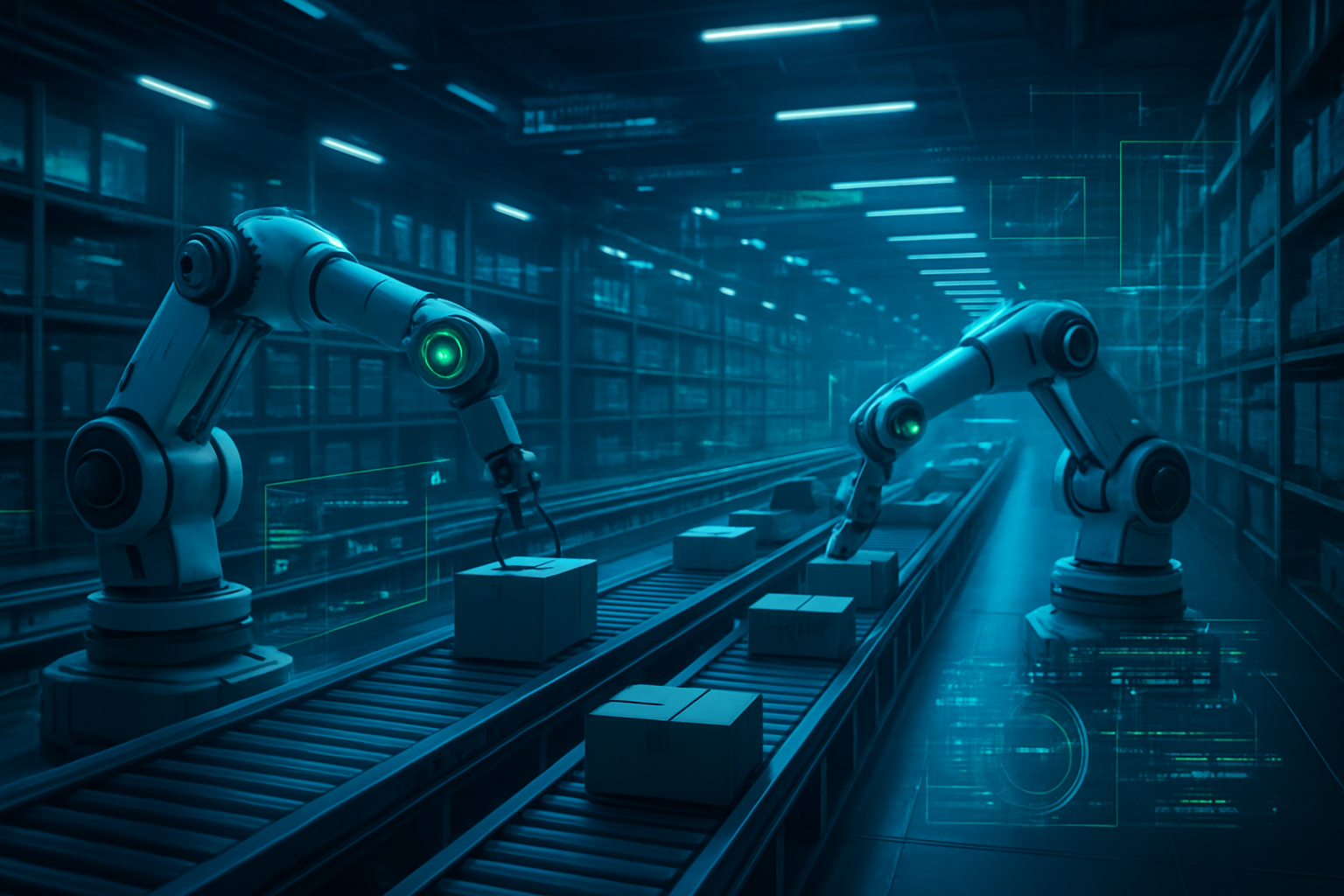
    Tutor Intelligence, a trailblazer in AI-powered warehouse automation, has announced a significant milestone, closing a $34 million Series A funding round on December 1, 2025. This substantial investment, which brings the company's total capital raised to $42 million, is poised to dramatically accelerate the deployment of its intelligent robotic workforce across North American factories and warehouses. The funding, led by Union Square Ventures (NYSE: USV), underscores a growing investor confidence in AI solutions that promise to redefine efficiency and resilience in global supply chains.

    This strategic injection of capital positions Tutor Intelligence to expand its fleet of robot workers, particularly within the consumer packaged goods (CPG) sector, and to further advance its proprietary AI platform. The move signals a critical step towards a fully automated logistics future, where smart robots learn and adapt, tackling the complexities of warehouse operations with unprecedented speed and precision, and addressing persistent labor shortages in the industrial sector.

    The Dawn of Adaptive Automation: Tutor Intelligence's AI Revolution

    Tutor Intelligence is at the forefront of AI-powered warehouse robotics, offering advanced collaborative robots (cobots) designed to revolutionize manufacturing and packaging processes. Founded out of MIT's Computer Science and Artificial Intelligence Laboratory (CSAIL), the company's core innovation lies in its proprietary AI platform, which powers robotic arms equipped with state-of-the-art 3D AI vision. This system enables robots to make intelligent, real-time decisions within dynamic environments, a stark contrast to traditional industrial robots that rely on rigid, pre-programmed instructions.

    The distinguishing feature of Tutor Intelligence's technology is its "virtuous cycle of real-world robot learning." The centralized intelligence system continuously logs thousands of hours of production experience, which is then annotated by human "tutors" to refine the underlying AI models. This hybrid human/artificial intelligence engine allows the robots to learn new tasks and adapt to diverse inventory and unforeseen situations without requiring custom programming. This means robots can seamlessly handle irregular and variable items—from produce to textiles—and adapt to changes in SKUs, patterns, orders, and volumes, a capability largely absent in previous automation approaches.

    Tutor Intelligence's cobots are versatile, capable of tasks such as conveyor loading, kitting and packing of various SKUs into display shippers and retail trays, palletization, de-palletization, and case folding and sealing. What sets them apart is their accessibility and cost-effectiveness: offered through a "Robot-as-a-Service" (RaaS) subscription model, priced affordably at $12 per hour, it mirrors traditional labor costs and eliminates the need for hefty upfront capital investments. Furthermore, these systems can be delivered within 30 days and are typically operational within a single day, requiring no specialized IT staff or engineers for setup. Initial reactions from industry experts, including their inclusion in the 2025 Physical AI Fellowship, confirm Tutor Intelligence as a "game-changer" for its flexible, cost-effective, and rapidly deployable automation solutions.

    Reshaping the Competitive Landscape: AI's New Frontier

    Tutor Intelligence's significant funding and technological advancements are poised to create ripples across the AI and automation industry, impacting established tech giants and nascent startups alike. The company's "virtuous cycle" of real-world learning sets a new benchmark for AI companies focused on physical robotics, compelling competitors to develop more robust, adaptive, and generalizable AI for real-world applications, potentially accelerating innovation in areas like reinforcement learning and computer vision.

    For tech giants, the implications are dual-edged. Companies like Amazon (NASDAQ: AMZN), with extensive logistics and warehousing operations, might view Tutor Intelligence's sophisticated and flexible warehouse robots as a potential competitive threat to their internal Amazon Robotics efforts, or as a valuable partnership opportunity to augment their existing infrastructure. Meanwhile, Google (NASDAQ: GOOGL) and Microsoft (NASDAQ: MSFT), key providers of AI platforms and cloud infrastructure, could be driven to enhance their own robotics platforms, invest in similar startups, or seek collaborations to integrate Tutor Intelligence's specialized physical AI with their broader cloud and AI ecosystems. The demand for advanced data annotation and learning infrastructure for real-world robotics also aligns perfectly with their service offerings.

    For other automation startups, Tutor Intelligence's success presents both heightened competition and validation for the sector. Startups in the warehouse automation and collaborative robotics space will need to match Tutor Intelligence's flexibility, cost-effectiveness, and rapid deployment. However, the significant investment also validates the entire market, potentially attracting more funding for complementary technologies or unique AI capabilities, fostering a more dynamic and innovative environment. Tutor Intelligence is strategically positioning itself as a leader in accessible and intelligent physical automation, challenging traditional robot manufacturers with its RaaS model and adaptive AI, and aiming to become a dominant force in industrial automation.

    Wider Significance: A New Era for Embodied AI

    Tutor Intelligence's advancements extend far beyond individual warehouses; they represent a significant leap in the broader AI landscape, particularly in the realm of embodied AI and physical automation. The company's strategy of learning from real-world visual motor data, rather than solely simulated environments, aligns perfectly with the growing trend of developing AI that can robustly interact with and adapt to the unpredictable complexities of the physical world. This data-driven learning, coupled with its "Robots-as-a-Service" (RaaS) model, democratizes access to advanced automation, making it feasible for businesses of all sizes and driving the trend of AI-as-a-Service.

    The impact on logistics and manufacturing is profound. Tutor Intelligence aims to "revolutionize every step of the supply chain" by automating complex, variable tasks like short-run packaging and kitting that have traditionally resisted automation. By providing an "infinite labor supply" of robots that work alongside human operators, the technology directly addresses chronic labor shortages while enhancing efficiency and productivity. This shift towards flexible, adaptable automation promises more resilient and agile supply chains, capable of responding swiftly to market fluctuations and disruptions.

    However, this transformative potential also brings significant concerns, most notably regarding job displacement. While Tutor Intelligence emphasizes human-robot collaboration, the very notion of an "infinite labor supply" implies a reduced reliance on human labor for certain tasks. This fuels broader anxieties about job security and the need for workforce reskilling in an AI-driven economy. Experts emphasize the importance of proactive strategies like upskilling initiatives to help workers transition to new roles involving AI development, robot maintenance, and supervisory functions. Historically, technological advancements have created new opportunities, but the transition period requires careful management and ethical consideration to ensure a just and equitable future of work. Tutor Intelligence's approach, moving beyond rigid automation to adaptive, "human-like intuition," marks a significant evolution from earlier robotic systems and a critical step in AI's journey from research labs to pervasive real-world applications.

    The Road Ahead: Evolving Intelligence and Expanding Reach

    The future for Tutor Intelligence and the broader warehouse automation sector is one of continuous evolution, marked by advancements in robot capabilities, expanding applications, and ongoing challenges. In the near term, Tutor Intelligence plans to significantly increase its manufacturing capacity and accelerate robot deployment across the United States, particularly within the CPG sector. A core long-term strategy involves continuous investment in R&D to support a wider array of use cases and introduce new robot form factors and capabilities, pushing the boundaries of human-like intuition and dexterity in unstructured environments.

    Beyond current applications in manufacturing and packaging, future use cases could extend to more intricate assembly, advanced quality control, and even highly unpredictable environments that traditionally demanded human dexterity and decision-making. The company's data-driven learning approach, akin to an "industrial boot camp," is expected to equip its robots with increasingly generalizable skills applicable across diverse domains. However, challenges remain: technological hurdles in achieving true human-level dexterity, ethical considerations around job displacement and workforce adaptation, and fierce market competition from established automation firms and emerging startups.

    Experts are optimistic about Tutor Intelligence's trajectory, citing its "extraordinary speed of execution" and its ability to balance cutting-edge product development with a strong commercial focus. The broader warehouse automation market, projected to reach $41 billion by 2027, will see continued acceleration in the adoption of Autonomous Mobile Robots (AMRs), Automated Storage and Retrieval Systems (AS/RS), and collaborative robots (cobots). AI and Machine Learning will become the backbone of decision-making, enabling predictive maintenance, real-time inventory management, and optimized resource allocation. The trend is shifting from "lights-out" fully automated warehouses to human-robot collaboration, empowering workers with smart technology. Ethical guidelines, worker retraining, and safeguards against algorithmic bias will become increasingly central to ensure that technological advancements contribute to economic efficiency without compromising human dignity and social equity.

    Comprehensive Wrap-up: A New Chapter in AI-Powered Logistics

    Tutor Intelligence's $34 million Series A funding marks a pivotal moment in the journey of AI from theoretical research to practical, real-world deployment. By developing AI-powered fleets of warehouse robot workers that learn from actual production experience, the company is directly addressing some of the most complex and persistent challenges in manufacturing and logistics. Its "virtuous cycle" of learning, combined with an accessible "Robots-as-a-Service" model, sets a new standard for flexible, adaptable, and cost-effective automation, democratizing access to advanced robotics for businesses of all sizes.

    This development holds significant weight in AI history, pushing the boundaries of "physical AI" and general-purpose robotics. It represents a crucial step beyond rigid, pre-programmed automation towards truly adaptive and intelligent systems capable of navigating the unpredictable realities of industrial operations. The long-term impact on supply chains will be transformative, leading to more resilient, agile, and efficient global networks. On the labor front, while some job displacement is inevitable, the emphasis on human-robot collaboration suggests a future where AI augments human capabilities, creating new roles and demanding a workforce equipped with evolving skills in an AI-driven economy.

    In the coming weeks and months, watch for Tutor Intelligence's accelerated commercialization efforts, the scaling of its CPG fleet, and announcements regarding new robot form factors and capabilities. More broadly, the AI automation sector will continue to witness rapid advancements in hyper-automation, ethical AI frameworks, intelligent document processing, and the expansion of generative AI applications. The critical role of high-quality data and robust infrastructure for successful AI implementation will also come into sharper focus. Companies like Tutor Intelligence are not just automating tasks; they are fundamentally reshaping the relationship between humans, machines, and the physical economy, ushering in a new chapter of intelligent logistics and manufacturing.


    This content is intended for informational purposes only and represents analysis of current AI developments.

    TokenRing AI delivers enterprise-grade solutions for multi-agent AI workflow orchestration, AI-powered development tools, and seamless remote collaboration platforms.
    For more information, visit https://www.tokenring.ai/.

  • AI-Stroke Secures US$4.6 Million Seed Round to Revolutionize Pre-CT Stroke Triage with AI

    AI-Stroke Secures US$4.6 Million Seed Round to Revolutionize Pre-CT Stroke Triage with AI

    Paris, France – November 24, 2025 – French medtech innovator AI-Stroke has successfully closed a substantial US$4.6 million seed funding round, a pivotal step in advancing its groundbreaking artificial intelligence technology aimed at transforming pre-computed tomography (CT) stroke triage. Announced on November 18, 2025, this significant investment underscores a growing confidence in AI-driven solutions to critical healthcare challenges, particularly in time-sensitive emergencies like stroke. The capital infusion is set to accelerate the startup's regulatory pathway and clinical validation efforts in the United States, bringing an "AI neurologist" closer to frontline emergency medical services.

    This seed round, spearheaded by Heka (Newfund VC's dedicated BrainTech fund) and bolstered by contributions from Bpifrance and a consortium of angel investors, positions AI-Stroke at the forefront of a new era in stroke management. By enabling rapid, AI-powered neurological assessments directly at the point of initial patient contact, the company aims to dramatically reduce diagnostic delays, improve patient outcomes, and alleviate the burden on emergency departments. The implications for stroke care are profound, promising a future where critical treatment decisions can be made moments faster, potentially saving lives and mitigating long-term disability.

    A New Frontier in Neurological Assessment: The AI Neurologist

    AI-Stroke's core innovation lies in its "AI neurologist," a sophisticated system designed to conduct immediate neurological assessments using readily available mobile technology. This groundbreaking approach transforms any standard smartphone or tablet into a rapid stroke-assessment tool, empowering paramedics and triage nurses with an unprecedented ability to detect stroke signs early. The process is remarkably simple yet highly effective: a short, 30-second video of the patient is recorded, which the AI system then instantly analyzes for key indicators such as facial symmetry, arm movement, and speech patterns. Within seconds, the AI can identify potential stroke signs, providing a preliminary neurological assessment even before the patient reaches a hospital for definitive CT imaging.

    This technology represents a significant departure from traditional pre-hospital stroke assessment methods, which primarily rely on manual application of scales like FAST (Face, Arm, Speech, Time) or the Cincinnati Prehospital Stroke Scale (CPSS). While effective, these manual assessments are inherently subjective and can be influenced by the experience level of the responder. AI-Stroke's system, built upon an extensive, clinically annotated dataset comprising 20,000 videos and 6 million images, offers an objective, consistent, and rapid analysis that complements and enhances existing protocols. In a recent study involving 2,000 emergency medical services (EMS) personnel, the AI-Stroke system demonstrated its superior effectiveness by detecting twice as many true stroke cases compared to traditional methods. Its design ensures full compatibility with established U.S. pre-hospital protocols, aiming for seamless integration into existing emergency care workflows. Initial reactions from the medical community have been overwhelmingly positive, highlighting the potential for this technology to standardize and expedite early stroke detection.

    Reshaping the Medtech Landscape: Competitive Implications and Market Positioning

    AI-Stroke's successful seed round and the advancement of its pre-CT stroke triage technology carry significant competitive implications across the medtech and AI in healthcare sectors. As a pioneering startup, AI-Stroke (private) is carving out a unique niche by focusing on the critical pre-hospital phase of stroke care, an area where rapid, objective assessment has historically been challenging. This positions the company to potentially disrupt the market for traditional diagnostic tools and even influence the development strategies of larger medical device manufacturers and tech giants exploring AI applications in healthcare.

    Companies specializing in medical imaging, emergency response technology, and health informatics could either view AI-Stroke as a potential partner or a competitive threat. While established players like Siemens Healthineers (ETR: SHL), GE HealthCare (NASDAQ: GEHC), and Philips (AMS: PHIA) offer advanced CT and MRI solutions, AI-Stroke's technology addresses the crucial pre-hospital gap, potentially funneling more patients to these imaging systems more efficiently. For other AI startups in medical diagnostics, AI-Stroke's success validates the market for specialized, task-specific AI solutions in urgent care. The company's strategic advantage lies in its clinically validated dataset and its focus on practical, smartphone-based deployment, making its solution highly accessible and scalable. This could prompt other innovators to explore similar point-of-care AI diagnostics, intensifying competition but also accelerating overall innovation in the field.

    Broader Significance: AI's Role in Urgent Care and Beyond

    The development by AI-Stroke fits squarely into the broader trend of artificial intelligence revolutionizing healthcare, particularly in urgent and critical care settings. The ability to leverage AI for rapid, accurate diagnosis in emergency situations represents a monumental leap forward, aligning with the global push for earlier intervention in conditions where "time is brain," such as ischemic stroke. This innovation has the potential to significantly improve patient outcomes by reducing the time to definitive diagnosis and treatment, thereby minimizing brain damage and long-term disability.

    However, as with all AI in healthcare, potential concerns include the accuracy and reliability of the AI in diverse patient populations, the risk of false positives or negatives, and the ethical implications of AI-driven diagnostic recommendations. Data privacy and security, especially when handling sensitive patient video data, will also be paramount. Nevertheless, AI-Stroke's technology stands as a significant milestone, drawing comparisons to previous breakthroughs in AI-assisted radiology and pathology that have demonstrated AI's capability to augment human expertise and accelerate diagnostic processes. It underscores a shift towards proactive, preventative, and rapid-response AI applications that extend beyond traditional hospital walls into pre-hospital and community care.

    Future Developments: Expanding Reach and Clinical Validation

    Looking ahead, the US$4.6 million seed funding will be instrumental in propelling AI-Stroke through its crucial next phases. A primary focus will be navigating the demanding FDA regulatory pathway, a critical step for market entry and widespread adoption in the United States. Concurrently, the company plans to conduct multi-site clinical studies at leading U.S. stroke centers, further validating the efficacy and safety of its AI neurologist in real-world emergency scenarios. These studies will be vital for demonstrating robust performance across diverse patient demographics and clinical environments.

    Experts predict that the near-term will see continued refinement of the AI algorithm, potentially incorporating additional physiological data points beyond video analysis. Long-term, the potential applications are vast, extending beyond stroke to other time-sensitive neurological emergencies or even general neurological screening in remote or underserved areas. Challenges that need to be addressed include seamless integration into existing EMS communication and data systems, training for emergency personnel, and addressing any lingering skepticism about AI in critical decision-making. What experts predict will happen next is a concentrated effort on regulatory approval and the generation of compelling clinical evidence, which will be the bedrock for widespread adoption and the eventual transformation of pre-hospital stroke care.

    A Pivotal Moment for AI in Emergency Medicine

    AI-Stroke's successful US$4.6 million seed round marks a pivotal moment in the application of artificial intelligence to emergency medicine, particularly in the critical field of stroke triage. The development of an "AI neurologist" capable of providing rapid, objective neurological assessments at the point of initial contact is a significant leap forward, promising to dramatically shorten diagnostic times and improve patient outcomes for stroke victims. This investment not only validates AI-Stroke's innovative approach but also highlights the increasing recognition of AI's potential to address some of healthcare's most pressing challenges.

    The significance of this development in AI history lies in its focus on practical, deployable, and impactful solutions for acute medical emergencies. It demonstrates how specialized AI can augment human capabilities in high-stakes environments, moving beyond theoretical applications to tangible improvements in patient care. In the coming weeks and months, all eyes will be on AI-Stroke's progress through FDA regulatory processes and the results of their multi-site clinical trials. These milestones will be crucial indicators of the technology's readiness for widespread adoption and its long-term impact on how strokes are identified and managed globally. This is a clear signal that AI is not just a tool for back-end analysis but a frontline asset in saving lives.


    This content is intended for informational purposes only and represents analysis of current AI developments.

    TokenRing AI delivers enterprise-grade solutions for multi-agent AI workflow orchestration, AI-powered development tools, and seamless remote collaboration platforms.
    For more information, visit https://www.tokenring.ai/.
  • Boom Secures $12.7 Million to Revolutionize Hospitality with Deep AI Integration

    Boom Secures $12.7 Million to Revolutionize Hospitality with Deep AI Integration

    San Francisco, CA – October 28, 2025 – Boom, an emerging leader in artificial intelligence solutions for the hospitality sector, today announced it has successfully closed a $12.7 million funding round. This significant investment is earmarked to accelerate the company's mission of embedding AI deeper into the operational fabric of hotels and other hospitality businesses, promising a new era of efficiency, personalization, and enhanced guest experiences. The funding underscores a growing industry recognition of AI's transformative potential in an industry traditionally reliant on manual processes and human interaction.

    The injection of capital comes at a pivotal moment, as the hospitality industry grapples with evolving guest expectations, persistent staffing challenges, and the continuous need for operational optimization. Boom's strategy focuses on leveraging advanced AI to address these critical pain points, moving beyond superficial applications to integrate intelligent systems that can learn, adapt, and autonomously manage complex tasks. This strategic investment positions Boom to become a key player in shaping the future of guest services and hotel management, promising to redefine how hospitality businesses operate and interact with their clientele.

    The Dawn of AI-First Hospitality: Technical Deep Dive into Boom's Vision

    Boom's ambitious plan centers on an "AI-first" approach, aiming to weave artificial intelligence into the very core of hospitality operations rather than simply layering it on top of existing systems. While specific proprietary technologies were not fully disclosed, the company's direction aligns with cutting-edge AI advancements seen across the industry, focusing on areas that deliver tangible improvements in both guest satisfaction and operational overhead.

    Key areas of development and implementation for Boom's AI solutions are expected to include enhanced customer service through sophisticated conversational AI, hyper-personalization of guest experiences, and significant strides in operational efficiency. Imagine AI-powered chatbots and virtual assistants offering 24/7 multilingual support, capable of handling complex reservation requests, facilitating seamless online check-ins and check-outs, and proactively addressing guest queries. These systems are designed to reduce response times, minimize human error, and free up human staff to focus on more nuanced, high-touch interactions.

    Furthermore, Boom is poised to leverage AI for data-driven personalization. By analyzing vast datasets of guest preferences, past stays, and real-time behavior, AI can tailor everything from room settings and amenity recommendations to personalized communications and local activity suggestions. This level of individualized service, previously only attainable through extensive human effort, can now be scaled across thousands of guests, fostering deeper loyalty and satisfaction. On the operational front, AI will streamline back-of-house processes through predictive maintenance, optimized staffing schedules based on real-time occupancy and demand, and intelligent inventory and revenue management systems that dynamically adjust pricing to maximize occupancy and profitability. This differs significantly from previous approaches, which often involved rule-based systems or simpler automation. Boom's AI aims for adaptive, learning systems that continuously improve performance and decision-making, offering a more robust and intelligent solution than ever before. Initial reactions from the broader AI and hospitality communities suggest excitement about the potential for such deep integration, though also a cautious optimism regarding the ethical deployment and rigorous testing required for real-world scenarios.

    Competitive Landscape and Market Implications for AI Innovators

    Boom's substantial funding round is poised to send ripples across the AI and hospitality tech sectors, signaling a heightened competitive environment and potential for significant disruption. Companies that stand to benefit most directly from this development are those providing foundational AI technologies, such as natural language processing (NLP) frameworks, machine learning platforms, and data analytics tools, which Boom will likely leverage in its solutions. Cloud computing giants like Amazon (NASDAQ: AMZN), Microsoft (NASDAQ: MSFT), and Google (NASDAQ: GOOGL), which offer extensive AI infrastructure and services, could see increased demand as more hospitality companies, spurred by Boom's success, seek to integrate similar advanced AI capabilities.

    The competitive implications for major AI labs and tech companies are significant. While many tech giants have their own AI divisions, Boom's specialized focus on hospitality allows it to develop highly tailored solutions that might outperform generic AI offerings in this niche. This could prompt larger players to either acquire specialized AI hospitality startups or double down on their own vertical-specific AI initiatives. For existing hospitality technology providers – particularly Property Management Systems (PMS) and Customer Relationship Management (CRM) vendors – Boom's deep AI integration could represent both a threat and an opportunity. Those who can quickly integrate or partner with advanced AI solutions will thrive, while those clinging to legacy systems risk market erosion.

    Startups in the hospitality AI space, especially those focusing on niche applications like voice AI for hotel rooms or predictive analytics for guest churn, will face increased pressure. Boom's funding allows it to scale rapidly, potentially consolidating market share and setting a new benchmark for AI sophistication in the industry. However, it also validates the market, potentially attracting more venture capital into the sector, which could benefit other innovative startups. The potential disruption to existing products and services is substantial; traditional concierge services, manual reservation systems, and static pricing models could become obsolete as AI-driven alternatives offer superior efficiency and personalization. Boom's market positioning as a deep AI integrator gives it a strategic advantage, moving beyond simple automation to intelligent, adaptive systems that could redefine industry standards.

    The Broader AI Landscape: Trends, Impacts, and Concerns

    Boom's $12.7 million funding round and its commitment to deep AI integration in hospitality are indicative of a broader, accelerating trend in the AI landscape: the specialization and verticalization of AI solutions. While general-purpose AI models continue to advance, the real-world impact is increasingly being driven by companies applying AI to specific industry challenges, tailoring models and interfaces to meet unique sectoral needs. This move aligns with the broader shift towards AI becoming an indispensable utility across all service industries, from healthcare to retail.

    The impacts of such developments are multifaceted. On one hand, they promise unprecedented levels of efficiency, cost reduction, and hyper-personalized customer experiences, driving significant economic benefits for businesses and enhanced satisfaction for consumers. For the hospitality sector, this means hotels can operate more leanly, respond more quickly to guest needs, and offer tailored services that foster loyalty. On the other hand, the increasing reliance on AI raises pertinent concerns, particularly regarding job displacement for roles involving repetitive or data-driven tasks. While proponents argue that AI frees up human staff for higher-value, empathetic interactions, the transition will require significant workforce retraining and adaptation. Data privacy and security are also paramount concerns, as AI systems in hospitality will process vast amounts of sensitive guest information, necessitating robust ethical guidelines and regulatory oversight.

    Comparing this to previous AI milestones, Boom's investment signals a maturity in AI application. Unlike earlier breakthroughs focused on fundamental research or narrow task automation, this represents a significant step towards comprehensive, intelligent automation within a complex service industry. It echoes the impact of AI in areas like financial trading or manufacturing optimization, where intelligent systems have fundamentally reshaped operations. This development underscores the trend that AI is no longer a futuristic concept but a present-day imperative for competitive advantage, pushing the boundaries of what's possible in customer service and operational excellence.

    Charting the Future: Expected Developments and Emerging Horizons

    Looking ahead, the hospitality industry is poised for a wave of transformative developments fueled by AI investments like Boom's. In the near term, we can expect to see a rapid expansion of AI-powered virtual concierges and sophisticated guest communication platforms. These systems will become increasingly adept at understanding natural language, anticipating guest needs, and proactively offering solutions, moving beyond basic chatbots to truly intelligent digital assistants. We will also likely witness the widespread adoption of AI for predictive maintenance, allowing hotels to identify and address potential equipment failures before they impact guest experience, and for dynamic staffing models that optimize labor allocation in real-time.

    Longer-term, the potential applications are even more expansive. Imagine AI-driven personalized wellness programs that adapt to a guest's biometric data and preferences, or fully autonomous hotel rooms that adjust lighting, temperature, and entertainment based on learned individual habits. AI could also facilitate seamless, invisible service, where guest needs are met before they even articulate them, creating an almost magical experience. Furthermore, AI will play a crucial role in sustainable hospitality, optimizing energy consumption, waste management, and resource allocation to minimize environmental impact.

    However, several challenges need to be addressed for these future developments to materialize fully. Ensuring data privacy and building trust with guests regarding AI's use of their personal information will be paramount. The integration of disparate legacy systems within hotels remains a significant hurdle, requiring robust and flexible AI architectures. Moreover, the industry will need to navigate the ethical implications of AI, particularly concerning potential biases in algorithms and the impact on human employment. Experts predict that the next phase of AI in hospitality will focus on seamless integration, ethical deployment, and the creation of truly intelligent environments that enhance, rather than replace, the human element of service.

    A New Era of Hospitality: Wrapping Up the AI Revolution

    Boom's successful $12.7 million funding round represents more than just a financial milestone; it marks a significant inflection point in the integration of artificial intelligence into the hospitality industry. The key takeaway is a clear commitment to leveraging AI not merely for automation, but for deep, intelligent integration that addresses fundamental pain points and elevates the entire guest experience. This investment validates the transformative power of AI in a sector ripe for innovation, signaling a move towards an "AI-first" operational paradigm.

    This development holds considerable significance in the broader history of AI, illustrating the continued maturation and specialization of AI applications across diverse industries. It underscores the shift from theoretical AI research to practical, scalable solutions that deliver tangible business value. The focus on personalized guest experiences, operational efficiencies, and intelligent decision-making positions Boom, and by extension the entire hospitality tech sector, at the forefront of this AI-driven revolution.

    In the coming weeks and months, industry observers should watch for concrete announcements from Boom regarding specific product rollouts and partnerships. Pay attention to how quickly these AI solutions are adopted by major hotel chains and independent properties, and how they impact key performance indicators such as guest satisfaction scores, operational costs, and revenue growth. Furthermore, the industry will be keen to see how competitors respond, potentially accelerating their own AI initiatives or seeking strategic alliances. The future of hospitality is undeniably intelligent, and Boom's latest funding round has just accelerated its arrival.


    This content is intended for informational purposes only and represents analysis of current AI developments.

    TokenRing AI delivers enterprise-grade solutions for multi-agent AI workflow orchestration, AI-powered development tools, and seamless remote collaboration platforms.
    For more information, visit https://www.tokenring.ai/.

  • Accredited Labs Secures $300 Million to Bolster Semiconductor Backbone: A Foundational Investment in the Age of AI

    Accredited Labs Secures $300 Million to Bolster Semiconductor Backbone: A Foundational Investment in the Age of AI

    In a significant move poised to strengthen the foundational infrastructure of the high-tech industry, Accredited Labs has successfully secured approximately $300 million in funding through a single-asset continuation vehicle. This substantial investment, spearheaded by middle-market private equity firm Incline Equity Partners, underscores the critical, albeit often unseen, importance of precision calibration and repair services for test and measurement equipment. While the immediate focus isn't on AI development itself, this funding is a crucial enabler for the relentless innovation occurring within semiconductor research and development (R&D) and quality control—a sector that forms the very bedrock of the global artificial intelligence revolution.

    The funding arrives at a pivotal moment, as the semiconductor industry grapples with unprecedented demand driven by advancements in AI, machine learning, and high-performance computing. Accredited Labs' expansion in geographic reach and service capabilities will directly support the stringent requirements of chip manufacturers and developers, ensuring the accuracy and reliability of the equipment essential for creating the next generation of AI-accelerating hardware. This investment, therefore, represents a strategic commitment to the underlying infrastructure that empowers AI breakthroughs, even if it's a step removed from the direct application of AI algorithms.

    The Precision Engine: Unpacking the $300 Million Investment

    The $300 million in committed capital, raised by Incline Equity Partners, reflects strong investor confidence, with the fund being oversubscribed and including significant participation from Incline's own partners and employees. This continuation vehicle structure allows Incline Equity Partners to extend its ownership of Accredited Labs, signaling a long-term strategy to nurture and expand the company's vital services. Since Incline's initial investment in 2023, Accredited Labs has embarked on an aggressive growth trajectory, completing 24 strategic acquisitions that have significantly boosted its service capacity and expanded its footprint into new regions and critical industrial segments.

    The primary objective of this substantial funding is to fuel Accredited Labs' continued growth, with a clear focus on scaling its operations through further geographic expansion and enhancement of its specialized service capabilities. For the semiconductor industry, this means an increased capacity for precise calibration and reliable repair of mission-critical test and measurement equipment. In an environment where nanometer-scale accuracy is paramount, and manufacturing tolerances are tighter than ever, the integrity of measurement tools directly impacts chip performance, yield, and ultimately, the viability of cutting-edge AI hardware.

    While the broader tech landscape is abuzz with AI integration, it's notable that the current public information regarding Accredited Labs' operations or future plans does not explicitly detail the incorporation of AI or machine learning into its own calibration and repair services. This distinguishes it from companies like "Periodic Labs," which also recently secured $300 million but specifically to develop AI scientists and autonomous laboratories for scientific discovery. Accredited Labs' focus remains squarely on perfecting the human and process-driven expertise required for high-precision equipment maintenance, providing a crucial, traditional service that underpins the highly advanced, AI-driven sectors it serves.

    Ripples Through the AI Ecosystem: Indirect Benefits for Tech Giants and Startups

    While Accredited Labs (private company) itself is not an AI development firm, its expanded capabilities, propelled by this $300 million investment, have profound indirect implications for AI companies, tech giants, and startups alike. The semiconductor industry is the engine of AI, producing the specialized processors, GPUs, and NPUs that power everything from large language models to autonomous vehicles. Any enhancement in the reliability, accuracy, and availability of calibration and repair services directly benefits the entire semiconductor value chain.

    Companies like NVIDIA (NASDAQ: NVDA), Intel (NASDAQ: INTC), and AMD (NASDAQ: AMD), along with numerous AI hardware startups, rely heavily on meticulously calibrated test equipment throughout their R&D, manufacturing, and quality control processes. Improved access to Accredited Labs' services means these innovators can accelerate their development cycles, reduce downtime due to equipment malfunctions, and maintain the highest standards of quality in their chip production. This translates to faster innovation in AI hardware, more reliable AI systems, and a more robust supply chain for the components essential to AI's advancement.

    The competitive landscape within the AI hardware sector is intense, and any factor that streamlines production and ensures quality offers a strategic advantage. By strengthening the foundational services that support semiconductor manufacturing, Accredited Labs' investment indirectly contributes to a more efficient and reliable ecosystem for AI development. This ensures that the physical infrastructure underpinning AI innovation remains robust, preventing bottlenecks and ensuring that the cutting-edge chips powering AI can be developed and produced with unparalleled precision.

    Wider Significance: The Unsung Heroes of the AI Revolution

    Accredited Labs' $300 million funding, though focused on industrial services, fits squarely into the broader AI landscape by reinforcing the critical, often overlooked, infrastructure that enables technological breakthroughs. The public narrative around AI frequently centers on algorithms, models, and data, but the physical hardware and the precision engineering required to produce it are equally, if not more, fundamental. This investment highlights that while AI pushes the boundaries of software, it still stands on the shoulders of meticulously maintained physical systems.

    The impact extends beyond mere operational efficiency; it underpins trust and reliability in the AI products themselves. When a semiconductor chip is designed and tested using perfectly calibrated equipment, it reduces the risk of flaws that could lead to performance issues or, worse, safety critical failures in AI applications like autonomous driving or medical diagnostics. This investment in foundational quality control is a testament to the fact that even in the age of advanced algorithms, the tangible world of measurement and precision remains paramount.

    Comparisons to previous AI milestones often focus on computational power or algorithmic breakthroughs. However, this investment reminds us that the ability to build and verify that computational power is an equally significant, though less celebrated, milestone. It signifies a mature understanding that sustained innovation requires not just brilliant ideas, but also robust, reliable, and precise industrial support systems. Without such investments, the pace of AI advancement could be significantly hampered by issues stemming from unreliable hardware or inconsistent manufacturing.

    Future Developments: Precision Paving the Way for Next-Gen AI

    In the near term, the $300 million investment will enable Accredited Labs to rapidly expand its service network, making high-quality calibration and repair more accessible to semiconductor R&D facilities and manufacturing plants globally. This increased accessibility and capacity are expected to reduce lead times for equipment maintenance, minimizing costly downtime and accelerating product development cycles for AI-centric chips. We can anticipate Accredited Labs targeting key semiconductor hubs, enhancing their ability to serve a concentrated and rapidly growing customer base.

    Looking further ahead, the robust infrastructure provided by Accredited Labs could indirectly facilitate the development of even more advanced AI hardware, such as neuromorphic chips or quantum computing components, which demand even greater precision in their manufacturing and testing. While Accredited Labs isn't explicitly using AI in its services yet, the data collected from countless calibrations and repairs could, in the future, be leveraged with machine learning to predict equipment failures, optimize maintenance schedules, and even improve calibration methodologies. Experts predict a continued emphasis on quality and reliability as AI systems become more complex and integrated into critical infrastructure, making services like those offered by Accredited Labs indispensable.

    The primary challenge will be keeping pace with the rapid technological evolution within the semiconductor industry itself. As new materials, fabrication techniques, and chip architectures emerge, calibration and repair specialists must continuously update their expertise and equipment. Accredited Labs' strategy of growth through M&A could prove crucial here, allowing them to acquire specialized knowledge and technologies as needed to remain at the forefront of supporting the AI hardware revolution.

    A Cornerstone Investment: Ensuring AI's Solid Foundation

    The $300 million funding secured by Accredited Labs stands as a powerful testament to the indispensable role of foundational industrial services in propelling the artificial intelligence era. While the headlines often spotlight groundbreaking algorithms and sophisticated models, this investment shines a light on the crucial, behind-the-scenes work of ensuring the precision and reliability of the test and measurement equipment that builds the very hardware powering AI. It underscores that without robust infrastructure for semiconductor R&D and quality control, the grand ambitions of AI would remain just that—ambitions.

    This development is significant in AI history not for an algorithmic leap, but for reinforcing the physical bedrock upon which all AI innovation rests. It signals a mature understanding within the investment community that the "picks and shovels" of the AI gold rush—in this case, precision calibration and repair—are as vital as the gold itself. For TokenRing AI's audience, it's a reminder that the health of the entire AI ecosystem depends on a complex interplay of software, hardware, and the often-unseen services that ensure their flawless operation.

    In the coming weeks and months, watch for Accredited Labs' continued strategic acquisitions and geographic expansion, particularly in regions with high concentrations of semiconductor manufacturing and R&D. These moves will be key indicators of how effectively this substantial investment translates into tangible support for the AI industry's relentless pursuit of innovation, ensuring that the future of AI is built on a foundation of unparalleled precision and reliability.


    This content is intended for informational purposes only and represents analysis of current AI developments.

    TokenRing AI delivers enterprise-grade solutions for multi-agent AI workflow orchestration, AI-powered development tools, and seamless remote collaboration platforms.
    For more information, visit https://www.tokenring.ai/.

  • ChipAgents Secures $21 Million to Revolutionize AI Chip Design with Agentic AI Platform

    ChipAgents Secures $21 Million to Revolutionize AI Chip Design with Agentic AI Platform

    Santa Barbara, CA – October 22, 2025 – ChipAgents, a trailblazing electronic design automation (EDA) company, has announced the successful closure of an oversubscribed $21 million Series A funding round. This significant capital infusion, which brings their total funding to $24 million, is set to propel the development and deployment of its innovative agentic AI platform, designed to redefine the landscape of AI chip design and verification. The announcement, made yesterday, October 21, 2025, underscores a pivotal moment in the AI semiconductor sector, highlighting a growing investor confidence in AI-driven solutions for hardware development.

    The funding round signals a robust belief in ChipAgents' vision to automate and accelerate the notoriously complex and time-consuming process of chip design. With modern chips housing billions, even trillions, of logic gates, traditional manual methods are becoming increasingly untenable. ChipAgents' platform promises to alleviate this bottleneck, empowering engineers to focus on higher-level innovation rather than tedious, routine tasks, thereby ushering in a new era of efficiency and capability in semiconductor development.

    Unpacking the Agentic AI Revolution in Silicon Design

    ChipAgents' core innovation lies in its "agentic AI platform," a sophisticated system engineered to transform how hardware companies define, validate, and refine Register-Transfer Level (RTL) code. This platform leverages generative AI to automate a wide spectrum of routine design and verification tasks, offering a stark contrast to previous, predominantly manual, and often error-prone approaches.

    At its heart, the platform boasts several key functionalities. It intelligently automates the initial stages of chip design by generating RTL code and automatically producing comprehensive documentation, tasks that traditionally demand extensive human effort. Furthermore, it excels in identifying inconsistencies and flaws by cross-checking specifications across multiple documents, a critical step in preventing costly errors down the line. Perhaps most impressively, ChipAgents dramatically accelerates debugging and verification processes. It can automatically generate test benches, rules, and assertions in minutes – tasks that typically consume weeks of an engineer's time. This significant speed-up is achieved by empowering designers with natural language-based commands, allowing them to intuitively guide the AI in code generation, testbench creation, debugging, and verification. The company claims an ambitious goal of boosting RTL design and verification productivity by a factor of 10x, and has already demonstrated an 80% higher productivity in verification compared to industry standards across independent teams, with its platform currently deployed at 50 leading semiconductor companies.

    Initial reactions from the AI research community and industry experts have been overwhelmingly positive. Professor William Wang, founder and CEO of ChipAgents, emphasized that the semiconductor industry is "witnessing the transformation… into agentic AI solutions for design verification." Investors echoed this sentiment, with Lance Co Ting Keh, Venture Partner at Bessemer Venture Partners, hailing ChipAgents as "the best product in the market that does AI-powered RTL design, debugging, and verification for chip developers." He further noted that the platform "brings together disparate EDA tools from spec ingestion to waveform analysis," positioning it as a "true force multiplier for hardware design engineers." This unified approach and significant productivity gains mark a substantial departure from fragmented EDA toolchains and manual processes that have long characterized the industry.

    Reshaping the Competitive Landscape: Implications for Tech Giants and Startups

    The success of ChipAgents' Series A funding round and the rapid adoption of its platform carry significant implications for the broader AI and semiconductor industries. Semiconductor giants like Micron Technology Inc. (NASDAQ: MU), MediaTek Inc. (TPE: 2454), and Ericsson (NASDAQ: ERIC), who participated as strategic backers in the funding round, stand to benefit directly. Their investment signifies a commitment to integrating cutting-edge AI-driven design tools into their workflows, ultimately leading to faster, more efficient, and potentially more innovative chip development for their own products. The 50 leading semiconductor companies already deploying ChipAgents' technology further underscore this immediate benefit.

    For major AI labs and tech companies, this development means the promise of more powerful and specialized AI hardware arriving on the market at an accelerated pace. As AI models grow in complexity and demand increasingly tailored silicon, tools that can speed up custom chip design become invaluable. This could give companies leveraging ChipAgents' platform a competitive edge in developing next-generation AI accelerators and specialized processing units.

    The competitive landscape for established EDA tool providers like Synopsys Inc. (NASDAQ: SNPS), Cadence Design Systems Inc. (NASDAQ: CDNS), and Siemens EDA (formerly Mentor Graphics) could face significant disruption. While these incumbents offer comprehensive suites of tools, ChipAgents' agentic AI platform directly targets a core, labor-intensive segment of their market – RTL design and verification – with a promise of unprecedented automation and productivity. The fact that former CTOs and CEOs from these very companies (Raúl Camposano from Synopsys, Jack Harding from Cadence, Wally Rhines from Mentor Graphics) are now advisors to ChipAgents speaks volumes about the perceived transformative power of this new approach. ChipAgents is strategically positioned to capture a substantial share of the growing market for AI-powered EDA solutions, potentially forcing incumbents to rapidly innovate or acquire similar capabilities to remain competitive.

    Broader Significance: Fueling the AI Hardware Renaissance

    ChipAgents' breakthrough fits squarely into the broader AI landscape, addressing one of its most critical bottlenecks: the efficient design and production of specialized AI hardware. As AI models become larger and more complex, the demand for custom-designed chips optimized for specific AI workloads (e.g., neural network inference, training, specialized data processing) has skyrocketed. This funding round underscores a significant trend: the convergence of generative AI with core engineering disciplines, moving beyond mere software code generation to fundamental hardware design.

    The impacts are profound. By dramatically shortening chip design cycles and accelerating verification, ChipAgents directly contributes to the pace of AI innovation. Faster chip development means quicker iterations of AI hardware, enabling more powerful and efficient AI systems to reach the market sooner. This, in turn, fuels advancements across various AI applications, from autonomous vehicles and advanced robotics to sophisticated data analytics and scientific computing. The platform's ability to reduce manual effort could also lead to significant cost savings in development, making advanced chip design more accessible and potentially fostering a new wave of semiconductor startups.

    Potential concerns, though not immediately apparent, could include the long-term implications for the workforce, particularly for entry-level verification engineers whose tasks might be increasingly automated. There's also the ongoing challenge of ensuring the absolute reliability and security of AI-generated hardware designs, as flaws at this fundamental level could have catastrophic consequences. Nevertheless, this development can be compared to previous AI milestones, such as the application of AI to software code generation, but it takes it a step further by applying these powerful generative capabilities to the intricate world of silicon, pushing the boundaries of what AI can design autonomously.

    The Road Ahead: Future Developments and Expert Predictions

    Looking ahead, ChipAgents is poised for rapid expansion and deeper integration into the semiconductor ecosystem. In the near term, we can expect to see continued adoption of its platform by a wider array of semiconductor companies, driven by the compelling productivity gains demonstrated thus far. The company will likely focus on expanding the platform's capabilities, potentially encompassing more stages of the chip design flow beyond RTL, such as high-level synthesis or even physical design aspects, further solidifying its "agentic AI" approach.

    Long-term, the potential applications and use cases are vast. We could be on the cusp of an era where fully autonomous chip design, guided by high-level specifications, becomes a reality. This could lead to the creation of highly specialized, ultra-efficient AI chips tailored for niche applications, accelerating innovation in areas currently limited by hardware constraints. Imagine AI designing AI, creating a virtuous cycle of technological advancement.

    However, challenges remain. Ensuring the trustworthiness and verifiability of AI-generated RTL code will be paramount, requiring robust validation frameworks. Seamless integration into diverse and often legacy EDA toolchains will also be a continuous effort. Experts predict that AI-driven EDA tools like ChipAgents will become indispensable, further accelerating the pace of Moore's Law and enabling the development of increasingly complex and performant chips that would be impossible to design with traditional methods. The industry is watching to see how quickly these agentic AI solutions can mature and become the standard for semiconductor development.

    A New Dawn for Silicon Innovation

    ChipAgents' $21 million Series A funding marks a significant inflection point in the artificial intelligence and semiconductor industries. It underscores the critical role that specialized AI hardware plays in the broader AI revolution and highlights the transformative power of generative and agentic AI applied to complex engineering challenges. The company's platform, with its promise of 10x productivity gains and 80% higher verification efficiency, is not just an incremental improvement; it represents a fundamental shift in how chips will be designed.

    This development will undoubtedly be remembered as a key milestone in AI history, demonstrating how intelligent agents can fundamentally redefine human-computer interaction in highly technical fields. The long-term impact will likely be a dramatic acceleration in the development of AI hardware, leading to more powerful, efficient, and innovative AI systems across all sectors. In the coming weeks and months, industry observers will be watching closely for further adoption metrics, new feature announcements from ChipAgents, and how established EDA players respond to this formidable new competitor. The race to build the future of AI hardware just got a significant boost.


    This content is intended for informational purposes only and represents analysis of current AI developments.

    TokenRing AI delivers enterprise-grade solutions for multi-agent AI workflow orchestration, AI-powered development tools, and seamless remote collaboration platforms.
    For more information, visit https://www.tokenring.ai/.

  • Chipmind Emerges from Stealth with $2.5M, Unleashing “Design-Aware” AI Agents to Revolutionize Chip Design and Cut Development Time by 40%

    Chipmind Emerges from Stealth with $2.5M, Unleashing “Design-Aware” AI Agents to Revolutionize Chip Design and Cut Development Time by 40%

    Zurich-based startup, Chipmind, officially launched from stealth on October 21, 2025, introducing its innovative AI agents aimed at transforming the microchip development process. This launch coincides with the announcement of its pre-seed funding round, successfully raising $2.5 million. The funding was led by Founderful, a prominent Swiss pre-seed investment fund, with additional participation from angel investors deeply embedded in the semiconductor industry. This investment is earmarked to expand Chipmind's world-class engineering team, accelerate product development, and strengthen engagements with key industry players.

    Chipmind's core offering, "Chipmind Agents," represents a new class of AI agents specifically engineered to automate and optimize the most intricate chip design and verification tasks. These agents are distinguished by their "design-aware" approach, meaning they holistically understand the entire chip context, including its unique hierarchy, constraints, and proprietary tool environment, rather than merely interacting with surrounding tools. This breakthrough promises to significantly shorten chip development cycles, aiming to reduce a typical four-year development process by as much as a year, while also freeing engineers from repetitive tasks.

    Redefining Silicon: The Technical Prowess of Chipmind's AI Agents

    Chipmind's "Chipmind Agents" are a sophisticated suite of AI tools designed to profoundly impact the microchip development lifecycle. Founded by Harald Kröll (CEO) and Sandro Belfanti (CTO), who bring over two decades of combined experience in AI and chip design, the company's technology is rooted in a deep understanding of the industry's most pressing challenges. The agents' "design-aware" nature is a critical technical advancement, allowing them to possess a comprehensive understanding of the chip's intricate context, including its hierarchy, unique constraints, and proprietary Electronic Design Automation (EDA) tool environments. This contextual awareness enables a level of automation and optimization previously unattainable with generic AI solutions.

    These AI agents boast several key technical capabilities. They are built upon each customer's proprietary, design-specific data, ensuring compliance with strict confidentiality policies by allowing models to be trained selectively on-premises or within a Virtual Private Cloud (VPC). This bespoke training ensures the agents are finely tuned to a company's unique design methodologies and data. Furthermore, Chipmind Agents are engineered for seamless integration into existing workflows, intelligently adapting to proprietary EDA tools. This means companies don't need to overhaul their entire infrastructure; instead, Chipmind's underlying agent-building platform prepares current designs and development environments for agentic automation, acting as a secure bridge between traditional tools and modern AI.

    The agents function as collaborative co-workers, autonomously executing complex, multi-step tasks while ensuring human engineers maintain full oversight and control. This human-AI collaboration is crucial for managing immense complexity and unlocking engineering creativity. By focusing on solving repetitive, low-level routine tasks that typically consume a significant portion of engineers' time, Chipmind promises to save engineers up to 40% of their time. This frees up highly skilled personnel to concentrate on more strategic challenges and innovative aspects of chip design.

    This approach significantly differentiates Chipmind from previous chip design automation technologies. While some AI solutions aim for full automation (e.g., Google DeepMind's (NASDAQ: GOOGL) AlphaChip, which leverages reinforcement learning to generate "superhuman" chip layouts for floorplanning), Chipmind emphasizes a collaborative model. Their agents augment existing human expertise and proprietary EDA tools rather than seeking to replace them. This strategy addresses a major industry challenge: integrating advanced AI into deeply embedded legacy systems without necessitating their complete overhaul, a more practical and less disruptive path to AI adoption for many semiconductor firms. Initial reactions from the industry have been "remarkably positive," with experts praising Chipmind for "solving a real, industry-rooted problem" and introducing "the next phase of human-AI collaboration in chipmaking."

    Chipmind's Ripple Effect: Reshaping the Semiconductor and AI Industries

    Chipmind's innovative approach to chip design, leveraging "design-aware" AI agents, is set to create significant ripples across the AI and semiconductor industries, influencing tech giants, specialized AI labs, and burgeoning startups alike. The primary beneficiaries will be semiconductor companies and any organization involved in the design and verification of custom microchips. This includes chip manufacturers, fabless semiconductor companies facing intense pressure to deliver faster and more powerful processors, and firms developing specialized hardware for AI, IoT, automotive, and high-performance computing. By dramatically accelerating development cycles and reducing time-to-market, Chipmind offers a compelling solution to the escalating complexity of modern chip design.

    For tech giants such as Google (NASDAQ: GOOGL), Amazon (NASDAQ: AMZN), and Microsoft (NASDAQ: MSFT), which are heavily invested in custom silicon for their cloud infrastructure and AI services, Chipmind's agents could become an invaluable asset. Integrating these solutions could streamline their extensive in-house chip design operations, allowing their engineers to focus on higher-level architectural innovation. This could lead to a significant boost in hardware development capabilities, enabling faster deployment of cutting-edge technologies and maintaining a competitive edge in the rapidly evolving AI hardware race. Similarly, for AI companies building specialized AI accelerators, Chipmind offers the means to rapidly iterate on chip designs, bringing more efficient hardware to market faster.

    The competitive implications for major EDA players like Cadence Design Systems (NASDAQ: CDNS) and Synopsys (NASDAQ: SNPS) are noteworthy. While these incumbents already offer AI-powered chip development systems (e.g., Synopsys's DSO.ai and Cadence's Cerebrus), Chipmind's specialized "design-aware" agents could offer a more tailored and efficient approach that challenges the broader, more generic AI tools offered by incumbents. Chipmind's strategy of integrating with and augmenting existing EDA tools, rather than replacing them, minimizes disruption for clients and leverages their prior investments. This positions Chipmind as a key enabler for existing infrastructure, potentially leading to partnerships or even acquisition by larger players seeking to integrate advanced AI agent capabilities.

    The potential disruption to existing products or services is primarily in the transformation of traditional workflows. By automating up to 40% of repetitive design and verification tasks, Chipmind agents fundamentally change how engineers interact with their designs, shifting focus from tedious work to high-value activities. This prepares current designs for future agent-based automation without discarding critical legacy systems. Chipmind's market positioning as the "first European startup" dedicated to building AI agents for microchip development, combined with its deep domain expertise, promises significant productivity gains and a strong emphasis on data confidentiality, giving it a strategic advantage in a highly competitive market.

    The Broader Canvas: Chipmind's Place in the Evolving AI Landscape

    Chipmind's emergence with its "design-aware" AI agents is not an isolated event but a significant data point in the broader narrative of AI's deepening integration into critical industries. It firmly places itself within the burgeoning trend of agentic AI, where autonomous systems are designed to perceive, process, learn, and make decisions to achieve specific goals. This represents a substantial evolution from earlier, more limited AI applications, moving towards intelligent, collaborative entities that can handle complex, multi-step tasks in highly specialized domains like semiconductor design.

    This development aligns perfectly with the "AI-Powered Chip Design" trend, where the semiconductor industry is undergoing a "seismic transformation." AI agents are now designing next-generation processors and accelerators with unprecedented speed and efficiency, moving beyond traditional rule-based EDA tools. The concept of an "innovation flywheel," where AI designs chips that, in turn, power more advanced AI, is a core tenet of this era, promising a continuous and accelerating cycle of technological progress. Chipmind's focus on augmenting existing proprietary workflows, rather smarter than replacing them, provides a crucial bridge for companies to embrace this AI revolution without discarding their substantial investments in legacy systems.

    The overall impacts are far-reaching. By automating tedious tasks, Chipmind's agents promise to accelerate innovation, allowing engineers to dedicate more time to complex problem-solving and creative design, leading to faster development cycles and quicker market entry for advanced chips. This translates to increased efficiency, cost reduction, and enhanced chip performance through micro-optimizations. Furthermore, it contributes to a workforce transformation, enabling smaller teams to compete more effectively and helping junior engineers gain expertise faster, addressing the industry's persistent talent shortage.

    However, the rise of autonomous AI agents also introduces potential concerns. Overdependence and deskilling are risks if human engineers become too reliant on AI, potentially hindering their ability to intervene effectively when systems fail. Data privacy and security remain paramount, though Chipmind's commitment to on-premises or VPC training for custom models mitigates some risks associated with sensitive proprietary data. Other concerns include bias amplification from training data, challenges in accountability and transparency for AI-driven decisions, and the potential for goal misalignment if instructions are poorly defined. Chipmind's explicit emphasis on human oversight and control is a crucial safeguard against these challenges. This current phase of "design-aware" AI agents represents a progression from earlier AI milestones, such as Google DeepMind's AlphaChip, by focusing on deep integration and collaborative intelligence within existing, proprietary ecosystems.

    The Road Ahead: Future Developments in AI Chip Design

    The trajectory for Chipmind's AI agents and the broader field of AI in chip design points towards a future of unprecedented automation, optimization, and innovation. In the near term (1-3 years), the industry will witness a ubiquitous integration of Neural Processing Units (NPUs) into consumer devices, with "AI PCs" becoming mainstream. The rapid transition to advanced process nodes (3nm and 2nm) will continue, delivering significant power reductions and performance boosts. Chipmind's approach, by making existing EDA toolchains "AI-ready," will be crucial in enabling companies to leverage these advanced nodes more efficiently. Its commercial launch, anticipated in the second half of the next year, will be a key milestone to watch.

    Looking further ahead (5-10+ years), the vision extends to a truly transformative era. Experts predict a continuous, symbiotic evolution where AI tools will increasingly design their own chips, accelerating development and even discovering new materials – a true "virtuous cycle of innovation." This will be complemented by self-learning and self-improving systems that constantly refine designs based on real-world performance data. We can expect the maturation of novel computing architectures like neuromorphic computing, and eventually, the convergence of quantum computing and AI, unlocking unprecedented computational power. Chipmind's collaborative agent model, by streamlining initial design and verification, lays foundational groundwork for these more advanced AI-driven design paradigms.

    Potential applications and use cases are vast, spanning the entire product development lifecycle. Beyond accelerated design cycles and optimization of Power, Performance, and Area (PPA), AI agents will revolutionize verification and testing, identify weaknesses, and bridge the gap between simulated and real-world scenarios. Generative design will enable rapid prototyping and exploration of creative possibilities for new architectures. Furthermore, AI will extend to material discovery, supply chain optimization, and predictive maintenance in manufacturing, leading to highly efficient and resilient production ecosystems. The shift towards Edge AI will also drive demand for purpose-built silicon, enabling instantaneous decision-making for critical applications like autonomous vehicles and real-time health monitoring.

    Despite this immense potential, several challenges need to be addressed. Data scarcity and proprietary restrictions remain a hurdle, as AI models require vast, high-quality datasets often siloed within companies. The "black-box" nature of deep learning models poses challenges for interpretability and validation. A significant shortage of interdisciplinary expertise (professionals proficient in both AI algorithms and semiconductor technology) needs to be overcome. The cost and ROI evaluation of deploying AI, along with integration challenges with deeply embedded legacy systems, are also critical considerations. Experts predict an explosive growth in the AI chip market, with AI becoming a "force multiplier" for design teams, shifting designers from hands-on creators to curators focused on strategy, and addressing the talent shortage.

    The Dawn of a New Era: Chipmind's Lasting Impact

    Chipmind's recent launch and successful pre-seed funding round mark a pivotal moment in the ongoing evolution of artificial intelligence, particularly within the critical semiconductor industry. The introduction of its "design-aware" AI agents signifies a tangible step towards redefining how microchips are conceived, designed, and brought to market. By focusing on deep contextual understanding and seamless integration with existing proprietary workflows, Chipmind offers a practical and immediately impactful solution to the industry's pressing challenges of escalating complexity, protracted development cycles, and the persistent demand for innovation.

    This development's significance in AI history lies in its contribution to the operationalization of advanced AI, moving beyond theoretical breakthroughs to real-world, collaborative applications in a highly specialized engineering domain. The promise of saving engineers up to 40% of their time on repetitive tasks is not merely a productivity boost; it represents a fundamental shift in the human-AI partnership, freeing up invaluable human capital for creative problem-solving and strategic innovation. Chipmind's approach aligns with the broader trend of agentic AI, where intelligent systems act as co-creators, accelerating the "innovation flywheel" that drives technological progress across the entire tech ecosystem.

    The long-term impact of such advancements is profound. We are on the cusp of an era where AI will not only optimize existing chip designs but also play an active role in discovering new materials and architectures, potentially leading to the ultimate vision of AI designing its own chips. This virtuous cycle promises to unlock unprecedented levels of efficiency, performance, and innovation, making chips more powerful, energy-efficient, and cost-effective. Chipmind's strategy of augmenting, rather than replacing, existing infrastructure is crucial for widespread adoption, ensuring that the transition to AI-powered chip design is evolutionary, not revolutionary, thus minimizing disruption while maximizing benefit.

    In the coming weeks and months, the industry will be closely watching Chipmind's progress. Key indicators will include announcements regarding the expansion of its engineering team, the acceleration of product development, and the establishment of strategic partnerships with major semiconductor firms or EDA vendors. Successful deployments and quantifiable case studies from early adopters will be critical in validating the technology's effectiveness and driving broader market adoption. As the competitive landscape continues to evolve, with both established giants and nimble startups vying for leadership in AI-driven chip design, Chipmind's innovative "design-aware" approach positions it as a significant player to watch, heralding a new era of collaborative intelligence in silicon innovation.


    This content is intended for informational purposes only and represents analysis of current AI developments.

    TokenRing AI delivers enterprise-grade solutions for multi-agent AI workflow orchestration, AI-powered development tools, and seamless remote collaboration platforms.
    For more information, visit https://www.tokenring.ai/.