Tag: Future of Learning

  • The Algorithmic Erosion: How AI Threatens the Foundations of University Education

    The Algorithmic Erosion: How AI Threatens the Foundations of University Education

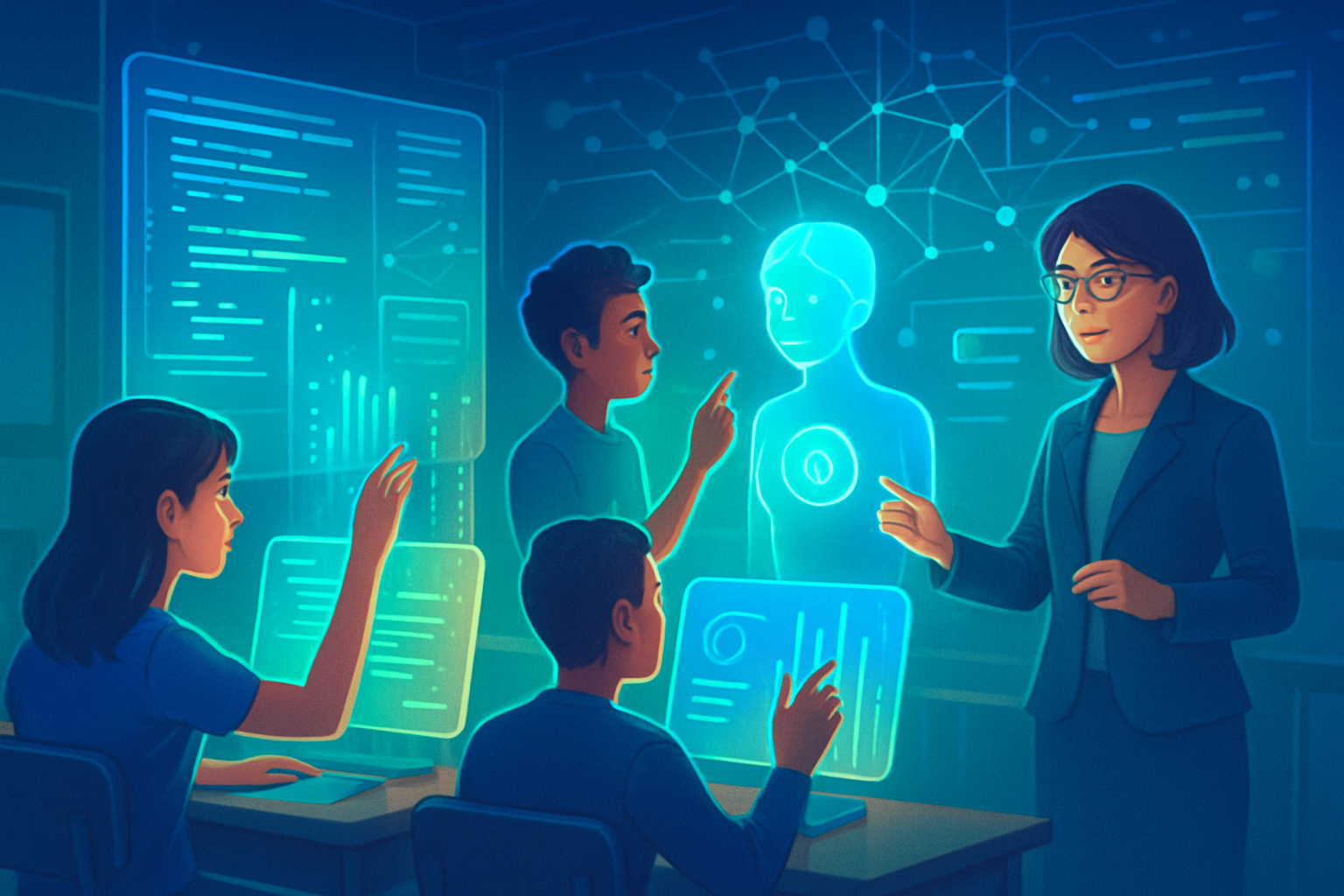
    The rapid integration of Artificial Intelligence into higher education has ignited a fervent debate, with a growing chorus of critics asserting that AI is not merely a tool for progress but a corrosive force "destroying the university and learning itself." This dire prognosis stems from profound concerns regarding academic integrity, the potential for degrees to become meaningless, and the fundamental shift in pedagogical practices as students leverage AI for assignments and professors explore its use in grading. The immediate significance of this technological upheaval is a re-evaluation of what constitutes genuine learning and the very purpose of higher education in an AI-saturated world.

    At the heart of this critical perspective is the fear that AI undermines the core intellectual mission of universities, transforming the pursuit of deep understanding into a superficial exercise in credentialism. Critics argue that widespread AI adoption risks fostering intellectual complacency, diminishing students' capacity for critical thought, and bypassing the rigorous cognitive processes essential for meaningful academic growth. The essence of learning—grappling with complex ideas, synthesizing information, and developing original thought—is perceived as being short-circuited by AI tools. This reliance on AI could reduce learning to passive consumption rather than active interpretation and critical engagement, leading some to speculate that recent graduating cohorts might be among the last to earn degrees without pervasive AI influence, signaling a seismic shift in educational paradigms.

    The Technical Underpinnings of Academic Disruption

    The specific details of AI's advancement in education largely revolve around the proliferation of sophisticated large language models (LLMs) like those developed by OpenAI (NASDAQ: MSFT), Alphabet (NASDAQ: GOOGL), and Anthropic. These models, capable of generating coherent and contextually relevant text, have become readily accessible to students, enabling them to produce essays, research papers, and even code with unprecedented ease. This capability differs significantly from previous approaches to academic assistance, which primarily involved simpler tools like spell checkers or grammar correction software. The current generation of AI can synthesize information, formulate arguments, and even mimic different writing styles, making it challenging to differentiate AI-generated content from human-authored work.

    Initial reactions from the AI research community and industry experts have been mixed. While many acknowledge the transformative potential of AI in education, there's a growing awareness of the ethical dilemmas and practical challenges it presents. Developers of these AI models often emphasize their potential for personalized learning and administrative efficiency, yet they also caution against their misuse. Educators, on the other hand, are grappling with the technical specifications of these tools—understanding their limitations, potential biases, and how to detect their unauthorized use. The debate extends to the very algorithms themselves: how can AI be designed to enhance learning rather than replace it, and what technical safeguards can be implemented to preserve academic integrity? The technical capabilities of AI are rapidly evolving, often outpacing the ability of educational institutions to adapt their policies and pedagogical strategies.

    Corporate Beneficiaries and Competitive Implications

    The current trajectory of AI integration in education presents a significant boon for tech giants and AI startups. Companies like OpenAI, Alphabet (NASDAQ: GOOGL), and Microsoft (NASDAQ: MSFT), which develop and deploy powerful AI models, stand to benefit immensely from increased adoption within academic settings. As universities seek solutions for detecting AI-generated content, developing AI-powered learning platforms, or even integrating AI into administrative functions, these companies are poised to become key vendors. The competitive implications are substantial, as major AI labs vie for market share in the burgeoning education technology sector.

    This development could disrupt existing educational software providers that offer traditional plagiarism detection tools or learning management systems. AI-powered platforms could offer more dynamic and personalized learning experiences, potentially rendering older, static systems obsolete. Furthermore, startups focusing on AI ethics, AI detection, and AI-driven pedagogical tools are emerging, creating a new competitive landscape within the ed-tech market. The strategic advantage lies with companies that can not only develop cutting-edge AI but also integrate it responsibly and effectively into educational frameworks, addressing the concerns of academic integrity while harnessing the technology's potential. Market positioning will increasingly depend on a company's ability to offer solutions that support genuine learning and ethical AI use, rather than simply providing tools that facilitate academic shortcuts.

    Wider Significance and Broader AI Landscape

    The debate surrounding AI's impact on universities fits squarely into the broader AI landscape and current trends emphasizing both the immense potential and inherent risks of advanced AI. This situation highlights the ongoing tension between technological advancement and societal values. The impacts are far-reaching, touching upon the very definition of intelligence, creativity, and the human element in learning. Concerns about AI's role in education mirror wider anxieties about job displacement, algorithmic bias, and the erosion of human skills in other sectors.

    Potential concerns extend beyond academic dishonesty to fundamental questions about the value of a university degree. If AI can write papers and grade assignments, what does a diploma truly signify? This echoes comparisons to previous AI milestones, such as the rise of expert systems or the advent of the internet, both of which prompted similar discussions about information access and the role of human expertise. However, the current AI revolution feels different due to its generative capabilities, which directly challenge the unique intellectual contributions traditionally expected from students. The broader significance lies in how society chooses to integrate powerful AI tools into institutions designed to cultivate critical thinking and original thought, ensuring that technology serves humanity's educational goals rather than undermining them.

    Future Developments and Expert Predictions

    In the near term, we can expect to see a surge in the development of more sophisticated AI detection tools, as universities scramble to maintain academic integrity. Concurrently, there will likely be a greater emphasis on redesigning assignments and assessment methods to be "AI-proof," focusing on critical thinking, creative problem-solving, and in-person presentations that are harder for AI to replicate. Long-term developments could include the widespread adoption of personalized AI tutors and intelligent learning platforms that adapt to individual student needs, offering customized feedback and learning pathways.

    Potential applications on the horizon include AI-powered research assistants that help students navigate vast amounts of information, and AI tools that provide constructive feedback on early drafts, guiding students through the writing process rather than simply generating content. However, significant challenges need to be addressed, including the ethical implications of data privacy when student work is fed into AI systems, the potential for algorithmic bias in grading, and ensuring equitable access to these advanced tools. Experts predict a future where AI becomes an indispensable part of the educational ecosystem, but one that requires careful governance, ongoing ethical considerations, and a continuous re-evaluation of pedagogical practices to ensure that it genuinely enhances learning rather than diminishes it.

    Comprehensive Wrap-Up and Final Thoughts

    In summary, the critical perspective that AI is "destroying the university and learning itself" underscores a profound challenge to the core values and practices of higher education. Key takeaways include the escalating concerns about academic integrity due to AI-generated student work, the ethical dilemmas surrounding professors using AI for grading, and the potential for degrees to lose their intrinsic value. This development represents a significant moment in AI history, highlighting the need for a nuanced approach that embraces technological innovation while safeguarding the human elements of learning and critical thought.

    The long-term impact will depend on how universities, educators, and policymakers adapt to this new reality. A failure to address these concerns proactively could indeed lead to a devaluation of higher education. What to watch for in the coming weeks and months includes the evolution of university policies on AI use, the emergence of new educational technologies designed to foster genuine learning, and ongoing debates within the academic community about the future of pedagogy in an AI-driven world. The conversation must shift from simply detecting AI misuse to strategically integrating AI in ways that empower, rather than undermine, the pursuit of knowledge.


    This content is intended for informational purposes only and represents analysis of current AI developments.

    TokenRing AI delivers enterprise-grade solutions for multi-agent AI workflow orchestration, AI-powered development tools, and seamless remote collaboration platforms.
    For more information, visit https://www.tokenring.ai/.
  • AI Revolutionizes Learning: The Dawn of Scalable Personalized Education

    AI Revolutionizes Learning: The Dawn of Scalable Personalized Education

    Artificial intelligence (AI) is rapidly transforming the educational landscape, ushering in an era where personalized learning can be scaled to meet the unique needs, preferences, and pace of individual learners. Recent breakthroughs in AI technologies have made significant strides in making this scalable personalization a reality, offering immediate and profound implications for education worldwide. This shift promises to enhance student engagement, improve learning outcomes, and provide more efficient support for both students and educators, moving away from a "one-size-fits-all" approach to a highly individualized, student-centered model.

    The Technical Core: Unpacking AI's Personalized Learning Engine

    Modern AI in personalized learning encompasses several key advancements, marking a significant departure from traditional educational models. At its heart are sophisticated AI algorithms and technical capabilities that dynamically adapt to individual student needs.

    Intelligent Tutoring Systems (ITS) are at the forefront, mimicking one-on-one interactions with human tutors. These systems leverage Natural Language Processing (NLP) to understand and respond to student inquiries and machine learning algorithms to adapt their support in real-time. Adaptive Content Delivery utilizes AI algorithms to analyze student performance, engagement, and comprehension, customizing educational materials in real-time by adjusting difficulty, pacing, and instructional approaches. Predictive Analytics, by analyzing extensive datasets on student performance and behavioral patterns, identifies unique learning patterns and forecasts future performance trends, allowing for proactive intervention. Automated Assessment and Feedback tools streamline grading and provide immediate, consistent feedback, even analyzing complex assessments like essays for coherence and relevance. Personalized Learning Paths are dynamically created and adjusted by AI based on an individual's strengths, weaknesses, interests, and goals, ensuring content remains relevant and challenging. Furthermore, AI enhances educational games through Gamification and Engagement, creating adaptive experiences to boost motivation. Some advanced systems even utilize Computer Vision for Emotional Cue Recognition, adapting content based on a student's emotional state.

    The technical backbone relies heavily on various machine learning (ML) techniques. Supervised learning is used for performance prediction, while unsupervised learning identifies learning styles. Reinforcement learning optimizes content sequences, and deep learning, a subset of ML, analyzes complex datasets for tasks like automated grading. Natural Language Processing (NLP) is crucial for meaningful dialogues, and Retrieval-Augmented Generation (RAG) in AI chatbots, such as Khan Academy's Khanmigo, grounds AI responses in vetted course materials, improving accuracy. Bayesian Knowledge Tracing statistically estimates a student's mastery of knowledge components, updating with every interaction. This data-driven customization fundamentally differs from previous approaches by offering dynamic, real-time adaptation rather than static, pre-defined paths, providing proactive interventions before students struggle, and ultimately enhancing engagement and outcomes. Initial reactions from the AI research community and industry experts are overwhelmingly positive, recognizing the immense potential while also emphasizing the need to address ethical concerns like data privacy, algorithmic bias, and equity.

    Corporate Impact: Reshaping the EdTech Landscape

    The integration of AI into personalized learning is profoundly reshaping the landscape for AI companies, tech giants, and startups, driving significant market growth and fostering both intense competition and innovative disruption. The global AI in Personalized Learning and Education Technology market is projected to surge to USD 208.2 billion by 2034, growing at a compound annual growth rate (CAGR) of 41.4%.

    Pure-play AI companies specializing in foundational AI technologies such as machine learning algorithms, natural language processing (NLP) systems, and intelligent tutoring systems (ITS) are at the core of this transformation. Companies that provide underlying AI infrastructure and tools for personalization, content generation, and data analysis are set to benefit immensely. Their competitive edge will come from the sophistication, accuracy, and ethical deployment of their AI models. For AI companies whose products might have been more generalized, the shift demands a focus on specialized algorithms and models tailored for educational contexts, continuously enhancing core AI offerings for real-time feedback and dynamic content delivery. Strategic advantages include deep expertise in AI research and development and partnerships with EdTech companies.

    Tech giants like Alphabet (NASDAQ: GOOGL), Microsoft (NASDAQ: MSFT), Amazon (NASDAQ: AMZN), and IBM (NYSE: IBM) are well-positioned due to their extensive resources, existing cloud infrastructure, vast data reserves, and established ecosystems. They can integrate AI-powered personalized learning features into existing educational products like Google Classroom with Gemini and corporate training solutions. These companies leverage substantial user bases and brand recognition to scale solutions quickly, posing a significant competitive threat through acquisitions and bundling. Their market positioning benefits from global reach, robust cloud computing, and significant R&D investments, enabling them to provide end-to-end solutions and influence widespread adoption.

    EdTech startups, such as those participating in Google for Startups Growth Academy: AI for Education (e.g., Angaza Elimu, Complori, Pandatron), are experiencing a boom, driven by demand for innovative and agile solutions. Many are emerging with intelligent tutors and adaptive learning platforms, quickly addressing specific learning gaps or catering to niche markets. Startups are prime disruptors, introducing innovative business models and technologies that challenge traditional institutions. Their strategic advantages include agility, rapid innovation, and a focus on specific, underserved market segments, often relying on being at the forefront of AI innovation and offering flexible, cost-effective options. However, they face intense competition and must secure funding and strong partnerships to thrive.

    Broader Implications: AI's Transformative Role in Education and Society

    The integration of AI in personalized learning represents a significant evolution within both the education sector and the broader AI landscape. This transformative shift promises to revolutionize how individuals learn, with profound implications for society, while also raising important ethical and practical concerns. AI in personalized learning is a direct outcome and a key application of advancements in several core AI domains, including machine learning, deep learning, natural language processing (NLP), and generative AI.

    The positive impacts are substantial: improved learning outcomes and engagement through tailored content, enhanced efficiency in administrative tasks for educators, expanded access and equity for underserved students, and real-time feedback and support. AI can cater to diverse learning styles, transforming notes into mind maps or providing immersive virtual reality experiences. This will evolve educators' roles from knowledge providers to guides who use AI insights to customize experiences and foster critical thinking. However, potential concerns include over-reliance on AI diminishing critical thinking, changes to teachers' roles, and cost disparities exacerbating educational inequalities.

    Ethical considerations are paramount. Data privacy and security are critical, as AI systems collect vast amounts of personal student data, necessitating robust safeguards. Algorithmic bias, inherent in training data, can perpetuate inequalities, requiring diverse datasets and regular audits. Transparency and accountability are crucial for understanding AI's decision-making. Academic integrity is a concern, as advanced AI could facilitate cheating. These challenges echo past AI milestones, from early computer-based instruction (like PLATO in the 1960s) to Intelligent Tutoring Systems (1970s-1980s), and the machine learning and deep learning revolution of the 2000s. Today's generative AI and Large Language Models (LLMs), such as those driven by the Transformer model (2017) and GPT (2018 onwards), build upon these, enabling highly adaptive, data-driven, and generative approaches to education.

    The Horizon: Charting the Future of Personalized AI Learning

    The future of AI in personalized learning promises increasingly sophisticated and integrated solutions, refining existing capabilities and expanding their reach while addressing critical challenges.

    In the near term, adaptive learning systems are projected to power over 47% of learning management systems within the next three years, offering customized content and exercises that dynamically adjust pace and complexity. Personalized feedback and assessment will become more accurate, with NLP and sentiment analysis providing nuanced tips. Predictive analytics will proactively identify potential academic problems, and dynamic content delivery will craft diverse educational materials tailored to student progress. Long-term developments envision hyper-personalized AI tutors that adapt to student emotions, advanced AI-driven content creation for customized textbooks and courses, and multimodal learning experiences integrating AI with virtual reality (VR) for immersive simulations. AI is also anticipated to support lifelong adaptive learning, from early schooling to career development.

    Potential applications on the horizon include highly intelligent tutoring systems like Khanmigo by Khan Academy, advanced adaptive learning platforms (e.g., Knewton, DreamBox, Duolingo), and AI tools for targeted interventions and enhanced accessibility. AI will also contribute to personalized curriculum design, automate administrative tasks, and develop personalized study schedules. However, challenges persist, including data privacy and security, algorithmic bias, the digital divide, potential over-reliance on AI diminishing critical thinking, and the absence of human emotional intelligence.

    Experts predict a transformative period, with 2025 marking a significant shift towards AI providing tailored educational experiences. The rise of advanced AI tutoring systems and virtual campuses with AI agents acting as personalized educators and mentors is expected. Data-driven decision-making will empower educators, and hybrid models, where AI supports human interaction, will become the norm. Continuous refinement and the development of ethical frameworks will be crucial. A recent EDUCAUSE survey indicates that 57% of higher education institutions are prioritizing AI in 2025, up from 49% the previous year, signaling rapid integration and ongoing innovation.

    Conclusion: A New Era for Education

    The integration of AI into personalized learning marks a pivotal moment in educational history, shifting from a "one-size-fits-all" model to a highly individualized, student-centered approach. Key takeaways include the ability of AI to deliver tailored learning experiences, boost engagement and retention, provide real-time feedback, and offer intelligent tutoring and predictive analytics. This development represents a significant leap from earlier educational technologies, leveraging AI's capacity for processing vast amounts of data and recognizing patterns to make truly individualized learning feasible at scale.

    The long-term impact is expected to be profound, leading to hyper-personalization, emotionally adaptive AI tutors, and AI acting as lifelong learning companions. Educators' roles will evolve, focusing on mentorship and higher-order thinking, while AI helps democratize high-quality education globally. However, careful ethical guidelines and policies will be crucial to prevent algorithmic bias and ensure equitable access, avoiding the exacerbation of the digital divide.

    In the coming weeks and months, watch for enhanced intelligent tutoring systems capable of Socratic tutoring, deeper integration of predictive analytics, and advancements in smart content creation. Expect more pilot programs and empirical studies assessing AI's effectiveness, alongside increasing discussions and the development of comprehensive ethical guidelines for AI in education. The rapid adoption of AI in educational institutions signifies a new era of innovation, where technology promises to make learning more effective, engaging, and accessible for all.


    This content is intended for informational purposes only and represents analysis of current AI developments.

    TokenRing AI delivers enterprise-grade solutions for multi-agent AI workflow orchestration, AI-powered development tools, and seamless remote collaboration platforms.
    For more information, visit https://www.tokenring.ai/.
  • AI Revolutionizes the Classroom: Milken Embraces the Future of Learning

    AI Revolutionizes the Classroom: Milken Embraces the Future of Learning

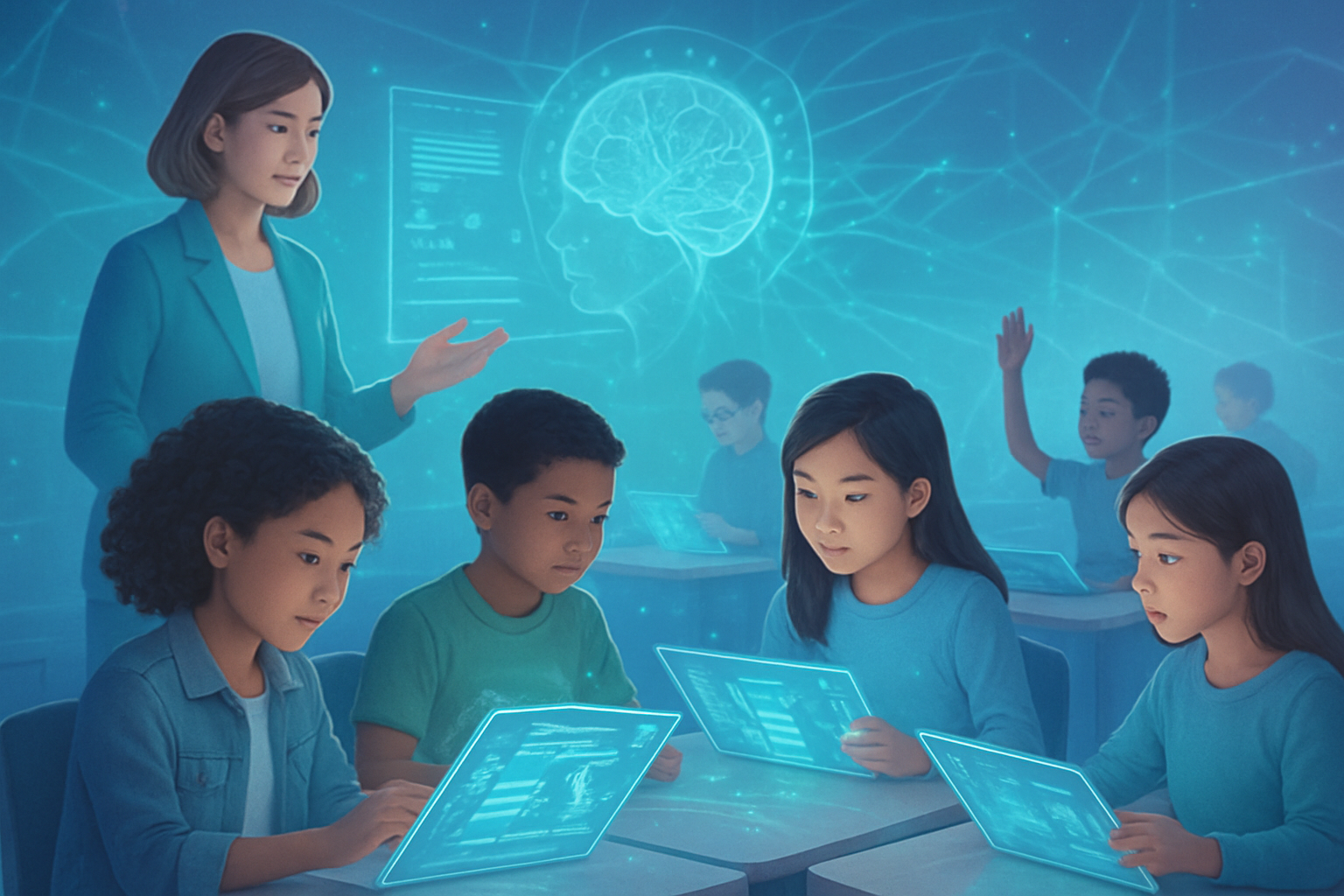
    The integration of Artificial Intelligence (AI) into educational environments is no longer a distant concept but a present reality, fundamentally reshaping how students learn and teachers instruct. From K-12 institutions to higher education, campuses are increasingly embracing AI tools, recognizing their potential to personalize learning, streamline administrative tasks, and enhance engagement. This transformative shift, highlighted by proactive approaches like that of Milken Community School, signals a new era in pedagogy, where AI acts as a powerful co-pilot in the educational journey.

    As of November 7, 2025, the academic world is abuzz with discussions and implementations of AI, moving beyond initial skepticism to explore its profound implications. Educational institutions are grappling with both the immense benefits—such as tailored learning experiences and increased efficiency—and the significant challenges, including concerns about academic integrity, data privacy, and equitable access. Milken's recent initiatives, detailed in The Milken Roar, exemplify a thoughtful and forward-thinking strategy, positioning AI not as a threat, but as an indispensable tool for preparing students for a future inextricably linked with artificial intelligence.

    Unpacking the Tech: How AI is Redefining Educational Tools

    The current wave of AI integration in education is marked by sophisticated tools that go far beyond simple spell-checkers, offering capabilities that fundamentally alter traditional learning and teaching methodologies. At its core, this advancement leverages large language models (LLMs) and machine learning algorithms to process vast amounts of data, understand natural language, and generate human-like text, images, and even code. Students are now employing AI for personalized study plans, essay brainstorming and refinement, research assistance, step-by-step math problem-solving, and even generating creative project elements. A Digital Education Council survey reveals that 86% of higher education students utilize AI in their studies, with a significant portion doing so weekly or daily.

    For educators, generative AI has become a crucial assistant. The use of AI by K-12 educators has surged from 51% to 67% in just one academic year (2022-23 to 2023-24), with 60% reporting AI use in the classroom and 55% noting improved learning outcomes. Teachers are deploying AI to generate curriculum-aligned questions, explanations, and diverse exam formats, significantly reducing time spent on repetitive content creation. AI also streamlines administrative burdens such as grading, scheduling, and parent communication, freeing up valuable time for direct student interaction and pedagogical development. This differs from previous educational technologies, which often focused on content delivery or basic assessment, by offering adaptive, generative, and personalized support that mimics human-like reasoning and interaction.

    Initial reactions from the AI research community and industry experts emphasize the dual nature of these advancements. While acknowledging the immense potential for personalized education and efficiency gains, there's a strong call for ethical guidelines, robust data privacy frameworks, and continuous teacher training. Experts highlight the necessity of teaching "AI literacy" – not just how to use AI, but how to critically evaluate its outputs, understand its limitations, and guard against biases. The consensus is that AI should augment, not replace, human educators, fostering a "human-in-the-loop" approach that capitalizes on AI's analytical power while preserving the irreplaceable human elements of empathy, critical thinking, and social development.

    AI's Shifting Sands: Implications for Tech Giants and Startups

    The burgeoning integration of AI into education presents a lucrative and rapidly expanding market, profoundly affecting major AI companies, established tech giants, and agile startups alike. Companies specializing in AI-powered learning platforms, content generation tools, and administrative automation stand to benefit immensely. Firms like Google (NASDAQ: GOOGL) with its AI tools for Workspace for Education, Microsoft (NASDAQ: MSFT) with its Copilot integrations, and OpenAI, with its widely adopted ChatGPT, are already seeing their technologies permeate educational settings. These tech behemoths are well-positioned due to their extensive research capabilities, cloud infrastructure, and existing relationships with educational institutions.

    The competitive landscape is intensifying as more players vie for a share of this transformative market. Startups focused on niche educational AI applications, such as personalized tutoring systems, AI-driven assessment tools, or specialized content creation platforms, are finding fertile ground. These smaller companies often innovate rapidly, offering tailored solutions that can challenge the broader, more generalist offerings of larger corporations. The potential for disruption to existing educational technology providers is significant; traditional learning management systems and digital textbook publishers must now integrate advanced AI functionalities or risk obsolescence.

    Strategic advantages will accrue to companies that can effectively balance innovation with ethical considerations, particularly regarding data privacy, bias mitigation, and academic integrity. Companies that develop transparent, explainable AI models and provide robust training and support for educators will likely gain a competitive edge. Furthermore, the development of AI tools that foster critical thinking rather than simply automating tasks will be crucial for long-term success and widespread adoption, as educators seek tools that enhance, rather than diminish, core learning objectives.

    A Broader Lens: AI's Place in the Educational Tapestry

    The integration of AI into education is not an isolated phenomenon but a significant thread in the broader tapestry of AI's societal impact and ongoing technological trends. It aligns with the global push for digital transformation, personalized experiences, and data-driven decision-making across all sectors. In education, this translates to a paradigm shift from a one-size-fits-all model to highly individualized learning pathways, where AI can adapt content, pace, and teaching styles to each student's unique needs. This move towards hyper-personalization is one of the most significant impacts, promising to unlock student potential previously constrained by traditional classroom limitations.

    However, this profound shift also brings potential concerns. The specter of academic integrity looms large, with educators grappling with how to prevent AI-driven plagiarism while simultaneously teaching students how to responsibly leverage these powerful tools. Data privacy and security are paramount, as AI systems collect vast amounts of sensitive student data, necessitating robust ethical guidelines and regulatory frameworks. Equity issues also persist; unequal access to advanced AI tools and necessary digital infrastructure could exacerbate the digital divide, creating new disparities between well-resourced and under-resourced schools.

    Comparisons to previous educational milestones, such as the introduction of the internet or personal computers into classrooms, highlight the unique nature of AI. While past technologies provided access to information and new modes of interaction, AI offers intelligent agency, capable of generating, analyzing, and adapting content autonomously. This represents a qualitative leap, demanding not just technological adoption but a fundamental re-evaluation of learning objectives, assessment methods, and the very role of the human educator. The Milken Institute's emphasis on "human-in-the-loop" models underscores the critical need to harness AI's power to enhance human potential rather than replace it, preserving essential human guidance for emotional and social development.

    The Horizon: Charting Future Developments in Educational AI

    Looking ahead, the landscape of AI in education is poised for rapid and transformative developments in both the near and long term. In the immediate future, we can expect to see more sophisticated AI tutors capable of providing nuanced, context-aware feedback and adaptive learning paths that go beyond current capabilities. AI-powered assessment tools will evolve to evaluate not just factual recall, but also critical thinking, creativity, and problem-solving skills, offering more holistic insights into student progress. Furthermore, AI will likely become more seamlessly integrated into existing learning management systems, making its use more intuitive for both teachers and students.

    Potential applications and use cases on the horizon include AI agents specifically designed to assist low-income students with complex tasks like college applications and financial aid forms, democratizing access to crucial educational support. We may also see AI-driven platforms that facilitate collaborative learning, intelligently pairing students for group projects and providing real-time feedback on team dynamics and individual contributions. Personalized professional development for teachers, guided by AI to address specific pedagogical needs, is another promising area.

    However, several challenges need to be addressed for these advancements to reach their full potential. The ethical development and deployment of AI, particularly concerning bias, transparency, and accountability, remain critical. Robust data governance policies and advanced cybersecurity measures will be essential to protect student privacy. Moreover, continuous investment in teacher training and professional development will be crucial to ensure educators are equipped to effectively leverage AI tools and integrate them meaningfully into their teaching practices. Experts predict that the future of education will involve a symbiotic relationship between human intelligence and artificial intelligence, where AI handles routine tasks and data analysis, allowing educators to focus on mentoring, inspiring, and fostering higher-order thinking skills.

    The AI-Enhanced Classroom: A New Chapter in Learning

    The integration of AI into educational environments marks a pivotal moment in the history of learning and teaching. From K-12 classrooms to university lecture halls, AI is no longer a futuristic concept but a vital, evolving tool embraced by both students and educators. The proactive stance of institutions like Milken Community School, as highlighted by The Milken Roar on November 7, 2025, underscores a collective realization: AI is here to stay, and the focus must shift from resistance to strategic adoption. Key takeaways include the immense potential for personalized learning, increased efficiency in administrative tasks, and enhanced student engagement.

    This development signifies a profound shift in AI's significance, moving from specialized applications to mainstream utility in a sector as fundamental as education. It represents a significant milestone, comparable to the advent of the internet in classrooms, yet distinct in its capacity for intelligent interaction and adaptation. The long-term impact promises a more equitable, efficient, and engaging educational experience, provided that challenges related to academic integrity, data privacy, and equitable access are thoughtfully addressed.

    In the coming weeks and months, it will be crucial to watch for the evolution of AI literacy curricula, new regulatory frameworks for AI use in schools, and the emergence of innovative AI tools that prioritize ethical design and pedagogical effectiveness. The journey of integrating AI into education is just beginning, and its trajectory will undoubtedly shape the minds of future generations, preparing them for a world where human and artificial intelligence collaborate to solve complex challenges.


    This content is intended for informational purposes only and represents analysis of current AI developments.

    TokenRing AI delivers enterprise-grade solutions for multi-agent AI workflow orchestration, AI-powered development tools, and seamless remote collaboration platforms.
    For more information, visit https://www.tokenring.ai/.

  • The AI Classroom: Reshaping American Education with Unexpected Impacts and Future Horizons

    The AI Classroom: Reshaping American Education with Unexpected Impacts and Future Horizons

    The landscape of American education is undergoing a profound transformation, driven by the accelerating integration of Artificial Intelligence (AI) into classrooms from kindergarten through university. What began as a nascent exploration of AI's potential is rapidly evolving into a fundamental shift in teaching methodologies, learning experiences, and administrative efficiencies. This pervasive adoption, while promising unprecedented personalization and streamlining, is simultaneously unveiling a complex tapestry of unexpected challenges and ethical considerations that demand careful navigation. The immediate significance lies in AI's capacity to individualize learning paths, automate tedious tasks, and provide instant feedback, thereby potentially democratizing access to tailored education and freeing educators to focus on higher-order teaching and mentorship.

    However, this rapid technological embrace is not without its intricate nuances. From concerns over academic integrity and data privacy to the widening digital divide and the potential for algorithmic bias, the educational sector is grappling with the multifaceted implications of inviting AI into its core. As educators, policymakers, and technologists collaborate to harness AI's power responsibly, the current trajectory points towards an educational future that is both incredibly promising and fraught with the need for vigilant oversight, strategic implementation, and continuous adaptation to ensure equitable and effective learning outcomes for all students.

    AI's Technical Revolution in Learning: Beyond the Hype

    The current wave of AI integration in American education is characterized by a sophisticated array of technologies that extend far beyond simple automation, marking a significant departure from previous educational technology (EdTech) initiatives. At the forefront are Generative AI (GenAI) tools like ChatGPT, Google's Gemini, and Microsoft Copilot, which are rapidly becoming ubiquitous. These large language models (LLMs) empower both students and teachers to create content, brainstorm ideas, summarize complex texts, and even develop lesson plans and quizzes. Their ability to understand and generate human-like text has made them invaluable for drafting, research assistance, and personalized learning prompts, differentiating them from earlier, more rigid rule-based systems.

    Beyond generative capabilities, Adaptive Learning Platforms represent a technical cornerstone of AI in education. Systems like Smart Sparrow and Knewton Alta leverage machine learning algorithms to continuously analyze student performance, learning styles, and progress. They dynamically adjust the curriculum, pace, and difficulty of material, offering customized feedback and resource recommendations in real-time. This contrasts sharply with traditional static digital textbooks or learning management systems, providing a truly individualized educational journey. Similarly, Intelligent Tutoring Systems (ITS), exemplified by Khanmigo (powered by GPT-4), offer personalized, Socratic-method-based guidance, acting as virtual one-on-one tutors that adapt to student responses and offer targeted support, a level of personalized instruction previously unattainable at scale.

    Other critical technical advancements include AI-powered Learning Analytics, which process vast amounts of student data to identify learning patterns, predict academic performance, and flag students at risk, enabling proactive interventions. Automated Grading Systems utilize natural language processing (NLP) and machine learning to evaluate assignments, reducing teacher workload and providing faster feedback than manual grading. Furthermore, AI-driven Chatbots and Virtual Assistants streamline administrative tasks, answer student inquiries, and provide instant support, enhancing operational efficiency for institutions. Initial reactions from the AI research community highlight the impressive capabilities of these models but also caution about the need for robust validation, bias mitigation, and transparency in their application, particularly in sensitive domains like education. Industry experts emphasize the importance of human-in-the-loop oversight to ensure ethical deployment and prevent over-reliance on AI outputs.

    Competitive Dynamics: Who Benefits in the AI EdTech Race

    The rapid integration of AI into educational systems is creating a dynamic competitive landscape, significantly impacting established EdTech companies, major tech giants, and agile startups. Companies that stand to benefit most are those developing robust, scalable, and ethically sound AI platforms tailored for educational contexts. Microsoft (NASDAQ: MSFT) and Google (NASDAQ: GOOGL) are prime examples, leveraging their extensive AI research and cloud infrastructure to offer comprehensive solutions. Microsoft's Copilot integration into educational tools and Google's Gemini-powered offerings provide powerful generative AI capabilities that enhance productivity for educators and students alike, solidifying their competitive advantage by embedding AI directly into widely used productivity suites.

    Major EdTech players like Instructure (NYSE: INST), with its Canvas LMS, and Blackboard (now part of Anthology), are actively integrating AI features into their existing platforms, from AI-powered analytics to content creation tools. Their established market presence gives them an edge in distributing AI innovations to a broad user base. However, this also presents a challenge: they must rapidly innovate to keep pace with dedicated AI startups that can pivot more quickly. Startups specializing in niche AI applications, such as adaptive learning (e.g., DreamBox, Smart Sparrow), intelligent tutoring (e.g., Khan Academy's Khanmigo), and AI-driven assessment tools, are also poised for significant growth. These smaller companies often bring specialized expertise and innovative approaches that can disrupt existing products or services by offering highly effective, targeted solutions.

    The competitive implications extend to the need for robust data privacy and ethical AI frameworks. Companies that can demonstrate transparent, secure, and bias-mitigated AI solutions will gain a significant strategic advantage, especially given the sensitive nature of student data. This focus on responsible AI development could lead to consolidation in the market, as larger players acquire promising startups with strong ethical AI foundations. Furthermore, the demand for AI literacy and professional development for educators creates a new market segment, benefiting companies that offer training and support services for AI adoption, further diversifying the competitive landscape.

    Wider Significance: Reshaping the Educational Fabric

    The increasing integration of AI into American education is not merely a technological upgrade; it represents a fundamental reshaping of the educational fabric, with far-reaching implications that resonate across the broader AI landscape and societal trends. This development fits squarely within the overarching trend of AI moving from specialized applications to pervasive utility, democratizing access to advanced computational capabilities for a wider audience, including non-technical users in educational settings. It underscores AI's potential to address long-standing challenges in education, such as personalized learning at scale and reducing administrative burdens, which have historically been difficult to overcome.

    The impacts are profound. On the positive side, AI promises to significantly enhance personalized learning, allowing every student to learn at their own pace and style, potentially closing achievement gaps and catering to diverse needs, including those with learning disabilities. It can foster greater efficiency and productivity for educators, freeing them from routine tasks to focus on mentorship and deeper pedagogical strategies. However, the integration also brings significant potential concerns. Academic integrity is a paramount issue, with generative AI making plagiarism detection more complex and raising questions about the authenticity of student work. Data privacy and security are critical, as AI systems collect vast amounts of sensitive student information, necessitating robust safeguards and ethical guidelines to prevent misuse or breaches.

    Moreover, the risk of exacerbating the digital divide and educational inequality is substantial. Districts and institutions with greater resources are better positioned to adopt and implement AI technologies effectively, potentially leaving behind underfunded schools and underserved communities. Bias in AI algorithms, if not rigorously addressed, could perpetuate or even amplify existing societal biases, leading to discriminatory outcomes in assessment, content delivery, and student support. Compared to previous AI milestones, such as the development of expert systems or early machine learning applications, the current wave of generative AI and adaptive learning systems offers a level of human-like interaction and personalization that was previously unimaginable, marking a significant leap in AI's capacity to directly influence human development and learning processes.

    The Horizon of Learning: Future Developments and Challenges

    As AI continues its inexorable march into American education, the horizon is brimming with anticipated near-term and long-term developments, promising even more transformative shifts. In the near term, experts predict a significant expansion in the sophistication of adaptive learning platforms and intelligent tutoring systems. These systems will become more context-aware, capable of understanding not just what a student knows, but how they learn, their emotional state, and even potential cognitive biases, offering hyper-personalized interventions. We can expect more seamless integration of AI directly into Learning Management Systems (LMS) and existing EdTech tools, making AI functionalities less of an add-on and more of an intrinsic part of the learning ecosystem. The development of AI tools specifically designed to foster critical thinking and creativity, rather than just content generation, will also be a key focus.

    Looking further ahead, AI-powered research assistants for students and faculty will become increasingly sophisticated, capable of not just summarizing, but also synthesizing information, identifying research gaps, and even assisting in experimental design. Virtual and Augmented Reality (VR/AR) will likely merge with AI to create immersive, interactive learning environments, offering simulations and experiences that are currently impossible in traditional classrooms. AI could also play a crucial role in competency-based education, dynamically assessing and validating skills acquired through various pathways, not just traditional coursework. Experts predict AI will move towards more proactive and preventative support, identifying potential learning difficulties or disengagement patterns before they manifest, allowing for timely interventions.

    However, several significant challenges need to be addressed. Foremost among these is the ongoing need for robust ethical frameworks and governance to manage data privacy, algorithmic bias, and academic integrity. Developing AI literacy for both educators and students will be paramount, ensuring they understand how to use AI tools effectively, critically evaluate their outputs, and recognize their limitations. Equitable access to AI technologies and the necessary digital infrastructure remains a persistent challenge, requiring concerted efforts to prevent the widening of educational disparities. Furthermore, the integration of AI will necessitate a re-evaluation of teacher roles, shifting from content delivery to facilitators of learning, mentors, and designers of AI-enhanced educational experiences, requiring substantial professional development and support. What experts predict next is a continuous cycle of innovation and adaptation, where the educational community learns to co-evolve with AI, harnessing its power while mitigating its risks to cultivate a more effective, equitable, and engaging learning environment for all.

    The AI Education Revolution: A Pivotal Moment

    The increasing integration of AI into American educational systems marks a pivotal moment in the history of learning and technology. The key takeaways from this evolving landscape are clear: AI is poised to fundamentally redefine personalized learning, administrative efficiency, and access to educational resources. From generative AI tools that empower content creation to adaptive platforms that tailor instruction to individual needs, the technological advancements are undeniable. This shift holds the promise of a more engaging and effective learning experience for students and a more streamlined workflow for educators.

    This development's significance in AI history cannot be overstated. It represents one of the most direct and widespread applications of advanced AI capabilities into a core societal function—education—impacting millions of lives annually. Unlike previous technological shifts, AI offers a level of dynamic interaction and personalization that could genuinely democratize high-quality education, making it accessible and tailored to an unprecedented degree. However, the long-term impact hinges critically on how effectively we address the inherent challenges. The ethical dilemmas surrounding academic integrity, data privacy, and algorithmic bias are not mere footnotes but central considerations that will shape the success and equity of AI in education.

    In the coming weeks and months, the educational community, alongside AI developers and policymakers, must watch for several critical developments. We need to observe the evolution of institutional policies on AI use, the rollout of comprehensive teacher training programs to foster AI literacy, and the emergence of standardized ethical guidelines for AI deployment in schools. Furthermore, monitoring the impact on student learning outcomes and the effectiveness of strategies to mitigate the digital divide will be crucial. The AI education revolution is not a distant future but a present reality, demanding thoughtful engagement and proactive stewardship to ensure it serves to uplift and empower every learner.

    This content is intended for informational purposes only and represents analysis of current AI developments.
    TokenRing AI delivers enterprise-grade solutions for multi-agent AI workflow orchestration, AI-powered development tools, and seamless remote collaboration platforms.
    For more information, visit https://www.tokenring.ai/.