Tag: Future of Work

  • Singapore Sounds Global Alarm: Invest in Humanity for the AI Age

    Singapore Sounds Global Alarm: Invest in Humanity for the AI Age

    Singapore's Prime Minister Lawrence Wong has issued a powerful and urgent global appeal to governments worldwide: prioritize significant investment in preparing their workforces for the transformative era of artificial intelligence. This clarion call, delivered amidst escalating anxieties over AI-driven job displacement, underscores a deliberate, human-centric approach to technological advancement. It positions the state as a crucial architect in ensuring that the immense benefits of AI are equitably distributed, fostering economic growth while safeguarding societal stability and individual livelihoods. The immediate significance of this message lies in its proactive stance, advocating for a global strategy that marries aggressive AI adoption with robust policies for continuous education, reskilling, and job redesign, rather than leaving the future of work solely to market forces.

    A Blueprint for Human-Centric AI Integration

    Prime Minister Wong’s announcement is not merely a caution but a comprehensive blueprint for national and international action. At its core, Singapore's strategy emphasizes that AI's primary purpose should be to create and enhance local jobs, boost productivity, and benefit the workforce, rather than causing widespread displacement. This approach fundamentally differs from a laissez-faire outlook, which often assumes new jobs will automatically emerge to replace those lost. Wong explicitly stated that "there is no economic law that guarantees" such an outcome, stressing that governments "cannot leave this to the market." This marks a significant shift, acknowledging the unprecedented speed of AI-driven disruption and the need for deliberate intervention.

    Technically, Singapore's multi-pronged strategy involves substantial overhauls and new initiatives. The SkillsFuture Programme is being revamped with the SkillsFuture Level-Up Programme, offering significant credit top-ups (e.g., SG$4,000 for Singaporeans aged 40 and above) for eligible training, including part-time and full-time diplomas and undergraduate courses. A Mid-Career Training Allowance provides up to SG$3,000 per month for workers over 40 to pursue approved full-time courses, with plans to extend this to part-time learners by early 2026. Furthermore, the National AI Strategy (NAIS) 2.0 aims to triple Singapore’s AI practitioners to 15,000 within three to five years through local training and international recruitment. The AI Apprenticeship Programme is being expanded, and universities are increasing AI course offerings, with some making AI a compulsory introductory subject for computer science students. These initiatives represent a concerted effort to proactively equip the workforce with the skills needed to thrive in an AI-driven economy, moving beyond reactive measures to systemic preparation. Initial reactions from policy experts and labor organizations have largely been positive, hailing Singapore's pragmatic and forward-thinking approach as a potential model for other nations grappling with similar challenges.

    Reshaping the AI Industry Landscape

    Singapore's proactive stance has significant implications for AI companies, tech giants, and startups globally. Companies specializing in AI education, reskilling platforms, and workforce development solutions stand to benefit immensely. Firms offering AI tools designed for productivity enhancement and job augmentation, particularly those tailored for Small and Medium-sized Enterprises (SMEs), will find a fertile ground for growth. The emphasis on broad-based AI adoption, rather than solely focusing on frontier advancements, encourages the development of practical, accessible AI solutions that can be integrated across various sectors, boosting overall economic productivity.

    For major AI labs and tech companies, Singapore's call signals a growing global expectation for responsible and human-centric AI development. While these companies often lead in innovation, they may face increasing pressure from governments to demonstrate how their technologies contribute to job creation and workforce empowerment, rather than solely focusing on efficiency gains that could lead to displacement. This could disrupt existing product roadmaps, pushing companies to invest more in explainable AI, human-in-the-loop systems, and collaborative AI tools. Startups that align with Singapore's vision, focusing on solutions that empower workers and facilitate reskilling, could gain significant market positioning and strategic advantages, potentially attracting government partnerships and investment in a global landscape increasingly prioritizing inclusive AI growth. The competitive landscape may shift towards companies that can offer not just cutting-edge AI, but also comprehensive strategies for its ethical and societal integration.

    A Global Imperative for Inclusive AI Growth

    Singapore's advocacy for workforce preparation fits squarely into the broader global AI landscape, which is increasingly grappling with the societal impacts of rapid technological advancement. It highlights a critical trend: the shift from viewing AI purely as a technological marvel to recognizing it as a profound societal force requiring careful governance and strategic human capital development. The call echoes concerns raised by international bodies like the International Monetary Fund (IMF), which has pointed to Singapore's particular exposure to AI's workplace disruptions due to its skilled workforce. This initiative serves as a potential global benchmark, especially for other small, open economies, demonstrating how aggressive tech adoption can be balanced with human-centric policies to maintain societal stability in a turbulent world marked by economic fragmentation and geopolitical tensions.

    The potential concerns addressed by this proactive approach include the exacerbation of income inequality, particularly affecting women and younger workers, if AI's benefits are not widely distributed. By emphasizing broad-based AI adoption and supporting SMEs, Singapore aims to ensure that the returns from AI investments accrue not just to the owners of capital, but also to workers and the broader populace. This contrasts sharply with earlier industrial revolutions, where the social safety nets and educational infrastructure often lagged behind technological change, leading to significant social unrest. Singapore's engagement in international forums like APEC, advocating for cooperation and best practices in AI, further underscores its commitment to shaping a responsible global AI future, exemplified by initiatives like the AI Verify Foundation and the Singapore Consensus on Global AI Safety Research Priorities.

    The Road Ahead: Continuous Adaptation and Global Collaboration

    Looking ahead, the initiatives outlined by Singapore's Prime Minister signal a future characterized by continuous adaptation and robust international collaboration in the realm of AI and workforce development. Near-term developments will likely see the full implementation and expansion of programs like the SkillsFuture Level-Up Programme and the Mid-Career Training Allowance, with the latter extending to part-time learners by early 2026. The push to triple Singapore's AI practitioners to 15,000 within three to five years will necessitate sustained investment in specialized training and talent attraction.

    In the long term, experts predict that the concept of a static career will become increasingly obsolete, replaced by a dynamic model of lifelong learning and multiple career pivots. This will require not just government-led initiatives but also a fundamental shift in corporate culture towards continuous employee upskilling and reskilling. Potential applications and use cases on the horizon include highly personalized AI-powered learning platforms, advanced job-matching algorithms that identify skill gaps and suggest relevant training, and collaborative AI systems that augment human capabilities rather than replacing them entirely. Challenges that need to be addressed include ensuring equitable access to these training opportunities, particularly for vulnerable populations, and constantly updating curricula to keep pace with rapidly evolving AI technologies. Experts predict that successful nations will be those that can foster a strong ecosystem of government, industry, and academia working in concert to cultivate an adaptable and resilient workforce.

    A Defining Moment for the Future of Work

    Singapore's Prime Minister Lawrence Wong's call for global governments to invest in preparing their workforces for the age of artificial intelligence marks a defining moment in the ongoing discourse about the future of work. The key takeaway is clear: the transition to an AI-powered economy cannot be left to chance; it requires deliberate, proactive, and human-centric government intervention. Singapore's comprehensive strategy, encompassing significant investments in lifelong learning, job redesign, and talent development, offers a tangible model for other nations.

    This development holds immense significance in AI history, shifting the narrative from technological determinism to one of human agency and responsible governance. It underscores that while AI's capabilities are profound, its ultimate impact on society will be shaped by the policy choices made today. The long-term impact could be a more equitable and resilient global workforce, capable of harnessing AI's potential for widespread prosperity. In the coming weeks and months, the world will be watching to see how other nations respond to this call, and how Singapore continues to refine and implement its ambitious strategy. The success of these initiatives will not only benefit Singaporeans but could also provide invaluable lessons for a world grappling with the profound implications of the AI revolution.


    This content is intended for informational purposes only and represents analysis of current AI developments.

    TokenRing AI delivers enterprise-grade solutions for multi-agent AI workflow orchestration, AI-powered development tools, and seamless remote collaboration platforms.
    For more information, visit https://www.tokenring.ai/.
  • AI-Powered Productivity Paradox: Workers Skipping Meetings for Higher Salaries and Promotions

    AI-Powered Productivity Paradox: Workers Skipping Meetings for Higher Salaries and Promotions

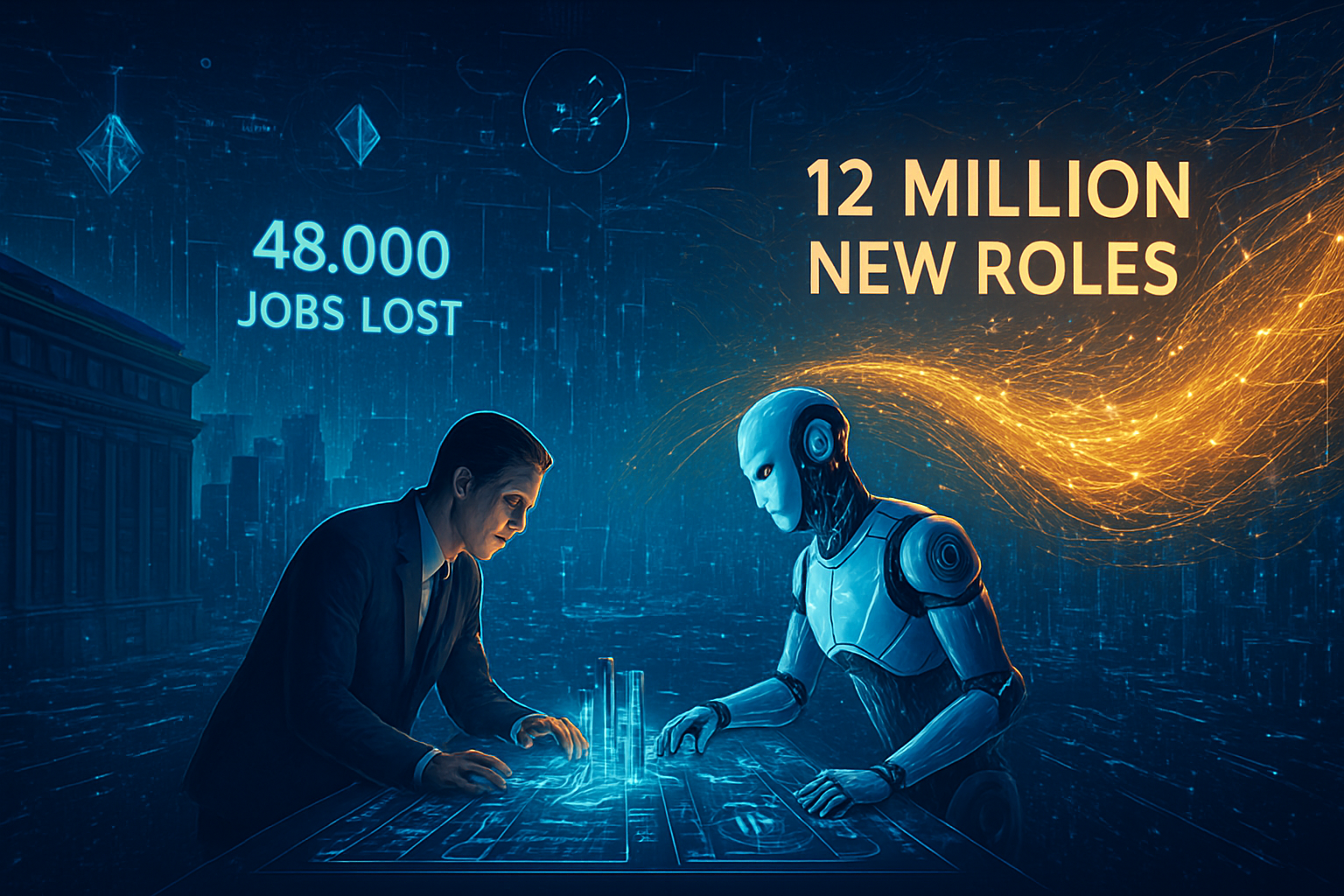
    The modern workplace is undergoing a seismic shift, driven by the rapid integration of artificial intelligence. A recent study has unveiled a fascinating, and perhaps controversial, trend: nearly a third of workers are leveraging AI note-taking tools to skip meetings, and these AI-savvy individuals are subsequently enjoying more promotions and higher salaries. This development signals a profound redefinition of productivity, work culture, and the pathways to career advancement, forcing organizations to re-evaluate traditional engagement models and embrace a future where AI fluency is a cornerstone of success.

    The Rise of the AI-Enhanced Employee: A Deep Dive into the Data

    A pivotal study by Software Finder, titled "AI Note Taking at Work: Benefits and Drawbacks," has cast a spotlight on the transformative power of AI in daily corporate operations. While the precise methodology details were not fully disclosed, the study involved surveying employees on their experiences with AI note-taking platforms, providing a timely snapshot of current workplace dynamics. The findings, referenced in articles as recent as October 28, 2025, indicate a rapid acceleration in AI adoption.

    The core revelation is stark: 29% of employees admitted to bypassing meetings entirely, instead relying on AI-generated summaries to stay informed. This isn't merely about convenience; the study further demonstrated a clear correlation between AI tool usage and career progression. Users of AI note-taking platforms are reportedly promoted more frequently and command higher salaries. This aligns with broader industry observations, such as a Clutch report indicating that 89% of workers who completed AI training received a raise or promotion in the past year, significantly outperforming the 53% of those who did not. Employees proficient in AI tools felt a 66% competitive edge, being 1.5 times more likely to advance their careers.

    The appeal of these tools lies in their ability to automate mundane tasks. Employees cited saving time (69%), reducing manual note-taking (41%), and improving record accuracy (27%) as the biggest advantages. Popular tools in this space include Otter.ai, Fathom, Fireflies.ai, ClickUp, Fellow.ai, Goodmeetings, Flownotes, HyNote, and Microsoft Copilot. Even established communication platforms like Zoom (NASDAQ: ZM), Microsoft Teams (NASDAQ: MSFT), and Google Meet (NASDAQ: GOOGL) are integrating advanced AI features, alongside general-purpose AI like OpenAI’s ChatGPT, to transcribe, summarize, identify action items, and create searchable meeting records using sophisticated natural language processing (NLP) and generative AI. However, the study also highlighted drawbacks: inaccuracy or loss of nuance (48%), privacy concerns (46%), and data security risks (42%) remain significant challenges.

    Reshaping the Corporate Landscape: Implications for Tech Giants and Startups

    This burgeoning trend has significant implications for a wide array of companies, from established tech giants to agile AI startups. Companies developing AI note-taking solutions, such as Otter.ai, Fathom, and Fireflies.ai, stand to benefit immensely from increased adoption. Their market positioning is strengthened as more employees recognize the tangible benefits of their platforms for productivity and career growth. The competitive landscape for these specialized AI tools will intensify, pushing innovation in accuracy, security, and integration capabilities.

    For tech giants like Microsoft (NASDAQ: MSFT), Google (NASDAQ: GOOGL), and Zoom (NASDAQ: ZM), the integration of AI note-taking and summarization into their existing communication and collaboration suites is crucial. Microsoft's Copilot and similar features within Google Workspace and Zoom's platform are not just add-ons; they are becoming expected functionalities that enhance user experience and drive platform stickiness. These companies are strategically leveraging their vast user bases and infrastructure to embed AI deeply into everyday workflows, potentially disrupting smaller, standalone AI note-taking services if they cannot differentiate effectively. The challenge for these giants is to balance comprehensive feature sets with user-friendliness and robust data privacy.

    The competitive implications extend beyond direct product offerings. Companies that can effectively train their workforce in AI literacy and provide access to these tools will likely see a boost in overall organizational productivity and employee retention. Conversely, organizations slow to adapt risk falling behind, as their employees may seek opportunities in more technologically progressive environments. This development underscores the strategic advantage of investing in AI research and development, not just for external products but for internal operational efficiency and competitive differentiation in the talent market.

    A Broader Perspective: AI's Evolving Role in Work and Society

    The phenomenon of AI-assisted meeting skipping and its correlation with career advancement is a microcosm of AI's broader impact on the workforce. It highlights a fundamental shift in what constitutes "valuable" work. As AI takes over administrative and repetitive tasks, the premium on critical thinking, strategic planning, interpersonal skills, and emotional intelligence increases. This aligns with broader AI trends where automation augments human capabilities rather than simply replacing them, freeing up human capital for more complex, creative, and high-value endeavors.

    The impacts are multifaceted. On the positive side, AI note-takers can foster greater inclusivity, particularly in hybrid and remote work environments, by ensuring all team members have access to comprehensive meeting information regardless of their attendance or ability to take notes. This can democratize access to information and level the playing field. However, potential concerns loom large. The erosion of human interaction is a significant worry; as some experts, like content agency runner Clifton Sellers, note, the "modern thirst for AI-powered optimization was starting to impede human interaction." There's a risk that too much reliance on AI could diminish the serendipitous insights and nuanced discussions that arise from direct human engagement. Privacy and data security also remain paramount, especially when sensitive corporate information is processed by third-party AI tools, necessitating stringent policies and legal oversight.

    This development can be compared to previous AI milestones that automated other forms of administrative work, like data entry or basic customer service. However, its direct link to career advancement and compensation suggests a more immediate and personal impact on individual workers. It signifies that AI proficiency is no longer a niche skill but a fundamental requirement for upward mobility in many professional fields.

    The Horizon of Work: What Comes Next?

    Looking ahead, the trajectory of AI in the workplace promises even more sophisticated integrations. Near-term developments will likely focus on enhancing the accuracy and contextual understanding of AI note-takers, minimizing the "AI slop" or inaccuracies that currently concern nearly half of users. Expect to see deeper integration with project management tools, CRM systems, and enterprise resource planning (ERP) software, allowing AI-generated insights to directly populate relevant databases and workflows. This will move beyond mere summarization to proactive task assignment, follow-up generation, and even predictive analytics based on meeting content.

    Long-term, AI note-taking could evolve into intelligent meeting agents that not only transcribe and summarize but also actively participate in discussions, offering real-time information retrieval, suggesting solutions, or flagging potential issues. The challenges that need to be addressed include robust ethical guidelines for AI use in sensitive discussions, mitigating bias in AI-generated content, and developing user interfaces that seamlessly blend human and AI collaboration without overwhelming the user. Data privacy and security frameworks will also need to mature significantly to keep pace with these advancements.

    Experts predict a future where AI fluency becomes as essential as digital literacy. The focus will shift from simply using AI tools to understanding how to effectively prompt, manage, and verify AI outputs. Zoom's Chief Transformation Officer Xuedong (XD) Huang emphasizes AI's potential to remove low-level tasks, boosting productivity and collaboration. However, the human element—critical thinking, empathy, and creative problem-solving—will remain irreplaceable, commanding even higher value as AI handles the more routine aspects of work.

    Concluding Thoughts: Navigating the AI-Driven Workplace Revolution

    The study on AI note-taking tools and their impact on career advancement represents a significant inflection point in the story of AI's integration into our professional lives. The key takeaway is clear: AI is not just a tool for efficiency; it is a catalyst for career progression. Employees who embrace and master these technologies are being rewarded with promotions and higher salaries, underscoring the growing importance of AI literacy in the modern economy.

    This development's significance in AI history lies in its demonstration of AI's direct and measurable impact on individual career trajectories, beyond just organizational productivity metrics. It serves as a powerful testament to AI's capacity to reshape work culture, challenging traditional notions of presence and participation. While concerns about human interaction, accuracy, and data privacy are valid and require careful consideration, the benefits of increased efficiency and access to information are undeniable.

    In the coming weeks and months, organizations will need to closely watch how these trends evolve. Companies must develop clear policies around AI tool usage, invest in AI training for their workforce, and foster a culture that leverages AI responsibly to augment human capabilities. For individuals, embracing AI and continuously upskilling will be paramount for navigating this rapidly changing professional landscape. The future of work is undeniably intertwined with AI, and those who adapt will be at the forefront of this revolution.


    This content is intended for informational purposes only and represents analysis of current AI developments.

    TokenRing AI delivers enterprise-grade solutions for multi-agent AI workflow orchestration, AI-powered development tools, and seamless remote collaboration platforms.
    For more information, visit https://www.tokenring.ai/.
  • The AI Paradox: How Automation is Fueling a Blue-Collar Boom and Drawing Gen Z to Skilled Trades

    The AI Paradox: How Automation is Fueling a Blue-Collar Boom and Drawing Gen Z to Skilled Trades

    The relentless march of Artificial Intelligence (AI) is dramatically reconfiguring the global employment landscape, ushering in an era where the perceived security of traditional white-collar professions is being challenged. Far from rendering human labor obsolete, AI's increasing sophistication in automating repetitive tasks is paradoxically sparking a renaissance in blue-collar industries and skilled trades. This seismic shift is profoundly influencing career aspirations, particularly among Generation Z, who are increasingly turning away from four-year degrees in favor of vocational training, recognizing the enduring value and AI-resilience of hands-on expertise.

    Recent developments indicate that while AI and advanced automation are streamlining operations in sectors like manufacturing, construction, and logistics, they are simultaneously creating a robust demand for human skills that AI cannot replicate. This includes complex problem-solving, manual dexterity, critical decision-making, and direct human interaction. As AI takes on the mundane, it elevates the human role, transforming existing jobs and creating entirely new ones that require a blend of technical acumen and practical application.

    AI's Precision Hand: Augmenting, Not Eradicating, the Trades

    The technical advancements driving this transformation are multifaceted, rooted in breakthroughs in machine learning, robotics, and large language models (LLMs) that allow for unprecedented levels of automation and augmentation. Specific details reveal a nuanced integration of AI into blue-collar workflows, enhancing efficiency, safety, and precision.

    One significant area is the deployment of AI-driven robotics and automated machinery in manufacturing and construction. For instance, AI-powered Computer Numerical Control (CNC) machines are achieving higher precision and efficiency in material processing, from cutting intricate designs in stone to shaping metals with microscopic accuracy. In construction, robotic bricklayers, autonomous surveying drones, and AI-optimized material handling systems are becoming more common. These systems leverage computer vision and machine learning algorithms to interpret blueprints, navigate complex environments, and execute tasks with a consistency and speed that human workers cannot match. This differs from previous approaches, which often relied on simpler, pre-programmed automation, by incorporating adaptive learning and real-time decision-making capabilities. AI systems can now learn from new data, adapt to changing conditions, and even predict maintenance needs, leading to fewer errors and less downtime. Initial reactions from the AI research community and industry experts highlight this shift from mere automation to intelligent augmentation, where AI acts as a sophisticated co-worker, handling the heavy lifting and repetitive tasks while humans oversee, troubleshoot, and innovate. Experts point out that the integration of AI also significantly improves workplace safety by removing humans from hazards and predicting potential accidents.

    Furthermore, the rise of predictive analytics, powered by machine learning, is revolutionizing maintenance and operational efficiency across blue-collar sectors. AI algorithms analyze vast datasets from sensors (Internet of Things or IoT devices) embedded in machinery and equipment, such as temperature, vibration, pressure, and fluid levels. These algorithms identify subtle patterns and anomalies that indicate potential failures before they occur. For example, in HVAC, marine construction, mining, and manufacturing, ML systems predict equipment breakdowns, optimize maintenance schedules, reduce unplanned downtime, and extend equipment lifespans. This proactive approach saves costs and enhances safety, moving beyond traditional reactive or time-based scheduled maintenance. In quality control, ML-powered apps can process images of weld spatter pixel by pixel to provide quantitative, unbiased feedback to welders, accelerating competency buildup. Large language models (LLMs) are also playing a crucial role, not in direct physical labor, but in streamlining project management, generating safety protocols, and providing on-demand technical documentation, making complex information more accessible to on-site teams. Technicians can use LLMs to navigate complex repair manuals, access remote expert assistance for troubleshooting, and receive guided instructions, reducing errors and improving efficiency in the field. This blend of physical automation and intelligent information processing underscores a profound evolution in how work gets done in traditionally manual professions, offering real-time feedback and adaptive learning capabilities that far surpass static manuals or purely theoretical instruction.

    Shifting Sands: Competitive Implications for Tech Giants and Skilled Labor Platforms

    The evolving landscape of AI-augmented blue-collar work presents a complex web of opportunities and competitive implications for AI companies, tech giants, and startups alike. Companies specializing in industrial automation, robotics, and predictive maintenance stand to benefit immensely from this development. Firms like Boston Dynamics (privately held), known for advanced robotics, and Siemens AG (ETR: SIE), with its industrial automation solutions, are well-positioned to capitalize on the increasing demand for intelligent machines in manufacturing and logistics. Similarly, companies developing AI-powered construction technology, such as Procore Technologies (NYSE: PCOR) with its project management software integrating AI analytics, are seeing increased adoption.

    The competitive implications for major AI labs and tech companies are significant. While some tech giants like Google (NASDAQ: GOOGL) and Microsoft (NASDAQ: MSFT) are primarily focused on LLMs and enterprise AI, their cloud platforms are crucial for hosting and processing the vast amounts of data generated by industrial AI applications. Their competitive advantage lies in providing the underlying infrastructure and AI development tools that power these specialized blue-collar solutions. Startups focusing on niche applications, such as AI for welding inspection or AR guidance for electricians, are also emerging rapidly, often partnering with larger industrial players to scale their innovations. This creates a potential disruption to existing products or services that rely on older, less intelligent automation systems, pushing them towards obsolescence unless they integrate advanced AI capabilities.

    Market positioning is also critical. Companies that can offer end-to-end solutions, combining hardware (robots, sensors) with intelligent software (AI algorithms, predictive models), will gain a strategic advantage. This includes not only the developers of the AI technology but also platforms that connect skilled tradespeople with these new tools and opportunities. For instance, online platforms that facilitate apprenticeships or offer specialized training in AI-assisted trades are becoming increasingly valuable. The demand for skilled workers who can operate, maintain, and troubleshoot these advanced AI systems also creates a new market for training and certification providers, potentially drawing investment from tech companies looking to build out the ecosystem for their products. The overall trend suggests a move towards integrated solutions where AI is not just a tool but an integral part of the workflow, demanding a symbiotic relationship between advanced technology and skilled human labor.

    The Broader Tapestry: AI, Labor, and Societal Transformation

    This shift towards AI-augmented blue-collar work fits into the broader AI landscape as a critical counter-narrative to the widespread fear of mass job displacement. Instead of a dystopian vision of AI replacing all human labor, we are witnessing a more nuanced reality where AI serves as a powerful enhancer, particularly in sectors previously considered less susceptible to technological disruption. This trend aligns with the concept of "AI augmentation," where AI's primary role is to improve human capabilities and efficiency, rather than to fully automate. It also highlights the growing recognition of the economic and societal value of skilled trades, which have often been overlooked in the pursuit of white-collar careers.

    The impacts are profound and far-reaching. Economically, it promises increased productivity, reduced operational costs, and potentially a more resilient workforce less vulnerable to economic downturns that disproportionately affect service-oriented or highly repetitive office jobs. Socially, it offers a pathway to stable, well-paying careers for Gen Z without the burden of crippling student debt, addressing concerns about educational accessibility and economic inequality. However, potential concerns include the need for massive reskilling and upskilling initiatives to ensure the existing workforce can adapt to these new technologies. There's also the risk of a widening gap between those who have access to such training and those who don't, potentially exacerbating existing social divides. This moment draws comparisons to previous industrial revolutions, where new technologies transformed labor markets, creating new categories of work while rendering others obsolete. The key difference now is the speed of change and the cognitive nature of AI's capabilities, demanding a more proactive and agile response from educational institutions and policymakers.

    Furthermore, the environmental impact is also noteworthy. AI-driven optimization in manufacturing and logistics can lead to more efficient resource use and reduced waste. Predictive maintenance, for example, extends the lifespan of machinery, reducing the need for new equipment production. In construction, AI can optimize material usage and reduce rework, contributing to more sustainable practices. However, the energy consumption of AI systems themselves, particularly large language models and complex neural networks, remains a concern that needs to be balanced against the efficiency gains in other sectors. This broader significance underscores that the impact of AI on blue-collar jobs is not merely an economic or labor issue, but a multifaceted phenomenon with wide-ranging societal, educational, and environmental implications, demanding a holistic approach to understanding and managing its trajectory.

    The Horizon of Augmentation: Future Developments and Challenges

    Looking ahead, the integration of AI into skilled trades is expected to accelerate, leading to even more sophisticated applications and use cases. In the near-term, we can anticipate more widespread adoption of AI-powered diagnostic tools, augmented reality (AR) for real-time guidance in complex repairs, and collaborative robots (cobots) working alongside human technicians in manufacturing and assembly. Imagine an electrician using AR glasses that overlay circuit diagrams onto a physical panel, or a plumber receiving real-time AI-driven diagnostics from a smart home system. These tools will not replace the skilled worker but empower them with superhuman precision and knowledge.

    Long-term developments include fully autonomous systems capable of handling a wider range of tasks, particularly in hazardous environments, reducing human exposure to risk. AI will also play a larger role in personalized training and skill development, using adaptive learning platforms to tailor educational content to individual needs, making it easier for new entrants to acquire complex trade skills. Experts predict a future where every skilled trade will have an AI counterpart or assistant, making professions more efficient, safer, and intellectually stimulating. However, challenges remain. The development of robust, reliable, and ethically sound AI systems for critical infrastructure and safety-sensitive trades is paramount. Ensuring data privacy and security in interconnected AI systems is another significant hurdle. Furthermore, the societal challenge of bridging the skills gap and ensuring equitable access to training and job opportunities will need continuous attention. What experts predict will happen next is a continued blurring of lines between "blue-collar" and "white-collar" skills, with a new category of "new-collar" jobs emerging that demand both technical proficiency and digital literacy, making lifelong learning an imperative for all.

    A New Era for Labor: Reshaping Perceptions and Pathways

    In summary, the impact of AI on blue-collar jobs is not one of wholesale replacement, but rather a profound transformation that is simultaneously enhancing productivity and redirecting a new generation towards skilled trades. Key takeaways include the rise of AI as an augmentation tool, the increasing job security and financial appeal of trades for Gen Z, and the imperative for continuous reskilling and upskilling across the workforce. This development signifies a critical juncture in AI history, challenging long-held assumptions about automation's effects on employment and highlighting the enduring value of human ingenuity, adaptability, and hands-on expertise.

    The significance of this development lies in its potential to rebalance the labor market, address critical skill shortages, and offer diverse, financially rewarding career paths that are resilient to future technological disruptions. It also underscores a shift in societal perception, elevating the status of skilled trades as vital, technologically advanced professions. In the coming weeks and months, we should watch for increased investment in vocational training programs, further integration of AI tools into trade-specific education, and continued public discourse on the evolving relationship between humans and intelligent machines. The blue-collar boom, powered by AI, is not just a trend; it's a fundamental reshaping of our economic and social fabric, demanding attention and proactive engagement from all stakeholders.


    This content is intended for informational purposes only and represents analysis of current AI developments.

    TokenRing AI delivers enterprise-grade solutions for multi-agent AI workflow orchestration, AI-powered development tools, and seamless remote collaboration platforms.
    For more information, visit https://www.tokenring.ai/.
  • Amazon’s Robotic Revolution: A Glimpse into a Future Without 600,000 Human Jobs

    Amazon’s Robotic Revolution: A Glimpse into a Future Without 600,000 Human Jobs

    Seattle, WA – October 22, 2025 – Amazon.com Inc. (NASDAQ: AMZN) is reportedly poised to usher in a new era of automation, with internal documents suggesting the e-commerce giant is considering using advanced robotics and artificial intelligence to fill roles that would otherwise require hiring an additional 600,000 workers by 2033. This ambitious strategy, driven by anticipated sales growth and a relentless pursuit of efficiency, signals a profound shift in the company's operational model and casts a long shadow over the future of work in the logistics and retail sectors.

    The immediate significance of this development is multifaceted. It highlights an accelerating trend towards large-scale automation, where robots are not merely assisting human workers but are strategically deployed to "flatten the hiring curve" for future growth. For the labor market, this foreshadows a potential long-term reduction in new job opportunities for repetitive tasks, intensifying the debate around job displacement, the ethics of automation, and the urgent need for workforce retraining. While Amazon has reportedly pushed back against the full scope of these leaked documents, emphasizing its role as a job creator, the underlying internal considerations underscore a strategic imperative to leverage AI and robotics for unprecedented operational cost savings and efficiency gains.

    The Technical Backbone of Amazon's Automated Future

    Amazon's journey into large-scale automation is built upon a sophisticated and continuously evolving array of robotic systems and AI-powered platforms. The company already operates over 750,000 robots globally, and its future plans involve a deeper integration of these technologies into every facet of its fulfillment network.

    At the core of this transformation are diverse robotic units. The foundational Kiva Robots (now Amazon Robotics drive units) autonomously move entire shelving units to human operators, a "goods-to-person" system that revolutionized warehouse efficiency. More recently, Amazon introduced Proteus, its first fully autonomous mobile robot (AMR) designed to safely navigate and work alongside human employees in shared spaces, using advanced perception and navigation to avoid collisions. For intricate tasks, robotic arms like Sparrow leverage computer vision and AI to detect, select, and handle individual products of varying shapes and sizes, a significant leap from older systems that handled uniform packages. Cardinal assists with heavy lifting and sorting, capable of moving over 20kg packages.

    Perhaps the most forward-looking development is the integration of Digit, a bipedal humanoid robot from Agility Robotics. Digit's two-legged design allows it to navigate environments built for humans, including stairs and uneven terrains, making it adaptable to existing infrastructure. Initial tests involve tasks like tote recycling. Additionally, integrated systems like Sequoia combine mobile robots, gantry systems, and robotic arms with ergonomic workstations to identify and store inventory up to 75% faster and reduce order processing time by 25%. The Hercules drive unit further improves storage density, and Vulcan, Amazon's first robot with a sense of touch, enhances delicate item manipulation.

    Technically, this scale of automation differs from previous approaches in several key ways. The emphasis on human-robot coexistence (Proteus, Digit) allows for seamless integration into shared workspaces, moving beyond the caged-off environments of traditional industrial robots. The development of advanced dexterity and perception (Sparrow, Vulcan) enables robots to handle the vast diversity of Amazon's inventory, a task previously requiring human precision. The bipedal navigation of Digit opens up new possibilities for automation in complex, multi-level facilities. Critically, these systems are powered by integrated AI and machine learning, enabling real-time decision-making, optimal fleet orchestration (e.g., the DeepFleet generative AI model), and continuous operational optimization, a far cry from pre-programmed, rigid automation.

    Initial reactions from the AI research community and industry experts are mixed. While the efficiency gains and technological innovation are widely acknowledged, there are significant concerns about the potential for large-scale job displacement. Nobel laureate Daron Acemoglu has expressed apprehension that Amazon's success in automation could be emulated by other companies, leading to widespread labor market shifts. Amazon, however, counters by highlighting the creation of new, higher-skilled roles in robotics maintenance and engineering, and its investment in upskilling programs for its workforce.

    Reshaping the AI and Tech Landscape

    Amazon's aggressive push into large-scale AI and robotics is not just an internal operational shift; it's a seismic event that is reshaping the competitive dynamics across the entire tech industry, from AI companies and tech giants to specialized startups.

    Amazon (NASDAQ: AMZN) itself stands to be the primary beneficiary. By automating up to 75% of its warehouse operations, the company anticipates billions in annual savings by 2027, leading to higher operating margins and enabling faster delivery times. This strategic advantage in cost leadership and efficiency is crucial for maintaining its dominance in e-commerce. The internal documents reportedly project savings of approximately 30 cents per item processed, translating to an estimated $12.6 billion in operational cost savings between 2025 and 2027.

    The development creates a lucrative environment for specialized AI and robotics startups. Companies like Agility Robotics (developer of Digit), Figure AI, Swiss-Mile, Skild AI, Rightbot, and Instock are direct beneficiaries, receiving investments from Amazon's venture arms and gaining opportunities to integrate their technologies into Amazon's massive operational network. This provides crucial validation and accelerates their growth. Semiconductor and AI chip manufacturers, such as NVIDIA (NASDAQ: NVDA), also stand to gain significantly from the increased demand for high-powered AI computing infrastructure required to run these sophisticated robotic systems.

    For other tech giants, Amazon's move intensifies the "AI arms race." Competitors in retail and logistics, including Walmart (NYSE: WMT), Target (NYSE: TGT), and FedEx (NYSE: FDX), are compelled to accelerate their own automation strategies to match Amazon's speed and cost efficiency. In the cloud computing arena, Amazon Web Services (AWS) benefits as the underlying infrastructure for Amazon's vast AI and robotics operations, further solidifying its market position against rivals like Microsoft Azure (NASDAQ: MSFT) and Google Cloud (NASDAQ: GOOGL). This competitive pressure drives all major players to invest heavily in proprietary AI infrastructure and advanced AI services.

    The potential disruption to existing products and services is significant. The entire logistics and supply chain industry is being redefined, with Amazon's integrated AI-powered robots slashing shipping costs and accelerating delivery times, setting new industry benchmarks that challenge traditional delivery services. This shift also disrupts workforce dynamics, necessitating massive retraining initiatives as demand for traditional warehouse roles declines while demand for higher-skilled technical and supervisory roles surges. Amazon's strategic advantages lie in unparalleled cost reduction, enhanced customer experience through faster and more reliable delivery, operational resilience against labor shortages, and a data-driven optimization "flywheel" that continuously improves its AI systems.

    A Wider Lens: Implications for Society and the Future of Work

    Amazon's large-scale AI and robotics adoption is more than just a corporate strategy; it's a real-world demonstration of advanced AI's profound impact on society, pushing the boundaries of what's possible while raising critical questions about the future of work and social equity. This development fits squarely within the broader trend of hyper-automation, where intelligent technologies are integrated to automate processes end-to-end.

    The impacts on employment are perhaps the most significant. While Amazon projects avoiding 600,000 hires by 2033, it also claims to have created over 700 new categories of skilled jobs, such as robotics technicians and systems engineers, and upskilled over 700,000 employees. This suggests a polarization of the labor market, where low- and medium-skilled jobs face increasing pressure, while demand for high-skilled technical roles escalates. The nature of work itself is transforming, with robots handling repetitive and physically demanding tasks, theoretically allowing humans to focus on more complex problem-solving and supervisory roles.

    However, this transition comes with potential concerns. The displacement of a large number of low-skilled jobs without adequate reskilling programs could exacerbate income inequality, particularly in communities heavily reliant on logistics employment. There are also concerns about worker welfare and surveillance, as AI-powered systems monitor performance, potentially leading to increased pressure and algorithmic management. The ethical implications extend to algorithmic bias in decision-making and the privacy of data collected from workers. Furthermore, some analyses suggest that automation may disproportionately affect minority workers, who constitute a significant portion of Amazon's warehouse workforce.

    Comparing this to previous AI milestones, Amazon's acquisition of Kiva Systems in 2012 was a pivotal moment for warehouse automation. However, the current drive represents an acceleration beyond mere productivity enhancement. It's about fundamentally reshaping the workforce by flattening hiring curves and actively seeking to replace future labor demand. Unlike earlier industrial revolutions that unfolded over decades, the rapid pace of AI integration means these shifts are occurring within years, necessitating a far more agile societal response. This marks a significant step towards the "Amazonian Era" where algorithmic systems control fundamental aspects of work, setting a precedent for industries worldwide.

    The Road Ahead: Challenges and Expert Predictions

    The trajectory of Amazon's AI and robotics strategy points towards a future characterized by increasingly autonomous and intelligent operations, but not without significant challenges and ongoing societal adjustments.

    In the near term (1-3 years), Amazon aims for a substantial increase in automation, with 75% of certain fulfillment tasks managed by machines. This includes replicating highly automated warehouses, like the one in Shreveport, across 40 facilities by late 2027. The deployment of "cobots" designed to work safely alongside humans will expand, and generative AI models like "DeepFleet" will further optimize robot efficiency. Deeper interoperability among AI services and expanded on-device AI capabilities are also expected.

    Long-term (beyond 3 years), by 2033, Amazon's goal of automating 75% of overall operations to avoid 600,000 hires will drive a complete re-imagining of its workforce. AI is expected to become foundational across its ecosystem, from personalized recommendations and hyper-intelligent customer service agents to AI-guided business decisions. Applications will extend beyond logistics to areas like sustainability (optimizing energy, reducing waste), healthcare, finance, and education, with AWS playing a pivotal role in democratizing AI solutions for enterprises.

    However, several challenges need to be addressed. The most pressing is the job displacement issue and the massive undertaking of reskilling and upskilling the existing workforce to fill new, higher-skilled roles in robotics maintenance, AI engineering, and data analysis. The pace of technological change risks outstripping the ability of many workers to adapt. Ethical concerns regarding algorithmic bias, data privacy, and worker surveillance will require robust frameworks and transparent governance. Worker safety and conditions also remain a concern, as some studies suggest a correlation between automation and increased injury rates or mental strain due to the pressure to keep pace with machines. Technical integration and reliability of complex AI systems, along with potential regulatory scrutiny and labor pushback, are also significant hurdles.

    Experts predict a profound transformation of the workplace. Amazon CEO Andy Jassy anticipates that AI will reduce the company's total corporate workforce over the next few years due to efficiency gains, even as new roles emerge. MIT professor Daron Acemoglu warns that Amazon could shift from being a "net job creator to a net job destroyer." While some experts predict the displacement of 85 million jobs globally by 2025, others suggest the emergence of 97 million new roles better suited to human-machine collaboration. The consensus points to a future of sophisticated human-machine collaboration, but one that demands massive investments in retraining, support programs, and thoughtful long-term planning to navigate the socio-economic shifts and prevent widespread unemployment. Employees who become proficient in AI will be best positioned for the roles of tomorrow.

    A New Frontier in Automation

    Amazon's reported consideration of using robots to absorb the demand for 600,000 additional workers marks a pivotal moment in the history of AI and automation. It underscores the unparalleled efficiency and cost savings that advanced robotics can deliver, profoundly impacting Amazon's market positioning and forcing competitors to accelerate their own technological adoption.

    The long-term impact of this development will be felt across industries and societies. It accelerates the shift towards a hybrid human-robot workforce, demanding a proactive approach to education, workforce retraining, and the development of ethical guidelines for AI deployment. As Amazon continues to push the boundaries of automation, the world will be watching closely to see how this technological leap balances innovation with its broader societal responsibilities. The coming weeks and months will likely bring further details on Amazon's implementation plans, the evolution of its robotic fleet, and the ongoing dialogue surrounding the future of work in an increasingly automated world.


    This content is intended for informational purposes only and represents analysis of current AI developments.

    TokenRing AI delivers enterprise-grade solutions for multi-agent AI workflow orchestration, AI-powered development tools, and seamless remote collaboration platforms.
    For more information, visit https://www.tokenring.ai/.

  • AI Unlocks the Three-Day Work Week Dream: A New Era of Leisure and Productivity Dawns

    AI Unlocks the Three-Day Work Week Dream: A New Era of Leisure and Productivity Dawns

    The long-held dream of a three-day work week is rapidly transitioning from a utopian fantasy to a tangible near-future, thanks to the accelerating advancements in Artificial Intelligence. Echoing the foresight of tech luminaries like Bill Gates, a prominent sports billionaire recently predicted that AI is poised to fundamentally redefine our relationship with labor, ushering in an era where enhanced work-life balance is not a luxury, but a standard. This optimistic outlook suggests that AI will not displace humanity into idleness, but rather liberate us to pursue richer, more fulfilling lives alongside unprecedented productivity.

    This vision, once confined to the realm of science fiction, is gaining significant traction among industry leaders and economists. The core premise is that AI's ability to automate, optimize, and innovate across virtually every sector will dramatically compress the time required to complete tasks, allowing for the same or even greater output in a significantly shorter work week. This isn't merely about incremental efficiency gains; it's about a paradigm shift in how value is created and how human capital is deployed, promising a future where leisure and personal development are elevated without sacrificing economic prosperity.

    The Technical Backbone: How AI Powers a Shorter Work Week

    The technical underpinnings of an AI-driven three-day work week are rooted in the rapid evolution of generative AI, advanced automation, and intelligent workflow orchestration. These technologies are enabling machines to perform tasks that were once exclusively human domains, ranging from routine administrative duties to complex analytical and creative processes.

    Specific advancements include sophisticated large language models (LLMs) that can draft reports, generate code, summarize vast datasets, and even manage communications with remarkable accuracy and speed. Computer vision systems are automating quality control, inventory management, and even intricate manufacturing processes. Robotic process automation (RPA) combined with AI is streamlining back-office operations, handling data entry, invoice processing, and customer service inquiries with minimal human intervention. Furthermore, AI-powered predictive analytics can optimize resource allocation, forecast demand, and preemptively identify operational bottlenecks, leading to unprecedented levels of efficiency across organizations. This differs significantly from previous automation efforts, which often focused on repetitive, rule-based tasks. Modern AI, particularly generative AI, can handle nuanced, context-dependent, and even creative tasks, making it capable of augmenting or even replacing a much broader spectrum of human labor. Initial reactions from the AI research community and industry experts are largely positive, with many acknowledging the transformative potential while also emphasizing the need for ethical development and thoughtful societal adaptation. Researchers are particularly excited about AI's role in creating "super-employees" who can leverage AI tools to achieve output levels previously thought impossible for an individual.

    Competitive Implications and Market Shifts in the AI Landscape

    The advent of AI-enabled shorter work weeks carries profound competitive implications for AI companies, tech giants, and startups alike. Companies that successfully integrate AI to boost productivity and offer enhanced work-life balance will gain significant strategic advantages in attracting and retaining top talent.

    Tech giants like Microsoft (NASDAQ: MSFT), Google (NASDAQ: GOOGL), and Amazon (NASDAQ: AMZN) stand to benefit immensely, as they are at the forefront of developing the foundational AI models and platforms that enable these shifts. Their cloud services (Azure, Google Cloud, AWS) will become even more critical infrastructure for businesses adopting AI at scale. Companies specializing in AI-powered workflow automation, such as UiPath (NYSE: PATH) or ServiceNow (NYSE: NOW), and those developing advanced generative AI tools, will see a surge in demand for their products. Startups focusing on niche AI applications for specific industries or developing innovative AI agents for task management are also poised for rapid growth. The competitive landscape will intensify, pushing companies to not only develop powerful AI but also to integrate it seamlessly into existing workflows, ensuring ease of use and measurable productivity gains. Traditional software companies that fail to embed AI deeply into their offerings risk disruption, as AI-native solutions will offer superior efficiency and capabilities, potentially rendering older products obsolete. Market positioning will increasingly hinge on a company's ability to demonstrate how their AI solutions directly contribute to a more productive, yet less demanding, work environment.

    The Wider Significance: A Societal and Economic Transformation

    The potential for AI to usher in a three-day work week extends far beyond mere corporate efficiency; it represents a profound societal and economic transformation. This development fits squarely within the broader trend of AI moving from a specialized tool to a ubiquitous, transformative force across all aspects of life.

    The impacts could be revolutionary: a significant improvement in public health and well-being due to reduced stress and increased leisure time, a revitalization of local communities as people have more time for civic engagement, and a boom in leisure and entertainment industries. However, potential concerns also loom large. The transition could exacerbate income inequality if the benefits of AI-driven productivity are not broadly distributed, leading to a widening gap between those whose jobs are augmented and those whose jobs are automated away without adequate reskilling or social safety nets. Ethical considerations around AI's decision-making, bias, and surveillance in the workplace will also become more pressing. Comparisons to previous industrial revolutions are apt; just as mechanization shifted labor from agriculture to manufacturing, and computing shifted it to information services, AI promises another fundamental reordering of work. Unlike previous shifts, however, AI's speed and pervasive nature suggest a more rapid and potentially more disruptive transition, demanding proactive policy-making and societal adaptation to ensure an equitable and beneficial outcome for all.

    Future Developments: The Road Ahead for AI and Labor

    Looking ahead, the trajectory of AI's integration into the workforce suggests several near-term and long-term developments. In the near term, we can expect a continued proliferation of specialized AI co-pilots and assistants across various professional domains, from coding and design to legal research and medical diagnostics. These tools will become increasingly sophisticated, capable of handling more complex tasks autonomously or with minimal human oversight.

    Potential applications on the horizon include highly personalized AI tutors and mentors that can rapidly upskill workers for new roles, AI-driven personal assistants that manage individual schedules and tasks across work and personal life, and advanced simulation environments where AI can test and optimize business strategies before real-world implementation. The primary challenges that need to be addressed include developing robust and ethical AI governance frameworks, investing heavily in reskilling and education programs to prepare the workforce for AI-augmented roles, and designing new economic models that can accommodate a future with potentially less traditional full-time employment. Experts predict that the next decade will be characterized by a significant redefinition of "work" itself, with a greater emphasis on creative problem-solving, critical thinking, and human-centric skills that AI cannot easily replicate. The focus will shift from hours worked to value generated.

    Wrap-Up: A New Chapter in Human-AI Collaboration

    In summary, the prediction of an AI-driven three-day work week marks a significant milestone in the ongoing narrative of artificial intelligence. It underscores AI's transformative potential not just for corporate bottom lines, but for the fundamental human experience of work and life. The key takeaways are clear: AI is poised to drastically enhance productivity, enabling unprecedented levels of efficiency and freeing up human time for leisure, personal growth, and societal contribution. This development represents a pivotal moment in AI history, signaling a shift from AI as a mere tool to AI as a catalyst for a restructured society.

    The long-term impact could be a re-evaluation of societal values, placing a greater emphasis on well-being and creative pursuits over relentless labor. However, achieving this positive future will require careful navigation of challenges related to job displacement, economic equity, and ethical AI deployment. In the coming weeks and months, watch for continued announcements from major tech companies regarding new AI products and services designed to boost enterprise productivity. Also, pay close attention to policy discussions around universal basic income, workforce retraining initiatives, and regulations designed to ensure the equitable distribution of AI's benefits. The journey to a three-day work week is not just a technological one; it's a societal one that demands collective foresight and collaborative action.


    This content is intended for informational purposes only and represents analysis of current AI developments.

    TokenRing AI delivers enterprise-grade solutions for multi-agent AI workflow orchestration, AI-powered development tools, and seamless remote collaboration platforms.
    For more information, visit https://www.tokenring.ai/.
  • Goldman Sachs Sounds the Alarm: AI-Driven Job Cuts Reshape the Future of Finance

    Goldman Sachs Sounds the Alarm: AI-Driven Job Cuts Reshape the Future of Finance

    Goldman Sachs (NYSE: GS), a titan of global finance, has issued a stark warning regarding significant job cuts and a strategic overhaul of its operations, driven by the accelerating integration of artificial intelligence. This announcement, communicated internally in an October 2025 memo and reinforced by public statements, signals a profound shift within the financial services industry, as AI-driven productivity gains begin to redefine workforce requirements and operational models. While the firm anticipates a net increase in overall headcount by year-end due to strategic reallocations, the immediate implications for specific roles and the broader labor market are a subject of intense scrutiny and concern.

    The immediate significance of Goldman Sachs' move lies in its potent illustration of AI's transformative power, moving beyond theoretical discussions to tangible corporate restructuring. The bank's proactive stance highlights a growing trend among major institutions to leverage AI for efficiency, even if it means streamlining human capital. This development underscores the reality of "jobless growth," a scenario where economic output rises through technological advancement, but employment opportunities stagnate or decline in certain sectors.

    The Algorithmic Ascent: Goldman Sachs' AI Playbook

    Goldman Sachs' aggressive foray into AI is not merely an incremental upgrade but a foundational shift articulated through its "OneGS 3.0" strategy. This initiative aims to embed AI across the firm's global operations, promising "significant productivity gains" and a redefinition of how financial services are delivered. At the heart of this strategy is the GS AI Platform, a centralized, secure infrastructure designed to facilitate the firm-wide deployment of AI. This platform enables the secure integration of external large language models (LLMs) like OpenAI's GPT-4o and Alphabet's (NASDAQ: GOOGL) Gemini, while maintaining strict data protection and regulatory compliance.

    A key internal innovation is the GS AI Assistant, a generative AI tool rolled out to over 46,000 employees. This assistant automates a plethora of routine tasks, from summarizing emails and drafting documents to preparing presentations and retrieving internal information. Early reports indicate a 10-15% increase in task efficiency and a 20% boost in productivity for departments utilizing the tool. Furthermore, Goldman Sachs is investing heavily in autonomous AI agents, which are projected to manage entire software development lifecycles independently, potentially tripling or quadrupling engineering productivity. This represents a significant departure from previous, more siloed AI applications, moving towards comprehensive, integrated AI solutions that impact core business functions.

    The firm's AI integration extends to critical areas such as algorithmic trading, where AI-driven algorithms process market data in milliseconds for faster and more accurate trade execution, leading to a reported 27% increase in intraday trade profitability. In risk management and compliance, AI provides predictive insights into operational and financial risks, shifting from reactive to proactive mitigation. For instance, its Anti-Money Laundering (AML) system analyzed 320 million transactions to identify cross-border irregularities. This holistic approach differs from earlier, more constrained AI applications by creating a pervasive AI ecosystem designed to optimize virtually every facet of the bank's operations. Initial reactions from the broader AI community and industry experts have been a mix of cautious optimism and concern, acknowledging the potential for unprecedented efficiency while also raising alarms about the scale of job displacement, particularly for white-collar and entry-level roles.

    Reshaping the Tech Landscape: Winners, Losers, and Strategic Shifts

    Goldman Sachs' AI-driven restructuring sends a clear signal across the technology and financial sectors, creating both opportunities and competitive pressures. AI solution providers specializing in niche applications, workflow integration, and proprietary data leverage stand to benefit significantly. Companies offering advanced AI agents, specialized software, and IT services capable of deep integration into complex financial workflows will find increased demand. Similarly, AI infrastructure providers, including semiconductor giants like Nvidia (NASDAQ: NVDA) and data management firms, are in a prime position as the foundational layer for this AI expansion. The massive buildout required to support AI necessitates substantial investment in hardware and cloud services, marking a new phase of capital expenditure.

    The competitive implications for major AI labs and tech giants are profound. While foundational AI models are rapidly becoming commoditized, the true competitive edge is shifting to the "application layer"—how effectively these models are integrated into specific workflows, fine-tuned with proprietary data, and supported by robust user ecosystems. Tech giants such as Microsoft (NASDAQ: MSFT), Meta (NASDAQ: META), and Google (NASDAQ: GOOGL), already experiencing AI-related layoffs, are strategically pivoting their investments towards AI-driven efficiencies within their own operations and enhancing customer value through AI-powered services. Their strong balance sheets provide resilience against potential "AI bubble" corrections.

    For startups, the environment is becoming more challenging. Warnings of an "AI bubble" are growing, with Goldman Sachs CEO David Solomon himself anticipating that much of the deployed capital may not yield expected returns. AI-native startups face an uphill battle in disrupting established SaaS leaders purely on pricing and features. Success will hinge on building defensible moats through deep workflow integration, unique data sets, and strong user bases. Existing products and services across industries are ripe for disruption, with AI automating repetitive tasks in areas like computer coding, customer service, marketing, and administrative functions. Goldman Sachs, by proactively embedding AI, is positioning itself to gain strategic advantages in crucial financial services areas, prioritizing "AI natives" within its workforce and setting a precedent for other financial institutions.

    A New Economic Frontier: Broader Implications and Ethical Crossroads

    Goldman Sachs' aggressive AI integration and accompanying job warnings are not isolated events but rather a microcosm of a broader, global AI transformation. This initiative aligns with a pervasive trend across industries to leverage generative AI for automation, cost reduction, and operational optimization. While the financial sector is particularly susceptible to AI-driven automation, the implications extend to nearly every facet of the global economy. Goldman Sachs Research projects a potential 7% ($7 trillion) increase in global GDP and a 1.5 percentage point rise in productivity growth over the next decade due to AI adoption, suggesting a new era of prosperity.

    However, this economic revolution is shadowed by significant labor market disruption. The firm's estimates suggest that up to 300 million full-time jobs globally could be exposed to automation, with roughly two-thirds of U.S. occupations facing some degree of AI-led transformation. While Goldman Sachs initially projected a "modest and relatively temporary" impact on overall employment, with unemployment rising by about half a percentage point during the transition, there are growing concerns about "jobless growth" and the disproportionate impact on young tech workers, whose unemployment rate has risen significantly faster than the overall jobless rate since early 2025. This points to an early hollowing out of white-collar and entry-level positions.

    The ethical concerns are equally profound. The potential for AI to exacerbate economic inequality is a significant worry, as the benefits of increased productivity may accrue primarily to owners and highly skilled workers. Job displacement can lead to severe financial hardship, mental health issues, and a loss of purpose for affected individuals. Companies deploying AI face an ethical imperative to invest in retraining and support for displaced workers. Furthermore, issues of bias and fairness in AI decision-making, particularly in areas like credit profiling or hiring, demand robust regulatory frameworks and transparent, explainable AI models to prevent systematic discrimination. While historical precedents suggest that technological advancements ultimately create new jobs, the current wave of AI, automating complex cognitive functions, presents unique challenges and raises questions about the speed and scale of this transformation compared to previous industrial revolutions.

    The Horizon of Automation: Future Developments and Uncharted Territory

    The trajectory of AI in the financial sector, heavily influenced by pioneers like Goldman Sachs, promises a future of profound transformation in both the near and long term. In the near term, AI will continue to drive efficiencies in risk management, fraud detection, and personalized customer services. GenAI's ability to create synthetic data will further enhance the robustness of machine learning models, leading to more accurate credit risk assessments and sophisticated fraud simulations. Automated operations, from back-office functions to client onboarding, will become the norm, significantly reducing manual errors and operational costs. The internal "GS AI Assistant" is a prime example, with plans for firm-wide deployment by the end of 2025, automating routine tasks and freeing employees for more strategic work.

    Looking further ahead, the long-term impact of AI will fundamentally reshape financial markets and the broader economy. Hyper-personalization of financial products and services, driven by advanced AI, will offer bespoke solutions tailored to individual customer profiles, generating substantial value. The integration of AI with emerging technologies like blockchain will enhance security and transparency in transactions, while quantum computing on the horizon promises to revolutionize AI capabilities, processing complex financial models at unprecedented speeds. Goldman Sachs' investment in autonomous AI agents, capable of managing entire software development lifecycles, hints at a future where human-AI collaboration is not just a productivity booster but a fundamental shift in how work is conceived and executed.

    However, this future is not without its challenges. Regulatory frameworks are struggling to keep pace with AI's rapid advancements, necessitating new laws and guidelines to address accountability, ethics, data privacy, and transparency. The potential for algorithmic bias and the "black box" nature of some AI systems demand robust oversight and explainability. Workforce adaptation is a critical concern, as job displacement in routine and entry-level roles will require significant investment in reskilling and upskilling programs. Experts predict an accelerated adoption of AI between 2025 and 2030, with a modest and temporary impact on overall employment levels, but a fundamental reshaping of required skillsets. While some foresee a net gain in jobs, others warn of "jobless growth" and the need for new social contracts to ensure an equitable future. The significant energy consumption of AI and data centers also presents an environmental challenge that needs to be addressed proactively.

    A Defining Moment: The AI Revolution in Finance

    Goldman Sachs' proactive embrace of AI and its candid assessment of potential job impacts mark a defining moment in the ongoing AI revolution, particularly within the financial sector. The firm's strategic pivot underscores a fundamental shift from theoretical discussions about AI's potential to concrete business strategies that involve direct workforce adjustments. The key takeaway is clear: AI is no longer a futuristic concept but a present-day force reshaping corporate structures, demanding efficiency, and redefining the skills required for the modern workforce.

    This development is highly significant in AI history, as it demonstrates a leading global financial institution not just experimenting with AI, but deeply embedding it into its core operations with explicit implications for employment. It serves as a powerful bellwether for other industries, signaling that the era of AI-driven efficiency and automation is here, and it will inevitably lead to a re-evaluation of human roles. While Goldman Sachs projects a long-term net increase in headcount and emphasizes the creation of new jobs, the immediate disruption to existing roles, particularly in white-collar and administrative functions, cannot be understated.

    In the long term, AI is poised to be a powerful engine for economic growth, potentially adding trillions to the global GDP and significantly boosting labor productivity. However, this growth will likely be accompanied by a period of profound labor market transition, necessitating massive investments in education, reskilling, and social safety nets to ensure an equitable future. The concept of "jobless growth," where economic output rises without a corresponding increase in employment, remains a critical concern.

    In the coming weeks and months, observers should closely watch the pace of AI adoption across various industries, particularly among small and medium-sized enterprises. Employment data in AI-exposed sectors will provide crucial insights into the real-world impact of automation. Corporate earnings calls and executive guidance will offer a window into how other major firms are adapting their hiring plans and strategic investments in response to AI. Furthermore, the emergence of new job roles related to AI research, development, ethics, and integration will be a key indicator of the creative potential of this technology. The central question remains: will the disruptive aspects of AI lead to widespread societal challenges, or will its creative and productivity-enhancing capabilities pave the way for a smoother, more prosperous transition? The answer will unfold as the AI revolution continues its inexorable march.


    This content is intended for informational purposes only and represents analysis of current AI developments.

    TokenRing AI delivers enterprise-grade solutions for multi-agent AI workflow orchestration, AI-powered development tools, and seamless remote collaboration platforms.
    For more information, visit https://www.tokenring.ai/.

  • The AI Revolution: Reshaping the Tech Workforce with Layoffs, Reassignments, and a New Era of Skills

    The AI Revolution: Reshaping the Tech Workforce with Layoffs, Reassignments, and a New Era of Skills

    The landscape of the global tech industry is undergoing a profound and rapid transformation, driven by the accelerating integration of Artificial Intelligence. Recent surveys and reports from 2024-2025 paint a clear picture: AI is not merely enhancing existing roles but is fundamentally redefining the tech workforce, leading to a significant wave of job reassignments and, in many instances, outright layoffs. This immediate shift signals an urgent need for adaptation from both individual workers and organizations, as the industry grapples with the dual forces of automation and the creation of entirely new, specialized opportunities.

    In the first half of 2025 alone, the tech sector saw over 89,000 job cuts, adding to the 240,000 tech layoffs recorded in 2024, with AI frequently cited by major players like Microsoft (NASDAQ: MSFT), Google (NASDAQ: GOOGL), Intel (NASDAQ: INTC), Amazon (NASDAQ: AMZN), and Meta (NASDAQ: META) as a contributing factor. While some of these reductions are framed as "right-sizing" post-pandemic, the underlying current is the growing efficiency enabled by AI automation. This has led to a drastic decline in entry-level positions, with junior roles in various departments experiencing significant drops in hiring rates, challenging traditional career entry points. However, this is not solely a narrative of job elimination; experts describe it as a "talent remix," where companies are simultaneously cutting specific positions and creating new ones that leverage emerging AI technologies, demanding a redefinition of essential human roles.

    The Technical Underpinnings of Workforce Evolution: Generative AI and Beyond

    The current wave of workforce transformation is directly attributable to significant technical advancements in AI, particularly generative AI, sophisticated automation platforms, and multi-agent systems. These capabilities represent a new paradigm, vastly different from previous automation technologies, and pose unique technical implications for enterprise operations.

    Generative AI, encompassing large language models (LLMs), is at the forefront. These systems can generate new content such as text, code, images, and even video. Technically, generative AI excels at tasks like code generation and error detection, reducing the need for extensive manual coding, particularly for junior developers. It's increasingly deployed in customer service for advanced chatbots, in marketing for content creation, and in sales for building AI-powered units. More than half of the skills within technology roles are expected to undergo deep transformation due to generative AI, prompting companies like Dell (NYSE: DELL), IBM (NYSE: IBM), Microsoft, Google, and SAP (NYSE: SAP) to link workforce restructuring to their pivot towards integrating this technology.

    Intelligent Automation Platforms, an evolution of Robotic Process Automation (RPA) integrated with AI (like machine learning and natural language processing), are also driving change. These platforms automate repetitive, rules-based, and data-intensive tasks across administrative functions, data entry, and transaction processing. AI assistants, merging generative AI with automation, can intelligently interact with users, support decision-making, and streamline or replace entire workflows. This reduces the need for manual labor in areas like manufacturing and administrative roles, leading to reassignments or layoffs for fully automatable positions.

    Perhaps the most advanced are Multi-Agent Systems, sophisticated AI frameworks where multiple specialized AI agents collaborate to achieve complex goals, often forming an "agent workforce." These systems can decompose complex problems, assign subtasks to specialized agents, and even replace entire call centers by handling customer requests across multiple platforms. In software development, agents can plan, code, test, and debug applications collaboratively. These systems redefine traditional job roles by enabling "AI-first teams" that can manage complex projects, potentially replacing multiple human roles in areas like marketing, design, and project management.

    Unlike earlier automation, which primarily replaced physical tasks, modern AI automates cognitive, intellectual, and creative functions. Current AI systems learn, adapt, and continuously improve without explicit reprogramming, tackling problems of unprecedented complexity by coordinating multiple agents. While previous technological shifts took decades to materialize, the adoption and influence of generative AI are occurring at an accelerated pace. Technically, this demands robust infrastructure, advanced data management, complex integration with legacy systems, stringent security and ethical governance, and a significant upskilling of the IT workforce. AI is revolutionizing IT operations by automating routine tasks, allowing IT teams to focus on strategic design and innovation.

    Corporate Maneuvers: Navigating the AI-Driven Competitive Landscape

    The AI-driven transformation of the tech workforce is fundamentally altering the competitive landscape, compelling AI companies, major tech giants, and startups to strategically adapt their market positioning and operational models.

    Major Tech Giants like Amazon, Apple (NASDAQ: AAPL), Meta, IBM, Microsoft, and Google are undergoing significant internal restructuring. While experiencing layoffs, often attributed to AI-driven efficiency gains, these companies are simultaneously making massive investments in AI research and development. Their strategy involves integrating AI into core products and services to enhance efficiency, maintain a competitive edge, and "massively upskill" their existing workforce for human-AI collaboration. For instance, Google has automated tasks in sales and customer service, shifting human efforts towards core AI research and cloud services. IBM notably laid off thousands in HR as its chatbot, AskHR, began handling millions of internal queries annually.

    AI Companies are direct beneficiaries of this shift, thriving on the surging demand for AI technologies and solutions. They are the primary creators of new AI-related job opportunities, actively seeking highly skilled AI specialists. Companies deeply invested in AI infrastructure and data collection, such as Palantir Technologies (NYSE: PLTR) and Broadcom Inc. (NASDAQ: AVGO), have seen substantial growth driven by their leadership in AI.

    Startups face a dual reality. AI provides immense opportunities for increased efficiency, improved decision-making, and cost reduction, enabling them to compete against larger players. Companies like DataRobot and UiPath (NYSE: PATH) offer platforms that automate machine learning model deployment and repetitive tasks, respectively. However, startups often contend with limited resources, a lack of in-house expertise, and intense competition for highly skilled AI talent. Companies explicitly benefiting from leveraging AI for efficiency and cost reduction include Klarna, Intuit (NASDAQ: INTU), UPS (NYSE: UPS), Duolingo (NASDAQ: DUOL), and Fiverr (NYSE: FVRR). Klarna, for example, replaced the workload equivalent of 700 full-time staff with an AI assistant.

    The competitive implications are profound: AI enables substantial efficiency and productivity gains, leading to faster innovation cycles and significant cost savings. This creates a strong competitive advantage for early adopters, with organizations mastering strategic AI integration achieving 15-25% productivity gains. The intensified race for AI-native talent is another critical factor, with a severe shortage of AI-critical skills. Companies failing to invest in reskilling risk falling behind. AI is not just optimizing existing services but enabling entirely new products and business models, transforming traditional workflows. Strategic adaptation involves massive investment in reskilling and upskilling programs, redefining roles for human-AI collaboration, dynamic workforce planning, fostering a culture of experimentation, integrating AI into core business strategy, and a shift towards "precision hiring" for AI-native talent.

    Broader Implications: Navigating the Societal and Ethical Crossroads

    The widespread integration of AI into the workforce carries significant wider implications, fitting into broader AI landscape trends while raising critical societal and ethical concerns, and drawing comparisons to previous technological shifts.

    AI-driven workforce changes are leading to societal impacts such as job insecurity, as AI displaces routine and increasingly complex cognitive jobs. While new roles emerge, the transition challenges displaced workers lacking advanced skills. Countries like Singapore are proactively investing in upskilling. Beyond employment, there are concerns about psychological well-being, potential for social instability, and a growing wage gap between "AI-enabled" workers and lower-paid workers, further polarizing the workplace.

    Potential concerns revolve heavily around ethics and economic inequality. Ethically, AI systems trained on historical data can perpetuate or amplify existing biases, leading to discrimination in areas like recruitment, finance, and healthcare. Increased workplace surveillance and privacy concerns arise from AI tools collecting sensitive personal data. The "black box" nature of many AI models poses challenges for transparency and accountability, potentially leading to unfair treatment. Economically, AI-driven productivity gains could exacerbate wealth concentration, widening the wealth gap and deepening socio-economic divides. Labor market polarization, with demand for high-paying AI-centric jobs and low-paying non-automatable jobs, risks shrinking the middle class, disproportionately affecting vulnerable populations. The lack of access to AI training for displaced workers creates significant barriers to new opportunities.

    Comparing AI's workforce transformation to previous major technological shifts reveals both parallels and distinctions. While the Industrial Revolution mechanized physical labor, AI augments and replaces cognitive tasks, fundamentally changing how we think and make decisions. Unlike the internet or mobile revolutions, which enhanced communication, AI builds upon this infrastructure by automating processes and deriving insights at an unprecedented scale. Some experts argue the pace of AI-driven change is significantly faster and more exponential than previous shifts, leaving less time for adaptation, though others suggest a more gradual evolution.

    Compared to previous AI milestones, the current phase, especially with generative AI, is deeply integrated across job sectors, driving significant productivity boosts and impacting white-collar jobs previously immune to automation. Early AI largely focused on augmenting human capabilities; now, there's a clear trend toward AI directly replacing certain job functions, particularly in HR, customer support, and junior-level tech roles. This shift from "enhancing human capabilities" to "replacing jobs" marks a significant evolution. The current AI landscape demands higher-level skills, including AI development, data science, and critical human capabilities like leadership, problem-solving, and empathy that AI cannot replicate.

    The Horizon: Future Developments and Expert Predictions

    Looking ahead, the impact of AI on the tech workforce is poised for continuous evolution, marked by both near-term disruptions and long-term transformations in job roles, skill demands, and organizational structures. Experts largely predict a future defined by pervasive human-AI collaboration, enhanced productivity, and an ongoing imperative for adaptation and continuous learning.

    In the near-term (1-5 years), routine and manual tasks will continue to be automated, placing entry-level positions in software engineering, manual QA testing, basic data analysis, and Tier 1/2 IT support at higher risk. Generative AI is already proving capable of writing significant portions of code previously handled by junior developers and automating customer service. However, this period will also see robust tech hiring driven by the demand for individuals to build, implement, and manage AI systems. A significant percentage of tech talent will be reassigned, necessitating urgent upskilling, with 60% of employees expected to require retraining by 2027.

    The long-term (beyond 5 years) outlook suggests AI will fundamentally transform the global workforce by 2050, requiring significant adaptation for up to 60% of current jobs. While some predict net job losses by 2027, others forecast a net gain of millions of new jobs by 2030, emphasizing AI's role in rewiring job requirements rather than outright replacement. The vision is "human-centric AI," augmenting human intelligence and reshaping professions to be more efficient and meaningful. Organizations are expected to become flatter and more agile, with AI handling data processing, routine decision-making, and strategic forecasting, potentially reducing middle management layers. The emergence of "AI agents" could double the knowledge workforce by autonomously performing complex tasks.

    Future job roles will include highly secure positions like AI/Machine Learning Engineers, Data Scientists, AI Ethicists, Prompt Engineers, and Cloud AI Architects. Roles focused on human-AI collaboration, managing and optimizing AI systems, and cybersecurity will also be critical. In-demand skills will encompass technical AI and data science (Python, ML, NLP, deep learning, cloud AI), alongside crucial soft skills like critical thinking, creativity, emotional intelligence, adaptability, and ethical reasoning. Data literacy and AI fluency will be essential across all industries.

    Organizational structures will flatten, becoming more agile and decentralized. Hybrid teams, where human intelligence and AI work hand-in-hand, will become the norm. AI will break down information silos, fostering data transparency and enabling data-driven decision-making at all levels. Potential applications are vast, ranging from automating inventory management and enhancing productivity to personalized customer experiences, advanced analytics, improved customer service via chatbots, AI-assisted software development, and robust cybersecurity.

    However, emerging challenges include ongoing job displacement, widening skill gaps (with many employees feeling undertrained in AI), ethical dilemmas (privacy, bias, accountability), data security concerns, and the complexities of regulatory compliance. Economic inequalities could be exacerbated if access to AI education and tools is not broadly distributed.

    Expert predictions largely converge on a future of pervasive human-AI collaboration, where AI augments human capabilities, allowing humans to focus on tasks requiring uniquely human skills. Human judgment, autonomy, and control will remain paramount. The focus will be on redesigning roles and workflows to create productive partnerships, making lifelong learning an imperative. While job displacement will occur, many experts predict a net creation of jobs, albeit with a significant transitional period. Ethical responsibility in designing and implementing AI systems will be crucial for workers.

    A New Era: Summarizing AI's Transformative Impact

    The integration of Artificial Intelligence into the tech workforce marks a pivotal moment in AI history, ushering in an era of profound transformation that is both disruptive and rich with opportunity. The key takeaway is a dual narrative: while AI automates routine tasks and displaces certain jobs, it simultaneously creates new, specialized roles and significantly enhances productivity. This "talent remix" is not merely a trend but a fundamental restructuring of how work is performed and valued.

    This phase of AI adoption, particularly with generative AI, is akin to a general-purpose technology like electricity or the internet, signifying its widespread applicability and potential as a long-term economic growth driver. Unlike previous automation waves, the speed and scale of AI's current impact are unprecedented, affecting white-collar and cognitive roles previously thought immune. While initial fears of mass unemployment persist, the consensus among many experts points to a net gain in jobs globally, albeit with a significant transitional period demanding a drastic change in required skills.

    The long-term impact will be a continuous evolution of job roles, with tasks shifting towards those requiring uniquely human skills such as creativity, critical thinking, emotional intelligence, and strategic thinking. AI is poised to significantly raise labor productivity, fostering new business models and improved cost structures. However, the criticality of reskilling and lifelong learning cannot be overstated; individuals and organizations must proactively invest in skill development to remain competitive. Addressing ethical dilemmas, such as algorithmic bias and data privacy, and mitigating the risk of widening economic inequality through equitable access to AI education and tools, will be paramount for ensuring a beneficial and inclusive future.

    What to watch for in the coming weeks and months: Expect an accelerated adoption and deeper integration of AI across enterprises, moving beyond experimentation to full business transformation with AI-native processes. Ongoing tech workforce adjustments, including layoffs in certain roles (especially entry-level and middle management) alongside intensified hiring for specialized AI and machine learning professionals, will continue. Investment in AI infrastructure will surge, creating construction jobs in the short term. The emphasis on AI fluency and human-centric skills will grow, with employers prioritizing candidates demonstrating both. The development and implementation of comprehensive reskilling programs by companies and educational institutions, alongside policy discussions around AI's impact on employment and worker protections, will gain momentum. Finally, continuous monitoring and research into AI's actual job impact will be crucial to understand the true pace and scale of this ongoing technological revolution.

    This content is intended for informational purposes only and represents analysis of current AI developments.

    TokenRing AI delivers enterprise-grade solutions for multi-agent AI workflow orchestration, AI-powered development tools, and seamless remote collaboration platforms. For more information, visit https://www.tokenring.ai/.