
Tag: GAA Nanosheet

  • Silicon Sovereignty: TSMC Ignites the 2nm Era as Fab 22 Hits Volume Production

    Silicon Sovereignty: TSMC Ignites the 2nm Era as Fab 22 Hits Volume Production

    As of today, January 13, 2026, the global semiconductor landscape has officially shifted on its axis. Taiwan Semiconductor Manufacturing Company (NYSE: TSM) has announced that its Fab 22 facility in Kaohsiung has reached high-volume manufacturing (HVM) for its long-awaited 2nm (N2) process node. This milestone marks the definitive end of the FinFET transistor era and the beginning of a new chapter in silicon architecture that promises to redefine the limits of performance, efficiency, and artificial intelligence.

    The transition to 2nm is not merely an incremental step; it is a foundational reset of the "Golden Rule" of Moore's Law. By successfully ramping up production at Fab 22 alongside its sister facility, Fab 20 in Hsinchu, TSMC is now delivering the world’s most advanced semiconductors at a scale that its competitors—namely Samsung and Intel—are still struggling to match. With yields already reported in the 65–70% range, the 2nm era is arriving with a level of maturity that few industry analysts expected so early in the year.

    The GAA Revolution: Breaking the Power Wall

    The technical centerpiece of the N2 node is the transition from FinFET (Fin Field-Effect Transistor) to Gate-All-Around (GAA) Nanosheet transistors. For over a decade, FinFET served the industry well, but as transistors shrank toward the atomic scale, current leakage and electrostatic control became insurmountable hurdles. The GAA architecture solves this by wrapping the gate around all four sides of the channel, providing a degree of control that was previously impossible. This structural shift allows for a staggering 25% to 30% reduction in power consumption at the same performance levels compared to the previous 3nm (N3E) generation.

    Beyond power savings, the N2 process offers a 10% to 15% performance boost at the same power envelope, alongside a logic density increase of up to 20%. This is achieved through the stacking of horizontal silicon ribbons, which allows for more current to flow through a smaller footprint. Initial reactions from the semiconductor research community have been overwhelmingly positive, with experts noting that TSMC has effectively bypassed the "yield valley" that often plagues such radical architectural shifts. The ability to maintain high yields while implementing GAA is being hailed as a masterclass in precision engineering.

    Apple’s $30,000 Wafers and the 50% Capacity Lock

    The commercial implications of this rollout are being felt immediately across the consumer electronics sector. Apple (NASDAQ: AAPL) has once again flexed its capital muscle, reportedly securing a massive 50% of TSMC’s total 2nm capacity through the end of 2026. This reservation is earmarked for the upcoming A20 Pro chip, which will power the iPhone 18 Pro and Apple’s highly anticipated first-generation foldable device. By locking up half of the world's most advanced silicon, Apple has created a formidable "supply-side barrier" that leaves rivals like Qualcomm and MediaTek scrambling for the remaining capacity.

    This strategic move gives Apple a multi-generational lead in performance-per-watt, particularly in the realm of on-device AI. At an estimated cost of $30,000 per wafer, the N2 node is the most expensive in history, yet the premium is justified by the strategic advantage it provides. For tech giants and startups alike, the message is clear: the 2nm era is a high-stakes game where only those with the deepest pockets and the strongest foundry relationships can play. This further solidifies TSMC’s near-monopoly on advanced logic, as it currently produces an estimated 95% of the world’s most sophisticated AI chips.

    Fueling the AI Super-Cycle: From Data Centers to the Edge

    The arrival of 2nm silicon is the "pressure release valve" the AI industry has been waiting for. As Large Language Models (LLMs) scale toward tens of trillions of parameters, the energy cost of training and inference has hit a "power wall." The 30% efficiency gain offered by the N2 node allows data center operators to pack significantly more compute density into their existing power footprints. This is critical for companies like NVIDIA (NASDAQ: NVDA) and AMD (NASDAQ: AMD), who are already racing to port their next-generation AI accelerators to the N2 process to maintain their dominance in the generative AI space.

    Perhaps more importantly, the N2 node is the catalyst for the "Edge AI" revolution. By providing the efficiency needed to run complex generative tasks locally on smartphones and PCs, 2nm chips are enabling a new class of "AI-first" devices. This shift reduces the reliance on cloud-based processing, improving latency and privacy while triggering a massive global replacement cycle for hardware. The 2nm era isn't just about making chips smaller; it's about making AI ubiquitous, moving it from massive server farms directly into the pockets of billions of users.

    The Path to 1.4nm and the High-NA EUV Horizon

    Looking ahead, TSMC is already laying the groundwork for the next milestones. While the current N2 node utilizes standard Extreme Ultraviolet (EUV) lithography, the company is preparing for the introduction of "N2P" and the "A16" (1.6nm) nodes, which will introduce "backside power delivery"—a revolutionary method of routing power from the bottom of the wafer to reduce interference and further boost efficiency. These developments are expected to enter the pilot phase by late 2026, ensuring that the momentum of the 2nm launch carries directly into the next decade of innovation.

    The industry is also watching for the integration of High-NA (Numerical Aperture) EUV machines. While TSMC has been more cautious than Intel in adopting these $350 million machines, the complexity of 2nm and beyond will eventually make them a necessity. The challenge remains the astronomical cost of manufacturing; as wafer prices climb toward $40,000 in the 1.4nm era, the industry must find ways to balance cutting-edge performance with economic viability. Experts predict that the next two years will be defined by a "yield war," where the ability to manufacture these complex designs at scale will determine the winners of the silicon race.

    A New Benchmark in Semiconductor History

    TSMC’s successful ramp-up at Fab 22 is more than a corporate victory; it is a landmark event in the history of technology. The transition to GAA Nanosheets at the 2nm level represents the most significant architectural change since the introduction of FinFET in 2011. By delivering a 30% power reduction and securing the hardware foundation for the AI super-cycle, TSMC has once again proven its role as the indispensable engine of the modern digital economy.

    In the coming weeks and months, the industry will be closely monitoring the first benchmarks of the A20 Pro silicon and the subsequent announcements from NVIDIA regarding their N2-based Blackwell successors. As the first 2nm wafers begin their journey from Kaohsiung to assembly plants around the world, the tech industry stands on the precipice of a new era of compute. The "2nm era" has officially begun, and the world of artificial intelligence will never be the same.


    This content is intended for informational purposes only and represents analysis of current AI developments.

    TokenRing AI delivers enterprise-grade solutions for multi-agent AI workflow orchestration, AI-powered development tools, and seamless remote collaboration platforms.
    For more information, visit https://www.tokenring.ai/.

  • The 2nm Revolution: TSMC Ignites Volume Production as Apple Secures the Future of Silicon

    The 2nm Revolution: TSMC Ignites Volume Production as Apple Secures the Future of Silicon

    The semiconductor landscape has officially shifted into a new era. As of January 9, 2026, Taiwan Semiconductor Manufacturing Company (NYSE:TSM) has successfully commenced the high-volume manufacturing of its 2-nanometer (N2) process node. This milestone marks the most significant architectural change in chip design in over a decade, as the industry moves away from the traditional FinFET structure to the cutting-edge Gate-All-Around (GAA) nanosheet technology.

    The immediate significance of this transition cannot be overstated. By shrinking transistors to the 2nm scale, TSMC is providing the foundational hardware necessary to power the next generation of artificial intelligence, high-performance computing (HPC), and mobile devices. With volume production now ramping up at Fab 20 in Hsinchu and Fab 22 in Kaohsiung, the first wave of 2nm-powered consumer electronics is expected to hit the market later this year, spearheaded by an exclusive capacity lock from the world’s most valuable technology company.

    Technical Foundations: The GAA Nanosheet Breakthrough

    The N2 node represents a departure from the "Fin" architecture that has dominated the industry since 2011. In the new GAA nanosheet design, the transistor gate surrounds the channel on all four sides. This provides superior electrostatic control, which drastically reduces current leakage—a persistent problem as transistors have become smaller and more densely packed. By wrapping the gate around the entire channel, TSMC can more precisely manage the flow of electrons, leading to a substantial leap in efficiency and performance.

    Technically, the N2 node offers a compelling value proposition over its predecessor, the 3nm (N3E) node. According to TSMC’s engineering data, the 2nm process delivers a 10% to 15% speed improvement at the same power consumption level, or a 25% to 30% reduction in power usage at the same clock speed. Furthermore, the node provides a 1.15x increase in chip density, allowing engineers to cram more logic and memory into the same physical footprint. This is particularly critical for AI accelerators, where transistor density directly correlates with the ability to process massive neural networks.

    Initial reactions from the semiconductor research community have been overwhelmingly positive, particularly regarding TSMC’s reported yield rates. While transitions to new architectures often suffer from low initial yields, reports indicate that TSMC has achieved nearly 70% yield during the early mass-production phase. This maturity distinguishes TSMC from its competitors, who have struggled to maintain stability while transitioning to GAA. Experts note that while the N2 node does not yet include backside power delivery—a feature reserved for the upcoming N2P variant—it introduces Super High-Performance Metal-Insulator-Metal (SHPMIM) capacitors, which double capacitance density to stabilize power delivery for high-load AI tasks.

    The Business of Silicon: Apple’s Strategic Dominance

    The launch of the N2 node has ignited a fierce strategic battle among tech giants, with Apple (NASDAQ:AAPL) emerging as the clear winner in the initial scramble for capacity. Apple has reportedly secured over 50% of TSMC’s total 2nm output through 2026. This massive "capacity lock" ensures that the upcoming iPhone 18 series, likely powered by the A20 Pro chip, will be the first consumer device to utilize 2nm silicon. By monopolizing the early supply, Apple creates a multi-year barrier for competitors, as rivals like Qualcomm (NASDAQ:QCOM) and MediaTek may have to wait until 2027 to access equivalent volumes of N2 wafers.

    This development places other industry leaders in a complex position. NVIDIA (NASDAQ:NVDA) and AMD (NASDAQ:AMD) are both high-priority customers for TSMC, but they are increasingly competing for the remaining 2nm capacity to fuel their next-generation AI GPUs and data center processors. The scarcity of 2nm wafers could lead to a tiered market where only the highest-margin products—such as NVIDIA’s Blackwell successors or AMD’s Instinct accelerators—can afford the premium pricing associated with the new node.

    For the broader market, TSMC’s success reinforces its position as the indispensable linchpin of the global tech economy. While Samsung (KRX:005930) was technically the first to introduce GAA with its 3nm node, it has faced persistent yield bottlenecks that have deterred major customers. Meanwhile, Intel (NASDAQ:INTC) is making a bold play with its 18A node, which features "PowerVia" backside power delivery. While Intel 18A may offer competitive raw performance, TSMC’s massive ecosystem and proven track record of high-volume reliability give it a strategic advantage that is currently unmatched in the foundry business.

    Global Implications: AI and the Energy Crisis

    The arrival of 2nm technology is a pivotal moment for the AI industry, which is currently grappling with the dual challenges of computing demand and energy consumption. As AI models grow in complexity, the power required to train and run them has skyrocketed, leading to concerns about the environmental impact of massive data centers. The 30% power efficiency gain offered by the N2 node provides a vital "pressure release valve," allowing AI companies to scale their operations without a linear increase in electricity usage.

    Furthermore, the 2nm milestone represents a continuation of Moore’s Law at a time when many predicted its demise. The shift to GAA nanosheets proves that through material science and architectural innovation, the industry can continue to shrink transistors and improve performance. However, this progress comes at a staggering cost. The price of a single 2nm wafer is estimated to be significantly higher than 3nm, potentially leading to a "silicon divide" where only the largest tech conglomerates can afford the most advanced hardware.

    Compared to previous milestones, such as the jump from 7nm to 5nm, the 2nm transition is more than just a shrink; it is a fundamental redesign of how electricity moves through a chip. This shift is essential for the "Edge AI" movement—bringing powerful, local AI processing to smartphones and wearable devices without draining their batteries in minutes. The success of the N2 node will likely determine which companies lead the next decade of ambient computing and autonomous systems.

    The Road Ahead: N2P and the 1.4nm Horizon

    Looking toward the near-term future, TSMC is already preparing for the next iteration of the 2nm platform. The N2P node, expected to enter production in late 2026, will introduce backside power delivery. This technology moves the power distribution network to the back of the silicon wafer, separating it from the signal wires on the front. This reduces interference and allows for even higher performance, setting the stage for the true peak of the 2nm era.

    Beyond 2026, the roadmap points toward the A14 (1.4nm) node. Research and development for A14 are already underway, with expectations that it will push the limits of extreme ultraviolet (EUV) lithography. The primary challenge moving forward will not just be the physics of the transistors, but the complexity of the packaging. TSMC’s CoWoS (Chip-on-Wafer-on-Substrate) and other 3D packaging technologies will become just as important as the node itself, as engineers look to stack 2nm chips to achieve unprecedented levels of performance.

    Experts predict that the next two years will see a "Foundry War" as Intel and Samsung attempt to reclaim market share from TSMC. Intel’s 18A is the most credible threat TSMC has faced in years, and the industry will be watching closely to see if Intel can deliver on its promise of "five nodes in four years." If Intel succeeds, it could break TSMC’s near-monopoly on advanced logic; if it fails, TSMC’s dominance will be absolute for the remainder of the decade.

    Conclusion: A New Standard for Excellence

    The commencement of 2nm volume production at TSMC is a defining moment for the technology industry in 2026. By successfully transitioning to GAA nanosheet transistors and securing the backing of industry titans like Apple, TSMC has once again set the gold standard for semiconductor manufacturing. The technical gains in power efficiency and performance will ripple through every sector of the economy, from the smartphones in our pockets to the massive AI clusters shaping the future of human knowledge.

    As we move through the first quarter of 2026, the key metrics to watch will be the continued ramp-up of wafer output and the performance benchmarks of the first 2nm chips. While challenges remain—including geopolitical tensions and the rising cost of fabrication—the successful launch of the N2 node ensures that the engine of digital innovation remains in high gear. The era of 2nm has arrived, and with it, the promise of a more efficient, powerful, and AI-driven future.


    This content is intended for informational purposes only and represents analysis of current AI developments.

    TokenRing AI delivers enterprise-grade solutions for multi-agent AI workflow orchestration, AI-powered development tools, and seamless remote collaboration platforms.
    For more information, visit https://www.tokenring.ai/.
  • TSMC Enters the 2nm Era: Volume Production Officially Begins at Fab 22

    TSMC Enters the 2nm Era: Volume Production Officially Begins at Fab 22

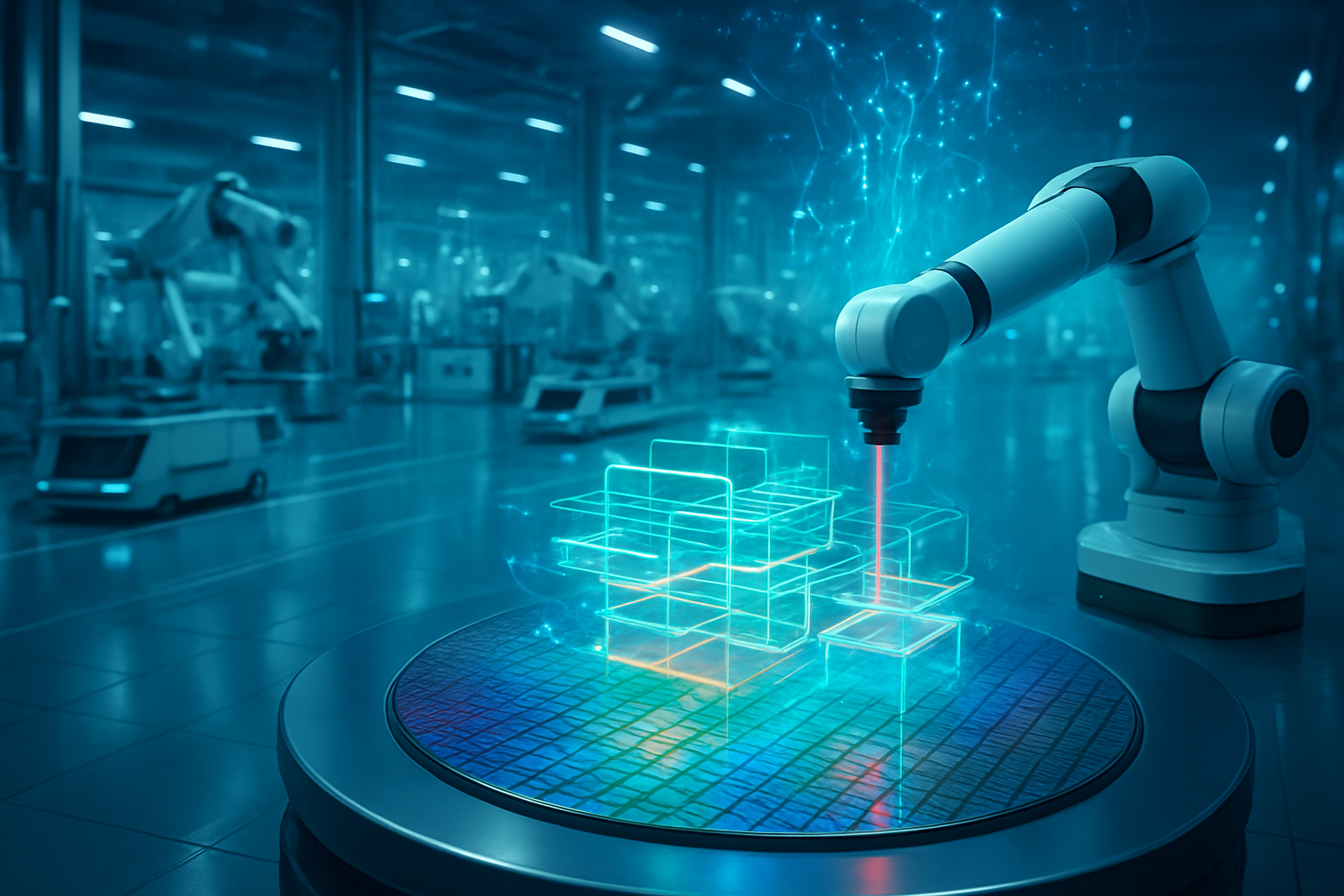
    KAOHSIUNG, Taiwan — In a landmark moment for the semiconductor industry, Taiwan Semiconductor Manufacturing Company (NYSE:TSM) has officially commenced volume production of its next-generation 2nm (N2) process technology. The rollout is centered at the newly operational Fab 22 in the Nanzih Science Park of Kaohsiung, marking the most significant architectural shift in chip manufacturing in over a decade. As of December 31, 2025, TSMC has successfully transitioned from the long-standing FinFET (Fin Field-Effect Transistor) structure to a sophisticated Gate-All-Around (GAA) nanosheet architecture, setting a new benchmark for the silicon that will power the next wave of artificial intelligence.

    The commencement of 2nm production arrives at a critical juncture for the global tech economy. With the demand for AI-specific compute power reaching unprecedented levels, the N2 node promises to provide the efficiency and density required to sustain the current pace of AI innovation. Initial reports from the Kaohsiung facility indicate that yield rates have already surpassed 65%, a remarkably high figure for a first-generation GAA node, signaling that TSMC is well-positioned to meet the massive order volumes expected from industry leaders in 2026.

    The Nanosheet Revolution: Inside the N2 Process

    The transition to the N2 node represents more than just a reduction in size; it is a fundamental redesign of how transistors function. For the past decade, the industry has relied on FinFET technology, where the gate sits on three sides of the channel. However, as transistors shrunk below 3nm, FinFETs began to struggle with current leakage and power efficiency. The new GAA nanosheet architecture at Fab 22 solves this by surrounding the channel on all four sides with the gate. This provides superior electrostatic control, drastically reducing power leakage and allowing for finer tuning of performance characteristics.

    Technically, the N2 node is a powerhouse. Compared to the previous N3E (enhanced 3nm) process, the 2nm technology is expected to deliver a 10-15% performance boost at the same power level, or a staggering 25-30% reduction in power consumption at the same speed. Furthermore, the N2 process introduces super-high-performance metal-insulator-metal (SHPMIM) capacitors, which double the capacitance density. This advancement significantly improves power stability, a crucial requirement for high-performance computing (HPC) and AI accelerators that operate under heavy, fluctuating workloads.

    Industry experts and researchers have reacted with cautious optimism. While the shift to GAA was long anticipated, the successful volume ramp-up at Fab 22 suggests that TSMC has overcome the complex lithography and materials science challenges that have historically delayed such transitions. "The move to nanosheets is the 'make-or-break' moment for sub-2nm scaling," noted one senior semiconductor analyst. "TSMC’s ability to hit volume production by the end of 2025 gives them a significant lead in providing the foundational hardware for the next decade of AI."

    A Strategic Leap for AMD and the AI Hardware Race

    The immediate beneficiary of this milestone is Advanced Micro Devices (NASDAQ:AMD), which has already confirmed its role as a lead customer for the N2 node. AMD plans to utilize the 2nm process for its upcoming Zen 6 "Venice" CPUs and the highly anticipated Instinct MI450 AI accelerators. By securing 2nm capacity, AMD aims to gain a competitive edge over its primary rival, NVIDIA (NASDAQ:NVDA). While NVIDIA’s upcoming "Rubin" architecture is expected to remain on a refined 3nm-class node, AMD’s shift to 2nm for its MI450 core dies could offer superior energy efficiency and compute density—critical metrics for the massive data centers operated by companies like OpenAI and Microsoft (NASDAQ:MSFT).

    The impact extends beyond AMD. Apple (NASDAQ:AAPL), traditionally TSMC's largest customer, is expected to transition its "Pro" series silicon to the N2 node for the 2026 iPhone and Mac refreshes. The strategic advantage of 2nm is clear: it allows device manufacturers to either extend battery life significantly or pack more neural processing units (NPUs) into the same thermal envelope. For the burgeoning market of AI PCs and AI-integrated smartphones, this efficiency is the "holy grail" that enables on-device LLMs (Large Language Models) to run without draining battery life in minutes.

    Meanwhile, the competition is intensifying. Intel (NASDAQ:INTC) is racing to catch up with its 18A process, which also utilizes a GAA-style architecture (RibbonFET), while Samsung (KRX:005930) has been producing GAA-based chips at 3nm with mixed success. TSMC’s successful volume production at Fab 22 reinforces its dominance, providing a stable, high-yield platform that major tech giants prefer for their flagship products. The "GIGAFAB" status of Fab 22 ensures that as demand for 2nm scales, TSMC will have the physical footprint to keep pace with the exponential growth of AI infrastructure.

    Redefining the AI Landscape and the Sustainability Challenge

    The broader significance of the 2nm era lies in its potential to address the "AI energy crisis." As AI models grow in complexity, the energy required to train and run them has become a primary concern for both tech companies and environmental regulators. The 25-30% power reduction offered by the N2 node is not just a technical spec; it is a necessary evolution to keep the AI industry sustainable. By allowing data centers to perform more operations per watt, TSMC is effectively providing a release valve for the mounting pressure on global energy grids.

    Furthermore, this milestone marks a continuation of Moore's Law, albeit through increasingly complex and expensive means. The transition to GAA at Fab 22 proves that silicon scaling still has room to run, even as we approach the physical limits of the atom. However, this progress comes with a "geopolitical premium." The concentration of 2nm production in Taiwan, particularly at the new Kaohsiung hub, underscores the world's continued reliance on a single geographic point for its most advanced technology. This has prompted ongoing discussions about supply chain resilience and the strategic importance of TSMC's expanding global footprint, including its future sites in Arizona and Japan.

    Comparatively, the jump to 2nm is being viewed as a more significant leap than the transition from 5nm to 3nm. While 3nm was an incremental improvement of the FinFET design, 2nm is a "clean sheet" approach. This architectural reset allows for a level of design flexibility—such as varying nanosheet widths—that will enable chip designers to create highly specialized silicon for specific AI tasks, ranging from ultra-low-power edge devices to massive, multi-die AI training clusters.

    The Road to 1nm: What Lies Ahead

    Looking toward the future, the N2 node is just the beginning of a multi-year roadmap. TSMC has already signaled that an enhanced version, N2P, will follow in late 2026, featuring backside power delivery—a technique that moves power lines to the rear of the wafer to reduce interference and further boost performance. Beyond that, the company is already laying the groundwork for the A16 (1.6nm) node, which is expected to integrate "Super Power Rail" technology and utilize High-NA EUV (Extreme Ultraviolet) lithography machines.

    In the near term, the industry will be watching the performance of the first Zen 6 and MI450 samples. If these chips deliver the 70% performance gains over current generations that some analysts predict, it could trigger a massive upgrade cycle across the enterprise and consumer sectors. The challenge for TSMC and its partners will be managing the sheer complexity of these designs. As features shrink, the risk of "silent data errors" and manufacturing defects increases, requiring even more advanced testing and packaging solutions like CoWoS (Chip-on-Wafer-on-Substrate).

    The next 12 to 18 months will be a period of intense validation. As Fab 22 ramps up to full capacity, the tech world will finally see if the promises of the 2nm era translate into a tangible acceleration of AI capabilities. If successful, the GAA transition will be remembered as the moment that gave AI the "silicon lungs" it needed to breathe and grow into its next phase of evolution.

    Conclusion: A New Chapter in Silicon History

    The official start of 2nm volume production at TSMC’s Fab 22 is a watershed moment. It represents the culmination of billions of dollars in R&D and years of engineering effort to move past the limitations of FinFET. By successfully launching the industry’s first high-volume GAA nanosheet process, TSMC has not only secured its market leadership but has also provided the essential hardware foundation for the next generation of AI-driven products.

    The key takeaways are clear: the AI industry now has a path to significantly higher efficiency and performance, AMD and Apple are poised to lead the charge in 2026, and the technical hurdles of GAA have been largely cleared. As we move into 2026, the focus will shift from "can it be built?" to "how fast can it be deployed?" The silicon coming out of Kaohsiung today will be the brains of the world's most advanced AI systems tomorrow.

    In the coming weeks, watch for further announcements regarding TSMC’s yield stability and potential additional lead customers joining the 2nm roster. The era of the nanosheet has begun, and the tech landscape will never be the same.


    This content is intended for informational purposes only and represents analysis of current AI developments.

    TokenRing AI delivers enterprise-grade solutions for multi-agent AI workflow orchestration, AI-powered development tools, and seamless remote collaboration platforms.
    For more information, visit https://www.tokenring.ai/.