Tag: Galaxy AI

  • The Dawn of the AI Companion: Samsung’s Bold Leap to 800 Million AI-Enabled Devices by 2026

    The Dawn of the AI Companion: Samsung’s Bold Leap to 800 Million AI-Enabled Devices by 2026

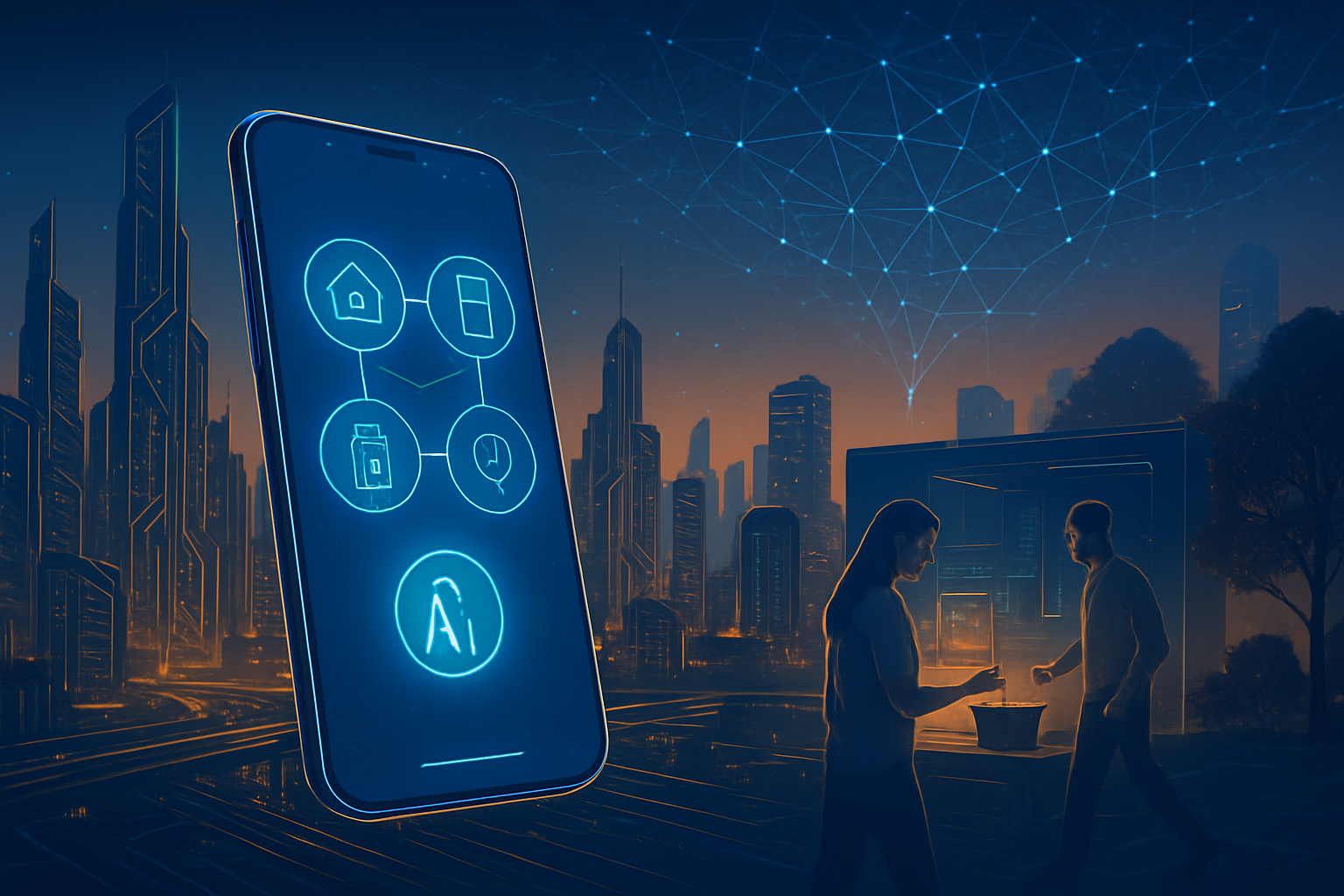
    In a move that signals the definitive end of the traditional smartphone era, Samsung Electronics (KRX: 005930) has announced an ambitious roadmap to place "Galaxy AI" in the hands of 800 million users by the end of 2026. Revealed by T.M. Roh, Head of the Mobile Experience (MX) Business, during a keynote ahead of CES 2026, this milestone represents a staggering fourfold increase from the company’s 2024 install base. By democratizing generative AI features across its entire product spectrum—from the flagship S-series to the mid-range A-series, wearables, and home appliances—Samsung is positioning itself as the primary architect of an "ambient AI" lifestyle.

    The announcement is more than just a numbers game; it represents a fundamental shift in how consumers interact with technology. Rather than seeing AI as a suite of separate tools, Samsung is rebranding the mobile experience as an "AI Companion" that manages everything from real-time cross-cultural communication to automated home ecosystems. This aggressive rollout effectively challenges competitors to match Samsung's scale, leveraging its massive hardware footprint to make advanced generative features a standard expectation for the global consumer rather than a luxury niche.

    The Technical Backbone: Exynos 2600 and the Rise of Agentic AI

    At the heart of Samsung’s 800 million-device push is the new Exynos 2600 chipset, the world’s first 2nm mobile processor. Boasting a Neural Processing Unit (NPU) with a 113% performance increase over the previous generation, this hardware allows Samsung to shift from "reactive" AI to "agentic" AI. Unlike previous iterations that required specific user prompts, the 2026 Galaxy AI utilizes a "Mixture of Experts" (MoE) architecture to execute complex, multi-step tasks locally on the device. This is supported by a new industry standard of 16GB of RAM across flagship models, ensuring that the memory-intensive requirements of Large Language Models (LLMs) can be met without sacrificing system fluidity.

    The software integration has evolved significantly through a deep-seated partnership with Alphabet Inc. (NASDAQ: GOOGL), utilizing the latest Gemini 3 architecture. A standout feature is the revamped "Agentic Bixby," which now functions as a contextually aware coordinator. For example, a user can command the device to "Find the flight confirmation in my emails and book an Uber for three hours before departure," and the AI will autonomously navigate through Gmail and the Uber app to complete the transaction. Furthermore, the "Live Translate" feature has been expanded to support real-time audio and text translation within third-party video calling apps and live streaming platforms, effectively breaking down language barriers in real-time digital communication.

    Initial reactions from the AI research community have been cautiously optimistic, particularly regarding Samsung's focus on on-device privacy. By partnering with NotaAI and utilizing the Netspresso platform, Samsung has successfully compressed complex AI models by up to 90%. This allows sophisticated tasks—like Generative Edit 2.0, which can "out-paint" and expand image borders with high fidelity—to run entirely on-device. Industry experts note that this hybrid approach, balancing local processing with secure cloud computing, sets a new benchmark for data security in the generative AI era.

    Market Disruption and the Battle for AI Dominance

    Samsung’s aggressive expansion places immediate pressure on Apple (NASDAQ: AAPL). While Apple Intelligence has focused on a curated, "walled-garden" privacy-first approach, Samsung’s strategy is one of sheer ubiquity. By bringing Galaxy AI to the budget-friendly A-series and the Galaxy Ring wearable, Samsung is capturing the "ambient AI" market that Apple has yet to fully penetrate. Analysts from IDC and Counterpoint suggest that this 800 million-device target is a calculated strike to reclaim global market leadership by making Samsung the "default" AI platform for the masses.

    However, this rapid scaling is not without its strategic risks. The industry is currently grappling with a "Memory Shock"—a global shortage of high-bandwidth memory (HBM) and DRAM required to power these advanced NPUs. This supply chain tension could force Samsung to increase device prices by 10% to 15%, potentially alienating price-sensitive consumers in emerging markets. Despite this, the stock market has responded favorably, with Samsung Electronics hitting record highs as investors bet on the company's transition from a hardware manufacturer to an AI services powerhouse.

    The competitive landscape is also shifting for AI startups. By integrating features like "Video-to-Recipe"—which uses vision AI to convert cooking videos into step-by-step instructions for Samsung’s Bespoke AI kitchen appliances—Samsung is effectively absorbing the utility of dozens of standalone apps. This consolidation threatens the viability of single-feature AI startups, as the "Galaxy Ecosystem" becomes a one-stop-shop for AI-driven productivity and lifestyle management.

    A New Era of Ambient Intelligence

    The broader significance of the 800 million milestone lies in the transition toward "AI for Living." Samsung is no longer selling a phone; it is selling an interconnected web of intelligence. In the 2026 ecosystem, a Galaxy Watch detects a user's sleep stage and automatically signals the Samsung HVAC system to adjust the temperature, while the refrigerator tracks grocery inventory and suggests meals based on health data. This level of integration represents the realization of the "Smart Home" dream, finally made seamless by generative AI's ability to understand natural language and human intent.

    However, this pervasive intelligence raises valid concerns about the "AI divide." As AI becomes the primary interface for banking, health, and communication, those without access to AI-enabled hardware may find themselves at a significant disadvantage. Furthermore, the sheer volume of data being processed—even if encrypted and handled on-device—presents a massive target for cyber-attacks. Samsung’s move to make AI "ambient" means that for 800 million people, AI will be constantly listening, watching, and predicting, a reality that will likely prompt new regulatory scrutiny regarding digital ethics and consent.

    Comparing this to previous milestones, such as the introduction of the first iPhone or the launch of ChatGPT, Samsung's 2026 roadmap represents the "industrialization" phase of AI. It is the moment where experimental technology becomes a standard utility, integrated so deeply into the fabric of daily life that it eventually becomes invisible.

    The Horizon: What Lies Beyond 800 Million

    Looking ahead, the next frontier for Samsung will likely be the move toward "Zero-Touch" interfaces. Experts predict that by 2027, the need for physical screens may begin to diminish as voice, gesture, and even neural interfaces (via wearables) take over. The 800 million devices established by the end of 2026 will serve as the essential training ground for these more advanced interactions, providing Samsung with an unparalleled data set to refine its predictive algorithms.

    We can also expect to see the "Galaxy AI" brand expand into the automotive sector. With Samsung’s existing interests in automotive electronics, the integration of an AI companion that moves seamlessly from the home to the smartphone and into the car is a logical next step. The challenge will remain the energy efficiency of these models; as AI tasks become more complex, maintaining all-day battery life will require even more radical breakthroughs in solid-state battery technology and chip architecture.

    Conclusion: The New Standard for Mobile Technology

    Samsung’s announcement of reaching 800 million AI-enabled devices by the end of 2026 marks a historic pivot for the technology industry. It signifies the transition of artificial intelligence from a novel feature to the core operating principle of modern hardware. By leveraging its vast manufacturing scale and deep partnerships with Google, Samsung has effectively set the pace for the next decade of consumer electronics.

    The key takeaway for consumers and investors alike is that the "smartphone" as we knew it is dead; in its place is a personalized, AI-driven assistant that exists across a suite of interconnected devices. As we move through 2026, the industry will be watching closely to see if Samsung can overcome supply chain hurdles and privacy concerns to deliver on this massive promise. For now, the "Galaxy" has never looked more intelligent.


    This content is intended for informational purposes only and represents analysis of current AI developments.

    TokenRing AI delivers enterprise-grade solutions for multi-agent AI workflow orchestration, AI-powered development tools, and seamless remote collaboration platforms.
    For more information, visit https://www.tokenring.ai/.
  • Scaling the Galaxy: Samsung Targets 800 Million AI-Enabled Devices by Late 2026 via Google Gemini Synergy

    Scaling the Galaxy: Samsung Targets 800 Million AI-Enabled Devices by Late 2026 via Google Gemini Synergy

    In a bold move that signals the complete "AI-ification" of the mobile landscape, Samsung Electronics (KRX: 005930) has officially announced its target to reach 800 million Galaxy AI-enabled devices by the end of 2026. This ambitious roadmap, unveiled by Samsung's Mobile Experience (MX) head T.M. Roh at the start of the year, represents a doubling of its previous 2025 install base and a fourfold increase over its initial 2024 rollout. The announcement marks the transition of artificial intelligence from a premium novelty to a standard utility across the entire Samsung hardware ecosystem, from flagship smartphones to household appliances.

    The engine behind this massive scale-up is a deepening strategic partnership with Alphabet Inc. (NASDAQ: GOOGL), specifically through the integration of the latest Google Gemini models. By leveraging Google’s advanced large language models (LLMs) alongside Samsung’s global hardware dominance, the two tech giants aim to create a seamless, AI-driven experience that spans across phones, tablets, wearables, and even smart home devices. This "AX" (AI Transformation) initiative is set to redefine how hundreds of millions of people interact with technology on a daily basis, making sophisticated generative AI tools a ubiquitous part of modern life.

    The Technical Backbone: Gemini 3 and the 2nm Edge

    Samsung’s 800 million device goal is supported by significant hardware and software breakthroughs. At the heart of the 2026 lineup, including the recently launched Galaxy S26 series, is the integration of Google Gemini 3 and its efficient counterpart, Gemini 3 Flash. These models allow for near-instantaneous reasoning and context-aware responses directly on-device. This is a departure from the 2024 era, where most AI tasks relied heavily on cloud processing. The new architecture utilizes Gemini Nano v2, a multimodal on-device model capable of processing text, images, and audio simultaneously without sending sensitive data to external servers.

    To support these advanced models, Samsung has significantly upgraded its silicon. The new Exynos 2600 chipset, built on a cutting-edge 2nm process, features a Neural Processing Unit (NPU) that is reportedly six times faster than the previous generation. This allows for "Mixture of Experts" (MoE) AI execution, where the system activates only the specific neural pathways needed for a task, optimizing power efficiency. Furthermore, 16GB of RAM has become the standard for Galaxy flagships to accommodate the memory-intensive nature of local LLMs, ensuring that features like real-time video translation and generative photo editing remain fluid and responsive.

    The partnership with Google has also led to the evolution of the "Now Bar" and an overhauled Bixby assistant. Unlike the rigid voice commands of the past, the 2026 version of Bixby serves as a contextually aware coordinator, capable of executing complex cross-app workflows. For instance, a user can ask Bixby to "summarize the last three emails from my boss and schedule a meeting based on my availability in the Calendar app," with Gemini 3 handling the semantic understanding and the Samsung system executing the tasks locally. This integration marks a shift toward "Agentic AI," where the device doesn't just respond to prompts but proactively manages user intentions.

    Reshaping the Global Smartphone Market

    This massive deployment provides Samsung with a significant strategic advantage over its primary rival, Apple Inc. (NASDAQ: AAPL). While Apple Intelligence has focused on a more curated, walled-garden approach, Samsung’s decision to bring Galaxy AI to its mid-range A-series and even older refurbished models through software updates has given it a much larger data and user footprint. By embedding Google’s Gemini into nearly a billion devices, Samsung is effectively making Google’s AI ecosystem the "default" for the global population, creating a formidable barrier to entry for smaller AI startups and competing hardware manufacturers.

    The collaboration also benefits Google significantly, providing the search giant with a massive, diverse testing ground for its Gemini models. This partnership puts pressure on other chipmakers like Qualcomm (NASDAQ: QCOM) and MediaTek to ensure their upcoming processors can keep pace with Samsung’s vertically integrated NPU optimizations. However, this aggressive expansion has not been without its challenges. Industry analysts point to a worsening global high-bandwidth memory (HBM) shortage, driven by the sudden demand for AI-capable mobile RAM. This supply chain tension could lead to price hikes for consumers, potentially slowing the adoption rate in emerging markets despite the 800 million device target.

    AI Democratization and the Broader Landscape

    Samsung’s "AI for All" philosophy represents a pivotal moment in the broader AI landscape—the democratization of high-end intelligence. By 2026, the gap between "dumb" and "smart" phones has widened into a chasm. The inclusion of Galaxy AI in "Bespoke" home appliances, such as refrigerators that use vision AI to track inventory and suggest recipes via Gemini-powered displays, suggests that Samsung is looking far beyond the pocket. This holistic approach aims to create an "Ambient AI" environment where the technology recedes into the background, supporting the user through subtle, proactive interventions.

    However, the sheer scale of this rollout raises concerns regarding privacy and the environmental cost of AI. While Samsung has emphasized "Edge AI" for local processing, the more advanced Gemini Pro and Ultra features still require massive cloud data centers. Critics point out that the energy consumption required to maintain an 800-million-strong AI fleet is substantial. Furthermore, as AI becomes the primary interface for our devices, questions about algorithmic bias and the "hallucination" of information become more pressing, especially as Galaxy AI is now used for critical tasks like real-time translation and medical health monitoring in the Galaxy Ring and Watch 8.

    The Road to 2030: What Comes Next?

    Looking ahead, experts predict that Samsung’s current milestone is just a precursor to a fully autonomous device ecosystem. By the late 2020s, the "smartphone" may no longer be the primary focus, as Samsung continues to experiment with AI-integrated wearables and augmented reality (AR) glasses that leverage the same Gemini-based intelligence. Near-term developments are expected to focus on "Zero-Touch" interfaces, where AI predicts user needs before they are explicitly stated, such as pre-loading navigation for a commute or drafting responses to incoming messages based on the user's historical tone.

    The biggest challenge facing Samsung and Google will be maintaining the security and reliability of such a vast network. As AI agents gain more autonomy to act on behalf of users—handling financial transactions or managing private health data—the stakes for cybersecurity have never been higher. Researchers predict that the next phase of development will involve "Personalized On-Device Learning," where the Gemini models don't just come pre-trained from Google, but actually learn and evolve based on the specific habits and preferences of the individual user, all while staying within a secure, encrypted local enclave.

    A New Era of Ubiquitous Intelligence

    The journey toward 800 million Galaxy AI devices by the end of 2026 marks a watershed moment in the history of technology. It represents the successful transition of generative AI from a specialized cloud-based service to a fundamental component of consumer electronics. Samsung’s ability to execute this vision, underpinned by the technical prowess of Google Gemini, has set a new benchmark for what is expected from a modern device ecosystem.

    As we look toward the coming months, the industry will be watching the consumer adoption rates of the S26 series and the expanded Galaxy AI features in the mid-range market. If Samsung reaches its 800 million goal, it will not only solidify its position as the world's leading smartphone manufacturer but also fundamentally alter the human-technology relationship. The age of the "Smartphone" is officially over; we have entered the age of the "AI Companion," where our devices are no longer just tools, but active, intelligent partners in our daily lives.


    This content is intended for informational purposes only and represents analysis of current AI developments.

    TokenRing AI delivers enterprise-grade solutions for multi-agent AI workflow orchestration, AI-powered development tools, and seamless remote collaboration platforms.
    For more information, visit https://www.tokenring.ai/.

  • The Local Intelligence Revolution: How 2026 Became the Year of the Sovereign AI PC

    The Local Intelligence Revolution: How 2026 Became the Year of the Sovereign AI PC

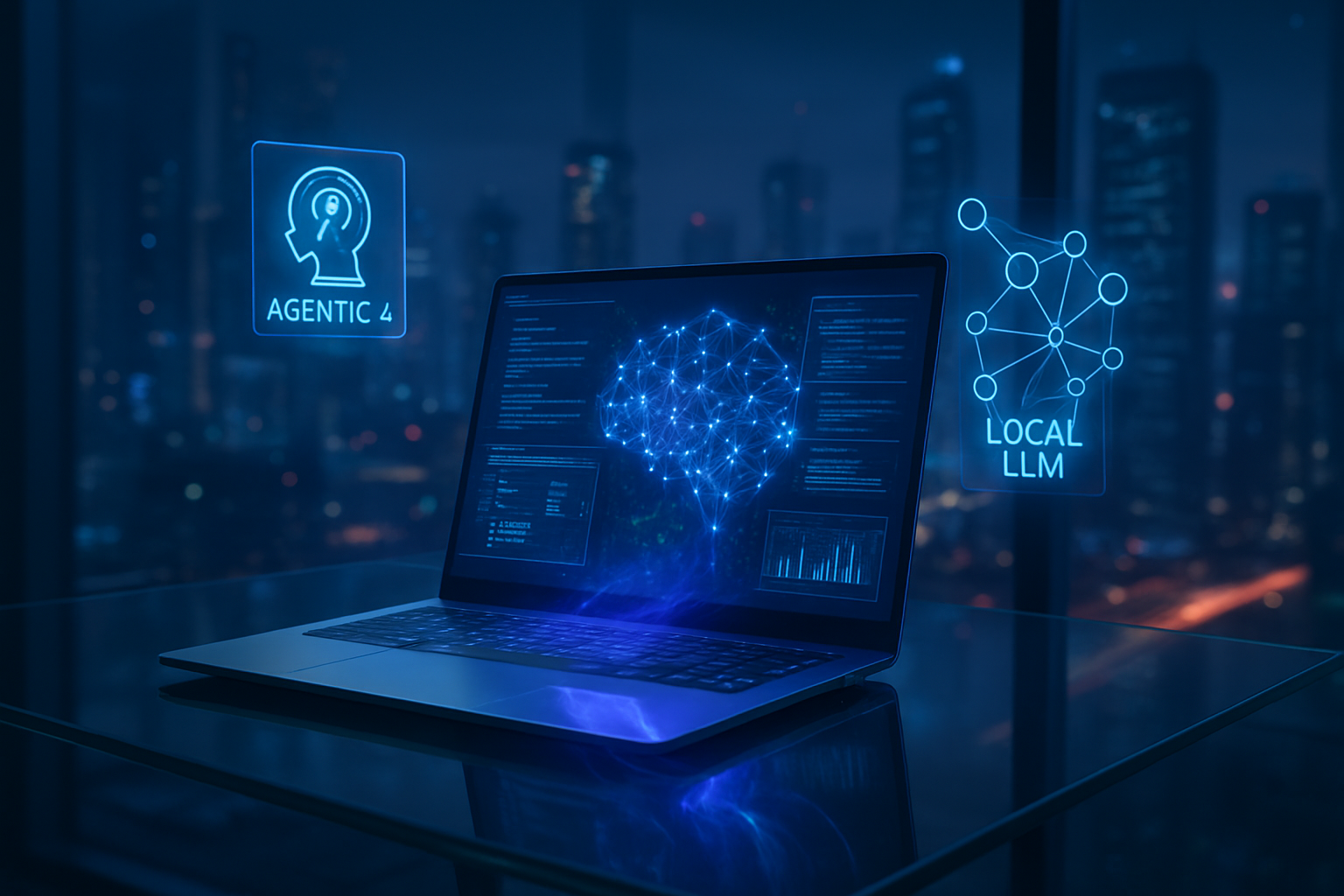
    The landscape of personal computing has undergone a seismic shift in early 2026, transitioning from a "cloud-first" paradigm to one defined by "On-Device AI." At the heart of this transformation is the arrival of hardware capable of running sophisticated Large Language Models (LLMs) entirely within the confines of a laptop’s chassis. This evolution, showcased prominently at CES 2026, marks the end of the era where artificial intelligence was a remote service and the beginning of an era where it is a local, private, and instantaneous utility.

    The immediate significance of this shift cannot be overstated. By decoupling AI from the data center, tech giants are finally delivering on the promise of "Sovereign AI"—tools that respect user privacy by design and function without an internet connection. With the launch of flagship silicon from Intel and Qualcomm, the "AI PC" has moved past its experimental phase to become the new standard for productivity, offering agentic capabilities that can manage entire workflows autonomously.

    The Silicon Powerhouse: Panther Lake and Snapdragon X2

    The technical backbone of this revolution lies in the fierce competition between Intel (NASDAQ:INTC) and Qualcomm (NASDAQ:QCOM). Intel’s newly released Panther Lake (Core Ultra Series 3) processors, built on the cutting-edge 18A manufacturing process, have set a new benchmark for integrated performance. The platform boasts a staggering 170 total TOPS (Trillions of Operations Per Second), with a dedicated NPU 5 architecture delivering 50 TOPS specifically for AI tasks. This represents a massive leap from the previous generation, allowing for the simultaneous execution of multiple Small Language Models (SLMs) without taxing the CPU or GPU.

    Qualcomm has countered with its Snapdragon X2 Elite series, which maintains a lead in raw NPU efficiency. The X2’s Hexagon NPU delivers a uniform 80 to 85 TOPS, optimized for high-throughput inference. Unlike previous years where Windows on ARM faced compatibility hurdles, the 2026 ecosystem is fully optimized. These chips enable "instant-on" AI, where models like Google (NASDAQ:GOOGL) Gemini Nano and Llama 3 (8B) remain resident in the system’s memory, responding to queries in under 50 milliseconds. This differs fundamentally from the 2024-2025 approach, which relied on "triage" systems that frequently offloaded complex tasks to the cloud, incurring latency and privacy risks.

    The Battle for the Desktop: Galaxy AI vs. Gemini vs. Copilot

    The shift toward local execution has ignited a high-stakes battle for the "AI Gateway" on Windows. Samsung Electronics (KRX:005930) has leveraged its partnership with Google to integrate Galaxy AI deeply into its Galaxy Book6 series. This integration allows for unprecedented cross-device continuity; for instance, a user can use "AI Select" to drag a live video feed from their phone into a Word document on their PC, where it is instantly transcribed and summarized locally. This ecosystem play positions Samsung as a formidable rival to Microsoft (NASDAQ:MSFT) and its native Copilot.

    Meanwhile, Alphabet’s Google has successfully challenged Microsoft’s dominance by embedding Gemini directly into the Windows taskbar and the Chrome browser. The new "Desktop Lens" feature uses the local NPU to "see" and analyze screen content in real-time, providing context-aware assistance that rivals Microsoft’s controversial Recall feature. Industry experts note that this competition is driving a "features war," where the winner is determined by who can provide the most seamless local integration rather than who has the largest cloud-based model. This has created a lucrative market for PC manufacturers like Dell Technologies (NYSE:DELL), HP Inc. (NYSE:HPQ), and Lenovo Group (HKG:0992), who are now marketing "AI Sovereignty" as a premium feature.

    Privacy, Latency, and the Death of the 8GB RAM Era

    The wider significance of the 2026 AI PC lies in its impact on data privacy and hardware standards. For the first time, enterprise users in highly regulated sectors—such as healthcare and finance—can utilize advanced AI agents without violating HIPAA or GDPR regulations, as the data never leaves the local device. This "Privacy-by-Default" architecture is a direct response to the growing public skepticism regarding cloud-based data harvesting. Furthermore, the elimination of latency has transformed AI from a "chatbot" into a "copilot" that can assist with real-time video editing, live translation during calls, and complex code generation without the "thinking" delays of 2024.

    However, this transition has also forced a radical change in hardware specifications. In 2026, 32GB of RAM has become the new baseline for any functional AI PC. Local LLMs require significant dedicated VRAM to remain "warm" and responsive, rendering the 8GB and even 16GB configurations of the past obsolete. While this has driven up the average selling price of laptops, it has also breathed new life into the PC market, which had seen stagnant growth for years. Critics, however, point to the "AI Divide," where those unable to afford these high-spec machines are left with inferior, cloud-dependent tools that offer less privacy and slower performance.

    Looking Ahead: The Rise of Agentic Computing

    The next two to three years are expected to see the rise of "Agentic Computing," where the PC is no longer just a tool but an autonomous collaborator. Experts predict that by 2027, on-device NPUs will exceed 300 TOPS, allowing for the local execution of models with 100 billion parameters. This will enable "Personalized AI" that learns a user’s specific voice, habits, and professional style with total privacy. We are also likely to see the emergence of specialized AI silicon designed for specific industries, such as dedicated "Creative NPUs" for 8K video synthesis or "Scientific NPUs" for local protein folding simulations.

    The primary challenge moving forward will be energy efficiency. As local models grow in complexity, maintaining the "all-day battery life" that Qualcomm and Intel currently promise will require even more radical breakthroughs in chip architecture. Additionally, the software industry must catch up; while the hardware is ready for local AI, many legacy applications still lack the hooks necessary to take full advantage of the NPU.

    A New Chapter in Computing History

    The evolution of On-Device AI in 2026 represents a historical turning point comparable to the introduction of the graphical user interface (GUI) or the transition to mobile computing. By bringing the power of LLMs to the edge, the industry has solved the twin problems of privacy and latency that hindered AI adoption for years. The integration of Galaxy AI and Gemini on Intel and Qualcomm hardware has effectively democratized high-performance intelligence, making it a standard feature of the modern workstation.

    As we move through 2026, the key metric for success will no longer be how many parameters a company’s cloud model has, but how efficiently that model can run on a user's lap. The "Sovereign AI PC" is not just a new product category; it is a fundamental redesign of how humans and machines interact. In the coming months, watch for a wave of "AI-native" software releases that will finally push these powerful new NPUs to their limits, forever changing the way we work, create, and communicate.


    This content is intended for informational purposes only and represents analysis of current AI developments.

    TokenRing AI delivers enterprise-grade solutions for multi-agent AI workflow orchestration, AI-powered development tools, and seamless remote collaboration platforms.
    For more information, visit https://www.tokenring.ai/.
  • Samsung Targets 800 Million AI-Powered Devices by End of 2026, Deepening Google Gemini Alliance

    Samsung Targets 800 Million AI-Powered Devices by End of 2026, Deepening Google Gemini Alliance

    In a bold move that signals the complete "AI-ification" of the consumer electronics landscape, Samsung Electronics (KRX: 005930) announced at CES 2026 its ambitious goal to double the reach of Galaxy AI to 800 million devices by the end of the year. This massive expansion, powered by a deepened partnership with Alphabet Inc. (NASDAQ: GOOGL), aims to transition AI from a premium novelty into an "invisible" and essential layer across the entire Samsung ecosystem, including smartphones, tablets, wearables, and home appliances.

    The announcement marks a pivotal moment for the tech giant as it seeks to reclaim its dominant position in the global smartphone market and outpace competitors in the race for on-device intelligence. By leveraging Google’s latest Gemini 3 models and integrating advanced reasoning capabilities from partners like Perplexity AI, Samsung is positioning itself as the primary gateway for generative AI in the hands of hundreds of millions of users worldwide.

    Technical Foundations: The Exynos 2600 and the Bixby "Brain Transplant"

    The technical backbone of this 800-million-unit surge is the new "AX" (AI Transformation) strategy, which moves beyond simple software features to a deeply integrated hardware-software stack. At the heart of the 2026 flagship lineup, including the upcoming Galaxy S26 series, is the Exynos 2600 processor. Built on Samsung’s cutting-edge 2nm Gate-All-Around (GAA) process, the Exynos 2600 features a Neural Processing Unit (NPU) that is reportedly six times faster than the previous generation. This allows for complex "Mixture of Experts" (MoE) models, like Samsung’s proprietary Gauss 2, to run locally on the device with unprecedented efficiency.

    Samsung has standardized on Google Gemini 3 and Gemini 3 Flash as the core engines for Galaxy AI’s cloud and hybrid tasks. A significant technical breakthrough for 2026 is what industry insiders are calling the Bixby "Brain Transplant." While Google Gemini handles generative tasks and creative workflows, Samsung has integrated Perplexity AI to serve as Bixby’s web-grounded reasoning engine. This tripartite system—Bixby for system control, Gemini for creativity, and Perplexity for cited research—creates a sophisticated digital assistant capable of handling complex, multi-step queries that were previously impossible on mobile hardware.

    Furthermore, Samsung is utilizing "Netspresso" technology from Nota AI to compress large language models by up to 90% without sacrificing accuracy. This optimization, combined with the integration of High-Bandwidth Memory (HBM3E) in mobile chipsets, enables high-speed local inference. This technical leap ensures that privacy-sensitive tasks, such as real-time multimodal translation and document summarization, remain on-device, addressing one of the primary concerns of the AI era.

    Market Dynamics: Challenging Apple and Navigating the "Memory Crunch"

    This aggressive scaling strategy places immense pressure on Apple (NASDAQ: AAPL), whose "Apple Intelligence" has remained largely confined to its high-end Pro models. By democratizing Galaxy AI across its mid-range Galaxy A-series (A56 and A36) and its "Bespoke AI" home appliances, Samsung is effectively winning the volume race. While Apple may maintain higher profit margins per device, Samsung’s 800-million-unit target ensures that Google Gemini becomes the default AI experience for the vast majority of the world’s mobile users.

    Alphabet Inc. stands as a major beneficiary of this development. The partnership secures Gemini’s place as the dominant mobile AI model, providing Google with a massive distribution channel that bypasses the need for users to download standalone apps. For Google, this is a strategic masterstroke in its ongoing rivalry with OpenAI and Microsoft (NASDAQ: MSFT), as it embeds its ecosystem into the hardware layer of the world’s most popular Android devices.

    However, the rapid expansion is not without its strategic risks. Samsung warned of an "unprecedented" memory chip shortage due to the skyrocketing demand for AI servers and high-performance mobile RAM. This "memory crunch" is expected to drive up DRAM prices significantly, potentially forcing a price hike for the Galaxy S26 series. While Samsung’s semiconductor division will see record profits from this shortage, its mobile division may face tightened margins, creating a complex internal balancing act for the South Korean conglomerate.

    Broader Significance: The Era of Agentic AI

    The shift toward 800 million AI devices represents a fundamental change in the broader AI landscape, moving away from the "chatbot" era and into the era of "Agentic AI." In this new phase, AI is no longer a destination—like a website or an app—but a persistent, proactive layer that anticipates user needs. This mirrors the transition seen during the mobile internet revolution of the late 2000s, where connectivity became a baseline expectation rather than a feature.

    This development also highlights a growing divide in the industry regarding data privacy and processing. Samsung’s hybrid approach—balancing local processing for privacy and cloud processing for power—sets a new industry standard. However, the sheer scale of data being processed by 800 million devices raises significant concerns about data sovereignty and the environmental impact of the massive server farms required to support Google Gemini’s cloud-based features.

    Comparatively, this milestone is being viewed by historians as the "Netscape moment" for mobile AI. Just as the web browser made the internet accessible to the masses, Samsung’s integration of Gemini and Perplexity into the Galaxy ecosystem is making advanced generative AI a daily utility for nearly a billion people. It marks the end of the experimental phase of AI and the beginning of its total integration into human productivity and social interaction.

    Future Horizons: Foldables, Wearables, and Orchestration

    Looking ahead, the near-term focus will be on the launch of the Galaxy Z Fold7 and a rumored "Z TriFold" device, which are expected to showcase specialized AI multitasking features that take advantage of larger screen real estate. We can also expect to see "Galaxy AI" expand deeper into the wearable space, with the Galaxy Ring and Galaxy Watch 8 utilizing AI to provide predictive health insights and automated coaching based on biometric data patterns.

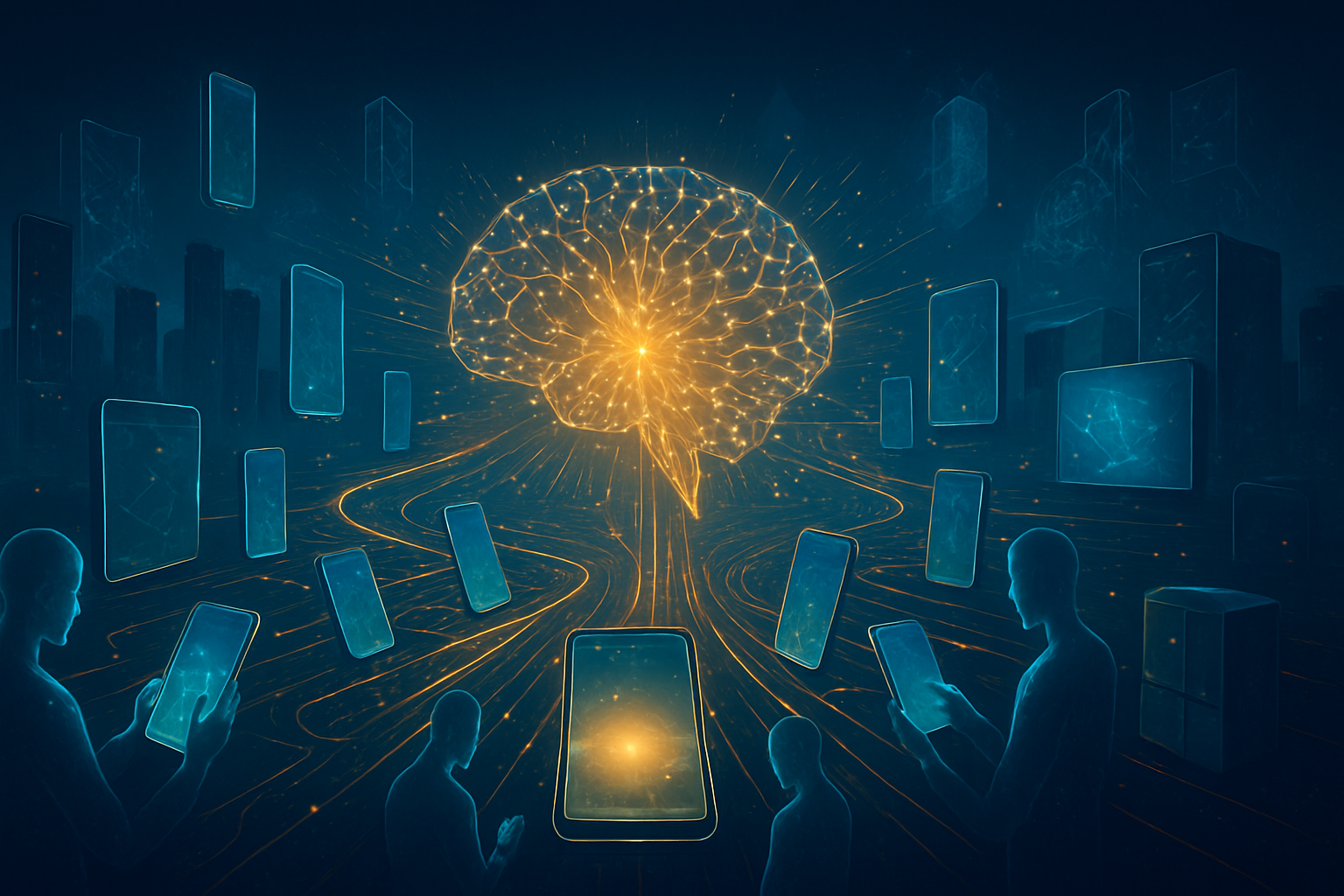
    The long-term challenge for Samsung and Google will be maintaining the pace of innovation while managing the energy and hardware costs associated with increasingly complex models. Experts predict that the next frontier will be "Autonomous Device Orchestration," where your Galaxy phone, fridge, and car communicate via a shared Gemini-powered "brain" to manage your life seamlessly. The primary hurdle remains the "memory crunch," which could slow down the rollout of AI features to budget-tier devices if component costs do not stabilize by 2027.

    A New Chapter in AI History

    Samsung’s target of 800 million Galaxy AI devices by the end of 2026 is more than just a sales goal; it is a declaration of intent to lead the next era of computing. By partnering with Google and Perplexity, Samsung has built a formidable ecosystem that combines hardware excellence with world-class AI models. The key takeaways from this development are the democratization of AI across all price points and the transition of Bixby into a truly capable, multi-model assistant.

    This move will likely be remembered as the point where AI became a standard utility in the consumer's pocket. In the coming months, all eyes will be on the official launch of the Galaxy S26 and the real-world performance of the Exynos 2600. If Samsung can successfully navigate the looming memory shortage and deliver on its "invisible AI" promise, it may well secure its leadership in the tech industry for the next decade.


    This content is intended for informational purposes only and represents analysis of current AI developments.

    TokenRing AI delivers enterprise-grade solutions for multi-agent AI workflow orchestration, AI-powered development tools, and seamless remote collaboration platforms.
    For more information, visit https://www.tokenring.ai/.
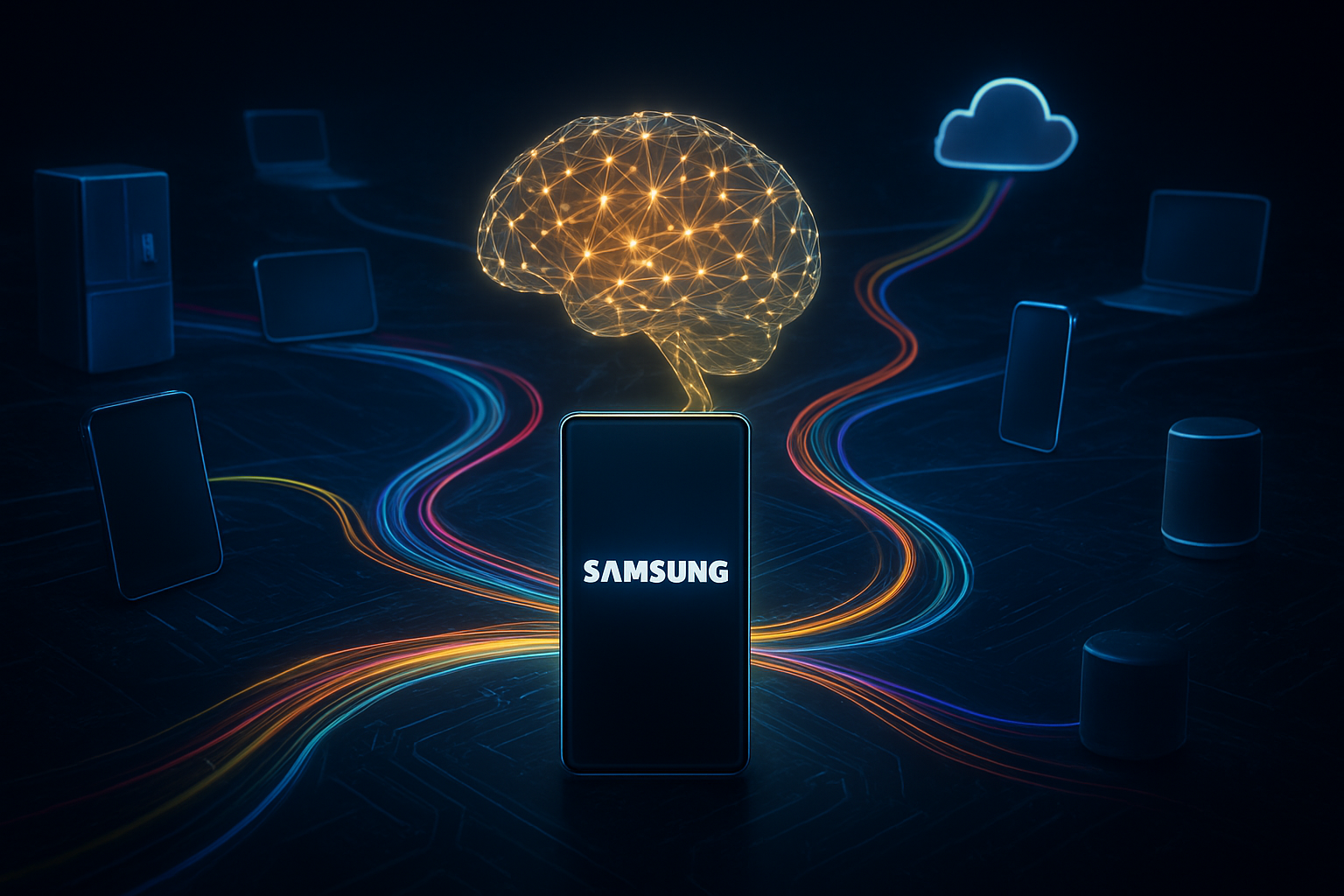
  • Samsung’s 800 Million Device Moonshot: The AI Ecosystem Revolution Led by Gemini 3 and Perplexity

    Samsung’s 800 Million Device Moonshot: The AI Ecosystem Revolution Led by Gemini 3 and Perplexity

    In a bold move to dominate the next era of personal computing, Samsung Electronics Co., Ltd. (KRX: 005930) has officially announced an ambitious roadmap to bring its "Galaxy AI" suite to 800 million devices by the end of 2026. This target, revealed by co-CEO T.M. Roh in early January 2026, represents a massive doubling of the company’s 2025 goals and signals a shift from AI as a premium smartphone feature to a ubiquitous "ambient layer" across the world’s largest consumer electronics ecosystem.

    The announcement marks a pivotal moment for the industry, as Samsung moves beyond simple chatbots to integrate sophisticated, multi-modal intelligence into everything from the upcoming Galaxy S26 flagship to smart refrigerators and Micro LED televisions. By leveraging deep-tier partnerships with Alphabet Inc. (NASDAQ: GOOGL) and the rising search giant Perplexity AI, Samsung is positioning itself as the primary gatekeeper for consumer AI, aiming to outpace competitors through sheer scale and cross-device synergy.

    The Technical Backbone: Gemini 3 and the Rebirth of Bixby

    At the heart of Samsung’s 2026 expansion is the integration of Google’s recently released Gemini 3 model. Unlike its predecessors, Gemini 3 offers significantly enhanced on-device processing capabilities, allowing Galaxy devices to handle complex multi-modal tasks—such as real-time video analysis and sophisticated reasoning—without constantly relying on the cloud. This integration powers the new "Bixby Live" feature in One UI 8.5, which introduces eight specialized AI agents capable of everything from acting as a real-time "Storyteller" for children to a "Dress Matching" fashion consultant that uses the device's camera to analyze a user's wardrobe.

    The partnership with Perplexity AI addresses one of Bixby’s long-standing hurdles: the "hallucination" and limited knowledge of traditional voice assistants. By integrating Perplexity’s real-time search engine, Bixby can now function as a professional researcher, providing cited, up-to-the-minute answers to complex queries. Furthermore, the 2026 appliance lineup, including the Bespoke AI Refrigerator Family Hub, utilizes Gemini 3-powered AI Vision to recognize over 1,500 food items, automatically tracking expiration dates and suggesting recipes. This is a significant leap from the 2024 models, which were limited to basic image recognition for a few dozen items.

    A New Power Dynamic in the AI Arms Race

    Samsung’s aggressive 800-million-device goal creates a formidable challenge for Apple Inc. (NASDAQ: AAPL), whose "Apple Intelligence" has remained largely focused on the iPhone and Mac ecosystems. By embedding high-end AI into mid-range A-series phones and home appliances, Samsung is effectively "democratizing" advanced AI, forcing competitors to either lower their hardware requirements or risk losing market share in the burgeoning smart home sector. Google also stands as a primary beneficiary; through Samsung, Gemini 3 gains a massive hardware distribution channel that rivals the reach of Microsoft (NASDAQ: MSFT) and its Windows Copilot integration.

    For Perplexity, the partnership is a strategic masterstroke, granting the startup immediate access to hundreds of millions of users and positioning it as a viable alternative to traditional search. This collaboration disrupts the existing search paradigm, as users increasingly turn to their voice assistants for cited information rather than clicking through blue links on a browser. Industry experts suggest that if Samsung successfully hits its 2026 target, it will control the most diverse data set in the AI industry, spanning mobile usage, home habits, and media consumption.

    Ambient Intelligence and the Privacy Frontier

    The shift toward "Ambient AI"—where intelligence is integrated into the physical environment through TVs and appliances—marks a departure from the "screen-first" era of the last decade. Samsung’s use of Voice ID technology allows its 2026 appliances to recognize individual family members by their vocal prints, delivering personalized schedules and health data. While this offers unprecedented convenience, it also raises significant concerns regarding data privacy and the "always-listening" nature of 800 million connected microphones.

    Samsung has attempted to mitigate these concerns by emphasizing its "Knox Matrix" security, which uses blockchain-based encryption to keep sensitive AI processing on-device or within a private home network. However, as AI becomes an invisible layer of daily life, the industry is watching closely to see how Samsung balances its massive data harvesting needs with the increasing global demand for digital sovereignty. This milestone echoes the early days of the smartphone revolution, but with the stakes raised by the predictive and autonomous nature of generative AI.

    The Road to 2027: What Lies Ahead

    Looking toward the latter half of 2026, the launch of the Galaxy S26 and the rumored "Galaxy Z TriFold" will be the true litmus tests for Samsung’s AI ambitions. These devices are expected to debut with "Hey Plex" as a native wake-word option, further blurring the lines between hardware and AI services. Experts predict that the next frontier for Samsung will be "Autonomous Task Orchestration," where Bixby doesn't just answer questions but executes multi-step workflows across devices—such as ordering groceries when the fridge is low and scheduling a delivery time that fits the user’s calendar.

    The primary challenge remains the "utility gap"—ensuring that these 800 million devices provide meaningful value rather than just novelty features. As the AI research community moves toward "Agentic AI," Samsung’s hardware variety provides a unique laboratory for testing how AI can assist in physical tasks. If the company can maintain its current momentum, the end of 2026 could mark the year that artificial intelligence officially moved from our pockets into the very fabric of our homes.

    Final Thoughts: A Defining Moment for Samsung

    Samsung’s 800 million device goal is more than just a sales target; it is a declaration of intent to define the AI era. By combining the software prowess of Google and Perplexity with its own unparalleled hardware manufacturing scale, Samsung is building a moat that few can cross. The integration of Gemini 3 and the transformation of Bixby represent a total reimagining of the user interface, moving us closer to a world where technology anticipates our needs without being asked.

    As we move through 2026, the tech world will be watching the adoption rates of One UI 8.5 and the performance of the new Bespoke AI appliances. The success of this "Moonshot" will likely determine the hierarchy of the tech industry for the next decade. For now, Samsung has laid down a gauntlet that demands a response from every major player in Silicon Valley and beyond.


    This content is intended for informational purposes only and represents analysis of current AI developments.

    TokenRing AI delivers enterprise-grade solutions for multi-agent AI workflow orchestration, AI-powered development tools, and seamless remote collaboration platforms.
    For more information, visit https://www.tokenring.ai/.

  • Samsung Targets 800 Million AI-Enabled Devices by 2026: The Gemini-Powered Future of the Galaxy Ecosystem

    Samsung Targets 800 Million AI-Enabled Devices by 2026: The Gemini-Powered Future of the Galaxy Ecosystem

    LAS VEGAS, Jan 5, 2026 — Samsung Electronics Co., Ltd. (KRX: 005930) has officially unveiled its most ambitious technological roadmap to date, announcing a goal to integrate "Galaxy AI" into 800 million devices by the end of 2026. This target represents a massive acceleration in the company’s artificial intelligence strategy, effectively doubling its AI-enabled footprint from the 400 million devices reached in 2025 and quadrupling the initial 200 million rollout seen in late 2024.

    The announcement, delivered by TM Roh, President and Head of Mobile Experience (MX), during "The First Look" event at CES 2026, signals a pivot from AI as a luxury smartphone feature to AI as a ubiquitous "ambient" layer across Samsung’s entire product portfolio. By deepening its partnership with Alphabet Inc. (NASDAQ: GOOGL) to integrate the latest Gemini 3 models into everything from budget-friendly "A" series phones to high-end Bespoke appliances, Samsung is betting that a unified, cross-category AI ecosystem will be the primary driver of consumer loyalty for the next decade.

    The Technical Backbone: 2nm Silicon and Gemini 3 Integration

    The technical foundation of this 800-million-device push lies in Samsung’s shift to a "Local-First" hybrid AI model. Unlike early iterations of Galaxy AI that relied heavily on cloud processing, the 2026 lineup leverages the new Exynos 2600 and Snapdragon 8 Gen 5 (Elite 2) processors. These chips are manufactured on a cutting-edge 2nm process, featuring dedicated Neural Processing Units (NPUs) capable of delivering 80 Trillion Operations Per Second (TOPS). This hardware allows for the local execution of Gemini Nano 3, a 10-billion-parameter model that handles real-time translation, privacy-sensitive data, and "Universal Screen Awareness" without an internet connection.

    For more complex reasoning, Samsung has integrated Gemini 3 Pro, enabling a new feature called "Deep Research Agents." These agents can perform multi-step tasks—such as planning a week-long international itinerary while cross-referencing flight prices, calendar availability, and dietary preferences—within seconds. This differs from previous approaches by moving away from simple "command-and-response" interactions toward "agentic" behavior, where the device anticipates user needs based on context. Initial reactions from the AI research community have been largely positive, with experts noting that Samsung’s ability to compress high-parameter models for on-device use sets a new benchmark for mobile efficiency.

    Market Warfare: Reclaiming Dominance Through Scale

    Samsung’s aggressive expansion is a direct challenge to Apple Inc. (NASDAQ: AAPL), which has taken a more conservative, vertically integrated approach with its "Apple Intelligence" platform. While Apple remains focused on a "walled garden" of privacy-first AI, Samsung’s partnership with Google allows it to offer a more open ecosystem where users can choose between different AI agents. By 2026, analysts expect Samsung to use its vertical integration in HBM4 (High-Bandwidth Memory) to maintain a margin advantage over competitors, as the global memory chip shortage continues to drive up the cost of AI-capable hardware.

    The strategic advantage for Alphabet Inc. is equally significant. By embedding Gemini 3 into nearly a billion Samsung devices, Google secures a massive distribution channel for its foundational models, countering the threat of independent AI startups and Apple’s proprietary Siri 2.0. This partnership effectively positions the Samsung-Google alliance as the primary rival to the Apple-OpenAI ecosystem. Market experts predict that this scale will allow Samsung to reclaim global market share in regions where premium AI features were previously out of reach for mid-range consumers.

    The Ambient AI Era: Privacy, Energy, and the Digital Divide

    The broader significance of Samsung's 800-million-device goal lies in the transition to "Ambient AI"—where intelligence is integrated so deeply into the background of daily life that it is no longer perceived as a separate tool. At CES 2026, Samsung demonstrated this with its Bespoke AI Family Hub Refrigerator, which uses Gemini-powered vision to identify food items and automatically adjust meal plans. However, this level of integration has sparked renewed debates over the "Surveillance Home." While Samsung’s Knox Matrix provides blockchain-backed security, privacy advocates worry about the monetization of telemetry data, such as when appliance health data is shared with insurance companies to adjust premiums.

    There is also the "AI Paradox" regarding sustainability. While Samsung’s AI Energy Mode can reduce a washing machine’s electricity use by 30%, the massive data center requirements for running Gemini’s cloud-based features are staggering. Critics argue that the net environmental gain may be negligible unless the industry moves toward more efficient "Small Language Models" (SLMs). Furthermore, the "AI Divide" remains a concern; while 80% of consumers are now aware of Galaxy AI, only a fraction fully utilize its advanced capabilities, threatening to create a productivity gap between tech-literate users and the general population.

    Future Horizons: Brain Health and 6G Connectivity

    Looking toward 2027 and beyond, Samsung is already teasing the next frontier of its AI ecosystem: Brain Health and Neurological Monitoring. Using wearables and home sensors, the company plans to launch tools for the early detection of cognitive decline by analyzing gait, sleep patterns, and voice nuances. These applications represent a shift from productivity to preventative healthcare, though they will require navigating unprecedented regulatory and ethical hurdles regarding the ownership of neurological data.

    The long-term roadmap also includes the integration of 6G connectivity, which is expected to provide the ultra-low latency required for "Collective Intelligence"—where multiple devices in a home share a single, distributed NPU to solve complex problems. Experts predict that the next major challenge for Samsung will be moving from "screen-based AI" to "voice and gesture-only" interfaces, effectively making the smartphone a secondary hub for a much larger network of autonomous agents.

    Conclusion: A Milestone in AI History

    Samsung’s push to 800 million AI devices marks a definitive end to the "experimental" phase of consumer artificial intelligence. By the end of 2026, AI will no longer be a novelty but a standard requirement for consumer electronics. The key takeaway from this expansion is the successful fusion of high-performance silicon with foundational models like Gemini, proving that the future of technology lies in the synergy between hardware manufacturers and AI labs.

    As we move through 2026, the industry will be watching closely to see if Samsung can overcome the current memory chip shortage and if consumers will embrace the "Ambient AI" lifestyle or retreat due to privacy concerns. Regardless of the outcome, Samsung has fundamentally shifted the goalposts for the tech industry, moving the conversation from "What can AI do?" to "How many people can AI reach?"


    This content is intended for informational purposes only and represents analysis of current AI developments.

    TokenRing AI delivers enterprise-grade solutions for multi-agent AI workflow orchestration, AI-powered development tools, and seamless remote collaboration platforms.
    For more information, visit https://www.tokenring.ai/.