Tag: Gaming

  • CraftGPT: The Minecraft Masterpiece – A Fan Forges a Functional LLM Within the Blocky Frontier

    CraftGPT: The Minecraft Masterpiece – A Fan Forges a Functional LLM Within the Blocky Frontier

    In an astonishing display of ingenuity and persistence, a dedicated Minecraft enthusiast known as Sammyuri has transcended the boundaries of conventional computing, successfully constructing a functional Large Language Model (LLM) named CraftGPT entirely within the virtual world of Minecraft. This monumental achievement, built exclusively with the game's fundamental mechanics, represents the ultimate hobbyist project, pushing the limits of in-game engineering and redefining what's possible within a sandbox environment. More than just a game, Minecraft has been transformed into a digital laboratory where the principles of artificial intelligence are being explored through block-by-block construction.

    The unveiling of CraftGPT has sent ripples of awe through both the gaming and technology communities. It stands not as a practical competitor to modern LLMs but as a profound proof-of-concept, demonstrating that with enough dedication and understanding of underlying principles, complex computational systems can be replicated in the most unconventional of settings. This project highlights a fascinating intersection of creative play and advanced computer science, offering a tangible, albeit slow, example of an AI neural network brought to life through the meticulous arrangement of millions of virtual components.

    The Redstone Revolution: Crafting an AI from Blocks and Circuits

    CraftGPT is a fully functional neural network, mirroring the architecture of real-world LLMs, meticulously constructed from pure Minecraft "electronics." Sammyuri's commitment to a "pure Minecraft" approach is evident in the project's design: it relies solely on redstone blocks for its operation, deliberately eschewing command blocks or data packs. Redstone, Minecraft's equivalent of electrical wiring, forms the intricate circuits that power this in-game AI. The structure encompasses all the necessary components for a neural network, including intricate tokenizers and matrix multipliers, all realized through the game's block-based logic.

    The sheer scale of CraftGPT is nothing short of staggering. The model boasts 5 million parameters, a considerable number for an in-game creation, and is composed of a colossal 439 million redstone blocks. Its physical dimensions within Minecraft are immense, sprawling across 1020 x 260 x 1656 blocks. To even capture a comprehensive view of this architectural marvel, Sammyuri had to utilize the "Distant Horizons" mod, which extends Minecraft's render distance far beyond its default limits. The LLM was initially trained outside of Minecraft using Python on a dataset of simple English dialogues, with the learned parameters then painstakingly "uploaded" into the colossal redstone machine to enable its in-game functionality.

    This approach dramatically differs from traditional LLM development, which relies on powerful GPUs and specialized software frameworks. CraftGPT's creation is a testament to translating abstract computational principles into a physical, albeit virtual, medium. While traditional LLMs (such as those developed by Alphabet (NASDAQ: GOOGL)'s Google AI or Microsoft (NASDAQ: MSFT)'s OpenAI) process information at lightning speeds, CraftGPT faces an inherent limitation: its operational speed. Despite running on a specialized high-performance server that accelerates redstone circuits by an astonishing 40,000 times, the model takes approximately two hours to generate a simple answer. This starkly illustrates the computational overhead of simulating advanced AI operations within Minecraft's block-based physics, yet it underscores the profound complexity and dedication involved in its construction. Initial reactions from the AI research community and industry experts have largely been of amazement, recognizing it as a unique blend of engineering prowess and artistic expression, pushing the boundaries of what is conventionally understood as a computing platform.

    Implications Beyond the Blocky Horizon for AI Innovators

    While CraftGPT is not poised to disrupt the commercial AI landscape, its existence carries significant implications for AI companies, tech giants, and startups in less direct but equally profound ways. For companies focused on AI accessibility and education, projects like CraftGPT serve as powerful illustrative tools. They demonstrate the fundamental principles of neural networks in a highly visual and interactive manner, potentially inspiring a new generation of AI developers by demystifying complex concepts. Software companies that develop tools for unconventional computing or advanced simulations might find inspiration in the extreme engineering challenges overcome by Sammyuri.

    Competitive implications for major AI labs and tech companies like Alphabet (NASDAQ: GOOGL), Microsoft (NASDAQ: MSFT), Meta Platforms (NASDAQ: META), and Amazon (NASDAQ: AMZN) are not in terms of direct product competition, but rather in highlighting the ever-expanding landscape of AI innovation. It reinforces the idea that groundbreaking work can emerge from unexpected corners, even from hobbyist communities. This could subtly influence research directions towards more resource-efficient or unconventional AI architectures, or inspire new approaches to visualizing and understanding AI operations. Startups specializing in educational technology or gamified learning platforms could benefit by studying the engagement generated by such projects, potentially integrating similar "build-your-own-AI" concepts into their offerings.

    Furthermore, CraftGPT could spark interest in the development of more sophisticated tools within game engines or virtual environments, enabling easier construction and simulation of complex systems. This project, while a singular achievement, underscores the potential for gamified environments to serve as powerful, albeit resource-intensive, platforms for exploring computational science. It positions the Minecraft community as an unexpected, yet formidable, contributor to the broader discourse on computing limits and creative problem-solving in the digital age.

    CraftGPT's Place in the Broader AI Landscape and Trends

    CraftGPT fits into the broader AI landscape as a powerful symbol of human ingenuity and the democratization of technology. In an era dominated by massive data centers and multi-billion-dollar AI investments, CraftGPT reminds us that the fundamental principles of AI can be understood and even built by passionate individuals. It aligns with trends pushing for greater transparency and interpretability in AI, as the very act of constructing an LLM block by block offers an unparalleled, albeit granular, view into its inner workings. It serves as an extreme example of "explainable AI" through sheer physical manifestation.

    The impact of CraftGPT extends beyond its technical novelty. It inspires, challenges, and entertains, transforming a popular video game into a powerful educational platform. Potential concerns, if any, are not about the AI itself, but rather about the immense computational resources required even for its accelerated operation, highlighting the energy demands of complex AI systems, even in a simulated environment. However, the project's primary significance lies in its artistic and intellectual value. It draws comparisons to previous AI milestones not in terms of computational power or practical application, but in its ability to capture the imagination and demonstrate fundamental principles. It's akin to the early mechanical computers, a testament to the foundational logic that underpins all modern digital intelligence, built with the most rudimentary digital "parts."

    This project underscores the growing overlap between gaming, engineering, and computer science. It exemplifies how creativity in one domain can lead to groundbreaking demonstrations in another, highlighting the latent potential within massive online communities to contribute to scientific and technical discourse in unconventional ways.

    The Future of In-Game AI and Unconventional Computing

    Looking ahead, CraftGPT opens several intriguing avenues for future developments. While a full-speed, real-time LLM in Minecraft remains a distant dream due to inherent game limitations, we might see optimizations or modular approaches that allow for more interactive, albeit still slow, in-game AI experiences. The most immediate expected near-term development is likely further exploration and refinement by Sammyuri and other dedicated community members, perhaps attempting smaller, more specialized neural networks within Minecraft or other sandbox games.

    Potential applications on the horizon are primarily educational and inspirational. CraftGPT could serve as a unique teaching tool for computer science and AI courses, offering a tangible, visual representation of abstract concepts like neural network layers, weights, and activation functions. It could also inspire the development of educational "AI-building kits" within virtual environments, making AI concepts accessible to younger audiences in an engaging way. Challenges that need to be addressed include the inherent speed limitations of game engines for complex computations, the sheer labor intensity of such projects, and the scalability beyond proof-of-concept.

    Experts predict that while CraftGPT itself won't revolutionize commercial AI, it will likely catalyze further experimentation in unconventional computing environments. It may encourage game developers to integrate more sophisticated computational tools or APIs that allow for easier creation of complex in-game systems, blending the lines between gaming and serious computing. The project serves as a powerful reminder that innovation often springs from passion projects at the fringes of established fields.

    A Legacy Forged in Blocks: The Ultimate Hobbyist AI Project

    Sammyuri's CraftGPT is a triumph of imagination, engineering, and sheer perseverance. The key takeaway is that the fundamental principles of artificial intelligence are universal and can be manifested even in the most unlikely of digital canvases. This project is a powerful assessment of human ingenuity's significance in AI history, proving that the spirit of invention thrives not just in research labs but also within the vibrant, creative communities of online gaming. It redefines the concept of a "hobbyist project," elevating it to the realm of significant technical demonstration.

    The long-term impact of CraftGPT will likely be symbolic and inspirational. It will be remembered as a landmark achievement in "redstone engineering" and a compelling example of what extreme dedication can accomplish within a simulated environment. It challenges our perceptions of what constitutes a computing platform and highlights the potential for unexpected breakthroughs when passionate individuals combine creativity with deep technical understanding. In the coming weeks and months, it will be fascinating to watch how the broader community reacts, whether it sparks similar ambitious projects in Minecraft or other games, and how it influences discussions around AI accessibility and unconventional computing. CraftGPT is more than just an LLM in a game; it's a monument to human creativity in the digital age.


    This content is intended for informational purposes only and represents analysis of current AI developments.

    TokenRing AI delivers enterprise-grade solutions for multi-agent AI workflow orchestration, AI-powered development tools, and seamless remote collaboration platforms.
    For more information, visit https://www.tokenring.ai/.

  • AI’s Creative Revolution: Kojima’s Vision for Gaming and WWE’s Bold Leap into AI Storylines

    AI’s Creative Revolution: Kojima’s Vision for Gaming and WWE’s Bold Leap into AI Storylines

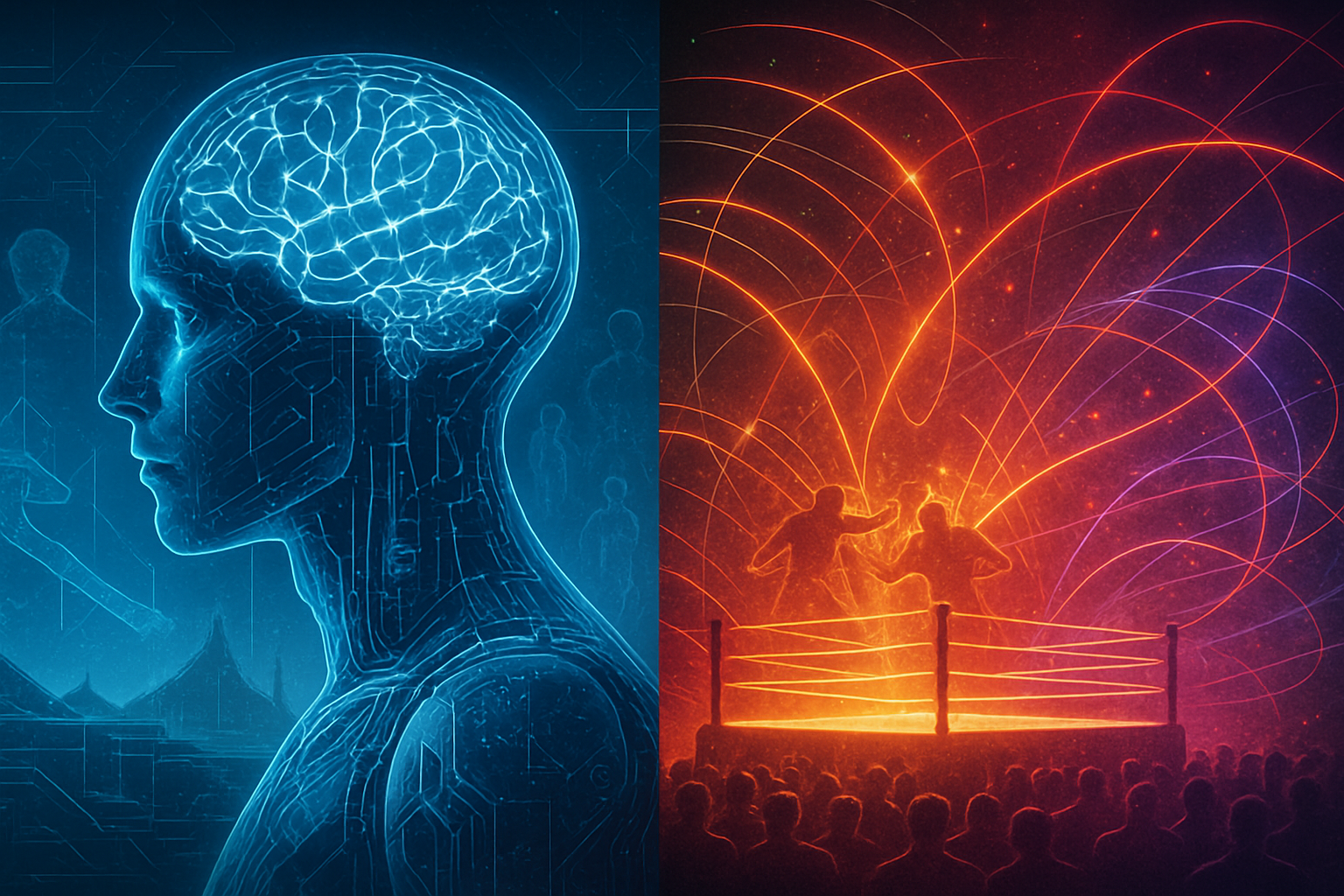
    The creative industries stand on the precipice of a monumental transformation, driven by the relentless march of artificial intelligence. From the visionary predictions of legendary game designer Hideo Kojima regarding AI's role in crafting future remakes and sequels, to World Wrestling Entertainment's (NYSE: TKO) reported ventures into AI-generated storylines, the landscape of artistic creation is undergoing a profound redefinition. These developments signal a dual narrative: one of unprecedented efficiency and innovation, and another fraught with ethical dilemmas and the potential for creative commodification.

    The Technical Canvas: AI as Co-Creator and Story Engine

    Hideo Kojima, the acclaimed mind behind Metal Gear Solid and Death Stranding, envisions AI as a supportive "friend" in game development, not a replacement for human ingenuity. He posits that AI will primarily tackle "tedious tasks" – the repetitive, labor-intensive aspects of game creation – thereby significantly boosting efficiency and reducing development costs and timelines. This liberation of human talent, Kojima argues, will allow creators to focus on pioneering entirely new intellectual properties and pushing the boundaries of interactive storytelling. He explicitly predicts a future where "remakes and sequels will be made by AI," leveraging existing game data and structures to streamline their production. AI's capabilities in this context would include advanced procedural content generation for environments and assets, character likeness generation and refinement (as seen in early experiments for Death Stranding 2), and optimizing various workflow processes. This approach starkly contrasts traditional game development, where remakes and sequels demand extensive human effort for asset recreation and narrative adaptation.

    Meanwhile, World Wrestling Entertainment (NYSE: TKO) is reportedly experimenting with an AI platform, identified as "Writer AI" or Writer Inc., to generate wrestling storylines. This initiative, spearheaded by Senior Director of Creative Strategy Cyrus Kowsari under the direction of Chief Content Officer Paul "Triple H" Levesque, aims to integrate AI into storytelling, video production, and graphics. The reported capabilities of this AI include generating basic narrative outlines, suggesting match scenarios, and even bullet points for character promos. However, initial results have been famously described as "absurdly bad," with one notable pitch involving former WWE star Bobby Lashley returning as a character obsessed with Japanese culture and history. This highlights the AI's current limitations: a struggle with nuance, emotional depth, established character continuity, and the inherent improvisational nature crucial to compelling professional wrestling. Unlike traditional wrestling creative teams who deeply understand character psychology, long-term booking, and audience reactions, current AI output often lacks the human touch required for truly engaging, emotionally resonant narratives.

    Corporate Playbook: Shifting Sands for Tech Giants and Startups

    The embrace of AI by figures like Kojima and entities like WWE presents a massive opportunity for various players in the AI ecosystem. Generative AI model developers, such as those creating foundational text-to-image, text-to-video, and large language models, will become crucial suppliers. Companies offering AI-powered development tools, like PrometheanAI Inc. and Inworld AI, which integrate AI for game design and asset creation, are poised for increased adoption. Furthermore, providers of personalization and adaptive content platforms will be highly sought after as the demand for dynamic, tailored user experiences grows. Cloud infrastructure giants like Amazon (NASDAQ: AMZN) AWS, Microsoft (NASDAQ: MSFT) Azure, and Alphabet's (NASDAQ: GOOGL) Google Cloud will also see significant benefits from the increased computational demands of training and deploying these large AI models.

    Competitive implications for major AI labs and tech companies are intensifying. Access to vast, diverse, and ethically sourced datasets of creative content will become a critical competitive advantage, although this raises significant intellectual property (IP) and copyright concerns. The demand for AI research talent and engineers specializing in creative applications will surge, leading to a "talent war." Tech giants may strategically acquire promising AI startups to integrate innovative tools and expand their market reach. Companies prioritizing ethical AI development and offering "human-in-the-loop" solutions that augment, rather than replace, human creativity are likely to build stronger relationships with creators and gain a strategic edge. This disruption could redefine existing products and services, as traditional software for 3D modeling, animation, and even entry-level scriptwriting may need to integrate AI features or risk obsolescence.

    Wider Resonance: Societal Impacts and Ethical Crossroads

    These developments fit into a broader AI landscape characterized by the proliferation of generative AI tools that are democratizing content creation. AI is no longer merely automating tasks but actively reshaping how professionals ideate, produce, and distribute content across design, photography, video, music, and writing. The conversation is increasingly focused on balancing innovation with ethical responsibility.

    However, this rapid integration brings forth a complex array of societal impacts and concerns. A significant fear among creative professionals is job displacement, with AI tools being cheaper, faster, and increasingly sophisticated. This can lead to a reduction in the financial value attributed to creative work, particularly affecting freelancers and self-employed individuals. Ethical considerations are paramount, especially regarding copyright infringement from AI models trained on unauthorized works, and the ownership of AI-generated content. Bias within training data can also lead to AI-generated content that perpetuates stereotypes. Furthermore, concerns about creative integrity and authenticity arise, as AI-generated content, while technically proficient, can often lack the emotional depth, unique voice, and cultural nuances that human creators bring. The proliferation of AI-generated content could "flood" the market, making it harder for emerging artists to stand out.

    Historically, technological advancements in art, such as the advent of photography, initially sparked fears of displacement but ultimately led to new art forms. Today, AI presents a similar paradigm shift, pushing the boundaries of what is considered "art" and redefining the roles of human creators. The challenge lies in harnessing AI's potential to augment creativity while establishing robust ethical frameworks and legal protections.

    The Horizon: Future Developments and Expert Predictions

    In the near term (1-3 years), expect to see enhanced human-AI collaboration, with creatives using AI as a "co-pilot" for brainstorming, rapid prototyping, and automating mundane tasks like initial asset generation and basic editing. This will lead to increased efficiency and cost reduction, with niche AI tools becoming more stable and seamlessly integrated into workflows. Personalization will continue to advance, offering increasingly tailored content experiences.

    Longer term (3+ years), the line between human and AI creativity may blur further, with the potential for entirely AI-produced films, music albums, or games becoming more mainstream. AI could handle up to 90% of the work for game remakes and sequels, including retexturing assets, composing new music, and redoing voice work. New art forms and interactive experiences will emerge, with AI enabling dynamic, adaptive content that changes in real-time based on user interaction or emotional response. Creative roles will evolve, with "creative orchestration" – directing multiple AI agents – becoming a fundamental skill.

    Challenges will persist, particularly around authorship and copyright, job displacement, and ensuring AI-generated content maintains human nuance and originality. Quality control will remain crucial, as current AI models can "hallucinate" or fabricate information, leading to absurd outputs. Experts predict a future where AI augments human capabilities, leading to hybrid workflows and a demand for "AI orchestrators." The World Economic Forum suggests AI will augment existing jobs and create new ones, though some foresee a polarization within the creative industry.

    The Final Act: A Transformative Era Unfolds

    The ventures of Hideo Kojima and WWE into AI-driven creation represent a pivotal moment in AI history, moving beyond theoretical discussions to practical, albeit sometimes flawed, integration into highly subjective creative domains. Kojima's nuanced perspective advocates for a symbiotic relationship, where AI enhances efficiency and frees human ingenuity for innovation. WWE's aggressive push, despite early "absurdly bad" results, highlights a willingness of major entertainment entities to strategically embrace AI, even for core creative functions. This marks a shift from AI as a mere backend utility to a front-facing content-generating force, fundamentally testing the boundaries of "creativity" and "authorship."

    The long-term impact will likely see AI excel at generating vast volumes of derivative, optimized, or "tedious" content, allowing human creators to focus on original concepts and deeply emotional storytelling. The "democratization" of creative tools will continue, leading to an explosion of diverse content, but also a potential flood of low-quality, AI-generated material. Ethical and legal frameworks around AI, especially concerning intellectual property and fair compensation for creators whose work trains AI models, will be critical. The emergence of "walled garden" LLMs, trained on proprietary, cleared content, is a significant trend to watch for mitigating legal risks. Job roles will undoubtedly evolve; with new positions focused on AI prompt engineering, supervision, and innovative human-AI collaboration emerging. The ultimate goal should be to leverage AI to enhance human expression and experience, rather than diminish it, ensuring that technology remains in service to meaningful storytelling and artistic vision.

    What to watch for in the coming weeks and months:

    1. WWE's AI Storyline Evolution: Keep an eye on how WWE refines its "Writer AI" platform. Will the quality of AI-generated pitches improve? Will there be specific segments or characters overtly attributed to AI influence (even subtly)? How will this impact audience reception and talent morale?
    2. Legal Precedents: Look for ongoing discussions, new legislation (like the EU's AI Act), and court cases addressing AI copyright, authorship, and fair use.
    3. "Walled Garden" LLMs: Observe the development and adoption of proprietary AI models by major studios and entertainment companies, such as Lionsgate's partnership with Runway AI.
    4. Specialized AI Tools: Expect to see further development and increased stability in niche, use-case-specific AI tools for various creative tasks, becoming more integrated into standard production pipelines.
    5. New Collaborative Roles: Watch for the emergence of new job titles and skill sets that bridge human creativity with AI capabilities.
    6. Public and Creator Sentiment: Monitor public and creator sentiment towards AI-generated content. Continued instances of "poorly rendered" or "creatively bankrupt" AI output could lead to stronger calls for human-led creative integrity.

    This content is intended for informational purposes only and represents analysis of current AI developments.

    TokenRing AI delivers enterprise-grade solutions for multi-agent AI workflow orchestration, AI-powered development tools, and seamless remote collaboration platforms.
    For more information, visit https://www.tokenring.ai/.

  • India’s Creative Tech Future Takes Flight: IICT Kicks Off Inaugural Batches for Next-Gen Talent

    India’s Creative Tech Future Takes Flight: IICT Kicks Off Inaugural Batches for Next-Gen Talent

    The Indian Institute of Creative Technologies (IICT) officially commenced its inaugural batches in August 2025, marking a pivotal moment in India's ambition to become a global leader in the cutting-edge AVGC-XR (Animation, Visual Effects, Gaming, Comics, and Extended Reality) sector. This initiative, announced by Union Minister for Information & Broadcasting, Shri Ashwini Vaishnaw, in May 2025, aims to cultivate a new generation of tech talent equipped with industry-aligned skills, positioning India at the forefront of the rapidly expanding creative economy. With a comprehensive portfolio of 18 specialized courses and strategic global partnerships, IICT is poised to replicate the nation's IT success within the dynamic media and entertainment landscape.

    The establishment of IICT, modeled after the prestigious Indian Institutes of Technology (IITs) and Indian Institutes of Management (IIMs), represents a significant governmental commitment, backed by a budget allocation of ₹400 crore. Its immediate goal is to nurture world-class talent, addressing the burgeoning demand for skilled professionals in creative technologies and cementing India's place as a global powerhouse in AVGC-XR. The institute’s strategic vision encompasses not just education but also holistic support for students through scholarships, internships, startup incubation, and robust placement opportunities, ensuring graduates are well-prepared for successful careers in an evolving digital landscape.

    Paving the Way for a New Creative Workforce: IICT's Cutting-Edge Curriculum

    The Indian Institute of Creative Technologies (IICT) has launched with an impressive academic offering, featuring 18 industry-driven courses meticulously designed to meet global standards in the AVGC-XR sector. These specialized programs are distributed across key domains, including six courses in Gaming, four in Post Production, and eight covering Animation, Comics, and Extended Reality. This targeted curriculum directly addresses the growing demand for highly specialized skills that are crucial for modern media production and interactive experiences.

    What sets IICT's approach apart from traditional educational models is its deep integration with industry leaders and global academic institutions. The institute has forged significant partnerships with technology giants such as Google (NASDAQ: GOOGL), YouTube, Adobe (NASDAQ: ADBE), Meta (NASDAQ: META), Microsoft (NASDAQ: MSFT), NVIDIA (NASDAQ: NVDA), and JioStar. These collaborations ensure that the curriculum remains current, incorporates the latest tools and techniques, and provides students with exposure to real-world production pipelines and industry best practices. Furthermore, a Memorandum of Understanding (MoU) with the University of York, UK, facilitates collaborative research, faculty exchange programs, and pathways to global certification, offering students an internationally recognized educational experience.

    This proactive and industry-aligned curriculum represents a significant departure from conventional education, which often struggles to keep pace with the rapid advancements in technology. By focusing on practical, hands-on training using cutting-edge software and hardware, IICT aims to produce graduates who are immediately employable and capable of contributing to complex projects. The initial reactions from the AI research community and industry experts have been overwhelmingly positive, viewing IICT as a crucial step towards bridging the skill gap in India's creative technology sector and fostering innovation from the ground up. The emphasis on XR technologies, in particular, is seen as forward-thinking, preparing students for an immersive digital future.

    Competitive Edge and Market Disruption: How IICT Impacts the Tech Landscape

    The commencement of IICT's specialized batches holds significant implications for AI companies, tech giants, and startups alike, particularly within the burgeoning AVGC-XR sector. Companies heavily invested in animation, visual effects, gaming, and extended reality stand to benefit immensely from a new pipeline of highly skilled talent. Studios like Technicolor Creative Studios (Euronext Paris: TCHCS), DNEG, and even in-house creative teams at tech giants like Amazon (NASDAQ: AMZN) and Apple (NASDAQ: AAPL) will find a richer talent pool in India, potentially reducing recruitment costs and accelerating project timelines.

    For major AI labs and tech companies, IICT's focus on cutting-edge skills in areas like 3D modeling, real-time rendering, virtual production, and AI-driven content creation could lead to new avenues for collaboration and innovation. Companies developing AI tools for content generation, digital twins, or immersive experiences will find graduates equipped to leverage these technologies effectively. This initiative could foster a more competitive environment, pushing existing training programs and universities to upgrade their offerings to match IICT's industry-aligned curriculum.

    The potential for disruption is also noteworthy. Startups, often limited by talent acquisition challenges, could thrive with easier access to specialized graduates, leading to a surge in innovative AVGC-XR ventures from India. This influx of talent could challenge the dominance of established players in certain creative technology niches, fostering a more dynamic and competitive market. From a market positioning perspective, India, already a global IT services hub, is strategically enhancing its capabilities in creative and immersive technologies, offering a more comprehensive and attractive proposition for global businesses seeking talent and innovation.

    Shaping the Broader AI Landscape: A New Era for Creative Intelligence

    IICT's initiative to cultivate expertise in AVGC-XR is not merely an educational development; it is a strategic move that profoundly impacts the broader AI landscape and trends, particularly concerning creative intelligence. As AI systems become increasingly capable of generating content, from images and videos to entire virtual worlds, the demand for human professionals who can guide, refine, and innovate using these tools will escalate. IICT's graduates, trained in the intricacies of creative technology, will be uniquely positioned to harness AI for artistic and commercial endeavors, acting as crucial intermediaries between AI capabilities and human creative vision.

    This development fits perfectly into the trend of AI democratizing creative processes while simultaneously elevating the need for specialized human oversight and innovation. The impact extends to fostering ethical AI development in creative fields, as these new professionals will be trained to understand the nuances of digital content creation, copyright, and responsible use of AI. Potential concerns, however, might include the pace at which AI-driven tools evolve, requiring IICT's curriculum to remain agile and continuously updated to prevent graduates from being trained on outdated methodologies.

    Compared to previous AI milestones, such as the breakthroughs in natural language processing or computer vision, IICT's focus represents a significant step towards integrating AI more deeply into the creative economy. It acknowledges that while AI can generate, human creativity remains paramount in conceptualization, storytelling, and ethical application. This move could catalyze a new wave of AI applications specifically tailored for creative industries, moving beyond mere automation to intelligent co-creation. It signals a maturation of the AI landscape where specialized human-AI collaboration is becoming the norm, rather than a distant future.

    The Horizon of Innovation: Future Developments from IICT's Impact

    The commencement of IICT's cutting-edge tech courses is expected to usher in a wave of near-term and long-term developments across India's technology and creative sectors. In the near term, we can anticipate a significant boost in the quality and quantity of AVGC-XR projects originating from India. Graduates will fill critical roles in animation studios, gaming companies, VFX houses, and emerging XR ventures, enhancing production capabilities and driving innovation. This will likely lead to an increase in India's contribution to global media and entertainment content, potentially attracting more international collaborations and investments.

    Looking further ahead, the long-term impact could see India establishing itself as a global hub for immersive content creation and AI-powered creative solutions. The pool of talent nurtured by IICT is expected to drive the development of novel applications and use cases in areas such as virtual tourism, interactive education, medical visualization, and industrial design, leveraging augmented and virtual reality technologies. We might also see a rise in Indian-developed intellectual properties in gaming and animation that resonate globally, much like its IT services have.

    However, challenges remain. The rapid evolution of AI and creative technologies necessitates a continuous update mechanism for IICT's curriculum and infrastructure. Ensuring that faculty remain at the forefront of these advancements and that students have access to the latest software and hardware will be crucial. Experts predict that the success of IICT will not only be measured by graduate placements but also by the number of successful startups it incubates and the quality of groundbreaking creative projects its alumni contribute to. The institute's ability to foster a vibrant ecosystem of innovation will be key to its enduring legacy.

    A New Chapter for India's Tech Ambitions: The IICT's Enduring Legacy

    The launch of the Indian Institute of Creative Technologies (IICT) and its inaugural batches represents a monumental stride in India's journey towards becoming a global leader in the cutting-edge AVGC-XR domain. The key takeaways from this development underscore a strategic national investment in human capital, an unwavering commitment to industry-aligned education, and a forward-looking vision for the integration of creative and artificial intelligence technologies. This initiative is not merely about producing graduates; it's about cultivating a new generation of innovators, storytellers, and technical experts who will shape the future of digital content and immersive experiences.

    The significance of IICT in AI history cannot be overstated. It marks a deliberate effort to bridge the gap between burgeoning AI capabilities and the nuanced demands of creative industries, ensuring that India's talent pool is not just technologically proficient but also creatively astute. By focusing on specialized skills in animation, visual effects, gaming, and extended reality, IICT is setting a precedent for how nations can proactively prepare their workforce for the demands of the AI-driven creative economy. This move is poised to have a long-term impact, transforming India's creative landscape and positioning it as a formidable force in global media and entertainment.

    As we look to the coming weeks and months, it will be crucial to watch the initial outcomes of IICT's programs, including student projects, industry collaborations, and early placement successes. The evolution of its curriculum in response to rapid technological advancements, particularly in generative AI for content creation, will also be a key indicator of its adaptability and continued relevance. IICT's journey will serve as a powerful case study for how targeted educational initiatives can catalyze national growth and innovation in the age of artificial intelligence, cementing India's reputation not just as an IT powerhouse, but as a creative technology trailblazer.


    This content is intended for informational purposes only and represents analysis of current AI developments.

    TokenRing AI delivers enterprise-grade solutions for multi-agent AI workflow orchestration, AI-powered development tools, and seamless remote collaboration platforms.
    For more information, visit https://www.tokenring.ai/.