Tag: GCT Semiconductor

  • The New Retail Vanguard: Why GCT Semiconductor is the Gen Z and Millennial AI Conviction Play of 2025

    The New Retail Vanguard: Why GCT Semiconductor is the Gen Z and Millennial AI Conviction Play of 2025

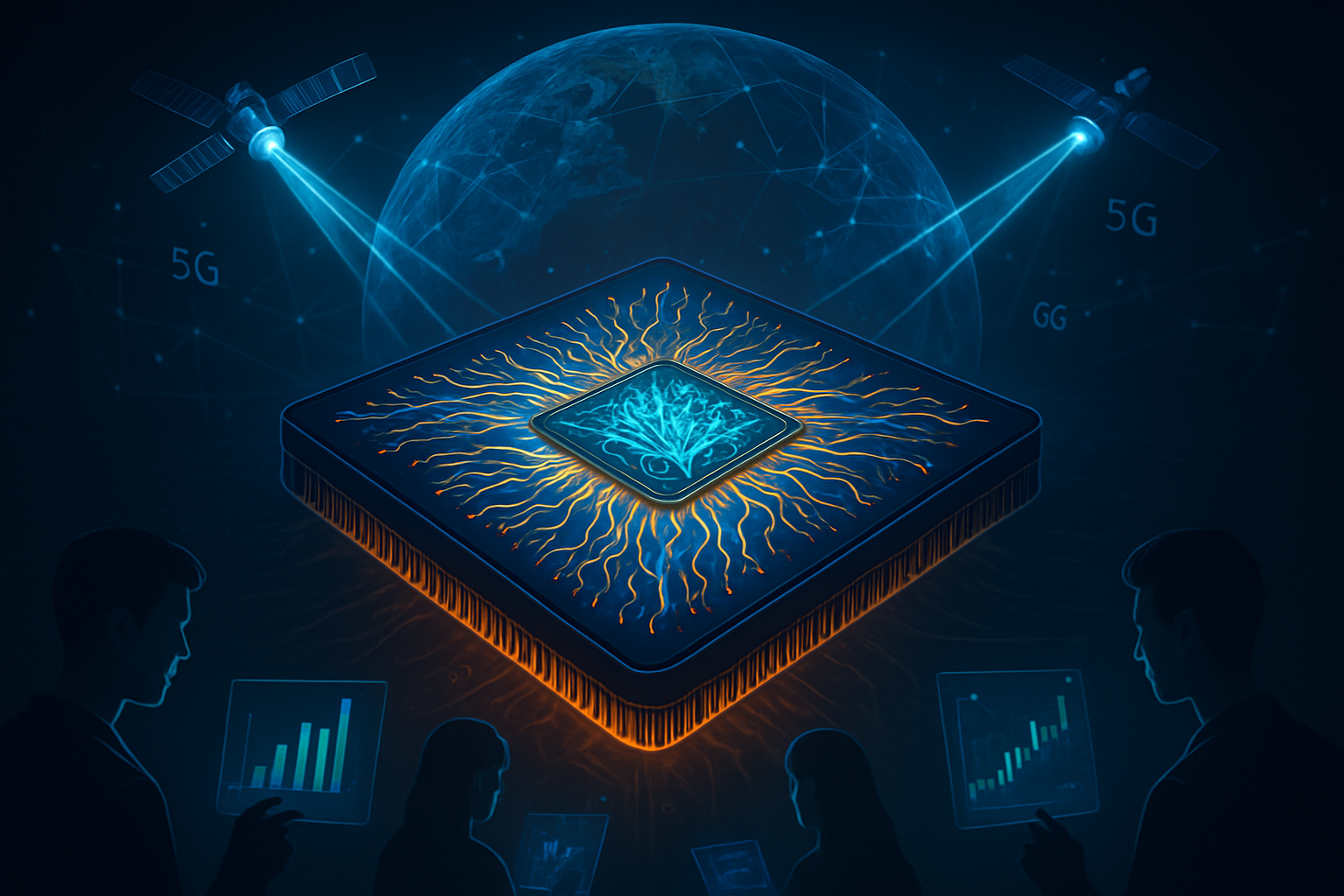
    As the "Silicon Surge" of 2025 reshapes the global financial landscape, a surprising contender has emerged as a favorite among the next generation of investors. GCT Semiconductor (NYSE: GCTS), a fabless designer of advanced 5G and AI-integrated chipsets, has seen a massive influx of interest from Millennial and Gen Z retail investors. This demographic, often characterized by its pursuit of high-growth "under-the-radar" technology, has pivoted away from over-saturated large-cap stocks to back GCT’s vision of decentralized, edge-based artificial intelligence.

    The immediate significance of this shift cannot be overstated. While 2024 was a transitional year for GCT as it moved away from legacy 4G products, the company’s 2025 performance has been defined by a technical renaissance. By integrating AI-driven network optimization directly into its silicon, GCT is not just providing connectivity; it is providing the intelligent infrastructure required for the next decade of autonomous systems, aviation, and satellite-to-cellular communication. For retail investors on platforms like Robinhood and Reddit, GCTS represents a rare "pure play" on the intersection of 5G, 6G, and Edge AI at an accessible entry point.

    Silicon Intelligence: The Architecture of the GDM7275X

    At the heart of GCT’s recent success is the GDM7275X, a flagship 5G System-on-Chip (SoC) that represents a departure from traditional modem design. Unlike previous generations of chipsets that relied on centralized data centers for complex processing, the GDM7275X incorporates dual 1.6GHz quad Cortex-A55 processors and dedicated AI-driven signal processing. This allows the hardware to perform real-time digital signal optimization and performance tuning directly on the device. By moving these AI capabilities to the "edge," GCT reduces latency and power consumption, making it an ideal choice for high-demand applications like Fixed Wireless Access (FWA) and industrial IoT.

    Technical experts have noted that GCT’s approach differs from competitors by focusing on "Non-Terrestrial Networks" (NTN) and high-speed mobility. In June 2025, the company successfully completed the first end-to-end 5G call for the next-generation Air-to-Ground (ATG) network of Gogo (NASDAQ: GOGO). Handling the extreme Doppler shifts and high-velocity handovers required for aviation connectivity is a feat that few silicon designers have mastered. This capability has earned GCT praise from the AI research community, which views the company’s ability to maintain stable, high-speed AI processing in extreme environments as a significant technical milestone.

    Disrupting the Giants: Strategic Partnerships and Market Positioning

    The rise of GCT Semiconductor is creating ripples across the semiconductor industry, challenging the dominance of established giants like Qualcomm (NASDAQ: QCOM) and MediaTek. While the larger players focus on the mass-market smartphone sector, GCT has carved out a lucrative niche in mission-critical infrastructure and specialized AI applications. A landmark partnership with Aramco Digital in Saudi Arabia has positioned GCTS as a primary driver of the Kingdom’s Vision 2030, focusing on localizing AI-driven 5G modem features for smart cities and industrial automation.

    This strategic positioning has significant implications for tech giants and startups alike. By collaborating with Samsung Electronics (KRX: 005930) and various European Tier One telecommunications suppliers, GCT is embedding its silicon into the backbone of global 5G infrastructure. For startups in the autonomous vehicle and drone sectors, GCT’s AI-integrated chips provide a lower-cost, high-performance alternative to the expensive hardware suites typically offered by larger vendors. The market is increasingly viewing GCTS not just as a component supplier, but as a strategic partner capable of enabling AI features that were previously restricted to high-end server environments.

    The Democratization of AI Silicon: A Broader Cultural Shift

    The popularity of GCTS among younger investors reflects a wider trend in the AI landscape: the democratization of semiconductor investment. As of late 2025, nearly 22% of Gen Z investors hold AI-specific semiconductor stocks, a statistic driven by the accessibility of financial information on TikTok and YouTube. GCT’s "2025GCT" initiative, which focused on a transparent roadmap toward 6G and satellite connectivity, became a viral talking point for creators who emphasize "value plays" over the high-valuation hype of NVIDIA (NASDAQ: NVDA).

    This shift also highlights potential concerns regarding market volatility. GCTS experienced significant price fluctuations in early 2025, dropping to a low of $0.90 before a massive recovery fueled by insider buying and the successful sampling of its 5G chipsets. This "conviction play" mentality among retail investors mirrors previous AI milestones, such as the initial surge of interest in generative AI startups in 2023. However, the difference here is the focus on hardware—the "shovels" of the AI gold rush—rather than just the software applications.

    The Road to 6G and Beyond: Future Developments

    Looking ahead, the next 12 to 24 months appear pivotal for GCT Semiconductor. The company is already deep into the development of 6G standards, leveraging its partnership with Globalstar (NYSE: GSAT) to refine "direct-to-device" satellite messaging. These NTN-capable chips are expected to become the standard for global connectivity, allowing smartphones and IoT devices to switch seamlessly between cellular and satellite networks without additional hardware.

    Experts predict that the primary challenge for GCT will be scaling its manufacturing to meet the projected revenue ramp in Q4 2025 and 2026. As 5G chipset shipments begin in earnest—carrying an average selling price roughly four times higher than legacy 4G products—GCT must manage its fabless supply chain with precision. Furthermore, the integration of even more advanced neural processing units (NPUs) into their next-generation silicon will be necessary to stay ahead of the curve as Edge AI requirements evolve from simple optimization to complex on-device generative tasks.

    Conclusion: A New Chapter in AI Infrastructure

    GCT Semiconductor’s journey from a 2024 SPAC merger to a 2025 retail favorite is a testament to the changing dynamics of the tech industry. By focusing on the intersection of AI and 5G, the company has successfully positioned itself as an essential player in the infrastructure that will power the next generation of intelligent devices. For Millennial and Gen Z investors, GCTS is more than just a stock; it is a bet on the future of decentralized intelligence and global connectivity.

    As we move into the final weeks of 2025, the industry will be watching GCT’s revenue reports closely to see if the promised "Silicon Surge" translates into long-term financial stability. With strong insider backing, high-profile partnerships, and a technical edge in the burgeoning NTN market, GCT Semiconductor has proven that even in a world dominated by tech titans, there is still plenty of room for specialized innovation to capture the market's imagination.


    This content is intended for informational purposes only and represents analysis of current AI developments.

    TokenRing AI delivers enterprise-grade solutions for multi-agent AI workflow orchestration, AI-powered development tools, and seamless remote collaboration platforms.
    For more information, visit https://www.tokenring.ai/.

  • The Silicon Surge: Millennial Investors and AI-Driven Strategies Propel GCT Semiconductor into the Retail Spotlight

    The Silicon Surge: Millennial Investors and AI-Driven Strategies Propel GCT Semiconductor into the Retail Spotlight

    As of December 19, 2025, a profound shift in the retail investment landscape has reached a fever pitch. Millennial and Gen Z investors, once captivated by software-as-a-service (SaaS) and crypto-assets, have decisively pivoted toward the "backbone of the future": the semiconductor sector. This movement is being spearheaded by a new generation of retail traders who are utilizing sophisticated AI-driven investment tools to identify undervalued opportunities in the chip market, with GCT Semiconductor (NYSE: GCTS) emerging as a primary beneficiary of this trend.

    The immediate significance of this development lies in the democratization of high-tech investing. Unlike previous cycles where semiconductor stocks were the exclusive domain of institutional analysts, the 2025 "Silicon Surge" is being driven by retail cohorts who view hardware as the only true play in the generative AI era. GCT Semiconductor, which spent much of 2024 and early 2025 navigating a complex transition from legacy 4G to cutting-edge 5G and AI-integrated chipsets, has become a "conviction play" for younger investors looking to capitalize on the next wave of edge computing and 5G infrastructure.

    Technical Evolution: GCT’s AI-Integrated 5G Breakthrough

    At the heart of GCT Semiconductor’s recent resurgence is the GDM7275X, a flagship 5G System-on-a-Chip (SoC) that represents a significant leap forward from the company's previous 4G LTE offerings. While the industry has been dominated by massive data center GPUs from giants like NVIDIA (NASDAQ: NVDA), GCT has focused on the "Edge AI" niche. The GDM7275X integrates two high-performance 1.6GHz quad Cortex-A55 processors and, crucially, incorporates AI-driven network optimization directly into the silicon. This allows the chip to perform real-time digital signal processing and performance tuning—capabilities that are essential for the high-demand environments of Fixed Wireless Access (FWA) and the burgeoning 5G air-to-ground networks.

    This technical approach differs from previous generations by moving AI workloads away from the cloud and onto the device itself. By integrating AI-driven optimization, GCT’s chips can maintain stable, high-speed connections in moving vehicles or aircraft, a feat demonstrated by their late-2025 partnership with Gogo to launch the first 5G air-to-ground network in North America. Industry experts have noted that while GCT is not competing directly with the training chips of Advanced Micro Devices (NASDAQ: AMD), their specialized focus on "connectivity AI" fills a critical gap in the 5G ecosystem that larger players often overlook.

    Initial reactions from the AI research community have been cautiously optimistic. Analysts suggest that GCT’s ability to reduce power consumption while maintaining AI-enhanced throughput is a "quiet revolution" in the IoT space. By leveraging Release 16 and 17 5G NR standards, GCT has positioned its hardware to handle the massive data flows required by autonomous systems and industrial AI, making it a technical cornerstone for the "Internet of Everything."

    The Competitive Landscape and the Democratization of Chip Investing

    The rise of GCT Semiconductor reflects a broader shift in market positioning. While Taiwan Semiconductor Manufacturing Company (NYSE: TSM) and Arm Holdings (NASDAQ: ARM) remain the foundational pillars of the industry, smaller, more agile players like GCT are finding strategic advantages in specific verticals. GCT’s successful reduction of its debt by nearly 50% in late 2024, combined with strategic partnerships with Samsung and Aramco Digital, has allowed it to weather the "trough of disillusionment" that followed its 2024 public listing.

    For tech giants, the success of GCT signals a growing fragmentation of the AI hardware market. Major AI labs are no longer just looking for raw compute; they are looking for specialized connectivity that can bridge the gap between centralized AI models and remote edge devices. This has created a competitive vacuum that GCT is aggressively filling. Furthermore, the disruption to existing products is evident as GCT’s 5G modules begin to replace older, less efficient 4G platforms in global markets, particularly in Saudi Arabia’s expanding 5G ecosystem.

    The strategic advantage for GCT lies in its "fabless" model, which allows it to pivot quickly to new standards like 6G research and Non-Terrestrial Networks (NTN). By integrating Iridium NTN Direct service into their chipsets, GCT has enabled seamless satellite-to-cellular connectivity—a feature that has become a major selling point for millennial investors who prioritize "future-proof" technology in their portfolios.

    The Retail Revolution 2.0: AI-Driven Investment Strategies

    The wider significance of GCT’s popularity among younger investors cannot be overstated. As of late 2025, nearly 21% of Millennials and 22% of Gen Z investors are holding AI-specific semiconductor stocks. This demographic is not just buying shares; they are using AI to do it. Retail adoption of AI-driven trading tools has surged by 46% over the last year, with platforms like Robinhood (NASDAQ: HOOD) and Webull now offering AI-curated "thematic buckets" that allow users to invest in 5G infrastructure or edge computing with a single tap.

    These AI tools perform real-time sentiment analysis, scanning social media platforms like TikTok and YouTube—where 86% of Gen Z now get their financial news—to gauge the "social buzz" around new chip launches. This "Retail Revolution 2.0" has turned semiconductor investing into a high-frequency, data-driven endeavor. For these investors, GCT Semiconductor represents the ultimate "hidden gem": a company with a low entry price (recovering from a 2025 low of $0.90) but high technical potential.

    However, this trend also raises concerns about market volatility. The "Nvidia Effect" has created a high-risk appetite among younger traders, who are three times more likely to hold speculative semiconductor stocks than Baby Boomers. While AI tools can help identify growth opportunities, they can also exacerbate "meme-stock" dynamics, where technical fundamentals are occasionally overshadowed by algorithmic social momentum.

    Future Horizons: From 5G to 6G and Pervasive AI

    Looking ahead to 2026 and beyond, the semiconductor sector is poised for further transformation. Near-term developments will likely focus on the full-scale rollout of 5G Rel 17 and the initial commercialization of 6G research. GCT Semiconductor is already laying the groundwork for this transition, with its NTN and massive IoT solutions serving as the technical foundation for future 6G standards expected by 2030.

    Potential applications on the horizon include pervasive AI, where every connected device—from smart city sensors to wearable health monitors—possesses onboard AI capabilities. Experts predict that the next challenge for the industry will be managing the energy efficiency of these billions of AI-enabled devices. GCT’s focus on low-power, high-efficiency silicon positions them well for this upcoming hurdle.

    The long-term trajectory suggests a world where connectivity and intelligence are inseparable. As AI becomes more decentralized, the demand for specialized SoCs like those produced by GCT will only increase. Analysts expect that the next two years will see a wave of consolidation in the sector, as larger tech companies look to acquire the specialized IP developed by smaller innovators.

    Conclusion: A New Era of Silicon Sovereignty

    The growing interest of millennial investors in GCT Semiconductor and the broader chip sector marks a turning point in the history of AI. We have moved past the era of "AI as a service" and into the era of "AI as infrastructure." The key takeaways from 2025 are clear: retail investors have become a sophisticated force in the market, AI tools have democratized complex technical analysis, and companies like GCT are proving that there is significant value to be found at the edge of the network.

    This development’s significance in AI history lies in the shift of focus from the "brain" (the data center) to the "nervous system" (the connectivity). As we look toward 2026, the market will be watching for GCT’s volume 5G shipments and the continued evolution of retail trading bots. For the first time, the "silicon ceiling" has been broken, allowing a new generation of investors to participate in the foundational growth of the digital age.


    This content is intended for informational purposes only and represents analysis of current AI developments.

    TokenRing AI delivers enterprise-grade solutions for multi-agent AI workflow orchestration, AI-powered development tools, and seamless remote collaboration platforms.
    For more information, visit https://www.tokenring.ai/.